A to Z of Making It, Music, My Stories

Who Is the Real Star? The Band Name or the Personnel In The Band

There is an article doing the rounds at the Hollywood Reporter about how “The Walking Dead” is TV’s number 1 show and that the stars of the show are still largely unknown.

So it got me thinking. I was very interested to check out the show based on my love of the Horror genre. Once I checked it out, I was hooked. I didn’t start watching the show because they had certain actors in it. The only actor I was aware of was Daryl’s brother and that was from the movie Cliffhanger with Stallone and that was after watching a few episodes. So I got into the show because i was a fan of the horror genre.

However I got into “Sons Of Anarchy” because hard-core friends eventually got me to invest some time in it.

The point I am trying to make is that we get into certain TV shows, movies or artists based on a thousand different reasons. One thing is clear; we don’t get into these cultural icons because of the people in them.

For example, when Metallica started on the scene, no one was walking around saying that they got into Metallica because James Hetfield was such a cool cat or Lars Ulrich was the man. We got into Metallica for multiple reasons. For example, we were fans of the metal genre, the songs connected with us; we wanted to be part of the conversation and so on. From the outset, we become fans because of the music we hear.

That is what culture is all about. Sharing stories about the things we love.

Of course some outliers do exist and some artists have a cultural influence that transcends their music. They become institutions themselves. For example, Slash is now a cultural institution. Ozzy Osbourne is a cultural institution albeit with a lot of help from his “friends”. Nikki Sixx is a cultural institution. Robb Flynn is a cultural institution. Dee Snider is a cultural icon. These artists can all survive on their own. They are brand names themselves.

It’s taken Slash almost 14 years from when he left Gunners to re-establish and re-brand himself as a force to be reckoned with. That happened in 2010 with the release of his solo album and with a little help from his friends.

Randy Rhoads and Bob Daisley helped Ozzy Osbourne break the shackles of Black Sabbath. Jake E. Lee and Phil Soussan enhanced what Randy Rhoads and Bod Daisley created. Zakk Wylde turned it all into a blockbuster with “No More Tears” being the pinnacle.

Nikki Sixx re-invented himself and Motley Crue by first gaining control of Motley Crue’s back catalogue from Elektra Records. A task that no other artist had accomplished before. Then he pushed for the writing of “The Dirt”. Since then, he has become a solo artist with Sixx AM, a song writer for other artists, a social media junkie, a photographer, a literary writer and a radio personality.

Robb Flynn showed the world that he can survive. He really went out of his comfort zone recently and performed acoustically. He survived the “Through The Ashes of Empires” era and lived to tell the tale. Talk about Grit and Roll. It was music all the way, with no safety net. No plan B. His Journals are pure gold. Even if you don’t like Machine Head’s music, you can still appreciate the Journal Ramblings. For any artist starting off, there is information in there that is real. There is information there that is not sugar-coated by a mainstream writer.

Dee Snider, what else can be said. Read his bio.

These artists have all connected with us on different levels. They have become so large in people’s lives that they have become cultural institutions themselves. We then stick with these institutions through the good times and the bad times.

So what about all the other artists. Well for the remainder of the artists it is still about the music. They need to have the music pumping out and they need to make connections.

Dee Snider once said that there are no more rock stars in this day and age. I took that to mean, that in the internet age, there are no real recognizable faces to put to certain bands. While I agree with that comment in parts, I also disagree with it.

For example, Coheed and Cambria has Claudio Sanchez. Watch them live and you get to see the hair. Instantly recognizable.

Five Finger Death Punch has Zoltan Bathory with the dreadlocks and the UFC/mixed martial arts look. They have Ivan Moody and the Mohawk.

Shinedown has Brent Smith, who performs like an adrenaline injected Steve Tyler.

Black Veil Brides have, well they have the whole band.

Avenged Sevenfold have Eighties rock star stage names with instantly recognisable faces.

However if any of the band members in the above mentioned bands, decide to go on their own, it will be a tough slog for them as the bands they are in have all become cultural institutions. Then you have a band like Protest The Hero who look like normal guys going to University.

So going back to “The Walking Dead”. The show is the rock star. That is the cultural institution.

So for any wannabe rock stars, think about all of the above for a second. No one is going to wake up tomorrow morning and think to themselves, “damn, I want to hear some music from Zoltan Bathory, or “Insert New Artist name here””.

We wake up in the morning and think to ourselves, “damn, we want to hear some Five Finger Death Punch. We wake up and go “damn its “The Walking Dead” tonight.”

That is what a lot of misguided artists fail to grasp when they leave a certain cultural institution citing musical differences. They (meaning the person) were never the stars. The band name is the star and it always will be.

That is why Guns N Roses is still rolling along, playing to large audiences.

That is why Tommy Lee returned to Motley Crue.

That is why James Hetfield returned to Metallica after rehab. That is why Lars Ulrich never contemplated anything else except Metallica during this period.

That is why Dave Mustaine resurrected Megadeth after he disbanded the band.

That is why Dimebag didn’t want Pantera to end. He knew that Pantera was the star.

That is why David Lee Roth worked with Van Halen again. That is why Sammy Hagar wants to work with Van Halen again.

That is why Alex Skolnick returned to Testament.

That is why there is a fight over who owns the right to the Queensryche name.

That is why Benjamin Burnley went all legal for the right to use the Breaking Benjamin name.

That is why Bruce Dickinson and Adrian Smith returned to Iron Maiden.

That is why Rob Halford returned to Judas Priest.

That is why Black Sabbath reformed with three of the original members and released ’13’.

That is why bands like Ratt, Quiet Riot, Dokken, Poison and Skid Row are still continuing.

That is why Joey Belladonna returned to Anthrax and why Scott Ian is still continuing the band.

That is why Slayer is continuing without Jeff Hanneman.

To finish off with the immortal words of Ronnie James Dio “And on and on and on and on it goes….”
Standard
A to Z of Making It, Classic Songs to Be Discovered, Copyright, Derivative Works, Influenced, Music, My Stories

The “While My Guitar Gently Weeps” Effect – Another Progress Is Derivative Example

The history of metal and rock music occurred because of some serious copying. My favourite saying has always been that all “progress is derivative.” What I mean by this term, is that all the music we love is an amalgamation of music that has come before. In a lot of the cases, this amalgamation involved some serious copying. To use a common term that is banded about today, the history of music as I know it involved a lot of “stealing.”

Previously, I posted on “The Kashmir Effect” in hard rock and heavy metal music. This was my take on the legacy that the Led Zeppelin song “Kashmir” had on hard rock and heavy metal.

In this post, I am focusing on that descending bass line that I first heard on the George Harrison penned “While My Guitar Gently Weeps.” The way that it descends is that it goes down by a whole tone first and then four semi tones in a chromatic progression. So if the song was in the key of Am, then the progression would be A – G – F# – F – E

Since the Sixties, that descending passage has appeared in countless songs that are all seen as classics in this day and age.

Recently it was “Trial Of Tears” from Dream Theater that triggered this study into the descending bass line.

So where do we begin. The beauty of progress in music never begins in one place. It begins in many places and then there is always a creator or an artist that starts to bring it all together.

In one instance, it all started in the fifties when an unknown folk singer by the name of Anne Bredon wrote a song called “Babe I’m Gonna Leave You.” By 1962, Joan Baez had popularised the song.

In another instance, in 1966, an American band called The Loving Spoonful released a song called “Summer In The City”, that had a verse riff in the key of Cm that descended.

Also in that same year, a British band called The Kinks released “Sunny Afternoon.”

Both songs have a lot of similarities, especially that descending bass line. Back in those days it was common for artists to release similar sounding songs across two continents, or for artists to cover a song that was popular on one continent and unheard of in the other.

In 1967, the mighty Cream released “Tales Of Brave Ulysses” another “progress is derivative” gem that featured a similar bass line to The Lovin’ Spoonful’s “Summer in the City” and a vocal melody inspired by Judy Collins’ version of Leonard Cohen’s “Suzanne.”

Then in 1968 came “While My Guitar Gently Weeps” by The Beatles with a definitive guitar solo from Eric Clapton, who had more or less worked out a similar solo the previous year on the “Tales Of Brave Ulysses” song.

So at this point in time, you have two separate stages of music happening. The US “Babe I’m Gonna Leave You and Summer In The City” stage and The British “While My Guitar Gently Weeps” stage.

In 1969, another British band by the name of Led Zeppelin took these two stages and merged them together in their re-interpretation of “Babe I’m Gonna Leave You”. A perfect example of progress being derivative.

That is how the language of music is learned. We imitate our influences. Some will call it “theft” and others will call it “inspiration.” In the end, there is a saying that goes something like “Talent Imitates, True Genius Steals.”

However, the “While My Guitar Gently Weeps” effect doesn’t end there. An American band called Chicago more or less copied the aggressive part of Led Zeppelin’s version of “Babe I’m Gonna Leave You” for their song “25 or 6 to 4.”

It was just another song that proved successful using the same descending bass line that I will always know as the “While My Guitar Gently Weeps” bass line.

So moving on, in 1971, The Grass Roots released “Temptation Eyes”. Another song that proved successful that was tied up with the descending bass line and the “Summer In The City” groove established years earlier.

Culture is all about emulation. Copyright is about governments intervening and this is when Copyright started to become a force to be reckoned with.

Up until 1971, music culture had 11 years of unbelievable progress by copying what came before and making it better. Look at the quality of music released around a descending bass line.

It didn’t end there. I am sure there are many other examples in between, however to my knowledge the next time the “While My Guitar Gently Weeps” effect was heard occurred in 1975. At this time Styx released “Suite Madame Blue.”

The Eighties had a real pop element to it.

Then in 1993, I purchased an album called “Countdown To Extinction” from Megadeth. The opening track, Skin Of My Teeth had a chorus riff that reminded me of The Beatles classic. Dave Mustaine was well known for taking his influences from the Seventies and converting them to thrash and metal music. He even got a mention for the Kashmir influence in the song “In My Darkest Hour.”

Then in 1995, Oasis released “She’s Electric” and there it was again. The “While My Guitar Gently Weeps” effect was in action again in the Nineties after going largely unnoticed in the Eighties.

Green Day then released “Brain Stew” in 1996 and there it was again, the definitive descending bass line.

The following year, 1997 saw two releases that had the “While My Guitar Gently Weeps” descending bass line. This time is was progressive masters, Dream Theater and their song “Trial Of Tears”. Pop rock band Texas also had a song called “Black Eyed Boy.”

Remember songs are not created in vacuums.

Standard
A to Z of Making It, Music, My Stories

Is Guitar World Still Relevant?

Once upon a time getting on the cover of a magazine was a sign of success or of dreams coming true. For the musical fan, the magazine was the only way that we could get any information from our favourite artists. The heyday for the metal and rock movements was the Eighties. Hundreds of different magazines appeared that covered certain genres and information was plentiful.

I started purchasing Guitar World magazines from January 1986. Any magazine that had content of bands/artists that I liked I devoured. Circus, Faces, Metal Maniacs, Rip, Metal Edge, Hit Parader, Guitar For The Practicing Musician, Hot Metal, Metal Hammer, Kerrang, Guitar School, Guitar One, Total Guitar, Guitar Player and Guitar.

So when I saw my favourite artists or guitarists on the cover of magazines I saw it as a sign of them making it. In all of the interviews, most of the guitarists said it was a dream come true to be on the cover of a Guitar magazine.

So how important is it to an artist to be on the cover of Guitar World today? I still subscribe to this magazine and I had all the issues for the year mapped out in front of me.

This is the cover roll for 2013.
December – Nirvana – In Utero Anniversary
November – John Petrucci
October – Synester Gates / Zacky Vengeance
September – Ultimate Prog Roundtable/Asking Alexandria
August – Jeff Hanneman Tribute
July – Tony Iommi and Ozzy Osbourne
June – Dave Mustaine / Chris Broderick
May – Brad Paisley
April – Orianthi
March – SRV “Texas Flood” Anniversary
February – The Who / Pete Townsend
January – Led Zeppelin Rides Again

Looking at the covers, I started to realise something.

Guitar World likes to play it safe. Sort of like a record label in the current environment. They are going for the sure bets, going where the money is. There is no onus on going out there and taking risks. They are looking for the hits, so that they can sell advertising.

If the “legends” have something happening or an anniversary of an album, it is a good bet that they will get a cover. Led Zeppelin, The Who, Stevie Ray Vaughan, Tony Iommi with Ozzy Osbourne and Nirvana. 5 issues out of 12 devoted to “legends”.

Then you have the tribute piece, which in this case it the Jeff Hanneman issue. Expect one to come out for Lou Reed soon.

Then it is focusing on the stars that have been proven successful previously in the magazine, like John Petrucci, Dave Mustaine and Avenged Sevenfold, who of course wouldn’t even be considered unless they have new releases coming out.

Then it has the obligatory issue with a woman on the cover. I actually liked how they covered Orianthi however the interview was a mish mash of information found on Wikipedia and PR rewrites. There was nothing there that couldn’t be found on the web.

The only issue that involved some ‘originality’ and some risk taking was the Brad Paisley issue however again after reading the interview piece, I was left wondering if the final printed version was re-written by a PR person of the artist.

Robb Flynn’s recent journal about the Through The Ashes of Empires anniversary, mentions the following in relation to mainstream media;
“The American metal media blacklisted us, magazines like Revolver told us, “we can’t cover you, but if you get to 50,000 copies we’ll give you an article.” When we got to 50,000 they said, “Well, when you get to 70,000 we’ll give you an article”. When we got to 70,000 they said, “well, the record is too old now.” The metal media of the time continued that blacklist well into “The Blackening” album cycle, when after that, they just didn’t matter anymore.”

So taking Robb Flynn’s comments and putting them up against the Brad Paisley cover issue, the originality comment I mentioned earlier doesn’t seem to fit. Brad Paisley has four pages of certifications on the RIAA Gold and Platinum database. His sales are well over the 50,000 and 70,000 ranges quoted, hence a cover.

Don’t get me wrong, each issue is still enjoyable and the lessons, plus the tabs are the reason why I still subscribe to it. However, with user posted tabs on the rise in greater numbers on the internet (along with peer reviews and edits), plus YouTube videos of guitarists covering their favourite songs, in addition to the artists themselves delving deep into the “how to play” department, does a magazine like Guitar World still have a relevance in today’s market?

It all depends on what Guitar World wants to achieve. People still like to read a nice interview however over the last decade all the interviews seem like they have been written by a PR team for the artist. Furthermore, artists can go straight to their audience today. The journals that Robb Flynn is producing are pure GOLD. So why would artists wait for the chance to appear in a magazine which could or could not happen.

Guitar World is in the business of selling advertising. It is using music and artists as it’s tool to sell advertising.

So if you are an artist, what does the mainstream press mean to your career?

In my point of view, no artist should equate mainstream press with success. Artists are on the front page for a day, and in most cases they are gone.

Has anyone read anything on Dream Theater’s or Black Sabbath’s new record the last few weeks? Dream Theater and Sabbath made a mistake. Their marketing campaign was better and larger than the music on the album. At the end of the day it’s what goes into our ears that matters. No one cares about the interviews or the press.

The publicity campaign worked once upon a time, however it doesn’t work any longer. If artists want to be around forever they need to understand that they need to grow slowly. If you peak, you should want it to happen deep into your career.

The only press that Megadeth is getting about their new album recently is that the Metallica Black album is outselling it on a weekly basis.

So what have we learned?

A cover on a magazine does nothing for your career. If you want to last in the music business, you need to earn it.

A scorched earth publicity campaign could see an increase in sales NOW. However, fans don’t want to be beaten upon the head every time you release music. In the end, great music will find its way to an audience.

The recording business is about listenability and repeatability. People could say that a track is good or bad. However will they play that track over and over again. That’s the reaction you want. If you plan to record, you need that track.

The goal of an artist is to write great songs otherwise say hello to obscurity. That is what gets people interested. Great music, great songs.

If you are not passionate about what you do you’re never going to make it. You need to be more into it than we are. You need to live for it.

For comparisons here is the list from 2012.

Holiday – Joe Perry (Legend)
December – The Beatles (Legends)
November – Billie Joe Armstrong (Safe Bet + High Sales Numbers)
October – Billy Gibbons (Legend)
September – Steve Vai & Tosin Abasi (Legend and Newcomer)
August – Van Halen (Legend + High Sales Numbers)
July – Slash (Legend + High Sales Numbers)
June – Slipknot (Safe Bet + High Sales Numbers)
May – Joe Walsh (Legend)
April – Van Halen (Legend + High Sales Numbers)
March – Lamb of God (Safe Bet + High Sales Numbers)
February – Pink Floyd (Legend + High Sales Numbers)
January – Billy Gibbons (Legend)

Standard
A to Z of Making It, Music, My Stories

Question Everything – Inspiration From Killswitch Engage and Jesse Leach

After overdosing on the new Protest the Hero album “Volition” for some reason the last song “Skies” got me thinking about Killswitch Engage. So out come the headphones and on goes the new album “Disarm the Descent.” I haven’t listened to it since about July. Our favourites don’t last long in the times of today. With so much new music coming out, we move on very quickly. As Jesse Leach pointed out recently in an interview with Lithium Magazine, the title is a creative way of saying redemption or rising again.

“You’re in a state of your life where you’re approaching rock bottom and you find a way to pick yourself up again before you hit the floor.”

I came to Killswitch Engage late. I didn’t listen to their first three albums. The only song I heard was “My Last Serenade” back in 2004 and that was via a bass player friend. However at that time, nothing really connected with me and that was it. There was no urge to commit to the band for me.

Fast forward a few years and the “Guitar World” issue arrived in the mailbox. I don’t recall which month; however it was a magazine from 2007. At that time the magazine still came with a DVD of bonus content. One of the bonuses was a lesson from the Killswitch guitarists on how to play “My Curse” and after watching it, I was hooked.

So I asked my bass player friend to burn me all of their albums, which he did. At the time, I had no idea that vocalists changed, which after hearing “Alive or Just Breathing” in 2007, I realised that the tones of the vocalists didn’t match up. So what do we do when we need information? We Google. We click on Wikipedia. In addition, “My Last Serenade” suddenly mattered. The song sucker punched me and I was hooked. The timing was right in 2007, for Killswitch Engage to enter my life on a full time basis.

By the time, their 2009 self-titled album came out; I was purchasing it without even listening to a single note. As a bonus their back catalogue was on special at the time, so I picked them up as well and added the official releases to my collection. That is why I always say that no metrics can ever measure the reach or pull of a band at the time of a release.

Of course, sales data can show what is in demand at a certain point in time; however the reach and the popularity of a certain band or a certain album cannot be properly measured until years later. Remember that history is written by the winners. In music, the winners are the artists or bands that outlast the competition.

Going back to the different singers, since Jesse’s split with the band, he kept busy with other projects, like the stoner-rock outfit “Seemless” and the metalcore/hard-core influenced “The Empire Shall Fall”. During this period, he also appeared with Killswitch Engage, performing the track “My Last Serenade” alongside Howard Jones at the Roadrunner United concert in 2005.

Then in 2011, I was blown away by “Times of Grace”. Everything about that album connected with me on so many different levels. I saw “Times Of Grace” open up for “Machine Head” at the Uni Roundhouse in Sydney in February 2012. Adam Dutkiewicz had his leg in some form of a support cast and he still went ballistic on stage, commenting frequently that “Aussie girls are hot.”

In relation to “Times Of Grace”, I could hear the regret in some of the songs. When Jesse jumped ship from Killswitch he was fighting a pretty serious depression. He had just gotten married and he couldn’t deal with being on the road all the time and away from his new family.

Songs like, “Fall From Grace (my best song on the album)”, “The Forgotten One”, “Hymn Of A Broken Man”, “In The Arms Of Mercy” and “Where The Spirit Leads Me” capture the more personal side of Jesse Leach. I remember reading in an interview in the “Revolver” April/May issue with Jesse mentioning that at the time of leaving Killswitch he was “broken and unconfident”.

So when Killswitch Engage announced that Jesse Leach is the vocalist again, I was more than pleased. His redemption was complete. When Jesse left Killswitch Engage the album he worked on “Alive Or Just Breathing” was just another album in a burgeoning metalcore scene that helped to kick start the New Wave of American Heavy Metal movement.

Today, “Alive or Just Breathing” is seen as a classic. I always state that music is all about creating great music now so that it is recognised later for its greatness. As an artist grows their body of work takes on a new life of its own. It takes a while for something to be assimilated. Artists or bands have to hang in there long enough until they get their turn, getting better while they wait and releasing quality music.

“In Due Time” was the lead-off single.

“All that we suffer through leads to determination
The trials we all go through gives us the strength to carry on 

Something within us burns, desire feeds the will to live
A reason to believe I will see redemption”

As the chorus lyrics go, in due time, the shadows will gave way to the light. You just need to be patient and resilient. The words could even reference Jesse’s redemption to Killswitch and the knowledge that he had to go through all these trials so that he could come back a better person.

“A Tribute To The Fallen” has that hook that resonates. In my view this song should have led the album.

“With a new dawn we rise in renewed strength
Knowing we’ve just begun to fight this war within”

Think about all the crap that is going on in our democratic nations. Governments are spying on their own people. The Corporations and their lobby groups drive legislation. Government granted monopolies like the copyright industry are doing their best to kill innovation and when that fails, insert the corporations and their lobby groups. Transparency is promised however it doesn’t exist. Every communication is suddenly classified. Enables of pirated goods get more jail time than actual criminal offenders.

“New Awakening” has the legend behind it about how Jesse blew his voice while he was recording it in the studio. After the Doctor told him about the strain on the vocal chords, Jesse saw it as a badge of honour.

“There is more to life than this
We are more than just this flesh
We are alive and our time has come
For a new awakening”

It’s the Killswitch revolution. Killswitch wants you. Where do i sign? I’m all in.

“You Don’t Bleed For Me” connects with me because it more or less sums up our politicians and how even though they are voted in by the people, they do not work for the people. Of course there are the rare ones who do their best to speak for the people but in the end money wins the game.

“Fly your flag of righteousness
When underneath it is deviousness, it is greed and lies
Don’t pretend to know me you martyr of disgrace
With your plastic smile
I don’t believe a word you say
You don’t speak for me
You don’t bleed, you don’t bleed
You don’t bleed for me”

The closer “Time Will Not Remain”.

“None of us should be thought of as anything less than a potential to change the world”

What a lyric and what a statement. That is the reason why Jesse Leach’s return means so much to Killswitch Engage and to metal fans in general. He never stopped being who he was. He was not corrupted by the modern era. He questions social norms and ideals. He questions the crap our politicians and news outlets throw at us. He questions everything. The great vocalists always have something to say.

Standard
A to Z of Making It, Derivative Works, Music, My Stories, Piracy

2013 Metal and Rock Releases. Are they Derivative, Evolutionary, Original or Clones?

Artists need to think about their music as a product. In the end we (the fans) are all suckers for good products. Give us a good product and we will reciprocate.

So I am listening to the new Protest The Hero album, “Volition”. What a product it is! For the record, I was one of those fans that contributed to the Indiegogo campaign so you can say that my views are biased.

And what about this for a piece of PR? As soon as they were made aware of a few leaks hitting the internet in bad quality, Protest The Hero hastily arranged a download site for their Indiegogo contributors, sent an email to everyone about it with instructions on how to get their unique download pin and away we went, downloading the album.

The best way to fight piracy is to communicate with your fan base. They are your only concern. In relation to people downloading the album some will come to a show and some will download it and hate it.

So what was my immediate thought on the new album?

Original and evolutionary. This is Protest The Hero continuing on from what they have created in the past by adding a few more bells and whistles. The decision to go the fan funded route was just the beginning. During the recording process they lost a drummer and got an even better drummer in Chris Adler. They then got some friends to build some IT support to store all the data of the fans that contributed via Indiegogo.

So to sum up, Protest The Hero were able to record, mix, master and produce an album without having any record label support and without the need of a record label advance that they would have had to pay back AND they are still able to use the record labels to distribute the standard release worldwide.

Going back to the drumming, what a brilliant job from Chris Adler? It’s inspiring in the sense of “I Want To Break Stuff” inspiring. It just feels very metal like.

While Dream Theater and Korn get a lot of ink in the press, it is bands like Protest The Hero, Machine Head and Digital Summer that are stealing the thunder by reaching out to their fans, connecting and doing it the new way. They are cutting out everyone that gets in the way of them and their fans. It is a band to fan connection. It is a fan to band connection.

On a side note, when I listen to new music from bands, I normally place the music in the following categories;

1. Progress is derivative (to others this is the stolen or copied bucket).

2. Evolutionary (this is bands building on their past a little bit each time. It is the iterative approach)

3. Original (this is something that is so divergent or out there that it hasn’t been done before)

4. Maintenance (this is where the band delivers the same album over and over again)

So looking at my top 20 list of music so far from 2013, in which categories do they fall in.

Progress Is Derivative
Avenged Sevenfold with the “Hail To The King” album.

“Lift Me Up” from Five Finger Death Punch and “Kingmaker” from Megadeth also fit into this category.

Evolutionary

This list has quite a few releases in it.

Protest The Hero leads the way with “Volition”. It builds on all of their previous efforts.

“Vengeance Falls” from Trivium is also an evolutionary album, building on the shorter song structure from “In Waves” with better melodies and technical precise riffage.

The concept album from Black Veil Brides falls into the evolutionary bucket for me. While the overall musical themes of the album are still rooted in the previous releases, there was enough growth to show a band evolving.

Mutiny Within hit the evolutionary path with the release of “Synchronicity” which shows the band moving further away from the metalcore stigma that Roadrunner put on them.

30 Seconds To Mars went all world music on “Love Lust Faith Dreams” which is again an evolution of “This Is War.” My wife loves this album.

Audrey Horne released “Youngblood” which is a further evolution from their previous album, moving more into a blues rock/metal vibe.

The next two albums are debut albums and the reason why I saw them as evolutionary is that the evolve from the sounds of Korn and Genesis/Pink Floyd.

Brian Welch’s solo project, Love and Death released the excellent “Between Here and The Lost” which is an evolution of what Korn was doing prior to Head’s departure. If i had to pick between Korn’s new one and Love and Death, my vote goes to Love and Death.

Sound Of Contact released a sci-fi concept album with “Dimensionaut” that captures the eerie spirit of sci-fi soundtracks merged with Pink Floyd/Genesis and Marillion prog.

Original

I see Volbeat as an original band.

With “Outlaw Gentlemen and Shady Ladies” they merge country with their metal/rockabilly style. This album could have fitted in the evolutionary bucket as well, however in my opinion there is another of a blend of different music styles to class it as another original release.

I just finished reading a post on the Classic Rock Magazine website with Michael Poulsen, the lead singer from Volbeat. In that interview, he states that artists cant make any more money from record sales and that selling records doesn’t put food on the table anymore.

This is strange coming from a band that shifted 300,000 units in the U.S with their previous album. So if you do the math 300,000 at $10 a CD comes to $3MIL gross earnings on the CD. The current album is sitting at about 130,000 units in the U.S so far. So if Volbeat are not getting any money from the sales of recorded music, they should be speaking to their label about re-negotiating their deal.

TesseracT’s “Altered State” to me is a great piece of work. It isn’t just a bunch of songs put together and called an album. This is an album that needs to be listened from start to finish, with high quality headphones. There is so much happening that each listen is a new experience. It’s original to me.

Maintenance

All of these releases are good releases showcasing what the band does best. In a lot of cases, bands produce their greatest album by doing this and in some cases bands produce a few forgettable albums as well.

Coheed and Cambria – “The Afterman –  Descension”

Dream Theater – “Dream Theater”

Bullet For My Valentine – “Temper Temper”

Stone Sour – “House Of Gold And Bones Part 2”

Alter Bridge – “Fortress”

Killswitch Engage – “Disarm The Descent”

Five Finger Death Punch – “The Wrong Side Of Heaven And The Righteous Side Of Hell Vol 1”

Pretty Maids – “Motherland”

Buckcherry – “Confessions”

An artist and their music can move up or down in these categories throughout their careers.

The lessons here are that bands don’t have to be ground breaking original to be successful. They just need a well thought out approach that is executed well.

Standard
A to Z of Making It, Music, My Stories, Piracy

The Good Way and The Bad Way

So if I pay $120 for a Spotify Premium account, it means that i can listen to a lot of songs. If I pay $120 worth of songs from iTunes in Australia, I can only listen to 70 songs. In Australia, we are charged $1.69 for a track. As a fan of music what is the better option.

However, for the artists that were doing well under the old record label controlled system, then Spotify and iTunes is probably not for them and they should retire.

For the larger group of artists that didn’t have the six winning lotto numbers in the record label lottery, then Spotify is the leveller. Spotify is changing the distribution of wealth within the music business. 

For the artists that don’t like the new way they can then go back to releasing their albums with the following advertising from the Nineties;


photo (6) photo (5)


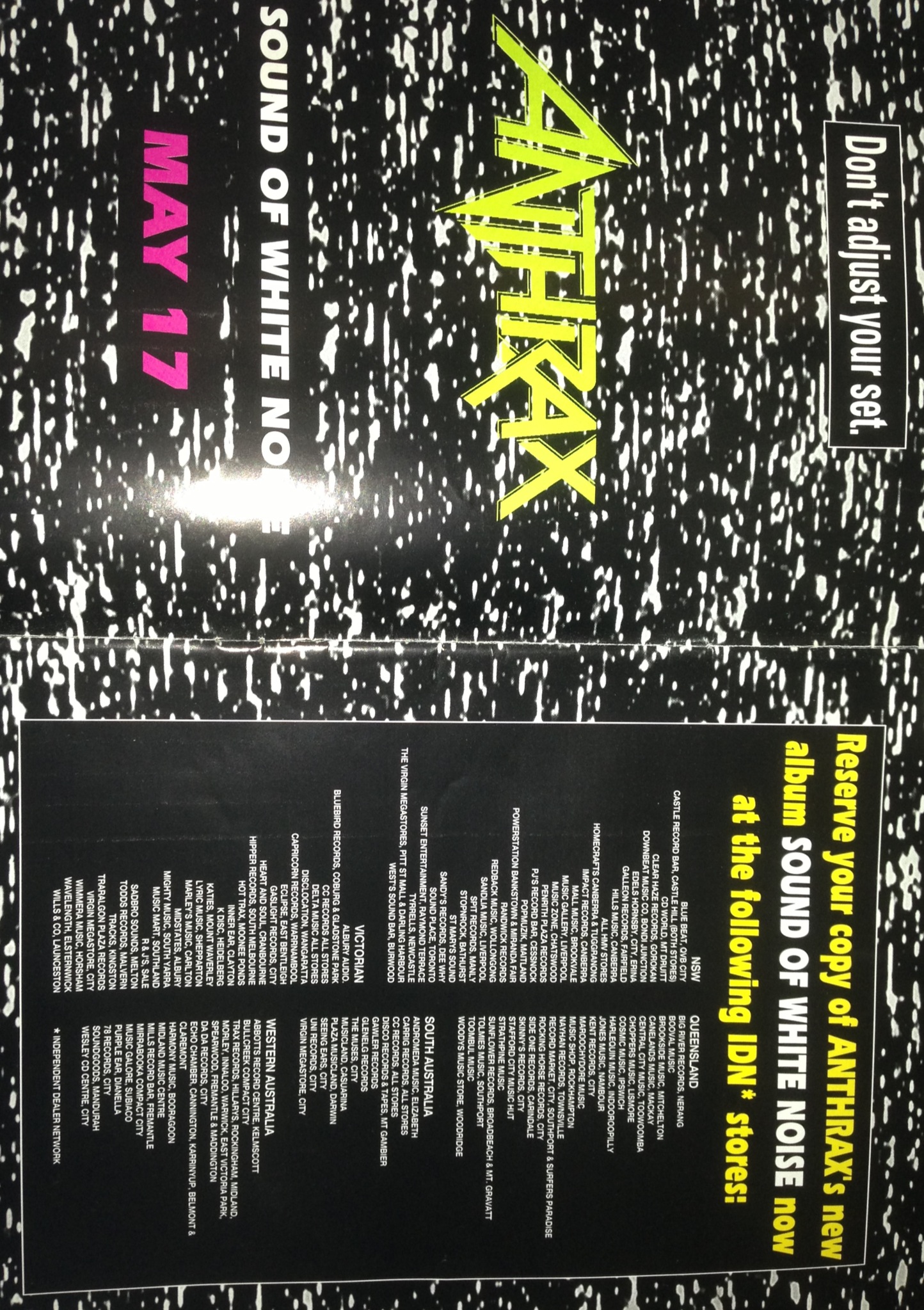
Scott Ian from Anthrax can get his fans to go to all of the stores mentioned above. I trust that none of them are around anymore. It wasn’t piracy that killed them off, it was new technologies and bad business models.

The major chains all could have innovated, however they didn’t. Steve Jobs and Apple did. Daniel Ek and Spotify did.

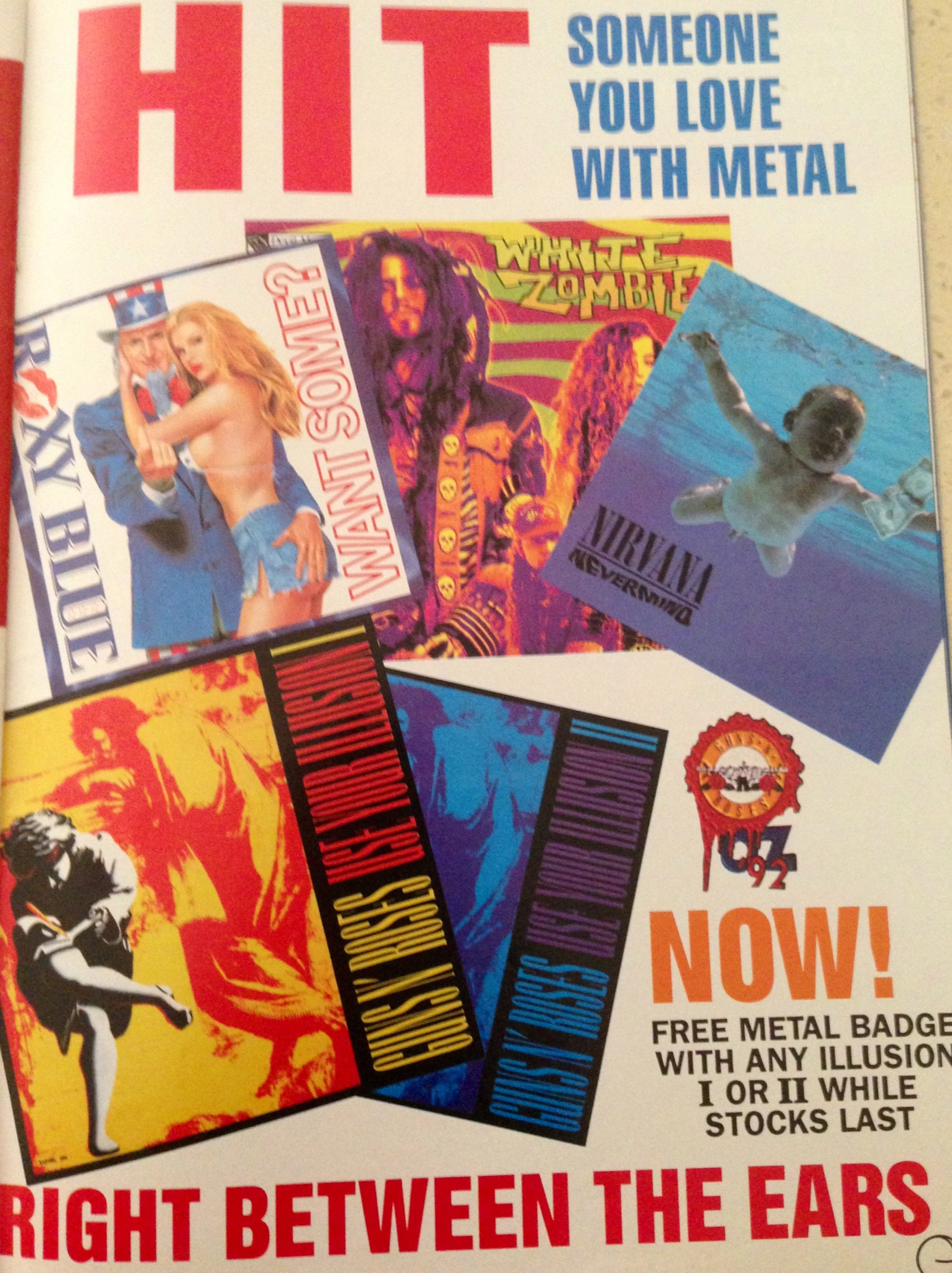
In relation to the record labels. Imagine all the poor artists that were on Geffen Records in 1992. Talk about Geffen hedging their bets. That flyer is promoting Guns N Roses and Roxy Blue (Hard Rock) vs Nirvana (Grunge) vs White Zombie (Industrial Groove Metal). Guess we know who was the loser overall. Hard Rock.

The internet has enabled artists to reach out to wider and different communities than they could in the past. Previously, artists had to connect with people nearby and wait on the record label to spread the word.

However in 2013, many more artists are able to connect and build a fan base by finding and bringing together a unique fan base that is right for them and them alone.

Protest The Hero just did it with “Volition” and their Indiegogo campaign.

Coheed and Cambria did a great job with “The Afterman” releases.

Digital Summer is doing a great job at it as a DIY artist.

Marillion started it off in 2001. With everything there has to be a leader and for fan funding, that leader was Marillion.

The purpose of music is not to make people rich. It was always about the social bonding. If an artist can accomplish the bonding part, then the artist is giving the fan a reason to buy. It is human nature to reciprocate, to acknowledge value.

All those artists complaining, that they are losing, is because they are obsessed with the money they are losing. They have no one to blame but themselves. They are losing money because they no longer are making connections. They are just offering a piece of music up for sale without any connections and relationships. That is the bad way.

Standard
A to Z of Making It, Music, My Stories, Piracy

The Lies Of The Beautiful Record Labels And The RIAA

During the recorded music industries heyday, there was this widespread idea, sort of like an unwritten law, that we (the fans of music) could purchase music and own it, the same way we purchased and owned the toaster and any other commodity.

Of course when it comes to music, that was never the case. What the music fans actually purchased was a non-transferable license to listen to the music under very specific and strict conditions. Nothing else was transferred to us with our expensive $30 purchase of a CD, other than the right to enjoy the music in private, over and over again.

So what do we have now. We have sales of music falling. Actually they have been falling for some time. The RIAA and the record labels are attributing this to piracy alone, linking the decline of sales with the increase of P2P file sharing usage.

So for the RIAA and the Record Labels, plus some misguided artists, it is simple, these two events correlate, so it implies that one is causing the other to move.

The thought that fans of music have changed the way they consume music doesn’t compute for the Majors and their association.

The arrival of iTunes and the chance to cherry pick what we want rather than complete albums is a pretty good indication that revenue streams would reduce. Instead of spending money on an expensive shiny piece of plastic for two songs, we could now just download those two songs.

The arrival of YouTube and streaming services have also put a dent into the traditional sales model. Of course, piracy does play its part, however with the increase in people attending concerts and festivals, one needs to ask the question, did piracy assist in this?

Watch the Iron Maiden doco, Flight 666. Nicko McBrian talks about not selling an album in Costa Rica, however they have sold out the local sports stadium. Twisted Sister haven’t released any new music, however in Europe they have a massive fan base that includes both old and young. Did piracy cause this?

The arrival of many platforms that allow DIY bands to release has caused a flood of new music to enter the music business. Competition is now at an all-time high.

What about the price of music? Normally if demand for a certain product drops, the prices for that product fall as well, to reflect the lower demand. It is simple economics. So what do the record labels do? They maintain the high prices so that they can maximise profits. So the recording industry is holding on to high price points and they blame piracy in the meantime for the decline in sales.

So if people are purchasing less music or illegally downloading content, how is this effecting the income of artists? Do artists still have an incentive to create music.

For starters, the majority of artists do not get into music to be millionaires. They get in to music because it satisfies a basic human need to be creative.

In relation to less incentive, this doesn’t seem to be the case. There is so much music hitting the market that no one has enough time to hear it all. In addition, if the artists is doing the live circuit, incomes in this arena are increasing. Some artists that don’t sell a lot sure get a lot of people into their shows.

Standard
A to Z of Making It, Music, My Stories, Piracy

It’s Not The Media’s Job To Keep Artists In The Public Eye. The Difference Between The Past and The Present.

By September 1986, Yngwie Malmsteen had released Trilogy. As a solo artist that was his third long player in the same amount of years. In total, if you include the Steeler and Alcatrazz releases, that made it six long players in four years. You see, back in the Eighties, it was all about the music. That was the only way that artists could get traction back then. It was Malmsteen’s job to keep himself in the public eye.

So what has changed in 2013. Nothing really. It still is about the music. This is what every artist should be doing in this day and age. Releasing music and doing it frequently.

A big difference between the Eighties and Now is the label support. Back in the Eighties, a label would front the money for recording and tour support, with a view to recoup those monies through sales of the long players. It was a deal stacked in the record labels favour. Today, the labels are all about the safe bet, so even though the recording costs are at super lows, it is expected that the artists would front this cost.

Continuing with the Malmsteen example, he released “Odyssey” in 1988 with Joe Lynn Turner on vocals. The album became Malmsteen’s most successful album of his career. As soon as he became commercially successful, he fired the singer and started over again.

When shredding and neo-classical went out of fashion in the record label controlled U.S market, Malmsteen still forged a successful career in Europe and Japan during the 1990’s. He remained true to himself and he never sold out to cash in. People might disagree with his comments, I sure do, however when everyone is trying so hard to be liked by all, fans never really get to see the artist beneath the silt.

The world is going through a revolution and it is all about intelligence. That is why when an artist makes a remark, one side of the Internet calls it uneducated. That is why people jumped on Malmsteen’s remarks about piracy.

However it’s not about winning every time. The metal record labels and the artists they sign are still clueless. If the first album is not a success, the label just lets them go. They are playing it safe. What the labels should be doing is allowing the artist they sign to take multiple chances. The artist is not going to take risks if they have only one chance with the Record Label.

That is why all the risk takers in metal music are the outliers, the DIY’ers. Then when they break through, the majors come knocking. Look at the Djent movement. It started in forums and soundboards back in 2004 and just kept on growing. By 2009, most of the labels had a Djent artist on their roster.

Look at Machine Head during 2002 and 2003, financing their own sessions and recording of “Through The Ashes of Empires.” When the album started to get traction, Roadrunner U.S came knocking again.

Look at the TV networks from the Eighties. You had 3 to 4 networks, and they all played it safe. In 2013, you have hundreds of TV channels, all looking for an edge. They are all looking for content, and they are giving cash to talented people to deliver. Netflix is a perfect example of taking risks with innovation and content.

If the record labels want listeners, they need to let artists push the envelope and try some stuff out.

If an artist wants listeners, they need to understand that there is just too much information out there. That is why there are over 4 million songs on Spotify that haven’t even been heard yet. No matter how big a story artists have, they will be pulled under by all the information coming down the cyber pipeline, if their music is not great.

Suddenly the album that the artist worked so hard for is in the rear view mirror, 3 to 4 weeks after it’s been released. The only way that sales and charts matter today, is that it shows all the new product released. That is what the public wants. Something new.

Here today, gone tomorrow. Artists need to create constantly now. That’s the only way you can stay in the public eye, in people’s minds. Robb Flynn is doing this with his journals while the world waits for the album. An artist doesn’t want to be forgotten and the album format unfortunately works against the artist today. Somehow other musicians just don’t know it. They want someone else to do the work for them. They don’t want to try new ways and the new way is to bond with the fans. Robb Flynn gets it.

It’s not the media’s job to keep him in the public eye, it’s HIS!

The number one thing a fan wants is more music by their favourite act.

Dream Theater released an album for a new audience. It is the only thing that John Petrucci talked about. “If someone is hearing the band for the first time” was the catch cry in all the press releases. Forget about the new audience, focus on the old. The old will sell the artist to the new. It’s done through music and connection.

If the artist thinks that they gain traction by hanging with the record label, then they are idiots. They are better off blogging, responding on Facebook, spreading news on Twitter. However, there is a still a misconception that getting your story in the newspaper or in the magazines is a sign of traction. Forget that. When a magazine comes out with a three-month lead time, it’s already old news. The magazine is dead on arrival. No one cares about the stories written by the PR/marketing team of the artist.

The way I see it, if an artist is making an album-length statement, they need to have a story or a concept around it. Otherwise ten tracks strung together is not a concept. If you look at society in general, there is almost no place to buy a CD. The world is moving to streaming. Via mp3’s, people will still download/ cherry pick their favourites and there is nothing that artists can do about it.

Nikki Sixx asked his fans to immerse themselves in the whole album experience. In order for them to do, the album needs to be phenomenal, otherwise the fans will just cherry pick the great and leave the rest to be.

We live in a direct to consumer society. Amazon and Google get it. Some artists get it. What about the rest?

Standard
A to Z of Making It, Music, My Stories

Artists Need To Do More To Stay In The Game. Lessons from the Diary Of A Frontman.

I really dig “The General Journals – Diary of a Frontman… and Other Ramblings” that Robb Flynn puts out there. I see them as honest and man he talks some hard truths in there. In an environment where a lot of metal artists are still trying to get some ink in magazines and newspapers as a sign of success, Robb Flynn is going straight to the core. He is speaking to his audience without the need of a middleman.

The truths and frustrations on the song writing process, the whole parting with Adam Duce, the depression that came after it, the Beneath The Silt post, the acoustic shows, the gigs, the Power Chord post and so on.

Most fans of music dig the emotional connection and Robb Flynn is there on the front line trying to make a difference.

Love him or hate him, this is what Robb Flynn is doing for the metal community. He is making a difference. It doesn’t all have to be about YouTube videos or posts of cover songs. The blog is sufficient to keep people interested in Machine Head, without any new music coming. As soon as he releases a new Journal, hundreds of other websites pick up the story and add their own little take on his words.

Randy Blythe is another who is connecting with his photographs.

They are connecting with their fans on different levels.

Every post about the band dynamic and the song writing process, I can relate. I can connect with that. I am sure many other musicians can as well.

The metal community is still about the album cycle. This needs to change. It’s not the nineties anymore. Unless an artist’s product is so outstanding it sells itself, artists need to do more to stay in the game.

Too often artists are unapproachable. I have never met Robb, but I bet whoever he comes across, he will be open to discussion, because he is passionate about what he does. He is excited to talk about his past, the albums that influenced him and current music that has his interest.

Outside of the metal community, you can say that he is unknown to most. He is not mainstream, nor does he want to be. Most of us will fade away and those who create great art will live on, through their work.

Unlike so many in the metal community, Robb Flynn was a seasoned performed when he had success in 1994 with “Burn My Eyes”. As he is getting older, he continues to achieve success. From 2003, and with the addition of Phil Demmel, Machine Head has gone from strength to strength.

In a musical world run by Corporations, who only see the fame and the dollars, Robb Flynn is the anti-hero, the one that is looking for the career. You woodshed, you wait for your time, if you’re great, you will triumph.

He is not fussed if he makes a million dollars or thousands of dollars or hundreds of dollars. All he cares about is being involved with creating music. It’s all about the sound, the song and upon this foundation, Robb Flynn has created his best work. The post on “Halo” and how it took six months to be written is pure gold.

When the history of metal is rewritten in the future, Machine Head and Robb Flynn will be spoken about and revered.  

Standard
A to Z of Making It, Music, My Stories

New Music Releases vs Maintenance Music Releases

Looking at the recent spate of releases from bands that I like, I am asking the question;

When did new music change from being about new and original music to a maintenance model of new music?

Five Finger Death Punch’s new album “The Wrong Side Of Heaven Vol. 1” is “American Capitalist” Part 2. So I am assuming that volume 2 of “The Wrong Side Of Heaven”, will be “American Capitalist” Part 3.

In order to define what I mean by new, I will use Metallica as an example.

Metallica released “Kill Em All” in 1983, which paid homage to the “New Wave Of British Metal” movement with the tempo’s increased to 200 beats per minute. It was new, and there was a technical element to it. It spawned a thousand imitators.

In 1984, they released “Ride The Lightning”. It wasn’t the same as “Kill Em All”. It was vastly different musically and lyrically and it was new. The people responded and Metallica went into refining the “Ride The Lightning” model with great success.

“Master Of Puppets” is a very similar sounding album and the track listing mirrors “Ride The Lightning”. The difference between the albums was the songs. Metallica improved as songwriters. The people responded even more. Then came the technical masterpiece of “..And Justice For All”. Again, the structure of the album was built around the “Ride The Lightning” model. However, even though it was a new album, it was still released under the maintenance model built around “Ride The Lightning”.

Then in 1991, they pressed the reset switch and released “Metallica”. It was back to the new and the people responded in the twenty millions. The “Load” and “ReLoad” albums that followed fell into the Maintenance model of releases that followed the format of the mega successful “Metallica Black” album.

Then in 2003, they pressed the reset switch again and released “St Anger”. It was back to something different. Regardless of what others thought of it, it was a gutsy move to release an album that sounded like that, along with chaotic song structures.

Then in 2008, they pressed the reset switch one more time and delivered a new album rooted in the old. They had taken the best things from the “Ride The Lightning” model and the “Metallica Black” model to deliver “Death Magnetic”.

All bands encompass these transitions.

Let’s look at Dream Theater.

In 1988, they released “When Dream and Day Unite”. It was new, taking influence from the metal bands at the time and merging those influences with progressive elements.

In 1992, they released “Images and Words”. It was new again. They didn’t go and re-write “When Dream And Day Unite”. The people responded and the album was a success.

In 1994, they released “Awake”. This album formed part of their maintenance. A good album, however you can tell they tried to rewrite “Images and Words.” The people didn’t respond to this album as they did to “Images and Words.”

Then in 1997, they released “Falling Into Infinity”. This was a new album as it moved the band into a more mainstream progressive sound. Although it had progressive elements from all previous releases, the band was pushed to enter this direction. Again, it didn’t meet the expectations of the record label and it also caused division amongst band members.

In 1999, they pressed the reset switch and released a career defining album in “Scenes From A Memory”. People responded again to the band. It was a new album in every sense.

So in 2001, they went into part new and part maintenance mode. “Six Degrees Of Inner Turbulence” kept with the concept theme on CD 2. CD 1 was all new tracks that showcased a very metallic element of the band as well as a very Tool style progressive element. Of course by 2001, Tool were huge all over the world.

Then in 2003, they pressed the reset button again and came out with the best progressive metal album in “Train Of Thought”. Any die hard metaller that wasn’t sure about the band, committed to them with this release. People responded as well, as metalcore was also on the rise and those young kids were looking for other forms of heavy music.

So in 2005, instead of re-doing “Train Of Thought”, they went into a part new / part maintenance model again with “Octavarium.” A notable influence this time around was Muse, who by 2004, were huge all over the world.

With the change of record labels, “Systematic Chaos” saw the band return to the metallic elements of “Train Of Thought” in 2007 with great success.

2009 saw “Black Clouds and Silver Linings” which encompassed everything that Dream Theater is in six tracks. It was New and it set a standard.

2011 saw “A Dramatic Turn Of Events”, the first album to not feature Mike Portnoy, who wanted the band to take a 5 year break and when the band said no, he departed. This album following the maintenance model of “Black Clouds and Silver Linings” and “Images And Words.”

2013 saw the release of “Dream Theater.” It has three songs that really stand out in “Illumination Theory”, “The Bigger Picture” and “The Looking Glass”. In the end, this is Dream Theater trying to create something new, however it is another maintenance album.

When you put these bands against the hundreds of millions of other musicians all making music, how does it all stack up.

There is a lot of great music out there that hasn’t been heard. There is a lot of good, a lot of okay and a lot of crap music as well.

With so much music being made every day and released every day, it is impossible for everyone to listen to it all. So when the label bands do end up releasing music, they need to make sure they captivate us to stick around, otherwise we just move on, trying to find something else in the meantime. Some other new niche. That is the new music business.

When an artist has an audience they need to be thankful for that audience. They need to show some respect towards that audience. The label bands have a head start, however if they turnover too many maintenance style of releases compared to something new and refreshing, the audience will move on.

Standard