Classic Songs to Be Discovered, Influenced, Music, Unsung Heroes

Evergrey – Architects Of A New Weave

The older you get, music becomes about connection.

I’ve been on an Evergrey overdose lately. Partly because I had tickets for the May Sydney show before it was postponed until October. Partly because every pre-release track from “Architects Of A New Weave” kept pulling me back.

And partly because Evergrey occupies a unique space in heavy music.

They write about being human.

Fear.

Shame.

Depression.

Identity.

Redemption.

The messy business of surviving yourself.

So while I’m still waiting for my physical copy to make the long journey from Napalm Records Austria to Australia, I’ve spent the last few weeks immersed in this album.

And the more I listen, the more I think this may be Evergrey’s most hopeful record in years.

Not optimistic.

Hopeful.

There’s a difference.

“Architects Of A New Weave” is Evergrey’s fifteenth studio album.

It’s also the second Evergrey record in over two decades that doesn’t feature the songwriting partnership and lead guitar presence of Henrik Danhage. Plenty of reviews have explored that story already, so I won’t spend too much time dwelling on it.

For me, Evergrey begins and ends with Tom Englund. Bands lose members. Bands change. Bands evolve.

Sometimes they survive it. Sometimes they don’t.

When Henrik Danhage and Jonas Ekdahl left during the “Glorious Collision” era, the wounds felt fresh. Tom Englund sounded like a man trying to hold the pieces together.

This feels different.

The Tom Englund of 2026 isn’t the same man we heard in 2011.

He’s more resilient. More grounded. More accepting of life’s imperfections. And that mindset bleeds into every corner of this album.

Joining Englund are Johan Niemann on bass, Rikard Zander on keyboards, and Simen Sandnes on drums. Henrik Danhage appears to be credited for guitars during the recording period, though I’ll confirm that once my physical copy finally lands.

The album was produced by Tom Englund and Vikram Shankar.

Mixed by Adam “Nolly” Getgood. And the mix is massive.

The low end punches. The drums are modern and surgical. The guitars are thick without becoming muddy.

Without Danhage, lead guitar responsibilities naturally shift.

A lot of the melodic identity now seems to come from Tom’s emotional phrasing and Johan Niemann’s increasingly important compositional role.

Johan isn’t just holding down bass anymore. He’s helping shape the sound of modern Evergrey.

The title itself suggests humanity as authors of its own future. Patterns. Scripts. Self-destruction. Transformation. Reconstruction.

The phrase “new weave” implies something important. Life isn’t repaired by returning to the old pattern. It requires creating a new one.

Almost every song wrestles with the same central idea: You cannot become whole by cutting away the damaged parts of yourself. You become whole by incorporating them into the pattern.

That’s the new weave.

Not repair.

Reconstruction.

Welcome To The Pattern

A spoken word sermon.

“Welcome to the pattern. Step into the flame”
“Together, we shape what the world can’t name”

The future always arrives before language catches up to it. That’s why the world resists it.

The invitation here isn’t to observe the fire. It’s to walk into it. To participate in creating something so new that nobody has words for it yet.

The Shadow Self

This darkness, this darkness calling me

Most people think growth is about eliminating the darkness. It isn’t. The shadow isn’t the part of you that needs to be destroyed, it’s the part you’ve buried, ignored, or been taught to fear.

The darkness keeps calling because maturity comes when you stop fighting the shadow and start understanding it.

Architects Of The New Weave

“Architects of a new weave”
“Recreation of you and me”

Most people are trying to repair their lives when they should be redesigning them.

The phrase “new weave” suggests that transformation isn’t about returning to who you were before the mistakes. It’s about creating a new pattern from the threads that remain.

And “Recreation of you and me” is the real revelation. The people who thrive are the ones willing to become someone new when the old version no longer fits.

The World Is On Fire

“I promised you heaven / A promise that I can’t keep it seems”
“My world is on fire / And all I have to take the flames out are these tears that I cry”

The older I get, the more I realize that love isn’t destroyed by bad intentions. It’s destroyed by human limitations.

Life happens. Fear happens. Weakness happens. These lines aren’t about betrayal as much as they’re about the crushing weight of realizing people are incapable of becoming the person someone else needs them to be.

Make sure you check out the section from 2:30 onwards, And stick around for that headbanging outro.

Heaven

I like the energy of the intro with the keys decorating.

“I was always under and never brave”
“I am desire / I am the fire in your eyes”

The question the song really asks isn’t how you become brave, it’s what kind of force you become when you finally stop disappearing.

And check out the part at 2:52, when they borrow from “The Masterplan”.

The Script

You can call in Djent like in feel and mood.

“How do you shape a heart from a fist”
“There is no way out?”

Life hits, and the instinct is to close the hand. Protect the soft parts. Turn vulnerability into armor.

And then it collapses into the real existential panic: “There is no way out?”

It’s a thought people have at 3am.

The uncomfortable truth is there often isn’t a clean exit. Just the slow, brutal work of reshaping the fist into something that can hold instead of strike.

Leaving The Emptiness

If the opening riff doesn’t get the foot tapping and the head nodding, please check for a pulse.

“I am lost and feeling heartless”
“We’re leaving the emptiness behind”

Here’s the catch: emptiness doesn’t get left behind, it gets carried. It just changes shape.

The song is that good that we also get an instrument version of it on the deluxe. Check out my post on it as well.

Longing

The keys in Evergrey changed on “Hymns Of The Broken” album. They became more soundscape and soundtrack like.

And it continued with “Storm Within” and I remember they mentioned a French electronic act called M83 that influenced them a lot for the vibe of the “Storm Within” album.

And then Englund did his Silent Skies project with pianist/composer Vikram Shankar. Funny that this team also co-produced and co-write this album.

And with each album there has been evolution to the keys.

So here we are with “Longing”. A rock song that sits somewhere between rock and metal and pop and whatever new sonic ethereal soundscape is being created and dreamt up.

This song is perfection.

The vocal hooks are memorable, pop like and the lead from 3:34, so simple and sing along like.

“Who are we when the lights go out?”
“How do we find our way again?”

Strip everything away, status, language, performance, identity, and this is the question left standing.

A Burning Flame (Featuring Mikael Stanne)

How good is the title?

From 3:45, I’m addicted to that feel and mood.

“I was lost and found but lost again”
“Be a burning flame forever”

You get better, then you don’t. You understand yourself, then you don’t. You think you’ve broken through, then life quietly resets the puzzle. Progress, regression, recognition, forgetfulness. Over and over.

But the song refuses to stay in that loop. “Be a burning flame forever” is defiance against stagnation.

Maybe the goal was never to stop being lost. Maybe it was to keep burning while you are.

Call Off Your Lions

A 10/10 song. It has all of the Evergrey trademarks and the songwriting is progressive like.

The best part is that “woh-oh-oh” section from 4:33. It’s hopeful and optimistic and it had me singing it as loud as I could.

“Call off your lions”
“Don’t watch your life from the side, let it go”

The lions aren’t protecting you anymore, they’ve become your prison guards. They keep everyone at a distance while convincing you they’re keeping you safe.

“Don’t watch your life from the side.”

That’s the disease of modern existence. Endless observation. Endless analysis. Endless preparation.

We consume other people’s lives through screens while postponing our own. We wait until we’re ready, until we’re healed, until we’re certain. But life doesn’t wait. It keeps moving whether you participate or not.

Chains Of Shame

Press play for the section at 2:31 which builds and then the drums/bass kick in at 2:52 and I’m soaring.

“I am no stranger to darkness, it knows my name and won’t leave me alone”
“These chains of shame we have worn far too long”

Shame convinces you that your mistakes are your identity, that your failures are permanent, that the worst thing you’ve ever done is the truest thing about you.

The darkness is familiar and the chains aren’t imposed by society alone, they’re maintained by the stories we repeat to ourselves.

Sometimes things need to come undone before they can be rebuilt into something worth becoming.

The Prophecy

It’s “Storm Within” rewritten and updated. And I like that section from 2:30.

“I don’t fear anymore, and I know why”
“And the scars that I used to hide now tell a tale of light”

Courage is what remains after you’ve spent enough years being broken by reality that you stop expecting certainty.

And that’s the real prophecy of the song, the realization that suffering can become instruction rather than identity.

Heights

It’s got a broken hearted vocal melody and the “wo-ohs” chants remind me of electronica acts along with acts like Kings Of Leon and 30 Seconds To Mars.

The track is also a bonus track on the Deluxe Edition.

“I don’t know who I am without fear”
“Keep faking the way that I smile”

What happens when fear becomes your identity?

That’s the uncomfortable question asked. After enough years of anxiety, people-pleasing, and self-protection, fear stops feeling like an emotion and starts feeling like a personality.

You don’t know who you’d be without it because you’ve built an entire life around managing it.

Oxygen

I like that 3:18 section.

“I can’t do this hurt, so why go on, dream on at all?”
“Wish I was strong just like you”

At some point, pain stops being an event and starts becoming a lens. Everything gets filtered through it. Possibility shrinks.

And then comes the comparison trap. “Wish I was strong just like you.”

We all do this. Most of the people we admire are simply carrying burdens we can’t see.

Progressive isn’t all about technical fast passages and intricate time changes. The term progressive also includes songwriting structures, sounds that create moods, the mashing up of different styles, yet the artist still stays true to their style.

And this is what Evergrey is doing here. Staying true to their style.

“Architects Of A New Weave” doesn’t reinvent the band’s sound.

And after fifteen albums, that’s a far more impressive achievement than reinvention.

Ultimately this album isn’t about architects. It’s about survivors.

That’s the prophecy. That’s the burning flame. That’s the shadow self. That’s the new weave.

And that’s why I’ll still be listening when the physical copy finally arrives from Austria.

Standard
Classic Songs to Be Discovered, Derivative Works, Influenced, Music, Unsung Heroes

The Riff That Outlived 80’s L.A Metal

I’ve never liked the term “hair metal.” It’s a label invented after the fact, mostly by record companies, journalists, and industry people who needed a tidy box to file a messy, competitive, and surprisingly diverse wave of rock music into something they could package and sell.

It reduces a whole era of players, many of them serious musicians with deep influences, from blues to Van Halen to classic rock, into a joke about appearance. The reality is they were all just playing rock music, each with their own tone, writing approach, and intent. The label flattens all of that into a stereotype, and once that happens, people stop listening properly.

There’s a moment right at the start of “Lay It Down” by Ratt where everything you’ve been told about “hair metal” quietly falls apart. Not in some dramatic, cinematic explosion, just a clean, surgical collapse. Because that opening riff from Warren DeMartini doesn’t sound like image. It sounds like intent.

You can hear it immediately if you’re paying attention. The low string isn’t just chugging, it’s anchoring. A pedal tone acting like a pulse under everything. On top of that, notes stretch out in ways that feel slightly uncomfortable, like your hands wouldn’t naturally fall there.

And then there’s the melody hiding inside the rhythm, not announced, not spotlighted, just woven in.

And yeah, you can trace the bloodline straight back to Eddie Van Halen. “Unchained” is sitting right there in the DNA.

You can fake your way through a lot of 80s material. Power chords, gain, energy, you’re in the ballpark. But this one doesn’t let you hide. The stretches are awkward. The timing breathes instead of sitting rigid. The muting has to be controlled or the whole thing turns to mush.

It feels effortless when you hear it. It feels impossible when you try to execute it properly.

And that’s why it keeps coming back up in guitarist conversations decades later, while a lot of its peers sit comfortably in nostalgia playlists. It isn’t just a memory trigger. It’s a benchmark.

Most riffs are written to be played in the moment. This one was written to outlive it.

Standard
A to Z of Making It, Classic Songs to Be Discovered, Influenced, Music, Unsung Heroes

Dave Meniketti, Y&T and the Fight For Your Life

There are bands that become brands. And then there are bands that become lifers.

Y&T belongs to the second category.

Which is why most people missed them. Because the culture trains you to chase explosions. First-week sales. But rock and roll was built by road dogs. Bands willing to drive through snowstorms to play to 200 people in a club that smelled like stale beer and wet denim.

That’s where Y&T came from.

Back in 1974, before the branding, before the anniversary tours, before nostalgia became an industry, the band was called “Yesterday & Today”, a name borrowed from The Beatles. And like every hard rock band clawing its way out of garages and bars, they looked half dangerous and half ridiculous. Long hair. Tight pants. Big amps. No guarantees.

Just volume and belief.

And here’s the thing younger audiences don’t fully understand about that era: There was no shortcut.

You built a following city by city. State by state. You played a city enough times that it stopped being a market and started feeling like home. Meniketti says anywhere within five hours of the Bay Area felt local to them.

That’s how careers were built before algorithms decided who deserved visibility. You earned it physically.

The road was the filter.

And if you survived long enough, eventually you ended up sharing stages with giants.

Dave Meniketti talks about touring Europe with AC/DC in 1982 on the “For Those About To Rock” tour like a man remembering the moment the scale of rock music fully revealed itself as a sea of leather and blue jeans.

Think about that image for a second. No phones in the air. No influencers backstage. No corporate activations.

Just identity.

People didn’t attend those shows to create content. They went because rock music was part of who they were.

And AC/DC… they weren’t just successful. They were undeniable. One of those bands that made every other group either rise or disappear.

For Y&T, that tour became validation. Timing met preparation.

Because history rewrites success as inevitability. But careers are timing mixed with survival. Miss the window by two years and the story changes completely.

Then there’s the other side of ‘80s hard rock.

The insanity.

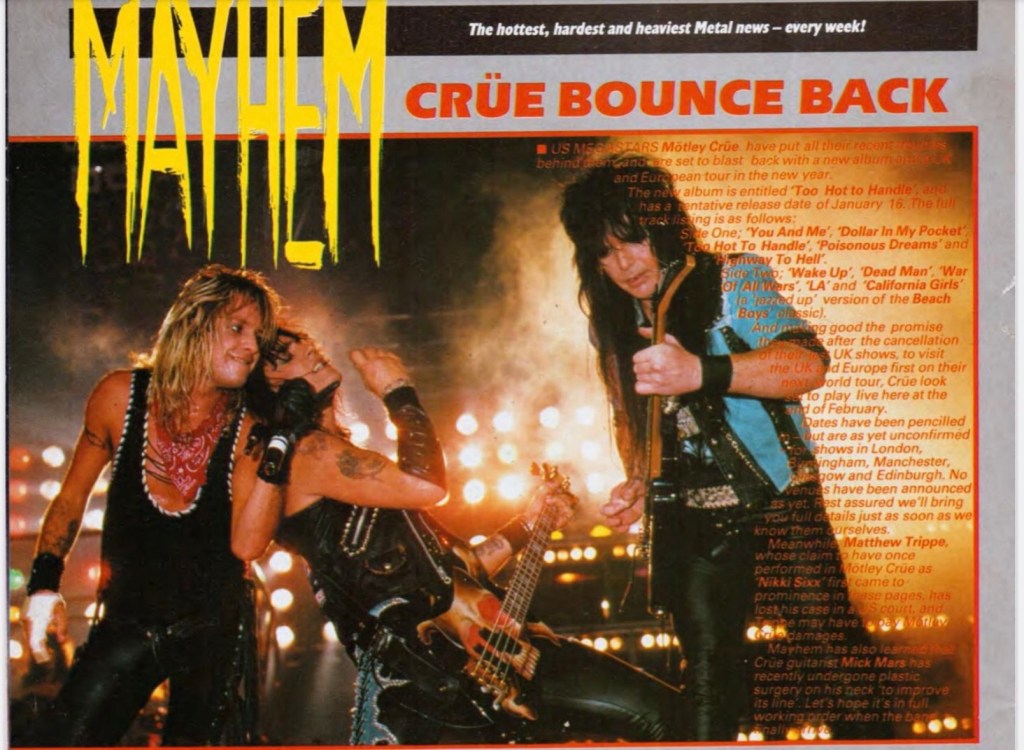
Y&T toured with Mötley Crüe in 1985, and Meniketti tells a story about Crüe’s manager approaching them and saying:

“Keep some of your guys away from our band.”

Which is hilarious when you remember who he’s talking about.

Rock bands back then were unstable chemistry experiments with Marshall stacks.

And yet here’s what separates the survivors from the casualties:

Integrity.

That’s Meniketti’s word, not mine.

He says the secret is integrity with the live show, integrity with the fans, integrity in how they perform.

And that sounds simple until you realize how rare it is.

Most bands eventually start treating the audience like a pension fund. Same setlist. Same speeches. Same tired motions repeated under spotlights for people buying memories instead of experiences.

But fans know. We always know.

We can feel when a band still means it.

That’s why Y&T still draws people decades later. Not because they were the biggest band. Not because they had the most hits. But because they never stopped believing in the thing itself.

The songs. The stage. The connection. The volume.

People think longevity comes from preserving youth. It doesn’t. It comes from preserving purpose.

At the end of the interview, Meniketti says there’s no retirement plan. No exit strategy.

“We’re just going to keep going until we drop.”

That’s not a slogan.

That’s identity.

And reading that 2013 interview in 2026 changes everything.

The classic lineup was still part of the living. But time does what time always does. Since that interview, Y&T lost Phil Kennemore, Leonard Haze and Joey Alves, leaving Meniketti as the last surviving member of the classic era.

And yet the band never stopped.

Meniketti kept touring. Kept singing. Kept carrying the weight of the songs forward like they still mattered. And maybe that’s because to him they do.

And Meniketti kept creating. Acoustic records. Documentaries. Touring schedules that would exhaust musicians half his age. Not because he had to. Because stopping never seemed natural to him.

Sorry this was a large digression.

The post is about “Fight For Your Life” from Contagious (1987), the first record after the jump to Geffen, the moment Y&T stepped into the “big label” world where everything is supposed to get cleaner, bigger, more commercial… and somehow this track still feels dangerous.

The intro and main riff carry that unmistakable chromatic climb, there’s a clear lineage back to something like “Kashmir”, not in imitation but in DNA. That slow, ascending tension that feels like it’s dragging the whole song upward by force.

You can also hear echoes of “Too Late for Love” era Def Leppard in the emotional architecture of it, melodic, but never soft. Then the pre-chorus hits and it shifts gears entirely. It goes full NWOBHM, tight, aggressive, no excess fat, just pure tension waiting to snap.

And then the chorus opens up like it’s trying to break out of the studio walls. Vocally it sits comfortably in the same emotional lane as “Pyromania” era hooks, big, wide, unapologetically melodic without losing its edge.

And the solo doesn’t just arrive, it escalates. It keeps building, stacking layers of intensity until it feels like it’s running out of structural permission to continue, and then it pushes anyway.

Lyrically the core isn’t excess, it’s erosion.

“First the pleasure, then the pain”

Every lifecycle that feels like freedom eventually starts collecting interest.

“Dream a million dreams of gold”

Exposes the illusion engine, ambition reframed as control, when in reality it’s just momentum with no steering wheel attached.

“it goes on and on”

The real psychological trap; not the behavior itself, but the inability to mentally exit it while still inside it.

Nothing here is invented in isolation. Riffs borrowed from somewhere, reshaped through different hands, turned into something slightly new but emotionally familiar.

And when it hits right, like it does here, you stop caring where it came from. You just feel the voltage.

Crank it up.

Standard
Classic Songs to Be Discovered, Influenced, Music

The Record I Almost Didn’t Buy and Couldn’t Escape: Marillion – Script For A Jester’s Tear

You don’t find Marillion. They find you.

Or more accurately, you hear about them sideways.

For me it wasn’t some critic, not some curated “essential albums” list. It was Dream Theater blowing up with “Images and Words”, and Mike Portnoy talking like a fan, not a technician. That’s the tell. When a virtuoso stops talking about chops and starts talking about feeling, you pay attention.

So I went digging. Early ’90s. Second-hand record store. Dust, cracked plastic CD cases, history stacked alphabetically.

And there it was: “Script for a Jester’s Tear”.

I’d seen it before. That cover lingered. You don’t forget it. The Jester, fragile, theatrical, cracked open emotionally. The kind of image that promises something deeper than hooks. Conceived by Fish, brought to life by Mark Wilkinson. Not decoration, invitation.

Still, I didn’t buy it the first time. Two bucks felt like a commitment when you’re chasing every other ’80s record you think you “need.” Funny how that works. You chase quantity until something forces you to sit still and actually feel.

This record does that.

It doesn’t care about your verse-chorus expectations. It doesn’t ask permission. It builds moods. It stretches. It circles back. It trusts you to stay.

And then there’s that middle section. Around the two-minute mark through four. That’s where the mask slips.

The structure shouldn’t work on paper, verse feel, then a lead break, then back again, but emotionally it locks in. Not because it’s clever. Because it’s honest. The music doesn’t resolve, it returns. Like memory. Like regret. Same place, slightly different weight.

And then the words hit:

So here I am once more in the playground of the broken hearts.

That’s not just a line. That’s a pattern. That’s someone recognizing they’ve been here before and still walked back in. No illusion of progress. Just awareness.

One more experience, one more entry in a diary, self-penned.

That’s the quiet brutality of self-reflection. Nobody else to blame. You wrote this chapter.

Yet another emotional suicide overdosed on sentiment and pride.

That’s the real tell. Not heartbreak. Ego. You didn’t just feel too much, you chose it. You leaned into it. Pride kept you there.

Too late to say I love you, too late to re-stage the play.

There’s no rewrite. No director’s cut. The window closed while you were thinking about it.

Abandoning the relics in my playground of yesterday.

That’s the only move left. Not victory. Not redemption. Just… leaving.

That’s why the playground imagery works. Swings. Roundabouts. Motion without progress. Up and down, but you end up where you started. And the line:

I’m losing on the swings, I’m losing on the roundabouts.

It cuts because it strips the illusion. There’s no winning version of this cycle.

And that’s the thing about this song. It doesn’t pretend resolution. Even “The game is over” doesn’t feel triumphant. It feels like someone finally putting the controller down because they’re tired of losing the same level.

The Jester’s tear? That’s the whole thesis. Not just sadness. Not just regret. It’s the awareness of both. The performance and the truth colliding. Smiling while something inside you caves in.

And then that quiet confession:

I never did write that love song, the words just never seemed to flow.

That’s the line that lingers. Because it’s not about writing. It’s about saying the thing when it mattered. And not doing it.

No guitar heroics fix that. No structure saves it. No time rewinds it.

That’s why this record sticks. It doesn’t overwhelm you with complexity, it traps you with recognition.

You’ve been in that playground.

You just didn’t have the words for it yet.

Standard
A to Z of Making It, Copyright, Music, Stupidity

“They Won in 1966: The Hendrix Case and the Lie of ‘A Contract Is a Contract’”

There’s a moment when you read a court decision and you realise, this isn’t about justice. It’s about architecture.

Not justice. Architecture.

Because what just happened with Jimi Hendrix’s bandmates isn’t shocking if you understand the system. It’s only shocking if you still believe the system is trying to be fair.

The estates of Noel Redding and Mitch Mitchell walked into court thinking they were arguing about rights.

They weren’t.

They were arguing against a blueprint that was locked in before they even plugged in their amps.

And the judge basically said:
Yeah… the blueprint holds.

Let’s call this what it is.

These guys helped build the sound. They played on “Are You Experienced”, “Axis: Bold as Love”, “Electric Ladyland”. That’s not background noise, that’s the DNA of rock music.

But legally?

They’re session players with better branding.

Why?

Because somewhere in the 1960s, when you couldn’t get your music heard without a label, when gatekeepers weren’t optional but oxygen, they signed a contract that said: “We (the producers) own everything. Forever. Everywhere.”

And the court looked at that and said:

Cool. Case closed.

Here’s where it gets twisted.

Everyone loves saying “a contract is a contract.”

Until it isn’t.

Because we’ve seen legislation, actual law, designed to give artists their rights back over time. We’ve seen frameworks like the U.S. Copyright Act of 1976 termination rights that basically admit: “Yeah… artists got screwed. Let’s give them a way out.”

So the narrative becomes: when labels want certainty, contracts are sacred. When artists want relief, well, it depends…

And suddenly legislation becomes optional. Flexible. Interpreted.

Funny how that works.

But here’s the real game, and this is the part most people miss.

The label didn’t “win” this case.

They won it in 1966.

Because they didn’t just sign a deal, they defined the category of ownership itself.

They made sure the band never owned the master in the first place.

And if you never owned it?

There’s nothing to return. That’s not a loophole. That’s design.

Think about the power dynamics for a second.

You’re a band in the ‘60s. You want: Studio time. Distribution. Radio play

All controlled by the same entity.

So you sign.

Not because it’s fair. Because it’s the only door in the building.

That’s not negotiation. That’s survival. And decades later, a court looks back and says: “Well… you agreed.”

Technically true.

Practically absurd.

And here’s the part that should really bother you. The judge didn’t say the deal was fair. He said it was clear.

That’s the entire threshold. Not fairness. Not balance. Not context. Clarity.

So if you screw someone over clearly enough… it’s enforceable forever.

That’s the lesson.

Meanwhile, Sony Music Entertainment UK walks away saying:

“We’re pleased our rights have been confirmed.”

Of course they are.

Because those “rights” were engineered in an era where artists had none.

And before you think this is ancient history, it’s not.

The contracts look different now. Cleaner. Friendlier. But the structure?

Still the same.

Artists today don’t get told: “We own your masters forever.”

They get told: “We’re partnering with you.”

Then buried in the language: Licensing terms that never end. Revenue splits that never shift. Control clauses that quietly lock everything down.

Same game. Better PR.

So yeah, it feels like labels pick and choose when rules matter. But the truth is colder than that.

They don’t break the rules. They write them early enough that they never have to.

This case wasn’t about Hendrix’s bandmates losing.It was about a system doing exactly what it was built to do:

Protect ownership. Not contribution.

And until that changes?

You can play on the record. You can define the sound. You can help change music forever.

And still legally own… nothing.

That’s not a glitch.

That’s the business.

Standard
Classic Songs to Be Discovered, Influenced, Music, My Stories

Nobody Rides For Free

There’s something unsettling about a band when they stop sounding like themselves… and somehow become more honest because of it.

That’s what “Nobody Rides for Free” feels like.

It doesn’t belong neatly anywhere. Not on an album. Not in the canon people casually reach for when they say Ratt. It lives off to the side, buried in the sunburnt chaos of “Point Break”, a film about adrenaline, identity, and the cost of chasing something you can’t hold onto.

Which is exactly what this song sounds like.

This wasn’t just another track.

It’s their first recording without Robbin Crosby, the muscle behind “Ratt ‘N’ Roll” and whether you think that absence directly shaped the song or not, you can feel the air change. The density is gone. The gloss is stripped back. What’s left is space… and in that space, something more dangerous creeps in.

Restraint.

Ratt were never about restraint.

They were about excess, hooks, attitude, swagger. The Sunset Strip distilled into sound. But here? The arrangement breathes. It doesn’t pile on. It withholds. The guitars don’t smother you, they stalk. Warren DeMartini plays like a guy who knows silence is a weapon.

And Stephen Pearcy doesn’t seduce here.

He warns.

That’s the shift most people miss.

This isn’t “come along for the ride.”

It’s “understand the cost before you even think about getting in.”

Even the DNA of the song hints at something different. You’ve got Steve Caton, a guy shaped by film and television, writing alongside Pearcy, DeMartini, and Juan Croucier. That matters. Because this song doesn’t just play, it frames. It feels like a scene. A tension arc. A moment where the character realizes the rules have changed and nobody bothered to tell them.

Then again, the large amounts offered to artists to submit soundtrack songs is a huge incentive.

And then you hit the title.

“Nobody rides for free”

Every choice has a cost. Every high comes with a tab you don’t see until later.

In life? It’s everything.

Relationships. Careers. Identity.

You think you’re getting away with something.

You’re not.

The bill just hasn’t arrived yet.

“In my dreams see I’m on TV / Get back exactly who I wanna be”

This is identity as performance.

Not discovery, construction.

It assumes the version of you in your head is already valid, already formed, already worthy, just waiting for recognition.

But reality doesn’t reward internal narratives. It rewards execution.

So there’s tension here: the dream self is controlled, admired, defined while the real self is blocked, frustrated, unproven.

And that gap?

That’s where most people stall out.

“I’m sick and tired of it getting in my way”

This is the line where ambition turns impatient.

“It” is never defined, which is the point.

“It” becomes: Other people, systems, limitations or, more uncomfortably… your own lack of progress

You either: remove the obstacle, or keep blaming it

Most people choose the second option because it protects the ego.

Don’t stop to think ’cause I know where I stand”

This is pure momentum thinking. And it’s seductive as hell.

Because overthinking kills action, but not thinking at all kills direction.

“You’ve gotta pay to play”

This is the thesis. Strip everything else away, this is the operating system.

Nothing is free: not success, not freedom, not identity and not even escape

You pay in something: time, reputation, relationships or sanity

And here’s the uncomfortable truth most people avoid: you don’t get to choose if you pay. You only choose what you pay with.

That’s the real contract.

“You thought he could swim but I guess you were wrong / You sink to the depths of your misery”

This is where the fantasy collapses.

Someone bet on ability, maybe their own, maybe someone else’s, and lost.

And the wording matters: “Thought he could swim” is assumed competence. “Sink to the depths” is reality doesn’t negotiate.

This is what happens when self-perception isn’t matched by capacity.

And the world is ruthless about exposing that gap.

No warning. No soft landing. Just gravity.

Nobody Rides for Free isn’t a freedom anthem. It’s a cost-of-entry manifesto.

Wrapped in attitude, sure. Delivered like defiance. But underneath, it’s brutally transactional.

You want the life? Pay for it.

You think you’re ready? Prove it.

You believe your own hype? The fall is coming.

And that’s why it feels “un-Ratt-y.”

Because it’s not selling the dream.

Standard
A to Z of Making It, Derivative Works, Influenced, Music, My Stories

The Record Vault and Australian Method Series: AC/DC – High Voltage (Australian version)

You can almost hear the hum of fluorescent lights in every suburban garage where AC/DC began. No glamour. No myth. Just sweat, static, and the clank of an amplifier that sounded like it had been dropped down the stairs. But that was the point. They weren’t selling dreams, they were bottling defiance.

Australia’s still shaking off its colonial hangover. The cultural exports were imports: Beatles on the airwaves, Hollywood in the cinemas, the British accent of cool still echoing through every youth who wanted to be someone. Then a gang of scruffy kids plugged in, turned up, and said no.

That “no” became “High Voltage”.

It wasn’t just an album, it was an interruption. A distortion through the polite frequencies of a country too afraid to sound like itself. Angus in his schoolboy outfit, Bon with a sneer that smelled like whiskey and danger, these weren’t poses. They were weapons. They took the mundane, working-class energy of a thousand sticky-carpet pubs and turned it into electricity.

The riffs weren’t clever. They were necessary. Simple, repetitive, primal. Music that didn’t care what you thought of it, it only cared that you felt it. The kind of sound that doesn’t wait for permission to exist.

AC/DC didn’t need validation from London or Los Angeles. They built their empire on beer-stained stages, not industry handshakes. They weren’t trying to be global, they were trying to be alive. And that’s why the world eventually came to them.

When “High Voltage” dropped, it shocked a nation still tangled in its moral corset. Parents hated it. Radio hesitated. The press called it obscene. Good. That’s how you know it’s real. Every moral panic in history has started with the sound of youth refusing to behave.

And here’s the thing, Bon Scott wasn’t just singing about sex and sin. He was singing about freedom. About living with the volume stuck on eleven because the alternative was silence. He wasn’t poetic; he was truthful. In a world that worships polish, truth sounds dirty.

Fifty years later, they still haven’t diluted it. They didn’t need to reinvent themselves, because the formula wasn’t a formula, it was a philosophy. Do one thing, do it honestly, and never flinch.

That’s the real cultural revolution AC/DC started: not rebellion for its own sake, but the audacity to be unapologetically yourself. To take your flaws, your roots, your rough edges, and broadcast them like a lightning bolt across the sky.

Australia didn’t just gain a rock band that year, it gained a backbone.

And maybe that’s the lesson that keeps echoing: every era needs its “High Voltage” moment, that instant where you stop waiting for validation and start amplifying who you already are.

It’s not nostalgia. It’s a reminder.

You don’t need the world’s permission to make noise.

You just need an amp, a song, and the courage to flick the switch.

Standard
A to Z of Making It, Derivative Works, Influenced, Music, My Stories, Unsung Heroes

Ross The Boss – Heyday: The Record That Refused to Belong Anywhere

Ross the Boss is gone.

Most people will stop the story at Manowar. Big sound, bigger mythology. Steel, leather, and volume turned into identity.

But that’s only half the truth.

Because in 1994, when rock was busy cannibalising itself into subgenres and scenes, Ross dropped “Heyday”. One album. No follow-up. No safety net. And now… not even on streaming.

Which makes it dangerous.

Because you can’t casually consume it. You have to commit to it.

Ross wrote a manifesto in the liner notes:

When I started playing guitar, it didn’t matter what type of Rock ‘N’ Roll you played, it was all just called ROCK! It hadn’t yet become so segregated into so many labeled categories.

Now, after twelve allums, I find myself, once again, going against the grain of the “mainstream”, playing the music that I choose to – and just having a great time with it.

So whether the mainstream becomes the underground; or the underground becomes the mainstream, Heyday is going to ROCK!”

That’s not nostalgia. That’s defiance.

By ’94, rock had fractured into tribes, grunge, metal, alternative, punk revival and let’s not mention how many labels hard rock and metal went into, each one building fences to keep the others out.

And Ross? He walks straight through all of them.

Blues rock. NWOBHM. New York punk. Glam attitude.

No permission. No alignment.

If the world narrows, you widen.

This wasn’t a solo indulgence. This was a unit: Ross the Boss on guitar, Charlie Cayte on vocals, Richie Fazio on drums and Erik Boyd on bass.

Charlie Cayte is the ghost in this machine. One of those singers who should’ve been everywhere… but got caught in the wrong year.

Because by 1994, the industry had already decided what rock shouldn’t sound like.

Mine Tonight

It starts with a riff that doesn’t ask, doesn’t build, doesn’t tease, it arrives.

Immediate. Violent. Alive.

“Now I’m aware of mine, are you aware of yours?”

That line hits because most people aren’t.

They hesitate. They soften. They hide behind ambiguity.

This song doesn’t.

Know what you want. Say it. Most people never do, and that’s why they never get it.

Mother Mary

This should have been massive. Arena chorus. Built for thousands.

Instead, it got buried.

“Mother Mary did you make the people, or did we make you?”

That’s not rebellion, it’s interrogation.

We build belief systems, then kneel to them. Religion, careers, identities. We forget we created them in the first place.

“I’ve been prayin’ for so long, to someone I don’t know…”

That’s existential drift.

If you don’t choose your beliefs consciously, you’ll spend your life serving them unconsciously.

A Matter of Time

Blues creeps in. Not as a genre, as a truth.

“To wait for the right moment was my first mistake.”

There is no right moment.

There’s only the moment you either take, or lose.

“I was born too early, and you were born too late.”

Timing isn’t romantic. It’s ruthless.

Hesitation doesn’t protect you, it erases you.

Brown Eyed Girl

A Van Morrison classic, dragged through a louder, dirtier filter.

Less nostalgia. More movement.

It’s not trying to improve the original, it’s reclaiming it. Making it live in this band’s world.

And that’s the point of covers when they work: not tribute, transformation.

Private Hell

This is where the album turns inward.

“I built the inferno…”

That’s the line.

Because people love blaming the fire, but not building it.

“Now a key’s been handed down my way…”

Recognition is the key. Not escape.

The moment you admit you built the problem is the moment you gain the power to dismantle it.

Movin’ On

This one swings.

You can hear echoes of Van Halen swagger and AC/DC punch. It’s reckless, fast, borderline unhinged.

“When push comes to shove, I’m gone.”

That’s freedom, but also avoidance.

There’s a fine line between movement and escape.

Reinvention is powerful, but if you never stay, you never build anything that lasts.

The Letter

The emotional core channeling Hendrix and “Little Wing”.

No metaphor. No disguise.

“What’s done is done and it can’t be changed.”

That’s it.

No modern spin. No redemption arc baked in.

Then the dagger:

“If I could call back father time… things would be the same.”

That’s self-awareness at its most brutal.

It’s not about wishing for a redo. It’s about understanding you weren’t ready to choose differently.

Don’t chase second chances. Build the mindset that wouldn’t need one.

Pack of Lies

Anger, but focused.

“You’re the first to sign the card, but the last to write the check.”

That line lands in any era.

Performative virtue. Empty signalling. Talking big, doing nothing.

Integrity is measured in action, not alignment.

Search and Destroy

A cover of Iggy Pop, but stripped of subtlety and pushed into hard rock aggression.

It’s less art-punk, more street fight.

And it works, because the band commits fully. No irony. No distance.

Back Where I Belong

Back to that EVH stomping groove. Back to weight.

“No way to know what feels right until you give it a try.”

Simple. True. Rarely followed.

People want certainty before action. Life doesn’t work that way.

Experience is the only real teacher, and it charges upfront.

It’s not just a “lost album.”

It’s a contradiction: Too late for the scene it belonged to. Too early for the nostalgia cycle that would’ve saved it. Too honest to reshape itself for trends

So it disappeared.

But that’s also why it still works.

Because it’s not tied to anything external.

It’s tied to a mindset: Play what you believe. Say what you mean. Accept the consequences.

No compromise. I called it:

“A perfect slab of hard rock.”

And it is.

But underneath that? It’s a manual.

On desire. On belief. On regret. On consequence. On owning your life, even when you get it wrong.

Most albums chase relevance. Heyday rejected it. And that’s exactly why it still matters. If you find the CD at a used store, buy it.

Rest in peace, Ross the Boss.

Standard
Music, Stupidity, Treating Fans Like Shit

The Night Axl Rose Chose Ego Over Fans: The Eastern Creek Guns N’ Roses Disaster

I’ll never watch Guns N’ Roses again. Eastern Creek was enough.

For those who weren’t there, January 30, 1993 at Eastern Creek Raceway should have been legendary. A sea of people standing in 40-degree heat. Depending on who you believe it was anywhere from 20,000 to maybe close to 100,000 fans. Either way, it was huge. And everyone there wanted the same thing, to see the biggest rock band in the world.

The day actually started the right way.

Pearls & Swine opened. I still wonder what ever happened to them. I’m sure a Google search would give me the answers.

Rose Tattoo came out swinging with that filthy slide guitar.

Skid Row were handing bottles of beer into the crowd, even though glass was banned, which was reckless and perfect and exactly what rock and roll used to feel like.

Everything about it felt dangerous and alive.

Until it didn’t.

Because then we waited.

And waited.

And waited.

The band were supposed to arrive by helicopter. Which sounds cool until you realise you’ve been standing in brutal heat for hours while nothing happens. Eventually the word spread through the crowd around 9pm: Axl Rose was still in Melbourne because he “wasn’t feeling it.”

Not sick. Not stranded. Not injured.

Just… not feeling it.

That’s the moment the magic died.

When the band finally hit the stage more than two hours late, the damage was already done. People were walking away from the show as they played. When “Paradise City” started it was the cue for a mass evacuation.

Thousands of people had missed their last trains home. Remember, this was a raceway miles from proper public transport. Fans were stranded because the frontman of the biggest band on earth decided the schedule was optional.

And that was the pattern.

This wasn’t an isolated rock-star mishap. This was behaviour.

Two years earlier at the Riverport Amphitheater on July 2, 1991, Rose spotted a fan filming the show. Instead of letting security deal with it, he jumped into the crowd himself, attacked people trying to grab the camera, came back onstage and announced:

“Thanks to the lame-ass security, I’m going home.”

Then he smashed the mic and walked off.

The crowd rioted. More than 60 people were injured. Fifteen arrests. The venue wrecked.

A year later came the infamous Montreal disaster at Olympic Stadium on August 8, 1992.

Metallica had already cut their set short after James Hetfield was badly burned by pyrotechnics. That night could have been Rose’s moment to be the hero, to carry the show, save the night, give fans something.

Instead he complained about his voice and walked off early.

The crowd exploded. Cars outside overturned. Fires lit. Windows smashed.

Hero moment… squandered.

And by 1992 the late starts had already become routine. Fans waiting hours was basically part of the ticket price.

Before the Sydney show there had already been the chaos of the Melbourne gig at Calder Park Raceway. The Victorian Ombudsman later produced a 100-page report describing what was arguably one of the worst concerts ever staged in Australia.

One line from that report says everything:

“The area later became a saturated and smelling swamp due to the heavy rains and the urine.”

Melbourne had 40 degree heat, violent winds and driving rain. Sydney just got the furnace, 40-degree heat.

Both crowds got the same treatment.

Because the shows were staged at remote racing venues, thousands of fans had no way out once transport shut down. Add brutal heat and suddenly water started selling for around $7 a bottle, which in 1993 was outrageous.

Meanwhile inside the band, things were falling apart. Rose had effectively isolated himself from the rest of Guns N’ Roses, especially Slash, largely over Slash’s involvement with Michael Jackson.

The divide was so deep Rose travelled on a completely separate helicopter, stayed in a different hotel, and even entered the stage from the opposite side.

That tells you everything.

Look, rock and roll has always had chaos. That’s part of the mythology. The danger, the excess, the unpredictability, that’s the electricity people pay to feel.

But there’s a difference between rock-and-roll chaos and just not giving a damn about the people who paid to see you.

That night at Eastern Creek, Axl Rose had a choice.

He could respect the crowd standing in brutal heat waiting for him. Or he could treat the fans like they didn’t matter.

He chose the second option.

And once you see that choice clearly, it’s very hard to unsee it.

Standard
A to Z of Making It, Music, Unsung Heroes

When Trixter Thought the Party Would Never End – Guitar World June 1991

June 1991.  

Hair spray was a performance enhancing drug, MTV still played music, and four kids from Paramus, New Jersey had just hacked the suburban‑teen lottery.

Trixter weren’t supposed to “make it.” They were mall rats from a shopping town, grinding 200 shows a year, aiming no higher than the Meadowlands and maybe, if the gods were drunk, Madison Square Garden. Then the planets lined up: a grimy New York club called The Sanctuary, a label guy in the room, a contract on the table a week later, and suddenly they’re on MTV every hour pretending this is all just happening to them. 

That’s the moment frozen in this Guitar World interview: the exact second where the rollercoaster is still climbing and nobody hears the chain starting to rattle.

On the surface, it reads like standard early-’90s rock-mag candy.

Origin myth.

Garage rehearsals.

High-school sleep deprivation.

Parents pretending they’re annoyed but secretly proud.

Then the montage: endless club gigs, the one basement venue that matters, the industry guy who changes everything. Numbers follow, sales, tour slots, rotation, framed as disbelief.

And the quote. The wall-poster quote.

“All the fame and fortune… is great, but we’re just some dudes from a shopping town in New Jersey who play music.”

That line isn’t accidental. It’s the formula.

The band must be aspirational and accessible at the same time. Superheroes who still feel like kids from homeroom. Big enough to worship. Small enough to imagine becoming.

That’s the business model.

So is the GW interview a PR piece?

Of course it is. This is Guitar World, 1991. The structure is pure promo:

Build the myth (kids + garages + malls + mishaps).

Flex the numbers (MTV, tour slots, sales).

Humanize the product (parents, girlfriends, pizza on the bus).

End with some variation of, “We’re just grateful to be here, man.”

But buried under the sugar, Steve Brown keeps slipping you protein.

He admits they designed themselves as a teen band after reading about Def Leppard. He talks about carefully arranging guitar parts, thinking in terms of Desmond Child‑style songcraft instead of just riff‑vomiting. He’s obsessed with Van Halen’s first record and wants to capture that “as live as possible” energy on a big‑budget debut. He knows MTV rotation is a once‑in‑a‑lifetime weather pattern and they’re trying to build as many houses as possible before the storm passes.

That’s not just PR. That’s a 20‑year‑old already thinking like a lifer.

The tragic part is that no one knows the meteor is already in the air. Grunge is loading in at the other end of the decade while he’s still talking about opening for Poison. Everyone in the piece sounds certain they’ve cracked the code forever, when in reality they’ve rented a very small window in a very specific era.

It’s not deep journalism, but it accidentally becomes deep nostalgia: a time capsule of what it feels like to be young, ascending, and completely wrong about how long the ascent lasts.

So what happened when the lights finally came up?

The short version: the wave crested, then physics did what physics always does.

Trixter rode that first record hard. Tours, videos, magazine covers, the full package. Then the wheel turned. The second album didn’t hit the same, the climate shifted, radio and MTV moved on. The band dissolved in the mid‑’90s, another casualty of a genre that went from omnipresent to punchline in about as much time as it takes hair spray to dry.

Steve Brown didn’t vanish into the suburbs to sell insurance and tell bar stories about “that one time on tour.” He kept going. Other bands. Side projects. Session work. Cover gigs. Tribute projects. Reunion tours. New Trixter records. The guy turned being “that dude from Trixter” into a 30‑plus‑year career by refusing to treat the early ’90s as the peak.

This is what nobody tells kids in bands: the story doesn’t end when your video falls out of rotation. It keeps going, just on smaller stages with fewer free drinks and way more self‑awareness. It stops being about winning the rock‑star lottery and starts being about whether you actually like the work enough to do it without confetti cannons.

Steve clearly does.

So why did I bother digging through a yellowing Guitar World piece in 2026?

Because it’s the perfect diagram of how the machine used to work and, honestly, still does, just with different haircuts and platforms.

You can see:

The fantasy: four normal kids “accidentally” becoming rock stars.

The marketing: humble‑brag quotes, carefully curated struggle, the illusion that this is reproducible.

The truth leaking out the sides: obsessive grind, calculated image choices, a main songwriter already thinking like a producer.

It’s easy to mock bands like Trixter from the safe distance of hindsight. The clothes, the lyrics, the Aqua Net. But when you strip away the clichés, what’s left is familiar: talented kids trying to turn obsession into a life, trapped inside a trend they don’t control.

The interview captures the moment right before they discover a hard rule the industry never prints in glossy pull‑quotes:

You are not your chart position.  

You are not your MTV slot.  

You are what you keep doing after the world stops caring.

In 1991, Trixter thought the party would last forever.  

In 2026, Steve Brown is still playing guitar for a living.

Turns out that’s the better ending anyway.

Standard