A to Z of Making It, Influenced, Music, Unsung Heroes

Audrey Horne – Achilles: The War Inside Us

Audrey Horne have always been something of a contradiction.

Formed in Bergen, Norway, in 2002 by musicians better known for extreme and progressive metal, they deliberately chose another path: classic hard rock built on riffs, melody, swagger and songs that demand to be played loud.

The pedigree was serious from the beginning. Thomas Tofthagen, Tom Cato Visnes, Kjetil Greve, Torkjell “Toschie” Rød, Arve Isdal and Herbrand Larsen brought connections to bands including Sahg, Gorgoroth and Enslaved, but Audrey Horne became their escape route from extremity.

Their 2005 debut, “No Hay Banda”, earned strong reviews and a Norwegian Spellemann Award, while “Le Fol” (2007) pushed them further into the European rock circuit.

Then came the breakthrough. Their self-titled 2010 album was my introduction to the band. I spent three months in Europe back then and overdosed on it.

“Youngblood” (2013), “Pure Heavy” (2014), “Blackout” (2018) and “Devil’s Bells” (2022) progressively sharpened the formula: big guitars, bigger melodies and an increasingly confident identity. They survived lineup changes, relentless touring and a pandemic interruption, emerging as one of Norway’s most dependable modern hard-rock bands.

Now comes “Achilles”, released on September 4, 2026, via Napalm Records. My vinyl and CD just arrived, however streaming filled the gap. I also took liberty to fill a few gaps in my collection, so when ordered “Achilles”, I also purchased “Pure Heavy” and “Youngblood” on vinyl.

Clocking in at 44:15, “Achilles” lands in the sweet spot anyone raised on physical media will remember. Back when the TDK 90-minute cassette was essential equipment, this was the kind of album you could record in full on one side, no flipping the tape halfway through, no songs left behind. Just 44 minutes of Audrey Horne: load it up, press play and let it run.

Audrey Horne’s DNA is unmistakable: Iron Maiden’s twin-guitar attack and grandeur; the swagger of Kiss and Mötley Crüe; the melodic instincts of Thin Lizzy and Europe; and the riff power of Black Sabbath, Judas Priest and Led Zeppelin. Ozzy Osbourne and Dio appear in the darker edges, Van Halen in the flash, Scorpions in the melodic weight and Deep Purple in the classic-rock muscle. Every so often, the sharper guitar work of the NWOBHM, particularly Diamond Head, creeps through.

Achilles

As soon as the intro riff kicks in, which is the same riff that becomes the chorus, “Can I Play With Madness” comes to mind. The DNA.

“Achilles” is the ultimate symbol of the warrior: almost invincible, terrifyingly capable, driven by honour, rage, pride and revenge.

But his story is also about the price of becoming the weapon everyone needs you to be. He wins glory and loses everything that makes glory worthwhile.

The song turns that mythology inside out. The warrior doesn’t want another battle. He wants a ceasefire. The repeated word starts to sound like someone trying to convince himself there must be another way.

“The blood that we spill to feed the mouth of greed.”

We dress war up as honour, freedom, territory, security, history, the flag, the cause and the enemy.

We build elaborate stories around violence because “somebody benefits from this” doesn’t make for an inspiring recruitment poster.

But blood is still blood, and greed is still greed. The people doing the bleeding are rarely the people deciding how much bleeding is necessary.

Maybe “Achilles” is every person who has spent a lifetime fighting somebody else’s war and finally gets tired. That isn’t weakness. That’s the beginning of the ceasefire.

In the Eye of the Hurricane

The intro and verses bring “Creatures of the Night” by Kiss to mind. The chorus, meanwhile, is pure Scorpions, and a certain song with “Hurricane” in its title.

“Carry on, into the eye of the hurricane.”

Sound familiar? That’s adulthood.

We’re sold the bullshit idea that eventually we arrive at permanent stability. Get the job. Pay off the mortgage. Find the person. Get your shit together. Then you can relax.
Except the hurricane doesn’t give a shit about your five-year plan.

The strange thing about a hurricane is that the most violent thing imaginable has a calm centre: the eye. You don’t defeat the storm by pretending it isn’t happening. You move through it until your feet hit the ground again.

The world throws enough shit at you and eventually you choose: let the storm destroy you, or become something it can’t blow away.
Carry on, not because everything is going to be okay, but because it isn’t.

Vampires

The intro and verse riffs recall “Rime of the Ancient Mariner” by Iron Maiden, merged with the pulse of “Heaven and Hell” by Black Sabbath and “Holy Diver” by Dio. There’s nothing else to do except bang your head.

“Achilles” was about conflict and “In the Eye of the Hurricane” about surviving chaos. “Vampires” is about the people who feed on you while pretending they aren’t the problem.

“You drank it all.”

Four words. The whole crime.

Some people don’t enter your life to share it. They enter to consume your time, attention, money, ideas, optimism, patience and belief in yourself.

They rarely announce themselves as vampires. They arrive looking like everybody else: friend, lover, boss, colleague, business partner, sometimes even family. They tell you they’re taking care of you while quietly taking everything from you.

That’s why the repeated “liar, liar” matters. The spell has broken. Once you see the vampire, you can’t unsee the teeth.

Make sure you stick around for the solo section with the “woah-oh” vocals. Brilliant.

God Damn Beautiful

This is high-energy AOR melodic rock with a steroid-strength foundation recalling “Just Another Night” by Mick Jagger, plus twin harmonies that bring Thin Lizzy to mind. Bassist Espen Lien also takes the lead vocal.

“Every turn you take is gonna lead you back to where you’ve been.”

That’s the trap. We convince ourselves we’re moving forward because we’re moving: new relationship, new job, new city, new haircut, new version of ourselves.

Look at me! I’m different!

No. You’re just taking the same baggage to a different postcode.
The road isn’t necessarily the problem. The driver is. You can change direction a hundred times and still arrive at the same destination if you haven’t changed what’s steering you.

Relationships expose this particularly well. We leave someone because they’re “the problem,” find somebody else and, six months later, have the same argument with a different face across the table.

Maybe the hardest part of heartbreak isn’t losing the person. It’s recognising the pattern.

Sometimes the person you’re trying to escape isn’t standing beside you. It’s the person in the mirror.

That’s why the chorus feels bittersweet rather than triumphant. She’s still beautiful. He still misses her. He still loves her. But love doesn’t automatically mean you belong together.

Goddamn beautiful. Goddamn painful.

Pretty Little Lies

It starts as a slow rock song, recalling “Sail Away” from Audrey Horne’s 2010 self-titled album.

“God Damn Beautiful” was about losing someone you still love. “Pretty Little Lies” is about knowing you’re causing the damage and continuing anyway.

“Don’t believe a word I say to you, ’cause telling little lies is what I do.”

Now there’s some fucking honesty.

The destructive lies aren’t always enormous. They’re the little ones: “I’m fine.” “It’s nothing.” “Of course I love you.” “Things will change.” “Just give me some time.”

Stack enough of them together and you build an alternate reality.

Sometimes we lie to ourselves. We say we’re staying because we love someone, when perhaps we’re afraid of being alone. We promise things will change when we already know what tomorrow will bring: nothing.

The pièce de résistance is the lead break, a song within a song. If it doesn’t make you play air guitar, check for a pulse.

When the “on and on” chants arrive, the energy rises, followed by violins in the final thirty seconds that push the riffs into “Kashmir” territory.

The only thing I can do is press play again.

Prodrome

A brief instrumental built around a warlike drum pattern and harmony guitars drawn from Audrey Horne’s Thin Lizzy and Maiden influences.

I had to look up what “Prodrome” meant, An early sign or symptom that signals the impending onset of a disease before major or specific symptoms appear.

Like fever, body aches, and tiredness often act as early warnings before a specific infectious illness takes full hold.

Insanity

Now we’re cranking. It feels as though they’ve taken their best track, “This Is War,” and reimagined it for the verses.

“Did I kill a man?”

That isn’t a confession. It’s worse. A confession means you know what you did. This character doesn’t.

Suddenly we’re inside the head of somebody who can’t trust the most basic fact about himself.

Did I do it? Was I there? Was it a dream? Am I the same person I was yesterday?

We construct stories about ourselves and spend our lives defending them: I’m a good person. I’m the victim. I always do the right thing. Then something happens that doesn’t fit the story.

“If there’s a God, tell him to leave me be.”

There’s no grand revelation or comforting answer. Just a man alone in the dark, surrounded by rain, rats and his own thoughts.

That’s where the Iron Maiden influence matters. The song is a prequel to “Hallowed Be Thy Name”.

Maiden’s condemned man is in prison, waiting to be executed. He faces death, questions God and considers what comes next.

“Insanity” belongs earlier in that story, before the cell, before the execution and before certainty.

And then comes the “Back in the Village”, inspired outro. Excellent.

Hell Is Eternity

Bass and drums start the song before an open-string melodic riff kicks in. It’s fast, high-energy and immediately engaging.

“It leaves a mark on me. The kind that you can’t see.”

The invisible stuff is harder to explain. You can walk into a room carrying ten years of pain and nobody knows. You smile, work, make dinner, crack a joke, and something is still eating you alive.

The monster doesn’t need claws or horns. It doesn’t even need to exist outside your head. It just needs access.

“Hell is eternity.”

That’s the real hell. Permanence. Pain is survivable when you believe it ends. Tell someone their suffering has no end and watch what happens to their world.

Six Feet in the Ground

The foundational DNA here comes from “Unmasked” and “Dynasty” era Kiss. “Naked City,” “Sure Know Something” and “Easy as It Seems” all come to mind.

“Monday early morning, I wake up and open up my eyes.”

The alarm goes off and, before your feet hit the floor, you already know how the day will feel. Same shit. Same routine. Same problems. Same person in the mirror.

“Days drag but nothing changes.”

Repetition is the real prison. Pain gives you something to fight. Repetition wears you down. One day becomes a week, a month, a year, and eventually you realise you’ve spent years waiting for change.

“Happiness is a long gone friend by now.”

Happiness used to live here. Now it’s gone. You can function and still feel fucking dead inside. You can show up while feeling six feet underground and everybody else is living on the surface.

“All I need is some time to think it over.”

Except time doesn’t solve everything. Sometimes it simply gives you more time to avoid what you need to confront.

“All I need is a drink to wait it out.”

It doesn’t solve the problem, just makes it quieter for a few hours.

“Most people learn faster when on fire.”

Pain is an excellent teacher. Unfortunately, most of us are terrible students until the exam is already burning.

Running Through the Night

This is fast and furious Iron Maiden. The verses recall “Aces High,” while the introduction feels influenced by the vibe from the “Powerslave” album.

Tony Soprano. That’s where we start. Tony fucking Soprano.
He’s a captain of industry, family man, criminal, violent, terrified, powerful and miserable.

Underneath it all, he’s “just a kid from New Jersey.”

“I’m going crazy and I don’t know what I’m gonna do.”

There’s a guy losing his shit and moving forward.

“Right is wrong.”

There’s the problem. Once the rules become negotiable, everybody writes their own version of reality. The criminal is protecting his family. The businessman is playing the game. The politician is doing what has to be done. Everyone has a reason, a story and a version in which they’re the hero.

Nobody wakes up intending to become the villain. They wake up feeling justified.

Running toward something requires a destination. Running away only requires fear.

The repeated “Running through the night” gives us no arrival. Just movement. Again. Again. Again.
Then come the fragments: “Gloria,” “Suicide,” “Chinatown,” “Bring me down.”

Images, places, death, crime, despair, fame and violence mashed together.

And that section from the 2:30 mark?

I was ready to break my desk in half. The tempo change, groove and classic-rock blues are brilliant.

New Star Falling

After the chaos and self-destruction of “Running Through the Night,” this becomes intimate. The character isn’t running anymore. He’s hiding.

“From this place where I hide, stripped from pleasure and pride.”

Whatever version existed before has been reduced to whatever remains when the bullshit disappears.

There’s loneliness throughout the song, the ugly kind, the kind where you can be surrounded by people and still feel completely disconnected.

“As I’m sitting here beside you, I can’t feel you here.”

You can know somebody’s voice, face, habits and coffee order, yet still lose access to them, or they to you.

“If you’re looking for me, look closer and you will see a new star falling.

A supernova isn’t just beautiful light. It’s destruction. A star reaches the end of itself and explodes; its death becomes its final spectacle.

It sounds like a warning: watch me disappear.

“Tell me how to undo what can’t be undone.”

The heart of the song: regret. You can’t rewind a conversation, unsay a sentence or return to who you were before you knew what you know now.

“Falling from grace, my supernova, lights out I’m falling down.”

The brightest person in the room can still be falling.

The sequencing gives “Achilles” a cinematic psychological arc.

“Achilles” asks why we’re fighting. “In the Eye of the Hurricane” asks how we survive chaos. “Vampires” asks who’s draining us. “God Damn Beautiful” asks what happens when we lose someone. “Pretty Little Lies” asks what damage we cause each other.

“Insanity” asks whether we can trust our own minds. “Hell Is Eternity” asks what happens when we can’t escape them. “Six Feet in the Ground” asks what happens when we have to get out of bed and live with it. “Running Through the Night” asks whether escape is possible, or merely another form of self-destruction. “New Star Falling” asks what remains when the running finally stops.

The album keeps moving inward: from the world outside, to the people around us, to relationships, lies, the mind, despair and identity.

By “New Star Falling,” that identity is burning out like a dying star.

Which brings us back to “Achilles”. He wasn’t invulnerable. His famous weakness was the one place where he could be wounded. Maybe “Achilles” isn’t about finding the strongest part of ourselves. Maybe it’s about discovering where we’re vulnerable, and what happens when that vulnerability becomes the battlefield.

“Achilles” is a great album, and I’m glad I’m a fan of Audrey Horne. I didn’t actually drop dollars on the band until “Blackout” came out. The self-titled album, my introduction to them, was downloaded free through cyber lockers.

Who said piracy doesn’t pay?

That free download turned into a fan, then a buyer, then somebody waiting for the vinyl to arrive. That’s how music gets you. One album slips through the cracks, and years later you’re still pressing play, still hearing the influences, still finding new things to say.

Audrey Horne take Iron Maiden, Kiss, Scorpions, Thin Lizzy, Black Sabbath, Dio, Europe, Led Zeppelin, Deep Purple, Van Halen, Judas Priest, Diamond Head and all the rest, then turn those ingredients into something that belongs to them. “Achilles” sounds familiar without being second-hand, classic without being trapped in the past and modern without sanding off the danger.

That’s the real achievement. The album doesn’t simply remind me why I love hard rock. It reminds me why I became a fan of Audrey Horne in the first place.

Standard
A to Z of Making It, Classic Songs to Be Discovered, Derivative Works, Influenced, Music, Unsung Heroes

Bangalore Choir — On Target: They Had Everything Except Time

There are records that arrive at exactly the wrong fucking moment. Bangalore Choir’s “On Target” is another record to add to those lists.

Released by Giant Records in 1992, “On Target” had the voice of a former Accept frontman, two guitarists carrying the DNA of an obscure but excellent 1980s hard-rock band, a rhythm section that had already come through another major-label act, production from Max Norman, and songs connected to people such as Jon Bon Jovi, Aldo Nova and Steve Plunkett.

This was a band assembled from musicians who had already spent years trying to make it.

Because the story of “On Target” isn’t really “here’s another forgotten hair-metal album.”

It’s the story of what happens when talented, experienced musicians get another shot and the world changes just as they’re taking it.

The lineage is the story. Start with David Reece.

Before Bangalore Choir, Reece had already won the musical lottery and discovered that winning the lottery doesn’t necessarily mean you’ve won.

He became the American singer chosen to replace Udo Dirkschneider in Accept and recorded “Eat the Heat” in 1989.

But “Eat the Heat” became controversial, the Accept experiment ended, and Reece returned to Los Angeles.

Instead of giving up, he started again. And Reece didn’t simply recruit random musicians.

He found John Kirk through the Guitar Institute of Technology in Hollywood. Kirk had previously played with Curt Mitchell in Reno band Razormaid. Mitchell joined.

That’s already a hell of a musical family tree. Then came Ian Mayo and Jackie Ramos.

Both had been members of Hericane Alice, the Atlantic Records band that released “Tear the House Down” in 1990.

Bangalore Choir’s management had also managed Hericane Alice, and the opportunity came almost immediately after Hericane Alice had been dropped.

So look at what you’re actually hearing:

David Reece — Accept
Curt Mitchell — Razormaid
John Kirk — Razormaid
Ian Mayo — Hericane Alice
Jackie Ramos — Hericane Alice

It’s absolutely a supergroup of experience.

And, more importantly, these weren’t musicians getting their first taste of the business.

They had already been through it.

The really strange thing about “On Target” is how much machinery was behind it.

Bangalore Choir played only a handful of Los Angeles shows before major-label interest arrived. Reece later recalled via the metalforcesmagazine.com that after around nine shows, the band had offers from labels around the city. Giant Records, distributed through Warner Bros., won the race.

Then Giant brought in Max Norman to produce. His résumé already included Ozzy Osbourne, Megadeth, Lynch Mob, Savatage and others.

The album also had Jon Bon Jovi and Aldo Nova connections on “Doin’ the Dance,” while “Loaded Gun” had Ricky Phillips among its co-writers.

And yet the album didn’t explode.

That’s the great paradox. The band had the musicians. The singer. The songs. The producer. The label. The industry connections. The look.

The timing should have worked. Except the timing didn’t.

And we are back to the seismic moment of 1991–92, when the musical ground underneath hard rock was moving.

Nirvana had detonated. Pearl Jam were exploding. Soundgarden were breaking through.

And then the record industry did what the record industry always does when it discovers something that sells.

It copied it.

The same machine that had saturated the Sunset Strip with interchangeable hair-metal bands now turned toward Seattle. Suddenly everyone wanted flannel, distortion, alienation and authenticity.

MTV changed.

Radio changed.

Labels changed.

The irony is that the industry eventually did to Seattle what it had done to the Sunset Strip: saturate the market with bands trying to reproduce the sound of the bands that broke through, until the movement itself became exhausted.

Bangalore Choir weren’t suddenly bad.

The market had stopped asking for what they were selling.

And that’s the brutal part of making it in music.

Music is a supply and demand economy. Talent isn’t enough. Hard work isn’t enough. Experience isn’t enough. You can spend ten years building something only to discover that the market has moved somewhere else.

Bangalore Choir got their opportunity. They just got it at the end of an era.

“Angel in Black”

And what a way to open the record.

“Angel in Black” immediately tells you what Bangalore Choir are.

Big guitars. Big vocal. Big chorus. Big fucking attitude. It’s melodic hard rock without apologising for the “rock” part.

Reece sounds enormous. There’s swagger and melodic freedom here.

There’s something familiar buried in the main riff too. It reminds me of the riff that comes after the chorus in Alice Cooper’s “Snakebite.”

The song had an interesting history too: it was originally associated with Autograph, with Steve Plunkett credited as its writer along with Jack Conrad. Their demo version was released on an Autograph anthology release.

“Loaded Gun”

An overused song title in the 70s and 80s. However this is the commercial punch.

It’s got some serious songwriting lineage around it. Written by Curtis Cuomo, Harry Paress and Rick Phillips.

Phillips is coming from a pedigree that involves “The Baby’s” and “Bad English”. He’s hardened and been around. Paress already had success writing for Vixen, including “Love Is a Killer.” He would go on to write songs for Fiona, Quiet Riot, Bobby Kimball and Steelhouse Lane. And then there is Curtis Cuomo. His name would later become much more recognisable when he appeared as a co-writer on “Psycho Circus” with Paul Stanley, plus on all the Paul Stanley sung tracks on the “Carnival of Souls” album.

So if “Angel in Black” introduces the band, “Loaded Gun” is the song designed to make the radio understand them.

It’s hooky, muscular and built around the kind of chorus that could have lived comfortably alongside late-80s Bon Jovi, Whitesnake or Def Leppard.

The song was pushed as a single and received trade promotion from Giant Records. The music video has since become a piece of pop-culture trivia because a very young Jared Leto appeared in it.

“If the Good Die Young (We’ll Live Forever)”

It’s one of those songs where the title sounds like something you’ve heard a hundred times, but the band sells it because the melody is stronger than the cliché.

“Doin’ the Dance”

This is one of the album’s most interesting tracks because of the songwriting pedigree.

Jon Bon Jovi and Aldo Nova are involved in the writing.

There’s groove. There’s melody. There’s attitude.

But it’s not their best track. It’s competent, commercial and perfectly engineered for the moment, but compared with “Angel in Black” and “Loaded Gun,” it doesn’t hit with the same force.

“Hold On to You”

The inevitable ballad. Co written by the band with Russell Miller.

The guitars become atmosphere rather than artillery, and the song provides the album with some breathing room.

“All or Nothin’”

This is one of the songs that reveals the band’s confidence.

It was one of the earliest songs written by the developing Bangalore Choir lineup, along with “Slippin’ Away.”

And you can hear that it isn’t trying to impress anybody.

It’s simply a band discovering its identity.

The riff is direct. The chorus is huge. The rhythm section drives rather than decorates.

And Reece attacks the vocal like a man who knows he has something to prove.

Which, frankly, he did.

“Slippin’ Away”

It’s a great piece of melodic rock. And the title is prophetic. Because things just slip away.

Eras. Youth. Relationships. Opportunities. And the musical culture that had created the conditions for Bangalore Choir to exist.

Reece has said via SleazeRoxx that decades later, “Slippin’ Away” remains one of the Bangalore Choir songs audiences know and sing along to.

That’s the ultimate vindication.

The industry may have forgotten the album. The audience didn’t.

It just took them longer to find it.

“She Can’t Stop”

An AOR gem about a lonely girl dancing under neon lights who can’t stop running away.

“Freight Train Rollin’”

This is one of the album’s hardest hitters. A great riff to kick it off.

The title tells you everything.

It’s movement. Momentum. Power. And the song doesn’t mess around.

I love the groove around the verse riffs. The simplicity is deceptive. Getting stuff to sound effortless is difficult.

“Just One Night”

And then the album closes.

“Just One Night” isn’t the biggest song here, and that’s probably why it works as the closer.

After all the swagger, sex, guitars and huge choruses, the record finishes without trying to manufacture some grand finale.

It’s simply another strong melodic hard-rock song.

And then it’s over.

Thirty-eight minutes.

Ten songs.

No filler marathon.

No desperate attempt to prove they’re the next Metallica.

Just a fucking good hard-rock album.

And then reality arrived.

Bangalore Choir had done everything right.

They had paid their dues. They had experienced musicians. They had a respected producer. They had a major-label deal. They had songs. They had management.

And still…

Nothing.

There’s a tendency to look back at bands like Bangalore Choir and think: “These guys just appeared, made an album and disappeared.”

No. That’s completely wrong. The musicians had been grinding for years.

Razormaid had been around since the early 1980s before “First Cutt” arrived in 1987.

Hericane Alice had spent years developing before Atlantic released “Tear the House Down.”

Reece had already gone through the extraordinary experience of joining Accept and recording a major-label album.

Mayo and Ramos had already experienced the major-label dream, and the pain of being dropped.

By the time these musicians stood together as Bangalore Choir, they weren’t beginners.

They were survivors.

You’re listening to musicians who had already learned how fucking hard it was.

And looking at where these five musicians went afterwards only strengthens the argument.

Mayo and Ramos moved into Bad Moon Rising, connecting them to Kal Swan and Doug Aldrich of Lion.

Jerry Best’s parallel Lion/Freak of Nature/Dio story eventually connects the same ecosystem to Mike Tramp, Dio and even Courtney Love.

Reece would go on to Sircle of Silence, Bonfire, Gypsy Rose and his solo work, eventually returning to Bangalore Choir decades later.

Mitchell and Reece would eventually revive Bangalore Choir.

The family tree keeps growing.

Here’s the beautiful part. The album didn’t disappear. It went underground. Collectors found it.

Hard-rock fans rediscovered it. CDs changed hands. People bought it on eBay years after its release.

And eventually a younger generation started hearing it without any of the baggage attached to 1992.

That’s the funny thing about music.

Sometimes the audience you were chasing isn’t the audience that eventually saves you.

“On Target” isn’t a lost masterpiece because it reinvented hard rock.

It’s a lost classic because it executed the genre extraordinarily well at exactly the wrong moment.

The guitars sound enormous. The vocals are killer. The songs are melodic without becoming soft. The production has the pedigree. The musicians had the experience.

And the album has something a lot of technically impressive records don’t: personality.

Could On Target have been a major commercial hard-rock record in 1987, 1988 or even 1989?

Absolutely.

But in 1992?

That’s the tragedy. The machine changed what it wanted.

That’s timing. And sometimes timing is the difference between a band everybody knows and a band people spend 30 years telling other people they should know.

Because Bangalore Choir didn’t miss because they weren’t good enough.

They missed because the target moved.

Standard
Influenced, Music, My Stories, Unsung Heroes

TesseracT’s Nocturne Isn’t Just a Song. It’s a Question We Still Haven’t Answered.

On Thursday, 23 July 2026, I stood inside the Hordern Pavilion waiting for Karnivool, but if I’m being honest, I was just as excited to finally experience Tesseract live.

I’d heard plenty about them. I’d spent years with “Altered State”. But there are albums that belong in headphones, and there are songs that only reveal themselves when several thousand people are breathing in time with them.

They opened with “Natural Disaster”, and within minutes the room belonged to them. Then the unmistakable opening of “Nocturne” arrived, and everything changed.

For me, it isn’t just one of Tesseract’s finest songs.

It’s one of progressive metal’s defining moments of the last decade.

Because beneath all of that complexity sits a question so uncomfortable that it refuses to let go.

Can we save us from ourselves?

That’s the genius of “Nocturne”.

Most songs give you a villain. Someone to blame. A government. A relationship. A broken society. An enemy lurking somewhere over the horizon.

Tesseract turns the mirror around.

What if the plague isn’t outside?

What if it’s us?

Spend five minutes reading the comments on YouTube or Reddit discussions and you’ll notice something fascinating. Nobody seems to agree on exactly what the song is about, yet almost everyone walks away feeling the same thing.

Some hear climate anxiety. Others hear depression. Some hear a civilisation slowly collapsing under the weight of its own denial. Others hear a deeply personal battle with fear, addiction or grief.

The beauty is that every interpretation works because they’re all connected by one simple truth.

Human beings have an incredible ability to see disaster approaching while convincing ourselves we’ll somehow be the exception.

We postpone difficult conversations. We ignore obvious warning signs.We mistake optimism for action. We call it hope when, sometimes, it’s simply denial wearing better clothes.

“Denial’s an impairment of your fear.”

Most writers would tell you fear creates denial. Tesseract flips the equation.

Denial doesn’t remove fear. It weakens our ability to confront it.

The longer we pretend something isn’t happening, the more power we quietly hand over to it.

“False hope sells lies. I won’t buy.”

Every day we’re offered comforting stories. Everything will be okay. Someone else will fix it. Tomorrow will be different. No changes required.

The easiest thing in the world is to purchase another comforting narrative.

The hardest thing is accepting reality exactly as it is. Because reality is where change begins.

“Only on the brink can we see so clearly.”

History is full of examples. Businesses don’t reinvent themselves when they’re thriving. Remember Kodak, BlackBerry and the recording industry post Napster.

People don’t usually change while life is comfortable. Relationships aren’t repaired until they’re almost over. Perspective has an unfortunate habit of arriving late.

Sometimes we need to stand on the edge before we finally recognise where we’ve been walking all along.

And then there’s the ending.

Four simple words repeated over and over.

“Wake me up.”

By the final repetition it doesn’t even sound like singing anymore.

It sounds like surrender.

Maybe that’s why “Nocturne” has aged so well.

It doesn’t belong to 2013.

It belongs to every generation that believes tomorrow will somehow arrive without requiring anything from today.

Walking out of the Hordern Pavilion, I wasn’t thinking about odd time signatures, guitar tones or vocal ranges.

I was thinking about a single question that had been echoing through the room all night.

Can we save us from ourselves?

The unsettling part is that thirteen years later, it still feels like the most important question anyone is asking.

Standard
Classic Songs to Be Discovered, Influenced, Music, Unsung Heroes

Evergrey – Architects Of A New Weave

The older you get, music becomes about connection.

I’ve been on an Evergrey overdose lately. Partly because I had tickets for the May Sydney show before it was postponed until October. Partly because every pre-release track from “Architects Of A New Weave” kept pulling me back.

And partly because Evergrey occupies a unique space in heavy music.

They write about being human.

Fear.

Shame.

Depression.

Identity.

Redemption.

The messy business of surviving yourself.

So while I’m still waiting for my physical copy to make the long journey from Napalm Records Austria to Australia, I’ve spent the last few weeks immersed in this album.

And the more I listen, the more I think this may be Evergrey’s most hopeful record in years.

Not optimistic.

Hopeful.

There’s a difference.

“Architects Of A New Weave” is Evergrey’s fifteenth studio album.

It’s also the second Evergrey record in over two decades that doesn’t feature the songwriting partnership and lead guitar presence of Henrik Danhage. Plenty of reviews have explored that story already, so I won’t spend too much time dwelling on it.

For me, Evergrey begins and ends with Tom Englund. Bands lose members. Bands change. Bands evolve.

Sometimes they survive it. Sometimes they don’t.

When Henrik Danhage and Jonas Ekdahl left during the “Glorious Collision” era, the wounds felt fresh. Tom Englund sounded like a man trying to hold the pieces together.

This feels different.

The Tom Englund of 2026 isn’t the same man we heard in 2011.

He’s more resilient. More grounded. More accepting of life’s imperfections. And that mindset bleeds into every corner of this album.

Joining Englund are Johan Niemann on bass, Rikard Zander on keyboards, and Simen Sandnes on drums. Henrik Danhage appears to be credited for guitars during the recording period, though I’ll confirm that once my physical copy finally lands.

The album was produced by Tom Englund and Vikram Shankar.

Mixed by Adam “Nolly” Getgood. And the mix is massive.

The low end punches. The drums are modern and surgical. The guitars are thick without becoming muddy.

Without Danhage, lead guitar responsibilities naturally shift.

A lot of the melodic identity now seems to come from Tom’s emotional phrasing and Johan Niemann’s increasingly important compositional role.

Johan isn’t just holding down bass anymore. He’s helping shape the sound of modern Evergrey.

The title itself suggests humanity as authors of its own future. Patterns. Scripts. Self-destruction. Transformation. Reconstruction.

The phrase “new weave” implies something important. Life isn’t repaired by returning to the old pattern. It requires creating a new one.

Almost every song wrestles with the same central idea: You cannot become whole by cutting away the damaged parts of yourself. You become whole by incorporating them into the pattern.

That’s the new weave.

Not repair.

Reconstruction.

Welcome To The Pattern

A spoken word sermon.

“Welcome to the pattern. Step into the flame”
“Together, we shape what the world can’t name”

The future always arrives before language catches up to it. That’s why the world resists it.

The invitation here isn’t to observe the fire. It’s to walk into it. To participate in creating something so new that nobody has words for it yet.

The Shadow Self

This darkness, this darkness calling me

Most people think growth is about eliminating the darkness. It isn’t. The shadow isn’t the part of you that needs to be destroyed, it’s the part you’ve buried, ignored, or been taught to fear.

The darkness keeps calling because maturity comes when you stop fighting the shadow and start understanding it.

Architects Of The New Weave

“Architects of a new weave”
“Recreation of you and me”

Most people are trying to repair their lives when they should be redesigning them.

The phrase “new weave” suggests that transformation isn’t about returning to who you were before the mistakes. It’s about creating a new pattern from the threads that remain.

And “Recreation of you and me” is the real revelation. The people who thrive are the ones willing to become someone new when the old version no longer fits.

The World Is On Fire

“I promised you heaven / A promise that I can’t keep it seems”
“My world is on fire / And all I have to take the flames out are these tears that I cry”

The older I get, the more I realize that love isn’t destroyed by bad intentions. It’s destroyed by human limitations.

Life happens. Fear happens. Weakness happens. These lines aren’t about betrayal as much as they’re about the crushing weight of realizing people are incapable of becoming the person someone else needs them to be.

Make sure you check out the section from 2:30 onwards, And stick around for that headbanging outro.

Heaven

I like the energy of the intro with the keys decorating.

“I was always under and never brave”
“I am desire / I am the fire in your eyes”

The question the song really asks isn’t how you become brave, it’s what kind of force you become when you finally stop disappearing.

And check out the part at 2:52, when they borrow from “The Masterplan”.

The Script

You can call in Djent like in feel and mood.

“How do you shape a heart from a fist”
“There is no way out?”

Life hits, and the instinct is to close the hand. Protect the soft parts. Turn vulnerability into armor.

And then it collapses into the real existential panic: “There is no way out?”

It’s a thought people have at 3am.

The uncomfortable truth is there often isn’t a clean exit. Just the slow, brutal work of reshaping the fist into something that can hold instead of strike.

Leaving The Emptiness

If the opening riff doesn’t get the foot tapping and the head nodding, please check for a pulse.

“I am lost and feeling heartless”
“We’re leaving the emptiness behind”

Here’s the catch: emptiness doesn’t get left behind, it gets carried. It just changes shape.

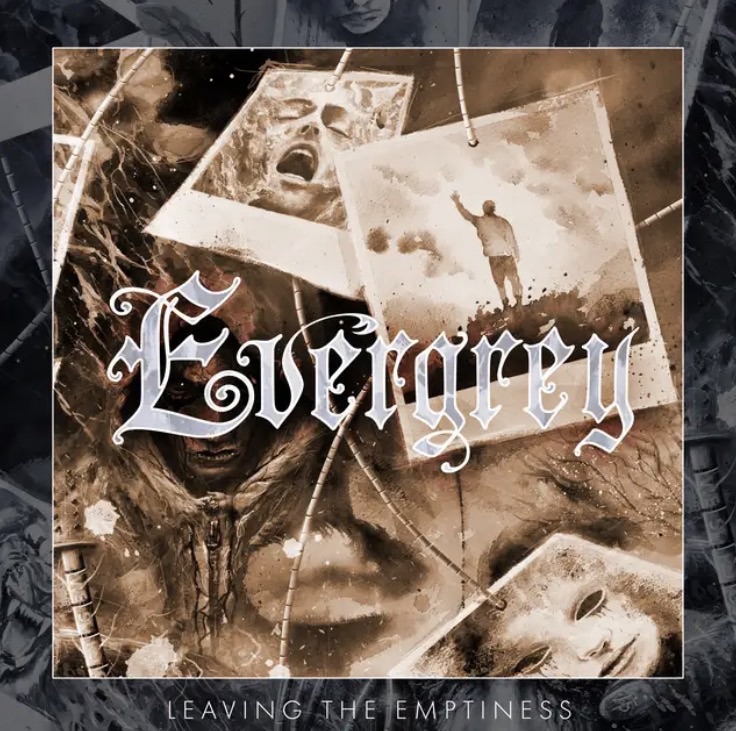
The song is that good that we also get an instrument version of it on the deluxe. Check out my post on it as well.

Longing

The keys in Evergrey changed on “Hymns Of The Broken” album. They became more soundscape and soundtrack like.

And it continued with “Storm Within” and I remember they mentioned a French electronic act called M83 that influenced them a lot for the vibe of the “Storm Within” album.

And then Englund did his Silent Skies project with pianist/composer Vikram Shankar. Funny that this team also co-produced and co-write this album.

And with each album there has been evolution to the keys.

So here we are with “Longing”. A rock song that sits somewhere between rock and metal and pop and whatever new sonic ethereal soundscape is being created and dreamt up.

This song is perfection.

The vocal hooks are memorable, pop like and the lead from 3:34, so simple and sing along like.

“Who are we when the lights go out?”
“How do we find our way again?”

Strip everything away, status, language, performance, identity, and this is the question left standing.

A Burning Flame (Featuring Mikael Stanne)

How good is the title?

From 3:45, I’m addicted to that feel and mood.

“I was lost and found but lost again”
“Be a burning flame forever”

You get better, then you don’t. You understand yourself, then you don’t. You think you’ve broken through, then life quietly resets the puzzle. Progress, regression, recognition, forgetfulness. Over and over.

But the song refuses to stay in that loop. “Be a burning flame forever” is defiance against stagnation.

Maybe the goal was never to stop being lost. Maybe it was to keep burning while you are.

Call Off Your Lions

A 10/10 song. It has all of the Evergrey trademarks and the songwriting is progressive like.

The best part is that “woh-oh-oh” section from 4:33. It’s hopeful and optimistic and it had me singing it as loud as I could.

“Call off your lions”
“Don’t watch your life from the side, let it go”

The lions aren’t protecting you anymore, they’ve become your prison guards. They keep everyone at a distance while convincing you they’re keeping you safe.

“Don’t watch your life from the side.”

That’s the disease of modern existence. Endless observation. Endless analysis. Endless preparation.

We consume other people’s lives through screens while postponing our own. We wait until we’re ready, until we’re healed, until we’re certain. But life doesn’t wait. It keeps moving whether you participate or not.

Chains Of Shame

Press play for the section at 2:31 which builds and then the drums/bass kick in at 2:52 and I’m soaring.

“I am no stranger to darkness, it knows my name and won’t leave me alone”
“These chains of shame we have worn far too long”

Shame convinces you that your mistakes are your identity, that your failures are permanent, that the worst thing you’ve ever done is the truest thing about you.

The darkness is familiar and the chains aren’t imposed by society alone, they’re maintained by the stories we repeat to ourselves.

Sometimes things need to come undone before they can be rebuilt into something worth becoming.

The Prophecy

It’s “Storm Within” rewritten and updated. And I like that section from 2:30.

“I don’t fear anymore, and I know why”
“And the scars that I used to hide now tell a tale of light”

Courage is what remains after you’ve spent enough years being broken by reality that you stop expecting certainty.

And that’s the real prophecy of the song, the realization that suffering can become instruction rather than identity.

Heights

It’s got a broken hearted vocal melody and the “wo-ohs” chants remind me of electronica acts along with acts like Kings Of Leon and 30 Seconds To Mars.

The track is also a bonus track on the Deluxe Edition.

“I don’t know who I am without fear”
“Keep faking the way that I smile”

What happens when fear becomes your identity?

That’s the uncomfortable question asked. After enough years of anxiety, people-pleasing, and self-protection, fear stops feeling like an emotion and starts feeling like a personality.

You don’t know who you’d be without it because you’ve built an entire life around managing it.

Oxygen

I like that 3:18 section.

“I can’t do this hurt, so why go on, dream on at all?”
“Wish I was strong just like you”

At some point, pain stops being an event and starts becoming a lens. Everything gets filtered through it. Possibility shrinks.

And then comes the comparison trap. “Wish I was strong just like you.”

We all do this. Most of the people we admire are simply carrying burdens we can’t see.

Progressive isn’t all about technical fast passages and intricate time changes. The term progressive also includes songwriting structures, sounds that create moods, the mashing up of different styles, yet the artist still stays true to their style.

And this is what Evergrey is doing here. Staying true to their style.

“Architects Of A New Weave” doesn’t reinvent the band’s sound.

And after fifteen albums, that’s a far more impressive achievement than reinvention.

Ultimately this album isn’t about architects. It’s about survivors.

That’s the prophecy. That’s the burning flame. That’s the shadow self. That’s the new weave.

And that’s why I’ll still be listening when the physical copy finally arrives from Austria.

Standard
Classic Songs to Be Discovered, Derivative Works, Influenced, Music, Unsung Heroes

The Riff That Outlived 80’s L.A Metal

I’ve never liked the term “hair metal.” It’s a label invented after the fact, mostly by record companies, journalists, and industry people who needed a tidy box to file a messy, competitive, and surprisingly diverse wave of rock music into something they could package and sell.

It reduces a whole era of players, many of them serious musicians with deep influences, from blues to Van Halen to classic rock, into a joke about appearance. The reality is they were all just playing rock music, each with their own tone, writing approach, and intent. The label flattens all of that into a stereotype, and once that happens, people stop listening properly.

There’s a moment right at the start of “Lay It Down” by Ratt where everything you’ve been told about “hair metal” quietly falls apart. Not in some dramatic, cinematic explosion, just a clean, surgical collapse. Because that opening riff from Warren DeMartini doesn’t sound like image. It sounds like intent.

You can hear it immediately if you’re paying attention. The low string isn’t just chugging, it’s anchoring. A pedal tone acting like a pulse under everything. On top of that, notes stretch out in ways that feel slightly uncomfortable, like your hands wouldn’t naturally fall there.

And then there’s the melody hiding inside the rhythm, not announced, not spotlighted, just woven in.

And yeah, you can trace the bloodline straight back to Eddie Van Halen. “Unchained” is sitting right there in the DNA.

You can fake your way through a lot of 80s material. Power chords, gain, energy, you’re in the ballpark. But this one doesn’t let you hide. The stretches are awkward. The timing breathes instead of sitting rigid. The muting has to be controlled or the whole thing turns to mush.

It feels effortless when you hear it. It feels impossible when you try to execute it properly.

And that’s why it keeps coming back up in guitarist conversations decades later, while a lot of its peers sit comfortably in nostalgia playlists. It isn’t just a memory trigger. It’s a benchmark.

Most riffs are written to be played in the moment. This one was written to outlive it.

Standard
A to Z of Making It, Classic Songs to Be Discovered, Influenced, Music, Unsung Heroes

Dave Meniketti, Y&T and the Fight For Your Life

There are bands that become brands. And then there are bands that become lifers.

Y&T belongs to the second category.

Which is why most people missed them. Because the culture trains you to chase explosions. First-week sales. But rock and roll was built by road dogs. Bands willing to drive through snowstorms to play to 200 people in a club that smelled like stale beer and wet denim.

That’s where Y&T came from.

Back in 1974, before the branding, before the anniversary tours, before nostalgia became an industry, the band was called “Yesterday & Today”, a name borrowed from The Beatles. And like every hard rock band clawing its way out of garages and bars, they looked half dangerous and half ridiculous. Long hair. Tight pants. Big amps. No guarantees.

Just volume and belief.

And here’s the thing younger audiences don’t fully understand about that era: There was no shortcut.

You built a following city by city. State by state. You played a city enough times that it stopped being a market and started feeling like home. Meniketti says anywhere within five hours of the Bay Area felt local to them.

That’s how careers were built before algorithms decided who deserved visibility. You earned it physically.

The road was the filter.

And if you survived long enough, eventually you ended up sharing stages with giants.

Dave Meniketti talks about touring Europe with AC/DC in 1982 on the “For Those About To Rock” tour like a man remembering the moment the scale of rock music fully revealed itself as a sea of leather and blue jeans.

Think about that image for a second. No phones in the air. No influencers backstage. No corporate activations.

Just identity.

People didn’t attend those shows to create content. They went because rock music was part of who they were.

And AC/DC… they weren’t just successful. They were undeniable. One of those bands that made every other group either rise or disappear.

For Y&T, that tour became validation. Timing met preparation.

Because history rewrites success as inevitability. But careers are timing mixed with survival. Miss the window by two years and the story changes completely.

Then there’s the other side of ‘80s hard rock.

The insanity.

Y&T toured with Mötley Crüe in 1985, and Meniketti tells a story about Crüe’s manager approaching them and saying:

“Keep some of your guys away from our band.”

Which is hilarious when you remember who he’s talking about.

Rock bands back then were unstable chemistry experiments with Marshall stacks.

And yet here’s what separates the survivors from the casualties:

Integrity.

That’s Meniketti’s word, not mine.

He says the secret is integrity with the live show, integrity with the fans, integrity in how they perform.

And that sounds simple until you realize how rare it is.

Most bands eventually start treating the audience like a pension fund. Same setlist. Same speeches. Same tired motions repeated under spotlights for people buying memories instead of experiences.

But fans know. We always know.

We can feel when a band still means it.

That’s why Y&T still draws people decades later. Not because they were the biggest band. Not because they had the most hits. But because they never stopped believing in the thing itself.

The songs. The stage. The connection. The volume.

People think longevity comes from preserving youth. It doesn’t. It comes from preserving purpose.

At the end of the interview, Meniketti says there’s no retirement plan. No exit strategy.

“We’re just going to keep going until we drop.”

That’s not a slogan.

That’s identity.

And reading that 2013 interview in 2026 changes everything.

The classic lineup was still part of the living. But time does what time always does. Since that interview, Y&T lost Phil Kennemore, Leonard Haze and Joey Alves, leaving Meniketti as the last surviving member of the classic era.

And yet the band never stopped.

Meniketti kept touring. Kept singing. Kept carrying the weight of the songs forward like they still mattered. And maybe that’s because to him they do.

And Meniketti kept creating. Acoustic records. Documentaries. Touring schedules that would exhaust musicians half his age. Not because he had to. Because stopping never seemed natural to him.

Sorry this was a large digression.

The post is about “Fight For Your Life” from Contagious (1987), the first record after the jump to Geffen, the moment Y&T stepped into the “big label” world where everything is supposed to get cleaner, bigger, more commercial… and somehow this track still feels dangerous.

The intro and main riff carry that unmistakable chromatic climb, there’s a clear lineage back to something like “Kashmir”, not in imitation but in DNA. That slow, ascending tension that feels like it’s dragging the whole song upward by force.

You can also hear echoes of “Too Late for Love” era Def Leppard in the emotional architecture of it, melodic, but never soft. Then the pre-chorus hits and it shifts gears entirely. It goes full NWOBHM, tight, aggressive, no excess fat, just pure tension waiting to snap.

And then the chorus opens up like it’s trying to break out of the studio walls. Vocally it sits comfortably in the same emotional lane as “Pyromania” era hooks, big, wide, unapologetically melodic without losing its edge.

And the solo doesn’t just arrive, it escalates. It keeps building, stacking layers of intensity until it feels like it’s running out of structural permission to continue, and then it pushes anyway.

Lyrically the core isn’t excess, it’s erosion.

“First the pleasure, then the pain”

Every lifecycle that feels like freedom eventually starts collecting interest.

“Dream a million dreams of gold”

Exposes the illusion engine, ambition reframed as control, when in reality it’s just momentum with no steering wheel attached.

“it goes on and on”

The real psychological trap; not the behavior itself, but the inability to mentally exit it while still inside it.

Nothing here is invented in isolation. Riffs borrowed from somewhere, reshaped through different hands, turned into something slightly new but emotionally familiar.

And when it hits right, like it does here, you stop caring where it came from. You just feel the voltage.

Crank it up.

Standard
Influenced, Music, My Stories, Unsung Heroes

Leaving The Emptiness: The Moment Evergrey Turned Outward

There’s a shift happening here, and it’s not subtle.

Evergrey have always lived in the tension. Melancholy wrapped in complexity. Songs that feel like they’re carrying emotional debt. But “Leaving The Emptiness” doesn’t just sit in that space, it pivots out of it.

When you look at the credits, Jacob Hansen, Tom Englund, and Vikram Shankar, you start to see the architecture behind the sound. This isn’t just a band writing inward anymore. This is a collaboration engineered for impact.

And Hansen… he’s the wildcard that isn’t supposed to be a wildcard.

This guy came up through Invocator, which tells you everything about his musical DNA. Precision. Aggression. Structure. Then he pivots into Pyramaze, melody, grandeur, hooks. And somewhere along the way, behind the desk, he becomes a sculptor of modern metal, shaping bands like Volbeat, Primal Fear, and Amaranthe into streamlined, digestible forces.

So when you hear that intro riff… it makes sense.

Because that riff isn’t “Evergrey” in the traditional sense. It’s not brooding, not buried in layers of progressive nuance. It’s immediate. It’s physical. It’s designed. You don’t think about it, you react to it.

It’s the kind of riff that lives in contradiction. Heavy enough to nod your head like you mean it. Melodic enough to hum five seconds later. Simple enough to remember. Polished enough to sell.

So what you’re hearing isn’t a betrayal of identity. It’s a recalibration.

Because in a landscape where progressive metal can disappear into its own reflection, this kind of track cuts through. It doesn’t ask for patience, it demands attention.

“I lost my keys to heal but I don’t know where”

That’s not just a lyric, that’s modern existence in one sentence.

Everyone’s looking for the fix, the unlock, the cheat code to feeling whole again, and no one knows where they left it. It’s not hidden, it’s misplaced. Big difference.

Because if it’s hidden, someone else has it. If it’s misplaced, it’s on you. That’s the weight.

“I’m here to find some ways to make this worth it”

That’s the grind. Not purpose handed down from above, constructed in real time. Trial and error. Most people are waiting for meaning to arrive. This line says: it doesn’t. You build it or you don’t have it.

“I’m leaving the emptiness behind”

That’s the declaration. Not subtle, not poetic in a cryptic way, just a line drawn in the sand. You either believe it or you don’t. And the power of it? It’s not in certainty. It’s in the attempt.

Then comes the solo. Not polite, not restrained. This is full-blown guitar hero territory. The kind of lead that doesn’t ask if it fits the song, it becomes the moment.

If this was 1987, these guys would be sharing cover space with Eddie Van Halen Vito Bratta and George Lynch, tabs printed, kids rewinding cassette tapes trying to catch every note.

The real question isn’t whether it’s good. It’s a reminder of what’s been missing.

“Architects Of A New Weave” is due on June 5, 2026. I was meant to see them in Sydney on May 1, but it was postponed to October due to travel issues.

And from hearing the first three pre-release singles, Evergrey aren’t just evolving, they’re repositioning. Moving from introspective architects of sorrow to something more immediate, more physical… maybe even more dangerous in a mainstream sense.

And that riff?

That’s the tell.

It’s not just catchy.

It’s intentional. Crank it.

Standard
A to Z of Making It, Derivative Works, Influenced, Music, My Stories, Unsung Heroes

Ross The Boss – Heyday: The Record That Refused to Belong Anywhere

Ross the Boss is gone.

Most people will stop the story at Manowar. Big sound, bigger mythology. Steel, leather, and volume turned into identity.

But that’s only half the truth.

Because in 1994, when rock was busy cannibalising itself into subgenres and scenes, Ross dropped “Heyday”. One album. No follow-up. No safety net. And now… not even on streaming.

Which makes it dangerous.

Because you can’t casually consume it. You have to commit to it.

Ross wrote a manifesto in the liner notes:

When I started playing guitar, it didn’t matter what type of Rock ‘N’ Roll you played, it was all just called ROCK! It hadn’t yet become so segregated into so many labeled categories.

Now, after twelve allums, I find myself, once again, going against the grain of the “mainstream”, playing the music that I choose to – and just having a great time with it.

So whether the mainstream becomes the underground; or the underground becomes the mainstream, Heyday is going to ROCK!”

That’s not nostalgia. That’s defiance.

By ’94, rock had fractured into tribes, grunge, metal, alternative, punk revival and let’s not mention how many labels hard rock and metal went into, each one building fences to keep the others out.

And Ross? He walks straight through all of them.

Blues rock. NWOBHM. New York punk. Glam attitude.

No permission. No alignment.

If the world narrows, you widen.

This wasn’t a solo indulgence. This was a unit: Ross the Boss on guitar, Charlie Cayte on vocals, Richie Fazio on drums and Erik Boyd on bass.

Charlie Cayte is the ghost in this machine. One of those singers who should’ve been everywhere… but got caught in the wrong year.

Because by 1994, the industry had already decided what rock shouldn’t sound like.

Mine Tonight

It starts with a riff that doesn’t ask, doesn’t build, doesn’t tease, it arrives.

Immediate. Violent. Alive.

“Now I’m aware of mine, are you aware of yours?”

That line hits because most people aren’t.

They hesitate. They soften. They hide behind ambiguity.

This song doesn’t.

Know what you want. Say it. Most people never do, and that’s why they never get it.

Mother Mary

This should have been massive. Arena chorus. Built for thousands.

Instead, it got buried.

“Mother Mary did you make the people, or did we make you?”

That’s not rebellion, it’s interrogation.

We build belief systems, then kneel to them. Religion, careers, identities. We forget we created them in the first place.

“I’ve been prayin’ for so long, to someone I don’t know…”

That’s existential drift.

If you don’t choose your beliefs consciously, you’ll spend your life serving them unconsciously.

A Matter of Time

Blues creeps in. Not as a genre, as a truth.

“To wait for the right moment was my first mistake.”

There is no right moment.

There’s only the moment you either take, or lose.

“I was born too early, and you were born too late.”

Timing isn’t romantic. It’s ruthless.

Hesitation doesn’t protect you, it erases you.

Brown Eyed Girl

A Van Morrison classic, dragged through a louder, dirtier filter.

Less nostalgia. More movement.

It’s not trying to improve the original, it’s reclaiming it. Making it live in this band’s world.

And that’s the point of covers when they work: not tribute, transformation.

Private Hell

This is where the album turns inward.

“I built the inferno…”

That’s the line.

Because people love blaming the fire, but not building it.

“Now a key’s been handed down my way…”

Recognition is the key. Not escape.

The moment you admit you built the problem is the moment you gain the power to dismantle it.

Movin’ On

This one swings.

You can hear echoes of Van Halen swagger and AC/DC punch. It’s reckless, fast, borderline unhinged.

“When push comes to shove, I’m gone.”

That’s freedom, but also avoidance.

There’s a fine line between movement and escape.

Reinvention is powerful, but if you never stay, you never build anything that lasts.

The Letter

The emotional core channeling Hendrix and “Little Wing”.

No metaphor. No disguise.

“What’s done is done and it can’t be changed.”

That’s it.

No modern spin. No redemption arc baked in.

Then the dagger:

“If I could call back father time… things would be the same.”

That’s self-awareness at its most brutal.

It’s not about wishing for a redo. It’s about understanding you weren’t ready to choose differently.

Don’t chase second chances. Build the mindset that wouldn’t need one.

Pack of Lies

Anger, but focused.

“You’re the first to sign the card, but the last to write the check.”

That line lands in any era.

Performative virtue. Empty signalling. Talking big, doing nothing.

Integrity is measured in action, not alignment.

Search and Destroy

A cover of Iggy Pop, but stripped of subtlety and pushed into hard rock aggression.

It’s less art-punk, more street fight.

And it works, because the band commits fully. No irony. No distance.

Back Where I Belong

Back to that EVH stomping groove. Back to weight.

“No way to know what feels right until you give it a try.”

Simple. True. Rarely followed.

People want certainty before action. Life doesn’t work that way.

Experience is the only real teacher, and it charges upfront.

It’s not just a “lost album.”

It’s a contradiction: Too late for the scene it belonged to. Too early for the nostalgia cycle that would’ve saved it. Too honest to reshape itself for trends

So it disappeared.

But that’s also why it still works.

Because it’s not tied to anything external.

It’s tied to a mindset: Play what you believe. Say what you mean. Accept the consequences.

No compromise. I called it:

“A perfect slab of hard rock.”

And it is.

But underneath that? It’s a manual.

On desire. On belief. On regret. On consequence. On owning your life, even when you get it wrong.

Most albums chase relevance. Heyday rejected it. And that’s exactly why it still matters. If you find the CD at a used store, buy it.

Rest in peace, Ross the Boss.

Standard
A to Z of Making It, Music, Unsung Heroes

When Trixter Thought the Party Would Never End – Guitar World June 1991

June 1991.  

Hair spray was a performance enhancing drug, MTV still played music, and four kids from Paramus, New Jersey had just hacked the suburban‑teen lottery.

Trixter weren’t supposed to “make it.” They were mall rats from a shopping town, grinding 200 shows a year, aiming no higher than the Meadowlands and maybe, if the gods were drunk, Madison Square Garden. Then the planets lined up: a grimy New York club called The Sanctuary, a label guy in the room, a contract on the table a week later, and suddenly they’re on MTV every hour pretending this is all just happening to them. 

That’s the moment frozen in this Guitar World interview: the exact second where the rollercoaster is still climbing and nobody hears the chain starting to rattle.

On the surface, it reads like standard early-’90s rock-mag candy.

Origin myth.

Garage rehearsals.

High-school sleep deprivation.

Parents pretending they’re annoyed but secretly proud.

Then the montage: endless club gigs, the one basement venue that matters, the industry guy who changes everything. Numbers follow, sales, tour slots, rotation, framed as disbelief.

And the quote. The wall-poster quote.

“All the fame and fortune… is great, but we’re just some dudes from a shopping town in New Jersey who play music.”

That line isn’t accidental. It’s the formula.

The band must be aspirational and accessible at the same time. Superheroes who still feel like kids from homeroom. Big enough to worship. Small enough to imagine becoming.

That’s the business model.

So is the GW interview a PR piece?

Of course it is. This is Guitar World, 1991. The structure is pure promo:

Build the myth (kids + garages + malls + mishaps).

Flex the numbers (MTV, tour slots, sales).

Humanize the product (parents, girlfriends, pizza on the bus).

End with some variation of, “We’re just grateful to be here, man.”

But buried under the sugar, Steve Brown keeps slipping you protein.

He admits they designed themselves as a teen band after reading about Def Leppard. He talks about carefully arranging guitar parts, thinking in terms of Desmond Child‑style songcraft instead of just riff‑vomiting. He’s obsessed with Van Halen’s first record and wants to capture that “as live as possible” energy on a big‑budget debut. He knows MTV rotation is a once‑in‑a‑lifetime weather pattern and they’re trying to build as many houses as possible before the storm passes.

That’s not just PR. That’s a 20‑year‑old already thinking like a lifer.

The tragic part is that no one knows the meteor is already in the air. Grunge is loading in at the other end of the decade while he’s still talking about opening for Poison. Everyone in the piece sounds certain they’ve cracked the code forever, when in reality they’ve rented a very small window in a very specific era.

It’s not deep journalism, but it accidentally becomes deep nostalgia: a time capsule of what it feels like to be young, ascending, and completely wrong about how long the ascent lasts.

So what happened when the lights finally came up?

The short version: the wave crested, then physics did what physics always does.

Trixter rode that first record hard. Tours, videos, magazine covers, the full package. Then the wheel turned. The second album didn’t hit the same, the climate shifted, radio and MTV moved on. The band dissolved in the mid‑’90s, another casualty of a genre that went from omnipresent to punchline in about as much time as it takes hair spray to dry.

Steve Brown didn’t vanish into the suburbs to sell insurance and tell bar stories about “that one time on tour.” He kept going. Other bands. Side projects. Session work. Cover gigs. Tribute projects. Reunion tours. New Trixter records. The guy turned being “that dude from Trixter” into a 30‑plus‑year career by refusing to treat the early ’90s as the peak.

This is what nobody tells kids in bands: the story doesn’t end when your video falls out of rotation. It keeps going, just on smaller stages with fewer free drinks and way more self‑awareness. It stops being about winning the rock‑star lottery and starts being about whether you actually like the work enough to do it without confetti cannons.

Steve clearly does.

So why did I bother digging through a yellowing Guitar World piece in 2026?

Because it’s the perfect diagram of how the machine used to work and, honestly, still does, just with different haircuts and platforms.

You can see:

The fantasy: four normal kids “accidentally” becoming rock stars.

The marketing: humble‑brag quotes, carefully curated struggle, the illusion that this is reproducible.

The truth leaking out the sides: obsessive grind, calculated image choices, a main songwriter already thinking like a producer.

It’s easy to mock bands like Trixter from the safe distance of hindsight. The clothes, the lyrics, the Aqua Net. But when you strip away the clichés, what’s left is familiar: talented kids trying to turn obsession into a life, trapped inside a trend they don’t control.

The interview captures the moment right before they discover a hard rule the industry never prints in glossy pull‑quotes:

You are not your chart position.  

You are not your MTV slot.  

You are what you keep doing after the world stops caring.

In 1991, Trixter thought the party would last forever.  

In 2026, Steve Brown is still playing guitar for a living.

Turns out that’s the better ending anyway.

Standard
A to Z of Making It, Music, My Stories, Stupidity, Treating Fans Like Shit, Unsung Heroes

Always a Few Years Too Late: Why Australian Hard Rock Albums Missed Their Moment

Talent was never the problem. Songs weren’t the problem. Crowds weren’t the problem. Australia produced world-class live acts with world-class songs, often before the rest of the world caught on.

But.

The albums arrived late because everything around the music moved slower, sideways, or backwards.

This wasn’t coincidence. It was systemic.

Australia didn’t just sit far from the US and UK/Europe, it existed in a different time loop.

By the late ’80s, LA scenes moved in months. UK trends turned over in seasons. And Australia lagged by years.

Not because musicians were behind, but because infrastructure was.

Touring overseas required money bands didn’t have.

Labels wanted proof that bands had an audience before investment. Proof required exposure. Exposure required travel.

That circular logic delayed everything. By the time an Australian band secured a deal, the sound they pioneered locally had often already peaked internationally.

When albums finally arrived, they sounded right, just not right now.

If geography slowed bands down, management actively sabotaged them.

The Australian industry of the era was full of managers with control clauses but no leverage. Contracts restricted bands from signing deals independently.

Bands routinely received offers they couldn’t legally accept.

Deals were turned down “to get a better one.” Momentum was paused “to build hype.”

Albums were delayed “until the timing was right.”

The timing never was.

Candy Harlots are not an outlier here, they are a case study. A Virgin Records deal offered early, declined by management, then re-offered years later after the band had already fractured. Multiply that story across dozens of acts and you start seeing a pattern, not bad luck.

BB Steal finally released their Def Leppard influenced record “On The Edge” in 1992, however the first single of the album came out in 1988.

Roxus released their excellent melodic rock album “Nightstreet” in 1991, and like BB Steal, they had a few years between the first single (1989) and the album release.

But.

Australian hard rock thrived live.

That was both its strength and its trap.

Venues were packed. Residencies mattered. Reputations were earned face-to-face.

Bands became mythical locally without leaving physical evidence behind.

But labels don’t sign myths, they sign masters.

Many bands, gigged relentlessly without recording. Rewrote sets constantly instead of committing songs. Waited for “the real album” moment.

By the time that moment arrived, line-ups had changed, scenes had shifted, or the industry had moved on.

Albums became memorials instead of weapons.

Delay kills cohesion.

The longer an album takes to materialize, the more likely, members age out of the lifestyle, internal politics harden, financial strain builds resentment and key writers leave before the payoff.

Australian bands often lost founding members before recording debut albums.

Not because of ego, but because people don’t wait forever.

When albums finally arrived, they were frequently recorded by survivor line-ups, not the ones that created the original sound. That created a strange historical dislocation: the record didn’t fully reflect the band people fell in love with.

Australian mainstream media didn’t discover hard rock, it reacted to it.

By the time a band reached Triple M rotation or national press coverage or television exposure …the scene had already peaked locally.

Specialty radio (like 2RRR’s Metal Show) carried enormous cultural weight, but limited commercial reach. Those DJs broke bands, but couldn’t break markets.

So albums were greenlit after proof, not during ignition.

That delay mattered.

The final nail wasn’t grunge, it was speed.

Between 1989 and 1992, Glam fragmented and Alternative exploded and the Labels pivoted instantly.

Australian albums arriving in 1991–1993 weren’t bad, they were misaligned. They sounded like records that should have come out in 1989.

And many of them should have.

But systems don’t reward “should have.” They reward timing.

Here’s the uncomfortable truth:

Australia still struggles with this. It’s better in the streaming era but it’s still a problem.

Different genres. Same mechanics.

Local scenes ignite.

Momentum builds.

Gatekeepers (the ones that still exist) hesitate.

By the time support arrives, the moment has shifted.

The lesson isn’t “work harder.” It’s compress the timeline.

Scenes don’t wait. Audiences don’t wait. History doesn’t wait.

An album arriving late doesn’t mean it failed. It means it arrived as evidence, not influence.

That’s why records like “Five Wicked Ways” still hold up. They weren’t chasing trends, they were documenting one that had already happened. That gives them a strange durability, even if it robbed them of impact at the time.

Australian hard rock didn’t miss because it lacked vision.

It missed because the system was built to move after the fire, not during it.

And by the time the album hit the shelves, the fire had already moved on.

Standard