A to Z of Making It, Copyright, Music

Masters of Nothing: Why Artists Keep Losing Their Own Music

The music business loves mythology. It sells rebellion. Freedom. Danger. Authenticity.

The starving artist with a guitar. The rapper with a dream. The band sleeping in vans before conquering the world.

But behind every platinum record sits another story nobody likes talking about.

Paperwork.

Contracts. Clauses. Ownership structures. Corporate definitions. And armies of lawyers whose job is to make sure the people who created the culture often never fully own it.

That’s the real story sitting underneath two major music industry battles unfolding right now.

One involves the major labels hiring elite Supreme Court attorney Paul Clement to fight a ruling that could allow artists to reclaim global ownership rights to their music decades after signing contracts. The other involves legendary hip hop pioneers Salt-N-Pepa fighting Universal Music Group for control of masters tied to songs that helped define an era.

Different lawsuits. Same system. The suits protecting the vault.

For decades the music industry justified ownership by arguing labels took the financial risks. In the vinyl and CD eras, there was truth to that. Manufacturing records, shipping inventory worldwide, financing studios, bribing radio through “promotion,” building distribution pipelines, it all required enormous infrastructure.

Labels weren’t just record companies. They were factories. Banks. Gatekeepers.

But streaming changed everything.

The catalog became more valuable than the artist. Not future music. Not artist development. Not creativity.

The old recordings.

Because songs no longer disappear with time. A hit from 1987 now generates money forever: Spotify streams. YouTube monetization. TikTok rediscovery. Netflix sync placements. Gaming licenses. Playlist algorithms.

Music became perpetual intellectual property infrastructure.

And once catalogs turned into billion-dollar assets, ownership became war.

That’s why the major labels reportedly hired Paul Clement, one of the most powerful appellate attorneys in America, after a recent ruling suggested artists may reclaim not only U.S. rights to their recordings, but potentially worldwide rights through copyright termination laws.

Think about the scale of panic required for that move. The labels didn’t respond with: “Maybe artists deserve more ownership.”

They responded by assembling a legal nuclear deterrent. Because if artists can claw back global rights, entire catalog valuations become unstable overnight.

And this is where the phrase “work for hire” enters the story, one of the most important and misunderstood weapons in music industry history.

Under U.S. copyright law, creators can often reclaim ownership of transferred copyrights after several decades. But there’s a loophole powerful enough to erase that future right entirely.

If a work is classified as a “work made for hire,” the corporation is considered the legal author from day one.

Not the musician. Not the songwriter. Not the band.

The company.

Which means the artist cannot later reclaim ownership because legally they never possessed it to begin with.

That distinction is worth billions.

The labels have long argued that recordings qualify as works for hire because they financed the recording process, paid advances, controlled distribution and supervised production.

But historically, musicians rarely resembled traditional employees.

They weren’t salaried office workers. Taxes often weren’t withheld. They weren’t clocking into Warner Music at 9am. Most artists functioned more like independent contractors creating intellectual property under negotiated agreements.

Which is why the work-for-hire debate has haunted the industry for decades.

In 1999, lobbyists quietly pushed language into federal legislation attempting to formally classify sound recordings as works for hire. The backlash was immediate once artists discovered it. Musicians including Don Henley and Sheryl Crow publicly opposed the change, and Congress eventually repealed it.

That moment revealed something enormous. If recordings were already unquestionably works for hire, the industry wouldn’t have needed Congress to try rewriting the law.

But ambiguity is profitable. Because ambiguity delays ownership challenges. Delay protects catalog value. And catalog value is the center of the modern music economy.

Which brings us to Salt-N-Pepa.

Long before corporations fully understood hip hop’s economic potential, Salt-N-Pepa helped drag rap music into the mainstream. They became the first female rap act to go multi-platinum and the first to win a Grammy.

Now, decades later, they’re in court fighting for rights connected to the very recordings that built that legacy.

Universal Music Group’s argument reportedly centers on the idea that Salt-N-Pepa either transferred no reclaimable rights or that the recordings were structured in ways that prevent termination claims.

Read that carefully.

The people who made the music are allegedly not the legal owners in the way that matters commercially.

That’s the magic trick of the modern entertainment industry.

The artist thinks they signed a record deal. The corporation believes it acquired a forever asset.

And forty years later, the paperwork matters more than the songs themselves.

This isn’t just about one rap group or one lawsuit. It’s about the foundational imbalance of the entertainment business: The creators generate cultural value.
The corporations engineer legal permanence.

The labels market authenticity while weaponizing technicalities.
They celebrate artists publicly while litigating against them privately. They sell rebellion while protecting ownership structures with corporate ferocity.

And streaming made the contradiction impossible to hide.

Because the old industry model assumed music depreciated over time. Streaming proved the opposite. The past became infinitely monetizable.

A song recorded in 1986 can generate revenue every single day in 2026 with virtually no manufacturing cost. Catalogs became digital oil fields, and suddenly ownership rights that once looked historical became existential financial assets.

That’s why these legal fights matter far beyond music. This is labor versus ownership. Creation versus infrastructure. Art versus contract law.

The same pattern exists across Hollywood, publishing, technology and streaming platforms: The people who create the emotional value often control the least economic power.

The suits own the systems. The artists create the meaning.

And once the money gets large enough, the system fights to preserve itself. That’s why the major labels are preparing for Supreme Court battles instead of surrendering catalogs. That’s why legacy artists are revisiting contracts signed before they had leverage. That’s why younger musicians increasingly obsess over masters, publishing and ownership.

Because an entire generation finally realized the biggest illusion in the music business: The artist was often never the owner.

Billboard – Major Labels Hire Supreme Court Lawyer In Global Rights Fight

Variety – Salt-N-Pepa and Universal Music Group Appeals Court Lawsuit

U.S. Copyright Office – Works Made For Hire Overview

Standard
A to Z of Making It, Copyright, Music, Stupidity

“They Won in 1966: The Hendrix Case and the Lie of ‘A Contract Is a Contract’”

There’s a moment when you read a court decision and you realise, this isn’t about justice. It’s about architecture.

Not justice. Architecture.

Because what just happened with Jimi Hendrix’s bandmates isn’t shocking if you understand the system. It’s only shocking if you still believe the system is trying to be fair.

The estates of Noel Redding and Mitch Mitchell walked into court thinking they were arguing about rights.

They weren’t.

They were arguing against a blueprint that was locked in before they even plugged in their amps.

And the judge basically said:
Yeah… the blueprint holds.

Let’s call this what it is.

These guys helped build the sound. They played on “Are You Experienced”, “Axis: Bold as Love”, “Electric Ladyland”. That’s not background noise, that’s the DNA of rock music.

But legally?

They’re session players with better branding.

Why?

Because somewhere in the 1960s, when you couldn’t get your music heard without a label, when gatekeepers weren’t optional but oxygen, they signed a contract that said: “We (the producers) own everything. Forever. Everywhere.”

And the court looked at that and said:

Cool. Case closed.

Here’s where it gets twisted.

Everyone loves saying “a contract is a contract.”

Until it isn’t.

Because we’ve seen legislation, actual law, designed to give artists their rights back over time. We’ve seen frameworks like the U.S. Copyright Act of 1976 termination rights that basically admit: “Yeah… artists got screwed. Let’s give them a way out.”

So the narrative becomes: when labels want certainty, contracts are sacred. When artists want relief, well, it depends…

And suddenly legislation becomes optional. Flexible. Interpreted.

Funny how that works.

But here’s the real game, and this is the part most people miss.

The label didn’t “win” this case.

They won it in 1966.

Because they didn’t just sign a deal, they defined the category of ownership itself.

They made sure the band never owned the master in the first place.

And if you never owned it?

There’s nothing to return. That’s not a loophole. That’s design.

Think about the power dynamics for a second.

You’re a band in the ‘60s. You want: Studio time. Distribution. Radio play

All controlled by the same entity.

So you sign.

Not because it’s fair. Because it’s the only door in the building.

That’s not negotiation. That’s survival. And decades later, a court looks back and says: “Well… you agreed.”

Technically true.

Practically absurd.

And here’s the part that should really bother you. The judge didn’t say the deal was fair. He said it was clear.

That’s the entire threshold. Not fairness. Not balance. Not context. Clarity.

So if you screw someone over clearly enough… it’s enforceable forever.

That’s the lesson.

Meanwhile, Sony Music Entertainment UK walks away saying:

“We’re pleased our rights have been confirmed.”

Of course they are.

Because those “rights” were engineered in an era where artists had none.

And before you think this is ancient history, it’s not.

The contracts look different now. Cleaner. Friendlier. But the structure?

Still the same.

Artists today don’t get told: “We own your masters forever.”

They get told: “We’re partnering with you.”

Then buried in the language: Licensing terms that never end. Revenue splits that never shift. Control clauses that quietly lock everything down.

Same game. Better PR.

So yeah, it feels like labels pick and choose when rules matter. But the truth is colder than that.

They don’t break the rules. They write them early enough that they never have to.

This case wasn’t about Hendrix’s bandmates losing.It was about a system doing exactly what it was built to do:

Protect ownership. Not contribution.

And until that changes?

You can play on the record. You can define the sound. You can help change music forever.

And still legally own… nothing.

That’s not a glitch.

That’s the business.

Standard
A to Z of Making It, Derivative Works, Influenced, Music, My Stories

The Record Vault and Australian Method Series: AC/DC – High Voltage (Australian version)

You can almost hear the hum of fluorescent lights in every suburban garage where AC/DC began. No glamour. No myth. Just sweat, static, and the clank of an amplifier that sounded like it had been dropped down the stairs. But that was the point. They weren’t selling dreams, they were bottling defiance.

Australia’s still shaking off its colonial hangover. The cultural exports were imports: Beatles on the airwaves, Hollywood in the cinemas, the British accent of cool still echoing through every youth who wanted to be someone. Then a gang of scruffy kids plugged in, turned up, and said no.

That “no” became “High Voltage”.

It wasn’t just an album, it was an interruption. A distortion through the polite frequencies of a country too afraid to sound like itself. Angus in his schoolboy outfit, Bon with a sneer that smelled like whiskey and danger, these weren’t poses. They were weapons. They took the mundane, working-class energy of a thousand sticky-carpet pubs and turned it into electricity.

The riffs weren’t clever. They were necessary. Simple, repetitive, primal. Music that didn’t care what you thought of it, it only cared that you felt it. The kind of sound that doesn’t wait for permission to exist.

AC/DC didn’t need validation from London or Los Angeles. They built their empire on beer-stained stages, not industry handshakes. They weren’t trying to be global, they were trying to be alive. And that’s why the world eventually came to them.

When “High Voltage” dropped, it shocked a nation still tangled in its moral corset. Parents hated it. Radio hesitated. The press called it obscene. Good. That’s how you know it’s real. Every moral panic in history has started with the sound of youth refusing to behave.

And here’s the thing, Bon Scott wasn’t just singing about sex and sin. He was singing about freedom. About living with the volume stuck on eleven because the alternative was silence. He wasn’t poetic; he was truthful. In a world that worships polish, truth sounds dirty.

Fifty years later, they still haven’t diluted it. They didn’t need to reinvent themselves, because the formula wasn’t a formula, it was a philosophy. Do one thing, do it honestly, and never flinch.

That’s the real cultural revolution AC/DC started: not rebellion for its own sake, but the audacity to be unapologetically yourself. To take your flaws, your roots, your rough edges, and broadcast them like a lightning bolt across the sky.

Australia didn’t just gain a rock band that year, it gained a backbone.

And maybe that’s the lesson that keeps echoing: every era needs its “High Voltage” moment, that instant where you stop waiting for validation and start amplifying who you already are.

It’s not nostalgia. It’s a reminder.

You don’t need the world’s permission to make noise.

You just need an amp, a song, and the courage to flick the switch.

Standard
A to Z of Making It, Derivative Works, Influenced, Music, My Stories, Unsung Heroes

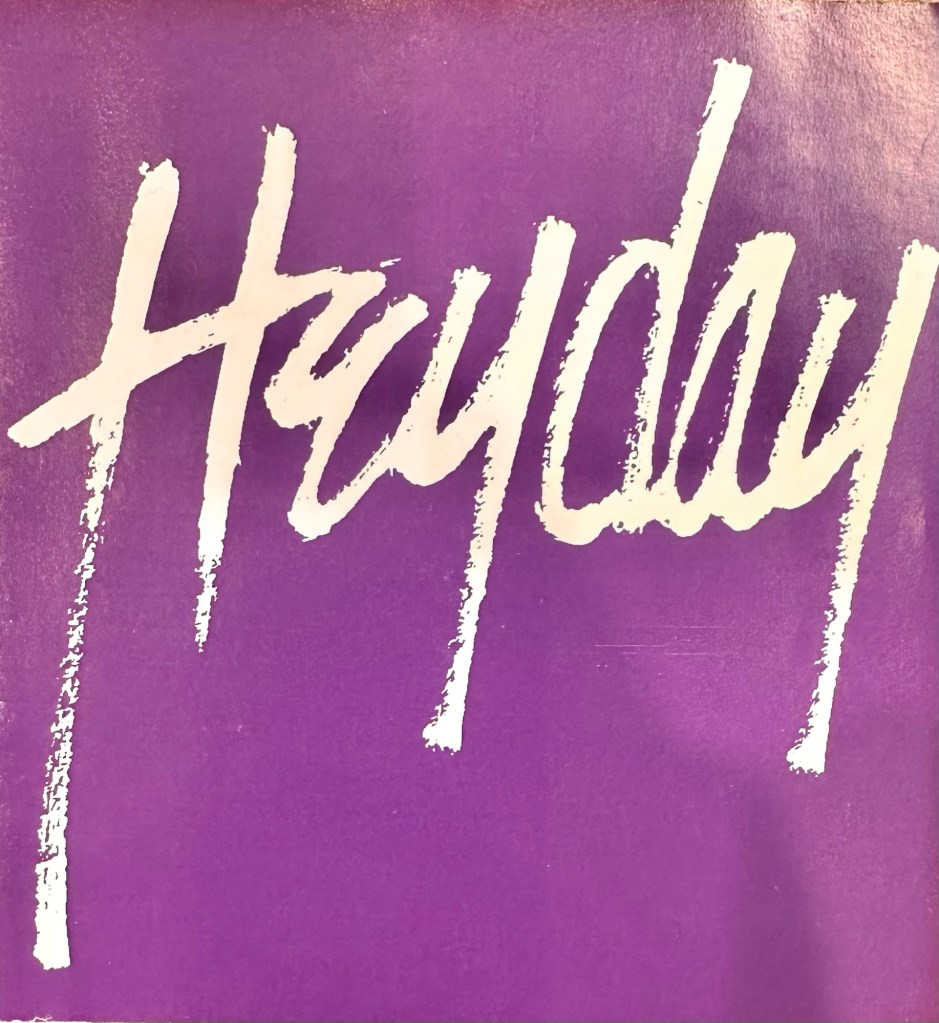
Ross The Boss – Heyday: The Record That Refused to Belong Anywhere

Ross the Boss is gone.

Most people will stop the story at Manowar. Big sound, bigger mythology. Steel, leather, and volume turned into identity.

But that’s only half the truth.

Because in 1994, when rock was busy cannibalising itself into subgenres and scenes, Ross dropped “Heyday”. One album. No follow-up. No safety net. And now… not even on streaming.

Which makes it dangerous.

Because you can’t casually consume it. You have to commit to it.

Ross wrote a manifesto in the liner notes:

When I started playing guitar, it didn’t matter what type of Rock ‘N’ Roll you played, it was all just called ROCK! It hadn’t yet become so segregated into so many labeled categories.

Now, after twelve allums, I find myself, once again, going against the grain of the “mainstream”, playing the music that I choose to – and just having a great time with it.

So whether the mainstream becomes the underground; or the underground becomes the mainstream, Heyday is going to ROCK!”

That’s not nostalgia. That’s defiance.

By ’94, rock had fractured into tribes, grunge, metal, alternative, punk revival and let’s not mention how many labels hard rock and metal went into, each one building fences to keep the others out.

And Ross? He walks straight through all of them.

Blues rock. NWOBHM. New York punk. Glam attitude.

No permission. No alignment.

If the world narrows, you widen.

This wasn’t a solo indulgence. This was a unit: Ross the Boss on guitar, Charlie Cayte on vocals, Richie Fazio on drums and Erik Boyd on bass.

Charlie Cayte is the ghost in this machine. One of those singers who should’ve been everywhere… but got caught in the wrong year.

Because by 1994, the industry had already decided what rock shouldn’t sound like.

Mine Tonight

It starts with a riff that doesn’t ask, doesn’t build, doesn’t tease, it arrives.

Immediate. Violent. Alive.

“Now I’m aware of mine, are you aware of yours?”

That line hits because most people aren’t.

They hesitate. They soften. They hide behind ambiguity.

This song doesn’t.

Know what you want. Say it. Most people never do, and that’s why they never get it.

Mother Mary

This should have been massive. Arena chorus. Built for thousands.

Instead, it got buried.

“Mother Mary did you make the people, or did we make you?”

That’s not rebellion, it’s interrogation.

We build belief systems, then kneel to them. Religion, careers, identities. We forget we created them in the first place.

“I’ve been prayin’ for so long, to someone I don’t know…”

That’s existential drift.

If you don’t choose your beliefs consciously, you’ll spend your life serving them unconsciously.

A Matter of Time

Blues creeps in. Not as a genre, as a truth.

“To wait for the right moment was my first mistake.”

There is no right moment.

There’s only the moment you either take, or lose.

“I was born too early, and you were born too late.”

Timing isn’t romantic. It’s ruthless.

Hesitation doesn’t protect you, it erases you.

Brown Eyed Girl

A Van Morrison classic, dragged through a louder, dirtier filter.

Less nostalgia. More movement.

It’s not trying to improve the original, it’s reclaiming it. Making it live in this band’s world.

And that’s the point of covers when they work: not tribute, transformation.

Private Hell

This is where the album turns inward.

“I built the inferno…”

That’s the line.

Because people love blaming the fire, but not building it.

“Now a key’s been handed down my way…”

Recognition is the key. Not escape.

The moment you admit you built the problem is the moment you gain the power to dismantle it.

Movin’ On

This one swings.

You can hear echoes of Van Halen swagger and AC/DC punch. It’s reckless, fast, borderline unhinged.

“When push comes to shove, I’m gone.”

That’s freedom, but also avoidance.

There’s a fine line between movement and escape.

Reinvention is powerful, but if you never stay, you never build anything that lasts.

The Letter

The emotional core channeling Hendrix and “Little Wing”.

No metaphor. No disguise.

“What’s done is done and it can’t be changed.”

That’s it.

No modern spin. No redemption arc baked in.

Then the dagger:

“If I could call back father time… things would be the same.”

That’s self-awareness at its most brutal.

It’s not about wishing for a redo. It’s about understanding you weren’t ready to choose differently.

Don’t chase second chances. Build the mindset that wouldn’t need one.

Pack of Lies

Anger, but focused.

“You’re the first to sign the card, but the last to write the check.”

That line lands in any era.

Performative virtue. Empty signalling. Talking big, doing nothing.

Integrity is measured in action, not alignment.

Search and Destroy

A cover of Iggy Pop, but stripped of subtlety and pushed into hard rock aggression.

It’s less art-punk, more street fight.

And it works, because the band commits fully. No irony. No distance.

Back Where I Belong

Back to that EVH stomping groove. Back to weight.

“No way to know what feels right until you give it a try.”

Simple. True. Rarely followed.

People want certainty before action. Life doesn’t work that way.

Experience is the only real teacher, and it charges upfront.

It’s not just a “lost album.”

It’s a contradiction: Too late for the scene it belonged to. Too early for the nostalgia cycle that would’ve saved it. Too honest to reshape itself for trends

So it disappeared.

But that’s also why it still works.

Because it’s not tied to anything external.

It’s tied to a mindset: Play what you believe. Say what you mean. Accept the consequences.

No compromise. I called it:

“A perfect slab of hard rock.”

And it is.

But underneath that? It’s a manual.

On desire. On belief. On regret. On consequence. On owning your life, even when you get it wrong.

Most albums chase relevance. Heyday rejected it. And that’s exactly why it still matters. If you find the CD at a used store, buy it.

Rest in peace, Ross the Boss.

Standard
A to Z of Making It, Music, Unsung Heroes

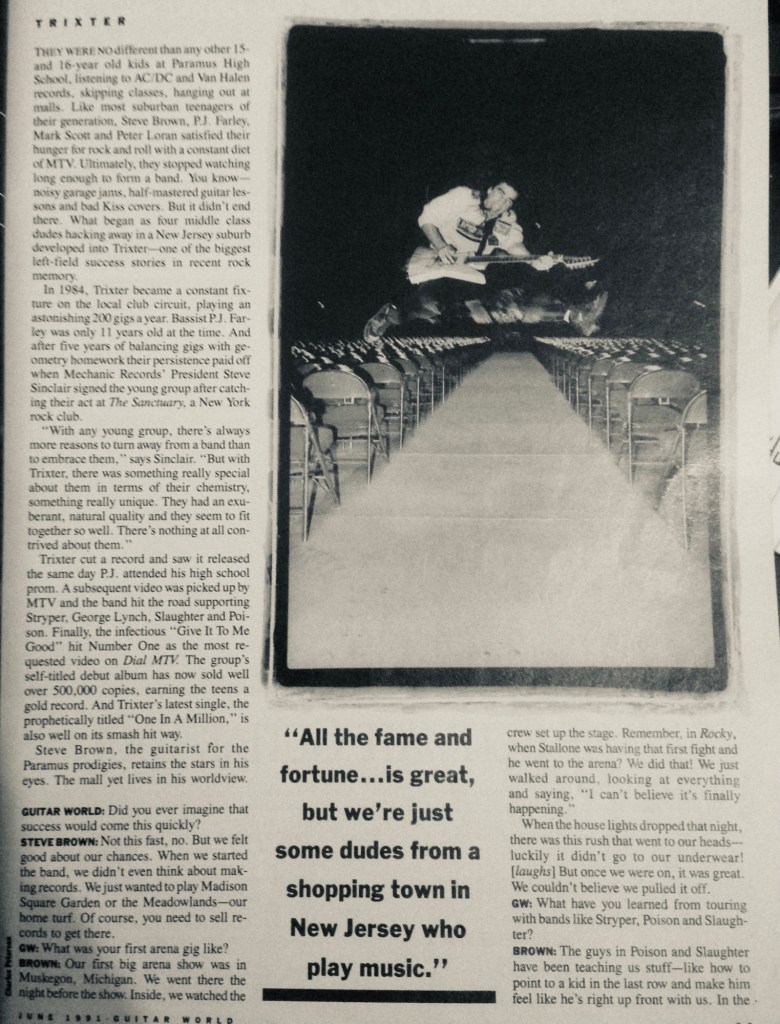
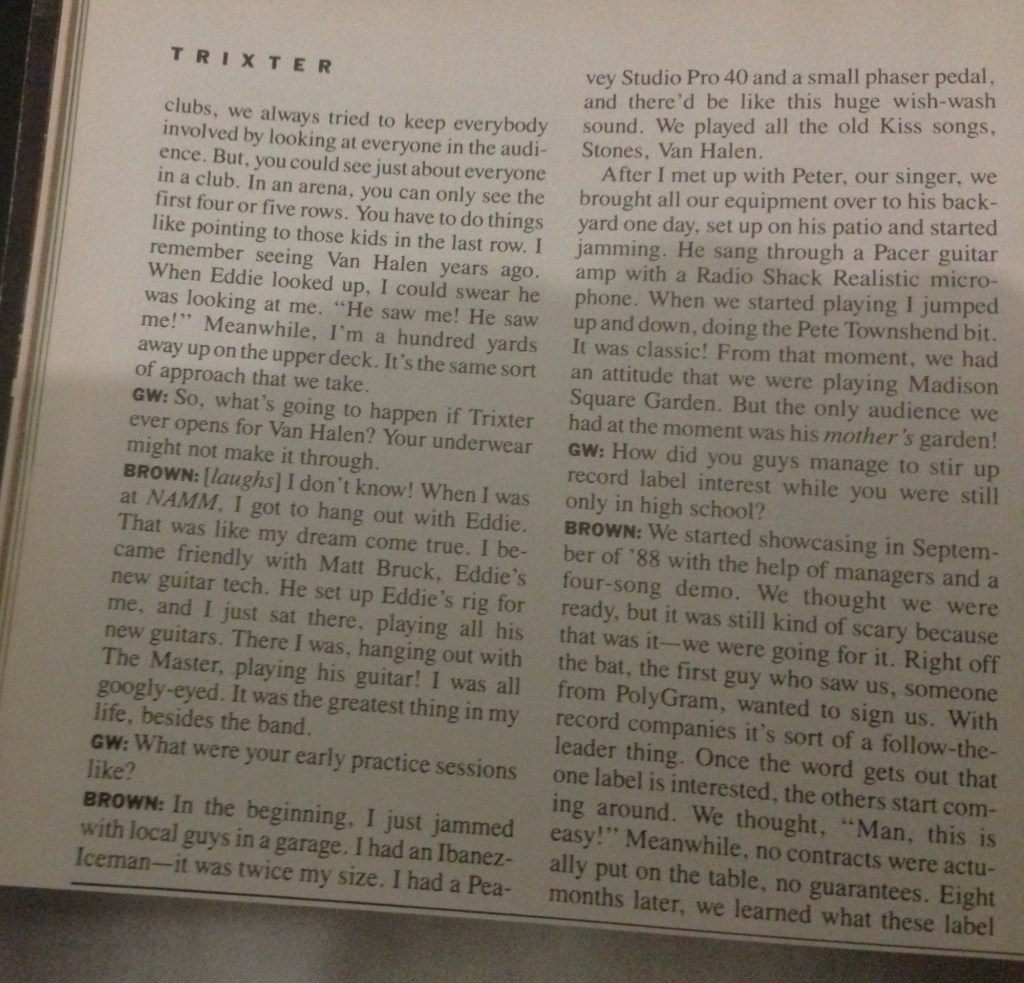
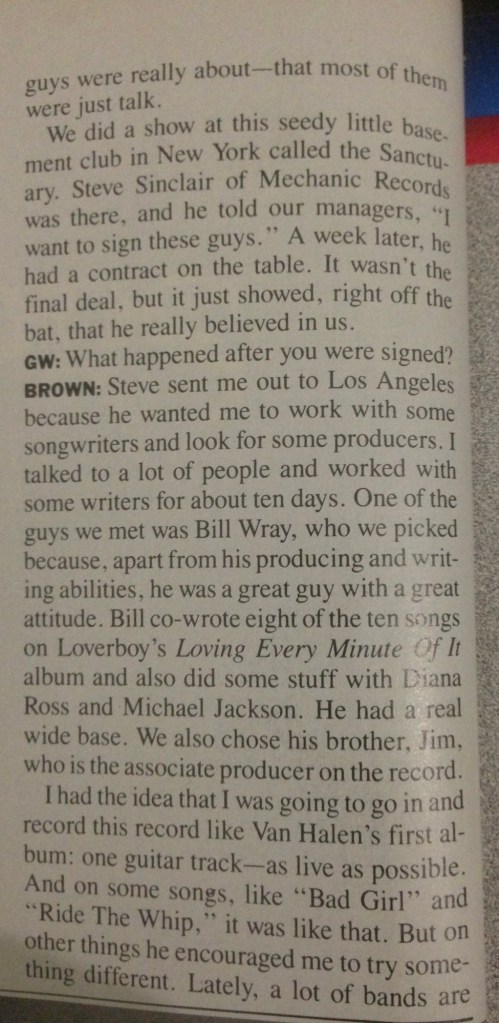
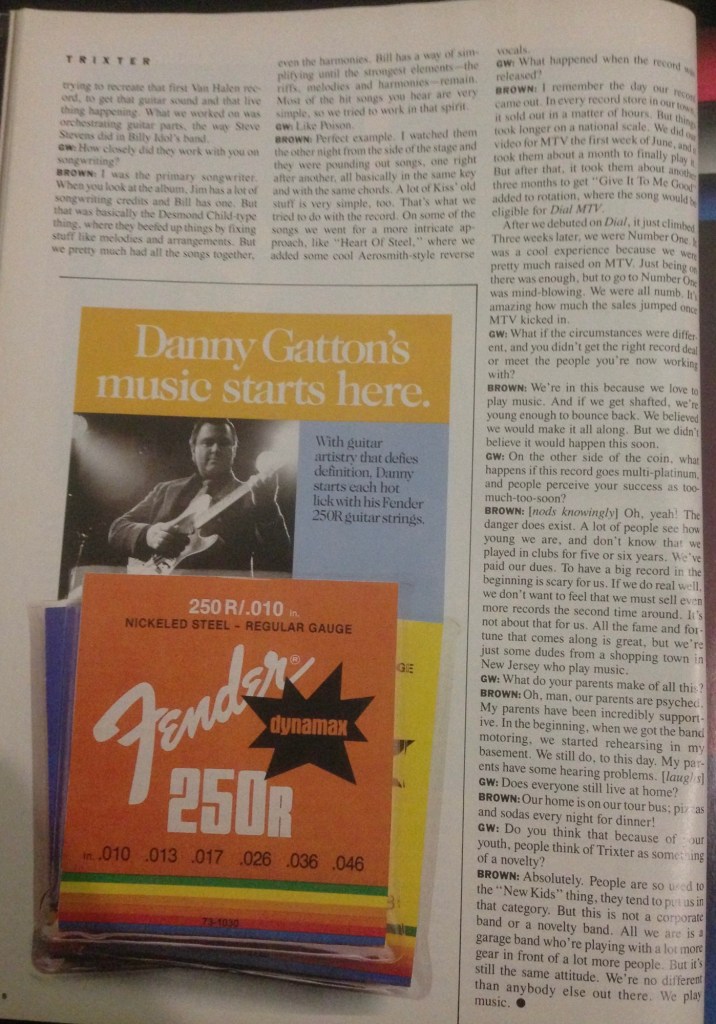
When Trixter Thought the Party Would Never End – Guitar World June 1991

June 1991.  

Hair spray was a performance enhancing drug, MTV still played music, and four kids from Paramus, New Jersey had just hacked the suburban‑teen lottery.

Trixter weren’t supposed to “make it.” They were mall rats from a shopping town, grinding 200 shows a year, aiming no higher than the Meadowlands and maybe, if the gods were drunk, Madison Square Garden. Then the planets lined up: a grimy New York club called The Sanctuary, a label guy in the room, a contract on the table a week later, and suddenly they’re on MTV every hour pretending this is all just happening to them. 

That’s the moment frozen in this Guitar World interview: the exact second where the rollercoaster is still climbing and nobody hears the chain starting to rattle.

On the surface, it reads like standard early-’90s rock-mag candy.

Origin myth.

Garage rehearsals.

High-school sleep deprivation.

Parents pretending they’re annoyed but secretly proud.

Then the montage: endless club gigs, the one basement venue that matters, the industry guy who changes everything. Numbers follow, sales, tour slots, rotation, framed as disbelief.

And the quote. The wall-poster quote.

“All the fame and fortune… is great, but we’re just some dudes from a shopping town in New Jersey who play music.”

That line isn’t accidental. It’s the formula.

The band must be aspirational and accessible at the same time. Superheroes who still feel like kids from homeroom. Big enough to worship. Small enough to imagine becoming.

That’s the business model.

So is the GW interview a PR piece?

Of course it is. This is Guitar World, 1991. The structure is pure promo:

Build the myth (kids + garages + malls + mishaps).

Flex the numbers (MTV, tour slots, sales).

Humanize the product (parents, girlfriends, pizza on the bus).

End with some variation of, “We’re just grateful to be here, man.”

But buried under the sugar, Steve Brown keeps slipping you protein.

He admits they designed themselves as a teen band after reading about Def Leppard. He talks about carefully arranging guitar parts, thinking in terms of Desmond Child‑style songcraft instead of just riff‑vomiting. He’s obsessed with Van Halen’s first record and wants to capture that “as live as possible” energy on a big‑budget debut. He knows MTV rotation is a once‑in‑a‑lifetime weather pattern and they’re trying to build as many houses as possible before the storm passes.

That’s not just PR. That’s a 20‑year‑old already thinking like a lifer.

The tragic part is that no one knows the meteor is already in the air. Grunge is loading in at the other end of the decade while he’s still talking about opening for Poison. Everyone in the piece sounds certain they’ve cracked the code forever, when in reality they’ve rented a very small window in a very specific era.

It’s not deep journalism, but it accidentally becomes deep nostalgia: a time capsule of what it feels like to be young, ascending, and completely wrong about how long the ascent lasts.

So what happened when the lights finally came up?

The short version: the wave crested, then physics did what physics always does.

Trixter rode that first record hard. Tours, videos, magazine covers, the full package. Then the wheel turned. The second album didn’t hit the same, the climate shifted, radio and MTV moved on. The band dissolved in the mid‑’90s, another casualty of a genre that went from omnipresent to punchline in about as much time as it takes hair spray to dry.

Steve Brown didn’t vanish into the suburbs to sell insurance and tell bar stories about “that one time on tour.” He kept going. Other bands. Side projects. Session work. Cover gigs. Tribute projects. Reunion tours. New Trixter records. The guy turned being “that dude from Trixter” into a 30‑plus‑year career by refusing to treat the early ’90s as the peak.

This is what nobody tells kids in bands: the story doesn’t end when your video falls out of rotation. It keeps going, just on smaller stages with fewer free drinks and way more self‑awareness. It stops being about winning the rock‑star lottery and starts being about whether you actually like the work enough to do it without confetti cannons.

Steve clearly does.

So why did I bother digging through a yellowing Guitar World piece in 2026?

Because it’s the perfect diagram of how the machine used to work and, honestly, still does, just with different haircuts and platforms.

You can see:

The fantasy: four normal kids “accidentally” becoming rock stars.

The marketing: humble‑brag quotes, carefully curated struggle, the illusion that this is reproducible.

The truth leaking out the sides: obsessive grind, calculated image choices, a main songwriter already thinking like a producer.

It’s easy to mock bands like Trixter from the safe distance of hindsight. The clothes, the lyrics, the Aqua Net. But when you strip away the clichés, what’s left is familiar: talented kids trying to turn obsession into a life, trapped inside a trend they don’t control.

The interview captures the moment right before they discover a hard rule the industry never prints in glossy pull‑quotes:

You are not your chart position.  

You are not your MTV slot.  

You are what you keep doing after the world stops caring.

In 1991, Trixter thought the party would last forever.  

In 2026, Steve Brown is still playing guitar for a living.

Turns out that’s the better ending anyway.

Standard
A to Z of Making It, Music, My Stories, Stupidity, Treating Fans Like Shit, Unsung Heroes

Always a Few Years Too Late: Why Australian Hard Rock Albums Missed Their Moment

Talent was never the problem. Songs weren’t the problem. Crowds weren’t the problem. Australia produced world-class live acts with world-class songs, often before the rest of the world caught on.

But.

The albums arrived late because everything around the music moved slower, sideways, or backwards.

This wasn’t coincidence. It was systemic.

Australia didn’t just sit far from the US and UK/Europe, it existed in a different time loop.

By the late ’80s, LA scenes moved in months. UK trends turned over in seasons. And Australia lagged by years.

Not because musicians were behind, but because infrastructure was.

Touring overseas required money bands didn’t have.

Labels wanted proof that bands had an audience before investment. Proof required exposure. Exposure required travel.

That circular logic delayed everything. By the time an Australian band secured a deal, the sound they pioneered locally had often already peaked internationally.

When albums finally arrived, they sounded right, just not right now.

If geography slowed bands down, management actively sabotaged them.

The Australian industry of the era was full of managers with control clauses but no leverage. Contracts restricted bands from signing deals independently.

Bands routinely received offers they couldn’t legally accept.

Deals were turned down “to get a better one.” Momentum was paused “to build hype.”

Albums were delayed “until the timing was right.”

The timing never was.

Candy Harlots are not an outlier here, they are a case study. A Virgin Records deal offered early, declined by management, then re-offered years later after the band had already fractured. Multiply that story across dozens of acts and you start seeing a pattern, not bad luck.

BB Steal finally released their Def Leppard influenced record “On The Edge” in 1992, however the first single of the album came out in 1988.

Roxus released their excellent melodic rock album “Nightstreet” in 1991, and like BB Steal, they had a few years between the first single (1989) and the album release.

But.

Australian hard rock thrived live.

That was both its strength and its trap.

Venues were packed. Residencies mattered. Reputations were earned face-to-face.

Bands became mythical locally without leaving physical evidence behind.

But labels don’t sign myths, they sign masters.

Many bands, gigged relentlessly without recording. Rewrote sets constantly instead of committing songs. Waited for “the real album” moment.

By the time that moment arrived, line-ups had changed, scenes had shifted, or the industry had moved on.

Albums became memorials instead of weapons.

Delay kills cohesion.

The longer an album takes to materialize, the more likely, members age out of the lifestyle, internal politics harden, financial strain builds resentment and key writers leave before the payoff.

Australian bands often lost founding members before recording debut albums.

Not because of ego, but because people don’t wait forever.

When albums finally arrived, they were frequently recorded by survivor line-ups, not the ones that created the original sound. That created a strange historical dislocation: the record didn’t fully reflect the band people fell in love with.

Australian mainstream media didn’t discover hard rock, it reacted to it.

By the time a band reached Triple M rotation or national press coverage or television exposure …the scene had already peaked locally.

Specialty radio (like 2RRR’s Metal Show) carried enormous cultural weight, but limited commercial reach. Those DJs broke bands, but couldn’t break markets.

So albums were greenlit after proof, not during ignition.

That delay mattered.

The final nail wasn’t grunge, it was speed.

Between 1989 and 1992, Glam fragmented and Alternative exploded and the Labels pivoted instantly.

Australian albums arriving in 1991–1993 weren’t bad, they were misaligned. They sounded like records that should have come out in 1989.

And many of them should have.

But systems don’t reward “should have.” They reward timing.

Here’s the uncomfortable truth:

Australia still struggles with this. It’s better in the streaming era but it’s still a problem.

Different genres. Same mechanics.

Local scenes ignite.

Momentum builds.

Gatekeepers (the ones that still exist) hesitate.

By the time support arrives, the moment has shifted.

The lesson isn’t “work harder.” It’s compress the timeline.

Scenes don’t wait. Audiences don’t wait. History doesn’t wait.

An album arriving late doesn’t mean it failed. It means it arrived as evidence, not influence.

That’s why records like “Five Wicked Ways” still hold up. They weren’t chasing trends, they were documenting one that had already happened. That gives them a strange durability, even if it robbed them of impact at the time.

Australian hard rock didn’t miss because it lacked vision.

It missed because the system was built to move after the fire, not during it.

And by the time the album hit the shelves, the fire had already moved on.

Standard
A to Z of Making It, Influenced, Music, My Stories

The Place Matters

There’s this myth that talent alone is enough.

That if you’re good, really good, the world will find you. That the algorithm will save you, or that destiny will somehow FedEx your big break to your doorstep.

It won’t.

Because the place matters.

Walt Disney learned that the hard way. Kansas City, 1921, his first studio, “Laugh-O-Gram” Films, goes under in less than two years. Not because he wasn’t good. Because Kansas City wasn’t where dreams went to multiply. It was a field where they went to die quietly.

But Walt didn’t. He sold short films to rich families by filming them and their children, one house at a time, camera by camera, dollar by dollar, until he had enough money for a train ticket to California.

That train was more than transport. It was transcendence.

Hollywood wasn’t just a place, it was a magnetic field, a vortex that pulled artists into its orbit.

Everyone who mattered eventually got pulled there or burned out resisting it. Because where there’s creative density, there’s ignition.

That’s how it’s always been.

Axl Rose and Izzy Stradlin leaving Lafayette, Indiana, to crash on couches in Los Angeles, because no one becomes a legend in Lafayette. Duff McKagan ditching Seattle before it had a “scene” to speak of.

Nikki Sixx and Mick Mars getting together in a band happened because of the place, the town they gravitated to.

If they’d stayed in their hometowns, they’d be the guys at the local bar saying, “We almost made it.”

Metallica understood this too. They went against the current, moved from LA to San Francisco, chasing something grittier, heavier, more real. They traded glam for grit, and got Cliff Burton in the process. That wasn’t luck. That was geography colliding with intention.

Because the place isn’t just where you are, it’s who you meet, what you absorb, and what kind of fire burns in your bones at 3 a.m. when everyone else is asleep.

And now, in this era of disconnection, when your bedroom is your studio and your world fits in a laptop, we forget that physical gravity still exists.

That you can’t replicate the heat of 1980s Sunset Strip over a Zoom call. You can’t download the tension of standing in line outside the Whisky a Go Go with your demo in your pocket.

You can’t fake proximity.

The right place accelerates everything, your hunger, your heartbreak, your art. It forces you to rise to the noise, to fight for space in a city that doesn’t owe you anything. That’s what makes it real.

Because yes, the internet has leveled the playing field, but it’s also flattened the stakes. And the truth is, if you want to build something immortal, you still have to go where the energy lives.

Walt knew it.

Frank Carlton Serafino Feranna Jr and Robert Alan Deal knew it becoming Nikki Sixx and Mick Mars in the process.

Axl knew it.

Metallica knew it.

The place matters.

And maybe that’s the lesson buried beneath the dust of every broken dream and every overhyped promise: you can’t separate the art from its ecosystem.

The cities hum with invisible frequencies, and if you tune yourself just right, you catch them.

Nashville’s still soaked in whiskey and heartbreak. Berlin still beats like an electronic heart that refuses to die. Melbourne, is where the misfits gather, guitars in hand, fighting not for fame but for proof they exist.

The coordinates change, but the principle doesn’t. Energy seeks energy. Creation needs collision. The universe doesn’t reward the comfortable; it rewards the ones who move. Because the place still matters, it always did, and it always will.

Standard
A to Z of Making It, Classic Songs to Be Discovered, Influenced, Music

Sydney’s Biggest Live Secret (Revisited): Candy Harlots and the Album That Took Five Years Too Long

Scenes don’t fail because the music isn’t good enough.

They fail because time, management, and momentum never align at the same moment.

Candy Harlots are the textbook case.

By the time their debut album “Five Wicked Ways” finally landed in May 1992, the band that had ignited Sydney in the late ’80s barely resembled the one that earned the deal in the first place. And yet, against all logic, it still worked.

To understand why, you have to start where the fire actually began.

Candy Harlots formed in Sydney in 1987, originally built by guitarist Ron Barrett, drummer Tony Cardinal, vocalist Mark Easton, and bassist Nick Szentkuti. Guitarist Marc De Hugar joined soon after, still a teenager, but already operating well above his age.

Szentkuti didn’t last long. Scott Millard stepped in briefly, followed by Leeno Dee, whose arrival quietly changed the band’s internal chemistry. Dee didn’t just anchor the low end, he added another songwriter to a band already driven by Easton and Barrett. That matters later.

This version of Candy Harlots wasn’t just loud. It was theatrical, sexual, and confrontational. Roses, lollipops, balloons, foam, striptease intros, dry ice. Mark Easton didn’t “front” the band, he detonated it.

The Kardomah Café became home base. From there, the band spread outward, often overwhelming suburban venues that didn’t quite know what they’d booked. Some crowds loved it. Some venues didn’t invite them back. That tension fueled the myth.

At the same time, another band called Rags ’n’ Riches were moving through the same ecosystem, more melodic, less confrontational, built around Scott Ginn’s songwriting instincts and Phil Bowley’s feel-driven guitar work. Two bands, same scene, radically different approaches.

Both mattered.

By 1989, Candy Harlots were peaking live.

They opened for The Cult, Cheap Trick, D.A.D., Kings of the Sun, and The Angels. They partied and jammed with members of Skid Row and Mötley Crüe. Industry attention followed quickly.

In fact, Virgin Records offered them a deal after just three shows.

They didn’t take it.

Not because the band said no, but because their manager did. Worse still, their management contract prevented the band from signing without approval. By the time that deal evaporated, momentum had already taken a hit that never fully healed.

So they did what bands used to do: they pressed their own record.

“Red Hot Rocket” landed in April 1989 on Au Go Go Records. A thousand red-vinyl copies, packaged with custom knickers, sold out in under three hours. The song sounded exactly like the band looked: sleazy, melodic, funny, dangerous.

This was the moment they should have been locked into an album cycle.

They weren’t.

The follow-up single “Danger” arrived in May 1990, backed with “Wrap 2 Arms.” Written by Leeno Dee, it’s arguably the strongest thing the band ever released, big chorus, melodic spine, raw power intact.

It barely registered.

Then everything collapsed.

In October 1990, founding guitarist Ron Barrett died after an asthma attack. He was 26. The band lost not just a player, but its emotional center. No amount of gigging compensates for that.

From here on, Candy Harlots became a band reacting to loss instead of generating momentum.

After Barrett’s death, Peter Masi was recruited on guitar. But the changes didn’t stop there.

In February 1991, Marc De Hugar was replaced by Phil Bowley, a move that aligned musically, but carried deep personal consequences. De Hugar had been a key writer, a visible drawcard due to his age, and had already invested years of unpaid work while negotiating a record deal that was now moving forward without him.

A month later, after a final performance at the Kardomah Café, Mark Easton walked away.

At this point, only Tony Cardinal remained from the original formation.

Shortly after, Tony “Aiz” Lynch joined as vocalist, a cross between Sebastian Bach, David Lee Roth and Vince Neil, he was as bad as a bad boy could be.

By now, the disastrous management deal had expired.

And suddenly, Virgin Records came knocking again.

This time, the band signed.

Virgin-backed promotion changed everything.

The Lynch-fronted Candy Harlots received more media attention than the Easton era ever had. In 1991, “Danger” was re-recorded and re-released, and for many fans, this was their entry point. Cassette single. CD single. Real distribution.

A promotional release, “The Tease Tapes,” appeared with Hot Metal magazine, hyping an album scheduled for October 1991.

October came and went.

Instead, early 1992 delivered the “Foreplay” EP—three album tracks plus a Kinks cover. A tease, literally.

Finally, in May 1992, five years after the band formed, the debut album arrived:

“Five Wicked Ways”.

And here’s the inconvenient truth:

It was good.

Really good.

The album carried LA sleaze DNA, Mötley Crüe, Guns N’ Roses, Ratt, Poison, but could pivot effortlessly into AC/DC, Kiss, Skid Row, even Dokken territory.

“Backstreet Boys” opens with pure AC/DC muscle, “Sister’s Crazy” updates the fallen-angel pop-metal trope, “Danger” finally gets its anthem moment, “Cheat On Me” leans punk-sleaze, “Where No One Dares” slows things down with genuinely strong guitar work.

“My Flame” rides a pulsing bass and bluesy swagger, “The Lady Shakes” kicks off with Cardinal’s drums before settling into a Bolan-esque groove.

“Wrap 2 Arms” resurrects Ron Barrett’s song, rightfully so “What Are We Fighting For”, penned by Lynch, is a late-album standout.

“Mercenary Baby” brings funk-rock tension, “The Other Side of Love” nods toward Dokken and “Devils Blues” closes things out acoustically.

Singles followed, “Sister’s Crazy,” “What Are We Fighting For”, with bonus tracks and covers, including AC/DC’s “Can I Sit Next To You Girl.”

For a debut album, it was shockingly complete.

And then it ended.

Not long after, Aiz Lynch was fired.

New singers arrived.

The band changed its name.

Momentum evaporated again.

And then it was over.

Candy Harlots didn’t miss success by inches.

They missed it by years.

Bad management decisions.

Delayed deals.

A death no band recovers from intact.

An album released after the cultural moment had already shifted.

And yet, “Five Wicked Ways” stands up.

That’s the part people forget.

The output is small. The story is messy. The timing was brutal.

But that record belongs in the same conversation as bands who “made it.”

Sydney didn’t lack talent.

It lacked alignment.

Some bands get immortalized.

Others become cautionary tales.

Candy Harlots were both.

And if you were there, if you remember the Kardomah, the radio static, the knickers in the single sleeve, the songs that should’ve been bigger, you already know:

This wasn’t a failure.

It was a delayed detonation.

Standard
A to Z of Making It, Influenced, Music, Unsung Heroes

We Sacrificed Our Lives for Rock and Roll (Jake E. Lee Edition)

Jake E. Lee should’ve been a household name.

He wrote the riffs that kept Ozzy Osbourne relevant in the mid-’80s, carved lightning out of mahogany, and made the guitar sing like a wounded animal trying to escape the zoo. Then he was gone.

Fired.

Forgotten.

No explanation. No headlines. Just silence.

And yet, he never stopped playing.
Because the lifers never do.

We came from that generation that thought music could save us. We weren’t trying to become content creators, we were trying to become gods. The Beatles had turned black-and-white lives into Technicolor, and by the time Sabbath, Zeppelin and Van Halen hit, we wanted to plug in and join the revolution.

Our parents told us to get degrees. We bought Marshalls instead.
They told us to settle down. We chose distortion.

Back then, the sound wasn’t an accessory, it was oxygen. Every riff was a rebellion, every rehearsal a prayer. We learned how to solder cables before we learned how to pay bills. We thought tone could change the world.

Jake understood that.

He was too good for compromise, too strange for the machine. When he left the limelight, everyone thought he’d vanished, but he’d just retreated to the desert, still playing, still writing, still chasing the ghost of the perfect note.

After Ozzy, Jake E. Lee should have ruled the world. He formed Badlands, and for a moment, it felt like redemption.

It wasn’t corporate. It wasn’t polished. It was alive, beautiful, human.

Ray Gillen could sing like the gods were tearing open the sky. Jake’s tone was molten iron, all feel, no filter. They had the songs, the chemistry, the hunger.

And then it imploded. Not because of drugs, or label politics, or creative differences, although they did have disagreements which carried over into the live show, but because real life crashed the party.

Those albums will never be reissued on CD. The reasons are complicated, contested, and not mine to litigate, but the silence around them is deliberate.

Atlantic Records buried the catalog. The albums vanished from stores, from streaming, from history. A digital scar where greatness once lived.

And that’s the ruinous truth about rock and roll: it’s not built to last. It’s built to burn.

For every band that becomes immortal, a hundred vanish not because they weren’t good enough, but because they flew too close to something human, desire, tragedy, ego, love, disease.

We talk about “legacy” like it’s something we can engineer. But the universe doesn’t care how good your solo is. There are no guarantees. No justice. No moral equilibrium that balances out the riffs.

Sometimes the guy who gave his life to the craft ends up selling insurance. Sometimes the band that could’ve changed everything gets wiped from the archives because life doesn’t want to play fair.

But maybe that’s the point.

Maybe rock and roll was never about permanence, maybe it was about risk. The willingness to live without a safety net. The courage to make something beautiful in a world that erases beauty every day.

Jake E. Lee is still out there, still playing, still alive, still searching for a sound no one can algorithmically predict. Badlands may be gone, but that’s what makes them holy. You can’t stream them, you can only remember them, or, if you were lucky enough, you can feel the ghost of their frequencies vibrating somewhere under your ribs. Like YouTube. Which has basically the history of music on its side.

So yeah, the world forgot. The label buried the tapes. But the lifers remember. Because some of us didn’t just listen to the music. We were the music.

We didn’t lose the dream.
We lived it, scars, silence, and all.

Meanwhile, the world changed.
MTV collapsed. Algorithms replaced A&R men. Guitar solos went out of fashion. The kids traded fretboards for touchscreens. And the rest of us, the ones who built our lives around the volume knob, we watched the dream shrink until it fit in a playlist.

But here’s the thing: the fire never dies.

A few solo albums here and there and Jake came back decades later with Red Dragon Cartel, not to reclaim a throne, but to prove the riff still mattered. It wasn’t nostalgia; it was a declaration of faith. Every note said, I’m still here. I never stopped believing in the noise.

And that’s us too, the forgotten believers. We rent apartments instead of owning homes. We have tinnitus instead of retirement plans. We can’t remember passwords, but we can tell you the exact pickup configuration Randy Rhoads used on “Crazy Train.”

We’re not failures. We’re pilgrims who never found the promised land but kept walking anyway.

When Jake bends a note, it’s not just music, it’s defiance. It’s the sound of every dreamer who refused to clock in, every musician who still hauls a 4×12 cab into a bar for gas money and applause from thirty people who actually listen.

We sacrificed our lives for rock and roll. And if you have to ask why, you’ll never understand.

Because the show, that fleeting, electric communion between the amp and the crowd, that was the home we were looking for all along.
And when the lights go down and the first chord hits, everything that never worked out suddenly makes sense.

We didn’t miss out on life. We lived it louder.

The tragedy of Badlands isn’t ancient history, it’s prophecy. Every artist today lives on the same knife’s edge. One bad headline, one algorithmic shadow-ban, one rumor whispered into the right inbox, and you’re erased. Your catalog disappears, your legacy gets rewritten by people who never even heard your work. We don’t burn on stage anymore; we burn in silence, beneath the scroll.

But here’s what separates the lifers from the tourists: the lifers keep playing.

They know the system’s rigged. They know the world rewards the shallow and forgets the sincere. And they do it anyway.

Because somewhere inside the noise, the heartbreak, the lost royalties, there’s still that kid who picked up a guitar and thought sound could save the world.

That’s who Jake E. Lee still is. That’s who we are. We keep writing riffs in an era that doesn’t believe in permanence, because the truth was never meant to be preserved, only felt.

In a digital wasteland of content and convenience, the act of creation itself is rebellion.

And rebellion, like rock and roll, doesn’t die, it just goes underground and waits for the faithful to find it again.

Standard
A to Z of Making It, Copyright, Influenced, Music, My Stories

Nothing’s Original, and That’s the Point

Every riff you’ve ever thrown horns to is a hand-me-down. Every chorus you’ve ever screamed at the top of your lungs is somebody else’s ghost wearing new leather. That’s the dirty little truth of rock and metal: it’s all borrowed, stolen, ripped apart, and reborn louder than before.

Music isn’t original. It’s immortal.

Take Crosby, Stills, Nash & Young’s “Carry On.” Gorgeous harmonies, that golden California glow, but underneath?

It’s Davey Graham’s “Anji.” No shame in it.

Zeppelin? They cannibalized Muddy Waters, Howlin’ Wolf, and Willie Dixon so hard they got dragged into court and still became gods.

Metallica built half of “Kill ’Em All” on riffs they lifted straight from Diamond Head. Nirvana took The Pixies’ soft-loud blueprint and weaponized it into a grunge anthem.

The “Burn” riff in G minor wasn’t just a Deep Purple opener, it was an embryo. Ritchie Blackmore lit it, Coverdale and Hughes sang it into history, and Glenn Hughes carried it forward like DNA in his bloodstream.

You can hear its shadow in Hughes/Thrall’s “I Got Your Number” (1982), sharpened in Gary Moore’s “Run for Cover” (1985), and reborn in John Norum’s “Face the Truth” (1992). Same pulse, shifted into F♯ minor, but undeniably the same bloodline.

Coverdale didn’t leave it buried either. With John Sykes, he bastardized the Burn riff into “Children of the Night” on Whitesnake’s 1987 juggernaut.

Sykes doubled down a year later, repurposing the same DNA into “Black Hearted Woman” with Blue Murder. Different bands, different contexts, but still the same riff in a new disguise.

What we’re looking at here isn’t plagiarism, it’s a dynasty. A single riff spawning offspring across decades, mutating as it jumped from band to band. Hughes carried it soulful and elastic. Coverdale and Sykes weaponized it for arenas. Each branch different, but every branch unmistakably part of the same tree.

This is how it works. It’s always how it’s worked.

We’ve been spoon-fed the myth of originality, the idea that every classic song is lightning in a bottle. But peel back the layers and you see the skeleton:

Deep Purple’s “Smoke on the Water”? Just a blues riff flattened and played like a war march.

KISS made a career Frankensteining Chuck Berry’s DNA into glam rock fireworks.

Motörhead was Little Richard played through a chainsaw, Lemmy spitting gasoline on the mic.

Mötley Crüe swiped Sweet’s glam strut and Aerosmith’s sleaze, turned it into Sunset Strip debauchery.

Whitesnake borrowed Zeppelin’s swagger wholesale and polished it for MTV.

Kingdom Come? They didn’t even pretend, just straight-up cloned Zeppelin and dared you to complain.

And it goes deeper.

Black Sabbath slowed down the blues until it sounded like an earthquake.

AC/DC took Chuck Berry riffs, plugged them into a Marshall stack, and built an empire.

Guns N’ Roses was Aerosmith if they grew up on heroin and nihilism. Every “new” sound is an echo chamber of something older.

The bands that matter don’t deny it, they double down. They take, they mutate, they make it their own:

Motörhead never apologized for playing Little Richard at 200 bpm.

Nirvana admitted the Pixies blueprint but twisted it into generational rage.

Metallica wore their Diamond Head influence on their denim vests and built a movement around it.

Even Deep Purple’s Jon Lord said it out loud: they were just a classical keyboardist and a blues guitarist smashing their worlds together.

That’s the alchemy. You take with intent. You stitch together parts until the monster lurches to life and crushes cities.

The irony?

The more derivative, the more universal. That’s why your brain locks into a riff before you even realize it’s been done before. A familiar structure, dressed up and set on fire, is irresistible.

KISS concerts didn’t sell out because they were original, they sold out because they gave you rock ’n’ roll you already knew in a stadium-sized package. Motörhead didn’t endure because Lemmy invented something brand new, they endured because he made rock’s ugliest roots sound like the apocalypse.

Music survives by being contagious. Like a virus, it spreads, mutates, infects. Sabbath to Metallica to Pantera to Slipknot, it’s all one family tree, just different branches twisting toward the sun.

So let go of originality. It’s a marketing gimmick. What matters is whether the riff hits your gut, whether the chorus feels like a mob chant, whether it makes you want to smash a beer bottle and howl at the night sky.

Because nothing’s original.

And nothing’s ever hit harder.

Standard