Classic Songs to Be Discovered, Influenced, Music

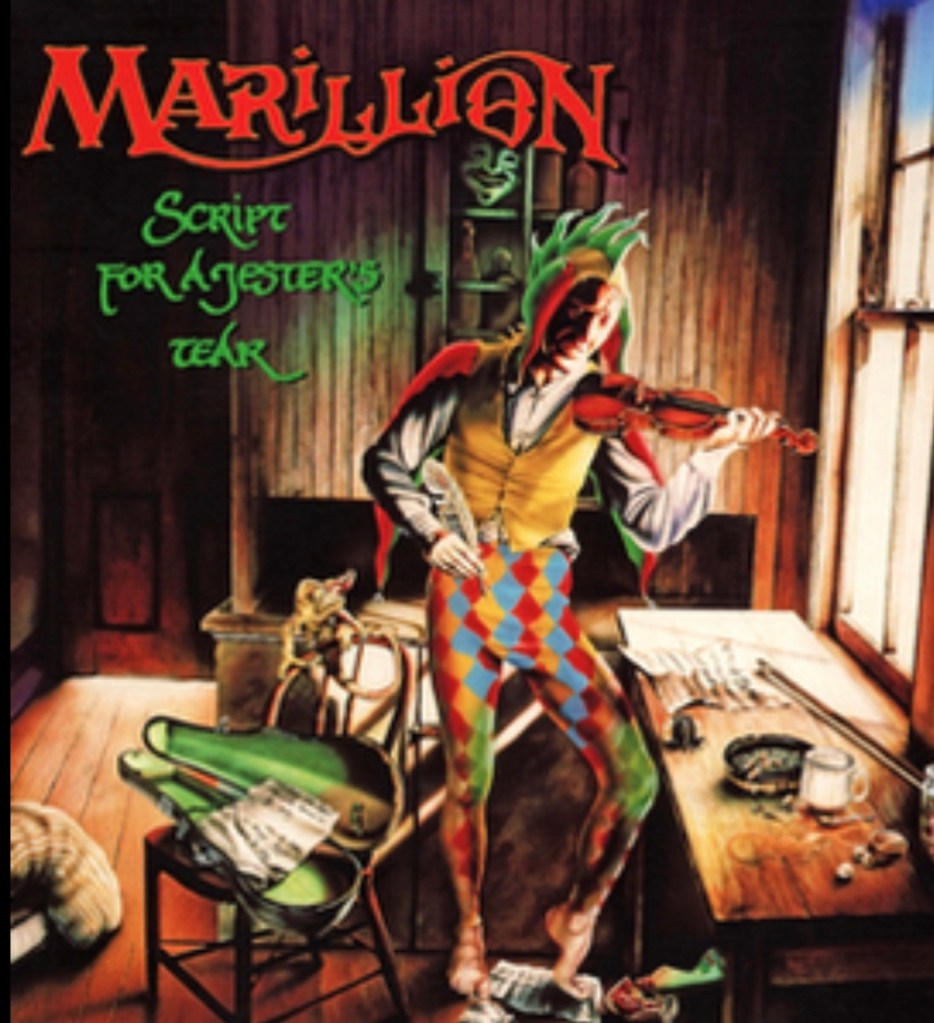
The Record I Almost Didn’t Buy and Couldn’t Escape: Marillion – Script For A Jester’s Tear

You don’t find Marillion. They find you.

Or more accurately, you hear about them sideways.

For me it wasn’t some critic, not some curated “essential albums” list. It was Dream Theater blowing up with “Images and Words”, and Mike Portnoy talking like a fan, not a technician. That’s the tell. When a virtuoso stops talking about chops and starts talking about feeling, you pay attention.

So I went digging. Early ’90s. Second-hand record store. Dust, cracked plastic CD cases, history stacked alphabetically.

And there it was: “Script for a Jester’s Tear”.

I’d seen it before. That cover lingered. You don’t forget it. The Jester, fragile, theatrical, cracked open emotionally. The kind of image that promises something deeper than hooks. Conceived by Fish, brought to life by Mark Wilkinson. Not decoration, invitation.

Still, I didn’t buy it the first time. Two bucks felt like a commitment when you’re chasing every other ’80s record you think you “need.” Funny how that works. You chase quantity until something forces you to sit still and actually feel.

This record does that.

It doesn’t care about your verse-chorus expectations. It doesn’t ask permission. It builds moods. It stretches. It circles back. It trusts you to stay.

And then there’s that middle section. Around the two-minute mark through four. That’s where the mask slips.

The structure shouldn’t work on paper, verse feel, then a lead break, then back again, but emotionally it locks in. Not because it’s clever. Because it’s honest. The music doesn’t resolve, it returns. Like memory. Like regret. Same place, slightly different weight.

And then the words hit:

So here I am once more in the playground of the broken hearts.

That’s not just a line. That’s a pattern. That’s someone recognizing they’ve been here before and still walked back in. No illusion of progress. Just awareness.

One more experience, one more entry in a diary, self-penned.

That’s the quiet brutality of self-reflection. Nobody else to blame. You wrote this chapter.

Yet another emotional suicide overdosed on sentiment and pride.

That’s the real tell. Not heartbreak. Ego. You didn’t just feel too much, you chose it. You leaned into it. Pride kept you there.

Too late to say I love you, too late to re-stage the play.

There’s no rewrite. No director’s cut. The window closed while you were thinking about it.

Abandoning the relics in my playground of yesterday.

That’s the only move left. Not victory. Not redemption. Just… leaving.

That’s why the playground imagery works. Swings. Roundabouts. Motion without progress. Up and down, but you end up where you started. And the line:

I’m losing on the swings, I’m losing on the roundabouts.

It cuts because it strips the illusion. There’s no winning version of this cycle.

And that’s the thing about this song. It doesn’t pretend resolution. Even “The game is over” doesn’t feel triumphant. It feels like someone finally putting the controller down because they’re tired of losing the same level.

The Jester’s tear? That’s the whole thesis. Not just sadness. Not just regret. It’s the awareness of both. The performance and the truth colliding. Smiling while something inside you caves in.

And then that quiet confession:

I never did write that love song, the words just never seemed to flow.

That’s the line that lingers. Because it’s not about writing. It’s about saying the thing when it mattered. And not doing it.

No guitar heroics fix that. No structure saves it. No time rewinds it.

That’s why this record sticks. It doesn’t overwhelm you with complexity, it traps you with recognition.

You’ve been in that playground.

You just didn’t have the words for it yet.

Standard
A to Z of Making It, Copyright, Music

Masters of Nothing: Why Artists Keep Losing Their Own Music

The music business loves mythology. It sells rebellion. Freedom. Danger. Authenticity.

The starving artist with a guitar. The rapper with a dream. The band sleeping in vans before conquering the world.

But behind every platinum record sits another story nobody likes talking about.

Paperwork.

Contracts. Clauses. Ownership structures. Corporate definitions. And armies of lawyers whose job is to make sure the people who created the culture often never fully own it.

That’s the real story sitting underneath two major music industry battles unfolding right now.

One involves the major labels hiring elite Supreme Court attorney Paul Clement to fight a ruling that could allow artists to reclaim global ownership rights to their music decades after signing contracts. The other involves legendary hip hop pioneers Salt-N-Pepa fighting Universal Music Group for control of masters tied to songs that helped define an era.

Different lawsuits. Same system. The suits protecting the vault.

For decades the music industry justified ownership by arguing labels took the financial risks. In the vinyl and CD eras, there was truth to that. Manufacturing records, shipping inventory worldwide, financing studios, bribing radio through “promotion,” building distribution pipelines, it all required enormous infrastructure.

Labels weren’t just record companies. They were factories. Banks. Gatekeepers.

But streaming changed everything.

The catalog became more valuable than the artist. Not future music. Not artist development. Not creativity.

The old recordings.

Because songs no longer disappear with time. A hit from 1987 now generates money forever: Spotify streams. YouTube monetization. TikTok rediscovery. Netflix sync placements. Gaming licenses. Playlist algorithms.

Music became perpetual intellectual property infrastructure.

And once catalogs turned into billion-dollar assets, ownership became war.

That’s why the major labels reportedly hired Paul Clement, one of the most powerful appellate attorneys in America, after a recent ruling suggested artists may reclaim not only U.S. rights to their recordings, but potentially worldwide rights through copyright termination laws.

Think about the scale of panic required for that move. The labels didn’t respond with: “Maybe artists deserve more ownership.”

They responded by assembling a legal nuclear deterrent. Because if artists can claw back global rights, entire catalog valuations become unstable overnight.

And this is where the phrase “work for hire” enters the story, one of the most important and misunderstood weapons in music industry history.

Under U.S. copyright law, creators can often reclaim ownership of transferred copyrights after several decades. But there’s a loophole powerful enough to erase that future right entirely.

If a work is classified as a “work made for hire,” the corporation is considered the legal author from day one.

Not the musician. Not the songwriter. Not the band.

The company.

Which means the artist cannot later reclaim ownership because legally they never possessed it to begin with.

That distinction is worth billions.

The labels have long argued that recordings qualify as works for hire because they financed the recording process, paid advances, controlled distribution and supervised production.

But historically, musicians rarely resembled traditional employees.

They weren’t salaried office workers. Taxes often weren’t withheld. They weren’t clocking into Warner Music at 9am. Most artists functioned more like independent contractors creating intellectual property under negotiated agreements.

Which is why the work-for-hire debate has haunted the industry for decades.

In 1999, lobbyists quietly pushed language into federal legislation attempting to formally classify sound recordings as works for hire. The backlash was immediate once artists discovered it. Musicians including Don Henley and Sheryl Crow publicly opposed the change, and Congress eventually repealed it.

That moment revealed something enormous. If recordings were already unquestionably works for hire, the industry wouldn’t have needed Congress to try rewriting the law.

But ambiguity is profitable. Because ambiguity delays ownership challenges. Delay protects catalog value. And catalog value is the center of the modern music economy.

Which brings us to Salt-N-Pepa.

Long before corporations fully understood hip hop’s economic potential, Salt-N-Pepa helped drag rap music into the mainstream. They became the first female rap act to go multi-platinum and the first to win a Grammy.

Now, decades later, they’re in court fighting for rights connected to the very recordings that built that legacy.

Universal Music Group’s argument reportedly centers on the idea that Salt-N-Pepa either transferred no reclaimable rights or that the recordings were structured in ways that prevent termination claims.

Read that carefully.

The people who made the music are allegedly not the legal owners in the way that matters commercially.

That’s the magic trick of the modern entertainment industry.

The artist thinks they signed a record deal. The corporation believes it acquired a forever asset.

And forty years later, the paperwork matters more than the songs themselves.

This isn’t just about one rap group or one lawsuit. It’s about the foundational imbalance of the entertainment business: The creators generate cultural value.
The corporations engineer legal permanence.

The labels market authenticity while weaponizing technicalities.
They celebrate artists publicly while litigating against them privately. They sell rebellion while protecting ownership structures with corporate ferocity.

And streaming made the contradiction impossible to hide.

Because the old industry model assumed music depreciated over time. Streaming proved the opposite. The past became infinitely monetizable.

A song recorded in 1986 can generate revenue every single day in 2026 with virtually no manufacturing cost. Catalogs became digital oil fields, and suddenly ownership rights that once looked historical became existential financial assets.

That’s why these legal fights matter far beyond music. This is labor versus ownership. Creation versus infrastructure. Art versus contract law.

The same pattern exists across Hollywood, publishing, technology and streaming platforms: The people who create the emotional value often control the least economic power.

The suits own the systems. The artists create the meaning.

And once the money gets large enough, the system fights to preserve itself. That’s why the major labels are preparing for Supreme Court battles instead of surrendering catalogs. That’s why legacy artists are revisiting contracts signed before they had leverage. That’s why younger musicians increasingly obsess over masters, publishing and ownership.

Because an entire generation finally realized the biggest illusion in the music business: The artist was often never the owner.

Billboard – Major Labels Hire Supreme Court Lawyer In Global Rights Fight

Variety – Salt-N-Pepa and Universal Music Group Appeals Court Lawsuit

U.S. Copyright Office – Works Made For Hire Overview

Standard
Influenced, Music, My Stories, Unsung Heroes

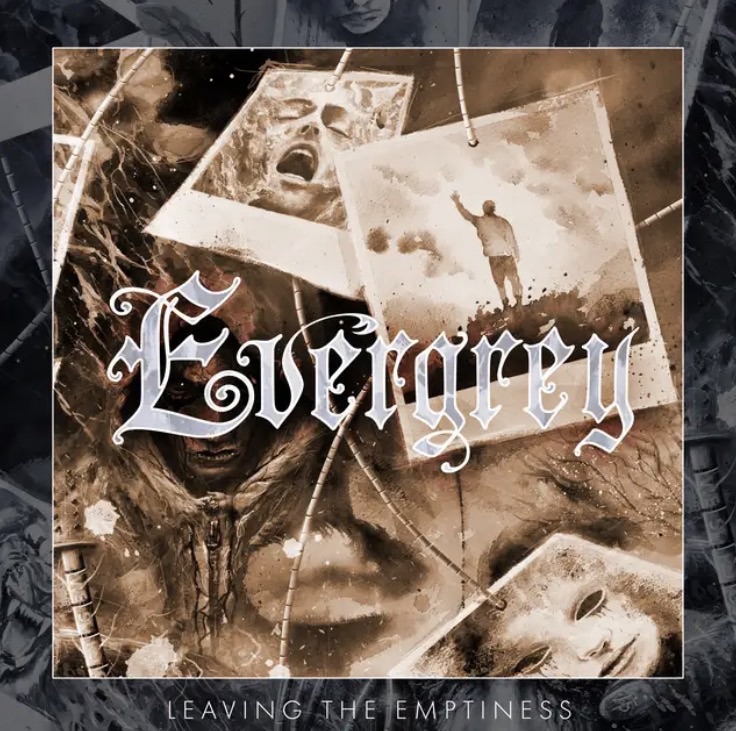
Leaving The Emptiness: The Moment Evergrey Turned Outward

There’s a shift happening here, and it’s not subtle.

Evergrey have always lived in the tension. Melancholy wrapped in complexity. Songs that feel like they’re carrying emotional debt. But “Leaving The Emptiness” doesn’t just sit in that space, it pivots out of it.

When you look at the credits, Jacob Hansen, Tom Englund, and Vikram Shankar, you start to see the architecture behind the sound. This isn’t just a band writing inward anymore. This is a collaboration engineered for impact.

And Hansen… he’s the wildcard that isn’t supposed to be a wildcard.

This guy came up through Invocator, which tells you everything about his musical DNA. Precision. Aggression. Structure. Then he pivots into Pyramaze, melody, grandeur, hooks. And somewhere along the way, behind the desk, he becomes a sculptor of modern metal, shaping bands like Volbeat, Primal Fear, and Amaranthe into streamlined, digestible forces.

So when you hear that intro riff… it makes sense.

Because that riff isn’t “Evergrey” in the traditional sense. It’s not brooding, not buried in layers of progressive nuance. It’s immediate. It’s physical. It’s designed. You don’t think about it, you react to it.

It’s the kind of riff that lives in contradiction. Heavy enough to nod your head like you mean it. Melodic enough to hum five seconds later. Simple enough to remember. Polished enough to sell.

So what you’re hearing isn’t a betrayal of identity. It’s a recalibration.

Because in a landscape where progressive metal can disappear into its own reflection, this kind of track cuts through. It doesn’t ask for patience, it demands attention.

“I lost my keys to heal but I don’t know where”

That’s not just a lyric, that’s modern existence in one sentence.

Everyone’s looking for the fix, the unlock, the cheat code to feeling whole again, and no one knows where they left it. It’s not hidden, it’s misplaced. Big difference.

Because if it’s hidden, someone else has it. If it’s misplaced, it’s on you. That’s the weight.

“I’m here to find some ways to make this worth it”

That’s the grind. Not purpose handed down from above, constructed in real time. Trial and error. Most people are waiting for meaning to arrive. This line says: it doesn’t. You build it or you don’t have it.

“I’m leaving the emptiness behind”

That’s the declaration. Not subtle, not poetic in a cryptic way, just a line drawn in the sand. You either believe it or you don’t. And the power of it? It’s not in certainty. It’s in the attempt.

Then comes the solo. Not polite, not restrained. This is full-blown guitar hero territory. The kind of lead that doesn’t ask if it fits the song, it becomes the moment.

If this was 1987, these guys would be sharing cover space with Eddie Van Halen Vito Bratta and George Lynch, tabs printed, kids rewinding cassette tapes trying to catch every note.

The real question isn’t whether it’s good. It’s a reminder of what’s been missing.

“Architects Of A New Weave” is due on June 5, 2026. I was meant to see them in Sydney on May 1, but it was postponed to October due to travel issues.

And from hearing the first three pre-release singles, Evergrey aren’t just evolving, they’re repositioning. Moving from introspective architects of sorrow to something more immediate, more physical… maybe even more dangerous in a mainstream sense.

And that riff?

That’s the tell.

It’s not just catchy.

It’s intentional. Crank it.

Standard
A to Z of Making It, Copyright, Music, Stupidity

“They Won in 1966: The Hendrix Case and the Lie of ‘A Contract Is a Contract’”

There’s a moment when you read a court decision and you realise, this isn’t about justice. It’s about architecture.

Not justice. Architecture.

Because what just happened with Jimi Hendrix’s bandmates isn’t shocking if you understand the system. It’s only shocking if you still believe the system is trying to be fair.

The estates of Noel Redding and Mitch Mitchell walked into court thinking they were arguing about rights.

They weren’t.

They were arguing against a blueprint that was locked in before they even plugged in their amps.

And the judge basically said:
Yeah… the blueprint holds.

Let’s call this what it is.

These guys helped build the sound. They played on “Are You Experienced”, “Axis: Bold as Love”, “Electric Ladyland”. That’s not background noise, that’s the DNA of rock music.

But legally?

They’re session players with better branding.

Why?

Because somewhere in the 1960s, when you couldn’t get your music heard without a label, when gatekeepers weren’t optional but oxygen, they signed a contract that said: “We (the producers) own everything. Forever. Everywhere.”

And the court looked at that and said:

Cool. Case closed.

Here’s where it gets twisted.

Everyone loves saying “a contract is a contract.”

Until it isn’t.

Because we’ve seen legislation, actual law, designed to give artists their rights back over time. We’ve seen frameworks like the U.S. Copyright Act of 1976 termination rights that basically admit: “Yeah… artists got screwed. Let’s give them a way out.”

So the narrative becomes: when labels want certainty, contracts are sacred. When artists want relief, well, it depends…

And suddenly legislation becomes optional. Flexible. Interpreted.

Funny how that works.

But here’s the real game, and this is the part most people miss.

The label didn’t “win” this case.

They won it in 1966.

Because they didn’t just sign a deal, they defined the category of ownership itself.

They made sure the band never owned the master in the first place.

And if you never owned it?

There’s nothing to return. That’s not a loophole. That’s design.

Think about the power dynamics for a second.

You’re a band in the ‘60s. You want: Studio time. Distribution. Radio play

All controlled by the same entity.

So you sign.

Not because it’s fair. Because it’s the only door in the building.

That’s not negotiation. That’s survival. And decades later, a court looks back and says: “Well… you agreed.”

Technically true.

Practically absurd.

And here’s the part that should really bother you. The judge didn’t say the deal was fair. He said it was clear.

That’s the entire threshold. Not fairness. Not balance. Not context. Clarity.

So if you screw someone over clearly enough… it’s enforceable forever.

That’s the lesson.

Meanwhile, Sony Music Entertainment UK walks away saying:

“We’re pleased our rights have been confirmed.”

Of course they are.

Because those “rights” were engineered in an era where artists had none.

And before you think this is ancient history, it’s not.

The contracts look different now. Cleaner. Friendlier. But the structure?

Still the same.

Artists today don’t get told: “We own your masters forever.”

They get told: “We’re partnering with you.”

Then buried in the language: Licensing terms that never end. Revenue splits that never shift. Control clauses that quietly lock everything down.

Same game. Better PR.

So yeah, it feels like labels pick and choose when rules matter. But the truth is colder than that.

They don’t break the rules. They write them early enough that they never have to.

This case wasn’t about Hendrix’s bandmates losing.It was about a system doing exactly what it was built to do:

Protect ownership. Not contribution.

And until that changes?

You can play on the record. You can define the sound. You can help change music forever.

And still legally own… nothing.

That’s not a glitch.

That’s the business.

Standard