A to Z of Making It, Influenced, Music, Unsung Heroes

Audrey Horne – Achilles: The War Inside Us

Audrey Horne have always been something of a contradiction.

Formed in Bergen, Norway, in 2002 by musicians better known for extreme and progressive metal, they deliberately chose another path: classic hard rock built on riffs, melody, swagger and songs that demand to be played loud.

The pedigree was serious from the beginning. Thomas Tofthagen, Tom Cato Visnes, Kjetil Greve, Torkjell “Toschie” Rød, Arve Isdal and Herbrand Larsen brought connections to bands including Sahg, Gorgoroth and Enslaved, but Audrey Horne became their escape route from extremity.

Their 2005 debut, “No Hay Banda”, earned strong reviews and a Norwegian Spellemann Award, while “Le Fol” (2007) pushed them further into the European rock circuit.

Then came the breakthrough. Their self-titled 2010 album was my introduction to the band. I spent three months in Europe back then and overdosed on it.

“Youngblood” (2013), “Pure Heavy” (2014), “Blackout” (2018) and “Devil’s Bells” (2022) progressively sharpened the formula: big guitars, bigger melodies and an increasingly confident identity. They survived lineup changes, relentless touring and a pandemic interruption, emerging as one of Norway’s most dependable modern hard-rock bands.

Now comes “Achilles”, released on September 4, 2026, via Napalm Records. My vinyl and CD just arrived, however streaming filled the gap. I also took liberty to fill a few gaps in my collection, so when ordered “Achilles”, I also purchased “Pure Heavy” and “Youngblood” on vinyl.

Clocking in at 44:15, “Achilles” lands in the sweet spot anyone raised on physical media will remember. Back when the TDK 90-minute cassette was essential equipment, this was the kind of album you could record in full on one side, no flipping the tape halfway through, no songs left behind. Just 44 minutes of Audrey Horne: load it up, press play and let it run.

Audrey Horne’s DNA is unmistakable: Iron Maiden’s twin-guitar attack and grandeur; the swagger of Kiss and Mötley Crüe; the melodic instincts of Thin Lizzy and Europe; and the riff power of Black Sabbath, Judas Priest and Led Zeppelin. Ozzy Osbourne and Dio appear in the darker edges, Van Halen in the flash, Scorpions in the melodic weight and Deep Purple in the classic-rock muscle. Every so often, the sharper guitar work of the NWOBHM, particularly Diamond Head, creeps through.

Achilles

As soon as the intro riff kicks in, which is the same riff that becomes the chorus, “Can I Play With Madness” comes to mind. The DNA.

“Achilles” is the ultimate symbol of the warrior: almost invincible, terrifyingly capable, driven by honour, rage, pride and revenge.

But his story is also about the price of becoming the weapon everyone needs you to be. He wins glory and loses everything that makes glory worthwhile.

The song turns that mythology inside out. The warrior doesn’t want another battle. He wants a ceasefire. The repeated word starts to sound like someone trying to convince himself there must be another way.

“The blood that we spill to feed the mouth of greed.”

We dress war up as honour, freedom, territory, security, history, the flag, the cause and the enemy.

We build elaborate stories around violence because “somebody benefits from this” doesn’t make for an inspiring recruitment poster.

But blood is still blood, and greed is still greed. The people doing the bleeding are rarely the people deciding how much bleeding is necessary.

Maybe “Achilles” is every person who has spent a lifetime fighting somebody else’s war and finally gets tired. That isn’t weakness. That’s the beginning of the ceasefire.

In the Eye of the Hurricane

The intro and verses bring “Creatures of the Night” by Kiss to mind. The chorus, meanwhile, is pure Scorpions, and a certain song with “Hurricane” in its title.

“Carry on, into the eye of the hurricane.”

Sound familiar? That’s adulthood.

We’re sold the bullshit idea that eventually we arrive at permanent stability. Get the job. Pay off the mortgage. Find the person. Get your shit together. Then you can relax.
Except the hurricane doesn’t give a shit about your five-year plan.

The strange thing about a hurricane is that the most violent thing imaginable has a calm centre: the eye. You don’t defeat the storm by pretending it isn’t happening. You move through it until your feet hit the ground again.

The world throws enough shit at you and eventually you choose: let the storm destroy you, or become something it can’t blow away.
Carry on, not because everything is going to be okay, but because it isn’t.

Vampires

The intro and verse riffs recall “Rime of the Ancient Mariner” by Iron Maiden, merged with the pulse of “Heaven and Hell” by Black Sabbath and “Holy Diver” by Dio. There’s nothing else to do except bang your head.

“Achilles” was about conflict and “In the Eye of the Hurricane” about surviving chaos. “Vampires” is about the people who feed on you while pretending they aren’t the problem.

“You drank it all.”

Four words. The whole crime.

Some people don’t enter your life to share it. They enter to consume your time, attention, money, ideas, optimism, patience and belief in yourself.

They rarely announce themselves as vampires. They arrive looking like everybody else: friend, lover, boss, colleague, business partner, sometimes even family. They tell you they’re taking care of you while quietly taking everything from you.

That’s why the repeated “liar, liar” matters. The spell has broken. Once you see the vampire, you can’t unsee the teeth.

Make sure you stick around for the solo section with the “woah-oh” vocals. Brilliant.

God Damn Beautiful

This is high-energy AOR melodic rock with a steroid-strength foundation recalling “Just Another Night” by Mick Jagger, plus twin harmonies that bring Thin Lizzy to mind. Bassist Espen Lien also takes the lead vocal.

“Every turn you take is gonna lead you back to where you’ve been.”

That’s the trap. We convince ourselves we’re moving forward because we’re moving: new relationship, new job, new city, new haircut, new version of ourselves.

Look at me! I’m different!

No. You’re just taking the same baggage to a different postcode.
The road isn’t necessarily the problem. The driver is. You can change direction a hundred times and still arrive at the same destination if you haven’t changed what’s steering you.

Relationships expose this particularly well. We leave someone because they’re “the problem,” find somebody else and, six months later, have the same argument with a different face across the table.

Maybe the hardest part of heartbreak isn’t losing the person. It’s recognising the pattern.

Sometimes the person you’re trying to escape isn’t standing beside you. It’s the person in the mirror.

That’s why the chorus feels bittersweet rather than triumphant. She’s still beautiful. He still misses her. He still loves her. But love doesn’t automatically mean you belong together.

Goddamn beautiful. Goddamn painful.

Pretty Little Lies

It starts as a slow rock song, recalling “Sail Away” from Audrey Horne’s 2010 self-titled album.

“God Damn Beautiful” was about losing someone you still love. “Pretty Little Lies” is about knowing you’re causing the damage and continuing anyway.

“Don’t believe a word I say to you, ’cause telling little lies is what I do.”

Now there’s some fucking honesty.

The destructive lies aren’t always enormous. They’re the little ones: “I’m fine.” “It’s nothing.” “Of course I love you.” “Things will change.” “Just give me some time.”

Stack enough of them together and you build an alternate reality.

Sometimes we lie to ourselves. We say we’re staying because we love someone, when perhaps we’re afraid of being alone. We promise things will change when we already know what tomorrow will bring: nothing.

The pièce de résistance is the lead break, a song within a song. If it doesn’t make you play air guitar, check for a pulse.

When the “on and on” chants arrive, the energy rises, followed by violins in the final thirty seconds that push the riffs into “Kashmir” territory.

The only thing I can do is press play again.

Prodrome

A brief instrumental built around a warlike drum pattern and harmony guitars drawn from Audrey Horne’s Thin Lizzy and Maiden influences.

I had to look up what “Prodrome” meant, An early sign or symptom that signals the impending onset of a disease before major or specific symptoms appear.

Like fever, body aches, and tiredness often act as early warnings before a specific infectious illness takes full hold.

Insanity

Now we’re cranking. It feels as though they’ve taken their best track, “This Is War,” and reimagined it for the verses.

“Did I kill a man?”

That isn’t a confession. It’s worse. A confession means you know what you did. This character doesn’t.

Suddenly we’re inside the head of somebody who can’t trust the most basic fact about himself.

Did I do it? Was I there? Was it a dream? Am I the same person I was yesterday?

We construct stories about ourselves and spend our lives defending them: I’m a good person. I’m the victim. I always do the right thing. Then something happens that doesn’t fit the story.

“If there’s a God, tell him to leave me be.”

There’s no grand revelation or comforting answer. Just a man alone in the dark, surrounded by rain, rats and his own thoughts.

That’s where the Iron Maiden influence matters. The song is a prequel to “Hallowed Be Thy Name”.

Maiden’s condemned man is in prison, waiting to be executed. He faces death, questions God and considers what comes next.

“Insanity” belongs earlier in that story, before the cell, before the execution and before certainty.

And then comes the “Back in the Village”, inspired outro. Excellent.

Hell Is Eternity

Bass and drums start the song before an open-string melodic riff kicks in. It’s fast, high-energy and immediately engaging.

“It leaves a mark on me. The kind that you can’t see.”

The invisible stuff is harder to explain. You can walk into a room carrying ten years of pain and nobody knows. You smile, work, make dinner, crack a joke, and something is still eating you alive.

The monster doesn’t need claws or horns. It doesn’t even need to exist outside your head. It just needs access.

“Hell is eternity.”

That’s the real hell. Permanence. Pain is survivable when you believe it ends. Tell someone their suffering has no end and watch what happens to their world.

Six Feet in the Ground

The foundational DNA here comes from “Unmasked” and “Dynasty” era Kiss. “Naked City,” “Sure Know Something” and “Easy as It Seems” all come to mind.

“Monday early morning, I wake up and open up my eyes.”

The alarm goes off and, before your feet hit the floor, you already know how the day will feel. Same shit. Same routine. Same problems. Same person in the mirror.

“Days drag but nothing changes.”

Repetition is the real prison. Pain gives you something to fight. Repetition wears you down. One day becomes a week, a month, a year, and eventually you realise you’ve spent years waiting for change.

“Happiness is a long gone friend by now.”

Happiness used to live here. Now it’s gone. You can function and still feel fucking dead inside. You can show up while feeling six feet underground and everybody else is living on the surface.

“All I need is some time to think it over.”

Except time doesn’t solve everything. Sometimes it simply gives you more time to avoid what you need to confront.

“All I need is a drink to wait it out.”

It doesn’t solve the problem, just makes it quieter for a few hours.

“Most people learn faster when on fire.”

Pain is an excellent teacher. Unfortunately, most of us are terrible students until the exam is already burning.

Running Through the Night

This is fast and furious Iron Maiden. The verses recall “Aces High,” while the introduction feels influenced by the vibe from the “Powerslave” album.

Tony Soprano. That’s where we start. Tony fucking Soprano.
He’s a captain of industry, family man, criminal, violent, terrified, powerful and miserable.

Underneath it all, he’s “just a kid from New Jersey.”

“I’m going crazy and I don’t know what I’m gonna do.”

There’s a guy losing his shit and moving forward.

“Right is wrong.”

There’s the problem. Once the rules become negotiable, everybody writes their own version of reality. The criminal is protecting his family. The businessman is playing the game. The politician is doing what has to be done. Everyone has a reason, a story and a version in which they’re the hero.

Nobody wakes up intending to become the villain. They wake up feeling justified.

Running toward something requires a destination. Running away only requires fear.

The repeated “Running through the night” gives us no arrival. Just movement. Again. Again. Again.
Then come the fragments: “Gloria,” “Suicide,” “Chinatown,” “Bring me down.”

Images, places, death, crime, despair, fame and violence mashed together.

And that section from the 2:30 mark?

I was ready to break my desk in half. The tempo change, groove and classic-rock blues are brilliant.

New Star Falling

After the chaos and self-destruction of “Running Through the Night,” this becomes intimate. The character isn’t running anymore. He’s hiding.

“From this place where I hide, stripped from pleasure and pride.”

Whatever version existed before has been reduced to whatever remains when the bullshit disappears.

There’s loneliness throughout the song, the ugly kind, the kind where you can be surrounded by people and still feel completely disconnected.

“As I’m sitting here beside you, I can’t feel you here.”

You can know somebody’s voice, face, habits and coffee order, yet still lose access to them, or they to you.

“If you’re looking for me, look closer and you will see a new star falling.”

A supernova isn’t just beautiful light. It’s destruction. A star reaches the end of itself and explodes; its death becomes its final spectacle.

It sounds like a warning: watch me disappear.

“Tell me how to undo what can’t be undone.”

The heart of the song: regret. You can’t rewind a conversation, unsay a sentence or return to who you were before you knew what you know now.

“Falling from grace, my supernova, lights out I’m falling down.”

The brightest person in the room can still be falling.

The sequencing gives “Achilles” a cinematic psychological arc.

“Achilles” asks why we’re fighting. “In the Eye of the Hurricane” asks how we survive chaos. “Vampires” asks who’s draining us. “God Damn Beautiful” asks what happens when we lose someone. “Pretty Little Lies” asks what damage we cause each other.

“Insanity” asks whether we can trust our own minds. “Hell Is Eternity” asks what happens when we can’t escape them. “Six Feet in the Ground” asks what happens when we have to get out of bed and live with it. “Running Through the Night” asks whether escape is possible, or merely another form of self-destruction. “New Star Falling” asks what remains when the running finally stops.

The album keeps moving inward: from the world outside, to the people around us, to relationships, lies, the mind, despair and identity.

By “New Star Falling,” that identity is burning out like a dying star.

Which brings us back to “Achilles”. He wasn’t invulnerable. His famous weakness was the one place where he could be wounded. Maybe “Achilles” isn’t about finding the strongest part of ourselves. Maybe it’s about discovering where we’re vulnerable, and what happens when that vulnerability becomes the battlefield.

“Achilles” is a great album, and I’m glad I’m a fan of Audrey Horne. I didn’t actually drop dollars on the band until “Blackout” came out. The self-titled album, my introduction to them, was downloaded free through cyber lockers.

Who said piracy doesn’t pay?

That free download turned into a fan, then a buyer, then somebody waiting for the vinyl to arrive. That’s how music gets you. One album slips through the cracks, and years later you’re still pressing play, still hearing the influences, still finding new things to say.

Audrey Horne take Iron Maiden, Kiss, Scorpions, Thin Lizzy, Black Sabbath, Dio, Europe, Led Zeppelin, Deep Purple, Van Halen, Judas Priest, Diamond Head and all the rest, then turn those ingredients into something that belongs to them. “Achilles” sounds familiar without being second-hand, classic without being trapped in the past and modern without sanding off the danger.

That’s the real achievement. The album doesn’t simply remind me why I love hard rock. It reminds me why I became a fan of Audrey Horne in the first place.
Standard
Classic Songs to Be Discovered, Copyright, Derivative Works, Influenced, Music, My Stories

Four For Friday

I’ve written posts about songs which sound similar to songs which came before, with the lens solely focused on hard rock and heavy metal.

Like.

One Riff To Rule Them All

The Kashmir Effect

The Kashmir Effect 2

The While My Guitar Sleeps Effect

Sanitarium Debate

Just to name a few.

And I’ve always thought that Led Zeppelin and Black Sabbath shared a connection musically but I’ve never verbalized it or wrote about it.

The viewpoint came from a 1995 documentary called “History Of Rock and Roll”, which has Ozzy recalling how “Led Zeppelin I” had a huge impact on him and his bandmates.

Let’s see what kind of impact.

DAZED AND CONFUSED (1969) vs PARANOID (1970)

The authorship of “Dazed and Confused” is heavily disputed and there are various pages out there specifying who wrote what and when.

But, for the sake of this post I will focus on the Led Zeppelin version.

There is a section in “Dazed and Confused” at the 5.02 mark that sounds very similar to the Intro in “Paranoid”.

COMMUNICATION BREAKDOWN (1969) vs PARANOID (1970)

Then the verse riff in “Paranoid” has a running E pedal point played over an E5 power chord for two bars, then a D5 power chord for the third bar and the fourth bar ends with three chords G, D and E at the end.

“Communication Breakdown” has a running E pedal point playing for one bar with three chords of D to A to D played in the second bar.

The similarities here are evident. In the way the three chords are played at the end of each bar and the running E note.

It’s basically musicians influencing each other.

But if the entities who hold the Copyrights to Marvin Gaye’s music had a hold of these rights, then there would be litigation everywhere.

HEARTBREAKER (1969) vs THE WIZARD (1970) and IRON MAN (1970)

These ones are a bit different sonically but they all have a common element, which is the Minor to Major transition.

For example, if it was in the key of E minor, it would be an Em to G transition. If the key was in A minor, it would be Am to C transition.

It’s a common element and a building block for creating but I’m sure if the rights of these songs landed with the heirs of Marvin Gaye there would be a lawsuit.

Bonus – SUNSHINE OF YOUR LOVE (1967) vs NIB (1970)

Check it out and let me know.

The same elements here are also heard in the song “Cocaine” which came out in 1976.

Standard
Classic Songs to Be Discovered, Derivative Works, Influenced, Music, My Stories, Unsung Heroes

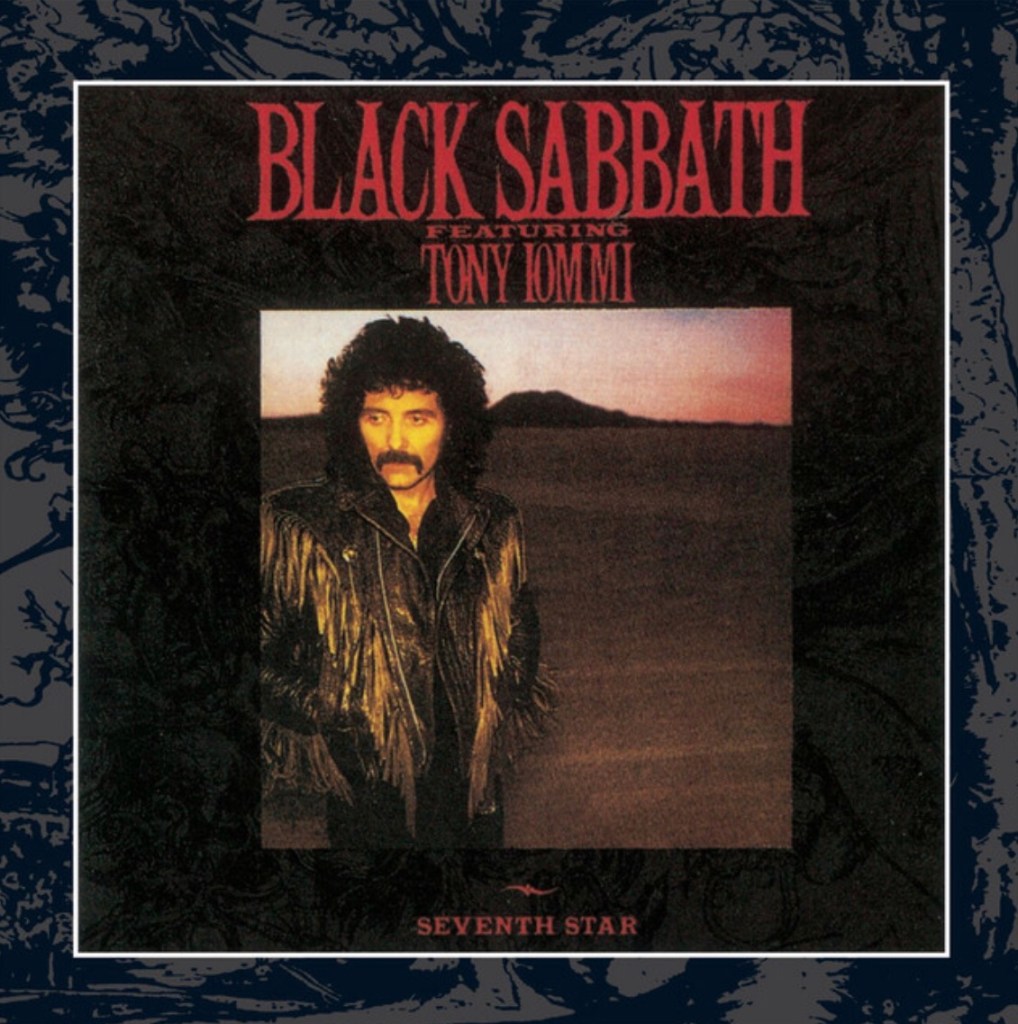
1986 – Part 3.4: Black Sabbath – Seventh Star

I didn’t get into Black Sabbath until the mid-90’s. I knew of their existence because Ozzy and Dio did a great job promoting his Sabbath legacy.

Then Dio re-joined for “Dehumanizer” in the early 90s and I was interested to hear more Black Sabbath. So the process started.

The fact that everyone was selling their vinyl to second hand record shops definitely helped because it meant I could pick up their older stiff cheaply.

And after Grunge came out, they kept talking about the Sabbath influences in the Seatlle sounds and Sabbath’s renaissance into Mainstream superstars came when they re-joined Ozzy for a few encores on his “No More Tours” shows.

From 1983 up to when Dio rejoined, no one really cared about Tony Iommi in the same way they cared about Ozzy and Dio who had become Multi-Platinum sellers in the U.S. with their solo careers and the Sabbath/Iommi career was nowhere near those commercial highs.

So “Seventh Star” is listed as studio album number 12 for Black Sabbath and released in 1986. This version of Sabbath has Tony Iommi as the only founding member along with keyboardist Geoff Nicholls, drummer Eric Singer, bassist Dave Spitz and vocalist Glenn Hughes.

Once the album came out, Hughes didn’t last long as his addictions made him unreliable. Ray Gillen was hired to fill the vocalist spot for the tour. But even the tour didn’t last long, with a lot of shows cancelled and another restart for Iommi.

In For The Kill

A riff that reminds me of Scorpions “He’s A Woman, She’s A Man” starts off this song and I like it.

No Stranger To Love

This could have come from the Dio version of Sabbath, with its slow groove. But Glen Hughes has a very melodic, bluesy soul voice, so it was always going to come across as a commercial rock song.

Check out the solo from Iommi on this.

Turn To Stone

It’s like Richie Blackmore joined on guitars. It feels like a Deep Purple Coverdale/Hughes era cut, with a riff that reminds me of “Burn” and “Kill The King”.

Iommi delivers another killer solo on this.

Seventh Star

“Egypt (The Chains Are On)” comes to mind and I like it.

Musically, this is one of Iommi’s best.

The main riff is heavy, it sounds exotic, so metal like but it swings the way he plays it. There is a certain fluidity to it.

Danger Zone

If you want to hear one song on the album, its this. I was hooked from the harmony guitars in the Intro riff which also reminds me of Van Halen’s “Atomic Punk”.

And if that main riff doesn’t get you, the interlude/mid section would get you interested which then moves into a Bridge section.

And if the music doesn’t get ya, then the voice of Hughes will.

Heart Like A Wheel

When I hear a blues groove like the one that starts of this song, I think of “The Jack” from AC/DC.

But that blues groove is generic and overused. Remember Alannha Myles and her song “Black Velvet”. Well, it’s the same groove and it went to number 1.

These kind of songs are perfect vehicles for Hughes and his voice.

Angry Heart

This is a great riff, which reminds me of “Wishing Well” from Free and Hughes has so much fun with the vocals.

In Memory

An acoustic riff, with lightly distorted guitars start off this power ballad. It’s short and a strange end to the album.

As a classic Heavy Metal album like “Love At First Sting”, “Balls To The Wall” and “Screaming For Vengeance” it works. Hell it’s probably the best Rainbow album that Richie Blackmore didn’t write.

Compared to Sabbath’s downtuned 70s output, it’s very different. But this was the 80s and this album is a true product of its time.

Standard
Classic Songs to Be Discovered, Derivative Works, Influenced, Music, My Stories

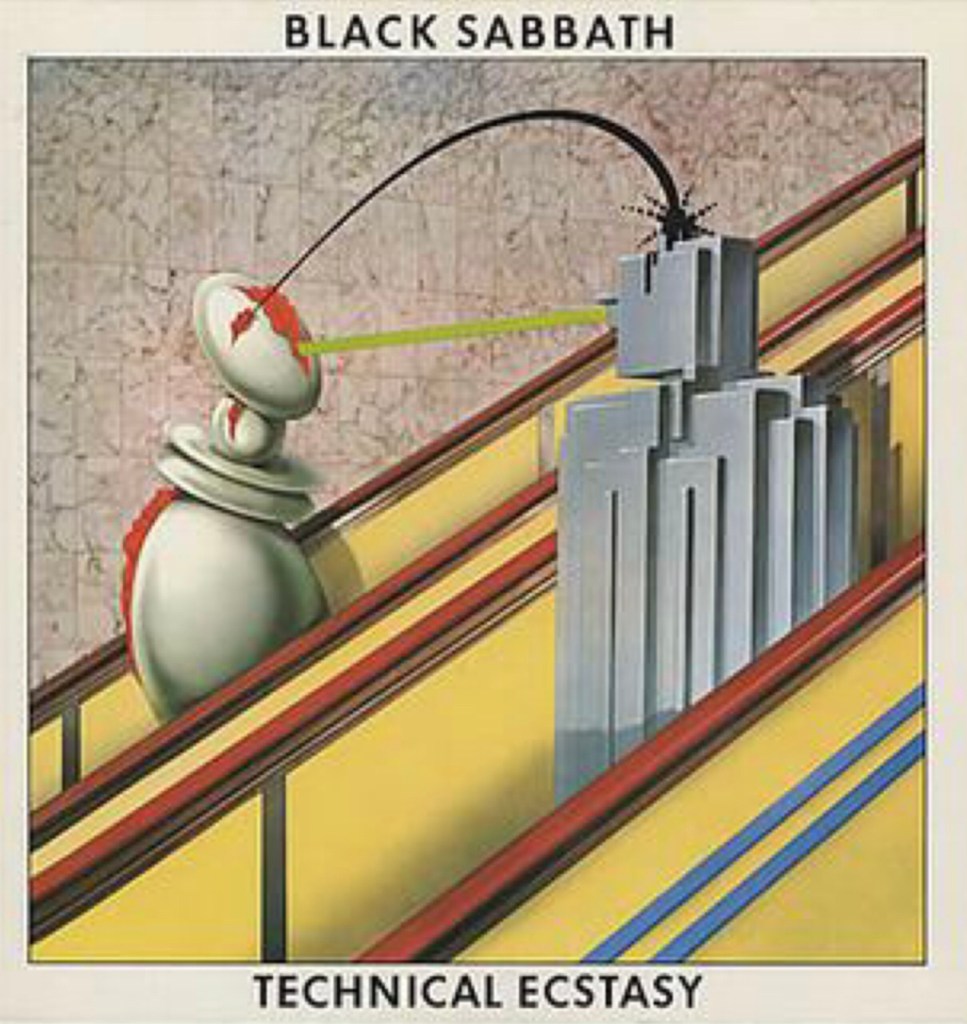
1976 – Part 2.7: Black Sabbath – Technical Ecstasy

The sound was a bit different but it still did well.

The Grunge movement brought Black Sabbath back into the mainstream. Alice In Chains spoke of their love of Sabbath, so did Soundgarden and even Nirvana.

Kyuss/Queens Of The Stone Age also spoke of their Sabbath love.

So it was no surprise that Sabbath started selling records in the 90s.

Eventually in 1997, “Technical Ecstasy” received a Gold certification in the U.S.

It’s the seventh studio album.

Released in 1976 and produced by Tony Iommi. But he struggled with it to the point of anger against his band members who spent most of the time on the beach and on booze and drugs.

Ozzy mentioned in his book “I Am Ozzy” that recording the album in Miami was very expensive and he was confused as to why they had to sound like current popular bands. Maybe that was due to their label head Don Arden throwing his interest behind ELO during this time.

The writing was on the wall, as punk had broken through in the U.K and the Sabbath brand of doom was on its way out.

They are also in the midst of releasing a box set of this album, with all the extras that come with box sets.

Back Street Kids

The Intro/main verse riff has a similar feel to “Immigrant Song” and their own “Children Of The Grave” and I like it.

At 1.50 it goes into an excellent major key riff which reminds me of Styx/Free/ELO and acts like that.

The solo from Iommi utilizes the Major Pentatonic. It’s weird to hear happy leads.

You Won’t Change Me

The most doomiest riff starts the song off and their most melodic progression becomes the verse.

Check out the melancholic swirling organ riff from 4.11 and Iommi decorates nicely.

It’s Alright

It’s a Beatles cut and it came out of left field but then again this album is all about expanding the sound.

Bill Ward wrote it and sings it.

Gypsy

Such an overused title in the 70s and 80s. I don’t recall the word being used much in the 90s and beyond.

Bill Ward opens up the song with a drum groove that reminds me of “Sympathy Of The Devil” from The Rolling Stones.

Iommi busts in with chords which further reinforces the Stones influence.

The Pre-Chrous riff is excellent and Ozzy brings out a vocal line that he used in “SATO”.

Then there is a section which I call the ELO section, with piano and distorted guitars.

The last minute is essential listening as Iommi wails away with his pentatonic leads. A perfect closer for Side 1.

All Moving Parts (Stand Still)

The Side 2 opener and what a great blues rock riff to kick it off. And Butler on the bass is massive.

At 1.40 it changes into something different and this is why I like Sabbath. The songwriting can be progressive with the arrangement and at other times the arrangements can be more mainstream like. You get the best of both worlds.

The vocal melody from Ozzy in the verses was used again within his solo career.

Rock ‘n’ Roll Doctor

The Intro reminds of Uli John Roth and his Scorpions work.

But after that a “No Bones Movie” cut blasts out of the speaker.

She’s Gone

I don’t know how much Randy Rhoads listened to this album, but goddamn the acoustic arpeggios on this song sound eerily familiar like the songs “You Can’t Kill Rock N Roll”, “Diary Of A Madman” and “Revelation Mother Earth”.

Dirty Women

This is classic Sabbath. So many good riffs and Iommi’s solo is excellent.

The riff at 2.30. Check it out.

Straight after that it goes into this “2112” style riff and progression.

Overall, the album is really under appreciated. Most of the 70s music had variety on the albums because artists weren’t afraid to experiment. This one is no different.

A few stray observations if I may.

Ozzy mentioned in his book that he doesn’t like the album but this is the sound that made his solo career. Plus having Randy Rhoads, Bob Daisley and Lee Kerslake helped with the songs and Sharon Osbourne ran the party with an iron fist.

Bill Ward can carry a tune vocally which was a surprise. It was almost Queen like.

The synth work complements the songs. So I don’t know why so many reviews focused on the synths.

And what’s the go with two robots making out on the cover.

Standard
Music, My Stories

The Record Vault – Black Sabbath Additions

Here are some Black Sabbath DVD’s I forgot to include in the original Black Sabbath post. It’s funny that for a band who is seen as influential, my collection of their songs are the Ozzy forgeries on Ozzy releases, which I like and some of the reunion tours they have done in the 90’s.

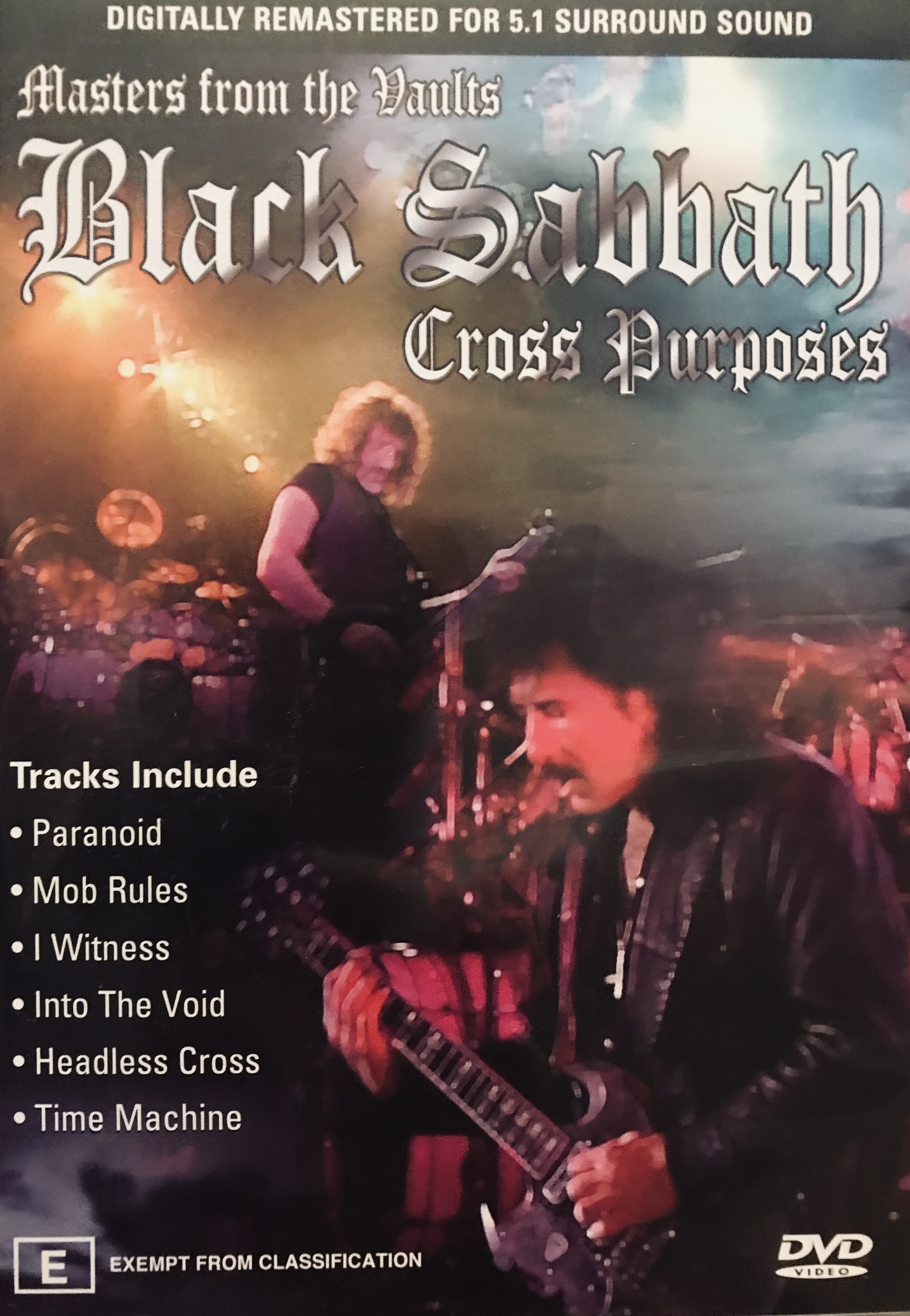
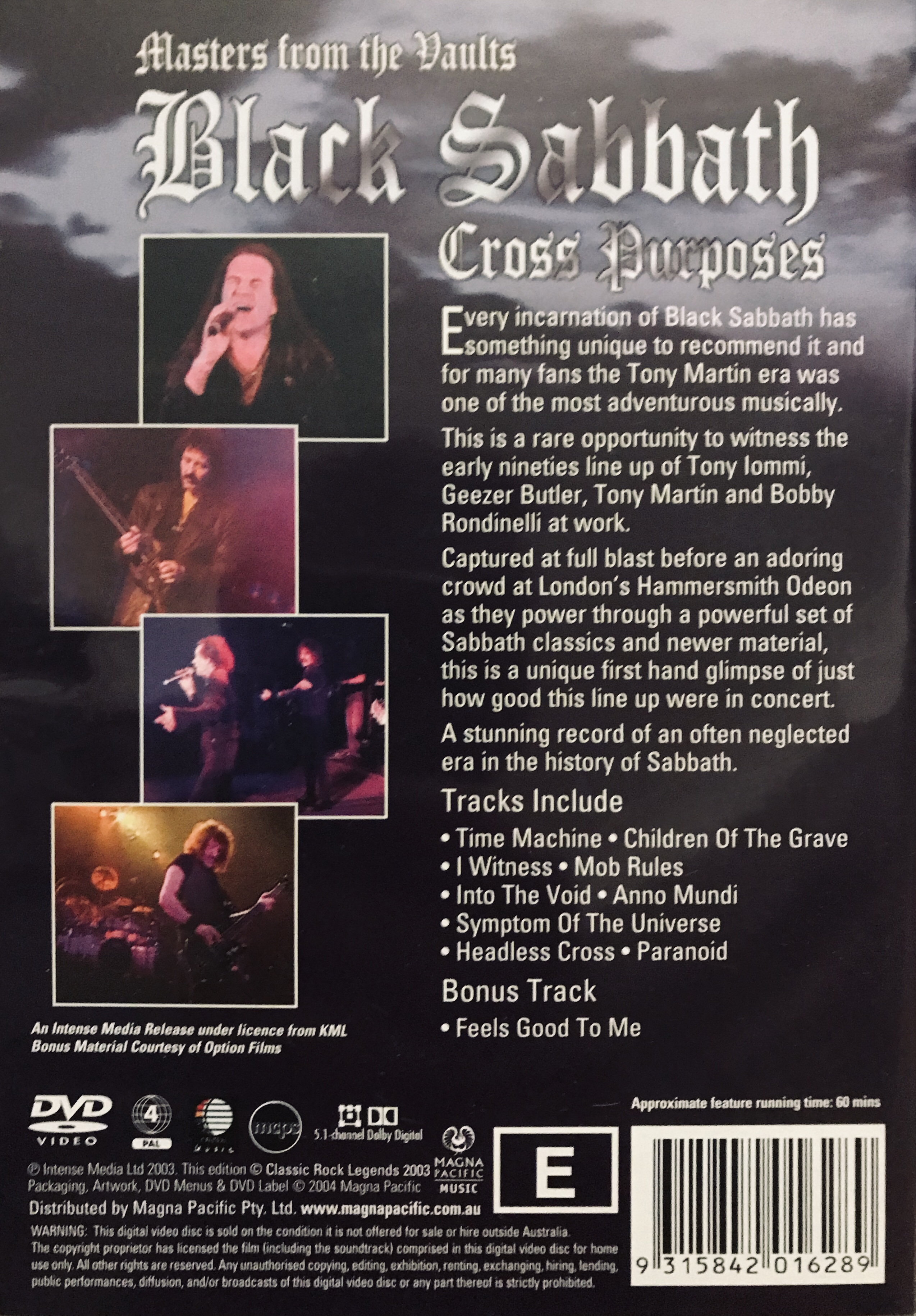
Black Sabbath – Cross Purposes

This is from the Tony Martin era.

“Dehumanizer” came and went and Tony Iommi needed to get Sabbath rolling again. Geezer Butler remained, Tony Martin came back in and Bobby Rondinelli filled the drum slot.

If you are an EVH, the song, “Evil Eye” from the album is written by Eddie Van Halen, Tony Iommi, Geezer Butler and Tony Martin, but EVH wasn’t credited as Warner Bros Records didn’t allow it, unless they had the release rights.

So on this unlicensed “Masters From The Vaults” DVD , only “I Witness” appears from the “Cross Purposes” album.

It’s also cut down, with only nine of the sixteen songs appearing.

However when this was originally released as an official and licensed VHS box set back in 1995, the set list was much larger.

Inside Black Sabbath – A Masterclass From Tony Iommi

Another “unlicensed” product which made it into legal stores.
How was that possible?

But the labels would tell you that these problems didn’t exist before the internet.

Anyways, this has been spliced together from VHS interviews and footage so the picture quality is not the best. It was released on VHS in 1992 as “Tony Iommi – The Guitar That Drives Black Sabbath”. This 2002 release has a different title, but the cover art is the same.

And it’s all Iommi, using his own examples, to explain how Black Sabbath wrote together. Then again, the YouTube videos he’s done in the last three years are a lot better than this.

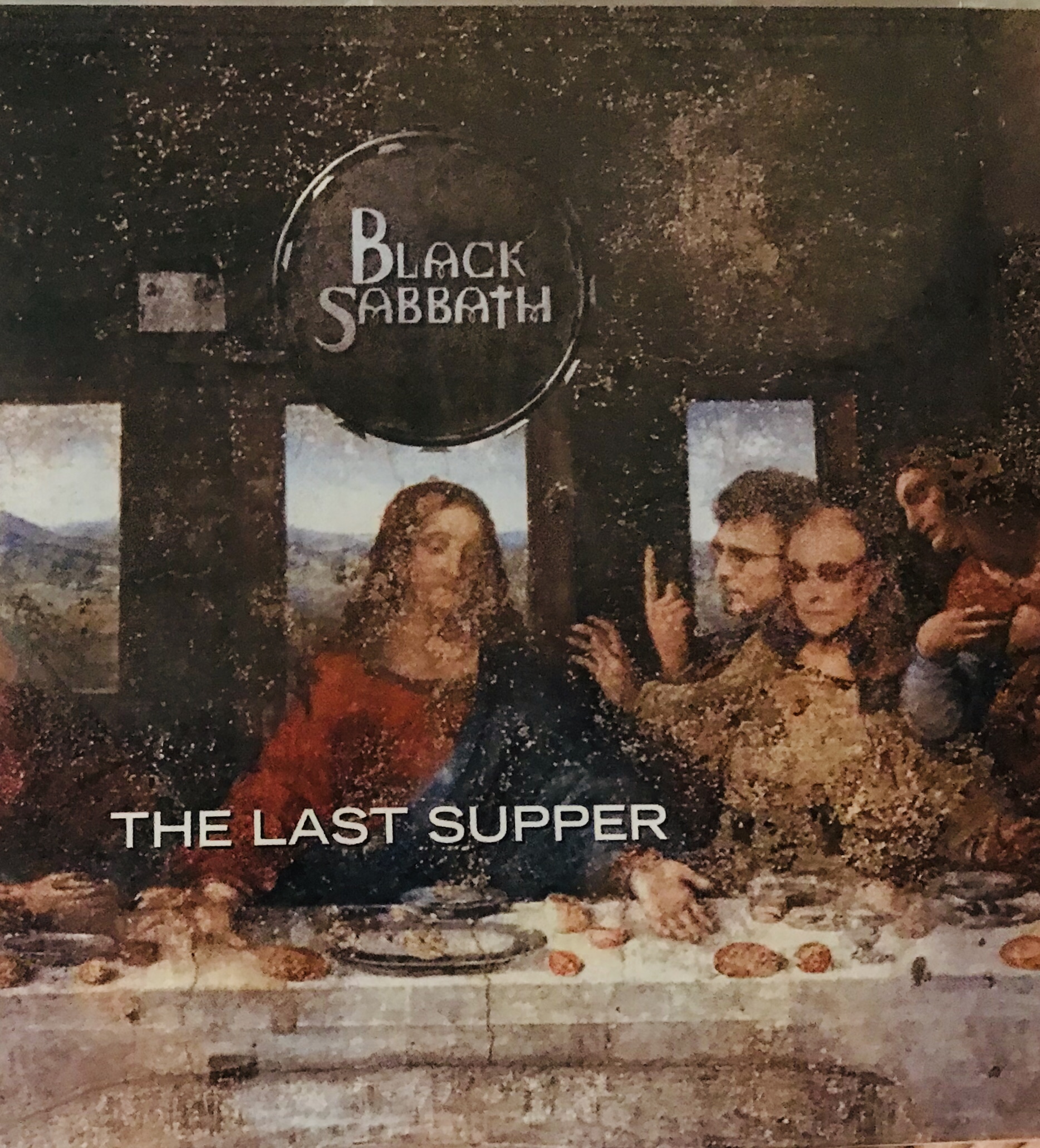
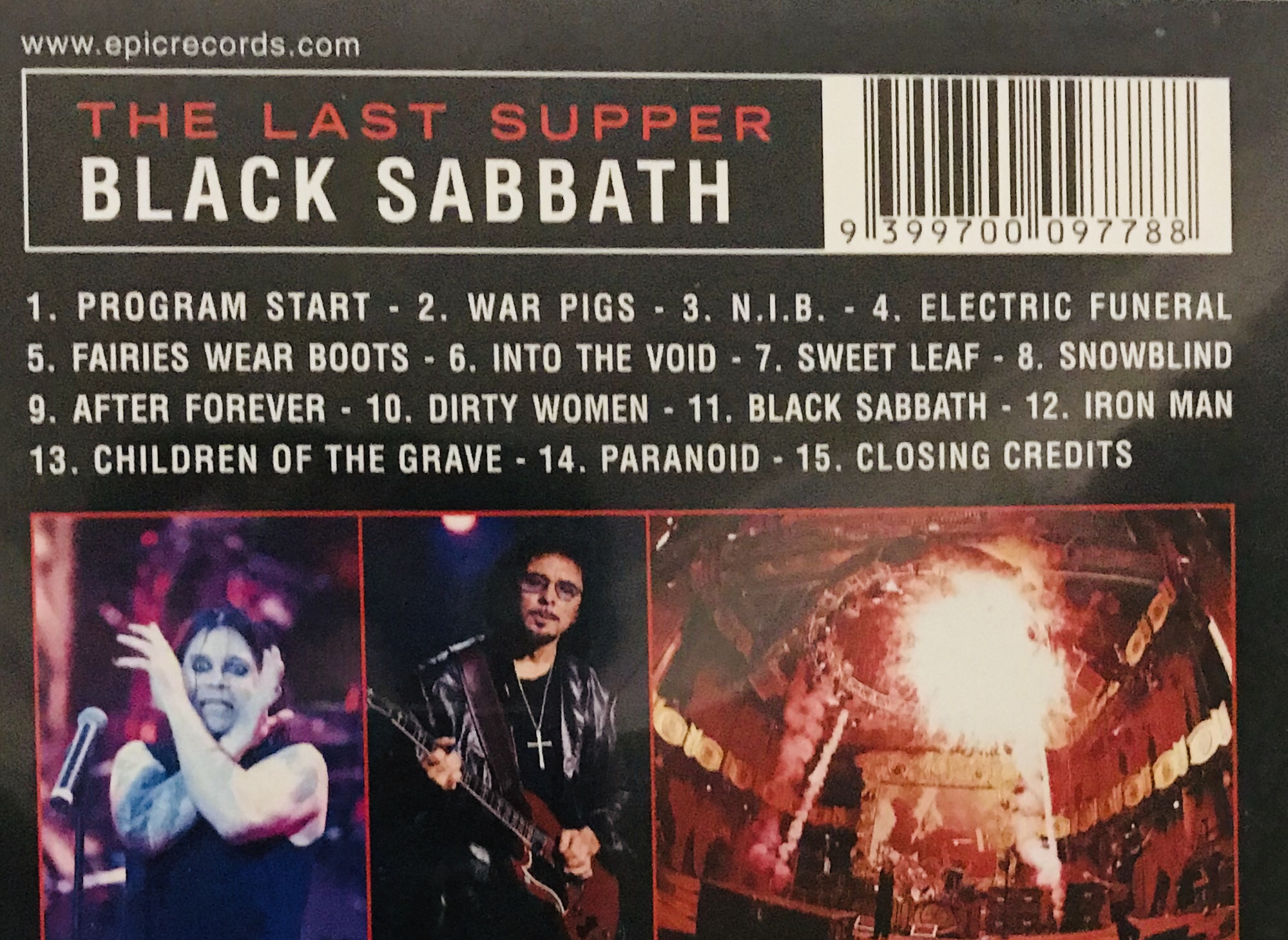
Black Sabbath – The Last Supper

Complete garbage and a waste of money.
Then again, if you like to watch interview segments interrupt the live footage then you might like it.

For me, it’s a big no.

Standard
Music, My Stories

Van Halen

There was a post from December 2019 over at Bob Lefsetz’s blog about Billie Eilish and Van Halen.

The post is an opinion piece about how Billie Eilish said she didn’t know who Van Halen is.

And Twitter at the time started it’s normal thing and suddenly Van Halen was trending. Like everyone else, I saw their name trending and thought that VH either had new music or something bad happened.

So should a 17 year old “home schooled pop singer” know who Van Halen is?

Growing up in the 80s (for those born in the late 60s and for those born in the 70s) there was no denying Van Halen.

But for a person born in 2003.

Van Halen wouldn’t be a thing. They were missing for most of the decade.

And even when Van Halen made their comeback in 2012, it didn’t really crossover into the mainstream news for a long period of time. Adele was ruling the charts and her year old album kept the “DLR VH” version from reaching the number 1 spot, something which the “DLR VH” version have never achieved, while the “Hagar VH” version did achieve a number 1 spot and Sammy was sure to point it out.

But even then, Billie Eilish who would have been 9 and would not have cared about Van Halen. Maybe if she wasn’t home schooled and went to a school with people who had different tastes, she would have seen Junior with a VH T-shirt being all hot for teacher.

In other words, if you weren’t a Van Halen fan, or had a ticket to the show, “A Different Kind Of Truth” was ignored. But for us fans who cared, Van Halen was back. We didn’t even care what the critics said about the recycled old riffs. Come on, this is EVH. His old riffs were still better than the riffs that the other guitarists at the time came out with.

Speaking of the young generation, when Sabbath reformed and Bill Ward was out, they used the Audioslave/Rage Against The Machine drummer Brad Wilk for the album and Tommy Clueftos from Ozzy’s solo band for the gigs.

And i was at the gig, standing on the floor with people around me and these two young dudes were blowing out at how good the Sabbath drummer has kept himself. I asked em if they thought it was the original drummer Bill Ward. And they said “yes”. And then I told em it wasn’t. And they looked confused. I googled Bill Ward and showed em. And they walked away pissed at me, like I ruined something for them.

And that’s the world we live in.

Standard
Music

Black Sabbath’s Version of Children of The Grave And Ozzy/Randy Rhoads Tribute Version

The difference between the songs is the groove/feel.

Black Sabbath started off as a blues band and blues songs are built on grooves and swing feels. As history tells us, the guys saw a horror movie being played across the road from their rehearsal space and decided to write songs that scared people. But no matter how low they tuned, they still kept the swing groove/feel from the blues in the process.

So when Ozzy decided to cover some Black Sabbath songs for the “Blizzard Of Ozz” tour, he picked some of the classics, like “Paranoid”, “Iron Man” and “Children Of The Grave”. And from reading a few bios, Randy Rhoads (RR) was against covering these songs, as he didn’t want the project to be an extension of Ozzy’s previous band.

Regardless, “Children of The Grave” with Randy Rhoads (RR) is a stand out. RR ignored the triplet swing feel that Sabbath had on their “Masters Of Reality” version and went straight for the metal tempo feel of 146 beats per minute. RR also refused to tune down, so he fretted the C#m note instead of playing it as an open string the way Iommi does. By doing this, it allowed RR to me more precise with his picking and little melodic motifs.

And there is no doubt in my mind that by learning to play some of the Sabbath songs, RR used em all as influences for “Over The Mountain”.

If you don’t believe me, check out the Black Sabbath riff just before the “Over the Mountain” solo. And RR plays the intro/verse riff of “Over The Mountain” more or less the same as he plays “Children Of The Grave”. The only difference being, “Children of The Grave” is in C#m and “Over The Mountain” is in G#m.

And the solo break that RR throws in for the outro, made me want to learn the song. It starts from 3.15 and ends at 4.40.

There is also a little nod to all of the blues players from about 3.56, as RR plays a standard blues lick that even Ace Frehley used in “Love Gun”.

One song doesn’t take away from the other and both songs stand on their own.

If you want groove, then Black Sabbath’s version is for you. If you really like the NWOBHM and the LA Scene, then the live Ozzy/RR version is for you.

Standard
Classic Songs to Be Discovered, Derivative Works, Influenced, Music, My Stories

The Record Vault – Black Sabbath

I had Iron Man, Paranoid, Sweet Leaf, War Pigs and Children of The Grave on various metal and rock compilations, plus Ozzy had given his Sabbath career a decent outing in his solo career. I still rate the Randy Rhoads version of “Children Of The Grave” as THE definitive version of that song.

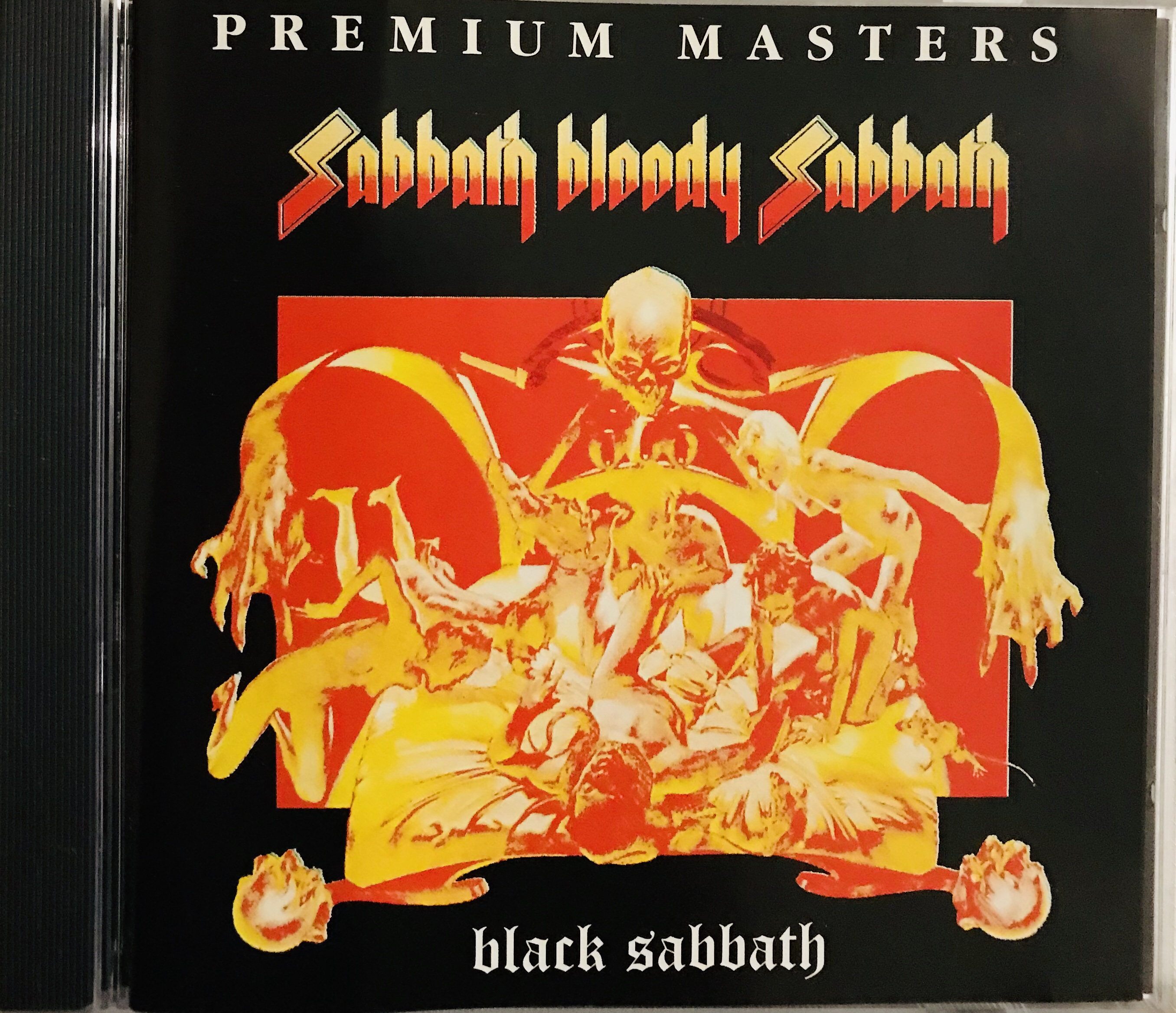
The ones I spent money on are “Heaven And Hell”, “Volume 4”, “Sabotage”, “Sabbath Bloody Sabbath” and “Reunion”.

Sabotage

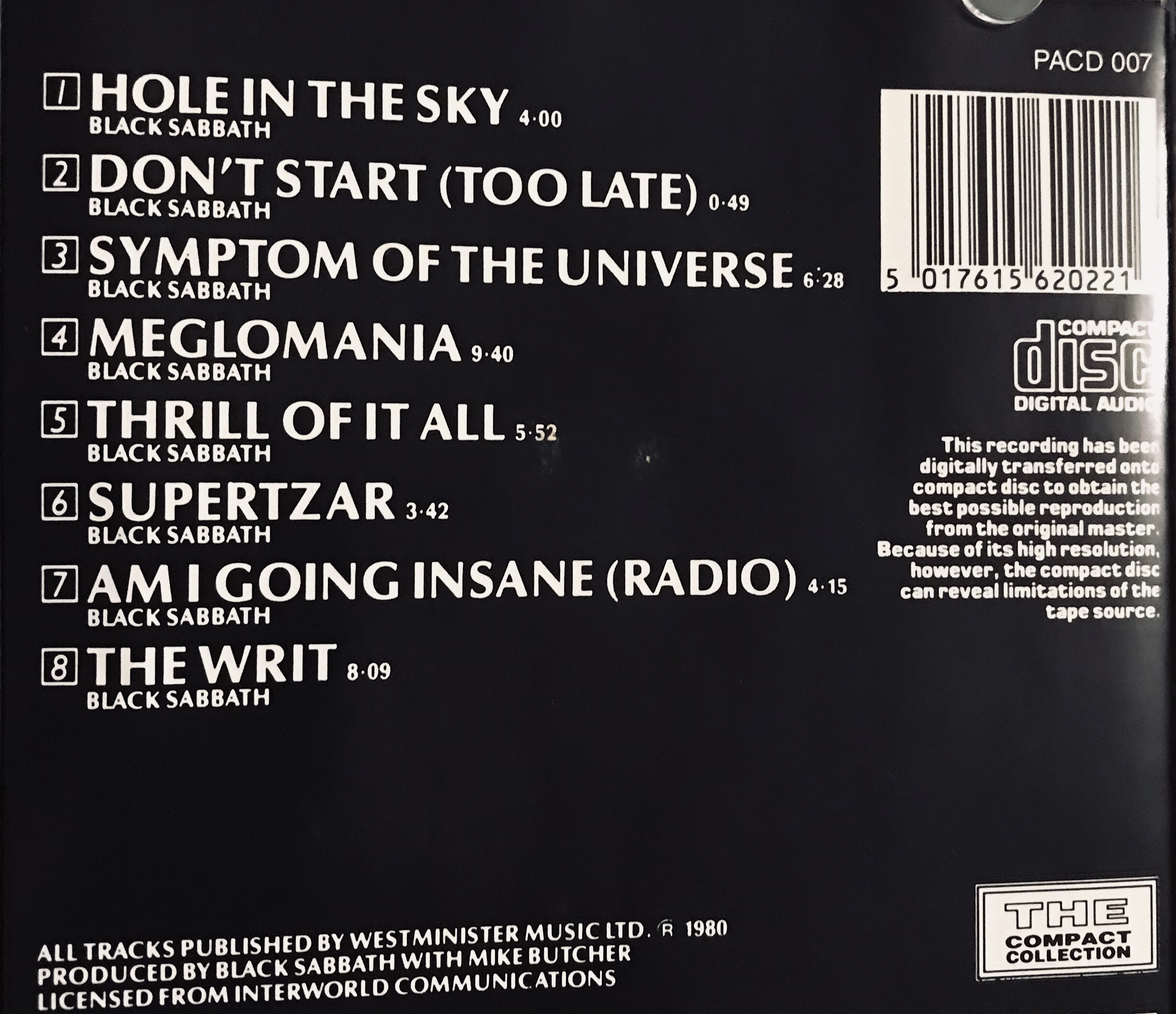
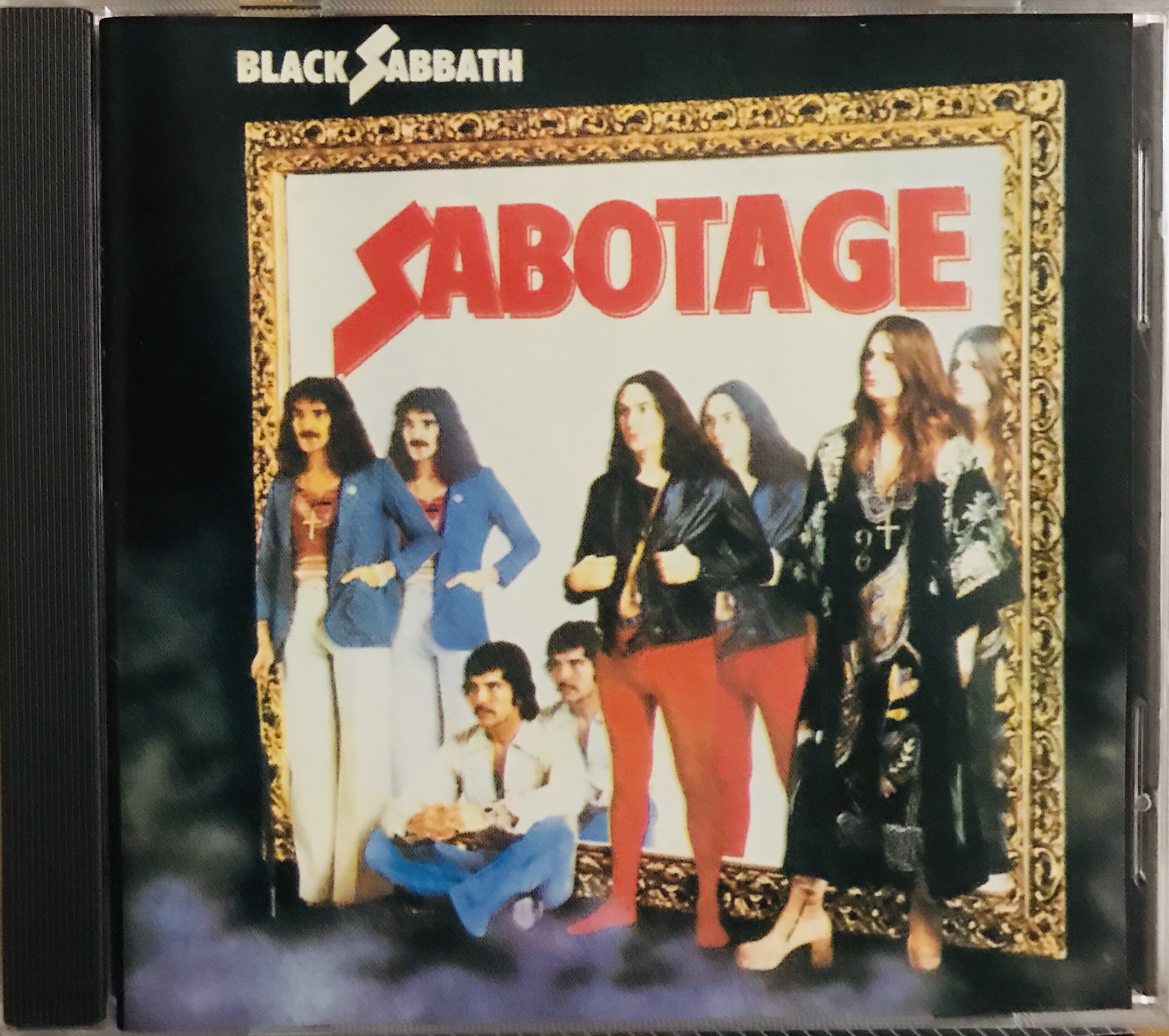
This was my first buy, because I came across a guitar transcription of the song “Symptom Of The Universe” and I wanted to hear how the original version sounded. And I wasn’t prepared for how good the album is.

The stoner rock sludge of “Hole In The Sky” kicks it off and Ozzy is at 10 in his vocal intensity.

And after a little acoustic flamenco doodle, “Symptom Of The Universe” kicks off.

And that Em to B flat riff is brutal like a chainsaw going through the head. Vocally, Ozzy again is at an intensity level of 10, just going for the throat.

That change at the 2 minute mark, gives the song a new dynamic, while the acoustic folk outro elevates this song to legendary status for me.

“Megalomania” from a guitar point of view, has got killer riffs all over it. Poison even used one of the riffs for a song called “Looked What The Cat Dragged In”. It’s the riff that kicks in at 3.23 when the cowbell starts.

“Take my hand, my child of love come step inside my tears, swim the magic ocean, I’ve been crying all these years”… From “Symptom Of The Universe”.

Sabbath Bloody Sabbath

As soon as the riff for the title track “Sabbath Bloody Sabbath” kicked in, I was in head banging mode. It’s powerful and intense in the way Bill Ward smashes those drum skins and then it morphs into that jazzy like Chorus.
For all the narcotics and alcohol, the song writing is top level.

“A National Acrobat” continues the head banging. And there is a vocal melody in this song which borrows from the verse melody of “Sabbath Bloody Sabbath” from about the 2.30 minute mark. That’s how good “Sabbath Bloody Sabbath” is. And how cool is that trippy major key riff from the 4.55 mark.

“Fluff” is nothing like fluff. It’s an acoustic piece that just sits nicely between the two opening tracks and the next two big tracks to come in “Sabbra Cadabra” and “Killing Yourself To Live”.  

And I like the flow of “Killing Yourself To Live” with its tremolo effect verse riff. And that reference to “While My Guitar Gently Weeps” in the lead break, is nice and subtle.

“Who Are You” has a synth riff that sounds brutal on guitar.

But my favourite on this album is the closer, “Spiral Architect”. I love playing it on the guitar and when you spend a lot of time learning a song, it becomes a part of your life.

The way it morphs from the open string arpeggios into this major key style riff and then into a re-write of the “Sabbath Bloody Sabbath” riff.

And to be honest, I reckon Randy Rhoads was influenced by this song for the “Diary Of A Madman” as well as Bob Daisley for the vocal melody. The Chorus melodies of both songs are pretty similar.

“The people who have crippled you, you want to see them burn”…. From “Sabbath Bloody Sabbath”.

Heaven And Hell

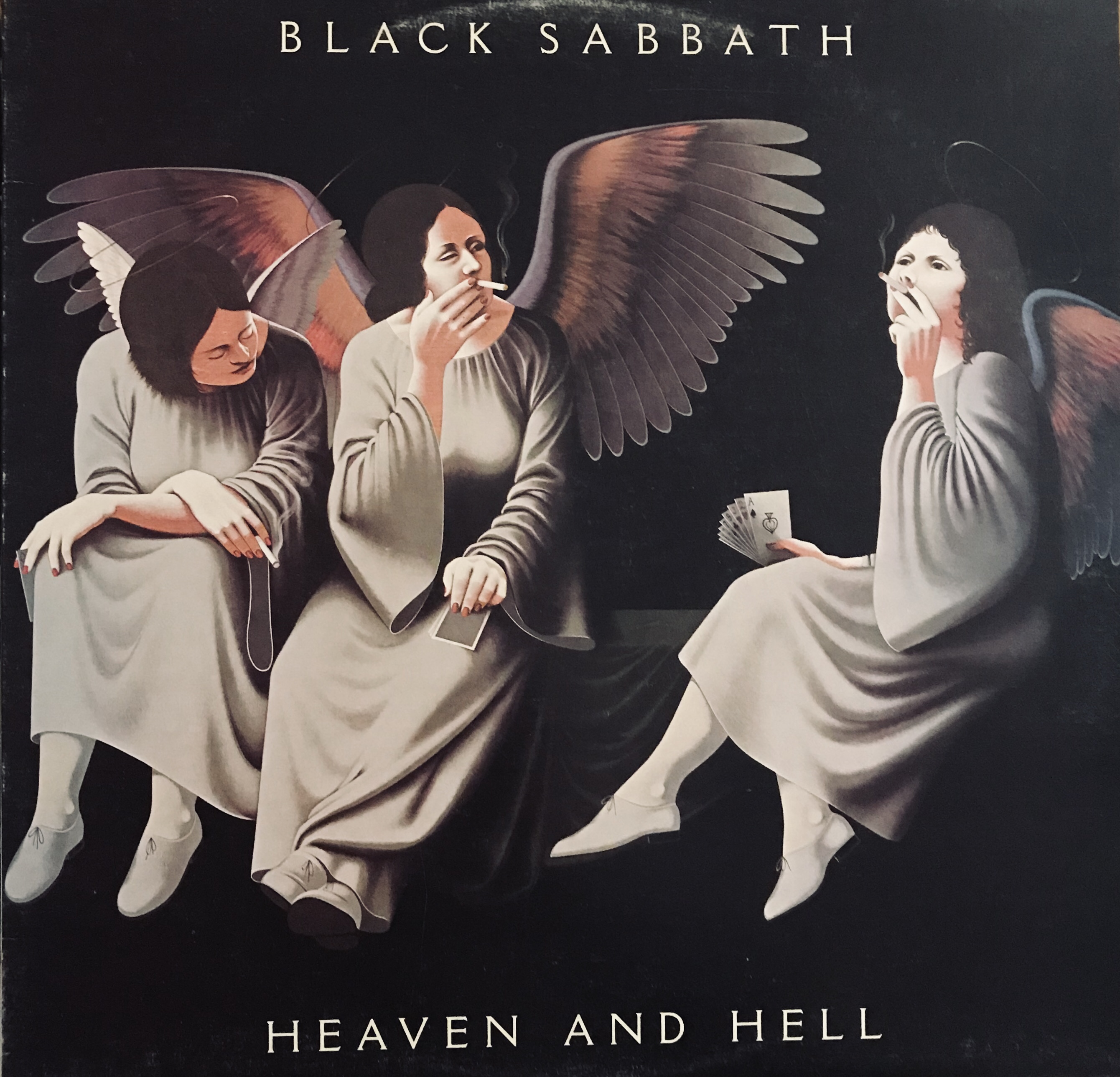
I purchased this album very late. It was actually after “Lock Up The Wolves” from Dio came out in 1990. At that time, I had the cash and my plan was to get stuck into Dio’s past works starting with Rainbow. But, I also came across the Black Sabbath releases.
It’s a massive album and I couldn’t believe I was so late on hearing this. But kids these days have the whole history at their fingertips so they wouldn’t understand the past.

As with all things related to record labels, this project (like the Blizzard Of Ozz) was always meant to be a new band. Instead the world got another Black Sabbath album and an Ozzy solo album.

The first song written by Iommi and Dio for the new band was “Children of the Sea” but the opener “Neon Knights” sets the feel.

Geezer Butler was so set against continuing without Ozzy,  keyboardist Geoff Nicholls was on hand to play bass on those initial sessions. And it was Nicholls who came up with the “Heaven and Hell” bass groove from the jams the band was having, although Butler is credited.

And by the way, “The world is full of kings and queens, who blind your eyes and steal your dreams…..” from HEAVEN AND HELL.

And one more, “the moon is just the sun at night”.  

Volume 4

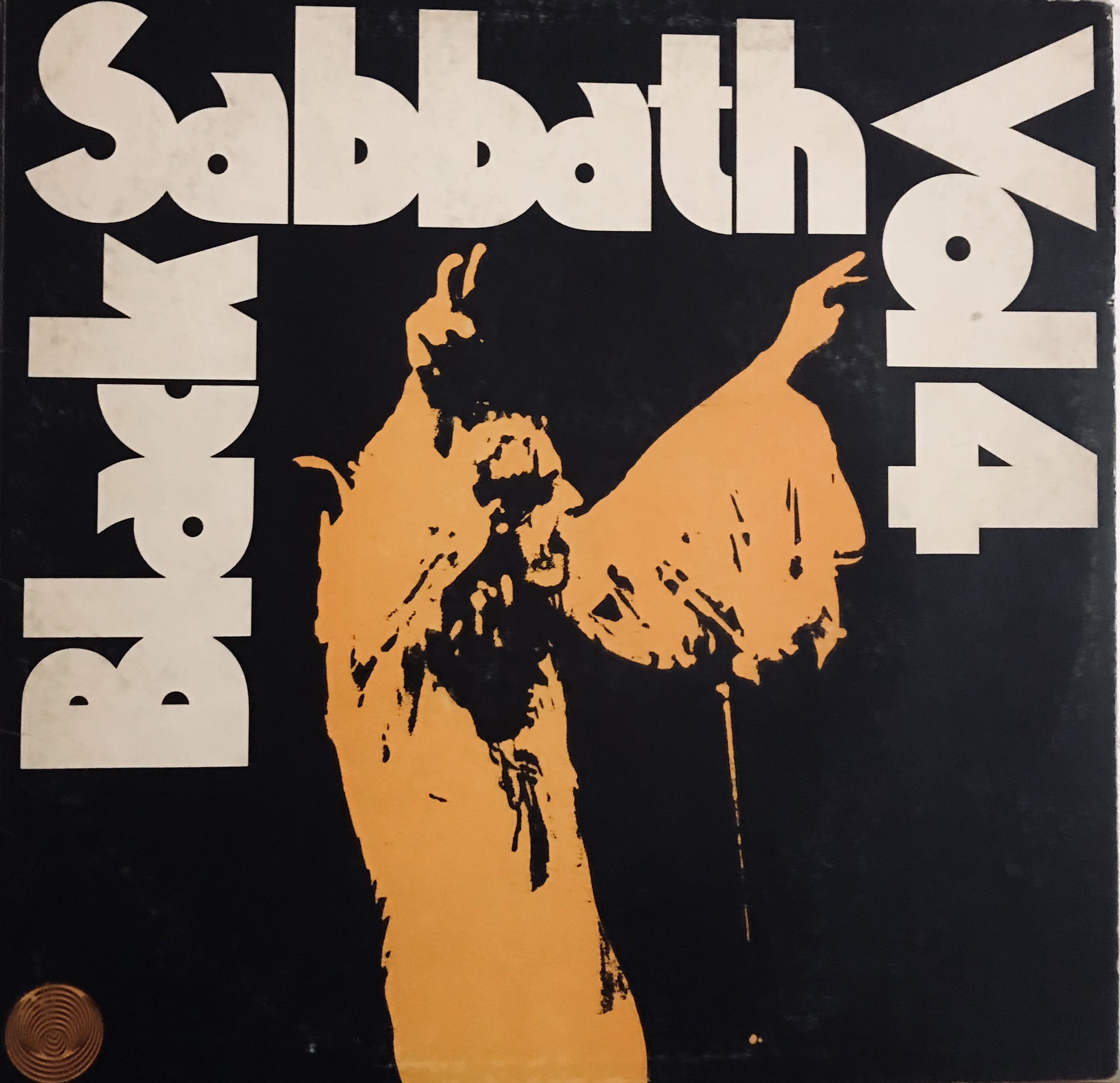
“Wheels Of Confusion” starts the madness and when that Em riff from the 5.20 mark comes in and plays all the way to the end, yep, it’s time to break desks.
“Tomorrows Dream” is loose and jammy, just the way a dream should be. “Changes” came from left field. The first version I heard was Ozzy’s re-interpretation for the “Live and Loud” album. But the original, has this hi-fi feel that I dig.

“Supernaut” is an intense sped up/down tuned blues romp.

While “Snownblind” showed me what happens when you spend too much time in a snowy place.

That arpeggiated section during the solo break is a nice change of those simple dynamics between distorted and clean tones. And at 3.30 they bring in this bluesy style riff and Bill Ward sounds like he’s about to break his drum kit.

Reunion

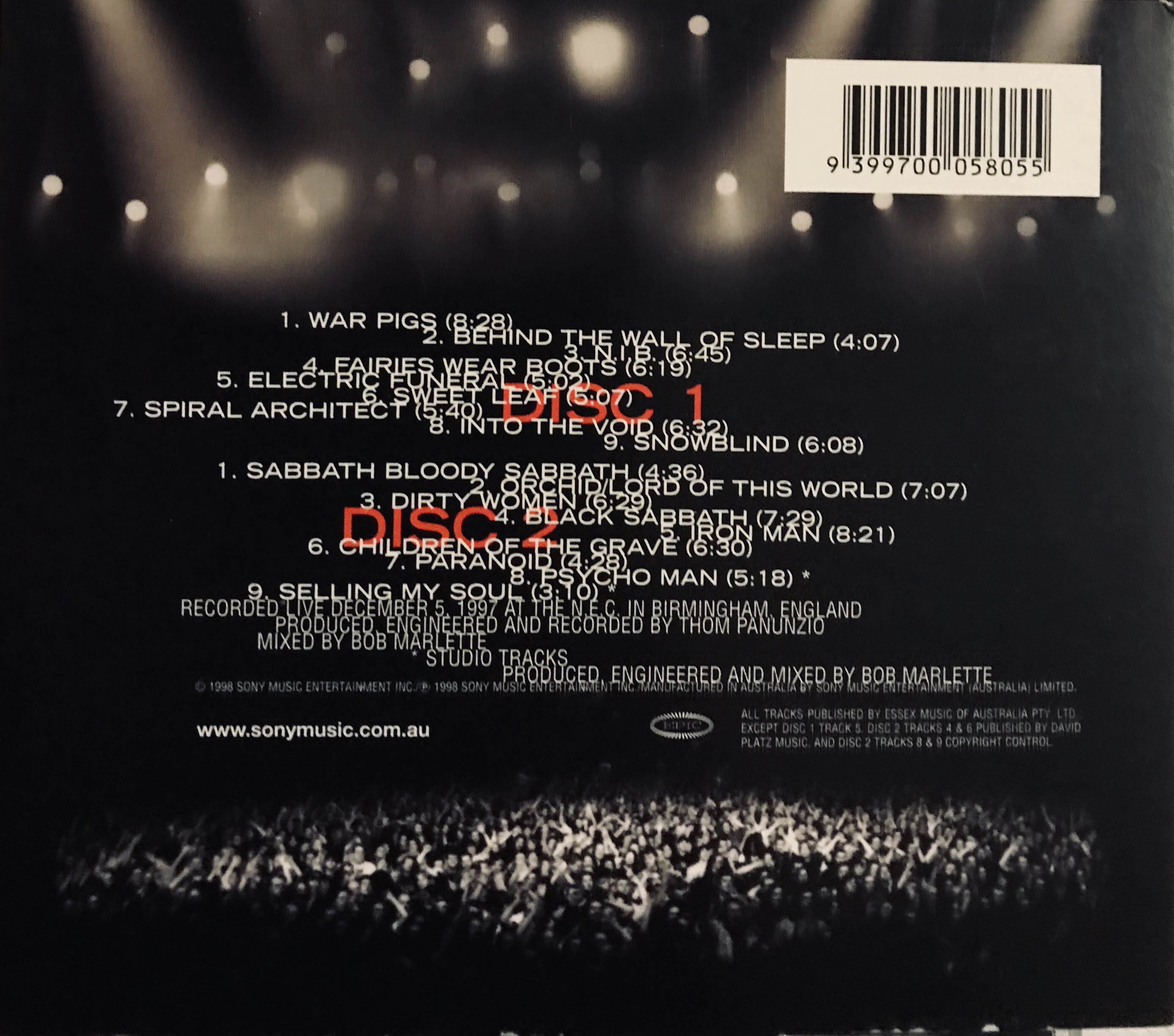
When this came out in 1998, Kiss was already doing the “Psycho Circus” victory lap while Rush never left. So there was no bigger concert ticket than a proper Black Sabbath reunion, apart from a Led Zeppelin reunion.

And they delivered a live performance on a double CD, along with two new studio tracks. While the live songs are all good, it’s the two original tracks I want to talk about.

“Psycho Man” has an outro which rocks, when Ozzy is singing “he’s the angel of death” but I couldn’t shake the feeling that it sounded like a “very unlucky” left over track from “Ozzmosis”. “Selling My Soul” on the other hand, feels like a Sabbath song.

So that is my Sabbath collection.

Blame Ozzy for it being so light, because when you see my Ozzy Record Vault collection, you will go “I get it”.

For me, there was no need to buy every Sabbath album as Ozzy more or less recorded the songs live and released them as a Solo artist.

Standard
Music

The Spirit Of 83 To 85 Returned Between 1990 and 1992. Part 2…

I’ve been writing about 1983 for quite a while now. I didn’t think that when I started the series that more than 12 months later I would still be on the same topic. I guess the year was revolutionary to me. I always held a view that metal and hard rock music committed its own demise between 1990 and 1992 by dumbing down lyrics and simplifing their song structures. So when the bands from Seattle came out singing about social problems and personal thoughts, it was a no brainer to take the more serious lyrical subjects over the “having a good time and getting laid” lyrics.

However, during the writing of the 1983 series, most of the bands that had an impact in that year to me, also released music between 1990 and 1992 and I didn’t see much dumbing down of lyrics. Instead I saw better lyrics, more mature lyrics, lyrics that showcased highs and lows.

And my view of hard rock and metal committing suicide is changing. Yes, bands got signed to mimic another popular band.

Britny Fox = Cinderella. Tuff = Motley Crue. Steelheart = Whitesnake. Poison – Motley Crüe. Warrant = Motley Crue/Poison. Bullet Boys = Motley Crue/Poison. Faster Pussycat = Guns N Roses. Tora Tora = Guns N Roses. LA Guns = Guns N Roses. Danger Danger = Bon Jovi/Motley Crue. XYZ = Dokken. Roxy Blue = Van Halen and so forth. From memory, 95% of the lyrics of the clones dealt with having a good time, getting it on with someone and I guess having a good time again.

Here are another 6 records that have lyrical ideas and themes far removed from the clichéd sex, drugs and rock n roll themes.

  • Megadeth – Rust In Peace
  • Ozzy – No More Tears
  • Black Sabbath – Dehumanizer
  • Pantera – Cowboys From Hell
  • Pantera – A Vulgar Display of Power

“Holy Wars… The Punishment Due” deals with killing in religions name. I guess people are still killing for religion, something I struggle to understand. “Sins Of The Father” deals with a person paying for a crime committed in the name of religion. “Heresy” deals with religion corrupting the world;

People, they go to war
Because religion gives them
Reason to fight

“Dawn Patrol” deals with the aftermath of global warming, with the lyrics “the green house in effect, our environment was wrecked”. “Letters From Earth” also addresses the destruction of our environment as the lyrics deal with sending letters to an unnamed source/planet from a cold world called Earth. “Rust In Peace.. Polaris” deals with nuclear weapons and the threat of nuclear war. Polaris also refers to the star that sits over the North Pole, so is Mustaine singing about a new ice age brought on by nuclear war. “Master Of Insanity” deals with killing rain falling down from the sky and cities burning. “Shattered” deals with the world as we know it ending from below. “Computer God” deals with our infatuation to technology, virtual reality and artificial intelligence and Dio more or less sums it up with the following lyrics;

Virtual existence
With a superhuman mind
The ultimate creation
Destroyer of mankind
Termination of our youth
For we do not compute

“Primal Concrete Sledge” addresses social inequality.

There’s a double standard for the way we live
If there’s nothing to have, well then there’s nothing to save

“Rise” is about how we need to push aside our differences and the influences of our tribes, so we can unite and rise and dominate the world. “No Good (Attack The Radical)” addresses the race divide in the U.S.

In the states
There’s a problem with race
Because of ignorant past burned fires
From evolution
We’ve been killing each other
I figure man should have it down to a science

In “I Don’t Want To Change The World”, the chorus lyrics deal with how a person doesn’t want to change the world and they don’t want the world to change them. It’s the metal head commandment. Just leave us be and we will get by. “The Art Of Shredding” addresses social wrongs with the lyrics;

Unity is a rare thing
Blind eyes of society bring
The category of minority
Now what are we supposed to be?
Born free to be
Powerless to change the world
With our lives in the hands of madmen

“TV Crimes” deals with evangelists on TV guranteening instant glory if people send their money. Dio again nails it. It’s basically the same topic Daisley wrote about for “Miracle Man” a few years before.

Gotta send me a plastic Jesus
There’s a check in the mail today
That’s what I need
Somebody to love

“Desire” deals with wants. In it’s essence it’s a self-reflection song of what it means to be Ozzy. “I gotta keep rocking, ’cause it makes me crazy, it makes me crazy, who needs to be cool”. In “Hellraiser”, the lyrics deal with living on an endless road, around the world for rock and roll. That’s what people wanted, to be on the road, live the life and the groupies. All the money might be in tech and banking, but they don’t have this. “Time Machine” deals with a person who refuse to change and stays the same for their whole life. “I” is also about wants.

“Poison Was The Cure” deals with Mustaine’s addictions. “Zombie Stomp” addresses drug addictions and liking the users to zombies. “Psycho Holiday” also addresses addiction while being on the road.

“Mama, I’m Coming Home” deals with being away from a loved one. It was a hit, not because Ozzy sold out, but because he crossed over to country courtesy of Zakk’s Southern Rock influence.

“Tornado of Souls” deals with a relationship break up. “Too Late” also deals with the same issue. “Walk” deals with so called friends talking crap about you to other friends and then those other friends telling you what the so called friends said. “This Love” also deals with a relationship breakdown.

“Road To Nowhere” is about reflection and how in the end we are all on roads that really lead back to ourselves and if we are too caught up with our heads in the clouds, we will pass ourselves by. “A New Level” addresses moving on from the past that involved being stepped on and spat on by lesser men to a new level of confidence and power.

“Hanger 18” deals with government/military conspiracies/cover ups. “Cemetery Gates” deals with religious conspiracies/cover ups.

“S.I.N” addresses how we deal with our thoughts when we are alone. “Mouth For War” is about using your aggression and hate for good instead of evil. Be creative instead of destructive. “Live In A Hole” also addresses our fears of breaking out of our shell and if we allow the fear to take over, we are unable to break out of the cage it creates.

Metal and rock was good. The record labels on the other hand chased the dollar and fucked it all up.

Standard
A to Z of Making It, Derivative Works, Music, My Stories, Unsung Heroes

Metal Music

Heavy F…. Metal.

In 2018, it will be 50 years from when Steppenwolf, screamed the words, “Heavy Metal Thunder” in their iconic “Born To Be Wild” song. And while the reference to “heavy metal thunder” was the loud sound of the motorbike, it seemed to stick for a style of music that was just around the corner.

But heavy metal goes back a bit further than that. You see, in the 1930’s there was a guitarist called Django Reinhardt.

He was a jazz shredder who passed away in 1953, well before heavy metal became a tour de force. But to become a shredder, wasn’t easy for Django. You see, a fire in the late 20’s extensively burned his left hand and other areas of his body. His right leg was paralysed and his fourth and fifth fingers on his left hand were badly burned. The Doctors told him that he will never play guitar again and they wanted to cut his leg off. Django refused the surgery and within a year, learned to how walk again with the help of a cane. But his two fingers remained paralysed. So Django had to relearn how to play the guitar by using his thumb and two fingers.

Fast forward to the 60’s and an unknown Birmingham guitarist tore off the tips off his middle fingers in a freak factory accident. A visit from the company foreman, alerted Tony Iommi to Reinhardt.

“It really inspired me to really get on with it, and start trying to play.”
Tony Iommi VH1 in 2015.

Although Iommi’s problems weren’t as severe as Django, he still had to do things a bit differently. While Django had to relearn how to play the guitar from scratch using less fingers, Iommi just needed to innovate. The first innovation was the creation of the plastic finger tips. The second was the down tuning of the guitar from standard pitch to accommodate the plastic finger tips.

And while Sabbath are seen as the forefathers of heavy metal, metal in general was more than just Sabbath. It was the attitude, the rebellion, the free-spirited nature, the community and gang-like mentality. And this attitude goes back to the early 60’s. In 1964, Beatles records accounted for 60% of all music sales in the U.S. according to Billboard magazine. Rock became a commercial force, priming the U.S kids for the more abrasive, distorted version of rock would enter in a few years’ time.

But to understand the Beatles, you need to go back to Chuck Berry, the father of rock and roll. The Beatles covered “Rock And Roll Music” and “Roll Over Beethoven”. John Lennon ripped off Chuck Berry for “Come Together”.

Hell, the Beach Boys ripped “Sweet Little Sixteen” from Chuck Berry and called it “Surfin’ U.S.A.”.

ELO’s career was jump-started when they covered “Roll Over Beethoven”.

Let’s not forget “Johnny B. Goode”, a hit when it came out, and in 1977 the song was launched into space with the Voyager I and II spacecraft to await discovery. Chuck Berry was a metal head before metal was even around. He sang about fast cars, women and teenage rebellion. In other songs, he questioned the status quo. And since those days, metal has grown worldwide. It’s the new world music. As an article in the Wall Street Journal states;

“Today’s “world music” isn’t Peruvian pan flutes or African talking drums. It’s loud guitars, growling vocals and ultrafast “blast” beats.”

The internet and mp3 sharing has spread heavy metal music to all corners of the world. Music in general was locked up, behind gates, but now we can hear every song ever recorded online, even the songs from “out of print” albums. People from oppressive countries who wouldn’t normally have access to metal music suddenly had access via their fingertips. Metal music is a lifestyle. You live the way you look and look the way you live. There are no pretensions. And you can’t get more metal and no bullshit than Ginger Baker, a person who inspired future metal drummers going on record detesting the style. That’s exactly the free-spirit of a metaller.

“I’ve seen where Cream is sort of held responsible for the birth of heavy metal. Well, I would definitely go for aborting. I loathe and detest heavy metal. I think it is an abortion.”
Ginger Baker – Cream 

Standard