A to Z of Making It, Music, My Stories, Piracy

What Do The Charts Tell The Metal and Rock Community?

What do the current Billboard charts tell us. On the Rock and Metal chart we had the following list for last week;

1. Korn – Paradigm Shift (1 Week on The Chart)
2. Alter Bridge – Fortress (1 Week On The Chart)
3. Cage The Elephant – Melophobia (1 Week On The Chart)
4. Stone Temple Pilots with Chester Bennington – High Rise (EP) (1 Week On The Chart)
5. Avenged Sevenfold – Hail To The King (7 Weeks On The Chart)
6. Dance Gavin Dance – Acceptance Speech (1 Week On The Chart)
7. Metallica – Through The Never (Soundtrack) (3 Weeks On The Chart)
8. Five Finger Death Punch – The Wrong Side Of Heaven And The Righteous Side Of Hell: Volume 1 (11 Weeks On The Chart)
9. Dream Theater – Dream Theater (3 Weeks On The Chart)
10. Rush – Vapor Trails: Remixed (2 Weeks On The Chart)
11. Asking Alexandria – From Death To Destiny (10 Weeks On The Chart)
12. Skillet – Rise (16 Weeks On The Chart)
13. Volbeat – Outlaw Gentlemen & Shady Ladies (27 Weeks On The Chart)
14. Black Sabbath – 13 (18 Weeks On The Chart)
15. Bring Me The Horizon – Sempiternal (27 Weeks On The Chart)

Special mention:

Imagine Dragons – Night Visions (58 Weeks On The Chart)

So the above charts show me a few things:

1. That the fans love new music. There are 5 albums that have their first week on the charts.

2. After a week, if that new music is not great, we move on very quickly. Dream Theater is suffering this fate.

3. If that new music is great, we spread the word and the album hangs around in the “charts”.  Avenged Sevenfold, Five Finger Death Punch, Skillet and Volbeat are a few bands that are hanging around.

4. If you create a group of songs that connect, expect to be hanging around for a long time. Imagine Dragons is one such band.

5. Artists need to adapt their business practices. Instead of spending months on an album, just to see it fade away within 6 weeks, they should be releasing more frequently. It doesn’t have to be original songs all the time. It could be acoustic versions, cover versions, unique live versions, blog posts and so on.

6. Here today, gone tomorrow is the modern paradigm. Artist need to adapt, so that they are here today, everyday.

Standard
A to Z of Making It, Influenced, Music, My Stories

Expectations (Alter + Adapt) = Survival (with Machine Head and Twisted Sister)

There is an interview with Jay Jay French that is doing the rounds at digiday. In the first question, he is asked what tips he would offer young bands today.

“Alter your expectations, because people make the wrong expectations. We adapted our expectations over the years, consistently, and that’s how we survived.”

Classy words and very simple.

Expectations (Alter + Adapt) = Survival

So what do all of our favourite bands/artists keep on doing? They keep on spending a lot of time writing and recording 10 to 15 songs, just so they can group them together and release them as an album. This “expectation” worked once upon a time. However it is not working today. Metal artists are lucky that metal fans are loyal and that we still purchase the “album.”

Of course exceptions exist, and it only works if all the songs are undeniable.

Machine Head hit the nail on the head with “Unto The Locust”. Seven tracks that will stand the test of time.  For the new album, 5 song titles have been made available and a few more are in progress. So I think it is safe to assume that we will be getting another 7 to 8 tracks as a long player. Instead of providing an album with the “expected” 10 to 12 tracks, Machine Head are focusing on quality instead of quantity. Altering and adapting.

Did “Unto The Locust” set the sales figures alight? Of course not. It did what it needed to do. It satisfied the hardcore audience of Machine Head. Now if metal bands want to reach the 500,000 to 1,000,000 sales targets then they need to have that undeniable crossover song.

Imagine if Machine Head comes out with their own Crazy Train, Enter Sandman, Symphony Of Destruction or Holy Diver. A song like that will satisfy their hard core fan base and it will also satisfy a lot of other people in the hard rock, power metal, heavy metal, progressive and even pop rock genres.

Check out the following comment from Anita Elberse and her book “Blockbusters: Hit-Making, Risk-Taking, And The Big Business Of Entertainment”. It is probably the best advice that any artist will get.

“…out of a total of 870,000 albums that sold at least one copy in 2011, 13 album titles sold more than a million copies each, together accounting for 19 million copies sold. That’s 0.001 percent of all titles accounting for 7 percent of sales. The top 1,000 albums generated about half of all the sales, and the top 10,000 albums around 80 percent of sales. Deep in the tail, 513,000 titles or nearly 60 percent of the assortment, sold fewer than 10 copies each, together making up half a percent of total sales.”

513,000 album titles sold fewer than 10 copies each. So if you are one of those 513,000 bands that sold less than 10 copies, what do you do?

You obviously expected a better return on your investment. A lot of artists will give up, a lot of bands will break up and then there will be a small percentage who will adapt and alter their expectations. Remember, I have always said that in order to be successful, you need to outlast the competition.

What about singles? I have been saying for a long time to anyone who listens that we live in a single world. As soon as fans got the option to cherry pick what they like, the “tracks” became the rock stars instead of the album. The below is from the same book written by Anita Elberse.

“In 2011, 102 tracks sold more than a million units each, accounting for 15 percent of total sales. That is not a typo: 0.00001 percent of the eight million tracks sold that year generated almost a sixth of all sales. It is hard to overstate the importance of those few blockbusters in the head of the curve. And the trend suggests that hits are gaining in relevance. In 2007, 36 tracks each sold more than a million copies, together these tracks accounted for 7 percent of total market volume. In 2009, 79 tracks reached that milestone; together they make up 12 percent of the sales volume.”

If the above statement doesn’t make the artist realise that we are living in a singles world, then those artists need to re-evaluate their place in the music world. Even Robb Flynn stated in his most recent post that he doesn’t feel like they have written the definitive track like “Halo” and “Locust” for the new album.

In relation to Twisted Sister, the band kept on evolving over a 10 year period and by 1984, with the rise of MTV, the timing was right for them to take full advantage of it. However for Twisted Sister, the success proved nasty as Jay Jay explains;

“The downside of it is we exploded so fast that – even though the band had been together 11 years at that point – the heat of the immense popularity, the worldwide success put so much pressure on the band. The band couldn’t sustain itself and eventually collapsed.”

Dee Snider joined Jay Jay French and Eddie Ojeda in 1976. Jay Jay on the other hand was at it since 1972. He finally found success in 1984. Twelve years slugging it out. Twelve years of rejection and broken promises. Do any of the new artists today have that same kind of thick skin? Do they have the longevity to stick it out. To succeed in the music business, you need to outlast the competition and the competition these days is fierce for listener’s attention.

This is what Metallica has done. This is what Machine Head has done. This is what Motley Crue has done. They are outlasting the competition. They are adapting and evolving.


Standard
Classic Songs to Be Discovered, Music, My Stories

Bullet For My Valentine

I have been cranking Bullet For My Valentine lately. I started off with the new “Temper Temper” album released this year. “The Poison” album was next. I then went back to the “Hand of Blood” EP. Then “Scream Aim Fire” and “Fever”. On top of all that I have also seen the band perform live.

The music that BFMV creates is very reminiscent to the hard rock / heavy metal music created between 1981 and 1986, before Bon Jovi released Slippery When Wet and then the majority of bands started chasing the pop metal / pop rock “pot of gold”. It is the same music that I grew up on.

Metallica – CHECK
Iron Maiden – CHECK
AC/DC – CHECK
Slayer – CHECK
Megadeth – CHECK
Judas Priest – CHECK

Modern influences like Machine Head, Pantera and Metallica “Black” album period are also found in the songs. That is why I probably connected with the band.

As I have mentioned previously, all artists are a sum of their influences. No one creates art in a vacuum, waiting for that spark of super originality to come. Sometimes, a band takes all of these influences and creates something original, however in most cases, bands fall into an evolutionary category.

Bullet For My Valentine as a band have an unbelievable chemistry. The drumming is sensational. Just listen to how the drums build the intro in “Waking The Demon”. The guitar leads are very Randy Rhoads like, the riffs are melodic and the bass playing is solid.

“The Last Fight” is a classic example of the band nailing it. Listen to the rock version and then listen to the acoustic version, with the piano and violin. Dealing with addictions is difficult and this song captures it. The lead break in the rock version is classical heaven to start off with and then harmonised in the vein of Iron Maiden.

“Breaking Point” from the new album is a dead set classic opener. I don’t know why they went with “Riot” and “Temper, Temper” as the lead off tracks to promote the album. It should have been “Breaking Point” all the way.

Who can forget the punch and groove of “Your Betrayal”? Another perfect song to get the body moving into high gear.

Then you have the speed metal style of Slayer and Machine Head in “Scream, Aim, Fire” and “Waking The Demon”?

The Iron Maiden influence is heard in “Alone” while the Judas Priest influence is heard in “Eye Of The Storm”.

Add to that the slower songs like “Hearts Burst Into Fire” and you have a band that is varied and influenced by a lot of great styles.

This band still hasn’t written their “Blackening” or “Dr Feelgood” or “Back In Black” or “Black” album. They are working towards it. Great albums come from experience. Great songs come from having lived. The band (provided that they stay together) is on its way to achieving this.

They have hooked in Terry Date for the upcoming album, so it is a step in the right direction for album number 5. Matt Tuck even mentioned that the music is no holds barred metal, unlike the previous two releases.

I didn’t think I liked BFMV to start off with. Then I heard their cover of “Sanitarium” from a Kerrang tribute album to celebrate the 20 year anniversary of “Master of Puppets” from Metallica. That tribute album was also my first introduction to Trivium and their unbelievable cover of “Master Of Puppets”.

The modern paradigm of success is to create great music and reap the benefits later. “The Poison” came out in 2005 and by 2009, it had a GOLD certification in the U.S. market.

So I purchased “Scream, Aim, Fire” when it came out without hearing a song and I suddenly realised that I liked the band.

Just like Pantera had to emerge from the shadows of the inferior hard rock / power metal scene in the late Eighties, Bullet For My Valentine had to do the same. The metalcore movement has committed the same sin as hard rock and glam rock committed. Too many derivative bands are doing the rounds and there is no substance. With the release of “Scream, Aim, Fire”, BFMV showed that they are a metal band in the true sense. With “Fever” and “Temper, Temper”, they have showed that they can rock with the best of them.

The Bullet For My Valentine VEVO account shows that “Tears Don’t Fall” has been viewed 55,738,093 times.

“Your Betrayal” has been viewed 17,391,181 times.

“Waking The Demon” has been viewed 23,947,044 times.

“Hearts Burst Into Fire” has been viewed 13,500,316 times.

“The Last Fight” has been viewed 3,232,789 times.

“Temper Temper” has been viewed 2,254,641 times.

“Breaking Point” has just been released and it has been viewed 686,885 times.

“Hand Of Blood” has been viewed 12,069,227 times.

The above figures are from the official BFMV account. Those same songs have been circulated on other user accounts with high view counts as well.

Spotify has the following top 10 songs for BFMV. For some insane reason, the “Scream Aim Fire” album is not on Spotify.

“Tears Don’t Fall” is at 18,297,766 streams.

“All These Things I Hate (Revolve Around Me)” is at 9,878,085 streams.

“Your Betrayal” is at 8,335,370 streams.

“The Last Fight” is at 5,337,727 streams.

“Fever” is at 3,696,842 streams.

“Bittersweet Memories” is at 2,673,920 streams.

“Temper, Temper” is at 1,187,795 streams.

“Tears Don’t Fall (Part 2)” is at 1,030,904 streams.

“Breaking Point” is at 884,423 streams.

“P.O.W.” is at 670,708 streams.

I am sure that if the songs from “Scream Aim Fire” could be streamed, the above list would be a touch different.

So what is this saying about the band.

They have a reach that a lot of other bands do not have in metal. Kirk Hammett said that there isn’t any new bands coming out on the scene because of the internet and social media. Tell that to BFMV and their fans. Michael Poulsen said that bands can’t live off record sales alone. He is right, they can’t, however a band can live off record sales, iTunes downloads, streaming fees, YouTube views, licensing, merchandise and live revenue. You just got to be prepared to put in the hard work.

Standard
A to Z of Making It, Music, My Stories, Piracy

The Good Way and The Bad Way

So if I pay $120 for a Spotify Premium account, it means that i can listen to a lot of songs. If I pay $120 worth of songs from iTunes in Australia, I can only listen to 70 songs. In Australia, we are charged $1.69 for a track. As a fan of music what is the better option.

However, for the artists that were doing well under the old record label controlled system, then Spotify and iTunes is probably not for them and they should retire.

For the larger group of artists that didn’t have the six winning lotto numbers in the record label lottery, then Spotify is the leveller. Spotify is changing the distribution of wealth within the music business. 

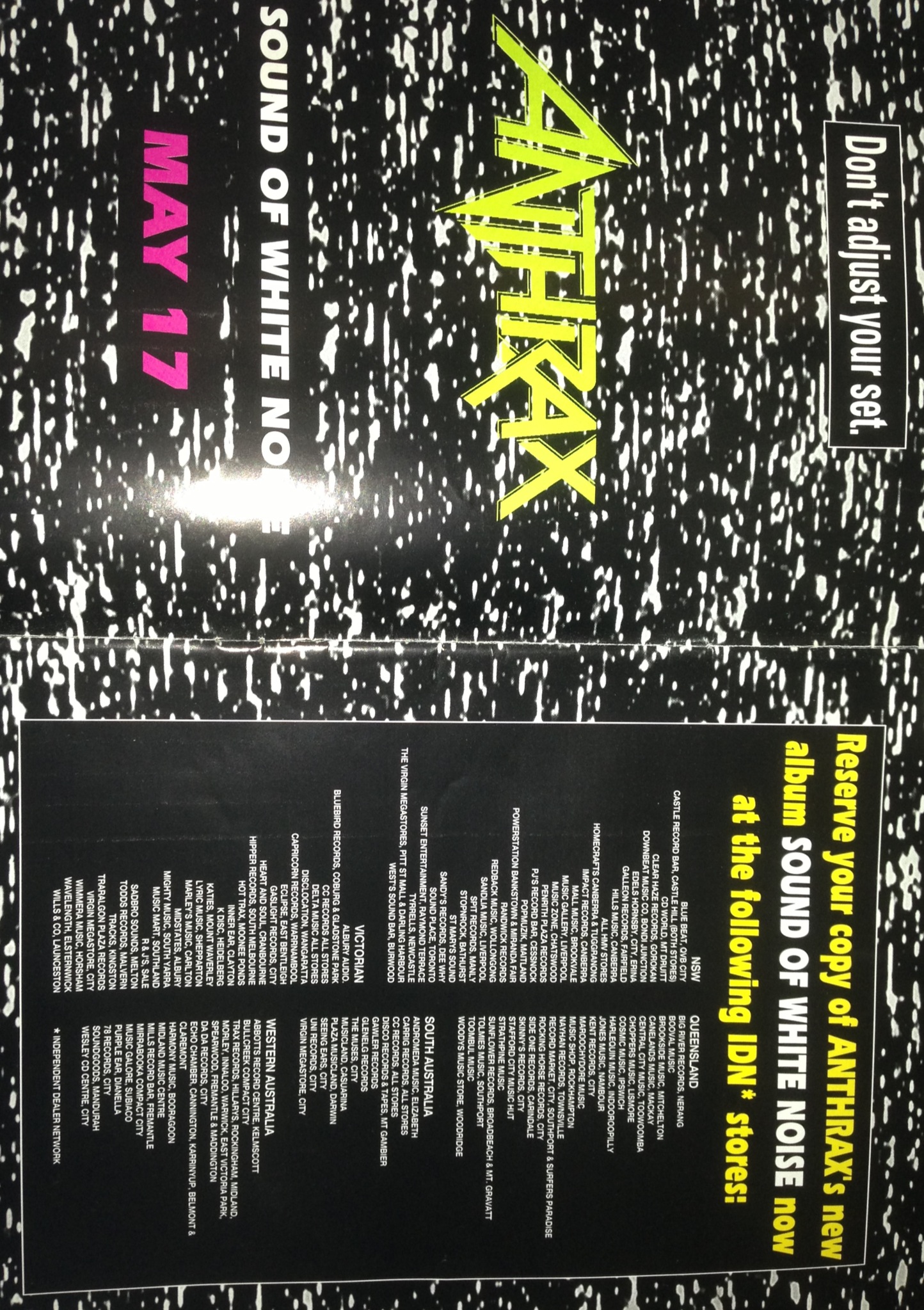
For the artists that don’t like the new way they can then go back to releasing their albums with the following advertising from the Nineties;


photo (6) photo (5)


Scott Ian from Anthrax can get his fans to go to all of the stores mentioned above. I trust that none of them are around anymore. It wasn’t piracy that killed them off, it was new technologies and bad business models.

The major chains all could have innovated, however they didn’t. Steve Jobs and Apple did. Daniel Ek and Spotify did.

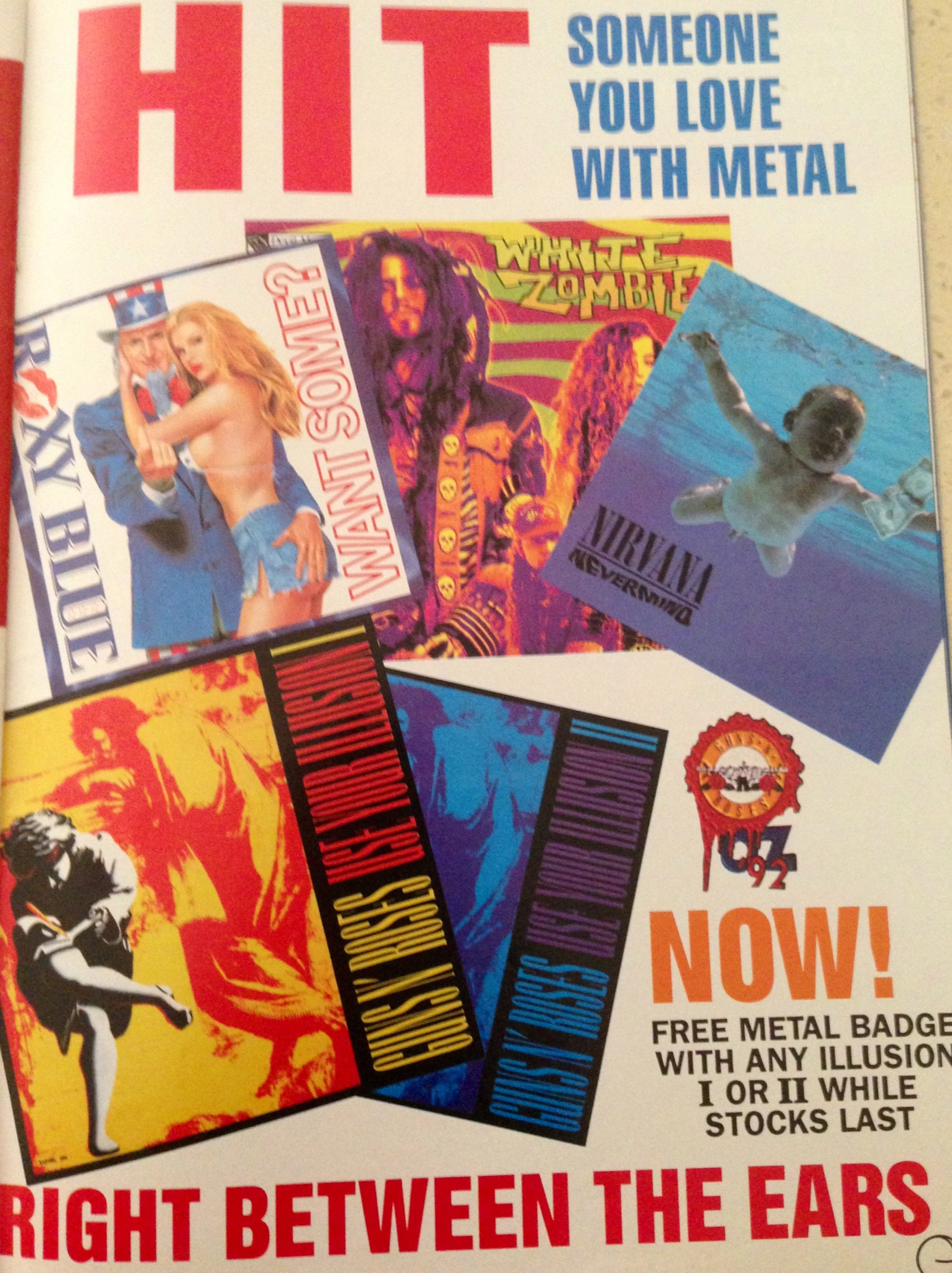
In relation to the record labels. Imagine all the poor artists that were on Geffen Records in 1992. Talk about Geffen hedging their bets. That flyer is promoting Guns N Roses and Roxy Blue (Hard Rock) vs Nirvana (Grunge) vs White Zombie (Industrial Groove Metal). Guess we know who was the loser overall. Hard Rock.

The internet has enabled artists to reach out to wider and different communities than they could in the past. Previously, artists had to connect with people nearby and wait on the record label to spread the word.

However in 2013, many more artists are able to connect and build a fan base by finding and bringing together a unique fan base that is right for them and them alone.

Protest The Hero just did it with “Volition” and their Indiegogo campaign.

Coheed and Cambria did a great job with “The Afterman” releases.

Digital Summer is doing a great job at it as a DIY artist.

Marillion started it off in 2001. With everything there has to be a leader and for fan funding, that leader was Marillion.

The purpose of music is not to make people rich. It was always about the social bonding. If an artist can accomplish the bonding part, then the artist is giving the fan a reason to buy. It is human nature to reciprocate, to acknowledge value.

All those artists complaining, that they are losing, is because they are obsessed with the money they are losing. They have no one to blame but themselves. They are losing money because they no longer are making connections. They are just offering a piece of music up for sale without any connections and relationships. That is the bad way.

Standard
A to Z of Making It, Music, My Stories

What Should An Artist Do When They Start Off?

Should they focus on the definitive track, polishing it up with re-write after re-write, maybe even call in a song writing committee, just to get it to radio and be part of a dying game.

Once upon a time, perfection was everything. Today it is history. Steve Jobs made his name by focusing on one core product at the start.

An artist should be focused on that one song. They shouldn’t try anything else until they have nailed the song. There is no point building your web presence if you don’t have that song.

Artists should realise that we live in a world that has YouTube dominating as the world’s number one music service. The kids these days, they don’t buy, they stream. While people complain about Spotify, YouTube slipped in the back door and won. It won because the record labels procrastinated and extended the negotiations with Spotify. Therefore, artists should not judge their reach based on sales figures alone. 

Artists should be leading and dominating. This is what tech start-ups do very well. The artists that are doing neither, are just focusing on maintaining their current profit margins or are relying on someone else to make something happen. In other words, if artists choose to stay where they are to maximize profits, they are then a day away from losing all relevance.

This is what is happening to Bon Jovi. They released a terrible album, both in terms of sales and reviews/perception, and are now on an endless tour, raking in all the dollars. Meanwhile, a new brigade of rockers is stealing their thunder like Shinedown, Halestorm, Skillet, Imagine Dragons, One Republic and Mumford & Sons.

Same for Metallica. While “Death Magnetic” was a return to form, I dare anyone to say that it is their best album. The album came out in 2008 and for the last five years, they have been on an endless tour, raking in all the dollars. While they are currently out promoting their “movie (that cost $18 million and financed from the pockets of Metallica)”, other metal acts are stealing their thunder like Five Finger Death Punch, Avenged Sevenfold, Stone Sour, Machine Head, Killswitch Engage, Bullet For My Valentine, Volbeat and Trivium.

Artists have the ability to connect directly with their audience. They don’t need the media to sell them or to keep them in the spotlight. It is up to the artist to do that. Of course there is still a lot of them complaining that the new way is not like the old way and that no one can get paid.

Look at the shifts on society. Once upon a time we got our mail once a day. Now we get our mail twenty-four seven. We need to be connected. Heaven forbid, if the internet goes down, or the broadband lines break. It will be chaos.

So many artists today are all in, trying to make it in the music business the old way. However that was never the case in the Seventies and the Eighties.

Brad Gillis had a side project cover band, while Night Ranger was trying to get a record deal. It kept the money coming in until his main gig got its shot. From this side project, he even managed to get an audition for Ozzy Osbourne and another gig. What are the chances of an artist doing the same today? Artists need to have a back up plan.

The back up plan also needs to be there, for the time when an artist has invested a lot of time and effort into an idea and they start to become attached emotionally to the project. So they keep at it and end up stuck in a position or a deal that they regret.

Why would an artist knuckle down and record an album when they are not connecting with anyone. I cannot count how many albums I have come across from bands, that have no social media presence or a couple of hundreds of likes on Facebook, however no one is talking about them. If artists aim to high and fail, where does an artist go afterwards compared to setting modest goals and succeeding.

If you are planning on spending money on your art, what plan do you have to profitably engage with your fan base? Check with any business that is investing in themselves. There is a plan to recoup.

What is the plan of a heavy metal musician? Get together with some friends, drink a lot of beer, smoke some green, record some songs and the whole world will bow down at the greatness before them. Yeah, right. If an artist wants to have a career in the music business, they need to have a monetization plan in place.

The metal and hard rock genres are still not fully in with the current way of doing things compared to other genres. Of course, some DIY bands are getting it, however a lot of them still don’t and if they do rely on getting a label deal they should realise that a lot of the labels are even worse at it getting it.

Standard
A to Z of Making It, Music, My Stories, Piracy

It’s Not The Media’s Job To Keep Artists In The Public Eye. The Difference Between The Past and The Present.

By September 1986, Yngwie Malmsteen had released Trilogy. As a solo artist that was his third long player in the same amount of years. In total, if you include the Steeler and Alcatrazz releases, that made it six long players in four years. You see, back in the Eighties, it was all about the music. That was the only way that artists could get traction back then. It was Malmsteen’s job to keep himself in the public eye.

So what has changed in 2013. Nothing really. It still is about the music. This is what every artist should be doing in this day and age. Releasing music and doing it frequently.

A big difference between the Eighties and Now is the label support. Back in the Eighties, a label would front the money for recording and tour support, with a view to recoup those monies through sales of the long players. It was a deal stacked in the record labels favour. Today, the labels are all about the safe bet, so even though the recording costs are at super lows, it is expected that the artists would front this cost.

Continuing with the Malmsteen example, he released “Odyssey” in 1988 with Joe Lynn Turner on vocals. The album became Malmsteen’s most successful album of his career. As soon as he became commercially successful, he fired the singer and started over again.

When shredding and neo-classical went out of fashion in the record label controlled U.S market, Malmsteen still forged a successful career in Europe and Japan during the 1990’s. He remained true to himself and he never sold out to cash in. People might disagree with his comments, I sure do, however when everyone is trying so hard to be liked by all, fans never really get to see the artist beneath the silt.

The world is going through a revolution and it is all about intelligence. That is why when an artist makes a remark, one side of the Internet calls it uneducated. That is why people jumped on Malmsteen’s remarks about piracy.

However it’s not about winning every time. The metal record labels and the artists they sign are still clueless. If the first album is not a success, the label just lets them go. They are playing it safe. What the labels should be doing is allowing the artist they sign to take multiple chances. The artist is not going to take risks if they have only one chance with the Record Label.

That is why all the risk takers in metal music are the outliers, the DIY’ers. Then when they break through, the majors come knocking. Look at the Djent movement. It started in forums and soundboards back in 2004 and just kept on growing. By 2009, most of the labels had a Djent artist on their roster.

Look at Machine Head during 2002 and 2003, financing their own sessions and recording of “Through The Ashes of Empires.” When the album started to get traction, Roadrunner U.S came knocking again.

Look at the TV networks from the Eighties. You had 3 to 4 networks, and they all played it safe. In 2013, you have hundreds of TV channels, all looking for an edge. They are all looking for content, and they are giving cash to talented people to deliver. Netflix is a perfect example of taking risks with innovation and content.

If the record labels want listeners, they need to let artists push the envelope and try some stuff out.

If an artist wants listeners, they need to understand that there is just too much information out there. That is why there are over 4 million songs on Spotify that haven’t even been heard yet. No matter how big a story artists have, they will be pulled under by all the information coming down the cyber pipeline, if their music is not great.

Suddenly the album that the artist worked so hard for is in the rear view mirror, 3 to 4 weeks after it’s been released. The only way that sales and charts matter today, is that it shows all the new product released. That is what the public wants. Something new.

Here today, gone tomorrow. Artists need to create constantly now. That’s the only way you can stay in the public eye, in people’s minds. Robb Flynn is doing this with his journals while the world waits for the album. An artist doesn’t want to be forgotten and the album format unfortunately works against the artist today. Somehow other musicians just don’t know it. They want someone else to do the work for them. They don’t want to try new ways and the new way is to bond with the fans. Robb Flynn gets it.

It’s not the media’s job to keep him in the public eye, it’s HIS!

The number one thing a fan wants is more music by their favourite act.

Dream Theater released an album for a new audience. It is the only thing that John Petrucci talked about. “If someone is hearing the band for the first time” was the catch cry in all the press releases. Forget about the new audience, focus on the old. The old will sell the artist to the new. It’s done through music and connection.

If the artist thinks that they gain traction by hanging with the record label, then they are idiots. They are better off blogging, responding on Facebook, spreading news on Twitter. However, there is a still a misconception that getting your story in the newspaper or in the magazines is a sign of traction. Forget that. When a magazine comes out with a three-month lead time, it’s already old news. The magazine is dead on arrival. No one cares about the stories written by the PR/marketing team of the artist.

The way I see it, if an artist is making an album-length statement, they need to have a story or a concept around it. Otherwise ten tracks strung together is not a concept. If you look at society in general, there is almost no place to buy a CD. The world is moving to streaming. Via mp3’s, people will still download/ cherry pick their favourites and there is nothing that artists can do about it.

Nikki Sixx asked his fans to immerse themselves in the whole album experience. In order for them to do, the album needs to be phenomenal, otherwise the fans will just cherry pick the great and leave the rest to be.

We live in a direct to consumer society. Amazon and Google get it. Some artists get it. What about the rest?

Standard
A to Z of Making It, Classic Songs to Be Discovered, Influenced, Music, My Stories

The Heart Beat of True Popularity Begins From Unpopular Positions

The kids of today are looking for the new and the different, while they are discovering the past with the help of their parents. If artists don’t have people dropping their jaws these days, chances are they are not going to last.

With this in mind, it got me thinking about Jeff Watson and his time in Night Ranger, along with that jaw dropping eight finger tapping technique.

In 1983, Night Ranger went from an opening act to a headlining act with the release of their second album “Midnight Madness” album.

I can’t believe that it is not on Spotify for me to officially stream, however if I go onto YouTube it is available in its entirety, to be streamed unofficially.

The band at the time was made up of Jack Blades – Bass/Lead vocals, Jeff Watson – Guitars/Keyboards, Brad Gillis – Guitars, Alan Fitzgerald – Keyboards and Kelly Keagy – Drums/Lead vocals.

Jack Blades once said that “Sister Christian” and the release of Midnight Madness was the band’s pinnacle moment.

So what happened.

Let’s look at Jack Blades first. His first band was called “The Nomads” and it goes back to 1966. He work with “Sly and The Family Stone” as a songwriter and experienced fame with funk rockers “Rubicon” in 1978 along with Brad Gillis.

By 1979, the band was no more. When “Rubicon” broke up, Kelly Keagy was their touring drummer. The trio then formed the band Stereo.

Stereo then ceased to be when a roommate of Blades called Alan Fitzgerald (bassist for Montrose, keyboardist for Sammy Hagar) suggested that they form a rock band. Alan knew a virtuoso guitarist called Jeff Watson from Sacramento, and with Jack Blades, Brad Gillis and Kelly Keagy coming over from Stereo, the band Ranger was formed in 1980. Due to a naming dispute, the name changed from Ranger to Night Ranger.

When Night Ranger broke up in 1989, Blades received a call from John Kalodner, then at Geffen Records. Kalodner mentioned to Blades that Tommy Shaw and Ted Nugent are working on songs in New York, but something was missing. Kalodner thought that Blades would be a good addition to the equation. From one super group to another super group.

Anyway looking at Jack Blades, his year zero as a composer began in the “seventies”. His greatest work according to himself, happened in 1983 with “Midnight Madness”, which took place 17 years from when he joined his first band. From a Night Ranger perspective, it took the band three years to compose their greatest masterpiece from when they formed in 1980.

Next up you have Brad Gillis.

Gillis will always be remembered for replacing Randy Rhoads in Ozzy Osbourne’s band immediately after Rhoads’ death in 1982. At the time, Night Ranger was still an unknown band from California. When Night Ranger got together in 1980, they focused solely on getting a major label deal instead of playing live.

In the interim, Gillis had a side project called “Alameda All Stars” that played the local clubs for extra cash. During one of those gigs, Preston Thrall, the brother of Pat Thrall was in attendance. After seeing Gillis tear up the stage covering a few Ozzy/Rhoads era songs, he mentioned to Gillis that he should audition.

For the history buffs, Preston Thrall told his brother Pat Thrall about Brad Gillis. Of course, Pat Thrall knew current Ozzy drummer Tommy Aldridge as they played together in the Pat Travers band. So Pat Thrall informs Tommy Aldridge and Aldridge them informs Sharon. At the time Ozzy was working with Bernie Tormé as an interim player.

In the end, Gillis didn’t feel that Ozzy’s band was the best fit for him. He saw another L.A band, Quiet Riot, get a record deal, and when he saw Rudy Sarzo leave to go back to Quiet Riot, Gillis left Ozzy as well, to go back to Night Ranger.

Jeff Watson is the X-factor here. While Brad Gillis is a good guitar player and Jack Blades gave the band it’s crossover rock appeal, Jeff Watson was the shredder that the band needed, which in turn gave the band some serious metal cred. Any person that transposes a piano piece he wrote to the guitar and plays it tapped with eight fingers, deserves a trophy in the Shred Hall Of Fame.

In my opinion Jeff lives in the upper level of guitar circles and his playing/technique is held in high regard. He was born and raised in Fair Oaks (Sacramento) California and started to play the guitar when he was seven.

He took it seriously when he finished high school and got a job at a local music store, where he launched The Jeff Watson Band. Eric Martin (from future Mr Big fame) was the first of three singers the band had. The band got a decent amount of radio airplay as the songs were being produced by both Alan Fitzgerald and Ronnie Montrose. The Jeff Watson Band even opened up for Sammy Hagar, Heart and Ted Nugent. It was while producing “The Jeff Watson Band” that Alan Fitzgerald decided to include Jeff Watson in any new project that he would be involved in.

Even though Jeff Watson doesn’t have a lot of song writing credits on “Midnight Madness”, his influence is still heard years after due to the lead breaks and the Eight Finger Tapping Technique.

Kelly Keagy started doing the club circuit in the Seventies and eventually entered the world of Jack Blades and Brad Gillis as a touring drummer for “Rubicon”.

Alan Fitzgerald goes back to 1974, when he played bass in the band Montrose. He went on to play keyboard for Sammy Hagar’s solo releases and was rooming with Jack Blades.

When “Midnight Madness” came out, Jack Blades was 29, Brad Gillis was 26, Jeff Watson was 27, Kelly Keagy was 31 and Alan Fitzgerald was 34. All of the members had paid their dues in other bands since the start of the Seventies. In other words they were seasoned. Music was all they had. There was no fall back position. There was no safety net or a plan B. It was all or nothing.

In a way, you could call Night Ranger a pseudo supergroup. Jack Blades, Brad Gillis and Kelly Keagy came from Rubicon. Alan Fitzgerald came from Montrose, Gamma and Sammy Hagar’s solo band. Jeff Watson came from his own solo band, that had songs on radio and production from Ronnie Montrose.

The album kicks off with the Jack Blades and Brad Gillis composition “(You Can Still) Rock in America”. How do you follow-up this song?

You don’t.

You change tact and go into the melodic AOR Rock format, popularised by Journey, REO Speedwagon and Styx. There is no point in trying to re-write a bona fide classic.

Two Jack Blades compositions come next in “Rumours In The Air” and “Why Does Love Have to Change”. That guitar intro in “Rumours In The Air” is smoking and the keyboard call to arms lead break after the first chorus shows that Fitzgerald wasn’t there just to play chords.

Side 1 ends with the anthem “Sister Christian”. The song is composed by Kelly Keagy. This is the era of the LP, when sequencing mattered. When the song finished it made you want to turn the LP over, so that you hear what was on the other side.

Side 2 opens up with two Jack Blades compositions in “Touch of Madness” and “Passion Play”. What a way to kick it off, with the tinker box intro that to be honest was used to maximum effect by Ozzy Osbourne on the song “Mr Tinkertrain”.

Not as strong as Side 1, up next was the Jack Blades, Alan Fitzgerald and Brad Gillis composition” When You Close Your Eyes”. A pure slice of melodic AOR rock.

The Jack Blades and Brad Gillis composition “Chippin’ Away” is next and the album closes with the Jack Blades, Kelly Keagy and Jeff Watson track “Let Him Run”.

Being different was a uniqueness when I was growing up. That was the space the heavy metal and rock musicians occupied.

It was an us vs. them mentality. The “Them” was always a moving target. It could have been teachers, parents, police officers, neighbours or anyone else that upset the status quo for the day.

The end of Night Ranger happened with the success of “Midnight Madness.” Suddenly, the band was on the radar of the record label. The label wanted another “Midnight Madness” so they could capitalise on the cash. It came in “7 Wishes”. Then the label wanted another “Midnight Madness” and it came in “Big Life.” 

The band went from outcasts and creating something new, to a maintenance model of new music, purely designed to earn maximum profits.

Music is best when it’s created and led by the outcasts, those artists that sit on the fringes. Record Labels and suits believe they know best, because all they care about is profits. Night Ranger sat on the fringes for “Dawn Patrol” and for the writing of “Midnight Madness”. 

Even Quiet Riot sat on the fringes. Then it all exploded with “Metal Health” in 1983. It took everyone by surprise. Then the money started to roll in from the large record label advances. Then the bands started to go on massive arena tours.

Suddenly, the bands are afraid to lose friends. Suddenly, the bands are afraid to stand out. The key is to be different AND liked.

Look at the now. Nothing sounded like Volbeat’s “Beyond Hell Above Heaven” previously but it was a huge hit. Protest The Hero are all twisted with their insane progessive songs, but they are embraced by a hard-core fan base that gave the band over $300K to get their next album done..

There is a quote that I remember from Adlai E. Stevenson that goes something like; 

“All progress has resulted from people who took unpopular positions.”

Put that quote in a musical context. All great music has resulted from people who lived as casts, who had unpopular positions, who wrote music because they wanted to write music, not because they wanted to make millions.

That is where the heart beat of true popularity begins.

Standard
A to Z of Making It, Derivative Works, Influenced, Music, My Stories

The Content Rockundrum or The Content Metalundrum – Finding an audience for your content.

I just finished reading an article called “The Content Conundrum: How to get people to view what you create”, that was published on the website, Smartcompany.com.au

Of course it got me thinking about rock and metal music and artists.

FACT – It’s getting easier to get content out in the world for musicians. iTunes, CDBaby, Soundcloud, Tumblr, Facebook, iTunes, Google Play, Spotify, Instagram, website, WordPress and many more. Due to this ease, the web is saturated with content.

As the article alludes, “the challenge is no longer how to publish content, it’s how to find an audience for it.”

FACT: There is so much competition, how does an artist stand out and compete for someone’s time. Back in the glory day of the recording industry, the record labels would be competing for the listener’s dollar. Now it is record labels and artists themselves competing for the listener’s time, attention and maybe their dollar.

For example, it’s funny how a lot of bands or artists don’t think about uniqueness and branding when it comes to deciding what band name or artist name they should go forward with. I was listening to a melodic rock band called “Rain” today. I wanted to know more about the band, so I Googled the words “Rain band.” Of course I knew that the term “Rain” would bring back everything to do with actual rain. To my amusement, the term “Rain band” also brought back everything to do with the weather term “rainbands”. Do you get where I am getting with this? Other bands I listened to today are called “Prime Circle”, “The Black Rain”, “Redline” and “Vaudeville.” Google these band names and tell me if you get the bands website or Facebook page as the first search result.

Motley Crew is not unique, Motley Crue however is.

Metallica is unique. Metal Britannica is not.

Megadeth is unique. Mega Death is not.

Aerosmith is unique. Aeroplane is not.

Coheed and Cambria is unique. That’s it.

Judas Priest is unique.

Queensryche is unique.

Pink Floyd is unique.

Twisted Sister is unique.

Volbeat is unique.

Dream Theater is unique, however Dream Theatre is not unique. Get the difference one little letter change has achieved.

Every artist should aim to have their name to come up as search item result number 1 in Google. If I type in “Tool” in Google, I get 6 returns for the band Tool and 4 returns for other forms of tools, like Tax Tools, Definition of Tool and so forth.

If I type in “Rush” in Google, I only get 2 returns for the band Rush and that is because they have a history in Google’s “SEO” algorithm. I guarantee you, that if a new band called Rush came out on the scene today, there web presence would be lost as the name is generic.

What are you doing different compared to what all the other artists are doing? By using the phrase that you are “putting your heart and soul into the music”, just doesn’t cut it these days. What reasons are you giving for the fans to connect with you and for the fans to buy from you?

If you want to be a millionaire by playing Djent music, then you are dreaming. It will not happen. You could have a career in music, however you will not be rolling in the cash. If cash is the reason why you got into the music industry, then get out right now. There is more money to be made in banking and the technology sector.

Which area or space are you trying to occupy with your music?

Remember the movie Highlander, “there can be only one.” Look at technology. Facebook is unrivalled at the moment. Sure there are other little players on the scene, however all the social media fame goes to Facebook. Amazon has the online shopping experience cornered. Google has the search area cornered. Apple did have the innovation market cornered, however they stopped innovating and Samsung is rising up to take the crown. Blackberry is dead as they refused to see that the future lays in apps. One will become dominant and the other will fall.

Music is the same. Sure, we all have our little niche bands that we love, however there is always one band that rises to conquer all.

Metallica have no challengers at the moment for the Thrash, Rock and Metal crown. Of course, I still love Slipknot, Stone Sour, Machine Head, Megadeth, Slayer, Trivium, Killswitch Engage and so on, however none of those bands can rival the juggernaut that is Metallica.

Avenged Sevenfold and Five Finger Death Punch are fighting it off to be the current conqueror of the Modern Metal movement. Of course, other bands exist in this era that fans also like.

Killswitch Engage are the kings of the metalcore movement in the U.S. Of course there are a thousand wannabes however, Killswitch remain unchallenged.

Dream Theater are the undisputed kings of progressive rock and metal.

Coheed and Cambria are kings of their comics and sci-fi world and they get a fair amount of crossover fans.

If any artist looks back at the careers of the bands/artists that influence them they would see that those artists didn’t release the same content as their competitors.

Metallica in 1991 released an album vastly different to what the other thrash bands released in 1991. They are still selling copies of that album, while all the other releases from their competitors have no traction today.

Motley Crue released a sleazy heavy classic rock album with “Dr Feelgood” in 1989, a far cry from the glam rock and pop metal/rock releases that the other competing bands released.

Guns N Roses released a very heavy blues rock album with “Appetite For Destruction” in 1987 and they stood out from the pack. Axl Rose is still doing victory laps on this album.

Dream Theater released “Images And Words” in 1992, which was totally different to the hard rock releases of the day. When compared to the new wave of Seattle sounds coming through, “Images and Words” was a total outlier.

The blog states that “Content should be influenced by a blend of audience needs, brand positioning and values, and corporate and communication objectives – and these are likely to be unique to your business and enable you to find a unique voice.”

The way I view the above comment is as follows;

I call it “The Led Zeppelin Fix.” When you have one of the largest bands in the history of music call it a day in 1980, what are all the hard rock fans of the band going to do. “Zebra” took in a decent cut, however it wasn’t until “Whitesnake” released their self-titled album in 1987 and “Kingdom Com”e released their self-titled in 1988 that fans of Led Zeppelin had their “Led Zeppelin fix”.

When a novice listener hears the albums mentioned above for the first time they will never notice the obvious influences. Kids these days do not know enough about the history of rock and metal music, in order to make the comparisons. They are too busy trying things out.

This is what Dream Theater is trying to do with their new album. They are trying to make it a great reference point for any new fans hearing the band for the first time. Time will tell if they have succeeded.

Standard
A to Z of Making It, Music, My Stories, Stupidity

So What Is It With Bands And Producers Not Liking Each Other After An Album Explodes?

What is it with artist’s dishing out hate on a producer that was involved in producing their greatest triumph?

A good producer is meant to be tough and opinionated. They are meant to challenge the artist, so that the artist delivers the goods. Look at what Bob Rock did to Kirk Hammet in Metallica, especially around “The Unforgiven” solo piece. If you look at Kirk’s legacy that will be the solo that he will be remembered by. I remember in the “Classic Albums” documentary of the “Black” album, as well as in the video, “A Year and A Half With Metallica”, Bob Rock said something similar like, “it is a great song and it needs a great lead. What Kirk is playing at the moment is not great. He has to live and breathe this solo.”

Bob Rock got the guys to slow down the tempo on “Sad But True” and detune everything down a whole step. He told Lars Ulrich to take drum lessons before he started to record his parts. Which producer does that? Lars Ulrich is coming off 4 definitive thrash albums and there is Bob Rock telling him to take drum lessons. He questioned James on his lyrics and his melodies, something that hasn’t been done before. He recommended vocal lessons as well to the formidable front man.

Lars even said that once the Black album was finished, he couldn’t talk or see Bob Rock for over 12 months. Bob Rock has even gone on record saying that it was a tough album to make. The end result is every bands dream coming true. The biggest selling album of the SOUNDSCAN era with a total of 16 million sales as at December 2012. The Black album still to this day moves 2,000 units per week in the U.S. A a lot of websites pointed out that it outsold, Megadeth’s new album “Supercollider”.

As much as Nikki Sixx dishes on Tom Werman, the facts are out there. With Tom Werman, Motley Crue had three multi-platinum albums in “Shout At The Devil”, “Theatre of Pain” and “Girls, Girls, Girls”. Each album has sold 4 million copies plus in the U.S. That is a total of 12 million plus sales in the U.S market. Furthermore, the bulk of the “Decade Of Decadence” album is made up of songs from these albums, and that album also sold over 2 million copies in the U.S. In addition, the “Music To Crash Your Car” box sets also had the three albums produced by Tom Werman on them.

If all the stories about the drug use from the Motley Crue members are to be believed, then Tom Werman deserves special recognition for getting anything musical onto tape.

Dee Snider also doesn’t have many kind words for Tom Werman. If anyone has read Dee’s bio, “Shut Up and Give Me The Mic,” you can connect the dots and come to a conclusion that Dee is also blaming Tom Werman for the failure of Twisted Sister’s next album even though Tom Werman never worked on it. The routine used to be that Dee Snider would be working on songs for the next album, while the current album is being mixed.

According to Dee, in his bio “Shut Up and Give Me The Mic” due to Werman being difficult to work with and Mark Mendoza doing his best to sabotage everything that Dee was working on, he couldn’t take the time out from the studio to work on songs for the next album. So when it came time to write the songs for Come Out And Play after the hugely successful “Stay Hungry” tour, Dee’s mindset was in a different place. He had money, he had fame, he had success and he didn’t have the same hunger, anger and motivation that he had during the Stay Hungry recording. If he wrote the songs during the “Stay Hungry” sessions, the output could have been very different. Super producer, Bob Ezrin even passed on working on “Come Out And Play”, because he didn’t hear any great songs.

However, the facts are there. The Tom Werman produced “Stay Hungry”, sold over 3 million copies in the U.S alone. The singles, “We’re Not Gonna Take It” and “I Wanna Rock” also sold by the truck load and they sounded great on radio, due to special radio mixes that Tom Werman did for them. It’s funny that the song “The Price”, didn’t get the same radio mix and it tanked as a single, even though it is the strongest of all three songs.

In relation to Nikki Sixx and Dee Snider, Werman said the following on Popdose.com;

“There were two individual musicians who had a problem with me in the studio out of about 200 musicians I produced. Nikki Sixx was a friend until he revised history in his book. Dee Snider was a friend, until the Twisted Sister album became a hit, and he couldn’t deal with sharing the credit for its success. Both of these guys were literally back-slapping glad-handers; years later, they soured badly. I had fine relationships with all the other members of those two bands.”

Kix was another band that was critical of Tom Werman. Bassist and band leader, Donnie Purnell hated and distrusted Werman.

George Lynch from Dokken also had a problem with Tom Werman, when Werman requested that he play a better lead break on a particular song. If you believe Don Dokken, George Lynch has an uncontrollable ego. If you believe George Lynch, Don Dokken has an uncontrollable ego. Regardless who you believe, when Lynch was asked to play a better lead break, he had a dummy spit.

And now here are the facts for Dokken’s “Tooth N Nail” and Kix’s “Blow My Fuse”. Both albums on release went to GOLD status within a year. “Tooth N Nai”l was released in 1984 and ended up reaching PLATINUM status in the U.S in 1989 (yep that’s right, four years after its release), after the mega successful “Back For The Attack” album, got people interested in Dokken’s back catalogue. “Back For The Attack” reached PLATINUM status within 2 months of its release date.

“Blow My Fuse” was released on September 12, 1988. By November 2, 1988, seven weeks later, the album was certified GOLD by the RIAA. In May 1989, the single “Don’t Close Your Eyes” was released. By February 5, 1990, eight months later, the single was certified GOLD by the RIAA. Finally, on August 28, 2000, the “Blow My Fuse” album was certified PLATINUM by the RIAA. Yep, that is almost 12 years from when it was released. This is what the artist of today need to take into account. Great music will live on and it will keep on selling for a long time.

However, so many artists and record label executives want the platinum sales with the first release. Dokken’s back catalogue sold well after the mega successful “Back For The Attack” album (their 4th album). Metallica’s back catalogue sold even more, after the mega successful “Black” album (their 5th album). Motley Crue’s back catalogue sold well again after the mega successful “Dr Feelgood” album (their 5th album). However in today’s mindset of profits before creativity, most bands will not get to the fourth or fifth album. Most bands will not have a comeback like Aerosmith or Alice Cooper did in the Eighties. I digress.

Dream Theater, especially Mike Portnoy blasted Dave Prater on the “Images and Words” sessions, however with Prater at the helm, Dream Theater had their biggest album to date. Read the book “Lifting Shadows”. The interviews with Prater are brilliant. The rebuttals of the band members are in some cases subdued but fiery at the same time. Somewhere in between all of the stories is the truth.

Of course, Dream Theater with Dave Prater at the helm have had their most success in relation to album sales. “Images And Words” is the album that Dream Theater is still doing victory laps with in 2013.

Standard
A to Z of Making It, Music, My Stories, Piracy, Stupidity, Treating Fans Like Shit

What can artists learn from The Pirate Bay?

As most tech savvy people are aware, The Pirate Bay turned 10 years old a few days ago. In all of this, the Pirate Bay has stood strong against the pressure put on it by the MPAA and the RIAA and their sister organisations throughout the world. Much larger organisations have tried to stand up against these bodies and have failed. The fact that the Pirate Bay is still alive is something to respect.

So what can artists learn from The Pirate Bay?

The Pirate Bay spread via word of mouth. It didn’t embark on a scorched earth marketing policy. For an artist there is no better marketing strategy than word of mouth. That is how virality works.

Metallica – built their fan base via word of mouth on the strength of their album releases and live shows. It wasn’t until 1992 that Metallica decided to form a fan club.

Heartist – built their fan base all on line via fan to fan connections. This was all done without even playing a show. It was a total online strategy.

Volbeat – built their fan base via the strength of their material. A song that they released back in 2008 got traction in 2012, which in turn started to bring attention to their 2011 album release. Success comes later in today’s world. In some cases much later.

Galactic Cowboys – Back in the late eighties, Geffen Records signed a band called Galactic Cowboys. I have three of their albums that I picked up in the bargain basement bin. Geffen just kept on pushing the band onto the public with a pretty high profile marketing campaign, however the public just didn’t take to them.

Mutiny Within – I remember the Roadrunner marketing campaign for the band Mutiny Within. The campaign had the band linked to Killswitch Engage and Dream Theater. Instantly this is putting a pre-conceived ideal into the mind of the listener and in my opinion, didn’t do the band any favours. One of the flyers that I saw, had phrasing like “Mutiny Within is the twisted child of Killswitch Engage and Dream Theater.” The public decided that the band was not worthy of that title and the band was dropped from their label deal.

Artists (especially major artists) should seriously consider using The Pirate Bay to market the release of their next batch of songs. There is still a demand for free mp3’s. At the moment iTunes cannot service that demand as the iTunes platform needs to be paid. So what options do the artists have to provide their fan base with free mp3’s.
1. Use their own website and collect geographical information and email addresses. Get to know their fans and survey their fans.

2. Team up with Bit Torrent

3. Team up with The Pirate Bay

4. Team up with a crowd funding platform, where the perks involve t-shirts and so forth, with a free Digital Download of said music.
The Game Of Thrones creators have recently said that the piracy of the show has contributed to the cultural buzz of the show and that it is better than winning an Emmy. The creators have also said that they have seen a high increase in DVD sales. I always bring people’s attention back to the Southern and Central Americas’. Sales of recorded music is not high in countries that fall in the Southern and Central America zones, however bands have had great success in touring these areas.

The recent IFPI report shows Brazil as a market set to surge. Go to http://www.ifpi.org/content One of the comments on the report is a WTF moment. It’s on page 24 and it states the following;
“The launch of iTunes showed that Brazilians are prepared to pay for music. We thought consumers were so used to piracy that they would never buy music again. But this has been proved wrong. Moreover, a new generation of consumers can now have their first music experiences in the legal environment.”

To put the above comment into perspective, iTunes was launched in Brazil at the end of 2011. Seriously this is a terrible business model from the record labels. While they screamed piracy in Brazil and then had a real draconian Copyright law passed that can take down sites on the say so of the entertainment groups, the actual consumers, the music fans, could not download a legal mp3 in the country. Instead of trying to get licensing arrangements in place to launch iTunes earlier in Brazil, the Record Labels spent millions fighting piracy in the courts. Instead of trying to get licensing arrangements in place to launch iTunes earlier in Brazil, the Record Labels spent millions lobbying politicians to vote for SOPA and PIPA.

The Pirate Bay is easy to use. It has an ecosystem built around Trusted and VIP uploaders to Helpers and Moderators that delete hundreds of ‘spam’ accounts and fake uploads every day which in turn keeps the site running smoothly and its users happy. This ensures that the content is exactly what it is described to be. The ranking system of uploaders (which is a skull in different colours like the Karate belt system) allows any novice downloader to form a bond with a certain uploader.

As an artist, you need to have a unique reference point, something that is easy to find. Having a generic band name is not a unique reference point. If you Google names like Bon Jovi, Van Halen, Motley Crue or Metallica you know you get back searches that are related to the band name you Google’d. Google a band name like Today I Caught The Plague or Burnside. Then Google the same names with the term band attached to it. Any artist starting off needs to make it is easy as possible for people to find them online.

There is always room for improvement. The Pirate Bay keeps on evolving as technology evolves. Now it is simply an indexing site, that services the needs of its users, the same way Google service the needs of its users. It is always re-creating itself with the rise of new technologies.

All artists need to be doing the same thing. The web presence of any artist needs to be maintained, updated and recreated. It needs to adopt to changing technologies, to offer as many features as it can to its fans.

Why do so many Dream Theater, Bon Jovi, Metallica, Motley Crue or Five Finger Death Punch fans spend so much time on Forums that have no connection to the main web site of the band. Bands should be fostering these kinds of interactions on their main website. They should even be contributing to it, the same way they contribute to their Facebook and Twitter accounts. At least you know on the band forums, the real fans are there to interact and respond.

The Pirate Bay’s user base is growing because the users are prepared to share and people are prepared to download. This alone should inform the legacy gatekeepers that the fans of music are no longer sheep. The Pirate Bay showed the RIAA and the MPAA that their rules and prices suck and that service is a problem (remember iTunes launched in Brazil in 2011). The old model of basing success on record sales is gone. The old model of going to the record store and planning what albums you were going to buy in the months to come is over.

Artists need to service their fans. Make it hard for a fan to get your music, and they will go elsewhere. Trivium is a great example. They recently had a very complex (also brilliant) smart phone strategy that once you completed all the steps needed, the fan got to hear a sample of a new song. I can tell you that as a fan engagement tool, this attempt failed miserably. It was too hard for fans. So what do Trivium do next. They offer the full song for streaming via their website and as a free download. Now it is easy as hell. To paraphrase the Eagles, keep it easy…

Standard