Copyright, Music, Piracy, Stupidity, Treating Fans Like Shit

Copyright In The Modern Day. It’s Not About Driving Innovation Anymore.

It’s all about stopping copyright infringement. It’s all about shaking down internet users. It’s all about a ridiculous and “out of touch with reality” penalty system. For example, if a user downloads one song, the RIAA have argued that the copyright holders are out of pocket between $20 to $10,000. It’s a huge mark-up from its iTunes price of $1US.

When discussions are had on Copyright, it’s all about the enforcement. It’s all about creating a monopoly. The ones that sit on the innovation fence are shouted down to from the ones that control/hold the Copyrights.

There is a great article over at The Conversation website. Go read it. Journalist David Glance has a lot of viewpoints that I agree with.

The thing is, people have been “copyright infringers” since day dot. Anyone that remembers cassette tapes, will tell you how they used to copy songs from recordings onto a cassette tape. James Hetfield used to copy Lars Ulrich’s record collection onto cassettes.

We used to copy songs from the radio onto cassettes. We used to copy movies from TV onto VHS cassettes. Then we got even more creative and hooked up two videos at once to make copies of the latest releases. With the advent of the CD and blank discs, we started making mixed CD’s. When Napster exploded, people flocked to it.

Richie Sambora was a guest host on “The Panel”, a TV Current Affairs/News show on Channel Ten in Australia. This happened last week. There was a segment on Spotify and how streaming has led a slump in music sales. One of the members of the panel asked Richie Sambora, how many records has he sold. Richie replied back with “about 130 to 140 million records”. Richie then further stated that piracy was big even in the days before the internet, as pirated Bon Jovi LPs, cassettes and CD’s sold like hotcakes in Asian, African and Eastern European countries.

So I did some research on this and I came across the Moscow Peace Festival. The Moscow Peace Festival took place in 1989. Hard Rock and Heavy Metal music was hard to get “legally” in Russia, however it didn’t stop over 100,000 people from attending the show to watch Skid Row, Ozzy Osbourne, Scorpions, Motley Crue and Bon Jovi perform.

All of those fans of music must have gotten their music from somewhere. Actually musical sales in the USSR at that point in time didn’t even exist. Hell, it wasn’t until 2010 that the National Federation of Phonograph Producers (NFPF) was established in Russia. And they don’t even have a website. All of this shows how serious the legal music business is treated in Russia.

All of this supports the argument that we are all copyright infringers. Governments need to look at how people adopt these laws and change them to suit. Instead the Governments look at who puts money in their pocket and add more bad laws to existing bad laws.

Australian Attorney-General George Brandis has got no idea what is happening in the real world or how the internet works. His comments show that he is just a puppet for the Movie Industry Lobby Machine. Check out some of his comments;

To pirate a video or a song without paying the fee for it through iTunes, and so on, is an act of theft, it’s pure and simple.

Um, no. To infringe on a copyright is not an act of theft, as the mp3 is still with iTunes. No one has stolen it. What has happened is that multiple copies of that mp3 are in circulation right now. People pirated Adele’s 21 album, however all of that piracy didn’t stop it from moving over 10 million units in the US because no one stole anything. They infringed on an artist’s copyright. Something that fans of music have been doing since day dot.

When people, pirate “Game Of Thrones”, they don’t steal the original master copy from HBO. What they do is download a copy that someone made from the actual legal broadcast.

The ISPs, in my view, do need to take some responsibility for this because they provide the facility which enables this to happen.

Um. No. ISP’s don’t need to take responsibility for bad business sense and business models designed on controlling distribution. To provide a few different analogies, should the gun manufacturers take responsibility for their guns killing people. Should car manufacturers be responsible when their cars kill other people due to high speeds. Should the knife manufacturers be responsible when knives are used for violence. Should gas bottle manufacturers be held responsible for when their gas bottles are used in drug laboratories. Should alcohol brewing companies be held responsible for all the alcohol fuelled violence.

It is easy to lay the blame on others. However it is the record labels that need to take responsibility. They still don’t get it. People want FREE music. Spotify provides a service that is free, however it is still seen as restrictive and people still go to other torrent sites to download content. And then the recording industry claims that these sites make so much money from running ads on their site. If that is the case, then why isn’t the recording industry offering the same service and make that same money.

They don’t want to, because that would mean that their margins will shrink a little bit more and that is all they think about. The NOW. What is the plan for the future? A small return today, could lead to a greater return in 5 year’s time.

The fact is that people don’t have a right to download pirate copies of songs or movies or television programs because the people who make those programs or other items have a right of property in them. The way artists earn their living is through royalties and that’s the way they are remunerated for what they do.

Um no, artists have never made a living from royalties. The record labels have. Artists previously made a living from touring, licensing, merchandise and large advance payments. In today’s world, the main revenue streams are disrupted, however other revenue streams have opened up.
http://theconversation.com/copyright-reform-will-drive-innovation-not-trying-to-stop-the-internet-pirates-23286

http://www.techdirt.com/articles/20140225/12341626346/australian-copyright-reform-goes-into-reverse-fair-use-out-three-strikes.shtml

Standard
Copyright, Music, My Stories, Piracy, Stupidity, Treating Fans Like Shit

Entertainment Industries Innovation V4.0 – When Will “Smoke On The Water” enter the Public Domain?

As a fan of music and the public domain it’s hard to understand why longer copyright durations are requested from the Corporations that control/hold the majority of copyrights. The majority of the music that I like was under copyright when I was born and by the time I die, it will still be under copyright. So how is that benefiting the creator in creating more works (who will be long gone) and the public who are meant to build off previous works because that is how culture thrives.

Remember, copyright was designed to give the creator a monopoly on their works for a certain period of time so that the creator can monetize their work, which in turn provides an incentive to create further works.

So without really realising it, we (the public) have a copyright law that more or less lasts a lifetime.

Let’s use “Smoke On The Water” as an example. It was released in 1972. Copyright on the work is meant to last the lifetime of the songwriters plus 70 years. The male life expectancy is 80 years. The songwriters listed for “Smoke On The Water” are Richie Blackmore, Ian Gillan, Ian Paice, Roger Glover and Jon Lord (RIP).

Let’s start with Jon Lord. Due to his death in 2012, his copyright in the song will expire in 2082. However the song will still remain under copyright due to the later deaths of the other members.

Let’s assume that all of the members live to the life expectancy age of 80 years old. That would mean Richie Blackmore, Ian Gillan and Roger Glover would have an end date of 2025. Add another 70 years to that and the copyright that they hold in the song would expire in 2095. However at this point in time the song is still under copyright.

Ian Paice is born in 1948, therefore his life expectancy end date would be 2028. Add another seventy years to that and the copyright monopoly held by the corporations on “Smoke On The Water” will finally expire in 2098, 126 years after the song was released. That is when, the public (provided that no more retroactive extensions are added) are allowed to use the song to build other works and derivative versions.

So the next time a copyright maximalist insists that copyright has an expiry date, tell them they are full of it. Copyright in reality has no expiry date during our life time. Remember in the US, the “Copyright Term Extension Act” extended the copyright of old works that should have been in the Public Domain to 2019.

And guess what the copyright corporations are gearing up for?

Yep, you guessed it. They are gearing up for another secret lobby/bribery effort to extend it. Using PIRACY as their weapon of choice, the lobby groups are pushing hard for the Government to step in and protect their business models.

Maybe they should focus on paying their artists accurately and properly. A story over at Hollywood Reporter, mentions about how Sony Music Entertainment is getting sued by the music company “Thursday by 19 Recordings” for royalties not paid, to the tune of $10 million. The interesting part of the case is how the record labels treat streaming payments.

The lawsuit is making the claim that streaming payments to the artists need to be classified as licensed works and not as sold works. The difference between royalty payments for licensed works and sold works is huge.

On what about this for a piece of innovation from the entertainment industries. Poor old LeaseWeb, the web hosting provider. One if it’s clients was Megaupload.com. As we all know, Megaupload was taken down in an Osama Bin Laden style raid in a classic example of overreach by the entertainment industries. The law enforcement bodies took action on this case based on evidence provided/lobbied by the Entertainment Industries namely the MPAA. Anyway, fast forward to 2014 and LeaseWeb is now being sued for allowing the hosting of websites that infringed on copyrights. While we are at it, let’s sue the car manufacturers for allowing us to infringe on the speed limits.

In Australia, the Attorney General, George Brandis wants the ISP’s to outlay money and carry the burden of protecting the business models of the entertainment industries. How about the entertainment industries releasing content on time and at a reasonable price. Graduated response schemes haven’t worked in France, the US and New Zealand, so let’s keep on pushing for them.

And to make this story even more interesting, the lobby group that is pushing for this three strikes rule has donated close to AU$4 million to the Liberal and Labor parties since 1998.

The Australian Screen Association (ASA), formerly known as the Australian Federation Against Copyright Theft (AFACT) who is well-known for the triple knockdown they received from iiNet in the courts. So of course, since the 2012 ruling, ASA has lobbied the government hard for a graduated response scheme. ZDNet did a great piece on this around the donations.

Keeping with the Australia theme, I just finished reading a story over at News.com.au about how Foxtel (the ONLY Pay TV provider in Australia) is planning on taking on the people who pirate “Game of Thrones” with a new cut-price plan. Before we get into the new cut price plan, it’s important to set the scenario.

Foxtel holds the exclusive rights to the “Game of Thrones” season 4 run in Australia. This means that the only legal way to watch the fourth series of “Game Of Thrones” in Australia is to pay for a subscription. Nice innovation.

Obviously this is an unpopular choice. No one wants to take out an expensive Pay TV subscription just for a TV show that has a 10 week run. Foxtel has another package called Foxtel Play, which is pay TV over the internet.

So Foxtel is saying to people, hey, if you have a Foxtel Play account, which costs $25 a month for a package based on a genre and of course the movie genre/Showtime is not included in that package, however if you chuck in another $35 over three months, you can watch “Game Of Thrones” legally.

So in reality, that three month run is going to cost a fan of the show, $110 to watch Game of Thrones legally in Australia. That is $75 (from the $25 a month for a Foxtel Play package that will still continue after the shows run is over) plus the $35 for the Showtime channel.

Yep, that is typical innovation from the entertainment industries.

Or how about the comments from John Landgraf, CEO of FX Network and Rick Cotton, Senior Counsellor of IP protection at NBC Universal.

“The legal copy of a property that’s been placed online can then be pirated.”

Yep, much the same way a legal DVD and Blu-Ray can be copied. Much the same way a legal airing of the TV show can be copied. Much the same way a legal VHS cassette could be copied.

Yep, sounds like typical innovation from the entertainment industries to me. I also like the part how they are trumping up the stats that piracy websites make a whopping $4.4 million annually on ads. If that is the case, then why don’t the entertainment industries offer the same service as the piracy websites do and make that same money. That is one way to compete with free. The reason why they don’t do it, is that the licensing deals they have around the world is worth way more. A lot more.

The audience for entertainment products has changed. Napster changed everything. That happened almost 15 years ago. So why haven’t the entertainment industries given the audience what Napster did 15 years ago.

http://m.theaustralian.com.au/business/latest/brandis-mooted-piracy-crackdown-riles-up-isps/story-e6frg90f-1226831754567

http://www.news.com.au/entertainment/tv/game-on-foxtel-takes-on-game-of-thrones-pirates-with-new-cutprice-plan/story-e6frfmyi-1226835839975

http://www.zdnet.com/au/lobby-pushing-for-australian-piracy-crackdown-donates-millions-7000026421/

http://variety.com/2014/digital/news/nbc-universal-fx-chiefs-call-for-increased-anti-piracy-measures-1201111186/

http://www.vcpost.com/articles/21728/20140219/digital-citizens-alliance-report-shows-piracy-websites-also-make-a-whopping-4-4m-annually-on-ads.htm

Standard
A to Z of Making It, Music, My Stories, Piracy

A Metal Heads Guide To The Key Of Music Success

The technology of today allows for convenient costless copying and transportation of large chunks of data across the internet. Before the rise of streaming, people were still given a raw deal when it came to digital music and forced to overpay. In Australia, an iTunes song costs between $1.69 and $2.69. This price remained the same, even when our dollar was stronger than the US dollar.

Then the ACCC, our competition watchdog launched an inquiry into these geo-blocking price restrictions. Apple went in front of the commission and stated that they didn’t set the price for music in Australia and that the price was set by the Record Labels. It was found by the Commission that there should be no reason why Australians should pay more for software and music. However, nothing has changed in relation to the prices.

When music is offered in a convenient and low-cost legal alternative, the rate of piracy drops because most people do want to support artists and the various research out there points out that is the case.

For example, let’s look at TesseracT, the band. They released a great album in “Altered State”. It didn’t sell huge amounts in the U.S, so based on the record label success model, the album is a fizzer. However, the band knows that touring is where they make their money. And that is what they are doing. Musicmetric data showed (before it went behind a pay wall) that TesseracT’s music was downloaded the most in North America via peer-to-peer Torrent networks. So guess which area’s TesseracT have toured?

Yep, North America. They are touring there again from March and April 2014. The previously toured North America between September and October 2013. Coincidence. Maybe.

In relation to Spotify, they have a combined album stream count of 1,705,734. What this means, is that if you tally up all of the album songs shown in their popular list you will get to that number.

Go on YouTube and you see that the “Nocturne” (OFFICIAL VIDEO) by Century Media Records has 302,002 views. My favourite track from “Singularity” on the Century Media Records channel has 260,817 views compared to the 130,835 on Spotify. These numbers matter. Especially for a band that plays to a niche market.

What about the band Volbeat? They fall on all sides of the equation. They are one of the most streamed metal bands out there, plus they are downloaded a lot via peer-to-peer networks and in addition to all of this, they are still selling albums in the U.S. Their “Outlaw Gentlemen And Shady Ladies” album was released on 5 April 2013 and as at 29 January 2014, it is still selling in the U.S.

Yep, that’s right, in an era were physical sales of recorded music are non-existent, Volbeat has been selling consistently for 42 weeks straight. Prior to the release of “Outlaw Gentlemen And Shady Ladies”, their previous album “Beyond Heaven, Above Hell” was still selling up to and past the release date of the new album.

From a record label point of view, this is pure gold. They have a band that can consistently sell albums and Volbeat has been doing that each week for the last three years in the very competitive US market.

That is why they are hitting the U.S market again for the third time, this time with “Trivium” and the best DIY independent band out there in “Digital Summer”.

Look at their song “Still Counting” on Spotify. It has 21,193,159 streams. On the YouTube channel of Tomas Grafström “Still Counting” has 11,725,300 views.

My favourite song “Fallen” has 12,392,089 streams. On the VolbeatVEVO channel, “Fallen” has 4,583,706 views.

“Cape Of Our Hero” from the new album has 5,838,326 streams. On YouTube, “Cape Of Our Hero” has 2,999,070 views on the VolbeatVEVO channel.

Another band that is doing great numbers both in actual sales, streams and peer-to-peer downloads is Skillet. The album “Rise” was released on June 25, 2013 and at this point in time, 31 weeks after that, it is still selling. That is what the labels want, bands that can sell week in and week out. What does the band want? They want people to listen to their music.

To compare to the current mainstream rock band, none of these bands come close to Imagine Dragons. “Night Visions” came out on September 4, 2012. 73 weeks later, the album is still moving physical albums. At this point in time the album has sold over 1.8 million copies in the US. The main songs are high on Spotify’s streaming chart. They are also very high on the peer-to-peer download lists.

Seriously their Spotify numbers are insane. “Radioactive” is at 172 million streams compared to 128 million views on YouTube. “Demons” is at 73 million streams compared to 50 million views on YouTube. My favourite “It’s Time” is at 75 million streams compared to 59 million streams on YouTube.

Music is now a game of data. The key to any artist is not how many albums or songs are sold. The key is this;

ARE PEOPLE LISTENING TO YOUR MUSIC?
ARE PEOPLE SHARING YOUR MUSIC?
ARE PEOPLE TALKING ABOUT YOUR MUSIC?
ARE PEOPLE DOWNLOADING YOUR MUSIC?
WHERE ARE THESE PEOPLE LOCATED?
MUSIC IS A RELATIONSHIP BUSINESS. DO YOU HAVE A RELATIONSHIP WITH THESE PEOPLE?

If you answered YES to the first question, move on to the next question. If you haven’t answered YES to the first question, take a step back and start writing more music.

Standard
Music, My Stories, Treating Fans Like Shit

The Challenge To Believe

The challenge for today’s record labels is to undo everything that they have created or has happened over the last 50 years. The record labels arose as a way to get music out of its city venue limitations and into the greater world.

Once upon a time, many many many (to borrow from Commandant Lassard from Police Academy) wonderful record labels existed. However in time these record labels formed into mega corporations with the emphasis on lower costs and high profit margins. Smaller labels got taken over by medium sized labels and in time, medium sized labels got taken over by large sized labels. Throughout the Eighties and Nineties, the labels employed people that figured out how to engineer processes and machines to drive productivity and profit.

The labels ruled the kingdom unchallenged until another corporation called social disruption reared its head.

It started with a technology called Napster and society showed the powerful record labels what they think of their high prices.

Today social disruption is real and growing and the mega labels don’t like it. It means that they have to step down from their thrones, and create real social human relationships. It means that the artists who used to be locked away and surrounded by enablers need to build personal relationships with their fans.

The ones that are failing to do it have already fallen by the wayside. The ones that achieved success during the gatekeeper controlled era of the record label are dabbling in it and then there are the ones who are just good at it.

Let’s see what the record labels are doing;

First lets get one thing out of the way. The record labels still serve a purpose. Most of the music I purchase or stream are from bands on a record label. However, they have dished out so much bad will in the last 20 years, it’s hard to be supportive.

In the last 10 years, the record labels have constantly stated that the “biggest threat” they face is continued copyright infringement. They point to research that shows how it is destroying businesses, employments and other sectors. They get people in the press and they get elected politicians on their side who believe those claims. Because, hey, big copyright monopoly companies said that copyright infringement is a threat so it must be a threat.

Did you know that Vivendi (owner of Universal Music) commissioned 23 reports and only 5 of those reports mentioned copyright infringement as a potential risk. Guess which reports got released to the public. Universal is also known as a robotic copyright enforcer. Go to Google and see their transparency report.

Did you know that Sony (Sony Music and Sony Pictures) commissioned 15 reports and only 2 of those reports mentioned copyright infringement as a potential risk. Did you know that in their recent annual report the company listed copyright infringement as a major risk to their business, however 13 reports out of 15 disagree.

The record labels seem to forget that humans need to belong. That is why we connect with family, artists, sporting teams/individuals, movies, books and the community. When we belong to something, we believe that our existence is enhanced because we belong to a certain group.

Growing up the Eighties I believed in music/artists, sports and the law. Over the last 20 years, music has done its best to disgrace itself. First off the $30 price tag for a CD. Then the Record Labels killed off the whole hard rock genre even though fans of that genre still existed. The artists that I believed in all imploded forced out of the music business by the gatekeepers.

Metallica went alternative and then went against their sharing nature when they took Napster to court.

Motley Crue went sideways when they released Vince Neil and then released a great album with John Corabi that no one heard and then when they got Vince back they went sideways again with “Generation Swine”. Then Tommy Lee left and “New Tattoo” was a bland affair. It took “The Dirt” and a couple of interesting home movies starring Tommy Lee and Vince Neil that set them back up again.

The sports team that I supported had to merge with another sporting team to become the West Tigers (I was a Tigers fan). It is now a hybrid team. Soccer (football) in Australia kept on declining in a white wash of corruption and ethnic teams.

Then after I had kids and they started to show sporting potential, I find out that the representative teams pick the best players of the parents who have the capacity to pay the $1500 to $2000 fee.

The law has shown that it was never about the law but about the people who had the capacity to pay. Copyright infringers get punishments more severe than murderers and drug dealers.

Who should I believe in now? Who should my children believe in?

Music still plays an important part of my life. The ideals of artists who have sadly departed like Randy Rhoads and Dimebag Darrell still inspire and still matter.

The viewpoints of current artists like Robb Flynn, Dee Snider, Nikki Sixx, Randy Blythe, Bob Daisley, Dave Mustaine and many others still matter.

Technology is another enterprise that I believe in. The sharing of culture and the expansion of the public domain is another area that I believe in.

And I’m finding out that others also believe the same as me.

Standard
A to Z of Making It, Music, My Stories, Piracy

The Battle For Queensryche and other ramblings. And the winner is……

The key for all artists is to see if the product has traction. Is there a demand for it?

If it doesn’t get any traction and there is no demand for it, why are you spending dollars recording a slab of songs. Why do artists believe that just because they release an album people will invest in it. Red Dragon Cartel take note.

If artists want us fans to part with our money they need to get our attention with their product.

There are two Queensryche bands doing the rounds at the moment. The Geoff Tate version is on Cleopatra Records and the Todd LaTorre version is on Century Media Records.

Looking at YouTube it is clear to see who the winner is in this battle. The Todd LaTorre version has the following view counts;
Fallout (Official Video) – 147,958 views
Where Dreams Go To Die – 161,907 views
Redemption – 329,248 views

The Geoff Tate version has an official video up for the song “Cold” and it has 180,276 views.

It is obvious to see which artist is doing more to get the attention of fans. It looks like Geoff Tate still believes that if he releases an album, people will invest in it.

What about Spotify metrics? Who is the winner there?

The only new song in the Top 10 of streamed songs, is “Where Dreams Go To Die” from the Todd LaTorre version.

In relation to sales, the Todd LaTorre fronted Queensryche outsold Geoff Tate’s version. They more or less doubled it, however it pales significantly to the glory days of the Mindcrime, Empire and Promised Land era. Think 25,000 copies compared to 500,000 plus copies.

Of course, the argument of piracy will rear its head again, however tell that to Five Finger Death Punch, Volbeat, Shinedown and Avenged Sevenfold, who are all doing great numbers in physical sales. Tell that to Imagine Dragons who have spent over 12 months on the Billboard 200 charts and moved over 1.5 million copies of their Night Visions album in the U.S.

The “Radioactive” singe from Imagine Dragons and Robin Thicke’s “Blurred Lines” were certified 6x multi-Platinum. That’s right people, those songs were downloaded six million times in the U.S. I am sure if either of the Queensryche bands released a song that connected and crossed over, they would have similar sales figures.

So is there a demand for two versions of Queensryche? The answer is NO. The demand is there for only Queensryche band to function and the fans have selected the Todd LaTorre version. Judgement will be against Geoff Tate.

Stryper recently released the excellent “No More Hell To Pay” album. The official video of “No More Hell To Pay” has 271,894 views on YouTube and the Dave Mustaine selected “Sympathy” video has 108,875 views on YouTube. A few months earlier they released “Second Coming”, a re-recording of their classic Eighties material along with a couple of new songs. It’s back to the Seventies model with two releases in a year. The first release was to test the waters and the second one was to capitalise.

Speaking of Dave Mustaine. Megadeth and Mr Dave have been blasted by fans for the Super Collider album. However looking at YouTube, the Super Collider single has 1,054,581 views. The Kingmaker video has 930,343 views.

Of course they are the two strongest songs on the album and it is fitting that those two songs get the attention. So is the new album a dud. As a slab of songs together, it is a dud, however in an individual song basis, Kingmaker and Super Collider can stand up with the rest of the Megadeth catalogue.

The demand is for great quality songs. Expect the diehards to purchase the album.

Also I am going on a limb here, however I will expect that the music business will undergo another revolution, one that will start replicating the tech model. There is one Google, one Amazon, one Facebook and so forth. Sure each of them have imitators that do have a market share, however only monoliths succeed.

In other words, if an artists mashes up different genres and creates something new, they will win. Once they start winning, other imitators will try to get a slice of your pie. Once that happens, said artist will continue to innovate and release great music.

That is why outliers are starting to win at the Top 40 game. Gotye, Lorde, Adele, Mumford and Sons, Imagine Dragons.

That is why outliers are winning in Heavy Metal.

Five Finger Death Punch where an outlier when they started. Once they started winning, other imitators tried to get a piece of their pie. What do FFDP do? They go away and release two albums 3 months apart.

Volbeat is another outlier. It wasn’t until 2012 that the band broke through in the U.S and now imitators are queuing up.

There is now a huge demand for Volbeat and the funny thing is, they have been at it since 1999. Grit and Roll all the way to the top.

Standard
Alternate Reality, Copyright, Derivative Works, Music, Piracy, Stupidity, Treating Fans Like Shit

Imagine A World With Copyright Terms Reduced To 40 Years..

Should songs still be under Copyright forty years after they have been released?

In Australia (as well as a lot of other countries) a copyright for a sound recording or a film lasts for the life of the creator + 70 years.

In my opinion this is ridiculous.

Is this what Copyright has become? A pension fund for the creator and their family members. Also with large Corporations technically owning a lot of the copyrights of creators, it is safe to say that Copyright has become a weapon to stifle creativity.

It is common for people to see that the purpose of Copyright as a means to compensate the creator of the content. Hell, that is what Wikipedia states as well, along with the large labels and movie studios . In fact, Copyright was never designed solely for this purpose.

In Australia it was stated that the purpose of Copyright law was;
…to give to the author of a creative work his just reward for the benefit he has bestowed on the community and also to encourage the making of further creative works. On the other hand, as copyright in the nature of a monopoly, the law should ensure, as far as possible, that the rights conferred are not abused and that study, research and education are not unduly hampered.”

In the U.S, the Constitution’s clause on Copyright and patents states:
“To promote the Progress of Science and useful Arts, by securing for limited Times to Authors and Inventors the exclusive Right to their respective Writings and Discoveries” (Article I, Section 8, Clause 8)

In today’s terms, both countries are saying that the purpose is to reward the creator and to ensure that maximum creativity is happening.

John Lennon didn’t sing imagine a world with reduced copyright terms however he should have.

Let’s just say that the copyright of a song is 40 years from when it was first released. To make the law even simpler, let’s just say that the 40 years starts from when the song is first released. So if the song is remastered 10 years later or released as a live version, it doesn’t matter. The 40 years starts from when the song is released.

That would mean that all songs from 1972 and before would have been in the public domain at the start of 2013.

That would mean albums from Led Zeppelin, Black Sabbath, Deep Purple, Eric Clapton, Cream, Rolling Stones, Yes, Pink Floyd and many others would be in the Public Domain.

Would that affect those bands in any way?

Would it affect the people who wrote the songs?

Lets look at Led Zeppelin. If copyright is 40 years from when the song was first released that would mean that Led Zeppelin I to Led Zeppelin IV would be copyright free. That means all of those songs are available to use.

Imagine all the music that would be created by building on the material. Image all the music that would be created by remixing, sampling and re-using the songs. All of those songs would available for people to re-record without any restrictions. It will not diminish the original songs in any way. It would give them a second life and a new audience.

Why should any creator in 2013 be stifled by over-reaching copyright laws when it comes to creating art?

The acts from the Sixties and Seventies, brazenly borrowed and built upon songs that already existed. Keith Richards even said that you can’t copyright the blues. All of those bands infringed heavily on other people’s copyright. However back then the Copyright monopolies didn’t exist, so it was okay.

Surely the 40 year monopoly that artists from the Sixties and Seventies have on the music they created is sufficient compensation for their creations. However copyright is still seen as a major profit line in the business model of artists. Since the Government and the large players have focused almost exclusively on monetizing via copyright, they will argue until they are black and blue any attempt to change copyright as they see change as an attack on their incomes.

Seriously, who do you think will be holding the copyright to the Led Zeppelin songs, 10 years after Jimmy Page and Robert Plant have passed. Trust me, it will not be the family members. It will be the corporations and the record labels. They will hold the monopoly on these songs. You can see it happening now with Disney and how they are stopping Mickey Mouse from entering the public domain by lobbying for longer copyright terms.

So what new songs would these corporations be creating by holding a monopoly on the copyright. The answer is simple. NOTHING.

Remember that Copyright was also designed so people are inspired to create more. So what has Jimmy Page created in the last 15 years. The answer is nothing. There is nothing wrong with that either, because he can rely on his copyright monopoly and issue box sets every 2 to 3 years. Since 1990, Jimmy Page has issued 13 box sets of Led Zeppelin’s seventies output. In 23 years, Jimmy Page has released the same music, over and over again 13 times.

Remember, copyright is to give to the author of a creative work his just reward for the benefit he has bestowed on the community and also to encourage the making of further creative works. So what happened to the further creative works.

I love Jimmy Page and he is a huge influence on me. However, apart from the excellent Coverdale/Page project and his reunion with Robert Plant, his creative output has been poor since the start of the Nineties. Even in the Eighties, Jimmy Page’s output pales in comparison to Robert Plant’s recorded output and work ethic.

By the way did you see that BitTorrent traffic is down in the U.S? How can that be, especially when the labels and the movie studios are still screaming piracy and copyright infringement.

It’s funny what some innovation can do. That is how you compete today. You innovate, not stagnate. NetFlix and YouTube account for 50% of all net traffic.

However in Europe and other parts of the world, access to the latest films and TV shows is not as instant so unauthorised BitTorrent users continue to grow there.

The labels and their back-handed politicians will argue that their six strike policy is the reason why BitTorrent traffic is down. I would argue back that all that has done is increase the use of Dark Nets.

This is what the article said on that;
“The use of “dark nets” such as Tor and encrypted digital lockers is growing in popularity. These can be harder to track.”

So get ready for the next round of b.s from the labels and their lobby groups. We need Google to do more to stop copyright infringement, we need dark nets to be busted to save our children, we need cloud services stopped because they encourage racketeering and copyright infringement on a grand scale.

They will complain about everything, except innovate. Spotify wasn’t created by the music industry. Pandora wasn’t created by the music industry. iTunes wasn’t created by the music industry. The iPod wasn’t created by the music industry. NetFlix wasn’t created by the movie industry. Napster wasn’t created by the music industry. YouTube wasn’t created by the music business.

But the entertainment industries spin it like it was them that created these legal alternatives. The truth is they where dragged kicking and screaming into these new technologies.

BitTorrent traffic down: http://m.bbc.co.uk/news/technology-24911187

Standard
A to Z of Making It, Music, My Stories, Piracy

The Winners In Music are always the Gamblers

REFORMS and CHANGES present challenges for every business. So why should it be any different for the Music and Entertainment Business?

AMC is a large power player in TV at the moment. So if they employ the Record Label business model, AMC should now scream piracy and get different laws passed to help protect their past incomes.

However they are not doing that? AMC recently announced that two new pilots have been ordered in Galyntine (which looks like a competitor for Revolution) and Knifeman (set in 18th century London and telling a story about a genius who challenges the normality of society in his quest to discover.) On top of that they already have ordered pilots for Line of Sight, Preacher, Raiders, The Terror, an Untitled The Walking Dead Spin-off and White City. Add to this list shows that passed the pilot stage and are in the scripted stage, with debuts set for 2014 like Better Call Saul, Halt & Catch Fire, Turn and King Of Arms.

That is a lot of gambles they are taking in order to remain relevant. Are the record labels doing that? Are artists doing that?

Then you have Netflix. Netflix is an innovator when it comes to movies. They provide a service to fans that the actual movie studios refused to provide.

Recently they branched out in original programming. House Of Cards was a success. Not just the show, but the way Netflix released it. This is the “all at once/binge viewing” model. This is what fans want today instead of the old school weekly episodes model.

So it was only a matter of time before other players came knocking on Netflix’s door. And that was Marvel.

Marvel will produce five shows for the platform, one each about heroes Daredevil, Jessica Jones, Luke Cage (formerly known as Power Man) and Iron Fist. The four individual superhero shows will then merge into a fifth show called The Defenders where the four heroes work together as a team. If these shows prove to be popular, no one knows, however it is a risk that a lot of people are taking.

The above demonstrates that entertainment is all about the new. If artists are not investing in their future, they might as well scream piracy or move into another career.

In business, you need to adjust your way of doing things to suit the reforms, otherwise you will go out of business. So why is it that in the Entertainment business, the major players need laws to be re-written, they need people prosecuted, they need websites taken down, they need the police to act on evidence provided by the Lobby Groups and they just scream and complain about everything else.

Music was always a risk game. The great success stories in the music business always came from left field. Even now, if you look at the great mainstream success stories recently, no one predicted Adele to sell over 10 million albums of her “21” album and she did that with her album available for free on all the illegal downloading sites.

No one expected an unknown New Zealand singer Lorde to out sell “the superstars – backed by a huge marketing budget” like Katy Perry, Lady Gaga and Miley Cyrus. Of course, she got a big boost by Sean Parker, who added her song “Royals” to his Hipster Spotify list, which has over 800,000 followers.

Money spent building up and marketing an artist doesn’t always make money. What the label or the A&R rep believes in doesn’t always equate to what the fans of music believe in.

No one predicted that the self-produced and financed Five Finger Death Punch debut album would be certified GOLD in the US, three years after its release. “The Way Of The Fist” was released and distributed via Finnish record label Spinefarm in Europe and in America it was distributed via artist and talent management company The Firm. They didn’t even have a major label behind them.

The album came out on July 31, 2007 in the U.S, selling only 5,400 copies in its first week and debuting at No. 199 on the Billboard 200 chart. In relation to charting, its highest position was No. 107 on the Billboard 200 chart. However, the album just kept on selling on a weekly basis and it was certified gold by the R.I.A.A for selling in excess of 500,000 copies as of April 1, 2010. Don’t be surprised if the album is certified platinum by 2015.

There is plenty of money to be made if the artist is good and if the artist is in a position to take it. If the music is poor, then it is no one’s fault except the artist.

No one has a guarantee that they will make it in the music business. No one is entitled to make it in the music business.

That is what art is all about. Entertainment is not a safety net. It is always about the new. If artists can get by in music, good luck. If they can’t, then they need to write better songs. No one cares if family and friends like the song.

In Australia, we have a shortfall of skilled fitters and machinists. We are even importing them from overseas. However to be musicians, the queues stretch across city blocks when X Factor, Voice, Idol and Got Talent shows hit town.

Today there is a new generation of artist that have grown up with the “everyone gets a trophy” paradigm regardless of how good they are. So you have a new generation cruising on sub-standard effort. It is those artists that didn’t play in the local soccer team that end up succeeding.

In my opinion, the music business began to decline when the label executives tried to become as famous as the artists. That is when the labels stopped caring about music and started caring about the Forbes Top 100 and profits. That was when reforms, innovation and changes went out the window, to be replaced by maintaining the profits that came.

In relation to profits, if artists are not making any money from music, what that means is that they are basically not good enough at the moment to capitalise. This applies to artists starting off, to artists paying their dues and to artists who were once successful. Artists need to realise that they are not entitled to people’s attention today based on past victories.

Look at your local sporting franchise. When they start losing, they struggle to fill stadiums, however when they are winning, no one can get a ticket.

In relation to music, I love Metallica, however everything they have done since the Black album has been worth a listen, but that’s it. There is no desire to go back and give it multiple spins. To prove my point, go and name the full track list of Reload without Googling it. However, they have taken gambles. St Anger was a gamble, the symphony concert was a gamble, the LULU project was a gamble and the 3D movie was a gamble. Some pay off and some don’t.

YouTube and Spotify allow us to sample and move on. If it is great, we stick around. But the music industry complains.

The truck drivers that transport CD’s are out of work, the people who work at the CD manufacturing warehouses are out of a job, the $2000 a day recording studios are out of business because people can record at home. Finally, you have the recording industry propping up the large record stores like HMV.

It’s not like anyone wants to go back to the days when we paid twenty dollars to buy an album, just to get home and find out it’s terrible. It’s not like we want to go back to the days of not being able to afford the great records that we couldn’t hear because we outlaid our money on duds the week before.

If the music is that good, the fans will come out to seek it and when we do, the artist needs to be in a position that they can capitalise on it as there’s plenty of money to be made.

Standard
A to Z of Making It, Copyright, Music, My Stories, Piracy

Time Is Working Against The Artist

It’s 1992. The labels are signing Seattle bands, left, right and centre while at the same time they are dropping hard rock and heavy metal bands left, right and centre. That is the power the record label had. Not only could they make an artist famous, they could also destroy an artist. You see when you control all the points in the distribution and marketing chain, you more or less control everything.

With the massive power that the major labels had, we always saw artist/s as famous. We always thought that once an artist was signed to a label deal, they had it made. It was a big misconception.

Fame for an artist in most cases meant a large advance that had to be recouped by withholding royalty payments. That is why record label accounting gets messy and it cannot be trusted.

So in 2013, things have changed dramatically. With this change, the power is still with the major record labels. They gathered enough power during the Eighties and Nineties to be a force to be reckoned. Then in the Two Thousands the massive mergers and takeovers happened, further enhancing the power of the record labels. Then in order to allow digital start-ups, the record labels did one of three things; charge high licensing fees or litigate the start-up to bankruptcy or negotiate a large ownership stake in the start-up.

So even though the internet has lowered the barriers of entry, without the money and power of the label behind the artists, there is a pretty good chance, the artist would probably go unnoticed. Remember 4 million songs haven’t even been listened too on Spotify.

So when certain artists are complaining about a low royalty payment, maybe that is the royalty payment that is relevant to the niche the artist is in. Maybe it is a royalty payment that they have earned. You don’t see a current household name complaining. It’s because they worked hard at obtaining a certain thing called leverage.

Digital distribution offers an artist new audiences in places where brick-and-mortar stores would be impossible or unsustainable, like foreign countries or rural areas. The end result is growth across the board, both physical and digital provided that the artist gets noticed.

So is piracy that bad for an artist who is trying to get traction?

The majors and the mainstream journalists attached to news outlets operated by media moguls have done a great job selling the “one pirated item equals one lost sale” statistic and the “illegal downloading (piracy) is theft” argument. It is a statistic that rights holders, lobby groups and misguided artists exaggerate and it is a statistic they use to either kill off innovation or to stifle innovation.

Piracy (better known as copyright infringement) is basically one person (A) copying something of value that another person (B) owns. This leads to a situation that has both people (A and B) having a copy of the same item.

So it is safe to say that one pirated item is not theft. Theft is basically one person (A) taken something of value that another person (B) owns, which means that Person (B) no longer has the item.

So let’s assume that piracy spreads the artists’ material to places that are unknown to the artist and the people who download the music might become a fan and share their thoughts with others. They could even go to a show or they could go and purchase the next album or the artists back catalogue. There are a lot of could’s in the above theory. However the music business is all based on could’s.

For example, in the heyday of the record labels, this is how the above would have panned out.
Let’s assume that a record deal spreads the artists’ material to places that are unknown to the artist and the people who hear the music on radio or MTV might become a fan and share their thoughts with others. They could even go to a show or they could go and purchase the next album or the artists back catalogue. As you can see, the heyday theory also holds a lot of could’s.

Of course the difference is the money. The labels once upon a time threw money at artists and provided tour support. Today, the labels only go for the sure bet and 360 deals.

From a fan perspective, the main thing working against the artist today is time. Why would a music lover want to invest their time in an artist? I recently invested a lot of time in the TV show “Sons of Anarchy” because knowledge of the show was being shared at work and I wanted to be part of the conversation. I invested a lot of time in the show because fans of the show shared their thoughts with me. They convinced me that I needed to watch it.

One thing is certain in 2013. We move on fast. Look at the Top 10 lists of pirated movies that TorrentFreak publish each week. It’s always changing and very rare for the same movie to be at number one for two weeks in a row. Look at the Top 10 of the Charts published by each country. The artists in the list are always changing.

Standard
A to Z of Making It, Music, My Stories, Piracy

The Good Way and The Bad Way

So if I pay $120 for a Spotify Premium account, it means that i can listen to a lot of songs. If I pay $120 worth of songs from iTunes in Australia, I can only listen to 70 songs. In Australia, we are charged $1.69 for a track. As a fan of music what is the better option.

However, for the artists that were doing well under the old record label controlled system, then Spotify and iTunes is probably not for them and they should retire.

For the larger group of artists that didn’t have the six winning lotto numbers in the record label lottery, then Spotify is the leveller. Spotify is changing the distribution of wealth within the music business. 

For the artists that don’t like the new way they can then go back to releasing their albums with the following advertising from the Nineties;


photo (6) photo (5)


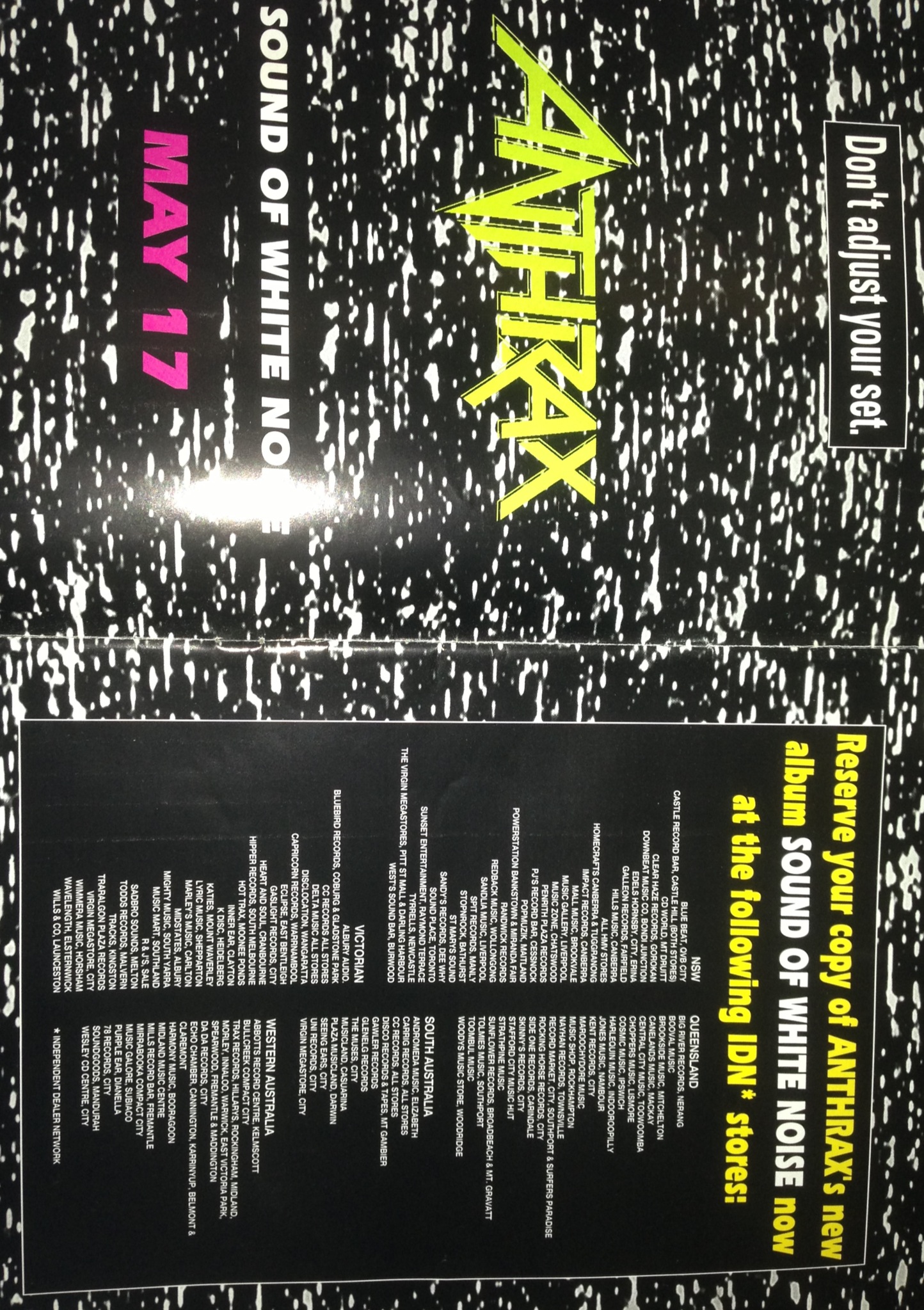
Scott Ian from Anthrax can get his fans to go to all of the stores mentioned above. I trust that none of them are around anymore. It wasn’t piracy that killed them off, it was new technologies and bad business models.

The major chains all could have innovated, however they didn’t. Steve Jobs and Apple did. Daniel Ek and Spotify did.

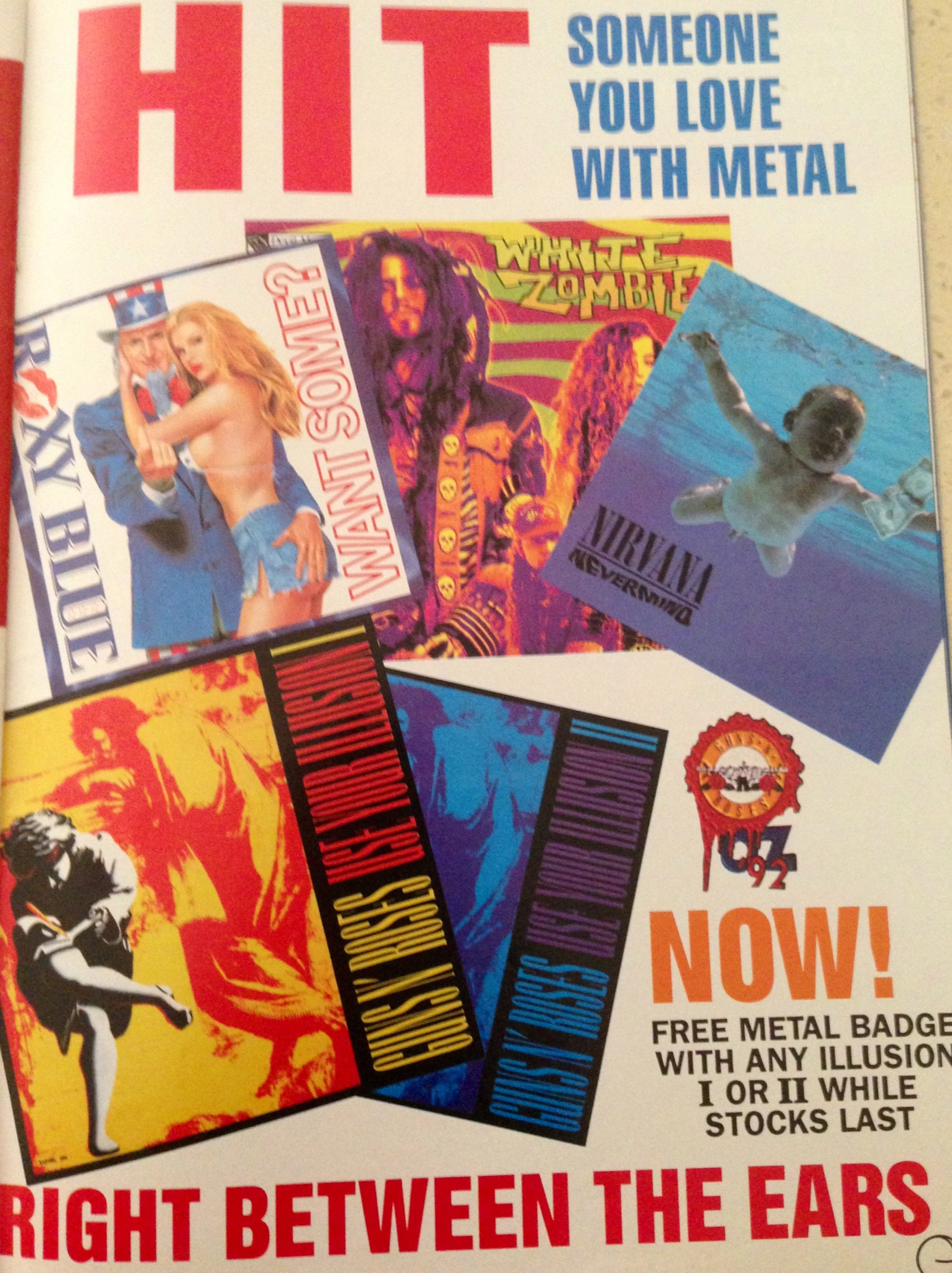
In relation to the record labels. Imagine all the poor artists that were on Geffen Records in 1992. Talk about Geffen hedging their bets. That flyer is promoting Guns N Roses and Roxy Blue (Hard Rock) vs Nirvana (Grunge) vs White Zombie (Industrial Groove Metal). Guess we know who was the loser overall. Hard Rock.

The internet has enabled artists to reach out to wider and different communities than they could in the past. Previously, artists had to connect with people nearby and wait on the record label to spread the word.

However in 2013, many more artists are able to connect and build a fan base by finding and bringing together a unique fan base that is right for them and them alone.

Protest The Hero just did it with “Volition” and their Indiegogo campaign.

Coheed and Cambria did a great job with “The Afterman” releases.

Digital Summer is doing a great job at it as a DIY artist.

Marillion started it off in 2001. With everything there has to be a leader and for fan funding, that leader was Marillion.

The purpose of music is not to make people rich. It was always about the social bonding. If an artist can accomplish the bonding part, then the artist is giving the fan a reason to buy. It is human nature to reciprocate, to acknowledge value.

All those artists complaining, that they are losing, is because they are obsessed with the money they are losing. They have no one to blame but themselves. They are losing money because they no longer are making connections. They are just offering a piece of music up for sale without any connections and relationships. That is the bad way.

Standard
A to Z of Making It, Influenced, Music, My Stories, Piracy, Stupidity, Treating Fans Like Shit

Kirk Hammett = Misguided Fool. We Are Actually Living In The Golden Age of Music Access

The comments from Kirk Hammet have been getting a lot of press/ink lately. They have been re-posted on thousands of other metal news sites by simply copying and pasting what he said.

For those that haven’t read it, this is what Kirk said;

“There haven’t been a lot of really, really great bands that have shown that kind of promise. I think it’s a concern. Because of things like iTunes and streaming and social networking, it’s destroyed music. It’s destroyed the motivation to go out there and really make the best record possible. It’s a shame.”

Okay so lets unpack what he really said.

“There haven’t been a lot of really, really great bands that have shown that kind of promise. I think it’s a concern.”

You see, when you detach yourself from the streets and live in your ivory tower, you don’t see what is happening at ground zero.

Five Finger Death Punch is going GOLD in a tough sales market. They have great numbers in relation to YouTube views and Spotify streams. Their albums have been selling up to the point of when their new one is released. Think about that for a second. Five Finger Death Punch has consistently moved units of their albums every week since 2007. Now compare that to Dream Theater whose new album is already dead and buried after four weeks.

Shinedown are doing super numbers in relation to sales, YouTube views and Spotify streams. They have certifications left, right and centre.

Avenged Sevenfold released a progress is derivative album that is also doing great numbers. In addition, they do super numbers on the live circuit

Black Veil Brides has achieved so much with their first three albums as well as other bands like Bullet For My Valentine, Alter Bridge, Killswitch Engage, Volbeat and so on.

Will we have the superstars of the Eighties and Nineties again? Of course not, it is a different time today, however you can’t tell me that the bands mentioned above don’t have a certain superstar status at the moment.

Will they headline the major festivals? Probably not, because no one really likes festivals any more. The festivals are on their way out. They just don’t know it yet.

“Because of things like iTunes and streaming and social networking, it’s destroyed music. It’s destroyed the motivation to go out there and really make the best record possible. It’s a shame.”

With all the information we get on our favourite artists these days, it makes us realise that our heroes are complete idiots. Kirk just doesn’t understand change. It’s constant.

Kirk’s comments are no different to the comments from other dinosaurs like Jon Bon Jovi, Scott Ian, Duff McKagan, Yngwie Malmsteen, Thom Yorke and David Byrne. Railing against the Internet, Spotify and iTunes and complaining about payments and the lack of motivation to record new music. 

Let’s get one thing clear. Music today can be made for next to nothing. That is why we have so many releases in the market place. Competition for listener’s attention is sky-high. Everybody who records something believes we should pay attention.

Kirk Hammett wants to go back to the Eighties, to a time when bands had to have a record deal to record their music. Kirk Hammett wants fans of his music to buy the whole Metallica album just to find out it was garbage (like ReLoad, St Anger) or for a few songs (like Load).  

If that is the motivation that Kirk Hammett and Metallica needs to record, then they can just give up right now.

It never used to be that way. Metal and rock artists never complained. They always ADAPTED. 

Do you hear Imagine Dragons, Daft Punk, Mumford and Sons, Shinedown, Five Finger Death Punch, Eminem, Halestorm, Killswitch Engaged, Alter Bridge, Slash or Avenged Sevenfold going on a rant about not wanting to make new music or that it is just too tough out there and no one can make it?

Could it be that most people are just not interested in new Metallica music? As Lars said in a Hot Metal interview from June 1992, that I posted earlier. The numbers they are getting for the Black album, will not be eclipsed or bettered.

Could it be that the Napster stigma is still around? The image of Lars Ulrich holding 500 pages of user names that traded in Metallica music is still fresh in people’s minds. 

The comments in relation to streaming are just wrong. Streaming is competing with PIRACY. How is that not good? With Spotify around it just doesn’t make sense to steal. It pays the artist when their music gets played and it pays the artist forever. A sale of an album is just a one stop transaction that inflates the NOW and when you start talking about the NOW, you are thinking like a Record Label.

If Kirk Hammett and Metallica or any artist out there wants to make money from recorded music, they need to find a way to get people to purchase a Spotify Premium account.

Spotify has a mission to have over 20 million premium customers. This will allow artist to take years out to record their masterpieces. Instead of working with the technology, they talk in riddles against it. 

We are living in the golden age of music access. The history of recorded music is at our fingertips and that is a good thing. Finally, there is plan in place to monetize it. If you want to monetize, you need to keep creating.

Standard