A to Z of Making It, Copyright, Music, My Stories, Unsung Heroes

The Week In Destroyer Of Harmony History – October 24 to October 30

4 Years Ago (2017)

ATTENTION

Attention is fleeting.

Attention is there and then it’s gone.

Or it never goes away because fans care about the artist; love what the artists does, their music and their connection to them via social media.

But some of those fans will grow and change and fall out of love with what the artists does.

And what will the artist do to get back their attention.

STREAMING

All the action is in streaming. The oldsters hate it and the youngsters embrace it. 

Personally, I thought all the 80s acts I grew up with would re-enter the charts because streaming would allow them to compete with the new acts. But back in 2017, none of the old acts had hit a billion streams.

Used to be you weren’t a star until you got a record deal and heard your song on the radio.

Then it was MTV. 

Then it was YouTube and now you’re not a star until you see your track in the Spotify Top 50 and just recently your not a star if you don’t have a song with a billion plus streams.

The media keeps pushing stories about the small payments of recorded music to artists and songwriters, however revenues are going up on the back of streaming. If you ain’t making money, get a better deal because streaming will pay you forever.

COPYRIGHT

Copyright issues are always in the news.

The Electronic Frontier Foundation (EFF) was speaking out against the Recording Industry Association of America (RIAA), accusing the RIAA of asking the US government to apply copyright law the way the RIAA wishes it to be applied.

Because if Copyright is there to reward creators then there would no need for the Spinal Tap creators to take Vivendi/ Universal Music to the courts.

Both of these corporations are making up accounting transactions so the creators of the Spinal Tap movie and the soundtrack are STILL shown as being in debt to the studio/label.

Yep, you would pay off a home loan in 35 years, but in 2017, the Spinal Tap soundtrack still had a debt to the studio/label.

And all they wanted to do was take back their copyrights. Because Copyright law was written to allow the creator to take back their copyrights after 35 years.

80’s AND TODAY

80’s
It was hard being a musician
Today
It’s still hard being a musician.

80’s
You wrote and performed music.
Today
You write and perform music, maintain an online presence, manage yourself, promote yourself, have to know your legal rights, organise your own shows, licensing, merchandise and more.

80’s
Artists did the hard work of building up a local fan base, city by city
Today
Artists want to take over the world in an instant.

80’s
The labels and the media measured attention via sales of recorded music.
Today
Well, attention is measured by likes, shares, views, streams, sales of physical, sales of digital, sales of tickets and so forth.

80’s
MTV was king.
Today
YouTube is king.

80’s
To discover new music, we needed to rely on a knowledgeable record store operator, gatekeepers, radio and expensive import magazines.
Today
We don’t know when new music comes out? There is just too much noise. Spotify Release Friday is one avenue. We have Google, YouTube, Bandcamp, Sound Cloud, Spotify, Pandora, iTunes, blogs and many more.

80’s
Gatekeepers decided who would get signed or not
Today
The internet decimated the barrier to entry.

GETTING PAID

Do you wanna get Paid?

The ones who write the songs always get paid.

Sting gets paid for “Every Breath You Take”. He’s listed as the sole songwriter, but the guitar arpeggio pattern created over the synth/bass lines from Sting’s original demo is the iconic part of the song. And it wasn’t written by Sting, but Sting gets the payments.

Ozzy Osbourne gets paid for all of the “Bark At The Moon” album songs as he “supposably wrote” it all by himself.

Bon Scott wasn’t kidding when he said “getting ripped off on the pay” in “Long Way To The Top (If You Want To Rock’N’Roll)”.

But in the 80’s, two things happened to the music scene. 

MTV made artists into global superstars and the CD revolution cashed up the labels while all the fans replaced their vinyl and cassette collections with CD’s.

Suddenly you had record label execs flying private and living in mansions on the backs of monies earned from songs the artists wrote.

Motley Crue almost had their career derailed when Elektra Records refused to promote the band post Vince. They got Vince back and the label still didn’t deliver on promises. Nikki Sixx along with manager Allen Kovacs went into battle. They got back all the rights to the Motley’s songs, left Elektra Records, formed Motley Records, took control of the Motley narrative and re-invented the band to become a commercial behemoth from 2003 onwards.

And we moved from Napster to iTunes to YouTube to Spotify in little over a decade while at the same time MySpace tanked and got replaced by Facebook, Yahoo lost the search battle to Google, video stores lost out to Netflix and Amazon became the one stop shop.

It turns out the public is paying for music. It’s called streaming and if the Spotify royalties the artist is getting are low it’s because not enough people are streaming their songs. Then again, if you are on a label, the label will be taking the lion’s share of the royalty.

And with streaming, every artist is competing with Metallica, Led Zeppelin, The Beatles, AC/DC and the whole history of music.

The power of music is in the song, not the distribution system. And if we are listening, artists will get rich and have more power than they know what to do with. It’s the modern music business.

8 Years Ago (2013)

KILLSWITCH ENGAGE

I was listening to “Disarm the Descent.”

I came to Killswitch Engage late. I didn’t listen to their first three albums.

It was a “Guitar World” issue from 2007. At that time the magazine still came with a DVD of bonus content. One of the bonuses was a lesson from the Killswitch guitarists on how to play “My Curse” and after watching it, I was hooked.

So I asked my bass player friend to burn me all of their albums, which he did.

By the time, their 2009 self-titled album came out; I was purchasing it without even listening to a single note. So free does pay as I became a buyer of their next album.

Sales data can show what is in demand at a certain point in time; however the reach and the popularity of a certain band or a certain album cannot be properly measured until many years later.

Remember that history is written by the winners. In music, the winners are the artists or bands that outlast the competition.

VITO BRATTA

The record labels didn’t have no moral obligation to keep their hard rock rosters in tact. The only obligation they had is to their shareholders and their bottom line.

So with every major label signing bands from Seattle, the poor old hard rock bands that made the labels billions over the last 10 years suddenly disappeared. White Lion was one of them. The label never dropped them, however they would have if the band stayed together.

White Lion finished up because Vito Bratta became conflicted. Disillusioned.

The recording business only cared about short-term income and total control.

Vito wanted longevity and he didn’t like how White Lion was seen as part of the same movement of bands that he was commenting about. He was an artist competing in a game of rock stars. He was an artist competing in a game of profits. With each game, there is a winner and a loser.

By 1991, every artist needed a hit to get recognition. The album format was already dead due to MTV playing the “HIT” video. If a band had a hit single then people were interested in buying the album to see what that band is all about.

This was Vito’s disillusionment. When he made an appearance on the Eddie Trunk show, he said words to the effect like “how do you write a hit single” when he was talking about Big Game, the following up to Pride.

White Lion was never a band that played the singles game, however the industry forced them into it and their main musical songwriter started to second guess himself as a creator.

CHARTS

What do the Billboard charts tell us?

On the Rock and Metal chart we had the following list for the week;

  1. Korn – Paradigm Shift (1 Week on The Chart)
  2. Alter Bridge – Fortress (1 Week On The Chart)
  3. Cage The Elephant – Melophobia (1 Week On The Chart)
  4. Stone Temple Pilots with Chester Bennington – High Rise (EP) (1 Week On The Chart)
  5. Avenged Sevenfold – Hail To The King (7 Weeks On The Chart)
  6. Dance Gavin Dance – Acceptance Speech (1 Week On The Chart)
  7. Metallica – Through The Never (Soundtrack) (3 Weeks On The Chart)
  8. Five Finger Death Punch – The Wrong Side Of Heaven And The Righteous Side Of Hell: Volume 1 (11 Weeks On The Chart)
  9. Dream Theater – Dream Theater (3 Weeks On The Chart)
  10. Rush – Vapor Trails: Remixed (2 Weeks On The Chart)
  11. Asking Alexandria – From Death To Destiny (10 Weeks On The Chart)
  12. Skillet – Rise (16 Weeks On The Chart)
  13. Volbeat – Outlaw Gentlemen & Shady Ladies (27 Weeks On The Chart)
  14. Black Sabbath – 13 (18 Weeks On The Chart)
  15. Bring Me The Horizon – Sempiternal (27 Weeks On The Chart)

Special mention:

Imagine Dragons – Night Visions (58 Weeks On The Chart)

So the above charts show me a few things:

  1. That the fans love new music. There are 5 albums that have their first week on the charts.
  2. After a week, if that new music is not great, we move on very quickly.
  3. If that new music is great, we spread the word and the album hangs around in the “charts”.  Avenged Sevenfold, Five Finger Death Punch, Skillet and Volbeat are a few bands that are hanging around.
  4. If you create a group of songs that connect, expect to be hanging around for a long time. Imagine Dragons is one such band.
  5. Artists need to adapt their business practices. Instead of spending months on an album, just to see it fade away within 6 weeks, they should be releasing more frequently. It doesn’t have to be original songs all the time. It could be acoustic versions, cover versions, unique live versions, blog posts and so on.
  6. Here today, gone tomorrow is the modern paradigm. Artist need to adapt, so that they are here today, everyday.

Expectations (Alter + Adapt) = Survival

So what do all of our favourite bands/artists keep on doing?

They keep on spending a lot of time writing and recording 10 to 15 songs, just so they can group them together and release them as an album.

This “expectation” worked once upon a time.

However it is not working today.

But Metal and Rock artists still have time as metal fans are loyal and still purchase the “album”.

Check out the following comment from Anita Elberse and her book “Blockbusters: Hit-Making, Risk-Taking, And The Big Business Of Entertainment”. It is probably the best advice that any artist will get.

“…out of a total of 870,000 albums that sold at least one copy in 2011, 13 album titles sold more than a million copies each, together accounting for 19 million copies sold.

That’s 0.001 percent of all titles accounting for 7 percent of sales.

The top 1,000 albums generated about half of all the sales, and the top 10,000 albums around 80 percent of sales.

Deep in the tail, 513,000 titles or nearly 60 percent of the assortment, sold fewer than 10 copies each, together making up half a percent of total sales.”

513,000 album titles sold fewer than 10 copies each. So if you are one of those 513,000 bands that sold less than 10 copies, what do you do?

You obviously expected a better return on your investment. A lot of artists will give up, a lot of bands will break up and then there will be a small percentage who will adapt and alter their expectations.

The competition for listener’s attention is huge.

Like the Seventies, the Eighties and the Nineties, there are still only a select few of releases that end up selling more than a million.

And that’s another wrap for another week.
Standard
A to Z of Making It, Copyright, Music, My Stories, Piracy

The Week In Destroyer Of Harmony History – October 17 to October 23

4 Years Ago (2017)

METAL T-SHIRTS

My then five year old had to draw his family in kindy class. In the drawing he had me drawn with a black T-shirt and black shorts.

When they say “Take the Black” in “Game of Thrones”, a metal/rock head says, “pffft, we’ve already done that”.

All though I’ve morphed to plain black tees as I have gotten older, I still break out the metal and rock t-shirts now and then.

When I first got together with my wife, I had a Posion T-Shirt with the sleeves cut off and she had dance music playing in the car.

I asked her if she had anything else.

The answer was no.

I asked her if she would be okay if I introduced some new music in the car.

She said okay.

The next day, I had the rock and metal mix tapes ready for indoctrination.

At first it was the more commercial sounding rock and metal.

Secretly the dance tapes ended up in a draw in my room. It was many years later that she asked what happened to those tapes.

\::/

ALBUMS

I started this post with “Just put out the damn album”.

When we laid out cash for the 10 to 15 albums we used to buy a year, we had time to digest and live with the music for a long time so we were okay with the lead up.

But.

The 8 week lead up to the release is too much these days especially when the LP run could be over in a month after it’s released.

That’s right.

That’s how fast new albums disappear from the conversation in the current environment.

The first week sales that might look great on paper are irrelevant.

Check the second week streaming numbers. Then the third, then the fourth and so on. Those numbers will show you if the fans care for the music or if only the press (that the marketing team has paid to promote your product) cares.

And people will complain about streaming revenue and how it doesn’t pay enough. Control your rights, have a song that people connect with and you will be paid well and forever.

If investment firms are cashing in, it’s because streaming pays. But it pays the organization who controls the rights.

YouTube, Spotify, Apple Music and all the rest will pay forever.

Isn’t that better than the one off transaction between the record store and the fan?

That fan could have purchased the album, taken it home, played it once and traded it.

Maybe that fan played the album a million times. But the artist wouldn’t know that behaviour. 

Data tells us what’s hot and what’s not. And like it or not, it’s always been about the hits. To me a hit isn’t the song that takes the number 1 slot on a chart.

“Fear Of The Dark” or “Hallowed Be Thy Name” or “Creeping Death” or “Fade To Black” or “Master Of Puppets” didn’t set the charts alight but the fans made those songs hit’s. Convert staples.

We don’t live in 1989, where mediocre stuff on the radio gets some traction because of the marketing/hype dollars invested into the promotion. We live in the era of connectivity and virality and hits and streaming that pays forever.

But artists need to release a continuous stream of product to win.

TRIBUTE

It’s my bible.

I played the cassette tape to death trying to learn every riff and lick. And when I couldn’t pick it all up, I shelled out $50 on Wolf Marshal’s transcription of the “Tribute” album and I spent a lot of hours woodshedding to it.

Even though Ozzy re-cut his vocals for the release there is no denying Randy Rhoads and his love for his instrument. The way he re-imagines his multi-layered guitar riffs from the studio versions and turns it all into one definitive guitar cut is brilliant. For any guitarist, new or old, this is it. It gets no better than this.

“Mr Crowley” was the first song I got stuck into. It has two shred leads and the way Randy combined those guitar lines into one definitive track for the “was he polemically” section is brilliant. And the outro lead is just one of those songs within a song lead breaks.

“Revelation (Mother Earth)” has a finger picked part at the start which is breathtaking, the interlude is subdued and relaxing but that outro is breathless. And the live tempo is much better than the studio tempo. 

“Children Of The Grave” was the next song I tried to learn after “Mr Crowley”. I love the way Randy plays the C#m riff on the 4th fret on the 5th string. That’s how I learned this song. It wasn’t until many years later I heard the Sabbath version and Iommi is down tuned to C#.

I must say, I love the tempo of this live version.

And that outro improv lead is brilliant especially when Randy starts to reference Ace ala “Love Gun”.

When I think of “Children Of The Grave”, I think of this.

“Goodbye To Romance” is the piece d’resistance in guitar playing. The jazz like chords in the verses, the arpeggio chorus riff and that guitar solo.

These day’s guitarists can do unbelievable and very advanced things on the guitar but do they have the song sense of Randy Rhoads.

JACK BLACK

My kids back then had been watching “School Of Rock” and “The Pick Of Destiny” on and off, so i did a \::/ salute to Jack Black for spreading his love of rock and heavy metal to the masses.

Because the movies capture what rock and roll is all about;

  • going against the grain, 
  • breaking rules set by the institutions/parents and having fun along the way. 

Let’s make sure it will never be forgotten. 

MY NINTH POST ON THE YEAR THAT WAS 1983

“Back To Mystery City” by Hanoi Rocks was covered. It’s unfortunate that most people know of Hanoi Rocks because of drummer Nicholas “Razzle” Dingley’s death due to being drunkenly driven by Mötley Crüe’s Vince Neil.

All death is tragic. And I remember reading an interview (I think it was in Faces) that if Razzle’s didn’t join in 1982, the band probably would have broken up. And then his death in 1985 ended the band.

“Speaking in Tongues” by Talking Heads is mentioned. “Burning Down the House” sold the album. It was everywhere. One of my hard rock bands in the 90’s even covered the song in a rock context.

“Streets” was the creative musical outlet for Steve Walsh in between his departure from Kansas.

The debut LP was released in 1983 on Atlantic Records. The deal was negotiatied with one manager and destroyed by their next manager after he argued with the President of Atlantic Records, Doug Morris.

So Atlantic just released the albums with no promo and if they stuck, good. But they didn’t stick. And they never released the albums on CD while they controlled the rights.

Steve Walsh even got a lawyer to get the albums back from Atlantic and Rock Candy re-released the Streets albums recently.

So before people beat up streaming, they need to understand how it was back then and the monopoly the labels had to kill or break a career.

The Eric Martin Band released a great melodic rock album called “Sucker for a Pretty Face”.

And I still don’t understand how “Burning” from Shooting Star wasn’t a big hit.

Maybe because they were on Virgin Records, a label known for new wave and running low on funds, so when a rock album landed in their laps they had no idea how to promote.

But the truth is that the bands first managers were stealing from em, so the band fired em.

And because these managers used to work as record promotion guys, they blacklisted the band to the radio stations.

Meatloaf released “Midnight At The Lost and Found” but it was lost as “Bat Out Of Hell” was still selling like it was a new release.

And Aldo Nova was trying to capture the highs of “Fantasy” with “Subject”.

8 Years Ago (2013)

STREAMING

The public has voted. It prefers streaming.

You would think the war is over. But it’s not.

Spotify pays millions to the copyright holders.

Now unless the artist is a DIY artist who controls their own copyright, or Metallica or Motley Crue who own their masters, most of the copyright holders are the major labels. So the labels are raking it in.

There is also a term doing the round, called “Black Box Revenue.” This is the name given to income that the record labels collect that cannot be directly tracked to the recordings of a specific artist.

To put it all into context, streaming services pay the labels an upfront fee to access their catalogues. In addition, the services then pay the labels royalties for each stream.

Yep the labels get paid twice because they “own” the masters that artists created.

Musicians always had to work hard to get somewhere, that part hasn’t changed and it will never change while others fly private on the backs of the hard work of artists.

THE LIES OF THE LABELS

During the recorded music industries heyday, there was this widespread idea, sort of like an unwritten law, that we (the fans of music) could purchase music and own it, the same way we purchased and owned the toaster and any other commodity.

Of course when it comes to music, its never that simple.

What the music fans actually purchased was a non-transferable license to listen to the music under very specific and strict conditions. If you don’t believe me read the fine print.

We basically had the right to enjoy the music in private, over and over again.

METALLICA

I had been re-reading a lot of the magazines I accumulated during the Eighties and the Nineties and I finished reading a story about Metallica from the Australian magazine “Hot Metal”.

It was the June 1992 issue.

And in the interview James Hetfield was talking about the stage design and how they would have an area in the middle of the stage set aside for taping. The fans would have to buy a special ticket for the tape section area and Hetfield saw it as a cool thing to flood the market with bootlegs.

Metallica in 1992, wanted to flood the market with bootlegs. Metallica in 2013 had the following disclaimer on their Live Metallica website “Terms of Use”; Any violation of copyright laws may result in severe civil and criminal penalties. Violators will be prosecuted to the maximum extent possible.

KIRK HAMMETT

Kirk Hammett said that there hasn’t been any great bands “because of things like iTunes and streaming and social networking, it’s destroyed music. It’s destroyed the motivation to go out there and really make the best record possible. It’s a shame.”

You see, when you detach yourself from the streets and live in your ivory tower, you don’t see what is happening at ground zero.

Five Finger Death Punch is going GOLD and PLATINUM in a tough sales market. They have great numbers in relation to YouTube views and Spotify streams. Their albums have been selling up to the point of when their new one is released. Think about that for a second.

Shinedown are doing super numbers in relation to sales, YouTube views and Spotify streams. They have certifications to prove it as well.

Will we have the superstars of the Eighties and Nineties again?

Of course not, but we don’t live in a monoculture anymore.

We are living in the golden age of music access. The history of recorded music is at our fingertips and that is a good thing.

STREAMING vs OWNERSHIP

If I pay $120 for a Spotify Premium account, it means that i can listen to millions of songs.

If I buy $120 worth of songs from iTunes in Australia, I can only listen to 70 songs.

If I pay $120 for CD’s, I can pick up 5 albums with a potential of 50 to 60 songs.

BULLET FOR MY VALENTINE

I’m a fan.

The music that BFMV creates is very reminiscent to the hard rock / heavy metal music created between 1981 and 1986, before Bon Jovi released “Slippery When Wet” and the majority of bands started chasing the pop metal / pop rock “pot of gold”. It is basically the same music that I grew up on.

Metallica – CHECK
Iron Maiden – CHECK
AC/DC – CHECK
Slayer – CHECK
Megadeth – CHECK
Judas Priest – CHECK

Modern influences like Machine Head, Pantera and Metallica “Black” album period are also found in the songs. It’s probably why I connected with the band.

And that’s another wrap for another week.
Standard
Classic Songs to Be Discovered, Copyright, Derivative Works, Influenced, Music, My Stories

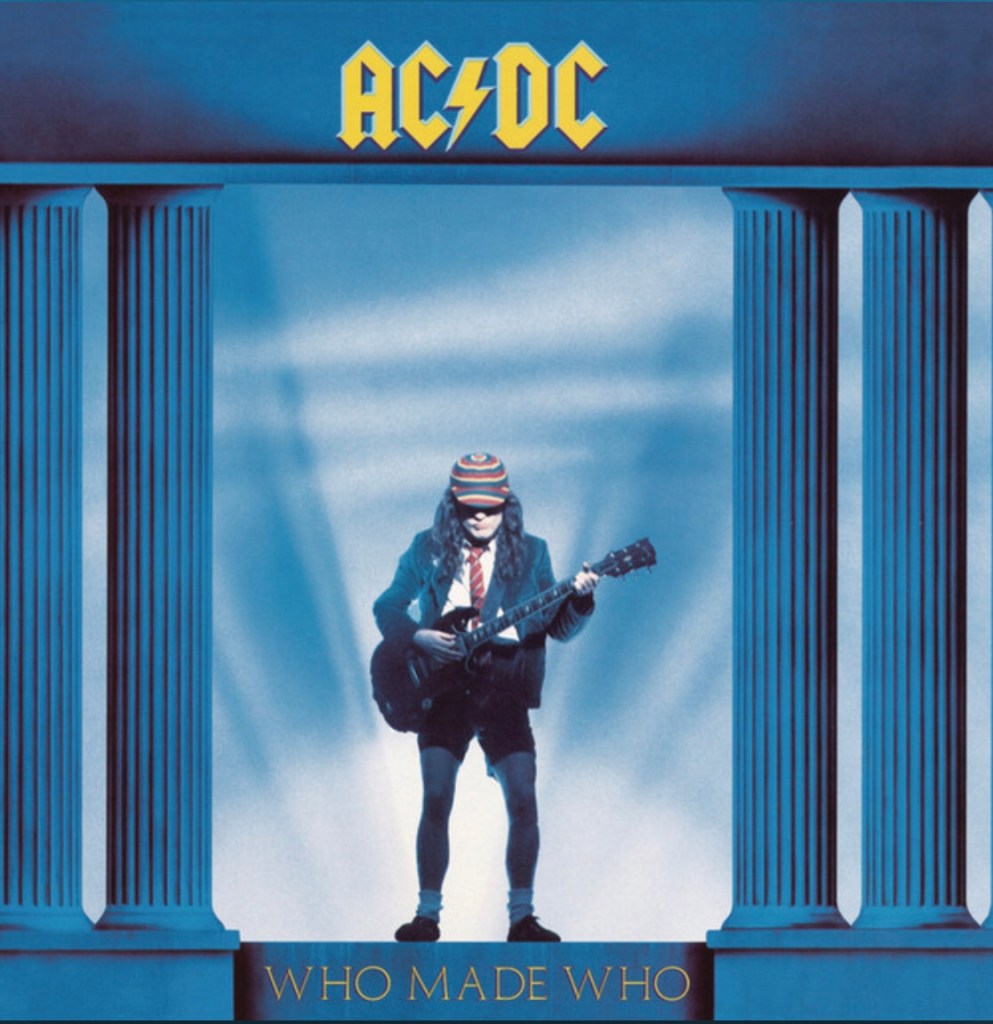
Australian Method Series and 1986 – Part 3.5: AC/DC – Who Made Who

“Who Made Who” is like a Greatest Hits album released as a soundtrack album in 1986, for the Stephen King film “Maximum Overdrive”. A forgettable movie.

The funny thing is that the next Greatest Hits slab would come out with another movie, this one a lot better and having a larger social and cultural impact.

Yep, the multi- billion franchise known as “Iron Man” sent AC/DC into the stratosphere. Not that they needed it.

Both album packages are excellent entry points for people who didn’t own or know about AC/DC.

If this was your first exposure, there would be a high chance that you would go out and buy/access some of the back catalogue.

And the song “Who Made Who” introduced Angus Young the shredder. His guitar work here is at a Shrapnel level.

Who Made Who

Drums and bass from Simon Phillips and Cliff Williams in a stock 4/4 time. I’m already invested.

Malcolm kicks in with some power chords outlining a blues chord progression as Brian Johnson fires in with his throaty vocal melody.

Angus then fired in with some fast palm muted licks which sounds like open string licks, something he’ll use to even greater success with “Thunderstruck”. But it’s all picked.

Check out the lead break. Angus breaks out some EVH like tapping.

Lyrically, it’s based around the themes from the “Maximum Overdrive” movie, where the machines come alive and begin killing people.

Like the “Terminator” movie, the tools that humans create, rise up to obliterate the humans.

You Shook Me All Night Long

From “Back In Black”.

It was re-released as a single after the massive success of “Who Made Who” which gave this song a second coming, not that it needed one.

D.T

It’s an instrumental jam which became soundtrack music.

It moves between distortion and clean tone so it could be used in multiple scenes.

Sink The Pink

From the “Fly On The Wall” album.

This song doesn’t get the love it should but goddamn it’s a great song.

The Intro reminds me of “Rock N Roll Ain’t Noise Pollution” and it has a Chorus chord progression which could be interchanged with almost every AC/DC chorus, and I like it.

At 2.50, the Intro kicks back in, with drums and bass before Angus kicks in with his bluesy lead.

Ride On

From the “Dirty Deeds Done Dirt Cheap” album and Bon Scott gets a spot with this slow blues dirge.

Hells Bells

From the “Back In Black” album.

As soon as the bells chime and the dirty arpeggio riff in Am kicks in, everything starts tingling. It doesn’t matter that I’ve heard it a lot of times. It still gets me.

Shake Your Foundations

Also from “Fly On The Wall”.

Another underrated song from an album that is seen as a disappointment.

You can’t tell me that the Intro/Verse riff isn’t classic AC/DC and a Chorus that almost mimics “You Shook Me All Night Long”.

Chase the Ace

Another instrumental jam session but a bit more aggressive than “D.T”.

Check out the drum groove in the Intro. Something that Lars Ulrich would use to great effect in “Enter Sandman”, which is also based on the “Dirty Deeds” Intro/Verse drum pattern.

For Those About to Rock (We Salute You)

From the album with the same title which came after the “Back In Black” monster.

I was hooked from the opening riff and the way Malcolm and Phil Rudd build it.

Once the slow groove kicks in, it feels that heavy that it’ll destroy everything in its path. And it did.

In Australia and the U.S, it’s 5× Platinum.

And it kept AC/DC relevant in a friendly MTV world which was starting to promote artists who looked great over the music they created.

Standard
Classic Songs to Be Discovered, Copyright, Derivative Works, Influenced, Music, My Stories, Unsung Heroes

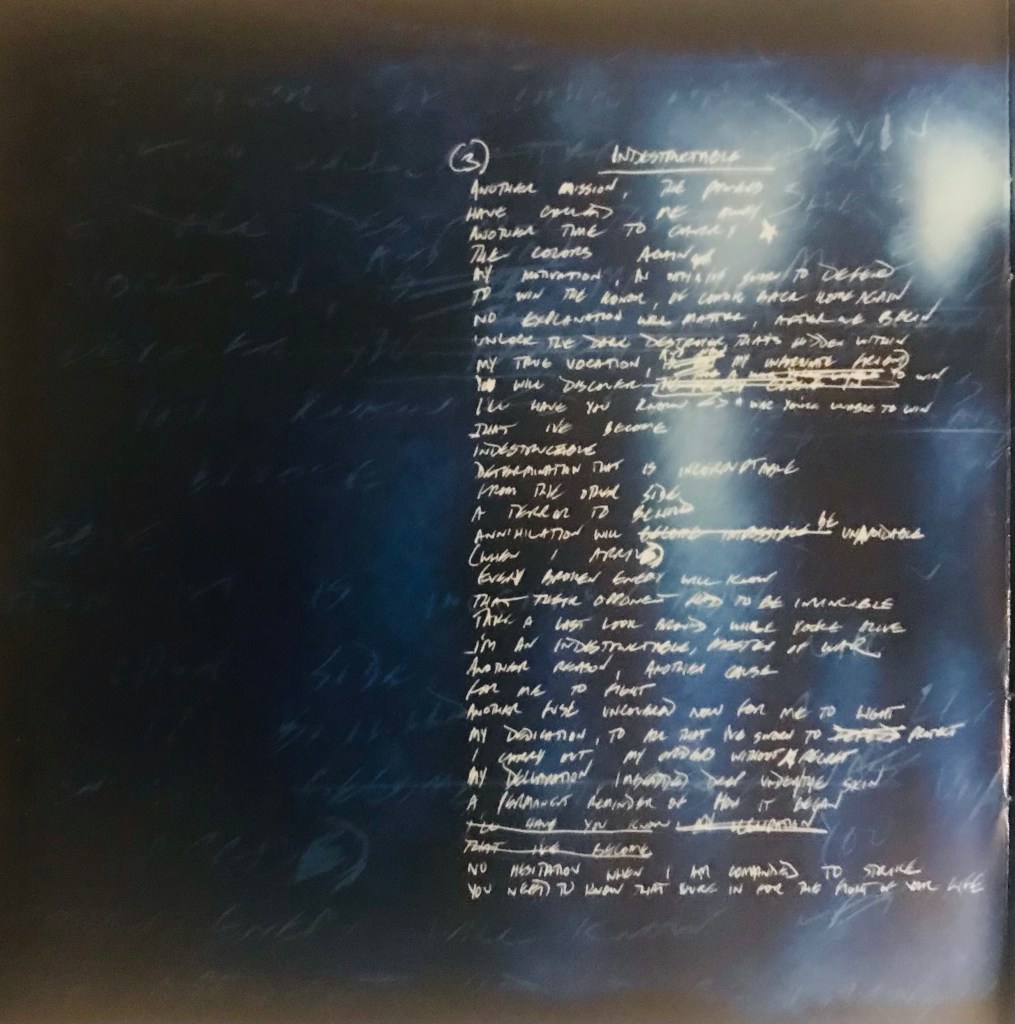
The Record Vault: Disturbed – Indestructible

By album Number 4, the Disturbed brand was bigger than ever. Johnny K was gone from the Producers chair. The deals that artists have with producers means that the producers increase their cut and royalty points with each subsequent album. It’s simple business. Instead of paying someone else, they decided to do it themselves.

Disturbed for this album and all albums after is David Draiman on lead vocals, Dan Donegan on lead and rhythm guitars, John Moyer on bass and Mike Wengren on drums.

Released in 2008, it quickly went on its way of matching its predecessors.

In Australia, Canada, New Zealand and the U.S, its certified Platinum. In Finland and the U.K, its certified Gold. It charted well in a lot of countries.

“Indestructible”

It was called “Defend” before it was re-titled to “Indestructible”.

While it is a hopeful song to the armed forces, it also serves as a reminder to everyone that Disturbed is still here after all these years.

Killer metal groove riff to start the song off.

Check.

Anthemic Chorus.

Check.

Guitar Lead.

Check.

Actually, the guitar lead breaks on the album shows the Guitar Community that Donegan is a lot more accomplished than previously thought.

“Inside The Fire”

It was nominated for a 2009 Grammy Award in the “Best Hard Rock Performance” category.

It’s a disturbing song, which Draiman has explained as “standing over the body of my girlfriend, who just killed herself, and the Devil is standing over me, whispering in my ear to kill myself.”

The guitar starts off before the drums and bass kick in.

The chorus shares some similarities to “Primal Concrete Sledge” by Pantera however Disturbed sing it in a melodic and anthemic way and of course the guitar solo is “Guitar Hero” worthy.

“Deceiver”

Another song about a bad relationship or that person in your life that lies, deceives and takes from you.

“The Night”

The original title of the album and the first song written for it. The “Night” in this song is a living entity that surrounds you and hides you.

How good is the intro to this?

And another anthemic Chorus.

Check out the guitar lead. Donegan moves to a new level here with some serious sweeps and string skipping.

“Perfect Insanity”

It’s pre “The Sickness” as the band thought it would be pretty cool, especially for the fans, if they brought back maybe a song or two, that were actually written during the same period that “The Sickness” songs were written.

Another killer lead break from Donegan.

“Haunted”

A bass and drum groove start the song with the sound of rain and a tolling bell, before the guitar riff comes in, all staccato like and in sync with the bass drum.

“Enough”

The way Draiman sings the Chorus showcases his vocal abilities.

“The Curse”

It’s Disturbed from the first album. There’s a bit of everything here.

“Torn”

Another great lead from Donegan.

“Criminal”

The bird calls are back as Draiman sings “huh, huh”.

“Divide”

Another old song from pre “The Sickness”, it’s like a punk thrash song in the intro, before it moves into a groove metal riff that reminds me of Judas Priest’s “Better By You, Better Than Me” for the verses.

Draiman is telling you to be an individual, make your mark and stand out. Don’t be a conformist within the pack.

“Façade”

The drums are frantic for the closer.

And in the same way that AC/DC plays its standard blues rawk and roll, Disturbed doesn’t really stray too much from a style which has brought them public acceptance.

Metal elitists will always look down on em, but Disturbed have flown the flag of metal for many years in the face of hip hop, dance and other crap styles.

Indestructible they are.

Standard
A to Z of Making It, Copyright, Music, My Stories, Piracy

The Week In Destroyer Of Harmony History – August 16 to August 22

4 Years Ago (2017)

NEW JERSEY

“New Jersey” from Bon Jovi was doing the rounds.

“Slippery When Wet” was written while Jovi and Sambora still lived at home and had a million dollar debt to the record label. The start of the “New Jersey” song writing process began as soon as the band came off a gigantic 18 month world tour with millions to their name.

A double album was demoed and rejected.

Desmond Child was brought in again and a few more songs got written. Other outside songwriters like Dianne Warren and Holly Knight also contributed. The double album then became a single album and months after the conclusion of the “Slippery” tour, Bon Jovi had a new album ready to release and another 18 month world tour on the cards.

In between the tour, Jon escaped to Vegas and got married.

Once the tour ended, Jon the went on a road trip, released a solo album for a movie and achieved even more success. Richie Sambora was left in limbo, picked up the pieces and also released a solo album.

While “Jersey” didn’t have the same sales success as “Slippery”, it is a solid album and the band earned its keep as one of the best live shows.

THE LABELS

Customers of music showed the recording industry what they wanted via Napster. When other services stepped in, music customers showed the labels what choice brings to the conversation.

Choice for fans to decide and make their own decisions and the power to demonstrate what they believe something should be worth.

But the labels ignored it.

It wasn’t until a hardware company created iTunes and then techies created streaming services that customers started to get what they want, digitally.

So are the the record labels and the publishers doing their best for artists in the long term or are they just focused on the short term profits?

Instead of following a path that leads to better standards/outcomes for artists in the long term they seek a litigious path that only benefits them in the short term.

The labels and artists should understand that there are fans who don’t pay for recorded music because they don’t believe they should, however these same fans have no problem coughing up $200 plus dollars for a concert ticket for a larger act and these same fans have no problems coughing up $20 to $70 for independent acts. It’s their choice how they choose to interact with music.

And then there are the fans who have large LP and CD collections, who don’t pay for music anymore, but still pay for concert tickets and what not.

And then there are fans like me who have large LP and CD collections and decided that streaming is the way forward. So I pay for a family account and I have no problems forking out cash for a concert ticket. And I still add to my physical collection when I feel like it and when I see it as worthwhile for my collection.

And then there are fans who have large LP and CD collections who have decided that purchasing physical is what they want to do.
And these fans also have no problem paying for a concert ticket.

The recording industry has never been more powerful. There’s all this crap about piracy, streaming rates and the techies taking over. But the techies make tools, not stories or music.

Life is a struggle for everyone, not just creators.

THE WAY OF THE WORLD

If you risk, you could lose. There’s no safety net in life. And we don’t hear from those who risked everything and failed and now have nothing. Hell, we don’t even know their names. Only the winners get their story told.

It’s a “winner-take-all” economy and we plod on, trying to make it. But we don’t know where to start, so we take all the roads on offer, only to get back to the start.

Making music is great, but making connections is better. It’s the way of the world today.

MONEY FROM THE OLD

Did you know that Book publishers make more than 90% of their profit from books they published years ago. And yet they put 2% of their effort into promoting and selling those books.

Would it be fair to say that 90% of the income that the record labels get comes from music that came out years ago compared to what is new.

The majority of music consumers don’t normally purchase creative content all the time but when they do, they buy what is popular.

It’s the reason why the “Black” album from Metallica still sells. It’s the reason why “IV” from Led Zeppelin still sells. It’s the reason why “No More Tears” still sells. It’s the reason why “Slippery When Wet” still sells.

However we are living in a different era, one controlled by consumers. And the new stuff released by artists is originally purchased by a smaller hard-core super fan group. Much like the 70’s. Then in time as word spreads, people will check out the release and keep it in the conversation. Much like the 70’s.

Recognition doesn’t come on day one or week one or month one or year one. It percolates year after year after year until it boils to the surface. Will you be around to capitalise and monetise?

HOW THE LABELS ROB CREATORS

YouTube tells the world that the service pays more in the U.S for Ad-Supported Streaming than other services like Spotify and Pandora.
The record labels via their lobby group RIAA disagree with YouTube’s math. 

But the record labels and the publishing/licensing companies are the first to get paid. And nowhere in this debate have these organisations mentioned what they get.

But there are thousands of news articles showing what the artists or the song writers get from YouTube streams in their bank account, but the artists are the last ones to be paid, once the labels and publishing companies take their cuts.

But whose robbing who.

8 Years Ago (2013)

TRIAL OF TEARS

“Trial of Tears” is from the “Falling Into Infinity” album released in 1997.

The album is a controversial subject for Dream Theater fans. Some say it is incredible, others say that it was a sell out and others say it’s crap. Mike Portnoy said he hated it, and that by releasing the Official Bootleg of the album on a Double CD format, he felt that he has corrected that hate and given the album its due justice.

If the other members agree with that statement is an entirely different matter.

“Trial of Tears” is a three movement song. John Myung owns this song. His groovy bass lines are all over it and for any aspiring bass player, this is a song that should be in your bible of bass songs to learn.

This song is not the heaviest Dream Theater song however it is one song that has heaps of melody around it. Words can’t describe the emotions this song stirs, so let your ears do the listening and give it the time of day.

LIFEHOUSE

Lifehouse just seems to hang around in my life. Maybe it is because my wife played the “No Name Face” album to death at home and in the car when it came out in 2000. While the lead-off single “Hanging By A Moment” had the traction, it was cuts like “Cling and Clatter”, “Quasimodo” and “Everything” that hooked me in.

“No Name Face” was the pinnacle. “Stanley Climbfall” and the self titled album didn’t even come close. I was starting to lose interest.

“Who We Are” in 2007 got my attention with the sorrowful “Storm”, the soul searching rock of “Disarray” and the Johnny Cash vibe of “Broken” .

Then in 2010, came “Smoke and Mirrors”. Tracks 1 to 8 are top notch. They should have stopped the album right there. It would have been perfection. “Almeria” has the song “Moveonday”, which reminds me of “When The Levee Breaks” from Led Zeppelin.

The rest however pales compared to “No Name Face” and “Smoke and Mirrors”. Crank em.

ZARA

I wrote a little story about what artists could learn from Rosalia Mera the co-founder of fashion giant Zara.

REALITY

Piracy can never be handled with a one size fits all business model.

Piracy is hard to be stopped however it can be competed against. Piracy is a service issue. Pure and simple.

The internet is just another disruptive service to the entertainment industries; like the time the VCR was going to destroy Hollywood. Instead the VCR opened up a whole new ownership and rental income stream for Hollywood. With all new technologies, the entertainment power brokers try to destroy it at first. When they realize that they are going to fail, it then becomes part of the new market. In 2012, recorded music had its first year of small growth. Since then it’s been growing.

And music-streaming services will reduce piracy.

And that’s another wrap for another week.

Standard
Copyright, Influenced, Music, My Stories

The Week In Destroyer Of Harmony History – July 26 to August 1

4 Years Ago (2017)

I was listening to “Promised Land”, which at that time was the new single from the Sweet & Lynch project.

For those that don’t know, Michael Sweet from Stryper joined forces with George Lynch to create Sweet & Lynch. They are supported by one of the best rhythm sections in the business in James Lomenzo on bass and Brian Tichy on drums. Underpinning or financing it all is melodic rock label Frontiers.

Their first album, “Only To Rise” was released in 2014. It’s a great throwback to the 80s style I remember well, but with modern touches and production.

3 years later, they are about to drop the “Unified” album.

The first thing that hooks me from “Promised Land” is the tempo. It’s basically a speed metal song.

A cross between Dokken’s “Lightning Strikes Again” and “Tooth And Nail” in some sections and Stryper’s “The Way” in other sections.

The lead break is one of Lynch’s finest metal moments in 2017. It’s got melody, hammer ons, pull offs, sweep picking and string skipping. All at 140 plus clicks a minute.

Unfortunately “Promised Land” is just another song lost in the 30 million plus songs on streaming services, along with other Sweet & Lynch gems like “Love Stays”, “Me Without You” and “Recover”.

Copyright abuses were pissing me off so I wrote about it.

Ed Sheeran writes songs which become popular. Then he gets hit with a lawsuit because his songs are making money and the family members of a departed artist, or the business entity that owns the copyright of an artist who is departed or has not creating anything worthwhile anymore wants a cut.

If Copyright terms remained how they were originally, this would not be a problem. First, the creator had a 14 year monopoly, with a chance to renew for another 14 years for a total of 28 years. However, once the creator died, all of their works became public property, free to be used by any other artist/creator to create derivative versions. So if the creator passed away during a term, the works ceased to be under copyright and went straight into the public domain.

The British 60’s Rock invasion happened because of these rules.

So who is copyright benefiting once the person who is meant to have the monopoly (the creator) to create works has passed on?

The corporations and estates who control the copyrights of long-dead artists. That’s who.

Frequency is a bad word for rock and metal artists.

Release music frequently is another bad phrase for artists.

It’s a concept artists are struggling with. It’s even more troublesome for bands. The singer/songwriter can make it happen, but for bands it’s a different story.

Netflix wouldn’t be able to grow their subscriber base if they released one TV show every two years?

It’s a streaming world. The youngsters, the ones who replenish the music base are signed up to streaming. And artists who don’t want to be part of the streaming group are still debating the payouts.

The money will come. But you need to control your copyrights so you get maximum royalties. 

The paradigm is different. Your musical output lives online and the money is in what lasts. Success is based upon cumulative streams, not sales of albums, and the streams go on forever.

8 Years Ago (2013)

I watched Dream Theater in Australia on the “Systematic Chaos” Tour and they played for three hours (with an intermission of about 10 minutes in between). For some reason that was perfect, however when I saw them again on the “Black Clouds and Silver Linings” Tour, they played just over 2 hours and it was too much.

And I was confused as to why I felt that way.

I think hitting the same market too quickly and the flow of the set list was the problem. The 2009 show took place almost 12 months since the 2008 show.

They did “Solitary Shell” with extended solos. It is not the strongest song in the Dream Theater catalogue, so what happens when you take a song that isn’t your best and make it longer?

You get a yawn fest, a toilet break or a beer/smoke break.

And at the time did we really need a live album from Metallica?

They had released four DVD packages of Live Concerts during the Death Magnetic tour, as well as the Six Feet Down Under EP’s plus all the stuff they release on Live Metallica.

The saying goes, you need to have lived to create everlasting art.

When Metallica created the “Black” album, the main members were 27 years of age and the producer was 36. Life experiences were on their side.

The main classic rock bands were all about individuality. The Eagles, Boston, Styx, Deep Purple, Black Sabbath, Led Zeppelin, Kiss, Rush, Bad Company, Foreigner, Aerosmith and Cheap Trick all had a unique sound.

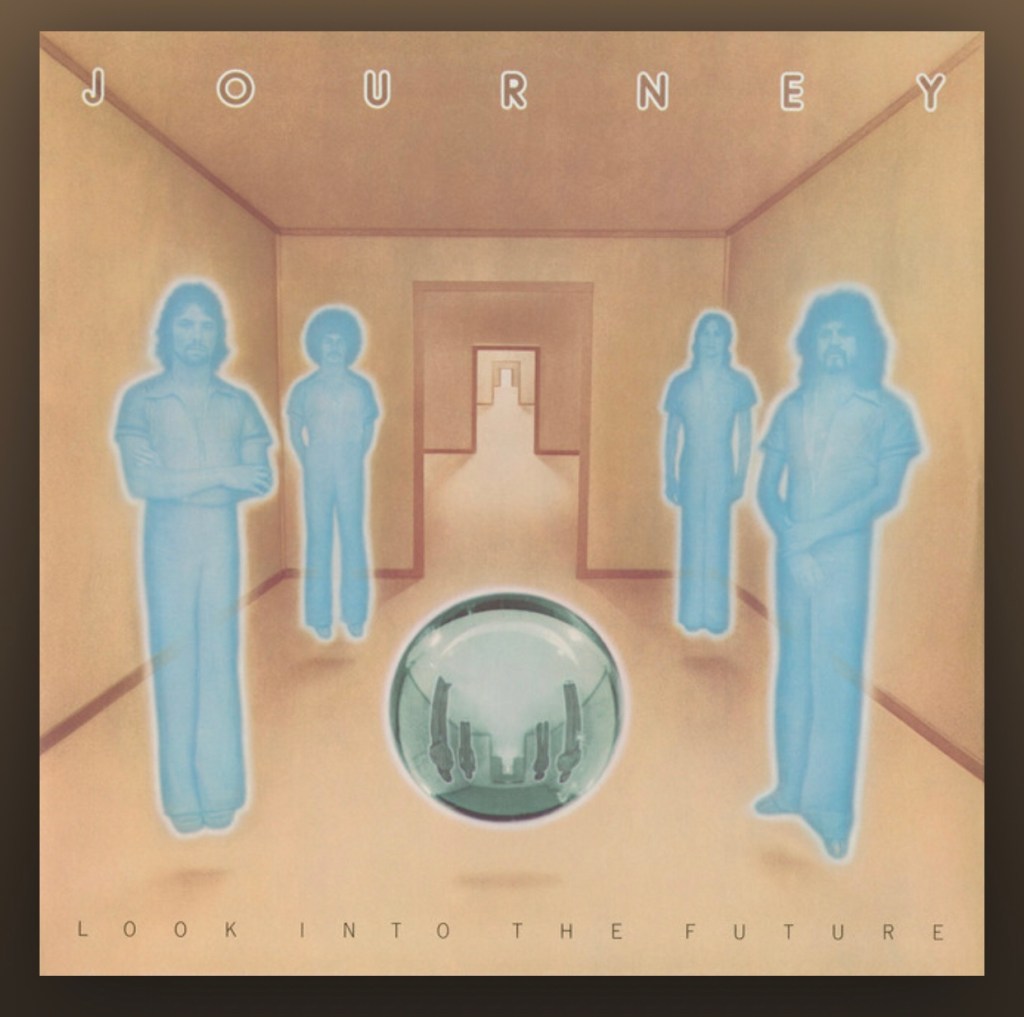
The Eighties gave us Metallica, Motley Crue, Guns N Roses, Bon Jovi, Def Leppard, U2, Duran Duran, AC/DC, Journey, Whitesnake, Van Halen (and yes i know that some of these bands formed in the seventies), Aerosmith again and Foreigner.

Metallica played fast speed metal that was labelled thrash, Motley Crue played a hybrid version of pop, punk, rock and metal. Van Halen wrote the book on the nuclear band, Guns N Roses rewrote the seventies classic rock period with a dash of punk and Def Leppard merged Queen, with Bowie with Mott The Hoople with their NWOBM leanings into a pop rock format. Each band spawned thousands of imitators.

Rush could have recorded a mainstream radio friendly album in 1976 just to please the record label. Instead they recorded “2112”, an album that set up a very lucrative future for Rush and an album that made the record label very nervous when they heard it. As guitarist Alex Lifeson has stated in numerous interviews, “2112” set up a career for Rush.

What happened to the uniqueness?

“Kill Em All” Metallica’s first album was celebrating 30 years in July 2013. At the time of its release it didn’t really set the world on fire, however if you look at the reviews and praises the album is getting now, it is like the album came out and created a movement called thrash metal right off the bat. In other words a lot of revisionist history was taking place.

Let’s put into context the lifespan of “Kill Em All”.

It came out on July 25, 1983. By February 1984, seven months after “Kill Em All” was released, Metallica was in the studio, writing and recording the “Ride The Lightning” album.

The victory lap of “Kill Em All” was seven months. That’s it. If the band wanted to have a career, they needed to get back into the studio and record a new album.

Motley Crue, Twisted Sister and Def Leppard had break through albums with “Shout At The Devil”, “You Can’t Stop Rock N Roll” and “Pyromania”. Quiet Riot’s “Metal Health” was the first American heavy metal debut album to ever reach No. 1 in the United States on the Billboard album charts.

But RNR history is written by the winners. Since Metallica is now inducted into the Hall of Fame, everyone that can put fingers to letters on a keyboard is rewriting their back story.

Bands like Quiet Riot will be written out. Artists like Vinnie Vincent and Jake E.Lee will be forgotten. The impact of other bands will be diminished because Metallica won.

History is written by the winners.

And does anyone know what the Metallica movie, “Through The Never” is about.

Dream Theater were promoting their new album with webisodes which didn’t feature any musical snippets from their new album.

And a listening party which didn’t feature any fans but plenty of writers for Billboard, Village Voice and other media.

Has anyone purchased a Dream Theater album because Billboard Magazine rated it highly or poorly or from a Village Voice review?

The answer would be a definite NO.

Dream Theater built their career outside of the mainstream. It was the mainstream that came knocking on the door for Dream Theater and they let them in.

Remember back in 1991, Metallica had arena sized listening parties for their fans before the release of the Black album.

Connect with fans first and they will support you.

And that’s another wrap for another week.

Standard
Copyright, Music, My Stories, Stupidity, Treating Fans Like Shit

Sacred Copyright

I thought I’ll go with a Dio title for this post since I’m on a Dio kick at the moment.

Ahh, Copyright. A right created for creators to have a monopoly on their creations for a limited time, which was hijacked by corporations (Record Labels, Movie Studios and Publishers) and recently Investment funds.

I’m not a fan of “The Jesus and Mary Chain” but like so many artists before them, they are going to court because their label Warner Music doesn’t want to give them back the rights to their debut album, “Psycho Candy” released in 1985, even though the law states that they should.

This got me thinking about John Waite, who also went to court, because UMG wouldn’t give him back his rights.

And he didn’t win, because on the contract he signed, it was his “loan out company” on the paperwork and not him. Loan out companies are set up by the creator to employ themselves. This gives the artists a lot of tax benefits and when organisations make agreements with the artists, it is via their “loan out company”.

Read this post on CopyrightLately.com for an excellent explanation.

So UMG took the position that Waite didn’t grant them the copyrights, his company did and a company is not eligible to terminate a copyright.

Now for the triple smack down.

Are you ready?

The termination clauses in the Copyright Act, only allow natural persons and the heirs to terminate a copyright, so individuals benefit and not corporations. Yet, it is a corporation like Warner Music and UMG who benefit if the copyrights don’t revert back to the creators.

What a mess?

Waite’s tax-planning vehicle has crashed his termination rights and he had no idea that would be the case when he formed his loan out company.

And while creators are fighting to get back their songs, other creators are fighting to get back control of their brand. The estate of Chris Cornell, which is run by Vicky Cornell, has been controlling Soundgarden’s website and social media accounts. The surviving members of Soundgarden have asked previously for access, but they have been denied and they have not been happy about it.

Vicky Cornell sued the remaining members in 2019, accusing them of withholding royalties to force her to hand over recordings that Chris Cornell worked on before his death. And at the start of 2021, she sued them again over money and then offered to buy out the other members so she could control the Soundgarden brand.

But the change of ownership is a step in the right direction.

Meanwhile, Gene Simmons from KISS has become a lobbyist, making his prophetic lyrics in “Cadillac Dreams” come true. Instead of recording new material, he is meeting with members of Congress to get laws passed so streaming services pay them more.

From the lips of Gene Simmons, “most people don’t realize every time you download a song, the songwriter is making minuscule amounts of one penny”. Umm is he talking about downloads or streams. Two totally different things there. And he goes onto a rant that there will be never be another Lennon, etc., but when you live in an ivory tower, you’re so out of touch, you have no idea what is happening and how much money new artists are making.

New Organisations which come from the labels or the publishers are still rooted in the same crappy innovation ideals of those organisations. So when Congress passed a law to create a new arm to match the unpaid royalties to artists, the first thing the new organisation did, called MLC, is nothing.

Their claim portal for artists to log in and search through unmatched songs and claim the ones they own is still not up and running.

Someone should tell Gene, to lobby this corporation to get the Claim Portal up and running.

So potentially, the unpaid royalties will now sit with MLC for at least 5 years and maybe more, before they even get a chance to be distributed.

But in all honesty, this will be a disaster, because there are a lot of conflicts of interest present when it comes to songs. Ex band members will claim songs out of spite, not because they wrote them.

Meanwhile, Gene’s punching bag, YouTube, paid over $4 billion to the labels and publishers over the last year. How much of that found its way back to artists or songwriters remains to be seen?

And the Federal Court of Australia made Clive Palmer pay even more money back to Universal Publishing, for his recreation of “We’re Not Gonna Take It” into the song “Aussies Not Gonna Cop It”, which he then used in all of his campaign videos across the nation. So instead of paying $150K for a 12 month licence to use the proper song, he has ended up paying $1.5 million in damages plus lawyer fees and what not.

What a dickhead?

And on the topic of dickheads, the major record labels (Sony Music, UMG and Warner) along with the music publishing companies are doing their best to own the title.

There hell bent nuclear strategy to go after internet service providers (ISPs) for the actions of a few users, these organisations have found a way to cut people off from the internet based on a mere accusation of copyright infringement.

A recent court decision in the U.S, has given these organisations unprecedented power and the Electronic Frontiers Foundation (EFF) is doing their best to get this bad decision overturned due to the incorrect instructions the judge had given the jury.

Basically these organisations claim for damages when people use the songs they have the rights for and then they get the courts and the law and the politicians to fight their battles.

Meanwhile, in Germany, the labels, publishers and independent copyright holders have teamed up with the ISP’s to block sites without the need of a court approval.

Each Copyright complaint by a label or TV producer is reviewed by a committee made up of retired judges. Streaming services make up 55% of revenue in Germany and piracy has reduced significantly. However people still seek out P2P services hence the reason why they want this kind of power.

But web-freedom activists are not happy as they believe this kind of power restricts internet freedom. The method here is to attack the services that offer illegal content rather than the users.

As the article in Billboard stated: “In Germany, the legislative environment is heavily weighted against censorship and attacks on internet freedom. Having lived under the Nazi Third Reich and communist East Germany, Germany considers privacy a hard-won freedom.

The power granted to corporations for Copyright Infringements is a form of censorship and for the German people, censorship will never happen again.

Meanwhile Twitch is getting hit with thousands of copyright infringement claims on a daily basis. So the entertainment corporations close down or take down or shake down people and services from trading in pirated works, and then when they use music in their live streamed videos, these same bodies issue infringement claims to take it all down.

Maybe a conversation between Twitch and the entertainment corporations would have resulted in a better outcome.

But that’s too difficult.

Talking, that is.

And remember when Steven Spielberg was trying to destroy streaming services and Netflix in general and he didn’t want Netflix movies nominated for Oscars because the movies that Netflix makes are shown on TV screens. Well Netflix won seven Oscars at the recent Academy Awards and that was more than any other studio.

Well good old Steve knows a good deal, and he just signed up to make movies for Netflix. I guess reality is a slap in the face.

Thank you for your cooperation. A copyright complaint is just around the corner.

And I feel like listening to “2112” from Rush right now.

Standard
Copyright, Music, My Stories

The Week In Destroyer Of Harmony History – June 14 to June 20

4 Years Ago (2017)

I reckon Copyright is a Ponzi scheme and they are using the law to protect it.

Copyright terms are ridiculous.

All of the songs from “Hardwired To Self Destruct” will be in the public domain by 2120 (approx. based on the current terms of life of the creator plus an additional 70 years after death).

Led Zeppelin’s “IV” will be in the public domain by 2110 (approx.).

The crazy thing is the 10 year difference of the estimated public domain date between Metallica and Led Zeppelin, however the albums have a 40 years difference between release dates.

Proof of how much Copyright was hijacked by corporations during the 70s. And while the executives take it in, the artists are left with nothing.

Because the music business has a payment problem.

Artists are constantly fighting to get paid properly.

Promoters don’t pay on time or they don’t pay what is promised. The labels get creative with their accounting and underpay the artists. Then trusted people like managers skim too much and people who didn’t create anything of value are flying private while the artists who created something of value are traveling by road or flying second class.

I was listening to some thrash music and wrote about my fandom of Megadeth and the the year 1986.

In Australia, we have a lobbyist for the MPAA called Graham Burke, who is so good at spinning the piracy argument that politicians believe him.

Burke and his organization “Village Roadshow” are meant to lead the movie business into the new age. But they think by denying that the new age exists they will get back to the old age.

And I was pissed at the broadband rollout in my area because I lost internet access for my whole family for three plus months. But according to Burke, we are all filthy pirates.

8 Years Ago (2013)

I was listening to a lot of Motley Crue and Sixx AM so a Nikki Sixx “What Do Ya Mean I Don’t Write Good Lyrics” appreciation post was written.

I’m no puppet
I engrave my veins with style ….from Dancing On Glass

I was on Team Sambora when Jon Bon Jovi said that if Sambora was The Edge he would be harder to replace. It was a cheap shot from Jon. And since 2013 was the year I experimented with some douchebag posts, you can read one here about Jon. I did others as well.

And the anemic sales figures of artists kept getting publicity, but no one cared about sales anymore except the ones who wanted bragging rights.

I compared 1993 and 2013. From long haired stoner boy to short hair corporate guy. A slave to the grind I had become. And here is its sequel.

Music has been my companion my whole life. And I thought about that while I was watching Australia qualify for a World Cup.

At the end of a football game, music is always played. On the trip home, music is played again via the radio or a playlist or a CD mix. It’s always in my life.

I was surprised that people haven’t heard of Kim Dotcom or MegaUpload.

Kim Dotcom has been painted as a money laundering criminal by the FBI on evidence gathered by the MPAA and somehow he was that dangerous that his arrest needed SWAT teams to break down his door and arrest him in the early hours.

All because he ran a cyber locker that people used to share songs and albums through.

We are exposed to news 24/7. If any musician/artist wants to survive the times, they need to be creating news every day. Because what’s trending today is over tomorrow.

Nintendo designer Shigeru Miyamoto said that Nintendo wants “to create a game that people will want to keep and keep playing for a long time.”

Sort of like our favorite artists and their best works.

I like hard rock. I cannot escape it. And I came across a band called Angeline and their “Life: Volume 1”, EP. They are from Sweden and formed in 1987.

Initially the band was influenced by Bon Jovi, Europe, Iron Maiden and Queensryche.

When the music scene changed in the 90s they reverted to being a cover band. It’s not all about the glamour and the fame. There are highs and lows. Artists do what they need to do to survive.

Standard
Copyright, Influenced, Music, My Stories

The Week In Destroyer Of Harmony History – May 24 to May 30

4 Years Ago (2017)

There are a lot of stories of how the recording industry has been transformed since Napster and most of those stories centered around the losses of income to the record labels. They blamed the technology as its never the fault of the record labels.

Then came iTunes and the purchase of mp3’s became legal, putting money into the labels balance sheets. But the labels still complained.

Then YouTube appeared, then streaming came on the scene in Pandora, Grooveshark, Deezer and Spotify and the conversation shifted to the pennies paid per listen. The labels blamed the technology for the low payments because it’s never the labels fault.

In the end if you are signed to a label, creating music which is being listened too and are not getting paid, your issue is with your employer, the record label.

But it’s never the record labels fault.

“We sound like cocaine” said Bjorn Strid, the singer from The Night Flight Orchestra.

If you read this blog, you will know of my appreciation for The Night Flight Orchestra.

It all started in 2012 with the excellent debut. “Internal Affairs” and it continued in 2015, with “Skyline Whispers” and in 2017, we have “Amber Galactic”, which you can read my review here.

Artist Don Brautigam passed away and I wrote about him here and here.

If you’ve seen the Metallica “Master Of Puppets” or the Motley Crue “Dr Feelgood” covers, then you’ve seen his work.

The album cover is a forgotten art form, but man, it’s an important one. Once upon a time, the look of an album cover would be the deciding vote if a person outlaid their money.

It carried the brand of the band.

It was the first thing that spoke to the music buyer. And as time has gone on, the artists who created some of the iconic covers are never mentioned.

8 Years Ago (2013)

I was listening to Vaudeville. They merge the styles from Muse, Deftones and Radiohead with Hard Rock. It sounds beautiful and original.
And if you want an entry point into the band, check out the song “Restless Souls”.

Will you stand up
And fight against their wrath
Or will you run
Until there’s nothing left

Their first album “Dismantle The Sky” came out in 2009. The next album “Vendetta” came out in 2012, and this is the album with “Restless Souls”. In March 2013, they released an EP called “House of The Rising Sun”.

And after I wrote this post they released “Masquerade Part 1” in 2014 and “Masquerade Part 2” in 2015.

Which I didn’t know about. So I have some listening to do.

Daft Punk entered the charts this week in 2013 at Number 1, moving 339,000 copies of their “Random Access Memories”.

And streaming/digital was king as 65% of Daft Punk’s sales came from digital sources. And I was thinking, why couldn’t metal and rock artists get these kind of numbers.

And Victory Records were in the news again about shitting on artists.

It first began in August 2006, when Hawthorne Heights filed a lawsuit against Victory Records, accusing the label of creative accounting practices, unpaid royalties and for damaging the band’s reputation and relationship with their fans.

In 2011, A Day To Remember also filed a suit against Victory Records for unpaid royalties.

And in 2013, Streetlight Manifesto is telling their fans to not purchase the album from any physical and online retailers and to only purchase merchandise from the band’s website because of their dispute with Victory.

After this post, in 2017, another band called “Darkest Hour” said that they never received a penny from their Victory contract.

And to slap the artists in the face even more, it sold for more than $30 million in 2019 and the artists didn’t get a cent from the sale.

TesseracT is one band that really got my attention and you can read my review of their excellent “Altered State” album here.

Dream Theater announced a “Live At Luna Park” DVD/CD release in February 2013 for a May 2013 release. May was almost at its end and no news had been forthcoming.

Well the release finally came out in November/December of that year.

And people were getting arrested and locked away for copyright offenses. Their jail terms for non violent crimes were longer than violent crimes.

And Police Departments were not doing any investigation of their own. They simple took the evidence of the movie studios and record labels as being true and correct.

Draw The Line” from Disciple was doing the rounds.

This is where I draw the line
This is where the old me dies
Light a match, let it burn, kiss it goodbye
Give it up, what I was, this is where I draw the line

I always like to write posts that highlight how certain songs are inspired by other songs. You can read my post called “The Kashmir Effect”.

And I started a new series called “Classic Album Closing Songs”, thinking it will be a monthly post. And I’ve only done one.

Which actually covered a few albums.

Like “Diary Of A Madman” (1981), “Hallowed Be Thy Name” (1982), “Who We Are” (2011), “S.M.F” (1984), “Shogun” (2008), “Aerials” (2001) and “The Count Of Tuscany” (2009)

And “What About Now” disappeared from the charts and the sales.

Bon Jovi (the band) spent over 5 months recording and writing this album, a few more months promoting it, only to have it do a run of 10 weeks before it disappeared.

From Bon Jovi I went to Megadeth and the lyrics of Dave Mustaine.

And my iPod shuffle was on fire with its selection so I wrote about “Chainsaw Charlie (Murders In The New Morgue)”, “California Morning”, “Crazy Train”, “Caught In The Middle”, “Caustic Are The Ties That Bind” and “Cardiff”.

Well that’s another wrap for another week.
Standard
A to Z of Making It, Copyright, Influenced, Music, Unsung Heroes

The Record Vault: Dokken – Back In The Streets

“Back in the Streets” is a bootleg released in 1989 by a German label who had apparently stolen the demos from Don Dokken back in the day.

Well that demo must have been found because these recordings also ended up on “The Lost Tapes”.

While the songs are written by Don and George Lynch, only Don plays on this album along with drummer Gary Holland at far left, and guitarist Greg Leon second from the left, both former members of the band “Suite 19”. At far right is bassist Gary Link.

But the band members mentioned on the back gives the buyer an impression that George Lynch, Mick Brown and Juan Croucier are actually playing on it.

But there not.

In the bottom writings there is a line which states; “Reminder to Don Dokken for not returning Thomas’ vintage 100 W 4 x 12 Marshall Cab”.

Maybe this is why the EP bootleg was released, as a F.U to Don Dokken?

Even though the band, Dokken had broken up at this point, people were still interested in their music and like me, purchased this as soon as it hit the streets.

Standard