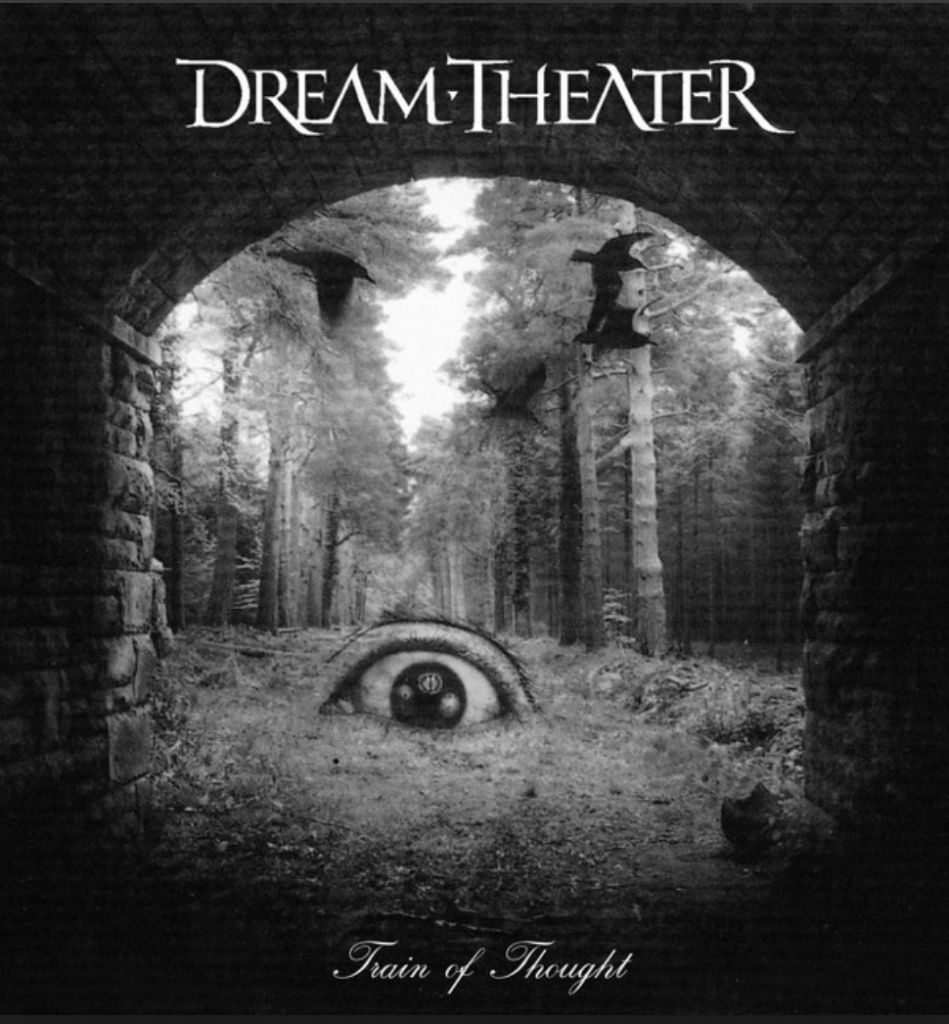
Each Dream Theater album had touched on the sounds that I would class as Thrash Metal and Heavy Metal. But on “Train Of Thought” they decided to live in this metal/thrash world. And I liked it.
It begins with an album cover that has Black as its main colour screaming Metal. Then again, Pink Floyd did have a black cover for an album that sold multi millions and it had nothing to do with metal, more like dreamy acid rock.
“Train of Thought” was released on November 11, 2003 through Elektra Records before its parent company Warner Music Group decided to merge Elektra Records with Atlantic Records to become Atlantic Records Group in 2004, only to give the Elektra name a new lease of life in 2009 as an independent entity up until 2018, when WMG relaunched Elektra Music as a stand-alone, staffed music company, with labels like Roadrunner Records, Low Country Sound, Fuelled By Ramen and Black Cement under it.
As I Am
This song is a balls to the wall metal classic.
It starts off with the Black Sabbath riff to kick it off. Yes, it is that Black Sabbath riff.
Then it goes into an “Enter Sandman” like groove for the verses. It gets the foot tapping, and the head banging.
Dream Theater toured with Queensryche in 2003. At this point in time, Queensryche’s commercial zenith was in the past and Dream Theater’s star was still rising. Mike Stone was the guitarist in Queensryche, carrying out the Chris DeGarmo role. And Stone decided he should give John Petrucci tips on playing guitar.
Every time you hear the lyric line “Don’t tell me what’s in, tell me how to write”, just think of Mike Stone giving Petrucci tips.
I like the lead break. It is old school and it burns. There is no rhythm guitar track, just bass, keys and drums. Exactly what EVH did when he soloed on a lot of VH tracks.
Vocally, LaBrie is at his metal best. His voice might strain in the live arena, but in the studio, LaBrie is a master.
This Dying Soul
The feedback from “As I Am” segues into the fast groove metal of “This Dying Soul”.
Here, Mike Portnoy continues his “Twelve-Step Suite”, which started with “The Glass Prison” on “Six Degrees of Inner Turbulence”.
For those who don’t know, “The Glass Prison” has the following sections; “I. Reflection”, “II. Restoration” and “III. Revelation”. “This Dying Soul” has the following sections; “IV. Reflections of Reality (Revisited)” and “V: Release”. All of the sections are steps in the Alcohol Anonymous Recovery program.
After the thrash-a-thon in the intro, the song gives way to a Tool like groove and vocal melody in the verses. And I like it.
There is this “Blackened is the end” vocal melody in “V:Release”. Once you hear it, you will recognise it. I can’t say I am a huge fan of the loud speaker rap like verses, but I do give full marks for incorporating new elements into their music.
And since these songs are part of the same universe they do share some of the lyrics and melodies.
Endless Sacrifice
The acoustic intro.
It can remind you of Pink Floyd or Pantera depending on your listening history. They touched on these kind of melancholic riffs in “Peruvian Skies” from “Falling Into Infinity”.
But, it is the Chorus that brings the energy.
Then at 4.56, all hell breaks loose as they make their way into the solo section of the song. It’s got this “Creeping Death” meets “Disposable Heroes” palm-muted patterns.
For 8 seconds between 6.28 to 6.36 it sounds like it came from a “Tom and Jerry” cartoon.
Check out the harmony section from 8.58 which gets em out of the solo section and into the final part of the song.
Honor Thy Father
My favourite song for the riffs and melodies. It’s a metal tour-de-force.
The subject matter about Mike Portnoy’s stepfather didn’t resonate with me, but man, the riffs and melodies are fantastic.
After the heavy intro, press play to hear the first verse. And how good is the arena rock Chorus.
When the second verse rolls again, the original riff is played with distortion and man, it works so well. But at 3.51. instead of going into the Chorus again, they go into a verse with the riff tweaked a little bit more to make it sound different and unique.
And like all the songs on the album, from the 5 minute mark they go into a lengthy solo section.
Vacant
It’s the shortest song on the album, at 3 minutes long. It’s a haunting piano riff (which sounds like the bass riff to start of “Stream Of Consciousness”), with a little bit of an orchestra and LaBrie’s vocals.
The lyrics to “Vacant” were inspired by James LaBrie’s daughter, who fell into a short coma after suffering a sudden, unexplained seizure three days before her seventh birthday.
Stream of Consciousness
The DT instrumentals always have memorable sections via a lead or a riff. This song is no different especially the first two minutes. Essential listening.
The title had been around for a while in the DT world.
Of course, the solo from Petrucci is Guitar Hero stuff. Yes, there is flash and some fast picking, but it’s so melodic as well. If you like the playing of people like Steve Morse, Al DiMeola, Steve Vai, Paul Gilbert and Joe Satriani, then you will like what Petrucci does here.
And at 7.30 that fantastic intro music comes back in, more ferocious with a few little tweaks.
The whole is the longest instrumental on a Dream Theater studio album to date and was the intended title for Falling Into Infinity.
And one of the YouTube comments on the song still cracks me, “LaBrie never sounded better”.
In the Name of God
The closer at 14.15 about religion and how it indoctrinates people to kill in its name.
The acoustic intro sets the tone, before the distortion crashes in. It’s a slow groove by Portnoy before they pick it up and play it double time.
The verse riff is head banging and it reminds me of “As I Am”. Petrucci drops out and lets Myung roll with it on the bass, while Petrucci switches to decorating.
LaBrie is a monster on the vocals here. Listen to him between 4.46 and 5.30. Throat ripping stuff.
As is the theme of the album, they then go into a long solo section in the middle of the song.
Press play to hear Petrucci wail between from the 8.40 mark.
The album did exactly what it needed to do. It put them on tour again, it got them into large metal festivals, something which they couldn’t do before and it renewed their fan base with metal heads.
Patience. I’ve never confirmed it or looked it up, but i was told once it’s a French word meaning “to suffer”.
And the memories of being patient, flying 14 hours from Sydney to Doha and putting up with screaming little kids. Thankfully they were not mine.
And since the flights are so long, I caught up on movies like “War for The Planet Of The Apes”, “The Quiet Place” and “I, Tonya”. Then we wait 5 hours, board another plane from Doha to Berlin, I watched “American Animals” and “Hotel Artemis” and checked out the audio section. And pressed play on “Walk The Earth” from Europe, along with “Firepower” and “Turbo Lover” from Judas Priest.
After this holiday I was planning to take in more of the Balkans and the parts of Italy and Austria that surround the Adriatic Sea. This was all planned for 2020. We all know how that panned out.
It’s messed-up when humans experiment on other humans and mess with their lives.
Like when people of influence placed triplets from a single mother into three different families across different states. And in the name of science, they lied to the adopted families when they turned up to observe how the kids were progressing.
I grew up in a steel city and the plan was the same for everyone. Finish high school, get an apprenticeship at the local steel mill, become a tradesman and work until retirement with a nice little nest egg and a government funded pension.
Maybe that worked out okay once upon a time, but as Dylan said, “the times started changing”. The steel mill that used to employ 25,000 back in the mid-70s now employs less than 700. My Dad worked his whole life there, I haven’t worked not one day there. Then again. I was a misfit falling in and out of jobs.
In 1994, Ozzy started jamming with Steve Vai. After writing for a certain period, Bob Daisley was called in. Once rehearsals started, it was pretty obvious that Vai’s style didn’t fit Ozzy’s style. But the Ozzy Camp didn’t fire Vai. They told him that the label was shelving the album.
With Vai gone, Daisley and Castronovo got a phone call a few days after to reconvene with Zakk Wylde on guitar. Daisley then got replaced by Geezer Butler.
Steve Vai’s involvement on the “Ozzmosis” album became limited to co-writing just one song “My Little Man”.
And while the song is credited to Ozzy and Vai, I always had my doubts if Ozzy wrote the lyrics.
So, if Ozzy didn’t write them, who did?
Well, the lyrics came from the great Lemmy Kilmister.
Yep, Lemmy wrote the lyrics about his son Paul. But Ozzy told everyone he wrote the lyrics about his son Jack.
All of the debates about intellectual property and how it’s valuable and how copyright protects the writer. It’s bullshit. The real writer is not even credited.
Copyright is a mess and the Copyright’s for Ozzy’s songs are even messier. Much like how Jake E. Lee and Bob Daisley got shafted for the “Bark At The Moon” album.
Dynazty came onto my radar in 2016. Actually I heard of em a few years before but avoided them because of the band name, thinking they would sound like Kiss, and why did they spell it with a ‘Z’.
They exist completely off the mainstream radar screen, doing their thing and building their catalogue of songs. And eventually, people will notice. But it takes time. I’m a fan and I don’t even know who the members are in the band.
How is that possible?
It’s so far removed from the label gatekeeper 80’s/90’s model. But in the new streaming era streams are more important than sales and people are listening. Music is a lifers game. You’re either in it for life or it’s just a passing hobby.
It’s the best live album out there and it was my first exposure to Iron Maiden. It’s also a pretty good reason why I didn’t feel the need to buy the first four albums until later on.
At the time I didn’t know it, but the tempo of the songs are just a bit quicker on the live album compared to the recorded versions and I’ve grown to know the songs at those tempos. If you don’t believe me, compare the two “Hallowed Be Thy Name” versions.
And I heard Bruce Dickinson sing the DiAnno era songs first, and because of this I can’t get into the DiAnno versions. But i do like them.
This album is also the reason why I purchased a ticket for each of the two Sydney shows on the “Somewhere Back In Time” tour of 2008.
Maiden did find gold again with the “Rock In Rio” release. Especially the DVD. And on this release, Bruce brought to life songs from the Blaze fronted era.
I also purchased the DVD for “Flight 666” which I rank as Maiden’s third best live album and a great memento for the two nights I watched em perform the same set.
“Vaxis – Act I: The Unheavenly Creatures” was the new album in 2018. Another concept album.
My first concept experience was “Operation Mindcrime” from Queensryche, then “The Crimson Idol” from WASP and then “Streets: A Rock Opera” from Savatage. But Coheed take “concept” to another level, with more or less each album except one being part of a concept story called “The Amory Wars”.
Here is my quick summary. There are far more detailed versions out there.
A scientist called Sirius Amory discovers an energy source called “The Keywork” is made up of souls who haven’t transcended. This happens on “The Afterman” album.
Many years later, a person called Wilhelm Ryan starts using the energy of the Keywork to murder and rule. Coheed and Cambria are humanoid robots created to destroy Ryan. Along with a person called Inferno, who also is a robot, they attack Ryan’s fortress and manage to destroy it. Ryan survives, however Coheed and Cambria think he’s dead. Thinking it’s over, their memory is wiped. This happens on “The Year Of The Black Rainbow”.
In “The Second Stage Turbine Blade” Coheed and Cambria get killed and their last surviving son, Claudio, is left to take up the charge. I’m still not sure how humanoid robots have children. But the recent Bladerunner movie also has this story arc.
Claudio finds out that he’s like the chosen one in “In Keeping Secrets Of Silent Earth”.
In “Good Apollo, I’m Burning Star IV, Vol. I: From Fear Through the Eyes of Madness” there is a character called “The Writer” that starts to mess up the story because he’s going through a relationship break up. It reminds me of the Matrix characters “The Keymaker” merged with “The Architect”.
In “No World For Tomorrow”, Claudio destroys the Keywork and releases the trapped souls. And the new album “Vaxis – Act I: The Unheavenly Creatures” takes place after this event.
“Overcome” made All That Remains (ATR) accessible to me, and I’ve been a fan since.
The first track “Before the Damned” started blasting out of my headphones. Musically it’s excellent. While the death metal vocals happen in the verses, the Chorus is Arena Rock.
At 2.04 we get this head banging metal breakdown and the solo begins at 2.09 over that same head banging breakdown riff. The solo is chromatic and diminished, in the same way Randy Rhoads shreds on “Diary of a Madman”. This concludes at 2.19. It sounds dissonant and atonal.
And the main man behind the guitar is Oli Herbert. A great guitar player, founding member of All That Remains and songwriter who passed away at 44.
It’s a track that Oli Herbert (RIP) co-wrote for Dee Snider’s solo album “For The Love Of Metal”. The other writers are Charlie Bellmore, Nicholas Bellmore and Jamey Jasta.
When I hear a song I like, I seek out more songs from the same artist. And I repeat the cycle with different artists. It’s how I got into music. It happened to me in the 80s.
When I heard Motley Crue, Quiet Riot, Van Halen, Twisted Sister, Iron Maiden, Ozzy, Kiss and Judas Priest, I didn’t think for a second that these bands would have had influences.
I never understood the debates over Kingdom Come in the 80’s until well into the 90’s when I started seeking out bands from the 70s and started to pay real attention to Led Zeppelin. Then I had that “ah ha” moment and I understood why Kingdom Come were labelled copycats.
I remember when I first heard Aerosmith and Whitesnake. It was in 1987 and I had no idea these bands had a long history dating back to the Seventies.
The beauty of music. I listen, I get moved by the listening and I start to explore.
What a solo from Slash! Actually, two solos. But it’s the middle one that hooks me. And yeah, it might sound like an Alter Bridge song, but that solo is 100% pure grade Slash.
I’d never seen pictured vinyl before, well Utopia had them. I’d never seen 12-inch singles of metal bands before, well Utopia had them as well. And those yellow and black plastic bags with the logo and branding proved to be a badge of honor. It’s like we got patched into the club the same way bike gangs’ patch in their members.
The first location was in Martin Place from 1978 to 1980 and the second location in Martin Place was from 1980 to 1990. It was this second location that I first visited. From 1990 to 1995, they moved to Clarence Street, Sydney, not too far from the original shop. I waited in line for a Sepultura meet and greet because my cousin Mega was a fan of the band. He took in his battered snare skin for signing. Even Igor the Sepultura drummer, was impressed at the brutality of the snare skin.
Hours would be spent here, and some big decisions would be made as to what to buy between my cousin and me Then as soon as we got back to my cousins house, I would dub the records he purchased, and he would dub the records I purchased.
From 1995 to 2001, they moved to George Street, Sydney next to Hungry Jacks and then from 2001 to 2006 they moved across the road under the cinemas. The bigger Utopia got, the uniqueness culture it created for metal heads got lost.
The last time I walked into Utopia was at an address on Broadway in Sydney. They occupied this store between 2006 to 2010. But during this time, they did things differently by having live bands in store and battle of the band’s contests. They kept it going. They kept the name in the conversation. From 2010, they have been at their Kent Street address, and I haven’t been. But I have purchased items online. And I will return one day, because that’s what us Metal fans do.
Debates and arguments never cease when it comes to Piracy.
I became a fan of a lot of bands because of pirated material. Bands like Trivium, Coheed and Cambria, Shinedown, In Flames, Evergrey, Killswitch Engage, The Night Flight Orchestra and Corroded just to name a few. And I had no qualms paying ticket prices if these bands came to town.
High profile bands from the Eighties also had a renaissance in the 2000’s because of pirated material. Motley Crue, Metallica, Guns N Roses, Iron Maiden, Twisted Sister, Megadeth, Judas Priest, Europe and Whitesnake come to mind immediately. Provided they still wanted to work together. Bands like Skid Row, Ratt, Warrant and Dokken unfortunately missed out because key members hated each other.
It’s a pretty simple business model. Have your music available worldwide for free and people will access it.
All of those bands mentioned above have played cities they’ve never played before and to crowds larger than before. They played these cities without selling any real recorded product in those cities. I can tell you that in Eastern Europe, I did not come across a legitimate music shop. The few shops I did come across (and I use that term loosely) sell rips of albums.
Adrian Vandenberg came to my attention from his tenure in Whitesnake (when he and Vivan Campbell) replaced John Sykes. However, Vandenberg was David Coverdale’s first choice for the lead guitar slot, however Vandenberg turned the gig down to focus on his own band and John Sykes was given the gig instead.
Click on the link in the tile to read my compendium of Adrian Vandenberg classic songs and riffs which covers his projects from 1983 to 2014.
Since then, he has released three Vandenberg’s MoonKings albums with the self-titled debut (2014), “MK II” (2017) and “Rugged and Unplugged” (2018). And then after he was allowed to use his name again as a band name, he released the excellent ‘2020″.
Since I was on a Whitesnake journey, click on the link in the tile to read my John Sykes compendium which covers his career from “Tygers Of Pan Tang” all the way to his solo career in the 90’s. But while Adrian Vandenberg re-entered the recorded music market in 2014, John Sykes has been absent since 2001, with only a few YouTube videos appearing in the last 5 years.
The music of Jimi Hendirx should be in the Public Domain. When Hendrix wrote the songs, Copyright Law at the time was for a total of 56 years (which involved a 28-year term initially and provided the artist renewed the registration, they would get another 28 years). But laws passed in the 70’s retroactively placed these recordings under new laws which meant, 75 years after death. Basically, it will not enter the public domain for another 20 plus years.
Remember when a Jimi Hendrix Biopic called “Jimi: All Is By My Side” came out and it didn’t have any original music from Hendrix. Well, the Jimi Hendrix Estate denied all attempts to license the music unless they had control over the story line of the movie. The producers felt that this would not gel well with their vision so what the public got was a movie where the actor who plays Hendrix is performing cover songs of other bands.
Volbeat in 2014 just kept getting RIAA Certifications.
It showed the music business that “Recognition Comes Much Later” for Heavy Metal bands. Volbeat entered the mainstream American market ten years after they formed. It also showed the Heavy Metal community that “Streaming Is Not The Enemy” as Volbeat’s streaming numbers are in the multi-millions for certain songs.
Yngwie Malmsteen released four good albums in “Rising Force” (1984), “Marching Out” (1985), “Trilogy” (1986), “Odyssey” (1988) and two average albums in “Eclipse” (1990) and the big budget “Fire & Ice” (1992).
And here he was in 2014, shooting his mouth off with statements like “no new guitar players” and “no new good music”.
Australian Music is ALWAYS a rich vibrant scene. And it is a scene that is underpinned by independent artists. Financially it is a miserable livelihood however the emotional experience is rewarding. And there is no escaping that Australian Independent artists are some of the hardest working artists around and also the lowest paid members of the Australian workforce. The sad thing is that the elite levels of Government have no idea about the independent artists. Any Government funding goes to the large Industry bodies who don’t really disperse the monies to the artists doing the rounds on the streets.
Independently minded musicians and label owners are the ones that are pushing boundaries in music because they want control over what’s being released, when it’s released, and how it’s released. And they are not afraid to use the major labels when it suits them, but ultimately they’re calling the shots.
For a musician it is an exciting time to be a part of the music scene. Especially if you are an indie.
It’s June 1993 and I am flicking through the new issue of Hot Metal Magazine, which at the time was Australia’s premier metal and rock magazine. On the cover there was the John Bush fronted Anthrax.
“The Sound Of White Noise” got 5 skulls in the magazine review, which equates to ‘KILLER’. A few months after its release the album was certified GOLD.
Then you have the bloodbath from the Eighties scene.
Jani Lane (RIP) and Warrant had split and both acts had their contracts reduced to demo deals. Imagine that. You had three albums that had moved 500,000 plus units each, and they ended up on the scrap-heap. Kik Tracee also split with vocalist Stephen Shareaux (bet he wished he tried harder for that Motley Crue vocalist spot) and both of them had been reduced to a demo deal.
Meanwhile Rowan Robertson from “The Lock Up The Wolves” Dio era inked a deal with Atlantic Records for his new band that had Oni Logan from Lynch Mob on vocals. We all know that this didn’t end up going anywhere.
While, Roberston’s former employer, Dio (RIP) was working with WWIII guitarist Tracy G after his “Dehumanizer” venture with Black Sabbath went sour. These sessions would go on to create the “Strange Highways” album while Jake E.Lee was working with WWIII singer (and I use that term loosely) Mandy Lion.
Reports coming through at that time spoke about the new Bruce Dickinson solo album being an “updated, toughened up Santana vibe with a heavy leaning towards Peter Gabriel type atmospherics and experimentation.” That album would become “Balls To Picasso” and apart from the song “Tears Of The Dragon” which sounds like an Iron Maiden song the rest of the album was a listen best avoided.
On the drug front we had David Lee Roth getting busted in New York after purchasing a $10 bag of weed. Seriously, for someone like his stature surely he could have done it more discreetly or gotten that $10 bag delivered to the studio. However, Roth is Roth and he decided that he should go out into the town and look for a dealer. On the other drug front, there was news that started coming out about Tim Kelly (RIP) from Slaughter who was alleged to have been involved in a major drug smuggling ring that was busted after a five-year investigation by the F.B.I.
Then we had the Motley Crue vs Vince Neil shenanigans.
The Vince Neil “Exposed” album got a good review in the magazine. I suppose it was inevitable that the solo album from Vince Neil would sound a lot like Motley Crue, even though NIkki Sixx insisted that Vince Neil had nothing to do with the creation of the songs in Motley Crue or the Motley sound. I think Nikki Sixx missed the memo that the actual voice plays a big part in the sound. Credit music business vet Phil Soussan for delivering a stellar performance in the song writing department that helped kick-start Vince’s solo career.
So I am flicking through an old issue of Guitar World that goes back to September 1991 and there is a D’Addario ad with the title “Young Guns II”. Read the post to find out what happened to these “Young Guns.”
I watched the Metal Evolution Glam Rock, Thrash and Grunge documentaries a few nights ago. When you play “The Trooper” as your intro riff to the series, how can you not like it.
If it wasn’t for “Sonic Temple” from The Cult and “Dr Feelgood” from Motley Crue there would be no such thing as the “Black” sound and the millions of metal bands that the Metallica album spawned.
Franke Banali the drummer from Quiet Riot cracked me up with his assessment of Edward Van Halen “the name sounds like a painter”.
It’s good to see Spencer Proffer get recognition for his idea of trying to find a band to record “Cum On Feel The Noize” from Slade. It was a game changer for Quiet Riot even though they resisted it.
Then you have the big heavy metal day on the 1983 U.S festival. It was a game changer for the LA scene and for metal in general.
John Kalonder was hilarious. When he spoke, I couldn’t stop laughing. He sounded like that baddy voice over dub in the movie “Kung Pow”.
And it was a time of excess. If Tawny Kitaen is to be believed, then the 1987 Whitesnake album cost over $2 million dollars to record and produce.
Dunn’s reporting of the “Guns N Roses Effect” on glam rock spot on. Glam Rock died because it got over saturated with inferior bands, along with Gunners showing up the movement with their nod to Seventies classic rock. When Grunge came along with its nod to 70’s bands and punk rock, it offered an alternative to the clichéd glam rock styles and lyrics.
“Bang you Head.”
And that’s a wrap for stories posted back in October, 4 Years and 8 Years ago. Next up are stories posted in November during the same period.
The debut album from Heart, released in September 1975 for all Canadian music lovers via Mushroom Records. It then got a U.S and international release in 1976.
The band for the album was made up of Ann Wilson on lead vocals, Nancy Wilson on electric and acoustic guitars, Roger Fisher on electric guitars, Howard Leese is on a lot of different instruments, Steve Fossen on bass and Mike Derosier on drums for two songs, with Dave Wilson, Duris Maxwell and Kat Hendriske providing drums on the other tracks.
Mike Flicker is producing. As Heart got bigger so did Flicker’s career.
But the Heart story doesn’t just start in 1975. It goes back almost a decade.
In 1967, bassist Steve Fossen formed the band as The Army, along with Roger Fisher on guitar, Don Wilhelm on guitar/keyboards and lead vocals, and Ray Schaefer on drums.
In 1969, the band went through some line-up changes and took on a new name, Hocus Pocus. Between this period they took on the name “White Heart”.
By 1973, the band was Ann Wilson on vocals, Steve Fossen on bass, Roger Fisher on guitars, Brian Johnstone on drums, and John Hannah on keyboards and they had taken the name Heart.
Ann’s sister Nancy joined circa 73/74 and the sisters quickly established themselves as the main songwriters.
Magic Man
A simple groove and Ann Wilson’s iconic voice. It’s almost psychedelic and progressive.
Dreamboat Annie (Fantasy Child)
It’s a dreamy acoustic arpeggio riff to begin with, before it morphs into some serious acoustic folk rock playing from Nancy Wilson.
Crazy On You
Press play to hear the riff and the infectious vocal melody. This is what Hook City sounds like.
Soul Of The Sea
Another dreamy washy acoustic guitar riff forms the centrepiece. Almost “Albatross” like. The structure of verse and chorus is not here. It feels like verses and various gateways to progressive like movements, more mood and atmospheric like than a million notes per minute.
Dreamboat Annie
Flamenco like acoustic arpeggios are its foundation.
White Lightning And Wine
Its greasy and sleazy blues.
Love Me Like Music (I’ll Be Your Song)
Country folk rock. Even in the title.
Sing Child
Press play to hear the intro riff.
How Deep It Goes
More dreamy/smoking weed acoustic folk rock.
Dreamboat Annie – Reprise
It continues with the dreamy acoustic guitars. Campfire folk rock.
In the end, the standout track here is “Crazy On You”. It’s melodic rock at its best. Then press play on “Magic Man” for its rock groove and vocal melody. If you are still interested, crank the blues rock of “White Lightning and Wine” and finish it off with the dreamy trilogy suite of “Dreamboat Annie” songs.
In Australia, the album went Gold. In Canada in went 2x Platinum and in the U.S it went Platinum.
The success of the album indirectly led to a break between the band and label.
The band tried to renegotiate their royalty rate to be more in keeping with what they thought a platinum band should be earning. Mushroom wasn’t interested so instead of paying the band more in royalties they used the money earned from the band to take out a full-page ad in Rolling Stone, to mock the band, with a special dig to Ann and Nancy Wilson.
Not long after the ad appeared, a radio promoter asked Ann about her lover; he was referring to Nancy, thus implying that the sisters were incestuous lesbian lovers. The encounter infuriated Ann who went back to her hotel and wrote the words to what became one of Heart’s signature songs, “Barracuda”.
The band then signed with Portrait Records.
But Mushroom wasn’t done yet. It’s a big no-no in label land to let an act leave and make money with another label. So Mushroom said that the band was still bound to the contract, which meant they had to deliver two more albums. The band refused and Mushroom released “Magazine” with incomplete tracks, studio outtakes and live material and a disclaimer on the cover in 1977.
The band got a federal injunction to stop distribution of the 1977 edition of “Magazine”. Most of the initial 50,000 pressings were recalled from stores. The court eventually decided that the band could sign with Portrait, however they did owe Mushroom a second album. The band returned to the studio to re-record, remix, edit, and re-sequence the recordings.
“Magazine” was re-released in 1978 and sold a million copies in less than a month.
P.S.
Mushroom Records went bankrupt by 1980 although an Australian arm of Mushroom did survive well into the 2000’s.
There is no denying their cultural impact with this album and subsequent re-success in the decades to come.
Before “Arrival”, they had traction, and after “Arrival” they had global success. And it’s all on the back of a few singles.
“Dancing Queen” was everywhere in the 70’s and again in the 90’s and beyond with “Mamma Mia”. In Australia, there was a local film called “Muriel’s Wedding” which was a big hit.
It centered on Muriel, her favorite band ABBA and how all she wants to do is to get married.
So the music of ABBA forms the backbone of the film’s soundtrack.
Songwriters Bjorn Ulvaeus and Benny Andersson allowed their use in the film and permitted “Dancing Queen” to be adapted as an orchestral piece. Additional ABBA songs included are “Mamma Mia”, “Waterloo”, “Fernando”, and “I Do, I Do, I Do, I Do, I Do”.
ABBA only gave permission for their music to be included in the film two weeks before shooting commenced and the filmmakers were considering changing Muriel’s favourite band to “The Village People”.
“Knowing Me, Knowing You” is the embryo of melodic rock. Pianist Benny Andersson said it was one of their five best recordings. Pay attention to the harmony guitars from Bjorn Ulvaeus.
“Money, Money, Money”, I had the 7 inch single and it was another hit.
How good is the music?
Almost theatrical yet melodic with a bit of classical and gypsy chucked in.
“Fernando” was a hit in Australia, spending almost three months at Number 1, but I’m not a fan of it.
In Australia, this album was huge but like all of their albums in the 70s they didn’t sell in the multi-millions. That honor goes to their “Greatest Hits” album from 1993 that sold in the multi millions.
Dream Theater was redeemed. Their previous album “Scenes From A Memory” renewed their fan base while also satisfying the existing fan base.
I was interested at what was next.
A double album. This is something the band tried to do with “Images And Words” and “Falling Into Infinity” however the label both times said “no”. But this time around, they said yes.
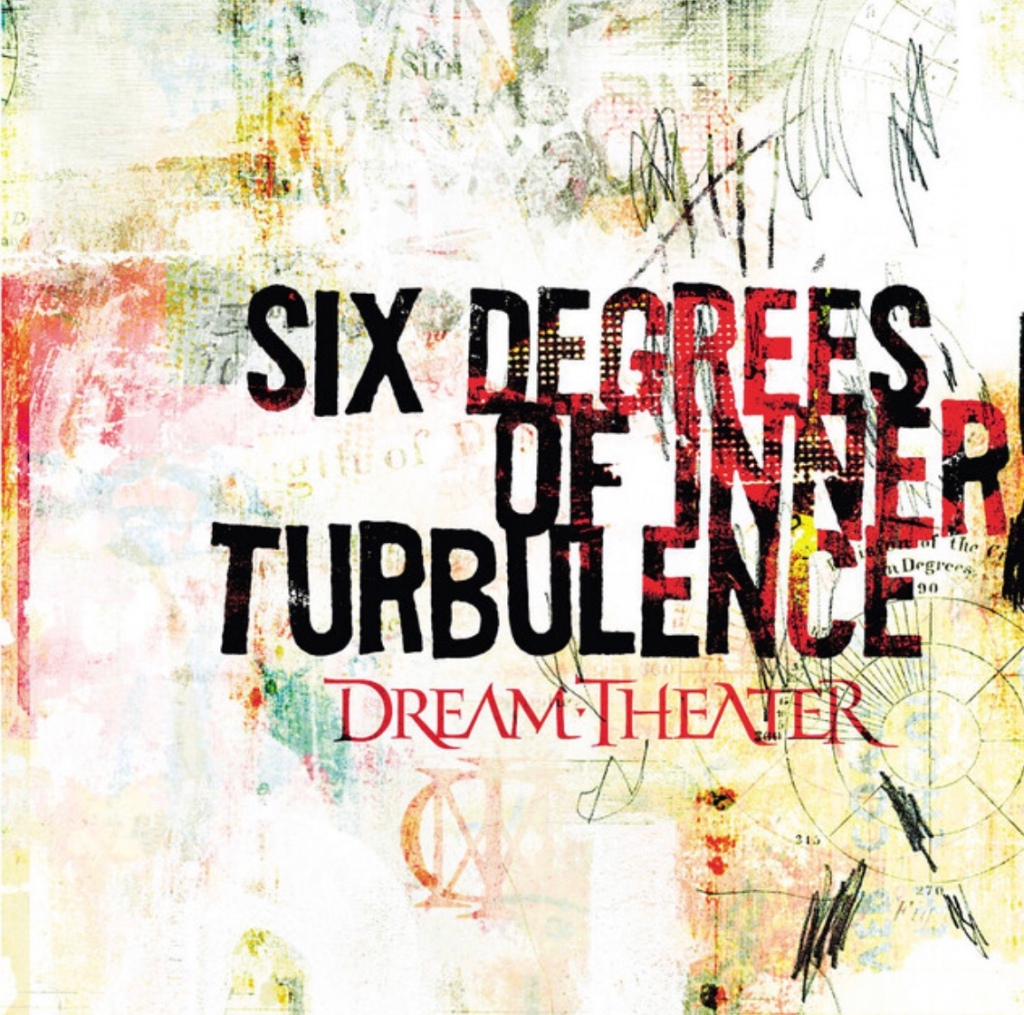
With the same personnel of James LaBrie, John Petrucci, Jordan Rudess, John Myung and Mike Portnoy locked in, the band released “Six Degrees of Inner Turbulence” on January 29. 2002. The first disc is made up of 5 songs that total 54 minutes and 18 seconds. The second disc is one song, which clocks in at 42 minutes, however that one song has 8 sections in it, which are sequenced as individual songs.
On the Wikipedia page for the album, it tells me that the influences for the album’s writing and recording, according to the authors, include Metallica’s “Master of Puppets”, Radiohead’s “OK Computer” (and also a Radiohead bootleg Portnoy brought in), Pantera’s “Far Beyond Driven” and the song “Mouth for War”, Megadeth’s “Rust in Peace”, U2’s “Achtung Baby”, Tool’s “Ænima”, Nine Inch Nails’ “The Downward Spiral”, Soundgarden’s “Superunknown”, Alice in Chains’ “Dirt”, Kevin Gilbert’s “Thud”, King’s X’s “Faith Hope Love” and Galactic Cowboys’ “Space in Your Face”, Béla Bartók, Rage Against the Machine’s “The Battle of Los Angeles”, and Maria Tipo’s “Chopin Nocturnes”.
As a fan of the influences mentioned, I can definitely hear their sounds and textures.
The Glass Prison
The opening track.
It’s 14 minutes long, consisting of three parts called “I. Reflection”, “II. Restoration” and “III. Revelation”. The lyrics are written by Mike Portnoy and it’s the beginning of his “Twelve-Step Suite”. This song covers the first three steps of the AA program. The other steps would appear on subsequent albums.
The static phonograph noise that ends “Finally Free” on “Metropolis Pt. 2: Scenes from a Memory” (1999) begins this song. Then the arpeggiated bass riff starts the song. Press play to hear it. It’s essential listening, especially when the band starts to crash in and build it up.
At 5.487 million Spotify streams, the track is forgotten. But there are so many good bits in the song, like the thrash metal riff in the Verses which reminds me of “Disposable Heroes” by Metallica, or the Groove Metal riff at 5.55 which reminds me of Pantera or the riff at 11.10 which reminds me of King Crimson.
Blind Faith
Lyrics are written by James LaBrie. For a vocalist, he doesn’t get a chance to write the words he sings for the band. John Petrucci does most of em these days. Previously he shared this duty with Kevin Moore and then Mike Portnoy.
1.802 million streams on Spotify. Another forgotten track, however its dreamy Pink Floydish meets Marillion vibe gets me interested. The verses are a cross between Pink Floyd, U2 and Marillion.
Pink Floyd is a band that people either get or don’t get, hence why they come up in a lot of overrated lists.
For a song that’s almost 11 minutes long, the riff at 5.45 is to be heard.
Misunderstood
Lyrics are written by John Petrucci.
It percolates slowly until it explodes. Just over 9 minutes long, check out the acoustic guitar intro, which again reminds me of Pink Floyd and you need to stick around for the Chorus distorted riff at 4.08.
As part of the solo, Petrucci played the guitar solo, and then reversed it with the DAW software. He then learned how to play this reversed version, and recorded it that way. The listener gets a very unsettling effect.
The Great Debate
Tool immediately comes to mind. Lyrics are by Petrucci and at almost 14 minutes long, the song has a lot of great movements.
A bass guitar riff starts the song off, with Portnoy building it up to a crescendo while voices from various news reports talk about stem cell research while the keys/guitars decorate.
Then it cranks into the Tool riff and for about 5 minutes it follows a Verse/Pre/Chorus structure. Make sure you stick around for the riffs when Labrie is singing “Are you justified” and “Life to save life”. It’s basically Tool without Maynard, then again, Fates Warning released a Tool meets Porcupine Tree sounding album in 2000 with “Disconnect”. Jim Matheos showcased then that he can groove and decorate with the best of em.
Disappear
It’s rare that LaBrie gets two song writing credits. But here it is. The original title was “Move On”. The piano riff in the Intro hooks me, but man, that section from 4.37, it’s so heavy with depression and sadness, which I suppose goes with the “death” theme lyrics.
Disc two is the entire song “Six Degrees of Inner Turbulence”. Thank god Portnoy decided to sequence the CD so you can skip to the desired part.
The song explores the stories of six individuals suffering from various mental illnesses. Particularly represented are bipolar disorder, post-traumatic stress disorder, schizophrenia, post-partum depression, autism, and dissociative identity disorder. The “Unbreakable” trilogy from M. Night Shyamalan comes to mind here.
Overture
It all starts here, the Jorden Rudess composed instrumental, clocking in at 6.50.
While listening to these orchestral piece I find it boring, however when the band heard it, they took various melodies and ideas contained within this version and expanded them into segments of the complete piece. So what you hear here end up in the songs to come. But I still don’t like it.
For “Overtures”, I will take “The Titanic Overture” any day.
About to Crash
Lyrics written by Petrucci. This section clocks in at 5:50 and it’s very Genesis like.
“War Inside My Head” and “The Test That Stumped Them All “
They go together as the heavy/thrash metal pieces of the song with lyrics written by Portnoy.
Together the songs clock in at 7:11 in length. It has to be a special Portnoy nugget to have these two songs come in at 7/11. Press play to hear the Main Riff of “The Test That Stumped Them All”.
Goodnight Kiss
It’s a skip for me.
Solitary Shell
How good is the major key strummed intro from Petrucci who also wrote the lyrics.
About to Crash (Reprise)
The intro riff is a favourite. The first words I said were “fuck yeah”.
Lyrics are written by Petrucci and the song also has this Celtic section at 2.20 that I like along with the piano riff after it.
Losing Time/Grand Finale
A forgettable ending.
It’s never forgotten to me how Dream Theater carved out a career in a musical hostile label and promoters environment between 1992 and 2003.
When they broke big with “Images And Words”, Seattle was the scene. 10 years later, “Nu-Metal” and its various offspring’s like “Post Grunge” and “Alternative Rock” were a thing and acts like Creed, Limp Bizkit, Slipknot, Offspring, Disturbed and Nickelback were getting platinum albums thrown at em from every corner of the world. And yet they never abandoned their style. While they would incorporate some of the mainstream sounds into their music, they still kept their Dream Theater identity.
And this album was the springboard for bigger and more metallic things to come.
I like doing these review posts as it gives me the opportunity to read my earlier writing. Some of it is okay, some of it is crap and some of it is good. But the life Reno’s I went through recently put a stop to these weekly posts.
You can read my review of Redemption’s new album at the time, “Long Night’s Journey Into Day”. Vocals on this album were provided by Tom Englund from Evergrey, while previous efforts had Ray Adler from Fates Warning fronting them.
Being a fan of Redemption before Englund joined, I was always keen to hear a new Redemption record, however I was even more keen to hear it when I knew Englund would be singing.
Back in 2018, we had gas poisoning and acid attacks in the UK, Russia meddling in politics (and still meddling via a pointless war in Ukraine) and mother nature taking back her lands via fires, volcanoes, hurricanes/twisters and earthquakes. We have a problem with pollution in the air and plastics in our waters. We have people carrying out mass shootings or driving vehicles into crowds of people. We have wars over religion and poverty/famine in Africa is still happening and as much as big business want to deny it, climate change is real.
And then of course we got lockdowns due to COVID-19.
The past is littered with bands and music in general taking a stand against a problem, a situation, injustice and war. But what about now. What is upsetting musicians enough that they feel compelled to write about it?
“Dr Feelgood” came out on the first of September, 1989. 33 years ago. The album cost me $19.99. I pay just a little bit more than that a month now for my whole family to listen to almost the history of music on Spotify.
The drug overdoses, the death and subsequent return from death for Nikki Sixx, the drugs, the crashed cars, the lawsuits, the drugs again, the imposter, Vince escaping jail, the women, the drugs again times two, the partying, the clashes with the law and the eventual “sobriety”.
“Dr Feelgood” had to be number 1. If the music didn’t do it, the stories would have. Apart from the big songs, the other songs on the album were not mere filler.
“Sticky Sweet” has a wicked solo section, “She Goes Down” has a great bass and drums verse section after the solo section, which ends with the sound of a zipper going down, “Slice Of Your Pie” is so Aerosmith, but it’s the Beatles “She’s So Heavy” outro that hooks me, while “Rattlesnake Shake” has a riff reminiscent to the 60’s blues guitarists that influenced Mick.
“Live After Death” on cassette was my first Maiden. I even high speed dubbed the album, just in case the cassette deck chewed up the original tape. “Powerslave” was released a year before “Life After Death” but it came into my collection a few years after because if you had “Live After Death” you didn’t really need the earlier albums.
The thing with “Powerslave” which makes it great is that it has the power and energy of a live album and the line-up is finally stable. When you don’t have to look for new musicians to fill the void, you can focus on writing great songs as they did with the “Peace Of Mind”, “Powerslave”, “Somewhere In Time”, “Seventh Son of A Seventh Son”.
For an album which is 38 years old, it’s still so relevant today as it was back then. That is the power of music and great song writing.
1979 was a year of transition. While some bands were on their last legs, some were just starting to find their own.
Led Zeppelin were coming to an end while Thin Lizzy was on the ascendancy. The Scorpions had bigger things waiting with “Rock You Like A Hurricane” and “Winds Of Change” while Fleetwood Mac and Bad Company delivered stellar albums that unfortunately got compared to their previous mega gazillion selling albums.
Aerosmith became a shell of the band they were with “Night In The Ruts”, while Motorhead after a few up’s and downs with record label crap, got lumped in with the NWOBHM movement starting off and started their brief commercial rise.
Uli John Roth left Scorpions and created Electric Sun, but in all honesty he should of stayed with Scorpions, while a supergroup of “musicians who all had small record deals” got together and called themselves Survivor. “Eye Of The Tiger” was a few years away, but you get to hear a band allowing their influences to shape their sound.
Basically, all the bands on this list just kept on creating, regardless of their status on the record label commercial tree. Because that’s why people get into music, to create. Not because copyright terms are forever or because some label said I will give you money to create.
Led Zeppelin – In Through the Out Door Scorpions – Lovedrive Thin Lizzy – Black Rose: A Rock Legend Fleetwood Mac – Tusk Bad Company – Desolation Angels Aerosmith – Night in the Ruts Motorhead – On Parole Motorhead – Bomber Motorhead – Overkill Electric Sun – Earthquake Survivor – Survivor Susan – Falling In Love Again
“Generation Swine” and “Saints Of Los Angeles” both came out on June 24, 11 years apart.
How fortunes change for a band in a decade?
Before 1997, Motely Crue was riding high after “Dr Feelgood”. They renegotiated their Elektra contract for a lot of money and dropped “Decade Of Decadence” with 3 new studio recordings. Life was good.
Then Vince left or was fired (depending on whose story you believe). Regardless, the Crue got Corabi and delivered a stellar self-titled album in 94. But it didn’t sell the way Elektra wanted it too, and since they were footing the bills, they wanted the blond guy back in. Yep, Elektra Records A&R Reps in 1995, referred to Vince Neil as the blond guy.
The Crue camp remained defiant and went ahead writing songs for an album to be called “Personality #9” with Corabi. But money wins in the end and Corabi was out and Vince was back in.
It’s never been confirmed, but the Chinese whispers were in full voice, and the story doing the rounds mentioned how Corabi’s wage was coming from the other guys. Basically, Elektra paid Nikki, Tommy and Mick. Management took their cut, legal took their cut, Corabi got paid a wage and the rest was shared between the other three based on the band agreement.
“Generation Swine” came out, you heard it was a confused album. During the tour, Tommy Lee and Vince Neil punched on and Tommy leaves, then comes back and leaves again. Nikki gets into a slanging match with Elektra and eventually the contract was terminated and somehow Nikki managed to get the copyrights of the Crue songs back in the hands of the band. They form their own label and away they go.
Randy Castillo comes in, “New Tattoo” comes out, Randy dies, Samantha fills in on drums, Nikki gets it going with Samantha and his marriage goes to pieces while the Crue play theatres and cancel shows all over the world. I know, their Australian tour got canned. And after “New Tattoo”, the Crue went on hiatus.
In between, they got some stories together and a book called “The Dirt” came out. The band got back together for a few select shows and demand was so huge, those few shows turned into a huge world tour which was encapsulated in the “Carnival of Sins” DVD release.
If you want to have a career as an artist, you need to be a lifer, and be ready to ride the journey. It’s not always bright lights and success after success. There are hard times and good times. Doors shut and other doors are opened. And when everyone wrote them off, they came back stronger than ever.
For a band who were just average musicians at best, they built a career 40 plus years long. And that period between 1997 and 2008 could have been the end, but it wasn’t.
I came across an interview from Vince Neil in Faces USA 1993. Post Crue departure, Vince was the man, the centre of attention. Here are some sections in italics.
Faces: What surprised you the most about the reception you received upon your departure from Motley Crue?
Vince: How quickly I was accepted. A lot of the labels had faith in me. I had a lot of different labels that were interested. It was a really exciting process, walking in there and talking with the different companies, like the heads of Geffen and Giant and Epic.
All these corporate presidents were like “Come on, come and be with us.”
I sat in with Mo Ostin at Warner Brothers and all these dudes and I felt so much power in the room. When I made the deal, went “Okay, give me the money I want and a Warner Bros jacket with Bugs Bunny on it and I will sign the deal.”
I went with a Warner Brothers basically because they gave me the money I wanted and the security of being on the Warner’s label.
Faces: Can you tell us what the deal was?
Vince: Eighteen million dollars for 5 records.
Think about it. Motley Crue signed a 5 album deal with Elektra worth $35 million and the singer who wasn’t even the main songwriter of the band, then goes and signs a solo deal with Warner Bros for $18 million and 5 albums. And the “Exposed” album is a great slab of hard rock during a time when hard rock albums started to disappear from the record store shelves. But in music, these long term deals very rarely are seen to the end. Two years later in 1995, Vince was no longer accepted, and he had no record deal and no management after “Carved In Stone” disappointed commercially.
The person who signed him, Mo Ostin left Warner Bros in 1994, so it’s safe to say the new team, didn’t really like some of the signings that the old team did.
Even Motley Crue didn’t see the end of their Elektra deal. The people who negotiated the Motley deal in 1992, were no longer at Elektra by 1995 and the new Elektra management team didn’t really care for Motley. All they cared about was the bottom line and Nikki Sixx constantly called out current Elektra boss, Sylvia Rhodes at the groups concerts, even calling her from the stage, so the crowd could tell her to fuck off.
So what’s a few million when bands make the labels multi-millions.
SOLO
I expressed my disappointment at the SOLO movie, which basically put into images the words that Han Solo said in the original Star Wars movies.
The problem these days is movies have a lot of action scenes and hardly any good dialogue scenes. Meanwhile TV shows are winning the story script war hands down.
And do movies need to cost $300 million plus to make. In my view the higher the cost of the movie, the less story it has. And people are attached to a story.
It’s sad reading stories about how far removed Copyright Law is from what it was intended to be.
Copyright battles are happening everywhere. Most of the news is on how the record labels and movie studios are calling on governments to pass stronger dictatorship style copyright laws which would give these organisations police like powers.
But Copyright was originally designed to help the creator of the art. However, it’s assisting the corporations to make billions of dollars while the creators make a lot less.
Remember the movie, “This Is Spinal Tap”. Well, the movie has made over $400 million in profits, however the co-creators have received $81 from merchandise sales and $98 from record sales. If you think those amounts are pretty low, well the co-creators thought so as well, and off they went to court, for fraudulent accounting and to get the copyright back in the hands of the creators. And lucky for them they got a judge that saw their side, so the case is going to get interesting. Unfortunately for UMG/Vivendi, the co-creators in this case, also found fame with “The Simpsons” and they have a voice in the market as powerful as the corporation.
8 Years Ago (2014)
EASTERN EUROPE
I was in the middle of our holiday around Eastern Europe and you know what, piracy is king in these countries. CD and DVD shops exist with forgeries. Clothing shops exist with forgeries.
But in all of this piracy, thousands of people turn up to watch artists perform live. Every artist tours Eastern Europe and I am pretty sure that sales of recorded music now and in the past didn’t correlate to the thousands who attended the shows.
I got back from Eastern Europe on a Thursday morning and by Friday night I was at the Manning Bar at the Sydney Uni watching Protest The Hero. The ticket for the night was $45 Australian plus booking fee of about $6. Compared to some of the prices I have paid for tickets, this was a good deal.
And that’s a wrap of about a months’ worth of posts from the past.
When I first heard “Sweet Dreams” I said, that’s “Crazy Train”. I don’t care how Dave Stewart spins it, he was definitely influenced by Randy Rhoads. If you don’t believe me, listen to this recent cover version of the song from Iron Savior.
I guess they heard the similarities as well.
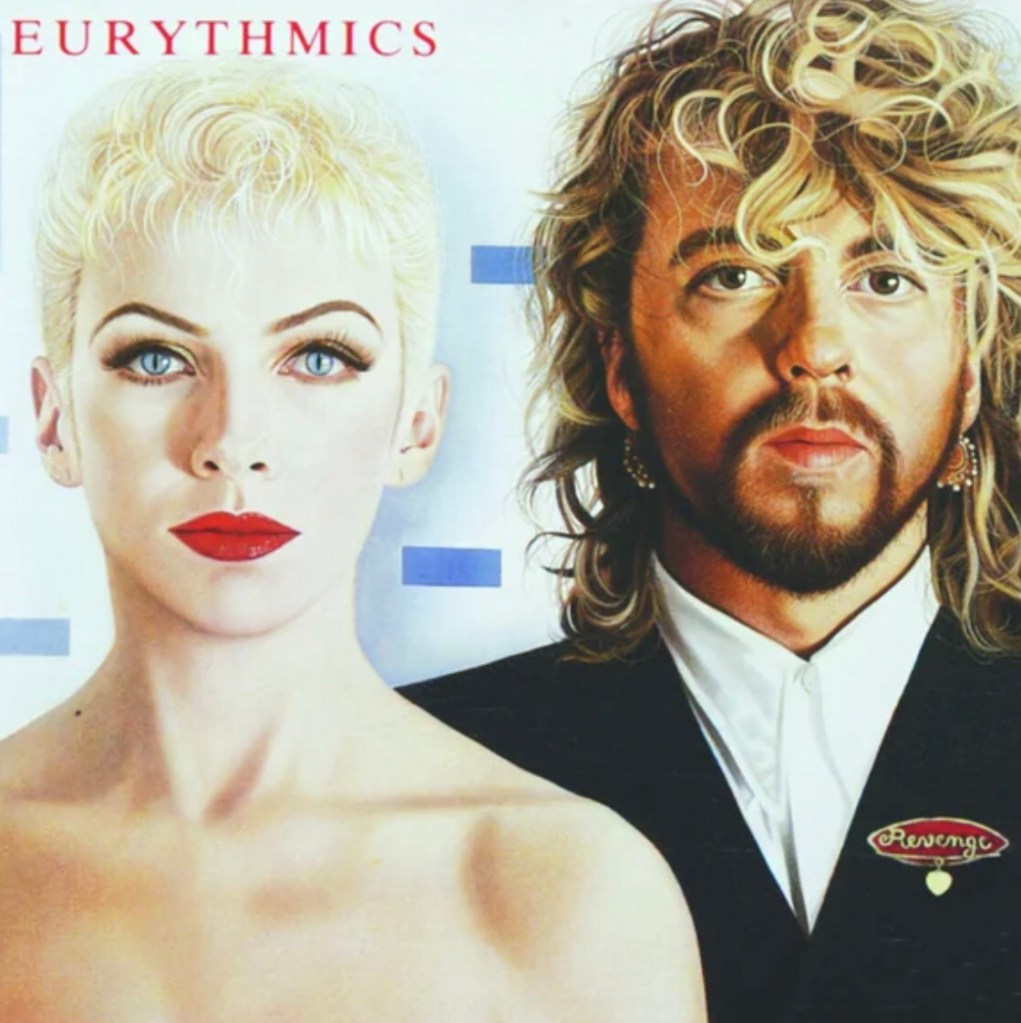
Anyway, “Revenge” is album number 5, released on 29 June 1986 by RCA Records in the United Kingdom and on 14 July in the United States.
All tracks are written by Annie Lennox and David A. Stewart.
Missionary Man
I like the groove on this song.
Thorn in My Side
This song is excellent. The intro riff alone is iconic in my book.
When Tomorrow Comes
A rarity on the album, written by keyboardist Patrick Seymour.
It’s a melodic AOR rocker.
The Last Time
The rock sounds continue.
The Miracle of Love
This is a song that has survived the test of time. It is one of those crossover songs that works well in hard rock and normal rock. The intro keyboard lead sounds so good on a distorted guitar, sort of like the sax solo on “Careless Whisper”.
For me, it’s a 5 out of 5 for side A.
Side B is a good listen but the track titles always seem to escape me.
Let’s Go!
It’s got a New Wave vibe, with a bit of rock.
Take Your Pain Away
Repetitive with a funky bluesy bass groove.
A Little of You
The Chorus is addictive. Press play to hear it.
In This Town
It’s like they are warming up in soundcheck. And then it kicks in, with a rhythm and blues “Mustang Sally” vibe. The hook of “in this town something got to change” will always be relevant, considering how crazy and divisive towns have become.
I Remember You
A lonely Sax player is wailing away with the sounds of streets noise as the song builds. It’s not a favourite, as it percolates without exploding.
Side B is a 1 out of 5 and not as strong as the opening side.
This album was huge in Australia, reaching number 2 in the Charts and hanging around for a long time on the backs of the singles, eventually reaching a 4x Platinum certification. All the radio stations played the songs and the music video stations played the music clips.
And what is good for Australia, New Zealand likes as well, with the album certified 5x Platinum. Other places the album received certifications include Austria (Gold), Canada and the UK, (2× Platinum), Finland, Norway and Switzerland (Platinum), , while it only got a Gold certification in the U.S, Spain, Italy and Germany.
Press play on the first five songs and check out Iron Savior’s cover of “Sweet Dreams” on the YT link provided.
The Screaming Jets released the single “Better” and two months later, their debut album “All For One” came out. Their sound is made up of an amalgamation of Australian acts like AC/DC, The Angels, INXS, The Choirboys and Cold Chisel, with a little bit of blues, a little bit of Classic Rock and Punk Rock thrown in. And it connected with the people of Oz.
Dave Gleeson always like to push censorship issues, and I remember when he appeared in the MTV Studios in Sydney for an interview, wearing a Metallica T Shirt with the “Metal Up Your Ass” design on it. The MTV guys weren’t too impressed and when he sat for the interview he had to strategically cover the offending images with his hands.
The group then relocated to the United Kingdom for over two years. The wanted to break into a European market first, before attempting their assault on the massive North American market. Doc McGhee was very keen to be the one to break them in the U.S
In the meantime, their youthful energy was getting them into trouble with other artists. The Divinyls wanted them off the Australian tour they were doing together, because lead singer Dave Gleeson insulted Chrissy Amphlett on stage, when he said, “Are you here for a rock and roll show or just a tasteful flash of the vag?”
Warrant copped it as well, when they turned up at a Club that the Jets were playing in Kings Cross, Sydney.
However Skid Row and Motley Crue liked the Jets and the Jets like them back.
As a warm up for their sophomore release, the label decided to release an EP called “Living in England” in June 1992. It included cover versions of Johnny Cash’s “Folsom Prison Blues” and AC/DC’s “Ain’t No Fun (Waiting Round to Be a Millionaire)” along the three album tracks. And we loved it. It wetted our appetite for more.
In October 1992, “Tear of Thought” dropped.
The band was unchanged with Dave Gleeson on vocals, Richard Lara on guitar, Grant Walmsley on guitar, Paul Woseen on bass guitar and Brad Heaney on drums. Continuing on from the debut album, bassist Paul Woseen and guitarist Grant Walmsley carried the bulk of the song writing.
And for some stupid reason the European release had a different cover.
Dream On
No, it’s not an Aerosmith cover. Written by Paul Woseen, it’s got this U2 vibe to start off, with backward sounding guitar effects and delays while the drums and bass slowly build it up, until the whole band kicks in.
And suddenly it feels like a post pop punk cut with a nod to The Angels and a 12 bar blues solo that George Thorogood would be proud off.
Here I Go
The intro riff. Heavy fucking Metal.
Please play just to hear it.
The song is written by Paul Woseen and its one of my favorites.
Especially the last 80 seconds, when they go into the main intro riff, the ohhs and ahhs vocal chants begin, the tempo increases, a lead breaks out and the tempo keeps on increasing until chaos reigns and the song ends.
Meet Anybody
Written by guitarist Grant Walmsley.
It has a vibe from The Angels, but man, the verses sit in the LA Sunset Strip style of writing.
When the Chorus kicks in, it’s got that Albert Productions sound. Press play and enjoy.
Alright
Another Grant Walmsley cut which reminds me of Cold Chisel and The Angels, with a head banging rocking solo section.
Night Child
Written by Paul Woseen, the songs music is rooted in the sounds of ACCA DACCA, however if you play the main riff with the distortion set to max, it sounds like it came from the fingertips of the NWOBHM bands.
Helping Hand
Written by Paul Woseen, this song was the unexpected hit.
It’s got this Crime Noir feel in the verses almost jazz blues, but when the bluesy Chorus kicks in, its singalong and infectious, remaining with you long after its finished.
Everytime
Written by Grant Walmsley and I feel like he channels Ian Moss from Cold Chisel with the main riff.
Living in England
Also written by Grant Walmsley, its two minutes of relentless punk speed metal power. It’s heavy and it has a Lemmy/Motorhead vibe all over it. I guess that’s what “Living In England” meant to them. You just become influenced by Lemmy. And Brad Heaney on drums is a powerhouse here.
Think
Written by Paul Woseen it’s got an Alice Cooper “Only Women Bleed” feel with a lot of pub rock decadence. For a ballad, it’s not wimpy and it rocks hard.
Press play to hear what I mean, or you can watch the film clip on YouTube with all the surrealism images.
Best of You
Written by Paul Woseen, this song makes me think of other songs but I can’t remember what they are right now.
Rich Bitch
Written by Paul Woseen, its an attempt to do Fat Rich Cunt Part 2. George Thorogood would be proud.
Tunnel
Written by vocalist Dave Gleeson and guitarist Richard Lara.
The riff from Lara is excellent. The horns in the Pre-Chorus and Chorus enhance the song. Think “Tangled In The Web” from Lynch Mob.
Musically it’s a cross between The Angels, Bad Company and AC/DC.
Hard Drugs
Written by Grant Walmsley its channelling The Angels.
Sick and Tired
Written by Paul Woseen it’s got that jazzy rhythm and blues feel that you hear on “Helping Hand”.
Shivers
Rowland Howard wrote a post punk masterpiece in the form of a ballad. For those that don’t know, it’s a cover from the band he was in called Boys Next Door who had Nick Cave as the vocalist for them.
The opening lyrics “I’ve been contemplating suicide / but it really doesn’t suit my style” immediately grab you by the throat and make you pay attention.
Feeble
Written by Grant Walmsley, the album closer is a different cut, moving between a post punk mood at the start, to a ballad like mid-section, before picking up the fast post punk feel. .
In Australia, it received a Platinum certification and charted as high as 3 on the ARIA chart.
The group supported Ugly Kid Joe on their European tour in 1993, when Heaney was fired mid-tour as he thought that all the band members had turned gay and that the girlfriends they had were just decoys to trick him that they were not gay.
Heaney was temporarily replaced by ex-Judas Priest drummer Dave Holland until former BB Steal drummer Craig Rosevear became the permanent drummer in July 1993.
For those who don’t know, BB Steal were meant to be Australia’s Def Leppard. Singer Dave Gleeson wasn’t too impressed to hear that a hair band drummer was being considered, but after meeting and jamming with Rosevear, he changed his mind.
And that wouldn’t be the end of the changes. In January 1994, after a US tour backing Def Leppard ended, guitarist Richard Lara was replaced by Melbourne guitarist Jimi “The Human” Hocking (ex-Spectre 7).
I was always on the lookout for new music. New artists to get into. New melodies to expose my ears to.
Radio in Australia during this time was an interesting beast. We had stations that played just rock music (bands classed these days as glam metal, glam rock, classic rock, melodic rock and hard rock also fitted this bill). We had stations that played whatever was on the Charts. If it was popular they played it, so these stations could have included rock music. Then we had stations devoted to Country, jazz, various different religions and ethnicities and classical.
The Bangles ended up on a lot of stations. Because they could be classed as a rock band and during this time they were very popular. Music Television loved them as well. They looked great so were easily marketable, they could play their instruments and they were known for killer live performances.
“Different Light” is album number 2. It is their most successful album,. But the big secret for the album was the running time of each song. It’s like they knew back in 86, that Spotify would pay per listen. Here is a perfect Spotify album, with an average song runtime of 3 minutes each.
The Bangles were special because they had all the members on lead and backing vocals. Susanna Hoffs and Vicki Peterson also played guitars. Micki Steele played bass and guitars on some tracks while Debbi Peterson played the drums. They were all seasoned and had paid their dues. Hoffs was 27 years, Vicki Peterson was 28, Steele was 31 and was also known as the founder of The Runaways, before leaving them prior to their first album and Debbie Peterson was the youngest at 25.
Manic Monday
The song is written by “Christopher” and Hoffs. “Christopher” was a pseudonym for Prince. At 157.5 million streams on Spotify, it’s one of their biggest. Only “Eternal Flame” and “Walk Like An Egyptian” are bigger.
In a Different Light
My favourite track. It’s rocking from the start and the vocals remind me of “California Dreamin” from The Mamas And The Papas
Walking Down Your Street
This was a skip for me.
Walk Like an Egyptian
192 million streams on Spotify. It’s so overplayed these days, but goddamn it was infectious when it came out. The vocal melody was so unique. Press play and start walking like an Egyptian.
Standing in the Hallway
It’s pop rock, with a bit of rhythm and blues.
Return Post
A rare running time of 4.22 however the track was not their best.
If She Knew What She Wants
A Jules Shear cover from 1985 which has this 60’s feel.
The album standard slips towards the backend with tracks like “Let It Go”, “September Gurls”, “Angels Don’t Fall in Love” and “Not Like You” being seen as throwaways.
However the introspective acoustic cut, “Following”, written and sung by Steele, is excellent.
In relation to sales, it was 2x Platinum in Australia, Canada. It went Platinum in New Zealand and the UK. In the U.S, it went 3× Platinum.
From disillusionment with the “Falling Into Infinity” saga, Mike Portnoy got an opportunity via Mike Varney’s “Magna Carta Records” to assemble a supergroup of progressive rock musicians in 1997. The Liquid Tension Experiment was born, consisting of Portnoy on drums, John Petrucci on guitar, Tony Levin on bass, and keyboardist Jordan Rudess, who had finished his commitments with the Dixie Dregs.
Portnoy and Petrucci used this little get together to keep on convincing Rudess to join Dream Theater. If you remember, Rudess was asked to replace Kevin Moore, however he declined that offer and Derek Sherinian was brought in. But in 1999, he accepted the offer to become the third full-time Dream Theater keyboardist, replacing Sherinian.
With Dream Theater assembled, the band would enter the studios with complete creative control for the first time.
They assembled an inspiration corner in the studio, made up of concept albums from The Who (“Tommy”), Genesis (“The Lamb Lies Down on Broadway”), Roger Waters (“Amused to Death”), Radiohead (“OK Computer”) , Queensryche (“Operation: Mindcrime”), The Beatles (“Sgt. Pepper’s Lonely Hearts Club Band”), Marillion (“Misplaced Childhood”) and Pink Floyd (“The Wall” and “The Final Cut”).
The band began by revisiting a song called “Metropolis – Part II”, which had been partially written during the “Falling into Infinity” sessions but not completed or used on that album.
At 21 minutes in length as a demo, they decided to expand the song into a complete concept album.
The album was originally mixed by David Bottrill, but only a few of his mixes made it on the final album. After playing the mixed album to Kevin Shirley, Petrucci kept asking Shirley for his opinion. Shirley kept telling Petrucci that the mixes are fine, however Petrucci did not believe him. Eventually Shirley said that the mixes could be better and suddenly Shirley had a job to remix the album. This of course was of a concern to Elektra who felt that the band was just throwing money away.
The album is seen as a sequel to the song”Metropolis—Part I: ‘The Miracle and the Sleeper'”, but the “Part I” was added by Petrucci as a joke and there was no intention to make a “Part II”.
But in 1999, “Metropolis Pt. 2: Scenes from a Memory” was released on Elektra Records. While it didn’t set the Billboard Charts on fire, it is seen as the bands masterpiece and it did exceed the sales target that Elektra had for it.
The story follows a character called Nicholas, who has recurring dreams, so he visits a hypnotherapist. During the sessions, he discovers that he is the reincarnation of Victoria Page, who was murdered in the 1920’s. The story takes place in the 1920’s and the 1990’s as all the characters are still in each other lives. For example, the person who killed Victoria is called Edward and in his reincarnation, he is the Hypnotherapist treating Nicholas.
Scene One: Regression
A ticking metronomic clock.
“Close your eyes and begin to relax” are the first words you hear. The voice of the Hypnotherapist is Terry Brown (yes that Rush producer Terry Brown) although he is uncredited.
“Take a deep breath, and let it out slowly. Concentrate on your breathing. With each breath you become more relaxed.”
There is a story here as well. Terry recorded his voice as a rough guide. Instead the band put it on the album, didn’t give him credit and then used it in the live setting. This didn’t impress Terry, so he lawyered up and set em a bill for using his voice. The band paid the bill and then had to get a new Hypnotherapist voice for the tour.
As the Hypnotherapist counts down, the acoustic guitar of John Petrucci starts up and gets louder as the countdown gets lower.
Then James LaBrie comes in with the vocal melody.
Safe in the light that surrounds me / Free of the fear and the pain / My subconscious mind / Starts spinning through time / To rejoin the past once again
Scene Two: I. Overture 1928
An instrumental, with a lot of cool riffs and some nuggets from the first Metropolis song.
I like the way it starts off but the best part is the George Lynch influenced tritone riff that cames straight after.
Check out the small lead section at 2.32.
Scene Two: II. Strange Deja Vu
“Overture” segues into “Strange Déjà Vu”.
“In her eyes – I sense a story never told / Behind the disguise – There`s something tearing at her soul”.
Nicholas learns that Victoria was murdered, and that he was actually Victoria in a past life. He believes that he needs to solve her murder.
Check out the “Carry On My Wayward Son” influences at 2.40.
Scene Three: I. Through My Words
The piano riff is haunting and I like it.
“We’re sharing one eternity / Living in two minds”
Scene Three: II. Fatal Tragedy
“This fatal tragedy was talked about for years” / Victoria`s gone forever / Only memories remain / She passed away / She was so young”
The last 40 seconds of the song has this cool open string harmony solo section which I like.
And it ends with the voice of the Hypnotherapist;
“Now it’s time to see how you died. Remember that death is not the end but only a transition.”
Scene Four: Beyond This Life
The opening riff is wicked. Heavy almost grungy in sound yet progressive. And the fast downstroke picking gives way to a single note variation.
“Murder, young girl killed. Desperate shooting at Echoes Hill. Dreadful ending, killer died. Evidently suicide”
The lyrics are written like a newspaper article.
Vocally it feels like a Tool/Maynard vocal melody in the verses. Really focused on the correct syllables.
Scene Five: Through Her Eyes
I’m learning all about my life By looking through her eyes
Petrucci knows how to construct an emotive song and to nail an emotive lead.
Almost countryish in its acoustic strum and Portnoy’s restraint drumming, its Petrucci and LaBrie that shine here.
This is the part of the story where Nicholas realises that he is unable to get on with his life until he solves the murder of his past life.
Scene Six: Home
My favourite song on the album because its Dream Theater taking something contemporary like Tool and making it their own. If you want to press play on a track, this is the one.
The city – it calls to me Decadent scenes from my memory Sorrow – eternity My demons are coming to drown me
From a story point of view, Julian is giving in to his cocaine and gambling addictions, which drives Victoria away from him. Edward feels guilty about deceiving his brother, but decides that his love for Victoria is greater than his guilt, and he seduces her when she is vulnerable following her breakup.
Scene Seven: I. The Dance of Eternity
It’s an instrumental, seen as their best.
Scene Seven: II. One Last Time
Are these her memories Awakened through my eyes
A ballad with lyrics by James LaBrie.
Scene Eight: The Spirit Carries On
I used to be frightened of dying I used to think death was the end But that was before I`m not scared anymore I know that my soul will transcend
The guitar solo on here is excellent and the gospel choir afterwards (orchestrated by Rudess) gives me goose bumps.
Scene Nine: Finally Free
It begins with the voice of the Hypnotherapist.
“You are once again surrounded by a brilliant white light. Allow the light to lead you away from your past and into this lifetime.”
The narrative moves between different perspectives, revealing that Edward wished his romance with Victoria was more than a simple affair. As Victoria begins to reconcile with Julian, Edward confronts the two of them, murders them, then stages the scene and assumes the role of the witness for the newspaper column. The flashback includes Edward telling Victoria to “open [her] eyes” before killing her, echoing the same choice of words the hypnotherapist used to wake Nicholas from his hypnotic trance.
In the present, Nicholas arrives home, followed by the Hypnotherapist. Nicholas is startled by another request to “open [his] eyes”, before the album cuts to (and concludes on) phonographic static. You don’t hear the killing, but the hypnotherapist is Edward’s reincarnation, and he has killed Nicholas to complete the cycle yet again.
The drumming of Mike Portnoy on the last three minutes of this song is essential listening for any drummer on how to add texture and technicality and still sound accessible.
The World Tour to promote the album was their biggest. The whole album was played in its entirety along with actual footage on the big screen.
A show was filmed and released as a DVD in 2002. Even Kevin Moore was invited to participate in this show, to perform “Space Dye Vest” and “Learning To Live”. But he declined the offer and every other Dream Theater offer since his departure.





 destroyerofharmony