forgotten albums, Hard Rock, Heavy Metal, Music, Music history, rock music

Skid Row’s “Nothing”: The Strange Freedom of Realising You Don’t Need It All

It appeared on “Revolutions Per Minute”, released on October 24, 2006. Sebastian Bach was long gone, Johnny Solinger was handling the vocals, and the band was trying to figure out what its identity looked like beyond the shadow of its biggest commercial years.

The album was produced by Michael Wagener, the man who had helped shape Skid Row’s early sound.

Fifteen years after “Slave to the Grind”, the musical landscape had changed.

The decade between 1994 and 2004 was when music blew itself apart and rebuilt itself for a different kind of consumer.

Grunge was fading, and nobody was quite sure what would replace it. The answer wasn’t one new sound. It was a dozen competing movements, each fighting for the same shrinking amount of attention.

Nu-metal took metal, added hip-hop rhythms, turntables and anger, and turned Korn, Limp Bizkit, Linkin Park and Slipknot into commercial heavyweights. Pop-punk did the opposite, taking punk’s speed and attitude and wrapping it in enormous choruses. Green Day and The Offspring opened the door, while Blink-182 and Sum 41 made the sound a global phenomenon.

Meanwhile, Oasis brought back a new kind of popular music influenced by The Beatles and Britpop’s dominance gave way to a more introspective British sound, with Radiohead, Coldplay and Travis finding audiences beyond the traditional rock market. By the early 2000s, The Strokes, The White Stripes and The Hives were stripping away the excess, reminding everyone that sometimes a dirty guitar riff and a good song were enough.

Pop music became a manufacturing powerhouse. Britney Spears, NSYNC and the Backstreet Boys turned teenage fandom into a commercial machine, while Beyoncé, Usher, Alicia Keys and Aaliyah helped push R&B into the centre of mainstream culture.

Hip-hop made an even bigger leap, moving from the competing regional identities of East Coast and West Coast rap into a global commercial force. Eminem, Jay-Z and the emerging Southern rap movement changed the sound, language and business of popular music.

And underneath it all, electronic music was building its own empire. UK Garage and 2-Step were reshaping British dance music, while The Prodigy and Fatboy Slim brought electronic aggression to rock audiences. Trance turned dance floors into euphoric communal experiences, laying foundations for the festival culture that would explode in the years ahead.

But the most important thing about 1994–2004 wasn’t any individual genre. It was the collision of all these sounds with a changing music business.

CDs were still generating enormous profits. Record labels could afford to take risks, develop artists and market entire movements. Then the internet arrived, Napster attacked the economics of recorded music, and the industry discovered that controlling distribution wasn’t the same as controlling demand.

By 2004, the music world had changed. Genres were multiplying, audiences were fragmenting, and the old gatekeepers were losing their grip.

The irony? The industry was enjoying the last great financial boom of the CD era just as the technology that would undermine it was becoming impossible to ignore.

And the audience for hard rock had fragmented so much. Skid Row was no longer operating in the world that had made it famous.

“Revolutions Per Minute” received a largely unfriendly reception. Its genre-hopping made it difficult to categorise, and it never came close to reproducing the commercial impact of those early records. Yet “Nothing” offers something more interesting than another attempt to recreate the past.

It offers perspective.

The houses on the hill

We all do it. We look at the people who appear to have made it. We look up the hill and wonder whether we took the wrong road.

The funny thing about ambition is that it rarely announces its final destination. You achieve one thing, then immediately establish another target. The salary isn’t enough. The house needs renovating. The business needs to grow. The band needs a record deal. The record deal needs a hit. The hit needs to be bigger than the last one.

There’s always another hill.

And because we’re looking at somebody else’s house, we never see the mortgage, the arguments, the sleepless nights or the possibility that the people living inside are looking at another house further up the road.

The song understands that comparison is a trap. Not because wanting more is inherently wrong, but because you can spend your entire life measuring yourself against people whose circumstances, priorities and definitions of success have nothing to do with yours.

Rock and roll knows this territory intimately. The whole business is built around wanting to be somebody. You start in a bedroom, graduate to a rehearsal room, then dream about the tour bus, the record deal and the arena.

But what happens when you get there?

And what happens when you don’t

Growing up is hard

The Bowie reference is more than a clever name-check. It’s an acknowledgement that the questions we ask when we’re young don’t necessarily disappear when we get older.

David Bowie’s music understood that growing up wasn’t simply a matter of acquiring wisdom. Sometimes it meant discovering how little you understood in the first place.

When you’re young, you imagine there’s a point at which everything becomes clear. You’ll have a career, a relationship, a home and a reasonably coherent understanding of why you’re here. You’ll know what matters. You’ll stop worrying about the things that worried you at twenty.

Then you get older and discover that life doesn’t hand out instruction manuals.

You become more experienced, but experience doesn’t automatically produce certainty. Sometimes it just gives you a longer list of mistakes you know how to avoid, alongside a fresh collection of mistakes you haven’t made yet.

We make decisions with incomplete information.

Growing up isn’t arriving at the answer. It’s learning to live without one.

If I want it all, do I need it all?

Wanting something and needing something are two entirely different propositions.

The modern economy depends on our inability to distinguish between them. Advertising doesn’t merely sell products; it sells inadequacy. You’re not just buying a watch. You’re buying the suggestion that the person wearing it has achieved something. You’re not simply buying a bigger house. You’re buying the promise that you’ll finally feel successful when you walk through the front door.

And then the next advertisement arrives. There’s always a better version of whatever you’ve just purchased.

Rock music has its own version of the same disease. The industry teaches musicians to measure their worth through sales, chart positions, streaming numbers, ticket prices and the number of people who recognise them in an airport. You can make a record you’re proud of and still be told it doesn’t count because it didn’t sell enough.

I’ve always found that contradiction fascinating. Music is supposed to be about expression, yet the business constantly demands that expression be converted into measurable success.

Of course, money matters. Bills don’t pay themselves, and musicians deserve to be paid for their work.

The question in “Nothing” cuts through that nonsense. What if getting everything you want doesn’t mean you need any of it?

Records in my room

This is the line that gets me.

Because it understands music is a place you can go.

A place.

I can remember albums that became entire worlds. You put on a record, shut the door and disappeared for forty minutes. The music wasn’t background decoration. It was the main event. I learned the running order, the lyrics, the guitar parts, the production details. I discovered the songs that mattered to me, including the ones nobody else seemed to care about.

Those records became attached to periods of my life. I remember where I was when you heard them.

Decades later, a guitar intro can bring the whole thing back.

That’s the remarkable thing about recorded music. It doesn’t merely preserve sound. It preserves the person you were when you first heard it.

And I just need to press play.

I need nothing but you

After questioning ambition, material success and the whole business of wanting more, the song arrives at a surprisingly simple conclusion.

Nothing but you.

The song has spent its time examining the things we chase, the people we compare ourselves with and the uncertainty that comes with growing older.

There is a world of difference between having nothing and needing nothing. The first describes deprivation. The second can describe freedom.

Perhaps the best parts of life are happening in the room you’re already in.

Money can buy comfort, opportunity and independence. It cannot guarantee that you’ll be content with your life.

And success can open doors, but it cannot tell you which ones are worth walking through.

Sometimes the answer is more complicated than we’d like. Sometimes it’s remarkably simple.

There’s an argument that “Revolutions Per Minute” could almost be considered a Rachel Bolan-led project operating under the Skid Row name. Bolan was the dominant songwriting force on the record.

Critics and fans were divided, and the record never found the audience the band had enjoyed in its commercial heyday.

But that’s precisely why “Nothing” is worth revisiting.

It’s a song about time passing, memories accumulating and the gradual realisation that the things you once thought essential might not be essential at all.

Johnny Solinger’s place in Skid Row’s history is inevitably complicated by the enormous presence of Sebastian Bach. Solinger spent more than fifteen years with the band, recording “Thickskin” and “Revolutions Per Minute” and helping carry its name through a period when its commercial fortunes had changed. He died in June 2021, aged 55, after revealing that he was suffering from liver failure.

The music remains where it was left. We are the ones who arrive with different experiences.

Sometimes you can just put on a record, sit in your room and let it be what it is.

You don’t need it to be the biggest thing in the world. You just need it to mean something to you.

Press play.
Standard
Classic Songs to Be Discovered, Influenced, Music

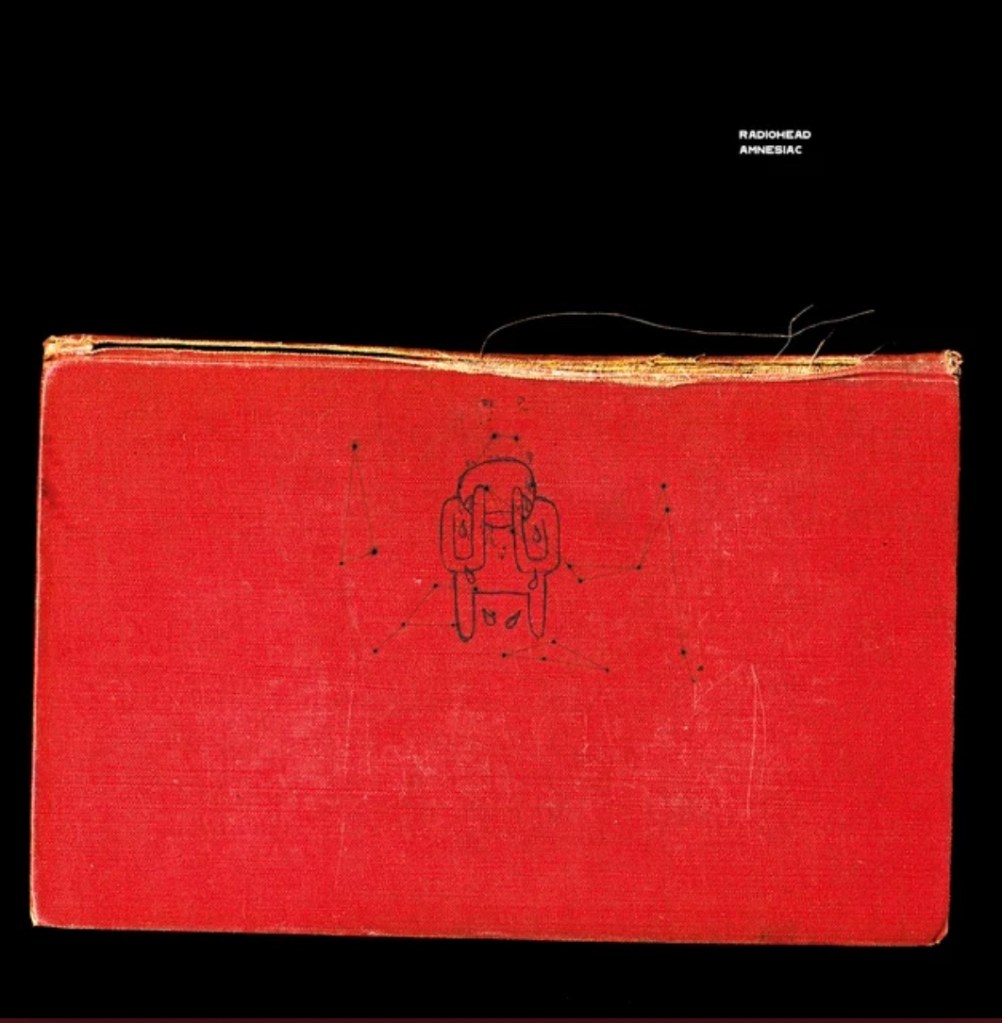
2001 – Part 6.1: Radiohead – Amnesiac

It’s been sixteen years since “In Rainbows”?

Back in 2007, the issue surrounding that album was getting paid. Remember “pay what you want”. It was meant to bring the money back into music. It didn’t.

But it gave artists a hard truth, that they have fans who are willing to pay zero dollars for their recorded music.

Today the main issue is getting peoples attention and holding it. Anyone remember what was trending last week. Me neither.

“Amnesiac” is the fifth studio album by Radiohead, released on 30 May 2001.

Although the album came out in 2001, it was recorded with producer Nigel Godrich in the same sessions as Radiohead’s previous album “Kid A” released in 2000.

Radiohead considered releasing the work as a double album, but decided against it.

Based on the buzz created from the earlier albums, “Amnesiac” debuted at number one on the UK Albums Chart and number two on the US Billboard 200.

Packt Like Sardines in a Crushd Tin Box

It’s an electronic song with synthesisers and industrial percussion. Actually the tone of the synth riff feels like it became the design for the TonePad or SoundPrism apps.

Auto-Tune was also used to process Yorke’s vocals which sound hypnotic and other worldly.

After years of waiting nothing came, as your life flashed before your eyes you realize

A realization that the thing you have been eagerly anticipating for a long time, didn’t come to be.

After years of waiting nothing came, and you realize you’re looking in the wrong place

After the passage of time you come to the realization that your search or focus has been misguided.

Your strategy was ineffective and it led you astray. But there is time to reassess your approach, redirect your efforts, or reconsider your expectations in order to find the desired outcome or solution.

I’m a reasonable man, get off my case

Pyramid Song

The piano chords drive the song, which is a trippy 60s experimental acid rock track. Wikipedia tells me the musical part of song was inspired by the Charles Mingus song “Freedom” and its lyrics were inspired by an exhibition of ancient Egyptian underworld art Yorke attended while the band was recording in Copenhagen and ideas of cyclical time discussed by Stephen Hawking and Buddhism.

I jumped in the river and what did I see, black eyed angels swam with me

A symbolic leap into the unknown.

And while angels normally represent the light, the mention of black-eyed angels is seen as mysterious. The color black is also associated with darkness.

And we all went to heaven in a little row boat, there was nothing to fear and nothing to doubt

The mention of a row boat, which requires teamwork and coordinated effort to navigate, suggests a collective experience or shared journey.

“Pyramid Song” was named one of the best tracks of the decade by Rolling Stone, NME and Pitchfork

Pulk/Pull Revolving Doors

Wikipedia tells me it began as an attempt to record another song, “True Love Waits”.

It features keyboard loops recorded during the “OK Computer” sessions. Deciding that the arrangement did not fit “True Love Waits”, Radiohead used it to create a new track.

Yorke added a spoken vocal and used Auto-Tune to process it into melody.

Unfortunately the story of the songs creation is better than the song. It’s a skip for me.

You and Whose Army?

Wikipedia tells me that the song is about someone who is elected into power by people and who then blatantly betrays them.

At the time Yorke was protesting against the British PM, Tony Blair. However it seems that every democratic country has this problem.

Its like lounge music with a drunken vocal melody for the first 1.50 as the song builds and I was going to skip it.

But it changes and the last minute is dreamy rock and I like it.

We ride tonight ghost horses

A journey into the unknown. It seems to be a recurring theme on the album.

I Might Be Wrong

I like the Bluesy riff but don’t like the industrial sounding drum beat.

You go down the waterfall, think about the good times and never look back

Another phrase about a challenging or transformative experience.

As you draw strength, inspiration, or comfort from the good times during times of adversity. You know the whole wellness business model is built on selling the “power of positive thinking”.

Knives Out

It sounds like they just got in the room and jammed this one out.

Lyrically I think it’s about cannibalism.

Morning Bell/Amnesiac

I’ll give them points for trying to do something different and out of their comfort zones, but as a title track it’s terrible.

A skip for me.

Dollars and Cents

Another skip for me.

Hunting Bears

Its a two minute instrumental on electric guitar and synthesizer and backwards effects. It’s cinematic and I like it.

Like Spinning Plates

It’s a skip for me.

Life in a Glasshouse

It’s jazz noir and jazz trumpeter Humphrey Lyttelton and his band performed on this in the style of a New Orleans jazz funeral.

Wikipedia tells me that the lyrics were inspired by a news story Yorke read of a celebrity’s wife so harassed by paparazzi that she papered her windows with their photographs.

But it’s a skip for me.

Back in 2001, two years after Napster, sales were still a big thing and man of albums were good, sales would go through the roof. Linkin Park’s “Hybrid Theory” and “Meteora” come to mind here.

“Amnesiac” was certified Gold in Argentina, Australia, Belgium, France, Japan and the United States.

It was certified Platinum in Canada, United Kingdom and Europe.

It’s different. Give it a go.

Standard
A to Z of Making It, Influenced, Music, My Stories, Stupidity

Music Business Is A Tough Gig. By the way so is every other business.

What does the recent Jay Z and Samsung deal mean for the rock and metal community?

In the immortal words of Dark Helmet from Spaceballs, ABSOLUTELY NOTHING.

Jay-Z is one of those artists that wants to be paid RIGHT NOW. He is in the mainstream right now and married to another mainstream personality in Beyoncé. The album is certified platinum before it is even released due to the digital download deal with Samsung. This is where it was made available for free to all Samsung customers via the Jay Z Magna Carta app.

How many of those Samsung customers are actual Jay Z fans? How many of those Samsung customers will go out and spend money on Jay Z? When artists want to be paid right now, there is no connection between artist and fan. It’s all about the dollars. My friend at work is a Samsung customer and he downloaded the album because it is free. In the end, this is all about money and nothing to do about having a career.

That is what the metal heads and rock heads want. A career. It doesn’t have to be a career where the yearly salary is a million dollars. We want just a simple career where we can make between $60 to $80K like all the other occupations, however in this we are doing what we love. We want just enough so that we can compete in the housing market, be considered for loans and so forth. We don’t need to keep up with the Kardashians, the Beyoncé’s and the Jay Z’s.

Once upon a time, it used to be clear to the fans that artists created music and that Record Labels were looking to profit from this relationship with the artists. These days, the new artists are the tech heads. The technologists lead the way by creating and it is the artists that want to profit at every turn from it. The artists are starting to become the businessmen/women of the record label era.

Look at the recent Twitter rant of Thom Yorke from Radiohead. According to the gospel of Yorke, there is no incentive for new artists as they cannot make any money due to Spotify. He more or less claims that no new artists can be discovered via Spotify or make a living from Spotify. Hey Thom, Imagine Dragons is a new artist. Look at their numbers on Spotify. Even though they are not making a living off the royalties from Spotify, this tool has allowed them to spread their music to a world-wide audience, which in turn is seeing their album sales go up. Go figure that. People are purchasing albums, when the songs are available for free.

So what does Thom do? He pulls Atom of Peace and his solo work from Spotify. Maybe that is a good thing, as we don’t have time for sub-standard anymore. Hell, Thom Yorke should even blow up at Napster.

The reason why Napster exploded 13 years ago was because it was all about the community and the convenience. Napster was never about the money and it was never about the ‘free’. The fans of music spoke out loudly on how they wanted to consume their music and how they wanted to interact with it. The power brokers still haven’t listened. Today there is still no service that provided those two things the way Napster did.

Artists wrote songs for a cause or a purpose. There was always a war to fight against someone, either against the establishment, the parents or a real war. The sad reality these days is that more and more artists are thinking about the payment instead of the creative process. It’s tough making a living in the music business. That is the bottom line. Just the same way it is tough making a living in any other business.

I work nine to five and get paid a yearly salary. I am meant to work 38 hours a week, however the company encourages us to spill some blood for them which normally means putting in longer hours just so that we can be considered for a bonus. It is a tough gig, and it is a tough way to make a living as well. The music business is no different. Making money in any occupation is a tough business.

Standard
A to Z of Making It, Copyright, Derivative Works, Music, My Stories, Piracy, Stupidity

You Don’t Know Me, But You Will…. From Controversy, Popularity Is Born

I watched Fast 6 the other day, and the final additional scene had me all pumped up. For those that haven’t seen it, I will not spoil it, however it sets up Fast and Furious 7 very nicely. The final words said in the movie, are the words of the villain, “you don’t know me, but you will……..”

Isn’t that what every musician wants. To be known.

So how does it came to be, that the villains end up known to the world and the ones that do real good are forgotten. Does the world at large know the names of the police officers that captured the Boston Bombers? Does the world know the names of the victims that died in the bombing? The answer is NO, however everyone knows about the Bomber brothers, their family links to Chechnya and so forth. Even Rolling Stone has glorified the bombers with their recent front page issue. By doing this, Rolling Stone has sent social media into meltdown.

David Draiman and Nikki Sixx are two rockers leading the outcry against Rolling Stone. It looks like the Rolling Stone magazine is taking the “you don’t know me (or maybe forgot about me), but you will “mantra to heart. Once upon a time Rolling Stone mattered. Today, Rolling Stone is a dead magazine. They needed to do something shocking like Rammstein did with the Pussy video to bring their name back into the mainstream. You can’t get more shocking than putting a terrorist bomber on the front cover, regardless of what kind of story you are trying to sell. The wounds are too fresh.

Another person looking for publicity is Thom Yorke from Radiohead. He has gone onto a Twitter rampage against Spotify and what they pay artists. For those people that didn’t know about Spotify, they sure know about it right now. Every mainstream news story has picked up the story and run with it. Every blog is talking about it, including this one right now.

Thom Yorke on the other hand, should write great quality music as a solo artist and take control of his own catalogue of music. That way he will know exactly what Spotify pays him, instead of waiting for the statements that the labels give him. It’s funny to look back and read stories about how Thom Yorke and Radiohead was praised for releasing an album under a “pay what you want” model. From this recent outburst, it is clear that Thom wasn’t expecting fans to pay nothing for it, however they did. That is why they never tried that model again.

The big grey area that hangs over Spotify is the lack of transparency over the payments made to the labels, because in order for Spotify to operate in the US, the labels wanted a 50% share in the company.

One thing is clear from all of the above, from controversy, popularity is born.

Ozzy Osbourne’s solo career at the beginning was all about controversy. The dove and bat biting incidents, the tragic death of Randy Rhoads, the drinking and partying which lead to the Alamo incident, the court cases about backward messaging on the song Suicide Solution and the drugs.

Motley Crue built a career from controversy with their sexual innuendos, the pentagram on Shout At The Devil, their partying and drug taking lifestyles which lead to the tragic death of Razzle at the hands of an intoxicated Vince Neil and the death and rebirth of Nikki Sixx.

Even Dream Theater experienced controversy when in a Guitar World interview circa 1994, certain musicians from the grunge / alternative scene blasted John Petrucci for playing with no feeling. Since Petrucci responded gracefully that he likes the music that those bands do, all it did was divert people’s attention to Dream Theater.

Did anyone in the mainstream world know that Black Metal existed? Of course the fans of the style did, however it was just a niche. Then churches started to burn and people started to die. So the Black Metal movement is all over the news.

From the Napster controversy, the people got to know that you can find and download mp3’s of music that you liked, from people that had similar tastes. 13 years later, people are still downloading. From the Napster controversy, the people got to know who the RIAA is and how corrupt they really are. Throughout the years, the RIAA popularity as a corrupt organisation has grown tenfold. From the Napster controversy, everyone got to know Lars Ulrich and Metallica. For better or for worse, Metallica had fully become embedded with mainstream media and pop culture. Press Organisations that never reported on Metallica, suddenly where reporting on Metallica.

Metallica in 2013 is now the biggest metal band there is. Did the Napster controversy hurt Metallica? My answer is No it didn’t. It made them bigger, it spread their name out across all the corners of the world and most importantly it made their music available to everyone.

As an artist, that is your mission statement. Your music needs to be available to everyone. It is not about money right now.

Standard
Classic Songs to Be Discovered, Music

Vaudeville – Restless Souls – Classic Song To Be Discovered

Vaudeville is one band that deserves more recognition for what they do.  They merge the styles from Muse and Radiohead with Hard Rock.  It sounds beautiful and original.

Check out Restless Souls here via their Bandcamp page or at Spotify.

Will you stand up
And fight against their wrath
Or will you run
Until there’s nothing left

Restless Soul has this omnipresent vibe.  It’s telling the story of not fulfilling your potential.  We all want to be loved, and in our quest for acceptance, we cage a bit of the person we are each day.  This is the running away part.  Eventually, it will come to a time, where there is nothing left of the person you really are.

Freedoms call
It’s too late
Restless souls
Dreamers decay
We’re all goners
Waiting for our day
We’re all goners
Floating in space

Acceptance that we are nothing in the end.  Acceptance that our whole existence ends in death.    Check out the whole album.

Vaudeville are an unsigned band.  They have been doing the rounds since 2007.  The first album Dismantle The Sky came out in 2009.  The next album Vendetta came out in 2012, and this is where Restless Souls is found.  In March 2013, they released an EP called House of The Rising Sun.  Remember, you need to be in this for life.  Good music will find an audience.  

Standard