forgotten albums, Hard Rock, Heavy Metal, Music, Music history, rock music

Skid Row’s “Nothing”: The Strange Freedom of Realising You Don’t Need It All

It appeared on “Revolutions Per Minute”, released on October 24, 2006. Sebastian Bach was long gone, Johnny Solinger was handling the vocals, and the band was trying to figure out what its identity looked like beyond the shadow of its biggest commercial years.

The album was produced by Michael Wagener, the man who had helped shape Skid Row’s early sound.

Fifteen years after “Slave to the Grind”, the musical landscape had changed.

The decade between 1994 and 2004 was when music blew itself apart and rebuilt itself for a different kind of consumer.

Grunge was fading, and nobody was quite sure what would replace it. The answer wasn’t one new sound. It was a dozen competing movements, each fighting for the same shrinking amount of attention.

Nu-metal took metal, added hip-hop rhythms, turntables and anger, and turned Korn, Limp Bizkit, Linkin Park and Slipknot into commercial heavyweights. Pop-punk did the opposite, taking punk’s speed and attitude and wrapping it in enormous choruses. Green Day and The Offspring opened the door, while Blink-182 and Sum 41 made the sound a global phenomenon.

Meanwhile, Oasis brought back a new kind of popular music influenced by The Beatles and Britpop’s dominance gave way to a more introspective British sound, with Radiohead, Coldplay and Travis finding audiences beyond the traditional rock market. By the early 2000s, The Strokes, The White Stripes and The Hives were stripping away the excess, reminding everyone that sometimes a dirty guitar riff and a good song were enough.

Pop music became a manufacturing powerhouse. Britney Spears, NSYNC and the Backstreet Boys turned teenage fandom into a commercial machine, while Beyoncé, Usher, Alicia Keys and Aaliyah helped push R&B into the centre of mainstream culture.

Hip-hop made an even bigger leap, moving from the competing regional identities of East Coast and West Coast rap into a global commercial force. Eminem, Jay-Z and the emerging Southern rap movement changed the sound, language and business of popular music.

And underneath it all, electronic music was building its own empire. UK Garage and 2-Step were reshaping British dance music, while The Prodigy and Fatboy Slim brought electronic aggression to rock audiences. Trance turned dance floors into euphoric communal experiences, laying foundations for the festival culture that would explode in the years ahead.

But the most important thing about 1994–2004 wasn’t any individual genre. It was the collision of all these sounds with a changing music business.

CDs were still generating enormous profits. Record labels could afford to take risks, develop artists and market entire movements. Then the internet arrived, Napster attacked the economics of recorded music, and the industry discovered that controlling distribution wasn’t the same as controlling demand.

By 2004, the music world had changed. Genres were multiplying, audiences were fragmenting, and the old gatekeepers were losing their grip.

The irony? The industry was enjoying the last great financial boom of the CD era just as the technology that would undermine it was becoming impossible to ignore.

And the audience for hard rock had fragmented so much. Skid Row was no longer operating in the world that had made it famous.

“Revolutions Per Minute” received a largely unfriendly reception. Its genre-hopping made it difficult to categorise, and it never came close to reproducing the commercial impact of those early records. Yet “Nothing” offers something more interesting than another attempt to recreate the past.

It offers perspective.

The houses on the hill

We all do it. We look at the people who appear to have made it. We look up the hill and wonder whether we took the wrong road.

The funny thing about ambition is that it rarely announces its final destination. You achieve one thing, then immediately establish another target. The salary isn’t enough. The house needs renovating. The business needs to grow. The band needs a record deal. The record deal needs a hit. The hit needs to be bigger than the last one.

There’s always another hill.

And because we’re looking at somebody else’s house, we never see the mortgage, the arguments, the sleepless nights or the possibility that the people living inside are looking at another house further up the road.

The song understands that comparison is a trap. Not because wanting more is inherently wrong, but because you can spend your entire life measuring yourself against people whose circumstances, priorities and definitions of success have nothing to do with yours.

Rock and roll knows this territory intimately. The whole business is built around wanting to be somebody. You start in a bedroom, graduate to a rehearsal room, then dream about the tour bus, the record deal and the arena.

But what happens when you get there?

And what happens when you don’t

Growing up is hard

The Bowie reference is more than a clever name-check. It’s an acknowledgement that the questions we ask when we’re young don’t necessarily disappear when we get older.

David Bowie’s music understood that growing up wasn’t simply a matter of acquiring wisdom. Sometimes it meant discovering how little you understood in the first place.

When you’re young, you imagine there’s a point at which everything becomes clear. You’ll have a career, a relationship, a home and a reasonably coherent understanding of why you’re here. You’ll know what matters. You’ll stop worrying about the things that worried you at twenty.

Then you get older and discover that life doesn’t hand out instruction manuals.

You become more experienced, but experience doesn’t automatically produce certainty. Sometimes it just gives you a longer list of mistakes you know how to avoid, alongside a fresh collection of mistakes you haven’t made yet.

We make decisions with incomplete information.

Growing up isn’t arriving at the answer. It’s learning to live without one.

If I want it all, do I need it all?

Wanting something and needing something are two entirely different propositions.

The modern economy depends on our inability to distinguish between them. Advertising doesn’t merely sell products; it sells inadequacy. You’re not just buying a watch. You’re buying the suggestion that the person wearing it has achieved something. You’re not simply buying a bigger house. You’re buying the promise that you’ll finally feel successful when you walk through the front door.

And then the next advertisement arrives. There’s always a better version of whatever you’ve just purchased.

Rock music has its own version of the same disease. The industry teaches musicians to measure their worth through sales, chart positions, streaming numbers, ticket prices and the number of people who recognise them in an airport. You can make a record you’re proud of and still be told it doesn’t count because it didn’t sell enough.

I’ve always found that contradiction fascinating. Music is supposed to be about expression, yet the business constantly demands that expression be converted into measurable success.

Of course, money matters. Bills don’t pay themselves, and musicians deserve to be paid for their work.

The question in “Nothing” cuts through that nonsense. What if getting everything you want doesn’t mean you need any of it?

Records in my room

This is the line that gets me.

Because it understands music is a place you can go.

A place.

I can remember albums that became entire worlds. You put on a record, shut the door and disappeared for forty minutes. The music wasn’t background decoration. It was the main event. I learned the running order, the lyrics, the guitar parts, the production details. I discovered the songs that mattered to me, including the ones nobody else seemed to care about.

Those records became attached to periods of my life. I remember where I was when you heard them.

Decades later, a guitar intro can bring the whole thing back.

That’s the remarkable thing about recorded music. It doesn’t merely preserve sound. It preserves the person you were when you first heard it.

And I just need to press play.

I need nothing but you

After questioning ambition, material success and the whole business of wanting more, the song arrives at a surprisingly simple conclusion.

Nothing but you.

The song has spent its time examining the things we chase, the people we compare ourselves with and the uncertainty that comes with growing older.

There is a world of difference between having nothing and needing nothing. The first describes deprivation. The second can describe freedom.

Perhaps the best parts of life are happening in the room you’re already in.

Money can buy comfort, opportunity and independence. It cannot guarantee that you’ll be content with your life.

And success can open doors, but it cannot tell you which ones are worth walking through.

Sometimes the answer is more complicated than we’d like. Sometimes it’s remarkably simple.

There’s an argument that “Revolutions Per Minute” could almost be considered a Rachel Bolan-led project operating under the Skid Row name. Bolan was the dominant songwriting force on the record.

Critics and fans were divided, and the record never found the audience the band had enjoyed in its commercial heyday.

But that’s precisely why “Nothing” is worth revisiting.

It’s a song about time passing, memories accumulating and the gradual realisation that the things you once thought essential might not be essential at all.

Johnny Solinger’s place in Skid Row’s history is inevitably complicated by the enormous presence of Sebastian Bach. Solinger spent more than fifteen years with the band, recording “Thickskin” and “Revolutions Per Minute” and helping carry its name through a period when its commercial fortunes had changed. He died in June 2021, aged 55, after revealing that he was suffering from liver failure.

The music remains where it was left. We are the ones who arrive with different experiences.

Sometimes you can just put on a record, sit in your room and let it be what it is.

You don’t need it to be the biggest thing in the world. You just need it to mean something to you.

Press play.

Standard
Music, My Stories

1996 – Part 5.8: Pearl Jam – No Code

I got into Pearl Jam late.

I heard “Even Flow” and “Alive” but didn’t really gravitate to those songs. Then I heard them play “Jeremy” at the MTV Awards and it was intense. Then they delivered a drugged up smashing version of “Rockin In The Free World” with Neil Young and I became a fan.

And when I finally got “Ten”, it was the song “Black” that really made me a fan.

So the fourth album was heavily anticipated. Because of this anticipation, it debuted at Number 1, but it started to spiral out of the charts pretty quickly, because we didn’t really like it, so we didn’t spread the word on it like we did on the earlier albums.

And the band was not a happy band. They had legal issues hanging around with the Ticketmaster boycott on the last tour. Because of that they couldn’t play the venues they wanted.

They couldn’t get along in the same room so they did their parts separately. Bassist Jeff Ament, even walked out on the sessions due to Eddie Vedder’s growing control of the creation process.

Plus they recorded this album in between touring. This meant after doing a run of three hours shows, they would then have to find some energy and inspiration to be creative.

Looking at the Spotify counts, the highest is 20.6 million for “Off He Goes”. This pales compared to the 300 plus million that other songs have from the more popular albums.

The band is Jeff Ament on bass, Stone Gossard/ Mike McCready on Guitar and Eddie Vedder on vocals who were joined by new drummer Jack Irons.

Who You Are

Written by Stone Gossard and Jack Irons.

This could have appeared on a “Tea Party” album and it wouldn’t be out of place.

In My Tree

It reminds me of Joy Division and Depeche Mode.

Off He Goes

Written by Eddie Vedder. The song could have been on the “Desperado” album from The Eagles or a Springsteen’s “Nebraska” album and it wouldn’t be out of place.

Present Tense

Written by guitarist Mick McCready, it’s my favourite track on the album. Slow and introspective.

From the many tracks on offer the above four are my favorites.

The album was varied with a lot of different soundscapes.

I like it when an artist experiments. The issue artists have is how much of that experimenting should end up on the album. If they get it right, it’s genre defining. If they get it wrong, it’s their worst selling album.

The tour in North America was short because of their refusal to play venues controlled by Ticketmaster.

Fans also didn’t like it, as the services of the venues that were not controlled by Ticketmaster left a lot to be desired, with purchased tickets never arriving in time, or tickets just proving too hard to get with the “not Ticketmaster” services crashing frequently.

All artists have an album like this. From this point on I was still interested in what came next for Pearl Jam but it was a try and buy approach.

Standard
Classic Songs to Be Discovered, Derivative Works, Influenced, Music, My Stories, Unsung Heroes

2001 – Part 5.1: The Calling – Camino Palmero

The Calling, was formed by Alex Band (lead vocals) and Aaron Kamin (lead guitar, backing vocals).

They weren’t a modern alternative rock band to start off, with David Matthews Band style influences. But, next door to Alex Band, was Ron Fair, a music business executive.

Imagine that, your neighbour was a Chairman at Geffen Records, then Virgin Records and prior to Geffen, he was President of A&M Records and held Senior Positions at RCA Records, Chrysalis Records and EMI Records.

On top of that he was also known as a “mentor” to unsigned artists. Apart from The Calling, other artists he mentored that made it to major label releases are Christina Aguilera, Vanessa Carlton, Keyshia Cole, The Black Eyed Peas and Fergie, and the Pussycat Dolls.

Between 1996 and 1999, the guys kept writing and demoing, and by 1999, Ron Fair was impressed enough to sign them to a deal with RCA.

The name of the band was originally, “Generation Gap”, then “Next Door” and after getting signed, they became “The Calling”.

Their sound through the years morphed to be more influenced by Matchbox Twenty, Third Eye Blind, early Maroon 5, Train and Fastball.

The RCA deal was huge for a band that hadn’t played any shows whatsoever, nor did they have a fan base. I suppose it pays dividends to live in the same suburb as a record label exec.

And Ron Fair, just kept working with em over that two year period until they had the songs ready to record an album.

The players on the album, joining Band and Kamin are Sean Woolstenhulme on rhythm guitar, Billy Mohler on bass and Nate Wood on drums.

The debut album “Camino Palmero” was released in July 2001 and was a commercial success. The cover art of the album represents platforms 5 and 6 of the Santa Maria Novella railway station in Florence, Italy but the name of the album comes from a LA street where the Band and Kamin first met.

All tracks are written by Alex Band and Aaron Kamin, except “Stigmatized” which was co-written with Eric Bazilian.

Unstoppable

As soon as the song starts its recognizable and when I heard the strummed acoustic guitar in the verses, “Alone” from Heart came to mind straight away.

A great opener but it is lost in the world of streaming right now as it doesn’t even rate a mention in their Top 5 streamed songs on Spotify.

Nothing’s Changed

It reminds me of Bush.

Wherever You Will Go

The big hit at 429.6 million streams on Spotify. And the acoustic version of the song has 33.8 million streams.

The vocal melody is catchy and I like the way it moves between acoustic arpeggios, strummed acoustic guitars and then a light distortion in the Chorus.

Could It Be Any Harder

I like the country rock ballad feel on this and the vocal reminds me of Lifehouse. Four songs in, its a 4 punch knockout.

Final Answer

The acoustic alt rock style is evident here, more Tonic and Lifehouse and man, I dig it.

Adrienne

More Matchbox 20 like.

We’re Forgiven

If you are a country then this song would resonate, however it’s a skip for me.

Things Don’t Always Turn Out That Way

It’s got a cool start, with a progression reminiscent to “Glycerine” from Bush and a Fastball “The Way” chorus.

Just That Good

It’s a skip for me.

Thank You

Press play for the Chorus.

Stigmatized

A great closer with a nice vocal. It sounds like a lot of alt rock/soft rock bands, but I don’t care.

In a post Napster world, the album did rack up a few certifications along the way. Brazil is one of the biggest markets when it comes to piracy and the country made the album a Platinum success. So did the UK and Italy. Canada and the US, gave it a Gold certification.

In November 2003, former members Wood and Mohler sued Band, Kamin, and the group’s management, accusing them of mismanagement, fraud, and asking for an audit of the money that was spent during their tenures in The Calling.

They claimed that they were promised a share of the royalties and profits from touring and merchandise. Band and Kamin claimed that the two were not entitled to any records of the royalties.

Their second album “Two”, was released in June 2004.

But the album didn’t perform well commercially compared to the debut. Ron Fair was no longer Executive Producer, replaced by Clive Davis. Davis was all about the hit, right now while Fair was more about career longevity. The record features the original members Alex Band and guitarist Aaron Kamin along with a variety of session musicians.

The band or duo broke up in 2005, but in 2013, The Calling reformed with a new line-up and they still operate today with a new album on the horizon.

But even that was bizarre as Alex Band in that same year, sued Aaron Kamin for “disappearing from the public eye” and Band wanted full rights to “The Calling” name and songs. But the case was dismissed only to resurface later when Band was promoting a “reunion” show which didn’t involve Kamin.

On top of that Band was almost beaten to death after a show that required a jaw bone reconstruction and three implants.

The music business is vicious. But check out the debut. It’s excellent.

Standard
Classic Songs to Be Discovered, Influenced, Music, My Stories

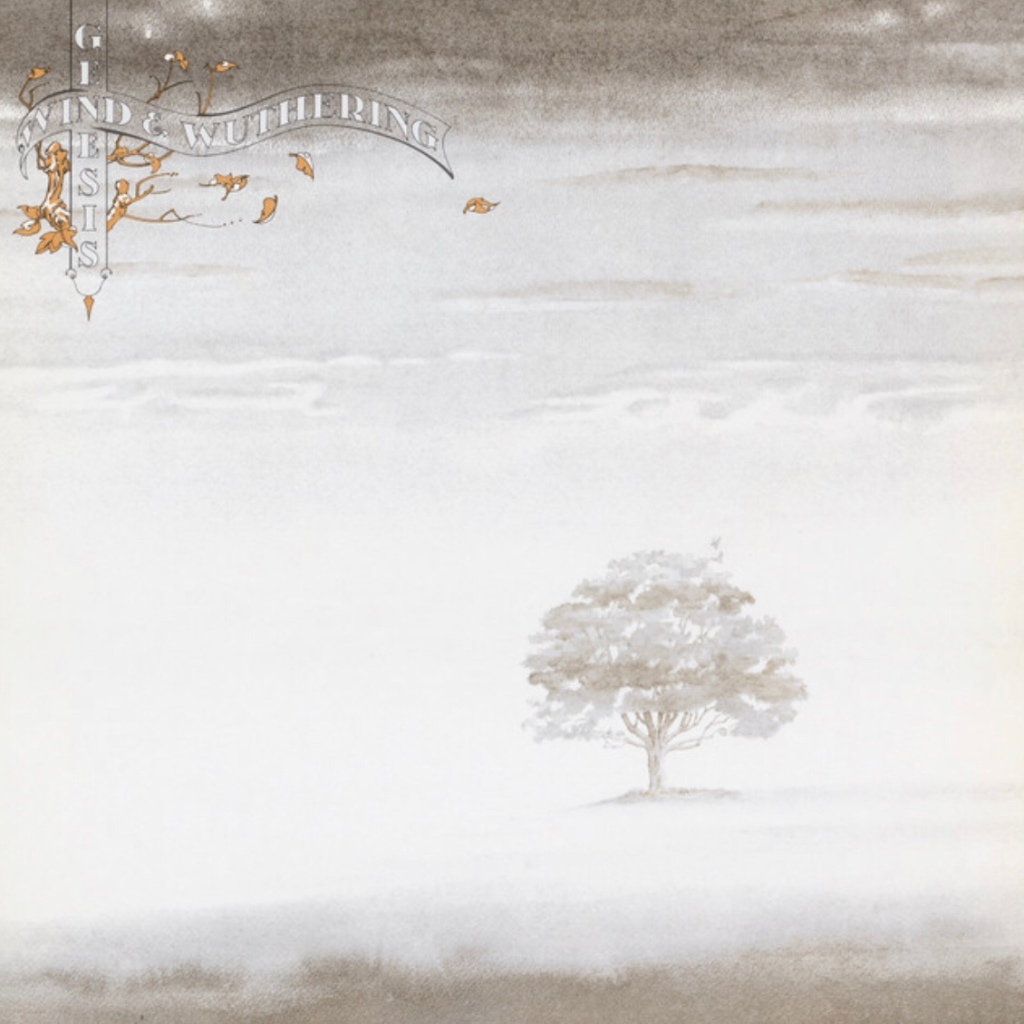
1976 – Part 4.9: Genesis – Wind And Wuthering

Why wait a few years for a new album when the new version of the band became successful with its new singer?

Released in December 1976, the band of Phil Collins, Tony Banks, Mike Rutherford and Steve Hackett remained unchanged, however trouble was brewing on the horizons.

Success leads to the need to create more success. And for Genesis, they had four competent songwriters who thought they all had the songs to create more success. The question was, which songs would get chosen and which songs would be left out.

Eleventh Earl Of Mar

Written by Tony Banks, Steve Hackett and Mike Rutherford. Its progressive, competing with bands like Yes for complex time changes and yet it still sounds like foot tapping rock and roll.

That section that starts with the words “I’m fighting, gravity falling” is my favourite and while brief, the vocal melody from Collins is memorable.

It refers to the historical figure of John Erskine, Earl of Mar, a Scottish Jacobite.

One For The Vine

At 10 minutes, it’s not for everyone. Written solely by Banks, the keys dominate the track.

I like the section from about the 4.40 minute mark. It’s almost soundtrack like something which The Alan Parsons Project would do a lot with his instrumentals. And the quietened down section at 7.21 fits well after the long instrumental passage.

Your Own Special Way

Even though the song is written by Rutherford in open tuning, it’s a typical Phil Collins song. It also reminds me of Coheed and Cambria and a song from the “No World For Tomorrow” album.

Wot Gorilla

An instrumental which Collins brought to the band and one that he said is one of his favourite tracks as it brought in his influences of jazz fusion.

Meanwhile Hackett felt that the song was “good rhythmically, but underdeveloped harmonically” and didn’t want it on the album in place of his song “Please Don’t Touch” which Hackett would later use for his solo album of the same name.

All In A Mouse’s Night

Written by Banks, it’s a silly song lyrically about a 10 foot mouse with big teeth however the music reminds me of a section in Dream Theater’s “Six Degree Of Inner Turbulence” song.

Blood On The Rooftops

Written by Hackett and Collins, I like the classical/flamenco style guitar from Hackett to start off the song. Listen closely and you will hear a bit of “Dee” from Randy Rhoads there. Then again, classical is classical so everyone is borrowing from the same masters.

Banks and Rutherford have said that this was Hackett’s best song as a member of the group.

Unquiet Slumbers for the Sleepers…

Written by Hackett and Rutherford, it’s an instrumental which is in two parts. The guitar playing from Hackett is very flamenco finger picked liked and good enough to rival the masters of the genre.

In That Quiet Earth

Written by the band, this is the second part of the instrumental and Collins is playing a fast jazz fusion beat which allows the rest of the band to dance over.

The heavy metal like section from 2.50 is the reason why I press play.

Afterglow

Written by Banks, this a milestone song for the band, as it proved that they could write short songs that they all liked. And a sign of the direction they would take.

The album was another success and the tour was huge with the gigs in Brazil being attended by over 150,000 people and each member needing armed bodyguards during their stay.

But Hackett was not a happy camper.

The writing process for the album was argumentative and having his songs removed was also contentious. So once the tour ended, Hackett left the bend to pursue a solo career.

Standard
A to Z of Making It, Classic Songs to Be Discovered, Influenced, Music, My Stories, Unsung Heroes

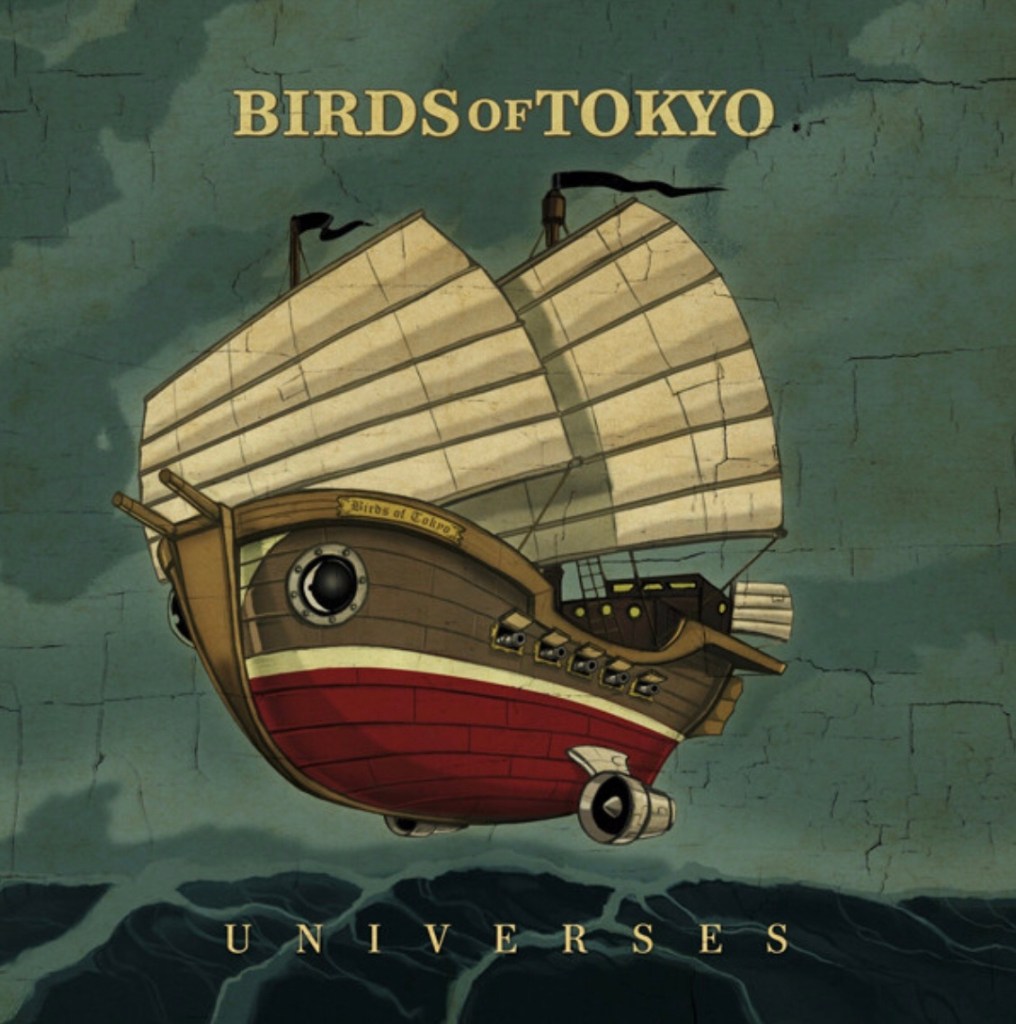
Australian Method Series and The Record Vault: Birds Of Tokyo – Universes

“Universes” is the second album from Birds of Tokyo, independently released on 5 July 2008.

The Personnel for the album is Ian Kenny on vocals, Adam Spark on guitars and keyboards, Adam Weston on drums and Anthony Jackson on bass.

If people are unaware, Birds of Tokyo formed in 2005 as another creative outlet for Karnivool vocalist Ian Kenny who wanted to do something softer and accessible.

There was a period between 2005 to 2012 that both bands operated, however Birds Of Tokyo then took over Ian Kenny’s life until late 2018 when Karnivool got together to play some shows and then COVID-19 hit and it looks like both bands started operating again at the same time.

I am a Karnivool fan first, and my interest to hear Birds Of Tokyo was because of that.

Karnivool plays a certain brand of heavy alternative rock/Metal which I like but even they have added more abstract movements into their songs..

Birds Of Tokyo at the start had this lighter alternative rock vibe happening but as they grew more popular, they more or less became a standard verse and chorus pop act. And a very good one at that.

Uno

Backward tape noises for about a minute leads into the “opening track”.

Broken Bones

Its aggressive in the verses and it could pass as a more pop version of Karnivool, purely because of Ian Kenny’s vocals.

The “I’m on a highway that leads to the end” section and how it builds up is why you should press play on this, because I guess no matter what we do, all of the roads we take lead us to our end.

For humans are born just to die.

Wild Eyed Boy

It’s got a start that reminds me of “The Cure” and “Inxs” but Ian Kenny’s voice and vocals keeps the song rooted in rock territory.

Silhouettic

The triple knock out combo continues with this.

It’s fast rock, hard to describe, but the vocal melodies are so catchy, they remain long after the song is finished, especially the lyric “there goes my baby”.

Head in My Hands

It feels almost like an Icehouse track, with Iva Davies singing. A bit slower, more early 80’s Brit Pop like Joy Division and I can’t get the lyric “I hate my melodies there all the same” out of my head.

But press play to hear the Thin Lizzy like harmonies which mimic the vocal melodies.

White Witch

It reminds me of Jet and “Are You Gonna Be My Girl” in spirit and feel. It also could have come from a Wolfmother album.

An Ode to Death

It’s heavy with a sinister groove and a chord progression that reminds me of “The Way” from Fastball.

Armour for Liars

Its aggressive and super melodic.

“Flowing blood for wealth and oil, the arms race and their toys, Power suits and power ties, corporate armour built for liars” more or less sums up what the song is about.

And I like the repeating line of “hey kid, run on home again, no world news to sell again”.

The Baker’s Son

More like Karnivool than the alternative pop rock on show here and at 6 plus minutes long, the song moves between moods and feels.

Train Wrecks

It feels like its influenced by INXS as it has that vibe with a bit of Radiohead and Muse mixed in.

Medicine

A strummed acoustic and metronomic piano chords with Kenny’s vocals makes up the closer.

If your time is short, then press play to hear the first three tracks in “Broken Bones”, “Wild Eyed Boy” and “Silhouettic” along with the 70’s rocker “White Witch”. While I think of it, stick around for “Armours For Liars” as the deep track.

And it was certified Gold in Australia but it’s not the album you see in their Top 5 Spotify list. Those bigger albums were just around the corner.

Standard
Classic Songs to Be Discovered, Influenced, Music, My Stories, Unsung Heroes

The Record Vault: Bush – Razorblade Suitcase

Released in 1996, I got this on cassette originally, which I found in a 3 for $10 bin.

But I didn’t get it when it came out. It was a few years later and I got the CD recently at a record fair. Again it was in a 3 for $10 box.

Personal Holloway

Press play to hear the bass guitar riff.

Greedy Fly

It’s basically an artist writing a song, without a thought of it being a hit. And somehow it gets released as a single and it’s seen as a hit. I like the feel of the verses, the way the bass rumbles and those open string droning notes on the guitars builds up into the Chorus.

Swallowed

The lead single, and it followed a “Live (band) vibe”.

At 30.5 million Spotify streams it’s definitely the hit song from the album. But it pales compared to “Glycerine” at 151 million streams or “Machinehead” at 91.6 million streams.

Insect Kin

Press play to hear how the song starts with the snare groove and how it just keeps building. You get to hear Rossdale throw his throat out in the singing.

Cold Contagious

It has a cool drum groove, with the guitars decorating the song in a nice way, as Rossdale is singing, “you will get yours” with the volume and intensity increasing. And at six minutes long, it’s the anti-single, but it still got released as a single.

A Tendency To Start Fires

The verses hook me, but the Chorus loses me.

Mouth

It’s almost like the song “Black Sabbath”. Listen to it in its doom like feel.

“Nothing hurts like your mouth”

Truth right there. We might forget the words but we never forget the feeling.

Straight, No Chaser

They tried to re-write “Glycerine” but they didn’t get close.

History

I like the intro guitar riff on this. It just didn’t go on long enough.

Synapse

The Chorus is a favourite, very Bowie like.

Communicator

It’s “Mouth” part 2.

Bonedriven

Another cool guitar riff to start if off but overall the song doesn’t connect with me as I felt they really tried hard to recreate “Glycerine”.

Distant Voices

They should have ended the album with “Synapse” as the last three songs drag it down.

Like “Sixteen Stone”, it was the accessible singles of the album that got me interested in the album and then it was a matter of discovering some cool sections here and there.

They did an electronic remix album after this and they lost me with that cash grab. And I didn’t check out “The Science Of Things” until recently.

Standard
A to Z of Making It, Classic Songs to Be Discovered, Influenced, Music, My Stories, Unsung Heroes

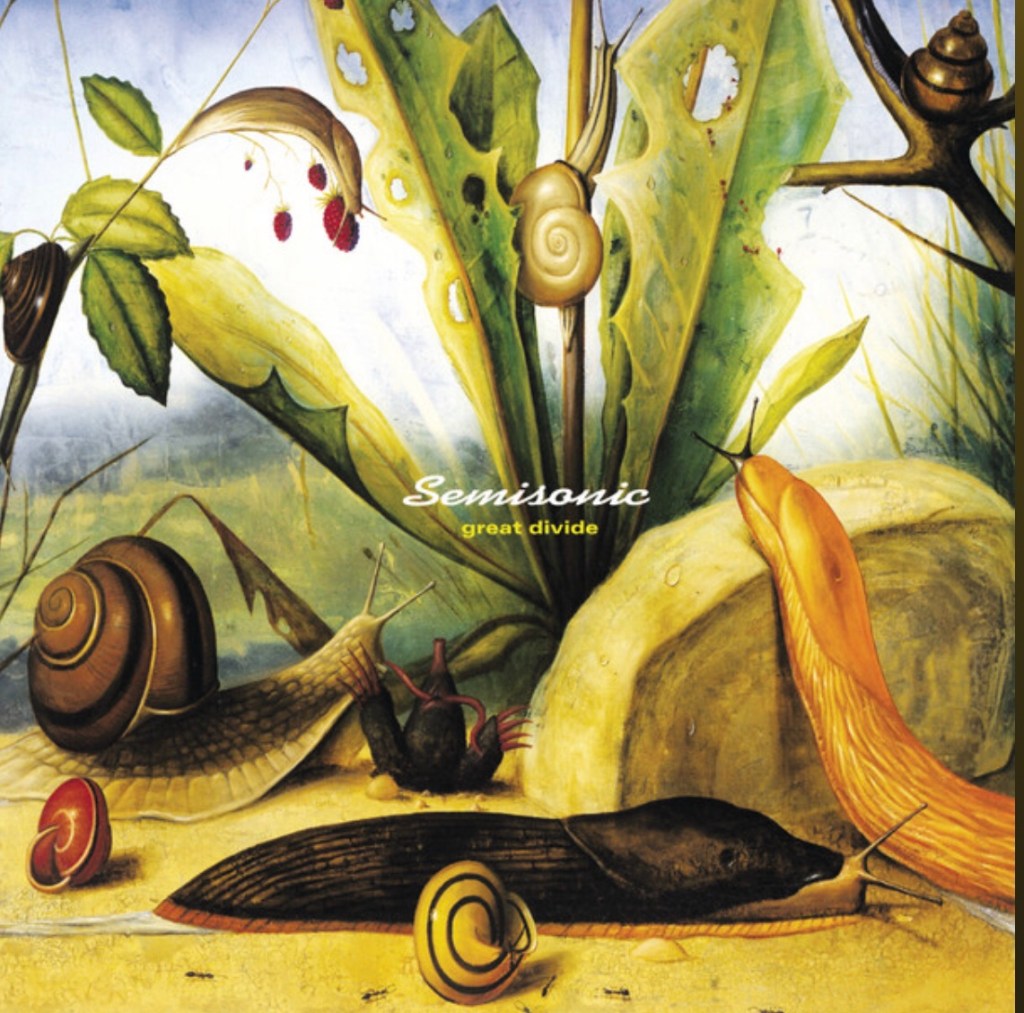
1996 – Part 4.7: Semisonic – Great Divide

Those 70’s Classic Rock vibes came back in full force in the mid 90’s, rebranded as Alternative Rock.

“Closing Time” in 1998 made them Superstars so I was curious to hear more.

Semisonic is an American rock band formed in Minneapolis, Minnesota, in 1995.

The band has three members: Dan Wilson (lead vocals, guitar, keyboards), John Munson (bass guitar, keyboards, backing vocals, guitar), and Jacob Slichter (drums, percussion, keyboards, backing vocals).

“Great Divide” is the debut album released on April 9, 1996 by MCA Records. The band had signed a record contract with Elektra Records to record the album. During recording, Bob Krasnow, the president of Elektra Records had quit, and in the changeover to a new president, the Neglektra dropped Semisonic. The band then signed with MCA Records, and finished recording the album.

F.N.T

The main riff is catchy.

If I Run

I like the groove on this and the way the vocal melody sounds.

Delicious

It reminds me of Everclear and that whole power pop and post-grunge scene.

Down In Flames

Very Pearl Jam like and bleak.

Temptation

Press play on this just for the bass groove and the way the guitars and keyboard play the riff.

The sort of falsetto like vocal melody is also different and catchy.

The Prize

Before Creed wrote “Higher” there was “The Prize”.

Brand New Baby

The best song on the album. Press play to hear the Chorus.

Hearing this album so many years after it’s release is a fun trip. A lot of people see this album as better than the second album. Then again, they are labeled as a “one hit wonder”.

Ignore all that and just press play.

Standard
Classic Songs to Be Discovered, Influenced, Music, My Stories, Unsung Heroes

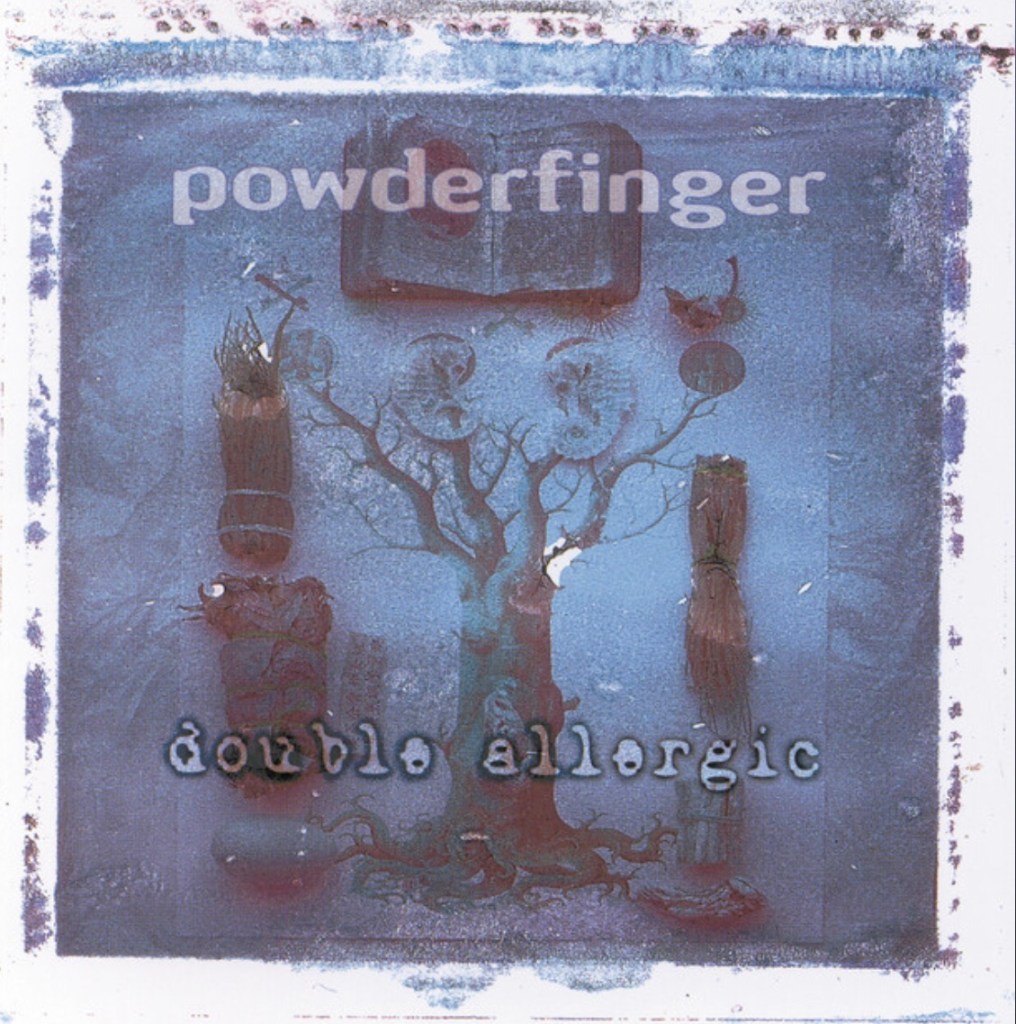
Australian Method Series and 1996 – Part 4.5: Powderfinger – Double Allergic

“Double Allergic” is their second album released in 1996.

It peaked at No. 4 on the ARIA Albums Chart and was certified triple platinum by ARIA for shipment of 210,000 units by 2007.

Like all second albums it contained material that had been written for the debut album.

You know the saying. Artists have their whole lifetime to write their first and second album and only a few months to write their third.

They worked with an expensive producer on their first album but worked with a less well known producer for this.

From 1992 until their break-up in 2010, the line-up consisted of vocalist Bernard Fanning on vocals, guitarists Darren Middleton and Ian Haug, bass guitarist John Collins and drummer Jon Coghill.

“Pick You Up” was the first single and is by far the best pop song on the album.

“D.A.F.” is the the second single, and it’s title is the chord progression.

“Living Type” was the third single written about the Manson Family cult, and came with an X-Files style music video.

But if you want to press play on a song, then press play on “Oipic” and let the Led Zep exotic Sounds take you away.

By the way, this isn’t the album that got me interested. It was the next one “Internationalist” and the song “Passenger”. But that’s for another post.

Standard
A to Z of Making It, Classic Songs to Be Discovered, Derivative Works, Influenced, Music, Unsung Heroes

2001 – Part 4.5: Skillet – Alien Youth

It was the “Comatose” album released in 2006 that made me a fan of Skillet and I followed em up to to “Rise” album released in 2013.

And although I listened to “Unleashed” released in 2017 and “Victorious” from 2019, I didn’t really feel the need to relisten to em.

And when I went looking at their back catalogue I was surprised how much their sound had evolved.

“Alien Youth” is their fourth album released in 2001. Their sound on this is like industrial rock.

The band for this album is John Cooper on vocals, bass, sampling and programming, Korey Cooper on keyboards, sampling and programming, Lori Peters on drums, Kevin Haaland on guitars (except “Earth Invasion”) and Ben Kasica on guitars (“Earth Invasion”).

Alien Youth

It reminded me of Motley Crue’s “Generation Swine” album. And I like that connection.

Vapor

It reminds me of the whole “industrial rock” movement.

Earth Invasion

The best song on the album.

Very “Smells Like Teen Spirit” like.

You Are My Hope

The usual ballad.

It’s catchy and derivative.

Eating Me Away

A fuzzed out bass riff dominates the verses and once the Chorus kicks in, it’s Stabbing Westward and Korn like.

Kill Me, Heal Me

I like it’s swinging drum groove in the verses. I’ve heard Good Charlotte songs with these kind of beats and melodies, but they came after this.

Otherwise it’s all grunge rock.

The Thirst Is Taking Over

My favorite song on the album.

The verses have a programmed drum beat with clean tone and lightly delayed guitars.

And in the Chorus, there’s a distorted and fuzzed out guitar.

One Real Thing

The Chorus is hard rock and it has this “Teenage Dirtbag” vibe.

Stronger

Nirvana meets Ministry.

It has some cool riffs to jam on but lyrically it’s a bit cliched with the repeating “my god is strong” melody.

Rippin’ Me Off

It starts off terribly, with programming and sampling. Then a Nirvana like riff kicks in.

It’s a response to Marilyn Manson and his views on God being dead.

Check out the chorus. It’s heavy and angry.

You say that God is dead but you’re rippin’ me off/ You can’t infect my mind with your vanity/ You’re rippin’ me off!

Will You Be There (Falling Down)

This is a great ballad.

It feels like Bryan Adams and Celine Dion are singing it.

Come My Way

The closer. it starts off with a piano riff that sounds like it came from a soundtrack.

And it’s more hymn “Hallelujah” like.

They are labeled as a Christian Rock act, but they delivered an album that people from all walks of life would like.

Standard
A to Z of Making It, Classic Songs to Be Discovered, Derivative Works, Influenced, Music, My Stories, Unsung Heroes

Australian Method Series: Eskimo Joe – Black Fingernails, Red Wine

Eskimo Joe are an Australian alternative rock band that was formed in 1997 by Stuart MacLeod, on lead guitar, Joel Quartermain, on drums and guitar, and Kavyen Temperley, on bass guitar and vocals.

Their road to fame started with a University Battle of The Bands contest. They won their local campus event, won the State event and then won the National event.

Released in 2006, this album is Number three and it’s noted for having the sound of the early 1980s Australian rock movement.

From the bands point of view they wanted to make a record as if they were stadium rock band. In other words if they were like INXS, what kind of record would they make.

The band recorded “Black Fingernails, Red Wine” on the central coast of NSW’s The Grove Studios. The Grove Studios were originally known as Mangrove Studio and were formerly owned by INXS bass player Garry Gary Beers.

In Australia it was certified 4× Platinum. It went to number one and spent 62 weeks on the ARIA Charts.

I never really appreciated this album when it came out. I was heavily into Progressive Metal, Nu-Metal and Metalcore bands at the time and I was devouring bands from those genres. I heard the singles and I liked em, but didn’t invest time.

A decade later, I finally did.

Comfort You

A great pop song with a piano line that reminds me of “Speed Of Sound” from Coldplay.

As soon as the drums and the fuzzed out guitar kick in, I was hooked. It’s almost new wave, but hard rock as well.

Lyrically there’s not much to it with a simple repeating line of “I will come, come to comfort you”.

But that’s all that is needed as the music and the groove is intoxicating.

If you’re not tapping your foot and nodding your head by the end of it, check for a pulse.

New York

This song is excellent.

It’s constructed with all the right atmospherics and ambient noises, plus an emotive piano melody and Temperley’s glimmering voice powers the melody.

Hey, hey, I know it wasn’t New York
Where I lost my mind.

The opening lines. A habit will always follow you regardless of which city you wake up in.

Black Fingernails, Red Wine

This song is huge. And the hook.

Black fingernails, red wine
I wanna make you, all mine

It reminds me of Icehouse, Eurythmics and INXS.

The Chorus is arena rock.

Breaking Up

An acoustic guitar and an addictive vocal melody.

And how descriptive is “A mouthful of glass / That cuts up your words”.

Setting Sun

The song was called “Forever Young”.

U2 comes to mind but press play on this track to hear the bass playing.

If your scared about the future,
I’m scared about the past

While you’re at it, check out the guitar melody which starts at 2.32.

London Bombs

Coldplay comes to mind. And I like it.

Sarah

Killers comes to mind with a bit of Rick Springfield.

This Is Pressure

An acoustic strummed passage starts the song.

There is no romance in suffocation

Truth right there.

Beating Like A Drum

If you like INXS, you will like this song. it’s not that it sounds like the band, it just has this spirit and attitude of Michael Hutchence.

I had a lot to drink last night
Now I’m feeling old
Is there anything that I can buy
That I have not sold

I’ve grown up with a father who likes to drink a lot and an older brother who likes to drink more. And all they think about is the next drink. Lucky for me they didn’t sell stuff to feed their habit.

Reprise

It’s a short instrumental, cinematic like piece.

Press play on it to hear the emotive piano melody.

Suicide Girl

Oasis and Radiohead comes to mind.

My social suicide girl
Poison in the wall
Razors in the apple core

These lyrics are hard rock. Nikki Sixx and Rachel Bolan would be proud.

How Does It Feel

A piano riff and a Muse/Coldplay feel.

You’re gonna lose everything / How does it feel

Not the best when it happens but as time goes on, a lot better.

There isn’t a song on this album that I will skip. It’s perfect from start to finish. So if you want to experience Australian Pop Rock, press play on this.

And the band is still active releasing new music and touring. But those reviews will be in other Australian posts.

Standard