forgotten albums, Hard Rock, Heavy Metal, Music, Music history, rock music

Skid Row’s “Nothing”: The Strange Freedom of Realising You Don’t Need It All

It appeared on “Revolutions Per Minute”, released on October 24, 2006. Sebastian Bach was long gone, Johnny Solinger was handling the vocals, and the band was trying to figure out what its identity looked like beyond the shadow of its biggest commercial years.

The album was produced by Michael Wagener, the man who had helped shape Skid Row’s early sound.

Fifteen years after “Slave to the Grind”, the musical landscape had changed.

The decade between 1994 and 2004 was when music blew itself apart and rebuilt itself for a different kind of consumer.

Grunge was fading, and nobody was quite sure what would replace it. The answer wasn’t one new sound. It was a dozen competing movements, each fighting for the same shrinking amount of attention.

Nu-metal took metal, added hip-hop rhythms, turntables and anger, and turned Korn, Limp Bizkit, Linkin Park and Slipknot into commercial heavyweights. Pop-punk did the opposite, taking punk’s speed and attitude and wrapping it in enormous choruses. Green Day and The Offspring opened the door, while Blink-182 and Sum 41 made the sound a global phenomenon.

Meanwhile, Oasis brought back a new kind of popular music influenced by The Beatles and Britpop’s dominance gave way to a more introspective British sound, with Radiohead, Coldplay and Travis finding audiences beyond the traditional rock market. By the early 2000s, The Strokes, The White Stripes and The Hives were stripping away the excess, reminding everyone that sometimes a dirty guitar riff and a good song were enough.

Pop music became a manufacturing powerhouse. Britney Spears, NSYNC and the Backstreet Boys turned teenage fandom into a commercial machine, while Beyoncé, Usher, Alicia Keys and Aaliyah helped push R&B into the centre of mainstream culture.

Hip-hop made an even bigger leap, moving from the competing regional identities of East Coast and West Coast rap into a global commercial force. Eminem, Jay-Z and the emerging Southern rap movement changed the sound, language and business of popular music.

And underneath it all, electronic music was building its own empire. UK Garage and 2-Step were reshaping British dance music, while The Prodigy and Fatboy Slim brought electronic aggression to rock audiences. Trance turned dance floors into euphoric communal experiences, laying foundations for the festival culture that would explode in the years ahead.

But the most important thing about 1994–2004 wasn’t any individual genre. It was the collision of all these sounds with a changing music business.

CDs were still generating enormous profits. Record labels could afford to take risks, develop artists and market entire movements. Then the internet arrived, Napster attacked the economics of recorded music, and the industry discovered that controlling distribution wasn’t the same as controlling demand.

By 2004, the music world had changed. Genres were multiplying, audiences were fragmenting, and the old gatekeepers were losing their grip.

The irony? The industry was enjoying the last great financial boom of the CD era just as the technology that would undermine it was becoming impossible to ignore.

And the audience for hard rock had fragmented so much. Skid Row was no longer operating in the world that had made it famous.

“Revolutions Per Minute” received a largely unfriendly reception. Its genre-hopping made it difficult to categorise, and it never came close to reproducing the commercial impact of those early records. Yet “Nothing” offers something more interesting than another attempt to recreate the past.

It offers perspective.

The houses on the hill

We all do it. We look at the people who appear to have made it. We look up the hill and wonder whether we took the wrong road.

The funny thing about ambition is that it rarely announces its final destination. You achieve one thing, then immediately establish another target. The salary isn’t enough. The house needs renovating. The business needs to grow. The band needs a record deal. The record deal needs a hit. The hit needs to be bigger than the last one.

There’s always another hill.

And because we’re looking at somebody else’s house, we never see the mortgage, the arguments, the sleepless nights or the possibility that the people living inside are looking at another house further up the road.

The song understands that comparison is a trap. Not because wanting more is inherently wrong, but because you can spend your entire life measuring yourself against people whose circumstances, priorities and definitions of success have nothing to do with yours.

Rock and roll knows this territory intimately. The whole business is built around wanting to be somebody. You start in a bedroom, graduate to a rehearsal room, then dream about the tour bus, the record deal and the arena.

But what happens when you get there?

And what happens when you don’t

Growing up is hard

The Bowie reference is more than a clever name-check. It’s an acknowledgement that the questions we ask when we’re young don’t necessarily disappear when we get older.

David Bowie’s music understood that growing up wasn’t simply a matter of acquiring wisdom. Sometimes it meant discovering how little you understood in the first place.

When you’re young, you imagine there’s a point at which everything becomes clear. You’ll have a career, a relationship, a home and a reasonably coherent understanding of why you’re here. You’ll know what matters. You’ll stop worrying about the things that worried you at twenty.

Then you get older and discover that life doesn’t hand out instruction manuals.

You become more experienced, but experience doesn’t automatically produce certainty. Sometimes it just gives you a longer list of mistakes you know how to avoid, alongside a fresh collection of mistakes you haven’t made yet.

We make decisions with incomplete information.

Growing up isn’t arriving at the answer. It’s learning to live without one.

If I want it all, do I need it all?

Wanting something and needing something are two entirely different propositions.

The modern economy depends on our inability to distinguish between them. Advertising doesn’t merely sell products; it sells inadequacy. You’re not just buying a watch. You’re buying the suggestion that the person wearing it has achieved something. You’re not simply buying a bigger house. You’re buying the promise that you’ll finally feel successful when you walk through the front door.

And then the next advertisement arrives. There’s always a better version of whatever you’ve just purchased.

Rock music has its own version of the same disease. The industry teaches musicians to measure their worth through sales, chart positions, streaming numbers, ticket prices and the number of people who recognise them in an airport. You can make a record you’re proud of and still be told it doesn’t count because it didn’t sell enough.

I’ve always found that contradiction fascinating. Music is supposed to be about expression, yet the business constantly demands that expression be converted into measurable success.

Of course, money matters. Bills don’t pay themselves, and musicians deserve to be paid for their work.

The question in “Nothing” cuts through that nonsense. What if getting everything you want doesn’t mean you need any of it?

Records in my room

This is the line that gets me.

Because it understands music is a place you can go.

A place.

I can remember albums that became entire worlds. You put on a record, shut the door and disappeared for forty minutes. The music wasn’t background decoration. It was the main event. I learned the running order, the lyrics, the guitar parts, the production details. I discovered the songs that mattered to me, including the ones nobody else seemed to care about.

Those records became attached to periods of my life. I remember where I was when you heard them.

Decades later, a guitar intro can bring the whole thing back.

That’s the remarkable thing about recorded music. It doesn’t merely preserve sound. It preserves the person you were when you first heard it.

And I just need to press play.

I need nothing but you

After questioning ambition, material success and the whole business of wanting more, the song arrives at a surprisingly simple conclusion.

Nothing but you.

The song has spent its time examining the things we chase, the people we compare ourselves with and the uncertainty that comes with growing older.

There is a world of difference between having nothing and needing nothing. The first describes deprivation. The second can describe freedom.

Perhaps the best parts of life are happening in the room you’re already in.

Money can buy comfort, opportunity and independence. It cannot guarantee that you’ll be content with your life.

And success can open doors, but it cannot tell you which ones are worth walking through.

Sometimes the answer is more complicated than we’d like. Sometimes it’s remarkably simple.

There’s an argument that “Revolutions Per Minute” could almost be considered a Rachel Bolan-led project operating under the Skid Row name. Bolan was the dominant songwriting force on the record.

Critics and fans were divided, and the record never found the audience the band had enjoyed in its commercial heyday.

But that’s precisely why “Nothing” is worth revisiting.

It’s a song about time passing, memories accumulating and the gradual realisation that the things you once thought essential might not be essential at all.

Johnny Solinger’s place in Skid Row’s history is inevitably complicated by the enormous presence of Sebastian Bach. Solinger spent more than fifteen years with the band, recording “Thickskin” and “Revolutions Per Minute” and helping carry its name through a period when its commercial fortunes had changed. He died in June 2021, aged 55, after revealing that he was suffering from liver failure.

The music remains where it was left. We are the ones who arrive with different experiences.

Sometimes you can just put on a record, sit in your room and let it be what it is.

You don’t need it to be the biggest thing in the world. You just need it to mean something to you.

Press play.

Standard
Music, My Stories

Machine Head – Live at the Enmore Theatre, Enmore: 16 March 2024

I haven’t missed a show since they came out on “The Blackening” tour, a tour which lasted close to 3 years.

And my Best Man was in tow again who also hasn’t missed a show with me, along with my eldest son this time, who likes only three Machine Head songs in “Darkness Within”, “Bastards” and “Circle The Drain”.

“Do you reckon they’ll play em Dad”, he kept asking me.

“I am sure they will as those songs are up there in streams, so why not”, I lied back.

I had already checked the last 10 shows they had done via Setlist.fm and I couldn’t see those songs in the set. But I wasn’t going to tell him the truth. And selfishly, I wanted him to come and experience a “Machine Fucking Head” concert.

But before Machine Head took the stage, Fear Factory did.

It’s not the classic Fear Factory line up but then again which band these days is touring with the original members.

Guitarist Dino Cazares is the only original member, joined by new vocalist Milo Silvestro who replaced the much loved Burton C. Bell. Pete Webber on drums is also a new addition, then again Fear Factory have had more drummers than Spinal Tap. Rounding out the line up is bassist Tony Campos, who has been with the band since 2015.

I’m not a massive fan but I do like to go nuts on “Archetype”, “Shock” and “Resurrection”. And man, they did play em.

They opened with “Shock”, they closed with “Resurrection” and in the middle they dropped “Archetype”.

“Archetype” was written in the version of Fear Factory without Dino and it wasn’t played live when Dino returned, however once it was added to the setlist in 2013, it never really left.

But I was here to watch Machine Head.

Machine Head is a different beast these days from the first time I saw them. Robb Flynn is basically Machine Head, in the same way Dave Mustaine is Megadeth.

In 2010, joining Rob was Phil Demmel on guitars, Adam Duce on bass and Dave McClain on drums.

Fast forward 14 years, joining Rob this time is Jared MacEachern on bass, Matt Alston on drums and HAVOK guitarist Reece Scruggs, who stepped in for Waclaw “Vogg” Kletyka, who was the recording guitarist but couldn’t make the touring commitments as he was touring with his long time band DECAPITATED.

If you’ve been to a Machine Head concert, you know when “Diary Of A Madman” starts, the concert is about to begin (much like when “Doctor Doctor” plays at a Maiden concert).

And as soon as the outro of “Diary” kicks in, the lights go down and once it plays out, Rob Flynn starts “Imperium”.

It’s a great opener, it sets the tempo, the mood and the aggression.

And the aggression continued with “Ten Ton Hammer”, “Choke On The Ashes Of Your Hate”, “Now We Die”, “Aesthetics Of Hate” and “Old”.

“Locusts” was up next and it didn’t disappoint. It was also probably the most melodic song of the night.

The frantic energy and aggression continued with “Take My Scars”, “No Gods, No Masters”, “Slaughter The Martyr”, “Bulldozer”, “From This Day” and “Davidian”.

And the closer was the usual “Halo”.

Till next time.

Standard
A to Z of Making It, Derivative Works, Influenced, Music, My Stories, Unsung Heroes

1996 – Part 5.7: Sepultura – Roots

Sepultura means grave in Portuguese. It all came to Max Cavalera when he was translating the lyrics from the song “Dancing On Your Grave” by Motorhead. It doesn’t matter where you look, Lemmy’s influence is everywhere.

I met the brothers, Max and Igor Cavalera at a Utopia Record Store Signing in Sydney. My cousin Mega is a huge fan. Mega turned up with his bashed in snare skin which the guys gladly signed and Mega also gave me a poster which they signed for me and I then gave the poster back to Mega.

Sepultura built up to this moment with their three previous releases in “Beneath The Remains” released in 1989, “Arise” released in 1991 and “Chaos A.D” released in 1993.

“Roots” is their sixth studio album released at the start of 1996. It’s also their biggest. The line-up is the classic line up as I know it. Max Cavalera is on lead vocals and he plays a 4 and 6-string guitar. Andreas Kisser is on lead guitar. Paulo Jr. is on bass guitar and Igor Cavalera is on drums and all things percussion related.

Produced by Ross Robinson, so don’t expect to hear any guitar leads as Robinson has openly stated how much he hates guitar leads.

Roots Bloody Roots

The groove metal riff is so much fun to play. There is this dissonance section in the middle which is chaotic and unsettling before the groove riff kicks in.

It carries the message to believe in yourself, be proud of your heritage and be proud of where you come from.

Attitude

There is a syncopated riff in the intro which is cool. The rest is run of the mill, Pantera like groove riffs.

The lyrics to “Attitude” were co-written by Dana Wells, Max Cavalera’s stepson, whose death (in part) led to the events which caused Max to leave the band.

Cut-Throat

“Cut Throat” is about Epic Records who gave the band no love during their previous album “Chaos A.D.” The last words in the song are “Enslavement, Pathetic, Ignorant, Corporations”.

Ratamahatta

It features David Silveria on drums and Carlinhos Brown on vocals, percussion and a lot of other unique native Brazilian instruments.

The song is a celebration of life in Brazil’s favela slums, which tells the stories of people like Coffin Joe and Lampiao, the leader of an early 1900s outlaw gang from north Brazil, whose head was put on public display after he was captured.

Breed Apart

Written by Andreas Kisser and Max Cavalera, it starts off with a military like snare which morphs into a Tool like breakdown before Tool was known to do these kind of breakdowns.

I have no idea what Max is singing, but I don’t really care as the music gets me interested to pick up the guitar.

Straighthate

There is no way you can’t listen to the start and say that doesn’t sound like Tool on the “Aenima” album, which came after.

I also hear a lot of the Nu-Metal like riffs from acts like Slipknot, Spineshank and Mudvayne on this album. Then again Korn was doing something similar as well.

Spit

The riff has a hard rock like swagger, something that bands like Buckcherry and Orgy would do in a few years’ time.

Lookaway

It features guest appearances by Korn vocalist Jonathan Davis, then-Korn drummer David Silveria, House of Pain/Limp Bizkit turntablist DJ Lethal, and Faith No More/Mr. Bungle vocalist Mike Patton. The track alone could appear on a Korn or Mr Bungle album. It’s chaotic.

Dusted

Written solely by Andreas Kisser, it’s more of that Korn and Deftones vibe.

Born Stubborn

It’s got this industrial like vibe. Like all the songs, I have no idea what Max is singing.

It features an Xavante Tribe chant which also appears on the song “Itsari”.

Jasco

An instrumental by Andreas Kisser which feels like a tribute to someone.

Itsári

An instrumental with the Xavante Tribe chants and an acoustic guitar riff that reminds me of Led Zeppelin’s “III” album.

Ambush

I like the intro on this. It reminds me of stuff that Machine Head would do. It’s “a tribute to murdered South American rain-forest activist Chico Mendes”.

Endangered Species

It addresses environmental destruction. Musically it is brutal.

Dictatorshit

It’s about the 1964 Brazilian coup d’état. It’s fast, punk like and angry.

I would say that “People = Shit” from Slipknot is similar.

Canyon Jam

A hidden track on the album. It’s a 14 minute native drum instrumental.

The album was massive in Australia, reaching number 3 on our ARIA charts and a Gold certification to go. In Austria it reached number and a Gold certification. Gold certifications followed in Canada, France, Netherlands, the U.K and the U.S.

On top of that it charted in the Top 10 in Belgium, Finland, Germany, New Zealand, Norway and Sweden.

The small subtle change from fast speed metal to groove nu-metal worked. It is the bands biggest album and the last studio album to feature founding member, main songwriter and vocalist/rhythm guitarist Max Cavalera. The offers rolled in for Max to do something on his own. Soulfly would be the answer.

Standard
Influenced, Music, My Stories, Unsung Heroes

2001 – Part 5.2: Slipknot – Iowa

“Iowa” is the second studio album by Slipknot, released by Roadrunner Records on August 28, 2001.

Produced by Ross Robinson and Slipknot but it’s Mike Fraser as the Engineer who deserves a special mention here. The guitars are downtuned a lot and somehow they don’t end up sounding muddled. Which gets me thinking that the placement of the microphones to record the guitars was pretty spot on for Andy Wallace in the mix department to give all 8 members space to do their thing.

The 1999 self-titled debut album took the Charts by surprise, so the pressure to deliver a worthy follow-up was at an all-time high.

Production for the album started with drummer Joey Jordison (RIP) and bassist Paul Gray (RIP) in October 2000. Most of the material was written during this time, while other members took a break after the extensive touring that had followed their debut.

By January 17, 2001, the whole band arrived and basically war was declared between each other. Fatigue was killing Jordison and Gray, while alcoholism and drug dependency was affecting Corey Taylor and the other members. On top of that they had management problems and a party culture full of women and narcotics.

Taylor even resorted to cutting himself with broken glass to achieve the desperation and doom in the vocal growls he wanted.

So if you don’t know Slipknot, they wear masks which obscure their faces and they are referenced with numbers.

(#8) is Corey Taylor on vocals, (#7) is Mick Thomson on guitars, (#6) is Shawn Crahan on percussion, backing vocals, editing, (#5) is Craig Jones on samplers, media, (#4) is Jim Root on guitars, (#3) is Chris Fehn on percussion, backing vocals, (#2) is Paul Gray on bass, backing vocals, (#1) is Joey Jordison on drums and (#0) is Sid Wilson on turntables.

Basically the album is a result of guys who hated each other, the world and the world hated them back. Welcome to “Iowa”.

People = Shit

Great title and a great way of the band saying to people “F off and leave us alone”.

Disasterpiece

Press play to hear the head banging intro.

“My Plague” and “Everything Ends” I normally skip.

The Heretic Anthem

The 6-6-6 chant in the song is reminiscent of other songs from notable acts.

Track 7, I skip.

Left Behind

The best song on the album for me, because of the clean tone vocals. Who knew that Corey Taylor could sing that good back in 2001, as Stone Sour was a few years away from releasing their debut.

Tracks 9 to 13, I skip.

Iowa

The closer at 15 minutes. It’s a Tool like dirge through desolation, doom and darkness. At some stages, it feels like the music if a demented soul.

I tried to like this album because of just how popular it became around the world. Gold Certifications in Australia, Belgium, France, Germany, Japan and Netherlands. Platinum certifications in Canada, the UK and the US.

Apart from “Left Behind” and “Iowa” there was nothing else here for me to grasp onto.

But, I did find the lyrics refreshing and totally different from what I was used to, which is a big reason why I kept giving Slipknot a chance.

If you like hard rock music then you won’t like this, as it borders on death and thrash metal with nu-metal influences.

Standard
A to Z of Making It, Classic Songs to Be Discovered, Influenced, Music, My Stories, Unsung Heroes

2001 – Part 4.4: Staind – Break The Cycle

Aaron Lewis has been in the news recently. He is touring in the U.S for his “Frayed At Both Ends” Country album, getting criticized for playing the same song at a gig twice and a few months ago he released a song called “Am I The Only One” in which he expressed his political views and questioned the patriotism of Bruce Springsteen.

Music industry blogger Bob Lefsetz didn’t like it and Lefsetz called out Lewis and his label boss Scott Borchetta. However Borchetta in an open letter back to Lefsetz, said that even though Lewis and Borchetta have opposing political views, Borchetta is not going to cancel or drop Aaron Lewis.

Moving away from “Politics 2021”, back in the early 2000’s, Lewis was busy writing and recording “Break the Cycle”, the third studio album by Staind. Released through Elektra and Flip Records in 2001, it is Staind’s most successful album to date, and it was the album that broke them into the mainstream.

Supported by Fred Durst who signed them to his Flip Records label originally, they had the fortunate or maybe unfortunate tag as Durst prodigies. The debut album, “Tormented” was ignored by the press, but Elektra wanted a piece of the action and “Dysfunction” is the result of major label support.

Then came “Break The Cycle”.

At 28 years of age, Aaron Lewis had lived and experienced enough sadness and happiness to put his life and thoughts into his lyrics.

A total of 5 singles were released from this album, “It’s Been Awhile”, “Fade”, “Outside”, “For You” and “Epiphany”, all of which did reasonably well.

On a side note, the album did cost $800K to make and Elektra along with Flip Records, just weren’t sure they would even get close to recouping.

But in its first three weeks, it sold over a million copies in the U.S. Currently it is certified 5x Platinum for U.S sales. In Canada and New Zealand it was certified 2x Platinum and in the U.K it was certified Platinum. In Australia and Sweden it was certified Gold.

And the label is still saying that Staind owe em money.

The band for the album is Aaron Lewis on Lead vocals and Rhythm guitar, Mike Mushok is on Lead Guitar, Johnny April is on Bass and Jon Wysocki on Drums.

Open Your Eyes

It’s like a Jekyll and Hyde. The lush strummed lightly dirty electric guitar which is the verse riff and part of the intro is calm and beautiful.

The riff that kicks in with the natural harmonics and downtuned riffing is aggressive and ugly. Sonically they just don’t go but the jarring difference works this time around.

Pressure

Written by Staind and producer Josh Abraham.

It has metal like riffs and a verse that is very Grunge like.

Fade

One of their best songs.

The bass groove is great and the way the guitar decorates the spaces shows the skills of Mike Mushok.

And of course, Aaron Lewis is more than capable of crafting and carrying a vocal melody.

It’s Been Awhile

I suppose this was the song that got a lot of people to check out Staind and at 194.497 million streams on Spotify it’s remained in the conversation and the various playlists.

Change

A huge metal like riff starts it off before the clean tone verses kick in.

The Pre-Chorus or is it the Chorus, feels like it could come from a Bush song.

Can’t Believe

Not a favourite. It sounds like the vocals are screamed through a loudspeaker and it does nothing for me.

Epiphany

An Aaron Lewis cut, as the acoustic guitar is prominent with a haunting vocal melody.

Suffer

It’s a hard rock riff however the down tuning and phrasing makes it sound like it isn’t.

Warm Safe Place

It’s just down-tuned too much, that the riff sounds like a muddled mess.

For You

My favourite track on the album.

That opening riff is good enough to challenge some of the best metal riffs from the 80’s.

Outside

Lewis again brings his acoustic guitar and melodies to the table.

The song has 95.057 million streams on Spotify.

Waste

A simple drum groove starts it off, almost jazz blues like. A clean tone guitar plays the riff and Lewis delivers his emotive vocal melody.

In the Chorus, the distorted guitar dynamic kicks in before it moves back to the subdued clean tone verses.

Take It

Another killer riff to start it off.

If there is a problem with the album, it’s the down tuning. On some songs it is excessive, to the point that it sounds muddled. But when they get it right, the songs elevate themselves and the slower acoustic pieces add a lot of variety.

Regardless of political alliances, Aaron Lewis does have a great voice. There are YouTube videos in which he covers “Black” by Pearl Jam and “Turn the Page” by Bob Seger live.

Lyrically, he’s copped a lot of flak for his lyrics to the point that people have called em depressive, but then again, no one said that life is all sunshine, happiness and smiling selfies in exotic locations.

Press play on this and start with “For You”.

Standard
A to Z of Making It, Classic Songs to Be Discovered, Influenced, Music

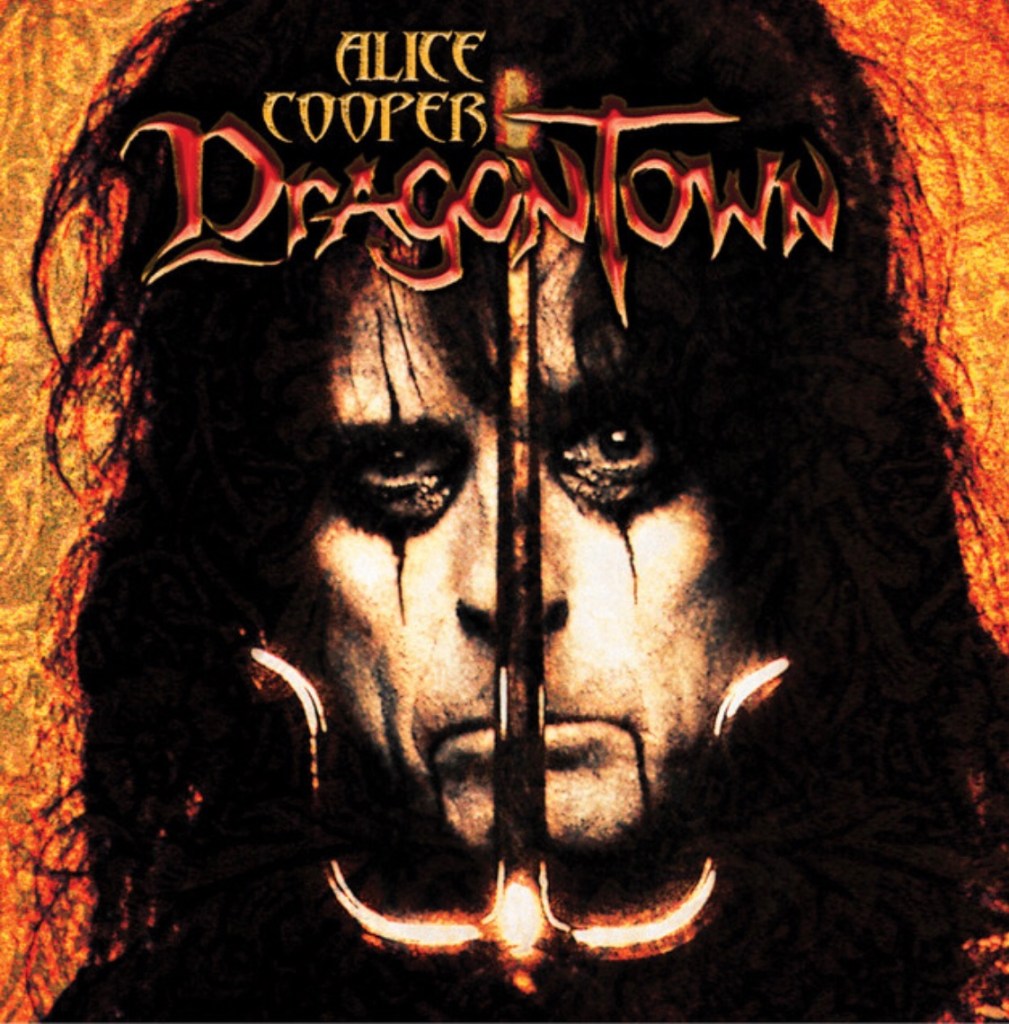
2001 – Part 4.3: Alice Cooper – Dragontown

Alice Cooper did really well between the difficult periods of 1993 and 2003 for rock artists. It didn’t matter what kind of music came out, the Alice Cooper brand was known for doing things different. The 70’s output alone is very diverse. The experimental early 80’s period, although not commercially successful, introduced new wave sounds into the mix. His stage shows bordered on the horror and macabre, with a lot of theatre thrown in. And one thing I do know as a fan of the horror genre, you don’t just stop being a fan.

Then “Trash” came out with its slick “hair metal” production and Alice was really back. His stage shows got even more extravagant and he hasn’t looked back since.

“Hey Stoopid”, the concept album “The Last Temptation” and “Brutal Planet” which told us we are all going to die, continued his brand in the 90’s.

And then there is “Dragontown” was released in 2001.

The band is Alice Cooper on Vocals, Ryan Roxie on Guitar and Greg Smith on Bass.

The studio session Guitar players are Wayne Swinny from the band Saliva and Tim Pierce who did a lot of session work and can be heard doing guitar on songs like “Runaway” from Bon Jovi, “Don’t Dream It’s Over” from Crowded House, “Iris” from Goo Goo Dolls and “Black Or White” from Michael Jackson.

Producer Bob Marlette plays about every string related instrument like Rhythm Guitar, Bass, Keyboards and String Arrangements.

Sid Riggs is on Keyboards and programming and Kenny Aronoff on Drums.

Backing Vocals are provided by Teddy Andreadis, Eric Dover, Calico Cooper and Gionvanna Morana.

If the first two names of the backing vocalists look familiar, they should, as Teddy has done a lot of work with G’n’R and Dover was the singer in Slash’s Snakepit. And the third backing vocalist is Alice Cooper himself, making an appearance as Calico.

All tracks are written by Alice Cooper and producer Bob Marlette.

Triggerman

The sound is definitely on that industrial hard rock style that bands like White Zombie, Coal Chamber and Orgy did.

But in its essence, it’s still a rock song.

Just listen to the Chorus, its 60’s pop. And the ending is in the vein of “Paradise City”.

I am always out of sight
A shadow in the mist
I don’t need no alibi, cos
I don’t exist

Lyrically, it’s about a nobody, a person ignored by society, a person who doesn’t exist, but when that trigger is pulled, they do exist.

Deeper

A very heavy and down tuned chugging riff opens the song. The Pre-Chorus is haunting, with the symphonic Church sermon like voices.

Down and down and down we go
We’re in a deadly spin

Dragontown

An ominous like Intro begins it.

Then Alice starts his vocal melodies.

Well, here you are
Lying bleeding on a grimy street
See the broken glass sparkling darkly
As it cuts your feet

So descriptive.

The Pre Chorus is heavy and I like the vocal melody when Alice is singing, “come on, I’ve got something to show you”.

And the Chorus tells the story of how anyone can disappear in “Dragontown”.

This song is as good as any “metal” song released during this period.

Sex, Death and Money

This cut could have been on a Rod Zombie album. And the Alice sarcasm is back as by the end of the song, we are all going to fry because of our lack of morality.

Sex, death and money, sonny
Makes this wicked world go round
Sex, death and money
It’s the Gospel here in Dragontown

Amen to that.

Fantasy Man

You just want to squeeze my masculinity
Why can’t you leave it alone

It feels like a cut from “Hey Stoopid”, a mixture between “Hurricane Years” and “Feed My Frankenstein”.

Somewhere in the Jungle

From reading the lyrics, you get the idea that somewhere in the jungle the devil is laughing, as an African genocide takes place, making even the wild animals run away from the madness and slaughter while the million bodies are piled on top of each other, arms and legs, feet and hands.

It’s heavy like Ozzy’s “My Jekyll Doesn’t Hide”.

Disgraceland

Downtuned 12-bar blues. That’s what this song is.

An Elvis Presley inspired verse, which also reminds me of a cross between Johnny Cash, Chris Issak and George Thorogood.

And Alice is doing a commentary on the absurdity of how the greatest rock ‘n’ roll hero of all time died on a toilet.

Sister Sara

How low can a guitar go?

In this song, very low.

And like “Sister Mary” in Operation Mindcrime, “Sister Sara” is in a bit of trouble. While “Sister Mary” had issues with an terrorist organisation controlling sleeper cells, “Sister Sara” gets caught with the Bishop and many other cardinal sins to feed her habit.

Every Woman Has a Name

An acoustic guitar arpeggio riff starts it off and Alice tells the story how dreams of youth are taken away by the cold hard and unforgiven world we live in.

I Just Wanna Be God

A bone crunching intro riff starts it off reminding me of Godsmack, Monster Magnet, Mudvayne, Static X and I like it.

And there’s a killer solo as well.

It’s Much Too Late

Then this one kicks in, more Country Rock and totally out of leftfield.

Alice is in his demented “Steven” character voice.

The road to hell is littered
with nice guys with good intentions
But once you’re there, you’re there

The Sentinel

And the album is rounded out by another dose of massive industrial downtuned riffs.

I am the sentinel
I want the world to know
I’m sending you all to hell
I’m tired and I’m wired here to blow

Amen. The countdown has begun.

While none of the songs became concert staples, the album did what it needed to do. Get Alice Cooper on the road.

Standard
A to Z of Making It, Classic Songs to Be Discovered, Derivative Works, Influenced, Music, My Stories, Unsung Heroes

2001 – Part 4.2: Sevendust – Animosity

“Animosity” is album number 3 and it was released on November 13, 2001. Four months later it was certified gold by the RIAA.

This is their best album, a mixture of their Nu-Metal grooves with a lot of melody and head banging riffs.

Just think Rage Against The Machine riffs merging with Metallica riffs and melodies and Faith No More riffs and melodies.

Sevendust is Lajon Witherspoon on lead vocals, Clint Lowery on lead guitar, and co-lead vocals on “Xmas Day” and “Angel’s Son”, John Connolly on rhythm guitar, Vinnie Hornsby on bass and Morgan Rose on drums.

This album really highlights what a great talent Lajon Witherspoon is. His vocals are exceptional.

T.O.A.B.

Written by drummer Morgan Rose, it stands for “Tits On A Boar”.

In case you are not familiar with it, it means a person, place, event or item in which there is little or no value.

Musically and vocally it could have come from the debut.

And any song that starts off with “Die you piece of shit!”, well you know you ain’t gonna get a love song.

Praise

Written by Clint Lowery, Lajon Witherspoon and Morgan Rose.

A great riff kicks this off, something that Stone Sour would do a lot off.

Trust

Written by Clint Lowery and Lajon Witherspoon.

The power of the Intro riff hooks me in immediately.

Then it’s just bass and drums for the verses and Lajon delivers a killer vocal melody.

And if you are in any doubt, press play for the Chorus.

Also it wouldn’t be a Sevendust song with a head banging interlude.

Crucified

Written by Clint Lowery, Lajon Witherspoon and Morgan Rose.

It continues the standard set with “Praise” but the Chorus is more melodic. Very Disturbed like.

And lyrics like “Don’t you feel like a bitch / Don’t promise shit you’ll never be” set the aggressive tone.

Xmas Day

Written by Clint Lowery.

A ballad, which reminds me of Soundgarden, Alice Cooper 70s version and other

Don’t know how she gets by
Sleeps with a phone on her chest
And a bottle that’s totally dry
Forgets the day I was born
But if she saw me right now

The lyrics more or less sum up what the song is about.

But press play to hear the Chorus and the great vocal performances.

Dead Set

A Lowery, Rose and Witherspoon composition. It’s a heavy rocker with another killer Chorus.

I dodge the grave almost every day

Shine

A Witherspoon composition with a syncopated groove riff in the verses which is head banging material.

I’m on a free fall / So hard for me to shine

Follow

A Lowery and Connolly composition with Aaron Lewis doing additional vocals. Goddamn it could pass as a Staind or A Perfect Circle song.

And how good are the opening lyric lines.

Time can take everything that surrounds you

Damaged

It’s a Connolly and Rose composition.

How could you really know as your blood flows
The damage left inside

No one will ever know the damage done especially the mental damage.

Live Again

Another Connolly and Rose composition. And if you press play on a track from this album this is it.

Look at yourself and live again

That Chorus. So emotive and catchy.

Beautiful

A Lowery, Rose and Witherspoon.

Another killer heavy Intro that gets me thinking of Faith No More with a Chorus that reminds me of Godsmack.

Redefine

A Lowery, Rose, Witherspoon with a heavy riff that reminds me of Disturbed.

But that Chorus riff. So cool to play with the octaves.

Angel’s Son

A Lowery and Witherspoon acoustic composition.

It was originally released on “Strait Up”, a tribute album of Lynn Strait, former lead-singer of the band Snot. Strait died in a car accident on December 11, 1998, at the age of 30.

If you thought Sevendust was just too heavy for ya, then check this album out.

Standard
A to Z of Making It, Classic Songs to Be Discovered, Derivative Works, Influenced, Music, My Stories, Unsung Heroes

The Record Vault: Digital Summer – Counting The Hours

“Counting the Hours” is the album number 2.

It was released in May 2010.

On this album they amp up the radio rock songs, with bigger Choruses and concise song arrangements. They sound heavier, like Sevendust, more commercial than Three Days Grace and Staind and when they do the slower songs, they definitely know how to set a mood.

The band for the album is Kyle Winterstein on Vocals, Guitar and Producer, Ian Winterstein on Guitar, Johnmark Cenfield on Guitar
Anthony Hernandez on Bass and Ben Anderson on Drums and Assistant Engineer.

Counting The Hours

Dropped D down tuning, syncopated guitars and bass kick and a melodic droning lead kicks off the title track.

There’s nothing like an apocalypse to open your eyes

Great lyric, it reminds me of the lyric in “Life Is Beautiful” from Sixx A.M. when James Michael sings, “there’s nothing like a funeral to make you feel alive.” So don’t wait for those moments, seize the day.

The two guitar attack is very reminiscent of Machine Head during the Supercharger era. One guitar would crank the rhythms while another would play melodic motifs and leads over it during intros and verses and so forth. Korn’s two guitar team is another example of this.

Just Run

It’s basically a hard rock song, but played in a dropped D tuning and the riffs are more syncopated with the drums, which didn’t happen with hard rock bands in the 80’s.

You’ve been running your mouth for quite a while now

These days its more keyboard warriors running their mouths (aka fingertips) on social media.

Check out the Chorus.

Hostage

A fast alternate picked riff is played throughout while the other guitar embellishes with melodic leads.

It’s aggressive and angsty about a “relationship awakening” in which the writer realises they have changed so much that they have become a hostage to the relationship.

I don’t want to be a victim of this pointless game

Playing the Saint

It features guest vocals from Morgan Rose of Sevendust.

Industrial electronics kick it off and then the riffs start.

Kyle is not happy in this one.

I can see right through you and everything you do

The aggressive verses give way to a melodic Chorus about that someone in your life pretending to be someone their not and how they can do no wrong.

A four punch knockout combo so far.

Shallow (Closer than the Angels)

A more rockier bass riff that reminds me of “My Friend Of Misery” starts off the song but the overall feel is like a Five Finger Death Punch song as “The Bleeding” comes to mind.

Press play for the falsetto vocals and then the Arena Rock Chorus.

Anybody Out There

Morgan Rose also appears as a guest drummer, so it’s no surprise that my brain starts to think I’m listening to Sevendust.

And the riffage certainly helps.

SCREAM for help now, is anybody out there
Is anybody listening, does anybody care

There are people who care but they are the first ones we argue with, so let’s hope that are still around and still care in your time of need.

Morphine

Musically, it reminds me of the Limp Bizkit songs which have clean tone riffs and vocally, its melodic.

Not even morphine can kill the pain
Increase the dosage but I feel the same

We live in a drugged up world.

We take tablets for medication and some do it to get high. We take alcohol for various reasons. People still smoke cigarettes when they even know that smoking will kill you and some turn to illegal drugs.

The Thrill

It blasts out of the gate with fast riffing, reminding me of Godsmack.

Never cared for consequences, we take no prisoners
Don’t bother with regrets, we push forward till it hurts

It’s got the spirit of the early 80s.

Rescue Me

This appeared on the “Hollow” EP and was released as a single back then.

So maybe I’m the one that needed saving
Someone to rescue me from myself

Contemplation.

Maybe we are not so perfect after all.

Today

It stars off with a bass groove and drums, while the guitars kick in with shimmering arpeggios and clean tone melodies.

In the Chorus, they blast out the distortion.

The song is a bit derivative of the other songs and if I was John Kalodner, I would be leave this song off.

Inside My Head

The clean tone Intro reminds me of something but I can’t think of what.

It also sounds like part two of “Today”.

Use Me

This appeared on the “Hollow” EP as an acoustic track and here it gets the plugged in treatment.

Morgan Rose from Sevendust appears again as a guest drummer on this track.

The Chorus is melodic and excellent. Press play to hear it.

So Beautiful, So Evil

How good is the intro?

From the moment she laid her eyes on me
I knew how dangerous she could be

It’s like a Coverdale lyric about serpentine women.

Not Even God

Nonpoint and Sevendust come to mind but like “Today” and “Insiee My Head”, I would have done a Kalodner.

Something More

Another song I would have left off the album. Not that it’s a bad song, it’s because it sounds like many others on the album.

While The City Sleeps

One of my favourite songs.

The lyric of cruising the city while it sleeps could be a reference to Kyle’s job as a paramedic. Yes, while doing Digital Summer, he is also a full time paramedic with a generous boss who gives him time off to tour. His brother Ian is also a paramedic.

With the 16 songs, it’s a good album, however if list was cut down to about 10, then it would be a great album.

Either way, if you like heavy rock, crank it.

Standard
A to Z of Making It, Classic Songs to Be Discovered, Derivative Works, Influenced, Music, My Stories, Unsung Heroes

Australian Method Series: Parkway Drive – Ire

My journey into the world of Parkway Drive started with “Reverence” in 2018 and backwards I went.

“Ire” came out in 2016. It’s their fifth album, but the second album I’d heard from em. It went to Number 1 on the Aussie Charts and the U.S Billboard Top Hard Rock Albums chart.

The band for the album is Winston McCall on lead vocals, Jeff Ling on lead guitar, Luke “Pig” Kilpatrick on rhythm guitar, Jia “Pie” O’Connor on bass and Ben “Gaz” Gordon on drums.

The label even invested in a vocal coach for Winston McCall to increase his melodic skills as he’s already well known for this guttural vocals.

From listening to “Reverence” first and going back to “Ire”, it’s safe to say that this album was the start of the Hard Rock and Classic Metal tunes this band fine tuned with “Reverence”.

This fusion of Nu-Metal, Thrash Metal, Classic Metal, Power Metal, Hard Rock ad Death Metal is not meant to go together and work, but it does and it works very well.

Destroyer

A repeating guitar lick starts the album. Its low, it build in intensity and it’s a lick that the crowd could sing-along with along with the “Destroy” vocal chant. But this section wouldn’t work without the rhythm and drum work. It’s thunderous and like a military march.

Once the main riff comes in, its melodic and heavy at the same time. If you grew up on a diet of hard rock, then this riff would fit the criteria.

Dying To Believe

Any song that starts with the lyric, “like dragging nails through my skin” is going to be fast and aggressive. And that’s exactly how it plays it in the blast beat intro.

Vice Grip

Sitting at 52.7 million streams on Spotify. The video clip on YouTube has 23 million views.

Another sing-along guitar riff to start the song and a Chorus you can chant along to with the “Yeah, yeah, yeah” vocals.

Musically, it’s a hard rock song and I’m picking up the guitar after I finish this post to learn it.

There is a “Rise” chant section, which reminds me of the “Die” section from “Creeping Death”.

Crushed

Religious chants give way to “tear the throat box out” vocals and riffs which are too good to not listen to regardless of your preference for vocal styles.

The section from the 40 second mark to 1.01. Press play for that, just to hear how the religious chants work with heavy music.

Or stick around from 3.26 onwards, just to hear the guitar melody under the vocals which could have come from an Iron Maiden album.

But the overall style of the track is Nu-Metal. Weird I know, but it works.

Fractures

The riffs remind me so much of the 80’s and Pantera’s first two albums.

But press play for the Chorus guitar melodies and “wooahs”.

Check out the section from 3.30 as it slows down and then builds back up. As soon as the guitar lead lets loose for the last 30 seconds of the song, someone decided to fade out the song. Nooooo.

Writings On The Wall

The drum groove is like “We Will Rock You”, so you hear McCall carrying the vocal over a bed of ominous piano notes, synths, bass and abstract guitar lines.

“Put your hands up, put your hands up, we’ll fight until we die, this ain’t ever gonna stop”, whispers McCall in true spirit of the 80’s ethos like “Stand Up And Shout”, “We’re Not Gonna Take It” and “Bang Your Head”.

Then at 2.30, the song kicks in with some metal like riffage.

At 2.55, my favourite melodic riff from the album kicks in. And the song ends with the haunting piano lines heard throughout the song.

Bottom Feeder

There are so many riffs that people will class as hair metal in this song. But it’s all Metal to me. It’s one of the heaviest tracks and catchiest.

The Sound Of Violence

The intro riff gets me to pay attention and the breakdown Chorus would work well in the live arena.

Vicious

Musically, this song has some serious hard rock cred. Even Metallica “Black” album era.

Dedicated

I feel like I’m listening to a Killswitch Engage tune on this.

Stick around for the breakdown at the end.

A Deathless Song

Acoustic guitars with a fusion of flamenco vibes and baroque start the song. But at 0.44, those iconic sing-along melodic leads kick in.

And those melodic sing-along leads are heard throughout the song, especially in the last minute outro, as they give way to the same riffs, but played with violins.

In the end it’s a “hard core hard rock” album, Somehow it makes perfect sense.

Check it out.

Standard
Music, My Stories

The Record Vault: Music As A Weapon

The Disturbed Record Vault series is almost at an end.

“Music as a Weapon” is a series of concert tours created by Disturbed. All up this tour did the rounds seven different times.

In 2001, the first edition featured Disturbed, Drowning Pool, Adema, Stereomud and Systematic.

In 2003, which is also the tour captured on the CD, it featured Disturbed, Chevelle, Taproot and Unloco.

In 2006, the tour featured Disturbed, Stone Sour, Flyleaf and Nonpoint.

In 2008, the tour came to Australia and New Zealand which I caught. It featured Disturbed, P.O.D., Alter Bridge, Redline and Behind Crimson Eyes.

In 2009, the tour featured a bigger line up, with Disturbed, Killswitch Engage, Lacuna Coil, Chimaira, Suicide Silence, Spineshank, Crooked X, Bury Your Dead, Born of Osiris and After the Burial.

In 2011, the line-up was Disturbed, Korn, Sevendust, In This Moment and StillWell. It’s also the first time the tour had co-headliners with Disturbed and Korn. The Australia and New Zealand edition had Disturbed, Trivium, As I Lay Dying, Forgiven Rival and These Four Walls.

But back to the “Music as a Weapon II”.

It was recorded at The Aragon in Chicago in 2003, and released in 2004.

The DVD also contains Disturbed’s video for their single “Liberate” and it was Disturbed’s last release with bass guitarist Steve Kmak.

On a different note, it was also Unloco’s final release before splitting up. But vocalist Joey Duenas did form a new band called “Anew Revolution” and released two excellent albums called “Rise” in 2008 and “iMerica” in 2010. But that band is also no more.

“Loading the Weapon” (instrumental)

An instrumental track from Disturbed that is not on any album. I love the mood that this track creates.

“Bound”

It then explodes into “Bound” from the “Believe” album.

“Myself”

This CD was my first exposure to Taproot. The live recording didn’t captivate me to listen any further.

“Dehumanized”

It was written and recorded for the “Believe” album, however it didn’t make the final cut. But it was played live during the “Believe” tour and released as a B side to the “Stricken” single from the “Ten Thousand Fists” album, alongside “Hell”.

And it was finally released on “The Lost Children” album.

“Forfeit”

My first exposure to Chevelle and I was instantly a fan. The live recording isn’t the best, but the Tool like grooves into a concise 4 minute song was of interest to me.

“Fade to Black”

From Disturbed.

A Metallica cover. And how good is the whole intro with the acoustic arpeggios and lead break.

“Empty”

My first exposure to Unloco.

“Sumtimes”

Taproot’s other song on the album. It’s like Staind and the track is more accessible than the previous one. But still not interested.

“Darkness”

From the “Believe” album. The piano and acoustic guitar is haunting. Draiman’s vocal delivery is excellent.

“Bruises”

From “Unloco”. This song was in “The Matrix” movies and various video games.

“Prayer”

From the “Believe” album, the fast staccato riffing in the Intro isn’t as powerful as the album version, but I do like the slight increase in tempo which makes the fast staccato riffing even faster.

And Draiman delivers vocally.

“The Red”

David Draiman makes an appearance with Chevelle. Its pitchy especially when Draiman joins in with the harmonies but that’s what performing live is all about.

“Poem”

Song number three from Taproot. The riff sounded interesting and a bit complex, so from this song, I would go on to check out more Taproot eventually.

“Stupify”

From “The Sickness” album, and Peter Loeffler from Chevelle and Joey Duenas from Unloco make an appearance.

In the end, it’s live with no studio overdubs and very different to the live albums I grew up with, (which were basically re-cut in a studio).

I also like how Disturbed put three unreleased songs on this album.

Standard