Classic Songs to Be Discovered, Influenced, Music

Anthrax: The Long Way Back to Cursum Perficio

My relationship with Anthrax did not begin with “Fistful of Metal”. Or “Spreading the Disease”. Or even “Among the Living”.

I arrived somewhere around “Persistence of Time” in 1990, which is probably why I have always heard Anthrax slightly differently to some of the people who grew up with them.

Then came the rap-metal experiment. And I’ll give them this: it was fucking cool.

Working with Public Enemy on “Bring the Noise” was genuinely different, and historically important. I understood what they were doing. I appreciated what they were doing. I could even recognise that it mattered. But it didn’t set my world on fire.

Then Belladonna was gone.

And, if I’m being honest, I didn’t really follow the band closely after that.

John Bush arrived and Anthrax didn’t collapse. They changed.

Bush’s voice was lower. Rougher. Heavier. More lived-in.

Suddenly Anthrax sounded less like a thrash band trying to survive the 1990s and more like a band that had discovered another version of itself.

“Sound of White Noise” arrived in 1993 and basically said: we’re still here. On the album was “Only.”

James Hetfield reportedly told Scott Ian and John Bush it was a perfect song. You don’t need to agree with Hetfield. But you understand the point.

“Only” is fucking good. And that album remains the obvious doorway into the Bush years.

But what interests me now is what those four records say about bands.

“Stomp 442” didn’t sound like “Sound of White Noise”.

“Volume 8: The Threat Is Real” didn’t sound like either.

And “We’ve Come for You All” arrived in 2003 sounding like a band that had somehow found another gear after everyone had already decided the interesting part of its career was over.

Four albums. Four different versions of Anthrax.

And there is another part of the Anthrax story that gets overlooked.

Scott Ian is the face of the riff machine. But Charlie Benante has been sitting behind the kit writing a huge amount of the music.

Benante doesn’t just play drums. He writes riffs. Which makes sense when you listen closely.

The best Anthrax riffs aren’t merely fast. They move. They swing. They stop. They start.

They punch you in the chest and then somehow make you want to jump around like an idiot.

It’s also why Anthrax never quite fit neatly inside the thrash-metal box.

They could be brutal without being miserable. Technical without becoming clinical. Heavy without losing the groove. And funny without turning into a joke band.

That’s a difficult combination.

Then Joey came back.

“Worship Music” in 2011. “For All Kings” in 2016. And suddenly the story became something else again.

The band was older. The world had changed. And yet Anthrax were still making records that sounded like Anthrax.

Then came the silence between albums. Ten years. That’s an eternity in modern music.

Especially in heavy metal, where bands have increasingly been turned into content machines.

Album. Tour. Album. Tour. Anniversary edition. Deluxe edition. Box set. Reissue. Tour.

Repeat.

Anthrax didn’t do that with new albums.

Scott Ian has explained that the band toured “For All Kings” through 2019, started working on new material, and then the pandemic threw the entire 2020 recording plan into a ditch.

And Charlie Benante wasn’t sitting around doing nothing.

He was also touring the world with Pantera, alongside Zakk Wylde, filling the roles associated with Vinnie Paul and Dimebag Darrell. That wasn’t some quick side-project cameo. It became a substantial touring commitment, beginning with Pantera’s return to the stage in 2023 and continuing through subsequent world touring.

So add the pandemic, the writing process, touring and the simple reality of being a musician in his sixties, and that ten-year gap starts looking less mysterious.

Benante has also offered an even more interesting explanation.

Sometimes he simply didn’t have anything to say.

I like that.

Because it’s honest.

There is something fundamentally broken about the idea that an artist should manufacture something simply because the calendar says it’s time.

Imagine telling a painter:

“Sorry, it’s been four years. We need another painting.”

Or a novelist:

“Your last book came out in 2016. Get typing.”

Actually, don’t tell George R.R. Martin that. We’re already waiting.

But that’s exactly how the music business increasingly thinks.

Content. Output. Engagement. Release cycles. Streams.

And somewhere in the middle of all of that, the actual reason musicians started making music in the first place gets lost.

Maybe you actually have to have something to say.

That brings us to “Cursum Perficio”, released September 18, 2026.

Anthrax’s twelfth studio album.

Scott Ian.

Charlie Benante.

Frank Bello.

Joey Belladonna.

Jon Donais.

And Donais is an interesting piece of this story.

He’s not an original-era Anthrax guy. He’s from Shadows Fall, one of the bands that helped define the New Wave of American Heavy Metal that emerged around the turn of the millennium. Shadows Fall have released seven studio albums, toured extensively around the world and spent years building their own place in American metal before Donais eventually joined Anthrax.

So even the current Anthrax lineup isn’t simply preserving the past.

You’ve got members carrying four decades of Anthrax history, a guitarist who came out of another generation of American metal, and a drummer who has spent the last few years simultaneously carrying the legacy of Vinnie Paul onstage with Pantera.

That’s a lot of history in one band.

And if you’re expecting a concept album, forget it.

But there is something underneath “Cursum Perficio”.

Time. Age. Loss. Politics. Memory. Mortality. The absurdity of getting older while the world keeps getting weirder.

“The Edge of Perfection” is about chasing an impossible ideal.

Health. Happiness. Love. Empathy.

The things you spend half your life trying to understand and the other half realising you should have understood earlier.

The ethereal clean-tone chords give way to blast beats and T1000 down-picking.

Perfection right there.

And the “wo-oh-ah” chants are subtle but important.

“Nobody’s coming to save you.”

The ugly moment when self-awareness stops being interesting and becomes responsibility. You can analyse yourself forever, explain every scar, blame every circumstance, but eventually the excuses run out.

Nobody is coming.

You have to pick up the pieces and decide what happens next.

“It’s for the Kids” goes after the horror and normalisation of school shootings.

“Your thoughts and prayers mean nothing.”

This is Anthrax doing what metal does best: taking the polite language of institutions and throwing it back in their faces.

We’ve heard the statement. Seen the ritual. Watched nothing change.

The song isn’t asking for another speech.

It’s asking why we keep accepting one. At some point, words become wallpaper.

Listen to the solo by Jon Donais.

“Everybody’s Got a Plan” looks at division and the machinery of divide and conquer. It’s got an intoxicating vibe, especially in the verses.

“Great events turn on small hinges.”

History rarely moves the way we imagine.

We obsess over the big speeches, the big leaders, the big moments. But the world can turn on something tiny, stupid, accidental.

Then we’re left fighting each other, wondering how everything got so fucked up.

“The Long Goodbye” deals with dementia.

“Authentic in its mediocrity.”

That’s the line.

It turns the song from being about death into being about something worse: slowly disappearing while still alive.

The routines. The clock. The obligations. The days that look identical.

We call it normal life.

Maybe it’s just death happening incrementally, one ordinary Tuesday at a time.

“NYC 93” looks backward at the chaos of the band’s early-90s existence.

“I’d never been so awake in my whole life.”

That’s the song.

Not New York. Not 1993. Not the drinking, chaos or skeletons.

It’s about being broke, reckless, young, slightly fucked up and completely alive.

And then there’s the adult looking back and realising that chaos wasn’t necessarily the problem.

It was also the source of the electricity.

“Enough skeletons to fill Père Lachaise” is great because the song suddenly gets bigger than one guy’s memories.

Everybody carries ghosts.

Everybody has a version of themselves they buried somewhere.

And then:

“It ain’t worth doing unless you do it to death.”

It sounds like a death wish, but I don’t hear it that way.

I hear commitment. If you’re going to live, make it count. If you’re going to make something, fucking make it.

Which brings us back to that first verse.

1993 wasn’t necessarily better. It was just more alive.

And then there is the title track.

“Cursum Perficio”.

A Latin phrase that translates roughly as “I complete my journey” or “My journey is over.”

Which, depending on how you want to read it, sounds an awful lot like an ending.

“Failure in every success / So choose to change.”

That’s the line.

How much of your life is circumstance, and how much is the story you keep telling yourself about it?

The veil is the bullshit.

The damaged lens is the way we interpret our own history.

You can spend your entire life looking backward through fear, regret and failure—or eventually decide that the interpretation itself has to change.

And then:

“Death should tremble to take you.”

That’s the payoff.

Not because death has been defeated. It hasn’t.

It’s because you’ve finally stopped living like someone waiting for permission.

The journey’s over.

But the final line tells you it isn’t really over at all:

“It’s always been your choice.”

That turns the title inside out.

Cursum Perficio isn’t necessarily “this is the end.”

It’s: you’ve reached the end of one version of yourself.

Now decide what happens next.

And maybe that’s the best way to hear Anthrax in 2026.

They’ve survived Belladonna leaving.

They survived the Bush years.

They survived changing labels, changing formats, Napster, downloads, Spotify and the collapse of the album business.

They waited when they had nothing to say.

Charlie Benante went and played Pantera.

Jon Donais brought another generation of American metal into the room.

And now they’ve made another Anthrax record.

Maybe “Cursum Perficio” is the end.

Maybe it isn’t.

That’s not really the point.

The point is that Anthrax have spent forty-plus years proving that the obvious ending isn’t necessarily the ending.

Sometimes it’s just another change in direction.

Sometimes the smartest thing a band can do is wait until it has something worth saying.

Then turn the amplifiers on.
Standard
Classic Songs to Be Discovered, Influenced, Music

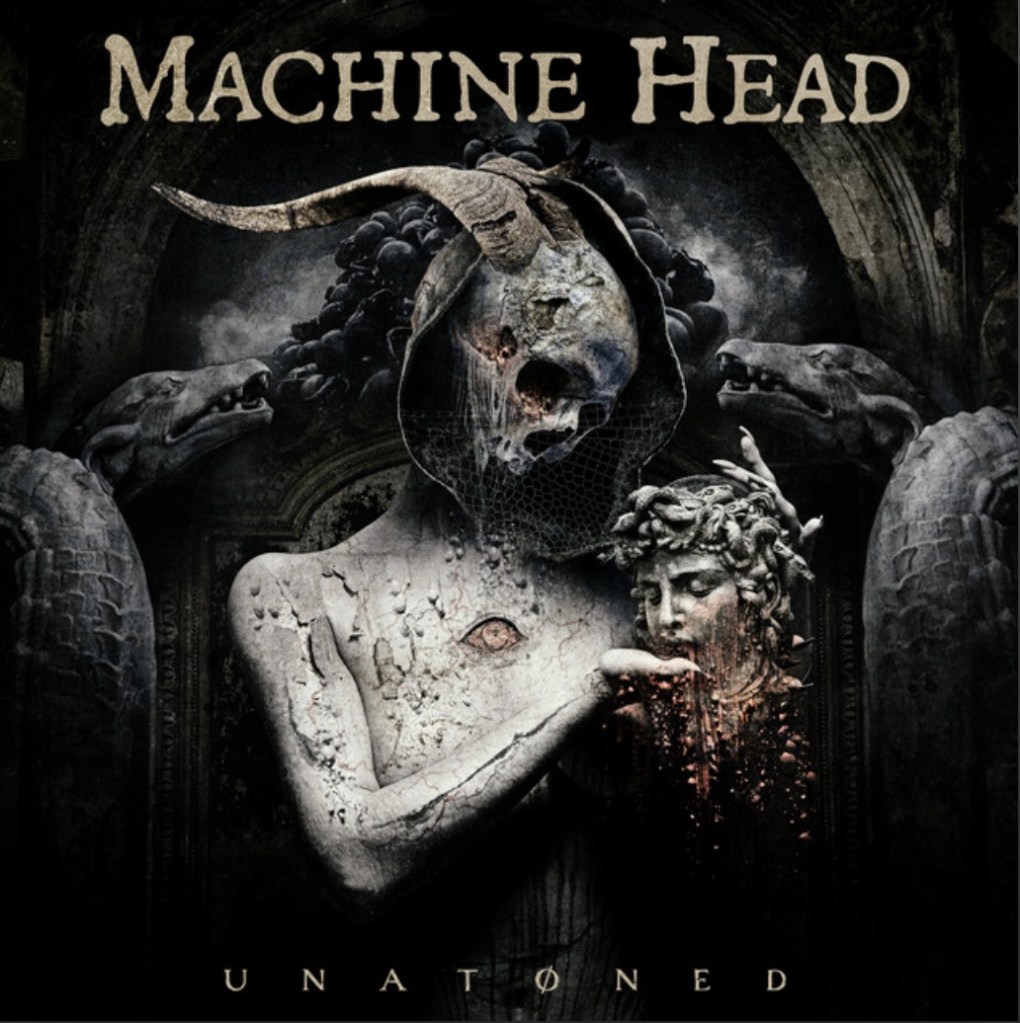
Scorn – Machine Head

Dom Lawson, in Metal Hammer, called it “ostensibly a dark, crestfallen ballad” that builds through synth-drenched haze and emotional swells before erupting in a syncopated, spine-tingling finale.

He’s not wrong.

In fact, “Scorn” might be the most hauntingly beautiful track Robb Flynn has ever penned.

Machine Head is no stranger to monumental album closers, think “The Burning Red,” “Descend the Shades of Night,” “A Farewell to Arms,” “Who We Are,” or “Arrows in Words from the Sky.”

Now, add “Scorn” to that list, lifted from their new record “Unatoned” a fitting name for what feels like both an indictment and a lament.

The opening verse says it all:

“I’m putting you under my spell / ‘Cause I’ve got a Bible to sell
Let go your convictions, restrictions will cost you / Your fiction and all that is well
Distrust all the fable they sell…”

This isn’t subtle. It’s manipulation disguised as salvation. The “Bible to sell” is a loaded metaphor, suggesting the commodification of belief, the weaponization of faith. Convictions and moral boundaries are liabilities here, illusions sold to the weak, while the puppeteers profit.

“I look to the sky / As it won’t be the first / And it won’t be the worst
‘Cause there’s still yet to come / With a nation undone by their Scorn”

Hope?

Maybe.

But not without cynicism. The sky becomes a metaphorical void, once a symbol of transcendence, now indifferent or complicit. The “nation undone” is a clear nod to societal collapse, a warning about the corrosion eating away at public trust, autonomy, and truth.

The chorus drives the point home with venom:

“Scorn / Paranoia seeps through every pore
Scorn / Envenomated eyes emit their scorn”

Yes, “envenomated.”

A rare, brutal word choice. It means poisoned. But more than that, it implies a kind of psychological venom, gazes that don’t just judge but infect. Surveillance becomes psychotropic. The “eyes” don’t just watch; they erode.

“The eye in the sky never rests
Watching to form our arrest
They’re chasing us out of our nests
Keeping tabs as they play us like masters of chess…”

There’s Orwell here, but also something more, this is modern paranoia woven through algorithmic control, deep-state tactics, and manufactured chaos. The image of being driven from nests evokes exile from comfort, from truth, from home.

“I look to the sky / As they give us new rifles / To stifle our words
With a Bible and bulletproof vests / As we suffer their Scorn…”

Weaponized religion. Militarized faith. Truth gets smothered in the name of protection. Resistance becomes treason. Free thought becomes a target.

Thematically, “Scorn” stands shoulder-to-shoulder with:

– Rage Against the Machine’s political fire
– Pink Floyd’s “The Wall” and its suffocating institutional critique
– Dylan’s “Highway 61 Revisited”, where biblical imagery twists through cultural critique
– Metallica’s “…And Justice for All”, where justice is just another rigged game

But “Scorn” isn’t derivative, it’s a culmination. It distills our present-day fears: media manipulation, mass surveillance, the erosion of belief systems, and a creeping spiritual void. It’s a bitter elegy dressed as an anthem.

You don’t just listen to “Scorn”. You endure it, absorb it, and then see the world a little more clearly and perhaps a little more grimly.

Standard
A to Z of Making It, Influenced, Music, My Stories

The Record Vault: Dream Theater – Master Of Puppets

The cover above is the version I have, released in 2004 via their own YtseJam label.

It was also re-released in 2021 via the “Lost Not Forgotten” Archives with the below cover.

The performance of this album would inspire the writing for their most Metal album in “Train Of Thought”.

The show was recorded live in Barcelona, Spain on February 19th 2002. It was the second night of a two night stand in a city.

And it was the start of a new Dream Theater tradition (while Mike Portnoy was in the band), which was to play an entire album from another band.

This is what Mike Portnoy had to say about it in the CD booklet;

“Dream Theater is playing the 2nd night of a 2 night stand in Barcelona, Spain…

After an almost 2 hour set of DT material and a 15 minute intermission, the lights went out and the opening chords to “Battery”
began…

50 minutes later, the Spanish crowd had no idea what had hit them.

The next day the word was all over the internet and our new tradition to cover a classic album whenever we did a 2 night stand in the same city had been established…but for those 50 minutes in Barcelona, the completely unsuspecting crowd had no way to see it coming…

I remember looking into the crowd by the time we started “The Thing That Should Not Be” and seeing people look at each other like;

“Holy shit…they’re doing the whole
fucking thing!!!”.

Yep, that would have been the same response I would have had.

The band for the recording is James LaBrie on vocals, John Petrucci on guitars, Mike Portnoy on drums, John Myung on bass and Jordan Rudess on keys.

Battery

This is performed exceptionally.

LaBrie also brings out the chainsaw aggression of a youthful Hetfield.

Petrucci and Portnoy nail their sections.

Master Of Puppets

As soon as Petrucci plays the first four chords the crowd responds. If this song is played again in 2024, it will be bigger than ever due to “Stranger Things”.

The Thing That Should Not Be

The Intro with the keys is more ominous.

And LaBrie gives the song a more theatrical vibe with an octave higher vocal line, and I like it. It would have been cool if Dream Theater explored the groove doom Metal domain.

Sanitarium

Masterful.

It’s the only way I can describe Petrucci. The intro, acoustic and lead, played by Petrucci is exactly that.

LaBrie tries but doesn’t have the same demented vocal delivery as Hetfield here.

From 3.36, it’s basically a Dream Theater song, with riffs, leads and sporadic vocals. LaBrie is awesome here, his “fear of living on” delivery; excellent.

Disposable Heroes

The drums sound like machine gun fire in the intro.

But it’s that galloping palm muted E string riff that comes after which seals the deal for me.

LaBrie delivers a great vocal here.

Jordan Rudess in an interview with the Revolver Magazine said this;

“Master of Puppets was an eye opener for me because before we covered this album my Metallica knowledge was not so deep.

Having grown up playing Bach, Liszt and Chopin the idea of technique and virtuosities had a definite place in my mind. I have to admit that upon discovering Metallica my perception of technique opened up to other possibilities outside of the classical world.

A song like ‘Disposable Heroes’ sounds like machine-gun fire to me. The blistering, galloping guitar rhythms that sound like the pick is about to go up in flames is an impressive display of intensity and technique. [James] Hetfield really shows what he is made of in a track like this one and I was very impressed.”

Leper Messiah

I always love the section from 40 seconds to a minute. The groove behind it and the way the guitars are orchestrated so that the bass and drums stand out.

Orion

It’s right up Dream Theater’s alley, a nine minute instrumental. And a classic Metallica song.

Damage Inc

They had covered this song previously during the era between “Awake” and “A Change Of Seasons” and released a version of that live performance.

Overall people can compare this album with the real album and find issues.

When an artist covers another artist, it is purely for fun initially and to show respect to the artist who inspired and influenced them.

This is no different and it sounds like the band is having fun, using the last hour of the their three hour set to pay homage to Metallica.

Press play and enjoy.

Standard
Music, My Stories

Machine Head – Live at the Enmore Theatre, Enmore: 16 March 2024

I haven’t missed a show since they came out on “The Blackening” tour, a tour which lasted close to 3 years.

And my Best Man was in tow again who also hasn’t missed a show with me, along with my eldest son this time, who likes only three Machine Head songs in “Darkness Within”, “Bastards” and “Circle The Drain”.

“Do you reckon they’ll play em Dad”, he kept asking me.

“I am sure they will as those songs are up there in streams, so why not”, I lied back.

I had already checked the last 10 shows they had done via Setlist.fm and I couldn’t see those songs in the set. But I wasn’t going to tell him the truth. And selfishly, I wanted him to come and experience a “Machine Fucking Head” concert.

But before Machine Head took the stage, Fear Factory did.

It’s not the classic Fear Factory line up but then again which band these days is touring with the original members.

Guitarist Dino Cazares is the only original member, joined by new vocalist Milo Silvestro who replaced the much loved Burton C. Bell. Pete Webber on drums is also a new addition, then again Fear Factory have had more drummers than Spinal Tap. Rounding out the line up is bassist Tony Campos, who has been with the band since 2015.

I’m not a massive fan but I do like to go nuts on “Archetype”, “Shock” and “Resurrection”. And man, they did play em.

They opened with “Shock”, they closed with “Resurrection” and in the middle they dropped “Archetype”.

“Archetype” was written in the version of Fear Factory without Dino and it wasn’t played live when Dino returned, however once it was added to the setlist in 2013, it never really left.

But I was here to watch Machine Head.

Machine Head is a different beast these days from the first time I saw them. Robb Flynn is basically Machine Head, in the same way Dave Mustaine is Megadeth.

In 2010, joining Rob was Phil Demmel on guitars, Adam Duce on bass and Dave McClain on drums.

Fast forward 14 years, joining Rob this time is Jared MacEachern on bass, Matt Alston on drums and HAVOK guitarist Reece Scruggs, who stepped in for Waclaw “Vogg” Kletyka, who was the recording guitarist but couldn’t make the touring commitments as he was touring with his long time band DECAPITATED.

If you’ve been to a Machine Head concert, you know when “Diary Of A Madman” starts, the concert is about to begin (much like when “Doctor Doctor” plays at a Maiden concert).

And as soon as the outro of “Diary” kicks in, the lights go down and once it plays out, Rob Flynn starts “Imperium”.

It’s a great opener, it sets the tempo, the mood and the aggression.

And the aggression continued with “Ten Ton Hammer”, “Choke On The Ashes Of Your Hate”, “Now We Die”, “Aesthetics Of Hate” and “Old”.

“Locusts” was up next and it didn’t disappoint. It was also probably the most melodic song of the night.

The frantic energy and aggression continued with “Take My Scars”, “No Gods, No Masters”, “Slaughter The Martyr”, “Bulldozer”, “From This Day” and “Davidian”.

And the closer was the usual “Halo”.

Till next time.

Standard
Classic Songs to Be Discovered, Influenced, Music, My Stories

The Case For Cryptic Writings

It’s 1996 and you are writing riffs for your next album. Your first four albums pushed the boundaries of technical thrash metal. Your last two albums went for more accessible song structures, which gave you radio airtime.

Seattle came and went but its cultural changes remained. Industrial Metal was becoming a thing, Alternative Rock, EMO and Goth Metal/Rock were slowly becoming a thing.

Your label wants to sell albums and the only way you can sell albums in their eyes is by having your songs on the radio.

You also fired your previous manager, as you believed that he was also taking a paycheck from the label. He reckons he wasn’t but hey that’s a story for another day.

So what do you do?

These were the questions that Dave Mustaine had to answer in 1996.

This wasn’t the Dave from ten years ago, addicted to drugs and with nothing to lose. This Dave had something to lose now, a family and a corporate machine called Megadeth.

Freedom to do what you want doesn’t come when you have something to lose. In addition, this Dave had been in and out of rehab since 1988, and he just finished another rehab stint just before the “Cryptic Writings” sessions started.

Oh, and by the way, his band was also splintering.

Actually his band was always splintering, but the longest running version of Megadeth was splintering. For those who don’t know, this version involves Marty Friedman, David Ellefson and Nick Menza (RIP).

Dan Huff is producing and the new management company ESP Management was led by Bud Prager, who had guided Foreigner from a small time rock band to an 80 million seller.

Mustaine still had a chip on his shoulder from a certain band he was in and he “wanted what Metallica had even if it meant selling a piece of his soul to the devil” (his exact words on page 276 of his bio).

Trust

The drum intro. Its familiar.

Avenged Sevenfold were very heavily influenced by it for their opening track “Shepherd Of Fire” on the “Hail To The King” album. Metallica had “Enter Sandman” before this and the great AC/DC had “Dirty Deeds (Done Dirt Cheap) before all of em.

Once a great drum hook, it’s always a great drum hook.

If I look into my crystal ball, I can see the heirs of the artists or the Corporations that would end up owning the Copyrights litigating against others for this drum groove in the future.

When that riff kicks in, its head banging time. Yes the tempo is slower, the song is more accessible but it wasn’t a sell out. This was still very much Megadeth.

The Chorus; anthemic.

Apart from becoming a set list staple, it’s also their biggest hit single.

Almost Honest

That intro riff.

It’s bone crunching with a feel and vibe from AC/DC and a Major key Chorus which is a massive no-no to the Minor key Thrash community.

In the end, Mustaine was trying to rewrite “Symphony Of Destruction” and he got a song that sounded similar but different enough to stand on its own.

Very accessible but still very much like Megadeth.

Use The Man

Alternative rock or Grunge. Take your pick as it’s still rock and metal to me.

Plus I always like it when artists take what is popular at the time and still make it sound like their sound.

Mastermind

An intro riff influenced by “Walk This Way”.

The verses are demented, perfect for Mustaines snarling.

The Disintegrators

It’s fast and thrashing like the old Megadeth, but with more melody in the vocals.

If the main riff sounds familiar, Mr Hetfield was obviously influenced as “Lux Aterna” has a similar riff.

Then again, both Mustaine and Hetfield are influenced by the NWOBHM and this riff is from that movements playbook.

And the solo. Brilliant.

At 3:04, it’s over and the only thing left to do is to press play again.

I’ll Get Even

It’s got the same playbook as “Almost Human” but with clean tone in the verses and a psychedelic alternative rock Chorus.

And how good is the bass groove, locked in with the drums.

SIN

It’s accessible but it’s still Megadeth. The riffs are angry and head banging.

A Secret Place

From writing an accessible album, they came up with a classic, a song that still does the rounds in the live show.

As soon as the Intro kicks in, I was hooked.

Have Cool, Will Travel

The harmonica, and a groove reminiscent of “American Woman”, yet it still feels like a Megadeth track.

She-Wolf

A masterpiece.

Make sure you stick around for the Outro harmony section.

Vortex

Another classic but this one gets no love.

It’s a fast cut influenced by the NWOBHM especially Judas Priest, with a demented Mustaine snarl in the verses and an anthemic melodic chorus.

FFF

The fast punk that Megadeth is known for is evidenced here. Definitely a forgotten track.

The Wrap Up

The album achieved a Platinum certification but it didn’t bring in a new audience as Mustaine and his new management team had anticipated.

I read that hard core fans were confused. They liked it but didn’t like it completely. That viewpoint never made sense to me as I see myself as a hard core fan and I like it alot.

Mustaine mentioned in his book that by “trying to become more melodic and still remaining true to their metal roots”, he alienated his core fans with this album as he didn’t get the mixture right.

A terrible Howard Stern interview didn’t help matters either. And during the tour, Nick Menza was booted with Jimmy DeGrasso replacing him. However Menza would still return for the next album.

Overall, “Cryptic Writings” is a great album. The concise songwriting and simple arrangements suited Mustaine and for me, having this album in 1996 was a godsend, compared to some of the other confused albums my favorite artists started delivering during this period.

If you haven’t heard it, hear it. If you have heard it, hear it again.

\::/

Standard
A to Z of Making It, Classic Songs to Be Discovered, Derivative Works, Influenced, Music, My Stories

Metallica – 72 Seasons

It bored me on the first couple of listens.

Then my vinyl came in and I listened to it the old way, cranking the stereo with the lyric sheet in front of me.

And I kept thinking.

Stryper would like to have their yellow and black colors back. The colors of caution. If you grew up in the 80’s you would know that Stryper had the “Yellow And Black”. And as much as those colors are associated with Stryper, as part of the Stryper reunion in the early 2000’s, one of the stipulations from Michael Sweet was that he wouldn’t wear the Yellow and Black anymore.

So Metallica took it 20 years later.

In the “So What” interviews conducted by Stefan Chirazi and available on the Metallica website, Chirazi asked James Hetfield what the colour yellow means. James, responded with the following;

“Yellow, for me, is light. It’s a source of goodness. So against the black, it really pops.

My vision was I wanted this album [to be] called “Lux Aeterna” because that summed up all the songs for me, kind of an eternal light that was always inside of us that maybe is just now coming out.

And I was out-voted, which is great. “72 Seasons” is definitely more chewable. But that colour came out of “Lux Aeterna.”

“72 Seasons” is released on their own “Blackened Records”.

They are free to do what they want, and it all happened because they control their masters and the highly lucrative back catalogue. Not another label or some investment fund. It is them.

They print so much vinyl they purchased their own vinyl press. Because they can.

As part of the press releases, Hetfield stated “the first 18 years of our lives, that form our true or false selves. Much of our adult experience is re-enactment or reaction to those childhood experiences”.

So here we go.

72 Seasons

As told to Stefan Chirazi, in the “So What” interview, this is what James had to say about it; “It was the “72 seasons of sorrow,” and I dropped the “sorrow” part because the first 18 years of life aren’t all sorrow”.

One thing about the songwriting team of Hetfield and Ulrich is that they sure know how to start off a song.

When that fast riff comes in at 50 seconds it’s mosh pit time. And at 65 seconds it’s the same riff but played with a hard rock feel.

“Shot down, traumatic, time haunted by the past”

What an opening line.

It’s easy to read the situation as someone who has experienced significant emotional trauma, and this trauma continues to affect them in the present.

The opening phrase “shot down” is interesting to me. It generally implies a sudden, unexpected loss or defeat. This could be a reference to a specific event that caused the trauma, such as the loss of a loved one or a significant failure.

And with the phrase “time haunted by the past”, it suggests that it is difficult to focus on the present, as the events of the past are a constant reminder.

Shadows Follow

I gotta say, I like the way this song starts. Actually all of the riffs in this song are headbanging.

I also like the whole “Seething, breathing, nightmares grow”. It’s a different vocal style for Hetfield. It’s simple and very melodic.

“Facing my demons, now I run, still my shadows follow”

It’s menacing and it goes to show the mind state of Hetfield as he tries to confront his inner demons or personal issues, but despite his efforts to escape or avoid them, the problems continue to affect him.

And then there is the word “shadows”.

It could be interpreted as a metaphor for the negative aspects of Hetfield’s personality or past experiences that continue to linger and affect him.

Screaming Suicide

This track is classic Metallica.

Rob Trujilo thinks this song would be a killer in the live arena because there is a groove element to it.

Via the “So What” interviews, Trujilo has stated that; “the verse in that song is different from anything Metallica’s ever done, and it’s surrounded by this groove that is just so infectious, it captures you, kicks you in the ass, and, well, you’ve got to move.”

Lyrically it’s dark.

In the first verse, Hetfield is telling us about a voice inside and how it is questioning if he’s good enough and how he should just give up.

In the second verse, the lyrics state;

“Then a voice appears, whisper in your ears, “you are good enough”, throwing down a rope, a lifeline of hope, never give you up”.

Does it suggests a moment of encouragement and support as the rope is pulling Hetfield out of the dark hole or is the rope a noose.

The phrase “you are good enough” could be a powerful statement of validation and acceptance.

How can it be that the Metal God known as Hetfield is struggling with feelings of inadequacy or self-doubt?

But is the voice offering a message of self-worth and confidence as a way to trick the person into listening to it.

How good is the section from 3.50?

Sleepwalk My Life Away

The Intro.

It builds perfectly. The bass is dominant while the guitars decorate like “Enter Sandman”.

And the bluesy riffing is back.

Maybe it’s back too much but i don’t care.

“Stagger on through the fog in the midnight sun”.

Its metaphorical.

It could represent a challenging and confusing situation that the person is facing, where they must navigate through unclear circumstances (the fog) while enduring a continuous period of brightness and clarity (the midnight sun).

Additionally, the word “stagger”, a lack of balance, due to alcohol or some other addiction, shows that the person is unable to maintain their composure in the face of difficulty.

You Must Burn

Hearing this, I can hear those groove metal tracks like “Harvester Of Sorrow” and “Sad But True”. And I like it.

Via “So What”, this is what Trujilo had to say about the twisting middle section;

With this particular middle section that came to be, that was really centered around a jam and was very moody, and there’s a danger to it; I like how the bass is walking. It’s got a feel to it where it’s “walking through a forest,” like a scene from a Tim Burton movie or something. That’s the feel I get. And James and I just started kind of grooving on it. It was just the two of us.”

How good is the riff at 4.26?

“Smile as it burns to the ground, the perfect don’t want you around, question yourself you may learn who’s the next witch you must burn”

Smile people as you watch that something you disliked or have been rejected from burn to the ground.

The latter part of the line, “question yourself you may learn who’s the next witch you must burn,” is more metaphorical. Its asking is to reflect on our own actions and judgments, perhaps in relation to the exclusion we also might have experienced.

Overall, this line seems to be expressing a somewhat dark and cynical perspective on social dynamics and human behavior otherwise known as social media.

Lux Aeterna

I had to look up what “Lux Aeterna” meant. I knew that “Lux” meant “Light” but wanted to know more. Well “Eternal Light” is the answer.

While acts like Judas Priest, Iron Maiden and Def Leppard became commcercially successful, the biggest Metal band in the world right now, wouldn’t exist if it wasn’t for Diamond Head.

A tribute to “Diamond Head”, their “Kill Em All” album and their fans.

“Amplification, lighting the nation” Hetfield sings.

Crank it.

Crown Of Barbed Wire

“So tight this crown of barbed wire”

The Metaphorical Crown of Thorns.

The “crown of thorns” is often used to refer to the painful burden that someone is forced to bear.

The “crown of barbed wire” suggests the heavy burden Hetfield is carrying, that is causing him pain and distress.

Barbed wire is also used to create boundaries or to keep people in or out of certain areas. The “crown” of barbed wire could represent the sense of being hemmed in or limited in some way.

I like the “Harvester Of Sorrow“ feel in the Interlude and Solo Section.

Chasing Light

“Harvester Of Sorrow” is back again. I love the groove from the original song and I like it here.

Then it morphs into a speed Metal track.

How good is that Chorus?

I’m screaming at the top of my lungs, “chase the light, lean on me”.

If Darkness Had A Son

The military style drumming hooks me in. And the way Hetfield builds the guitars reminds me of “Now That We’re Dead” which is my favorite song from the “Hardwired” album.

Let’s go back to 2019.

I remember it well. Metallica were about to arrive in Australia to play a lot of sold out shows, but the tour was cancelled a week before the shows as Hetfield entered rehab again.

Are we surprised when Hetfield chants “temptation”?

“If darkness had a son, here I am”

What an iconic and powerful line.

It suggests a willingness to confront the darkness and embrace one’s own inner struggles, but it also carries a sense of danger and potential for evil.

Too Far Gone

It’s classic Metallica.

And I’m a big fan of the fast punk vibe in the Chorus.

Finally Kirk Hammett breaks out some decent licks. Especially the fast picking bit between the Chorus and Verse. Very “Master Of Puppets” like.

And that “all away” section is perfect.

The song ends with “make it through the day, just for today”.

Room Of Mirrors

It’s a punk song.

“In a mirrored room, all alone I stand, strip away the phantom fame”.

It shows a desire for self-reflection, authenticity, and honesty. Hetfield wants to show us who he truly is, without the illusions of fame and celebrity getting in the way.

And I like that Thin Lizzy like harmony after the solo, which they use a few more times throughout the song.

Inamorata

I had to look up what it meant.

“Inamorata” means “the woman that a man loves”.

The woman here is called Misery and when Hetfield sings “She’s not why I’m living” and “She’s not what I’m living for”, you feel every word.

Via “So What”, this is how Hetfield sums it up; “Misery as my mistress, and I’m trying to hide her. I enjoy her at certain times, but I don’t want the world to know about her.

I don’t want to introduce her to the world because it’s not okay. So misery as a mistress, it does serve a purpose in my life, but I don’t want it to be my life, and I’m tired of it running my life.”

Via the “So What” interviews, Trujilo stated they “hit a grand slam with “Inamorata”. It’s a cross between a beautiful old film with a really cool painting or something… it resonates “California.”

5.11.

It’s the breakdown. The hi-hat shimmering in the background. The bass playing a groove. Swing like. The guitars decorate.

It’s got a Bill Ward Sabbath groove and swing.

And Hetfield, The anguish.

Then the harmonies begin, like “My Friend Of Misery” and a section from “Orion”.

Its why I press play.

Press play and band that head. \::/

Standard
A to Z of Making It, Classic Songs to Be Discovered, Derivative Works, Influenced, Music, My Stories, Unsung Heroes

How Has It Aged: Megadeth – Dystopia

January 23, 2016.

Seven years ago, Megadeth dropped “Dystopia”. Their 15th studio album and one of their best in the 2000 era of the band.

I reviewed the album on the site when it dropped and again a few years ago.

I keep making mention of the powerhouse drumming from Chris Adler, who at the time was still in Lamb Of God and worked as a “hired gun” on this. I still don’t believe I have done his contributions justice. His command of the kick drum is a must listen for any aspiring drummer. He locks into the riffs when he needs do, he plays simple when he needs to and he can thrash and roll when he needs to.

The cover is striking and memorable.

Being from Sydney, the Harbour Bridge is an iconic land monument which when built connected the Northern and Southern parts of Sydney, so seeing a bridge that looks very similar to it in a state of destruction and disrepair, immediately gets my attention.

Then you have those “1984” aerial devices that either “spy on you” or act as “judge, jury and executioner” for the ruling party.

And then there is “the humanoid”, holding the decapitated head of another humanoid.

The Threat Is Real

A mournful Middle Eastern voice begins the song before a fast open string riff is deployed with military precision.

And I am hooked.

Dystopia

The title track.

It brings back memories of “Hanger 18” which of course had its main riff based on a progression that Mustaine wrote for “The Call Of Ktulu”.

The whole outro section is essential listening. Especially how Chris Adler brings it to a frantic end.

Fatal Illusion

Groove, chromatics and dissonance. They are not meant to work together but they do in the fingertips of Mustaine.

At the 60 second mark, the bass from David Ellefson stands alone as he plays the main riff.

When the whole band crashes in, my ears tune in again to the drumming of Chris Adler.

In composition it reminds me of “Wake Up Dead”, riffs upon riffs and no section which could be a Chorus as every section could be one.

Death From Within

I didn’t gravitate to this song back then but I was a fool. It’s 12/8 “Children Of The Grave” rhythm hooked me in straight away today.

Bullet To The Brain

The acoustic arpeggio intro is brief. Its classical influenced but not really classical.

But the best bit is the melodic lead played over the verse riff between 0.39 and 0.56. This happens again from 1.40 to 1.53.

I also like the section I call “The Disturbed Section” between 1.12 and 1.29. This also happens again from 2.10 to 2.28.

The lead breaks on this song are “Guitar Hero” wow.

Post American World

A throwback to “Symphony To Destruction” and those accessible riffs.

Poisonous Shadows

The acoustic intro, which reminds me of a solo section from “Seventh Son Of A Seventh Son” between the 8.50 and 9.10 mark. Since the song is a co-wrote with Kiko Loureiro, I presume he wrote this riff.

Press play to hear it and then compare the two. The keys are different, the speed is different but the way the notes move is the same.

Listen to the way Adler locks in the kick drum with the riff in the verses.

The Chorus reminds me of a similar song from the album “The World Needs A Hero”. I think it’s “Promises” which is another forgotten track from the vast catalogue that is Megadeth.

Conquer Or Die

It’s an instrumental written by Dave Mustaine and Kiko Loureiro.

A flamenco intro from Kiko starts the song which I like.

Lying In State

My favourite song from the album and it’s up there as one of the finest Megadeth songs.

The drums from Chris Adler on this are powerful. While the riffs serve as the songs foundation and Mustaine vocals are top notch, it is the way Adler performs on the drums that elevates the song.

That whole section from 2.19 is “smash the walls” stuff. When the melodic lead break starts, I’m ready to go through the wall.

The Emperor

There’s no way you can’t like the way it starts off. It’s got this “Dread And The Fugitive Mind” kind of feel.

Foreign Policy

It’s a “Fear” cover.

For those who don’t know. FEAR, is an American punk rock band from Los Angeles, California, formed in 1977. Since its formation, the band has gone through various line-up changes, and at one point featured Flea on bass.

This song appeared on “The Record”, the debut studio album released on May 16, 1982. Dave Grohl holds this album in high regard and he interviewed vocalist/rhythm guitarist Lee Ving for the 2013 documentary film “Sound City”.

Duff McKagan picked the song “We Destroy the Family” for his 2016 list “The 10 Best Punk Songs” and said, “Fear’s debut album “The Record” still gets played backstage before he goes on.

“Let’s Have a War” was included on the “Repo Man” soundtrack album and covered by A Perfect Circle on the album “eMOTIVe”.

Hearing this song, you can hear how thrashy the hard-core punk movement was in L.A. The song could have been written by Mustaine as it has that technicality that Megadeth is known for.

Melt The Ice Away

It’s basically a fast blues NWOBHM track.

For those who don’t know, it’s a Budgie cover. That same Budgie that wrote “Breadfan” which Metallica covered

Budgie remained quite obscure during their career, however a lot of hard rock/metal artists have cited them as an important influence and covered their songs, including Iron Maiden, Metallica, Megadeth, Van Halen, Queens of the Stone Age, Alice in Chains and Soundgarden. It’s an impressive list.

This song appeared on Budgie’s seventh album, released in February 1978 on A&M Records.

Overall, “Dystopia” is a masterpiece.

A lot of bands don’t get to fifteen albums and if they do, it is very rare that the album is any good.

Sort of like “Super Collider” released in 2013 was; where the best song is a cover from Thin Lizzy. Okay “Kingmaker” is one of the best opening tracks Megadeth have written.

But that was it.

Okay the title track “Super Collider” also gets a pass and although it was weird to hear Mustaine sing “Burn, Baby, Burn” and rhyming “fire” with “desire” the song “Burn” is a pretty cool hard rock track which actually reminds me of early Budgie.

But overall, critics hated it and the fans hated it even more. Something had to be done.

So Mustaine corrected the “Super Collider” hard rock experiment with the progressive speed metal album “Dystopia”. He had too and by doing so, he replenished his fan base all around the world and he grew it even more in South America with the addition of Kiko Loureiro.

Plus they won a Grammy for Best Metal Performance for “Dystopia” and when they got up to get their award, “Master Of Puppets” played from Metallica. Nice one Grammy’s. Rookie mistake 101.

And the album has aged really well. It sounds as current as it did back in 2016.

Crank it.

Standard
Influenced, Music, My Stories, Unsung Heroes

2001 – Part 5.2: Slipknot – Iowa

“Iowa” is the second studio album by Slipknot, released by Roadrunner Records on August 28, 2001.

Produced by Ross Robinson and Slipknot but it’s Mike Fraser as the Engineer who deserves a special mention here. The guitars are downtuned a lot and somehow they don’t end up sounding muddled. Which gets me thinking that the placement of the microphones to record the guitars was pretty spot on for Andy Wallace in the mix department to give all 8 members space to do their thing.

The 1999 self-titled debut album took the Charts by surprise, so the pressure to deliver a worthy follow-up was at an all-time high.

Production for the album started with drummer Joey Jordison (RIP) and bassist Paul Gray (RIP) in October 2000. Most of the material was written during this time, while other members took a break after the extensive touring that had followed their debut.

By January 17, 2001, the whole band arrived and basically war was declared between each other. Fatigue was killing Jordison and Gray, while alcoholism and drug dependency was affecting Corey Taylor and the other members. On top of that they had management problems and a party culture full of women and narcotics.

Taylor even resorted to cutting himself with broken glass to achieve the desperation and doom in the vocal growls he wanted.

So if you don’t know Slipknot, they wear masks which obscure their faces and they are referenced with numbers.

(#8) is Corey Taylor on vocals, (#7) is Mick Thomson on guitars, (#6) is Shawn Crahan on percussion, backing vocals, editing, (#5) is Craig Jones on samplers, media, (#4) is Jim Root on guitars, (#3) is Chris Fehn on percussion, backing vocals, (#2) is Paul Gray on bass, backing vocals, (#1) is Joey Jordison on drums and (#0) is Sid Wilson on turntables.

Basically the album is a result of guys who hated each other, the world and the world hated them back. Welcome to “Iowa”.

People = Shit

Great title and a great way of the band saying to people “F off and leave us alone”.

Disasterpiece

Press play to hear the head banging intro.

“My Plague” and “Everything Ends” I normally skip.

The Heretic Anthem

The 6-6-6 chant in the song is reminiscent of other songs from notable acts.

Track 7, I skip.

Left Behind

The best song on the album for me, because of the clean tone vocals. Who knew that Corey Taylor could sing that good back in 2001, as Stone Sour was a few years away from releasing their debut.

Tracks 9 to 13, I skip.

Iowa

The closer at 15 minutes. It’s a Tool like dirge through desolation, doom and darkness. At some stages, it feels like the music if a demented soul.

I tried to like this album because of just how popular it became around the world. Gold Certifications in Australia, Belgium, France, Germany, Japan and Netherlands. Platinum certifications in Canada, the UK and the US.

Apart from “Left Behind” and “Iowa” there was nothing else here for me to grasp onto.

But, I did find the lyrics refreshing and totally different from what I was used to, which is a big reason why I kept giving Slipknot a chance.

If you like hard rock music then you won’t like this, as it borders on death and thrash metal with nu-metal influences.

Standard
Influenced, Music, My Stories

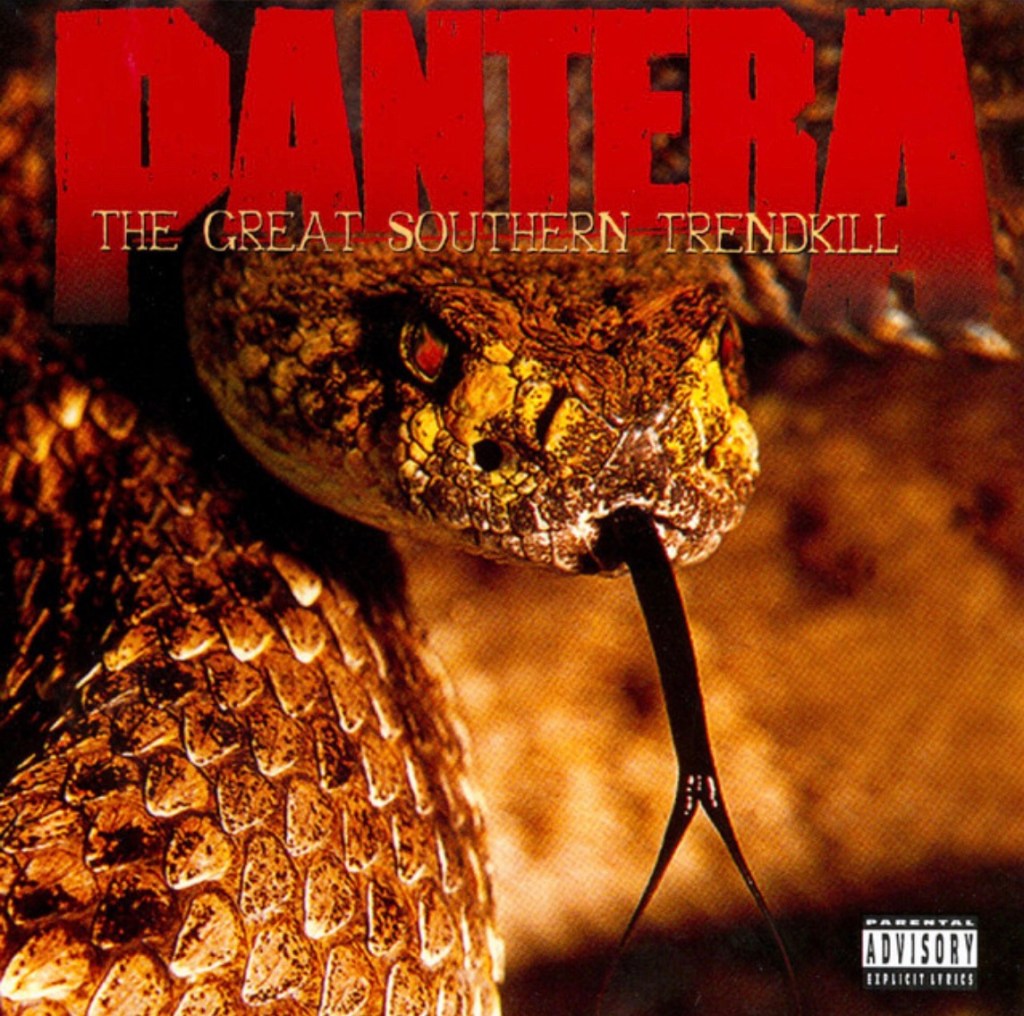
1996 – Part 4.4: Pantera – The Great Southern Trendkill

Pantera was popular in Australia. Once they broke into our market, they stayed until they remained as a band.

“The Great Southern Trendkill” came out in May, 1996. It went to number 2 on our ARIA charts and it reached number 4 on the Billboard 200 chart.

It’s listed as their eighth album, however for the Phil Anselmo, Dimebag Darrell, Rex Brown and Vinnie Paul version of Pantera its album number 5 as their first album begins with “Power Metal” but it’s number four from their major label debut “Cowboys From Hell”. And that’s when the Pantera I know really started.

Terry Date and Vinnie Paul are producing, recording and mixing the album.

Coming in to the album, even a band like Pantera was on the outer. The marketing machines of the labels had put their dollars in Grunge and Industrial Metal acts like NIN and Ministry.

Internally, the Abbott brothers were not too impressed when Anselmo took time out to do the “Down” project and then do a 13 date tour with the group. And to top it off, Anselmo moved out of Texas and back home to New Orleans so his vocals were done on his own.

Anyway to the music.

The Great Southern Trendkill

It’s like Death Metal.

I like the riffs and the guitar solo, but the song doesn’t really resonate with me.

War Nerve

It’s very Black Sabbath like, doom sludge metal.

Drag the Waters

The main riff is bone crunching.

10’s

Iommi would be proud of this riff. Actually Zakk Wylde in Black Label Society would be proud of this riff. Vocally, Anselmo is strong here.

But press play on this to hear the acoustic arpeggio passages and Dimebag’s unbelievable solo over em.

13 Steps to Nowhere

It’s weird to explain this song. It’s experimental, a mixture of blues like grooves with a lot of distortion and Sabbath like doom breakdowns.

Suicide Note Pt. I

Synths and backwards effects and then the acoustic guitar kicks in. It’s almost Led Zeppelin like, with a bit of Southern Rock and I like it.

Suicide Note Pt. II

And then what happened. It’s death metal like, with blast beats and fast riffing, with some heavy metal like riffs chucked in here and there.

Living Through Me (Hells’ Wrath)

The riffs on this are “fists in the air, head banging” riffs.

Vocally I’m not a huge fan and halfway through it goes into a weird spoken interlude with weird industrial like effects.

Then a cathartic scream from Anselmo and the head banging riffs are back in.

Floods

The clean tone intro with the acoustic guitar under it, grabs my attention immediately. It’s almost Alice In Chains like, even though the band was critical of the Grunge movement.

Then again, Pantera songs like “Cemetery Gates” and “This Love” come to mind.

The whole “Die” section is heavy and demented but there is no denying the power of Dimebag and his bro Vinnie. These dudes nail every syncopated beat and lick down.

It’s been written extensively that the solo on this song is Dimebag’s best. And it is. If you need to press play on a track, then make this the one.

It’s composed of all these little guitar solo ideas he used for his live guitar spot, while Brown and Paul are simple in their foundations, letting Dimebag fill up the space with his leads.

The Underground in America

Musically, I like it. Vocally I hate it.

(Reprise) Sandblasted Skin

Dimebag brings the riffs again.

In the end it was certified Platinum in the U.S and it charted well in a lot of other countries.

And while the relationships were strained during the recording, things got even more estranged when Brown decided to leave the tour bus he was sharing with the Abbott brothers to share a tour bus with Anselmo. Brown described it as a way to feel comfortable, because Dimebag would be up early and start cranking the guitar, which upset Brown who wanted to sleep.

During the tour, Anselmo overdosed on heroin and was legally dead for four to five minutes. According to Anselmo, he started using heroin for relief of his chronic back pain. Mick Mars has a degenerative spine issue and never turned to heroin, but then again, he did turn to alcohol and lots of it.

For the record, I hate the hardcore death metal vocals that Anselmo resorted to. His clean tone voice is one of the best. He could move between James Hetfield and Tom Araya style vocals to Rob Halford and Bruce Dickinson siren wails. It’s why I became a fan of the “Cowboys From Hell” album.

And I don’t know the exact specifics of what happened with Anselmo and the white power salute he gave at a gig he did about 5/6 years ago. Robb Flynn from Machine Head called him out on it. Which led to a lot of issues for Robb Flynn, receiving death threats and venue owners who supported Anselmo refused to book Machine Head.

One more album would come from Pantera and that would be the end. The air is thin at the top of the mountain, which means that you are not meant to hang around at the summit for long. Anselmo would put the band on hold because he wanted to deal with the back pain and then went on to record and tour with his side projects with the band officially finished in 2003.

Dimebag recently had a 17th Anniversary from when he was tragically shot dead at a gig on Dec 8, 2004. And it’s been three and bit years since Vinnie Paul died from heart disease.

While Anselmo wanted to reconnect, Vinnie Paul didn’t. And that’s how it ended.

Standard
A to Z of Making It, Classic Songs to Be Discovered, Influenced, Music, My Stories, Unsung Heroes

1996 – Part 4.2: Slayer – Undisputed Attitude

“Undisputed Attitude” is the seventh studio album by American thrash metal band Slayer, released on May 28, 1996.

The album consists almost entirely of covers of punk rock and hardcore punk songs. It also includes two tracks written by guitarist Jeff Hanneman in 1984 and 1985 for a side project called Pap Smear and its closing track, “Gemini”, is the only original track.

The album was largely the brainchild of guitarist Kerry King, who stated that the songs chosen were from highly influential bands who “made Slayer what it is”.

The album was initially to feature material from classic heavy metal artists such as Judas Priest, UFO and Deep Purple. However, after several rehearsals “things didn’t pan out” according to King, so the band instead elected to cover punk songs. Then again, maybe Tom Araya’s rough bark just didn’t suit the Judas Priest, UFO and Deep Purple style of songs.

The band for this album is Tom Araya on Bass and Vocals, Kerry King on Guitars, Jeff Hanneman (RIP) on Guitars and Paul Bostaph on Drums. The way Araya sounds vocally on this is how James Hetfield would sound on “St Anger” in six to seven years’ time.

The album is produced by Dave Sardy with Rick Rubin listed as an Executive Producer, whatever an Exec Producer means.

“Disintegration/Free Money”

The original artist is Verbal Abuse and its 1.41 of fast and aggressive metal punk.

“Verbal Abuse/Leeches”

And its followed up by another Verbal Abuse cover, which clocks in at 1.58. While its fast and aggressive punk, there is a small breakdown section which slows things down a little.

“Abolish Government/Superficial Love”

A T.S.O.L. cover and it’s a full 1:48 in length.

Three songs in and it’s like listening to one song.

“Can’t Stand You”

Written by Jeff Hanneman and listed as a Pap Smear cover which clocks in at 1:27. And Tom Araya doesn’t take a breath as he spits out the verses.

“DDAMM (Drunk Drivers Against Mad Mothers)”

Another track written by Jeff Hanneman and listed as a Pap Smear cover which clocks in at the super long length of 1:01.

“Guilty of Being White”

A cover from Minor Threat and it clocks in at another super long time of 1:07.

When the album was released in 1996, there was no controversy over the song or any possible message of white supremacy.

But the internet and social networks are different beasts and people take a moral high ground.

The other controversy was changing the lyrics in the songs ending from “guilty of being white” to “guilty of being right”.

This little changed didn’t go down well with Minor Threat front man Ian MacKaye, who found this change “offensive”.

“I Hate You”

Verbal Abuse makes another appearance on this album with a song that goes into the 2 minute range. This one is more punk like, with a rock tempo and Sex Pistols “Anarchy” style attitude.

“Filler/I Don’t Want to Hear It”

And Minor Threat makes another appearance with a super-fast punk hardcore song.

“Spiritual Law”

A cover from D.I. and its pushing at being the longest song on the album at 3 minutes long. Press play to hear the intro which is very Metal like, otherwise the rest is stock standard fast beats, vocals that cover the microphone in spit and fast alternate picked punk metal riffs.

But at 1.20 a Sabbath like doom groove comes in, before it picks back up into the fast punk metal at the 2.10 mark.

“Mr. Freeze”

A cover from Dr Know. Its 2.24 in length and at times when the song goes into its rock riffs I feel like I am listening to Beatsie Boys, “Fight For Your Rights”.

“Violent Pacification”

A cover from D.R.I. at 2:38 in length.

All I can say about this song is chaos until the 46 second mark, when the drums start a rock style groove and the tempo of the song goes down a notch for the band to rock out. And Tom Araya is barking out “Violent Pacification” over and over and over again.

“Richard Hung Himself”

A cover from D.I. and this song takes the title for the longest song of the cover songs at 3:22.

And for a song with a grisly title it’s actually a catchy rock song.

“I’m Gonna Be Your God” (“I Wanna Be Your Dog”)

A song from The Stooges, clocking in over the 3 minute mark and it received a makeover and some slightly modified lyrics and a faster tempo.

It’s by far my favorite cover and it leads in perfectly to the original track.

“Gemini”

Written by Kerry King and Tom Araya, and it is the longest song on the album at 4.53.

The song begins as a sludge/doom number reminding me of “Season In The Abyss”, before becoming a more typical Slayer song.

But being added to the end, doesn’t do this song proper justice. It’s one of their best tracks written in the 90’s.

And Tom Araya is evil reincarnated with his melodic but sinister vocal melody.

In the end, this is a 33-minute-long release and Slayer wouldn’t have it any other way. It’s not a classic album but the song “Gemini” makes up for it.

Standard