forgotten albums, Hard Rock, Heavy Metal, Music, Music history, rock music

Skid Row’s “Nothing”: The Strange Freedom of Realising You Don’t Need It All

It appeared on “Revolutions Per Minute”, released on October 24, 2006. Sebastian Bach was long gone, Johnny Solinger was handling the vocals, and the band was trying to figure out what its identity looked like beyond the shadow of its biggest commercial years.

The album was produced by Michael Wagener, the man who had helped shape Skid Row’s early sound.

Fifteen years after “Slave to the Grind”, the musical landscape had changed.

The decade between 1994 and 2004 was when music blew itself apart and rebuilt itself for a different kind of consumer.

Grunge was fading, and nobody was quite sure what would replace it. The answer wasn’t one new sound. It was a dozen competing movements, each fighting for the same shrinking amount of attention.

Nu-metal took metal, added hip-hop rhythms, turntables and anger, and turned Korn, Limp Bizkit, Linkin Park and Slipknot into commercial heavyweights. Pop-punk did the opposite, taking punk’s speed and attitude and wrapping it in enormous choruses. Green Day and The Offspring opened the door, while Blink-182 and Sum 41 made the sound a global phenomenon.

Meanwhile, Oasis brought back a new kind of popular music influenced by The Beatles and Britpop’s dominance gave way to a more introspective British sound, with Radiohead, Coldplay and Travis finding audiences beyond the traditional rock market. By the early 2000s, The Strokes, The White Stripes and The Hives were stripping away the excess, reminding everyone that sometimes a dirty guitar riff and a good song were enough.

Pop music became a manufacturing powerhouse. Britney Spears, NSYNC and the Backstreet Boys turned teenage fandom into a commercial machine, while Beyoncé, Usher, Alicia Keys and Aaliyah helped push R&B into the centre of mainstream culture.

Hip-hop made an even bigger leap, moving from the competing regional identities of East Coast and West Coast rap into a global commercial force. Eminem, Jay-Z and the emerging Southern rap movement changed the sound, language and business of popular music.

And underneath it all, electronic music was building its own empire. UK Garage and 2-Step were reshaping British dance music, while The Prodigy and Fatboy Slim brought electronic aggression to rock audiences. Trance turned dance floors into euphoric communal experiences, laying foundations for the festival culture that would explode in the years ahead.

But the most important thing about 1994–2004 wasn’t any individual genre. It was the collision of all these sounds with a changing music business.

CDs were still generating enormous profits. Record labels could afford to take risks, develop artists and market entire movements. Then the internet arrived, Napster attacked the economics of recorded music, and the industry discovered that controlling distribution wasn’t the same as controlling demand.

By 2004, the music world had changed. Genres were multiplying, audiences were fragmenting, and the old gatekeepers were losing their grip.

The irony? The industry was enjoying the last great financial boom of the CD era just as the technology that would undermine it was becoming impossible to ignore.

And the audience for hard rock had fragmented so much. Skid Row was no longer operating in the world that had made it famous.

“Revolutions Per Minute” received a largely unfriendly reception. Its genre-hopping made it difficult to categorise, and it never came close to reproducing the commercial impact of those early records. Yet “Nothing” offers something more interesting than another attempt to recreate the past.

It offers perspective.

The houses on the hill

We all do it. We look at the people who appear to have made it. We look up the hill and wonder whether we took the wrong road.

The funny thing about ambition is that it rarely announces its final destination. You achieve one thing, then immediately establish another target. The salary isn’t enough. The house needs renovating. The business needs to grow. The band needs a record deal. The record deal needs a hit. The hit needs to be bigger than the last one.

There’s always another hill.

And because we’re looking at somebody else’s house, we never see the mortgage, the arguments, the sleepless nights or the possibility that the people living inside are looking at another house further up the road.

The song understands that comparison is a trap. Not because wanting more is inherently wrong, but because you can spend your entire life measuring yourself against people whose circumstances, priorities and definitions of success have nothing to do with yours.

Rock and roll knows this territory intimately. The whole business is built around wanting to be somebody. You start in a bedroom, graduate to a rehearsal room, then dream about the tour bus, the record deal and the arena.

But what happens when you get there?

And what happens when you don’t

Growing up is hard

The Bowie reference is more than a clever name-check. It’s an acknowledgement that the questions we ask when we’re young don’t necessarily disappear when we get older.

David Bowie’s music understood that growing up wasn’t simply a matter of acquiring wisdom. Sometimes it meant discovering how little you understood in the first place.

When you’re young, you imagine there’s a point at which everything becomes clear. You’ll have a career, a relationship, a home and a reasonably coherent understanding of why you’re here. You’ll know what matters. You’ll stop worrying about the things that worried you at twenty.

Then you get older and discover that life doesn’t hand out instruction manuals.

You become more experienced, but experience doesn’t automatically produce certainty. Sometimes it just gives you a longer list of mistakes you know how to avoid, alongside a fresh collection of mistakes you haven’t made yet.

We make decisions with incomplete information.

Growing up isn’t arriving at the answer. It’s learning to live without one.

If I want it all, do I need it all?

Wanting something and needing something are two entirely different propositions.

The modern economy depends on our inability to distinguish between them. Advertising doesn’t merely sell products; it sells inadequacy. You’re not just buying a watch. You’re buying the suggestion that the person wearing it has achieved something. You’re not simply buying a bigger house. You’re buying the promise that you’ll finally feel successful when you walk through the front door.

And then the next advertisement arrives. There’s always a better version of whatever you’ve just purchased.

Rock music has its own version of the same disease. The industry teaches musicians to measure their worth through sales, chart positions, streaming numbers, ticket prices and the number of people who recognise them in an airport. You can make a record you’re proud of and still be told it doesn’t count because it didn’t sell enough.

I’ve always found that contradiction fascinating. Music is supposed to be about expression, yet the business constantly demands that expression be converted into measurable success.

Of course, money matters. Bills don’t pay themselves, and musicians deserve to be paid for their work.

The question in “Nothing” cuts through that nonsense. What if getting everything you want doesn’t mean you need any of it?

Records in my room

This is the line that gets me.

Because it understands music is a place you can go.

A place.

I can remember albums that became entire worlds. You put on a record, shut the door and disappeared for forty minutes. The music wasn’t background decoration. It was the main event. I learned the running order, the lyrics, the guitar parts, the production details. I discovered the songs that mattered to me, including the ones nobody else seemed to care about.

Those records became attached to periods of my life. I remember where I was when you heard them.

Decades later, a guitar intro can bring the whole thing back.

That’s the remarkable thing about recorded music. It doesn’t merely preserve sound. It preserves the person you were when you first heard it.

And I just need to press play.

I need nothing but you

After questioning ambition, material success and the whole business of wanting more, the song arrives at a surprisingly simple conclusion.

Nothing but you.

The song has spent its time examining the things we chase, the people we compare ourselves with and the uncertainty that comes with growing older.

There is a world of difference between having nothing and needing nothing. The first describes deprivation. The second can describe freedom.

Perhaps the best parts of life are happening in the room you’re already in.

Money can buy comfort, opportunity and independence. It cannot guarantee that you’ll be content with your life.

And success can open doors, but it cannot tell you which ones are worth walking through.

Sometimes the answer is more complicated than we’d like. Sometimes it’s remarkably simple.

There’s an argument that “Revolutions Per Minute” could almost be considered a Rachel Bolan-led project operating under the Skid Row name. Bolan was the dominant songwriting force on the record.

Critics and fans were divided, and the record never found the audience the band had enjoyed in its commercial heyday.

But that’s precisely why “Nothing” is worth revisiting.

It’s a song about time passing, memories accumulating and the gradual realisation that the things you once thought essential might not be essential at all.

Johnny Solinger’s place in Skid Row’s history is inevitably complicated by the enormous presence of Sebastian Bach. Solinger spent more than fifteen years with the band, recording “Thickskin” and “Revolutions Per Minute” and helping carry its name through a period when its commercial fortunes had changed. He died in June 2021, aged 55, after revealing that he was suffering from liver failure.

The music remains where it was left. We are the ones who arrive with different experiences.

Sometimes you can just put on a record, sit in your room and let it be what it is.

You don’t need it to be the biggest thing in the world. You just need it to mean something to you.

Press play.

Standard
Classic Songs to Be Discovered, Music, My Stories

2022 – The 5 to 8

Say hello to the next four.

Coheed And Cambria

From the United States.

“Vaxis II: A Window Of The Waking Mind” continues their “Amory Wars” space opera. The “Vaxis” series takes place after “The Keywork” was destroyed and it follows a couple on the run, along with an “Eleven” like Child which came into they care, as they try and

The thing about CoCa that I like is the variety in the music. You get major key songs which sound like Pop Punk/Metal/Rock songs like “Comatose”, “Rise, Naianasha (Cut The Cord) and “The Liars Club” (My Chemical Romance comes to mind here).

“Shoulders” and “Love Murder One” are modern groove rock tracks.

“A Disappearing Act” could end up on dance floors with its pulsing synth riff and bouncing bass/drum groove, and yet it still rocks hard. Then again, “Love Murder One” has a lot of pop elements as well, which could fit this category as well. “Bad Love” pushes the limits of fusing what is contemporary pop/dance with hard rock. It’s catchy and I like it.

“Blood” is a slow rocker with auto-tuned vocals which serve the song well. It could be on a Post Malone album. “Our Love” is another slow rocker, more U2 and 80’s synth Rush.

“Ladders Of Supremacy” is written after George Floyd’s horrible death. Its heavy and it rocks. And they made it fit the story. Check out it’s Tool like section from the 5 minute mark.

“Window Of The Waking Mind” is progressive in its arrangement and moods.

Claudio Sanchez along with Travis Stever have kept my interest in Coheed and Cambria for the 20 years I have been a fan. During that time drummer Josh Eppard left and came back, while original bassist Michael Todd couldn’t shake off his addictions which put him onto a path of armed break-ins and jail time, who was then replaced by Zach Cooper and what a job Cooper has done the last 10 years he’s been with the band.

Ghost

From Sweden. Their streaming numbers are wow. Along with Volbeat, they are part of big metal acts these days based on their streaming numbers.

“Kaisarion” is a great way to kick into album after the 100 second “Imperium”.

“Spillways” feels like a 70’s Classic Rock track, with its metronomic piano riff. And how creative is the hook, “through the spillways of your soul”. Who comes up with this?

“Call Me Little Sunshine” has me ready to take up arms. It’s clean tone intro feels like the pyramids are getting built and when it cranks into the distortion, it’s time to break desks.

How good is that melodic riff in “Hunters Moon”?

And if the intro to “Watcher In The Sky” doesn’t get you moving, check for a pulse. And that hook, “search lights, looking for the watcher in the sky”. Brilliant.

But my favourite is the Van Halen-ish “Aint Talkin Bout Love” sounding “Griftwood”.

Out Of This World

From Sweden.

I was blown away by this album. Kee Marcello is on guitars and keys here, with Tommy Heart on vocals, Ken Sandin on bass, Darby Todd on drums with Don Airey performing guest keys. In case you are not aware, the name of the band is the same as the album that Kee Marcello played on with Europe. “Out Of This World” was the highly anticipated album after “The Final Countdown” however it only sold half of what the previous album did. Marcello would record the excellent and forgotten “Prisoners Of Paradise” (1992) and he more or less disappeared from the writings of the press.

The way Marcello plays the guitar, he is more of a cross between Steve Vai and Eddie Van Halen, then others, and you can hear this on the songs. His love of Styx, early Journey and Toto and their melodic rock songs is also evident here, as it feels like Steve Lukather played on the album. 

Vocalist Tommy Heart is a pro here as well, delivering quality on each song. Because in the end, it doesn’t matter how great the music is, if the vocals are crap. And there are no crap vocals here. Hell, on some songs, I feel like Joey Tempest is singing.

The album clocks in at 45 minutes and the only thing I could after it finished is press play again. Tracks like “In A Million Years”, “Lighting Up My Dark”, “Staring At the Sun” and “The Warrior” (Van Halen’s “Hot For Teacher” comes to mind, then again, “The Winery Dogs” have taken this approach as well) are on par with the well-known tracks from the Melodic Rock and Melodic Metal mainstream era between 1984 and 1991.

Do your ears a favour and press play on it? 

Three Days Grace

From Canada. 

They became mainstream in the early 2000’s (circa 2003/04) and they rode that platinum success for over a decade. Then vocalist Adam Gontier left abruptly in 2013, replaced by Matt Walst from the band My Darkest Days. His brother Brad is the bassist of the band and one of its founders, along with drummer Neil Sanderson and ex-vocalist Gontier. Barry Stock rounds out the band as the second guitarist.

The last album they did with Gontier, “Transit Of Venus” is my least favourite and it’s taken a while for the band to recapture that fan base. “Human” was a good start (“Painkiller is sitting at 140 million streams) but the excellent “Outsider” released in 2018 got me back on board. On Spotify, songs like “Right Left Wrong” (44.1 million streams), “The Mountain” (74.6 million streams), “Infra-Red” (50.7 million streams), “I Am An Outsider” (25.3 million streams), “Strange Days (12.3 million streams) and “The Abyss” (10.1 million streams) need to be listened to. 

So “Explosions” was highly anticipated.

The album immediately introduces the heaviness with “So Called Life”. At 34.2 million streams on Spotify since May 2022, it will surpass a 100 million by this time next year. Because we are looking for something to take the edge off this so called life. 

“I Am The Weapon” is heavy and melodic and it could have come from the melodic metal streets of Sweden. “Neurotic” which features Lukas Rossi is a throwback to the Gontier fronted albums, which will satisfy the core. Along with songs like “No Tomorrow” and “Redemption”. 

You can hear the heartache in “Lifetime”, its slow rock, but if you listen closely, you can hear those ballad like country licks being played.

Press play to hear the intro riffs to “A Scar Is Born”. 

I love the way “Souvenirs” percolates and builds around Matt Walst’s vocal melody until it explodes. And the hooks in the Chorus, “We don’t know why we’re here, but we’re not here for long” and “Surrounded by souvenirs from days that are gone”. Truth right there. At 1.7 million streams the song is more or less forgotten, but it is one of my favourites.

“Champion” is Imagine Dragons and The Script with more grit. “Chain Of Abuse” could have come from Breaking Benjamin. “Someone To Talk To” features the cellos of Apocalyptica,

The closer is the title track.

At 37 minutes long, the album is concise, it rocks hard and the only thing you can do afterwards is press play again.

Standard
Classic Songs to Be Discovered, Derivative Works, Influenced, Music, My Stories

1996 – Part 3.2: Bryan Adams – 18 Till I Die

“Reckless” was massive and is still massive. The follow up “Into The Fire” was seen as a failure but “Waking Up The Neighbours” re-established Bryan Adam’s as a tour-de-force. Mutt Lange was on board for that album as co-producer and co-writer, with Jim Vallance only appearing on half of the tracks as co-writer.

Released in 1996 and five years after “Waking Up The Neighbours”, “18 Till I Die” hit the streets.

Bryan Adams and Mutt Lange are back at producing and writing most of the tracks but Jim Vallance is missing.

The band for the album is Bryan Adams is on rhythm guitar and vocals, Keith Scott is on lead guitar, Mickey Curry is on drums, Dave Taylor us on bass, Mutt Lange is on guitars, Michael Kamen is on piano and string arrangements.

The Only Thing That Looks Good On Me

It’s like a ZZ Top track. No blues purist would give them the credit but ZZ Top with “Eliminator” and “Afterburner” brought back the blues into the pop mainstream in a big way. And those little lead breaks and fills on this song are loaded with Texan spice.

The title is one of those cheesy pick-up lines, but hey, Adams makes it work as he sings about how they stick like glue and how she’s the only thing that looks good on him.

Do To You

It reminds me of a song called “What I Like About You” from The Romantics merged with a bit of “Love Shack” from the B-52’s and a little bit of punk from The Clash and somehow it still sounds like Bryan Adams.

And I like the harmonica licks that kick in between the vocal melodies.

Let’s Make A Night To Remember

This is a Def Leppard cut through and through about getting together and getting it on. It could easily be interchanged with a song from “Adrenalize” and people wouldn’t notice.

The video clip has various women posing for Bryan Adams as he photographs them, an attempt to change his image to fit into some voyeur playboy kind of image.

I like the lead break although its only four bars and way too short.

18 Till I Die

I like the arpeggios in the intro.

When the power chords come crashing in, I feel like it’s like a Rolling Stones or The Kinks like track musically. Lyrically it’s about maintaining youthful traits, even as you grow older.

Star

It’s different, more ballad like and very similar to another song he co-wrote called “Glitter” with Motley Crue. And melodic rockers from Sweden would start to have ballads like this in the mid 2000’s.

I guess Adams was a bit ahead here.

(I Wanna Be) Your Underwear

Stupid title, but hey, management and the label were trying to alter Adam’s image from working class hero to playboy.

Keith Scott has got some Steve Vai talking guitar happening with the guitar whistles to kick off the song.

Check out the bass work in the verses from Dave Taylor. Excellent.

We’re Gonna Win

It’s a punk song, but a rock song. And I like it.

I Think About You

A ballad, but more in the country rock ballad arena, something which Mutt Lange was using a lot of Shania Twain.

I’ll Always Be Right There

Strings, an acoustic guitar and a Steve Perry like vocal delivery. It feels like a movie song but two ballads in a row, lost me.

It Ain’t A Party, If You Can’t Come Round

The cheesy titles are back which also reminds me of a Vince Neil song title and so is the loud country blues rock.

Black Pearl

The country blues rock from the Mississippi Delta continues with this one and a riff inspired by “Peter Gunn”.

The lead break (although brief) from Keith Scott is Grade A Nashville stamped.

You’re Still Beautiful to Me

I like the feel of this song. It’s a simple drum beat, a strummed acoustic guitar, a great Adams vocal deliver and how good are those licks in between the verses and Choruses and under the vocals.

Have You Ever Really Loved a Woman?

Written by Adams, Lange and Kamen and featuring the excellent flamenco guitarist Paco DeLucia.

I came across DeLucia via Al DiMeola and the trio they had with John McLaughlin and became a fan with his acoustic guitar playing.

Featured in a movie I can’t remember but these movie placements ended up being huge promotional vehicles for Adams.

It was a Top 10 album in Australian, Austria, Belgium, Canada, Holland, Finland, Germany, Norway, Sweden, Switzerland and the U.K (which also had it go to Number 1).

In Australia and Canada it was certified 3× Platinum. In the U.K it was certified 2x Platinum. Platinum in the U.S, New Zealand, Japan and Switzerland. Gold in Austria, Belgium, Finland, Germany and Spain.

And the label still saw it as a disappointment.

Standard
A to Z of Making It, Influenced, Music, My Stories

2001 – Part 3.3: Avenged Sevenfold – Sounding The Seventh Trumpet

“Sounding the Seventh Trumpet” is the debut album by Avenged Sevenfold, released in 2001.

I started my journey with “City Of Evil” in 2005 and went forward with em. Sometime after the “Nightmare” album, I went back to listen to this one and “Waking The Fallen” as a tribute to The Rev. Even though he was the “drummer”, he was a lot more to the band. Just listen to the self titled album released in 2007 as proof.

This album was recorded on a $2,000 budget. The guys in the band had to have their individual parts down so they didn’t waste time. The Rev did his drum parts in one take. All the guitars are played by Zacky Vengeance as Synyster Gates was not in the band at that point in time. M. Shadows is the vocalist and bass is played by Justin Sane.

“To End the Rapture”

A short 90 second track to introduce the album and musical style. The first 50 seconds has some serious guitar virtuoso work.

“Turn the Other Way”

A lot of technical playing and progressive song writing as a Pantera style groove kicks off the song, while The Rev is channelling Vinnie Paul.

Musically it’s a thrash metal cut. Vocally, the screamo vocals don’t do it for me, however at 2.45, clean tone vocals kick in.

The section from 4.21 to the end is Maiden-esque musically and vocally. The last 30 seconds has a synth playing the chords as the harmony guitars fade away.

“Darkness Surrounding”

Musically its punk thrash. The Rev is a fucking machine on this and somehow he worked out how to put a drum solo into the song.

Check out the metal reggae section between the 3.00 and 3.25.

I dislike the scream vocals but enjoy the clean tone ones.

“The Art of Subconscious Illusion”

Another punk thrash song.

The intro is great to play on the guitar.

“We Come Out at Night”

I like the section from 1.20 to 1.40 musically, but dislike the screamo.

From 1.41 to 2.05, Shadows sings in clean tone and this same section comes back in at 3.18. The last 40 seconds is a piano playing the riff and Shadows singing in clean tone.

“Lips of Deceit”

Great riff to start the song. Actually the first 70 seconds are excellent.

But the screamo vocals don’t do anything for me and they detract from the excellent riffs.

“Warmness on the Soul”

My favourite song.

Excellent piano playing and emotive vocal melody leads the song. At 1.57, a country/southern rock solo kicks in. A highlight of the song.

“An Epic of Time Wasted”

It’s hard to listen to because of the screaming.

But the head banging riff from 2.50 to 3.09. Listen to it. And from then on, there are clean tone vocals and the song feels redeemed.

“Breaking Their Hold”

A fast pop punk drum beat starts the song. At 50 seconds it’s the shortest song. And it’s all screaming.

“Forgotten Faces”

Nice intro riff, but the screaming.

“Thick and Thin”

A skip.

“Streets”

The drum/bass groove to start the song gets me interested. After 33 seconds, it becomes a fast punk song. The good thing about this song is that Shadows is singing in clean tone and by now I wish most of the albums tracks were in clean tone.

“Shattered by Broken Dreams”

The closer.

An arpeggio acoustic guitar that reminds me of hard rock songs kicks starts the song. And for the first part of the song, Shadows is in clean tome. The guitar work is brilliant and The Rev plays those drums like they are part of him.

It reminds me of the 70’s closer tracks which experiment with different styles. Almost progressive like.

This one moves from slow rock to hard rock at 2.10. This time around, I didn’t mind the screaming vocals. And then it moves to speed metal, then groove metal and at 4.24 its back to slow rock and clean tone vocals.

I heard this album once circa 2010 in its entirety and today was my second time. I don’t like it. But I do have “To End The Rapture”, “Warmness On The Soul” and “Shattered By Broken Dreams” in my Avenged Sevenfold playlist. And the stuff they did after this album is so much better. But all bands need to start from somewhere.

Standard
A to Z of Making It, Classic Songs to Be Discovered, Derivative Works, Influenced, Music, Unsung Heroes

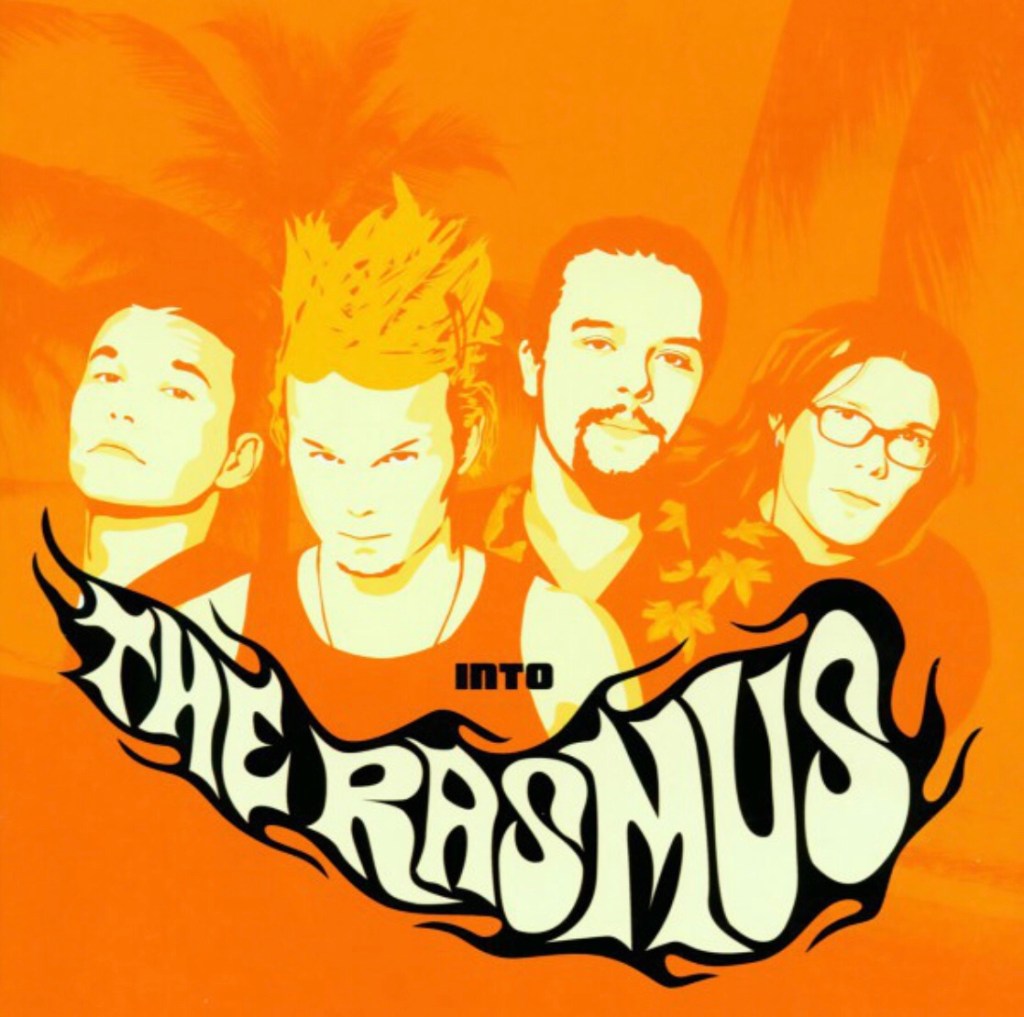
2001 – Part 3.2: The Rasmus – Into

“In The Shadows” from their 2003 album “Dead Letters” made me a fan. And I followed em with each subsequent release after that.

Around 2013, I decided it was time to go back and listen to their earlier albums, before “Dead Letters”.

“Into” is their fourth studio album, released in 2001. When they broke through to the international markets and mainstream attention it was with “Dead Letters”, which was their fifth album. Imagine that. Five albums deep into your career and you are finally breaking through the borders of your homeland, which in this case is Finland.

With this album, The Rasmus continued to move away from their earlier sound and into a more hard popular rock sound with the mood of the album being more contemplative and melancholic. Also the songs are concise, trimmed to ensure that the majority are lean and under 4 minutes.

The Rasmus band is Lauri Ylönen on vocals, Pauli Rantasalmi on Guitar, Eero Heinonen on Bass and Aki Hakala on drums. Names that are hard to remember in the English language but that shouldn’t detract from the great musicians and songwriters they are.

“Madness”

A pop punk distorted riff kicks off the song.

I like the Pre-Chorus with its acoustic guitars and electric guitars dynamic and its auto-tuned vocal melody, which also acts as a fuzzed out guitar lead the second time the Pre-Chorus comes around.

At 2.27, a violin solo kicks in, which mimics the vocal melody and it keeps going until the song finishes with the vocal melody over it.

“Bullet”

A heavily processed guitar riff starts it oft and it’s sitting in the background when the normal music kicks in.

The verses remind me of Whitesnake, Muse, Scorpions and there is a pop song there as influence that I can’t think of.

The Chorus is typical of the Chorus’s that would appear on the subsequent albums.

I gotta leave to make you see I’m over you
‘Cos if I stay I’m number two anyway

What do you do when you still like the person but they don’t like you the same way anymore?

“Chill”

The clean guitar melody in the intro is catchy and it was that good, it would appear on other songs on later releases.

I gotta make a phone call to my best friends.
I gotta let them know that I’m leaving.
Everything behind me and politely I don’t wanna hurt their feelings, oh no.

The first three lines. It’s sung fast but so melodically.

You want to leave but you’re not sure. You are going out on your own with no safety net. And you don’t want to burn any bridges because if you do return, you would want to have those friendships kick-starting again.

Reading Tommy Bolin’s story, he hitchhiked, by himself at the age of 15, from his hometown to a bigger city to play with better musicians.

And every time when I painted my room
like a fool I hid my feelings.
And every time when I painted my room
I thought about leaving.

The Chorus hook. For all the talk these days about mental health, the issues of mental health are nothing new. They seeped into lyrics of songs since music was invented.

“F-F-F-Falling”

It was number 1 in Finland for three weeks.

At 3.52, it’s my favourite song. It’s what “Dead Letters” was built on. The staccato like intro riff is arena rock.

The verses then roll along with its strummed acoustic guitar being the main riff and a tasty distorted guitar playing some single note licks in between. It reminds me of songs from Collective Soul, The Wallflowers and Eagle-Eye Cherry (think “Save Tonight”).

F-F-F-Falling down with the sun
I can’t give it up
The night is calling me like a drum
I keep on F-F-F-Falling

The Chorus hook. Its anthemic.

At 2.01, the Bridge kicks in, and the way the vocals are layered is excellent.

At 2.35, it all quietens down, as it builds back up into the Chorus and the excellent Bridge. There is also a nice guitar lead buried in the mix which mimics the vocal melody.

“Heartbreaker”

Another masterpiece in pop rock song writing.

The intro I believe is played on a synth, and it sounds like an 80’s retro riff. Then the acoustic guitar kicks in with its strummed chords and the vocal melody.

Oh yeah, oh yeah. She wanted to be a heartbreaker
Oh yeah. She was so greedy but a lousy love maker

The Chorus is anthemic. The music is in a pop punk fashion, but the vocal melodies are hard rock.

She used to be the queen of the scene
She had a key but she lost it
Nothing’s gonna last and the time goes fast – she knows

Descriptive story telling. Maybe Warhol was right. We all will get some form of 15 minutes of fame. All the Kings and Queens of the past, don’t seem to hold their title for long.

“Smash”

The way it started off, with processed drums and phased/tremolo’d guitars, didn’t prepare me for the arpeggios to come in the verses and the melodic rock hooks vocally.

Understand that you’re holding a bomb in your hand
Take control, hand in hand with yourself from now on
Take this advice, aim to the skies

Is the bomb the person’s dreams and wishes?

“Someone Else”

It’s a great power ballad, about drinking blood off dinosaurs and other strange things. There has to be some peculiar metaphorical meaning behind it.

Check out the Chorus. It’s huge.

“Small Town”

The intro reminds me of Bon Jovi but then it goes into a “Teenage Dirt Bag” kind of verse with the Chorus going back to a Jovi feel.

“One & Only”

The intro reminds me of “Save Tonight” from Eagle-Eye Cherry.

Overall, the track is in the vein of the tracks to come on subsequent albums.

“Last Waltz”

A music box intro starts off this bolero waltz groove.

P.S. The album went 2x Platinum in Finland.

P.S.S. All ten tracks are listenable. There is no filler.

P.S.S.S. “Into” is their great leap album, bridging their past with something new to come and international success.

Standard
Classic Songs to Be Discovered, Influenced, Music, My Stories, Unsung Heroes

The Record Vault: Coheed and Cambria – The Last Supper: Live at Hammerstein Ballroom (2006) DVD

This my second copy.

The first copy I gave to the drummer from a band I was in, along with “The Dirt” hardcover book and the “Rush In Rio” DVD. But when we had an argument, he wouldn’t return the items. So I repurchased “The Dirt” but this time in paperback, and this DVD. The Rush DVD price was extravagant when I was looking for it and I haven’t relooked since.

Now, live albums have been known to have a lot of studio overdubs or in some cases, total re-recording of some of the tracks in the studio. From what I can hear, nothing feels fixed or redone in a studio on this. So what you get, is a band that can deliver live, the chaos they create in the studio. If anything, I believe the guitars are tuned down ½ a step as Claudio’s voice was strained during this period. But man, he still delivers.

Coming into this release, Coheed and Cambria had released three studio albums, in “The Second Stage Turbine Blade”, “In Keeping Secrets Of Silent Earth” and “Good Apollo”. For the hardcore Coheed fans, yes, I’ve abbreviated the names of the album titles.

It’s the only live release with the original line up of Claudio Sanchez on vocals/guitars, Travis Stever on guitar and backing vocals, Michael Todd on bass and backing vocals and Josh Eppard on drums and backing vocals. Michael Petrak does additional percussion and Dave “Wavis” Parker is performing keyboards, backing vocals, some extra guitar and samples.

In a perfect world, the audio of this concert would be available on Spotify, but it isn’t. YouTube has the live concert footage and some of the YouTube users have created just the audio.

“In Keeping Secrets of Silent Earth: 3”

A perfect opener. It’s just a bit faster than the studio recording, but hey, that’s why I love the live show. And the crowd gets involved with the who-oh-oh chant towards the end.

“Ten Speed (Of God’s Blood and Burial)”

This version is electrifying. Again, a bit sped up than the studio, but I feel the energy smack me in the face.

“Blood Red Summer”

It follows the poppy rock vibes of “Ten Speed” perfectly.

“The Crowing”

This version is a metal beast and this live version is my go to track for it. As mentioned previously, its downtuned a little bit more from the studio cut and it sounds menacing.

After the two pop rock songs in “Ten Speed” and “Blood Red Summer” the placement of this is perfect to get the live concert back into progressive and metal like territory.

“Wake Up”

One of the best ballads from Coheed and Cambria, and live, you just hear the clean tone electric guitar, Claudio’s voice and the crowd singling along with him. It’s chilling, emotive and perfect.

“Delirium Trigger”

From the debut album, the intensity of the song grabs my attention quickly. Hearing it played alongside songs from two of my favourite albums, works perfectly. The middle subdued section offers a calm before the song picks up again. With so much musical movements, nothing is lost and missed.

“A Favor House Atlantic”

It’s faster. When I watched the band live, this song is sing-a-long. You can’t make out the audiences here and you sort of lose the power of when Claudio drops out and the crowd sings. But the energy is still there. “Bye, bye, beautiful” alright.

“The Suffering”

The pop punk energy comes through. I wanted a bigger impact for the “wishing well, will you marry me” part but not all songs can be winners.

“Everything Evil”

I don’t think this song worked well live.

“Welcome Home”

The best cut and I like the sped up vibe of the song. And even though its quicker, the intensity of the vocals is still there. I would have loved to be able to hear the crowd cheering the who-oh-oh at the end.

“The Willing Well IV: The Final Cut”

At 14 minutes long, its eight minutes longer than the CD version and the jam aspect vibe they bring to this track is brilliant.

When there jamming the middle section lead break, they play this lead break that I swear comes from “Seventh Son Of A Seventh Son” lead break.

And when they come out of the jam back into the normal song, its powerful and beautiful. The crash cymbals are smashing, the guitars are screaming and all hell is breaking loose as they finish off the concert.

In the end, “The Last Supper” leaves you wanting more of the Coheed and Cambria supper.

Rock out.

\::/

Standard