forgotten albums, Hard Rock, Heavy Metal, Music, Music history, rock music

Skid Row’s “Nothing”: The Strange Freedom of Realising You Don’t Need It All

It appeared on “Revolutions Per Minute”, released on October 24, 2006. Sebastian Bach was long gone, Johnny Solinger was handling the vocals, and the band was trying to figure out what its identity looked like beyond the shadow of its biggest commercial years.

The album was produced by Michael Wagener, the man who had helped shape Skid Row’s early sound.

Fifteen years after “Slave to the Grind”, the musical landscape had changed.

The decade between 1994 and 2004 was when music blew itself apart and rebuilt itself for a different kind of consumer.

Grunge was fading, and nobody was quite sure what would replace it. The answer wasn’t one new sound. It was a dozen competing movements, each fighting for the same shrinking amount of attention.

Nu-metal took metal, added hip-hop rhythms, turntables and anger, and turned Korn, Limp Bizkit, Linkin Park and Slipknot into commercial heavyweights. Pop-punk did the opposite, taking punk’s speed and attitude and wrapping it in enormous choruses. Green Day and The Offspring opened the door, while Blink-182 and Sum 41 made the sound a global phenomenon.

Meanwhile, Oasis brought back a new kind of popular music influenced by The Beatles and Britpop’s dominance gave way to a more introspective British sound, with Radiohead, Coldplay and Travis finding audiences beyond the traditional rock market. By the early 2000s, The Strokes, The White Stripes and The Hives were stripping away the excess, reminding everyone that sometimes a dirty guitar riff and a good song were enough.

Pop music became a manufacturing powerhouse. Britney Spears, NSYNC and the Backstreet Boys turned teenage fandom into a commercial machine, while Beyoncé, Usher, Alicia Keys and Aaliyah helped push R&B into the centre of mainstream culture.

Hip-hop made an even bigger leap, moving from the competing regional identities of East Coast and West Coast rap into a global commercial force. Eminem, Jay-Z and the emerging Southern rap movement changed the sound, language and business of popular music.

And underneath it all, electronic music was building its own empire. UK Garage and 2-Step were reshaping British dance music, while The Prodigy and Fatboy Slim brought electronic aggression to rock audiences. Trance turned dance floors into euphoric communal experiences, laying foundations for the festival culture that would explode in the years ahead.

But the most important thing about 1994–2004 wasn’t any individual genre. It was the collision of all these sounds with a changing music business.

CDs were still generating enormous profits. Record labels could afford to take risks, develop artists and market entire movements. Then the internet arrived, Napster attacked the economics of recorded music, and the industry discovered that controlling distribution wasn’t the same as controlling demand.

By 2004, the music world had changed. Genres were multiplying, audiences were fragmenting, and the old gatekeepers were losing their grip.

The irony? The industry was enjoying the last great financial boom of the CD era just as the technology that would undermine it was becoming impossible to ignore.

And the audience for hard rock had fragmented so much. Skid Row was no longer operating in the world that had made it famous.

“Revolutions Per Minute” received a largely unfriendly reception. Its genre-hopping made it difficult to categorise, and it never came close to reproducing the commercial impact of those early records. Yet “Nothing” offers something more interesting than another attempt to recreate the past.

It offers perspective.

The houses on the hill

We all do it. We look at the people who appear to have made it. We look up the hill and wonder whether we took the wrong road.

The funny thing about ambition is that it rarely announces its final destination. You achieve one thing, then immediately establish another target. The salary isn’t enough. The house needs renovating. The business needs to grow. The band needs a record deal. The record deal needs a hit. The hit needs to be bigger than the last one.

There’s always another hill.

And because we’re looking at somebody else’s house, we never see the mortgage, the arguments, the sleepless nights or the possibility that the people living inside are looking at another house further up the road.

The song understands that comparison is a trap. Not because wanting more is inherently wrong, but because you can spend your entire life measuring yourself against people whose circumstances, priorities and definitions of success have nothing to do with yours.

Rock and roll knows this territory intimately. The whole business is built around wanting to be somebody. You start in a bedroom, graduate to a rehearsal room, then dream about the tour bus, the record deal and the arena.

But what happens when you get there?

And what happens when you don’t

Growing up is hard

The Bowie reference is more than a clever name-check. It’s an acknowledgement that the questions we ask when we’re young don’t necessarily disappear when we get older.

David Bowie’s music understood that growing up wasn’t simply a matter of acquiring wisdom. Sometimes it meant discovering how little you understood in the first place.

When you’re young, you imagine there’s a point at which everything becomes clear. You’ll have a career, a relationship, a home and a reasonably coherent understanding of why you’re here. You’ll know what matters. You’ll stop worrying about the things that worried you at twenty.

Then you get older and discover that life doesn’t hand out instruction manuals.

You become more experienced, but experience doesn’t automatically produce certainty. Sometimes it just gives you a longer list of mistakes you know how to avoid, alongside a fresh collection of mistakes you haven’t made yet.

We make decisions with incomplete information.

Growing up isn’t arriving at the answer. It’s learning to live without one.

If I want it all, do I need it all?

Wanting something and needing something are two entirely different propositions.

The modern economy depends on our inability to distinguish between them. Advertising doesn’t merely sell products; it sells inadequacy. You’re not just buying a watch. You’re buying the suggestion that the person wearing it has achieved something. You’re not simply buying a bigger house. You’re buying the promise that you’ll finally feel successful when you walk through the front door.

And then the next advertisement arrives. There’s always a better version of whatever you’ve just purchased.

Rock music has its own version of the same disease. The industry teaches musicians to measure their worth through sales, chart positions, streaming numbers, ticket prices and the number of people who recognise them in an airport. You can make a record you’re proud of and still be told it doesn’t count because it didn’t sell enough.

I’ve always found that contradiction fascinating. Music is supposed to be about expression, yet the business constantly demands that expression be converted into measurable success.

Of course, money matters. Bills don’t pay themselves, and musicians deserve to be paid for their work.

The question in “Nothing” cuts through that nonsense. What if getting everything you want doesn’t mean you need any of it?

Records in my room

This is the line that gets me.

Because it understands music is a place you can go.

A place.

I can remember albums that became entire worlds. You put on a record, shut the door and disappeared for forty minutes. The music wasn’t background decoration. It was the main event. I learned the running order, the lyrics, the guitar parts, the production details. I discovered the songs that mattered to me, including the ones nobody else seemed to care about.

Those records became attached to periods of my life. I remember where I was when you heard them.

Decades later, a guitar intro can bring the whole thing back.

That’s the remarkable thing about recorded music. It doesn’t merely preserve sound. It preserves the person you were when you first heard it.

And I just need to press play.

I need nothing but you

After questioning ambition, material success and the whole business of wanting more, the song arrives at a surprisingly simple conclusion.

Nothing but you.

The song has spent its time examining the things we chase, the people we compare ourselves with and the uncertainty that comes with growing older.

There is a world of difference between having nothing and needing nothing. The first describes deprivation. The second can describe freedom.

Perhaps the best parts of life are happening in the room you’re already in.

Money can buy comfort, opportunity and independence. It cannot guarantee that you’ll be content with your life.

And success can open doors, but it cannot tell you which ones are worth walking through.

Sometimes the answer is more complicated than we’d like. Sometimes it’s remarkably simple.

There’s an argument that “Revolutions Per Minute” could almost be considered a Rachel Bolan-led project operating under the Skid Row name. Bolan was the dominant songwriting force on the record.

Critics and fans were divided, and the record never found the audience the band had enjoyed in its commercial heyday.

But that’s precisely why “Nothing” is worth revisiting.

It’s a song about time passing, memories accumulating and the gradual realisation that the things you once thought essential might not be essential at all.

Johnny Solinger’s place in Skid Row’s history is inevitably complicated by the enormous presence of Sebastian Bach. Solinger spent more than fifteen years with the band, recording “Thickskin” and “Revolutions Per Minute” and helping carry its name through a period when its commercial fortunes had changed. He died in June 2021, aged 55, after revealing that he was suffering from liver failure.

The music remains where it was left. We are the ones who arrive with different experiences.

Sometimes you can just put on a record, sit in your room and let it be what it is.

You don’t need it to be the biggest thing in the world. You just need it to mean something to you.

Press play.
Standard
Music, My Stories

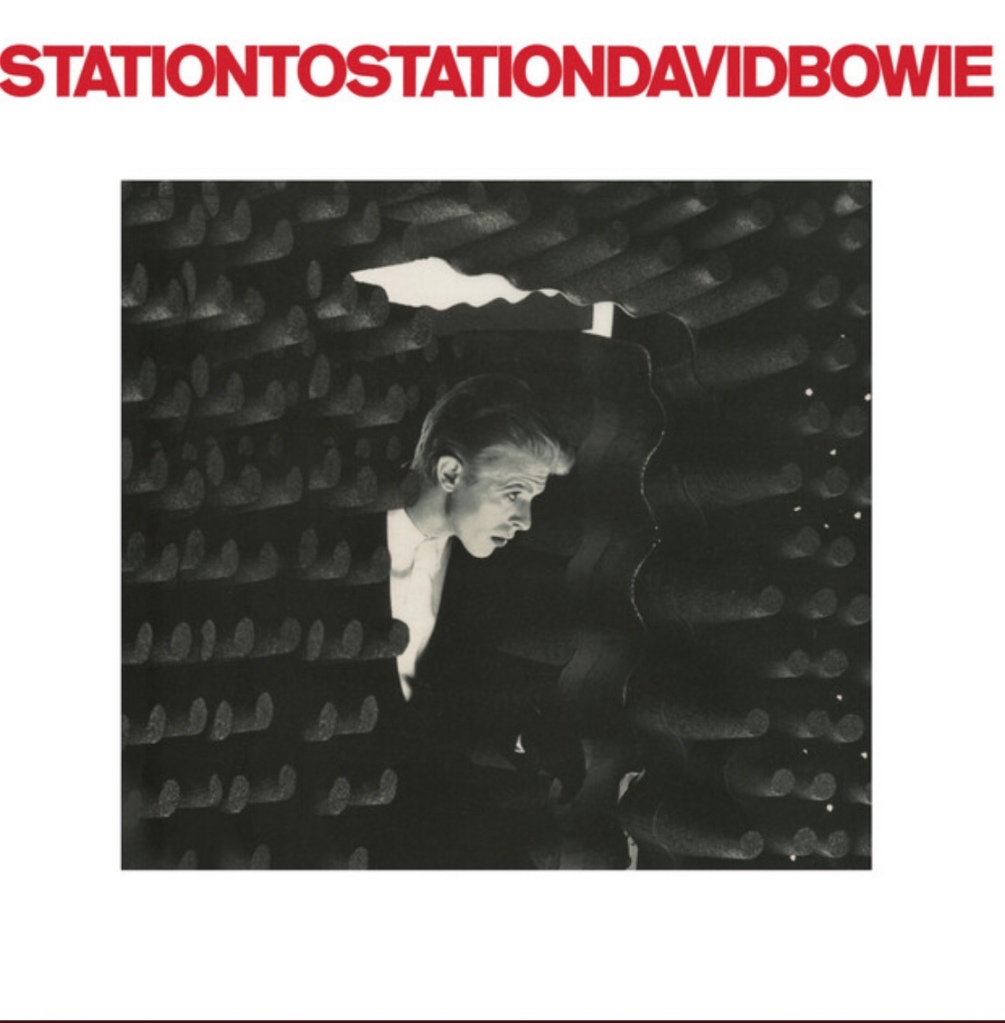
1976 – Part 4.2: David Bowie – Station To Station

I’m not the biggest Bowie fan, but his music got a second life in the late 90’s and onwards and I kept checking his albums out. I go in with an open mind with the hope to find something that I could use in my song writing.

Now, “Station to Station” is album number 10 for Bowie, released in 1976. It has been regarded as one of his most significant works, so it was on a list of album’s to check out for me.

The band for the album is stellar and on fire. Guitarist Carlos Alomar, bassist George Murray and drummer Dennis Davis all bring it, and guitarist Earl Slick contributes along with pianist Roy Bittan.

Bowie was too drugged out during this time and his memory of the album is vague. And with all the drugs artists do, they always find a way to create and the people around them, always find a way to get them to create. As their livelihoods depend on Bowie.

Station To Station

A 10 plus minute opening track which starts off with train noises created by the guitar. And somehow when it was released as a single, the song was creatively edited down to 3 minutes.

It’s typical of the era, blues rock and with arrangements that didn’t stick to a radio formula, because the artists ruled and the label execs didn’t really have a say, until they became more powerful than the artists in the 80’s because of MTV.

In keeping with the Blues Rock theme, Bowie was loaded up with cocaine and he kept asking Earl Slick to keep repeating a Chuck Berry lead over and over again.

Golden Years

This could have ended up on a Steely Dan album as it has this jazz rock fusion vibe.

Word On A Wing

It’s like a mid-tempo rock ballad, with a vocal delivery that reminds me of Joy Division.

TVC15

Bowie wrote this while he was filming “The Man Who Fell To Earth”. But it’s a skip for me.

Stay

I like the riff, it’s almost Santana like with a bit of Doobie Brothers thrown in and you should definitely press play to hear the bass groove.

But man, Bowie’s vocals are really not connecting with me at all on this album and in this song in particular, because musically, this song is gold.

Wild Is The Wind

Musically, the song is great. It’s like a rock ballad. Like all the previous songs, the vocals and melodies from Bowie just don’t connect with me on any level.

And while this album is held in high regard amongst Bowie’s fans, there isn’t enough there to make me a fan. Although there are a lot of lyrics to digest.

Standard
Classic Songs to Be Discovered, Derivative Works, Influenced, Music, Unsung Heroes

1977 – Part 8

Legs Diamond – Legs Diamond

The cover is a great piece of art, with an electric guitar resting on the back of a bullet riddled car boot. A perfect drawing for a band named after a gangster.

This is their debut album, released on Mercury Records with Derek Lawrence producing. I’m pretty sure it’s the same Lawrence who did Angel and Kiss albums on Casablanca. And Mercury records didn’t know how to promote the album, nor did they give the album any budget for promotion.

“It’s Not The Music” kicks it off and it rocks hard. “Stage Fright” starts off with a riff that sounds like something that Rush would use for “Limelight” and a vocal line that Robert Plant would be proud of. But the style of the song is more Deep Purple.

“Satin Peacock” has a riff which is instantly memorable. Rumour has it that Gene Simmons liked the song so much, he wanted to record it for Kiss.

“Rock And Roll Man” is an interesting song, with riffs, a flute (yes, a flute) and a solo that starts off with fast open string pull off licks before it goes into the usual pentatonic stuff.

“Deadly Dancer” has a bass riff which can sink ships. “Rat Race” is a blues groove rumble in the verses and a metal like cut in the Chorus with a nod to some Deep Purple.

“Can’t Find Love” has a two minute synth like intro before the distortion blasts out of the speakers.

And the album is full of cuts that move between rock, blues rock and progressive rock.

They only made three albums during this period, before breaking up in 1980 and then reforming in 1984 after their first three albums started to become cult favourites. But that re-formation failed to capitalise on any of the MTV success that other bands started to receive.

Nazareth – Expect No Mercy

The Frank Frazetta drawings just kept on making appearances on metal and rock albums. And Frazetta also inspired other artists to make their own derivative versions of his works.

This is Nazareth’s ninth album in seven years.

Nazareth at this stage had more in common with the soon to be NWOBHM than what they were known for. And this album is a weird amalgamation of blues, rock, country, funk and metal. In other words it’s a typical 70’s album, when bands had diversity and weren’t scared to try things out.

Guitarist Manny Charlton by this stage was also in the producer’s chair.

The original cut of this album was rejected by the label on two occasions because of its heaviness. And man, those label heads would have been thinking, “what did we do here, allowing these guys to self-produce”. The songs that got left off appeared on another album as bonus tracks. I can’t remember which one.

And what a frantic song the title track is?

As soon it starts, it’s in your face. Its part blues, part speed rock and it sounds like nothing else at that point in time.

Then “Gone Dead Train” kicks in and it’s like a 12 bar blues song with some Rolling Stones chucked in. Then again, it’s written by outside writers in Jack Nitzsche and Russ Titelman and appeared on The Crazy Horse albums with Neil Young. In other word, a country rock song which has been Nazareth’d.

“Revenge Is Sweet” brings back the energy of “Expect No Mercy”.

Neil Young – American Stars ‘N Bars

The song, “Like A Hurricane”.

It’s deep in the album. I’m glad I stuck the course because the first few cuts didn’t get me interested.

As soon as the fuzzed out lead break started, I was hooked. And then Neil Young started to sing that lead break as the vocal melody. It’s in a minor key and so sad, while the Chorus is in a major key, providing some contrast.

Then the lead break starts and Young is bleeding the emotion out of the guitar, bending notes, missing notes, skipping strings, raking strings, making mistakes and then repeating small little three note licks. He’s in the zone and I don’t want the lead break to stop.

But.

It comes back again, as an outro solo. And at 8 minutes long, I never got bored.

Jackson Browne – Running On Empty

Maybe it was The Eagles or a comparison to Bob Seger that got me to check out Jackson Browne.

This is a live album, not sure how much of it is live or re-recorded in a studio or how much crowd noise got added in the mix. Regardless, it’s a cool listen and if Jackson Brown and his band sounded like this live, then it was worth the price of admission. Then again, tickets went pretty cheap back in those days.

As soon as the first chords started to “Running On Empty”, I could hear what Springsteen would become in a few years’ time. Take a simple groove, jam it, embellish it with different vocal melodies and you have a song that you can’t get out of your head.

As soon as the fingerpicked notes started for “The Road” I was interested. There is just a lot of good guitar playing in this song.

Then there is a cover song. “Stay”. It brings back memories of watching those movies set in the 60’s and early 70’s.

Eddie Money – Eddie Money

Eddie Money came on my radar via interviews with Jon Bon Jovi and Richie Sambora in the late 80’s. His name was dropped a fair bit.

The opening track “Two Tickets To Paradise” just rolls along uneventful and then the Chorus comes crashing in and I’m hooked. 70’s melodic rock is so different to what came after as it’s rooted more in blues and country rock. This track could have been on a Bob Seger album and it would have worked. It could have been on an Eagles album and it would have worked.

Then the chords start to “You’ve Really Got A Hold On Me” and the groove gets me interested. “Shandi” from Kiss comes to mind.

The feel is different to the opening track because it’s a Motown cover (originally released in 1962 by Smokey Robinson) and done in Money’s bluesy soul vibe. The Beatles even covered this song on their second album, “With The Beatles”.

“Save A Little Room In Your Heart” continues the blues soul ballad vibe.

“So Good To Be In Love Again” has a vocal melody that is memorable, a piano riff that brings a Spanish like feel and guitar licks and leads to decorate the song nicely.

The riff to kick off “Baby Hold On”, if you just add distortion, some metal phrasing, you get a monster. If you add the feel to “Lose Yourself” from Eminem, you get that Eminem song.

How good is the intro riff and groove to “Don’t Worry”?

If it doesn’t get your foot tapping, check for a pulse.

“Got To Get Another Girl” sounds like the cuts that Richie Kotzen and Joe Bonamassa would end up writing many years later. A bluesy guitar riff with a blues soul rock vocal.

Jimmy Lyon on guitar is a star on this song and on the album overall. And it’s funny how Lyon and Money came to work together. Both were discovered by a Columbia exec and paired together by the same exec.

“Gamblin Man” closes the album, a typical blues rock song in the vein of Free and Bad Company. And for a debut, there isn’t much wrong with it.

Peter Gabriel – 1: Car

It’s not actually called “Car” but given that nickname because of the Strom Thorgerson cover that features a car.

Produced by Bob Ezrin and he knew how to get the best out of the musicians.

One song sent this album out into the world.

“Solsbury Hill”. It’s perfect.

The acoustic riff is instantly recognisable, the synth lines the same and that vocal melody from Gabriel, wow.

And it’s no surprise that Ezrin called in Steve Hunter who he used for Alice Cooper on the Welcome To My Nightmare album for the acoustic guitar playing. Robert Fripp from King Crimson also plays guitar on the album, while future Crimson band member Tony Levin is on bass.

“Modern Love” also rocks out of the gate.

“Slowburn” feels like a Sweet song. The solo hooks me and it’s no surprise that its done by Steve Hunter.

“Down The Dolce Vita” has a horn movie like section for the first 40 seconds, but then a rock funk cut explodes out of the speakers before it morphs back into the cinematic orchestral hits and back to the rock funk. There’s no way you can’t like it. Its progressive in the sense that it incorporates different sonics and genres.

“Here Comes The Flood” percolates until it explodes into a solo section from about 3.30.

And then that outro chorus section. Massive and powerful. These are techniques here that Ezrin would use for “Comfortably Numb” in a few years’ time.

Davie Bowie – Heroes and David Bowie – Low

Two albums in a year.

Of course, “Heroes” is a stand out here, and on Spotify it has reached close to 232 million streams. But I prefer the cover from “The Wallflowers” in the 90’s which isn’t on Spotify.

And nothing huge came from “Low”.

“Always Crashing In The Same Car” has this quirkiness which I like.

“Be My Wife” is excellent musically, so don’t let the terrible title mislead you. “A New Career In A New Town” feels like a country rock song, with a bit of 60’s pop chucked in. There is no singing, just music and the mood it creates.

I can’t say I’m a huge fan of Bowie, but man, when he wrote songs that crossed over, didn’t they capture the zeitgeist. If not by him, by the people who covered them. And his quirkiness and experimentation led to other artists taking inspiration from that to create their own special.

Well we go back to 2000 for part 9.

Standard
A to Z of Making It, Music, My Stories, Piracy

It’s Always About The Songs

I am reading an article on Brad Paisley.

When he was asked about why he thinks his popularity resonates so strongly with audiences around the world, Paisley answered with the following:

“It’s always songs.”

He further adds that the minute an artist starts to think it’s them and not the songs they are singing that resonates, it is the moment that they start to think they are larger than life.

We are fans of music. We are attracted to the songs. If that same artist keeps churning out great songs, then we stick around. If they don’t, we go looking for something else.

I got into the band Bon Jovi because of the songs, not because of an individual. Desmond Child and Billy Falcon have co written alot of songs for the band, however their solo careers didn’t get any traction while Jon Bon Jovi’s solo career is a one hit wonder and Richie Sambora’s is aimed at a whole different audience.

I got into Coheed and Cambria because of the Amory Wars story and the songs. If I got into Coheed and Cambria because of an individual, then I would be also listening to all of the side projects.  

When it all comes down to it, the song is the only thing that remains. The top 10 list for my kids are the following songs;

1. Eye Of The Tiger from Survivor
2. Lick It Up from Kiss
3. We’re Not Gonna Take It from Twisted Sister.
4. Livin On A Prayer from Bon Jovi
5. Anyway You Want It from Journey
6. Smoke On The Water from Deep Purple
7. The Final Countdown from Europe
8. We Will Rock You from Queen
9. Back In Black from AC/DC
10. Iron Man from Black Sabbath

The kids of today don’t say the band name, they say the song name. In time the above songs will be covered over and over again, further obscuring, the original writer. All The Young Dudes from Mott The Hoople and originally written by David Bowie, has been covered by Bruce Dickinson, Ozzy Osbourne, Aerosmith, Angel, Tesla, The Smashing Pumpkins, Judas Priest and Stone Temple Pilots.

My kids love the song Cum On Feel The Noize. They don’t care which version they hear (Slade or Quiet Riot), they only care about hearing the song. I never went back to hear the original Slade version. I was quite content with the Quiet Riot version.

In the same interview, Paisley talks about some truths in relation to technology.

“It’s a constant challenge to try and get people’s attention,” Paisley said. For instance, he can put a huge amount of effort in a music video (such as his recent “Southern Comfort Zone”), “and then you’re upstaged by ‘David at the Dentist.‘”

This is real life example of an artist and their backers, spending time and money to produce something of decent quality, only to be trumped by a video that cost almost nothing to make.

The record labels whine and complain about piracy, however their real problem is that they do not know how to compete in the market place.

Standard
Music, Piracy

Bon Jovi – The life cycle of What About Now – From 1 to 76 in six weeks.

The release of What About Now happened with a bang.  Due to record label collusion between Universal (Bon Jovi’s label) and Sony (Justin Timberlake’s and David Bowie’s parent label), the album was released the week before Justin Timberlake’s 20/20 album and because of that it went straight to Number 1, beating off David Bowie.

The second week saw the album slip to Number 7.  The third week saw it drop even more to 34 on the charts.  By the fourth week, it was down to position 50.  On the other hand, the Because We Can tour, was selling out arena’s and stadiums.

Digitally, the album performed even worse.  The iTunes chart had the album debut at 52 on the 12 March 2013, and by the March 15, 2013, it was out of the Top 100 iTunes chart. Three days.  That’s it.

Songs from the album do not even rank in the top 25 of the streaming charts.

The fans have clearly spoken.  The hard-core fans like me purchased the album so that we could have it in our collections.  It’s a collectors thing.  The fans that the band picked up during the Slippery/New Jersey era and the It’s My Life era, prefer to buy tickets to the show.

So where is the album, 6 weeks after its release.  Sitting at position 76.  Bands like Imagine Dragons and Mumford and Sons are still in the top 20 and their albums have been out since mid 2012.  Adele’s 21 (released in January 2011) is still charting and selling more than Bon Jovi’s new album (released in March 2013).

The labels will scream piracy.  However, data clearly shows, that if you release good music, it will sell, and it will be around for a long time.  Release crap music and expect it to be ignored.  Thank god, Bon Jovi delivered some classic albums in the past.


Standard