Classic Songs to Be Discovered, Music, My Stories, Unsung Heroes

2001 – Part 6.2: Seven Mary Three – The Economy Of Sound

Six years had passed since “American Standard” (1995) hit the streets and chalked up a Platinum award.

Seven Mary Three was written about as an “overnight sensation” by the media. An overnight sensation which had built their success mile by mile since 1992.

They finally got their major label deal and switched to Atlantic from Mammoth after “American Standard”. Actually I think the labels were joined at one time and they split apart with the band agreeing to sign with Atlantic.

“RockCrown” came out in 1997 and it failed commercially. The emphasis on folk rock alienated their hard rock audience who didn’t want to go on this journey with them.

But “American Standard” was still selling and “Cumbersome” was still on radio, so Atlantic put them back in the studio. Let’s reap whatever sales we could get was Atlantic’s motto.

A year and a month later, “Orange Ave.” comes out and it also fails commercially. Atlantic dropped em and Mammoth took em back.

In 1999, one of their main songwriters, guitarist Jason Pollock left, citing writers block. Thomas Juliano took his place, joining vocalist Jason Ross, bassist Casey Daniel and drummer Gigi Khalsa.

And here we are in 2001, with “The Economy Of Sound”.

Sleepwalking

It’s written by Ross and Juliano. It reached #39 on the Hot Mainstream Rock Tracks.

It’s a great post grunge/alternative rock track, reminding me as a cross between Neil Young, Pearl Jam, Rolling Stones, The Vines and Collective Soul.

Can’t stop this sleepwalking
Can’t stop my mind

A sense of being helpless or unable to exert control over our actions and thoughts.

And my spies realize that my hope’s euthanized by the paranoid ape in my heart

A feeling of disillusionment due to internal struggles or fears.

Wait

Written by Ross.

It reached #7 on the Hot Mainstream Rock Tracks and #21 on the Hot Modern Rock Tracks.

It reminds me of the song “Signs” which Tesla made popular again in the early 90s. On its Wikipedia page, the song is criticized as being a “Goo Goo Dolls” knockoff or a Bon Jovi homage.

Regardless, this song is littered with some of my favorite lyrical lines.

Machines and luxuries don’t last

Machines and luxuries are temporary and can’t provide lasting fulfillment.

I took my sleep for granted in the past,

Taking our sleep for granted in the past, only to realize the consequences later.

And I woke up half-dead in the hourglass.

It portrays the feeling of time slipping away and the importance of valuing things that truly matter.

Wait, you’re almost there it’s gone

A sense of missed opportunity. We are always focused on the goal and in achieving something, but by the time we realize it, the opportunity has already passed.

It could be about realizing the value of something too late or the fleeting nature of moments.

I never found a gift you get for free, You pay for them dearly

Nothing is obtained without a cost.

Even though things might appear to be free initially, there is usually a significant price to pay in terms of effort, sacrifice, or consequences.

Faster

Written by Ross.

It’s standard pop alternative rock, more like what Good Charlotte would do.

Before tearing it down. I’m alone by my design.

A deliberate choice to be alone while making changes or taking actions.

Summer Is Over

Written by Ross and Juliano, it’s got this chromatic descending line, reminiscent of Stone Temple Pilots “Plush” and certain songs from Collective Soul.

And by some six degrees of separation that Seven Mary Three listened to the “Slang” album from Def Leppard, we’ll I hear that as well.

So this song is a definite like for me.

Honey

Written by Ross.

“Song No 2” from Blur comes to mind.

Still I Find You

Written by Ross.

And still I find you waiting for me on the other side.

A hidden deep cut, with its Led Zeppelin and Beatles feel. They should have lived in this world for a little bit longer and written more songs like this.

And it’s a favorite.

Breakdown

Written by Ross and Daniel.

Its aggressive like a Blur song and its got an excellent Bridge section which is very Beatles “Helter Skelter” like.

Man In Control?

Written by Ross, it’s got this groove and feel that The Wallflowers became famous for with “One Headlight”.

Zeroes and Ones

Written by Ross and keyboardist Kevin McKendree.

It’s got this “Heroes” vibe and I like it.

First Time Believers

Written by Ross, it feels like an attempt to be Collective Soul.

Steal A Car

Written by Ross.

Velvet Revolver comes to mind here and I like it.

Tug

Written by Ross.

It’s an acoustic heartland like cross that wouldn’t the out of place on a Jovi or Collective Soul album.

And the album was another commercial disappointment.

After the release, their label Mammoth would also be swallowed up by Hollywood Records/Disney and the band was again without a label.

But they continued.

A few more albums, a couple of EPs and a live album would come out and then in 2012, the band broke up.

There was no announcement or updates on their Facebook page.

Just the end.
Standard
Classic Songs to Be Discovered, Influenced, Music

2001 – Part 6.1: Radiohead – Amnesiac

It’s been sixteen years since “In Rainbows”?

Back in 2007, the issue surrounding that album was getting paid. Remember “pay what you want”. It was meant to bring the money back into music. It didn’t.

But it gave artists a hard truth, that they have fans who are willing to pay zero dollars for their recorded music.

Today the main issue is getting peoples attention and holding it. Anyone remember what was trending last week. Me neither.

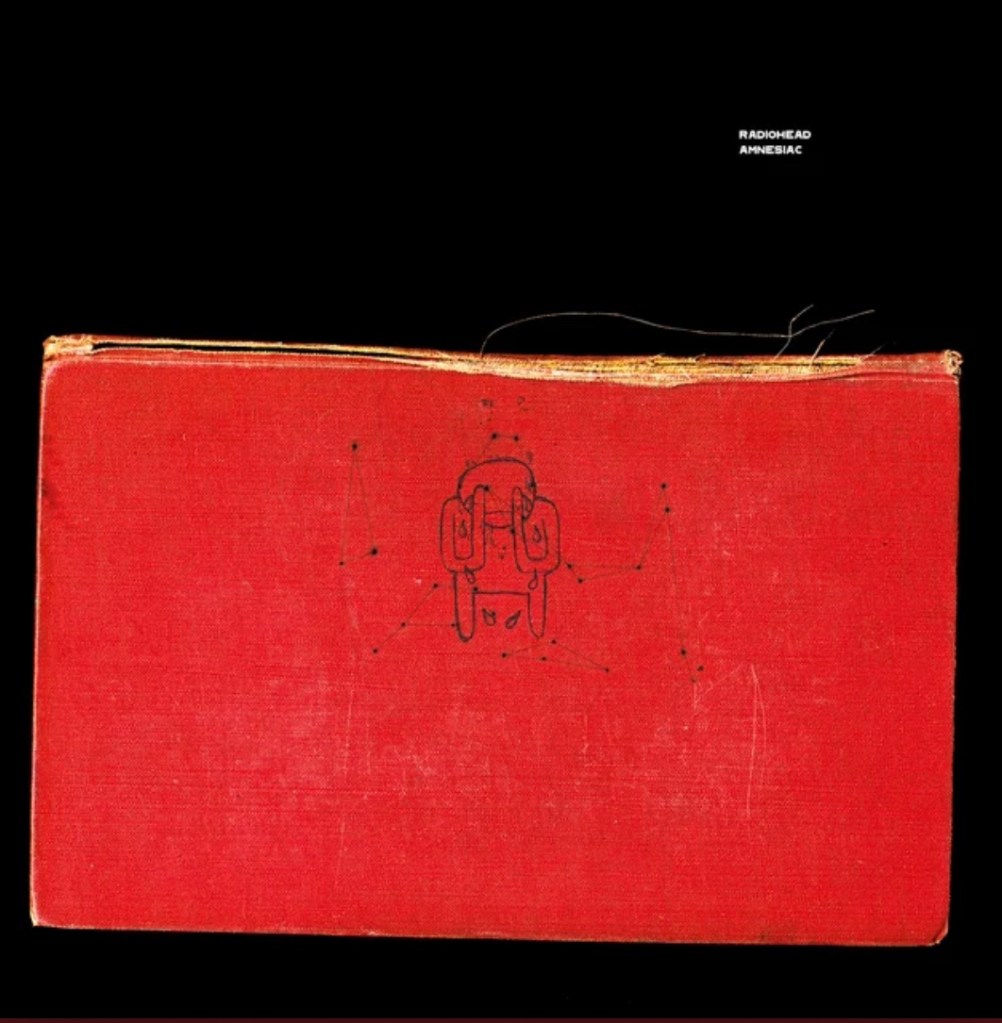
“Amnesiac” is the fifth studio album by Radiohead, released on 30 May 2001.

Although the album came out in 2001, it was recorded with producer Nigel Godrich in the same sessions as Radiohead’s previous album “Kid A” released in 2000.

Radiohead considered releasing the work as a double album, but decided against it.

Based on the buzz created from the earlier albums, “Amnesiac” debuted at number one on the UK Albums Chart and number two on the US Billboard 200.

Packt Like Sardines in a Crushd Tin Box

It’s an electronic song with synthesisers and industrial percussion. Actually the tone of the synth riff feels like it became the design for the TonePad or SoundPrism apps.

Auto-Tune was also used to process Yorke’s vocals which sound hypnotic and other worldly.

After years of waiting nothing came, as your life flashed before your eyes you realize

A realization that the thing you have been eagerly anticipating for a long time, didn’t come to be.

After years of waiting nothing came, and you realize you’re looking in the wrong place

After the passage of time you come to the realization that your search or focus has been misguided.

Your strategy was ineffective and it led you astray. But there is time to reassess your approach, redirect your efforts, or reconsider your expectations in order to find the desired outcome or solution.

I’m a reasonable man, get off my case

Pyramid Song

The piano chords drive the song, which is a trippy 60s experimental acid rock track. Wikipedia tells me the musical part of song was inspired by the Charles Mingus song “Freedom” and its lyrics were inspired by an exhibition of ancient Egyptian underworld art Yorke attended while the band was recording in Copenhagen and ideas of cyclical time discussed by Stephen Hawking and Buddhism.

I jumped in the river and what did I see, black eyed angels swam with me

A symbolic leap into the unknown.

And while angels normally represent the light, the mention of black-eyed angels is seen as mysterious. The color black is also associated with darkness.

And we all went to heaven in a little row boat, there was nothing to fear and nothing to doubt

The mention of a row boat, which requires teamwork and coordinated effort to navigate, suggests a collective experience or shared journey.

“Pyramid Song” was named one of the best tracks of the decade by Rolling Stone, NME and Pitchfork

Pulk/Pull Revolving Doors

Wikipedia tells me it began as an attempt to record another song, “True Love Waits”.

It features keyboard loops recorded during the “OK Computer” sessions. Deciding that the arrangement did not fit “True Love Waits”, Radiohead used it to create a new track.

Yorke added a spoken vocal and used Auto-Tune to process it into melody.

Unfortunately the story of the songs creation is better than the song. It’s a skip for me.

You and Whose Army?

Wikipedia tells me that the song is about someone who is elected into power by people and who then blatantly betrays them.

At the time Yorke was protesting against the British PM, Tony Blair. However it seems that every democratic country has this problem.

Its like lounge music with a drunken vocal melody for the first 1.50 as the song builds and I was going to skip it.

But it changes and the last minute is dreamy rock and I like it.

We ride tonight ghost horses

A journey into the unknown. It seems to be a recurring theme on the album.

I Might Be Wrong

I like the Bluesy riff but don’t like the industrial sounding drum beat.

You go down the waterfall, think about the good times and never look back

Another phrase about a challenging or transformative experience.

As you draw strength, inspiration, or comfort from the good times during times of adversity. You know the whole wellness business model is built on selling the “power of positive thinking”.

Knives Out

It sounds like they just got in the room and jammed this one out.

Lyrically I think it’s about cannibalism.

Morning Bell/Amnesiac

I’ll give them points for trying to do something different and out of their comfort zones, but as a title track it’s terrible.

A skip for me.

Dollars and Cents

Another skip for me.

Hunting Bears

Its a two minute instrumental on electric guitar and synthesizer and backwards effects. It’s cinematic and I like it.

Like Spinning Plates

It’s a skip for me.

Life in a Glasshouse

It’s jazz noir and jazz trumpeter Humphrey Lyttelton and his band performed on this in the style of a New Orleans jazz funeral.

Wikipedia tells me that the lyrics were inspired by a news story Yorke read of a celebrity’s wife so harassed by paparazzi that she papered her windows with their photographs.

But it’s a skip for me.

Back in 2001, two years after Napster, sales were still a big thing and man of albums were good, sales would go through the roof. Linkin Park’s “Hybrid Theory” and “Meteora” come to mind here.

“Amnesiac” was certified Gold in Argentina, Australia, Belgium, France, Japan and the United States.

It was certified Platinum in Canada, United Kingdom and Europe.

It’s different. Give it a go.

Standard
Music, My Stories

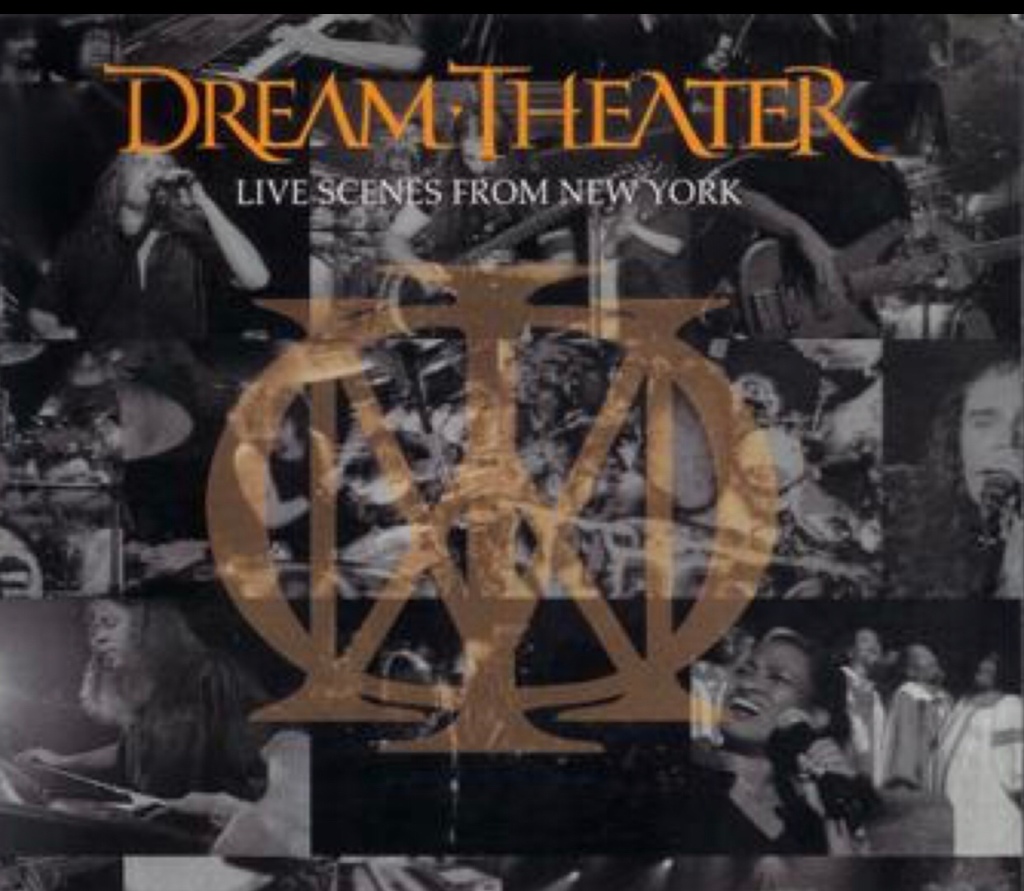
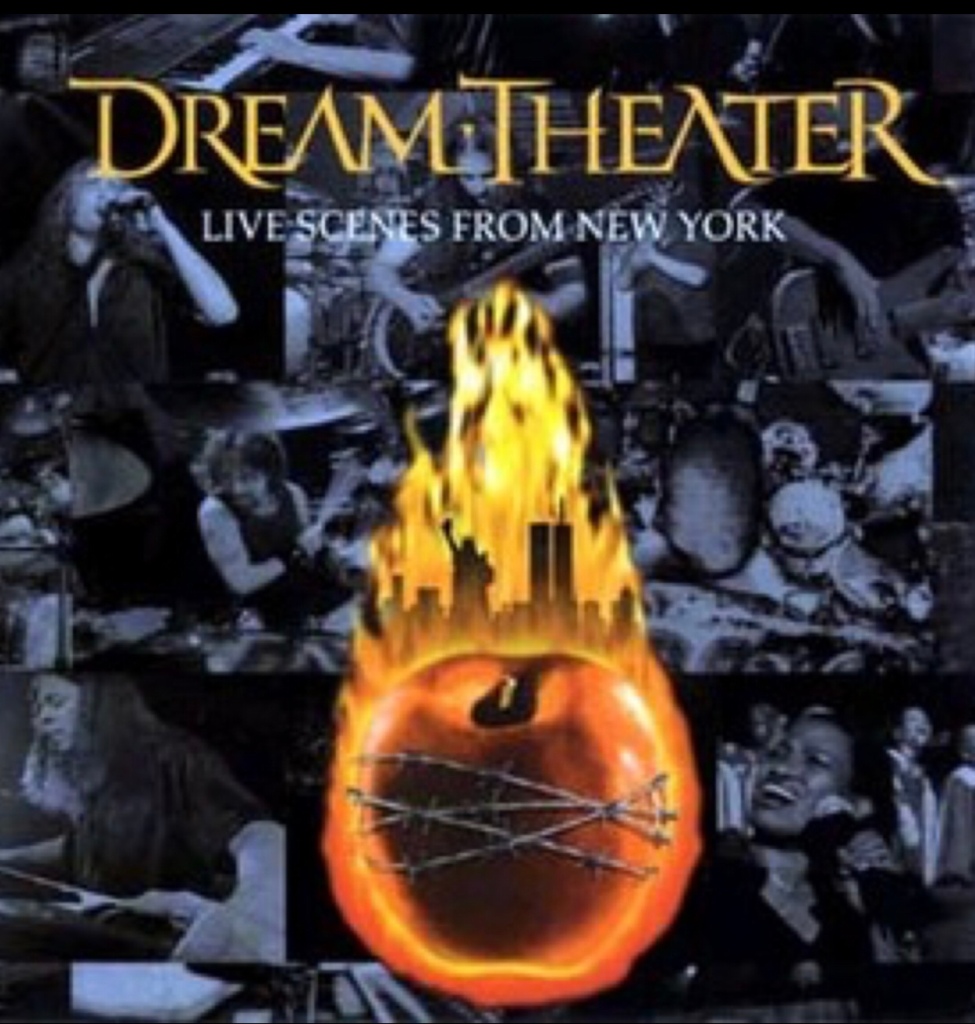
The Record Vault: Dream Theater – Live Scenes From New York

Released in 2001.

They play the whole concept album in its entirety (with some improvisation) and cast extras join the band to do the voiceovers of the characters.

They are very precise in their playing, but they also leave room for jamming and improvisation, which is something a lot of acts don’t do. Go watch a Metallica or Iron Maiden concert and you don’t get a lot of improvisation during the songs. The songs are more or less played the same way they are recorded. But if you watch Dream Theater, you will get a lot of jamming.

Some of Petrucci’s best solo moments are from live recordings. Like the solo on “Hollow Years” from the “Live In Budokan” release. He takes the normal solo with a bit of improvisation and then they extend it, to go into a hard rock “guitar hero” solo for about two minutes as part of the song. If you like guitar playing at its finest, then you will need to check this moment out.

On this album, his improvised solo on “Through Her Eyes” is exceptional.

James LaBrie cops a lot of hate for his vocals.

One thing about live performances and when I say live, I mean live, (not a live album sold as a live album with the instruments and vocals recut in a studio) is that it is really difficult to be consistent vocally.

A vocalist will always be pitchy live due to the volumes and how the noise of the other instruments and the crowd bleed into the ear pieces, making it hard to hear if they are hitting the right pitch all the time.

There are a few “what the” moments here.

One that comes it mind is when Mike Portnoy screams out “who wants to cum” at the climax of some love making samples which segues into the solo section of “Home”.

“The Dance Of Eternity” is seen as the definitive Dream Theater instrumental. It has all the trademarks of what makes Dream Theater unique and that whole “swinging 20’s show tunes” section from 2.30 minutes shows growth and diversity. Hearing it back today, it amazes me how effortlessly they just fused different eras and genres.

A highlight for me is the ballad “The Spirit Carries On”. The solo on the recording was a “Guitar Hero” moment and Petrucci delivers a masterclass here.

“Finally Free” is more or less a forgotten track when it comes to Dream Theater lore, but musically it is one of their best. Most of it is in 4/4 timing and very easy to digest. Plus it has an ending where Portnoy unleashes some unique and technical fills in the studio recording. Hearing him do that live and also improvising a little bit, without missing the beat is what live music is all about. And at 9.30, they go into a familiar section that wasn’t part of the studio recording, but is part of the live show at this point in time. Again, this is what live music is all about.

After the “Metropolis Part 2: Scenes From A Memory” album is played, they begin the other songs.

And is starts with “Metropolis – Part 1: The Miracle And The Sleeper”. The audience knows it and they cheer it. The guitars from Petrucci sound so much more heavier than the studio recording of a decade before. Rudess was not even part of the band then, but the keyboard parts sound like they are his. The Led Zeppelin, “Kashmir” first verse is still my favourite part of the song.

They go into “The Mirror” and I am a fan of how Petrucci employs the 7 string here, more Tool like in its rhythms. “Just Let Me Breathe” is my least favourite from the “Falling Into Infinity” album so I don’t really care for it here. “Acid Rain” from The Liquid Tension Experiment appears. This is from the side project that Portnoy put together after the “Falling Into Infinity” album, which involved, Petrucci, Rudess and Tony Levin on bass. From this side project, Rudess ended up joining Dream Theater.

While Petrucci and Portnoy did “LTE”, bassist John Myung did Platypus with ex Dream Theater keyboardist Derek Sherinian and guitarist Ty Tabor of King’s X (who also sang lead vocals) and drummer Rod Morgenstein of Dixie Dregs/Winger fame.

Singer James Labrie also did Mullmuzzler. The record company would not allow LaBrie to use his own name, so he created the name of MullMuzzler and defined it as: “to gag or silence an individual’s thought before it can be expressed in any manner”. Joining Labrie in this project was future Dream Theater drummer Mike Mangini, guitarist Mike Keneally who did time with Frank Zappa, Dweezil Zappa and Steve Vai. Bryan Beller was on bass and his background includes Dweezil Zappa. Matt Guillory played the keys and wrote a lot of the songs with Labrie.

“Caught In A New Millennium”, “Another Day” and a 6 minute Jordan Rudess keyboard solo (which the show didn’t really need) closes out disc 2. “Another Day” is such a good song and it should have been a massive hit. They probably should have shopped the song around to other artists to redo. For the live version, they even bring out a saxophone player.

Disc 3 is like the encore of the show.

It begins with “Erotomania”, “Voices” and “The Silent Man”. This trilogy of songs is known as the “A Mind Beside Itself” a three-part song cycle first released on their 1994 album “Awake”. When the separate songs are combined, the Trilogy clocks in at 22 minutes.

“Erotomania” is an instrumental. There is a section in the song which was originally written for “Pull Me Under” but removed before recording took place. So it got added to this instrumental. It’s a guitar hero moment with a lot of string skipping and fast alternate picking. Petrucci has no issue doing this live. Another masterclass.

The lead break in “Voices” is so bluesy in origin and of course Petrucci spices it up with some fast alternate picked runs between soulful bends.

“The Silent Man” starts off a bit different and I like it. If you want to hear Dream Theater Unplugged then press play on this. The solo section is extended and the whole band is in. It moves between ragtime and country leads.

I’ve said it before and I’ll say it again. This is why I go to the live show.

“Learning To Live” which clocks in at 14 minutes is next. It’s my favourite track from the “Images And Words” album. The song originally is about 11 minutes long, so they improvise for an additional 3 minutes. There is a reggae like section in the solo section that is added. And the outro is extended. You should actually press play on this outro. Myung lays down the groove on the bass and the rest of the band builds on that, decorating it to a crescendo.

Their encore so far, is at 36 minutes.

They close the show with “A Change Of Seasons”, which at that point in time was their longest song at 24 minutes. Bringing the total encore to 60 minutes. A lot of metal and rock bands just do a 90 minute show (80 minutes and a 10 minute encore), or a 120 minute show (100 minutes and a 20 minute encore). Dream Theater delivered a 180 minute show.

In a case of Nostradamus clairvoyance, the original album cover had the Dream Theater logo over a burning New York skyline with the World Trade Towers on fire. It was all printed and packaged for its release date of September 11, 2001.

You can guess how that went down.

Standard
Influenced, Music

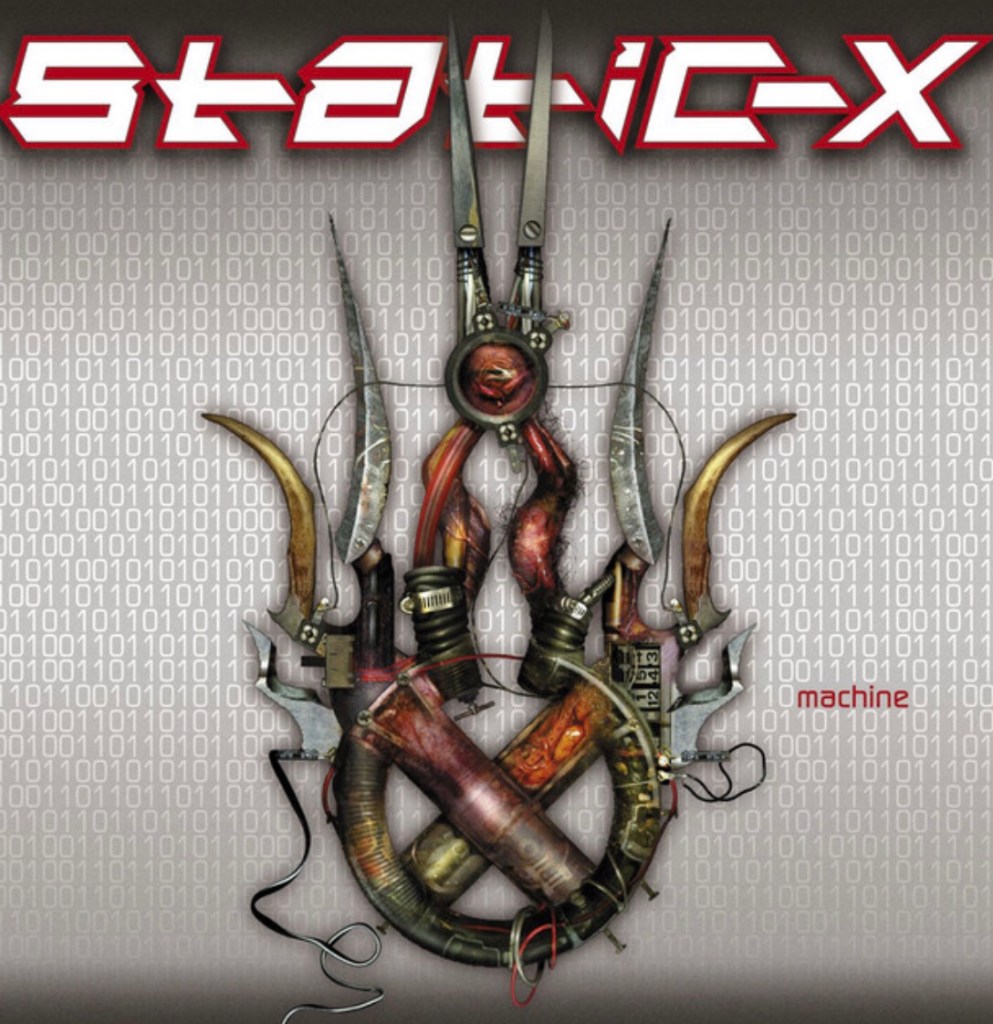
2001 – Part 5.6: Static X – Machine

A singer from a band I was in burnt me a copy.

“Machine” is the second studio album by Static-X, released on May 22, 2001.

The Personnel for the album is Wayne Static (RIP) on Vocals, Guitars, Keyboards and Programming. Tony Campos is on bass, Ken Jay is on drums, Tripp Eisen is on guitar, with ex-lead guitarist Koichi Fukuda credited as a keyboard player and Ulrich Wild contributing keyboards to different songs.

The writing for the songs happened while on tour for the “Wisconsin Death Trip” with Wayne Static writing all the songs by himself on the tour bus while the other band members lived it up and partied hard. When the band went in to record the album, Wayne Static told the guys that the royalties for the song writing would not be split four ways this time around.

How do you think that went down with the other members?

It lead to lead guitarist Koichi Fukuda’s departure before recording began, and drummer Ken Jay’s eventual departure a few years later.

While Static played all the guitars on the album, Tripp Eisen (Fukuda’s replacement) was involved with the album’s photoshoot and promotional materials, the music videos, the world tour for support of the album, and he helped arrange the Static-X comic book deal.

The album was certified Gold by the RIAA on November 10, 2003. It was a pretty big deal to achieve this certification, in a market dominated with peer to peer downloading.

As was the norm with bands during this Nu-Metal period, the album was free of guitar solos.

Bien Venidos

A short 30 second intro of people having a party.

Get To The Gone

The vocals are deep, almost Rob Zombie like.

Musically, its heavy rock with a lot of Dimebag Pantera style influences and Rammstein/Ministry/NIN industrial metal overtones.

Permanence

The electronics are prominent here, with the Digitech Whammy providing new sounds for the riffs.

This one is more NIN than anything.

Black And White

I like the intro riff on this. Its dissonant and it reminds me of Megadeth for some reason.

This Is Not

Yeah, this is not a song that has made its way to my playlists of liked songs. But they seemed to like it.

Otsego Undead

It’s got this Black Betty drum beat with a lot of electronica and some other weird stuff. The riff kicks in and it’s the same as the other riffs before that.

Cold

What a song.

The best track, hidden deep into the album at track 7.

The riff and the keys melody over it work brilliant. The whispering vocal reminds me of Type O Negative.

And if the song sounds familiar it’s because it appeared in the film “Queen of the Damned”. It was also featured on the film’s soundtrack album, performed by Wayne Static for the soundtrack who replaced Jonathan Davis who sings it in the movie.

Structural Defect

An open string riff that reminds me of Metallica who weren’t playing riffs like these anymore at this time.

…In A Bag

More of the same, fast open string riffs, some electronica and Rob Zombie style vocals.

Burn To Burn

It’s got a cool chromatic riff.

Machine

The title track. I was expecting big things and it was a let down

A Dios Alma Perdida

The riffs are demented, heavy, very Sabbath tritone like. It almost experimental, horror soundtrack like. I had to Google what it meant.

Alma Perdida means lost soul. Adios means bye.

Bye Lost Soul.

By the end of it, my view point of this album is one heavily marketed good song that sold the album. When the singer in my band asked me about it, I said that I went “Cold” on it. I know, it’s a bad joke.

Press play on it for the song “Cold”. If you like that, listen to “Get To The Gone” and “A Dios Alma Perdida”.

Standard
Influenced, Music, Unsung Heroes

2001 – Part 5.5: Opeth – Blackwater Park

“Blackwater Park” is the fifth studio album Opeth released on March 12, 2001 in Europe and a day later in North America through Music for Nations and Koch Records.

I never got too involved with the death metal elitists who seemed to label the band, not “death metal enough”. Their view points sound like an episode in “Dethklok” when the fictional cartoon death metal band was writing a song and it wasn’t brutal enough for the singer.

The album marks the first collaboration between Porcupine Tree front man Steven Wilson and the band, as Wilson had been brought in to produce the album. The influences of Porcupine Tree can be heard here and this contributed to a shift in Opeth’s musical style with more mellow passages, while Porcupine Tree would also get some heaviness out of it as well.

“Blackwater Park” did not chart in the United States or United Kingdom but it is seen as the commercial breakthrough for the band.

Opeth at this point in time was Mikael Åkerfeldt on vocals, guitar and acoustic guitar, Peter Lindgren on guitar, Martín Méndez on bass and Martin Lopez on drums.

Steven Wilson from Porcupine Tree does clean and backing vocals on “Bleak”, “Harvest”, “The Funeral Portrait”, and “The Drapery Falls”, piano, additional guitar, record producer, engineering and mixing.

The Leper Affinity

Music and lyrics written by Mikael Åkerfeldt.

First, I am not a huge fan of death metal vocals. I tolerate them because I want to hear good riffs. And there are a lot of good riffs and leads here. On occasions it feels like I am listening to a Megadeth album or a Dream Theater/Fates Warning album.

At 4.50, there is an acoustic section that comes in with clean tone vocals. It sounds ominous. And when they build it up, the ominous sound is still there.

Then at 6.10, this Tool like riff kicks in. Press play to hear it.

The last minute is a sombre piano lounge piece.

At 10.26 it’s a massive opening song for an album.

Bleak

Music and lyrics written by Mikael Åkerfeldt.

I like the way this starts. Its progressive but groove orientated.

At 3.28, it’s got this alternative metal vibe with clean tone vocals from Wilson and I like it. And it moves in between acoustic rock and heavy metal. But. By the end of it, its chaotic dissonance.

At 9.15, the first two songs clock in over 20 minutes.

Harvest

Music and lyrics written by Mikael Åkerfeldt.

The second shortest song at 6 minutes with strummed acoustic riffs.

The Drapery Falls

Another 10 plus minute track with music and lyrics written by Mikael Åkerfeldt.

It’s got acoustic guitars, psychedelic fuzzed out leads and clean tone singing.

It’s got progressive riffs and death metal singing.

And more grooves than a vinyl record.

Dirge for November

Written by Mikael Akerfeldt and Peter Lindgren. The dirge comes out to 8 minutes.

The acoustic guitar is there again and it feels like a Led Zeppelin cut in the first two minutes, think “Babe, I’m Gonna Leave You”.

That section at 4.30 to 4.40 is brief but I like its classical feel. The last two minutes is similar to the intro, but more jazzy.

The Funeral Portrait

Music and lyrics written by Mikael Åkerfeldt.

At almost 9 minutes long, its full of riffs and acoustic guitars.

The dissonance of the tritone is all over this track.

The whole acoustic intro reminds me of Slayer and “Seasons In The Abyss” while the riff that crashes in afterwards is very Dream Theater like from the “Images And Words” album.

And I like it.

Patterns in the Ivy

A 2 minute instrumental written by Mikael Akerfeldt.

Think of the intro of “Diary Of A Madman” with some piano melodic leads.

Blackwater Park

The title track at 12 minutes long. Written by Mikael Akerfeldt and Peter Lindgren.

The intro that starts it of is hard rock.

There is this clean tone instrumental section which is a fusion of jazz and classical. The riff that crashes in after it is perfect and head banging.

If there is a complaint, there are too many long songs with not a lot of variation. But from a guitar players point of view, there are a lot of cool riffs to unpack and learn.

Standard
Classic Songs to Be Discovered, Derivative Works, Influenced, Music, My Stories, Unsung Heroes

2001 – Part 5.4: Stabbing Westward – Stabbing Westward

My favourite album from Stabbing Westward. It was my first proper listening experience from them. I purchased the single, “So Far Away” and then downloaded a copy of the album before purchasing it.

And it’s not on Spotify which pisses me off. But of course YouTube has all the music.

What’s the deal with the cover?

If your making a statement about a self-titled album, is that the cover you want to advertise it?

After this album, I went back to listen to their earlier stuff via various Cyberlockers, Limewire, AudioGalaxy sites.

They needed to press the reset switch on their career.

How much more darker do they want to go?

The first album was called “Ungod,” the second was called “Whither, Blister, Burn and Peel” and the third was called “Darkest Days.” And for a name like “Stabbing Westward” I didn’t expect to hear a pop rock album.

They had three albums with Sony and two of em achieved a Gold certification from the RIAA. But they signed with an independent label after that in Koch Records.

Their new manager wanted the band to create an album with a heavy pop influence. Christopher Hall, Walter Flakus, and Mark Eliopulos fought against this decision. Somehow the manager had more power within the band than the actual band members and guitarist Mark Eliopulos was fired by the manager who brought in Derrek Hawkins as both a studio and live musician, as well as a new producer, Ed Buller.

For this album, Stabbing Westward is Christopher Hall – vocals, Derrek Hawkins – guitar, Jim Sellers – bass, Walter Flakus – keyboards and Andy Kubiszewski – drums.

Released on May 22, 2001, the album did well in Australia, but ultimately failed to sell worldwide like their previous albums. They got put on a tour opening up for “The Cult” however the label told them to drop out as they were wasting their money being the opening band on a tour that wasn’t setting any attendance records and to wait around for a better offer.

So Far Away

The themes of anger, hurt, regret and despair are still there in the lyrics, however the music is straight ahead heavy rock and the vocal melodies could have come from an 80’s hard rock album.

Perfect

A strummed acoustic guitar which reminds me of Tonic. It’s a happy song about Hall’s girlfriend. I guess she was just perfect.

I Remember

My favourite song on the album. It’s a soft rock song with a simple D to Bm to A to G chord progression and a haunting vocal melody. It also reminds me of tracks from Porcupine Tree like “Lazarus” and “Trains” hence the reason why I probably like it.

Wasted

As good as any hard rock song that did the charts before and after. Most people associate it with drugs, but it’s not. It’s about looking back at your life so far and seeing how the decisions you made in the past lead to you burning so many bridges and feeling lonely.

Happy

Oasis wasn’t writing songs like this anymore.

Do the same old demons haunt just me?

Sometimes it’s hard to escape the past and the feelings you have to those occasions.

The Only Thing

It reminds me of The Verve and that alternative soft rock.

Angel

Very similar to “Wasted” in feel.

Breathe You In

An acoustic guitar riff reminiscent to The Verve and Oasis.

High

A short drum intro and then an aggressive Bush/Live like vibe kicks in with the main riff.

Television

It sounds like a cut from “The Tea Party” and it’s a nod to their past albums.

Is anyone alive / Or am I lost in a world where nothing matters / Am I lost in a world where no one cares

I suppose the question can be asked about again about social media and all the noise that comes with that.

Last Time

A bonus track for the Australian and Japanese edition. It has a “While My Guitar Gently Weeps” vocal vibe in the verses.

This record made me a fan. But. Before a fifth LP could be recorded, the band disbanded on February 9, 2002.

Vocalist Christopher Hall started a band called “The Dreaming” and by 2016, that band had Walter Flakus and Mark Eliopulos in the fold. In other words, three/fifths of Stabbing Westward. So it was just a matter of time before Stabbing Westward reunited. First for a reunion tour and in 2022, they dropped a new album called “Chasing Ghosts”.

Welcome back.

Standard
Classic Songs to Be Discovered, Copyright, Influenced, Music, My Stories

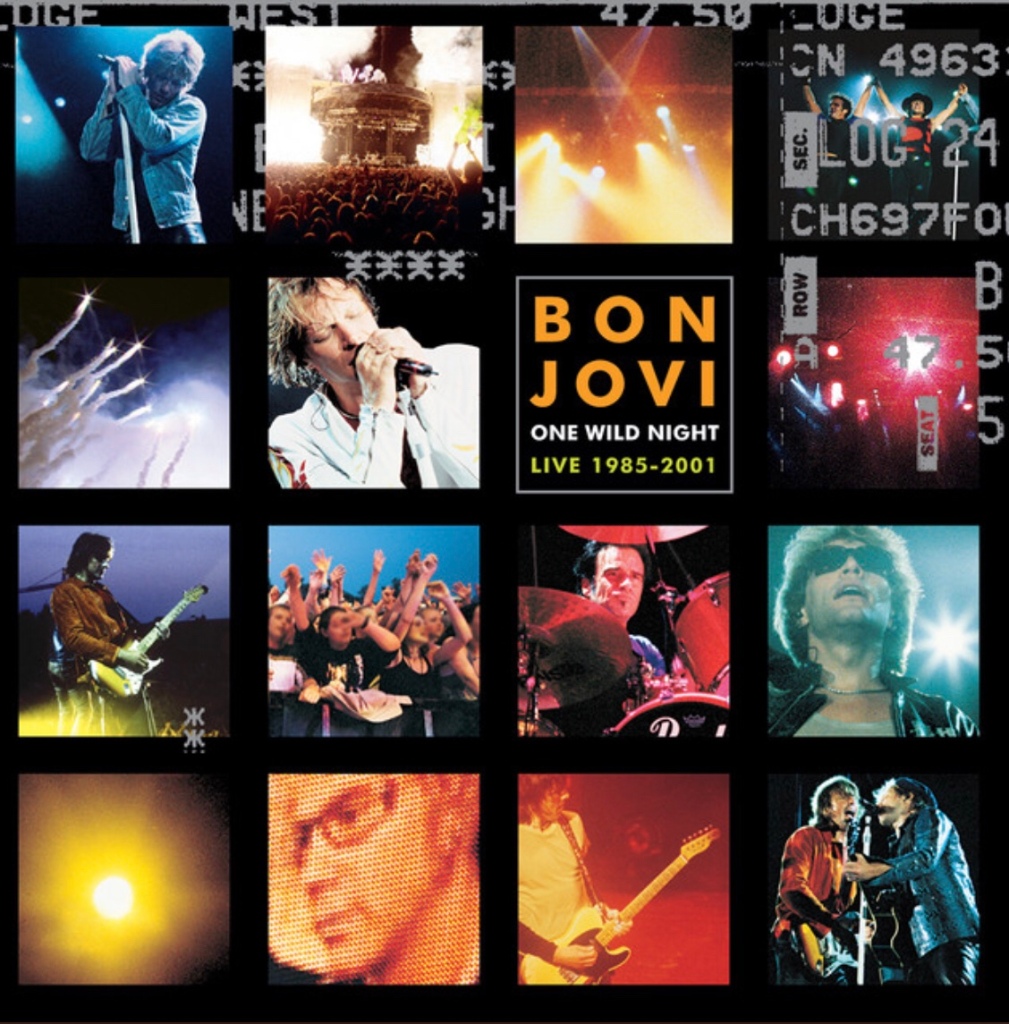
2001 – Part 5.3: Bon Jovi – One Wild Night Live 1985–2001

“One Wild Night Live 1985–2001” was released in May 2001.

It’s compiled from different shows. In Australia, we also got a Bonus disc of songs recorded live in Australia. The release I have is known as the “Australian Exclusive Collector’s Edition” and the bonus disc has five songs from a March 24, 2001 show in Melbourne.

Tico Torres behind the kit needs more respect. He is a beast, happy to keep the beat when he needs to and when they jam the songs out, he’s brilliant at improvising. Richie Sambora likes to solo and on this album there are some songs which have decent outro solos like “Keep The Faith”. It’s things like this that makes the live show unique.

Jon Bon Jovi vocally is on form and having a blast. The 1985 recordings of “Runaway” and “In And Out Of Love” from Tokyo, Japan are gold, showing a band hungry for success and using that fire to light up the stage.

And I forgot how good songs like “Just Older” and “Something To Believe In” are. There are seen as deep cuts now behind all the Top 10 hits.

It’s My Life

Written by Jon Bon Jovi, Richie Sambora and Max Martin, the Desmond Child like persona from 1998 to current. The song was recorded in Toronto, Ontario, Canada on November27, 2000.

Derivative or not, this song saved Jovi by renewing its audience. The 80’s fans remained and suddenly a whole new generation of kids joined them on the backs of this song.

Livin’ on a Prayer / You Give Love a Bad Name

It’s time in the set list to play some songs written by Jon Bon Jovi, Richie Sambora and Desmond Child. These two songs are from the Zurich, Switzerland show on August 30, 2000.

In 1998, Child sold his rights to these songs and other Jovi songs plus songs he wrote for other artists like Kiss and Alice Cooper to name a few. It was basically his whole catalogue up to 1997. He know wishes he hadn’t sold his rights as he has seen how much these songs make these days.

Keep the Faith

Another Jovi, Sambora and Child cut from New York City, United States on September 20, 2000.

Sambora is shredding his way through it and Tico Torres is thundering behind the kit, keeping up with the faster tempo.

Someday I’ll Be Saturday Night

The Jovi, Sambora, Child cuts keep coming. This recording is from Melbourne, Australia on November 10, 1995. The band is even more on fire here, with Jovi brilliant vocally. The increase in tempo makes the song a lot better as I wasn’t a huge fan of the studio cut.

Rockin’ in the Free World

A Neil Young cover from Johannesburg, South Africa on December 1, 1995. The tempo is increased and it sounds a lot better.

Something to Believe In

Written by Jovi and recorded from a show in Yokohama, Japan on May 19, 1996.

This one is a hidden deep cut in the Bon Jovi live set lists. I don’t think it gets played anymore but it’s a crowd favorite.

The beat from Tico sets the groove, while Sambora, Bryan and McDonald set the sombre tone.

Stick around until the Chorus kicks in to hear Jovi sing the melodies with Sambora doing the hey, hey, hey backing chants.

Wanted Dead or Alive

A Jovi and Sambora cut from a show in New York City, New York on September 20, 2000. As you would expect from this song, it has a little acoustic improvisation at the start before it kicks in.

Sambora on the lead is always perfect. His pinch harmonics, bends, palm muted notes and legato licks have a life of their own.

Runaway / In and Out of Love

From Tokyo, Japan on April 28, 1985.

“Runaway” is written by Jovi and George Karak, while “In And Out Of Love” is listed as written by Jovi. Alec John Such is on bass and backing vocals on these tracks. Remember him. The forgotten bass player, written out of Bon Jovi history.

The band is hungry and on fire on these songs. JBJ even brings out the falsetto for the “Runaway” outro.

The things a younger voice could do?

Before “In And Out Of Love” starts there is some guitar doodling and then the song starts, which is a bit different to how it normally starts and after a minute or so, the song we know begins. And I like the tempo increase. It’s only slight but man doesn’t it change the song from pop rock fare to hard rock fare.

I Don’t Like Mondays (featuring Bob Geldof)

A Bob Geldof cover recorded in Wembley, London, United Kingdom on June 25, 1995. I didn’t like the original version, so this did nothing for me.

Just Older

How good does this sound?

Written by Bon Jovi and Billy Falcon. It was recorded from the Toronto, Ontario, Canada on November 27, 2000. It’s another cut now known as a deep cut.

Something for the Pain

A Jovi, Sambora, Child cut recorded in Melbourne, Australia on November 10, 1995.

It sounded better on the CD then it did live. Some songs work live and some don’t. The “These Days” Australian tour took Bon Jovi out of the arenas and into the stadiums. The Sydney gig was at the Eastern Creek Raceway. It’s a crap venue for live music and terrible to get to via public transport. It was a horrible experience a few years before for Guns N Roses and Skid Row, so I skipped any band that played that venue after Gunners.

And thank god that no act plays at that venue anymore.

Bad Medicine

The band should have changed their name to Jovi, Sambora and Child. As most of the big cuts are written by the these three dudes. This is from the Zurich, Switzerland on August 30, 2000. It’s basically an undercover 12 bar blues rocker.

One Wild Night (2001)

And the CD finishes with a new studio cut of “One Wild Night”. The cut is also written by Jovi, Sambora and Child . It’s faster and more party like. You can tell that by playing it live, they enjoyed the increased tempo, so why not capture that power and passion in the studio.

Standard
Influenced, Music, My Stories, Unsung Heroes

2001 – Part 5.2: Slipknot – Iowa

“Iowa” is the second studio album by Slipknot, released by Roadrunner Records on August 28, 2001.

Produced by Ross Robinson and Slipknot but it’s Mike Fraser as the Engineer who deserves a special mention here. The guitars are downtuned a lot and somehow they don’t end up sounding muddled. Which gets me thinking that the placement of the microphones to record the guitars was pretty spot on for Andy Wallace in the mix department to give all 8 members space to do their thing.

The 1999 self-titled debut album took the Charts by surprise, so the pressure to deliver a worthy follow-up was at an all-time high.

Production for the album started with drummer Joey Jordison (RIP) and bassist Paul Gray (RIP) in October 2000. Most of the material was written during this time, while other members took a break after the extensive touring that had followed their debut.

By January 17, 2001, the whole band arrived and basically war was declared between each other. Fatigue was killing Jordison and Gray, while alcoholism and drug dependency was affecting Corey Taylor and the other members. On top of that they had management problems and a party culture full of women and narcotics.

Taylor even resorted to cutting himself with broken glass to achieve the desperation and doom in the vocal growls he wanted.

So if you don’t know Slipknot, they wear masks which obscure their faces and they are referenced with numbers.

(#8) is Corey Taylor on vocals, (#7) is Mick Thomson on guitars, (#6) is Shawn Crahan on percussion, backing vocals, editing, (#5) is Craig Jones on samplers, media, (#4) is Jim Root on guitars, (#3) is Chris Fehn on percussion, backing vocals, (#2) is Paul Gray on bass, backing vocals, (#1) is Joey Jordison on drums and (#0) is Sid Wilson on turntables.

Basically the album is a result of guys who hated each other, the world and the world hated them back. Welcome to “Iowa”.

People = Shit

Great title and a great way of the band saying to people “F off and leave us alone”.

Disasterpiece

Press play to hear the head banging intro.

“My Plague” and “Everything Ends” I normally skip.

The Heretic Anthem

The 6-6-6 chant in the song is reminiscent of other songs from notable acts.

Track 7, I skip.

Left Behind

The best song on the album for me, because of the clean tone vocals. Who knew that Corey Taylor could sing that good back in 2001, as Stone Sour was a few years away from releasing their debut.

Tracks 9 to 13, I skip.

Iowa

The closer at 15 minutes. It’s a Tool like dirge through desolation, doom and darkness. At some stages, it feels like the music if a demented soul.

I tried to like this album because of just how popular it became around the world. Gold Certifications in Australia, Belgium, France, Germany, Japan and Netherlands. Platinum certifications in Canada, the UK and the US.

Apart from “Left Behind” and “Iowa” there was nothing else here for me to grasp onto.

But, I did find the lyrics refreshing and totally different from what I was used to, which is a big reason why I kept giving Slipknot a chance.

If you like hard rock music then you won’t like this, as it borders on death and thrash metal with nu-metal influences.

Standard
Classic Songs to Be Discovered, Derivative Works, Influenced, Music, My Stories, Unsung Heroes

2001 – Part 5.1: The Calling – Camino Palmero

The Calling, was formed by Alex Band (lead vocals) and Aaron Kamin (lead guitar, backing vocals).

They weren’t a modern alternative rock band to start off, with David Matthews Band style influences. But, next door to Alex Band, was Ron Fair, a music business executive.

Imagine that, your neighbour was a Chairman at Geffen Records, then Virgin Records and prior to Geffen, he was President of A&M Records and held Senior Positions at RCA Records, Chrysalis Records and EMI Records.

On top of that he was also known as a “mentor” to unsigned artists. Apart from The Calling, other artists he mentored that made it to major label releases are Christina Aguilera, Vanessa Carlton, Keyshia Cole, The Black Eyed Peas and Fergie, and the Pussycat Dolls.

Between 1996 and 1999, the guys kept writing and demoing, and by 1999, Ron Fair was impressed enough to sign them to a deal with RCA.

The name of the band was originally, “Generation Gap”, then “Next Door” and after getting signed, they became “The Calling”.

Their sound through the years morphed to be more influenced by Matchbox Twenty, Third Eye Blind, early Maroon 5, Train and Fastball.

The RCA deal was huge for a band that hadn’t played any shows whatsoever, nor did they have a fan base. I suppose it pays dividends to live in the same suburb as a record label exec.

And Ron Fair, just kept working with em over that two year period until they had the songs ready to record an album.

The players on the album, joining Band and Kamin are Sean Woolstenhulme on rhythm guitar, Billy Mohler on bass and Nate Wood on drums.

The debut album “Camino Palmero” was released in July 2001 and was a commercial success. The cover art of the album represents platforms 5 and 6 of the Santa Maria Novella railway station in Florence, Italy but the name of the album comes from a LA street where the Band and Kamin first met.

All tracks are written by Alex Band and Aaron Kamin, except “Stigmatized” which was co-written with Eric Bazilian.

Unstoppable

As soon as the song starts its recognizable and when I heard the strummed acoustic guitar in the verses, “Alone” from Heart came to mind straight away.

A great opener but it is lost in the world of streaming right now as it doesn’t even rate a mention in their Top 5 streamed songs on Spotify.

Nothing’s Changed

It reminds me of Bush.

Wherever You Will Go

The big hit at 429.6 million streams on Spotify. And the acoustic version of the song has 33.8 million streams.

The vocal melody is catchy and I like the way it moves between acoustic arpeggios, strummed acoustic guitars and then a light distortion in the Chorus.

Could It Be Any Harder

I like the country rock ballad feel on this and the vocal reminds me of Lifehouse. Four songs in, its a 4 punch knockout.

Final Answer

The acoustic alt rock style is evident here, more Tonic and Lifehouse and man, I dig it.

Adrienne

More Matchbox 20 like.

We’re Forgiven

If you are a country then this song would resonate, however it’s a skip for me.

Things Don’t Always Turn Out That Way

It’s got a cool start, with a progression reminiscent to “Glycerine” from Bush and a Fastball “The Way” chorus.

Just That Good

It’s a skip for me.

Thank You

Press play for the Chorus.

Stigmatized

A great closer with a nice vocal. It sounds like a lot of alt rock/soft rock bands, but I don’t care.

In a post Napster world, the album did rack up a few certifications along the way. Brazil is one of the biggest markets when it comes to piracy and the country made the album a Platinum success. So did the UK and Italy. Canada and the US, gave it a Gold certification.

In November 2003, former members Wood and Mohler sued Band, Kamin, and the group’s management, accusing them of mismanagement, fraud, and asking for an audit of the money that was spent during their tenures in The Calling.

They claimed that they were promised a share of the royalties and profits from touring and merchandise. Band and Kamin claimed that the two were not entitled to any records of the royalties.

Their second album “Two”, was released in June 2004.

But the album didn’t perform well commercially compared to the debut. Ron Fair was no longer Executive Producer, replaced by Clive Davis. Davis was all about the hit, right now while Fair was more about career longevity. The record features the original members Alex Band and guitarist Aaron Kamin along with a variety of session musicians.

The band or duo broke up in 2005, but in 2013, The Calling reformed with a new line-up and they still operate today with a new album on the horizon.

But even that was bizarre as Alex Band in that same year, sued Aaron Kamin for “disappearing from the public eye” and Band wanted full rights to “The Calling” name and songs. But the case was dismissed only to resurface later when Band was promoting a “reunion” show which didn’t involve Kamin.

On top of that Band was almost beaten to death after a show that required a jaw bone reconstruction and three implants.

The music business is vicious. But check out the debut. It’s excellent.

Standard
A to Z of Making It, Classic Songs to Be Discovered, Influenced, Music, My Stories, Unsung Heroes

2001 – Part 4.7: Ill Nino – Revolution/Revolución

The late 90’s and early 2000’s was a time of pushing the limits of heavy metal music. From when I first came across metal albums in the 80’s, the genre had evolved so much that the bands classed as metal back then became totally unrecognisable to the new breed of bands doing the rounds.

Bands like Tool, Dream Theater, NIN, Ministry, Faith No More, Limp Bizkit, Fear Factory, Korn, Creed, Disturbed, Slipknot, Mudvayne, Machine Head and Pantera pushed the genre forward during this period. Each act bringing into their sound something that wasn’t there before. Suddenly Metallica sounded like a pop band compared to these bands.

And then I came across Ill Nino. A fusion of Latin Flamenco rhythms and percussion with metal riffs and singing which moved between aggressive screaming and melodic singing.

On September 18, 2001, Ill Niño released their debut album, “Revolution Revolución”.

The album was a commercial success for Roadrunner Records, moving over 350,000 albums worldwide in the first two years after release.

The Personnel for the album is Cristian Machado on Vocals and Samples, Jardel Martins Paisante and Marc Rizzo on Guitar, Lazaro Pina on Bass, Dave Chavarri on Drums and Samples and Roger Vasquez on Percussion.

And seeing a person called DJ Skratch on Turntables as an additional musician will either scare people off or make them curious.

God Save Us

It’s like Groove Nu-Metal. Vocally its aggressive in the verses, with a melodic Chorus.

Check out the flamenco like interlude at 2.30.

If You Still Hate Me

It’s like Industrial Nu-Metal at the start.

But at the 2 minute mark a flamenco metal section appears and then a head banging circle pit riff afterwards. The movement between styles is why this album got my attention.

Unreal

Distorted guitars and Latin percussion working to create something unique.

Nothing’s Clear

Screaming verses and a melodic Chorus. The duality of modern American metal at the start of the new century.

And chuck in a Bridge delivered in Spanish.

What Comes Around

The most catchiest song on the album. A Nu-Metal riff kicks it off, and then an atmospheric Korn like guitar riff in the verses, while the melodic singing carries the vocal melody.

Liar

The flamenco and percussion in the intro gives way to a Disturbed meets Limp Bizkit riff.

Rumba

The Latin percussion and distorted guitars is a delightful mash up. Vocally, the screaming loses me and the melodic singing re-captures my interest.

Predisposed

I like the Intro riff on this. Its head banging groove metal.

I Am Loco

Who isn’t loco these days?

No Murder

Press play to hear one guitar play a riff on the higher registers while another plays chords.

Rip Out Your Eyes

So much violence.

Revolution/Revolución

The intro riff is head banging heavy.

With You

It’s a flamenco acoustic rock cut. Santana is not the only musician that plays this style, but he is one of the biggest crossover artists, and because of that, this song reminds me of Santana.

The next album “Confession” is a lot more melodic and my favourite but if you want to start with something, then start with this.

Standard