Music, My Stories

Iron Maiden – Live At Qudos Bank Arena, Sydney – 13 September 2024

A proud moment.

2016: My son’s first Iron Maiden concert, “The Book of Souls” tour.

2024: Eight years later, here we are again for “The Days of Future Past” tour.

Of course, we had to buy some merch, again.

And, of course, I had to buy some beers for myself and this time I had the older two riding shotgun. Naturally, this led to the classic “Are you buying alcohol for underage kids?” interrogation.

“Yes, officer, I like to live on the edge, by getting kicked out of an Iron Maiden show before it even starts.”

And let’s not forget the food situation. Kids are always hungry, and I just love paying hundreds of dollars for substandard, borderline offensive stadium meals. But hey, who cares? We weren’t there for the cuisine.

We were there for Maiden.

Iron Maiden’s opening bands don’t get much love in Australia. I remember “Behind Crimson Eyes” getting brutally booed at the “Caught Somewhere Back in Time”Sydney show. But to their credit, they powered through, then covered “Ace of Spades” and just like that, the crowd that wanted them gone was suddenly on their side.

This time, we had Killswitch Engage. Thanks to a heroic battle with traffic and then another war at the merch stalls, I only caught the second half of their set. From what I saw, they were tight, and the crowd gave them a solid response. But everyone was here for one reason.

The ritual begins:

“Doctor Doctor” plays.

The lights go out.

Vangelis’ “Blade Runner” end title starts.

And then—“Caught Somewhere in Time” kicks in.

“Caught Somewhere in Time”

Great opener, but they should’ve played the intro before hitting the fast riff.

Then again, they do the same thing with “Aces High,” so I should’ve seen it coming.

“Stranger in a Strange Land”

A personal favorite. Adrian Smith’s solo is one of those “song within a song” moments. Magic.

“The Writing on the Wall”

Another Adrian masterpiece solo, reminiscent of “Stranger In A Strange Land”.

“Days of Future Past”

Easily one of the best tracks off Senjutsu.

And that verse riff? Adrian again. Starting to see a pattern?

“The Time Machine”

Would you go back in time if you could?

This song has a lot of great riffs, but that harmony section after the first verse stands out.

“The Prisoner”

Wasn’t that excited for this one, until I saw my kids getting into it. Then I had a moment of clarity: open up my mind and enjoy myself.

“Death of the Celts”

Basically Blood Brothers Pt. 2. And I’m 100% okay with that.

“Can I Play With Madness?”

Or as Bruce calls it live: “Can I Play With Agnes?” Apparently, she never answers. Yeah I know, it’s a bad joke.

“Heaven Can Wait”

Wo-oh-oh. Enough said.

“Alexander the Great”

This was the reason I had to be here.

When I dubbed “Somewhere in Time” to cassette, I needed it to fit on a 45-minute side. If I followed the proper tracklist, I’d lose two minutes of “Alexander the Great”.

Unacceptable.

So I recorded Side 2 first, then Side 1, sacrificing part of “Heaven Can Wait” instead. I still got the “woh-oh-ohs’.

“Fear of the Dark”

The crowd sings the leads like it’s “Livin’ on a Prayer”.

“Iron Maiden”

Played at such ridiculous speed, even the term “speed metal” feels inadequate.

“Hell on Earth”

They basically turned the venue into a furnace with all the fire.

But that intro’s clean-tone lead?

Give me a sword and shield, I’m ready for battle.

“The Trooper”

No surprise here. It’s practically a legal requirement for every Maiden setlist.

“Wasted Years”

A perfect closer.

That intro? Instant immortality. Also… yes, I’m a full-blown Adrian Smith fanboy.

No shame.

And then, just like that, it was over.

Who knew this would be Nicko’s last tour behind the kit?

One of the greatest drummers in heavy metal and he did it all with one kick pedal and rock-solid technique.

Another Iron Maiden show in the books. Another legendary night. Another pile of money spent.

Worth every cent.

Standard
A to Z of Making It, Copyright, Influenced, Music, Unsung Heroes

Derek Schulman

On October 15, 2020, Derek Schulman appeared on the Bob Lefsetz Podcast.

I first heard of Schulman as the guy responsible for signing Bon Jovi and Cinderella. But before becoming a label executive, he was a member of Gentle Giant (GG), a band that has a bigger fan base today than when they originally broke up.

When Lefsetz asked why GG had grown in popularity, Schulman explained: “We wrote music for ourselves, didn’t follow trends, and the music held up.” Interestingly, GG never considered themselves a progressive rock band. Rock, yes, but not prog. They simply pushed themselves musically.

I believe GG’s resurgence is largely due to the internet. Their music isn’t locked away in a vault, it’s widely accessible. If we were still in the pre-Napster era, their catalog might have remained buried, since labels wouldn’t see the financial incentive to print CDs. Labels have always believed they know what fans want, but they’ve often been wrong. Had they continued releasing hard rock in the ’90s, the genre could have still produced acts selling close to 500,000 units. Instead, they abandoned it.

It always comes back to the music. People return for the music, not for record sales, labels, executives, or streaming numbers.

From Musician to Executive

Before Gentle Giant, Schulman played in a band with a few hit singles, but by 1969, he was burned out from the pressure to keep churning out commercial hits. He wanted to form a band that was the opposite of pop, so GG was born.

But by 1980, after 14 years in bands, Schulman was done. GG had become a job, and he had lost enthusiasm for recording and touring. With nothing lined up, he spent a year feeling lost. Fortunately, he had savings, thanks to his role as GG’s quasi-manager in the mid-’70s.

A friend at PolyGram called with a job offer. Schulman moved from California to New York and joined the label as a Promotions/A&R rep, though his role was mostly promotions. He was hired because two of PolyGram’s heads of radio promotion were huge Gentle Giant fans.

At the time, PolyGram was a mess. The label had major acts like KISS and Def Leppard, but they drained a lot of resources. Schulman’s break came when artists and managers started bringing him albums. Uriah Heep was shopping a new record, and Schulman helped organize a deal to release it.

Then came Bon Jovi.

Bon Jovi’s Breakthrough

Schulman met Jon Bon Jovi and was impressed by his focus and drive. Jon wanted to be bigger than Elvis. He even introduced Schulman to his parents, who told him: “Take care of our son.”

At the time, no other labels were bidding on Bon Jovi. Schulman also had a strict policy, he refused to get into bidding wars.

The key move was bringing in Doc McGhee. Doc originally came to Schulman’s office pushing Pat Travers, but Schulman told him to check out Bon Jovi instead. Schulman saw in Doc the same relentless drive that Jon had.

Jon met Doc, they struck a deal, and just like with Schulman, Jon’s parents needed to approve.

McGhee put Bon Jovi on tour with Ratt and Scorpions. Their debut album was a success, but their second record, “7800° Fahrenheit”, was considered a sophomore slump. Schulman hated the album title, the recording process was a mess, and the overall vibe felt off. But the album did its job, it kept the band on the road while McGhee worked overtime to book shows.

Schulman, meanwhile, had started working with producers Bob Rock and Bruce Fairbairn, who had just finished albums with Loverboy and Honeymoon Suite. Jon and Doc knew they needed great producers to reach the next level.

Schulman suggested co-writing with others. Paul Stanley and Gene Simmons had already introduced Jon to Desmond Child. The rest is history.

The label knew they had something big as soon as “Slippery When Wet” was mastered. The original album cover was scrapped, and Jon designed the new one himself. “You Give Love a Bad Name” and “Livin’ on a Prayer” were immediate hits, and the album shot to No. 1. Schulman had a percentage point on the album, but when he left the label, his royalties ended.

Cinderella

Schulman was introduced to Cinderella by an agent, a lawyer, and Jon Bon Jovi, who knew Tom Keifer.

He went to see them play a club in Philadelphia. The band wasn’t great, Tom Keifer stood out, Jeff LaBar was solid on guitar, but the other two members weren’t up to par. Then Schulman listened to a 90-song demo of Keifer’s original material. He was blown away by Keifer’s songwriting.

Schulman told the lawyer: “Get Tom to replace the other two with better musicians, and I’ll give you a deal.”

Andy Johns was brought in to produce “Night Songs”. The album dropped shortly after “Slippery When Wet” exploded, and “Night Songs” shot into the Top 10. Suddenly, Schulman was on fire, he had two bands in the Top 10.

When Lefsetz asked why Cinderella never released another big album, Schulman pointed out that they did, “Long Cold Winter”, but he had briefly forgotten the title.

Tom Keifer eventually lost his voice, which Schulman confirmed was true. Schulman also helped shape Cinderella’s albums with his artist experience, though he didn’t contribute to Bon Jovi’s records in the same way. He even co-wrote songs with Tom but never took credit.

Dream Theater

Derek Oliver, an A&R representative at Atco Records and a passionate fan of progressive rock, was the key figure in discovering Dream Theater.

In the late 1980s, Dream Theater had self-released their debut album, “When Dream and Day Unite”, through Mechanic/MCA Records, but the album failed to gain much traction due to poor promotion and distribution.

Meanwhile, Oliver, who had interviewed and reviewed the band during the period as part of Kerrang was impressed by their technical proficiency and songwriting.

Recognizing their potential, he brought Dream Theater to the attention of Derek Schulman, the head of Atco Records at the time.

After meeting the band and seeing their dedication, Schulman agreed to sign them to Atco. Under his guidance, Dream Theater recorded their breakthrough album, Images and Words (1992), which featured the hit single “Pull Me Under.” The album’s success helped establish them as a leading force in progressive metal, proving that Schulman and Oliver’s instincts were right.

Running Labels

Schulman also played a key role in launching Bob Rock’s production career, giving him his first gig with Kingdom Come, another band that went on to dominate the charts.

In 1989, Schulman left PolyGram to run Atco Records. PolyGram wanted to keep him, offering him control of Vertigo and Mercury, but he wanted a change, even if it meant losing his Bon Jovi and Cinderella royalties.

Doug Morris was hesitant about Schulman at first and saw him as a potential replacement. But Schulman built an impressive roster, signing Pantera and The Rembrandts. He had actually planned to sign Pantera to PolyGram but knew he was leaving, so he told their attorney to wait until he moved to Atco.

At first, Atco thrived. Schulman put together a strong team, and the first three years were fantastic. But eventually, he started losing perspective. One day, he heard a No. 1 song on the radio and liked it. When he asked a work colleague who had signed the artist, they said: “You did.” That moment shook him.

Doug wanted him out, but Schulman quit. He even attempted a coup while on a trip to Russia.

Roadrunner Records and the Rise of Metal

Schulman took a break before getting a call from an old friend, Case Wessels, at Roadrunner Records. Initially consulting for a year, he eventually became president.

Roadrunner was independent, which Schulman loved—no board to answer to. He scrapped some of Wessels’ ideas and focused on breaking bands like Coal Chamber and Fear Factory, both signed by Monte Conner.

Then he saw Slipknot live and knew they would be massive.

He also signed Nickelback. Their first album (with Roadrunner) featuring “Leader of Men”, got some airplay, but when “Silver Side Up” dropped, Schulman immediately recognized its potential. The moment he heard “How You Remind Me”, he knew it would be huge.

Roadrunner was suddenly rolling in cash. Wessels wanted another “Silver Side Up”, but Schulman knew those albums don’t appear every six months, more like every 5 to 10 years.

Lefsetz asked why Nickelback gets so much hate. Schulman believes they’re a guilty pleasure, many people who claim to hate them secretly enjoy their music.

Finally, Schulman pointed out that while the industry panicked over piracy during Napster, hip-hop thrived by giving music away for free.

When streaming took over, hip-hop was already dominant—and it still is.

If you like your hard rock and metal history, then Derek Schulman is an unsung hero and this podcast is one to listen to.

Standard
A to Z of Making It, Influenced, Music, My Stories

The Record Vault: Dream Theater – Master Of Puppets

The cover above is the version I have, released in 2004 via their own YtseJam label.

It was also re-released in 2021 via the “Lost Not Forgotten” Archives with the below cover.

The performance of this album would inspire the writing for their most Metal album in “Train Of Thought”.

The show was recorded live in Barcelona, Spain on February 19th 2002. It was the second night of a two night stand in a city.

And it was the start of a new Dream Theater tradition (while Mike Portnoy was in the band), which was to play an entire album from another band.

This is what Mike Portnoy had to say about it in the CD booklet;

“Dream Theater is playing the 2nd night of a 2 night stand in Barcelona, Spain…

After an almost 2 hour set of DT material and a 15 minute intermission, the lights went out and the opening chords to “Battery”
began…

50 minutes later, the Spanish crowd had no idea what had hit them.

The next day the word was all over the internet and our new tradition to cover a classic album whenever we did a 2 night stand in the same city had been established…but for those 50 minutes in Barcelona, the completely unsuspecting crowd had no way to see it coming…

I remember looking into the crowd by the time we started “The Thing That Should Not Be” and seeing people look at each other like;

“Holy shit…they’re doing the whole
fucking thing!!!”.

Yep, that would have been the same response I would have had.

The band for the recording is James LaBrie on vocals, John Petrucci on guitars, Mike Portnoy on drums, John Myung on bass and Jordan Rudess on keys.

Battery

This is performed exceptionally.

LaBrie also brings out the chainsaw aggression of a youthful Hetfield.

Petrucci and Portnoy nail their sections.

Master Of Puppets

As soon as Petrucci plays the first four chords the crowd responds. If this song is played again in 2024, it will be bigger than ever due to “Stranger Things”.

The Thing That Should Not Be

The Intro with the keys is more ominous.

And LaBrie gives the song a more theatrical vibe with an octave higher vocal line, and I like it. It would have been cool if Dream Theater explored the groove doom Metal domain.

Sanitarium

Masterful.

It’s the only way I can describe Petrucci. The intro, acoustic and lead, played by Petrucci is exactly that.

LaBrie tries but doesn’t have the same demented vocal delivery as Hetfield here.

From 3.36, it’s basically a Dream Theater song, with riffs, leads and sporadic vocals. LaBrie is awesome here, his “fear of living on” delivery; excellent.

Disposable Heroes

The drums sound like machine gun fire in the intro.

But it’s that galloping palm muted E string riff that comes after which seals the deal for me.

LaBrie delivers a great vocal here.

Jordan Rudess in an interview with the Revolver Magazine said this;

“Master of Puppets was an eye opener for me because before we covered this album my Metallica knowledge was not so deep.

Having grown up playing Bach, Liszt and Chopin the idea of technique and virtuosities had a definite place in my mind. I have to admit that upon discovering Metallica my perception of technique opened up to other possibilities outside of the classical world.

A song like ‘Disposable Heroes’ sounds like machine-gun fire to me. The blistering, galloping guitar rhythms that sound like the pick is about to go up in flames is an impressive display of intensity and technique. [James] Hetfield really shows what he is made of in a track like this one and I was very impressed.”

Leper Messiah

I always love the section from 40 seconds to a minute. The groove behind it and the way the guitars are orchestrated so that the bass and drums stand out.

Orion

It’s right up Dream Theater’s alley, a nine minute instrumental. And a classic Metallica song.

Damage Inc

They had covered this song previously during the era between “Awake” and “A Change Of Seasons” and released a version of that live performance.

Overall people can compare this album with the real album and find issues.

When an artist covers another artist, it is purely for fun initially and to show respect to the artist who inspired and influenced them.

This is no different and it sounds like the band is having fun, using the last hour of the their three hour set to pay homage to Metallica.

Press play and enjoy.

Standard
Music, My Stories

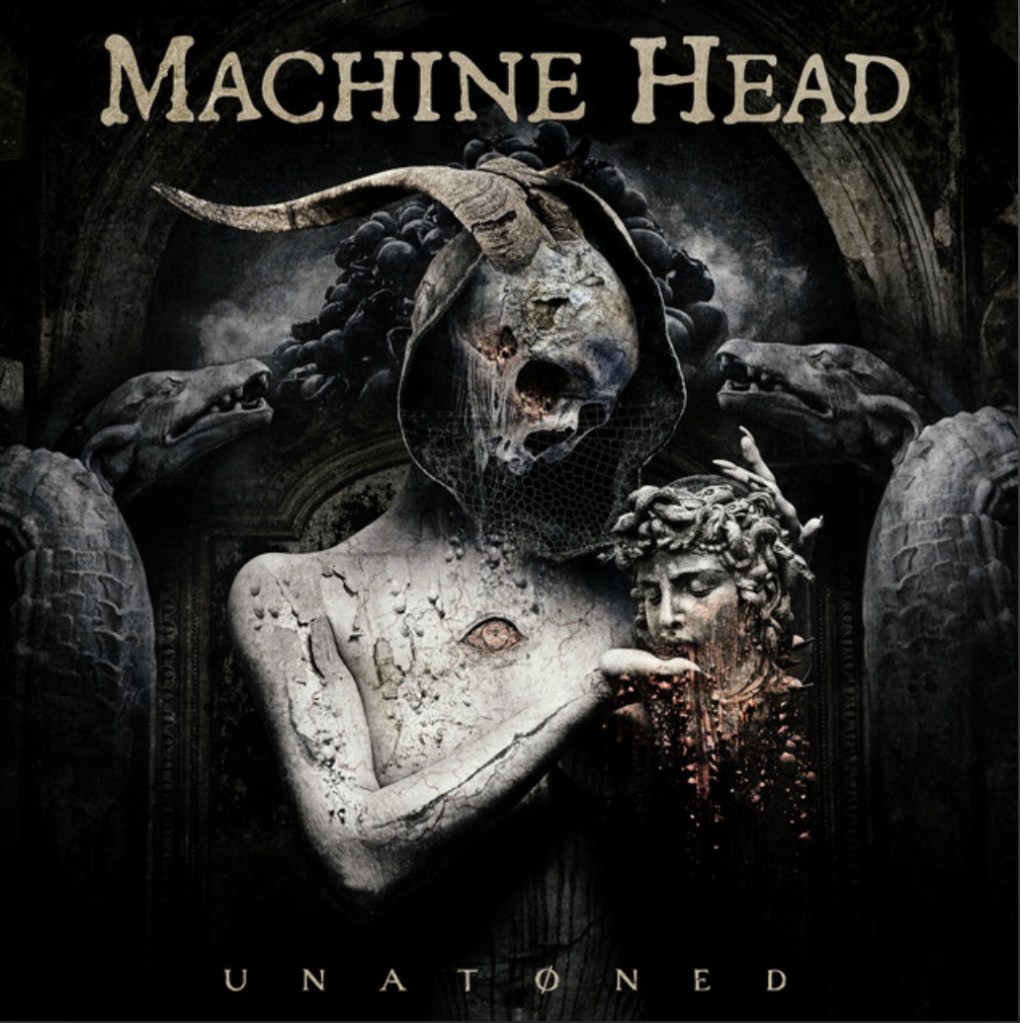
Machine Head – Live at the Enmore Theatre, Enmore: 16 March 2024

I haven’t missed a show since they came out on “The Blackening” tour, a tour which lasted close to 3 years.

And my Best Man was in tow again who also hasn’t missed a show with me, along with my eldest son this time, who likes only three Machine Head songs in “Darkness Within”, “Bastards” and “Circle The Drain”.

“Do you reckon they’ll play em Dad”, he kept asking me.

“I am sure they will as those songs are up there in streams, so why not”, I lied back.

I had already checked the last 10 shows they had done via Setlist.fm and I couldn’t see those songs in the set. But I wasn’t going to tell him the truth. And selfishly, I wanted him to come and experience a “Machine Fucking Head” concert.

But before Machine Head took the stage, Fear Factory did.

It’s not the classic Fear Factory line up but then again which band these days is touring with the original members.

Guitarist Dino Cazares is the only original member, joined by new vocalist Milo Silvestro who replaced the much loved Burton C. Bell. Pete Webber on drums is also a new addition, then again Fear Factory have had more drummers than Spinal Tap. Rounding out the line up is bassist Tony Campos, who has been with the band since 2015.

I’m not a massive fan but I do like to go nuts on “Archetype”, “Shock” and “Resurrection”. And man, they did play em.

They opened with “Shock”, they closed with “Resurrection” and in the middle they dropped “Archetype”.

“Archetype” was written in the version of Fear Factory without Dino and it wasn’t played live when Dino returned, however once it was added to the setlist in 2013, it never really left.

But I was here to watch Machine Head.

Machine Head is a different beast these days from the first time I saw them. Robb Flynn is basically Machine Head, in the same way Dave Mustaine is Megadeth.

In 2010, joining Rob was Phil Demmel on guitars, Adam Duce on bass and Dave McClain on drums.

Fast forward 14 years, joining Rob this time is Jared MacEachern on bass, Matt Alston on drums and HAVOK guitarist Reece Scruggs, who stepped in for Waclaw “Vogg” Kletyka, who was the recording guitarist but couldn’t make the touring commitments as he was touring with his long time band DECAPITATED.

If you’ve been to a Machine Head concert, you know when “Diary Of A Madman” starts, the concert is about to begin (much like when “Doctor Doctor” plays at a Maiden concert).

And as soon as the outro of “Diary” kicks in, the lights go down and once it plays out, Rob Flynn starts “Imperium”.

It’s a great opener, it sets the tempo, the mood and the aggression.

And the aggression continued with “Ten Ton Hammer”, “Choke On The Ashes Of Your Hate”, “Now We Die”, “Aesthetics Of Hate” and “Old”.

“Locusts” was up next and it didn’t disappoint. It was also probably the most melodic song of the night.

The frantic energy and aggression continued with “Take My Scars”, “No Gods, No Masters”, “Slaughter The Martyr”, “Bulldozer”, “From This Day” and “Davidian”.

And the closer was the usual “Halo”.

Till next time.

Standard
Classic Songs to Be Discovered, Influenced, Music, My Stories

The Case For Cryptic Writings

It’s 1996 and you are writing riffs for your next album. Your first four albums pushed the boundaries of technical thrash metal. Your last two albums went for more accessible song structures, which gave you radio airtime.

Seattle came and went but its cultural changes remained. Industrial Metal was becoming a thing, Alternative Rock, EMO and Goth Metal/Rock were slowly becoming a thing.

Your label wants to sell albums and the only way you can sell albums in their eyes is by having your songs on the radio.

You also fired your previous manager, as you believed that he was also taking a paycheck from the label. He reckons he wasn’t but hey that’s a story for another day.

So what do you do?

These were the questions that Dave Mustaine had to answer in 1996.

This wasn’t the Dave from ten years ago, addicted to drugs and with nothing to lose. This Dave had something to lose now, a family and a corporate machine called Megadeth.

Freedom to do what you want doesn’t come when you have something to lose. In addition, this Dave had been in and out of rehab since 1988, and he just finished another rehab stint just before the “Cryptic Writings” sessions started.

Oh, and by the way, his band was also splintering.

Actually his band was always splintering, but the longest running version of Megadeth was splintering. For those who don’t know, this version involves Marty Friedman, David Ellefson and Nick Menza (RIP).

Dan Huff is producing and the new management company ESP Management was led by Bud Prager, who had guided Foreigner from a small time rock band to an 80 million seller.

Mustaine still had a chip on his shoulder from a certain band he was in and he “wanted what Metallica had even if it meant selling a piece of his soul to the devil” (his exact words on page 276 of his bio).

Trust

The drum intro. Its familiar.

Avenged Sevenfold were very heavily influenced by it for their opening track “Shepherd Of Fire” on the “Hail To The King” album. Metallica had “Enter Sandman” before this and the great AC/DC had “Dirty Deeds (Done Dirt Cheap) before all of em.

Once a great drum hook, it’s always a great drum hook.

If I look into my crystal ball, I can see the heirs of the artists or the Corporations that would end up owning the Copyrights litigating against others for this drum groove in the future.

When that riff kicks in, its head banging time. Yes the tempo is slower, the song is more accessible but it wasn’t a sell out. This was still very much Megadeth.

The Chorus; anthemic.

Apart from becoming a set list staple, it’s also their biggest hit single.

Almost Honest

That intro riff.

It’s bone crunching with a feel and vibe from AC/DC and a Major key Chorus which is a massive no-no to the Minor key Thrash community.

In the end, Mustaine was trying to rewrite “Symphony Of Destruction” and he got a song that sounded similar but different enough to stand on its own.

Very accessible but still very much like Megadeth.

Use The Man

Alternative rock or Grunge. Take your pick as it’s still rock and metal to me.

Plus I always like it when artists take what is popular at the time and still make it sound like their sound.

Mastermind

An intro riff influenced by “Walk This Way”.

The verses are demented, perfect for Mustaines snarling.

The Disintegrators

It’s fast and thrashing like the old Megadeth, but with more melody in the vocals.

If the main riff sounds familiar, Mr Hetfield was obviously influenced as “Lux Aterna” has a similar riff.

Then again, both Mustaine and Hetfield are influenced by the NWOBHM and this riff is from that movements playbook.

And the solo. Brilliant.

At 3:04, it’s over and the only thing left to do is to press play again.

I’ll Get Even

It’s got the same playbook as “Almost Human” but with clean tone in the verses and a psychedelic alternative rock Chorus.

And how good is the bass groove, locked in with the drums.

SIN

It’s accessible but it’s still Megadeth. The riffs are angry and head banging.

A Secret Place

From writing an accessible album, they came up with a classic, a song that still does the rounds in the live show.

As soon as the Intro kicks in, I was hooked.

Have Cool, Will Travel

The harmonica, and a groove reminiscent of “American Woman”, yet it still feels like a Megadeth track.

She-Wolf

A masterpiece.

Make sure you stick around for the Outro harmony section.

Vortex

Another classic but this one gets no love.

It’s a fast cut influenced by the NWOBHM especially Judas Priest, with a demented Mustaine snarl in the verses and an anthemic melodic chorus.

FFF

The fast punk that Megadeth is known for is evidenced here. Definitely a forgotten track.

The Wrap Up

The album achieved a Platinum certification but it didn’t bring in a new audience as Mustaine and his new management team had anticipated.

I read that hard core fans were confused. They liked it but didn’t like it completely. That viewpoint never made sense to me as I see myself as a hard core fan and I like it alot.

Mustaine mentioned in his book that by “trying to become more melodic and still remaining true to their metal roots”, he alienated his core fans with this album as he didn’t get the mixture right.

A terrible Howard Stern interview didn’t help matters either. And during the tour, Nick Menza was booted with Jimmy DeGrasso replacing him. However Menza would still return for the next album.

Overall, “Cryptic Writings” is a great album. The concise songwriting and simple arrangements suited Mustaine and for me, having this album in 1996 was a godsend, compared to some of the other confused albums my favorite artists started delivering during this period.

If you haven’t heard it, hear it. If you have heard it, hear it again.

\::/

Standard
A to Z of Making It, Influenced, Music, My Stories, Unsung Heroes

Four For Friday

A short one today.

IN THIS MOMENT

What happened to em?

“The Dream” and “A Star Crossed Wasteland” are great albums of melodic rock/Metal.

And then the transition started to the point where there is nothing recognizable or worth liking on their new album “Godmode”.

DOKKEN

A new album is out but if you can’t put any effort into the singing, why bother.

It’s the same monotone throughout, which is a shame because songs like “Lost In You”, “I Remember”, “Saving Grace”, “Fugitive” and “Gypsy” could have been great if the vocal delivery had emotion.

LYNCH MOB

George Lynch sure keeps busy and as a fan of the 80s, I like it.

And Mr Scary has still got a lot of things to say with his riffs. And Frontiers Records is keen to give him a platform to showcase his riffs.

So here we are with “Babylon”, the 8th Lynch Mob album. The difference between Lynch Mob and other artists from the 80s is the singers.

Gabriel Colon is a great vocalist with a great tone. He is the X Factor here. On the Metal cuts, it feels like Halford. On the rock cuts, its loose, sleazy and rawk.

And if Lynch could keep him around he has a lot of albums with him.

For the Metal check out “How You Fall”.

For the Rock check out “I’m Ready” and it’s nod to the great EVH.

ANY GIVEN SIN

The song “Dynamite” came up on a playlist and I pressed save instantly. It reminded me of Shinedown and it’s a great act to be associated with.

What do you guys think of em?

And that’s a wrap for this week.

Standard
Classic Songs to Be Discovered, Copyright, Derivative Works, Influenced, Music, My Stories

Four For Friday

I’ve written posts about songs which sound similar to songs which came before, with the lens solely focused on hard rock and heavy metal.

Like.

One Riff To Rule Them All

The Kashmir Effect

The Kashmir Effect 2

The While My Guitar Sleeps Effect

Sanitarium Debate

Just to name a few.

And I’ve always thought that Led Zeppelin and Black Sabbath shared a connection musically but I’ve never verbalized it or wrote about it.

The viewpoint came from a 1995 documentary called “History Of Rock and Roll”, which has Ozzy recalling how “Led Zeppelin I” had a huge impact on him and his bandmates.

Let’s see what kind of impact.

DAZED AND CONFUSED (1969) vs PARANOID (1970)

The authorship of “Dazed and Confused” is heavily disputed and there are various pages out there specifying who wrote what and when.

But, for the sake of this post I will focus on the Led Zeppelin version.

There is a section in “Dazed and Confused” at the 5.02 mark that sounds very similar to the Intro in “Paranoid”.

COMMUNICATION BREAKDOWN (1969) vs PARANOID (1970)

Then the verse riff in “Paranoid” has a running E pedal point played over an E5 power chord for two bars, then a D5 power chord for the third bar and the fourth bar ends with three chords G, D and E at the end.

“Communication Breakdown” has a running E pedal point playing for one bar with three chords of D to A to D played in the second bar.

The similarities here are evident. In the way the three chords are played at the end of each bar and the running E note.

It’s basically musicians influencing each other.

But if the entities who hold the Copyrights to Marvin Gaye’s music had a hold of these rights, then there would be litigation everywhere.

HEARTBREAKER (1969) vs THE WIZARD (1970) and IRON MAN (1970)

These ones are a bit different sonically but they all have a common element, which is the Minor to Major transition.

For example, if it was in the key of E minor, it would be an Em to G transition. If the key was in A minor, it would be Am to C transition.

It’s a common element and a building block for creating but I’m sure if the rights of these songs landed with the heirs of Marvin Gaye there would be a lawsuit.

Bonus – SUNSHINE OF YOUR LOVE (1967) vs NIB (1970)

Check it out and let me know.

The same elements here are also heard in the song “Cocaine” which came out in 1976.

Standard
A to Z of Making It, Classic Songs to Be Discovered, Derivative Works, Influenced, Music, My Stories, Unsung Heroes

Vandenberg – Sin

Adrian Vandenberg has come full circle.

When John Kalodner met with him in 1987, Kalodner had two propositions; one was to replace all the Dutch members of the Vandenberg band with American musicians and the other was for Vandenberg to join Whitesnake.

Morally Adrian Vandenberg couldn’t do that to his Vandenberg members and he also couldn’t pass up on a position to work with a vocalist like David Coverdale.

So he chose Whitesnake.

But when he tried to resurrect Vandenberg circa 2014/15, those Dutch 80s members didn’t have the same moral conviction as Adrian did and they took him to court so he couldn’t use his own surname anymore.

Six lawsuits later and a lot of money spent, Vandenberg was allowed to use his surname again.

But while all of the lawsuits were happening, Vandenberg’s Moonkings was created and they released three albums.

Then Vandenberg returned, dropping the excellent 2020 album with former Rainbow vocalist Ronnie Romero on vocals, Rudy Sarzo on bass, and Brian Tichy on drums.

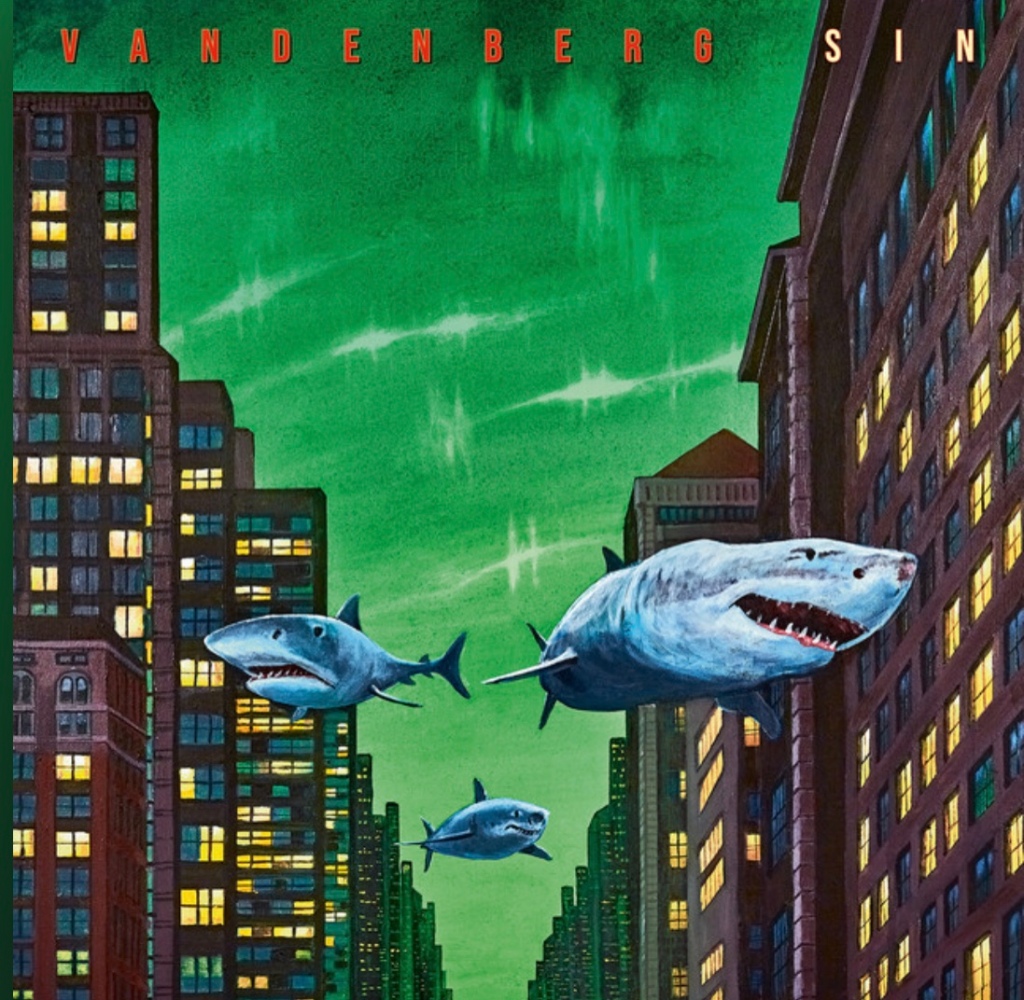
And here we are in 2023, with another excellent album called “Sin”. This time around Adrian is joined by vocalist Mats Levén, drummer Koen Herfst and bassist Randy Van Der Elsen and the album is produced by Bob Marlette.

How cool is the cover art?

Once again, created by Adrian, he wanted to show an actual destination for the flying sharks who made their appearance on the “Heading For A Storm” album.

Instead of flying over a road in the desert, they are now flying into New York, the city of sin.

Thunder And Lightning

This is a person writing songs for the love of it. No pressure to write hits and no pressure to conform.

For those who grew up in an era of driving with the window down and cranking the music from the stereo, well this song is perfect for it.

Vocally, Mats Leven is channeling David Coverdale. Musically the song channels the spirit of Eddie Van Halen and the Euro blues rock of Michael and Rudolf Schenker.

Stick around for the guitar solo.

House On Fire

Heavy palm muted arpeggios start it all off with Leven singing in a low bass/baritone. Then it goes into a sleaze like riff.

This is a straight ahead rock and no one is doing it better in 2023 than Adrian Vandenberg.

Sin

This sounds so good. Vandenberg rewrote “Judgement Day” and I like it?

Then again “Judgement Day” is heavily based on “Kashmir”. And I still like it.

Alot of legacy artists keep saying “what is the point in writing new music as no one cares about it”. Tell that to Vandenberg.

Light It Up

Love the swagger on this.

Walking On Water

Ooh, that guitar intro and the vocal. Very 70s Free like.

And stick around for another masterful guitar solo.

Burning Skies

The album keeps going, sounding different from cut to cut. Like “Back In Black”. This one feels like a classic Scorpions cut.

Hit The Ground Running

It’s all about the vocal.

This one has Leven channeling Coverdale and the groove sits nicely on your lap.

Baby You’ve Changed

It’s intimate.

A ballad that rolls along like “Is This Love” and “The Deeper The Love”. But it’s not a copycat.

Out Of The Shadows

The arpeggio riff in the Intro reminds me of Coverdale/Page and their song, “Whisper A Prayer For The Dying” but the song is nothing like that.

It’s got this classic 70s Rainbow Dio era vibe and I like it.

It’s just 9 songs clocking in at 41 minutes. Like old school albums, pre CD.

Mats Leven is one hell of a vocalist. A journeyman like so many other vocalists from the late eighties and early nineties.

He came to my attention with the band Swedish Erotica in 1989.

He has then performed (just to name a few) with Treat, Yngwie Malmsteen, Candlemass, At Vance, Firewind, Trans Siberian Orchestra and Therion.

By doing so and picking up whatever work he could get, he found a way to survive the wastelands of the 90s and early 2000’s which were not very kind to hard rock vocalists. Jeff Scott Soto and Johnny Gioeli are two others that come to mind.

Finally, Adrian Vandenberg is 69. He still rocks as hard as he did when he was 29. He hasn’t mellowed out at all. He’s actually gotten heavier and he is free to write the music that he wants to write.

If you want to read my review of Vandenberg’s recorded output up to a certain point in time (it was up to 2014 and the first Vandenberg Moonkings album), you can read it here.

Standard
A to Z of Making It, Classic Songs to Be Discovered, Derivative Works, Influenced, Music, Unsung Heroes

Tony Martin – It Ain’t Worth Fighting For

Tony Martin never wanted to be a singer.

When he went to an audition with a band called “Legend”, he took his guitar.

But they said to him that they need a singer and wouldn’t let him play.

And then he gets the vocalist gig for Black Sabbath, who were going through an identity crisis between 1984 and 1987.

And as soon as he righted the Sabbath ship, he was out and Dio was back in for the “Dehumanizer” album.

And while that was happening on the Sabbath front, Tony Martin kept writing until he had enough material for a solo album.

“Back Where I Belong” was released in 1992 on Polydor.

“It Ain’t Worth Fighting For” is the opening track from the album.

The musicians are seasoned professionals.

Nigel Glockler from Saxon is on drums. Neil Murray from Whitesnake is on bass. Richard Cottle is a session pro, and he plays the keys and also performs the saxophone solo. Carlo Fragnito is on guitars.

A bit if trivia, Fragnito and his brother Anthony formed a band called Blacklace, with vocalist Maryann Scandiffio.

Hailing from Canada, their music is best described as NWOBHM. They released “Unlaced” in 1984 and “Get It While It’s Hot” in 1985. Like a lot of bands who didn’t see success right away, they struggled and eventually broke up.

Carlo then became a session pro.

As soon as you press play, the riff that smacks you in the face is reminiscent to “Headless Cross”.

But the track feels like a heavy blues rock track instead of a metal track.

If it ain’t worth fightin’ for
It ain’t worth having
And I just gotta have your love

The Chorus is Arena Rock. Make sure you pay attention to the melodic guitars underneath the vocal melody.

Bad Company comes to mind here and the feel from “Rock ‘N’ Roll Fantasy.”

Vocally, Martin comes across as a combination of Lou Gramm and Paul Rodgers.

And that Sax solo works perfectly. It outlines the Chorus vocal melody with some improv.

Press play.

Standard
A to Z of Making It, Classic Songs to Be Discovered, Influenced, Music, My Stories, Unsung Heroes

The Record Vault: Dream Theater – Tokyo, Japan 10/28/95

All at once in 2004, Dream Theater dropped three bootlegs under the sub headings of DEMO, COVER and LIVE.

The DEMO release was reviewed here, and it covered the “When Dream And Day Unite” period between 1987 and 1989.

The COVER release is their play through from start to finish of the “Master Of Puppets” album and will be reviewed next.

This review is on the LIVE release and as I’m writing this review it has not been re-released as part of the Inside Out re-releases/new releases.

So all we have at the moment is the Ytse Jam Records release.

The full 2 hours and 20 minutes, recorded live on the run of shows used to promote the “A Change Of Seasons” EP.

This is from October 28th, 1995 at NHL Hall, Tokyo, Japan.

The band is John Petrucci on guitars, Mike Portnoy on drums, John Myung on bass, James LaBrie on vocals and Derek Sherinian on keys.

Intro

There is a tape intro that goes for about 1 minute. It’s got a clock ticking and the sad piano lines from “Space Dye Vest” are played.

Then there is a voice over, some backwards sound effects and the octave notes from “Under A Glass Moon” kick in.

Under A Glass Moon

I like the surrealist title.

The verse riff on this song with the keys playing Chords over it. Perfection.

Stick around for the solo as it’s one of Petrucci’s best.

The Mirror

It’s a heavy song with Petrucci deploying the 7-string. Its intricate arrangements and dynamic shifts are interesting.

Lie

It goes together with “The Mirror” as some musical sections appear in both songs. This was a single from the “Awake” album, however it didn’t have the same success as “Pull Me Under” from the album previously.

The mix of heavy riffs and melodic moments, highlights their versatility.

Petrucci as usual delivers a few killer solo sections.

Lifting Shadows Off A Dream

It starts off like a slow jazz blues fusion jam before it goes into the well recognized bass intro.

It feels like a cross between U2, ballad like Marillion and 80s synth Rush.

Instrumental Medley

You get to hear “The Rover” from Led Zeppelin, “Killers” from Iron Maiden, “Damage Inc.” from Metallica, “In The Flesh” from Pink Floyd and “Heart Of The Sunrise” from Yes.

Press play to hear the way they fuse all these different songs into one cohesive track.

Innocence Faded

It’s in a major key. While it rocks it does have pop sensibilities.

But it’s the outro that you should listen to.

Because if you worship at the altar of guitar gods then the outro is for you. Even James LaBrie screams “John Petrucci” when it starts.

If you can’t find this track, then any other official live version or even the studio cut will suffice.

A Change Of Seasons

You get the full 23 minutes.

The way this piece is written is that each part can be played separately in the set list amongst other songs or it can be played as one song, like it is here.

And like all multi-part epics, it serves as the grand centerpiece of the show, displaying their songwriting prowess and technical skills in a live setting.

Lost Without You

“Lost Without You” was officially released in 2005 on John Petrucci’s solo album “Suspended Animation”.

But here it is, live in 1995.

Its an intimate and introspective moment within the setlist, very blues/jazz fusion like and I’m all in.

Petrucci nails it and the emotion drips from the strings.

Surrounded

The “Images And Words” album is all killer.

And this song is largely out of the conversation, however the band does a stellar job playing tracks from the back catalogue in the live setting.

After the piano intro and verses, the song picks up. Listen to how Petrucci decorates.

Derek Sherinian Keyboard Solo

I’m not a huge fan of solos in concert like this, but this one actually rocked and kept me interested.

It was a mixture of ragtime, blues, classical and cinematic/video game like music.

Erotomania

Mike Portnoy takes over the middle of the song with a drum solo.

But at least they go back into the song and to one of my favorite instrumental sections.

Voices

This is another song that seems like it’s out of the conversation when it comes to Dream Theater songs.

But it’s a classic

The Chorus is arena rock.

And that solo is what guitar heroes are made of.

The Silent Man

It’s a great acoustic song.

And they bring the 70s Classic Rock vibes (which is known as Country Rock these days) to it live.

Pull Me Under

Closing the main set with their most recognizable hit, leaves the audience energized.

The 1st Encore begins with a cover.

Perfect Strangers (Deep Purple cover):

The Deep Purple cover sounds like it came from the minds of Dream Theater.

You can hear the fun in the music and they definitely jam it out.

The 2nd Encore begins with the last two tracks of the “Images And Words” album. And for a 1995 set list it’s perfect.

Wait For Sleep (Acoustic version)

An acoustic version of “Wait For Sleep” is excellent.

Learning To Live

The grand finale. The whole song is a masterpiece.

And then that outro section. Wow.

In summary, its raw as a bootleg should be.

The setlist is diverse and it showcases their instrumental virtuosity and ability to navigate complex musical compositions.

There are mistakes and pitch issues but hey, if I wanted the studio recordings I would play them.

The inclusion of covers and acoustic moments also adds depth to the overall concert experience.

Crank it.

Standard