“Back in the Streets” is a bootleg released in 1989 by a German label who had apparently stolen the demos from Don Dokken back in the day.
Well that demo must have been found because these recordings also ended up on “The Lost Tapes”.
While the songs are written by Don and George Lynch, only Don plays on this album along with drummer Gary Holland at far left, and guitarist Greg Leon second from the left, both former members of the band “Suite 19”. At far right is bassist Gary Link.
But the band members mentioned on the back gives the buyer an impression that George Lynch, Mick Brown and Juan Croucier are actually playing on it.
But there not.
In the bottom writings there is a line which states; “Reminder to Don Dokken for not returning Thomas’ vintage 100 W 4 x 12 Marshall Cab”.
Maybe this is why the EP bootleg was released, as a F.U to Don Dokken?
Even though the band, Dokken had broken up at this point, people were still interested in their music and like me, purchased this as soon as it hit the streets.
“And the minute you get a record deal, all the fun is stripped away. You start analyzing music in a different way. You don’t listen to it for the enjoyment of listening to it, you don’t play it for the enjoyment of playing it”.
“They (the record label reps) will call you up and say, “hey did you hear this new record, maybe you should write a song like it.”
That’s the way “The Dehumanizing Process” documentary starts off.
I was in a band between 1999 and 2005. The singer/guitarist of that band was into the whole Groove metal scene and he burned me the “The Impossibility Of Reason” album which is covered here in the documentary.
And it’s the only thing I own from Chimaira.
The DVD package has the excellent 90 minute documentary, a live concert, the band’s music videos (up to 2004) and a nine track CD, called “This Present Darkness” which is the bands 1999 independent album.
The band went on to sign with Roadrunner Records and released the “Pass out of Existence” album in 2001. It sold okay and they got another chance from Roadrunner Records to do another album.
All the band members were really unhappy with their last album “Pass Out Of Existence” as it was a Nu-Metal album they were pressured to make.
“The Impossibility of Reason” came out in 2003 and you get to see the ending of one journey and the start of a new one in the 90 minutes documentary. Even if you don’t like the band the documentary is worth watching and it’s detailed.
By sticking to their guns and telling the label to get stuffed, Chimaira delivered a career defining album.
The live show is from the tour, filmed in Holland. Watch it, just for the “Wall Of Death”.
The band would do one more Roadrunner album in 2005. Then they got dropped. Signing to different labels, they kept releasing albums up to 2013. And the line up was always evolving with vocalist Mark Hunter the only original member left at the time.
But in 2017, the original band members returned for a few reunion shows and at the moment they are looking at doing a few more.
In between, vocalist Mark Hunter became a journalist for various metal mags and his social media accounts are very active with his views on the music industry and other opinions.
Apart from the great listening experience it also changed the way I played and wrote songs. After this album, I was okay with jamming on a groove instead of soloing.
This album joined albums like “Tribute”, “Powerslave”, “Somewhere In Time”, “Appetite For Destruction”, “Slave To The Grind”, “The Great Radio Controversy”, “And Justice For All”, “Metallica Black Album”, “5150”, “Hysteria”, “Wicked Sensation”, “No More Tears” and “Images And Words” as my “Bible” albums. These “Bible” albums are albums that I devoured, learning the riffs and the licks.
Tool is Maynard James Keenan on vocals, Adam Jones on guitar, Justin Chancellor on bass and Danny Carey on drums. Production is handled by David Bottrill.
The album debuted at No. 1 on the Billboard 200 chart. It went to No. 1 in Australia. In the U.S its certified as 3x Platinum and in Australia it’s also certified as Platinum. People were listening and unable to turn it off. Even on streaming services, the song “Schism” has only been on Spotify just under two years and it’s at 49.3 million streams, And it’s a 8 minute song.
The album is a product of the members being at the peak of their creativity and a four year label dispute.
At the time the band was critical of file sharing, so as part of the marketing for the album, they announced a different album title and a bogus 12 song track list, with stupid titles like “Encephatalis” and “Coeliacus”. Of course, the unregulated Wild West of file sharing sites, were flooded with bogus files bearing the titles’ names. It wasn’t until a month later that the band revealed the real album name and that the name “Systema Encéphale” and the track list had been a bunch of bullshit.
CD’s can pack 79 minutes of music and Tool gave em a few seconds back. Because at 78 minutes and 51 seconds long, it’s got every groove and landscape packed in across the 13 tracks. And to think that they kept editing the album at the mastering stage to get it under 79 minutes.
The Grudge
The whine of a machine starting up and it all comes crashing in, the toms are syncopated with the guitar riff and the bass is unique, taking the lead here to outline a different melody.
Once the vocals kick in with “Wear the grudge like a crown of negativity / Calculate what we will or will not tolerate”, they syncopate with the guitar riff. Maynard is telling ya, don’t let your grudges hold you back.
At 1.22, the song changes. It takes you into uncharted territory. The previous landscape is gone, in the rear-view mirror. And we are into the verse.
Clutch it like a cornerstone Otherwise, it all comes down Terrified of being wrong Ultimatum prison cell
You can’t imagine your life without the grudge you might have against the person who wronged you, the scarlet letterman. And what if your grudge isn’t justified and you have been wrong the whole time. You don’t want to be in that position, so you keep holding onto the grudge.
The song changes again after the bridge, with the vocal melody of “Choose to let this go”. The riff is heavy, Sabbath like heavy.
Give away the stone Let the waters kiss and transmutate These leaden grudges into gold
Let the burden go, it’s okay. Don’t let your hate and prejudices define you anymore.
The song then percolates and builds from 6.25 as the intro riff returns. Then there is silence and just the bass. And then an explosion of music from the 7 minute mark as Maynard belts out a scream that he carries for 24 seconds.
Studio trickery. Maybe.
The last 30 seconds is how you end a song. Listen to it. You will not be disappointed.
The Patient
A creeping guitar riff starts the song off. At the Sydney concert I watched, Maynard did say the song is about the vampires that you come across in your life, who try to get you down.
But I’m still right here Giving blood, keeping faith And I’m still right here
Wait it out Gonna wait it out Be patient (wait it out)
The vampires could be anything. The education system, society, the corporations, the government, a friend, a lover, a family member. Be patient. Everyone comes undone eventually.
Schism
8 power chords are played on the bass, then silence for a few seconds, before the iconic bass riff starts the song. Justin Chancellor announces himself as a bass hero.
I know the pieces fit cause I watched them tumble down No fault, none to blame, it doesn’t mean I don’t desire To point the finger, blame the other, watch the temple topple over To bring the pieces back together, rediscover communication
Once upon a time, all religions were the right one, than, they fell apart. The pieces are now corrupt, moulded shadows of the once great temple. This song says if the pieces don’t communicate with each other than we are doomed.
Parabol/Parabola
They are two tracks on the album. But they exist as one as the last note of “Parabol” flows into “Parabola”
The three minutes of “Parabol” feels like I’m in the vast plains of the Middle East, looking at the night sky.
The Pre Chorus and Chorus of “Parabola” echo Maynard’s work with A Perfect Circle.
This body holding me, reminding me that I am not alone in This body makes me feel eternal All this pain is an illusion
Live in the now people. It’s easier said than done. I know people who can’t let go of the past. It consumes them to the stage of insanity. They feel wronged. But all this pain a person feels focusing on the past is an illusion. It’s not real, it manifests in the brain. The pain that you think you are experiencing will pass.
At 2.04 it changes from being a standard hard rock song into a typical Tool song.
At 3.58 the bass takes over for a brief moment before the band kicks in, setting up the finale, the last 2 minutes.
At 4.40, a Black Sabbath fuzzed out riff kicks in. it plays while the drums play like a ceremonial fill.
Ticks And Leeches
A drum pattern kicks off the song. The bass kicks in, with a riff that is played along with the bass drum. It’s weird and off putting. Then the guitars kick in with some repeating single notes, the bass gets busier and so do the drums. By the 50 second mark, the double kick is frantic.
And then it changes for the verses.
Maynard’s melody is bordering on the periphery like a chainsaw.
Hope this is what you wanted Hope this is what you had in mind Cause this is what you’re getting I hope you’re choking I hope you choke on this
How good is that that Pre Chorus and Chorus riff, when Maynard is singing the melody of “hope this is what you wanted” and “I hope your choking”.
At 3.24 it changes into a clean tone guitar riff that keeps repeating forever. It percolates up to the 5.58 minute mark, before it explodes for the final 2 minutes.
Got nothing left to give to you
Every person with a dream or a goal has ticks and leeches waiting to suck em dry. Even good old Mother Nature will have nothing left to give us except floods, droughts and fire, for the humans are parasites here, sucking the wealth of resources dry for profit.
Then the massive ending from 7.20. The double kick drums are relentless, that Pre Chorus/Chorus riff kicks in and Maynard starts with his “is this what you wanted” melody.
Lateralus
The epic title track at 9 minutes and 22 seconds long.
The clean guitar riff is basic and it keeps repeating. Then the bass comes in and the drums, an explosion of poly rhythms and exploration.
How good is the main riff from 1.15? It’s a metal tour de force.
At 4.50, it’s just the bass, playing a triplet of notes with a brief pause.
And the intro guitar kicks in again.
And it keeps building.
Then at 7.17, the best part of the song kicks in. The drums play a simple beat, while the guitar is staccato like and the bass is doing something different, highlighting the vocal melody with a choice selection of notes.
It needs to be heard to be understood.
Reaching out to embrace the random. Reaching out to embrace whatever may come.
A song in which the “spirit” lives outside the norms but the person is still human and divine at the same time. They touch on these kind of themes with “Forty Six & 2” from the “Aenima” album.
Listen to it and read the lyrics. It’s like a complex novel coming to life.
Disposition/Reflection/Triad/Faaip De Oiad
The final tracks are part of a large suite but separate tracks on the album.
“Disposition” is like a tribal drum groove with a clean tone guitar riff. It only goes for about 3 minutes and 20 seconds.
It carries into “Reflection” which is the centrepiece at 11 minutes. It has a drum groove that evokes the Middle East, another iconic bass line, synths and an exotic guitar and vocal line.
So crucify the ego, before it’s far too late To leave behind this place so negative and blind and cynical And you will come to find that we are all one mind Capable of all that’s imagined and all conceivable Just let the light touch you And let the words spill through And let them pass right through Bringing out our hope and reason
It’s an incredible Tool song.
How good is the line “capable of all that’s imagined and conceivable”?
It’s the same mantra put forward by the self-development industry. You know the one, the 10,000 hours, showing grit, emotional intelligence, a growth mindset, resilience and creating a culture in which people feel safe to express their thoughts and everything will turn out okay.
From 8.28 it really kicks into a groove. Watching it live, is a memorable experience.
“Triad”
A 6 minute conclusion as the vast plains of the Middle East are back.
“Faaip de Oiad” is Enochian for “The Voice of God”. Now if you’re wondering what Enochian is, I also had to look it up when I came across it years ago. It’s basically an occult language that two spiritualists from England came up with, who claim angels divined this language to them.
As for the song, it’s just abstract noise and nothing worth talking about.
I was introduced to Tool in 1998. My best man burnt me the “Aenima” CD. I immediately got it. It was exactly what I was looking for. I didn’t want the album to end.
This album has sustained 20 years. It’s not something you play a track from and then forget about, it’s something you go deeper into. It’s a journey.
They covered so much ground with this album and “Aenima”, that they next two albums that came after in “10,000 Days” and “Fear Inoculum” got stigmatised as sounding like “Aenima” and “Lateralus”.
And progressive rock/metal is meant to be dead. But Tool doesn’t fit into that category. It’s a little bit of metal, a little bit of rock, a little bit of progressive in its time changes and song structures and in its lyrics, they push different boundaries and messages. And Tool doesn’t care what the labels want or what the charts like. They push their own envelope, catering to their own needs first and taking their listeners with them.
Most of Tool’s songs since the “Aenima” album, are over seven minutes long. Their most recent album “Fear Inoculum” has every song over ten minutes. From a streaming point of view, this is a bad idea, as one Tool song from start to finish equates to three to four pop songs. And in an hour, you will hear a 15 minute Tool song 4 times whereas a 3 minute pop song will be heard 20 times.
So when you see a Tool song in the multi-millions, just think of the time invested listening to these songs.
If you hate Tool, then keep ignoring em. If you are into hip-hop only, ignore em. If you like your 3 to 4 minute pop fix, ignore em. But if you are a rocker and you liked how bands used to experiment with a song or two on an album, then you need to check out Tool.
And like Tool, I couldn’t edit this post any shorter. It is what it is, because it is.
I always have time for a little bit of Bob Seger. “Old Time Rock N Roll” was the song that got his name into my consciousness. “Turn The Page” was another, but I heard the Metallica version first. Actually, that whole “Garage Inc.” album from Metallica, got me excited to check out bands that I wasn’t sure I should check out.
So “Night Moves” is album number 9. For a person who lived on the road, the cover is perfect, with his image and the spotlight in the background.
At the age of 30, Seger did good live business in middle America, but couldn’t break through nationally.
Then he dropped the “Night Moves” album, a road trip of nostalgia and a soundtrack for many growing up in the 70’s. I didn’t hear this album until the 90’s. Such a long time after its release but if I heard this in the 80’s I wouldn’t have liked it, as I was head over heels in love with hard rock and heavy metal.
“Rock and Roll Never Forgets”
It’s a 12 bar blues romp.
The catchcry of “come back baby, rock and roll never forgets” is truth. As fans of the music and its lifestyle, we can dabble our tastes in other styles but we always come back to our rock and roll roots like we never left.
“Oh the bands still playing it loud and lean / Listen to the guitar player making it scream”
“Night Moves”
When I was doing some reading on Bob Seger, a lot of reviews when the album came out, kept mentioning how his songs sound like other songs that came before. And I’m thinking, perfect, that’s just the way I like it.
“I used her, she used me / But neither one cared / We were gettin’ our share / Workin’ on our night moves”
The strummed acoustic guitar kicks it off, but it’s Seger’s phrasing and vocal delivery, almost “American Pie” like.
The narrative of the secret getaways of teenage lovers takes its cues from Van Morrison and his “Brown Eyed Girl” and the movie “American Graffiti”. Bruce Springsteen’s “Jungleland” from “Born To Run” can also be heard, a coincidence or a fact that both artists have the same influences.
“The Fire Down Below”
It feels like a song from The Eagles “Hotel California” album which came a few years after. Reading comments on the YouTube video of the song, led me to a 60’s R&B singer called Johnny Taylor, and his songs “Who’s Makin’ Love” and “Take Care of Your Homework”. And one comment even mentioned that the Silver Bullet Band is tight in the “Brown Sugar” style of the Rolling Stones.
All I can say is, take what has come before and make it better.
“Sunburst”
“Sunburst” has inspirations from the Beatles “Dear Prudence” and Rod Stewart’s “Handbags And Gladrags”.
Stick around for the change at the 2.10 minute mark when it gets a bit metal like.
“Gaze on the sunburst / His weapon at his side / He flashes it with pride / Before his legions”
What’s this. Lyrics about the wood finish on a guitar. Before the term “Guitar Hero” even existed.
“Sunspot Baby”
Another 12 bar blues romp, that he would really nail with “Old Time Rock’N’Roll”.
“She packed up her bags and she took off down the road / Left me here stranded with the bills she owed / She gave me a false address / Took off with my American Express”
Story telling at its best about a lover who did a number on him as she charged up a fortune on his credit card.
“Mainstreet”
It could be about any town in any part of the world, as we all have the same main streets and a story or two of someone who tried to make it out.
The guitar melodies and leads on this one are excellent.
“And sometimes even now, when I’m feeling lonely and beat / I drift back in time and I find my feet / Down on Mainstreet”
That’s right, you can never escape your hometown. You know every corner, every crack on the road, every curb and every smell. It’s in your DNA.
“Come to Poppa”
It smoulders along with its “Cocaine” groove.
“If you need a pacifier / Call me anytime”
This is more crude than any lyric that the PMRC found offensive in a decades time for their “Filthy 15” list.
“Suck on that”, I say.
“Ship of Fools”
The Eagles influence is present again with “Lyin’ Eyes” and “Take It Easy” combining to become “Ship Of Fools”.
“Mary Lou”
It’s a cover and it sounds like Seals and Crofts “Your Mama Don’t Dance” or “Jailhouse Rock” or “Smokin In The Boys Room”.
You know the riff I’m talking about.
In the U.S, six million copies were shipped, for a 6× Platinum certification. And “Night Moves” is the anchor to Seger’s most successful period which includes “Stranger In Town” in 1978 and “Against the Wind” in 1980.
How many artists can say that their ninth album broke em him to the masses?
The thing with blogs and posts is that you try and write something different and creative. Like this post, titled “Dollars And Cents”. At the time I was reading a book on innovations and Charles Goodyear inspired me.
Everyone today knows “Charles Goodyear” as the inventor of vulcanised rubber. But what they don’t know is that he spent his whole life on struggle street, in and out of prison because of his money problems and six of his twelve children died because he couldn’t support them.
And when he perfected his vulcanised rubber, he couldn’t take out a patent because another scientist called Thomas Hancock took out a patent eight weeks earlier. You see, Hancock had gotten a hold of a sample of Goodyear’s final product and reverse engineered it.
Goodyear tried the courts, however the judge couldn’t understand how Hancock could have reverse engineered the invention and awarded all rights and royalties to Hancock.
It wasn’t until his journals were read by others that the following was found: “Life should not be estimated exclusively by the standard of dollars and cents.”
The Goodyear name would be recognised many years later. His achievements are world-changing but he never got paid for it while he was alive.
And the post combined F. Scott Fitzgerald, Ken Kesey, Dream Theater, Metallica and others.
These days, every town has thousands of bands who are recording themselves and releasing their music. And there are artists who have “made it” who are also releasing music. And they all want to be paid for it. Because their hard work and time spent is worth something. It’s all dollars and cents until you have that iconic hit. Only then you will be paid. When the music listening public decides it’s worthy.
Once upon a time my Release Radar playlist was pretty spot. Check out my love for The Night Flight Orchestra, Rise Against, Hell Or Highwater, Adrenaline Mob and Harem Scarem.
And when I was thinking about innovations, I thought about the cassette.
The Cassette tape allowed me to make demo after demo, mix tape after mix tape and it allowed me to copy a lot of albums from people who either had the original album or had a copy of the album from someone else who either had the original or had a copy.
For me it is was a game changer.
The record labels screamed loud and hard to their politician friends to pass new laws and stop this new sharing culture. Remember their headline, “Home taping is killing music.” A more accurate and truthful headline would be, “Home Taping is Spreading Music to the Masses” or “Home Taping Is Spreading Music And This Leads To Increased Sales Later On”.
In the Year 2000, the mainstream was ruled by Nu-Metal bands and progressive music was really at opposite ends of the spectrum.
On one side, you had the Dream Theater style of progressive music. This involved a lot of time changes, with the focus on high-octane technical musical workouts and each song exhibited a smorgasbord of riffs.
On the other side of the progressive music spectrum, you had the Tool style of progressive music. This involved time changes, but the focus was on groove and atmospherics, with each song building on a unique riff or bass line or drum pattern. Tool always stood by their brand and never wavered from it.
In between you had Porcupine Tree, merging Tool like aggression with Pink Floyd like atmospherics and on the extreme end you had Meshuggah with their focus on groovy, technical polyrhythms.
The missing link is Fates Warning. Fates Warning released an album called “Disconnected” which merged the Tool and Porcupine Tree progressive elements with the Dream Theater progressive elements and put them through the Fates Warning blender. It’s a fusion of all the best progressive elements at the time into a cohesive piece of work that can be listened to over and over again from start to finish.
Making something technical sound simple to the ear is progressive music to me.
Metallica did it with each album up to “…And Justice For All”.
Rush did it with each album until they reset their career with “Signals”.
Dream Theater nailed it with “Images And Words”.
Fates Warning nailed it with “Disconnected”.
And back in 2013, I was writing that if an artist wants to make money from streaming music, then they should stay independent and don’t sign to a label.
Or if they sign to make sure they own their copyrights. Streaming pays pretty good, provided people are listening. And the more people who embrace streaming, the greater the pool of money to divide.
Remember when AC/DC refused to have their music on iTunes and even streaming services? Now they’re on all of them.
And remember that each release is competing with the history of music
8 Years Ago (2013)
I was watching Eurovision and I came across Eythor Ingi from Iceland. He sang a ballad called “I Am Alive”. The song is average, however his voice, his look and his name stuck in my head.
So I went to YouTube. He was in a Deep Purple cover band and he covers “Child In Time”. If you want to separate the vocalists from the wannabe’s, “Child In Time” is the song.
I just rechecked on him and he’s still doing music in his native language. I would like to hear an English speaking album as well.
And did anyone hear the new (at the time) Five Finger Death Punch song, “Lift Me Up” and how similar the vocal line in the verse is to “The Ultimate Sin” from Ozzy. A perfect example of taking something from the past to make something new.
We are overloaded with people creating something. The Internet has removed the entry barriers to promote creative works have diminished greatly. Artists are writing books, comics or creating art via paintings or photography.
And they create because they want to create. And at the time System Of A Down had three quarters of the band ready to do another album. But vocalist Serj Tankian was not interested.
“Kingmaker” from Megadeth was just released. The first thing that grabbed my attention was the “Children of The Grave” influence in the verses.
Finally, the Richie Sambora saga was ongoing and some serious scalping was happening in Australia, as tickets to the first Jovi shows in Australia were still available to be purchased but the shows are marketed as sold out and second shows are up for sale.
I’ve already reviewed “TNT” and in The Record Vault post I had “High Voltage”, “Blow Up Your Video”, “For Those About To Rock”, “Let There Be Rock”, “Flick Of The Switch” and “Family Jewels” reviewed.
But.
No AC/DC discussion can be had without mentioning “Powerage”.
Released in 1978. A lot of discussions are had in Australia and around the world, if this is the “album”. It’s not their most famous work and it didn’t chart well but it is seen as their definitive work, like “Sgt Peppers” and “Exile On Main Street”.
Keith Richards and Slash call this their favorite album.
The personnel for the album is Bon Scott on vocals, Angus Young on lead guitar, Malcolm Young on rhythm guitar, Cliff Williams on bass guitar and Phil Rudd on drums.
The label wanted Bon gone as they believed his voice was the reason the band couldn’t get radio play but the Young brothers wouldn’t hear it.
“Let There Be Rock” didn’t do great numbers commercially and bassist Mark Evans was replaced by Cliff Williams, but he couldn’t get a Visa to enter Australia. So because of this, it’s believed that most of the bass tracks are played by George Young.
“Rock N Roll Damnation”
The riff that spawned a thousand copy cat bands.
“Take a chance while you still got the choice”
What a lyric line from a boozer, lover and party animal. AC/DC lost this art when Bon died. Johnson had it in him but the Young brothers took over most of the lyric writing and that was that as AC became sleeker and more corporate.
Burn all your self help development books and listen to Bon Scott’s lyrics in AC/DC. They will motivate you.
“Down Payment Blues”
It’s one of Slash’s favorite songs. And mine too. Especially the riff that would be reused a few years later for “Givin The Dog A Bone” riff.
Living on a shoestring A fifty cent millionaire Open to charity Rock ‘n’ roll welfare
Bon Scott might have portrayed a certain confidence and strut, but he had a soft spot for the broke, bruised and the weak of society. Because he lived what he wrote and we understood what he wrote because we lived it as well.
Get myself a steady job Some responsibility Can’t even feed my cat On social security Hiding from the rent man Oh it make me wanna cry Sheriff knocking on my door Ain’t it funny how the time flies
Eventually we all fall in line to what governments want. Obedient workers who enslaved to earn and pay taxes. And by the time you know it, your retired and then dying. Ain’t it funny how time flies when your doing routine 9 to 5.
“Gimme A Bullet”
How good is the verse riff?
And if the verse sounds familiar it’s basically the “Highway To Hell” verse riff.
“Riff Raff”
Those open string riffs with smashing power chords and that little riff towards the end that sounds like something that Mick Mars took for “Rattlesnake Shake”.
I never shot nobody Don’t ever carry a gun I ain’t done nothin’ wrong I’m just havin’ fun
I thought of this song and lyric when I came across the video clip to “You Can’t Stop Rock N Roll” from Twisted Sister and how the anti noise or was it anti-fun police kept chasing em.
“Sin City”
One of the best riffs ever.
Where the lights are bright Do the town tonight I’m goin’ in To sin city
And you believed every word of it.
“What’s Next To The Moon”
Lars ripped the drum groove from this song and “Dirty Deeds” for his “Enter Sandman” Intro.
Two awesome songs to use for inspiration in my opinion.
“Gone Shootin”
The tune is bluesy and not as heavy but the subject matter of losing someone close to you to heroin is anything but light.
“I stirred my coffee with the same spoon Knew her favourite tune Gone shootin’ My baby gone shootin’…”
“Up To My Neck In You”
It’s that Chuck Berry shuffle they used on “Jailbreak” and “Long Way To The Top”.
“Kicked In The Teeth”
It’s basically “Whole Lotta Rosie” and “Let There Be Rock” musically. And I wouldn’t have it any other way. Bon Scott is channeling his Robert Plant voice.
In Australia it went 3x platinum. In the U.S only Platinum. But to me, it’s the AC/DC album. Here is a review I wrote for the album when I covered the 1978 year.
And for the Brian Johnson era “Flick Of The Switch” is his “Powerage” album.
The original cover gets more attention than the actual album. Even Wikipedia was embroiled in the controversy for showing it. I’ll go with the alternative cover.
For me, this album showcases the power of Uli Jon Roth. Four of the compositions “Virgin Killer”, “Hell-Cat”, “Polar Nights” and “Yellow Raven” are written solely by Roth (he even sings on two of em), while opener “Pictured Life” is written with Klaus Meine and Rudolf Schenker. “In Your Park”, “Backstage Queen” and “Crying Days” are Meine and Schenker compositions.
Rounding out the band is Francis Buchholz on bass and Rudy Lenners on drums, the underrated rhythm section of the band. Dieter Dierks is credited as assisting with the arrangements and production.
“Pictured Life”
It’s like a party is happening. There are leads all over this song courtesy of Roth.
In the intro, in the verses, in the Chorus and after the Chorus.
And one of their biggest songs, “Rock You Like A Hurricane” is very similar to this.
I also think that “Games People Play” from The Alan Parson’s Project sounds like this.
Make sure to check out the Chorus riff.
“Catch Your Train”
Rudolf Schenker delivers killer riffs on this, while Roth creates the Shrapnel label with his shred’a’licious leads.
Check out the lead break here and you will hear a lot of the 80’s players style. Kirk Hammet, Marty Friedman, George Lynch, Randy Rhoads and John Sykes.
“In Your Park”
It’s like a ballad before the word was overused by MTV and for some reason, I can’t stop thinking of “I’m Eighteen” when I hear this song.
“Backstage Queen”
They are doing the British Blues better than the Brits were doing it at this time.
Lenners and Bucholz are super locked in during the solo section and deliver an excellent groove for Roth to solo over.
“Virgin Killer”
How good is the intro riff to this?
When I heard it, I thought of “Too Fast For Love” which came 5 years later.
And the way Klaus Meine sings this, it sounds like an Aerosmith song.
Roth has mentioned that the meaning of “Virgin Killer” is “none other than the demon of our time, the less compassionate side of the societies we live in today, brutally trampling upon the heart and soul of innocence.”
And the record label thought that putting a naked 10 year old on the cover was a good idea and the guys in the band agreed.
“Hell-Cat”
Vocals are provided by Mr Roth for this bluesy number. Musically it sounds like Hendrix and vocally it should have been performed by Meine.
“Crying Days”
It has this arpeggio line in the intro, that appears on “Lords Of Karma” by Joe Satriani and “Hell Child” from Lynch Mob.
“Polar Nights”
This one also has vocals by Roth. Musically, it’s got a sleazy groove and some smooth legato playing from Mr Roth.
“Yellow Raven”
A ballad with some heavy classical overtones.
From the vocal point of view, I would have preferred Meine to sing on all the tracks, because as a fan of the 80’s Scorpions, it’s his voice I am used to.
It’s not on Spotify as their original label Gull owns the rights and the split between artist and label was hostile.
Judas Priest recorded this album on a very small budget, whilst working part-time jobs and living off of one meal a day. As they say, hard times and adversity breeds genius.
This album is the transition point between blues rock and a new style about to be born, which is basically the metal that I got to know.
“Victim Of Changes”
It kicks off the album, a combination of two separate songs. “Whiskey Woman” from the band co-founder and original singer, Al Atkins (who also gave the band its name) and “Red Light Lady” from the person who replaced him, Rob Halford.
The riff reminds me of “Stormbringer” from Deep Purple and both songs came out at a similar time. There is a little lick towards the end of the riff that Metallica swiped for “Seek And Destroy” which they use to “get out” of the intro riff pattern and into the verse riff. Wikipedia quotes a source that the riff was inspired by “Black Dog” from Led Zeppelin.
Regardless of the source inspiration, it’s a beautiful example of how you take little bits and pieces of what came before and make it your own.
“The Ripper”
A lot of bands at this time were doing similar riffs, borrowing from each other and allowing themselves to be influenced. The main riff here is reminiscent of “Stranglehold” from Ted Nugent, however both songs came out at the same time. It could be pure coincidence, but it also means that the artists in question had the same influences.
The Chorus riff feels like a Pink Panther soundtrack and the solo section is the way Muse do their solo sections.
“Dreamer Deceiver”
If you want to know the inspiration behind “The Warning” album from Queensryche, just listen to this.
It’s one of those moody slow tempo songs I really like from acts in the Seventies. From a Judas Priest viewpoint, this song is an underrated cut. I would even call it a masterpiece.
Halford covers so much ground with his voice, singing across four octaves at different times of the song.
And the guitar solo from Glenn Tipton. One of the best guitar solos of all time. So overlooked. It’s on par with “Comfortably Numb” by Pink Floyd for pure emotion.
As the solo went on, Halford came in with his super falsetto ohhhs and ahhhs.
“Deceiver”
It has the triplet galloping style of riffing that Sabbath used in “Children Of The Grave” which came out in 1971. And Halford is going to town with his falsetto voice, clearly showing a certain Scandinavian singer called King Diamond, how to develop his style.
“Prelude”
It’s soundtrack music. A friend of mine said, its influenced by “The March Of The Black Queen” from the Queen “II” album. Listen to em both and you decide.
“Tyrant”
I reckon a young EVH was clearly influenced by the riffs in this song. Listen to the intro riff and you will hear it sounds like a certain Van Halen song.
“Genocide”
There is a lot of Deep Purple in this track. “Smoke On The Water” and “Woman from Tokyo” come to mind, from a groove and feel point of view.
“Epitaph”
It’s a progressive song, with layered vocals while musically, it’s just a piano riff. Black Sabbath’s “Changes” and Queen and ELP comes to mind.
“Island of Domination”
And they close off the album with a track that reminds me of “IV” from Sabbath.
The main riff sounds an awful lot like Nazareth’s “Railroad Boy” released a year earlier.
And you all know my view on this, all music is a derivative of some other music. If you listen closely, the section from 2.20 reminds me of “Wake Up Dead” from Megadeth.
For just their second album, there is a lot of ground covered.
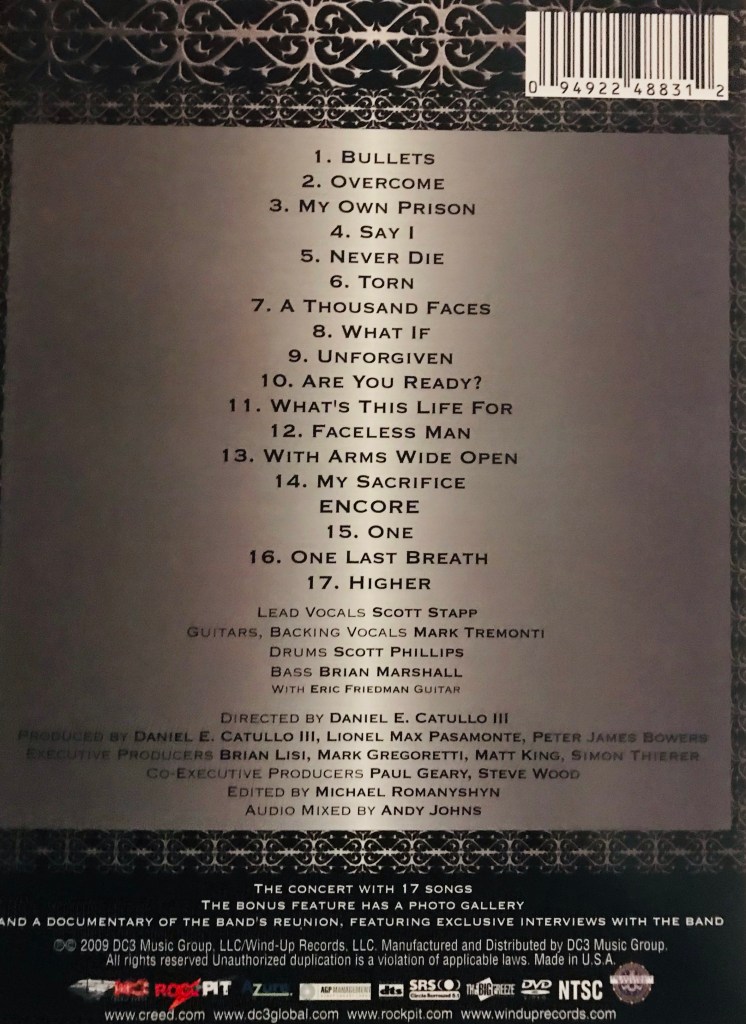
This concert was filmed on their “Full Circle” tour in 2009. Joining the usual 4 members, Scott Stapp, Mark Tremonti, Scott Phillips and Brian Marshall, is Eric Friedman on guitar.
Friedman has an interesting story.
Tremonti really got behind him around 2002/3 but his journey starts in 1996, when Kenny Wayne Shepherd pulled him onstage for a jam session. He got a Fender deal at 13 and a developmental record deal with Steve Vai’s label Favored Nations at 15. He appeared on the excellent Submersed album “In Due Time” (released in 2004) and as the rhythm guitarist with Creed on their reformation tour. He’s also in the Tremonti band.
Creed gets blasted for various reasons by critics and haters, but if you look at their output and the years those albums came out, you will notice that their releases acted like a bridge between eras.
“Human Clay” is that album that bridged the 80’s and early 90’s with the newer sounds from the late 90’s. After “Human Clay” we would get hundreds of derivative bands, in the same way we got hundreds of hard rock bands in the early 90’s.
I think of “Human Clay” in the same way I think of “Sad Wings Of Destiny” from Judas Priest which bridged the derivative blues rock from the early 70’s and space prog rock into a sound that I know as metal.
“Bullets”
It’s a great opener, very metal like. Check out the intro riff for aggression.
It’s also the second single from Creed’s third album, “Weathered”.
When I watched em in Sydney on the “Weathered” tour, they also opened with this one.
“Overcome”
“Please allow us to re-introduce ourselves. We have overcome”, Stapp said as he introduced the song.
From the new album, and it was like Creed never broke up. But it was a different Creed as well, as Tremonti delivers a killer lead break.
“My Own Prison”
“When we got back into the room after six years of not playing together, I asked Mark, “what do you want to play” and he said, “let’s go back to the beginning”” was how Stapp introduced this song.
And “My Own Prison” begins. Its slower tempo groove fits perfectly in the set list after two heavy openers.
“Say I”
One of my favourite tracks from Creed as it incorporates a few different feels and styles. If you like Tool, then the verses would remind you of Tool. If you like hard rock, then the pre-chorus will remind you of hard rock. If you like metal, then the intro and chorus riff will remind you of metal.
For me, this is a deep album cut and to see it in the set list, I wish I was in Houston watching the show.
And they jam the interlude groove, which I didn’t think they would do. But they did, making the concert experience different from just playing the song as per the recording.
“Never Die”
“This song is about innocence”, Stapp said in his introduction. I still reckon this is an awesome Pearl Jam song. Maybe more so for the vocal than the music, as the riffs from Tremonti incorporate so many different styles. And if you read his interviews, you will feel like you had the same upbringing as him and his discovery of music.
“Torn”
One of my favourite songs to jam to. Tremonti is a master at creating a great riff.
“A Thousand Faces”
This is another album cut, which defines the Creed sound and make sure you check out the Tremonti solo towards the end of the song.
“What If”
How good is the Chorus and that chromatic Metallica/Megadeth like interlude?
Then they jam. The solo section has Tremonti and Friedman trading licks and none of it is from the studio recording. It’s all part of the live show.
“Unforgiven”
If you are a fan of Creed because of “Higher” and “What’s This Life For” then you will be bored by this song. It’s basically speed metal and aggressive.
And Creed brought back the big Rock N Roll show. Check out the photo below.
They had a similar stage design with pyro and flames in 2003, which at the time was “anti trends” as most bands from 1994 and onwards operated in shadows.
“Are You Ready?”
The groove of the riff is head banging stuff.
“What’s This Life For”
One of my favourite songs from the debut. It’s a ballad, but those last two minutes of the song, are excellent.
“Faceless Man”
“This next song is very personal to me”, Stapp said as he introduced this.
Its cinematic and this part of their music always get overlooked. This track was hidden behind the hits, “Higher” and “With Arms Wide Open” but this track is the piece d’resistance on the album as it moves between rock and ballad and rock and ballad.
And I hated learning it, because I had to change my tuning to an open D5 tuning. But, I believe the open D5 tuning just makes you play with an eastern feel, so make sure you check out the main eastern sounding riff.
This song is Creed folks.
Put it on and crank it.
“With Arms Wide Open”
The anthem, with its “Dust In The Wind” inspired progression. And while it was written for the birth of a child, the song has taken on many different meanings. Tremonti’s finger picking gets a highlight moment, but that defining moment would come with “One Last Breath” a bit later on.
“My Sacrifice”
This song doesn’t get the respect it should. The riffs are stellar and the vocal melody is iconic.
“One”
From the debut album, another song with a killer riff that is fun to jam.
“One Last Breath”
On Songfacts, Tremonti mentioned that “One Last Breath” is one of his favourite riffs. On YouTube it’s got a massive amount of views. On Spotify, it’s at 135.3 million streams, even more than “Higher” which is sitting at 110.1 million streams or “My Sacrifice” at 127.3 million streams.
This song really highlights Tremonti’s clean fingerstyle.
In a Guitar World issue, Tremonti mentioned how he would have devoured all the Classical/Baroque stuff, but subliminally his style developed by devouring the acoustic pieces from metal and rock artists, like “Mechanical Resonance” and the style of Frank Hannon or the fingerstyle stuff from Metallica on their slower tempo songs and instrumentals like “Call Of Ktulu”.
“Higher”
The closer. If you don’t know it, then you haven’t been part of the mainstream.
By the end of it, the band is drenched in sweat, Stapp went shirtless and the thousands of fans in attendance would have gone away happy. It’s not always perfect, but hey, that’s why it’s called the live show. And no live show is the same as the last show. If we wanted perfect, we would listen to the studio albums.
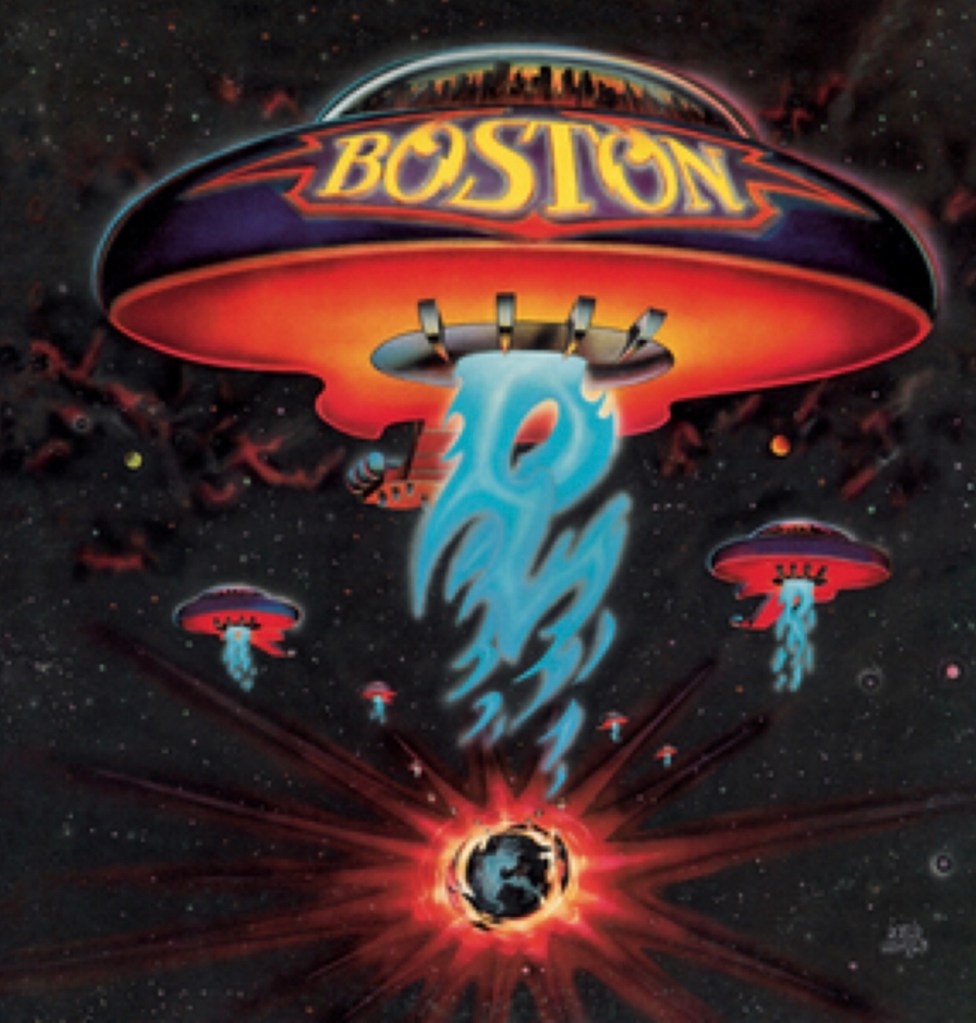
It’s another band I really got into during the 90’s and I’ve posted my record collection of Boston here.
It was a Guitar World issue that got me interested to hear Boston as it spoke about the making of the album, Tom Scholz diligence to sound and it also had a transcription of the opening track, “More Than A Feeling”. At 445.7 million plus streams on Spotify, it’s a monster track.
At 29 years of age when the album was released, Tom Scholz wasn’t your typical rock star in waiting, working as a project manager for Polaroid with a Master’s degree in engineering and writing songs that he liked to hear in his basement when he wasn’t working. And as good as Scholz is, he needed a voice for his songs, and that voice came from Brad Delp.
Disco also ruled the airwaves when this album hit the record stores. Most labels passed on the band because they didn’t believe a guitar heavy rock record could even chart. But Scholz stumbled onto a sound that would be imitated by all bands since.
My favourite is “Peace Of Mind” purely for the guitar leads in the intro and the outro. On Spotify, its sitting at 117.8 million streams.
I then ignored the rest of the album for a long time, finding it generic. An Epic A&R rep even said to the band in one of the rejection letters that they have nothing new to offer and sounded generic, but then credited himself as discovering the band when they broke big.
Then in the 2000’s I revisited the album.
“Foreplay/Long Time” came into my life and I didn’t notice it before but it has a similar riff in it as “More Than A Feeling. On Spotify, its sitting at 74.4 million streams.
“Rock And Roll Band” and “Smokin” are your standard blues rock fares, with “Smokin” having a more ELP vibe in the middle section. It’s also sitting at 47.3 million streams on Spotify.
And the other tracks are “Hitch A Ride”, “Something About You” and “Let Me Take You Home Tonight” showcase a more of blues country rock feel, but compared to the massive first two songs, they are lost in the “deep album cut” landscape. And it’s those first two tracks which sold the album throughout the world.
17 million sales in the U.S alone. Not bad for an album recorded in a basement.
In 2013, Scholz filed a termination notice to claim back his copyrights to the debut album and “Dont Look Back” as per the clause in Copyright Law which allows him to do so after 35 years. And it ended up in the courts.


 destroyerofharmony