A band called Dungeon is opening for Megadeth in Sydney. I knew of the name, but never heard any of their music. The band name just didn’t do it for me. It was my mistake. I listened with my eyes instead of my ears. Well that was to change.
After the gig, Dungeon was definitely on my radar and I did purchase a few of their albums. And as soon as I got into them, they called it quits.
Sort of.
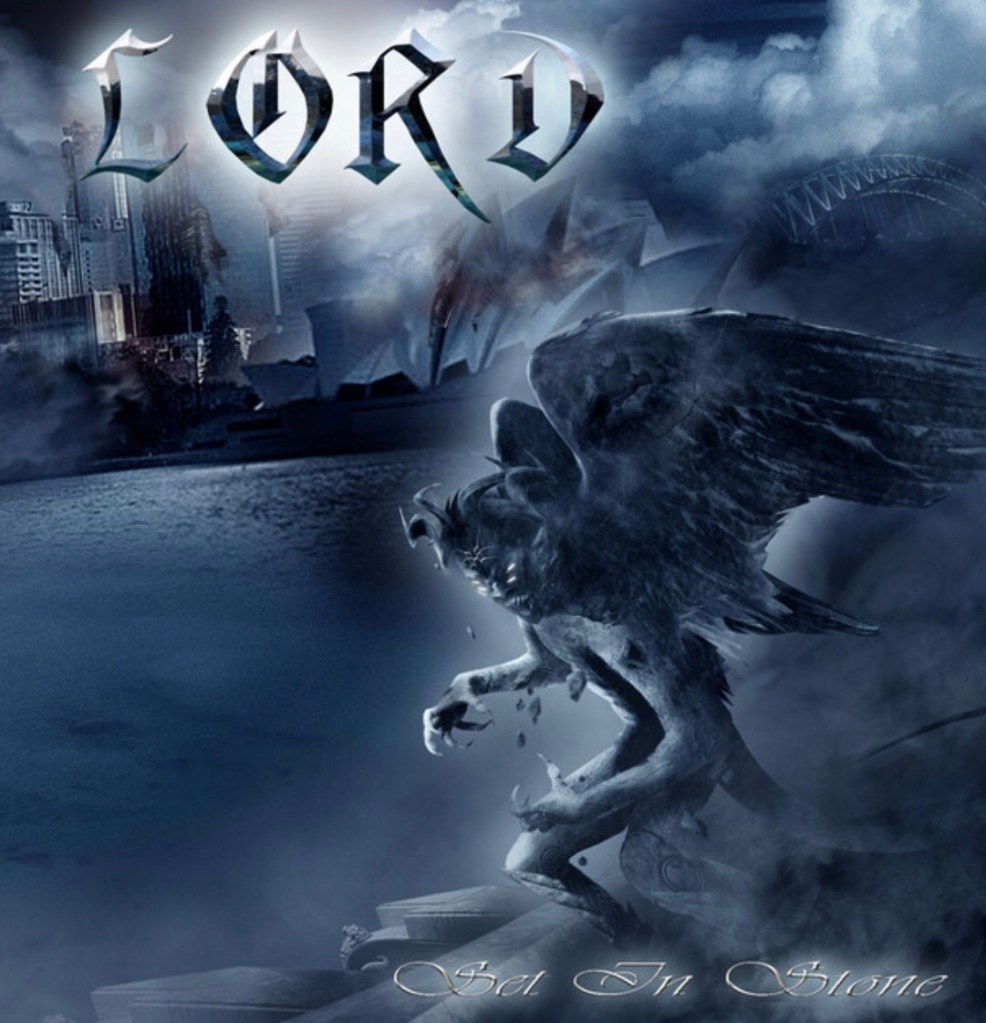
You see, Lord was originally started as a side project for Dungeon guitarist/vocalist Tim Grose, which was meant as something different from his main band sound. Lord’s first album was released in 2003 and it wasn’t so different from Dungeon. After Dungeon disbanded in 2005, Lord just became a continuation of Dungeon’s sound with new members. You could even purchase Dungeon albums at shows Lord did.
“Set in Stone” is the third album released in September 2009 by the band’s own label Dominus in conjunction with Riot! Entertainment. The album was recorded in my home town of Wollongong, Australia. A small foot note in history, is that a band I was in at the time opened up for Lord when they played Wollongong touring on this album.
The band is Tim Grose (also known as Lord Tim) on vocals and guitars, Tim Yatras on drums, Mark Furtner on guitars and Andrew Dowling on bass.
Spectres of the Ascendant
48 seconds of sound effects to introduce “Redemption”.
Redemption
Written by Tim Grose and drummer Tim Yatras, who would depart the band after the album was completed.
Its face melting speed metal.
100 Reasons
Another Grose and Yatras track.
It’s hard rock, with a major key Arena melodic rock Chorus.
Eternal Storm
Co-guitarist Mark Furtner gets a co-write with Grose and Yatras.
Fast, Malmsteen like from the “Marching Out” album. The solo is very Vinnie Moore like, running through different scalar patterns.
Set in Stone
Another track written by Grose and Yatras.
My favourite song on the album. The intro riff is a brilliant mix of Classic NWOBHM and American metal. Judas Priest and Maiden come to mind, with vocals bordering between a cross between Dickinson and Tate at their classic metal best.
There is this “wo-oh-oh” chant after the solo. I can imagine thousands of people chanting it at a gig.
Someone Else’s Dream
Written by the band.
An 80’s sounding synth and a syncopated guitar line set the foundations. At stages it feels like it’s a song from the Gothenburg metal scene, but the Chorus is huge and melodic.
Forever
It’s almost Maiden like with a lot of musical influences from the “Fear of The Dark” album.
I play air guitar to the harmony guitars.
Written by Tim Grose, Tim Yatras and Andrew Dowling.
The lyrical theme is pretty clear. Boy falls in love, gets rejected and goes all Michael Douglas “Falling Down” on the girl and the world.
The guitar playing in the lead break is brilliant.
Beyond the Light
Written by the band.
Judas Priest and UFO “Lights Out” era comes to mind, vocally and musically. It’s a great song to sing along to.
The End of Days
Written by Grose and Yatras.
It’s like a thrash metal song, with the vocals being a cross between Rob Halford and Tom Araya (in the verses).
Staying true to its title it ends with a nuclear bomb going off.
Be My Guest
Written by Tim Grose, Tim Yatras and ex Dungeon bassist Brendan McDonald.
This is like “Stars” on guitar with a lot of guest solos.
It’s an instrumental track featuring guest solos from Craig Goldy of Dio, Glen Drover from Eidolon, Olof Mörck of Dragonland, Yoshiyasu Maruyama of the Japanese thrash band Argument Soul, Angra’s Felipe Andreoli, the former Enter Twilight member Richie Hausberger, Chris Porcianko from Vanishing Point, Chris Brooks and former Dungeon members Stu Marshall and Justin Sayers.
New Horizons
Written by Grose and Yatras. It’s your typical power ballads.
Pete Lesperance from Harem Scarem plays a solo on this.
On a Night Like This
A Kylie Minogue cover as the bonus track.
The fact that the band would attempt such a cover shows the versatility of the members.
Reviews for Australian artists are difficult to do as I want to highlight influences of their sound without making them sound like copyists, and if people from other continents want to check them out, my aim is to give them a reference point as well.
If you haven’t dabbled in the power metal genre, then let Lord be your entry point.
It’s easy really.
Just press play on the melodic rock tracks first like “100 Reasons” and “Beyond The Light”.
If you like em, then press play on the classic metal track, “Set In Stone”.
If you like that, press play on the more ambitious tracks like “The End Of Days” and “Forever”.
Then you are at the fast speed metal with “Redemption” and “Eternal Storm”.
The “A Change of Seasons” EP from 1995, closed a chapter for Dream Theater that went back to those dark days without a deal.
After a short tour to promote the EP, they started writing songs in early 1996 for the follow up album to “Awake”. Derek Sherinian was a full-fledged member and was an extra addition to the song writing team.
Their label East West Records had folded into Elektra. Sylvia Rhone was now the President. Her interest in hard rock music was minimal. Nikki Sixx was also very anti-Sylvia, calling her from the stage on her mobile during Motley Crue concerts and getting the fans to scream “F U Sylvia Rhone.”
As written in the book, “Lifting Shadows” by Rich Wilson, Rhone wanted to drop Dream Theater or to transfer the contract to Warner International, however their success in Europe and Japan was bringing enough dollars to the label, so Elektra decided to keep them. However, they had to come up with more shorter tracks that radio could get behind.
Little did they know, that they would be in development hell for almost a year. Most of the songs they submitted to the label for approval, were met with the request to write more songs. Progressive songs like “Lines In The Sand” and “Trial Of Tears” got a muted response from the label, while songs like “Hollow Years” and “You Not Me” got the label excited.
On top of this was the dissolution of their management team, which had the band divided. Petrucci picked one manager and Portnoy picked the other. Eventually, Petrucci’s choice Rob Shore was selected as the manager and Portnoy’s choice Jim Pitulski went to court to recoup some of his losses.
Further to this, their friend in label hell, A&R Rep Derek Oliver left and his replacement, Josh Deutsch was already fed up with the band. As far as he was concerned, the band was selling enough to not be a liability to the label, so as long as he could get the new record out, they would make numbers.
12 plus months passed before Deutsch gave the go-ahead to record the new album, in March 1997. The list of producers the band submitted was ignored and Kevin Shirley who just did Aerosmith’s “Nine Lives” was hired. Shirley also recommended that the band work with Desmond Child to re-write “You or Me”, resulting in Petrucci being flown down to Florida to work on the song with Child. Following the sessions, the song became “You Not Me”. This infuriated Mike Portnoy as he didn’t like how Desmond Child would re-write one of the songs with just one band member.
Originally, Petrucci and Portnoy wanted to call it “Stream of Consciousness”, but the rest of the band rejected the name although the phrase “Stream of Consciousness” is found in the song “Lines in the Sand” and would later become the title of an instrumental song on “Train of Thought”. Its eventual title was proposed by Petrucci, and its cover art was designed by Storm Thorgerson.
When you write for that long, there is enough material for a double album, but Elektra said the approved budget is for a single album.
As a side note, Portnoy released the double album, when he did the Ytse Jam Records Demo series for the “Falling Into Infinity” demos release. It also got a re-release with Dream Theater’s “Lost Not Forgotten” Archives releases.
If you are a fan of the band, the demo releases are must haves, as you get to hear songs like “Raise the Knife”, “Where are You Now”, “Cover My Eyes”, “Speak to Me”, “The Way It Used to Be”, and “Metropolis Pt. 2”, which was later expanded into its own album and the rest being included on the 1999 fan club CD “Cleaning Out the Closet”.
New Millennium
As soon as the King Crimson inspired intro kicks in with the keys and guitars in harmony, I was hooked. John Myung comes in with a bass riff which is very Tool like and I like the way John Petrucci decorates, very Adam Jones/Tool like.
Mike Portnoy is the lyrical writer here, as he looks at the music industry.
Press play for the Verse Riff. Its heavy, its melodic and its influenced by the times, but it doesn’t sound dated as there is funk and there is groove.
James Labrie cops a lot of flak from fans and I am one of them, but he shows his versatility moving between Peter Gabriel like vocals, to Maynard James Keenan vocals, to Bluesy Paul Rodgers style vocals and yet he makes it all sound hard rock in his own LaBrie way.
Derek Sherinian on the keys is more like Kevin Moore in style.
For an opening track it got my attention.
You Not Me
Musically it’s written by Dream Theater and lyrically it’s done by John Petrucci with small additions from Desmond Child. After hearing the demo of this song, I think Child’s additions are more like Holly Knight’s addition to change the title of “Rag Time” to “Rag Doll” by Aerosmith. The original demo is called “You Or Me”. After Child was involved, it changed to “You Not Me”. The vocal melodies are there on the demo.
The riff is nu-metal before nu-metal was even a thing.
And I like its big Chorus and simple Verse/Chorus structure. I am a hard rock fan first who likes progressive music, so this song is right up my alley.
Peruvian Skies
When they play this song live they go into “Enter Sandman” from Metallica as there a bits in the song that sound like they came from “Sandman”. If you get a chance to check out one of their live performances of this song, do it
Lyrics are written by John Petrucci. He is trying to tell an abuse story of person called Vanessa.
Musically, it’s got the dreamy arpeggios of Pink Floyd, with the metal crunch of Metallica. It’s a potent mix. And I like it.
Hollow Years
The “Live At Budokan” version is “the” version to listen to. This is where the solo is extended to include some shredding from Petrucci and the outro is also extended. One thing that is guaranteed when you watch DT live, is you don’t just get the studio version of the song. Which is a good thing. It irks me when bands play the studio version of a song live. There are no musical conversations happening on stage. For some bands it works, like Metallica and Iron Maiden, as their song structures are very rigid.
It was released as a single and you can tell why. It moves between flamenco-classical style acoustic guitars to a melodic soft rock Chorus. Petrucci wrote the lyrics to the song.
Burning My Soul
Mike Portnoy’s lyrics were inspired by his frustration at their A&R man, Derek Oliver. Once seen as a supporter who got them signed was now seen as a roadblock, a gear in the label machine pushing the label “sign em and drop em” agenda.
Overall, it’s a great song. It’s metallic, with a lot of groove. Metallica wasn’t this heavy during this time.
It also marks the beginning of an excellent middle section of the album, that involves “Burning My Soul”, “Hell’s Kitchen”, and “Lines in the Sand”.
Hell’s Kitchen
Producer Kevin Shirley made the decision to take out the middle section from “Burning My Soul” and turn it into a separate instrumental track.
Which I thank him for as “Hell’s Kitchen” is a 3 minute rollercoaster of emotions. Press play to hear John Petrucci at his melodic best.
Lines in the Sand
Lyrics are written by John Petrucci and press play to hear his guitar lead along with the verse/bridge section after the solo break.
King’s X’s Doug Pinnick also appears but James LaBrie stars here, twisting and morphing his voice across many different musical styles and genres.
At 12 minutes long, it didn’t feel boring at all.
Take Away My Pain
This is Dream Theater doing U2 while U2 was doing electro-techno rock.
Lyrically, John Petrucci writes about the death of his father and he decorates the song like “The Edge”.
And for people who said they sold out by writing a song like this, well they seem to forget that “Another Day”, “To Live Forever” and “Lifting Shadows Of A Dream” are very similar to this. So it was nothing new for Dream Theater to have songs like this on the album.
Just Let Me Breathe
Portnoy is throwing missiles at the music industry with his lyrics here. It deals with the media and how they purely exist to over report and sensationalise tragedy, like the deaths of Shannon Hoon and Kurt Cobain.
The drum and bass intro segues into the guitar riff kicking in. It’s heavy and groovy. Very “Liquid Tension Experiment” like which would come after this album.
Derek Sherinian solos here with Petrucci kicking in some harmonies. Then they trade off each other. Overall, I like the song musically but the vocal melodies didn’t resonate with me, although I do like how Portnoy wanted to try something different with the melodies.
Anna Lee
James LaBrie has a lyrical contribution to a Dream Theater album. The song is a ballad, with a nice piano riff as its centrepiece but it wasn’t a favourite back then nor is it a favourite write now.
Petrucci does deliver a nice solo.
Trial of Tears
I wrote a whole blog post on this song. You can read it here. It’s in three sections but played as one complete 13 minute song. Bassist John Myung is the lyrical writer.
Section I is called “It’s Raining”, Section II is called “Deep in Heaven” and Section III is called “The Wasteland”.
James LaBrie again steals the show with the various vocal styles he exhibits here. And Petrucci is on hand to deliver some nice emotive lead breaks.
As mentioned in the book, “Lifting Shadows” by Rich Wilson, the album was considered a commercial failure, failing to break any new ground for Dream Theater or increase their sales despite its more commercial direction. As a result of the creative and personal tensions experienced during the album’s production phase, it has been described as the band’s “most difficult album”, and eventually led to their demanding to be free from record label interference for all future albums.
Regardless of commercial expectations, I go back to this album on a regular basis. Crank it.
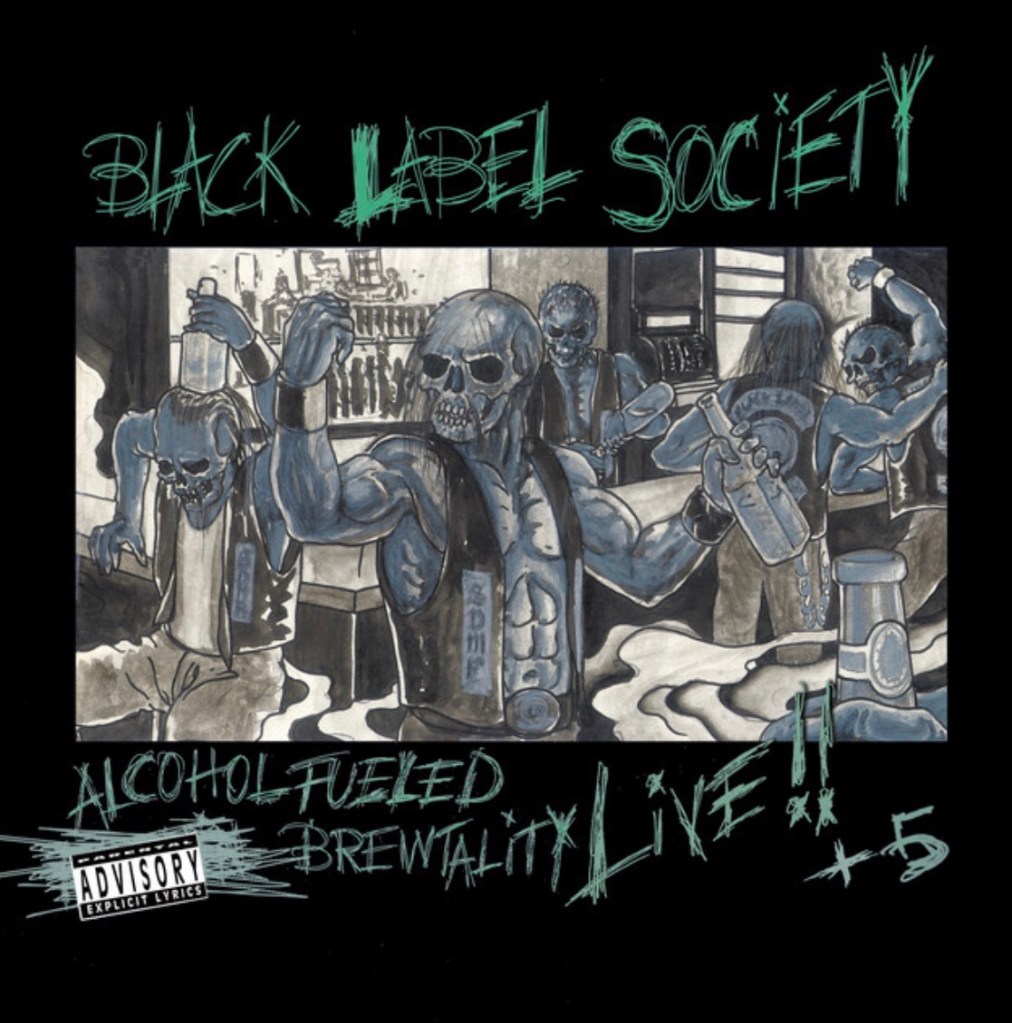
Did Zakk Wylde have enough material for a live Black Label Society album so early in its career. Well, yes if you include his Ozzy and Pride and Glory output with Black Label Society and no, if you just include his Black Label Society output.
“Alcohol Fueled Brewtality Live!! +5” was recorded on October 28, 2000, at The Troubadour in West Hollywood and released in January, 2001.
Low Down
You get some rowdy yells of “Zakk”, “Zakk” and an air raid siren starts ringing.
Then the band crashes in with a trademark Zakk riff, downtuned, syncopated and loaded with pinch harmonics and single note melodic motifs. And Zakk sounds great live, his voice made up of an Ozzy influence and his brewtal lifestyle.
13 Years of Grief
I didn’t even know they went into this song as there was no stop/start in the performance. It was all fluid.
Stronger Than Death
Zakk was doing Pantera better than what Pantera was doing at this point in time.
These kind of titles make me laugh. “Killed By Death” from Motorhead is another title that falls in this category.
There is this break down riff towards the end (which is changed up a bit from the main intro riff), which is head banging material.
All for You
Great riffs in this song.
Super Terrorizer
After the heavy intro, there is a brief pause and Zakk screams “Limp Bizkit sucks dick”, the crowd cheers and into the verse they go, which reminds me of “Bleed For Me” from “1919: Eternal” which came out a few years later.
And there is some fine shredding here in the solo. So press play to hear it.
Phoney Smiles & Fake Hellos
Yep I’ve come across some people in my life that sum up the song title.
Some more great riffage. It’s like Zakk took the best of “No More Tears” and just amalgamated it with Iommi/Dimebag and what you have is Black Label Society.
Lost My Better Half
Zakk is going down low here with a Drop A tuning: low to high – A,A,D,G,B,e.
Just think about it. The low E is not D or C# or B but A. God damn.
Bored to Tears
More Zakk riffs to play along to that won’t leave you bored but it’s sounding same same.
A.N.D.R.O.T.A.Z.
It’s the guitar solo moment of the gig.
Born to Booze
The intro riff on this is excellent. It deserves more attention.
World of Trouble
And without a breath or break, it moves straight into “World Of Trouble”.
No More Tears
He made it sound like a Pantera track.
The Beginning… at Last
And it’s more of the same, with another fast heavy rocker to finish the gig.
The next songs are all studio cuts. Zakk Wyle plays everything on these except the drums, which are handled by drummer Craig Nunenmacher.
Heart of Gold
A Neil Young cover done right.
Snowblind
The mighty Black Sabbath gets a Zakk cover. And I like it.
Like a Bird
Zakk can pen a great acoustic song. This one is classic Zakk. Almost”Blue On Black” and “Days Of The New” and “Changes” from Sabbath.
Blood In The Well
More of the same infectious acoustic rock.
The Beginning… at Last
An acoustic version of this heavy rocker. Think “Fade Away” from Pride And Glory but acoustics.
Overall, the the last five studio cuts are must saves for any Zakk fan and the live recording is a snapshot of a time when Zakk was doing Pantera and Corrosion Of Conformity better than those bands.
Released on 7 June 2013 and recorded in various studios in Byron Bay, New South Wales. Coming from the Steel City of Wollongong, Byron Bay is a 9 hour drive up the coast.
The Producer is Andrew Stockdale.
It was written with the idea that it would be the third Wolfmother album, however the group was already in disarray after Stockdale fired the original band before the 2nd album, and any musicians that joined the fold afterwards were on Stockdale’s payroll, not the labels.
The album process started in 2010 with updates on social media and then it went silent. By February 2012, we knew that rhythm guitarist Aidan Nemeth and drummer Will Rockwell-Scott had left the band. Universal was also not really interested in what was been delivered at that point in time.
Remaining members Stockdale and bassist Ian Peres called in Vin Steele (rhythm guitar), Elliott Hammond (keyboards, percussion) and Hamish Rosser (drums) to complete the band line-up. Universal still wasn’t interested but Stockdale planned to re-record and self-release the album as a Wolfmother album.
By March 2013, front man Andrew Stockdale announced that he would be releasing the album under his own name.
The Personnel for the album is Andrew Stockdale on vocals and guitar, Ian Peres on all things bass related plus other instruments, with drums shared by Elliot Hammond, Hamish Rosser, Will Rockwell-Scott and Dave Atkins. Additional guitar tracks were recorded by Vin Steele and Alex “Rudy” Markwell.
All tracks are written by Andrew Stockdale, except where noted.
Long Way to Go
It could be a Bachman Turner Overdrive tune. It could a Rolling Stones tune as there is a riff in the song heavily inspired by “Can’t You Hear Me Knocking”.
And there is a solo here, brief but bluesy.
Keep Moving
Lenny Kravitz is going to come your way. You know what I mean. And I like it, with other influences from Hawkwind and a riff from the fingertips of Paul Kossoff (RIP).
Within the first two songs, Stockdale is making a statement. He is moving on from the past, but he has a long way to go to make the break.
Vicarious
The fuzzed out bass sets the groove. The drums thunder along with it. Its subdued and Stockdale croons over the verses, before lifting in the Chorus.
“You’re living vicariously / Tell me what’s it’s like to be me?”
Three out of three so far.
Year of the Dragon
It’s classic Wolfmother in riff, with a Bill Ward style swinging beat and a feel that gets the foot tapping and the head banging.
Somebody’s Calling
Stockdale co-wrote this with multi-instrumentalist Elliott Hammond who plays drums, electric piano and harmonica on this album.
Hand clapping Rock and Roll that reminds me of The Doors, Sweet, The Easybeats, Free and all of those great bands. And at 1.50, it goes into a half time feel, which I like and it picks up again at 2.16.
Meridian
Stockdale co-wrote this with bassist Ian Peres. My favourite song on the album and by far the heaviest song Stockdale has committed to release.
The Intro reminds me of Black Sabbath at their heaviest and the verse riff reminds me of Led Zeppelin at their heaviest. A pure classic old school heavy metal cut and although released on a Stockdale solo album, it is a worthy Wolfmother cut.
Ghetto
Another foot stomping groove. And it gets repetitive but hey, the reason why I listen to Andrew Stockdale is because he can jam on a familiar repetitive riff for ages.
Let It Go
“Symptom Of The Universe” has a love child with “Achilles Last Stand”. And I like it.
And if the album ended here, it would have been 8 from 8.
But it continued.
Let Somebody Love You
It’s got this rhythm and blues feel, maybe a little bit of Aerosmith.
Standing on the Corner
The “hit the road jack” vibe is prominent but more countryish than blues.
Country
The title says it all, a ballad.
Black Swan
Yeah, it’s a skip for me.
Everyday Drone
Hey Mr’s Robinson. Can Andrew Stockdale be influenced by you?
Yes, he can.
It Occurred To Me
The fuzzed out psychedelic riffs are back to close out the album. It’s got groove and sleaze, but coming off the acoustic like tracks, it doesn’t flow.
The Foo Fighters released a double album that had rockers and acoustic stuff on each disc. Stockdale suffers here because he released two distinct albums as one.
Back then I asked the question “If we stop using Spotify or Netflix, would we miss them?”
Since then a lot of other players have taken market share in the steaming world.
I am a heavy user of Spotify. For Netflix its hit and miss. Sometimes I could go weeks without using it and on other occasions it’s every day.
At the moment, in 2022, I also have subscriptions to Stan, Amazon, Paramount+ and Disney.
Being missed when you’re gone is a worthy objective for any organisation. It also should be an objective for any artist. If I stopped listening to music in general, I would miss it. If I stopped listening to music from certain artists I would really miss it.
And the ones who will survive are not those looking for short term profits, but those that realize it’s a war of attrition.
Metallica wanted to re-issue their 1982 demo “No Life To Leather”. Dave Mustaine on Twitter, said the talks broke down because Lars wanted song writing credits on two songs that Mustaine wrote every note and word to. So instead of agreeing to share the song writing, Mustaine passed.
Song writing is always an issue with bands.
Van Halen had all the band members listed as songwriters on all of their albums. Suddenly, when the band re-negotiated their publishing deals for their earlier David Lee Roth albums, Michael Anthony was removed as a song writer.
Skid Row’s Dave Sabo and Rachel Bolan said that Sebastian Bach didn’t contribute to the Skid Row debut album as most of the songs were written before Bach joined. Bach countered to say, that the way he sung the songs, and the way he decided to hold certain notes was enough of a contribution to the debut album and he should be listed as a songwriter. Manager Doc McGhee said Bach has no idea how copyright works.
Nikki Sixx said one of the reasons for Vince Neil’s departure from Motley was due to his lack of song writing contributions, which Vince countered to say he had enough co-writes on Motley’s classic 80’s era to counter that.
100% of the time, when an individual writes a song, there will be music, words and melodies written at the same time.
I had no idea what style of music they played, who was in the band, who produced em and which label if any released it.
After listening to the album I was a fan. It’s simple and effective modern rock. Catchy.
So I Googled the band and I came across the name of David Hodges. He walked away from Evanescence before “Fallen” exploded and become a songwriter for other artists in the world of modern/pop rock.
David’s problem is that he is too talented. He can easily write hit singles and all the songs here are infectious.
Do yourself a favour and check it out. It’s on Spotify and on YouTube.
I went in cold on this as well. The first thing that came to mind was “A Perfect Circle”. So I Googled it and of course it is Billy Howerdel’s project. And he sings on it. The album came out in 2008 and the first time I heard it was May, 2014.
“Keep Telling Myself It’s Alright” is the album name and there is no filler here. Check it out.
“Angel Of Mercy” from Black Label Society always gets me to pay attention.
The song appears on the album “Catacombs Of the Black Vatican” from Black Label Society.
And the lead break is pure magic. Just listen.
It builds and builds to the point where you cannot help but be in awe at the feel, the melodic phrasing and the disciplined technique on display.
The song was never a hit on the Billboard Charts and due to its mellow nature it might never get a live appearance, but god damn it, the song is a classic.
Ozzy probably didn’t know it, but in Zakk, he had a guitarist who could do Black Sabbath better than Black Sabbath, do the works of Randy Rhoads justice. (Of course, as a diehard RR fan, no one could do RR better than RR himself) and Zakk could play Jake E Lee better than Jake E Lee. Zakk once called his Ozzy gig the most glorified covers gig ever, where he gets to play some cool shit written by others and he also gets to play his own shit.
The follow-up self-titled Lynch Mob album had Keith Olsen producing. I suppose anything to do with George Lynch, includes a saga with a lead singer.
It’s 1992.
Dokken was four years dead. In between that time George Lynch and Mick Brown shacked up together with Lynch Mob and remained with Elektra Records. Jeff Pilson went to War and Peace and lead singer Don Dokken got wined and dined by Geffen Records and jumped ship.
The first post Dokken battle between had Lynch scoring some points with the excellent “Wicked Sensation” coming first. However, Don Dokken and John Kalodner were still building their all-star cast for “Up From The Ashes” and even though the album was an exemplary piece of melodic hard rock, it failed commercially. I suppose Don’s $1 million advance sign on fee didn’t help the budget. But it is still a favourite to me.
And the great momentum built up by the Mark 1 version of Lynch Mob was taken back a few steps with the ousting of vocalist Oni Logan. The story goes that Lynch had a problem with the way Logan sounded live. So after letting Logan go, the band had Glenn Hughes come in. He would sing the songs on the demos and then new singer Robert Mason would record em.
Fun fact for the day is that Glen Hughes did co-write a few tunes with Don Dokken for the “Up From The Ashes” album, with “When Love Finds A Fool” making it to the final cut.
But the album failed to match the sales of “Wicked Sensation” even though “Tangled In The Web” was a Top 10 hit.
Lynch Mob went on tour and Lynch was “not feeling it” with Mason and he wanted to get another singer. That singer was Ray Gillen, who at the time wasn’t interested because he had just completed “Voodoo Highway” with Badlands and was keen to push and promote that album.
If only Gillen knew the fall out that would happen between him and Jake a few months later. Glenn Hughes was considered, however he was discriminated against because of his age.
And then George Lynch returned to Dokken for the already written “Dysfunctional” album and even though as a hard core fan, I thoroughly enjoyed it, the truth of the matter is the band was spent. And we can speculate or argue why or just revel in the greatness of what came before.
The recording industry tells us that we need more Copyright for music to thrive and survive. But nursery rhymes survived all this time without the recording industry and copyright.
Say bye-bye to the old and say hello to the new. Here is a list of the new nursery rhymes that my two-year old loves.
“We’re Not Gonna Take It”
Back in the Eighties, the PMRC listed “We’re Not Gonna Take It” as number 7 on their filthy fifteen list. And the reason why it was on the list. Violence. Yep, Tipper Gore and her housewives found the song to be violent while millions upon millions of adolescent teens found it empowering.
“Cum On Feel The Noize”, “Rock and Roll”, “Rock N Roll All Nite”
Songs about letting your hair down.
“Livin On A Prayer” and “Don’t Stop Believin”
Two songs are about never giving up and believing in yourself. And those people are still believing with billion plus streams for these songs.
“Eye Of The Tiger”
The “Rocky III” producers wanted to use “Another One Bites The Dust” however they could not get permission to use the song, so Sylvester Stallone hired Survivor to write an original song instead.
“We Will Rock You”
The boom boom cha. It’s undeniable.
And these songs get passed on via word of mouth. It’s how culture rolls.
Six years had passed since Death Magnetic was released.
Led Zeppelin Reissue’s
Seriously. How many times can someone own the original three albums or the songs contained within those albums.
Piracy
Seriously. Is this still an issue in 2014?
Streaming Doesn’t Pay
It does pay. If you are not getting any of the pie speak to the label or the organisation that holds your rights.
Sales
They are irrelevant. All they do is give the old guard a way to measure something that is irrelevant because the new way to measure an artist’s reach is just too hard to fathom for them.
Are people listening to the album?
Press Releases for new albums
People can see through the hype. We don’t care when bands say “how great this new album is” or “how it is a definitive statement of the band right now”. All we care about is if we like it. If we do like it, we will talk about and we will push it. If it is crap, expect it to disappear.
Because if publicity does increase sales, then bands should be selling by the millions and selling out their shows. But they don’t.
And that’s another wrap of DoH history for a week.
“Blackwater Park” is the fifth studio album Opeth released on March 12, 2001 in Europe and a day later in North America through Music for Nations and Koch Records.
I never got too involved with the death metal elitists who seemed to label the band, not “death metal enough”. Their view points sound like an episode in “Dethklok” when the fictional cartoon death metal band was writing a song and it wasn’t brutal enough for the singer.
The album marks the first collaboration between Porcupine Tree front man Steven Wilson and the band, as Wilson had been brought in to produce the album. The influences of Porcupine Tree can be heard here and this contributed to a shift in Opeth’s musical style with more mellow passages, while Porcupine Tree would also get some heaviness out of it as well.
“Blackwater Park” did not chart in the United States or United Kingdom but it is seen as the commercial breakthrough for the band.
Opeth at this point in time was Mikael Åkerfeldt on vocals, guitar and acoustic guitar, Peter Lindgren on guitar, Martín Méndez on bass and Martin Lopez on drums.
Steven Wilson from Porcupine Tree does clean and backing vocals on “Bleak”, “Harvest”, “The Funeral Portrait”, and “The Drapery Falls”, piano, additional guitar, record producer, engineering and mixing.
The Leper Affinity
Music and lyrics written by Mikael Åkerfeldt.
First, I am not a huge fan of death metal vocals. I tolerate them because I want to hear good riffs. And there are a lot of good riffs and leads here. On occasions it feels like I am listening to a Megadeth album or a Dream Theater/Fates Warning album.
At 4.50, there is an acoustic section that comes in with clean tone vocals. It sounds ominous. And when they build it up, the ominous sound is still there.
Then at 6.10, this Tool like riff kicks in. Press play to hear it.
The last minute is a sombre piano lounge piece.
At 10.26 it’s a massive opening song for an album.
Bleak
Music and lyrics written by Mikael Åkerfeldt.
I like the way this starts. Its progressive but groove orientated.
At 3.28, it’s got this alternative metal vibe with clean tone vocals from Wilson and I like it. And it moves in between acoustic rock and heavy metal. But. By the end of it, its chaotic dissonance.
At 9.15, the first two songs clock in over 20 minutes.
Harvest
Music and lyrics written by Mikael Åkerfeldt.
The second shortest song at 6 minutes with strummed acoustic riffs.
The Drapery Falls
Another 10 plus minute track with music and lyrics written by Mikael Åkerfeldt.
It’s got acoustic guitars, psychedelic fuzzed out leads and clean tone singing.
It’s got progressive riffs and death metal singing.
And more grooves than a vinyl record.
Dirge for November
Written by Mikael Akerfeldt and Peter Lindgren. The dirge comes out to 8 minutes.
The acoustic guitar is there again and it feels like a Led Zeppelin cut in the first two minutes, think “Babe, I’m Gonna Leave You”.
That section at 4.30 to 4.40 is brief but I like its classical feel. The last two minutes is similar to the intro, but more jazzy.
The Funeral Portrait
Music and lyrics written by Mikael Åkerfeldt.
At almost 9 minutes long, its full of riffs and acoustic guitars.
The dissonance of the tritone is all over this track.
The whole acoustic intro reminds me of Slayer and “Seasons In The Abyss” while the riff that crashes in afterwards is very Dream Theater like from the “Images And Words” album.
And I like it.
Patterns in the Ivy
A 2 minute instrumental written by Mikael Akerfeldt.
Think of the intro of “Diary Of A Madman” with some piano melodic leads.
Blackwater Park
The title track at 12 minutes long. Written by Mikael Akerfeldt and Peter Lindgren.
The intro that starts it of is hard rock.
There is this clean tone instrumental section which is a fusion of jazz and classical. The riff that crashes in after it is perfect and head banging.
If there is a complaint, there are too many long songs with not a lot of variation. But from a guitar players point of view, there are a lot of cool riffs to unpack and learn.
There is always a track or two or three on each album from Evergrey that becomes an instant favourite.
On this album at the moment, it is “Call Out The Dark”, “Midwinter Calls” and “Blindfolded”. On the previous album and depending on mood, it was either “In The Absence Of Sun” and “Eternal Nocturnal”.
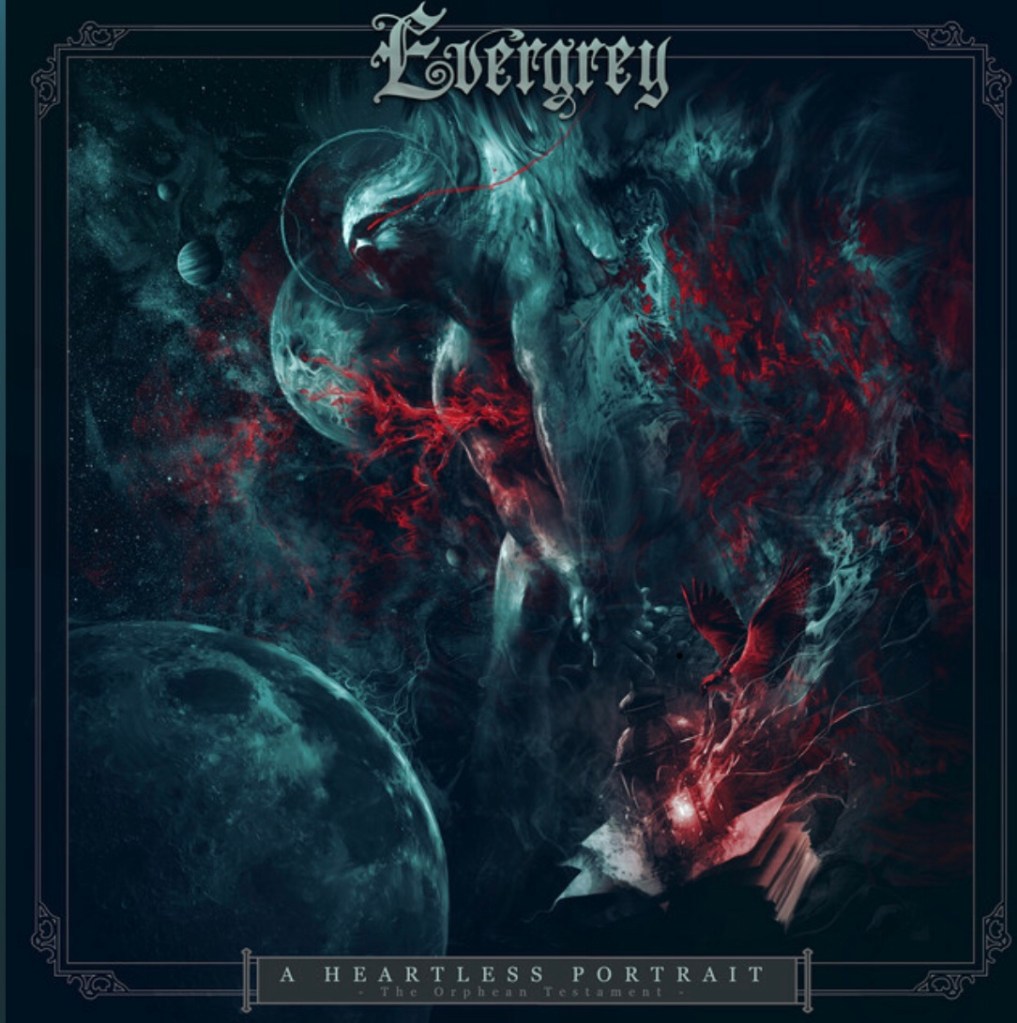
The whole COVID era of 2020 and 2021 got a lot of artists off the road, back into society, connecting with family and friends and then into the studios. After the brutality of “The Atlantic” in 2019, “Escape Of The Phoenix” came out in February 2021, a live recording “Before The Aftermath” on 28 January 2022 and in May 2022, “A Heartless Portrait (The Orphean Testament)”.
I have the Vinyl Die Hard edition and a separate Limited Edition box set on its way from Napalm Records in Germany, which I will unbox when they get here.
Their five album run (made up of 4 studio albums and one Live Album) on AFM Records came to an end. And what a run it was, with some of their best work like, “Hymns For The Broken” and “The Storm Within” included in that run.
The sound of the band is made up of the low tuned guitars of Henrik Danhage who uses Charvel Guitars and Tom Englund who is loyal to Caparison Guitars. But not all riffs come from the fingertips of these two. Drummer Jonas Ekdahl is a riff-meister himself and so is bassist Johan Niemann. Rounding out the band is keyboardist Rikard Zander.
The writing of “A Heartless Portrait (The Orphean Testament)” continued after the release of “Escape of the Phoenix”. Englund has even referred to the new album as “Part II”. In the producers chair is, Englund and Ekdahl again. These two have been producing the last few albums, so why change it. Keep it all within the band.
Save Us
A chugging downtuned metal like riff opens the album. It’s heavy and the octaves give it a sense of melody.
The fans participated in the gang like vocals.
The idea came to Englund while he was on a walk. He uses his iPhone to sing his ideas and the voice memos capture sounds pretty good as the phones have decent compression algorithm.
So they put a call out for their fans to sing the words based on a video guide the band provided into their iPhones and submit it. They got 700 plus submissions and those voices became the gang choir you hear when they say “Hey, save us”.
Lyrically, its Englund’s observation of watching people around him who feel they are not good enough to exist in this world, because they are hostages to the social media sites and feel like they need to portray perfection.
Midwinter Calls
“Midwinter calls…”
There is a slight pause.
“Home..”
And then the Chorus riff kicks in.
It’s my favourite part of the song.
The double kick is in unison with the riff from the fingertips of drummer Jonas Ekdahl.
This song also has a gang like vocal chant, utilising more voices from the fans. While in “Save Us” it was actual words, here it is wo-ohs.
Ominous
There is this four note progression played by another four note progression that underpins the main riff. It’s almost djent math like and progressive but very accessible.
Keyboardist Rikard Zander decorates nicely here over the thunderous groove set up by drummer Ekdahl and bassist Johan Niemann.
The guitar solos howl like wolves in the night.
Actually the whole guitar solo sections are guitar hero moments. I’m pretty sure both Englund and Danhage take turns here.
Call Out the Dark
As soon as the musical box piano sound riff started I was hooked. Once the guitars thunder in and the keys turn symphonic, I was ready to break desks. My favourite song on the album. By far.
The solo came is fantastic.
It’s got this classic “Rainbow In The Dark”, Vivian Campbell style from his Dio days. Initially there was a lot of tapping and shredding from Danhage and after receiving feedback from a friend about what he was trying to say with his lead coming after Englund’s lead, he rewrote the first half and kept the crazy shred ending. Press play to hear two virtuosos having conversations musically.
And it ends the way it started, with the musical box piano riff.
The Orphean Testament
Englund’s take on Greek Mythology where Orpheus had a chance to save his loved one from hell, by just walking away and never looking back, but he turns back to look.
Englund takes this view and applies it to modern life, where our ego’s get in the way of making good decisions and how it’s hard to fit in to a world which has different ideals to your own.
The song starts with fast double kick drumming and fast 16th note picking before it moves into a Dimebag style groove riff. Englund has a unique way of singing his melodies and this is no different.
Reawakening
I read on other reviews that the writers saw this track as filler. And I was like WTF. Its melodic heavy rock influences still remain with me after its finished.
The intro is melodic rock, with the keyboards in the lead. The song then quietens down, Queensryche like for the verses, while it builds up in the pre-chorus for the big Chorus.
I’m broken but breathing I’m still alive but did a lot of bleeding I’m open to reasons to feel alive
The Great Unwashed
The intro is made up single notes playing in an ominous way. Then a groove like riff kicks in, made from the fingertips of drummer Jonas Ekdahl. While they are chugging along on that riff, Zander plays the ominous intro on the keys and Englund does his vocal melodies.
There is a section after the Chorus that reminds me of “A Change Of Season” from Dream Theater.
And the lead breaks are killer, over a section that reminds me of “The Aftermath” from “Hymns Of The Broken”.
We’ll always unite in the end We’re stronger than most just pretend We never mind the dark
We’re the great unwashed
Heartless
Instant connection with the keyboard lick over the thundering distorting chords. The verse riffs are major key, hopeful, but the lyrics are dark, with words like “I can’t find reasons to keep feeding this soul”.
So tired of feeling I’m tired of feeling you And all this time that I’ve lost I’ve lost to you
Relationships take up a lot of time and when they are over, there is regret at the time lost.
There is a section just before the 3 minute mark, with piano chords and Englund’s haunting vocal melody. Then the lead break crashes in, and I am playing air guitar.
Blindfolded
It’s classic Evergrey.
Powerful and technical.
And there is another arena rock chorus. Press play to listen to the phrasing of “Dark nights / coming / we are lost in fragile moments / falsehood / soulless / we run through this blindfolded”.
And if all of that isn’t enough, queue in some killer lead breaks in which the guitars and the keys trade off each other.
Wildfires
Evergrey have always had songs like these, and Tom Englund explores these kind of sparse arrangements even further with the “Silent Skies” side project. The only difference here is that the acoustic guitars replace the keys.
If the sun fell down And burnt us down to the ground Would the wildfires remind me of
The album is excellent.
And there is also a trilogy of video clips, released in reverse chronological order, so you would need to watch the last video first to experience the cinematic journey.
Mike Portnoy was not happy when the song “A Change of Seasons” was pulled from being recorded in the studio for the “Images And Words” album.
So Portnoy kept asking Derek Oliver to provide funding so the band could record it. Portnoy tried to include it with the “Awake” album and again, Oliver said “no”.
And that’s when the fans stepped in. Dream Theater fans started to connect online via the Ytsejam Mailing List and suddenly, a petition was created to convince the label to give the go ahead for the band to record the song.
Yep, Dream Theater was one of those bands to have a direct to fan connection via their fan club and message boards in the early days of the Internet. Mike Portnoy was key here, as a fan of Marillion, who was also another band which kept engaging with their fans via their fan clubs and much later, Marillion were one of the earlier bands to get fans to fund an album before it became a thing.
At 23 minutes, it was their longest song at that point in time, but the way it is written and constructed, the seven parts of the song, can be listened to individually as separate tracks, if you wanted to splice the track. Lyrics are written by Mike Portnoy.
But.
If the band wanted to record this track in the studio, Derek Oliver said the track must be produced by Dave Prater. As described in the book “Lifting Shadows” by Rich Wilson, Oliver believed that Prater really understood what Dream Theater was about and when Prater zeroed in to the bands weakness, the band couldn’t hack it, hence the animosity. Prater was the producer for the “I&W” album and he was having serious run ins with Mike Portnoy over triggered drum sounds and with Kevin Moore over his reluctance to do anything that the Producer asked.
While the band disagreed with the Prater suggestion, they relented. as the only way to get funding was to do it the label way. Since Prater was told to not use triggers on the drums, it meant Portnoy wouldn’t be an adversary anymore and his main adversary during “I&W”, Kevin Moore was not in the band anymore. But Prater and James LaBrie didn’t connect this time around and they started to argue. But, in the end, LaBrie’s vocal performance on the track is excellent, so all the pushing and yelling, ended up in a fantastic vocal take.
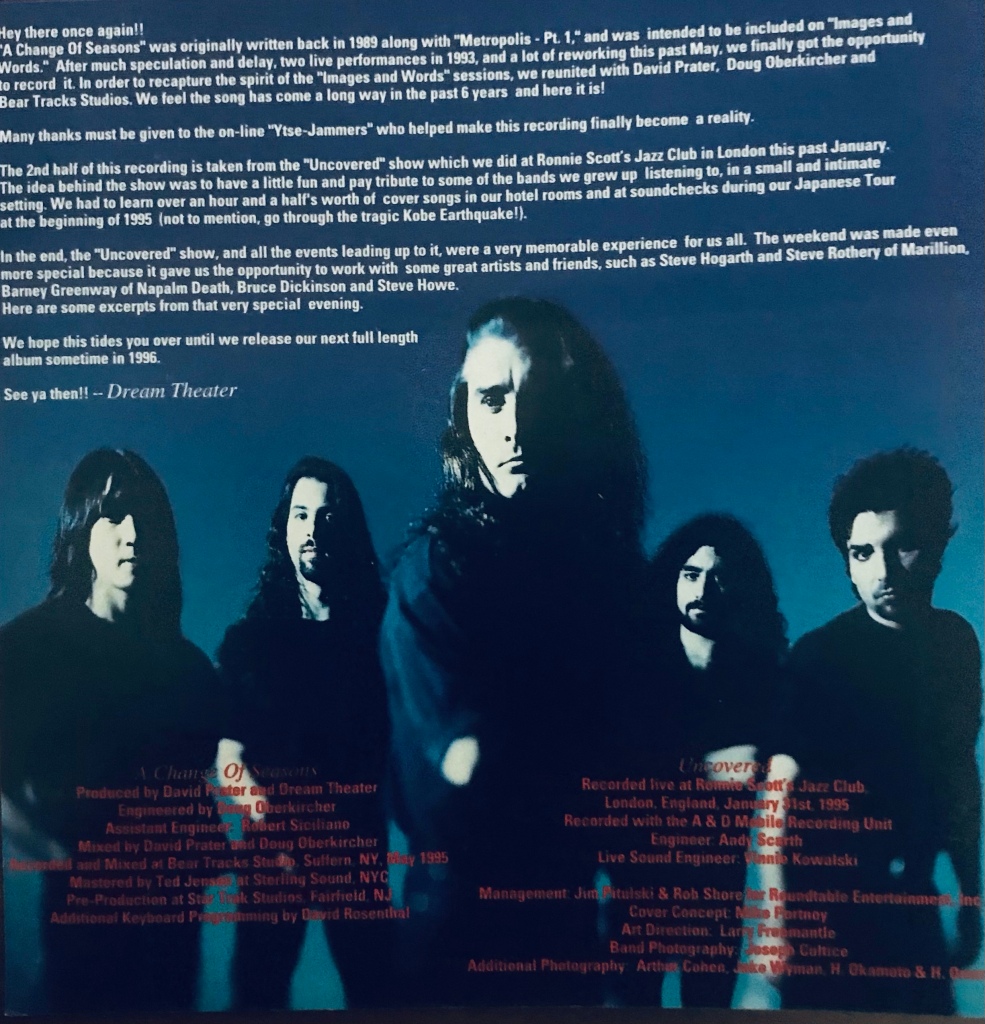
The EP was released on September 19, 1995, through East West Records.
Apart from the title track, it has a collection of live cover songs performed at a fan club concert on January 31, 1995 at Ronnie Scott’s Jazz Club in London, England. It’s also their first recording with Derek Sherinian on keyboards.
I know what most people are thinking,
23 minutes of a million notes a minute over complex time signatures. If you are thinking that, you are mistaken. The sections are all songs within a song and one thing that producer Dave Prater has going for him was his questioning of why they want to overplay certain parts.
Like when he said to John Petrucci (as mentioned in the book “Lifting Shadows”), “why are you trying to impress Steve Vai” with those fast technical licks as your first improvised take of the lead was way better than the stuff you worked out days later.
I. The Crimson Sunrise (instrumental)
The song begins and ends with an acoustic guitar. A seven string acoustic guitar with the low B and while I am critical of the 7-strings on fast picked stuff, I really like em on groove orientated stuff, and this is what this song is. A Groove Heavy Rock beast with progressive elements.
As soon as I heard the first notes of the intro acoustic riff I was hooked.
Did they try and recreate “Pull Me Under” with this whole intro piece?
Maybe.
Because there is melody, power and aggression here in the acoustics and when the distortion kicks in, you definitely feel it in your bones.
The first 3 minutes is essential listening. All instrumental but never boring.
II. Innocence
It begins at the 3.50 mark.
And how good is that arena rock chorus, that begins with “Innocence caressing me / I never felt so young before / There was much life in me / Still I longed to search for more” and when it repeats the second time, it’s worded a bit different. “Ignorance surrounding me / I’ve never been so filled with fear / All my life’s been drained from me / The end is drawing near.
III. Carpe Diem
It begins at the 6.54 mark with the start of the acoustic guitar arpeggios, almost classical. Portnoy is now referencing the last moments he had with his mother before she left to catch a plane which crashed.
The last few lyrical lines, “preparing for her flight / I held with all my might / fearing my deepest fright / she walked into the night / she turned for one last look / she looked me in the eye / I said “I love you, / goodbye”.
IV. The Darkest of Winters (instrumental)
I’m pretty sure this section kicks in at the 9.47 mark. It’s got metal and a jazz fusion like lead from Petrucci. There are a lot of elements from “I&W” here especially from the songs “Metropolis” and “Take The Time”. The riff at 11.50 would have been a foundation for a song for any other band. But from Dream Theater, it’s just a riff in a 23 minute song.
At 12.54, Petrucci starts the melodic lead that leads into “Another World”.
V. Another World
It kicks in at 13.03. It’s the big power ballad part of the song with LaBrie delivering one of his best vocals and Petrucci on the lead at 15.39 is perfect with his phrasing, delivering big bends and vibrato lines with short bursts of alternate picking.
VI. The Inevitable Summer (instrumental)
It starts at the 16.58 mark. Myung plays this bass groove which allows Petrucci to bring out the Lydian and Mixolydian scales. This section reminds me of the solo section in “Under A Glass Moon” from “I&W”. Even Sherinian gets a solo moment.
VII. The Crimson Sunset
The final section. It starts at the 20.12 section with a melodic lead that should have been harmonised, Maiden style.
“I’m much wiser now a lifetime of memories run through my head”.
Then there is a complete tempo and feel change for the final verse and the intro acoustic guitar riff appears to bookend a masterpiece.
And while everyone purchased this EP for the original song, the live recordings also deserve a mention.
“Funeral for a Friend/Love Lies Bleeding” (Elton John cover)
I didn’t know about this songs until I heard them here. Written by Bernie Taupin and Elton John. At 10:46, the song was originally recorded by Elton John as the opener on the “Goodbye Yellow Brick Road” album from 1973, which I then purchased after hearing this version.
And it’s even longer on the Elton John version at 11.09, which came as a surprise to me, as Elton John’s 80’s hits are all within the 4 minute range of commercial radio. I can definitely hear how this song influenced Jim Steinman and “Bat Out Of Hell”.
Who said that cover songs take away from the original?
“Perfect Strangers” (Deep Purple cover)
Written by Ian Gillan, Ritchie Blackmore and Roger Glover. It’s the title track from their 80’s comeback album in 1984. This version is very faithful to the original version, and guess what, I went out and purchased this Deep Purple album based on this cover.
“The Rover” / “Achilles Last Stand” / “The Song Remains the Same” (Led Zeppelin cover)
The songs used here for the medley are written by Robert Plan and Jimmy Page. Dream Theater took the best bits of these songs and made a 7.30 minute track that is worthy.
“The Rover” is a song from the “Physical Graffiti” album, with a good bluesy groove which is played to lead into “Achilles Last Stand” which is from the “Presence” album. Here we get most of the singing section of the song, the interludes and that progressive like riff which is played during the solo. Finally, the song is rounded out with some sections from “The Song Remains The Same” from the “Houses Of The Holy” album.
LaBrie proves that you can still pay homage to Robert Plant without sounding like him (remember Lenny Wolf) and Petrucci must have made a deal with Aliester Crowley as he is basically Jimmy Page.
“The Big Medley”
The last song. A mash up of songs from a diverse list of artists that clocks in at around 10 minutes.
It starts off with “In the Flesh?” a Pink Floyd cover.
At the 2.30 minute mark, the awesome riffage of “Carry On Wayward Son” from Kansas kicks in.
“Bohemian Rhapsody” from Queen kicks in 4.35 that whole hard rock section after the operatic vocals. Petrucci then goes into the lead break.
“Lovin’, Touchin’, Squeezin'” from Journey kicks in at 6.00. It shouldn’t work here, but it does. Its 12/8 bar room boogie riff works perfectly after “Bohemian Rhapsody”. LaBrie croons as good as Steve Perry and what else can be said about Petrucci who can move between Jimmy Page, Richie Blackmore, Dave Gilmour, Brian May, Kerry Livgren and Neal Schon so effortlessly. And then he covers Steve Morse and Steve Hackett easily.
“Cruise Control” from Dixie Dregs kicks in at 8.11. This music was new to me back then.
“Turn It On Again” (Genesis cover)”
This part kicks in at 9.14. The riff is immediately memorable, yet familiar as I feel that it influenced some sections on “Innocence Faded” from the “Awake” album.
By the end of the medley, I was out and about seeking albums from Genesis, Dixie Dregs, Journey. I already had the Queen and Kansas albums that had those songs.
If you haven’t heard this EP (which by the way is an hour long), press play on it.
My favourite album from Stabbing Westward. It was my first proper listening experience from them. I purchased the single, “So Far Away” and then downloaded a copy of the album before purchasing it.
And it’s not on Spotify which pisses me off. But of course YouTube has all the music.
What’s the deal with the cover?
If your making a statement about a self-titled album, is that the cover you want to advertise it?
After this album, I went back to listen to their earlier stuff via various Cyberlockers, Limewire, AudioGalaxy sites.
They needed to press the reset switch on their career.
How much more darker do they want to go?
The first album was called “Ungod,” the second was called “Whither, Blister, Burn and Peel” and the third was called “Darkest Days.” And for a name like “Stabbing Westward” I didn’t expect to hear a pop rock album.
They had three albums with Sony and two of em achieved a Gold certification from the RIAA. But they signed with an independent label after that in Koch Records.
Their new manager wanted the band to create an album with a heavy pop influence. Christopher Hall, Walter Flakus, and Mark Eliopulos fought against this decision. Somehow the manager had more power within the band than the actual band members and guitarist Mark Eliopulos was fired by the manager who brought in Derrek Hawkins as both a studio and live musician, as well as a new producer, Ed Buller.
For this album, Stabbing Westward is Christopher Hall – vocals, Derrek Hawkins – guitar, Jim Sellers – bass, Walter Flakus – keyboards and Andy Kubiszewski – drums.
Released on May 22, 2001, the album did well in Australia, but ultimately failed to sell worldwide like their previous albums. They got put on a tour opening up for “The Cult” however the label told them to drop out as they were wasting their money being the opening band on a tour that wasn’t setting any attendance records and to wait around for a better offer.
So Far Away
The themes of anger, hurt, regret and despair are still there in the lyrics, however the music is straight ahead heavy rock and the vocal melodies could have come from an 80’s hard rock album.
Perfect
A strummed acoustic guitar which reminds me of Tonic. It’s a happy song about Hall’s girlfriend. I guess she was just perfect.
I Remember
My favourite song on the album. It’s a soft rock song with a simple D to Bm to A to G chord progression and a haunting vocal melody. It also reminds me of tracks from Porcupine Tree like “Lazarus” and “Trains” hence the reason why I probably like it.
Wasted
As good as any hard rock song that did the charts before and after. Most people associate it with drugs, but it’s not. It’s about looking back at your life so far and seeing how the decisions you made in the past lead to you burning so many bridges and feeling lonely.
Happy
Oasis wasn’t writing songs like this anymore.
Do the same old demons haunt just me?
Sometimes it’s hard to escape the past and the feelings you have to those occasions.
The Only Thing
It reminds me of The Verve and that alternative soft rock.
Angel
Very similar to “Wasted” in feel.
Breathe You In
An acoustic guitar riff reminiscent to The Verve and Oasis.
High
A short drum intro and then an aggressive Bush/Live like vibe kicks in with the main riff.
Television
It sounds like a cut from “The Tea Party” and it’s a nod to their past albums.
Is anyone alive / Or am I lost in a world where nothing matters / Am I lost in a world where no one cares
I suppose the question can be asked about again about social media and all the noise that comes with that.
Last Time
A bonus track for the Australian and Japanese edition. It has a “While My Guitar Gently Weeps” vocal vibe in the verses.
This record made me a fan. But. Before a fifth LP could be recorded, the band disbanded on February 9, 2002.
Vocalist Christopher Hall started a band called “The Dreaming” and by 2016, that band had Walter Flakus and Mark Eliopulos in the fold. In other words, three/fifths of Stabbing Westward. So it was just a matter of time before Stabbing Westward reunited. First for a reunion tour and in 2022, they dropped a new album called “Chasing Ghosts”.
Do you know how hard it is to find a Dream Theater single in Australia?
And as soon as I found one, I purchased it straight away. But I haven’t found any singles since and in the 2000’s I just stopped looking for em in the record shops.
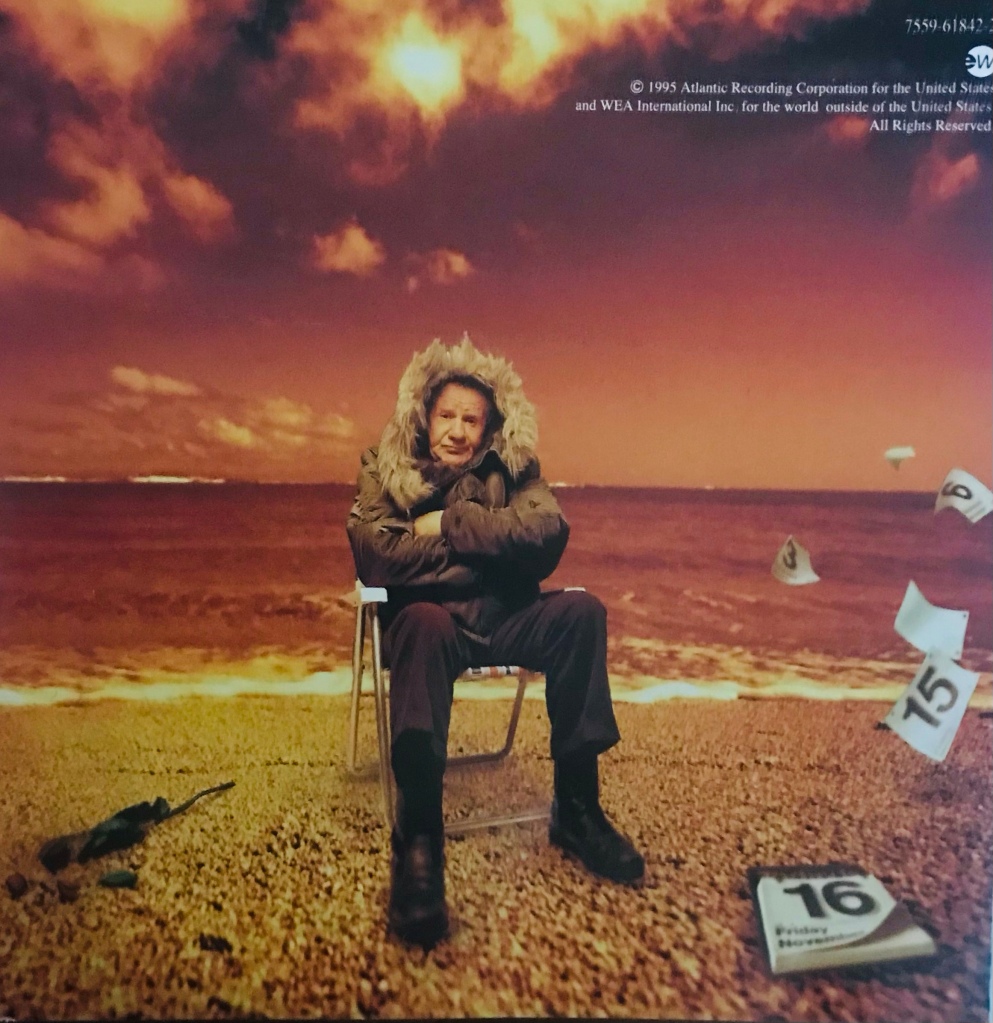
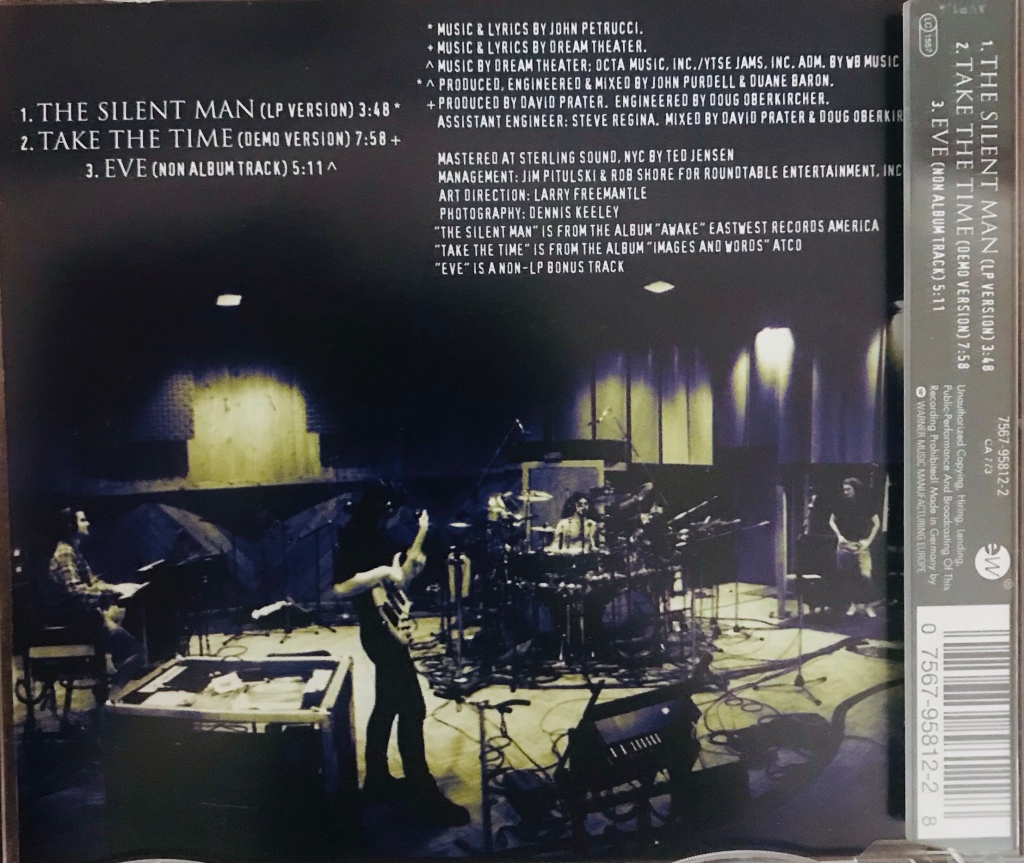
“The Silent Man” is the third EP released by Dream Theater in 1994.
The personnel for the band was Mike Portnoy – Drums, John Petrucci – Guitar, John Myung – Bass, Kevin Moore – Keyboard and James LaBrie – Vocals.
John Purdell and Duane Baron are producing the songs “Eve” and “The Silent Man”.
Eve
I actually purchased the single for the song “Eve”. At the time it was an unreleased bonus track.
It’s an instrumental, but it’s not the kind of instrumental you think with a thousand notes per minute. There is emotion and feel. Kevin Moore on the piano lays down most of the music which belongs to a soundtrack in a film.
His keys and piano riffs dominate the song and then there is Petrucci, who knows which notes to wrestle out of his fingers with his melodic leads. Especially that lead from 4.02. Press play on it.
Close you eyes and let the music take you to a peaceful time. It’s soothing, I could use it to meditate to.
Take the Time (demo)
This demo along with a few other songs, are part of “the” demo tape that got them their ATCO deal for the “Images And Words” album.
The Silent Man
It’s an acoustic song, and man can Petrucci write a complicated acoustic song with unique chord voices.