Classic Songs to Be Discovered, Derivative Works, Influenced, Music, My Stories, Unsung Heroes

1976 – Part 3.1: Kiss – Destroyer

I grew up on 80’s Kiss. Albums like “Lick It Up”, “Crazy Nights”, “Hot In The Shade” and “Creatures Of The Night” got a lot of rotation on my turntable, along with “Unmasked”.

Kiss transitioned to a Hair Metal or Pop Metal sound (by the way label reps came up with these stupid terms) because they needed to. It happened in sync with the rise of MTV and how music television got behind promoting acts of similar sounds.

And the Quiet Riot effect was real at the time.

Every artist thought it but no one said it. If Quiet Riot could get a Number 1 album, they could do it as well. So Kiss tried like many others.

So my journey into 70s Kiss started with “Double Platinum” and “Smashes, Thrashes and Hits”. All up five of the”Destroyer” tracks are spread across those albums

When I started to get more cash at my disposal, “Destroyer” was the first album I had on my list because even during the 80s when each new album came out, the reviews kept saying, “a “Destroyer” album this is not”.

Also when they started to record “Revenge” the guys mentioned it has a “Destroyer” feel to it. It was “Destroyer” all around.

In addition, my older brothers had an A4 Postcard of the “Destroyer” album cover pasted into their stamp collection book which I looked at forever and a day, honing my drawing skills trying to replicate it.

The artist Ken Kelly is a rockstar himself. Kiss, Manowar and Rainbow used his talents and even Coheed And Cambria recently used his talents for their “No World For Tomorrow” album.

And after all that exposure to “Destroyer” album, I still hadn’t heard the full album. In my head I imagined perfection.

So when I got the CD I was ready for perfection.

I pressed play, listened to it and came away with the viewpoint that there is no need to hear the other tracks that didn’t appear on the Compilation albums.

The five best songs on the album are “Detroit Rock City”, “God Of Thunder”, “Shout It Out Loud”, “Do You Love Me?” and “Beth”.

“Flaming Youth” I like, it just felt unfinished.

It wouldn’t be an Ezrin produced album unless half the album was accessible and he made sure of that.

One crucial takeaway from listening to the album and reading the credits is that even in the 70s, Paul Stanley was Kiss.

His songwriting contributions to this album are exceptional. He even penned the anthem for Gene Simmons and his “God Of Thunder” anthem.

I know this isn’t a review like I normally do, however if you want to read some killer reviews, then check out the following blogs I follow:

2Loud2OldMusic

MikeLadano

Standard
A to Z of Making It, Classic Songs to Be Discovered, Derivative Works, Influenced, Music, My Stories, Unsung Heroes

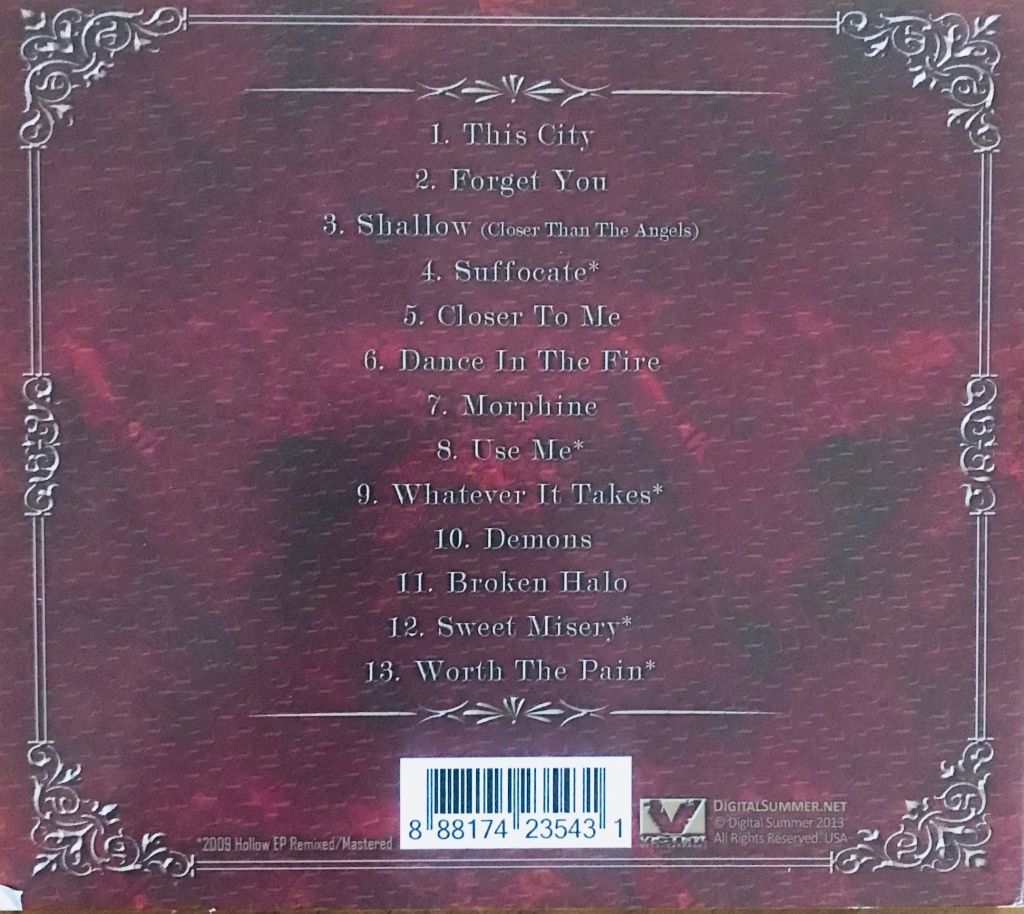
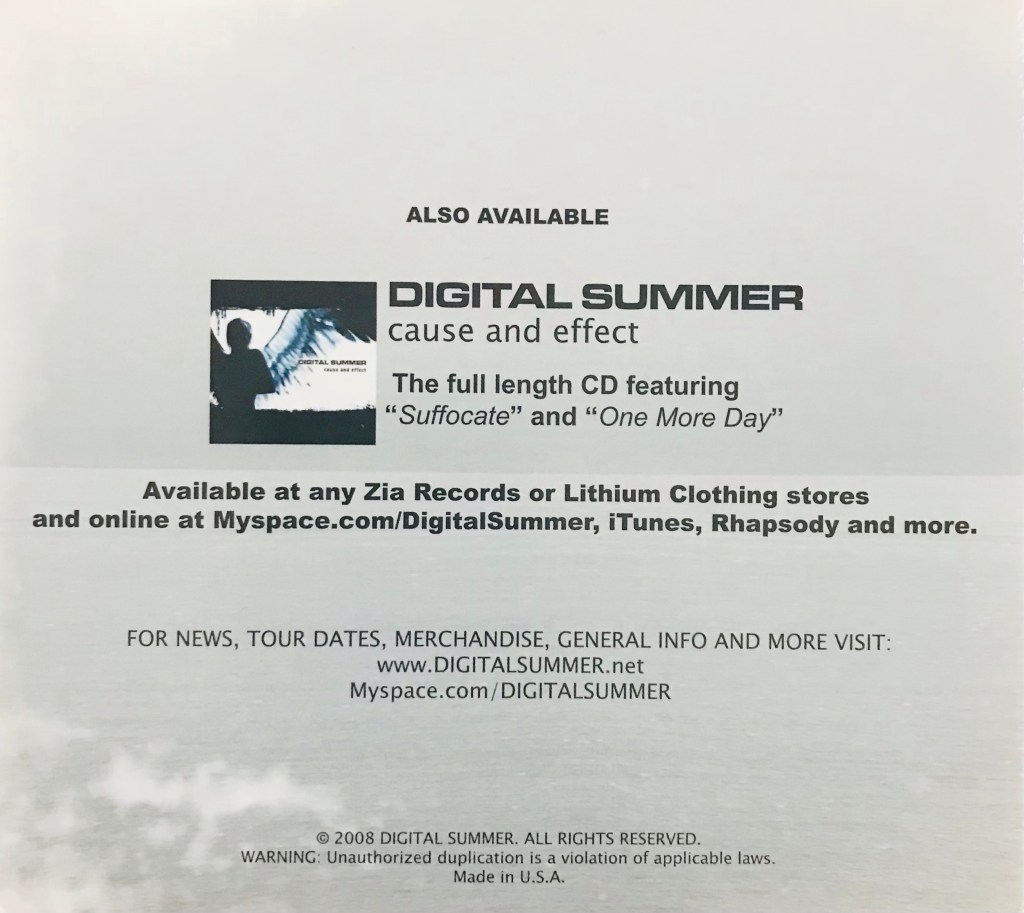
The Record Vault: Digital Summer – Cause And Effect

Sometimes a band comes across your ears that you just like.

Digital Summer is one such band. They fuse a combination of other styles, but it’s delivered in a way, which is easily assessable and executed with a high degree of technicality.

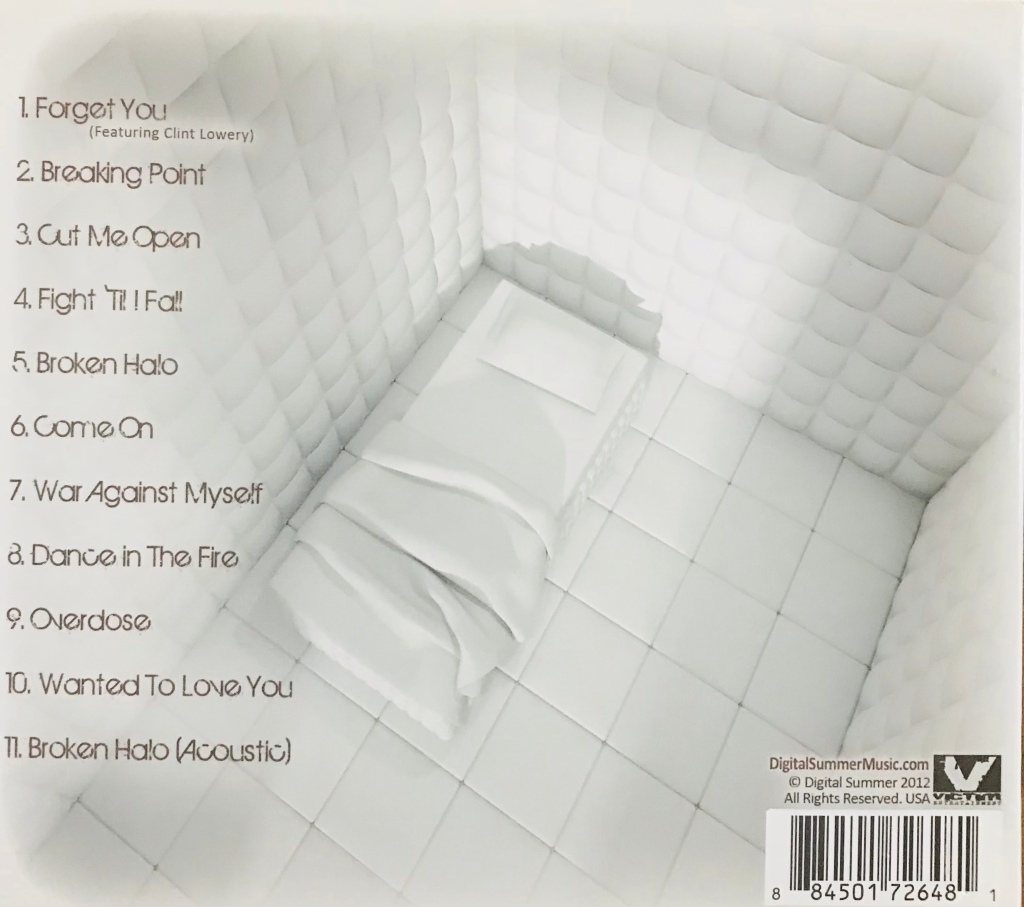
It was the “Counting The Hours” release in 2010 that got me interested. And I was on board for the fan funding campaign on the “Breaking Point” album and the reason why I got their CDs and other gear all signed.

They are from Phoenix, Arizona, formed in 2006. Up until this day, they have remained independent and unsigned, while still getting radio airplay and building a fan base. They are a great story to read about.

“Cause And Effect” came out in 2007 and the band for the album is Kyle Winterstein on vocals, Ian Winterstein and Johnmark Cenfield on Guitar, Anthony Hernandez on Bass and Chris Carlson on Drums.

I’ve seen em labeled as Post Grunge, Hard Rock, Alternative Metal, Post Rock, Nu-Metal, Modern Rock and Alternative Rock.

To me it’s all Rock And Metal.

Disconnect

A Nu Metal like intro (think Godsmack) gives way to a heavy and melodic verse (think Staind) and an AOR Chorus (think Fuel). And I love it.

There must be a way to cut the cord.

So much harder to do these days as we live in a society which thrives on connection.

I reject this reality

Social media is a one size fits all approach. You either comply with the regulations the providers have or you get booted from the service or your smart enough to have never joined in the first place.

Crash

This one reminds me so much of Staind and I like it.

Press play on this for the Chorus.

When life crashes down around you

What do we do next?

Pick ourselves up and start again or find someone to blame and go one like nothing happened.

Suffocate

Press play for the mood and feeling in the verse.

The Chorus feels like a Seether Chorus with Fuel added in for spice.

What would you do with the whole world / Rolled in your hands? / I’d like to watch it burn

The best way to sum up the darkness when your feeling down and depressed.

Now Or Never

If you like Three Days Grace and Seether, then you’ll like this.

Vocally in the verses, Kyle Winterstein comes across like Aaron Lewis.

Lyrically it’s got that 80s attitude of don’t look back to the past because if you want to change your life, the door is open but you’ll need to act fast as opportunities don’t last forever.

So don’t hesitate because it’s now or never.

Broken

Arpeggios start the song and then distorted guitars kick in.

Its aggressive and Three Days Grace/Fuel definitely cones to mind.

So break my wings and watch me fall / Cause I’m broken

A true way to describe a feeling post relationship break up.

One More Day

A clean tone strummed riff that reminds me of Incubus starts everything off.

But press play for the Chorus and allow the emotion and the mood take you away.

Just tryin to make it one more day

You can tattoo this as a slogan.

Like how Art Of Dying had the Chorus hook of “if I can get through this, I can get through anything”.

That’s life in a nutshell. Trying to make it one more day.

Chasing Tomorrow

Press play for the Chorus which brings memories of Hoobastank’s debut album which I’m a big fan of.

I cut myself / Made a brand new scar today

The scar is a reminder of a time and a place so you don’t make the same mistakes again.

Sick Inside

It feels like a Heavy Rock cut with a bit of Tool like grooves in the Intro.

And check out the super melodic Chorus which Staind would be proud off.

YOU! / Everything you do / MAKES ME SO SICK INSIDE

A lot of rage as the writer wishes they never met their partner.

This Time

A piano melody plays briefly before the guitars crash in. This song is a favorite as well as it reminds me of Breaking Benjamin.

I don’t care what it takes this time / I’ll do anything to make things right / The hardest day of my whole damn life / Was the day that I said goodbye

From the rage in the previous song to the emotion of loss in this one.

Whatever It Takes

It sounds like a Bush cut and I like it.

And this one is back to theme of doing whatever it takes to get someone out of their life.

Love And Tragedy

The song begins with a feed backing guitar with the use of an eBow to keep the notes sustaining.

Then a digital delay The Edge like progression kicks in and I’m all in.

Press play on this especially for the Chorus.

Violent cries of love and tragedy

There is a target to Kyle’s anger and you hear it.

Sxxxoxxxe

The album closer is like a soundtrack song, with a haunting piano, sampled voices and drums and a vocal line processed through a tremolo effect.

Throughout it, you hear guitars feed backing.

And then a vocal melody kicks in without any effects, repeating “just to suffocate with me”.

If you haven’t heard em, get cranking.

Standard
A to Z of Making It, Classic Songs to Be Discovered, Derivative Works, Influenced, Music, My Stories, Unsung Heroes

1986 – Part 3.7: Fastway – Trick Or Treat

“Trick or Treat” is album number 4 but for me it will always be known as the soundtrack for the “Trick or Treat” movie and my first exposure to Fastway.

It was released in November 1986, a month after the movie and it would be the final album to feature Dave King on vocals. While the previous album “Waiting On The Roar” did not have a guitar riff written by Fast Eddie Clarke, this album is credited as all songs written by Fastway and there are riffs to be heard.

Fastway is Dave King on lead vocals, “Fast” Eddie Clarke on rhythm guitar/lead guitar, Shane Carroll on second guitar, Paul Reid on bass guitar and Alan Connor on drums.

These guys appear on tracks 1 to 7. The song “Heft”(track 8) is from the debut album and bass is played by Mick Feat and drums by Jerry Shirley. “If You Could See” (track 9) is from the “All Fired Up” album, with bass being played by Charlie McCraken and drums by Jerry Shirley.

The flick had WC wry controversial story in it that was related to blues, rock and metal and it fed on the Satanic Panic sweep wing across the Bible Belt of the U.S.

Spoilers alert.

There is a rock star by the name of Sammi Curr, who sold his soul to the devil to rock and roll ala Robert Johnson.

Curr dies in a hotel fire, but is resurrected by a fan of his playing the last vinyl recording of Curr’s music backwards. The vinyl record was given to him by a DJ called Nuke, played by Gene Simmons.

The fan has been bullied at school and suddenly he is no longer bullied as the reincarnated Curr has some “Final Destination” punishment in mind for the bullies. But like all things, when it comes to your heroes and power, power corrupts and by the end of the movie, the Curr has turned against his fans and it allowed the script writers to come up with these kind of sentences.

Hysterical Survivor: [crying] Oh, God, it was–it was awful! I mean, this guy was shooting stuff out of his guitar and it was–and people were running and I don’t–and my very best friend she was…

Cop #1: All right, all right. What did the suspect look like?

Hysterical Survivor: I told you. It was Sammi.

Cop #1: Who is Sammi?

Cop #2: Sammi Curr? The rock singer?

Hysterical Survivor: [still crying] Yes. Yes.

Cop #2: Sammi Curr died last week.

Cop #1: [both cops turn away from the still-sobbing girl] Looks like we better check out the party punch.

And of course the punching bag for all of the evangelists at the time, Ozzy Osbourne makes a guest appearance as Reverend Aaron Gilstom. This would have infuriated all of those people taking him to court, for supposably having backward messages of “shoot” in “Suicide Solution” and the script was written for Ozzy to smacks down those evangelists.

Reverend Aaron Gilstom: (in response to Heavy Metal music)

Demonic beasts.

Whatever happened to the good old simple love song?

“I love you.”

There good words to use. Nowadays they have to write some sickness. It’s just absolutely sick and bizarre, and I’m going to do my upmost best to try and stop it now.

Go get em Reverend. And now to the album.

“Trick or Treat”

Three chords and tom hits like a metronome. I was immediately invested. It’s a perfect amalgamation of NWOBHM and Hard Rock.

I really like the section, in the verse, as it moves between Em and D for a few bars, and then moves to a C chord and a D chord which acts as a Pre Chorus.

Those intro chords come back in, just before “Fast” Eddie breaks out some licks.

“After Midnight”

It’s like Angus and Malcolm Young joined the band and wrote a derivative version of “You Shook Me All Night Long”.

And I like it.

“Don’t Stop the Fight”

This was my favourite cut when it came out.

The palm muted intro and build up always got me pumped. It still does today.

It reminds me of “Wild Child” from WASP, which is bizarre as Blackie Lawless did get offered the part to play Sammi Curr, but rejected it when he was told he couldn’t write the soundtrack music as Fastway was already contracted to do so.

“Stand Up”

Another head banging intro with a killer vocal melody.

How can you not like it?

Press play to hear the bass groove and lead break. The sound of the toms before it comes out of the solo, always makes me laugh. Corny, but a product of the times and I wouldn’t have it any other way.

Lyrically, it’s an anthem, with the message to stand up and be counted.

“Tear Down the Walls”

After sound effects, it goes into a brief song, with the gang chants to “tear down the walls”. It fitted the movie scene nicely.

“Get Tough”

It kicks off side 2.

After some heavily flanged and distorted guitars, that sounded spooky, for lack of a better word, the song kicks in and the message is all about standing up for yourself, because you’ve had enough of the crap that’s been thrown at you.

“Hold on to the Night”

A “Radar Love” like drum groove starts it off and it continues throughout the whole song, while the riffs and melodies change.

“Heft”

Originally released on the album “Fastway”.

I like the heaviness of the intro/verse riff.

From a modern sound, its something that Tool would do, however it also reminds me of tracks like “Mississippi Queen” and “Evie” and it fits the theme of the album perfectly.

“If You Could See”

Originally released on the album “All Fired Up” and how catchy is that acoustic guitar in the Intro?

The album did okay business in Australian and the movie was popular as well. It was hard to get a rental copy of it from the local video shops. As soon as I rented it, I had my neighbours video over and the dubbing began.

For me, there is no filler on this. It’s all killer. Classic NWOBHM with hard rock polish added to it.

Crank it, play it backwards whatever.

Standard
Classic Songs to Be Discovered, Copyright, Derivative Works, Influenced, Music, My Stories

Australian Method Series and 1986 – Part 3.5: AC/DC – Who Made Who

“Who Made Who” is like a Greatest Hits album released as a soundtrack album in 1986, for the Stephen King film “Maximum Overdrive”. A forgettable movie.

The funny thing is that the next Greatest Hits slab would come out with another movie, this one a lot better and having a larger social and cultural impact.

Yep, the multi- billion franchise known as “Iron Man” sent AC/DC into the stratosphere. Not that they needed it.

Both album packages are excellent entry points for people who didn’t own or know about AC/DC.

If this was your first exposure, there would be a high chance that you would go out and buy/access some of the back catalogue.

And the song “Who Made Who” introduced Angus Young the shredder. His guitar work here is at a Shrapnel level.

Who Made Who

Drums and bass from Simon Phillips and Cliff Williams in a stock 4/4 time. I’m already invested.

Malcolm kicks in with some power chords outlining a blues chord progression as Brian Johnson fires in with his throaty vocal melody.

Angus then fired in with some fast palm muted licks which sounds like open string licks, something he’ll use to even greater success with “Thunderstruck”. But it’s all picked.

Check out the lead break. Angus breaks out some EVH like tapping.

Lyrically, it’s based around the themes from the “Maximum Overdrive” movie, where the machines come alive and begin killing people.

Like the “Terminator” movie, the tools that humans create, rise up to obliterate the humans.

You Shook Me All Night Long

From “Back In Black”.

It was re-released as a single after the massive success of “Who Made Who” which gave this song a second coming, not that it needed one.

D.T

It’s an instrumental jam which became soundtrack music.

It moves between distortion and clean tone so it could be used in multiple scenes.

Sink The Pink

From the “Fly On The Wall” album.

This song doesn’t get the love it should but goddamn it’s a great song.

The Intro reminds me of “Rock N Roll Ain’t Noise Pollution” and it has a Chorus chord progression which could be interchanged with almost every AC/DC chorus, and I like it.

At 2.50, the Intro kicks back in, with drums and bass before Angus kicks in with his bluesy lead.

Ride On

From the “Dirty Deeds Done Dirt Cheap” album and Bon Scott gets a spot with this slow blues dirge.

Hells Bells

From the “Back In Black” album.

As soon as the bells chime and the dirty arpeggio riff in Am kicks in, everything starts tingling. It doesn’t matter that I’ve heard it a lot of times. It still gets me.

Shake Your Foundations

Also from “Fly On The Wall”.

Another underrated song from an album that is seen as a disappointment.

You can’t tell me that the Intro/Verse riff isn’t classic AC/DC and a Chorus that almost mimics “You Shook Me All Night Long”.

Chase the Ace

Another instrumental jam session but a bit more aggressive than “D.T”.

Check out the drum groove in the Intro. Something that Lars Ulrich would use to great effect in “Enter Sandman”, which is also based on the “Dirty Deeds” Intro/Verse drum pattern.

For Those About to Rock (We Salute You)

From the album with the same title which came after the “Back In Black” monster.

I was hooked from the opening riff and the way Malcolm and Phil Rudd build it.

Once the slow groove kicks in, it feels that heavy that it’ll destroy everything in its path. And it did.

In Australia and the U.S, it’s 5× Platinum.

And it kept AC/DC relevant in a friendly MTV world which was starting to promote artists who looked great over the music they created.

Standard
A to Z of Making It, Classic Songs to Be Discovered, Derivative Works, Influenced, Music, My Stories, Unsung Heroes

The Record Vault: Passion, Grace And Fire featuring John McLaughlin, Al Di Meola and Paco De Lucia

“Passion, Grace & Fire” is the second album by John McLaughlin, Al Di Meola and Paco de Lucía released in 1983. The names follow the words in the album title.

Unlike their first album “Friday Night in San Francisco” which was recorded live, this album consists entirely of studio recordings with the Di Meola and McLaughlin cuts appearing on studio albums previously.

John McLaughlin plays on the centre channel and a nylon-string guitar. Al Di Meola plays on the left channel and plays a steel-string acoustic guitar. Paco de Lucia plays on the right channel and plays a nylon-string guitar.

Aspan

Written by John McLaughlin and it is also the opening song on his “Music Spoken Here” album released in 1982.

It’s impressive in the virtuoso speed at which they play the acoustic guitars.

Orient Blue Suite

Written by Al Di Meola, it’s in three parts, with each part fading out and the new one begins.

Shimmering lush sounding arpeggios begin this song, bringing an Orient and classical feel to the music.

The pentatonic lead breaks, played with intervals delivers an exotic sounding melody.

Towards the end it goes into a flamenco like section, which sounds at odds with the previous sections.

Chiquito

Written by Paco de Lucia it’s impressive in its technicality, but it’s missing a recognisable melodic motif here.

There is a “Live In Spain” version which de Lucia recorded with his group known as “The Paco De Lucia Sextet” and it’s a lot better than this version. There is a 80 second intro played on a woodwind instrument and when de Lucia comes in at the 1.23 mark, with his band it makes the different movements of the song stand out.

Sichia

Side two begins with another Paco de Lucia and like “Chiquito”, its impressive in its playing, but missing a recognisable melody in this format.

David

Written by John McLaughlin and it is also from his “Music Is Spoken” album. It’s not available on the Spotify listing of the album for some reason. Its listed but greyed out. So I went to YouTube to hear it.

The intro is haunting and beautiful at the same time, as one guitar (which I presume is McLaughlin) plays a melody while the other guitars just down strum the chord progressions.

At 1.38, it becomes aggressive with some fast machine gun acoustic lines, as it transitions into a section I call “The Fire Section”. Towards the end of the song it goes back into the Intro, which sounds contemplative.

Passion, Grace & Fire

Written by Al Di Meola, this song appeared on his “Electric Rendezvous” album, released in 1982.

There is the piece de’resistance on the album as it has the arpeggio intro riff that is recognisable and it keeps repeating throughout the song.

The section from 1.49 to 2.02 is a favourite and the riff repeats again.

Basically the skill of the players to interchange between fast melodic licks and rhythm duties is great to listen to.

The three acoustic guitars sound great and it doesn’t get boring. Stylistically it moves between Spanish/Flamenco to Classical to Gypsy to Jazz easily. If you enjoy virtuoso playing, you will love this. If you want your instrumentals to have memorable melodies, then this might be difficult to digest within the flurry of notes on offer.

Standard
Classic Songs to Be Discovered, Derivative Works, Influenced, Music, My Stories, Unsung Heroes

The Record Vault: Al Di Meola – Electric Rendezvous

In 1980, Di Meola released the double album “Spendido Hotel”. Keeping with the Miami Vice covers theme.

And then the subsequent tour was captured live and released at the start of 1982 as “Tour De Force – Live”.

Towards the end of 1982, “Electric Rendezvous” was released.

The band for the album is Al Di Meola on electric and acoustic guitars, Anthony Jackson on bass guitar, Jan Hammer on keyboards, Steve Gadd on drums and Mingo Lewis on percussion.

God Bird Change

Percussionist god Mingo Lewis is still writing a track per album. This is his contribution.

The bass and drum groove throughout the song is a favorite as there is so much energy.

And of course there is a percussion interlude.

Electric Rendezvous

The title track at almost 8 minutes long.

The Intro is essential listening, with a clean tone guitar playing fast arpeggios while a nice relaxing guitar melody plays over it.

From 1.12 it changes. More Jazz fusion and alot of chromatics over time signatures changes.

From 2.11, a bass riff begins which the distorted guitars then copy. This creates a foundation for Di Meola to solo over, but it’s brief as they groove on the riff.

At the 4 minute mark, a metal sounding riff is played which allows Di Meola and Hammer to solo one after each other.

Passion, Grace & Fire

Paco de Lucia appears and the title of this song would be used to promote the run of acoustic shows that Di Meola, de Lucia and John MacLaughlin would do.

So there’s a lot of acoustic playing, fast fingers and lush arpeggios.

Cruisin’

Written by Jan Hammer it’s got a keyboard hook that is addictive and catchy.

It rocks and perfect for doing exactly what the title says.

Black Cat Shuffle

Written by Philippe Saisse, who also plays keyboards on this, it’s a blues groove with Di Meola’s Lydian and Mixolydian soloing.

The last 60 seconds has some great hard rock soloing from Di Meola.

Ritmo de la Noche

Lounge Waltz music with a Flamenco flavor.

Then some fast shred and make to the Waltz music.

Somalia

A short 90 second instrumental. Arpeggios and an exotic guitar melody as it’s centerpiece.

Jewel Inside a Dream

A riff that reminds me of ELP and their song “From The Beginning” dominates the song.

And you have Hammer and Di Meola trading licks on the keyboard and guitar.

I’m the end it’s a different album from its predecessors but still worthy.

Standard
Classic Songs to Be Discovered, Derivative Works, Influenced, Music, My Stories, Unsung Heroes

1986 – Part 3.4: Black Sabbath – Seventh Star

I didn’t get into Black Sabbath until the mid-90’s. I knew of their existence because Ozzy and Dio did a great job promoting his Sabbath legacy.

Then Dio re-joined for “Dehumanizer” in the early 90s and I was interested to hear more Black Sabbath. So the process started.

The fact that everyone was selling their vinyl to second hand record shops definitely helped because it meant I could pick up their older stiff cheaply.

And after Grunge came out, they kept talking about the Sabbath influences in the Seatlle sounds and Sabbath’s renaissance into Mainstream superstars came when they re-joined Ozzy for a few encores on his “No More Tours” shows.

From 1983 up to when Dio rejoined, no one really cared about Tony Iommi in the same way they cared about Ozzy and Dio who had become Multi-Platinum sellers in the U.S. with their solo careers and the Sabbath/Iommi career was nowhere near those commercial highs.

So “Seventh Star” is listed as studio album number 12 for Black Sabbath and released in 1986. This version of Sabbath has Tony Iommi as the only founding member along with keyboardist Geoff Nicholls, drummer Eric Singer, bassist Dave Spitz and vocalist Glenn Hughes.

Once the album came out, Hughes didn’t last long as his addictions made him unreliable. Ray Gillen was hired to fill the vocalist spot for the tour. But even the tour didn’t last long, with a lot of shows cancelled and another restart for Iommi.

In For The Kill

A riff that reminds me of Scorpions “He’s A Woman, She’s A Man” starts off this song and I like it.

No Stranger To Love

This could have come from the Dio version of Sabbath, with its slow groove. But Glen Hughes has a very melodic, bluesy soul voice, so it was always going to come across as a commercial rock song.

Check out the solo from Iommi on this.

Turn To Stone

It’s like Richie Blackmore joined on guitars. It feels like a Deep Purple Coverdale/Hughes era cut, with a riff that reminds me of “Burn” and “Kill The King”.

Iommi delivers another killer solo on this.

Seventh Star

“Egypt (The Chains Are On)” comes to mind and I like it.

Musically, this is one of Iommi’s best.

The main riff is heavy, it sounds exotic, so metal like but it swings the way he plays it. There is a certain fluidity to it.

Danger Zone

If you want to hear one song on the album, its this. I was hooked from the harmony guitars in the Intro riff which also reminds me of Van Halen’s “Atomic Punk”.

And if that main riff doesn’t get you, the interlude/mid section would get you interested which then moves into a Bridge section.

And if the music doesn’t get ya, then the voice of Hughes will.

Heart Like A Wheel

When I hear a blues groove like the one that starts of this song, I think of “The Jack” from AC/DC.

But that blues groove is generic and overused. Remember Alannha Myles and her song “Black Velvet”. Well, it’s the same groove and it went to number 1.

These kind of songs are perfect vehicles for Hughes and his voice.

Angry Heart

This is a great riff, which reminds me of “Wishing Well” from Free and Hughes has so much fun with the vocals.

In Memory

An acoustic riff, with lightly distorted guitars start off this power ballad. It’s short and a strange end to the album.

As a classic Heavy Metal album like “Love At First Sting”, “Balls To The Wall” and “Screaming For Vengeance” it works. Hell it’s probably the best Rainbow album that Richie Blackmore didn’t write.

Compared to Sabbath’s downtuned 70s output, it’s very different. But this was the 80s and this album is a true product of its time.

Standard
Classic Songs to Be Discovered, Derivative Works, Influenced, Music, My Stories, Unsung Heroes

The Record Vault: Al Di Meola – Casino

Its album number 3 for Al Di Meola, released in 1978.

This time around its more of a band with Al Di Meola on all things guitar related, Barry Miles on keyboards, Anthony Jackson on bass, Steve Gadd on drums, Mingo Lewis with Eddie Colon on percussion.

While the first two albums had a lot of rock and metal overtones to it, this one leans more in the jazz fusion domain, in which Rock and Metal is not the dominant fusion partner as it was on the first two albums.

Egyptian Danza

An exotic riff made up of single notes begins this song. If you’ve listened to the first two albums it would be familiar, however if this was your first exposure to Di Meola it would be unusual and innovative, full of time changes, Arabic like influences and unison bass/guitar riffs.

It’s progressive and the drumming from Gadd thunders throughout the song.

Chasin’ The Voodoo

Percussionist extraordinaire Mingo Lewis is back again, with another excellent composition. He is the one that wrote “The Wizard” on the debut album and “Flight Over Rio” on the second album. From the whole album, this song is the progressive rocker and a favorite.

As expected, the song begins with percussion before a progressive bass riff kicks in. The drumming is frantic. Then the guitars kick in with chords and Di Meola’s superfast machine gun alternate picking.

There is a lot to unpack here, but my favourite section is brief, between 4.15 and 4.25.

And you’ll be pressing play on this, for the very underrated bass guitar playing.

Dark Eye Tango

A slow groovy bass line begins and when the drums come in, it’s like a wedding waltz, which Di Meola solos over appropriately.

At 1.38 it goes into a Latin/Flamenco feel, as the tempo increases and the solos while repetitive are catchy like a good Chorus.

Then at 2.57, a brief distorted guitar riff begins, which reminds me of Rush and Alex Lifeson, before it moves back to the Latin Flamenco feel, 15 seconds later.

On a sidenote, the keyboard riffs are great to play on guitar as well.

Senor Mouse

It’s a Chick Corea cover from Di Meola’s days in Return To Forever before he went solo. But he slows this one down and it doesn’t have the manic interplay of the original.

Regardless it’s still a good interpretation and it feels like the start of a movie.

Some sections are atonal and some sections are locked into a mode, with some chromatic notes being used as passing notes.

I like the bass riff at the 5 minute mark which Di Meola then goes into a flamenco like lead to complement. His palm muting technique is excellent.

Fantasia Suite For Two Guitars

It has four movements, in “Viva La Danzarina”, “Guitars of the Exotic Isle”, “Rhapsody Italia” and “Bravoto Fantasia”.

While all the ingredients are there for a flamenco sounding track, it’s more classical and Tuscany, then Spanish/Portuguese.

The section which I think is “Rhapsody Italia”, has strummed major chords with sevenths and ninths added while Di Meola throws in a fast machine gun lick here and there.

Casino

The closer. 9 plus minutes.

How good is the opening riff?

This album is a lot more experimental than the previous two albums and while “Elegant Gypsy” is the jewel in the crown, “Casino” shows a style that he would carry through from the mid 80’s and into the 90’s.

Standard
A to Z of Making It, Classic Songs to Be Discovered, Influenced, Music, My Stories, Unsung Heroes

1986 – Part 3.3: Savatage – Fight For The Rock

My journey began with “Gutter Ballet” and moved forward with “Streets: A Rock Opera” before going back to the earlier albums.

So even though “Fight For The Rock” was released in 1986, it wasn’t until the early 90’s that I heard it.

I studied WW2 in History a fair bit and the cover is instantly recognisable recreating the “Raising the Flag on Iwo Jima” photo and cancel culture today has found this recreation to be offensive or insensitive.

Who would have thought?

The band for the album is “the classic line-up” in Jon Oliva on vocals and piano, Criss Oliva (RIP) on guitars, Johnny Lee Middleton on bass and Steve Doc Wacholz on drums.

The Paul O’Neill co-writes and production credits was still an album away, so this album is produced by Stephan Galfas, who had had worked with Stryper on “To Hell With The Devil”, Meatloaf’s ignored “Dead Ringer” album and a few John Waite albums before he worked with Savatage. Post Savatage he worked on Saxon’s much maligned but a favourite to me, “Destiny” album.

The band members have voiced their displeasure with the album.

You will read the usual “record label wanted us to make it” or “pressured us to make it” phrases mentioned but if the album did well commercially, then the narrative from the band members might be very different.

For the record, I hate the power the labels had back then. They could make or break a career.

But in the end, they are in the money making business and they would do whatever it takes to make money.

If Savatage said “NO” to the record label demands, it would be career suicide. So caught between a rock and a hard place, I suppose they really had to “fight for the rock” on this one, so they could get another chance at making an album.

Musically, its Savatage as I know em. Lyrically, they are a bit different.

The Fight For The Rock

A Criss Oliva riff starts the album, rooted in the sound of heavy metal that I like.

“Warriors of the fight, you are in force tonight”, says Jon Oliva, about rock being here to stay. By 1986, it was all overused cliches.

At 2.04, it goes into a synth lick before it builds up into the solo section, which is essential listening for any guitarist.

Out On The Streets

It feels like a 70’s cut, with its acoustic guitar arpeggios and weird synth sounds.

By the time the Chorus rolls around, the major chords make it sound happy, while the lyrics are about feeling sad due to a romance falling apart.

Press play for the brief acoustic guitar melodic lick after the Chorus.

And I like the solo from Criss Oliva, it’s got blues and fast melodic legato lines with inventive phrasing.

Crying For Love

The intro with violins and fingerpicked clean tone guitars is a great listen but misleading when it comes to the song because it’s a rocker, with a classic Savatage riff from Criss Oliva in the verses.

The Chorus is Hard AOR Rock. It’s an obvious attempt.

Criss Oliva knows how to create a lead. He starts off with some fast open string pull off licks before going into his usual fast legato lines.

Day After Day

A Badfinger cover and that 70’s “Leader Of The Pack” vibe comes through.

The Edge Of Midnight

An Andrew Lloyd Webber “Phantom Of The Opera” organ begins the song, which brings in some classical elements. Lyrically it’s not the best, but musically the riffs are an amalgamation of hard rock and heavy metal.

Check out the verse riff, Skid Row would use riffs like this on two multi-platinum albums.

Hyde

There’s some good progressive metal like riffs here.

How good is it the way Jon Oliva sings “Hy-I-ide” and then Criss Oliva mimics the vocal melody the next repeat?

Lady In Disguise

A riff similar to “Wishing Well” is the centrepiece of this song. It’s almost Queen like in its musical composition.

She’s Only Rock N Roll

The main riff (which is also the verse riff) is classic Savatage, which also reminds me of Richie Blackmore’s Rainbow.

Check out the lead break.

Wishing Well

A Free cover and I think this was my first exposure to this song. The slight increase in tempo makes the track sound more metal than rock.

Musically, it’s a great song and the vocal melodies from Paul Rodgers, delivered by Jon Oliva are excellent

Red Light Paradise

It sounds like soundtrack music and for some reason, the “Cobra” movie with Stallone comes to mind.

To repeat, musically its good, lyrically it could be better but the sound is still Savatage.

Standard
A to Z of Making It, Classic Songs to Be Discovered, Derivative Works, Influenced, Music, My Stories, Unsung Heroes

Australian Method Series: Parkway Drive – Ire

My journey into the world of Parkway Drive started with “Reverence” in 2018 and backwards I went.

“Ire” came out in 2016. It’s their fifth album, but the second album I’d heard from em. It went to Number 1 on the Aussie Charts and the U.S Billboard Top Hard Rock Albums chart.

The band for the album is Winston McCall on lead vocals, Jeff Ling on lead guitar, Luke “Pig” Kilpatrick on rhythm guitar, Jia “Pie” O’Connor on bass and Ben “Gaz” Gordon on drums.

The label even invested in a vocal coach for Winston McCall to increase his melodic skills as he’s already well known for this guttural vocals.

From listening to “Reverence” first and going back to “Ire”, it’s safe to say that this album was the start of the Hard Rock and Classic Metal tunes this band fine tuned with “Reverence”.

This fusion of Nu-Metal, Thrash Metal, Classic Metal, Power Metal, Hard Rock ad Death Metal is not meant to go together and work, but it does and it works very well.

Destroyer

A repeating guitar lick starts the album. Its low, it build in intensity and it’s a lick that the crowd could sing-along with along with the “Destroy” vocal chant. But this section wouldn’t work without the rhythm and drum work. It’s thunderous and like a military march.

Once the main riff comes in, its melodic and heavy at the same time. If you grew up on a diet of hard rock, then this riff would fit the criteria.

Dying To Believe

Any song that starts with the lyric, “like dragging nails through my skin” is going to be fast and aggressive. And that’s exactly how it plays it in the blast beat intro.

Vice Grip

Sitting at 52.7 million streams on Spotify. The video clip on YouTube has 23 million views.

Another sing-along guitar riff to start the song and a Chorus you can chant along to with the “Yeah, yeah, yeah” vocals.

Musically, it’s a hard rock song and I’m picking up the guitar after I finish this post to learn it.

There is a “Rise” chant section, which reminds me of the “Die” section from “Creeping Death”.

Crushed

Religious chants give way to “tear the throat box out” vocals and riffs which are too good to not listen to regardless of your preference for vocal styles.

The section from the 40 second mark to 1.01. Press play for that, just to hear how the religious chants work with heavy music.

Or stick around from 3.26 onwards, just to hear the guitar melody under the vocals which could have come from an Iron Maiden album.

But the overall style of the track is Nu-Metal. Weird I know, but it works.

Fractures

The riffs remind me so much of the 80’s and Pantera’s first two albums.

But press play for the Chorus guitar melodies and “wooahs”.

Check out the section from 3.30 as it slows down and then builds back up. As soon as the guitar lead lets loose for the last 30 seconds of the song, someone decided to fade out the song. Nooooo.

Writings On The Wall

The drum groove is like “We Will Rock You”, so you hear McCall carrying the vocal over a bed of ominous piano notes, synths, bass and abstract guitar lines.

“Put your hands up, put your hands up, we’ll fight until we die, this ain’t ever gonna stop”, whispers McCall in true spirit of the 80’s ethos like “Stand Up And Shout”, “We’re Not Gonna Take It” and “Bang Your Head”.

Then at 2.30, the song kicks in with some metal like riffage.

At 2.55, my favourite melodic riff from the album kicks in. And the song ends with the haunting piano lines heard throughout the song.

Bottom Feeder

There are so many riffs that people will class as hair metal in this song. But it’s all Metal to me. It’s one of the heaviest tracks and catchiest.

The Sound Of Violence

The intro riff gets me to pay attention and the breakdown Chorus would work well in the live arena.

Vicious

Musically, this song has some serious hard rock cred. Even Metallica “Black” album era.

Dedicated

I feel like I’m listening to a Killswitch Engage tune on this.

Stick around for the breakdown at the end.

A Deathless Song

Acoustic guitars with a fusion of flamenco vibes and baroque start the song. But at 0.44, those iconic sing-along melodic leads kick in.

And those melodic sing-along leads are heard throughout the song, especially in the last minute outro, as they give way to the same riffs, but played with violins.

In the end it’s a “hard core hard rock” album, Somehow it makes perfect sense.

Check it out.

Standard