A to Z of Making It, Derivative Works, Influenced, Music, My Stories, Unsung Heroes

1996 – Part 5.7: Sepultura – Roots

Sepultura means grave in Portuguese. It all came to Max Cavalera when he was translating the lyrics from the song “Dancing On Your Grave” by Motorhead. It doesn’t matter where you look, Lemmy’s influence is everywhere.

I met the brothers, Max and Igor Cavalera at a Utopia Record Store Signing in Sydney. My cousin Mega is a huge fan. Mega turned up with his bashed in snare skin which the guys gladly signed and Mega also gave me a poster which they signed for me and I then gave the poster back to Mega.

Sepultura built up to this moment with their three previous releases in “Beneath The Remains” released in 1989, “Arise” released in 1991 and “Chaos A.D” released in 1993.

“Roots” is their sixth studio album released at the start of 1996. It’s also their biggest. The line-up is the classic line up as I know it. Max Cavalera is on lead vocals and he plays a 4 and 6-string guitar. Andreas Kisser is on lead guitar. Paulo Jr. is on bass guitar and Igor Cavalera is on drums and all things percussion related.

Produced by Ross Robinson, so don’t expect to hear any guitar leads as Robinson has openly stated how much he hates guitar leads.

Roots Bloody Roots

The groove metal riff is so much fun to play. There is this dissonance section in the middle which is chaotic and unsettling before the groove riff kicks in.

It carries the message to believe in yourself, be proud of your heritage and be proud of where you come from.

Attitude

There is a syncopated riff in the intro which is cool. The rest is run of the mill, Pantera like groove riffs.

The lyrics to “Attitude” were co-written by Dana Wells, Max Cavalera’s stepson, whose death (in part) led to the events which caused Max to leave the band.

Cut-Throat

“Cut Throat” is about Epic Records who gave the band no love during their previous album “Chaos A.D.” The last words in the song are “Enslavement, Pathetic, Ignorant, Corporations”.

Ratamahatta

It features David Silveria on drums and Carlinhos Brown on vocals, percussion and a lot of other unique native Brazilian instruments.

The song is a celebration of life in Brazil’s favela slums, which tells the stories of people like Coffin Joe and Lampiao, the leader of an early 1900s outlaw gang from north Brazil, whose head was put on public display after he was captured.

Breed Apart

Written by Andreas Kisser and Max Cavalera, it starts off with a military like snare which morphs into a Tool like breakdown before Tool was known to do these kind of breakdowns.

I have no idea what Max is singing, but I don’t really care as the music gets me interested to pick up the guitar.

Straighthate

There is no way you can’t listen to the start and say that doesn’t sound like Tool on the “Aenima” album, which came after.

I also hear a lot of the Nu-Metal like riffs from acts like Slipknot, Spineshank and Mudvayne on this album. Then again Korn was doing something similar as well.

Spit

The riff has a hard rock like swagger, something that bands like Buckcherry and Orgy would do in a few years’ time.

Lookaway

It features guest appearances by Korn vocalist Jonathan Davis, then-Korn drummer David Silveria, House of Pain/Limp Bizkit turntablist DJ Lethal, and Faith No More/Mr. Bungle vocalist Mike Patton. The track alone could appear on a Korn or Mr Bungle album. It’s chaotic.

Dusted

Written solely by Andreas Kisser, it’s more of that Korn and Deftones vibe.

Born Stubborn

It’s got this industrial like vibe. Like all the songs, I have no idea what Max is singing.

It features an Xavante Tribe chant which also appears on the song “Itsari”.

Jasco

An instrumental by Andreas Kisser which feels like a tribute to someone.

Itsári

An instrumental with the Xavante Tribe chants and an acoustic guitar riff that reminds me of Led Zeppelin’s “III” album.

Ambush

I like the intro on this. It reminds me of stuff that Machine Head would do. It’s “a tribute to murdered South American rain-forest activist Chico Mendes”.

Endangered Species

It addresses environmental destruction. Musically it is brutal.

Dictatorshit

It’s about the 1964 Brazilian coup d’état. It’s fast, punk like and angry.

I would say that “People = Shit” from Slipknot is similar.

Canyon Jam

A hidden track on the album. It’s a 14 minute native drum instrumental.

The album was massive in Australia, reaching number 3 on our ARIA charts and a Gold certification to go. In Austria it reached number and a Gold certification. Gold certifications followed in Canada, France, Netherlands, the U.K and the U.S.

On top of that it charted in the Top 10 in Belgium, Finland, Germany, New Zealand, Norway and Sweden.

The small subtle change from fast speed metal to groove nu-metal worked. It is the bands biggest album and the last studio album to feature founding member, main songwriter and vocalist/rhythm guitarist Max Cavalera. The offers rolled in for Max to do something on his own. Soulfly would be the answer.

Standard
Classic Songs to Be Discovered, Derivative Works, Influenced, Music, My Stories

1996 – Part 5.6: Yngwie Malmsteen – Inspiration

After battling to make a name for himself on the small Polydor label, Yngwie Malmsteen finally got the big label deal in 1992 with the release of “Fire And Ice” on Elektra. While the album did great business in the Japanese and Eastern/Northern Europe market, it failed in the U.S.

The million plus dollar advance from the label was classed as “unable to be recouped” and he was dropped from Elektra.

One door closes another one opens. A Japanese company called Pony Canyon signed Malmsteen. “The Seventh Sign” came out in 1994, achieving a Platinum certification in Japan, followed by “Magnum Opus” in 1995 which received a Gold Certification in Japan.

“Inspiration” is the ninth studio album by guitarist Yngwie Malmsteen, released on 14 October 1996.

Malmsteen was back to releasing an album a year, in order to remain relevant and in the public conversation during the hostile 90s. If he didn’t do that, obscurity was not too far away. Artists these days whinge about Spotify and how they believe that the service is making them release constant product. It’s not the service, it’s the market. The market demands constant product. It always did.

Yngwie Malmsteen on guitars/bass and Anders Johansson on drums play on every track. The rest is a cast of artists like Jeff Scott Soto, Joe Lynn Turner, Marcel Jacob and various keyboard players.

Carry On Wayward Son

Written by Kerry Livgren.

It shows the reach Kansas had, so that a kid from Sweden would consider the band as an influence.

Jeff Scott Soto is on vocals here and his Talisman buddy, Marcel Jacob is on bass. David Rosenthal is on keyboards. During this same period, Malmsteen also appeared on a Talisman release. A sort of, “scratch my back and I will scratch yours” type of agreement.

Malmsteen makes the song sound like an over-indulgent Malmsteen song with his over the top soloing on any part of the song that doesn’t have vocals.

Pictures of Home

It wouldn’t be an influence album for Malmsteen if there was no Ritchie Blackmore. Malmsteen’s poses and looks are straight from “The Look Of Blackmore”. This is the first of four Blackmore songs. Joe Lynn Turner is on vocals here, who also sang on Malmsteen’s most successful album “Odyssey”. Mats Olausson is on the keys.

The lead breaks are Malmsteen lead breaks full of legato runs and of course, sweep picking. A lot of sweep picking.

Gates of Babylon

From Rainbow and Jeff Scott Soto is on vocals here. His voice and tone is perfect for the song. David Rosenthal plays the keys here.

The song would not be out of place on a Malmsteen album. The riffs are already what Malmsteen plays and as soon as he throws in his sweep picking and fast classical legato lines, it’s basically a Malmsteen song.

Manic Depression

From Jimi Hendrix and like his idol, Malmsteen is on lead vocals. I suppose for all the shredding, Malmsteen doesn’t get credit for being a pretty crazy blues player. Vocally, he doesn’t have the swagger of Hendrix.

In the Dead of Night

From the band U.K., the song is written by Eddie Jobson and John Wetton. Mark Boals is on lead vocals here with Jens Johansson on keyboards. And for those who don’t know John Wetton, he’s appeared in King Crimson, Roxy Music, Uriah Heep, Wishbone Ash and Asia.

But the reason why this track is here is due to Allan Holdsworth being the guitarist. Holdsworth was an unknown name to me until Eddie Van Halen started mentioning him in his interviews in the mid 80’s, which led me to seek out his solo recordings.

Ty Tabor also mentioned in an interview (which can be found on the Wikipedia entry of the U.K album) that the self-titled U.K album is in his “5 Essential Guitar Albums” list, stating that he “had never heard anybody think about playing guitar the way that Holdsworth plays on that record.”

Holdsworth never got mainstream attention. Producers and label heads called his music “without direction”, however to guitarists he was like a god.

You can hear the melodic rock side of Malmsteen here with a bit of progressiveness and how songs like “You Don’t Remember” and “Judas” with the keys and guitars playing great riffs that complement each other.

The solo break groove is excellent, however Malmsteen this time is just too much on the speed, and it just doesn’t fit the groove.

Press play on this track first.

Mistreated

From the David Coverdale era of Deep Purple.

This is the third Blackmore track to appear on this.

Would Malmsteen have covered this, knowing that Coverdale wrote the main riff?

Regardless, the song is perfect for soloing and Malmsteen uses that opportunity to do just that. But if I had to pick a cover version, it is the Whitesnake version with Reb Beach soloing. That solo just hits all the right notes.

Jeff Scott Soto is on vocals here with Mats Olausson on keyboards.

On this version, press play to hear the solo that comes in at the 4.20 minute mark. Malmsteen harmonises, its bluesy like “Still Got The Blues” and I like it.

Also stick around for the ending. It’s excellent. Soto really shines here, as he adds in backing vocals that sound like Gospel vocals and while they are happening he is ad libbing his main vocal while Malmsteen is throwing every lick he knows to the Master Tape.

The Sails of Charon

Another guitar player that influenced Malmsteen heavily was Uli Jon Roth, so it’s no surprise that his most classical sounding metal song with the Scorpions is covered.

Mark Boals is on lead vocals here and does a great job on the vocals, however Malmsteen just solo’s way too much here.

Demon’s Eye

Joe Lynn Turner is on vocals here with Jens Johansson on keyboards. I like how Malmsteen included bluesy Deep Purple here and still added his classical licks with bluesy Chuck Berry’isms.

Anthem

From Rush and Mark Boals sizzles on lead vocals here.

The pace of this song screams energy and I like it. And goddamn it sounds so heavy.

Child in Time

Mark Boals does an excellent job on lead vocals again with David Rosenthal on the keys.

The keys actually take the lead here (i.e. they basically sound like Malmsteen is playing them), carrying the intro and verses. Malmsteen cranks in right when the ohh’s start.

Overall there are six main guitarists that serve as inspiration to Malmsteen. Ritchie Blackmore, Jimi Hendrix, Uli Jon Roth. Alex Lifeson, Kerry Livgren and Alan Holdsworth. Pretty cool inspirations if you ask me.

While the massive North American market still had its back turned to Malmsteen along with the U.K and parts of Western Europe, the Japanese, Scandinavian Countries and Eastern Europe markets kept sustaining him.

If you want to hear two songs from this album, press play on “In The Dead Of Night” and “Mistreated”.

Standard
Classic Songs to Be Discovered, Derivative Works, Influenced, Music, My Stories, Unsung Heroes

Australian Method Series: Airbourne – Boneshaker

The method is simple.

Listen to an AC/DC album and write songs that have the vibe from that album. It’s been “Airbourne’s” template for the first four albums, so why change it for album number five.

But on the album, I would like to add a few other Australian bands like Rose Tattoo, Screaming Jets and The Angels to that list of influences.

“Boneshaker” was released on 25 October 2019, produced by Dave Cobb which was a surprise choice, considering his big production credits involve Chris Stapleton and “The Star Is Born” soundtrack. But the band wanted to work with Cobb based on an album he did for a small obscure band called “Black Robot”. Check out their 2009 album to hear a pretty cool slab of AC/DC, Aerosmith, Bad Company and Lynyrd Skynyrd.

Airbourne is still underpinned by brothers Joel O’Keefe on Vocals/Lead Guitar and Ryan O’Keefe on drums. Justin Street is on bass and new dude Matthew Harrison is on guitar.

Boneshaker

This track wouldn’t be out of place on an early Y&T album. Maybe because they have the lyric, “Earthshaker” after “Boneshaker”.

Burnout the Nitro

It has a country twang to it, but played through a distorted amp, in sounds rock and roll.

“Racing down the highway” instantly brings back memories of “Long Way To The Top”. And that’s basically the vibe of the song, a cross between “Long Way”, “Shoot To Thrill”, “Let There Be Rock” and “Whole Lotta Rosie”. If you are going to be influenced by AC/DC, you might as well be influenced by some of their biggest songs.

This Is Our City

“This is our city, lets rock and roll”. And the live show is summed up in a simple line.

Sex To Go

Great title and perfect for the fast paced social media lives we live in. At 2 minutes and 34 seconds, it’s probably just enough time to have fast food take away sex. And how can you not go past a lyric like “all I want is your apple pie”.

In the words of Sammy Hagar in “Good Enough”, I’ll have some of that.

Backseat Boogie

“Long Way To The Top” makes another comeback. And I like it

Blood In The Water

A groovy “Whole Lotta Rosie”.

She Gives Me Hell

Being on the wrong side of a toxic relationship sets up the lyrical foundation over a musical influence from “Highway To Hell”.

Switchblade Angel

The speed rock and roll is back and I like it.

Weapon Of War

The slow blues grit and groove is back for a song about war vets.

Rock ‘n’ Roll For Life

The fast “Let There Be Rock” vibe is back.

Rock and Roll along with all things Metal is a life style. Once you are in. you are always in. You might dabble in other genres but you’ll always come back. Because Rock N Roll is for life.

After 30 minutes and 36 seconds the album is over like fast food. Music on the go. Concise and straight to the point, there is no confusion as to what Airbourne is. A highly efficient and lean rock and roll band.

With no ballads.

Standard
Classic Songs to Be Discovered, Derivative Works, Influenced, Music, Unsung Heroes

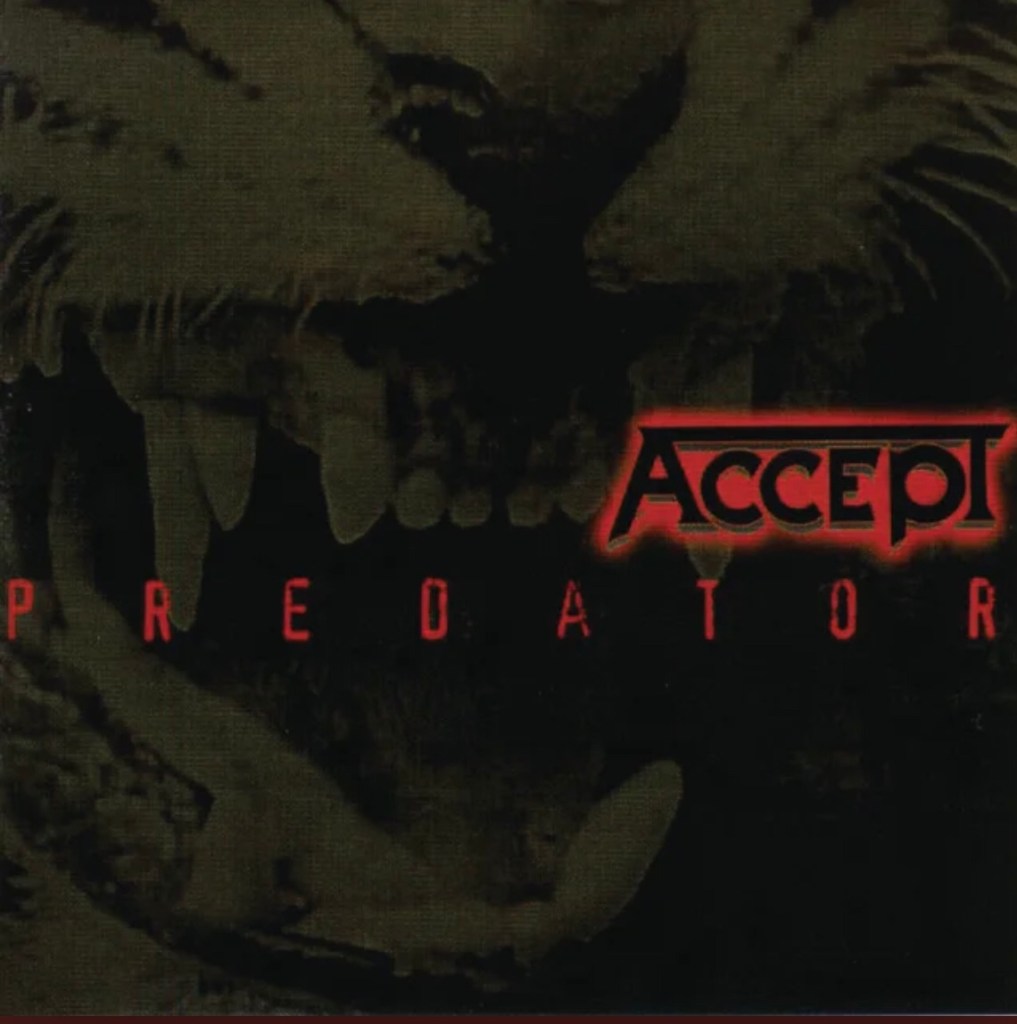
1996 – Part 5.4: Accept – Predator

Accept in the 90’s didn’t exist for me. It wasn’t until 2008/09 that I started to re-listen to Accept and check out their 90’s output.

But the big problem with anything to do with the 90’s was confusion. The 90’s just kept striking out 80’s bands because they felt lost and didn’t know how to fit in. Gone was the label support and the people left around just didn’t know what to do.

If you don’t believe me, press play on Dio’s “Angry Machines” or Dokken’s “Shadowlife” or “Generation Swine” by Motley Crue. Confused. Yep, so was Ronnie and Don and Nikki/Tommy.

And as a fan of hard rock and heavy metal music, I was even more confused why these popular 80s bands couldn’t keep on releasing great albums in the 90’s.

On this album, Accept is mainly staying true to their roots. They have incorporated some 90’s groove and sounds and a little bit of 70’s Scorpions, however their sound is still AC/DC meets Judas Priest.

I read some of the reviews of this album recently and man, people don’t like it. I can hear why people would hate this album as there are musical elements on this album that can be classed as “what the” moments. But this album shows a band trying to survive in a hostile musical climate towards them. And it didn’t matter to me what new musical element they brought in, as it still sounds like Accept and it still sounds like Metal.

So “Predator” is studio album 11, released in 1996. It was produced by Michael Wagener and it is their last recording with singer Udo Dirkschneider.

Joining Udo here is the great Wolf Hoffmann on guitars, Peter Baltes on bass and drums are played by Michael Cartellone, fresh from his Damn Yankees gig.

Hard Attack

This is Accept doing AC/DC and I like it. A lot.

Crossroads

A head banging riff like “Balls To The Wall” underpins this song.

Baltes and Udo do lead vocals on this and the vocals of Baltes just don’t work for me here.

There is also this country like open sting lick played between the Chorus and Verse which I like.

Making Me Scream

This song has a 90’s alternative metal groove as the rhythm, however the exotic lead over it makes it classic Accept.

You could almost say it’s like the embryo of “Black Label Society”. The heaviness also reminds me of the self-titled Motley Crue album.

Diggin’ in the Dirt

Remember that song “Three Little Pigs”, well it reminds me of that. It has a similar vibe.

Lay It Down

The music on this song is excellent.

Baltes does the lead vocals here and he does a great job.

The Chorus is a rocker and anthemic.

There is no way that Zakk Wylde can say he never heard this song, because it so Black Label Society and that band was a few years away, however Zakk had created his embryonic incarnation with “Pride And Glory”.

If this song doesn’t make you bang your head, check for a pulse.

It Ain’t Over Yet

Baltes does the lead vocals again on this sleazy rocker.

Predator

I’m not a fan of this song at all.

Crucified

Its speed metal, old school and I love it. Just press play to hear the wah riff between 1.08 and 1.12. It’s only four seconds but its excellent.

And the lead break is classic Hoffmann. Press play on that as well.

Take Out the Crime

The love for AC/DC is back here.

Don’t Give a Damn

And you get to hear AC/DC again. And I like it.

Run Through the Night

The intro riff reminds me of “Aint Talking Bout Love” from Van Halen. Press play to hear how a derivative riff is created.

Primitive

The drums sound like they belong on a Gloria Estefan or Janet Jackson album. The song “Black Cat” comes to mind. Baltes does the lead vocals here, but the song is a skip for me. A terrible way to end the album.

“Predator” was the last Accept album for 14-years. Udo would never return.

But I feel they are bigger now than they’ve ever been. “Blood Of The Nations” came first in 2010 and each release afterwards has built on their return.

Mark Tornillo on vocals is excellent and a perfect song writing partner for Wolf Hoffmann. That’s not to say that others didn’t contribute. Bassist Peter Baltes was also a song writing partner while he was in the band and new bassist Martin Motnik contributes along with long time lyricist Deaffy, otherwise known as Gaby Hoffmann.

While hated, do yourself a favour and check out songs like “Hard Attack”, “Crossroads”, “Lay it Down” and “Crucified”. From there you can make up your own mind.

Standard
Classic Songs to Be Discovered, Derivative Works, Influenced, Music, My Stories, Unsung Heroes

1996 – Part 5.3: Michael Schenker Group – Written In The Sand

Every label head said Schenker was finished, washed up.

It’s 1991 and a supergroup called Contraband drop their debut album. And it keeps on dropping because it is so bad. The nice advance payment that Schenker got to be involved in the project didn’t do much to enhance or move forward his career. In fact his manager and ex-partner took most of it.

But he stays alive, because he’s a lifer. When you have been in the game for this long, the only thing you know how to do is play. And play he did. He jumped on board the unplugged bandwagon and released an album. He called up Robin McAuley and released another McAuley Schenker studio album.

Then he re-unites with Phil Mogg and they start writing. The songs got the labels interested and the “Walk On Water” album from UFO, released in 1995 surprised everyone. Suddenly Schenker was back on the agenda and he’s getting money thrown at him again. He had a lot of bad people in his life at this point in time, from managers and partners, so it was always going to happen that MSG would return.

I didn’t think it would be that quick. Because a year after “Walk On Water”, “Written In The Sand” is released, the eighth full-length studio album that falls under the MSG brand.

The only thing consistent with all of these MSG albums is the name and Michael Schenker himself. The other members are in a constant flux. For this album, Schenker is joined by Leif Sundin on vocals, Shane Gaalaas on drums, and Barry Sparks on bass. All the music is by Michael Schenker and all lyrics by Leif Sundin.

Ron Nevison is doing all the Producing, Engineering and Mixing.

It’s not on Spotify which irks me, but YouTube has it.

Brave New World

It’s got groove, swing and lot of rock and roll. And the first thing that grabs my attention are the vocals from Leif Sundin. His voice is very melodic, fluid and unique. I would say he’s up there as one of the best singers in MSG.

The lead breaks are impressive, with Schenker even soloing over a harmony solo which acts as a rhythm guitar.

Cry No More

Press play to hear the intro. Its heavy and a lot of acts who went alternative to survive weren’t doing riffs like this during this period. The song could have been on a Deep Purple album and it wouldn’t be out pf place.

I Believe

It’s a ballad that turns into a rocker. It’s not original, yet it is an easy listen.

Back to Life

No one was writing riffs like this in 1996. Its old school and I like it. Barry Sparks is massive on the bass here as well.

Written in the Sand

This track is essential MSG. It has a sleazy bluesy riff and a lot of melody. And Schenker delivers a tasty guitar-solo in the middle and for the outro.

Essenz

It wouldn’t be an MSG album without an instrumental. This one has an “Eruption” vibe before moving into a fast blues. Think of “Hot For Teacher” when it picks up.

Love Never Dies

Imagine “Finish What Ya Started” merging with the melodic rock genre. Well this is the outcome. Another close favourite with a killer Schenker lead break.

I Will Be There

Press play to hear the verse riff. Schenker makes it sound technical, yet it rocks so fluidly.

Take Me Through the Night

Its classic heavy metal while the singing is happening and the solo section is barroom blues brawling.

It wouldn’t be out of place on any metal album from the early 80’s.

Down the Drain

The album closer showcases how Schenker decorates in a creative way. You cannot ignore how good it is.

While Schenker’s North American career had stalled, he was still a big draw in Japan and certain European markets. And just like that, the whole “Contraband” affair was forgotten. That is if you heard the album. Which wasn’t easy to do.

Crank it.

Standard
Derivative Works, Influenced, Music, My Stories, Unsung Heroes

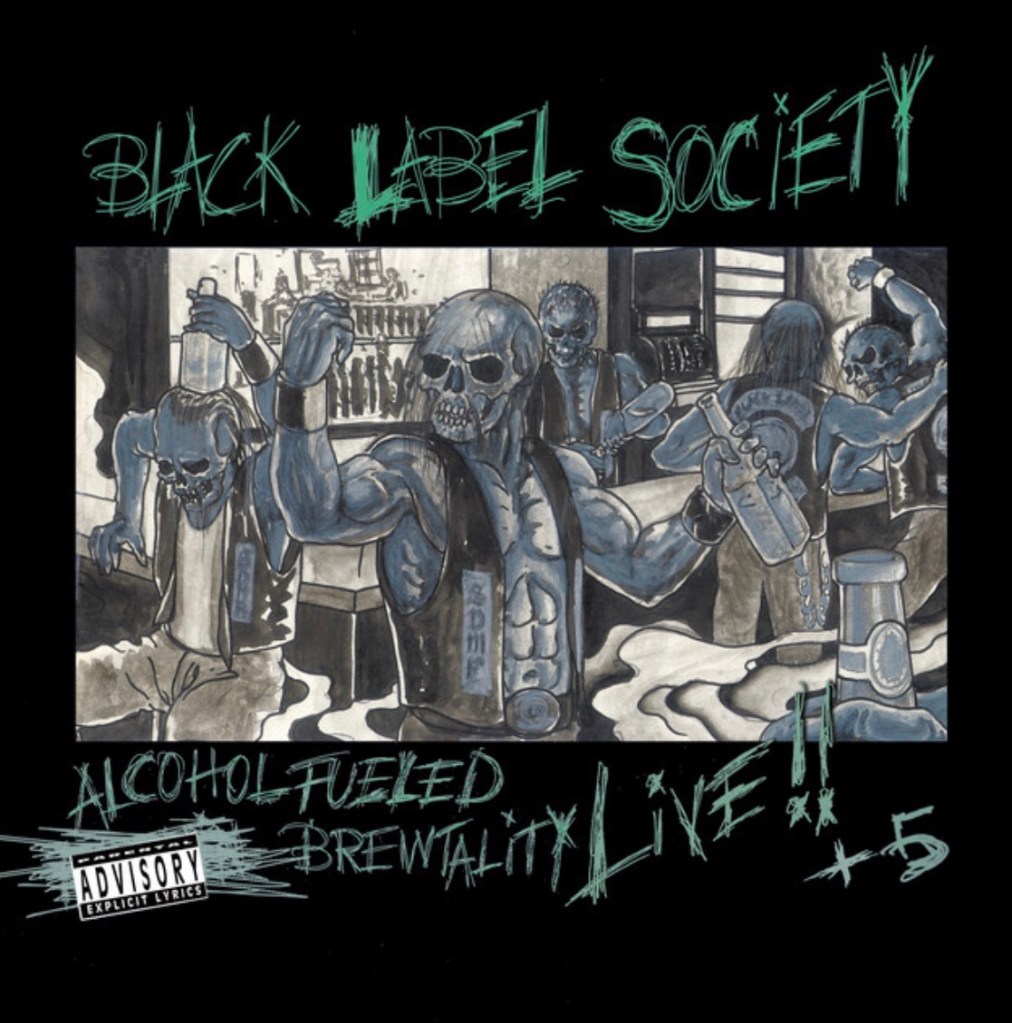
2001 – Part 5.7: Black Label Society – Alcohol Fueled Brewtality

Did Zakk Wylde have enough material for a live Black Label Society album so early in its career. Well, yes if you include his Ozzy and Pride and Glory output with Black Label Society and no, if you just include his Black Label Society output.

“Alcohol Fueled Brewtality Live!! +5” was recorded on October 28, 2000, at The Troubadour in West Hollywood and released in January, 2001.

Low Down

You get some rowdy yells of “Zakk”, “Zakk” and an air raid siren starts ringing.

Then the band crashes in with a trademark Zakk riff, downtuned, syncopated and loaded with pinch harmonics and single note melodic motifs. And Zakk sounds great live, his voice made up of an Ozzy influence and his brewtal lifestyle.

13 Years of Grief

I didn’t even know they went into this song as there was no stop/start in the performance. It was all fluid.

Stronger Than Death

Zakk was doing Pantera better than what Pantera was doing at this point in time.

These kind of titles make me laugh. “Killed By Death” from Motorhead is another title that falls in this category.

There is this break down riff towards the end (which is changed up a bit from the main intro riff), which is head banging material.

All for You

Great riffs in this song.

Super Terrorizer

After the heavy intro, there is a brief pause and Zakk screams “Limp Bizkit sucks dick”, the crowd cheers and into the verse they go, which reminds me of “Bleed For Me” from “1919: Eternal” which came out a few years later.

And there is some fine shredding here in the solo. So press play to hear it.

Phoney Smiles & Fake Hellos

Yep I’ve come across some people in my life that sum up the song title.

Some more great riffage. It’s like Zakk took the best of “No More Tears” and just amalgamated it with Iommi/Dimebag and what you have is Black Label Society.

Lost My Better Half

Zakk is going down low here with a Drop A tuning: low to high – A,A,D,G,B,e.

Just think about it. The low E is not D or C# or B but A. God damn.

Bored to Tears

More Zakk riffs to play along to that won’t leave you bored but it’s sounding same same.

A.N.D.R.O.T.A.Z.

It’s the guitar solo moment of the gig.

Born to Booze

The intro riff on this is excellent. It deserves more attention.

World of Trouble

And without a breath or break, it moves straight into “World Of Trouble”.

No More Tears

He made it sound like a Pantera track.

The Beginning… at Last

And it’s more of the same, with another fast heavy rocker to finish the gig.

The next songs are all studio cuts. Zakk Wyle plays everything on these except the drums, which are handled by drummer Craig Nunenmacher.

Heart of Gold

A Neil Young cover done right.

Snowblind

The mighty Black Sabbath gets a Zakk cover. And I like it.

Like a Bird

Zakk can pen a great acoustic song. This one is classic Zakk. Almost”Blue On Black” and “Days Of The New” and “Changes” from Sabbath.

Blood In The Well

More of the same infectious acoustic rock.

The Beginning… at Last

An acoustic version of this heavy rocker. Think “Fade Away” from Pride And Glory but acoustics.

Overall, the the last five studio cuts are must saves for any Zakk fan and the live recording is a snapshot of a time when Zakk was doing Pantera and Corrosion Of Conformity better than those bands.

Standard
Classic Songs to Be Discovered, Derivative Works, Influenced, Music, Unsung Heroes

Australian Method Series: Andrew Stockdale – Keep Moving

Released on 7 June 2013 and recorded in various studios in Byron Bay, New South Wales. Coming from the Steel City of Wollongong, Byron Bay is a 9 hour drive up the coast.

The Producer is Andrew Stockdale.

It was written with the idea that it would be the third Wolfmother album, however the group was already in disarray after Stockdale fired the original band before the 2nd album, and any musicians that joined the fold afterwards were on Stockdale’s payroll, not the labels.

The album process started in 2010 with updates on social media and then it went silent. By February 2012, we knew that rhythm guitarist Aidan Nemeth and drummer Will Rockwell-Scott had left the band. Universal was also not really interested in what was been delivered at that point in time.

Remaining members Stockdale and bassist Ian Peres called in Vin Steele (rhythm guitar), Elliott Hammond (keyboards, percussion) and Hamish Rosser (drums) to complete the band line-up. Universal still wasn’t interested but Stockdale planned to re-record and self-release the album as a Wolfmother album.

By March 2013, front man Andrew Stockdale announced that he would be releasing the album under his own name.

The Personnel for the album is Andrew Stockdale on vocals and guitar, Ian Peres on all things bass related plus other instruments, with drums shared by Elliot Hammond, Hamish Rosser, Will Rockwell-Scott and Dave Atkins. Additional guitar tracks were recorded by Vin Steele and Alex “Rudy” Markwell.

All tracks are written by Andrew Stockdale, except where noted.

Long Way to Go

It could be a Bachman Turner Overdrive tune. It could a Rolling Stones tune as there is a riff in the song heavily inspired by “Can’t You Hear Me Knocking”.

And there is a solo here, brief but bluesy.

Keep Moving

Lenny Kravitz is going to come your way. You know what I mean. And I like it, with other influences from Hawkwind and a riff from the fingertips of Paul Kossoff (RIP).

Within the first two songs, Stockdale is making a statement. He is moving on from the past, but he has a long way to go to make the break.

Vicarious

The fuzzed out bass sets the groove. The drums thunder along with it. Its subdued and Stockdale croons over the verses, before lifting in the Chorus.

“You’re living vicariously / Tell me what’s it’s like to be me?”

Three out of three so far.

Year of the Dragon

It’s classic Wolfmother in riff, with a Bill Ward style swinging beat and a feel that gets the foot tapping and the head banging.

Somebody’s Calling

Stockdale co-wrote this with multi-instrumentalist Elliott Hammond who plays drums, electric piano and harmonica on this album.

Hand clapping Rock and Roll that reminds me of The Doors, Sweet, The Easybeats, Free and all of those great bands. And at 1.50, it goes into a half time feel, which I like and it picks up again at 2.16.

Meridian

Stockdale co-wrote this with bassist Ian Peres. My favourite song on the album and by far the heaviest song Stockdale has committed to release.

The Intro reminds me of Black Sabbath at their heaviest and the verse riff reminds me of Led Zeppelin at their heaviest. A pure classic old school heavy metal cut and although released on a Stockdale solo album, it is a worthy Wolfmother cut.

Ghetto

Another foot stomping groove. And it gets repetitive but hey, the reason why I listen to Andrew Stockdale is because he can jam on a familiar repetitive riff for ages.

Let It Go

“Symptom Of The Universe” has a love child with “Achilles Last Stand”. And I like it.

And if the album ended here, it would have been 8 from 8.

But it continued.

Let Somebody Love You

It’s got this rhythm and blues feel, maybe a little bit of Aerosmith.

Standing on the Corner

The “hit the road jack” vibe is prominent but more countryish than blues.

Country

The title says it all, a ballad.

Black Swan

Yeah, it’s a skip for me.

Everyday Drone

Hey Mr’s Robinson. Can Andrew Stockdale be influenced by you?

Yes, he can.

It Occurred To Me

The fuzzed out psychedelic riffs are back to close out the album. It’s got groove and sleaze, but coming off the acoustic like tracks, it doesn’t flow.

The Foo Fighters released a double album that had rockers and acoustic stuff on each disc. Stockdale suffers here because he released two distinct albums as one.

But for the first 8 tracks, press play on em.

Standard
Classic Songs to Be Discovered, Derivative Works, Influenced, Music, My Stories, Unsung Heroes

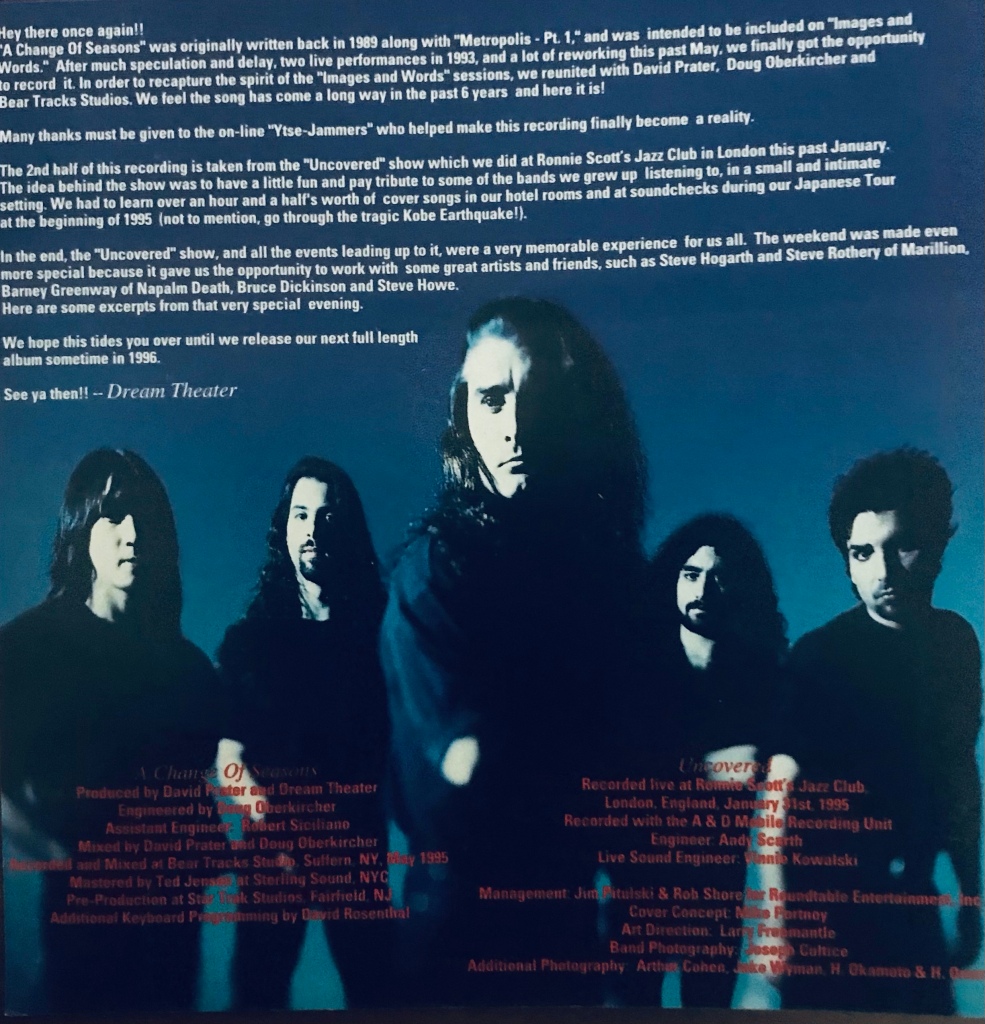
The Record Vault: Dream Theater – A Change Of Seasons (EP)

Mike Portnoy was not happy when the song “A Change of Seasons” was pulled from being recorded in the studio for the “Images And Words” album.

So Portnoy kept asking Derek Oliver to provide funding so the band could record it. Portnoy tried to include it with the “Awake” album and again, Oliver said “no”.

And that’s when the fans stepped in. Dream Theater fans started to connect online via the Ytsejam Mailing List and suddenly, a petition was created to convince the label to give the go ahead for the band to record the song.

Yep, Dream Theater was one of those bands to have a direct to fan connection via their fan club and message boards in the early days of the Internet. Mike Portnoy was key here, as a fan of Marillion, who was also another band which kept engaging with their fans via their fan clubs and much later, Marillion were one of the earlier bands to get fans to fund an album before it became a thing.

At 23 minutes, it was their longest song at that point in time, but the way it is written and constructed, the seven parts of the song, can be listened to individually as separate tracks, if you wanted to splice the track. Lyrics are written by Mike Portnoy.

But.

If the band wanted to record this track in the studio, Derek Oliver said the track must be produced by Dave Prater. As described in the book “Lifting Shadows” by Rich Wilson, Oliver believed that Prater really understood what Dream Theater was about and when Prater zeroed in to the bands weakness, the band couldn’t hack it, hence the animosity. Prater was the producer for the “I&W” album and he was having serious run ins with Mike Portnoy over triggered drum sounds and with Kevin Moore over his reluctance to do anything that the Producer asked.

While the band disagreed with the Prater suggestion, they relented. as the only way to get funding was to do it the label way. Since Prater was told to not use triggers on the drums, it meant Portnoy wouldn’t be an adversary anymore and his main adversary during “I&W”, Kevin Moore was not in the band anymore. But Prater and James LaBrie didn’t connect this time around and they started to argue. But, in the end, LaBrie’s vocal performance on the track is excellent, so all the pushing and yelling, ended up in a fantastic vocal take.

The EP was released on September 19, 1995, through East West Records.

Apart from the title track, it has a collection of live cover songs performed at a fan club concert on January 31, 1995 at Ronnie Scott’s Jazz Club in London, England. It’s also their first recording with Derek Sherinian on keyboards.

I know what most people are thinking,

23 minutes of a million notes a minute over complex time signatures. If you are thinking that, you are mistaken. The sections are all songs within a song and one thing that producer Dave Prater has going for him was his questioning of why they want to overplay certain parts.

Like when he said to John Petrucci (as mentioned in the book “Lifting Shadows”), “why are you trying to impress Steve Vai” with those fast technical licks as your first improvised take of the lead was way better than the stuff you worked out days later.

I. The Crimson Sunrise (instrumental)

The song begins and ends with an acoustic guitar. A seven string acoustic guitar with the low B and while I am critical of the 7-strings on fast picked stuff, I really like em on groove orientated stuff, and this is what this song is. A Groove Heavy Rock beast with progressive elements.

As soon as I heard the first notes of the intro acoustic riff I was hooked.

Did they try and recreate “Pull Me Under” with this whole intro piece?

Maybe.

Because there is melody, power and aggression here in the acoustics and when the distortion kicks in, you definitely feel it in your bones.

The first 3 minutes is essential listening. All instrumental but never boring.

II. Innocence

It begins at the 3.50 mark.

And how good is that arena rock chorus, that begins with “Innocence caressing me / I never felt so young before / There was much life in me / Still I longed to search for more” and when it repeats the second time, it’s worded a bit different. “Ignorance surrounding me / I’ve never been so filled with fear / All my life’s been drained from me / The end is drawing near.

III. Carpe Diem

It begins at the 6.54 mark with the start of the acoustic guitar arpeggios, almost classical. Portnoy is now referencing the last moments he had with his mother before she left to catch a plane which crashed.

The last few lyrical lines, “preparing for her flight / I held with all my might / fearing my deepest fright / she walked into the night / she turned for one last look / she looked me in the eye / I said “I love you, / goodbye”.

IV. The Darkest of Winters (instrumental)

I’m pretty sure this section kicks in at the 9.47 mark. It’s got metal and a jazz fusion like lead from Petrucci. There are a lot of elements from “I&W” here especially from the songs “Metropolis” and “Take The Time”. The riff at 11.50 would have been a foundation for a song for any other band. But from Dream Theater, it’s just a riff in a 23 minute song.

At 12.54, Petrucci starts the melodic lead that leads into “Another World”.

V. Another World

It kicks in at 13.03. It’s the big power ballad part of the song with LaBrie delivering one of his best vocals and Petrucci on the lead at 15.39 is perfect with his phrasing, delivering big bends and vibrato lines with short bursts of alternate picking.

VI. The Inevitable Summer (instrumental)

It starts at the 16.58 mark. Myung plays this bass groove which allows Petrucci to bring out the Lydian and Mixolydian scales. This section reminds me of the solo section in “Under A Glass Moon” from “I&W”. Even Sherinian gets a solo moment.

VII. The Crimson Sunset

The final section. It starts at the 20.12 section with a melodic lead that should have been harmonised, Maiden style.

“I’m much wiser now a lifetime of memories run through my head”.

Then there is a complete tempo and feel change for the final verse and the intro acoustic guitar riff appears to bookend a masterpiece.

And while everyone purchased this EP for the original song, the live recordings also deserve a mention.

“Funeral for a Friend/Love Lies Bleeding” (Elton John cover)

I didn’t know about this songs until I heard them here. Written by Bernie Taupin and Elton John. At 10:46, the song was originally recorded by Elton John as the opener on the “Goodbye Yellow Brick Road” album from 1973, which I then purchased after hearing this version.

And it’s even longer on the Elton John version at 11.09, which came as a surprise to me, as Elton John’s 80’s hits are all within the 4 minute range of commercial radio. I can definitely hear how this song influenced Jim Steinman and “Bat Out Of Hell”.

Who said that cover songs take away from the original?

“Perfect Strangers” (Deep Purple cover)

Written by Ian Gillan, Ritchie Blackmore and Roger Glover. It’s the title track from their 80’s comeback album in 1984. This version is very faithful to the original version, and guess what, I went out and purchased this Deep Purple album based on this cover.

“The Rover” / “Achilles Last Stand” / “The Song Remains the Same” (Led Zeppelin cover)

The songs used here for the medley are written by Robert Plan and Jimmy Page. Dream Theater took the best bits of these songs and made a 7.30 minute track that is worthy.

“The Rover” is a song from the “Physical Graffiti” album, with a good bluesy groove which is played to lead into “Achilles Last Stand” which is from the “Presence” album. Here we get most of the singing section of the song, the interludes and that progressive like riff which is played during the solo. Finally, the song is rounded out with some sections from “The Song Remains The Same” from the “Houses Of The Holy” album.

LaBrie proves that you can still pay homage to Robert Plant without sounding like him (remember Lenny Wolf) and Petrucci must have made a deal with Aliester Crowley as he is basically Jimmy Page.

“The Big Medley”

The last song. A mash up of songs from a diverse list of artists that clocks in at around 10 minutes.

It starts off with “In the Flesh?” a Pink Floyd cover.

At the 2.30 minute mark, the awesome riffage of “Carry On Wayward Son” from Kansas kicks in.

“Bohemian Rhapsody” from Queen kicks in 4.35 that whole hard rock section after the operatic vocals. Petrucci then goes into the lead break.

“Lovin’, Touchin’, Squeezin'” from Journey kicks in at 6.00. It shouldn’t work here, but it does. Its 12/8 bar room boogie riff works perfectly after “Bohemian Rhapsody”. LaBrie croons as good as Steve Perry and what else can be said about Petrucci who can move between Jimmy Page, Richie Blackmore, Dave Gilmour, Brian May, Kerry Livgren and Neal Schon so effortlessly. And then he covers Steve Morse and Steve Hackett easily.

“Cruise Control” from Dixie Dregs kicks in at 8.11. This music was new to me back then.

“Turn It On Again” (Genesis cover)”

This part kicks in at 9.14. The riff is immediately memorable, yet familiar as I feel that it influenced some sections on “Innocence Faded” from the “Awake” album.

By the end of the medley, I was out and about seeking albums from Genesis, Dixie Dregs, Journey. I already had the Queen and Kansas albums that had those songs.

If you haven’t heard this EP (which by the way is an hour long), press play on it.

Standard
Classic Songs to Be Discovered, Derivative Works, Influenced, Music, My Stories, Unsung Heroes

2001 – Part 5.4: Stabbing Westward – Stabbing Westward

My favourite album from Stabbing Westward. It was my first proper listening experience from them. I purchased the single, “So Far Away” and then downloaded a copy of the album before purchasing it.

And it’s not on Spotify which pisses me off. But of course YouTube has all the music.

What’s the deal with the cover?

If your making a statement about a self-titled album, is that the cover you want to advertise it?

After this album, I went back to listen to their earlier stuff via various Cyberlockers, Limewire, AudioGalaxy sites.

They needed to press the reset switch on their career.

How much more darker do they want to go?

The first album was called “Ungod,” the second was called “Whither, Blister, Burn and Peel” and the third was called “Darkest Days.” And for a name like “Stabbing Westward” I didn’t expect to hear a pop rock album.

They had three albums with Sony and two of em achieved a Gold certification from the RIAA. But they signed with an independent label after that in Koch Records.

Their new manager wanted the band to create an album with a heavy pop influence. Christopher Hall, Walter Flakus, and Mark Eliopulos fought against this decision. Somehow the manager had more power within the band than the actual band members and guitarist Mark Eliopulos was fired by the manager who brought in Derrek Hawkins as both a studio and live musician, as well as a new producer, Ed Buller.

For this album, Stabbing Westward is Christopher Hall – vocals, Derrek Hawkins – guitar, Jim Sellers – bass, Walter Flakus – keyboards and Andy Kubiszewski – drums.

Released on May 22, 2001, the album did well in Australia, but ultimately failed to sell worldwide like their previous albums. They got put on a tour opening up for “The Cult” however the label told them to drop out as they were wasting their money being the opening band on a tour that wasn’t setting any attendance records and to wait around for a better offer.

So Far Away

The themes of anger, hurt, regret and despair are still there in the lyrics, however the music is straight ahead heavy rock and the vocal melodies could have come from an 80’s hard rock album.

Perfect

A strummed acoustic guitar which reminds me of Tonic. It’s a happy song about Hall’s girlfriend. I guess she was just perfect.

I Remember

My favourite song on the album. It’s a soft rock song with a simple D to Bm to A to G chord progression and a haunting vocal melody. It also reminds me of tracks from Porcupine Tree like “Lazarus” and “Trains” hence the reason why I probably like it.

Wasted

As good as any hard rock song that did the charts before and after. Most people associate it with drugs, but it’s not. It’s about looking back at your life so far and seeing how the decisions you made in the past lead to you burning so many bridges and feeling lonely.

Happy

Oasis wasn’t writing songs like this anymore.

Do the same old demons haunt just me?

Sometimes it’s hard to escape the past and the feelings you have to those occasions.

The Only Thing

It reminds me of The Verve and that alternative soft rock.

Angel

Very similar to “Wasted” in feel.

Breathe You In

An acoustic guitar riff reminiscent to The Verve and Oasis.

High

A short drum intro and then an aggressive Bush/Live like vibe kicks in with the main riff.

Television

It sounds like a cut from “The Tea Party” and it’s a nod to their past albums.

Is anyone alive / Or am I lost in a world where nothing matters / Am I lost in a world where no one cares

I suppose the question can be asked about again about social media and all the noise that comes with that.

Last Time

A bonus track for the Australian and Japanese edition. It has a “While My Guitar Gently Weeps” vocal vibe in the verses.

This record made me a fan. But. Before a fifth LP could be recorded, the band disbanded on February 9, 2002.

Vocalist Christopher Hall started a band called “The Dreaming” and by 2016, that band had Walter Flakus and Mark Eliopulos in the fold. In other words, three/fifths of Stabbing Westward. So it was just a matter of time before Stabbing Westward reunited. First for a reunion tour and in 2022, they dropped a new album called “Chasing Ghosts”.

Welcome back.

Standard
A to Z of Making It, Copyright, Derivative Works, Music, My Stories, Piracy

The Week In Destroyer Of Harmony History – May 2 to May 8

2018 (4 Years Ago)

MUSICAL CONVERSATIONS BETWEEN DAVID COVERDALE AND JOHN SYKES

Sykes first official band was an outfit called “Streetfighter”. They played mainly cover songs and an original song called “She’s No Angel” appeared on a compilation album called “New Electric Warrior”. There was also an EP released which can be found on YouTube with Sykes playing guitar and doing vocals.

In 1980, Sykes saw an ad for a lead guitar position. He auditioned and ended up joining Tygers Of Pan Tang for two albums, “Spellbound” and “Crazy Nights”. Although good albums, they didn’t sell like the record label wanted them to sell.

Meanwhile, Sykes was getting some recognition and was even asked to audition for Ozzy Osbourne’s band.

In the book “Thin Lizzy” by Alan Byrne, its mentioned how Sykes was brought into Thin Lizzy on the suggestion of producer Chris Tsangarides who had worked with Sykes in Tygers Of Pan Tang, and also secured a deal for Sykes with MCA to release a song that Sykes had written.

“Thunder and Lightning” started to re-establish Thin Lizzy in the 80’s as they album had a metal heavy rock edge. At the same time, David Coverdale tried to hire Adrian Vandenberg and Mama’s Boys Pat McManus on guitar however they both rejected the offer. John Sykes was then offered a million dollars advance payment to join Whitesnake.

Mel Galley eventually left the band during the tour and Sykes went on to handle the guitar parts himself. Jon Lord also left to reunite with Deep Purple, thus making Whitesnake a four-piece of Coverdale, Sykes, Murray and Powell.

Money plays a part in every band and Whitesnake was no different. Cozy Powell didn’t like what he was offered to continue with the band and left. Aynsley Dunbar got his chance and ended up being the drummer for Whitesnake’s most successful album.

The 1987 Whitesnake sessions had delays, illnesses and personality issues. Murray didn’t know if he was in the band or out of the band, however he kept on turning up to the studio and completing his bass parts. Coverdale told them all to explore other projects if they got a chance as the money from Geffen was running out and Coverdale couldn’t keep them on the payroll.

The 87 album was rumoured to have cost $3M dollars to write and record. This financial pressure destroyed the song writing partnership known as Coverdale/Sykes. It could have been one of the best song writing partnerships in hard rock music for many years after, but we’ll never know. David Coverdale called the writing process a “musical conversation” between Sykes and himself. And we got to hear the results of the musical conversation.

FREE WILL

Remember in “The Social Network”, the final scene, Zuckerberg is alone in his house, surrounded by darkness except from the light coming from his computer and he is still sending friend requests to his ex-girlfriend who told him she doesn’t want to see him or hear from him again because he is a sociopath. It sure seems a very social way to communicate with someone.

But he was a misfit in his circle and a lot of people identify with misfits. It’s a big reason why rock music became a commercial force. Today, those metal and rock T-shirts are available everywhere as designer clothing, but once upon a time, they were patches earned from a lifestyle lived. Because it was all about the music. Divided we lived, but united we stood.

Then we grew up, started to earn money, started to borrow money and suddenly we became part of the rat race. And no one forced us to enter the rat race. We tried to climb a greasy pole, believing if we worked hard enough, we would get to the top.

We might live in a country that is a democracy, however as long as you are living to please others and to build other people’s dreams then you are not free. Without realising it, your whole life is tied to a job.

Everyone has a story and the less you have in possessions and dollars, the more you have struggled, the better the story is. So the story of this generation should be about standing up against injustice. When pushed to the wall, how do you react?

Life is a process, with ups and downs. We fall in and out of love. We make money, lose money. We have children, watch them grow up and then we are alone. And somehow through it all we survive almost anything thrown at us and come out of it for the better. As long as we made a choice.

You can choose a ready guide
In some celestial voice.
If you choose not to decide
You still have made a choice
You can choose from phantom fears
And kindness that can kill;
I will choose a path that’s clear-
I will choose free will

Free Will by Rush

So many people have grown up in countries where free speech is respected. But today, people are scared to speak freely, scared to be attacked by the bots, the trolls, the politically correct hipsters, the angry left, the angry right and whatever else the internet social media predators can throw at you.

Maybe it’s time to say we’re not gonna take it anymore.

THE LABELS

There was a saying that if you followed enough of the rules, you would get a recording contact, millions of dollars and the red carpet. Perhaps one in a 1,000,000 acts pull this off. Actually you have a higher probability of being hit by a comet than making a lot of money in music.

So, the record labels wanted to maintain the sales model but they got dragged kicking and screaming to downloads. Credit Apple for pushing it and credit Warner Music for being the first major to sign. Suddenly their revenues went up. But they still complained. They screamed to their friends in politics for laws to be passed. Then streaming came out and they got dragged kicking and screaming to streaming. They even got a percentage of the streaming company and surprise, surprise, the revenues went up again.

Times are changing. Nothing will look the same in relation to labels and streaming companies in the next ten years.

As for the labels, they are not going away. Morphing more into marketing companies, who could help with your world domination ideals, but do you need them.

But for over a century the record label has built up a history of owning songs it shouldn’t be owning. It’s ridiculous. An artist signs a deal, pays off all the costs associated with the album and somehow, the label still owns the copyright. The battle for artists to regain their rights is happening.

According to Nielsen Music, almost 70% of the monies received by the labels is because of older catalogue items. So giving back the artist their copyrights as dictated by law is bad business for the labels. As the article states, around 20 artists have reclaimed their rights from the thousands who are entitled to.

And the labels pull out all the tricks, like telling the artist they will pay them a higher royalty rate (which is useless if the label does nothing to re-promote the tunes) or paying the artist a large advance to hold on to profitable masters.

Then came hedge funds and investment houses, purchasing older catalogues for a lot of money.

2014 (8 Years Ago)

CRISS OLIVA

It seems that the ones who passed away before the internet age are more or less forgotten by the masses unless they were part of a superstar act or where the superstar act themselves.

Criss Oliva who tragically passed away on October 17, 1993 when a drunk driver crossed the road and hit Criss Oliva and his wife head on in a motor vehicle accident.

The “Gutter Ballet” LP was my first introduction to Savatage. Without knowing how the band sounded, the excellent album cover by Gary Smith was the decisive factor.

This album was a true turning point for the band.

It didn’t sell in the millions, but a classic album it is none the less. As a by-product it also became a leader for a new genre that incorporated power metal with orchestral/symphonic flourishes.

“Of Rage And War” kicks off proceedings with helicopters and other sounds from the various war machines. The whole intro reminds me of Megadeth. The song is about transforming powerlessness into anger.

“Gutter Ballet” is the epic six-minute anthem. It starts off with that melancholic piano intro in the key of D minor and then when the guitars come in along with the head stomping drums, the song transitions into a unique groove of “hard rock” clashing with “classical” and “classical” clashing with “symphonic” elements. It leaves an everlasting memory.

In the end it is the guitar the drives the song along. Check out the whole section before the lead break, then the lead break itself and then the syncopated parts coming out of the lead break. It’s perfect and the legato phrasing is liquid like melodic.

The title “Gutter Ballet” actually came from a play that producer Paul O’Neill had written in the early seventies, which of course went on to become the basis for the “Streets” concept album that followed “Gutter Ballet”.

“Temptation Revelation” follows and it is an instrumental. At one stage it was the original title for the LP. The guitar work from Criss Oliva again makes it. It has this Euro-Vibe style of guitar playing.

“When The Crowds Are Gone” is one of the best ballads, ever. Jon’s melancholic voice carries the song as it is filled with genuine emotion.

“Silk And Steel” is another instrumental and it reminds me of “Air” from Jason Becker. Another guitarist that in this case was tragically struck down with a terminal illness. “Silk And Steel” is a highlight as it features Criss Oliva’s at his “Segovia” best. A virtuosic, lively and carefree performance.

Side one ended and I needed to replay it before I moved onto side two. That is how music should be. Replayable over and over again.

“She’s In Love” kicks off side 2. The only song with weak lyrics, however it is important to note its place in the Savatage canon and an ode to the Accept style of Hard Rock/Metal that Savatage also dabbled in.

“Hounds” was an inspiration to me as a guitarist. I used the songs structure as a template for songs that I would write back then. I loved it’s epic feel and under it all there is this doomy technical atmosphere.

“The Unholy” could be from any classic metal album. The whole intro at first reminds me of “Lucretia” from Megadeth.

“Mentally Yours” sounds like an Alice Cooper song. Even the lyrical themes are very shock-rock Cooperish.

“Summer’s Rain” is another great ballad.

Criss Oliva is one of the most emotive and eclectic metal guitarists. The album is littered with so many different guitar techniques.

All in all, if metal is your taste then you need to hear this album. If you are a genre hopping musical fan, then this album is a must for the metal genre.

IS THERE SUCH A THING AS BAND HARMONY?

Who remembers watching interviews or reading interviews from their favourite bands about how much the band members loved each other, how they are brothers and so forth.

The cold hard truth is this. Bands/artists want to show a solidarity, a unity. They don’t want people and fans of the band to see weaknesses, so they try their best to make it look like everything appears fine on the surface.

However underneath it is a different story.

Every biography I have read, from “The Dirt” about Motley Crue, to “Enter Night” about Metallica, to “Lifting Shadows” about Dream Theater, to “Face The Music” about Kiss or to Dave Mustaine’s bio about his career. The same theme is prevalent throughout. The band members didn’t like each other.

No one really speaks their mind as it would cause problems in the band. And when dollars are at stake, management is doing their best to suppress what people think.

Song writing is the main reason. When you see artists leaving an act due to musical differences, its because they wanted to have their songs included on an album, however the other members kept on rejecting the songs or changing the song loses it’s soul.

Look at a few bands that are doing the circuit today and they have their own issues with members.

Volbeat – holding on to lead guitarists is problematic.

Five Finger Death Punch – holding on to bass players and lead guitar players is problematic. And recently they changed drummers.

In This Moment – holding on to bass players, guitar players and drummers is proving problematic.

Shinedown – holding on to bass players and lead guitar players is problematic.

Dream Theater – vocalist change after one album, three different keyboardists and a drummer change.

Trivium – changing drummers on a regular basis, however over the last few years it looks they have settled on that issue.

Evergrey – only Tom Englund is the original member.

Machine Head – only Robb Flynn is the original member.

WE ARE ARE ALL COPYISTS

The way we improve as humans is by finding a better way of doing things. In other words we copy what we see and we improve upon it. We do that from the day we are born.

The whole English rock movement in the sixties was born from copying the blues and folk movements and improving on them.

Keith Richards even went on to say that you can’t copyright the blues as all of the blues standards were copied over and over again so that thousands of derivative works existed.

Deep Purple built a career on taking certain sections from jazz standards that Jon Lord knew and turning them into rock songs.

Led Zeppelin built a career on taking certain sections from obscure folk songs, unsigned aritsts they toured with, blues standards and blending them into definitive masterpieces.

Black Sabbath had their roots in blues, classical and jazz. They borrowed from those genres. Listen to Bill Ward’s drumming on the early records. It’s almost got a swing, jazz feel to it.

Metallica initially built a career on taking certain sections from obscure New Wave Of British Metal acts and turning them into thrash metal masterpieces. For the self-titled BLACK album, the lead off track “Enter Sandman” has an intro that is copied and improved on from a local Californian band.

It is human nature that we are always looking at ways to improve. And copying something that came before, and then adding incremental improvements to it is how we do it.

One thing I do know is that copying is a key ingredient in the process of creating new works and it is a shame that the corporations that owe the majority of the copyrights are destroying this culture so that they can protect their bottom lines.

LIFERS

Look at any artist or band you like and you will notice one important element. They are lifers in the music business.

Dee Snider went through a long and drawn-out bankruptcy after Twisted Sister imploded. This is his big low from the platinum highs of “Stay Hungry” three years earlier. After bankruptcy he was free to make a new record and re-negotiate publishing deals.

The next high came when he signed a high pay deal with Elektra Records for the project that would become “Desperado”.

The next low started when Dee got that call that Elektra Records had dropped “Desperado” and shelved the album. That kicked off a process of more lows. Elektra didn’t just drop Desperado, they also prevented Dee from recording for any other label. Basically a record label that claims they are here to protect artists was destroying the career and personal finances of an artist.

Dee Snider just kept on going, trying to get the rights to his songs returned to him. He kept on going trying to get the right to license the Desperado record to another label for a fair price. In the end, the only thing that Elektra Records would accept was full reimbursement of the money they’d laid out for the deal—$500,000 or $50,000 per song.

But, but, the record labels are here to protect their artists.

The truth is, the record labels are there to make money from the lifers in the music business. It’s that simple.

THE MISFITS

It is those outliers, those misfits that end up changing the world.

Metallica got traction when they first came out because they didn’t fit in. And then when the “thrash scene” started to become saturated, Metallica delivered an album that didn’t fit into that scene and sold 25+ million in the U.S alone. Suddenly, elitists of that movement labelled them as sell outs.

Same goes for Motley Crue. Love em or hate em, when all the labels were looking for Devo style post rock acts in the early Eighties, along comes Motley Crue. Merging punk attitude with classic rock they paved the way for another band with a bigger appetite for destruction.

Guns N Roses came in an era when every label wanted a band like Bon Jovi. They came in an era when every label wanted their current roster of bands to deliver an album like “Slippery When Wet”. How anti-Bon Jovi was the classic Guns N Roses line-up? And guess what, they sold millions upon millions of albums. And they did it by not fitting in.

Dream Theater got traction in the era of Grunge. Even the analysts are still scratching their heads at that one. How could a progressive rock band break through when the record labels along with the media perpetuated the myth that knowing how to play your instrument was uncool.

The thing is most of the artists that we like never really fit into any circle/genre when they came out.

FOXY SHAZAM

Foxy Shazam and “Welcome To The Church Of Rock And Roll”.

Who’s that guy singing?

That was my first impression. I was hearing Geddy Lee from Rush. I was hearing Freddie Mercury from Queen. I was hearing Robert Plant from Led Zeppelin.

“Your music sucks including us
It’s time we cleared our name”

Rock N Roll is a virus that never leaves the body. We all always return to it over and over again.

“All you suckers are a flock of sheep
I’ll be your shepherd, follow me”

Hallelujah is what I say.

And then as soon as I got into the song it was over after 2 minutes. It was like a freight train going off the rails and screaming the message for the “Church Of Rock N Roll”. I couldn’t get it out of my head so I replayed it over and over again. And the magic went through me one more time.

WHO ARE THESE GUYS!

It is that kind of album. It had me interested to find out more. When I heard it in 2012, I had no idea who was in the band, who produced it or how long the band had been together. It’s always cool to hear a fresh sounding retro album while most of the other acts chase modern rock hits that they still don’t have. The first eight tracks are special.

The album is produced by Justin Hawkins from “The Darkness” fame and you can hear the vocal influence on Eric Sean Nally.

And “Welcome To The Church of Rock ‘N’ Roll” is a classic because it hops genre’s so effortlessly and Foxy Shazam get away with doing a good job at it. It doesn’t sound like pop music but it does sound like the classics on radio. And back in 2012, it had me spreading the gospel of Foxy Shazam.

HOW DO YOU JUDGE SUCCESS?

You are an artist performing solo or within a band.

You decide to record an album.

You spend time and effort writing, recording, producing, mixing and mastering your latest opus.

You do some promo and release it.

Then what.

It doesn’t sell what you expected. Once upon a time, the definition of a successful act was based on how many records they sold.

And the streams are growing slowly but not enough in the first week. But after a year or two, the streams start growing and growing and growing.

Five Finger Death Punch came out in the piracy/streaming era, and that hasn’t stopped the band from racking up Platinum and Gold certifications. But it took time. It wasn’t an overnight, first week sales success.

And fans consume music differently. They will buy music. They will stream music. Some will do both, buy and stream. They will download music without paying for it. They will download and pay for it. They will buy a concert ticket or a T-shirt or a book from the artist. They might miss the first few albums and then invest a lot of dollars in a limited/deluxe edition release.

WASP released “The Crimson Idol” in the early nineties. Commercially it didn’t do anything to get a certification. But it is seen as Blackie Lawless’s finest achievement.

Machine Head released “The Blackening” in 2007. It didn’t sell to get a certification, however it allowed Machine Head to go on a three-year victory lap on the back of it, touring the world over and over and over again. It was hailed by Metal Hammer as the album of the decade. It is also seen as Machine Head’s definitive masterpiece.

And that’s a wrap for another week.

Standard