A to Z of Making It, Music, My Stories, Unsung Heroes

Hired Gun

I watched it last night, however it was released in 2016.

Eric Singer is a legend and the doco cemented that for me.

Between 2004 and 2008, Kiss wouldn’t tour when Alice Cooper was touring and Alice wouldn’t tour when Kiss was touring.

All because of Eric Singer. Both acts had him as a Hired Gun.

And what happened to Billy Joel?

He turned down being produced by George “Beatles” Martin because Martin wanted to use session guys and Joel was loyal to his current band members only to boot 1/2 of em a few years later and then drummer Liberty DeVitto sometime after that after he asked for a pay rise.

Jason Hook from Five Finger Death Punch is involved as Producer so there is a focus on heavy metal/rock acts.

And I didn’t know his past pre FFDP, as the touring guitarist for Mandy Moore and Hillary Duff. It didn’t mention if he played on the albums of those artists. And while these touring gigs could be lucrative, they can also end abruptly.

But it was the Hillary Duff gig that got him noticed by Alice Cooper, so when that finished up, Alice was there.

And there was a bass player who was a hired gun for the band Filter, was paid hardly nothing and said it was his worst experience ever and now he does voice overs.

The guitar player for Pink’s band was mentioned. I forgot his name so I just googled him.

Justin Derrico.

There is footage of him jamming. Derrico brings out some Mixolydian lines, string skipping and sweeps. The dude can play but the last time he played on a Pink album was in 2012 for “The Truth About Love”.

You get to hear how Jason Newsted borrowed money from his friends to fly out for the Metallica bass player audition after Cliff Burton’s death. Once he got the gig, he was put on $500 a week until he became a full member a year later.

Or Derek St Holmes, who sang “Stranglehold” but was never part of the band and people believed that the voice of St Holmes was Ted Nugent.

Rudy Sarzo is there as well, as his stints in Ozzy and Whitesnake were as a hired gun.

The documentary focused on the death of Randy Rhoads and showed footage of the crash, which I think took away from what they were trying to achieve with the doco but as a Randy Rhoads fan I was still glued to the TV screen. They could have spoken about the death like they did for Cliff Burton. I suppose there is never an easy way of dealing with these kind of things.

And Steve Lukather did a lot of session work but his main focal point was writing a song for George Benson. And it’s well known that Lukather and Eddie Van Halen were involved in “Beat It”. Lukather made sure to mention how he played the bass and guitar riff.

But.

At what state was “Beat It” in, before Lukather came and did the bass and guitar riff.

Was it just a keyboard song originally and Lukather needed to come up with something?

Was there a scratch riff for him to refer to?

Or was there someone else’s “Hired Gun” idea there for him to build on?

Or was he given the demo version and told to play it like that but in his style?

Some “unknown” Hired Guns to me are Brett Garsed who did work with John Farnham and Nelson along with Carl Verheyen who was a hired gun for Supertramp before becoming a member and he did a lot of session work for other artists, sometimes without even been credited.

And of course when Bob Ezrin was talking about “hired guns” playing on albums and not being credited, I immediately thought of Kiss and how towards the late 70’s, they started to get different players to perform on songs, but still sold the idea that the band members played on all the tracks to their fan base.

In the end, I wanted a bit more from “Hired Gun” however it was still a cool to watch.

Standard
A to Z of Making It, Classic Songs to Be Discovered, Derivative Works, Influenced, Music, My Stories, Unsung Heroes

The Night Flight Orchestra – Aeromantic II

Bjorn Strid did an interview on Robb Flynn’s “No Fucking Regrets” Podcast and Flynn explained em as “80’s Miami Vice Pop”. You can check it out here on Spotify.

Guitarist David Andersson is the main songwriter in TNFO (and he’s also the main songwriter in Soilwork), bringing in his influences of Swedish Pop, Brit Pop, Funk, Disco and Strid’s love of late 70’s, early 80’s radio rock into the mix.

Two of my favourite Kiss albums are “Dynasty” and “Unmasked” because they brought in other styles of music into the Kiss rock sound and they still made it sound hard rock. So I wasn’t surprised to hear that “Dynasty” and “Unmasked” are also favourite albums for Strid and how Strid sees the song “Easy As It Seems” from Kiss as the foundation of Disco Rock and the blueprint for a TNFO song.

Kiss cops a lot of flak for those albums from their U.S fan base, but those two albums basically set up a new sound in different parts of the world. It’s no surprise that Sweden, Denmark, Finland and Norway liked em along with Australia.

The late 70’s and early 80’s had a certain way of writing and performing songs, which has been lost as the years have gone on.

Strid now feels balanced creatively. He can’t do Soilwork if he can’t do TNFO and vice versa. And by doing TFNO which is out of his comfort zone, has made him a better singer overall.

They missed out on touring the “Aeromantic” album because of COVID-19. Actually they were one week into the tour before they had to go home. And the promoters wouldn’t cancel the shows because they would be up for costs, so they waited until the last minute until the government shut everything down, putting the band into a difficult predicament.

The whole band also got COVID-19. No one went to hospital but David Andersson coped it bad.

And because the band wasn’t done with “Aeromantic”, they remained within the “Aeromantic” vibe and zone.

Recorded at Nordic Sound Lab, 90 minutes from Gothenburg, they do their albums by booking studio sessions and they just write for those sessions. By the end of the writing, they have about 40 songs down. Quantity equals quality.

Originally the core audience back in 2012 was Soilwork fans and general metal fans curious to check the band out, but 9 years into it, the audience is made up of different people who are not generally metal fans, but fans of good crossover rock music.

For Strid, his Mum listened to hard rock music and popular acts like Eurythmics and Bruce Springsteen.

Iron Maiden and WASP was an early experience for him. But Twisted Sister “Stay Hungry” album was very big for him.

A guy in his class had a few compilation tapes from his Tennis coach who was into extreme music and Strid borrowed those tapes and copied em. When he was asked which artists he liked, it was always the fast songs and that’s how he got his nickname “Speed”.

So on to the review.

TNFO are Bjorn Strid on Lead and Backing vocals, David Andersson on Guitars, Sharlee D’Angelo on bass, Sebastian Forslund on Guitars and Percussion, Jonas Kallsback on Drums, John Manhattan Lönnmyr on Keyboards and Anna Brygard / Anna Mia Bonde on Backing Vocals and known as the “Backing Anna’s”.

Violent Indigo

If you like Whitesnake, just think of those big chord synth chords at the start of “Slip Of The Tongue”. Well the chords at the start here are even bigger.

Midnight Marvellous

Each album has a track like this. “West Ruth Ave” on the first album. “Living For The Nighttime” on the second album. “Star Of Rio” on the third album. “Turn To Miami” on the fourth album and “This Boys Last Summer” on the fifth album.

And “Midnight Marvellous” is just as impressive.

Check out the interlude breakdown just before the solo when bassist Sharlee D’Angelo grooves and new keyboardist solos.

How Long

Strid described this song as “90s Deep Purple on cocaine”. And he’s not wrong.

The Chorus is excellent, but it’s the guitar playing and leads that make me a fan.

The ending is smashing.

Burn For Me

As soon as this song starts you will either think of “Modern Love” by David Bowie or “Straight For The Heart” by Toto or “I’m Still Standing” by Elton John or “I’m So Excited” from The Pointer Sisters.

And it’s a favourite to me because of those familiarity.

Chardonnay Nights

It’s going to be a good night of drinking and kicking back. Instead of chardonnay, my poison is Shiraz or Cabernet Merlot.

Change

How good is the intro?

Genesis (their song “That’s All”) comes to mind, but the Chorus is perfect AOR Melodic Rock.

Amber Through A Window

This feels like a New Wave rock cut, for driving in the night, with the window down in summer.

I Will Try

“Everybody Wants To Rule The World” from Tears For Fears comes to mind in the verses.

The Chorus is like 80’s Journey and Cher circa 1987. The guitar work feels like its Neal Schon. Brilliant.

You Belong To The Night

The TNFO sound has a Rolling Stones influence and Mick Jagger solo influence. This song is evidence of that.

Listen to “Tattoo You” and “Just Another Night” which TNFO covered for “Amber Galactic”.

Zodiac

Songs from Michael Jackson come to mind listening to this and it’s a great piece of pop rock song writing.

And just listen to it for the joy of Sharlee D’Angelo’s sultry bass lines.

White Jeans

The first single released as part of the album pre-release. I think it hit Spotify about 12 weeks before the album drop.

Can Judas Priest and ELO be combined?

In the world of TNFO, it can. Everything goes.

And that Chorus. Brilliant.

Also check out the clip for it as it’s hilarious.

Moonlit Skies

What a closer.

As soon as you press play, the intro just takes you away. It reminds me of “Edge Of Seventeen” by Stevie Nicks and those guitar lines of something else and I like it.

BONUS TRACKReach Out (Cheap Trick cover)

It’s worthy of inclusion on the proper album. Musically is like new wave hard rock and vocally Strid merges Robin Zander with Rick Springfield. Brilliant.

As Strid said in his interview with Robb Flynn, the album is a continuation of “Aeromantic”. And I became a fan of TNFO first and then went back and became a fan of Soilwork.

Maybe one day in the future we’ll get a gatefold issue of both “Aeromantic” albums together.

And if you grew up in the 80’s listening to hard rock and melodic rock, then you need to listen to this.

Standard
A to Z of Making It, Music, My Stories, Piracy

The Week In Destroyer Of Harmony History – August 23 to August 29

4 Years Ago (2017)

PEOPLE CREATE VALUE

Do artists create value or does the audience create value?

I believe it’s the audience.

We are the ones who decide what song or album we will give our time and money to.

And it’s a cold hard truth for any creator out there. The art they create has no value at the start. It might later, if people decide it’s valuable.

DEF LEPPARD

Def Leppard was huge from 1983 to 1992. Even their sound was huge with multi-layered vocals and instrumentation.

They had a bit of a back lash in the 90’s and maybe alienated some of their fan base with their 90’s sounding “Slang” album. But like all great bands from the 80’s they had a renaissance.

Because of piracy.

No one could purchases or access Def Leppard’s digital music library legally between 2000 and 2017 (apart from the few forgeries the band did themselves and the live releases), so people obtained the music illegally.

And just like that Def Leppard replenished their fan base with younger fans. 

“In recent years, we’ve been really fortunate that we’ve seen this new surge in our popularity. For the most part, that’s fuelled by younger people coming to the shows. We’ve been seeing it for the last 10, 12 or 15 years, you’d notice younger kids in the audience, but especially in the last couple of years, it’s grown exponentially. I really do believe that this is the upside of music piracy.”

Vivian Campbell

8 Years Ago (2013)

MACHINE HEAD

Machine Head is a favourite. And if you want to read a post on some deep album cuts then here it is.

QUEENSRYCHE

Queensryche appealed to me for a few reasons.

  1. Insightful lyrics
  2. Great messages and themes in the songs
  3. Brilliant arrangements and guitar playing.
  4. Each album that they released with Chris DeGarmo followed my own changing musical tastes.

So I did a post on some semi-obscure Queensryche songs.

RECORD FAIRS

I did a post of my score at a Record Fair.

And I’m thinking what is the point of em when most of the stuff is priced high. But I still go. The collector in me makes me go.

100 MILLION STREAMS

Daft Punk’s track “Get Lucky” by August 2013 had been streamed 104,233,480 times. Spotify generally pays 0.004 a stream to the rights holder. So by doing the math that comes to $416,933.92 in payments from Spotify to the rights holder.

How much of this money is distributed down to Daft Punk from Columbia Records is unknown?

For a song that was released in April 2013, it’s proven to be a pretty good earner.

And i was wondering when Metal and rock bands would cross that 100 million mark. Well by 2021, a lot of em have and in the case of Queen, they’ve even crossed the billion mark.

DREAM THEATER

I was re-reading a Kerrang interview that Derek Oliver conducted with Dream Theater back in 1989. It has the title; “PROG ROCK LIVES… RUN TO THE HILLS.”

It’s the same Derek Oliver that negotiated Dream Theater’s deal with Atco. It’s full of praise.

But it’s not 1989 anymore.

It was 2013.

Dream Theater was about to release their first self-titled album. Music is getting released left, right and centre. Independent DIY bands are competing against label funded bands.

Was Dream Theater still one of the most innovative bands in town?

VITO BRATTA

It’s 1991 and Vito Bratta is doing the rounds for the Mane Attraction album. And he was uncomfortable.

A few years before this is what Vito Bratta said in the June 1989 issue of Kerrang magazine.

“I hate recording. I can’t stand it. I cant stand the pressures of writing and recording a record. If they told me tomorrow that i was going to go out on tour for fives years, i’d say, fine, i love it. Playing every night is what i love.”

When Vito did the Eddie Trunk show in 2007, he had this to say about the expectations placed on them by the Record Label;

“So the record company’s saying we need another “Pride”.

I say, “Ok, so what exactly does that mean?”

The label goes, “we need the hit singles”

I go, “listen the songs we gave you, on “Pride” weren’t hit singles written purposely to be to be hit singles. They were just songs that became hit singles and they were just songs we wrote. Now you’ve got somebody telling you now, you have to purposely write a hit single.

Now how do you do that?

How do you purposely write a hit single, I mean there are people out there that do that…”

In a Guitar World interview from the June 1991, Brad Tolinski asked Vito if Mane Attraction was difficult to make.

“In a way it was. It was the first time I ever felt real pressure. When we recorded our first record, “Fight To Survive”, we were real naive and just happy to have a deal.

Our next record, “Pride”, was also very relaxed. It was written over a period of three years, so we had plenty of time to compose and experiment. “Pride” went double platinum, which was both good and bad.

When we went to record the follow-up, “Big Game”, everyone told us, “Don’t worry, whatever you write will sell a million.”

There wasn’t any real fire or hunger on that record. We were playing arenas, getting big checks in the mail, getting calls that we were going platinum, and so on.

On top of that, we had convinced ourselves that we had to write hit singles in order to maintain our popularity, and in the end “Big Game” was too contrived. It didn’t sell as well as “Pride”.

This is what Vito had to say on the Eddie Trunk show;

“Big Game” was a setback for the Label. It didn’t sell as many. We were doing a headlining tour of Europe by ourselves for the “Big Game” album and they (the Label) said, “wouldn’t it be great if we played at Wembley with Motley Crue and Skid Row?”

Skid Row went on and they were just killing the place. And Motley Crue had a great show and here we are sandwiched in between.

We realized, that night, on stage at Wembley that these songs from the “Big Game” album aren’t translating well in the live show.

So we all looked at each other on stage and said we need to throw in some of our better stuff in here. I was like what better stuff. We need to write more for who we are because these songs are not translating.

Then we went back to the States and we told the record label, no more tours on this album. We are going to do the album that we want to do. And they said well considering how the last album went, they said “go ahead”.

They gave us unlimited funds.

“Mane Attraction” was a half a million dollar record. They just said go and do everything that you want.”

And the album failed to connect with a large audience.

1986 vs 2013

And example of how the post flowed.

In 1986, Jon Bon Jovi was in debt to his record label and still living with his parents. Then the “band” Bon Jovi released their biggest seller, “Slippery When Wet”.

I’m 2013, Jon Bon Jovi was flush with money and the band Bon Jovi released their biggest dud, in “What About Now” and Richie Sambora was booted.

In 1986, Megadeth released “Peace Sells.. But Who’s Buying”, which in their case, everyone was buying.

In 2013, Megadeth released “Supercollider” and no one was buying.

In 1986, Queensryche released a superior album in “Rage For Order”.

In 2013, Queensryche became two seperate bands that ended up releasing two inferior albums in “Frequency Unknown” (Geoff Tate version) and “Queensryche” (Todd LaTorre version).

The fans are screaming for order.

In 1986, Vinnie Vincent invaded the charts, with a point to prove.

In 2013, Vinnie Vincent is.

COG – ARE YOU INTERESTED?

Databases store everything we do online. And one of my favorite acts Cog had a song about it many years ago.

Yes they’re making lists of people interested in this
And they’re scanning all their databases
Hunting terrorists
Yes they’re making lists of people interested in this
And anyone who speaks their mind is labelled anarchist

GOVERNMENTS SPYING

Our Government’s get caught red handed spying on it’s own citizens and artists needed to take a stand on this.

But no one did.

And that’s another wrap for another week.

Standard
A to Z of Making It, Classic Songs to Be Discovered, Derivative Works, Influenced, Music, My Stories, Unsung Heroes

Australian Method Series: Jet – Get Born

Released in 2005.

Riding the wave of “old is new” to a whole new audience who was too young to know the old or to have heard it.

Listening to this album got me to call up a 60’s Rock Anthems playlist on Spotify and it’s surprising how many songs released in the 80s moving forward have riffs from 60’s songs. There are the artists that we all know like Hendrix, Cream, The Who, Steppenwolf, The Doors and Zeppelin but artists like The Kinks, The Kingsmen, CCR, The Animals and even Marvin Gaye have been influential in developing the hard rock and heavy metal riffs.

Jet are from Melbourne.

Nic Cester is on vocals and guitar, Chris Cester is on drums and vocals, Cameron Muncey is on guitars and vocals and Mark Wilson is on bass, piano and harmonica.

Last Chance

“Can you give me one more try at that?”

And LOUD RAWK AND ROLL kicks in.

Are You Gonna Be My Girl

It’s sitting at 347.811 million streams on Spotify.

On the Jet YouTube account the video is at 122 million views.

Yeah, it sounds like other songs (Iggy Pop’s “Lust For Life” is mentioned a fair bit), but who cares. Imitation is a form of flattery. And all hit songs are derivative versions of songs which came before.

Rollover D.J.

It’s a Rolling Stones track in the verses and a 12 bar blues track in the Chorus.

Look What You’ve Done

58.066 million streams on Spotify.

A piano riff starts the song, with a Beatle-esque “Sexy Sadie” like vocal. Even the lyrics have a similarity.

The Beatles have “Sexy Sadie, what have you done! / You’ve made a fool of everyone”.

Jet has “Oh, look what you’ve done / You’ve made a fool of everyone”.

Progress is derivative. Take something that came before and tweak it.

Get What You Need

The drum groove gets me, but it’s the reminders of other songs that makes me a fan.

If you’ve heard “All Day And All Of The Night” from The Kinks, you’ll hear some similarities.

If you’ve heard “If It Feels Good, Do It” from Sloan you’ll hear similarities.

And if you played NHL 2004, you would have heard the song and become a fan.

Move On

It feels like a Free/Bad Company/Rolling Stones acoustic cut which Guns N Roses also used as an influence for “Patience”.

Radio Song

Say hello to “Hey Jude” or a slower version of “Baby Blue” from Badfinger.

Get Me Outta Here

I went down to the bank just to get me my pay / I’m gonna get me, outta here / I got me some cash, I’m headed back to LA / I’m gonna get me, outta here

Keeping with the theme of “old is new” again, even the lyrics were based on pre 2000 pay days.

Cold Hard Bitch

It’s at 52.995 million streams on Spotify.

They bring so many vibes to this track.

Listen to it and you’ll spot “Woman From Tokyo” by Deep Purple, “Best I Can” by Rush, “Shoot To Thrill“ by AC/DC, “Won’t Get Fooled Again” by The Who and a little bit of Stones mixed in.

Come Around Again

A country rock ballad with a Bad Company feel.

“I don’t know when I’m right that I only know when I’m wrong”

Sometimes our minds become our worst enemies.

Take It Or Leave It

The Kinks “unhinged”.

Lazy Gun

The “High Voltage” riff to a funky bass riff. Brilliant.

A Beatles influenced Chorus which also reminds me of “Purple Rain” from Prince and “Faithfully” from Journey. Brilliant.

Timothy

All death is tragic.

Sgt Major

The bonus track.

Check out the main riff. It reminds me of “Kings And Queens” from Aerosmith.

They had some serious momentum in promoting this album in Australia with national station Triple J having em in constant rotation that all the other stations followed pretty quickly.

In Australia, it’s 8x Platinum.

In Japan and New Zealand, it’s Gold.

In Argentina, Canada, UK and US, it’s Platinum.

In other words it was everywhere.

Crank it.

Standard
A to Z of Making It, Influenced, Music, My Stories

2001 – Part 3.3: Avenged Sevenfold – Sounding The Seventh Trumpet

“Sounding the Seventh Trumpet” is the debut album by Avenged Sevenfold, released in 2001.

I started my journey with “City Of Evil” in 2005 and went forward with em. Sometime after the “Nightmare” album, I went back to listen to this one and “Waking The Fallen” as a tribute to The Rev. Even though he was the “drummer”, he was a lot more to the band. Just listen to the self titled album released in 2007 as proof.

This album was recorded on a $2,000 budget. The guys in the band had to have their individual parts down so they didn’t waste time. The Rev did his drum parts in one take. All the guitars are played by Zacky Vengeance as Synyster Gates was not in the band at that point in time. M. Shadows is the vocalist and bass is played by Justin Sane.

“To End the Rapture”

A short 90 second track to introduce the album and musical style. The first 50 seconds has some serious guitar virtuoso work.

“Turn the Other Way”

A lot of technical playing and progressive song writing as a Pantera style groove kicks off the song, while The Rev is channelling Vinnie Paul.

Musically it’s a thrash metal cut. Vocally, the screamo vocals don’t do it for me, however at 2.45, clean tone vocals kick in.

The section from 4.21 to the end is Maiden-esque musically and vocally. The last 30 seconds has a synth playing the chords as the harmony guitars fade away.

“Darkness Surrounding”

Musically its punk thrash. The Rev is a fucking machine on this and somehow he worked out how to put a drum solo into the song.

Check out the metal reggae section between the 3.00 and 3.25.

I dislike the scream vocals but enjoy the clean tone ones.

“The Art of Subconscious Illusion”

Another punk thrash song.

The intro is great to play on the guitar.

“We Come Out at Night”

I like the section from 1.20 to 1.40 musically, but dislike the screamo.

From 1.41 to 2.05, Shadows sings in clean tone and this same section comes back in at 3.18. The last 40 seconds is a piano playing the riff and Shadows singing in clean tone.

“Lips of Deceit”

Great riff to start the song. Actually the first 70 seconds are excellent.

But the screamo vocals don’t do anything for me and they detract from the excellent riffs.

“Warmness on the Soul”

My favourite song.

Excellent piano playing and emotive vocal melody leads the song. At 1.57, a country/southern rock solo kicks in. A highlight of the song.

“An Epic of Time Wasted”

It’s hard to listen to because of the screaming.

But the head banging riff from 2.50 to 3.09. Listen to it. And from then on, there are clean tone vocals and the song feels redeemed.

“Breaking Their Hold”

A fast pop punk drum beat starts the song. At 50 seconds it’s the shortest song. And it’s all screaming.

“Forgotten Faces”

Nice intro riff, but the screaming.

“Thick and Thin”

A skip.

“Streets”

The drum/bass groove to start the song gets me interested. After 33 seconds, it becomes a fast punk song. The good thing about this song is that Shadows is singing in clean tone and by now I wish most of the albums tracks were in clean tone.

“Shattered by Broken Dreams”

The closer.

An arpeggio acoustic guitar that reminds me of hard rock songs kicks starts the song. And for the first part of the song, Shadows is in clean tome. The guitar work is brilliant and The Rev plays those drums like they are part of him.

It reminds me of the 70’s closer tracks which experiment with different styles. Almost progressive like.

This one moves from slow rock to hard rock at 2.10. This time around, I didn’t mind the screaming vocals. And then it moves to speed metal, then groove metal and at 4.24 its back to slow rock and clean tone vocals.

I heard this album once circa 2010 in its entirety and today was my second time. I don’t like it. But I do have “To End The Rapture”, “Warmness On The Soul” and “Shattered By Broken Dreams” in my Avenged Sevenfold playlist. And the stuff they did after this album is so much better. But all bands need to start from somewhere.

Standard
A to Z of Making It, Classic Songs to Be Discovered, Derivative Works, Influenced, Music, Unsung Heroes

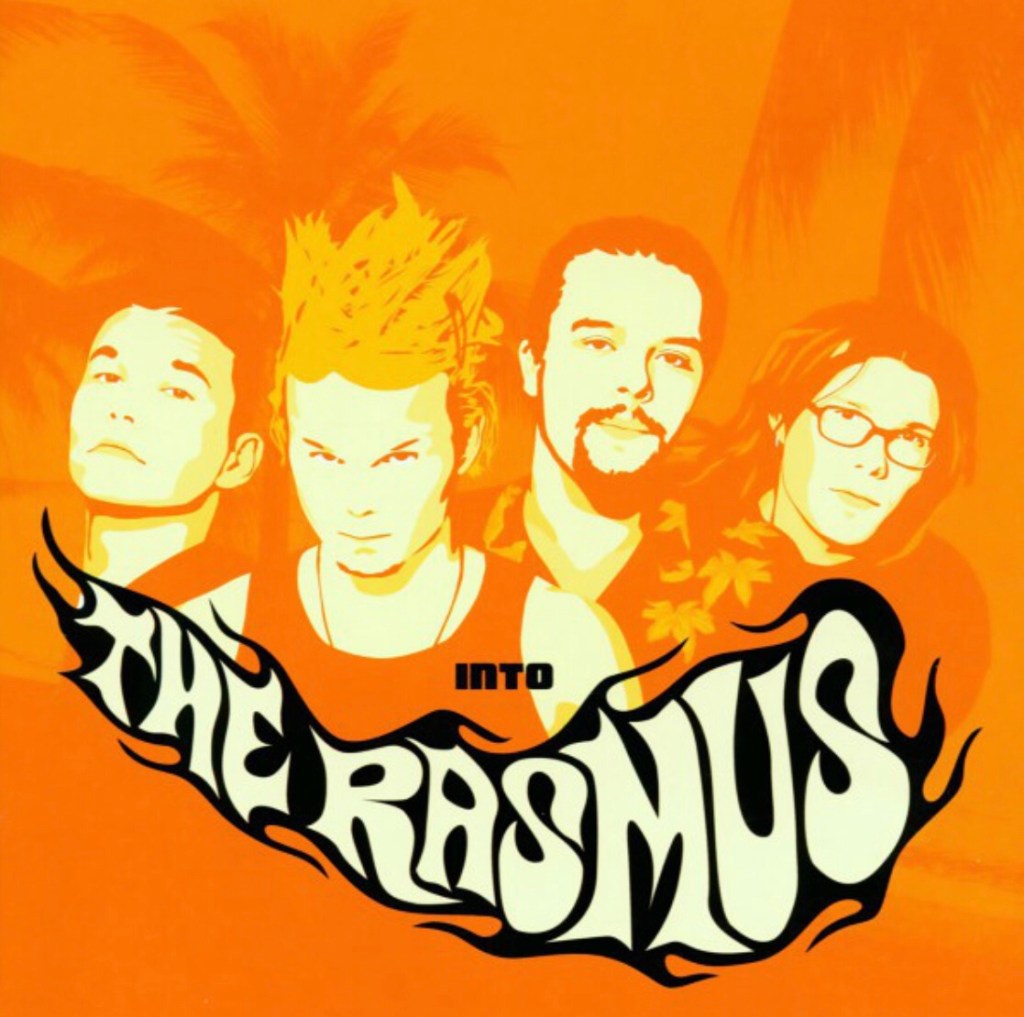
2001 – Part 3.2: The Rasmus – Into

“In The Shadows” from their 2003 album “Dead Letters” made me a fan. And I followed em with each subsequent release after that.

Around 2013, I decided it was time to go back and listen to their earlier albums, before “Dead Letters”.

“Into” is their fourth studio album, released in 2001. When they broke through to the international markets and mainstream attention it was with “Dead Letters”, which was their fifth album. Imagine that. Five albums deep into your career and you are finally breaking through the borders of your homeland, which in this case is Finland.

With this album, The Rasmus continued to move away from their earlier sound and into a more hard popular rock sound with the mood of the album being more contemplative and melancholic. Also the songs are concise, trimmed to ensure that the majority are lean and under 4 minutes.

The Rasmus band is Lauri Ylönen on vocals, Pauli Rantasalmi on Guitar, Eero Heinonen on Bass and Aki Hakala on drums. Names that are hard to remember in the English language but that shouldn’t detract from the great musicians and songwriters they are.

“Madness”

A pop punk distorted riff kicks off the song.

I like the Pre-Chorus with its acoustic guitars and electric guitars dynamic and its auto-tuned vocal melody, which also acts as a fuzzed out guitar lead the second time the Pre-Chorus comes around.

At 2.27, a violin solo kicks in, which mimics the vocal melody and it keeps going until the song finishes with the vocal melody over it.

“Bullet”

A heavily processed guitar riff starts it oft and it’s sitting in the background when the normal music kicks in.

The verses remind me of Whitesnake, Muse, Scorpions and there is a pop song there as influence that I can’t think of.

The Chorus is typical of the Chorus’s that would appear on the subsequent albums.

I gotta leave to make you see I’m over you
‘Cos if I stay I’m number two anyway

What do you do when you still like the person but they don’t like you the same way anymore?

“Chill”

The clean guitar melody in the intro is catchy and it was that good, it would appear on other songs on later releases.

I gotta make a phone call to my best friends.
I gotta let them know that I’m leaving.
Everything behind me and politely I don’t wanna hurt their feelings, oh no.

The first three lines. It’s sung fast but so melodically.

You want to leave but you’re not sure. You are going out on your own with no safety net. And you don’t want to burn any bridges because if you do return, you would want to have those friendships kick-starting again.

Reading Tommy Bolin’s story, he hitchhiked, by himself at the age of 15, from his hometown to a bigger city to play with better musicians.

And every time when I painted my room
like a fool I hid my feelings.
And every time when I painted my room
I thought about leaving.

The Chorus hook. For all the talk these days about mental health, the issues of mental health are nothing new. They seeped into lyrics of songs since music was invented.

“F-F-F-Falling”

It was number 1 in Finland for three weeks.

At 3.52, it’s my favourite song. It’s what “Dead Letters” was built on. The staccato like intro riff is arena rock.

The verses then roll along with its strummed acoustic guitar being the main riff and a tasty distorted guitar playing some single note licks in between. It reminds me of songs from Collective Soul, The Wallflowers and Eagle-Eye Cherry (think “Save Tonight”).

F-F-F-Falling down with the sun
I can’t give it up
The night is calling me like a drum
I keep on F-F-F-Falling

The Chorus hook. Its anthemic.

At 2.01, the Bridge kicks in, and the way the vocals are layered is excellent.

At 2.35, it all quietens down, as it builds back up into the Chorus and the excellent Bridge. There is also a nice guitar lead buried in the mix which mimics the vocal melody.

“Heartbreaker”

Another masterpiece in pop rock song writing.

The intro I believe is played on a synth, and it sounds like an 80’s retro riff. Then the acoustic guitar kicks in with its strummed chords and the vocal melody.

Oh yeah, oh yeah. She wanted to be a heartbreaker
Oh yeah. She was so greedy but a lousy love maker

The Chorus is anthemic. The music is in a pop punk fashion, but the vocal melodies are hard rock.

She used to be the queen of the scene
She had a key but she lost it
Nothing’s gonna last and the time goes fast – she knows

Descriptive story telling. Maybe Warhol was right. We all will get some form of 15 minutes of fame. All the Kings and Queens of the past, don’t seem to hold their title for long.

“Smash”

The way it started off, with processed drums and phased/tremolo’d guitars, didn’t prepare me for the arpeggios to come in the verses and the melodic rock hooks vocally.

Understand that you’re holding a bomb in your hand
Take control, hand in hand with yourself from now on
Take this advice, aim to the skies

Is the bomb the person’s dreams and wishes?

“Someone Else”

It’s a great power ballad, about drinking blood off dinosaurs and other strange things. There has to be some peculiar metaphorical meaning behind it.

Check out the Chorus. It’s huge.

“Small Town”

The intro reminds me of Bon Jovi but then it goes into a “Teenage Dirt Bag” kind of verse with the Chorus going back to a Jovi feel.

“One & Only”

The intro reminds me of “Save Tonight” from Eagle-Eye Cherry.

Overall, the track is in the vein of the tracks to come on subsequent albums.

“Last Waltz”

A music box intro starts off this bolero waltz groove.

P.S. The album went 2x Platinum in Finland.

P.S.S. All ten tracks are listenable. There is no filler.

P.S.S.S. “Into” is their great leap album, bridging their past with something new to come and international success.

Standard
A to Z of Making It, Copyright, Music, My Stories, Piracy

The Week In Destroyer Of Harmony History – August 16 to August 22

4 Years Ago (2017)

NEW JERSEY

“New Jersey” from Bon Jovi was doing the rounds.

“Slippery When Wet” was written while Jovi and Sambora still lived at home and had a million dollar debt to the record label. The start of the “New Jersey” song writing process began as soon as the band came off a gigantic 18 month world tour with millions to their name.

A double album was demoed and rejected.

Desmond Child was brought in again and a few more songs got written. Other outside songwriters like Dianne Warren and Holly Knight also contributed. The double album then became a single album and months after the conclusion of the “Slippery” tour, Bon Jovi had a new album ready to release and another 18 month world tour on the cards.

In between the tour, Jon escaped to Vegas and got married.

Once the tour ended, Jon the went on a road trip, released a solo album for a movie and achieved even more success. Richie Sambora was left in limbo, picked up the pieces and also released a solo album.

While “Jersey” didn’t have the same sales success as “Slippery”, it is a solid album and the band earned its keep as one of the best live shows.

THE LABELS

Customers of music showed the recording industry what they wanted via Napster. When other services stepped in, music customers showed the labels what choice brings to the conversation.

Choice for fans to decide and make their own decisions and the power to demonstrate what they believe something should be worth.

But the labels ignored it.

It wasn’t until a hardware company created iTunes and then techies created streaming services that customers started to get what they want, digitally.

So are the the record labels and the publishers doing their best for artists in the long term or are they just focused on the short term profits?

Instead of following a path that leads to better standards/outcomes for artists in the long term they seek a litigious path that only benefits them in the short term.

The labels and artists should understand that there are fans who don’t pay for recorded music because they don’t believe they should, however these same fans have no problem coughing up $200 plus dollars for a concert ticket for a larger act and these same fans have no problems coughing up $20 to $70 for independent acts. It’s their choice how they choose to interact with music.

And then there are the fans who have large LP and CD collections, who don’t pay for music anymore, but still pay for concert tickets and what not.

And then there are fans like me who have large LP and CD collections and decided that streaming is the way forward. So I pay for a family account and I have no problems forking out cash for a concert ticket. And I still add to my physical collection when I feel like it and when I see it as worthwhile for my collection.

And then there are fans who have large LP and CD collections who have decided that purchasing physical is what they want to do.
And these fans also have no problem paying for a concert ticket.

The recording industry has never been more powerful. There’s all this crap about piracy, streaming rates and the techies taking over. But the techies make tools, not stories or music.

Life is a struggle for everyone, not just creators.

THE WAY OF THE WORLD

If you risk, you could lose. There’s no safety net in life. And we don’t hear from those who risked everything and failed and now have nothing. Hell, we don’t even know their names. Only the winners get their story told.

It’s a “winner-take-all” economy and we plod on, trying to make it. But we don’t know where to start, so we take all the roads on offer, only to get back to the start.

Making music is great, but making connections is better. It’s the way of the world today.

MONEY FROM THE OLD

Did you know that Book publishers make more than 90% of their profit from books they published years ago. And yet they put 2% of their effort into promoting and selling those books.

Would it be fair to say that 90% of the income that the record labels get comes from music that came out years ago compared to what is new.

The majority of music consumers don’t normally purchase creative content all the time but when they do, they buy what is popular.

It’s the reason why the “Black” album from Metallica still sells. It’s the reason why “IV” from Led Zeppelin still sells. It’s the reason why “No More Tears” still sells. It’s the reason why “Slippery When Wet” still sells.

However we are living in a different era, one controlled by consumers. And the new stuff released by artists is originally purchased by a smaller hard-core super fan group. Much like the 70’s. Then in time as word spreads, people will check out the release and keep it in the conversation. Much like the 70’s.

Recognition doesn’t come on day one or week one or month one or year one. It percolates year after year after year until it boils to the surface. Will you be around to capitalise and monetise?

HOW THE LABELS ROB CREATORS

YouTube tells the world that the service pays more in the U.S for Ad-Supported Streaming than other services like Spotify and Pandora.
The record labels via their lobby group RIAA disagree with YouTube’s math. 

But the record labels and the publishing/licensing companies are the first to get paid. And nowhere in this debate have these organisations mentioned what they get.

But there are thousands of news articles showing what the artists or the song writers get from YouTube streams in their bank account, but the artists are the last ones to be paid, once the labels and publishing companies take their cuts.

But whose robbing who.

8 Years Ago (2013)

TRIAL OF TEARS

“Trial of Tears” is from the “Falling Into Infinity” album released in 1997.

The album is a controversial subject for Dream Theater fans. Some say it is incredible, others say that it was a sell out and others say it’s crap. Mike Portnoy said he hated it, and that by releasing the Official Bootleg of the album on a Double CD format, he felt that he has corrected that hate and given the album its due justice.

If the other members agree with that statement is an entirely different matter.

“Trial of Tears” is a three movement song. John Myung owns this song. His groovy bass lines are all over it and for any aspiring bass player, this is a song that should be in your bible of bass songs to learn.

This song is not the heaviest Dream Theater song however it is one song that has heaps of melody around it. Words can’t describe the emotions this song stirs, so let your ears do the listening and give it the time of day.

LIFEHOUSE

Lifehouse just seems to hang around in my life. Maybe it is because my wife played the “No Name Face” album to death at home and in the car when it came out in 2000. While the lead-off single “Hanging By A Moment” had the traction, it was cuts like “Cling and Clatter”, “Quasimodo” and “Everything” that hooked me in.

“No Name Face” was the pinnacle. “Stanley Climbfall” and the self titled album didn’t even come close. I was starting to lose interest.

“Who We Are” in 2007 got my attention with the sorrowful “Storm”, the soul searching rock of “Disarray” and the Johnny Cash vibe of “Broken” .

Then in 2010, came “Smoke and Mirrors”. Tracks 1 to 8 are top notch. They should have stopped the album right there. It would have been perfection. “Almeria” has the song “Moveonday”, which reminds me of “When The Levee Breaks” from Led Zeppelin.

The rest however pales compared to “No Name Face” and “Smoke and Mirrors”. Crank em.

ZARA

I wrote a little story about what artists could learn from Rosalia Mera the co-founder of fashion giant Zara.

REALITY

Piracy can never be handled with a one size fits all business model.

Piracy is hard to be stopped however it can be competed against. Piracy is a service issue. Pure and simple.

The internet is just another disruptive service to the entertainment industries; like the time the VCR was going to destroy Hollywood. Instead the VCR opened up a whole new ownership and rental income stream for Hollywood. With all new technologies, the entertainment power brokers try to destroy it at first. When they realize that they are going to fail, it then becomes part of the new market. In 2012, recorded music had its first year of small growth. Since then it’s been growing.

And music-streaming services will reduce piracy.

And that’s another wrap for another week.

Standard
A to Z of Making It, Classic Songs to Be Discovered, Derivative Works, Influenced, Music, My Stories, Unsung Heroes

Australian Method Series: Wolfmother – Wolfmother

The Wolfmother debut.
 
Sometime in 2000, founding members Andrew Stockdale on guitar and vocals, Chris Ross on bass/keyboards and Myles Heskett on drums got together to jam.

But it was in 2004, when Wolfmother was born.

And suddenly things started to happen. After playing a gig in April 2004 in Sydney, they got a record deal with Aussie independent label Modular Recordings with whom they released their (EP) “Wolfmother” in September.

While touring on the EP, Universal Music came in and signed em to an international recording deal.

The self-titled debut produced by Dave Sardy was originally released in Australia via their independent deal on 31 October 2005.

The album was later released internationally by Universal in early 2006.

Like other Aussie artists who got a later international release, the album had an additional track and a rearranged track listing. Spotify carries the international release listing and release date.

As an owner of a book of Frank Frazetta paintings, seeing “The Sea Witch” on the album cover grabbed my attention immediately.

Prior to the release, the band had some serious momentum in Australia. They had the EP out on the charts, they toured and nationwide radio station Triple J, had the band in constant rotation.

Dimension

The bass and drum groove reminds me of an amalgamation of Sweet and Cream in the verses before a Chorus kicks in that sounds like a Sabbath cut.

And a new game is created here in which the listener has to guess which band or song influenced the next song.

And I like games like these.

White Unicorn

You know that section half way through in “Stairway To Heaven” when Jimmy Page starts to play major sounding triads over a droning D note.

Well that’s how “The White Unicorn” starts off. And I like it. Take something that came before and create something new from it.

Woman

Its basically a Sabbath cut with that driving galloping groove from “Children Of The Grave”.

Then again “Roadhouse Blues” comes to mind as well.

The addition of the keyboards makes it sound like a demented Doors cut.

And like other Aussie bands, (Airbourne comes to mind) they capitalized on the video game phenomenon that was happening. “Woman” was licensed to appear in over 12 video games which came out between 2006 and 2008.

Where Eagles Have Been

The beginning reminds of “Goin To California” from Led Zep or “Mother Nature’s Son” from The Beatles or “Brain Damage” from Pink Floyd.

This is the beauty of music. Familiarity is in every song which is created.

Check out the sound effect which increases in intensity at 3.42 and then the guitar solo. This is the best part of the song.

At 4.24 to 4.46 reminds of me of “Dazed and Confused” from Led Zep.

Apple Tree

It has a punk style “My Generation” feel from The Who in the Intro and first verse.

Joker & the Thief

This song has crossed over onto a higher astral plane. It’s everywhere. If you sit down to watch a movie or a TV show, there is a chance you’ll hear it. If you buy a video game, there is a chance you’ll hear it.

When I hear “Detroit Rock City” by Kiss, it reminds me of this song.

“The Hangover” and “Shrek” movies have scenes in the movie, which has this song playing.

Colossal

It feels like a Sabbath cut that hadn’t seen the light of day.

How good is the riff that comes in at the 3.30 mark?

It reminds me of “Ace Of Spades” from Motörhead.

Mind’s Eye

My favorite track.

The arpeggios to start it off are hypnotic. Metallica used a similar progression for “The Day That Never Comes”.

When the verses come in, simplicity at its best. It’s just a single strummed chord and a haunting vocal melody.

I like the simple ascending chord progression just before the Chorus. And it comes back again after the Chorus.

How good is the organ riff?

And they jam on it till the end.

Pyramid

Another song that became a favorite amongst people that didn’t even like this kind of music because it appeared in the “FlatOut 2” car racing game.

Witchcraft

A flute solo. Jethro Tull anyone.

Tales

It’s not a favorite.

Love Train

Listen to “Moby Dick” from Led Zep. Imitation is a form of flattery.

Vagabond

A simple drum metronome style click and an acoustic guitar playing a sort of Country Blues Delta riff start off the song.

Swampy it is and the album is done.

I’ve read reviews that they are copyists and unoriginal. But music is judged on the fun and enjoyment you get out of it. And this album is a whole lotta fun.

Going back to the originality question, the bands that influenced em where also copyists. Led Zeppelin’s first album is a great cover album rebranded as a Zep album.

After all was said and done, the album was certified 5× Platinum in Australia, Gold in Canada, Gold in Germany, Gold in the U.K and Gold in the U.S.

By the time the band started to record album number 2, it was just Andrew Stockdale who remained. But the sound and the songs still remained.

You can read my review on “Cosmic Egg” here.

And spend your weekend cranking Wolfmother.

Standard
A to Z of Making It, Influenced, Music, My Stories, Unsung Heroes

The Week In Destroyer Of Harmony History – August 9 to August 15

4 Years Ago (2017)

Thinking short term hurts us. Every leader thinks about the now and never about what’s around the bend. The majority of people in charge of corporations only care about the now.

What is our bottom line looking like?

There is no care about their environmental footprint or employee well-being.

Record labels are the same. They focus so much on first week sales and charts as they believe it brings in an instant payday, without understanding that the payday they are really earning is from music created 30 plus years ago and it just percolated, slowly rising to the top.

Have you heard of the record labels starting to employ artists as employees and offer them retirement plans?

Of course not. That’s long term thinking.

And while everyone kept complaining that Spotify doesn’t pay, they couldn’t explain how Warner accumulated $360 million dollars in streaming fees from em.

All of those artists who sold their rights to the labels and publishers are losing out in the long run but maybe winning in the short term.

I was writing about the 80s and listening to music those bands released in the early 90s.

And I didn’t see much dumbing down of lyrics in the way the writers of the time claimed. And that’s why grunge took over. Instead I saw better lyrics, more mature lyrics, lyrics that showcased highs and lows.

8 Years Ago (2013)

Music and movies just didn’t seem to last anymore.

So why would artists and film makers spend so much time on making one project every two to three years.

George Lucas once said that the $200 million movie is dead. But in 2013, a lot of blockbusters cost over $200 million and man didn’t they flop big time.

Movies like “R.I.P.D “ (a derivative version of Ghostbusters and Men In Black) and “The Lone Ranger” (a derivative version of The Lone Ranger TV show, National Treasure and Pirates of The Caribbean) came to mind.

For some reason, Hollywood still believes that they need a $200 million movie, meanwhile, the movies that did well in 2013 had lower budgets.

“The Conjuring” cost $20 million and when I wrote the article in 2013 it had made made $140 million and when I checked it today, it was at $319.5 million.

“The Heat” cost $43 million to make and in 2013 it had made $190 million and in 2021 it was at $229.9 million.

“Now You See Me” cost $75 million to make and in 2013 it had made $233 million and in 2021, the figures was at $351.7 million.

So is a $200 million budget movie really worth it or should those big budgets be used to make 5 lower budget movies.

So is social media a way to broadcast to people or connect with people?

And while I was critical of Dream Theater having a listening party with no fans, a few weeks later, they invited a select group of fans to experience the new album.

I was reading a lot about “The Pirate Bay” as it turned 10 years in 2013.

From its inception”TPB” is like a number one act, albeit a controversial act, always on top of the charts.

And it all happened via word of mouth in the same way we used to talk about artists and movies back in the day.

Or you can do like Lady Gaga, who would manipulate the mainstream media to write about her and get her loyal “monsters” to spread the word.

Are deluxe editions just overpriced boxes, offering the same thing over and over again for a higher price or offering something of value to a super fan that no one can get anywhere else?

The “Dream Theater” self-titled deluxe edition box set had the same album on a CD, a VINYL LP version and a FLAC version in a box and they charged over a $100 just to format shift the same music.

Meanwhile for half the price (at $55) Coheed and Cambria’s “The Afterman Limited Edition Deluxe Box Set Amory Award Edition” gives you the albums, the demos, a DVD making of, a VIP pass, a book of the story, and notes about the songs, plus a link to download the album and demos on mp3.

Back in the Eighties, the goal was to work in the music business for a record label while you dreamed of being a rock star. Fast forward thirty years and the goal is to work in technology as the new rock stars are the tech heads.

Artists don’t need a middle man to distribute their music, but artists are in love with the story of fame and wealth however they don’t understand that the aim of the game is to outlast the competition.

The “rock star myth” was a deliberate creation of the major labels. Wannabe musicians bought it hook, line and sinker, signing everything away to be the next star. And the Labels licked their lips at all the talent waiting to be exploited.

Stand Or Walk Away” is an underrated cut from “HellYeah”.

It’s got a “Kashmir” like groove I like. The head nods, the foot starts to tap and the fingers start to lay down the beat. There is a sense of classic rock familiarity that intrigues me and it is modern at the same time.

One last thing, when the future generations write the history of metal guitarists, talented players like Greg Tribbet will be forgotten. But he shouldn’t be.

Tribbet is a sum of his influences.

He can be progressive (Mudvayne’s 2nd album is the piece d resistance in progressive riffage), he can be heavy, he can be a guitar hero and he can be soulful, bluesy and even countrish. He is a great talent.

And since we are in the single music era, go and stream the crap out of this song. It will be worth your time.

And that’s another wrap for another week.

Standard
A to Z of Making It, Classic Songs to Be Discovered, Influenced, Music, My Stories, Unsung Heroes

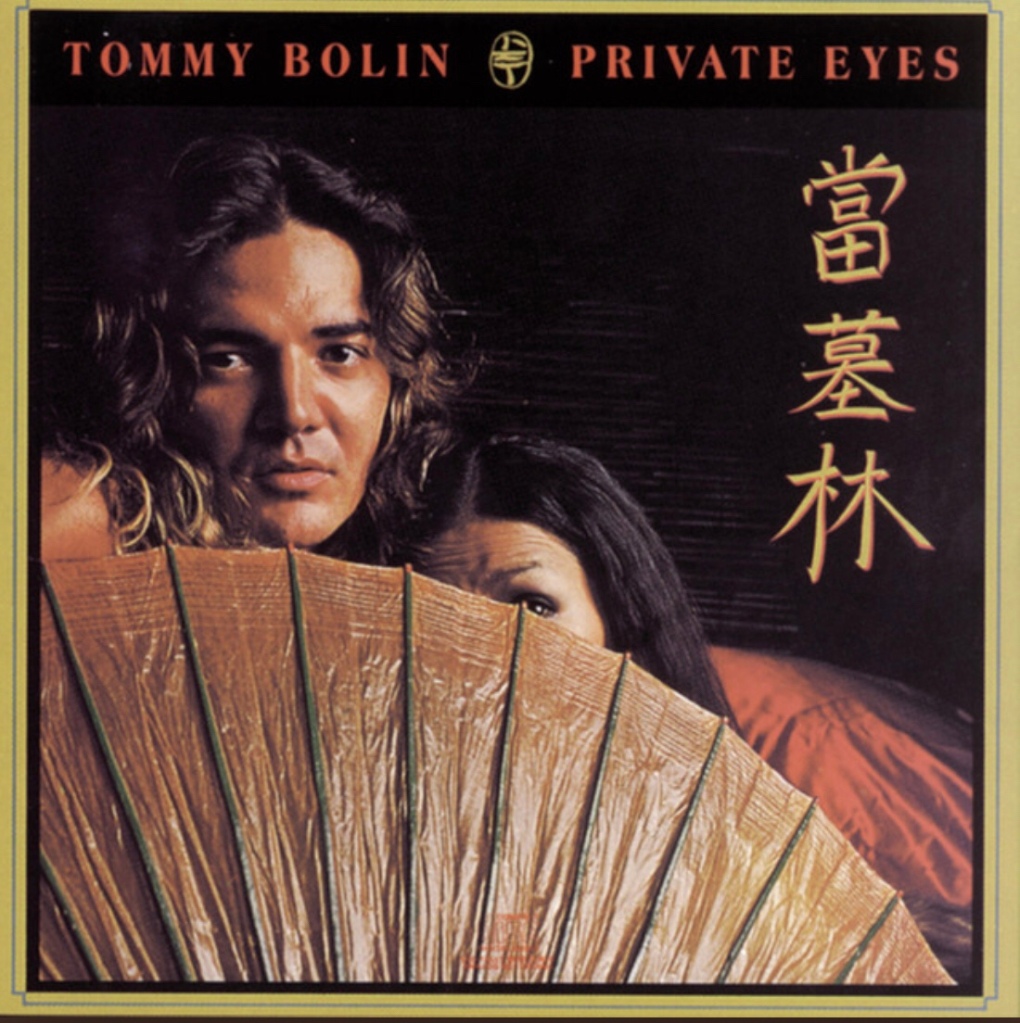
1976 Part 2.5: Tommy Bolin – Private Eyes

I had no idea about Tommy Bolin until Motley Crue covered the song “Teaser” and released it on their “Raw Tracks II” EP which came out in 1990 for the Japanese market and suddenly I was scrolling the used record racks for Tommy Bolin albums or albums that had him playing.

Actually, the Motley Crue version of “Teaser” was officially released on a 1989, compilation album called “Stairway To Heaven/Highway To Hell” which featured the bands who performed at the Moscow Music Peace Festival. And of course the song re-appeared on their “Decade Of Decadence” collection in 1992.

Shock horror to everyone these days who grew up with Wikipedia, I was surprised to read that he was in Deep Purple, but only for a brief moment and that he was in Deep Purple with David Coverdale who was another artist’s back catalogue I was digging deep into during the same period.

The Tommy Bolin “Teaser” album came out in 1975, and while successful he couldn’t really tour behind it due to his Deep Purple commitments, so he kept on writing and over an 8 day period, “Private Eyes” was recorded and released in 1976. This would be his last studio album before he died of a drug overdose on December 4, 1976 at 25 years of age.

It’s worth pointing out that from 1969 to 1976, Bolin was involved in 10 studio albums, with the bands Zephyr, James Gang (he replaced the guitarist who replaced Joe Walsh), Billy Cobham, Alphonse Mouzon, Moxy, Deep Purple (he replaced Ritchie Blackmore) and as a solo artist.

To put into context, Metallica have released 10 studio albums in 38 years. Avenged Sevenfold have released 7 albums in 20 years. The different work ethics of the artists and the labels across different decades is evident.

As a 15 year old, he hitchhiked from his hometown to Denver and met up with a singer called Jeff Cook to form American Standard. Cook would also act as a co-writer for Bolin’s solo output. He then joined Zephyr and after a few albums, he grabbed drummer Bobby Berge to form “Energy” with Jeff Cook on vocals.

But the fusion of styles in the music of “Energy” didn’t resonate with people and the labels. But Bolin did enough to get the attention of Billy Cobham who asked him to play on his record. And then the high profile gigs and studio work started. And by the time he was in Deep Purple he was heavily into drugs and alcohol.

“Bustin’ Out For Rosey”

Its funk rock groove is great to jam to.

The outro jam with the fuzzed out guitar licks and brass section is great listening.

“Sweet Burgundy”

I don’t know who influenced who, but “Wonderful Tonight” from Eric Clapton sounds very similar to this in the intro.

The slide guitar is sublime.

And in the outro, they just jam out the main melody, something that Bruce Springsteen would do to great effect with “Born In The U.S.A” when they keep playing the vocal melody in the outro.

“Post Toastee”

A nine minute song.

So many songs came out between the years of 1968 and 1978 that had similar riffs to either “Cocaine” or “Sunshine Of Your Love”. This is another for the first two minutes and 20 seconds.

Then a bass groove comes in and it’s all funky and soulful. As the bass and drums jam, Bolin starts his lead break. Listen to his phrasing, how he lets certain notes ring and others he deadens.

It’s this fusion of so many different styles which makes Bolin unique.

At the 4.30 mark, the “Cocaine” riff is back in.

Then Bolin shreds away again for the rest of the song.

“Shake The Devil”

It’s a blues jazz fusion cut, like how Joe Walsh played in James Gang.

But at 2.34, the embryo of bands like Iron Maiden is there. Check out the change of pace, the riff and the lead breaks.

“Gypsy Soul”

It’s like a campfire “Love Boat” acoustic cut.

And what I like about this is that Bolin stays within the acoustic guitar and delivers a stellar flamenco lead outro break.

“Someday We’ll Bring Our Love Home”

Carmine Appice filled on drums on this one, as Bobby Berge was unavailable that day. It could have appeared on a Steely Dan album. Its bluesy and full of soul.

“Hello Again”

The strummed chords outline a similar progression like “Free Bird” as the song percolates in that acoustic domain with violins and violas.

“You Told Me That You Loved Me”

A bluesy jazz fusion cut full of sleaze and soul with an ascending walking bass riff.

I like the change at the 3 minute mark, and then the brass instruments come in and the leads starts and its solos to the end.

If you like a lot of guitar playing, this album has it. Crank it.

P.S. Reggie McBride on bass and Bobby Berge on drums are excellent and unsung heroes on this album.

Standard