If you search for Alex Lifeson in Spotify, this album would not come up, because even though “Victor” is a solo album by Rush guitarist Alex Lifeson, its released under the name of “Victor” and filed away under V.
Released in January 1996 on Anthem Records and recorded between the Rush albums “Counterparts” and “Test for Echo”, two of my favourite Rush records of the 90’s.
The musicians behind “Victor” are Alex Lifeson on guitars, bass and keyboards, plus spoken vocals on a few songs. Les Claypool makes an appearance on bass for “The Big Dance” while other bass tracks are handled by Peter Cardinali. Bill Bell is a Canadian guitarist who has toured and recorded with Jason Mraz, Tom Cochrane, Alex Lifeson and Danko Jones to name a few, also appears on guitar and Blake Manning is on drums.
For vocalists, Lifeson speaks on a few tracks, and a singer called Edwin (who I found out later is from a Canadian Rock band called “I Mother Earth”) does vocals on “Don’t Care”, “Promise”, “Sending Out a Warning”, “The Big Dance” and “I Am the Spirit”.
Another Canadian singer called Dalbello (otherwise also known as Lisa Dal Bello) appears on “Start Today”
“Don’t Care”
The track is written by Alex Lifeson.
The sound is grungy. But take away the studio sounds of the day and play the riffs through a 5150 amp, you’ll hear how heavy metal they are.
Some of the open string riffs do bring back memories of 70’s Rush.
Lyrically it’s so different from what Peart would write for a RUSH album. Its crude, full of fuck words and it’s basically about sex. The Rush elitists crucified him on the Rush boards back in the day for the lyrics. But Lifeson didn’t care.
“Promise”
Written by Lifeson and Bill Bell, it’s got this REM/Tragically Hip feel in the verses with a bit of “Limelight” in the Chorus.
I like the solo section. It has a riff which keeps repeating, while Lifeson does ambient like guitar noises and various note bends. It’s not technical, but its more abstract and it fits the vibe of the song. Then again it could be Bell on the solo. I don’t know.
“Start Today”
Written by Lifeson, check out the intro riff on this. Its huge, simple and yet progressive.
And Dalbello sounds a lot of like Geddy Lee when she hits her highs. A young Geddy Lee.
“Mr. X”
An Instrumental written by Lifeson. It sounds like a King Crimson cut, very Avant-garde, but the lead breaks are like blues jazz fusion.
“At the End”
Written by Lifeson and his son Adrian Zivojinovich. Adrian actually provides most of the computer programming which gives the songs he’s involved in, that Industrial tone.
Check out the riff at 2.24. I went straight for the guitar.
“Sending Out a Warning”
Another track written by Lifeson and Bell. And the riffs are interesting enough to get me to try and jam along.
The main riff by the way is excellent.
“Shut Up Shuttin’ Up”
Written by Lifeson and Bell, along with Lifeson’s wife Charlene and a person credited as Esther who basically provide the talking voices complaining about their husbands.
Musically, its funky, a bit bluesy and full of soul and every time the female voice overs say “Shut Up And Play The Guitar”, Lifeson begins to wail.
By the end of it, Lifeson is screaming back at em to “SHUUUT UUUP!”
For some reason, “The Audience Is Listening” from Steve Vai comes to mind.
“Strip and Go Naked”
Another Instrumental written by Lifeson and Bell.
The intro riff is one of this “Copperhead Road” riffs. Even Maiden used a similar riff on “Writings On The Wall”. Aerosmith on “Hangman Jury”.
But a Lifeson song moves within different musical pieces and this song is no other.
Check out the bluesy licks from the 2 minute mark over an ascending like bass riff and a strummed acoustic riff. And at 2.48 it goes back to the “Earle/Maiden” like riff.
But from 3.28 to the end, Lifeson takes that simple riff and makes it sound progressive. Listen to it.
“The Big Dance”
Written by Lifeson and Adrian Zivojinovich.
Man, that intro riff, so heavy.
And Les Claypool is on this, so the bass is prominent, syncopated with the kick drum.
“Victor”
Written by Lifeson and W.H Auden as the song is based on a poem written by Auden.
Its more experimental, with programmed drums and synths being prominent throughout while Lifeson recites the poem to us. It does nothing for me.
“I Am the Spirit”
My favourite song on the album and a perfect closer.
Written by Lifeson and Bell, it’s the most Rush sounding song on the album but the heavy rock sounding Rush.
“Tragically Hip” comes to mind here for the Verses with the vocal delivery, but musically, its Rush through and through.
The Chorus shows “The Spirit Of Radio”.
At 2.40, it quietens down and you hear some synth chords being played. Then Lifeson comes in with a clean tone guitar riff and man, what a riff it is. Different variations of it are heard throughout the song, but the way its delivered in this section, really brings it to life. One of his best riffs for the 90’s.
Then he goes into a guitar lead, which is emotive and perfect. But too short.
A great way to close the album.
Overall it’s not a perfect album and the spoken work melodies don’t really do much for me, but it’s that outside the box thinking which also draws me in, plus Lifeson always includes a riff or two in a song which makes me want to pick up the guitar and play along.
Check out this eclectic mix of blues rock, soul, funk, progressive, grunge, hard, industrial and alternative rock.
After three weeks of zero posts it was James Durbin that got me out of the rut.
His first album dropped in 2011 and its a hard rock album. “Higher Than Heaven” is my favorite track. It’s melodic and heavy enough to rock and a co-write with James Michael and Marti Frederiksen.
Then album number 2 dropped in 2014 and it was not what I expected, more in line with the Imagine Dragons style of rock.
So I just moved on.
And then “The Road” came up on the New Release Playlist as I was driving.
I’d like to tell you that I knew it was Durbin on vocals just from hearing him, but I had to google it to find out. Hell I had to Google who was in that version of Quiet Riot.
Frankie Banali has been the drummer for the band since DuBrow reformed it in the 80s after the death of Rhoads. Bassist Chuck Wright replaced Rudy Sarzo and has been in and out of QR since the 80s. Guitarist Alex Grosso has been in a lot of hard rock bands and ended up in QR in 2006.
I wrote back in 2017 to go and listen to “The Road” first, then “Renegades” and “Freak Flag”. They are songs that should remain around for a lot longer. And I still stand by that but looking at Spotify, these songs doesn’t even rate in the Top 10.
Unfortunately this version of QR would record one more album. But, drama surrounded that release. Durbin left before it’s release and Banali went missing, only for the world to find out that he was dying from cancer.
But QR continues.
Johnny Kelly from Type O Negative and Danzig joins on drums. Jizzy Pearl is on vocals again. Alex Grossi remains on guitar and Rudy Sarzo has rejoined.
Young people today do not realise the impact that Twisted Sister had on the music business around 1984 and 1985. Sure, other bands had greater sales and bigger tours, however no one did MTV like Twisted Sister.
The “Because We Can” tour should of been renamed to “Because I Can”.
Richie Sambora didn’t show up to work but the show went on as JBJ had a replacement for Sambora on the same day.
Then Tico Torres undergoes emergency appendectomy surgery and the band POSTPONES their Mexico concert. This would have pissed the Jovi machine.
Then Tico fell ill again, but JBJ had a back up plan this time in New Jersey native and Kings Of Suburbia drummer Rich Scannella, who filled in until Tico was cleared to play.
The show must go on for JBJ as those super large merchandise deals means that the tour cannot stop. Merchandise deals become very expensive to the artist if they are broken or if the sales do not meet targets or if the promised shows are not delivered. Just ask Dee Snider.
It was almost September 24, 2013 and the new self titled Dream Theater album would be “officially” released on Roadrunner.
Going back a few more years, on September 13, 2011, “A Dramatic Turn Of Events” was released and it had 35,750 units sold in the first week.
With Roadrunner putting a lot of money into Dream Theater, they would want the above figures to increase by at least 20% but the market at that point in time was showing a shrinkage in sales compared to two years ago, due to licensed streaming.
But as album sales went down, concert attendances went up as well as ticket prices.
“MOTLEY STILL SINGERLESS” is the headline from a news break item that did the rounds in an issue of Hot Metal from June 1992.
For anyone who wasn’t aware, Motley Crue and Vince Neil parted ways in February 1992. The actual argument took place on February 11, 1992, with Motley Crue issuing the official statement on Neil’s departure on February 14, 1992.
The Crue wanted everyone to believe that they started working with John Corabi immediately, from as earliest as February 17, 1992, however it wasn’t until September 27, 1992, that John Corabi officially signed a contract to be Motley Crue’s new lead vocalist.
Sebastian Bach’s claimed that he did in fact audition during that period which Nikki Sixx denied on Twitter.
The other vocalists that are known to have auditioned are Stevie Rachelle from the band Tuff, Marq Torien from the band Bullet Boys and Stephen Shareaux from the band Kik Tracee.
Download “Illumination Theory”, “Behind The Veil” and “The Looking Glass”. “The Bigger Picture” also has some great musical sections. As for defining what Dream Theater is about right now; technical wizardry comes first and the actual song comes second.
The women of the world will love this album and the majority of guys will love the track “Conquistador.” A grand experiment in orchestra style theatrics merged with rock and pop sensibilities.
I just heard Cervello’s debut album (released in 2011) in 2013 and I liked it. I wanted to find out more information, only to find that they had broken up.
This album is more or less “B” grade Sevendust except for the last track “Sleeping Awake” which sounds like an “A” grade cut that should have been on Red’s “Release The Panic” album.
A brilliant hard rock covers album of pop songs. Songs that I originally dismissed as terrible suddenly have a new lease of life thanks to Within Temptation’s reinterpretation and Sharon’s wonderful voice.
I have had some music laying around that I earmarked once upon a time for a re-listen in a proper way.
“Burning Yesterday” was one such band.
Their album from 2009, “We Create Monsters Not Machines” was an amalgamation of bands like Red, Papa Roach, Breaking Benjamin, Skillet and Disciple. And I liked it, so give em a spin.
Opeth is a Swedish progressive metal/rock band from Stockholm, formed in 1989. The group has been through several personnel changes, including the replacement of every single original member. Lead vocalist, guitarist and songwriter Mikael Åkerfeldt has remained Opeth’s primary driving force since the departure of original vocalist David Isberg in 1992.
Opeth has consistently incorporated progressive, folk, blues, classical, and jazz influences into its usually lengthy compositions, as well as strong influences from death metal, especially in their early works.
The band rarely made live appearances supporting their first four albums, but since conducting their first world tour after the 2001 release of Blackwater Park, they have led several major world tours.
So “Morningrise” is part off the “first four” albums.
It’s the second one, released on 24 June 1996.
Opeth for this album is Mikael Åkerfeldt on vocals and guitars, Peter Lindgren on guitars, Johan De Farfalla on bass and Anders Nordin on drums, percussion. All lyrics are by Akerfeldt and music is by Akerfeldt and Lindgren.
Åkerfeldt has mentioned that “The Number of the Beast” by Iron Maiden and “Lick It Up” by Kiss made him a metal head, but he also was heavily influenced by “Sabbath Bloody Sabbath” by Black Sabbath and his favorite metal album is “Sad Wings of Destiny” by Judas Priest.
Lindgren had a nice diet of Iron Maiden growing up and was heavily influenced by “Master of Puppets” from Metallica along with ’70s progressive rock band Camel.
So with similar influences as mine I was more than interested to listen.
I didn’t hear this album until 2005/06 as I started listening to em after “Blackwater Park”.
5 songs clocking in at 60 something minutes.
Advent
The song is almost 14 minutes long as it moves between sludgy grooves, acoustic guitars and fast double kick metal like passages.
Vocally, Opeth during this period was more death metal like with some clean vocal passages.
At 3.20, this acoustic guitar riff kicks in, arpeggio based and very Rush sounding and I’m like where did that come from.
It becomes abrasive again with death metal vocals which don’t impress but the music does impress.
At the 6 minute mark, a different acoustic arpeggio riff kicks in and this time, the vocals are in clean tone and I’m all in.
At 8 minutes a Thin Lizzy/Iron Maiden/Helloween like galloping riff kicks in which is great to play on the guitar.
But it gets better, there is this metallic riff at 9.20 which has a jazz like bass line behind it with double kick drums. It feels unsettling and jarring.
The Night And The Silent Water
At 11 minutes long, it’s another short song.
Im not a fan of the death metal vocals, but goddamn I really like the music and it’s movement between distortion and acoustic.
Around the 8 minute mark, this “Children Of The Grave” feel/gallop starts. It keeps building until the guitars explode into playing octave melodies.
Nectar
At 10 minutes long it’s maybe the shortest song on the album.
The music is very Iron Maiden”ish” like. There is this riff that kicks in at the 2 minute mark, which is excellent.
At 7 minutes there is another acoustic like arpeggio passage which comes out of nowhere and yet it fits nicely. And the last 90 seconds has a riff which appeared on a Dream Theater album in a few years’ time.
Black Rose Immortal
Almost 20 minutes long.
The song has a lot of harmony leads that feel like they are influenced by Thin Lizzy as it’s got that major key Celtic like vibe.
Check out the Maiden like instrumental sections from 7.30 and the excellent volume swell section around 9.30 to 9.43 which is way too short. But hypnotic and very violin line.
To Bid You Farwell
Another 11 minute song to close the album. A “Fade To Black” like arpeggio riff starts it off.
And the song percolates in the acoustic domain until it explodes into distortion at the 7 minute mark.
The amount of acoustic progressions in this song, another person could have written 10 different songs.
The vocals are clean tone and make sure you check out the bluesy kicks at the 4 minute mark.
And it returns back to the acoustics for the last 90 seconds to end the album on somber note. Like Empire Strikes Back.
From Australia. Advertised as Progressive Metal but it’s more like hard alternative rock with some progressive grooves on this album. And I like it.
“I Wonder” came out in October 2020 and I was surprised to learn that it’s their seventh album but my first time listening to them.
For this album Teramaze is Dean Wells on Guitars and Vocals, Andrew Cameron on Bass, Nick Ross on Drums and Chris Zoupa on Guitar.
The term Progressive Rock has a bad concoction these days, associated with a million notes over complex chord changes or in Tool’s case, long laboured grooves that move in and out of time signatures or polyrhythms. But there are a lot of bands that can take it all and make it sound easy, not complex and not too long.
Teramaze is one such band.
“Ocean Floor”
Kids noises are heard over an ominous synth riff and then the band crashes in with the lyrics “Children pray, from the ocean floor / Are we too late, to save their lives”.
The lyrics are based on a true story of children gone missing and their bodies been discovered at the bottom of the ocean.
It’s powerful and you need to listen to it.
Especially that “Interstellar” soundtrack influence from 3.17 to 4.06.
“Only Daylight”
The way the songs starts off with the heavy groove riff, just gets the head banging.
By the time the verses come in, it’s slower but still powerful.
The lead break is excellent, emotive.
There’s this section after the solo which has the lyrics “No one will find me, no one will see me / From up above, I’m down below / They watch as they dance around me”. The way it is sung over the music is haunting as it carries the song for the last 2 minutes.
“Lake 401”
The clean tone arpeggio riff makes me pick up the guitar to learn it.
And the way the Chorus vocal melody with the words “Its so hard to know / If she’ll be waiting forever” is delivered is excellent.
And for styles, it’s more rock than anything else.
“A Deep State of Awake”
The synths start it off before an “Enter Sandman” style groove kicks in with the drums, bass and then guitar.
There are some leads which has the keys and guitar in harmony and it reminds me of Dream Theater “Images And Words” era.
Lyrically I see it as two voices within the same person. One part is delivered aggressively and the other is delivered melodically.
“Here to Watch You”
The Chorus.
Especially when Wells sings “The Fearless will construct / Our way all the world will know now”.
“Sleeping Man”
My favorite track.
The “Sleeping Man” has a chorus hook of “I’ve awoken the sleeping man inside”. It’s catchy, its hard rock and its perfect.
The keyboard hooks under the melodies are also memorable.
Check out the guitar solo.
“Run”
Man, this song for the first 90 seconds reminds me of those piano and vocal songs that Evergrey do so well.
After that it becomes a melodic rock song with excellent guitar playing
“Idle Hands / The Devil’s Workshop”
9 minutes long.
Musically and melodically the section in which Wells sings “We spent the time, and wasted it all most every year / And there is nothing left to follow” is excellent.
At 3.30, a lead break kicks in. It’s emotive and one of the best I’ve heard recently.
The section after it with the lyrics; “You never run it together / You never stopped the war / If only you could’ve chosen me / What life would have in store” is almost Daughtry like in delivery.
At 5.12 it’s just piano, playing the chords and vocal melody.
Then the vocals come in with the acoustic guitar. It builds up again to the “You never run it together / You never stopped the war” part again.
The last 90 seconds has double kick, fast melodic guitar leads and the only thing I can do is press play again and devote another 9 minutes of my time to the song.
“This Is Not a Drill”
Musically this song reminds of bands like Haken and Tesseract.
I see the world has changed Theres nothing left to gather now I feel the world has fallen Tomorrow, may never come again..
We’re waiting for the cure Assured it’s on the horizon Pandemic fabrication The lies insure well never know again..
I wonder what they’re singing about. And for everyone the world did change. People died, relationships ended, how we did things changed, flying and travel ceased and a lot of careers ceased to be.
At the 5 minute mark, the section that comes in reminds me of “Home” by Dream Theater.
To find someone to love, whatever.
That’s all we want in the end.
At 8 minutes and 40 seconds it never got dull or boring.
“I Wonder”
The closer.
The way this song builds and is constructed is excellent.
Check out the Chorus with its symphonic and anthemic melody, especially when Wells is singing “We’re here tonight, you’re never gonna see me alone / we feel alive, I’m never gone make it”.
The “I watch them killing you slowly” section reminds me of Muse.
At about 5.10 some intricate playing happens but it’s all still accessible and sing along like.
And the lead break is excellent.
By the end of it, each track left something behind with me.
And from reading some of the reviews, this is the first album in a while which features lead vocals from band leader and guitarist Dean Wells. And I’m like, “why didn’t he sing on all the albums?”. His voice needs to be heard.
Check it out.
And don’t let the progressive tag turn you off some great Rock and Metal.
“Themata” is the debut album by the Australian band Karnivool. The album was released independently on 7 February 2005. In 2007, Bieler Bros. Records picked it up for a U.S release and in 2008 Happy Go Lucky picked it up for a U.K release.
The band has a “progressive rock” label, but they are not a band that plays a million notes per minute with polymath time signatures. They are a band who are progressive in their song writing, as verses could have different riffs, and a groove could be jammed out over different time signatures. Other labels the band is given is “alternative metal” or “alternative rock”. Whatever the label, they created a metal album which got radio air play.
Karnivool are Ian Kenny on lead vocals, Drew Goddard on guitar and string arrangements plus he wrote all of the album’s songs and performed drums on every track, except for “Life Like” which was performed by Ray Hawkins. Mark Hosking on guitar and Jon Stockman on bass.
24 years later it still sounds as fresh as it did back in 2005.
“Cote”
I like the mood this song sets up. It’s a great opener, almost like “A Perfect Circle”.
I suppose this question will be answered And I suppose the answers are here to save us
“Themata”
The title track that hooked me in.
And Ian Kenny is one talented vocalist who also has a very successful mainstream pop rock act called “Birds Of Tokyo”. His delivery on the title track is “Lead Singer Hero” worthy.
The “Kashmir” like violins that come in towards the end are haunting and hypnotic. It’s a beast of a song and it was doing the rounds on Australian radio.
It’s so good to see This world is alive
And by the end of the song, Kenny is singing, “it’s so good to see this world I’m in loves me”.
And I was reminded of “The Tea Party” so I listened to this song over and over and over again.
“Shutter Speed”
It’s got a heavy groove that reminds me of Disturbed and a great Chorus.
Check out the small melodic lead riff in the middle of the song, which brings back memories of Mark Tremonti from his Creed days.
“Fear Of The Sky”
The jarring intro reminds me of songs from “The Mars Volta” and “At The Drive In”.
Another song with a great chorus. At the 3 minute mark it quietens down only to build up again. Check it out.
“Roquefort”
It’s a fan favourite.
The intro riff grooves around various time signatures but it still sounds like its in 4/4, almost Tool like.
You want to chase, this rabbit down a hole You start to slide and lose grip of control
Ian Kenny delivers another great vocal merging Deftones and Tool like vocals.
Listen to the vocal and bass section from about 3.10.
And remember that the drums are played by the guitarist.
“Life Like”
It’s got the embryo of what “Themata” would become. It was released as a single about two years before the album came out.
Its more Nu-Metal than what “Themata” is, almost Linkin Park like musically, but with David Dramain singing.
“Scarabs”
It’s a 2 minute, Groove Nu Metal instrumental, with some frantic drumming and bone crushing riffage.
“Sewn and Silent”
An acoustic guitar led song, comes in at the perfect time, like the eye of the storm.
Check out the section from about 2.30 to 3.01.
“Mauseum”
Djent like riffs before “djent” became a style. At 2.20 it changes to a slower melodic groove.
Press play and listen.
“Synops”
It’s “Themata” part 2 and another highlight with its exotic eastern feel. Another song which reminds me of “The Tea Party”.
Leave no light on, this war, it rages in me Leave no light on, this war, I fear it won’t end
“Change (Part 1)”
An anti-climax. But like a Marvel movie, it’s an end credits scene to forecast the next album and the style to come.
“Themata” is an excellent example of Australian metal with some progressive overtones. There are pop choruses, big Mesa Boogie riffs or fuzzed out tones, vocals that cover a lot of different styles. Maynard Keenan, Chris Cornell, Chester Bennington, David Draiman, Chino Moreno, Mike Patton, Jonathan Davis, Thom Yorke, Davey Havok and my favourite, Serj Tankian when he’s doing his exotic clean tone melodies are all covered and mixed in with Kenny’s life experiences and emotions.
In between Karnivool albums, Ian Kenny worked on his “Birds Of Tokyo” project with great success.
Fast forward to 2021, Karnivool has been recording new music. It will be their first bit of new music since 2013 and the “Asymmetry” album. And an audience awaits.
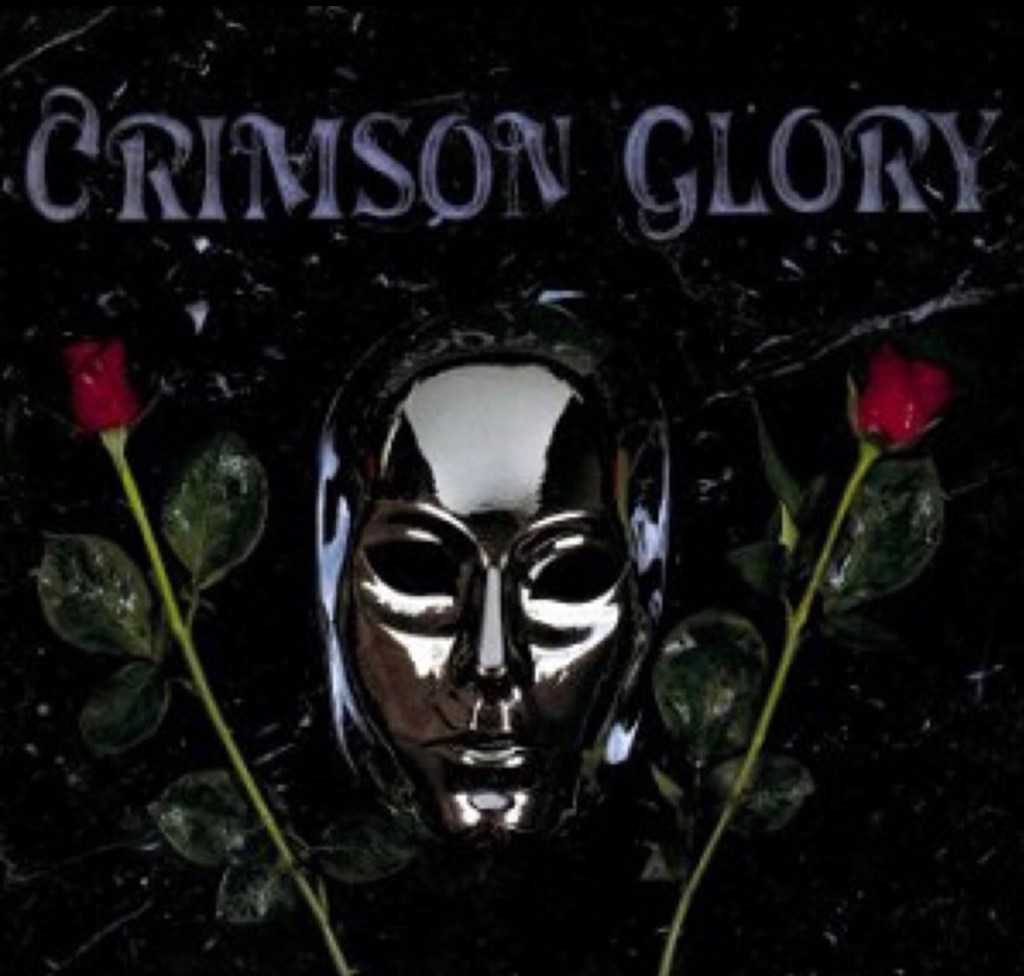
I’ve posted on Crimson Glory before when I was doing my Record Vault posts.
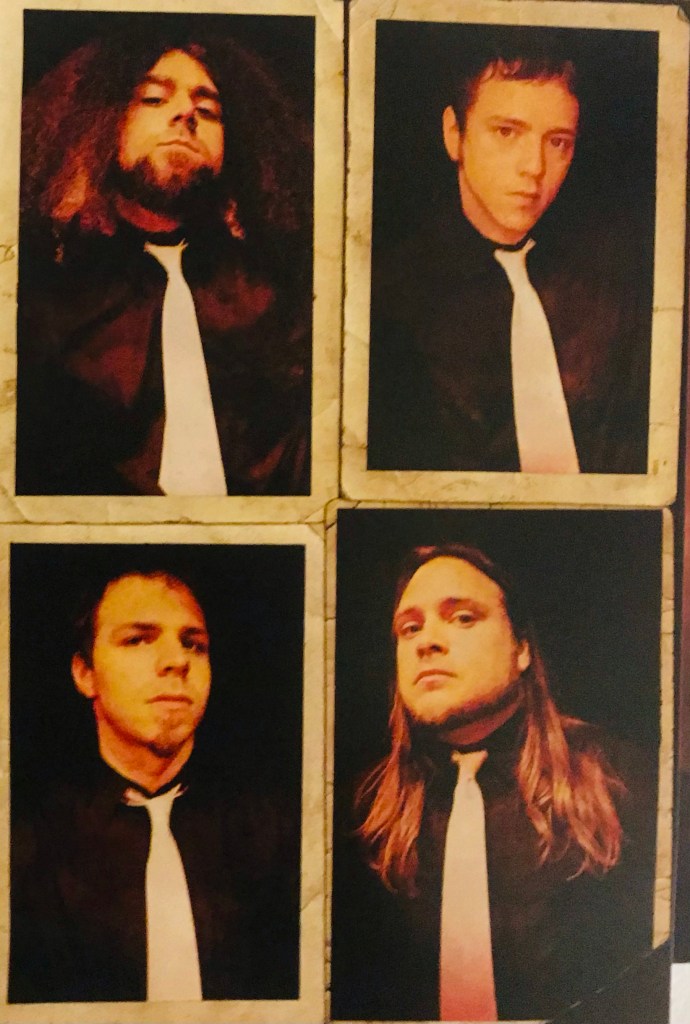
The line-up which is known to me as the classic line up had vocalist Midnight, guitarist Jon Drenning and Ben Jackson, bassist Jeff Lords and drummer Dana Burnell.
They never broke out big in North America, with Asia and Europe being their main market. Their presence in Europe was probably due to Roadrunner Europe being their label and they got behind the band, booking them to play shows in major markets like Germany, France, UK, Holland, Belgium and Sweden.
Their overnight European success was 5 years in the making.
The masquerade mask angle along with hard rock perms and teased hair and leather vests was strange to begin with, but I understood their message, that the music should lead the way, not how they looked but by the third album the masks ceased to be and hard rock abs were on display in photo shoots.
The self-titled debut came out in 1986 but I didn’t hear it until 89, after I purchased “Transcendence” and I went back and got the debut.
Also by 1989, a lot of the bands I liked started to change or were past their heyday.
Scorpion’s didn’t really amuse me with “Savage Amusement” in 87, UFO still powdered their noses and had no recording contract, Queensryche went hard rock (which was a good thing) but I also liked their metal style and I was seeking bands like that, Iron Maiden lost an important band member and went even more streamlined with “No Prayer For The Dying” and Black Sabbath was still trying to replenish their worth and value after the “Born Again” debacle while Dio was starting to lose his star power from 5 years before.
So I went looking elsewhere for my unique metal fix and Crimson Glory filled the void.
And I like to play the guitar, so any album that makes me pick up the guitar to learn the songs gets my attention, and this is what the Crimson Glory albums do.
“Mayday”
There is a countdown. Then a chromatic moving arpeggio/lick in harmony.
And the speed kicks in.
The fastest song on the album, relentless like “Screaming For Vengeance” and that ball tearing falsetto from Midnight rattled my windows. A mixture between King Diamond and Rob Halford on this.
The lead breaks are Judas Priest like.
“Queen of the Masquerade”
It’s more hard rock than heavy metal with the “I Love Rock N Roll” chords in the verses and some serious shred.
“Valhalla”
The intro gets me with the harmony leads.
At the 2.00 mark, there is this guitar riff which moves up chromatically, reminding me of how “The Call Of Ktulu” does the same thing. Mustaine actually used that chromatic movement for “In My Darkest Hour” and then he took his “The Call Of Ktulu” riff and made it “Hangar 18”.
Check out the harmony solo’s on this.
“Azrael”
Along with “Valhalla”, it’s a two punch combo knockout.
The intro is a mix of acoustic guitars, symphonic voices, violins and Midnight’s unique voice which sounds like Geoff Tate from “The Warning” album.
This then leads in to one of the best metal tracks I have heard with harmony guitars and galloping riffs.
Check out the riff at 2.23, done in harmony. It goes for about 10 seconds, a brief change between verses.
The lead break from 3.11. It’s guitar hero worthy but guitarists Jon Drenning and Ben Jackson are virtually unknown to the masses as Crimson Glory didn’t really cross over like Queensryche in the U.S market.
“Dragon Lady”
It starts off with a Midnight wail, harmony guitars and then a Deep Purple “Stormbringer” like riff in the verses.
Make sure you check out the Chorus, which has a combination of harmony guitars and an AOR rock chorus.
But it’s the harmony lead lick that comes after the Chorus that really gets me hooked.
Plus the outro lead break. Check it out. It as good as Jake E Lee’s “Bark At The Moon” outro.
“Lost Reflection”
A haunting acoustic piece, built on two chords and Midnight’s gloomy and mournful vocals.
From 3.10, distorted guitars crash in with reverbed drums and after 30 seconds it fades out to how it started.
“Heart Of Steel”
It starts off with acoustic guitars and harmony leads.
It reminds me of 70’s Scorpions with Uli Jon Roth on guitars, with a nod to the song “While My Guitar Gently Weeps”. And it’s probably their most catchiest.
I like the way Midnight sings “Heart of steeeeeeeeeee-eeeeeeeeeeee-eeeeeeeeeeel” with an increase in pitch as he holds steel.
Check out the little harmony lead at around the 4.10 mark. And the last 15 seconds is that good, the only thing you can do is press repeat.
At 5 minutes long it doesn’t get boring.
Especially the guitar playing and those harmony leads.
“Angels of War”
It’s very reminiscent of Iron Maiden.
There is a lot of great guitar playing but the little section from 3.25 is excellent.
And my favourite is when the bass and drums kick in at 3.55, then the harmony guitars start and then the Chorus vocal. A perfect minute to end the song.
“Dream Dancer”
It’s not on the vinyl version that I have. But it’s on Spotify.
Like other songs, it is a mixture of acoustic guitars in the verses with an anthemic chorus full of distorted chords. It feels like Dio vocally, but musically, it’s more in the spirit of the 70’s.
The section from 3.45 is brief but so good.
And then the lead breaks start.
“Dream Dancer can fly away / wings of fire she burns the nightshade”
And like that, the 1986 part 2 series comes to an end as I fly away to 1976.
There first EP released in 2007 is also called Dead Letter Circus. Hence why I put 2018 in the title of this LP.
Dead Letter Circus is a well loved prog rock band. To me their music is hard to describe as the songs are all in the 3 to 5 minute range, something that bands listed as prog don’t really do. They don’t have a million notes per minute sections either. It’s all music and vocals. And awesome drumming.
The band is Kim Benzie on vocals, Clint Vincent and Luke Palmer on guitars, Stewart Hill on bass, and Luke Williams on drums.
The Armour You Own
The bass and drums set the groove and the guitar locks in with em. It’s familiar and I like it, in the same way AC/DC play it safe within their blues rock style, DLC do the same in their prog alternative rock style.
You will reach You will fall down Every time you fail you will change
Truth.
It’s how we learn.
At 2.50 it quietens down before it builds up again. You need to hear it, to feel it.
The Real You
Hey you there Show me the real you Here in the physical Because I see right through
Social media allows us to portray an image that is fake. Take a photo from above your head and suddenly you look slim and with deep fake photos and videos doing the rounds, no one can tell what is real anymore.
People need to get back to what was real. F
ace to face communication. And we can’t even do that in 2021 because of social distancing and lockdowns.
Change
Another song with a familiar sound from the earlier albums.
You alone the reason The architect of all this time Now you own this life Build it Fill it
It starts with you and no one else. Don’t blame others. It’s your life, own it and if something is not right, you have the power to change it.
It starts with you.
Running Out Of Time
How good is the Intro?
It’s an anthem. This is the band at their best.
Hoping maybe one day everything you want will fall into your hands You don’t need to try
Life doesn’t work that way. Being a good student and then getting a job to pay bills and a mortgage will not give you what you want. You need to seize it.
We Own the Light
After four rockers, this one is almost ballad like.
No one else can understand my headspace I’ve been slipping from my happiness This whole time
We can only fake it for so long before we hit the wall. And we are not alone. So many others experience the same.
Heartline
The vocal melodies are memorable and hooky. This song just needs to be listened to, so it can be fully understood. one of my favorites.
Ladders For Leaders
Another song that lives in ballad like territory. It percolates and simmers.
Somehow they defeated us with no one even bleeding No resistance or debate They just covered our eyes Villains created, become ladders for leaders To keep us from asking who’s holding the strings coming from their backs
A brilliant verse.
We like to be comfortable and that means we like to have a stable income to get us through life. And for a lot of us, stability is good and we are happy building someone else’s dream while we believe we are building ours.
But for a small percentage of us, stability is not what we desire and we change the world.
Trade Places
This song would not be our of place on their debut album “This Is The Warning” released in 2010.
Yeah if you and I and them trade places Make our stand in generation Let the truth collide
Say It Won’t Be Long
This is the best track on the album and it’s deep in the album order.
The way it percolates and builds towards the end, it needs to be listened to.
Now I feel my confidence is growing My sense of self worth is unfolding I am now fearless facing forward So I start crawling
The mental awakening when you stop pretending to be someone else.
Home
I love the grooves and riffs on this one.
I know I’m chasing something I can find home in Think of all that I’ve been through Every scar that I’ve grown through There is nothing to fear now I am ready for change now To find my soul in it
What a great message to end the album with.
Lay back, crank it and have the lyric sheet or the lyrics via the net in front of you.
Apart from the great listening experience it also changed the way I played and wrote songs. After this album, I was okay with jamming on a groove instead of soloing.
This album joined albums like “Tribute”, “Powerslave”, “Somewhere In Time”, “Appetite For Destruction”, “Slave To The Grind”, “The Great Radio Controversy”, “And Justice For All”, “Metallica Black Album”, “5150”, “Hysteria”, “Wicked Sensation”, “No More Tears” and “Images And Words” as my “Bible” albums. These “Bible” albums are albums that I devoured, learning the riffs and the licks.
Tool is Maynard James Keenan on vocals, Adam Jones on guitar, Justin Chancellor on bass and Danny Carey on drums. Production is handled by David Bottrill.
The album debuted at No. 1 on the Billboard 200 chart. It went to No. 1 in Australia. In the U.S its certified as 3x Platinum and in Australia it’s also certified as Platinum. People were listening and unable to turn it off. Even on streaming services, the song “Schism” has only been on Spotify just under two years and it’s at 49.3 million streams, And it’s a 8 minute song.
The album is a product of the members being at the peak of their creativity and a four year label dispute.
At the time the band was critical of file sharing, so as part of the marketing for the album, they announced a different album title and a bogus 12 song track list, with stupid titles like “Encephatalis” and “Coeliacus”. Of course, the unregulated Wild West of file sharing sites, were flooded with bogus files bearing the titles’ names. It wasn’t until a month later that the band revealed the real album name and that the name “Systema Encéphale” and the track list had been a bunch of bullshit.
CD’s can pack 79 minutes of music and Tool gave em a few seconds back. Because at 78 minutes and 51 seconds long, it’s got every groove and landscape packed in across the 13 tracks. And to think that they kept editing the album at the mastering stage to get it under 79 minutes.
The Grudge
The whine of a machine starting up and it all comes crashing in, the toms are syncopated with the guitar riff and the bass is unique, taking the lead here to outline a different melody.
Once the vocals kick in with “Wear the grudge like a crown of negativity / Calculate what we will or will not tolerate”, they syncopate with the guitar riff. Maynard is telling ya, don’t let your grudges hold you back.
At 1.22, the song changes. It takes you into uncharted territory. The previous landscape is gone, in the rear-view mirror. And we are into the verse.
Clutch it like a cornerstone Otherwise, it all comes down Terrified of being wrong Ultimatum prison cell
You can’t imagine your life without the grudge you might have against the person who wronged you, the scarlet letterman. And what if your grudge isn’t justified and you have been wrong the whole time. You don’t want to be in that position, so you keep holding onto the grudge.
The song changes again after the bridge, with the vocal melody of “Choose to let this go”. The riff is heavy, Sabbath like heavy.
Give away the stone Let the waters kiss and transmutate These leaden grudges into gold
Let the burden go, it’s okay. Don’t let your hate and prejudices define you anymore.
The song then percolates and builds from 6.25 as the intro riff returns. Then there is silence and just the bass. And then an explosion of music from the 7 minute mark as Maynard belts out a scream that he carries for 24 seconds.
Studio trickery. Maybe.
The last 30 seconds is how you end a song. Listen to it. You will not be disappointed.
The Patient
A creeping guitar riff starts the song off. At the Sydney concert I watched, Maynard did say the song is about the vampires that you come across in your life, who try to get you down.
But I’m still right here Giving blood, keeping faith And I’m still right here
Wait it out Gonna wait it out Be patient (wait it out)
The vampires could be anything. The education system, society, the corporations, the government, a friend, a lover, a family member. Be patient. Everyone comes undone eventually.
Schism
8 power chords are played on the bass, then silence for a few seconds, before the iconic bass riff starts the song. Justin Chancellor announces himself as a bass hero.
I know the pieces fit cause I watched them tumble down No fault, none to blame, it doesn’t mean I don’t desire To point the finger, blame the other, watch the temple topple over To bring the pieces back together, rediscover communication
Once upon a time, all religions were the right one, than, they fell apart. The pieces are now corrupt, moulded shadows of the once great temple. This song says if the pieces don’t communicate with each other than we are doomed.
Parabol/Parabola
They are two tracks on the album. But they exist as one as the last note of “Parabol” flows into “Parabola”
The three minutes of “Parabol” feels like I’m in the vast plains of the Middle East, looking at the night sky.
The Pre Chorus and Chorus of “Parabola” echo Maynard’s work with A Perfect Circle.
This body holding me, reminding me that I am not alone in This body makes me feel eternal All this pain is an illusion
Live in the now people. It’s easier said than done. I know people who can’t let go of the past. It consumes them to the stage of insanity. They feel wronged. But all this pain a person feels focusing on the past is an illusion. It’s not real, it manifests in the brain. The pain that you think you are experiencing will pass.
At 2.04 it changes from being a standard hard rock song into a typical Tool song.
At 3.58 the bass takes over for a brief moment before the band kicks in, setting up the finale, the last 2 minutes.
At 4.40, a Black Sabbath fuzzed out riff kicks in. it plays while the drums play like a ceremonial fill.
Ticks And Leeches
A drum pattern kicks off the song. The bass kicks in, with a riff that is played along with the bass drum. It’s weird and off putting. Then the guitars kick in with some repeating single notes, the bass gets busier and so do the drums. By the 50 second mark, the double kick is frantic.
And then it changes for the verses.
Maynard’s melody is bordering on the periphery like a chainsaw.
Hope this is what you wanted Hope this is what you had in mind Cause this is what you’re getting I hope you’re choking I hope you choke on this
How good is that that Pre Chorus and Chorus riff, when Maynard is singing the melody of “hope this is what you wanted” and “I hope your choking”.
At 3.24 it changes into a clean tone guitar riff that keeps repeating forever. It percolates up to the 5.58 minute mark, before it explodes for the final 2 minutes.
Got nothing left to give to you
Every person with a dream or a goal has ticks and leeches waiting to suck em dry. Even good old Mother Nature will have nothing left to give us except floods, droughts and fire, for the humans are parasites here, sucking the wealth of resources dry for profit.
Then the massive ending from 7.20. The double kick drums are relentless, that Pre Chorus/Chorus riff kicks in and Maynard starts with his “is this what you wanted” melody.
Lateralus
The epic title track at 9 minutes and 22 seconds long.
The clean guitar riff is basic and it keeps repeating. Then the bass comes in and the drums, an explosion of poly rhythms and exploration.
How good is the main riff from 1.15? It’s a metal tour de force.
At 4.50, it’s just the bass, playing a triplet of notes with a brief pause.
And the intro guitar kicks in again.
And it keeps building.
Then at 7.17, the best part of the song kicks in. The drums play a simple beat, while the guitar is staccato like and the bass is doing something different, highlighting the vocal melody with a choice selection of notes.
It needs to be heard to be understood.
Reaching out to embrace the random. Reaching out to embrace whatever may come.
A song in which the “spirit” lives outside the norms but the person is still human and divine at the same time. They touch on these kind of themes with “Forty Six & 2” from the “Aenima” album.
Listen to it and read the lyrics. It’s like a complex novel coming to life.
Disposition/Reflection/Triad/Faaip De Oiad
The final tracks are part of a large suite but separate tracks on the album.
“Disposition” is like a tribal drum groove with a clean tone guitar riff. It only goes for about 3 minutes and 20 seconds.
It carries into “Reflection” which is the centrepiece at 11 minutes. It has a drum groove that evokes the Middle East, another iconic bass line, synths and an exotic guitar and vocal line.
So crucify the ego, before it’s far too late To leave behind this place so negative and blind and cynical And you will come to find that we are all one mind Capable of all that’s imagined and all conceivable Just let the light touch you And let the words spill through And let them pass right through Bringing out our hope and reason
It’s an incredible Tool song.
How good is the line “capable of all that’s imagined and conceivable”?
It’s the same mantra put forward by the self-development industry. You know the one, the 10,000 hours, showing grit, emotional intelligence, a growth mindset, resilience and creating a culture in which people feel safe to express their thoughts and everything will turn out okay.
From 8.28 it really kicks into a groove. Watching it live, is a memorable experience.
“Triad”
A 6 minute conclusion as the vast plains of the Middle East are back.
“Faaip de Oiad” is Enochian for “The Voice of God”. Now if you’re wondering what Enochian is, I also had to look it up when I came across it years ago. It’s basically an occult language that two spiritualists from England came up with, who claim angels divined this language to them.
As for the song, it’s just abstract noise and nothing worth talking about.
I was introduced to Tool in 1998. My best man burnt me the “Aenima” CD. I immediately got it. It was exactly what I was looking for. I didn’t want the album to end.
This album has sustained 20 years. It’s not something you play a track from and then forget about, it’s something you go deeper into. It’s a journey.
They covered so much ground with this album and “Aenima”, that they next two albums that came after in “10,000 Days” and “Fear Inoculum” got stigmatised as sounding like “Aenima” and “Lateralus”.
And progressive rock/metal is meant to be dead. But Tool doesn’t fit into that category. It’s a little bit of metal, a little bit of rock, a little bit of progressive in its time changes and song structures and in its lyrics, they push different boundaries and messages. And Tool doesn’t care what the labels want or what the charts like. They push their own envelope, catering to their own needs first and taking their listeners with them.
Most of Tool’s songs since the “Aenima” album, are over seven minutes long. Their most recent album “Fear Inoculum” has every song over ten minutes. From a streaming point of view, this is a bad idea, as one Tool song from start to finish equates to three to four pop songs. And in an hour, you will hear a 15 minute Tool song 4 times whereas a 3 minute pop song will be heard 20 times.
So when you see a Tool song in the multi-millions, just think of the time invested listening to these songs.
If you hate Tool, then keep ignoring em. If you are into hip-hop only, ignore em. If you like your 3 to 4 minute pop fix, ignore em. But if you are a rocker and you liked how bands used to experiment with a song or two on an album, then you need to check out Tool.
And like Tool, I couldn’t edit this post any shorter. It is what it is, because it is.
The thing with blogs and posts is that you try and write something different and creative. Like this post, titled “Dollars And Cents”. At the time I was reading a book on innovations and Charles Goodyear inspired me.
Everyone today knows “Charles Goodyear” as the inventor of vulcanised rubber. But what they don’t know is that he spent his whole life on struggle street, in and out of prison because of his money problems and six of his twelve children died because he couldn’t support them.
And when he perfected his vulcanised rubber, he couldn’t take out a patent because another scientist called Thomas Hancock took out a patent eight weeks earlier. You see, Hancock had gotten a hold of a sample of Goodyear’s final product and reverse engineered it.
Goodyear tried the courts, however the judge couldn’t understand how Hancock could have reverse engineered the invention and awarded all rights and royalties to Hancock.
It wasn’t until his journals were read by others that the following was found: “Life should not be estimated exclusively by the standard of dollars and cents.”
The Goodyear name would be recognised many years later. His achievements are world-changing but he never got paid for it while he was alive.
And the post combined F. Scott Fitzgerald, Ken Kesey, Dream Theater, Metallica and others.
These days, every town has thousands of bands who are recording themselves and releasing their music. And there are artists who have “made it” who are also releasing music. And they all want to be paid for it. Because their hard work and time spent is worth something. It’s all dollars and cents until you have that iconic hit. Only then you will be paid. When the music listening public decides it’s worthy.
Once upon a time my Release Radar playlist was pretty spot. Check out my love for The Night Flight Orchestra, Rise Against, Hell Or Highwater, Adrenaline Mob and Harem Scarem.
And when I was thinking about innovations, I thought about the cassette.
The Cassette tape allowed me to make demo after demo, mix tape after mix tape and it allowed me to copy a lot of albums from people who either had the original album or had a copy of the album from someone else who either had the original or had a copy.
For me it is was a game changer.
The record labels screamed loud and hard to their politician friends to pass new laws and stop this new sharing culture. Remember their headline, “Home taping is killing music.” A more accurate and truthful headline would be, “Home Taping is Spreading Music to the Masses” or “Home Taping Is Spreading Music And This Leads To Increased Sales Later On”.
In the Year 2000, the mainstream was ruled by Nu-Metal bands and progressive music was really at opposite ends of the spectrum.
On one side, you had the Dream Theater style of progressive music. This involved a lot of time changes, with the focus on high-octane technical musical workouts and each song exhibited a smorgasbord of riffs.
On the other side of the progressive music spectrum, you had the Tool style of progressive music. This involved time changes, but the focus was on groove and atmospherics, with each song building on a unique riff or bass line or drum pattern. Tool always stood by their brand and never wavered from it.
In between you had Porcupine Tree, merging Tool like aggression with Pink Floyd like atmospherics and on the extreme end you had Meshuggah with their focus on groovy, technical polyrhythms.
The missing link is Fates Warning. Fates Warning released an album called “Disconnected” which merged the Tool and Porcupine Tree progressive elements with the Dream Theater progressive elements and put them through the Fates Warning blender. It’s a fusion of all the best progressive elements at the time into a cohesive piece of work that can be listened to over and over again from start to finish.
Making something technical sound simple to the ear is progressive music to me.
Metallica did it with each album up to “…And Justice For All”.
Rush did it with each album until they reset their career with “Signals”.
Dream Theater nailed it with “Images And Words”.
Fates Warning nailed it with “Disconnected”.
And back in 2013, I was writing that if an artist wants to make money from streaming music, then they should stay independent and don’t sign to a label.
Or if they sign to make sure they own their copyrights. Streaming pays pretty good, provided people are listening. And the more people who embrace streaming, the greater the pool of money to divide.
Remember when AC/DC refused to have their music on iTunes and even streaming services? Now they’re on all of them.
And remember that each release is competing with the history of music
8 Years Ago (2013)
I was watching Eurovision and I came across Eythor Ingi from Iceland. He sang a ballad called “I Am Alive”. The song is average, however his voice, his look and his name stuck in my head.
So I went to YouTube. He was in a Deep Purple cover band and he covers “Child In Time”. If you want to separate the vocalists from the wannabe’s, “Child In Time” is the song.
I just rechecked on him and he’s still doing music in his native language. I would like to hear an English speaking album as well.
And did anyone hear the new (at the time) Five Finger Death Punch song, “Lift Me Up” and how similar the vocal line in the verse is to “The Ultimate Sin” from Ozzy. A perfect example of taking something from the past to make something new.
We are overloaded with people creating something. The Internet has removed the entry barriers to promote creative works have diminished greatly. Artists are writing books, comics or creating art via paintings or photography.
And they create because they want to create. And at the time System Of A Down had three quarters of the band ready to do another album. But vocalist Serj Tankian was not interested.
“Kingmaker” from Megadeth was just released. The first thing that grabbed my attention was the “Children of The Grave” influence in the verses.
Finally, the Richie Sambora saga was ongoing and some serious scalping was happening in Australia, as tickets to the first Jovi shows in Australia were still available to be purchased but the shows are marketed as sold out and second shows are up for sale.
The first copy I gave to the drummer from a band I was in, along with “The Dirt” hardcover book and the “Rush In Rio” DVD. But when we had an argument, he wouldn’t return the items. So I repurchased “The Dirt” but this time in paperback, and this DVD. The Rush DVD price was extravagant when I was looking for it and I haven’t relooked since.
Now, live albums have been known to have a lot of studio overdubs or in some cases, total re-recording of some of the tracks in the studio. From what I can hear, nothing feels fixed or redone in a studio on this. So what you get, is a band that can deliver live, the chaos they create in the studio. If anything, I believe the guitars are tuned down ½ a step as Claudio’s voice was strained during this period. But man, he still delivers.
Coming into this release, Coheed and Cambria had released three studio albums, in “The Second Stage Turbine Blade”, “In Keeping Secrets Of Silent Earth” and “Good Apollo”. For the hardcore Coheed fans, yes, I’ve abbreviated the names of the album titles.
It’s the only live release with the original line up of Claudio Sanchez on vocals/guitars, Travis Stever on guitar and backing vocals, Michael Todd on bass and backing vocals and Josh Eppard on drums and backing vocals. Michael Petrak does additional percussion and Dave “Wavis” Parker is performing keyboards, backing vocals, some extra guitar and samples.
In a perfect world, the audio of this concert would be available on Spotify, but it isn’t. YouTube has the live concert footage and some of the YouTube users have created just the audio.
“In Keeping Secrets of Silent Earth: 3”
A perfect opener. It’s just a bit faster than the studio recording, but hey, that’s why I love the live show. And the crowd gets involved with the who-oh-oh chant towards the end.
“Ten Speed (Of God’s Blood and Burial)”
This version is electrifying. Again, a bit sped up than the studio, but I feel the energy smack me in the face.
“Blood Red Summer”
It follows the poppy rock vibes of “Ten Speed” perfectly.
“The Crowing”
This version is a metal beast and this live version is my go to track for it. As mentioned previously, its downtuned a little bit more from the studio cut and it sounds menacing.
After the two pop rock songs in “Ten Speed” and “Blood Red Summer” the placement of this is perfect to get the live concert back into progressive and metal like territory.
“Wake Up”
One of the best ballads from Coheed and Cambria, and live, you just hear the clean tone electric guitar, Claudio’s voice and the crowd singling along with him. It’s chilling, emotive and perfect.
“Delirium Trigger”
From the debut album, the intensity of the song grabs my attention quickly. Hearing it played alongside songs from two of my favourite albums, works perfectly. The middle subdued section offers a calm before the song picks up again. With so much musical movements, nothing is lost and missed.
“A Favor House Atlantic”
It’s faster. When I watched the band live, this song is sing-a-long. You can’t make out the audiences here and you sort of lose the power of when Claudio drops out and the crowd sings. But the energy is still there. “Bye, bye, beautiful” alright.
“The Suffering”
The pop punk energy comes through. I wanted a bigger impact for the “wishing well, will you marry me” part but not all songs can be winners.
“Everything Evil”
I don’t think this song worked well live.
“Welcome Home”
The best cut and I like the sped up vibe of the song. And even though its quicker, the intensity of the vocals is still there. I would have loved to be able to hear the crowd cheering the who-oh-oh at the end.
“The Willing Well IV: The Final Cut”
At 14 minutes long, its eight minutes longer than the CD version and the jam aspect vibe they bring to this track is brilliant.
When there jamming the middle section lead break, they play this lead break that I swear comes from “Seventh Son Of A Seventh Son” lead break.
And when they come out of the jam back into the normal song, its powerful and beautiful. The crash cymbals are smashing, the guitars are screaming and all hell is breaking loose as they finish off the concert.
In the end, “The Last Supper” leaves you wanting more of the Coheed and Cambria supper.





 destroyerofharmony