A to Z of Making It, Music, My Stories, Piracy

The Week In Destroyer Of Harmony History – April 4 to April 10

4 Years Ago (2018)

A slow week for the site 4 years ago.

8 Years Ago (2014)

2009

I sort of did a history post called “2009: This week (April 1 to April 6) – 5 years ago”.

I just went back and looked at some events that happened in the music business.

Like.

Record Labels: The 360 deals that the labels had artists sign had a lot of headlines as the labels found a new way to get more money from the artists. In this case, the 360 deals take income from touring and merchandise for almost nothing in return.

C#m7(add9) Chord

As a guitar player it was that C#m7(add9) chord that i always return to.

It is basically a C#5 power chord played on the 4th fret on the A string. Add the ninth note (the D#) and then let the open B and E strings resonate. It is a beautiful sounding chord. When you tab it out, it looks like this.

——0–
——0–
——8–
——6–
——4–
———

The first time I heard a power chord with the added 9th was in “Message In A Bottle” and then again in “Every Breath You Take” by The Police.

Both songs have Sting as the songwriter, however the real credit goes to Andy Summers. He was the one that took a keyboard line or a bass line and made it rock.

Then I heard that chord again in 1992. From bands I had no idea about. One band was Dream Theater and the mighty John Petrucci used it in “Take The Time”.

The other band was Saigon Kick and their very underrated guitarist/founder/main songwriter/producer/record label owner/studio owner and general music business lifer, Jason Bieler also employed the same sounding chord in the song “Love Is On The Way”.

And that chord has been in my arsenal ever since. If I need to play a C#m chord in a song, this is the one i play.

Without fail.

The other chord is this G#m9(#5) that I heard in “Jet City Woman” by Queensryche and again in “Another Day” by Dream Theater.

——0–
——0–
——3–
——4–
——X–
——4–

Hearing “Love Is On The Way” again today, brought back all of those memories.

And that is what music is all about. A soundtrack to our lives. Memories from different times that somehow connect with one another. That is what the C#m7(add9) chord achieved.

Changes In Music

THEN
Music was all about achieving LIBERATION.

NOW
Music is all about the tyranny of MONEY.

THEN
Bands/Artists needed to be busy to make it or stay relevant.

NOW
Bands/Artists still need to be busy to make it or stay relevant. Just check out George Lynch and the amount of releases since 2008. Or Mark Tremonti or Myles Kennedy and their involvement in various projects.

At the time, Avenged Sevenfold was out on the road promoting the “Hail To The King” album, working on the “Deathbat” game and an anniversary re-issue for “Waking The Fallen”.

THEN
The challenge was getting your music heard

NOW
The challenge is still about getting heard.

THEN
No one toured South and Central America.

NOW
Touring dollars are in South and Central America. If you are an established band and are not touring South/Central America, then you are leaving money on the table.

THEN
Platinum selling bands/artists were told that they owed the label millions.

Van Halen comes to mind here during the Van Halen II era. “We went platinum. We toured for a year, we came back, and Warner Bros. told us that we owed them $2 million,” said drummer Alex Van Halen.

“And on top of that, we owed them another record,” added guitarist Eddie Van Halen.

“It was the end of the year. We had three weeks to deliver another record…then boom, we went straight out on tour again. The first record took about a week, seven days to do. The second record took about three weeks.”

NOW
Platinum selling bands/artists are still told that they owe the label millions.

THEN
Bands/Artists covered songs as a career choice and made them unique. They made those cover songs their own. Van Halen did it with “You Really Got Me” and again with “You’re No Good”, which Linda Ronstadt also covered.

NOW
Bands/Artists do cover songs as a tribute to their influence.

THEN
The Record Labels didn’t know what would succeed or what would fail.

Metallica’s “Kill Em All” was independently financed.

Motely Crue’s “Too Fast For Love” was independently financed.

NOW
The Record Labels still don’t know what would succeed or what would fail.

Five Finger Death Punch is a big seller in the world of metal and hard rock and they couldn’t get a deal at the start so they self-financed their debut and issued it on a small subsidiary label.

THEN
Music was a risk business.

NOW
Music is still a risk business.

THEN
Labels invested in a lot of projects because they didn’t know what would connect.

NOW
Labels invest in fewer projects and blame piracy because they still don’t know what will connect.

THEN
Recording was expensive.

NOW
Recording is cheap.

THEN
Distribution was expensive and controlled by gatekeepers.

NOW
Distribution is cheap.

THEN
Marketing was all about radio and record shops.

NOW
It is about Spotify, YouTube, social media and virality.

THEN
Labels had executive boards/owners that were music fans.

NOW
Labels have executive boards that are actual business executives.

THEN
The release of music was controlled.

NOW
We have plenty. We are overloaded.

USER TRANSCRIPTIONS

The rise of the internet, has given rise to sites like UltimateGuitar.com and Songsterr, which has full transcriptions of songs from artists.

The beauty of it all is that the transcriptions are free and made by musicians who are fans of the band. Some of the more complex progressive stuff is also out there and massive kudos to the guys and gals who sat down to transcribe Dream Theater, Periphery, Sikth, Animals As Leaders and Protest The Hero because they love the bands and not because they get paid to do it.

On the flip side you still have Hal Leonard selling Note For Note books for $50 to $70 plus dollars in Australia. And they wonder why no one is buying. Let’s blame piracy. Why not, everyone else does.

Of course, there was a time when the Music Publishers Association freaked out about PowerTab and went all nuclear on the software and tried to kill the user transcription sites.

SOME VIEWS IN 2014

Ahead Of The Game: YouTube dominates music streaming UNOFFICIALLY.

Behind The Eight Ball: Apple’s got no streaming solution. iTunes Radio is no match for Pandora so Apple/Cook making a billion dollar deal with Beats Music (which was losing money) so that they could have a streaming solution. And Trent Reznor (who was an investor in Beats) cashed in with the Beats sale to Apple by making way more money than he ever made in music.

Ahead Of The Game
Independent bands that come up with creative ways to engage their fans. “The Airborne Toxic Event” a few years back released a series of stripped-down, single-shot videos for every song on their album. Check out their Spotify and YouTube numbers today. A lot of the established rock bands do not have those numbers. The lesson here is that the artists in today’s world have way more opportunities to reach out to their fans and share content with them. It’s a lifer game.

Behind The Eight Ball
Artists talking about CD sales. Or research that focuses on innovation hurting sales of music. Hell, lets bring back Eight Track Tapes and Cassettes while we are at it.

If you are an artist, you need to keep on creating so that you can stay ahead of the game. If you are a label, you need to be finding talent and innovating to stay ahead of the game. Otherwise, you will be behind the eight ball and blaming everyone else for your shortcomings.

And that’s a wrap for another week of DoH history.

Standard
Classic Songs to Be Discovered, Derivative Works, Influenced, Music, My Stories, Unsung Heroes

2001 – Part 5.1: The Calling – Camino Palmero

The Calling, was formed by Alex Band (lead vocals) and Aaron Kamin (lead guitar, backing vocals).

They weren’t a modern alternative rock band to start off, with David Matthews Band style influences. But, next door to Alex Band, was Ron Fair, a music business executive.

Imagine that, your neighbour was a Chairman at Geffen Records, then Virgin Records and prior to Geffen, he was President of A&M Records and held Senior Positions at RCA Records, Chrysalis Records and EMI Records.

On top of that he was also known as a “mentor” to unsigned artists. Apart from The Calling, other artists he mentored that made it to major label releases are Christina Aguilera, Vanessa Carlton, Keyshia Cole, The Black Eyed Peas and Fergie, and the Pussycat Dolls.

Between 1996 and 1999, the guys kept writing and demoing, and by 1999, Ron Fair was impressed enough to sign them to a deal with RCA.

The name of the band was originally, “Generation Gap”, then “Next Door” and after getting signed, they became “The Calling”.

Their sound through the years morphed to be more influenced by Matchbox Twenty, Third Eye Blind, early Maroon 5, Train and Fastball.

The RCA deal was huge for a band that hadn’t played any shows whatsoever, nor did they have a fan base. I suppose it pays dividends to live in the same suburb as a record label exec.

And Ron Fair, just kept working with em over that two year period until they had the songs ready to record an album.

The players on the album, joining Band and Kamin are Sean Woolstenhulme on rhythm guitar, Billy Mohler on bass and Nate Wood on drums.

The debut album “Camino Palmero” was released in July 2001 and was a commercial success. The cover art of the album represents platforms 5 and 6 of the Santa Maria Novella railway station in Florence, Italy but the name of the album comes from a LA street where the Band and Kamin first met.

All tracks are written by Alex Band and Aaron Kamin, except “Stigmatized” which was co-written with Eric Bazilian.

Unstoppable

As soon as the song starts its recognizable and when I heard the strummed acoustic guitar in the verses, “Alone” from Heart came to mind straight away.

A great opener but it is lost in the world of streaming right now as it doesn’t even rate a mention in their Top 5 streamed songs on Spotify.

Nothing’s Changed

It reminds me of Bush.

Wherever You Will Go

The big hit at 429.6 million streams on Spotify. And the acoustic version of the song has 33.8 million streams.

The vocal melody is catchy and I like the way it moves between acoustic arpeggios, strummed acoustic guitars and then a light distortion in the Chorus.

Could It Be Any Harder

I like the country rock ballad feel on this and the vocal reminds me of Lifehouse. Four songs in, its a 4 punch knockout.

Final Answer

The acoustic alt rock style is evident here, more Tonic and Lifehouse and man, I dig it.

Adrienne

More Matchbox 20 like.

We’re Forgiven

If you are a country then this song would resonate, however it’s a skip for me.

Things Don’t Always Turn Out That Way

It’s got a cool start, with a progression reminiscent to “Glycerine” from Bush and a Fastball “The Way” chorus.

Just That Good

It’s a skip for me.

Thank You

Press play for the Chorus.

Stigmatized

A great closer with a nice vocal. It sounds like a lot of alt rock/soft rock bands, but I don’t care.

In a post Napster world, the album did rack up a few certifications along the way. Brazil is one of the biggest markets when it comes to piracy and the country made the album a Platinum success. So did the UK and Italy. Canada and the US, gave it a Gold certification.

In November 2003, former members Wood and Mohler sued Band, Kamin, and the group’s management, accusing them of mismanagement, fraud, and asking for an audit of the money that was spent during their tenures in The Calling.

They claimed that they were promised a share of the royalties and profits from touring and merchandise. Band and Kamin claimed that the two were not entitled to any records of the royalties.

Their second album “Two”, was released in June 2004.

But the album didn’t perform well commercially compared to the debut. Ron Fair was no longer Executive Producer, replaced by Clive Davis. Davis was all about the hit, right now while Fair was more about career longevity. The record features the original members Alex Band and guitarist Aaron Kamin along with a variety of session musicians.

The band or duo broke up in 2005, but in 2013, The Calling reformed with a new line-up and they still operate today with a new album on the horizon.

But even that was bizarre as Alex Band in that same year, sued Aaron Kamin for “disappearing from the public eye” and Band wanted full rights to “The Calling” name and songs. But the case was dismissed only to resurface later when Band was promoting a “reunion” show which didn’t involve Kamin.

On top of that Band was almost beaten to death after a show that required a jaw bone reconstruction and three implants.

The music business is vicious. But check out the debut. It’s excellent.

Standard
A to Z of Making It, Copyright, Music, My Stories, Piracy

The Week In Destroyer Of Harmony History – March 7 to March 13

4 Years Ago (2018)

FORTNITE

While everyone was complaining about freemium and the monies streaming services pay to the rights holders of music, Fortnite “Battle Royale” came out for free and conquered all. It’s already at everyone’s price point. It can’t get any lower so it costs nothing to try it.

But Fortnite was originally a game for purchase. Within six months of its release in 2017, it had over a million users. But then in September 2017, Epic (the game developer behind it) did something different. They released a free-to-play “Battle Royale” mode. Within 2 weeks of its release, it had over 10 million players.

For Epic, the “Battle Royale” mode is a major hit. It’s like Bruce Springsteen, “Born In The USA” style of a hit. And it’s still going strong because the best marketing tool is word of mouth.

Fortnite spread because the people who played it, enjoyed it and then they asked their friends to create an account and play with them online.

And their friends said “why not”, it’s free, let’s give it a try. The game kept growing in popularity because Epic constantly upgraded it on a regular basis.

In other words, the fans of the game are not waiting 2 years for a new upgrade. Like how fans of artists wait years for new products.

I come from the era of the album, but all I want is frequent content. It’s the reason why the bootleg industry was huge in the 80’s and 90’s. Hell, my record collection has hundreds of bootlegs, from live recordings, to demo recordings, to sound check jams and what not. It was the need to fill the gap between albums.

And like all hit’s there is a writ.

8 Years Ago (2014)

MICK MARS and GENERATION SWINE

Mick Mars said that he almost left Motley Crue during the “Generation Swine” sessions and that still to this day, he hates the album.

It was meant to be called “Personality #9” with John Corabi on vocals. But the label was still reeling from the $3 million loss on their accounts from the 1994 self-titled album so they demanded that Vince Neil come back in.

The Crue started working on the follow-up in 1995. Nikki Sixx wanted to road test the songs before they recorded them, in small venues and using different band names, like the Four Skins. It was a back to the seventies approach, when bands used to debut new songs on the road before committing them to tape in a studio. That is why so many songs from the seventies worked well in a live setting. Deep Purple played “Highway Star” for at least 12 months before recording it. Same as Ted Nugent and “Stranglehold”. The list goes on, however today’s rock star doesn’t need to pay their dues on the live circuit.

But they road tested nothing.

The biggest Achilles heel to “Generation Swine” is the lack of the hit song. Like “Kick Start My Heart”.

It wasn’t a hit on the Billboard Charts, however in rock circles it was a song that all the rock heads and the metal heads could latch onto. Even the self-titled album, didn’t have that kind of song that people could latch on to.

MUSIC BUSINESS RULES FOUND IN SONGS

Here is a summary, however each rule is expanded in the blogpost.

On Motley Crue’s 2008 song ‘Welcome To The Machine’ they provided a few general rules about the recording business and the machine that is the music business.

Rule Number 1: “Sign on the x to sell your soul”.

Rule Number 2: “It’s so automatic, Hocking broken plastic, Royalties you’ll never know”.

Rule Number 3: “Give your ass like a whore, Once you take a hit, You need more more more”.

Rule Number 4: “Welcome to the machine, Once it sucks you in you’ll never leave, Grind you up spit you out, After all you’re just a piece of meat”.

Rule Number 5: “Sell out to the rats, Make em rich make em fat”.

On Motley Crue’s 1999 song ‘Fake’ they seem to provide a few more general rules about the recording business.

Rule Number 6 (supporting Rule Number 1 and 2): “Sold my soul while you sold records, I have been your slave forever.”

Rule Number 7 (supporting Rule Number 5): “What are you fat cats doing anyway?, Take our money and flush it down the drain.”

Ugly Kid Joe asked “Mr Recordman” if he knew who they were or if he gave a damn about them or if he was purely there for the dough. Based on their career trajectory, the answer was obvious. Mr Recordman didn’t give a damn about them once they stopped being “commercially viable”

Rule Number 8 – Mr Recordman doesn’t know who you are. Look at the band “Winger”. When Reb Beach called the label after the Beavis and Butthead episode hit TV screens, the label claimed they never knew a band called Winger.

Rule Number 9 comes from Disturbed and their song “Sons Of Plunder”.

Rule Number 9: “You say you’ve found yourself a new sound, one hundred more all have the same sound”

The song Chainsaw Charlie from WASP is littered with music business rules. The first three lines, “Will you gamble your life?, Sign right here on the dotted line, It’s the one you’ve waited for all of your life” fall into Rule Number 1. Then the lyrics of “And tomorrow when I’m gone, Will they whore my image on?” brings us to Rule Number 10.

Rule Number 10: The record label will forever whore your image on after they have dropped you or after you have departed this Earth. There is a lot of money to be made in death.

Rule Number 11: “We’ll sell your flesh by the pound you’ll go, A whore of wrath just like me, We’ll sell ya wholesale, we’ll sell your soul, Strap on your six string and feed our machine.”

Rule Number 12: “Welcome to the morgue boy, Where the music comes to die” is about songs written by a committee. It’s soulless, however it sells.

Rule Number 13: “Ah, trust me boy, I won’t steer you wrong, If you trust me son, You won’t last very long”

Rule Number 14: “The new morgue’s our factory, to grease our lies, Our machine is hungry, it needs your life” is the definition of the recording business.

Rule Number 15: “I’m the tin man, I’ve never had a heart, I’m the tin man, But I’ll make you a star” is the Record Label CEO. All promises and that tin heart doesn’t care if those promises are broken.

Savatage is another band that covers the music business in a bit of detail. Rules 16 to 18 are from the song “Jesus Saves”.

Rule Number 16: “You know Jesus he started changing, Things got really strange, He saw his tee shirts everywhere, He started missing shows, The band came down to blows, But Jesus he just didn’t care.”

Yep, it’s a tough gig keeping a band together, especially when a band member becomes the idol that the fans latch onto.

Rule Number 17: “Things got out of hand, And so he quit the band, Still the critics they would rave”

Rule Number 18: “hear Him cut through the night, On those late night radio waves”

Eventually, we get old and we become “classic rock”. There is no way around out. Embrace it and play to your core audiences.

The final two rules are from the song “When The Crowds Are Gone” from Savatage.

Rule Number 19: “I don’t know where the years have gone, Memories can only last so long, Like faded photographs, forgotten songs”

Rule Number 20: “The story’s over, When the crowds are gone.”

Pretty self-explanatory.

ADRENALINE MOB

Adrenaline Mob are seasoned professionals collaborating on a hard rock project. For some reason they remind me of Night Ranger.

The debut album “Omerta” was number 4 on my list for releases in 2012. I hold the vocal talents of Russell Allen and the guitar talents of Mike Orlando in high regard. Add to those talents the powerhouse drumming from Mike Portnoy on the first album (and the two EPs) and of course the mighty AJ Pero appears on the second album. As a Twisted Sister fan, this is a great thing to see happen. And finally John Moyer from Disturbed is providing the bottom end.

Listening to “Men Of Honour”, it comes across as a band having fun. Check it out and while you’re at it, listen to Mike Orlando.

I don’t know what to call Orlando’s guitar style. One term I have for it is “Technical Chaos”. He has the chops, but he plays with an improvised abandonment that sounds so precise and I like that.

PONO MUSIC

If you remember back to 1998, the recording business became famous for saying that no one will be interested in downloading a crappy mp3. Guess they didn’t know how many billions those no ones came too.

Pono came out at a time when fans of music had decided that YouTube and Spotify are better alternatives.

And that is what Pono Music fails to understand. The fans of music are in control. If they want to pay, they will. If they want to go to a show, they will. If they want to download for free, they will.

But Neil Young’s PR said that mp3s are crap.

So in 2017 it was discontinued.

And that’s another wrap.

Standard
A to Z of Making It, Copyright, Influenced, Music, My Stories, Piracy, Stupidity, Unsung Heroes

The Week In Destroyer Of Harmony History – February 28 to March 6

2018 (4 Years Ago)

IDEAS

All ideas or If you use the words “intellectual property” for the Copyright maximalists, have an influence from something that came before. We learn to write music by learning the music from others. We learn to write stories by reading the stories of others.

It’s probably why people shouldn’t get all emotional over ideas/intellectual property.

People like familiarity.

Derek Thompson in his book “Hit Makers” mentioned how people are drawn to music that might be new, yet familiar enough to be recognizable.

In other words, that new song we all like has enough variation in it to make it not a carbon copy of its source influence.

And people still like to claim that their song is so original and free from influence and when people have that fixed mindset, well, the courts are busy and the lawyers are making money.

Check out my recent Google alerts on the word Copyright.

A lot of delusional people who believe that their works are so original and free from influence.

Guess what.

All of our ideas have already been stolen. Because there is no such thing as the genius loner. It’s a myth. We are all social people and our creativity is fuelled by our social environments. Every single day, we take in our surroundings, we set meaningful and important goals and we are always thinking of solutions to problems.

A neuroscientist and a psychologist broke down creativity into three main buckets;

  • Bending means you take a previous work and re-model it in some way. “The Walking Dead” and “Night Of The Living Dead”.
  • Blending means merging previous works together so you have multiple melodies and re-cutting it to suit what you want to write. Jimmy Page was great at doing this with Led Zeppelin’s music. Metallica did that with “Sanitarium”.
  • Breaking is taking a short and important musical idea otherwise known as a musical fragment and building on it. Think of my post on “One Riff To Rule Them All”, which covers the A pedal point riff used in songs like “Two Minutes To Midnight”.

The differences between humans and computers is how we store information and how we retrieve information. For the computer, the riff stored on the hard drive will sound exactly the same three years later, however that same riff stored in our head would be different.

Why.

Our brain breaks it down, blends it and bends it with other information. This massive mash up of ideas in our brains is our creativity. And when we play that riff three years later, it has a different feel, different phrasing or something else. Some of them stink and sometimes we create something that breaks through into society.

LIVE ALBUMS

A funny thing started to happen when streaming became the main source of income for the labels.

Live albums started to come out.

You see, streaming services like new content. And since bands like to take their time or need to make time to record new original music, they filled the void for new content by releasing live albums.

Suddenly getting new product out yearly instead of every two to three years became the norm. But it still didn’t solve the problem of people not buying albums.

Whitesnake is a band which keeps firing out live recordings year after year. “Made In Japan”, “Made In England”, “Bad To The Bone 84”, “Castle Donnington 90”, “Live In The Heart Of The City” and “The Purple Tour” have been released as stand-alone albums over the last 10 years.

And David Coverdale knows the value of his super fans.

2014 (8 Years Ago)

AVENGED SEVENFOLD and FIVE FINGER DEATH PUNCH Live

I attended the Five Finger Death Punch and Avenged Sevenfold gig on Tuesday, 25 February 2014 at the Big Top in Luna Park. It was my first time seeing them both live so I didn’t know what to expect.

Read the review here.

And if you get a chance to watch em live, do it.

INNOVATION FROM LABELS (Cough, Cough)

Each week, the sites that enable copyrights to be infringed innovate at a rapid rate to stay ahead of the curve. They are competing against each other for people to use them to illegally access entertainment.

Read the post to see how these sites innovate. Instead of shutting em down, the labels and movie studios should be employing these people.

TRENDS IN ROCK AND METAL

I played Nostradamus and looked into my crystal glass full of whiskey in the jar-o to make some predictions.

ON A DOWN SLOPE

DAUGHTRY

The band leader, Chris Daughtry messed up big time chasing the crowds of “Train” and “Imagine Dragons”.

He is a hard rocker from day dot and rock gave him his legion of fans. For the ill-fated and recent “Baptized” album, he committed career suicide, throwing his lot with the hit songwriters.

The songs are good, however they are not Daughtry songs. It would have been better for him as an artist to have given those songs to other artists that are more electronic pop rock minded. That way he would have been the songwriter, the way Bryan Adams gave songs away to other artists that wouldn’t suit the Adams sound back in the 80’s.

HYPE

We can see through the hype and we hate it.

So much hype was around Dream Theater’s self titled release and it disappeared from the conversation within six weeks.

Megadeth’s brand new album “Super Collider” was being outsold by the Black album.

THE ALBUM FORMAT

Making money is hard. Just because a band releases an album, it doesn’t mean that people would pay for it or would want it.

And when we are inundated with product we tune out, however, it turns out we have time for Metallica’s “Black” album. At this point in time it was still moving two to three thousand units a week and it was expected to pass 16 million by May 2014.

GOING GOING – ALMOST GONE

CLASSIC ROCK

Classic Rock bands have another 10 years left.

ON THE UPSTORYTELLING

That is why TV shows are the most downloaded torrents of all time. Tell a good story and the world will be at your door step.

THE LABELS WANT TO BE THE GOOD GUYS

Read the financial reports on Universal Music Group.

Spotify has propped up their bottom line and that bottom line will get better each year for Universal. And they keep spreading the bull shit that they are out there fighting for the artists. The good guys.

Frontiers has become a major player in the classic rock, melodic rock and hard rock scene. They kept the flag of melodic rock flying high since 1996, when all of the other major labels abandoned the style and put their monies into grunge first and then industrial rock/metal and then nu-metal.

And their business model is all about locking up copyrights for a long time.

They have realised it’s not about sales anymore, and while steaming numbers and revenue are still tiny, in the long term the labels will be able to reap the benefits.

Why?

Because streaming is a regular recurring revenue business. And these Copyrights are valuable?

Let’s put it this way, if Metallica is on Spotify, then the rates paid back to the COPYRIGHT HOLDERS (which in this case is Metallica as they do own their Copyright) must be good, because Lars Ulrich and their manager Cliff Burnstein would not allow Metallica to enter a business arrangement that is not in their favour.

And back in 2014, Tool or AC/DC or Def Leppard were not on Spotify. They all are now.

The real truth is that there is much more music out there than there has ever been, so the issues that are present to artist and labels is how do they get people’s attention directed towards that new music.

Personally, I don’t even know anybody who pirates music anymore. There is no reason to pirate and legitimate customers/fans would always turn to legal alternatives.

Add “Recording Sales Revenue” plus “Streaming Revenue” plus “YouTube Ad Revenue” plus “Ticket Revenue” plus “Merchandise Revenue” plus “Corporate Deals Revenue” plus “Sponsorship Revenue” plus “Publishing Revenue” plus “Licensing Revenue” and then decide if you are winning or not.

Again, if you are not seeing a lot of revenue, then you need to be speaking to your label, because if you have numbers in all of the above Revenue streams then something is a-miss contractually.

SPOTIFY

You know the drill. A new technology comes out and eventually it will start to get some traction. Then the word will spread about and more people would flock to it. It’s new, it’s cool, it’s hip and its innovative. Then when it is at its peak, the people who testified for the new tech, will abandon it, looking for something new and better.

MySpace, Facebook, Twitter are three such platforms that came, peaked and right now are suffering an identity crisis.

MySpace is finished.

Facebook got traction because it connected people in a way that MySpace couldn’t. Now, all of these connected people need to deal with the marketing of products, advertisers, like requests, fake friend requests and spam.

Twitter is well, Twitter. With so many people tweeting or having their tweets connected to their Facebook Posts or their blog posts, everything is getting lost in the mix. When a big news item hits, Twitter is the platform to go to, because people who are directly involved in these big events are the ones that are tweeting.

Spotify has been around for a while now and in the last 3 years it set up base in a number of large music markets like Australia, Canada and of course the US.

The people tried it. Some have stuck to it. Some have abandoned it. The ones that speak out against it have never used it.

Spotify however needs a game changer. Sort of like how the move to APPS changed the iTunes store. And it’s all about the FREE. Fans of music showed the world that they want FREE music to listen to. And don’t say that FREE doesn’t work. How the hell did Free To Air TV exist and grow over the last 60 years.

I am all over the shop when it comes to music. I still purchase product from the bands I like and I stream as well.

And the funny thing is that I don’t use iTunes anymore.

Who would have thought that day would have come?

And that is what Spotify needs to think about it. Once the newness has rubbed off, what’s next. Consolidation. How can you consolidate when the modern paradigm is DISRUPTION?

P.S.

I wrote this in 2014 and since then Spotify has innovated a lot to keep people interested. Putting their lot in with PODCASTS and it looks like they will be moving to Audio Books as well based on a recent survey I undertook with them.

But their algorithms have turned to shite.

COPYRIGHT

It’s all about stopping copyright infringement. It’s all about shaking down internet users. It’s all about a ridiculous and “out of touch with reality” penalty system. For example, if a user downloads one song, the RIAA have argued that the copyright holders are out of pocket between $20 to $10,000. Seriously.

When discussions are had on Copyright, it’s all about the enforcement. It’s all about creating a monopoly. The ones that sit on the innovation fence are shouted down to from the ones that control/hold the Copyrights.

The thing is, people have been “copyright infringers” since day dot. Anyone that remembers cassette tapes, will tell you how they used to copy songs from recordings onto a cassette tape. James Hetfield used to copy Lars Ulrich’s record collection onto cassettes.

We used to copy songs from the radio onto cassettes. We used to copy movies from TV onto VHS cassettes. Then we got even more creative and hooked up two videos at once to make copies of the latest releases. With the advent of the CD and blank discs, we started making mixed CD’s. When Napster exploded, people flocked to it. Because we had been copyright infringing forever.

It is easy to lay the blame on others. However it is the record labels that need to take responsibility. They still don’t get it. People want FREE music. Spotify provides a service that is free, however it is still seen as restrictive and people still go to other torrent sites to download content. YouTube also provides a service that is free.

And then the recording industry claims that these sites make so much money from running ads on their site. If that is the case, then why isn’t the recording industry offering the same service and making that same money.

They don’t want to, because that would mean they would have spent dollars in Information Technology. And they don’t want to do that.

And most artists have never made a living from royalties. The record labels always have.

Well I hope you enjoyed another wrap up of Destroyerofharmony history?

Standard
Classic Songs to Be Discovered, Derivative Works, Influenced, Music, My Stories, Unsung Heroes

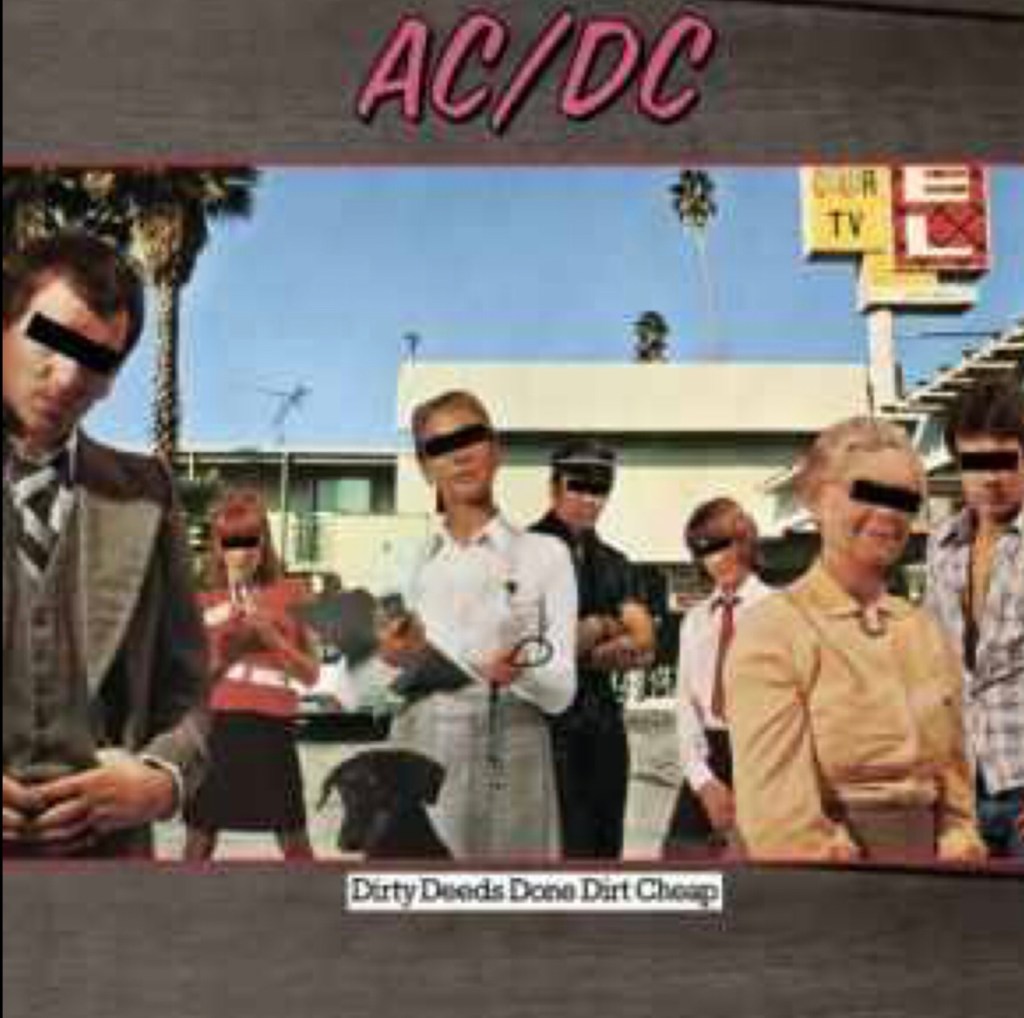
Australian Method Series: AC/DC – Dirty Deeds Done Dirt Cheap

Released in 1976. This is the cover we know for the album and not the Hipgnosis one which came out on the International release.

This version of AC/DC rocked hard. Bon Scott is on Vocals, The Young Brothers are on all things guitar related, Mark Evans is on bass and Phil Rudd is on the Drums.

Production is handled by The Easybeats main songwriters in George Young (big brother of Angus and Malcolm) and Harry Vanda.

“Dirty Deeds Done Dirt Cheap” is the third studio album by AC/DC. While it hit the streets in Australia in 1976, it didn’t get a U.S release until 1981.

And that decisions by Atlantic A&R man Doug Morris to release the album proved to be unpopular with the band.

AC/DC had successfully reinvented itself with a new singer, Brian Johnson. The band was working on a new album, which would become “For Those About to Rock We Salute You”, released later that same year.

But Morris saw a financial opportunity to capitalize on the success of “Back in Black” which had already sold over five million copies. And due to those numbers, Morris estimated that “Dirty Deeds” would move at least 2 million.

But it also took away an opportunity for the new album.

“For Those About to Rock” would have sold a lot more if Morris had waited.

So the US release of “Dirty Deeds” was widely seen as damaging the momentum for that album, which it outsold. The band was also forced to add songs from the “Dirty Deeds” album to its set list on its subsequent tour, further taking the focus away from their new album.

But going back to 1976, Atlantic was unhappy with the vocals and the production. This infuriated Malcolm Young because the label was putting shit on his older brother.

Bassist Mark Evans assumed Bon Scott would be fired as a result. The band was on the verge of being dropped.

But “High Voltage” which was also released in the United States in 1976 was still selling and the sales of that album versus what the label paid for it, gave AC/DC a lifeline.

The Young brothers along with Bon Scott were very creative during this period. As was the norm, each year had a new AC/DC album. And they always overwrote for each album.

As a side note a song called “I’m a Rebel” was recorded for this album, with music and lyrics written by Alex Young, another brother of the Young’s. While the song was never released by AC/DC, Accept somehow got their hands on it and released it as a single, and also named their second album after it.

Dirty Deeds

The riff’s simplicity is its magic.

The drum groove was used by Lars Ulrich for the “Enter Sandman” intro.

The lead break is the embryo of the “Thunderstruck”.

And Bon Scott is menacing as he gave us a new phone number to call.

36-24-36.

Love At First Feel

It’s got that Chuck Berry 12 bar blues rock feel, which AC/DC used a lot of. The most notable song being, “Long Way To The Top”.

Press play to hear a very good and underrated Angus Young lead.

And I like how it quietens down after the solo, with the vocal melody of “Love At First Feel” repeated as they build the song back up.

Big Balls

There was a band in Australia called Skyhooks who had this kind of cabaret/stage show delivery in their songs.

Rocker

Well the songs a rocker alright.

It brings back memories of Val Kilmer performing a rockabilly song in the movie “Top Secret”.

Problem Child

A favourite because of the riffs and the vocal delivery. If there is a track to press play on, then this is definitely one of em.

And Angus delivers another underrated lead break.

In concert, Scott would often introduce “Problem Child” as being about Angus.

There’s Gonna Be Some Rockin’

The 12 bar blues is back. Bands like Status Quo would build a career on tracks like this.

The rhythm is also very similar to that of “The Seventh Son” by Willie Dixon.

Ain’t No Fun (Waiting Round To Be A Millionaire)

It follows more of the same “Long Way To The Top” feel. But press play to hear the Chorus riff, as there’s a chord ringing out and then some arpeggios and single notes.

Ride On

It can be supercharged with other slow blues songs they have done, like “The Jack” and “Night Prowler”

Squealer

How good is the intro on this?

The bass plays a groove that is not typical of AC/DC. It’s almost funky like.

And when Bon Scott moves from his lower register to his higher register, the guitars become more aggressive and the drums get louder.

Angus again wails away on the guitar, delivering a very mature lead. It’s one of my favourite AC/DC cuts and it has been largely forgotten.

This is another track you shouldn’t ignore on this album.

In relation to sales it was a hit in Australia when it came out.

In the US, it was a different story.

Following the American success of “Highway to Hell” in late 1979, copies of the album began to appear as imports in the US.

Some of these were the original Australian edition on Albert Productions; however, Atlantic also pressed the international version in Australia, and many of these were also exported to the US.

Strong demand for both versions (in the wake of the even greater success of Back in Black) led the US division of Atlantic to finally authorize an official US release in March 1981. It went straight to No. 3 on the Billboard album charts.

In relation to sales, 6× Platinum in Australia and the US.

Crank it.

Standard
Copyright, Influenced, Music, My Stories, Piracy

The Week In Destroyer Of Harmony History – February 14 to February 20

2018 (8 Years Ago)

SPEAKING UP

When artists write lyrics that reflect society and our politics back at us, people get upset. When I think about the past, people who made real change persisted even when others tried their best to silence them.

Artists once formed the chorus of dissent to social ills and corruption. It’s probably a reason why we got so many songs that still stand the test of time today.

Artists told the record label heads what to do, not the other way around.

Machine Head’s new album at the time “Catharsis” was causing division amongst their American fan base. Europe, Asia and Australia didn’t really care about its Anti-Trump stance. Fans of any artist come from different sides of the political debate. It’s expected. No one can agree on everything. If people did, everyone would wear the same outfit. The world would be pretty bland if people all agreed. Wouldn’t it.

It never would occur to me to stop listening to an artist because of a stance they have on an topic.

Artists are not the enemy. They are mirrors, reflecting the world back to us. What we choose to do with the reflection is a different story.

CASSETTE COPYING INCORPORATED

Copying of music has always been there. We used to listen to the radio and record songs from it. We used to record video clips from TV music stations. We would make a copy of an LP from a friend or a family member. We would even re-copy a copied album. The music industry grew because of copying.

So if we used the buzzword of the modern era, piracy was rampant back in the 80’s. Most of my music collection during that period was made up of music copied onto blank cassettes.

You know that peak year of sales for the recording business in 1998. Well there is research out there which suggests it was due to two reasons. One reason was people replacing their vinyl collections with CD’s and the other reason is the people who had music copied on blank cassettes in the 80’s had enough disposable income to buy those albums on CD.

If I didn’t borrow and copy (which the labels call stealing and piracy), I probably never would have become the fan of music I am. As my Dad would always say, “I probably would have had four houses paid off, instead I have a tonne of grey concert T-Shirts, ticket stubs and a wall to wall record collection.” I wouldn’t have it any other way, because the memories are the stories I tell.

1979

Here is the kick off from 1979.

AC/DC – Highway to Hell

Six months after the album release date, Bon Scott would be dead. Mutt Lange is on board to produce at the strong insistence of their U.S record label and it was the start of the holy trinity of albums. Malcolm was less than pleased because it meant older brother George, was no longer involved.

“Highway To Hell” is a rite of passage. It might have been about touring, however timeless songs have lyrics that can be interpreted in many different ways. Plus the riff to kick it off is iconic. Credit Malcolm.

Livin’ easy, Livin’ free

Pink Floyd – The Wall

“The Wall” is Roger Waters lasting legacy. But the best song on the album to me is “Comfortably Numb” written by Gilmour and Waters. Credit producer Bob Ezrin for persisting to get Gilmour’s music on the record. However, it was “Another Brick In The Wall Part 2” that was all over the radio.

Check out “Goodbye Blue Sky” as well, which served as the inspiration for “Fade To Black” from Metallica.

And that outro solo in “Comfortably Numb”. Perfection.

Judas Priest – Hell Bent for Leather/Killing Machine

The first time I heard “Delivering The Goods” was via Skid Row’s “B-Side Ourselves” EP. I enjoyed the Skid’s live take on it, so I went seeking for the album in the second hand record stores. I actually own both copies, the “Killing Machine” version and the “Hell Bent For Leather” version.

Or the iconic riff in “Hell Bent For Leather” which is so derivative that many other bands had a similar riff before and after this song, like the opening riff in “2 Minutes To Midnight”. They even used it again for “Running Wild”.

In relation to guitar playing, Glenn Tipton always kept an eye and ear out for what was hot in guitar circles and he would go away, master these new styles and incorporate those influences and styles into his guitar playing. In this case, he breaks out a tapping lick which was obviously influenced by EVH. On albums from the mid 80’s, Tipton would start to incorporate sweep picking courtesy of Yngwie Malmsteen’s influence.

“The Green Manalishi (With The Two Pronged Crown)” is a great cover of a Fleetwood Mac song, which is written by their original and largely forgotten guitarist Peter Green (RIP), and it works pretty cool in the hands of Judas Priest.

Journey – Evolution

It has “Lovin, Touchin’ Squeezin’” but it’s not my favourite. The three listed songs are for various reasons.

“Lovin’ You Is Easy” has upbeat music and it’s always good to hear Schon rocking out.

“Do You Recall” has melodies which appear in Jovi songs.

“Lady Luck” grooves, taking its cues from Led Zeppelin.

The Police – Reggatta de Blanc

The Police didn’t really write a perfect album from start to finish, but they could write classic tracks.

The intro to “Message In A Bottle” hooks me. And it’s guitarist Andy Summers who saves the day with his add9 chord voicings over a simple bass groove.

Whitesnake – Lovehunter

I didn’t hear this album until very late in the 90’s. During this time I was buying so many second hand LP’s from record fairs and second hand book shops, I can’t even place a memory as to when I purchased it. But I do know I was always a sucker for the 3 for $5 bins.

Press play to hear “Walking In The Shadow Of The Blues” which is written by David Coverdale and the underrated Bernie Marsden.

It all started with the blues. Rock was built on the bones of the 30/40’s blues artists. Metal was also built on the bones of those same artists, along with the defiance and rebellion of rock music. Without the blues, the music I listen to, would not be possible.

KISS – Dynasty

One of the first albums I owned from Kiss and I played it to death, so it’s no surprise I have a few songs from it on my list.

“I Was Made for Loving You” was the obvious single, but it was still an unexpected hit, written by Paul Stanley, Vini Poncia and Desmond Child. Stanley also performs bass duties on this one.

“Sure Know Something” is a mixture between melodic rock, disco and new wave. In the end, it’s still Kiss. The bass groove is unique and the lead guitar break from Stanley is worth the listen.

“Dirty Livin’” is an excellent track. It could have been on a Steely Dan album or a Doobie Brothers record. Instead it’s on a Kiss record and it rocks. Peter Criss sings, it and he co-wrote it with Stan Penridge and Vini Poncia. It’s actually the only track that Peter Criss drums on. Anton Fig played drums on all of the other songs.

“Magic Touch” is solely written by Paul Stanley, which comes loaded with a melodic riff and a pop melody. Still to this day it’s a favourite, purely for its sense of melody.

“Hard Times” is from Ace Frehley and its another Kiss rocker.

2014 (8 Years Ago)

MORE RECORD LABEL INNOVATION

The record labels just kept getting my attention like trying to get the Courts to set a precedent in which the Internet Service Providers act as the Police to monitor music pirates based on the labels say so.

And my favourite was Principle Management (U2’s Management Company) losing money for the fourth year in a row, so its Chairman Paul McGuiness was quick to blame Google for his losses. Talk about sense of entitlement.

BADLANDS

With Jake E Lee excommunicated from the Osbourne camp no one was sure what he would do next. But in 1988, Badlands formed.

The original Badlands line up was Ray Gillen on vocals, Eric Singer on drums, Greg Chaisson on bass and of course Jake E Lee on guitar. And we will never be able to see the band that cut the self-titled debut album reunite. Ray Gillen has passed and Eric Singer said in an interview on the “Daves on Tour” website that his memories of Badlands aren’t good ones.

Eric Singer auditioned for Ozzy back in 1985 and he didn’t get the gig. Greg Chaisson also auditioned for Ozzy around the same period and he also didn’t get the gig. Both of them lost out to Randy Castillo and Phil Soussan. The outcome for both Singer and Chaisson was that they got to meet Jake E Lee and have a jam with him.

Eric Singer also did a stint in Black Sabbath during the Glenn Hughes/Ray Gillen era. Music is a relationship business and it was these relationships, albeit small ones once upon a time, that ended up getting together to create one hell of a debut album.

In an interview with Kerrang from May 1989, this is what Ray Gillen had to say on the bands beginnings;

“I was particularly keen on the project because I had to pick myself up off the floor after my involvement with the Blue Murder project had gone sour. I was basically asked to leave the band due to outside record company pressure. John Kalodner, one of the top people at Geffen Records, simply said that I couldn’t sing!”

Wearing their Seventies classic rock influences on their sleeves and very cleverly merging the minor key riff remnants of the mid-Eighties heavy metal sound, Badlands hit the target. Each song was unique.

The standout song on the debut is “High Wire”. It cemented Jake’s reputation. You can’t keep a super star down and what a great way to open the album.

Seriously, how good is that opening riff?

The beauty of the song is the simplicity. It is a simple A to C, A to D riff, the cornerstone to all classic blues/classic rock songs.

“Winter’s Call” is the most Zeppelinesque song on the album, especially in the verses, combining Middle Eastern drones with Celtic modes. It is also one of the oldest songs on the album, as the song’s roots go back to 1983.

“Streets Cry Freedom” is the next gem and a great way to close off side one. When vinyl was king, albums got sequenced by having a great opening track and a great closing track. The comparisons to Led Zeppelin, Humble Pie and Bad Company are prevalent in this song. The song’s verses are a typical 12 bars blues. Instead of playing it in the standard way, Jake E Lee shows his guitar smarts by arpeggiating the verses.

“Seasons” is the gem on the second side. It reminds me a lot of Led Zeppelin’s “Kashmir”.

This was 1989 and MTV ruled. Bands needed a hit to get recognition. So while “Dreams In The Dark” did the video rounds, as the record label decided it had the most “hit” potential, songs like “Winters Call”, “Seasons” and “Streets Cry Freedom” slipped under the radar.

The self titled album is brilliant. While other artists went with the one hit single per album and the rest as filler, Badlands delivered an album strong from start to finish.

THE WALKING DEAD

So how did a TV show, based on a niche Zombie comic, explode into the mainstream and into people’s consciousness.

In order to understand the answer you need to go back to the beginning. And the beginning for “The Walking Dead” goes back to 1968 and a movie called “Night Of The Living Dead”.

“The Walking Dead” is a classic case of building on works already in the public domain as well as building on existing copyrighted works by creating derivative works.

First the whole Zombie genre owes a large debt to George A. Romero’s classic “Night Of The Living Dead”. Many of the accepted Zombie formulas started here. Something that is quite common to us in 2014, was all brand new to audiences in 1968.

Due to a late name change from “Night Of The Flesh Eaters” to “Night Of The Living Dead”, the distributor forgot to include a copyright symbol on the release and due to this omission, the movie entered the Public Domain on its actual release date. That meant that anyone could do derivative works and also build on the existing story.

The whole opening scene from “The Walking Dead” of Rick Grimes waking up in the hospital alone, is a combination of what has come before.

In “The Day of The Triffids, the main character awakes to a silent hospital to find that his town has been overrun with blinded people.

In “28 Days Later”, a bicycle courier awakens from a coma to find the hospital and the city, completely deserted and overrun by people infected by the rage virus.

In “The Walking Dead”, Rick Grimes wakes from a coma in the hospital to find his town overrun with walking corpses, referred to as ‘walkers’.

Romero did miss out on a hefty payday due to the copyright bungle with “Night of The Living Dead”, but Romero’s story ends well. The film’s popularity OPENED UP MORE OPPORTUNITIES. Romero continued to create movies and the fame that his Public Domain movie gave him, opened up other offers around comics and novels.

In the end, the lack of copyright around one movie, grew and helped define the zombie genre in the same way that the lack of copyright around earlier blues and folk standards helped define the classic rock genre. So next time someone tells you they need stronger copyrights or longer copyrights, point them to the “Night Of The Living Dead” example.

SHARING MUSIC

I got a 8GB USB stick of music given to me recently by a musician friend who told me that I need to check out the bands on the stick. When I was growing up we used to these kinds of trades on cassettes. Back then we had an hours or hour and a half worth of music. Today 8 gigs worth of music is about 270 songs at 320kbps. Yep, that is how it is done today.

Some of the bands on that key are still favourites today like Degreed and Riverside.

RECLAIMING YOUR RECORDINGS

In between solo albums, Henley was busy with the Eagles, Geffen contract issues, Copyright issues against Record Labels, termination rights on songs and the Eagles again.

Henley knows his rights.

While people criticise musicians who turn into business people, it was inevitable that musicians would end up taking the business path.

The great record label rip off/exploitation made them seek this path. It is just unfortunate that a lot of the musicians that didn’t achieve world-wide domination still don’t realise their rights on their songs. Not a lot of hard rock and heavy metal artists are serving notice to their record label to reclaim songs they had written 35 years ago.

While I don’t agree on everything Henley does, like sending a cease and desist letter to an independent band or trying to get a remix law taken off the radar, the bottom line is this, he is a musician that looks out for his own interests. And that is why we loved our heroes.

And that’s a wrap for another week.

Standard
A to Z of Making It, Classic Songs to Be Discovered, Derivative Works, Influenced, Music, My Stories

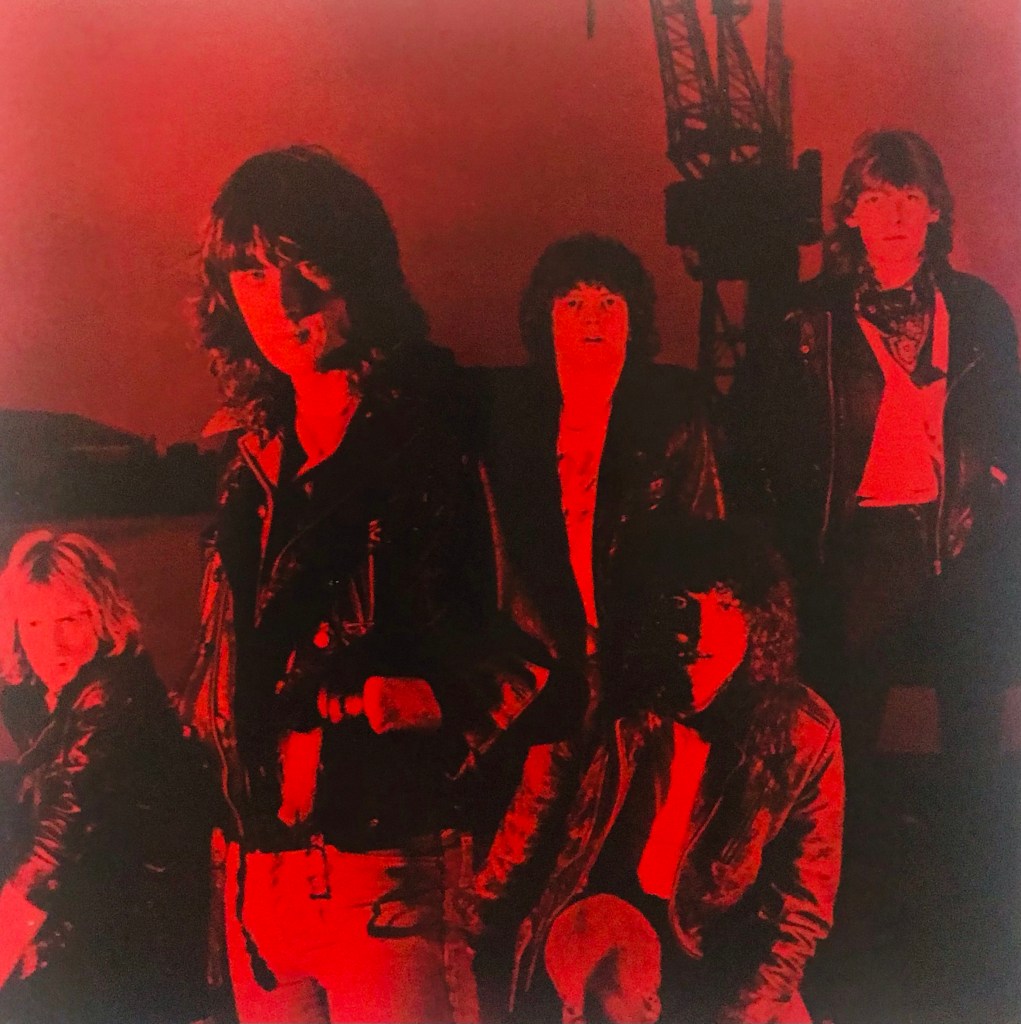
The Record Vault: Def Leppard – Pyromania

In 1983 and 84, it felt like there was “Pyromania” and then there was everything else.

Quiet Riot didn’t have the same success in Australia that they had in the U.S and Motley Crue was a few years away from their “Home Sweet Home” fame in Australia.

The Lep’s wanted to be on top of the pop charts. That was their mission. The rise was slow but gradual.

If you like rock and metal music, you would like this album. If you like pop and other forms of music, you would still like this album.

The “Pyromania” story begins with “High ’N’ Dry”.

The album didn’t sell what the band and the label expected it to sell. And their UK headlining tour had them selling 25% of the tickets. In other words, they were pulling in between 400-500 people in 2000-seat theatres.

Def Leppard was then given a supporting slot on the European Leg of the “Point Of Entry” tour by Judas Priest. But they never had a chance to make an impact, coming on second after Accept, who had massive momentum with “Balls To The Wall”.

The tour finished in December, 1981.

But the band was busy writing riffs on the road and man, they sure had a lot for new songs. They also revisited some older songs and rewrote em lyrically or rearranged em musically.

“Medicine Man” wasnt good enough to make the “High ‘N’ Dry” album but it was beefed up and retitled “Rock Rock (Till You Drop)”. With new lyrics, it became the album opener.

There was another unfinished track which was described as “a dual-guitar pop song” by Joe Elliot in an interview at TeamRock.com. Well that song was also finally completed, and it became known as “Photograph”.

Producer Mutt Lange, was also on board, being listed as a co-writer on all of the album’s 10 tracks which bothered Willis as he believed that wasn’t the case.

When the band was given the green light to record, the budget was tight. Two albums in, the band was in debt to their label to the tune of £700,000, and each band member was on wages of £40 a week.

A cold hard truth on the realities of the recording business and the creative accounting of the labels is that the bands incur debts that could last forever.

The album finally hit the streets in January 1983.

But.

The album was selling slow in the U.K. A showcase gig at the Marquee Club in London on February 9 had a very small attendance.

But in North America, it was a different story.

MTV put the songs “Photograph,” “Foolin’” and “Rock of Ages” on constant rotation.

Suddenly rock and metal bands changed the way they recorded. NWOBHM bands started to sing more melodically and with multi-layered backing vocals.

Joe Elliot once said that he wanted the power of AC/DC mixed with the variety of Queen for Def Leppard. That equals “Pyromania”.

I had the vinyl but it was also in the same box that went missing during a house move however I picked this up on CD.

Rock Rock (Till You Drop)

It’s a sound and groove that Cinderella and Kix and many other U.S acts would put to good use to build careers’ on.

But it was guitarist Pete Willis who wrote the riff to “Rock Rock (Till You Drop)” however he’s not credited.

Willis and Lange didn’t get along at all, constantly clashing with each other in the studio which then also led to tension with the other members.

As a founding member, Willis didn’t believe he could be removed or fired. But removed he was.

Anything goes

Photograph

There is no denying the riff. It’s as good as any of the classic riffs that guitarists play in guitar shops and so forth. Structurally, the song goes all AC/DC style riffing in the verses and pop rock like in the Chorus.

Stagefright

Rick Savage came up “Stagefright”.

It’s got this Sweet “Action” vibe merged with metal riffage in the verses and a pop chorus.

Too Late For Love

As soon as this song starts off, I swear I’ve heard it somewhere else.

Die Hard The Hunter

You feel the sadness as soon as the Emadd9 clean tone arpeggios kick in and it gets even sadder when Joe starts singing “Let’s toast”. Then it goes into a riff that Queensryche used when they wrote “Revolution Calling”.

That section from 4.05 to 5.05 always gets me to stop what I’m doing and start paying attention.

Foolin

The opener to Side 2, with that majestic guitar part.

The magic is in the arpeggiated intro and the eventual build up with the layered backing vocals singing “Is anybody out there?”.

This song stands the test of time.

The lead break begins with a call and response. It reminds me of “Over The Mountain” from Randy Rhoads and Ozzy.

Rock Of Ages

The first time I heard em.

Yeah, it’s better to burn out / Yeah, than fade away

A rock and rollers creed.

Rise up, gather ’round / Rock this place to the ground

Burn it up, let’s go for broke / Watch the night go up in smoke

Rock on (rock on) / Drive me crazier / No serenade, no fire brigade / Just the pyromania, come on

This is the embryo of “Pour Some Sugar On Me” and they take inspiration from Queen, by using songs like “We Will Rock You” and “Another One Bites The Dust” as influences for the verse delivery/structure.

When the Chorus comes in after two verses, it’s well worth the wait. “Don’t Stop Believin’” from Journey also used this kind of song structure.

Rock of ages, rock of ages / Still rollin’, keep a-rollin’

Rock of ages, rock of ages / Still rollin’, rock ‘n’ rollin’

You won’t be able to stop yourself from singing along with the chorus.

Comin Under Fire

This song is a must for any guitarist. It merges 70’s classic rock, with the NWOBHM sound with Scorpions Euro Metal.

The intro alone has it all.

Arpeggiated guitar lines hook you in and then the pedal point riff blasts through the speakers.

When the verses come in, we are greeted with volume swells that outline the different chords.

Like the pre-chorus of “Foolin”, the chorus of “Comin Under Fire” has excellent layered backing vocals. Lyrically, it’s not the best, but musically, it rules.

Billy’s Got A Gun

Steve Clark was a Jimmy Page fan, so it was no surprise that he was the one who created this Zeppelin-influenced epic.

Never underestimate the ability of a song to paint a picture.

This is my favourite Def Leppard cut and it has so many good bits.

The verse bass riff reminds me of “Heaven and Hell”. The backing vocals are so layered, melodic and operatic. The overall drum groove reminds of “Kashmir”. And I guarantee you that Chris DeGarmo, Geoff Tate and Michael Wilton all had this album and paid particular attention to this song as the “Operation Mindcrime” album is musically influenced by “Billy’s Got A Gun”.

And you get an unbelievable solo and an ending that makes you press play again, so you hear the album over and over and over again.

As time marches forward, the greatness and power of this song is being forgotten.

And it’s like the band made a crossroads deal to achieve fame. The success of this album put the band members on different paths than the previous ones they were on and that would lead to different outcomes for them.

On New Years Eve, 1984, Rick Allen went to overtake a car and failed to negotiate the bend. He lost part of his left hand in the accident and surgery to reattach it, led to an infection and then eventual surgical amputation.

And no one knew it at the time, but it was going to be long wait for the next album.

On a side note, Trevor Rabin and Mike Slamer are both thanked in the credits.

Those two dudes are very well known session guitarists, so I’m asking the question; did they actually play on this?

Slamer was used by producer Beau Hill on most of the records he produced in the 80s. If you have an Alice Cooper, Kix, Winger, Streets, Warrant, Fiona, Europe, Twisted Sister and Ratt album, then there is a high chance that Slamer played on it.

Standard
Influenced, Music, My Stories

The Week In Destroyer Of Harmony History – January 9 to January 15

Damn, I just realized I didn’t post this on my usual Sunday.

4 Years Ago (2018)

PUBLIC DOMAIN 2018

A simple post about the works not entering the public domain but should have been.

COPYRIGHT SUITS

Lana Del Rey and Radiohead went to war, with Radiohead suing her for copyright infringement in her song “Get Free” which has a verse that sounds similar to “Creep” released in 1992.

Boy George had the best quote on his Twitter account. “Radiohead were sued by The Hollies and now Radiohead are suing Lana Del Rey. Utter Madness!”

RANDOM LISTENING – THUNDER BAY VERSION

These artists albums came from Deke’s EOY list for 2017.

Greta Van Fleet – From The Fires

I thought it was Wolfmother.

“Edge Of Darkness” is the song that hooked me. It’s feel and groove, which is a cross between Southern Rock and Led Zep’s style of rock is infectious.

And I heard the album that came after and it was boring but I’m still interested as to see what comes next.

Headstones – Little Army

Check out the lyrics.

  • “We’ll I’m a red meat eater, liar and cheater”… from “Devils On Fire”.
    Take that all you politically correct wannabes.
  • “You won’t lift your finger to get your s!!t out of this” … from “Little Army”.
    Blaming others when something goes wrong and doing nothing to fix the problem.
  • “You’re singing the same old song, it’s called “sucking the life outta me”… from “Dead To Me”.
    You gotta love relationships.

Cheap Trick – We’re All Alright

I was never a Cheap Trick fan. Bands I liked always mentioned them as influences, but when you have limited funds to purchase music, I avoided Cheap Trick.

“Brand New Name On An Old Tattoo” is an excellent song title and the song is pretty cool as well. “Floating Down” rocks hard for a mid-tempo song, and the vocal line is infectious and “If You Still Want My Love” is a bonus track on the deluxe version that probably no one would hear.

And youngsters won’t care about this album and the extra few million who purchased “Lap Of Luxury” because of “The Flame” won’t care either. But there are people who will care!

Europe – Walk The Earth and The Final Countdown 30th Anniversary live

Europe nailed it.

They started off with the whole “War Of Kings” album and then played the whole “The Final Countdown” album.

When Joey Tempest screams, “Are you ready London?” the answer is a unanimous cheer.

Stephen Pearcy – Smash

Does anyone care if Stephen Pearcy is running solo?

The “Unchained” sounding “Ten Miles Wide” is cool while “Rain” is interesting musically and it has some decent lyrics. “Want Too Much” works but the piece d’resistance is “Passion Infinity”. Everything just fits and works brilliantly together.

Finally “Summers End” is another song that surprised me with its epic “Kashmir” feel.

Not bad from the Rattster. I wanted another album after this but it never came.

Collective Soul – Live

They don’t disappoint and they have the catalogue of songs to keep the live show ticking over.

I also dig the change to have “Shine” starting off with the piano and how they jam it out “Lynyrd Skynyrd” style at the end, turning one of their biggest songs into a 7 minute jam epic is worth the price of admission alone.

MEMPHIS THREE

If you want to know what society and politics is like, just look at the documentary “West Of Memphis”.

In it you will see incompetence and political corruption.

Three metal head kids (the Memphis Three) are arrested for the murders of three 8-year olds. They are convicted of murder and did more than 18 years in prison.

But they are out now as the whole case against them in a Bible Belt town was all bullshit.

And what the hell is an Alford Plea?

I looked it up on Wikipedia.

The Prosecutors knew they had to release them, but the only way they would do it is by an Alford Plea, so the Memphis Three claim their innocence but plead guilty. The tragedy is the killer still walks free and law enforcement can’t go after any other suspect because a piece of paper says they have the killers.

And the current prosecutor at the end of the doco is a joke. He’s saying those kids are guilty.  If they are guilty why didn’t he go to a re-trial then?

He knew he was going to lose the re-trial because the weight of new evidence found was in favour of the Memphis Three and he would lose votes and lose his position as City Prosecutor.

GRIT

Never quit. Good things come from frustration. If you are upset about failing, it just means that you haven’t failed enough.

Dream Theater almost called it a day, during the period between 1988 and 1991, when months rolled by and no suitable singer appeared.

Perseverance is a skill. It keeps you estranged from the conventions of society.

Ronnie James Dio spent 18 years paying his dues before finding success with Rainbow in 1976.

How many musicians starting out today will put in 18 years of service to music?

Breakthrough work is usually rejected at first. Success is slow.

There is plenty of money to be made in the long run if you don’t make money your number one priority. Start small and remember you don’t have to start perfect.

Just start.

8 Years Ago (2014)

THE CHALLENGE

The record labels arose as a way to get music out of its city venue limitations and into the greater world.

However in time these record labels formed into mega corporations with the emphasis on lower costs and high profit margins.

Throughout the Eighties and Nineties, the labels employed people that figured out how to engineer processes and machines to drive productivity and profit.

The labels ruled the kingdom unchallenged until another player called social disruption reared its head.

It started with a technology called Napster and society showed the powerful record labels what they really think of their high prices.

In the last 20 years, the record labels have constantly stated that the “biggest threat” they face is continued copyright infringement.

They point to research that shows how it is destroying businesses, employments and other sectors. They get people in the press and they get elected politicians on their side to believe those claims. Because, hey, big copyright monopoly companies said that copyright infringement is a threat so it must be a threat.

Did you know that Vivendi (owner of Universal Music) commissioned 23 reports and only 5 of those reports mentioned copyright infringement as a potential risk?

Guess which reports get released to the public.

Did you know that Sony (Sony Music and Sony Pictures) commissioned 15 reports and only 2 of those reports mentioned copyright infringement as a potential risk?

But in their recent annual report, the company listed copyright infringement as a major risk to their business, however 13 reports out of 15 disagree.

The record labels seem to forget that their business is reliant on humans forming a connection with an artist. Yep, with the artist. Not with the label.

THE KASHMIR EFFECT

Great songs don’t happen overnight or by a committee. They happen by jamming and by creating derivative accidents.

If there was any doubt about the power of “Kashmir”, then look no further than the metal and rock movements during the Eighties.

Kingdom Come’s derivative version “Get it On” helped the self-titled Kingdom Come album released in 1988 move over a million units in the U.S.

Whitesnake employed the same technique in “Judgement Day” from the “Slip Of The Tongue” album, which even though it didn’t reach the sale heights of the self-titled 1987 album, it still moved over a million copies in 1989.

In the Nineties, the main riff was used by Puff Daddy in the song “Come with Me”.

The defining part of the song is the ascending chromatic riff over a pedal point which is made even greater by the drumming from John Bonham, playing slightly behind the beat.

Dave Mustaine is a great employer of this technique.

“In My Darkest Hour” and “The Call Of Ktulu/Hanger 18” both employ this technique,

“Mary Jane” from the “So Far, So Good, So What” album released in 1988 has a riff which comes in at 0.46 and continues throughout the song. If it sounds familiar, it should, it is a very close derivative version of “In My Darkest Hour”.

“This Was My Life” from the “Countdown To Extinction” album released in 1992 has the main verse riff.

“Public Enema Number 1” from the “Th1rte3n” album released in 2011 has the main verse riff.

“The Kingmaker” from the “Super Collider” album released in 2013 has the Chorus riff.

Check em out if you don’t believe me.

THE THING THAT SHOULD NOT BE

“The Thing That Should Not Be” from Metallica is inspired by H.P Lovecraft. It is the story of Cthulu the Apocalyptic Elder God lying in a dream state within his sunken kingdom of R’lyeh.

Today, “The Thing That Should Not Be” is the story of Copyright.

In 1998, the US Congress agreed to grant another 20 years of copyright protection to every film, book and song in the land. And because of this, works that should be in the public domain are not there.

The world needs a sensible copyright policy which makes the public domain bigger and better so people can build upon.

SAMPLES

Everyone knows the song, “Every Breath You Take”. It is from the mega selling “Synchronicity” album from The Police and it is credited as a Sting composition.

Sting did bring in the demo with his bass line, synth chords and vocal melody.

But, it is in the performances and the Andy Summers guitar riff which makes the song memorable.

But Sting is credited as the songwriter, so he gets all of the publishing royalties.

And when Puff Daddy did his version, it was the guitar track which was sampled, not the drums or bass, but Summers guitar track.

THE ULTIMATE SIN

“The Ultimate Sin” is a misunderstood album.

It is loved by many as much as it is hated.

By 1986, the legend of Ozzy Osbourne was growing. After writing the “Bark At The Moon” album with one finger on the piano m, the heavy metal community waited with anticipation as to what Osbourne would do next.

Jake E. Lee got burned on the song writing credits for the “Bark At The Moon” album, so he demanded a contract up front before he even started writing. It’s not an ideal way to commence the album development cycle however this litigious house is the house that Sharon built.

Of course, the Osbourne’s didn’t credit Daisley for his song writing contributions on the initial 1986 pressing of the album, though this was corrected on subsequent pressings. So there are 500,000 albums out there that doesn’t credit Bob Daisley.

And that’s another wrap for another week.

Standard
A to Z of Making It, Classic Songs to Be Discovered, Copyright, Derivative Works, Influenced, Music, My Stories, Piracy, Unsung Heroes

The Week In Destroyer Of Harmony History – December 26 to January 8

Well it’s been two weeks since the last DoHh post.

Here we go.

4 Years Ago (2017 going into 2018)

2018 STARTED WITH SOME RANDOM LISTENING

Yngwie Malmsteen’s “Trilogy” album is full of great riffs and leads.

When the U.S record labels went anti shred in the 90’s, the Japanese and South American markets kept his career going.

There is no denying his 80’s output and it’s a shame that a rumoured collaboration with Ronnie James Dio never happened.

Then I moved to “Trash” from Alice Cooper. It’s commercial sounding, but it’s still Alice Cooper singing.

How can it not be good?

The real gems are “Spark In The Dark”, “This Maniac Is In Love With You”, “I’m Your Gun”, “Why Trust You” and “Trash”.

Afterwards, “Operation Mindcrime” from Queensryche got a listen.

It’s loaded with excellent guitar playing and the album gave me a tonne of great riff ideas to use as influences in my own song writing.

“Flesh and Blood” from Poison was next.

“Valley Of Lost Souls” is one hell of a good song and the best on the album.

“Let It Play” could have been on a John Cougar Mellencamp or Bryan Adams album while “Life Goes On” is a good power ballad and CC plays a tasty intro lead. “Come Hell or High Water” is another underrated tune in the vein of the Classic Rock of the 70’s that doesn’t get its dues.

“Ride The Wind” is another sleeper, while “Something To Believe In” copies the “Every Rose Has It’s Thorn” country bluesy vibe, however this time, the piano is the main driver instead of the acoustic guitar.

“Blow My Fuse” from Kix was up next. Now this album is a perfect example of the “progress is derivative model”.

It starts off with “Red Lite, Green Lite, TNT” which sounds very familiar like something from “The Rocky Horror Picture Show”. “Get It While It’s Hot” is heavily influenced by “You Shook Me All Night Long” from AC/DC. Actually it’s very heavily, heavily influenced by that song.

“No Ring Around Rosie” is a beefed up “La Grange” from ZZ Top in the verses. “Don’t Close Your Eyes” is taking its cues from “Home Sweet Home” and “Dream On”. “She Dropped Me The Bomb” is again heavily influenced by AC/DC with a touch of The Who.  “Cold Blood” is a very similar to “Long Way To The Top” from AC/DC in the verses.

“Piece Of The Pie” is very heavily influenced by Aerosmith. “Boomerang” is influenced by Led Zeppelin. “Blow My Fuse” is such a good track where the influences are not as obvious as the other tracks. “Dirty Boys” is influenced by “Let There Be Rock” by AC/DC.

Finally, Winger is up.

The groovy “Can’t Get Enough” kicks off the album.

When “Miles Away” came on, I wasn’t sure if it was Bad English or Def Leppard. It’s one of those slow tempo melodic rock songs. “Easy Come Easy Go” has a cool groove and I dig the horn section in the verses.

The next two songs are two of my favourite songs. “Rainbow In The Rose” and “In The Day We’ll Never See”.

RANDY RHOADS AND THE BLIZZARDS

The project could have been called that.

It all started when Ozzy auditioned Randy in LA. Afterwards they jammed for a few days with Dana Strum and Frankie Banali.

Then Ozzy went back to England and he met with Bob Daisley. Ozzy and Daisley jammed with another guitarist and drummer however Daisley mentioned that they needed better players.

Ozzy mentioned Randy Rhoads, however the label wanted a well-known British guitarist, but no one was interested to join because of Ozzy’s reputation. Gary Moore was Ozzy’s first choice and he rejected the offer to audition. Eventually the label relented and Randy was flown over to London. Rhoads and Daisley started writing music and it worked well. Lee Kerslake came towards the end of the writing process.

Here are some summaries of what I wrote about the songs.

Crazy Train

You can call this song Ozzy’s biggest hit but it never registered on the charts back in the day. But on Spotify and YouTube it’s huge. The new paradigm shows us what is being listened too.

Bob Daisley provided the title while Randy Rhoads had the riff and the chord structure. For the lyrics, Bob Daisley used Ozzy’s vocal melodies and referenced what was happening in 1979/80. The Berlin Wall was still up and the Cold War between the USSR and USA was still going on.

Goodbye To Romance

It was Ozzy’s title and it came from an Everly Brothers song called “Bye Bye Love.”

The lyrics were written by Bob Daisley and the subject matter was Ozzy’s “divorce” from Black Sabbath.

On the “Don’t Blame Me” video, Ozzy mentions he was humming the vocal melody, and Randy heard it and developed the chords around the melody. Ozzy’s revisionist take makes it sound that Bob Daisley was not involved at all in the song writing process, which is obviously not true at all.

CRITICAL MASS

There are always different kinds of audiences.

You have the early adopters, the first to hear about an artist. These early adopters are looking and wanting a different experience than the people who identify as the critical mass market.

Early adopters want something fresh, exciting, new and interesting.

The critical mass market don’t. They want something that is familiar.

Metallica when they started had an audience that adopted them early. Some of those fans stood by them all the way, even when they broke through to the critical mass market in the 90’s and some of those early day fans just moved on to something new and different.

And who should the artist please, the early adopters of their music or the mass market?

Profits are fine as they allow the artist to invest back into their art. But if profit becomes the main aim, well, nothing and no one benefits if profits are the only thing the artist seeks.

And yes, there are routes to popularity which are random or accidental or luck or being in the right place at the right time.

BOB ROCK AND METALLICA

Bob Rock knew exactly what every song needed.

The demo of “Sad But True” (I had a drummer in a band who thought it was called “Sad Patrol”) was heaps quicker. Bob heard a “Kashmir” feel and asked James to slow it down and make it crunchy.

Rock kept telling James to re-write lyrics to songs. He told him to use fewer words in the choruses and to use stronger words. He questioned James on what the song was about. He asked him how the verse lyrics referenced the song message. James didn’t like this line of questioning. If James couldn’t explain it back to Rock, it meant he hadn’t nailed the lyric.

Rock told Lars to take drum lessons and he told James to take singing lessons. He told Kirk to rewrite solos.

And as a side note, in “Get Him To The Greek”, Lars gets told by Russel Brand to “Go sue Napster and your fans”, and unfortunately that is the stigma that will forever stick with Metallica. They got so out of touch with reality that they sued their own fans for sharing their music.

Nicko McBrain sums up piracy in “Flight 666”when he said “We sold out in Costa Rica but haven’t sold an album in this country…”

8 Years Ago (2013 going into 2014)

GRAMMY’S

From when Jethro Tull won the first metal award at the Grammy’s, the whole awards has been a joke for metal and hard rock music.

Having Metallica then win the “Best Metal Performance” in 1990 for “One” and then in 1991 for “Stone Cold Crazy” just added to the Grammy metal jokes.

“One’s” fate was tied with the “…And Justice For All” album and that was meant for the 1989 Grammy ceremony.

And seriously, for the 1991 awards, a cover song was the best that was on offer in the metal world for releases released from October 1989 to September 1990. I don’t think so.

Even in 1999, Metallica won again for “Better Than You”.

For which song, I hear you say.

“Better Than You.”

Does anyone know from which album it was on or how the riff goes or the vocal melody?

I bet that most people will answer NO.

HEADED FOR A HEARTBREAK

Billy Squire made one ridiculous video with a pink top. And just like that an amazing voice, with a catalog of songs was gone.

Winger had Kip Winger. A Playgirl pictorial was too outlandish and as glam music was committing suicide by cloning itself over and over again, Beavis and Butthead came along and trashed the band.

Metallica even threw darts at Kip Winger while they recorded the “Black” album.

But.

“Headed For A Heartbreak” is a hell of a good song.

Winger’s debut didn’t come from out of nowhere. Kip Winger did his time as a songwriter and studio session musician working very closely with Beau Hill who would of course go on to produce the first two Winger albums that went platinum.

Guitarist Reb Beach is a graduate from the esteemed Berklee College of Music. He also did his time in backing bands and studio work, until he met up with Kip Winger and started writing demos.

Drummer Rod Morgenstein was the most experienced. Active since joining jazz fusion legends “The Dixie Dregs” in 1974, he was a very accomplished drummer to bring into the fold.

Keyboard player and back up guitarist Paul Taylor was the x factor. He was the touring keyboardist for Aldo Nova during his “Fantasy” success. He did his time with Alice Cooper’s backing band at the same time with Kip Winger and played on the “Constrictor” and “Raise Your Fist and Yell” albums.

Go on Spotify and check them out. Go on YouTube and check them out. Focus on the music and not on the pretty boy images put out there in the video clips.

DONT KNOW WHAT YOU GOT UNTIL ITS GONE

Andy Johns (RIP) was on deck again to deliver another big sounding album.

Drummer, Fred Coury didn’t even play on the album as Johns just kept on finding timing issues.

The end result is an album which is seen as a blues rock classic that can rival all the best output from seventies bands like Bad Company.

Hearing them again today, it sure brought back a lot of memories. Guess you don’t know what you got until it’s gone.

SEMI – OBSCURE BON JOVI SONGS PART 1

Everyone knows the singles and even some of those songs have now slipped into obscurity but if you dig deep enough you’ll hear some cult classics.

Tracks like;

THE HARDEST PART IS THE NIGHT

From the “7800 Degrees Fahrenheit” album released in 1985.

“Stay alive, the hardest part is the night”

SHOT THROUGH THE HEART

From the debut album released in 1984. “Runaway” took most of the glory as it became a radio staple however “Shot Through The Heart” was the reason I got into Bon Jovi.

It was good to see the song get some concert time during “The Circle” tour.

HOMEBOUND TRAIN

It’s written by Jon Bon Jovi and Richie Sambora and it’s got this heavy blues rock swagger that just connects.

The magic is at the three minute mark when it goes into this Elvis Presley meets James Brown meets Rolling Stones vibe.

The guitar drops out and it is the bass and drums that keep the groove going and Jon does a few voice impersonations, while Sambora keeps it funky and they build up the song again while Jon keeps singing “Here I Come”. The interlude is filled with church organ and harmonica lead breaks.

On “The Circle” tour, “Homebound Train” came back into the mix with Richie Sambora on vocals.

STARTING ALL OVER AGAIN

It’s got this “Rock N Roll Aint Noise Pollution” style intro written by the Jon Bon Jovi, Richie Sambora and Desmond Child song writing team.

THE RADIO SAVED MY LIFE TONIGHT

Another tune written for the “Keep The Faith” album that never made it.

To buy all the music that I liked was expensive, so I always purchased blank cassettes and kept my finger ready on the record button to record the latest song from the radio.

SEMI – OBSCURE BON JOVI SONGS PART 2

RIVER OF LOVE

It never made the “New Jersey” album and it is a tragedy that it didn’t get fleshed out and recorded properly. It’s got a basic foot tapping riff that sticks with you from the outset. For those keen fans, you will hear the riff groove re-used in “Save A Prayer”.

“Pretend we’re in some movie instead of faded jeans”

Listen to the “Raise Your Hands” reference in the interlude. You could write a whole song based on that riff. Wait, they already did.

Progress is derivative.

JUDGEMENT DAY and GROWING UP THE HARD WAY

Both songs begin with that whole “Na Na NaNaNa” in the same vein as “Born To Be My Baby”, “Rosie” and “Hide Your Heart” from Kiss. Both songs also share the same riff. Both songs are written by Jon Bon Jovi and Richie Sambora.

As with “River Of Love” these songs were recorded for the “New Jersey” album and they failed to make the cut. When a band is at their peak, they are able to churn out some great songs. The motivation is there to keep the machine rolling to see if the first round of success can be repeated.

In relation to the three demos mentioned above, I really thought that they would have seen the light of day “officially” when Bon Jovi released “100,000,000 Fans Cant Be Wrong” Box Set.

IF I WAS YOUR MOTHER

Man, this song is heavy and it has got some serious groove.

What a great vocal melody.

I saw them play it live on the “Keep The Faith Tour” and it rocked hard. The subject matter is weak and it hampers the song from being a powerhouse.

LETS MAKE IT BABY

It didn’t make the “New Jersey” album, however the bass line was used again in “Diamond Ring” (which was also originally written for the “New Jersey” album however it was officially released on the “These Days” album.

WEDDING DAY

“Wedding Day” was written for the “These Days” album, however it didn’t make the final cut.

The song is like a sleeper demo hit on YouTube.

Some of the lyrics made it into another Jon Bon Jovi song called “Janie Don’t Take Your Love To Town”.

SEMI – OBSCURE BON JOVI SONGS PART 3

DAMNED

It has a soul like funky blues groove very similar to what Lenny Kravitz was putting out.

“These Days” from 1995 is a very misunderstood album, released in a very confusing time.

Hard/Glam rock as we knew it was dead, Grunge was fading and alternative rock was rising, along with a form of industrial rock/metal.

LOVE IS WAR

Of course it sounds like “You Give Love A Bad Name” because Jon tried really hard to recreate the same vibe and the same kind of hit.

Is that a bad thing?

I’D DIE FOR YOU

“Slippery When Wet” was a monster of an album. And it was easy for other songs to get missed.

It’s got that Judas Priest “Breaking The Law” guitar line.

Did anyone pick up on that?

On YouTube, “I’d Die For You” is a cult hit. The fan’s have taken the song and made their own film clips, lyric videos and so on.

MY GUITAR LIES BLEEDING IN MY ARMS

The title is a take on the George Harrison classic, “While My Guitar Gently Weeps”.

ONLY LONELY

The bottom line is this; it is a fan favourite.

THE PRICE OF LOVE

“We live, we learn, we lieFor the price of love”

Aint that the truth.

WITHOUT LOVE

Written by the Jon Bon Jovi, Richie Sambora and Desmond Child song writing team for the Slippery When Wet album.

BURNING FOR LOVE

Sambora goes to town during the lead breaks, showcasing his abilities as a melodic shredder. He never went too over the top, always focusing on enhancing the song, instead of enhancing his ego.

RIVER RUNS DRY

It is a Jon Bon Jovi and Desmond Child composition that begins as a derivative version of Led Zeppelin’s “Stairway To Heaven”.

Remember, progress is derivative.

SAVE A PRAYER

No one knows this song even exist, but they should.

THE BALLAD OF BOB DAISLEY

The music business is tough.

However, what happens when an artist in a position of power and mainstream success, does their best to undermine the work of previous people in their career.

This is what the Osbourne’s are doing to Bob Daisley.

They are trying to re-write history to show that Ozzy Osbourne himself was the main reason why his solo career progressed.

They are omitting important facts that when Randy Rhoads and Bob Daisley signed on, it was always spoken of as a band. They are omitting important facts that the band was actually called Blizzard Of Ozz. They are omitting important facts of Ozzy punching Randy, because Randy didn’t want to do a live covers album of Black Sabbath songs.

Most importantly, they are omitting the main fact, that Bob Daisley served as the lyricist for for six albums.

The sad thing is that if anyone reads the credits to the “Bark At The Moon” album, you will see it listed as “All music and lyrics by Ozzy Osbourne.”

Like, yeah right, Ozzy really churned out all of those riffs.

It is sad at to what level the Osbourne’s stooped at that stage. One more thing, read the book from Ozzy and tell me how many times he mentions Jake E. Lee in the book.

But that is a story for another day.

VITO BRATTA

I did a Top 10 of Bratta killer riffs or moments.

All The Fallen Men

Wait

Love Dont Come Easy

Fight To Survive

Hungry

When The Children Cry

Cry For Freedom

Lady Of The Valley

Little Fighter

Warsong

In the end I had a hard time picking 10 songs for this post as each song that Vito has played on all have unbelievable sections.

BATM SONGWRITING CONTROVERSY

Coming into the “Bark At The Moon” sessions, the Blizzard of Ozz band was finished.

Bob Daisley and Lee Kerslake were fired before “Diary of A Madman” came out and the other driving force, Randy Rhoads died tragically when the plane he was on crashed into a mansion and burst into flames on March 19th, 1982.

Ozzy Osbourne as usual was at his drunken best but he still delivered the “Speak/Talk Of The Devil” album, and by doing so he was free from his Jet Records contract, ready to sign a major label deal with CBS.

Jake E Lee joined during the “Speak of the Devil” tour. Once that tour ended, the song writing process began for the next album.

Most of the writing was done by Lee and Bob Daisley.

“Bark At the Moon” was a title that Ozzy came up with. Jake E. Lee came up with the riffs and Bob Daisley wrote the lyrics.

While Bob Daisley got a buy out for “Bark At The Moon”, it looks like Jake E.Lee got screwed over. There are no royalty checks for the songwriting and no publishing monies either.

COPYRIGHT INC

I just finished watching the Rush documentary, “Beyond The Lighted Stage” and in the documentary, Neal Peart is talking about their “Vapor Trail” tour of South America and how they didn’t know what to expect because they never had big sales there and in the end they played to their biggest ever concert attendance at Sao Paulo.

The Brazil tour took place in November 2002. File sharing started in June 1999. Maybe copyright breaches by fans is not a bad thing.

And that’s another wrap for these last two weeks.

Standard
A to Z of Making It, Copyright, Music, My Stories, Piracy

The Week In Destroyer Of Harmony History – October 17 to October 23

4 Years Ago (2017)

METAL T-SHIRTS

My then five year old had to draw his family in kindy class. In the drawing he had me drawn with a black T-shirt and black shorts.

When they say “Take the Black” in “Game of Thrones”, a metal/rock head says, “pffft, we’ve already done that”.

All though I’ve morphed to plain black tees as I have gotten older, I still break out the metal and rock t-shirts now and then.

When I first got together with my wife, I had a Posion T-Shirt with the sleeves cut off and she had dance music playing in the car.

I asked her if she had anything else.

The answer was no.

I asked her if she would be okay if I introduced some new music in the car.

She said okay.

The next day, I had the rock and metal mix tapes ready for indoctrination.

At first it was the more commercial sounding rock and metal.

Secretly the dance tapes ended up in a draw in my room. It was many years later that she asked what happened to those tapes.

\::/

ALBUMS

I started this post with “Just put out the damn album”.

When we laid out cash for the 10 to 15 albums we used to buy a year, we had time to digest and live with the music for a long time so we were okay with the lead up.

But.

The 8 week lead up to the release is too much these days especially when the LP run could be over in a month after it’s released.

That’s right.

That’s how fast new albums disappear from the conversation in the current environment.

The first week sales that might look great on paper are irrelevant.

Check the second week streaming numbers. Then the third, then the fourth and so on. Those numbers will show you if the fans care for the music or if only the press (that the marketing team has paid to promote your product) cares.

And people will complain about streaming revenue and how it doesn’t pay enough. Control your rights, have a song that people connect with and you will be paid well and forever.

If investment firms are cashing in, it’s because streaming pays. But it pays the organization who controls the rights.

YouTube, Spotify, Apple Music and all the rest will pay forever.

Isn’t that better than the one off transaction between the record store and the fan?

That fan could have purchased the album, taken it home, played it once and traded it.

Maybe that fan played the album a million times. But the artist wouldn’t know that behaviour. 

Data tells us what’s hot and what’s not. And like it or not, it’s always been about the hits. To me a hit isn’t the song that takes the number 1 slot on a chart.

“Fear Of The Dark” or “Hallowed Be Thy Name” or “Creeping Death” or “Fade To Black” or “Master Of Puppets” didn’t set the charts alight but the fans made those songs hit’s. Convert staples.

We don’t live in 1989, where mediocre stuff on the radio gets some traction because of the marketing/hype dollars invested into the promotion. We live in the era of connectivity and virality and hits and streaming that pays forever.

But artists need to release a continuous stream of product to win.

TRIBUTE

It’s my bible.

I played the cassette tape to death trying to learn every riff and lick. And when I couldn’t pick it all up, I shelled out $50 on Wolf Marshal’s transcription of the “Tribute” album and I spent a lot of hours woodshedding to it.

Even though Ozzy re-cut his vocals for the release there is no denying Randy Rhoads and his love for his instrument. The way he re-imagines his multi-layered guitar riffs from the studio versions and turns it all into one definitive guitar cut is brilliant. For any guitarist, new or old, this is it. It gets no better than this.

“Mr Crowley” was the first song I got stuck into. It has two shred leads and the way Randy combined those guitar lines into one definitive track for the “was he polemically” section is brilliant. And the outro lead is just one of those songs within a song lead breaks.

“Revelation (Mother Earth)” has a finger picked part at the start which is breathtaking, the interlude is subdued and relaxing but that outro is breathless. And the live tempo is much better than the studio tempo. 

“Children Of The Grave” was the next song I tried to learn after “Mr Crowley”. I love the way Randy plays the C#m riff on the 4th fret on the 5th string. That’s how I learned this song. It wasn’t until many years later I heard the Sabbath version and Iommi is down tuned to C#.

I must say, I love the tempo of this live version.

And that outro improv lead is brilliant especially when Randy starts to reference Ace ala “Love Gun”.

When I think of “Children Of The Grave”, I think of this.

“Goodbye To Romance” is the piece d’resistance in guitar playing. The jazz like chords in the verses, the arpeggio chorus riff and that guitar solo.

These day’s guitarists can do unbelievable and very advanced things on the guitar but do they have the song sense of Randy Rhoads.

JACK BLACK

My kids back then had been watching “School Of Rock” and “The Pick Of Destiny” on and off, so i did a \::/ salute to Jack Black for spreading his love of rock and heavy metal to the masses.

Because the movies capture what rock and roll is all about;

  • going against the grain, 
  • breaking rules set by the institutions/parents and having fun along the way. 

Let’s make sure it will never be forgotten. 

MY NINTH POST ON THE YEAR THAT WAS 1983

“Back To Mystery City” by Hanoi Rocks was covered. It’s unfortunate that most people know of Hanoi Rocks because of drummer Nicholas “Razzle” Dingley’s death due to being drunkenly driven by Mötley Crüe’s Vince Neil.

All death is tragic. And I remember reading an interview (I think it was in Faces) that if Razzle’s didn’t join in 1982, the band probably would have broken up. And then his death in 1985 ended the band.

“Speaking in Tongues” by Talking Heads is mentioned. “Burning Down the House” sold the album. It was everywhere. One of my hard rock bands in the 90’s even covered the song in a rock context.

“Streets” was the creative musical outlet for Steve Walsh in between his departure from Kansas.

The debut LP was released in 1983 on Atlantic Records. The deal was negotiatied with one manager and destroyed by their next manager after he argued with the President of Atlantic Records, Doug Morris.

So Atlantic just released the albums with no promo and if they stuck, good. But they didn’t stick. And they never released the albums on CD while they controlled the rights.

Steve Walsh even got a lawyer to get the albums back from Atlantic and Rock Candy re-released the Streets albums recently.

So before people beat up streaming, they need to understand how it was back then and the monopoly the labels had to kill or break a career.

The Eric Martin Band released a great melodic rock album called “Sucker for a Pretty Face”.

And I still don’t understand how “Burning” from Shooting Star wasn’t a big hit.

Maybe because they were on Virgin Records, a label known for new wave and running low on funds, so when a rock album landed in their laps they had no idea how to promote.

But the truth is that the bands first managers were stealing from em, so the band fired em.

And because these managers used to work as record promotion guys, they blacklisted the band to the radio stations.

Meatloaf released “Midnight At The Lost and Found” but it was lost as “Bat Out Of Hell” was still selling like it was a new release.

And Aldo Nova was trying to capture the highs of “Fantasy” with “Subject”.

8 Years Ago (2013)

STREAMING

The public has voted. It prefers streaming.

You would think the war is over. But it’s not.

Spotify pays millions to the copyright holders.

Now unless the artist is a DIY artist who controls their own copyright, or Metallica or Motley Crue who own their masters, most of the copyright holders are the major labels. So the labels are raking it in.

There is also a term doing the round, called “Black Box Revenue.” This is the name given to income that the record labels collect that cannot be directly tracked to the recordings of a specific artist.

To put it all into context, streaming services pay the labels an upfront fee to access their catalogues. In addition, the services then pay the labels royalties for each stream.

Yep the labels get paid twice because they “own” the masters that artists created.

Musicians always had to work hard to get somewhere, that part hasn’t changed and it will never change while others fly private on the backs of the hard work of artists.

THE LIES OF THE LABELS

During the recorded music industries heyday, there was this widespread idea, sort of like an unwritten law, that we (the fans of music) could purchase music and own it, the same way we purchased and owned the toaster and any other commodity.

Of course when it comes to music, its never that simple.

What the music fans actually purchased was a non-transferable license to listen to the music under very specific and strict conditions. If you don’t believe me read the fine print.

We basically had the right to enjoy the music in private, over and over again.

METALLICA

I had been re-reading a lot of the magazines I accumulated during the Eighties and the Nineties and I finished reading a story about Metallica from the Australian magazine “Hot Metal”.

It was the June 1992 issue.

And in the interview James Hetfield was talking about the stage design and how they would have an area in the middle of the stage set aside for taping. The fans would have to buy a special ticket for the tape section area and Hetfield saw it as a cool thing to flood the market with bootlegs.

Metallica in 1992, wanted to flood the market with bootlegs. Metallica in 2013 had the following disclaimer on their Live Metallica website “Terms of Use”; Any violation of copyright laws may result in severe civil and criminal penalties. Violators will be prosecuted to the maximum extent possible.

KIRK HAMMETT

Kirk Hammett said that there hasn’t been any great bands “because of things like iTunes and streaming and social networking, it’s destroyed music. It’s destroyed the motivation to go out there and really make the best record possible. It’s a shame.”

You see, when you detach yourself from the streets and live in your ivory tower, you don’t see what is happening at ground zero.

Five Finger Death Punch is going GOLD and PLATINUM in a tough sales market. They have great numbers in relation to YouTube views and Spotify streams. Their albums have been selling up to the point of when their new one is released. Think about that for a second.

Shinedown are doing super numbers in relation to sales, YouTube views and Spotify streams. They have certifications to prove it as well.

Will we have the superstars of the Eighties and Nineties again?

Of course not, but we don’t live in a monoculture anymore.

We are living in the golden age of music access. The history of recorded music is at our fingertips and that is a good thing.

STREAMING vs OWNERSHIP

If I pay $120 for a Spotify Premium account, it means that i can listen to millions of songs.

If I buy $120 worth of songs from iTunes in Australia, I can only listen to 70 songs.

If I pay $120 for CD’s, I can pick up 5 albums with a potential of 50 to 60 songs.

BULLET FOR MY VALENTINE

I’m a fan.

The music that BFMV creates is very reminiscent to the hard rock / heavy metal music created between 1981 and 1986, before Bon Jovi released “Slippery When Wet” and the majority of bands started chasing the pop metal / pop rock “pot of gold”. It is basically the same music that I grew up on.

Metallica – CHECK
Iron Maiden – CHECK
AC/DC – CHECK
Slayer – CHECK
Megadeth – CHECK
Judas Priest – CHECK

Modern influences like Machine Head, Pantera and Metallica “Black” album period are also found in the songs. It’s probably why I connected with the band.

And that’s another wrap for another week.

Standard