A to Z of Making It, Influenced, Music, My Stories, Unsung Heroes

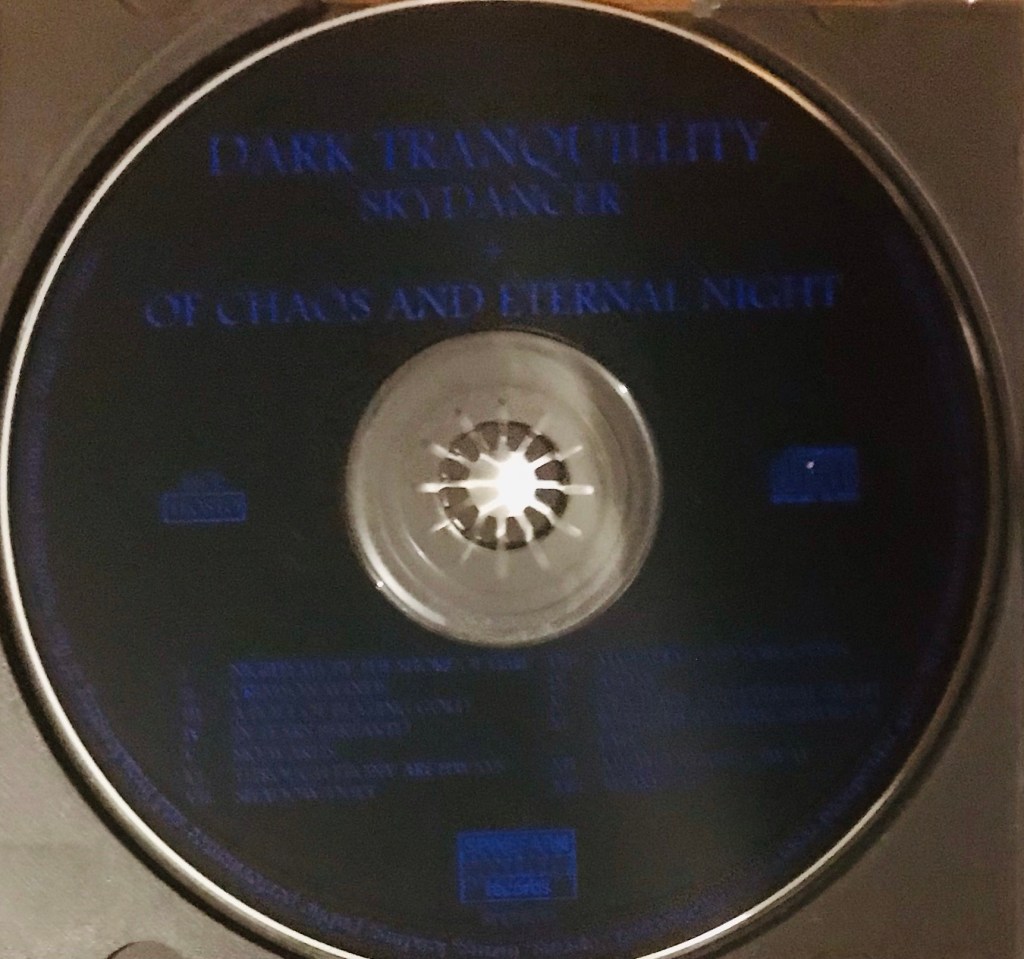
The Record Vault: Dark Tranquility – Skydancer

Dark Tranquillity is a Swedish melodic death metal band from Gothenburg. They are considered one of the pioneering acts of the Gothenburg metal scene, which also includes bands such as In Flames and At the Gates.

The band was formed in 1989 and in August 1993, the band released this album.

And they never stopped releasing music.

But when you look at their catalogue of releases, it’s like this album doesn’t exist.

Wikipedia describes “Skydancer” as a “very weird album and there really isn’t anything else like it – for good and bad. Most of the songs contain 20+ riffs that never are repeated in the same way, and the integration of clear vocals and acoustic guitars were extremely unorthodox for its time, as were the advanced use of counterpoint and recurring musical motifs”.

And I agree.

If you got into the band, post 2010, the debut album would be very strange to your ears and you would be questioning if it’s the same band.

The recording process was stressful. They only had a budget for 10 days of studio time, and working with studio engineers who were clueless about extreme metal. Which tells as the production is definitely demo like.

The band for the album is Anders Fridén on lead vocals, Niklas Sundin on lead guitar, Mikael Stanne on rhythm guitar, backing vocals, Martin Henriksson on bass and Anders Jivarp on drums.

Vocalist Anders Fridén either left or was fired after this album as he joined In Flames and was replaced by then rhythm guitarist, Mikael Stanne on vocals.

And recording history would have it that Mikael Stanne was the lead vocalist on the first In Flames studio album, “Lunar Strain”.

And for all the accolades of being a melodic death metal band, this album is part of the death metal genre.

Nightfall by the Shore of Time

Well it starts off with a guttural scream of the word “Nightfall”. And for the almost 5 minute song, the riffs move between fast thrash riffs, tempo changes and melodic Maiden like riffs.

With guttural singing.

Crimson Winds

It’s mid-tempo rock intro has a sing-a-long melodic lead. Then at the 1 minute mark it goes into a progressive like riff reminding me of Thin Lizzy and Iron Maiden and the guttural vocals kick in.

The interlude/solo section is so Maiden like.

A Bolt of Blazing Gold

It has an acoustic intro that sounds like it came from a Spaghetti Western. At about the minute mark, distortion guitars kick in. And 90 seconds in, guttural vocals kick in. At approx. every 30 seconds there is a change in music or tempo or time signature and that’s how this song progresses.

At 2.40, it goes back into a slower doomier tempo and we get clean tone vocals along with the guttural vocals.

In Tears Bereaved

This one is fast. Blast beats everywhere, tempo changes, time changes and guttural vocals.

Musically, there are some cool bits but overall, it’s a skip.

Skywards

Its relentless, with riffs crashing into each other, guttural vocals everywhere and hard to follow.

Through Ebony Archways

It’s a classical guitar piece at the start, almost waltz like. The acoustic riff changes as the song moves into clean tone vocals.

Shadow Duet

There’s some good riffs in this and the singing moves between growling and melody.

My Faeryland Forgotten

Chaos is how I describe this song.

Alone

A slower more doomier groove for the album closer.

However the release I have has the 1994 EP, “Of Chaos And Eternal Night” added to it. And the sound is remarkably improved than the debut.

Of Chaos and Eternal Night

You can hear the fast melodic metal riffs more prominent in this track.

With the Flaming Shades of Fall

This one is a mid-tempo track and the riffs are excellent.

Away, Delight, Away

Press play just to hear the intro as the guitars play an open string lick in harmony that reminds me of “Wasted Years”.

Alone ’94”

An updated version with better production.

If you like melodic vocals, then you will hate this, as the vocals are more growling than singing.

If you want to hear youthful enthusiasm and creativity by putting in as many riffs as possible into a song, then press play.

Standard
A to Z of Making It, Copyright, Derivative Works, Music, My Stories, Piracy, Stupidity, Treating Fans Like Shit

The Week In Destroyer Of Harmony History – November 7 to November 13

4 Years Ago (2017)

DIARY OF A MADMAN

Back in the 80’s, when songs from the 60’s and early 70’s used to come on the radio, I used to say, “really, play something more current.”

They sounded old.

Fast forward to today and all I play is old tunes. Actually 70 percent of the music I listen to is pre 1995.

More specifically; 1980 to 1992.

It’s hard to believe that “Diary Of A Madman” is 40 years old. 

Like the “Blizzard” album before it, “Diary” is a listening experience from start to end.

And because of my addiction to the “Tribute” album, I was blown away by the depth of material on “Diary” that didn’t appear on the live album, like “Over The Mountain”, “SATO”, “You Can’t Kill Rock N Roll”, “Tonight” and the unbelievable title track.

To top it off, it clocks in at 43 minutes which meant back in the 80’s I could dub it one side of a 45 cassette tape and the other side I could devote to the “Blizzard” album.

Check it out.

RELEASE DAY FRIDAY

Back in 2017, during this week I was listening g to;

Sweet And Lynch – Unified

Babylon A.D – Revelation Highway

Shakra – Snakes & Ladders

These three artists had my attention back then. Tomorrow it would have been someone else. They might come back at another time and get my attention. Maybe they won’t.

But if they are not releasing new product on a regular basis, they become forgotten.

So heading towards the end of 2021;

Sweet And Lynch are reading a new album.

Babylon A.D haven’t released any new music since 2017.

Shakra released “Mad World” in 2020 which I missed and they dropped a new single this year which I also missed.

8 Years Ago (2013)

WHO IS THE STAR (The Band Name Or The Personnel In The Band)?

When Metallica started on the scene, I dont recall anyone walking around saying that they got into Metallica because James Hetfield was such a cool cat or Lars Ulrich was the man.

People get into a band for multiple different reasons.

Like being a fan of genre and looking for similar artists of that genre or the songs connected or the album cover connected or the artist was getting a lot of word of mouth and people wanted to be part of the conversation and so on.

Of course some outliers do exist and some people become a cultural influence that transcends their music. In other words, they become institutions themselves like Ozzy.

Slash also comes to mind but it took him almost 14 years from when he left Gunners to re-establish and re-brand himself as a force to be reckoned with.

But he’s back with Gunners.

Because the band name is the star and it always will be.

That is why Axl Rose went all legal to claim the name.

That is why Tommy Lee returned to Motley Crue.

That is why James Hetfield returned to Metallica after rehab. That is why Lars Ulrich never contemplated anything else except Metallica during this period.

That is why Dave Mustaine resurrected Megadeth after he disbanded the band towards the end of the 90s.

That is why David Coverdale resurrected Whitesnake after he disbanded it.

That is why Dimebag didn’t want Pantera to end. He knew that Pantera was the star.

That is why David Lee Roth worked with Van Halen again. That is why Sammy Hagar wanted to work with Van Halen again.

That is why Alex Skolnick returned to Testament.

That is why there was a fight over who owns the right to the Queensryche name.

That is why Dave Gilmour and Roger Waters went all legal for the Pink Floyd name and the rights to “The Wall”.

That is why Benjamin Burnley went all legal for the right to use the Breaking Benjamin name.

That is why Bruce Dickinson and Adrian Smith returned to Iron Maiden.

That is why Rob Halford returned to Judas Priest.

That is why Black Sabbath reformed with three of the original members and released ’13’.

That is why bands like Ratt, Quiet Riot, Dokken, Poison and Skid Row are still continuing with very different line ups and in some cases no original members.

To finish off with the immortal words of Ronnie James Dio “And on and on and on and on it goes….”

COPYRIGHT

For all artists that sign record deals remember this. The label owns your copyright.

And guess what the labels are pushing for.

Even longer copyright terms. Because their is value in copyrights for the corporate entity holding it.

GREED

Greed from the major record labels could end up killing streaming services.

Back in 2013, musicians from Sweden were threatening to sue major labels Universal Music and Warner Music over streaming royalties.

These artists had identified that the problem lies with the major record labels rather than the streaming service and they took action to get royalty rates that better reflect the costs involved in digital production and distribution.

Even the UK Government did a review of streaming paymnets in 2020 and found that the labels are at fault.

Spotify is just one streaming service and they pay 70% of its revenues to music rights holders. Apple is similar and Tidal as well.

And Spotify, as at 2020 has paid $23 billion to the rights holders. When you add the numbers from the other streaming services, it’s a prettty massive profit the labels are making.

Once upon a time, the artists had the power.

Then in the Eighties, the labels stole it back. With the rise in revenue due to the CD, it made the labels mega rich powerhouses.

Well it’s time for the artists to take back the power. Basically the labels without any artists are worth nothing.

But there’s a new player in town. Hedge Funds and Investment firms. And they have cash and artists are cashing in.

TIME

It’s 1992.

The labels are signing Seattle bands, left, right and centre while at the same time they are dropping hard rock and heavy metal bands left, right and centre. This is the power the label had. Not only could they make an artist famous, they could also destroy an artist.

Because the labels controlled all the points of distribution.

But in 2013, things had changed dramatically.

But the power is still with the major record labels. They gathered enough of it during the Eighties and Nineties to be a force to be reckoned. Then in the Two Thousands the massive mergers and takeovers happened, further enhancing the power of the labels. Then in order to allow digital start-ups, the labels did one of three things; charge high licensing fees or litigate the start-up to bankruptcy or negotiate a large ownership stake in the start-up.

So even though the internet has lowered the barriers of entry, without the money and power of the label behind the artists, there is a pretty good chance, the artist would probably go unnoticed.

One thing is certain in 2013.

We move on fast.

Look at the Top 10 lists of pirated movies that TorrentFreak publish each week. It’s always changing and very rare for the same movie to be at number one spot for two weeks in a row.

Look at the Top 10 of the streaming Charts published by each country. The artists in the list are always changing.

And that’s another wrap for another week.

Standard
Classic Songs to Be Discovered, Derivative Works, Influenced, Music, My Stories, Unsung Heroes

The Record Vault: The Darkness – One Way Ticket To Hell… And Back

“One Way Ticket to Hell… and Back” is the second studio album from The Darkness. So much for all the talk about diminishing recording budgets, as this album cost £1 million to make.

Released in November 2005.

They even got Roy Thomas Baker, best known for his work with Queen, who is a major influence on The Darkness to produce.

And a change was happening within the band as well.

Bassist Frankie Poullain left the band during the early stages of production on the album, with most bass parts on the album played by guitarist Dan Hawkins.

So the musicians for the album are Justin Hawkins on Lead Vocals / Guitars and Piano,
Dan Hawkins on Guitars and Bass and Ed Graham on Drums.

Richie Edwards would join on Bass for the tour.

One Way Ticket

A flute and a choir starts it all off and then a riff inspired by “Highway To Hell” kicks in.

And the song is an amalgamation of the big hits from the debut, like “I Believe In A Thing Called Love” and “Growing On Me”. A perfect opener.

But the solo felt like a bit of a joke. And it feels like that was the intention.

Knockers

It’s got this Pink Floyd feel in the Intro and Verses and I was waiting for Justin Hawkins to sing “We don’t need no education”. But that never happened.

And the Chorus has this Gospel Country Rock feel.

Is It Just Me?

The riff is similar to “Too Fast For Love” and other blues rock classics like “Peter Gunn” with a Chorus riff that reminds me of Rick Springfield and “Jessie’s Girl”.

Dinner Lady Arms

Musically, it’s a Def Leppard “Hysteria” like riff, just more up-tempo.

But the Chorus lacks lyrically, because the title is stupid and the hook doesn’t resonate.

Seemed Like A Good Idea At The Time

A hard rock ballad with a title to challenge Meatloaf.

Hazel Eyes

It starts off with harmony guitars, which feel like they have a backwards effect on em. Then the strumming starts and the song begins. There’s bagpipes, a vocal melody and some high falsettos, which the guitar mimics as a harmony lead.

But it felt rushed and it ends abruptly.

Bald

The intro is brilliant, ominous and it builds nicely, until the guitars crash in with distorted chords and lead breaks. Musically, this is my favourite song, even though the Chorus vocal melody is a ball squeezing contest in falsetto highs.

Girlfriend

The riff has got that Status Quo 12 bar blues feel. But it’s not a favourite.

English Country Garden

I get what they are trying to do on this by bringing in the weirdness of Queen but it’s a skip.

Blind Man

Another skip.

Wanker

It’s the B-side to the “One Way Ticket” single and its Rolling Stones groove smashing against AC/DC and Status Quo works for me.

There are horns which gives it a soul rock feel, and Hawkins moves between normal singing in the verses to his falsetto in the Chorus which he even harmonises as a backing vocal.

It’s insane.

Grief Hammer

It’s the other B-side to the “One Way Ticket” single and the Intro gets me interested right away. Musically its pretty good.

And this album while good in certain parts lost me as a fan for almost a decade.

Because at times it felt like a Jack Black “Pick Of Destiny” soundtrack. And I like that soundtrack because it’s Jack Black.

And I guess it a big recording budget doesn’t lead to quality.

I more or less ignored them until “Easter Is Cancelled” in 2019.

Standard
A to Z of Making It, Classic Songs to Be Discovered, Derivative Works, Influenced, Music, My Stories, Unsung Heroes

The Record Vault: The Darkness – Permission To Land

Released in 2003. But I didn’t buy it then.

The debut album “Permission To Land” took everyone by surprise. No one was ready for The Darkness. Their look, their vocal chops, their style of music was all “anti-what’s in vogue”.

Justin Hawkins is on vocals, lead and rhythm guitar, synthesizer and piano. His brother Dan Hawkins is on rhythm and lead guitar.
Frankie Poullain is on bass and Ed Graham is on drums.

I saw the clips and I watched em perform on various TV shows. I was a fan but I didn’t feel the need to buy. I wasn’t sure if it was a gimmick or the real deal.

Anyway a few years later I actually purchased their product.

Black Shuck

I was hooked from the AC/DC inspired intro. Very “Dirty Deeds” like.

Once the singing started, I was like WTF.

In a simple verse you hear operatic falsettos, Meatloaf like “Bat Out Of The Hell” style vocals, Freddie Mercury extravagance and NWOBHM throaty spitfire vocals. Almost theatre like. King Diamond also comes to mind.

It felt like a train wreck and I liked it. So I stayed on the train to see how far it would go before it crashed.

Get Your Hands Off My Woman

Then this started, with a bass riff that reminded me of The Police. The operatic falsetto is all over the verses and the Chorus.

And I like the “Hit With Me Your Best Shot” inspired Chorus riff.

The train crash was still on the rails.

Growing On Me

Very Cheap Trick like in the Intro/Chorus and when the Verse kicks in, check out the Rick Springfield “Jessie’s Girl” riff.

And I like it.

Finally we get a solo in the middle of the song and in the outro, but it’s the riff before the solo which I like.

I Believe In A Thing Called Love

At 159.4 million streams on Spotify, it’s their “hit”.

What else can be said about this. The riffs are very Sweet/ELO like and the Chorus vocal delivery has become iconic throughout the years. I remember in the early days of the “Idol” shows, there always was a singer who auditioned with this song.

And how good is the Outro, with the lead first and then that head banging riff to close.

So far, so good. A four punch knockout combo so far.

Love Is Only A Feeling

A mid-tempo like ballad more Poison like. And by now, my ears had acclimatised to the falsetto and normal singing voices.

Givin’ Up

Musically, it’s AC/DC in attitude and spirit.

Stuck In A Rut

The intro riff is “Thunderstruck” played ala Malcolm Young. Vocally it’s everywhere and not my favourite, but it doesn’t take away from the power of the music to me.

Friday Night

More Cheap Trick like influences.

Love On The Rocks With No Ice

I like the music. Its hard rock the way I like it. It has that AC/DC style of rock, with all of these other influences throughout, like ELO, Bad Company and even Judas Priest.

And this song has their best solo moments in the mid-section.

Holding My Own

“Purple Rain” from Prince and “Faithfully” from Journey come to mind when I hear this.

Makin’ Out

More AC/DC style of rawk and roll to close out.

Check out the open string lick after the solo, very “Thunderstruck” like.

By the end of it, I hoped they would stick around, but had a feeling that the labels would use them and spit them out. Like “Chainsaw Charlie” in “The Crimson Idol”.

But I was wrong, as they have shown the same resilience from when they started.

Doing it their way and “anti-what’s in”.

In Australia, Canada and New Zealand, the album was certified Platinum. In the U.K, it was 4x Platinum.

In Denmark and the United States it’s certified Gold.

And I guess you know which review is coming tomorrow.

Standard
A to Z of Making It, Classic Songs to Be Discovered, Copyright, Derivative Works, Influenced, Music, My Stories

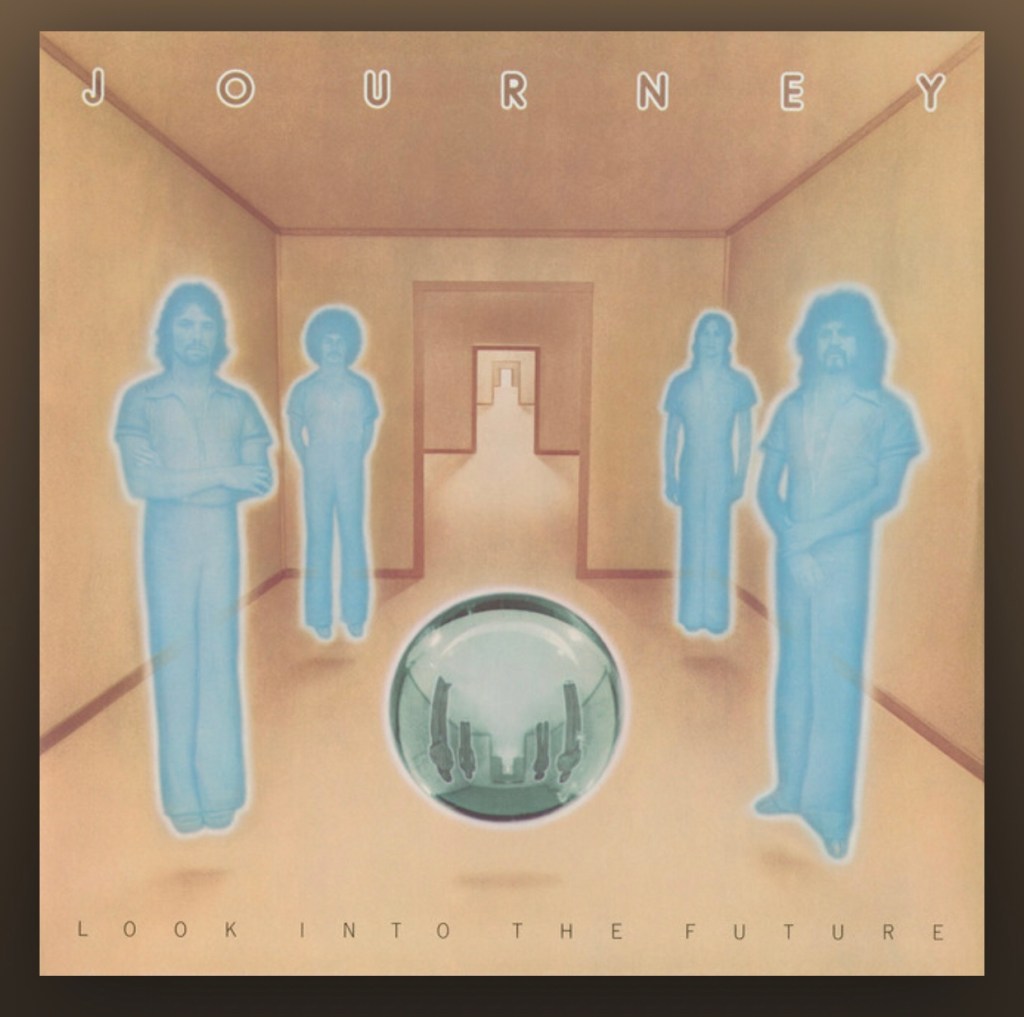
1976 – Part 3.7: Journey – Look Into The Future

Journey did exist before 1980 and before Steve Perry joined sometime in 1977/78. But it was a different Journey, more progressive rock and jazz fusion than the pop rock behemoth they are known for. But it’s those pop rock songs which game them a career. “Don’t Stop Believin” has 1.1 billion streams on Spotify. That equates to $3 million in royalties. Just for one song. And they have a lot of songs from that era in the hundred of millions.

But nothing from the early days.

“Look into the Future” is their second album, released in January 1976 on Columbia Records.

While the debut album was flavoured with a lot of progressive rock and Latin rhythms, the second album had a more standard song approach, with the progressiveness made to fit the song structures.

Guitarist George Tickner left the band after having co-written two songs for this album, leaving members Gregg Rolie (lead vocals/keyboards), Neal Schon (guitar), Ross Valory (bass), and Aynsley Dunbar (drums) as the recording members.

On a Saturday Nite

It’s very Doors like in style and vocal delivery.

It’s written solely by Gregg Rolie, so it’s no surprise that the piano leads the way to set the rock groove.

It’s All Too Much

A cover of a Beatles song written by George Harrison which appeared in the “Yellow Submarine” film and soundtrack.

Anyway

It’s like those 70’ mid-tempo songs that groove and rock and border on being like a heavy ballad but are not. Another Rolie composition which the band brings to life.

She Makes Me (Feel Alright)

Neal Schon makes an appearance as a songwriter along with Alex Cash and Rolie, with a super-sized Hendrix meets Sabbath like riff.

You’re on Your Own

Written by Rolie, George Tickner and Schon.

A piano riff and a melodic sing-along solo from Schon starts things off. Very Santana like.

And the song rocks and rolls.

Towards the end, Schon is shredding away over a Beatles like vocal melody in which Rolie is singing, “Trying to make up your mind”.

Look into the Future

Written by Diane Valory, Rolie and Schon. The start reminds me of “Free Bird” and the song retains that “Free Bird” feel.

At 8:10, it was the longest song Journey had recorded until 1980, when “Destiny” from the soundtrack album “Dream After Dream” took its place but no one would know it as the album is ignored, released the same year as “Departure”.

If there is a track to listen to on this album it’s this.

Especially when Schon starts to wail. His note selection, phrasing and emotive bends just needs to be heard. And the outro section has an open string like lick which Schon repeats while Rolie is singing, “it’s just around the corner” and then Schon breaks loose again, wailing away to close out the song.

The only thing you can do is press play again.

Midnight Dreamer

Written by Rolie and Schon, this one is funk rock fusion, very Hendrix like even in the vocal delivery.

But at the 2 minute mark it goes into a Doors like jam, with the piano leading the way and the drums playing a fast “Riders On The Storm” like shuffle.

And once the synth solo starts, its more ELP and Yes like than rawk and roll.

I’m Gonna Leave You

Written by Rolie, Schon and Tickner.

The intro riff is familiar because John Sykes used the exact same riff in the song, “Blue Murder”.

But then again, it’s a riff that is from the 70’s, one of those riffs that just can’t fall under copyright because it’s so derivative. Even “Carry On My Wayward Son” has this riff.

The title might not sound very metal like, but this cut is a Heavy Metal cut.

The Metal that I grew up on, before it became unrecognisable with guttural like vocals throughout.

Check it out.

Standard
A to Z of Making It, Derivative Works, Influenced, Music, My Stories

The Week In Destroyer Of Harmony History – October 32 to November 6

4 Years Ago (2017)

NIKKI SIXX

Love him or hate him, one thing is certain. Nikki Sixx is a lifer in the music business and once he and Allen Kovacs got back control of Motley’s catalogue in the late 90’s, they went about reinventing his image and persona, until he became bigger than the rest of the Crue guys combined.

Crue was my favourite band in the 80’s. Their attitude, their pop choruses, the street life lyrics and their simple but effective riffage all connected with me.

Crue showed the world that you don’t have to be the most gifted musicians to write effective songs that connect.

The 10th year anniversary edition of “The Heroin Diaries” came out during this period.

And you know what; it still is a pretty good album.

And 10 years is a long time in music. You could be here and then you could be gone.

Think about it.

In 1989, the Crue released “Dr Feelgood”. Their first ever Number 1 album. At the peak of their powers. By 1999, the Crue was creatively non-existent. By 2009, they had released a new album and had a massive tour. By 2019, they had retired from touring and then announced a comeback, which was derailed by coronavirus.

THE EARLY 90’s

By the early 90’s, the remnants of the dominant 80’s rock movement was looking for ways to fit in and get back people’s attention.

A lot of the acts signed towards the late 80’s had already splintered. Some got dropped and tried to get a new deal or they just left the recording business for good. And you had a lot of acts from the early 80’s, who had platinum success and somehow were still together and looking for ways to survive in the 90’s. You also had the 70’s acts that re-invented themselves in the 80’s thanks to MTV and were looking to keep the momentum going well into the 90’s. Aerosmith and Kiss come to mind here.

Meanwhile, the recording business was in a race to the bottom with a winner take all mentality. Label after label started to get sucked into the vacuum of the larger label.

Changes in personnel happened so fast that once an artist was signed, a few weeks or few months later, the people who signed the artist would no longer be working at the label and the interest to develop and promote the artist disappeared.

So the artist was in limbo.

But the label is not letting the artist go, just in case the artist makes it with another label. It’s one of the big no-no’s in the recording industry.

A record company in the 80’s would get you on radio, music television, magazines and they would push the album hard enough to achieve platinum sales.

If it didn’t “sell”, they would put you in the studio again, get you further in debt and if you failed again, you would be dropped.

A record label in the 90’s would sign you and then drop you before you even released anything or had a chance to get your message across.

And in today’s world it’s getting even harder to get your message across. It’s weird, because everyone has smartphones and everyone is connected however this great digital era also means that the users are the product.

WHITESNAKE 30th ANNIVERSARY

I was listening to the 30th Anniversary Deluxe Edition of the 1987 self-titled album from Whitesnake.

Coverdale might have racked up a $3 million plus debt recording it, but Geffen Records recouped their investment and Coverdale got to make some coin himself.

To show the obscene amount of money thrown at artists, Sykes was hired in 84 with a million dollar sign-on fee, which would turn out to be another amount Coverdale had to pay back.

Because, labels recoup everything before they start to pay anything out.

And the “Evolution” demos are gold.

Pure Gold.

The way Coverdale and his team edited them together to demonstrate the evolution of each song is something that no other artist had done at that point in time.

It shows how a good chorus or a vocal melody evolves into a song. In some of the demo’s Coverdale is lost for words, but he’s hearing the melody and he repeats the same lines so he has something on tape to go back to later on.
Sykes on those jam versions; solo’s and riffs like hell. He’s unrefined and spontaneous and just trying stuff out, seeing what sticks and connects. The beauty of demos are the mistakes. There are no maps or directions but the artist sort of knows where they are going.

For example, in “Still Of The Night”. In the first minute, Coverdale is drumming on his legs, singling and adlibbing while Sykes is playing a riff over the normal F#5 chord. Then the phone rings and the next bit you hear from the minute mark to 1.45, I believe is from another song writing session. Then it evolves into a band rehearsal. And it just keeps on evolving from there. The evolution.

It’s best to invest time and check em out yourself. 

THE DIFFERENCE BETWEEN A MILLION AND SEVEN MILLION

While it’s great to see David Coverdale celebrate the 30 year anniversary of the 1987 self-titled Whitesnake album.

Dokken and the work Lynch did with the band is another favourite of mine during this period and Lynch’s guitar work is a huge influence on my guitar playing and style.

But “Back for the Attack” released in 1987 gets no anniversary treatment. It gets no attention and is rarely part of the conversation.

But back in 1987 it was everywhere. The momentum started with “Dream Warriors” which was released to promote “A Nightmare on Elm Street 3: Dream Warriors”.

For nine months, Elektra Records flogged “Dream Warriors” to death over a staggered windowed release.

Then the album dropped and people purchased.

So what does 1 million sales in 1987 mean in 2021.

Using Spotify stats, 1 million sales in 1987 leads to 7.1 million streams of “Dream Warriors” in 2021.

Compared to how big Dokken was in the 80’s, these numbers are anaemic.

“Is This Love” has 181 plus million streams, while the “Here I Go Again” 1987 version has 204.8 million streams.

The “Here I Go Again” version from “Saints and Sinners” has 110 plus million streams and when you add the 68 million streams from the 1987 radio edit version, “Here I Go Again” combined 382 million streams.

The difference between a million seller and a seven million seller.

8 Years Ago (2013)

GUITAR WORLD

Once upon a time getting on the cover of a magazine was a sign of success. For the musical fan, the magazine was the only way that we could get any information from our favourite artists. The heyday for the metal and rock movements was the Eighties. Hundreds of different magazines appeared that covered certain genres and information was plentiful.

I started purchasing Guitar World magazines from January 1986. Any magazine that had content of bands/artists that I liked I devoured.

Circus, Faces, Metal Maniacs, Rip, Metal Edge, Hit Parader, Guitar For The Practicing Musician, Hot Metal, Metal Hammer, Kerrang, Guitar School, Guitar One, Total Guitar, Guitar Player and Guitar.

So how important is it to an artist to be on the cover of Guitar World today?

Back in 2013, I still subscribed to the magazine and I had all the issues for the year mapped out in front of me.

This was the cover roll for 2013.

December – Nirvana – In Utero Anniversary
November – John Petrucci
October – Synester Gates / Zacky Vengeance
September – Ultimate Prog Roundtable/Asking Alexandria
August – Jeff Hanneman Tribute
July – Tony Iommi and Ozzy Osbourne
June – Dave Mustaine / Chris Broderick
May – Brad Paisley
April – Orianthi
March – SRV “Texas Flood” Anniversary
February – The Who / Pete Townsend
January – Led Zeppelin Rides Again

Guitar World likes to play it safe. Sort of like a record label in the current environment. Not a lot of new artists in the list because they don’t sell advertising.

Each issue is still enjoyable and the lessons, plus the tabs are the reason why I still subscribed to it.

However, with user posted tabs on the rise in greater numbers on the internet (along with peer reviews and edits), plus YouTube videos of guitarists covering their favourite songs, in addition to the artists themselves delving deep into the “how to play” department, does a magazine like Guitar World still have a relevance in today’s market?

SCORE SHEET

STREAMING
Everyone talks about the money that isn’t filtering down to the artist however streaming is too entrenched to be replaced.

ALBUM
Everyone talks about the money that is lost due to piracy.

Remember that 20% of the tracks on Spotify have never been played.

SALES
Are not the best metric to measure a bands reach and pull.

PIRACY
Is not that large of a problem as the majors and the RIAA make it out to be.

LIVE
Remember the excitement and the buzz of going to the show. It was uncontrollable. Everyone waiting in line to get inside, to watch a band that rules, in an era that music ruled. By 2013 standards, it was too expensive to take kids to a concert and with a pandemic/endemic happening right now, it’s not even safe.

MUSIC IS DERIVATIVE

All the music we love is an amalgamation of music that has come before. In a lot of the cases, this amalgamation involves some serious copying.

In other words, the history of music as I know it involved a lot of “stealing.”

MUSIC IS DERIVATIVE 2

Since the Copyright industries have grown into Corporate monoliths, it is suddenly uncool for an artist to use previous works as influences for further works.

But.

Those artists who “steal” are the most successful. Those who “imitate” are the most successful. Those who “copy” are the most successful.

Led Zeppelin built a career on copying blues and folk standards.

Metallica built their career by copying their NWOBM influences and many others.

Oasis built a career on copying from “The Beatles”.

The Beatles built a career on copying from blues and rock standards.

It is a shame that we have a generation of people that have grown up with a belief that music is created in a vacuum and they decide that legal threats is the best way forward.

When Balance Sheets are affected, these industries will do anything to hold on or maintain their profits.

And that’s another wrap for another week.

Standard
Classic Songs to Be Discovered, Influenced, Music, My Stories

Kiss Rocks Vegas

Kiss was in the news recently about cancelling their next Vegas Residency run of shows because of a mutiny within their own camp over COVID-19 protocols.

As I was reading the story, I was on Amazon Prime, so I searched for Kiss and “Kiss Rocks Vegas” came up.

Perfect as I do remember it going to Number 1 on the DVD charts in Australia when it came out in 2016.

And before I started to watch the show, I did some reading.

Tommy Thayer.

Thayer cops crap from hardcore Kiss elitists, but if it wasn’t for Thayer, this release wouldn’t have happened. He was involved in getting it filmed, the sound recorded and produced. Apart from that, he also does a lot more behind the scenes for the band around Kiss conventions, YouTube docos and social media.

He’s not an original member but goddamn he’s an important one.

The show was recorded from November 5-23, 2014 during the band’s residency at the Hard Rock Hotel and Casino in Las Vegas, Nevada, during their 40th anniversary tour.

It was then released in cinemas worldwide on May 25, 2016, and later released on pay-per-view on June 14, 2016.

Detroit Rock City

It’s their best opener. I don’t think any other Kiss song can replace it.

That middle guitar harmony section is some of the best music committed to tape from Kiss, so take a bow Paul Stanley, your guitar prowess goes unnoticed to many.

The song is listed as being written by Paul Stanley and Bob Ezrin.

As a fan of the songwriting process, it’s never been clear to me what Ezrin contributed.

Was it musically or did he contribute ideas on the arrangement?

“Creatures of the Night”

Written by Stanley and Adam Mitchell.

The power of the riff is lost with all the exploding pyro.

“Psycho Circus”

Written by Stanley and Curtis Cuomo.

The pyro again detracts from the musical performance.

“Parasite”

An Ace Frehley written song, performed vocally by Gene Simmons.

The main riff is always a standout (Dimebag from Pantera mentioned it as one of his favorites) even though Gene is a little loose vocally.

“War Machine”

Depending on my mood, I like this one more than “God Of Thunder” as a signature song for Gene Simmons.

And Simmons got some help in the song writing department from Bryan Adams and Jim Vallance. There’s also a certain Stone Temple Pilots song that sounds eerily similar.

If you don’t believe me, press play on “Sex Type Thing”.

Live, Simmons nails this one.

“Tears Are Falling”

A Paul Stanley track and a favourite for me.

It was actually a surprise to see it in the set list. Bruce Kulick also doesn’t get the cred he should for keeping the band in “with the shred crowd” during the 80s.

“Deuce”

Does anyone know what a “deuce” is when Gene Simmons sings, your man is worth a “deuce”?

Tennis 40/40 is what comes to mind.

“Lick It Up”

Did Stanley and Vinnie Vincent know that they were creating a classic here?

I like how they go into a bit of “Won’t Get Fooled Again”.

“I Love It Loud”

It’s so repetitive but great for a live sing along. Simmons and Vincent delivered the goods here.

“Hell or Hallelujah”

Paul Stanley rises to the occasion again with this “Monster” of a track. Actually the two best songs from Kiss in the 2000’s are from Stanley in “Modern Day Delilah” and “Hell Or Hallelujah”.

If you’re not banging your head to the riff, check for a pulse.

“God of Thunder”

Lyrics like “wasteland”, “Aphrodite”, “Olympus”, “raised by demons” and a “modern day man of steel” are all forgotten when the Chorus kicks in and we are all screaming, “God Of Thunder and Rock And Roll”.

“Do You Love Me?”

It’s very “Sweet” like.

Do Ya like it?

“Love Gun”

Another stone cold classic from Stanley.

“Black Diamond”

Eric Singer shows his vocal chops after a small intro from Stanley.

“Shout It Out Loud”

The encore starts.

“Rock and Roll All Nite”

And the show ends.

Kiss’s bread and butter is the live show. It always was and always will be, and they have it all.

Fire, pyro, blood, flying through the arena, walkways above the crowd and everything else they could think off.

Check it out.

Standard
A to Z of Making It, Copyright, Music, My Stories, Unsung Heroes

The Week In Destroyer Of Harmony History – October 24 to October 30

4 Years Ago (2017)

ATTENTION

Attention is fleeting.

Attention is there and then it’s gone.

Or it never goes away because fans care about the artist; love what the artists does, their music and their connection to them via social media.

But some of those fans will grow and change and fall out of love with what the artists does.

And what will the artist do to get back their attention.

STREAMING

All the action is in streaming. The oldsters hate it and the youngsters embrace it. 

Personally, I thought all the 80s acts I grew up with would re-enter the charts because streaming would allow them to compete with the new acts. But back in 2017, none of the old acts had hit a billion streams.

Used to be you weren’t a star until you got a record deal and heard your song on the radio.

Then it was MTV. 

Then it was YouTube and now you’re not a star until you see your track in the Spotify Top 50 and just recently your not a star if you don’t have a song with a billion plus streams.

The media keeps pushing stories about the small payments of recorded music to artists and songwriters, however revenues are going up on the back of streaming. If you ain’t making money, get a better deal because streaming will pay you forever.

COPYRIGHT

Copyright issues are always in the news.

The Electronic Frontier Foundation (EFF) was speaking out against the Recording Industry Association of America (RIAA), accusing the RIAA of asking the US government to apply copyright law the way the RIAA wishes it to be applied.

Because if Copyright is there to reward creators then there would no need for the Spinal Tap creators to take Vivendi/ Universal Music to the courts.

Both of these corporations are making up accounting transactions so the creators of the Spinal Tap movie and the soundtrack are STILL shown as being in debt to the studio/label.

Yep, you would pay off a home loan in 35 years, but in 2017, the Spinal Tap soundtrack still had a debt to the studio/label.

And all they wanted to do was take back their copyrights. Because Copyright law was written to allow the creator to take back their copyrights after 35 years.

80’s AND TODAY

80’s
It was hard being a musician
Today
It’s still hard being a musician.

80’s
You wrote and performed music.
Today
You write and perform music, maintain an online presence, manage yourself, promote yourself, have to know your legal rights, organise your own shows, licensing, merchandise and more.

80’s
Artists did the hard work of building up a local fan base, city by city
Today
Artists want to take over the world in an instant.

80’s
The labels and the media measured attention via sales of recorded music.
Today
Well, attention is measured by likes, shares, views, streams, sales of physical, sales of digital, sales of tickets and so forth.

80’s
MTV was king.
Today
YouTube is king.

80’s
To discover new music, we needed to rely on a knowledgeable record store operator, gatekeepers, radio and expensive import magazines.
Today
We don’t know when new music comes out? There is just too much noise. Spotify Release Friday is one avenue. We have Google, YouTube, Bandcamp, Sound Cloud, Spotify, Pandora, iTunes, blogs and many more.

80’s
Gatekeepers decided who would get signed or not
Today
The internet decimated the barrier to entry.

GETTING PAID

Do you wanna get Paid?

The ones who write the songs always get paid.

Sting gets paid for “Every Breath You Take”. He’s listed as the sole songwriter, but the guitar arpeggio pattern created over the synth/bass lines from Sting’s original demo is the iconic part of the song. And it wasn’t written by Sting, but Sting gets the payments.

Ozzy Osbourne gets paid for all of the “Bark At The Moon” album songs as he “supposably wrote” it all by himself.

Bon Scott wasn’t kidding when he said “getting ripped off on the pay” in “Long Way To The Top (If You Want To Rock’N’Roll)”.

But in the 80’s, two things happened to the music scene. 

MTV made artists into global superstars and the CD revolution cashed up the labels while all the fans replaced their vinyl and cassette collections with CD’s.

Suddenly you had record label execs flying private and living in mansions on the backs of monies earned from songs the artists wrote.

Motley Crue almost had their career derailed when Elektra Records refused to promote the band post Vince. They got Vince back and the label still didn’t deliver on promises. Nikki Sixx along with manager Allen Kovacs went into battle. They got back all the rights to the Motley’s songs, left Elektra Records, formed Motley Records, took control of the Motley narrative and re-invented the band to become a commercial behemoth from 2003 onwards.

And we moved from Napster to iTunes to YouTube to Spotify in little over a decade while at the same time MySpace tanked and got replaced by Facebook, Yahoo lost the search battle to Google, video stores lost out to Netflix and Amazon became the one stop shop.

It turns out the public is paying for music. It’s called streaming and if the Spotify royalties the artist is getting are low it’s because not enough people are streaming their songs. Then again, if you are on a label, the label will be taking the lion’s share of the royalty.

And with streaming, every artist is competing with Metallica, Led Zeppelin, The Beatles, AC/DC and the whole history of music.

The power of music is in the song, not the distribution system. And if we are listening, artists will get rich and have more power than they know what to do with. It’s the modern music business.

8 Years Ago (2013)

KILLSWITCH ENGAGE

I was listening to “Disarm the Descent.”

I came to Killswitch Engage late. I didn’t listen to their first three albums.

It was a “Guitar World” issue from 2007. At that time the magazine still came with a DVD of bonus content. One of the bonuses was a lesson from the Killswitch guitarists on how to play “My Curse” and after watching it, I was hooked.

So I asked my bass player friend to burn me all of their albums, which he did.

By the time, their 2009 self-titled album came out; I was purchasing it without even listening to a single note. So free does pay as I became a buyer of their next album.

Sales data can show what is in demand at a certain point in time; however the reach and the popularity of a certain band or a certain album cannot be properly measured until many years later.

Remember that history is written by the winners. In music, the winners are the artists or bands that outlast the competition.

VITO BRATTA

The record labels didn’t have no moral obligation to keep their hard rock rosters in tact. The only obligation they had is to their shareholders and their bottom line.

So with every major label signing bands from Seattle, the poor old hard rock bands that made the labels billions over the last 10 years suddenly disappeared. White Lion was one of them. The label never dropped them, however they would have if the band stayed together.

White Lion finished up because Vito Bratta became conflicted. Disillusioned.

The recording business only cared about short-term income and total control.

Vito wanted longevity and he didn’t like how White Lion was seen as part of the same movement of bands that he was commenting about. He was an artist competing in a game of rock stars. He was an artist competing in a game of profits. With each game, there is a winner and a loser.

By 1991, every artist needed a hit to get recognition. The album format was already dead due to MTV playing the “HIT” video. If a band had a hit single then people were interested in buying the album to see what that band is all about.

This was Vito’s disillusionment. When he made an appearance on the Eddie Trunk show, he said words to the effect like “how do you write a hit single” when he was talking about Big Game, the following up to Pride.

White Lion was never a band that played the singles game, however the industry forced them into it and their main musical songwriter started to second guess himself as a creator.

CHARTS

What do the Billboard charts tell us?

On the Rock and Metal chart we had the following list for the week;

  1. Korn – Paradigm Shift (1 Week on The Chart)
  2. Alter Bridge – Fortress (1 Week On The Chart)
  3. Cage The Elephant – Melophobia (1 Week On The Chart)
  4. Stone Temple Pilots with Chester Bennington – High Rise (EP) (1 Week On The Chart)
  5. Avenged Sevenfold – Hail To The King (7 Weeks On The Chart)
  6. Dance Gavin Dance – Acceptance Speech (1 Week On The Chart)
  7. Metallica – Through The Never (Soundtrack) (3 Weeks On The Chart)
  8. Five Finger Death Punch – The Wrong Side Of Heaven And The Righteous Side Of Hell: Volume 1 (11 Weeks On The Chart)
  9. Dream Theater – Dream Theater (3 Weeks On The Chart)
  10. Rush – Vapor Trails: Remixed (2 Weeks On The Chart)
  11. Asking Alexandria – From Death To Destiny (10 Weeks On The Chart)
  12. Skillet – Rise (16 Weeks On The Chart)
  13. Volbeat – Outlaw Gentlemen & Shady Ladies (27 Weeks On The Chart)
  14. Black Sabbath – 13 (18 Weeks On The Chart)
  15. Bring Me The Horizon – Sempiternal (27 Weeks On The Chart)

Special mention:

Imagine Dragons – Night Visions (58 Weeks On The Chart)

So the above charts show me a few things:

  1. That the fans love new music. There are 5 albums that have their first week on the charts.
  2. After a week, if that new music is not great, we move on very quickly.
  3. If that new music is great, we spread the word and the album hangs around in the “charts”.  Avenged Sevenfold, Five Finger Death Punch, Skillet and Volbeat are a few bands that are hanging around.
  4. If you create a group of songs that connect, expect to be hanging around for a long time. Imagine Dragons is one such band.
  5. Artists need to adapt their business practices. Instead of spending months on an album, just to see it fade away within 6 weeks, they should be releasing more frequently. It doesn’t have to be original songs all the time. It could be acoustic versions, cover versions, unique live versions, blog posts and so on.
  6. Here today, gone tomorrow is the modern paradigm. Artist need to adapt, so that they are here today, everyday.

Expectations (Alter + Adapt) = Survival

So what do all of our favourite bands/artists keep on doing?

They keep on spending a lot of time writing and recording 10 to 15 songs, just so they can group them together and release them as an album.

This “expectation” worked once upon a time.

However it is not working today.

But Metal and Rock artists still have time as metal fans are loyal and still purchase the “album”.

Check out the following comment from Anita Elberse and her book “Blockbusters: Hit-Making, Risk-Taking, And The Big Business Of Entertainment”. It is probably the best advice that any artist will get.

“…out of a total of 870,000 albums that sold at least one copy in 2011, 13 album titles sold more than a million copies each, together accounting for 19 million copies sold.

That’s 0.001 percent of all titles accounting for 7 percent of sales.

The top 1,000 albums generated about half of all the sales, and the top 10,000 albums around 80 percent of sales.

Deep in the tail, 513,000 titles or nearly 60 percent of the assortment, sold fewer than 10 copies each, together making up half a percent of total sales.”

513,000 album titles sold fewer than 10 copies each. So if you are one of those 513,000 bands that sold less than 10 copies, what do you do?

You obviously expected a better return on your investment. A lot of artists will give up, a lot of bands will break up and then there will be a small percentage who will adapt and alter their expectations.

The competition for listener’s attention is huge.

Like the Seventies, the Eighties and the Nineties, there are still only a select few of releases that end up selling more than a million.

And that’s another wrap for another week.

Standard
A to Z of Making It, Classic Songs to Be Discovered, Derivative Works, Influenced, Music, My Stories, Unsung Heroes

The Record Vault: Digital Summer

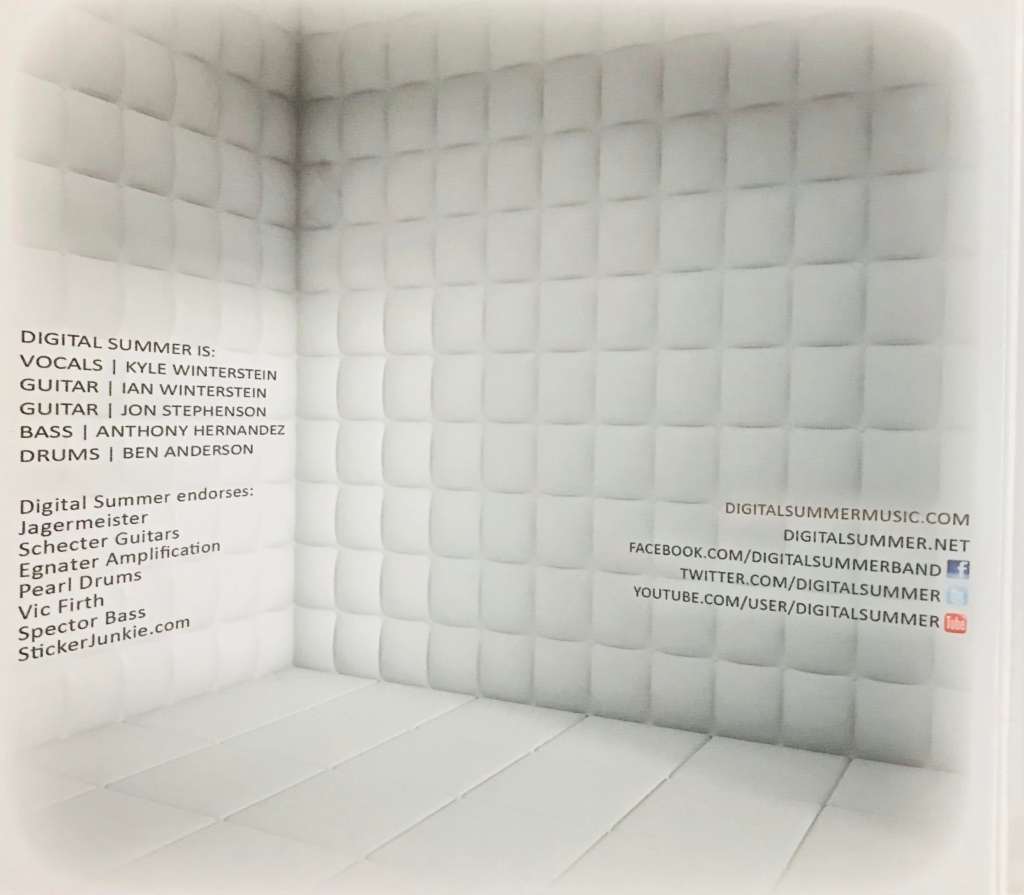
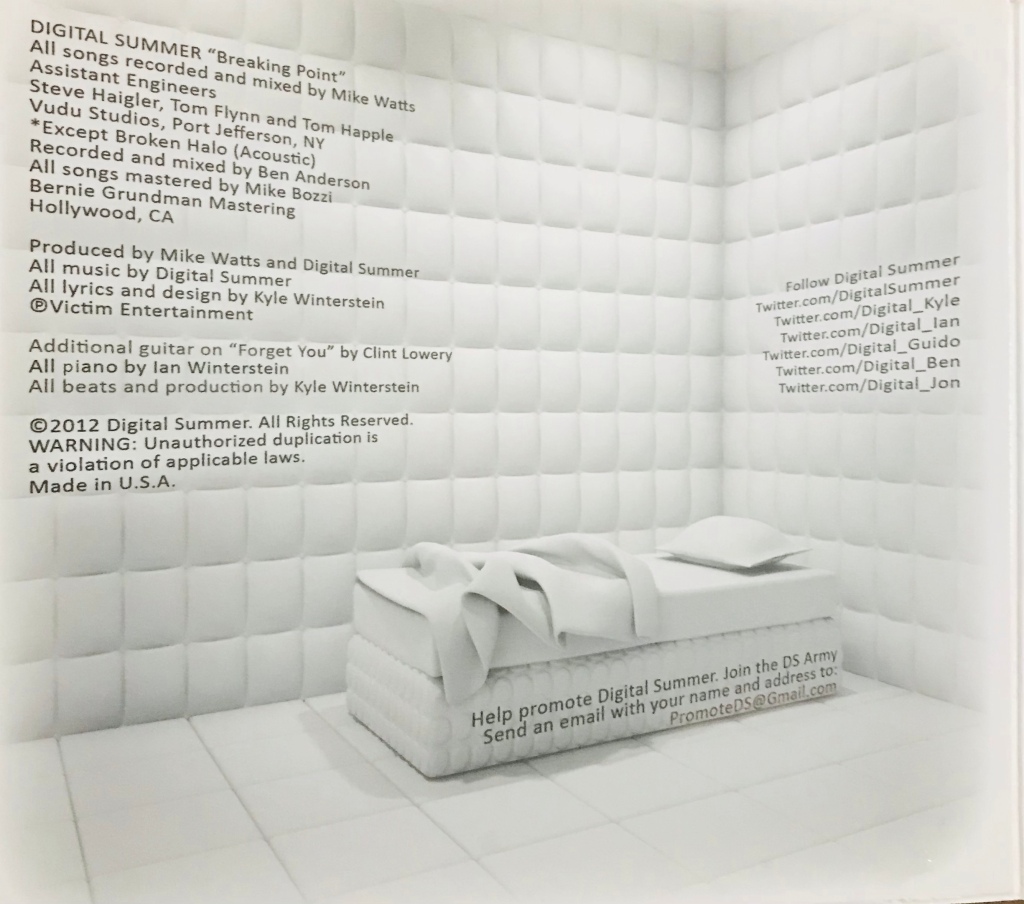
“Breaking Point” came out in 2012.

It comes on the back of a Kickstarter campaign to fan fund the album and tour. Like many successful fan funded projects, they surpassed their initial goal of $25,000.

And once the deadline passed, the band had received over $50,000.

They used the money to get outside producers to work on the album (and you notice the sound improvement immediately), to pay for a larger marketing campaign to promote the album and to finance a longer tour around the U.S.

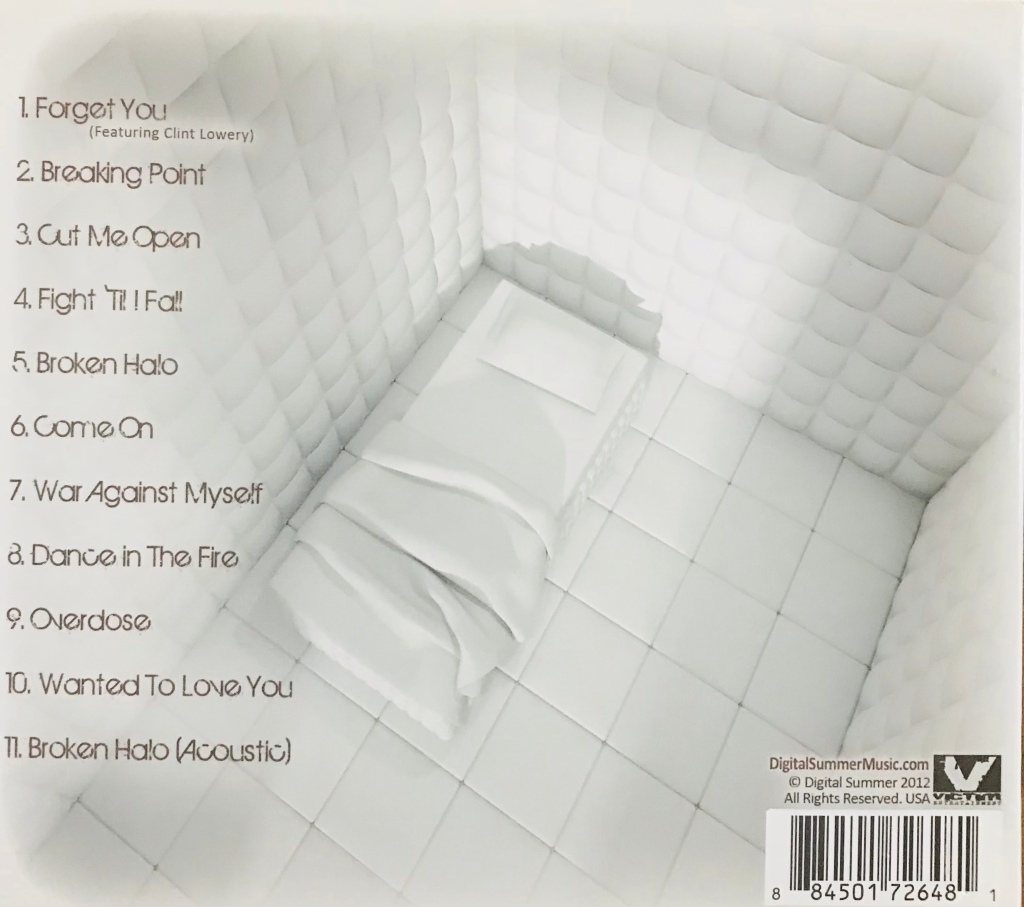
Forget You

It features Clint Lowery, the lead guitarist from Sevendust.

It’s a great opener, more heavy rock than the “alternative metal” branding.

Check out the intro riff.

Now that I’m sober
I’m finally making up my mind
I can see who you really are

The great awakening from the haze.

Shut your mouth, I’m done listening to you
It’s over, it’s over, I’ve had enough were through
I’m taking back the person that I used to be
Before these scars, before your lies so FUCK you, forget you, goodbye

There’s no love there. A perfect F U.

And finally we get a lead break spotlight in the Digital Summer catalogue.

Breaking Point

A Disturbed like riff starts off the title track.

Stand up, just look at me
And tell me what you see
Besides a man on the brink of insanity

Growing up on the 80’s themes of standing up for yourself and living on a prayer or the story songs like rat-tailed Jimmy and a Chevy with primered flames, the 90’s changed those themes to be more personal, full of self-doubt, depression and a certain darkness.

And it continued even in movies.

The Michael Douglas pic, “Falling Down”, shows a man on the brink of insanity and what happens when he falls off the brink.

Cut Me Open

I like the way this starts, with the electronics and the clean tone arpeggio riff.

But this time I realize from the bottom there’s no place left to go

There is a saying that when you hit rock bottom the only way is up.

But sometimes, there is no place left to go. And the lyrics definitely bring back memories of “Down In A Hole” from Alice In Chains. Great song but the topic is heavy.

Fight Til I Fall

It reminds me of Seether.

Nothing to lose when you’ve lost it all
To the death I will fight till I fall

This is when a person is most dangerous. When they have nothing to lose.

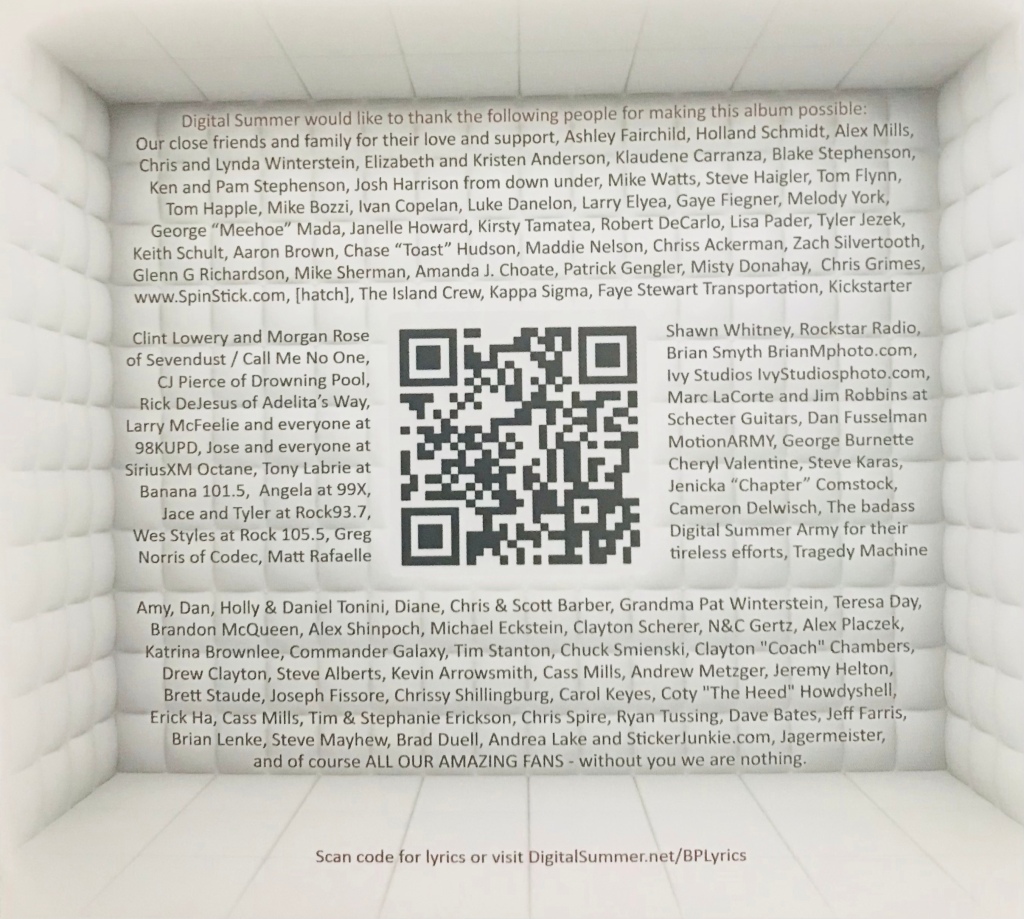
The QR code would take you straight to the lyrics on their website.

Broken Halo

There is this U2 vibe in the verses which I like and the Arena Rock Chorus would not be out of place on a Shinedown album.

You’re my favourite addiction
The perfect complication
You’re my favourite addiction
My sick and twisted medication

My favourite addiction is music. It’s always music. It doesn’t matter how I feel, music is always there for me, unconditionally loving me.

Come On

It’s an aggressive song, reminding more of Breaking Benjamin than anything else.

In relation to themes, Skid Row had “Piece Of Me” and Digital Summer has “Come On” and “Fight Till I Fall”.

Come on, come on if you survive this round
Step it up or you’ll be going down

It’s very Ivan Moody like who was always looking at taking someone on in his lyrics.

War Against Myself

Why can’t you see that I’m at war against myself
For once could I fight someone else

We are our own worst enemies. We would ponder a simple mistake forever.

Dance In The Fire

I like the Intro as it reminds me of songs that New Order write.

And we dance in the fire
And we laugh at the flames and never learn
With no cares for tomorrow
Cause tonight we just love how it burns

It’s not as bad as “She Goes Down” from the Crue or Jovi’s “Bad Medicine” or how Springsteen is looking for some action while dancing in the dark, but it’s a song about getting laid.

Overdose

An intro similar to “Dance In The Fire” kicks off this song.

You’re like an overdose with no antidote
I’ve fallen victim far too many times

The sins of lust and the damage left behind when the lust and fire ends.

Wanted To Love You

This is a great ballad and the vocal delivery is excellent.

As if they’re paved into the sidewalks
These city streets reflect my thoughts and moments

When you walk the streets of your hometown your whole life, every pavement step and street corner contains a memory.

I’ve wanted to love you, for so long I need to
It’s the only thing left that my heart knows to do

You can hear the pain in the voice, the emotion is very Aaron Lewis like. Musically I like how the piano plays over a foundation of electronic noises and repeating guitar lines.

Broken Halo (Acoustic)

An acoustic version acts as a bonus track.

Instead of 16 songs, we get 10 this time around.

For an unsigned and truly independent band, this is a slick addition to the alternative metal movement.

The tour they had with 12 Stones had a shitty Agent and in some cities, cancellations ensured.

However Digital Summer still arrived at those cities and spread the word to their fans that they are in town to meet and greet.

And they did this by taking time off from their day jobs as firefighters, paramedics, producers and teachers.

Standard
Classic Songs to Be Discovered, Influenced, Music, My Stories

1976 – Part 3.4: Led Zeppelin – Presence

I was never a Led Zeppelin fan growing up. I didn’t even know that “Get In On” referenced “Kashmir” until I purchased the “Remasters” album in the early 90s.

And after that purchase I also heard many other songs from 80’s bands in Zeppelin’s music.

And what a weird cover for a rock band, with a family staring at an unfamiliar object around the dinner table.

So if i based my purchases on how the cover looked, this album wouldn’t even make the list.

Achilles Last Stand

One of my favourite cuts.

It’s long and repetitive, but there’s something about the bass groove, Page’s inventive playing to tweak the riffs each time and Bonham’s thundering drum sound that doesn’t make it boring.

Led Zeppelin hated being associated as one of the forefathers of Heavy Metal, but this cut begs to differ. Hell, I would even associate it with Progressive Metal. And at 10 plus minutes it definitely qualifies.

For Your Life

The Blues Funk grooves are back. It’s not a celebrated cut, but goddamn press play to hear the syncopated grooves of the bass, guitar and drums.

There is this middle blues fusion section which feels like a “roll the tape” moment.

The solo is Page abandonment, he’s phrasing is off, his atonal in some sections, exotic in others and aggressive and somehow it all works.

At 6 plus minutes it could have gone through the John Kalodner editing filter, but no one was going to tell Led Zeppelin how to do anything. They told you instead.

Royal Orleans

It’s like a jazz blues fusion cut. It doesn’t really go anywhere, and serves more as a short filler.

Nobody’s Fault But Mine

One of my favourite cuts and I had no idea that it was a cover song from Blind Willie Johnson who released it in 1927.

Because the song credits in the album are shown as Page and Plant.

The Bluesy Intro is that good that Jimmy Page sped it up and used it for “Shake My Tree” with David Coverdale.

And my ears tell me that the Bluesy Intro came from a John Renbourn acoustic cover of the song in the mid 60s.

So it’s a cover of a cover.

The vocal melody is from the original and the musical interpretation borrows heavily from the John Renbourn adaption.

But I still like it and Zeppelin brought the song to the masses.

Candy Store Rock

It’s a blues shuffle which doesn’t really go anywhere and the “oh baby” and “yeahs” are just too much.

Hots On For Nowhere

It reminds me of Van Halen during the Roth era and I believe David Lee Roth would model his vocal style.

Listen to the verses if you don’t believe me.

Tea For One

As soon as I saw the title I made up my mind that I hated the song, because I’m a sucker for a good title. And this ain’t a good title.

But man.

What a riff to start it off.

It then goes into a slow blues solo, like “Since I’ve Been Lovin You” and then Plant chimes in.

And the album wasn’t well received and it’s still the lowest selling Led Zep album but I think that more had to do more with the previous albums still selling like crazy.

They also didn’t tour on this album due to Robert Plant recuperating from serious injuries he had sustained earlier that year in a car accident.

While the second half is weak, there is a lot of good material here to dismiss the album.

Crank it.

Standard