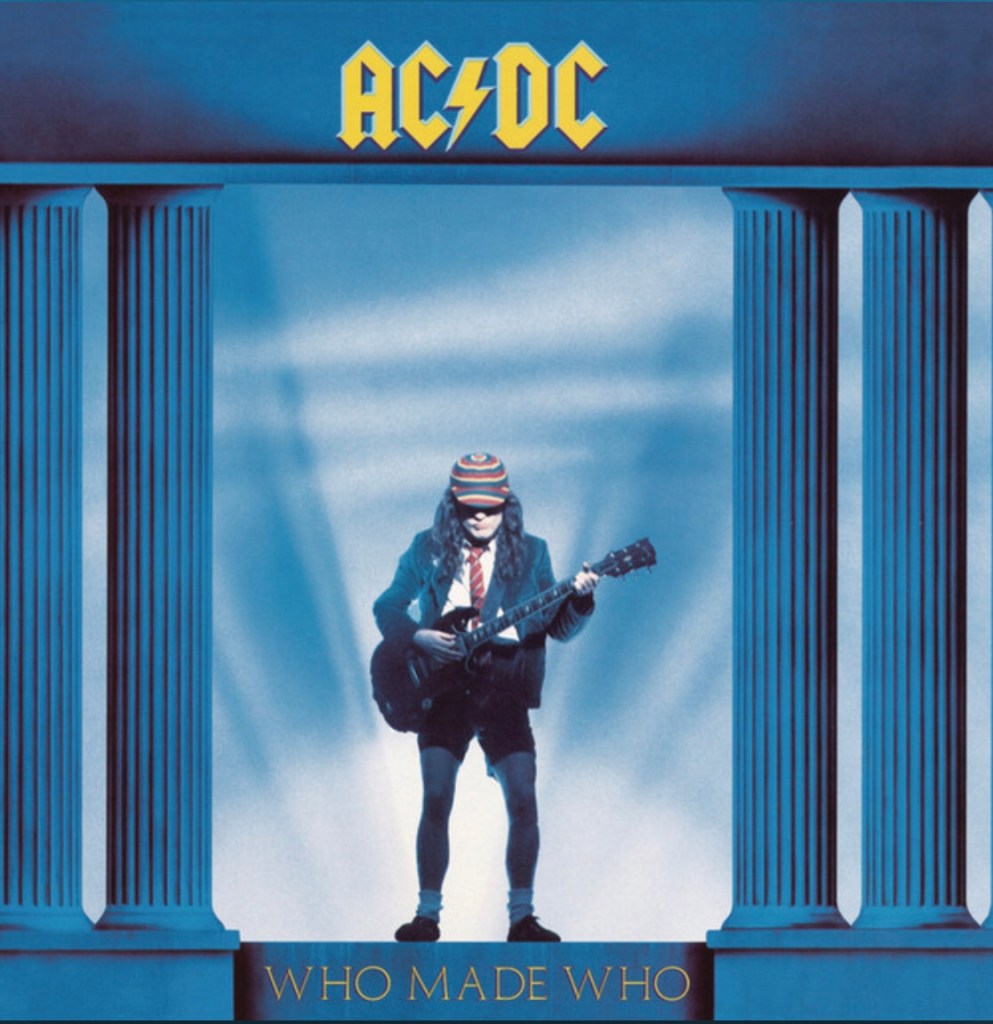
“Who Made Who” is like a Greatest Hits album released as a soundtrack album in 1986, for the Stephen King film “Maximum Overdrive”. A forgettable movie.
The funny thing is that the next Greatest Hits slab would come out with another movie, this one a lot better and having a larger social and cultural impact.
Yep, the multi- billion franchise known as “Iron Man” sent AC/DC into the stratosphere. Not that they needed it.
Both album packages are excellent entry points for people who didn’t own or know about AC/DC.
If this was your first exposure, there would be a high chance that you would go out and buy/access some of the back catalogue.
And the song “Who Made Who” introduced Angus Young the shredder. His guitar work here is at a Shrapnel level.
Who Made Who
Drums and bass from Simon Phillips and Cliff Williams in a stock 4/4 time. I’m already invested.
Malcolm kicks in with some power chords outlining a blues chord progression as Brian Johnson fires in with his throaty vocal melody.
Angus then fired in with some fast palm muted licks which sounds like open string licks, something he’ll use to even greater success with “Thunderstruck”. But it’s all picked.
Check out the lead break. Angus breaks out some EVH like tapping.
Lyrically, it’s based around the themes from the “Maximum Overdrive” movie, where the machines come alive and begin killing people.
Like the “Terminator” movie, the tools that humans create, rise up to obliterate the humans.
You Shook Me All Night Long
From “Back In Black”.
It was re-released as a single after the massive success of “Who Made Who” which gave this song a second coming, not that it needed one.
D.T
It’s an instrumental jam which became soundtrack music.
It moves between distortion and clean tone so it could be used in multiple scenes.
Sink The Pink
From the “Fly On The Wall” album.
This song doesn’t get the love it should but goddamn it’s a great song.
The Intro reminds me of “Rock N Roll Ain’t Noise Pollution” and it has a Chorus chord progression which could be interchanged with almost every AC/DC chorus, and I like it.
At 2.50, the Intro kicks back in, with drums and bass before Angus kicks in with his bluesy lead.
Ride On
From the “Dirty Deeds Done Dirt Cheap” album and Bon Scott gets a spot with this slow blues dirge.
Hells Bells
From the “Back In Black” album.
As soon as the bells chime and the dirty arpeggio riff in Am kicks in, everything starts tingling. It doesn’t matter that I’ve heard it a lot of times. It still gets me.
Shake Your Foundations
Also from “Fly On The Wall”.
Another underrated song from an album that is seen as a disappointment.
You can’t tell me that the Intro/Verse riff isn’t classic AC/DC and a Chorus that almost mimics “You Shook Me All Night Long”.
Chase the Ace
Another instrumental jam session but a bit more aggressive than “D.T”.
Check out the drum groove in the Intro. Something that Lars Ulrich would use to great effect in “Enter Sandman”, which is also based on the “Dirty Deeds” Intro/Verse drum pattern.
For Those About to Rock (We Salute You)
From the album with the same title which came after the “Back In Black” monster.
I was hooked from the opening riff and the way Malcolm and Phil Rudd build it.
Once the slow groove kicks in, it feels that heavy that it’ll destroy everything in its path. And it did.
In Australia and the U.S, it’s 5× Platinum.
And it kept AC/DC relevant in a friendly MTV world which was starting to promote artists who looked great over the music they created.
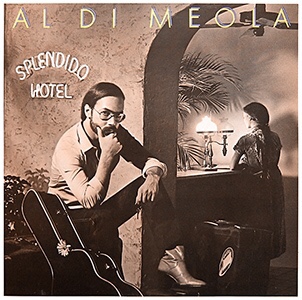
In 1980, Di Meola released the double album “Spendido Hotel”. Keeping with the Miami Vice covers theme.
And then the subsequent tour was captured live and released at the start of 1982 as “Tour De Force – Live”.
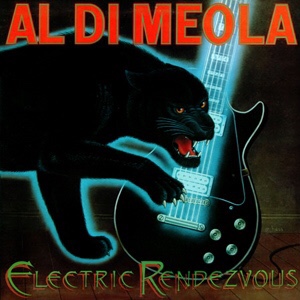
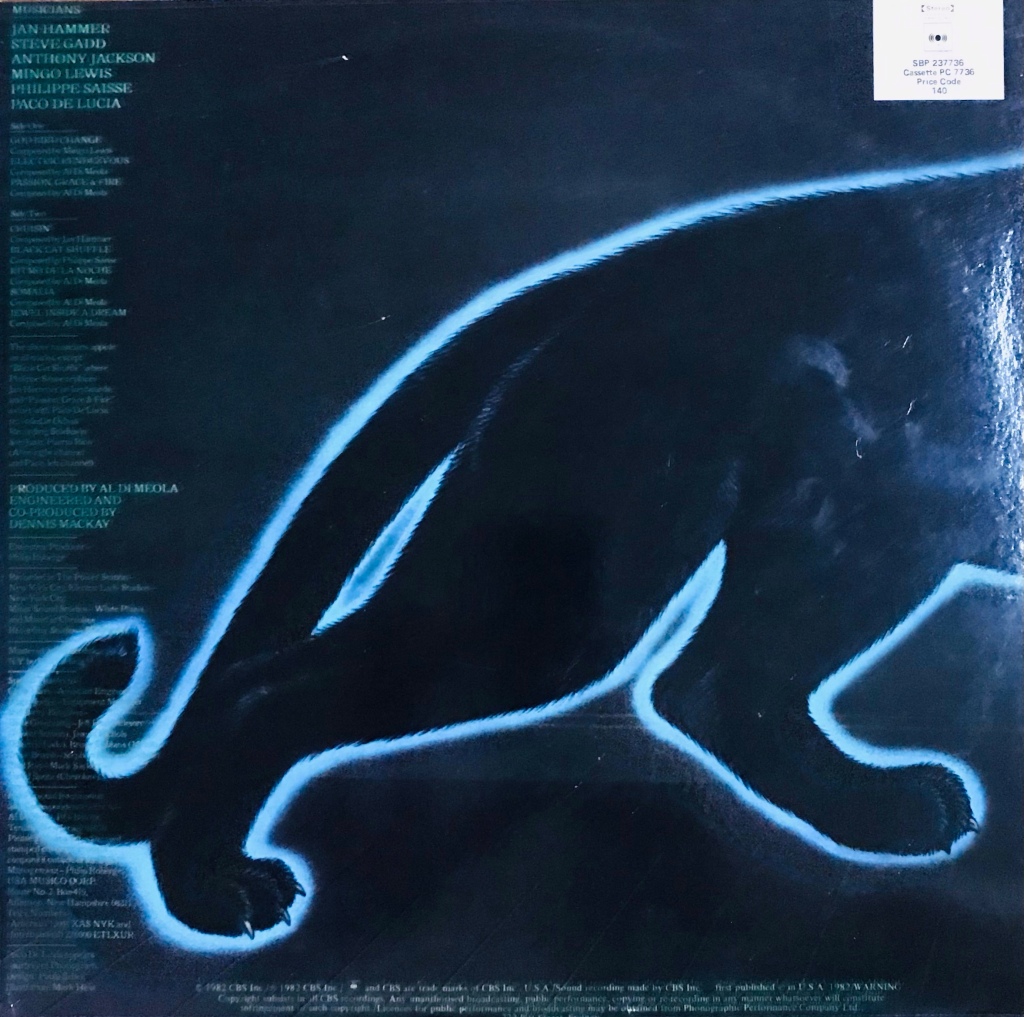
Towards the end of 1982, “Electric Rendezvous” was released.
The band for the album is Al Di Meola on electric and acoustic guitars, Anthony Jackson on bass guitar, Jan Hammer on keyboards, Steve Gadd on drums and Mingo Lewis on percussion.
God Bird Change
Percussionist god Mingo Lewis is still writing a track per album. This is his contribution.
The bass and drum groove throughout the song is a favorite as there is so much energy.
And of course there is a percussion interlude.
Electric Rendezvous
The title track at almost 8 minutes long.
The Intro is essential listening, with a clean tone guitar playing fast arpeggios while a nice relaxing guitar melody plays over it.
From 1.12 it changes. More Jazz fusion and alot of chromatics over time signatures changes.
From 2.11, a bass riff begins which the distorted guitars then copy. This creates a foundation for Di Meola to solo over, but it’s brief as they groove on the riff.
At the 4 minute mark, a metal sounding riff is played which allows Di Meola and Hammer to solo one after each other.
Passion, Grace & Fire
Paco de Lucia appears and the title of this song would be used to promote the run of acoustic shows that Di Meola, de Lucia and John MacLaughlin would do.
So there’s a lot of acoustic playing, fast fingers and lush arpeggios.
Cruisin’
Written by Jan Hammer it’s got a keyboard hook that is addictive and catchy.
It rocks and perfect for doing exactly what the title says.
Black Cat Shuffle
Written by Philippe Saisse, who also plays keyboards on this, it’s a blues groove with Di Meola’s Lydian and Mixolydian soloing.
The last 60 seconds has some great hard rock soloing from Di Meola.
Ritmo de la Noche
Lounge Waltz music with a Flamenco flavor.
Then some fast shred and make to the Waltz music.
Somalia
A short 90 second instrumental. Arpeggios and an exotic guitar melody as it’s centerpiece.
Jewel Inside a Dream
A riff that reminds me of ELP and their song “From The Beginning” dominates the song.
And you have Hammer and Di Meola trading licks on the keyboard and guitar.
I’m the end it’s a different album from its predecessors but still worthy.
I didn’t get into Black Sabbath until the mid-90’s. I knew of their existence because Ozzy and Dio did a great job promoting his Sabbath legacy.
Then Dio re-joined for “Dehumanizer” in the early 90s and I was interested to hear more Black Sabbath. So the process started.
The fact that everyone was selling their vinyl to second hand record shops definitely helped because it meant I could pick up their older stiff cheaply.
And after Grunge came out, they kept talking about the Sabbath influences in the Seatlle sounds and Sabbath’s renaissance into Mainstream superstars came when they re-joined Ozzy for a few encores on his “No More Tours” shows.
From 1983 up to when Dio rejoined, no one really cared about Tony Iommi in the same way they cared about Ozzy and Dio who had become Multi-Platinum sellers in the U.S. with their solo careers and the Sabbath/Iommi career was nowhere near those commercial highs.
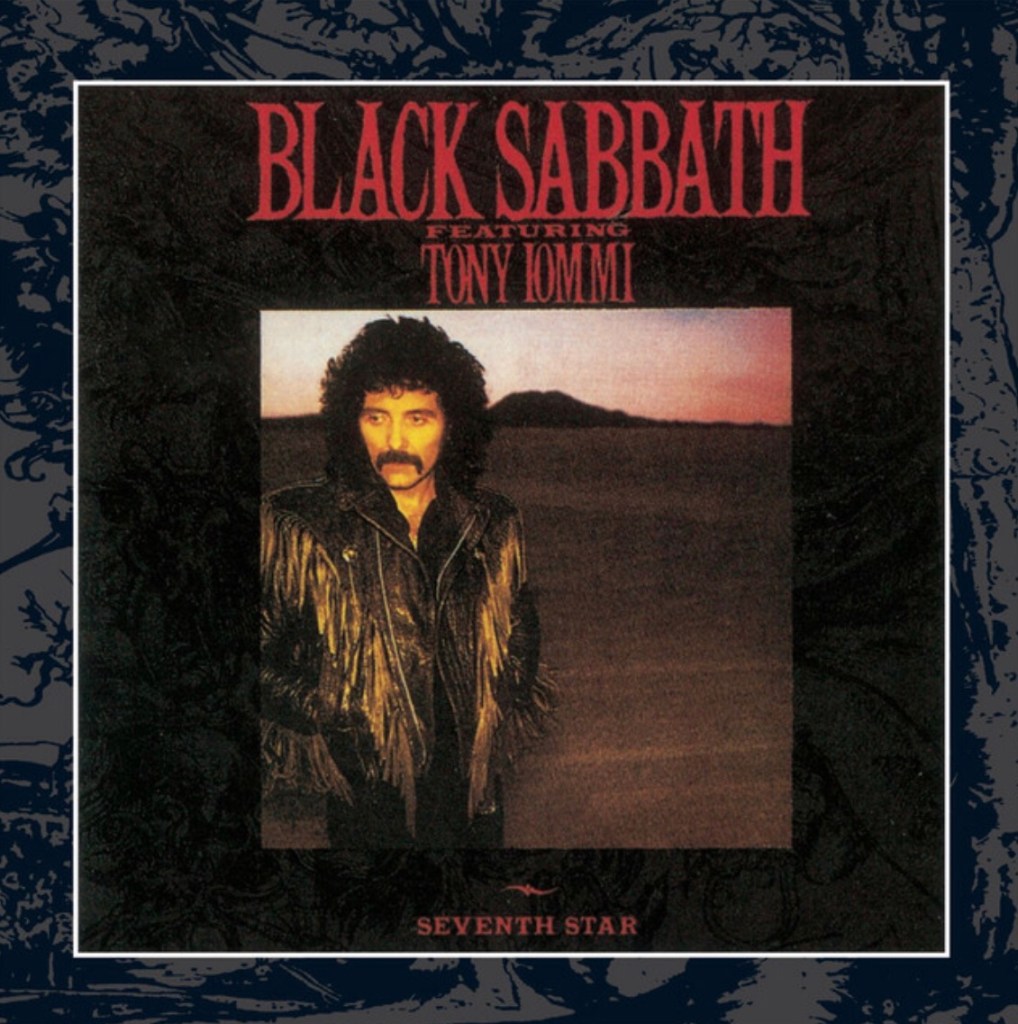
So “Seventh Star” is listed as studio album number 12 for Black Sabbath and released in 1986. This version of Sabbath has Tony Iommi as the only founding member along with keyboardist Geoff Nicholls, drummer Eric Singer, bassist Dave Spitz and vocalist Glenn Hughes.
Once the album came out, Hughes didn’t last long as his addictions made him unreliable. Ray Gillen was hired to fill the vocalist spot for the tour. But even the tour didn’t last long, with a lot of shows cancelled and another restart for Iommi.
In For The Kill
A riff that reminds me of Scorpions “He’s A Woman, She’s A Man” starts off this song and I like it.
No Stranger To Love
This could have come from the Dio version of Sabbath, with its slow groove. But Glen Hughes has a very melodic, bluesy soul voice, so it was always going to come across as a commercial rock song.
Check out the solo from Iommi on this.
Turn To Stone
It’s like Richie Blackmore joined on guitars. It feels like a Deep Purple Coverdale/Hughes era cut, with a riff that reminds me of “Burn” and “Kill The King”.
Iommi delivers another killer solo on this.
Seventh Star
“Egypt (The Chains Are On)” comes to mind and I like it.
Musically, this is one of Iommi’s best.
The main riff is heavy, it sounds exotic, so metal like but it swings the way he plays it. There is a certain fluidity to it.
Danger Zone
If you want to hear one song on the album, its this. I was hooked from the harmony guitars in the Intro riff which also reminds me of Van Halen’s “Atomic Punk”.
And if that main riff doesn’t get you, the interlude/mid section would get you interested which then moves into a Bridge section.
And if the music doesn’t get ya, then the voice of Hughes will.
Heart Like A Wheel
When I hear a blues groove like the one that starts of this song, I think of “The Jack” from AC/DC.
But that blues groove is generic and overused. Remember Alannha Myles and her song “Black Velvet”. Well, it’s the same groove and it went to number 1.
These kind of songs are perfect vehicles for Hughes and his voice.
Angry Heart
This is a great riff, which reminds me of “Wishing Well” from Free and Hughes has so much fun with the vocals.
In Memory
An acoustic riff, with lightly distorted guitars start off this power ballad. It’s short and a strange end to the album.
As a classic Heavy Metal album like “Love At First Sting”, “Balls To The Wall” and “Screaming For Vengeance” it works. Hell it’s probably the best Rainbow album that Richie Blackmore didn’t write.
Compared to Sabbath’s downtuned 70s output, it’s very different. But this was the 80s and this album is a true product of its time.
My journey began with “Gutter Ballet” and moved forward with “Streets: A Rock Opera” before going back to the earlier albums.
So even though “Fight For The Rock” was released in 1986, it wasn’t until the early 90’s that I heard it.
I studied WW2 in History a fair bit and the cover is instantly recognisable recreating the “Raising the Flag on Iwo Jima” photo and cancel culture today has found this recreation to be offensive or insensitive.
Who would have thought?
The band for the album is “the classic line-up” in Jon Oliva on vocals and piano, Criss Oliva (RIP) on guitars, Johnny Lee Middleton on bass and Steve Doc Wacholz on drums.
The Paul O’Neill co-writes and production credits was still an album away, so this album is produced by Stephan Galfas, who had had worked with Stryper on “To Hell With The Devil”, Meatloaf’s ignored “Dead Ringer” album and a few John Waite albums before he worked with Savatage. Post Savatage he worked on Saxon’s much maligned but a favourite to me, “Destiny” album.
The band members have voiced their displeasure with the album.
You will read the usual “record label wanted us to make it” or “pressured us to make it” phrases mentioned but if the album did well commercially, then the narrative from the band members might be very different.
For the record, I hate the power the labels had back then. They could make or break a career.
But in the end, they are in the money making business and they would do whatever it takes to make money.
If Savatage said “NO” to the record label demands, it would be career suicide. So caught between a rock and a hard place, I suppose they really had to “fight for the rock” on this one, so they could get another chance at making an album.
Musically, its Savatage as I know em. Lyrically, they are a bit different.
The Fight For The Rock
A Criss Oliva riff starts the album, rooted in the sound of heavy metal that I like.
“Warriors of the fight, you are in force tonight”, says Jon Oliva, about rock being here to stay. By 1986, it was all overused cliches.
At 2.04, it goes into a synth lick before it builds up into the solo section, which is essential listening for any guitarist.
Out On The Streets
It feels like a 70’s cut, with its acoustic guitar arpeggios and weird synth sounds.
By the time the Chorus rolls around, the major chords make it sound happy, while the lyrics are about feeling sad due to a romance falling apart.
Press play for the brief acoustic guitar melodic lick after the Chorus.
And I like the solo from Criss Oliva, it’s got blues and fast melodic legato lines with inventive phrasing.
Crying For Love
The intro with violins and fingerpicked clean tone guitars is a great listen but misleading when it comes to the song because it’s a rocker, with a classic Savatage riff from Criss Oliva in the verses.
The Chorus is Hard AOR Rock. It’s an obvious attempt.
Criss Oliva knows how to create a lead. He starts off with some fast open string pull off licks before going into his usual fast legato lines.
Day After Day
A Badfinger cover and that 70’s “Leader Of The Pack” vibe comes through.
The Edge Of Midnight
An Andrew Lloyd Webber “Phantom Of The Opera” organ begins the song, which brings in some classical elements. Lyrically it’s not the best, but musically the riffs are an amalgamation of hard rock and heavy metal.
Check out the verse riff, Skid Row would use riffs like this on two multi-platinum albums.
Hyde
There’s some good progressive metal like riffs here.
How good is it the way Jon Oliva sings “Hy-I-ide” and then Criss Oliva mimics the vocal melody the next repeat?
Lady In Disguise
A riff similar to “Wishing Well” is the centrepiece of this song. It’s almost Queen like in its musical composition.
She’s Only Rock N Roll
The main riff (which is also the verse riff) is classic Savatage, which also reminds me of Richie Blackmore’s Rainbow.
Check out the lead break.
Wishing Well
A Free cover and I think this was my first exposure to this song. The slight increase in tempo makes the track sound more metal than rock.
Musically, it’s a great song and the vocal melodies from Paul Rodgers, delivered by Jon Oliva are excellent
Red Light Paradise
It sounds like soundtrack music and for some reason, the “Cobra” movie with Stallone comes to mind.
To repeat, musically its good, lyrically it could be better but the sound is still Savatage.
In the season 2 finale of “Sons Of Anarchy”, a song called “Hands In The Sky” from “Straylight Run” was being played. And the perfect track just makes the scene even better.
Back in 2013, I came across 16 different videos on YouTube with a combined play count of 1,498,818. Spotify streams had the count as 110,507.
The songs was basically ignored, unknown.
In 2021, the Spotify count is at 5.07 million streams. Still nothing compared to the impact it made in the SOA scene.
And the song was released on an EP, called “Prepare To Be Wrong” from 2005. It took 8 years for me to hear it and the SOA episode I was watching was from Season 2 which came out in 2009.
In other words good music and TV shows will always be found.
My journey into the world of Parkway Drive started with “Reverence” in 2018 and backwards I went.
“Ire” came out in 2016. It’s their fifth album, but the second album I’d heard from em. It went to Number 1 on the Aussie Charts and the U.S Billboard Top Hard Rock Albums chart.
The band for the album is Winston McCall on lead vocals, Jeff Ling on lead guitar, Luke “Pig” Kilpatrick on rhythm guitar, Jia “Pie” O’Connor on bass and Ben “Gaz” Gordon on drums.
The label even invested in a vocal coach for Winston McCall to increase his melodic skills as he’s already well known for this guttural vocals.
From listening to “Reverence” first and going back to “Ire”, it’s safe to say that this album was the start of the Hard Rock and Classic Metal tunes this band fine tuned with “Reverence”.
This fusion of Nu-Metal, Thrash Metal, Classic Metal, Power Metal, Hard Rock ad Death Metal is not meant to go together and work, but it does and it works very well.
Destroyer
A repeating guitar lick starts the album. Its low, it build in intensity and it’s a lick that the crowd could sing-along with along with the “Destroy” vocal chant. But this section wouldn’t work without the rhythm and drum work. It’s thunderous and like a military march.
Once the main riff comes in, its melodic and heavy at the same time. If you grew up on a diet of hard rock, then this riff would fit the criteria.
Dying To Believe
Any song that starts with the lyric, “like dragging nails through my skin” is going to be fast and aggressive. And that’s exactly how it plays it in the blast beat intro.
Vice Grip
Sitting at 52.7 million streams on Spotify. The video clip on YouTube has 23 million views.
Another sing-along guitar riff to start the song and a Chorus you can chant along to with the “Yeah, yeah, yeah” vocals.
Musically, it’s a hard rock song and I’m picking up the guitar after I finish this post to learn it.
There is a “Rise” chant section, which reminds me of the “Die” section from “Creeping Death”.
Crushed
Religious chants give way to “tear the throat box out” vocals and riffs which are too good to not listen to regardless of your preference for vocal styles.
The section from the 40 second mark to 1.01. Press play for that, just to hear how the religious chants work with heavy music.
Or stick around from 3.26 onwards, just to hear the guitar melody under the vocals which could have come from an Iron Maiden album.
But the overall style of the track is Nu-Metal. Weird I know, but it works.
Fractures
The riffs remind me so much of the 80’s and Pantera’s first two albums.
But press play for the Chorus guitar melodies and “wooahs”.
Check out the section from 3.30 as it slows down and then builds back up. As soon as the guitar lead lets loose for the last 30 seconds of the song, someone decided to fade out the song. Nooooo.
Writings On The Wall
The drum groove is like “We Will Rock You”, so you hear McCall carrying the vocal over a bed of ominous piano notes, synths, bass and abstract guitar lines.
“Put your hands up, put your hands up, we’ll fight until we die, this ain’t ever gonna stop”, whispers McCall in true spirit of the 80’s ethos like “Stand Up And Shout”, “We’re Not Gonna Take It” and “Bang Your Head”.
Then at 2.30, the song kicks in with some metal like riffage.
At 2.55, my favourite melodic riff from the album kicks in. And the song ends with the haunting piano lines heard throughout the song.
Bottom Feeder
There are so many riffs that people will class as hair metal in this song. But it’s all Metal to me. It’s one of the heaviest tracks and catchiest.
The Sound Of Violence
The intro riff gets me to pay attention and the breakdown Chorus would work well in the live arena.
Vicious
Musically, this song has some serious hard rock cred. Even Metallica “Black” album era.
Dedicated
I feel like I’m listening to a Killswitch Engage tune on this.
Stick around for the breakdown at the end.
A Deathless Song
Acoustic guitars with a fusion of flamenco vibes and baroque start the song. But at 0.44, those iconic sing-along melodic leads kick in.
And those melodic sing-along leads are heard throughout the song, especially in the last minute outro, as they give way to the same riffs, but played with violins.
In the end it’s a “hard core hard rock” album, Somehow it makes perfect sense.
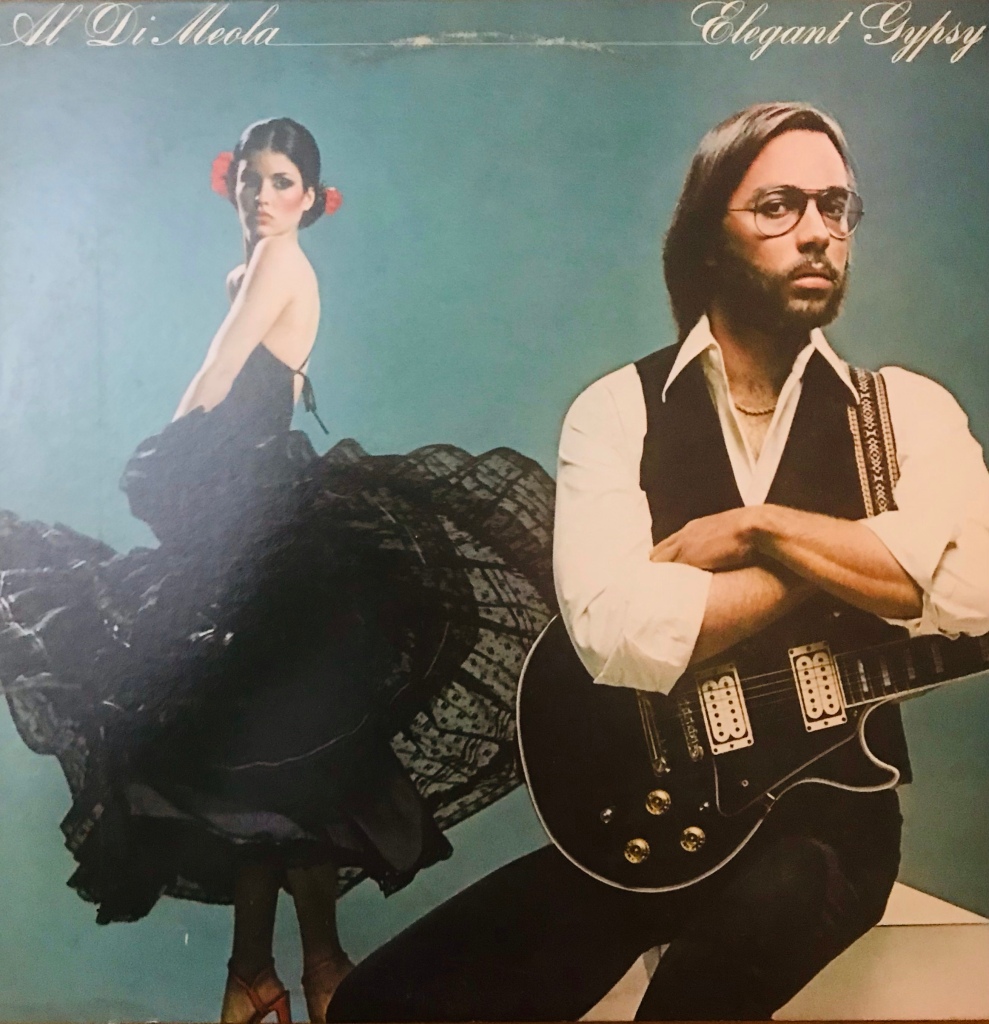
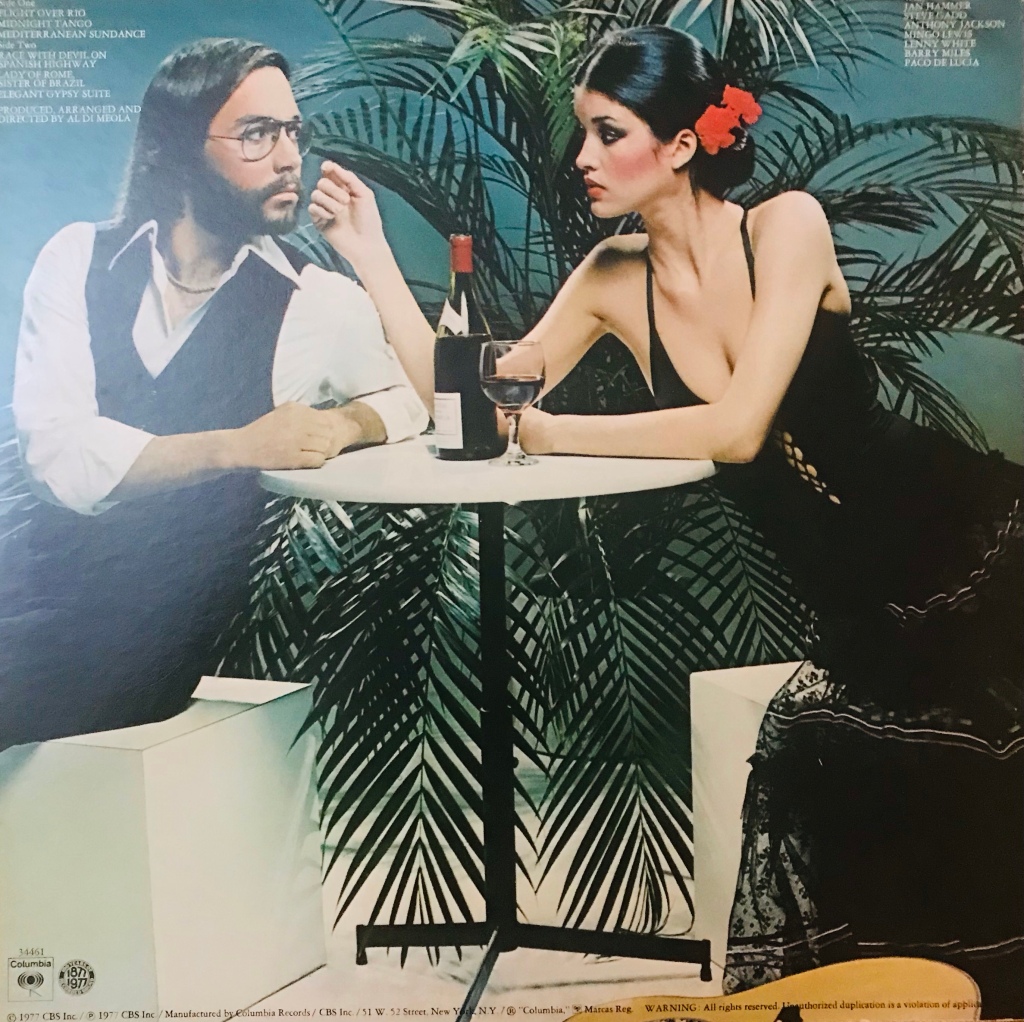
“Elegant Gypsy” is the second album by Al Di Meola, released in 1977 by Columbia Records.
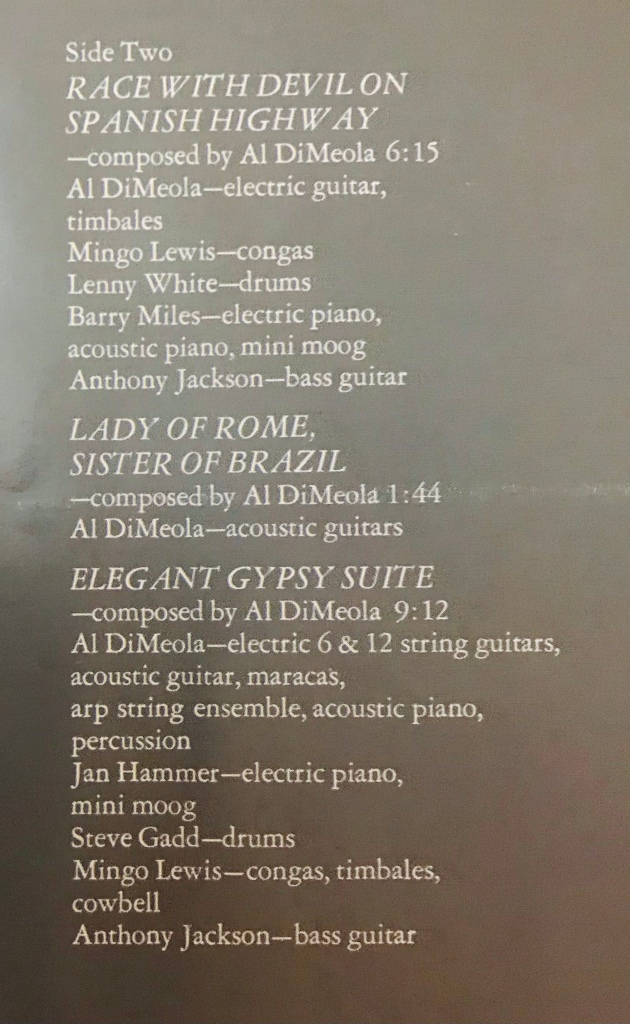
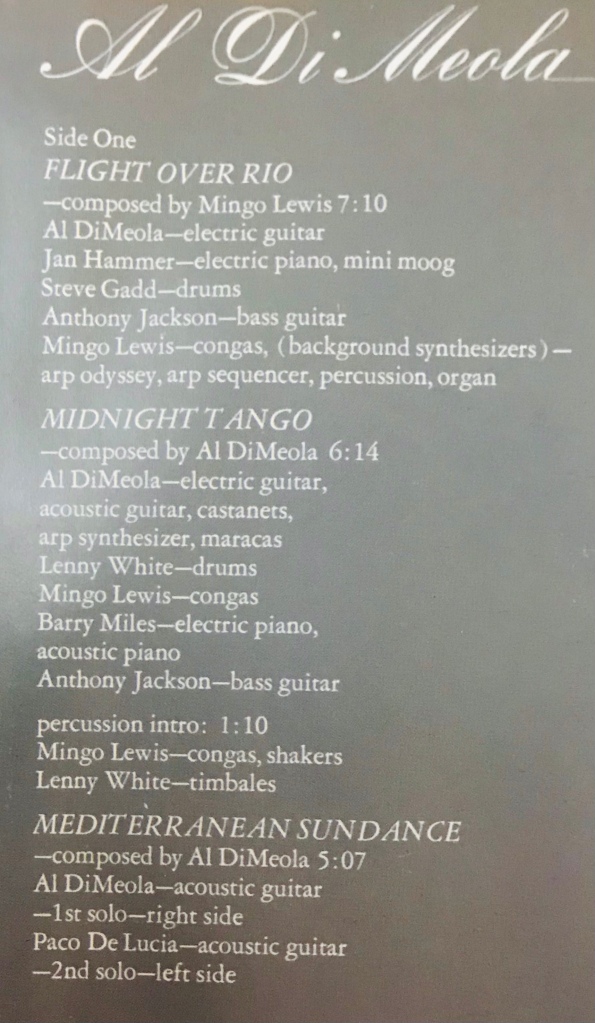
The musicians for the album are Al Di Meola on guitar, piano, synthesizer and percussion, Paco de Lucia on guitar, Jan Hammer and Barry Miles on keyboards, Anthony Jackson on bass guitar, Steve Gadd and Lenny White on drums and Mingo Lewis on congas, synthesizers, organ and percussion.
“Flight Over Rio”
Percussionist Mingo Lewis has written another 10/10 opening track.
Like “The Wizard” on the debut album, this track is loaded with great riffs.
At 7 minutes and 16 seconds, it’s the first 90 seconds which is essential listening, just for the bass riff.
Tool built a career from bass riffs like this. It also reminds me of the soundtrack work that John Carpenter would do, like in “Escape From New York”.
Then it goes into something similar to “The Wizard” with a bass groove, which allows Al Di Meola to flex his chops.
Check out the lead break from 2.48 to 3.48. After that Di Meola goes into a solo tag with the keyboardist Jan Hammer, which has Di Meola soloing on a few bars and then Hammer and they go back and forth. Like the Dream Theater guys.
“Midnight Tango”
Written by Al Di Meola and at 7 minutes and 28 seconds in length.
Press play to hear jazz rock fusion in all its glory from the 3 minute mark. It begins with some fast major key playing, however it is brief and then it goes into a Latin-esque passage. It stays within this domain, while Di Meola delivers a lead break which Santana lovers would say is from good ol’ Carlos.
At 4.58, it goes into a lick which reminds me of licks from 80’s Heavy Metal artists. And Di Meola knows a good lick when he hears one and he carries this lick and chord progression all the way to the end.
“Mediterranean Sundance”
Just over 5 minutes long, this Al Di Meola composition is the first song I heard from Al Di Meola and it made me a fan instantly.
It’s the crown in his jewel and showcases his acoustic prowess to the world. Of course he calls in his friends to lend a hand in Paco de Lucia and their playing is at another level.
This song would also get released many years later, from a live recording that Al Di Meola, Paco de Lucia and John McLaughlin would do on the “Friday Night In San Francisco” album.
Listen to the sections from the 28 second mark to the 51 second mark. It’s all fingers folks, no pick. So just press play, lay back, close your eyes, be in awe at the playing and let the music take you away.
“Race with Devil on Spanish Highway”
Written by Al Di Meola, this is the track that was referenced by the 80’s players as an influence. Once you hear it, you will know why.
A simple bass riff begins proceedings, then Di Meola joins with a distorted guitar. After repeating a few times, they both go into some serious fast alternate picking. Hearing the bass and guitar play in unison is pure bliss.
After the hectic intro at around 1.15 it goes into this jazz rock lounge section. Its relaxed and it actually feels that you are cruising the streets in your car.
But at 2.09, a section begins which is heavy metal. While those riffs are playing, Al Di Meola starts his shred solo. By 3.13, it ends and transitions into a different section which is a combination of the previous sections mentioned.
Then “the section” begins from 4.10. The Intro riff is played, but everything is faster, more frantic. And at 4.51, Di Meola is soloing super-fast to about the 5.10 mark.
He then pulls an awesome riff out for the outro, which has some of his best soloing in it, moving from emotion to super-fast alternate picking.
“Lady of Rome, Sister of Brazil”
A short acoustic piece at 1.46, a calm within all the technicality delivered by Di Meola and de Lucia.
“Elegant Gypsy Suite”
At 9 minutes and 16 seconds long, it’s definitely elegant. So many different styles are covered but back then it was all just music. Styles and genres didn’t matter.
My favourite section is from the 8 minute mark to the end of the song.
This album is his masterpiece. If you like guitar instrumental music, then your collection is not complete with this album.
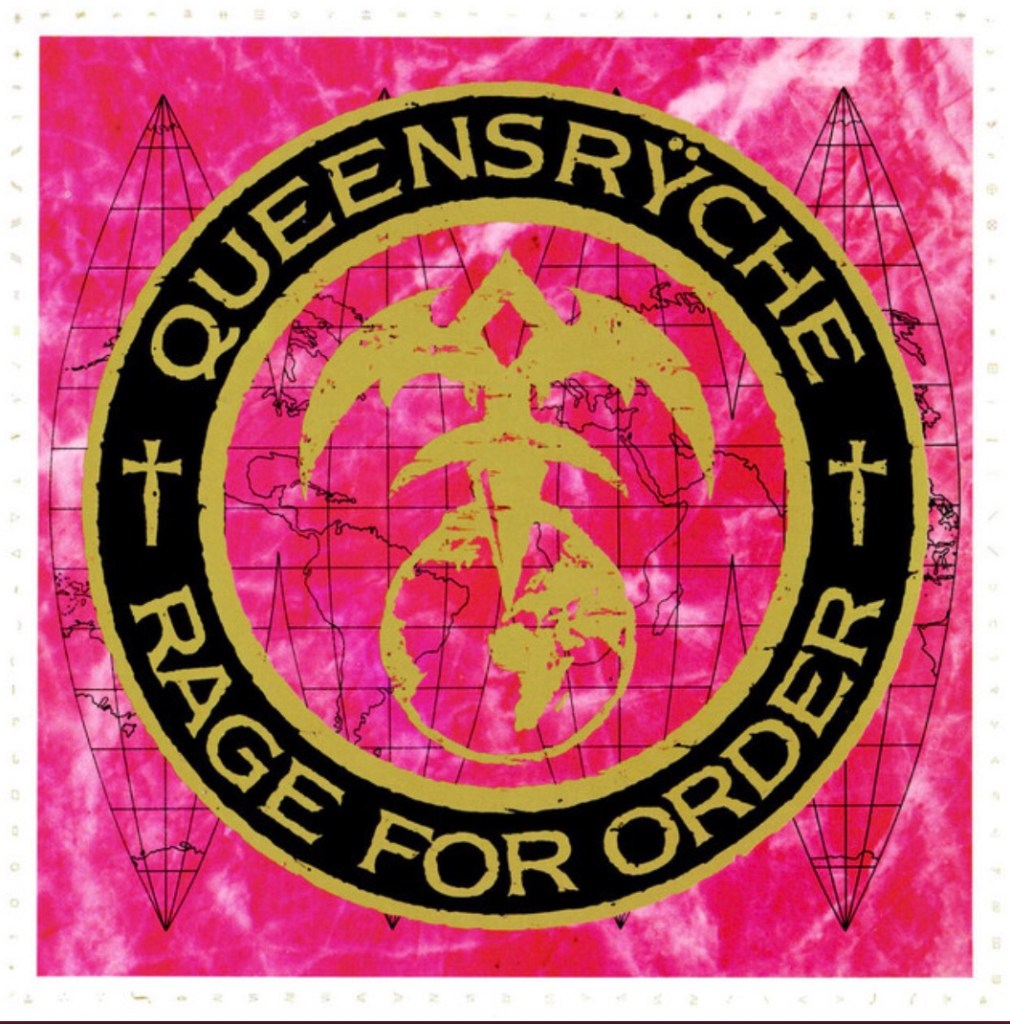
“Rage for Order” is the second album by Queensrÿche, released on June 27, 1986.
The Queensryche Cyber Army are really good at keeping the bands Wikipedia pages up to date and super detailed. Everything that can be found on the a internet is included along with print media and newspaper articles.
Go to the Wikipedia page on this album and you’ll get heaps of information.
MTV was becoming a huge promotions vehicle for artists and 1986 was clearly becoming the last year that bands would experiment with the songwriting. After 1986, albums would become very MTV Friendly because all the artists wanted a piece of that pie.
Musically it’s an excellent album. Each song has a riff or a vocal melody that I like. From a song point of view, “Walk In The Shadows” is close to perfect.
Lyrically the album touches on subject matters I’m interested in, like government intrusion and corruption, technology and social issues.
Management and the Label must have felt threatened at the experimental progressive album delivered by the band, so it’s no surprise that there is a cover song, which then became the lead single.
And no one knew how to handle Queensryche.
They had opening spots with Ratt and Bon Jovi (seriously, what the….), AC/DC (good gig to have if you play similar styles but they are very different styles) and maybe the most compatible one in relation to “Metal”, Ozzy Osbourne.
The Tri-Ryche logo makes it’s first appearance as well.
I never understood how this album was ever labeled as a “glam metal” album, but the label had to make them fit somewhere along with some questionable clothing and hairspray.
Queensrÿche is the classic line up of Geoff Tate on vocals, Chris DeGarmo and Michael Wilton on guitars, Eddie Jackson on bass and Scott Rockenfield on drums.
Neil Kernon is Producing, Engineering and Mixing. Man of many hats.
Walk In The Shadows
Written by Chris DeGarmo, Geoff Tate and Michael Wilton.
It’s as good as anything that came from “Operation Mindcrime” and “Empire”.
I’m a big fan of the Intro riff (it’s great to play) and that Chorus is massive.
I Dream in Infrared
Written by Tate and Wilton.
It reminds me of Rush in the Intro and I feel like Crimson Glory took this song and used it as a foundation to build on.
But you need to press play on this for the acoustic guitar arpeggios and the haunting vocal melody from Tate in the verses.
Is it just me or does this track remind you of “Breaking the Silence” and “Waiting for 22” from the “Mindcrime” album?
The Whisper
Written solely by DeGarmo and the Celtic inspired Intro definitely gets me interested. Something that Maiden would use a lot in the Dickinson Part 2 era.
The whole song is what Metal should sound like.
Gonna Get Close to You
A Dalbello cover, although I didn’t know it at the time.
To cover a song from outside the genre you are classified in, is a sign of respect to the artist who wrote it.
Many years later, Lisa Dalbello would do guest vocals on Alex Lifeson’s “Victor” album.
Check out the way the verses are constructed, it feels ominous.
The Killing Words
Written by DeGarmo and Tate.
The keyboard Intro gives way to the guitar, before it goes into a soundtrack like verse. It’s very Marillion like and the vocals remind me of Fish and I like it.
But you’ll be pressing play to this song, for the section when Tate sings “Over”.
Surgical Strike
Written by DeGarmo and Wilton it feels more like a cut from “The Warning”.
And there are sections here which remind of “Speak” and “The Needle Lies”.
Press play for the Outro that begins from 2.40. You won’t be disappointed.
Neue Regel
Written by DeGarmo and Tate.
When I heard “A Perfect Circle” for the first time, I thought of this song. It has all of those atmospheric elements and outside the box sounds and composition elements.
This is how progressive music should sound like and it’s the embryo of what the “Promised Land” album would be.
But press play on this just to hear the power of Geoff Tate.
Chemical Youth (We Are Rebellion)
Written by Tate and Wilton, who brings the heavy metal riffs to the rebellion.
It’s put together in a progressive way as it doesn’t just follow the standard verse and chorus narrative.
London
Written by DeGarmo, Tate and Wilton and it reminds me of the “Mindcrime” album musically and the song “I Don’t Believe In Love”.
It’s got a great Chorus, so press play to hear “London” sound like “Young Boy”.
And then hang around for the harmonies and individual lead breaks.
Screaming in Digital
Written by DeGarmo, Tate and Wilton, musically it also reminds me of different songs from the “Mindcrime” album.
The electronic synths are dominant and Tate is very Peter Gabriel like in the verses.
But press play for the vocal melodies from 2.15 to 2.40 and stick around for the guitar hero lead breaks. And then those unbelievable vocal melodies come back.
I Will Remember
Written by DeGarmo, it has some nice acoustic playing from DeGarmo, a sign of things to come.
It was Certified Gold in the U.S.
To this Australian, it’s a criminally underrated jewel that was way ahead of its time and no one really knew what to do with it.
And I’m not sure if Marillion was an influence to the band at this point in time but goddamn this album reminds me so much of “Script for a Jester’s Tear”. Maybe it’s the similarities in vocal styles between Fish and Tate.
Anyway press play and let the sounds of love, politics and technology wash over you.
“Peace Sells… but Who’s Buying?” was released on September 19, 1986.
Edward J. Repka as the cover illustrator is the rock star here. While the concept design is listed as coming from Dave Mustaine and Andy Somers, its Repka who brought the concept to life.
There is Vic Rattlehead, portrayed as a real estate salesman, in front of a desolated United Nations Headquarters with fighter jets in the sky and frayed flags still on the poles.
Brilliant.
The band for this album is the same as the debut, with Dave Mustaine on guitars and lead vocals, David Ellefson on bass, Chris Poland on guitars and Gar Samuelson on drums.
The album is produced by Mustaine but Casey McMackin as the engineer also deserves credit as he was involved with mixing or engineering quite a few albums from the California Thrash Metal scene, for bands like Vio-Lence, Saint Vitus, Nuclear Assault, Zoetrope, Dark Angel and Flotsam and Jetsam. And in the 90’s he did “1916” and “March or Die” by Motorhead. Mixing was done by Paul Lani and Stan Katayama but there’s a story in that as well.
The album was troubled due to the high level of drug abuse. Mustaine and Ellefson were already heavy users, however Samuelson and Poland were said to be even more extreme, something which Poland has disputed to say that what he did was nothing different to what other people were doing at the time. Regardless of the differing point of views, Samuelson and Poland got fired after the promotional tour for this album.
Another issue was the record label. The project started with Combat Records, resulting in the original mix of the album and a co-production by Randy Burns, however Capital Records then purchased the rights to the album (and the band) and got Paul Lani to remix it himself. Lani was more of a Pop Rock mixer, so he knew how the album should sound to get favourable MTV and Radio treatment. And it got that attention as well.
All songs are written and composed by Dave Mustaine, except “I Ain’t Superstitious” by Willie Dixon.
“Wake Up Dead”
The film clip got me interested. It was the steel cage and the chaos around it, with people climbing all over it towards the end. It was dystopian and unsettling and I loved it.
I wasn’t a huge fan of Mustaine’s voice to begin with, but man, the music had me hooked. There was just so much guitar playing to unpack and learn.
Like the head banging riff that plays between 1.10 to 1.40. Or the blistering super-fast picked riff between 2.03 and 2.26. Or the change in groove in tempo from 2.42 with the unorthodox solo from Chris Poland combining exotic lines with fast jazz chromatic lines.
And there wasn’t much singing in this “single” like the hard rock singles I was growing up with. Actually I think all up there are about 8 lines as those lyrics describe Mustaine cheating on his current partner however he stayed with her because he was homeless at the time and needed a place to stay. But he had to leave her because he thought she had intentions to kill him.
“The Conjuring”
The song is about black magic and contains instructions for hexes.
The intro is ominous but it’s the fast riff from 0.57 which I like while Chris Poland moves in with another atonal solo, making sharps and flats fit chords they shouldn’t fit.
Check out the galloping and progressive riff between 1.43 and 1.58. A favourite and so fun to play. Or the fast riffs from 2.36 to 2.57 and then my favourite foot stomping, head banging riff in the song from 2.58 to 3.29.
And Mustaine is not working within a Verse and Chorus structure. Until the next song.
“Peace Sells”
It’s iconic, musically and lyrically.
The bass intro sets the tone. Even though Ellefson plays it, Mustaine wrote it.
The “No More Mr Nice Guy” vocal delivery over a riff that Mr Hetfield would use for the “Enter Sandman” verses is excellent. Then again, the E pedal point with a F chord chucked in was a staple of thrash metal music and Mustaine’s favourite band “Diamond Head”.
The Motorhead inspired outro from 2.20 is where it’s at. It’s fast, its unrelenting and Mustaine’s war cry of “Peace Sells But Who’s Buying” echoes the great work to come, especially in the track “Holy Wars” from “Rust In Peace” a few years later.
I like the lyric “What do you mean, I don’t support your system? I go to court when I have too”
Its clever.
And the best summary of the song is the way Mustaine put it on a VH1 doco; “peace is something we all want, but nobody wants to give up stuff.”
“Devil’s Island”
Mustaine takes some of his riffs from his Metallica days and re-uses em here as the intro reminds me of a section in the song “Phantom Lord”. He also used a similar riff in “This Was My Life” from the “Countdown To Extinction”.
But my favourite riff is the Chorus riff. Check it out.
Another great riff is from 2.22 to 2.43.
The title is a reference to a former French penal colony off the coast of French Guiana. The lyrics detail the thoughts of a condemned prisoner awaiting execution. He is spared by God, but must spend the rest of his life on the island.
“Good Mourning/Black Friday”
Side 2 begins with this.
“Good Mourning” begins with a clean tone acoustic guitar begins. Its haunting.
And some serious shred is heard as the song transitions from “Good Mourning” to “Black Friday”.
How good is the musical groove and feel from 1.48 to 2.23?
“Bad Omen”
Another ominous like intro with arpeggios as the song builds into a thrasher from when the fast bass riff begins at 1.19. But it’s the groove metal riff at 1.36 which gets me interested to learn it.
The soloing from Chris Poland is so different to what I was used to. Very Jazz fusion like in the vein of Al DiMeola.
At 2.50 it goes into a supercharged neck breaking riff and some serious shredding.
“I Ain’t Superstitious”
Other artists did it, but I feel that Mustaine showed the metal community that you could cover songs that didn’t really come from the genre you are classed in and still make em sound like they are from the genre, like this blues funk song, suddenly sounds like a metal blues song.
From a reference point, “I Ain’t Superstitious” is written by Willie Dixon and originally recorded by Howlin’ Wolf in 1961.
“My Last Words”
Mustaine again showcases his arpeggio clean tone riff writing for a song about playing a game of Russian roulette.
The intro on this song is excellent. After the clean tone arpeggios and open string pull offs, it goes into a face melting riff.
But check out the riff from 3.10 to 3.25 and the solo after it. Even Lars Ulrich has given this track his tick of approval.
At 36 minutes long, Mustaine created an album that took hours and hours of learning in order to get the riffs and leads down. And from that, I became a fan of Megadeth.
“Peace Sells… but Who’s Buying?” is very influential in the movement of technical thrash metal. Mustaine (if he hadn’t done so already) raised the bar here. Along with other thrash releases from Metallica and Slayer, future extreme metallers had a holy trinity of release for reference points.
From a commercial point of view, the use of the “Peace Sells” bass riff to introduce the MTV news segment, showed other thrash bands the commercial potential of thrash metal if done right. But MTV didn’t pay em, because they used the “fair use” defence which is why they cut off the music after a few seconds, as if they went past that timeframe, they would have to make payment.
Musicians who would go on to form Sweden’s Melodic Death metal scene have always referred to this album as an influence.
The album does have a Platinum certification for the U.S and Canada and a Silver certification for the U.K.
Chris Daughtry (and as a byproduct Daughtry) had a decision to make after “Break The Spell”.
Should they stay with the same sound?
Should they change their sound completely?
Should they stay with the same sound but experiment with a few songs by bringing in different sounds?
“Baptized” came out in in November 2013 on RCA Records and it was an electro synth pop sounding album, a significant departure from the group’s hard rock sound from their first three albums.
Like the previous albums, RCA farmed Chris Daughtry out to work with different writers and to record with those different writers like the debut album. But while the writers previously had some rock pedigree, the writers on “Baptized” album specialized in other styles.
There is a song called “Long Live Rock N Roll” and it doesn’t even rock, as it’s more in the vein of “I Wish I Was A Punk Rocker”, an acoustic folk story telling song of growing up with a certain type of music.
But lead single “Waiting For Superman” did stick around and is at 83.7 million streams at the moment on Spotify.
Then came a “Greatest Hits” album in 2016 with two new songs called “Torches” and “Go Down.
“Torches” is actually a good bridge between the old sound and the “Baptized” sound,
The song “Go Down” has your typical catchy Daughtry vocal melody but it’s instrument sounds are routed in synth pop and electronica. Think of the band “Garbage”.
Most artists who found success playing a hard modern rock style in the 2000’s started to experiment and bring in sounds from Adele, Maroon 5, The Fray, Train, OneRepublic and Imagine Dragons.
Shinedown was in a similar predicament as Daughtry but I believe they did a better job at bringing in those new sounds, while still staying true to their old sound.
“Cage To Rattle” came out in 2018. 10 songs that total 38 minutes. RCA again was spending a lot of money for Chris Daughtry to write with so many outside writers in the quest to find hits.
But what the record executives failed to understand is that Daughtry’s audience is predominantly made up of rockers.
And there is a saying, when your chasing hits it don’t mean the hits would come.
Then Daughtry and RCA parted ways.
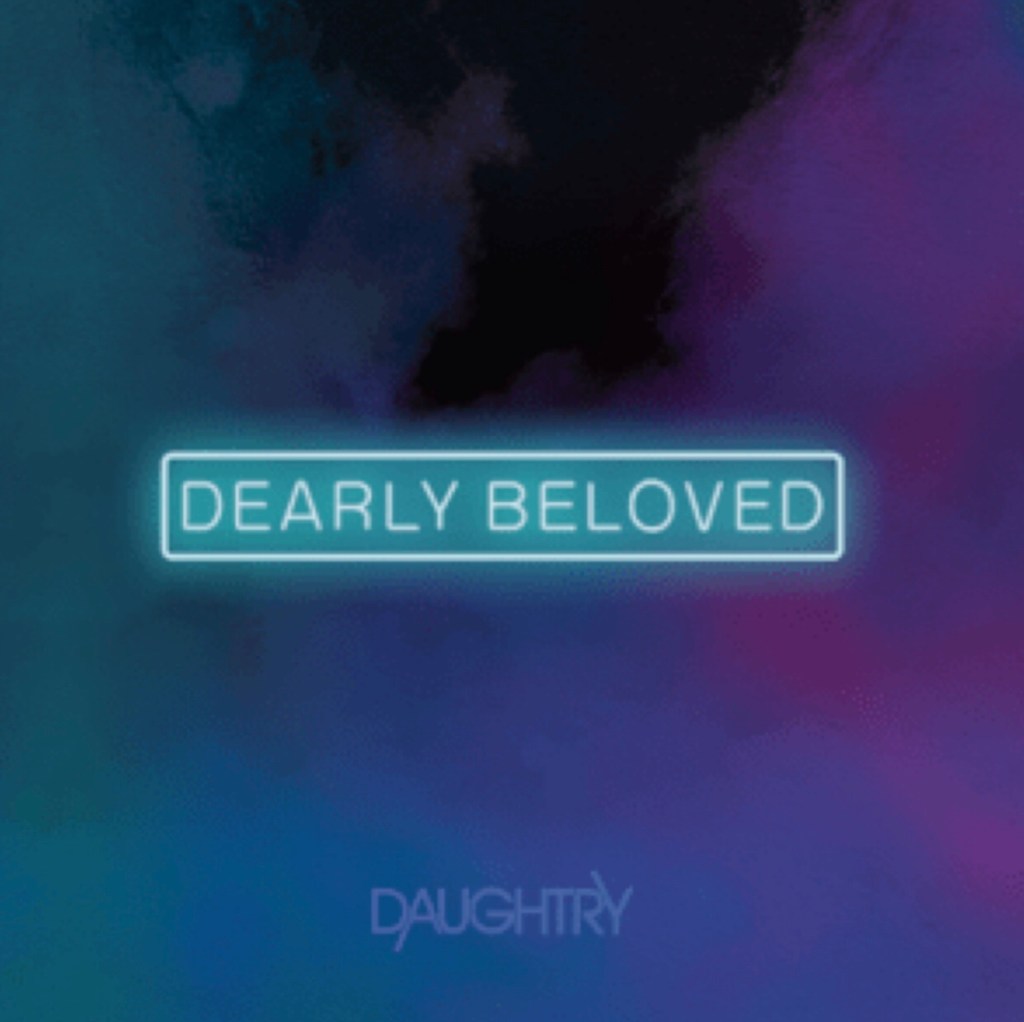
And a new look was in play for a dystopian story called “Dearly Beloved”, released in 2021.
Plus the hard rock distorted guitars are back with a vengeance, something which Daughtry hinted to in 2016 when the “Greatest Hits” album came out but then the label got in the way.
The band for the album is Chris Daughtry, Josh Steely and Brian Craddock on guitars, Josh Paul on bass, Elvio Fernandes on keyboards and Brandon Maclin on drums.
Desperation
Written by Chris Daughtry.
It simmers in the verses, with Daughtry singing in the lower registers as he blends his voice with the synth and guitars.
It’s a slow rocker before soaring in the Chorus.
And the heaviness of the guitars definitely captures my attention.
It also sets the lead in for the next track “World On Fire”.
World On Fire
Written by Daughtry and producers Scott Stevens and Marti Frederiksen.
The film clip for this and “Heavy Is The Crown” is set in a dystopian future while Chris Daughtry looks like an “Assassin’s Creed” character.
Heavy Is The Crown
Written by Daughtry, John Cummings, Elvis Fernandezs, Scott Stevens and Marti Frederiksen.
It’s a song writing committee. John Cummings is from the band Mogwai, who is accomplished on guitar, as well as keyboards.
The guitars dominate here along with Daughtry’s voice. Check out the Chorus.
Changes Are Coming
Written by Daughtry, Stevens and Frederiksen.
More of the same 120bpm, guitar heavy modern Arena Rock.
Dearly Beloved
Written by Daughtry, Brian Craddock and Mark Holman.
It’s a ballad and Daughtry knows how to deliver em.
The guitars are load and so is the electronica and keyboards.
Cry For Help
Written by Daughtry, Stevens and Frederiksen.
Acoustics and piano give way to loud distorted guitars and another hooky Chorus.
Asylum
Written by Daughtry, Cummings, Fernandezs, Stevens and Frederiksen.
Its sort of gospel heavy rock cut and why wouldn’t it be, with lyrics like “the lunatics have taken the asylum.”
Evil
Written by Daughtry, Stevens and Frederiksen.
Check out the bridge.
The Victim
Written by Daughtry, Stevens and Frederiksen.
If you like hard rock you will like this.
Somebody
Chris Daughtry is the songwriter and he delivers vocally on this while the guitars get loud in the Chorus.
Call You Mine
Written by Chris Daughtry in and his wife Deanna.
The Intro with the palm muted chugging acoustic guitar is the best.
Lioness
Written by Chris Daughtry.
Check out the Outro.
Break Into My Heart
Written by Daughtry, Stevens and Frederiksen.
A piano and a voice to close the album.
“Dearly Beloved” is a return to form which shows the world that Daughtry still knows how to rock!!





 destroyerofharmony