Classic Songs to Be Discovered, Influenced, Music, My Stories, Unsung Heroes

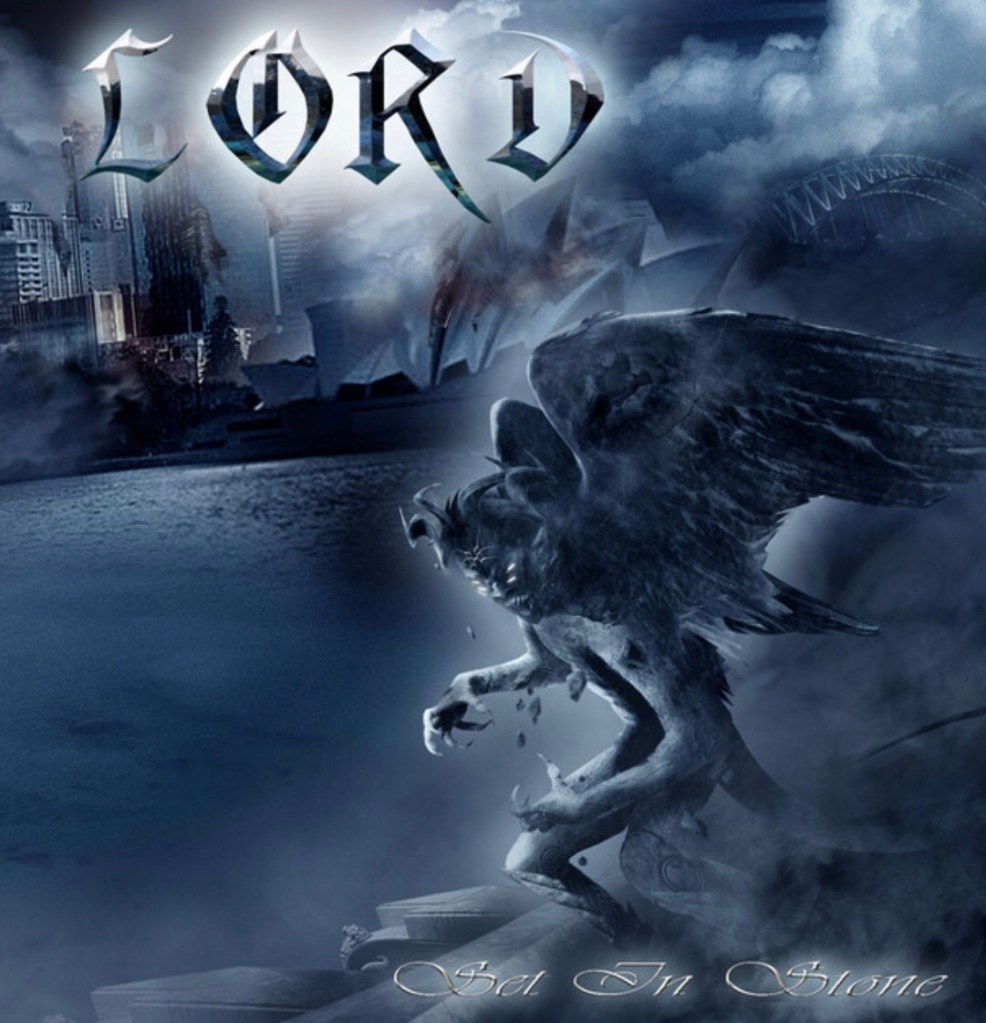
Australian Method Series: Lord – Set In Stone

2005.

A band called Dungeon is opening for Megadeth in Sydney. I knew of the name, but never heard any of their music. The band name just didn’t do it for me. It was my mistake. I listened with my eyes instead of my ears. Well that was to change.

After the gig, Dungeon was definitely on my radar and I did purchase a few of their albums. And as soon as I got into them, they called it quits.

Sort of.

You see, Lord was originally started as a side project for Dungeon guitarist/vocalist Tim Grose, which was meant as something different from his main band sound. Lord’s first album was released in 2003 and it wasn’t so different from Dungeon. After Dungeon disbanded in 2005, Lord just became a continuation of Dungeon’s sound with new members. You could even purchase Dungeon albums at shows Lord did.

“Set in Stone” is the third album released in September 2009 by the band’s own label Dominus in conjunction with Riot! Entertainment. The album was recorded in my home town of Wollongong, Australia. A small foot note in history, is that a band I was in at the time opened up for Lord when they played Wollongong touring on this album.

The band is Tim Grose (also known as Lord Tim) on vocals and guitars, Tim Yatras on drums, Mark Furtner on guitars and Andrew Dowling on bass.

Spectres of the Ascendant

48 seconds of sound effects to introduce “Redemption”.

Redemption

Written by Tim Grose and drummer Tim Yatras, who would depart the band after the album was completed.

Its face melting speed metal.

100 Reasons

Another Grose and Yatras track.

It’s hard rock, with a major key Arena melodic rock Chorus.

Eternal Storm

Co-guitarist Mark Furtner gets a co-write with Grose and Yatras.

Fast, Malmsteen like from the “Marching Out” album. The solo is very Vinnie Moore like, running through different scalar patterns.

Set in Stone

Another track written by Grose and Yatras.

My favourite song on the album. The intro riff is a brilliant mix of Classic NWOBHM and American metal. Judas Priest and Maiden come to mind, with vocals bordering between a cross between Dickinson and Tate at their classic metal best.

There is this “wo-oh-oh” chant after the solo. I can imagine thousands of people chanting it at a gig.

Someone Else’s Dream

Written by the band.

An 80’s sounding synth and a syncopated guitar line set the foundations. At stages it feels like it’s a song from the Gothenburg metal scene, but the Chorus is huge and melodic.

Forever

It’s almost Maiden like with a lot of musical influences from the “Fear of The Dark” album.

I play air guitar to the harmony guitars.

Written by Tim Grose, Tim Yatras and Andrew Dowling.

The lyrical theme is pretty clear. Boy falls in love, gets rejected and goes all Michael Douglas “Falling Down” on the girl and the world.

The guitar playing in the lead break is brilliant.

Beyond the Light

Written by the band.

Judas Priest and UFO “Lights Out” era comes to mind, vocally and musically. It’s a great song to sing along to.

The End of Days

Written by Grose and Yatras.

It’s like a thrash metal song, with the vocals being a cross between Rob Halford and Tom Araya (in the verses).

Staying true to its title it ends with a nuclear bomb going off.

Be My Guest

Written by Tim Grose, Tim Yatras and ex Dungeon bassist Brendan McDonald.

This is like “Stars” on guitar with a lot of guest solos.

It’s an instrumental track featuring guest solos from Craig Goldy of Dio, Glen Drover from Eidolon, Olof Mörck of Dragonland, Yoshiyasu Maruyama of the Japanese thrash band Argument Soul, Angra’s Felipe Andreoli, the former Enter Twilight member Richie Hausberger, Chris Porcianko from Vanishing Point, Chris Brooks and former Dungeon members Stu Marshall and Justin Sayers.

New Horizons

Written by Grose and Yatras. It’s your typical power ballads.

Pete Lesperance from Harem Scarem plays a solo on this.

On a Night Like This

A Kylie Minogue cover as the bonus track.

The fact that the band would attempt such a cover shows the versatility of the members.

Reviews for Australian artists are difficult to do as I want to highlight influences of their sound without making them sound like copyists, and if people from other continents want to check them out, my aim is to give them a reference point as well.

If you haven’t dabbled in the power metal genre, then let Lord be your entry point.

It’s easy really.

Just press play on the melodic rock tracks first like “100 Reasons” and “Beyond The Light”.

If you like em, then press play on the classic metal track, “Set In Stone”.

If you like that, press play on the more ambitious tracks like “The End Of Days” and “Forever”.

Then you are at the fast speed metal with “Redemption” and “Eternal Storm”.

Enjoy.

Standard
Classic Songs to Be Discovered, Influenced, Music

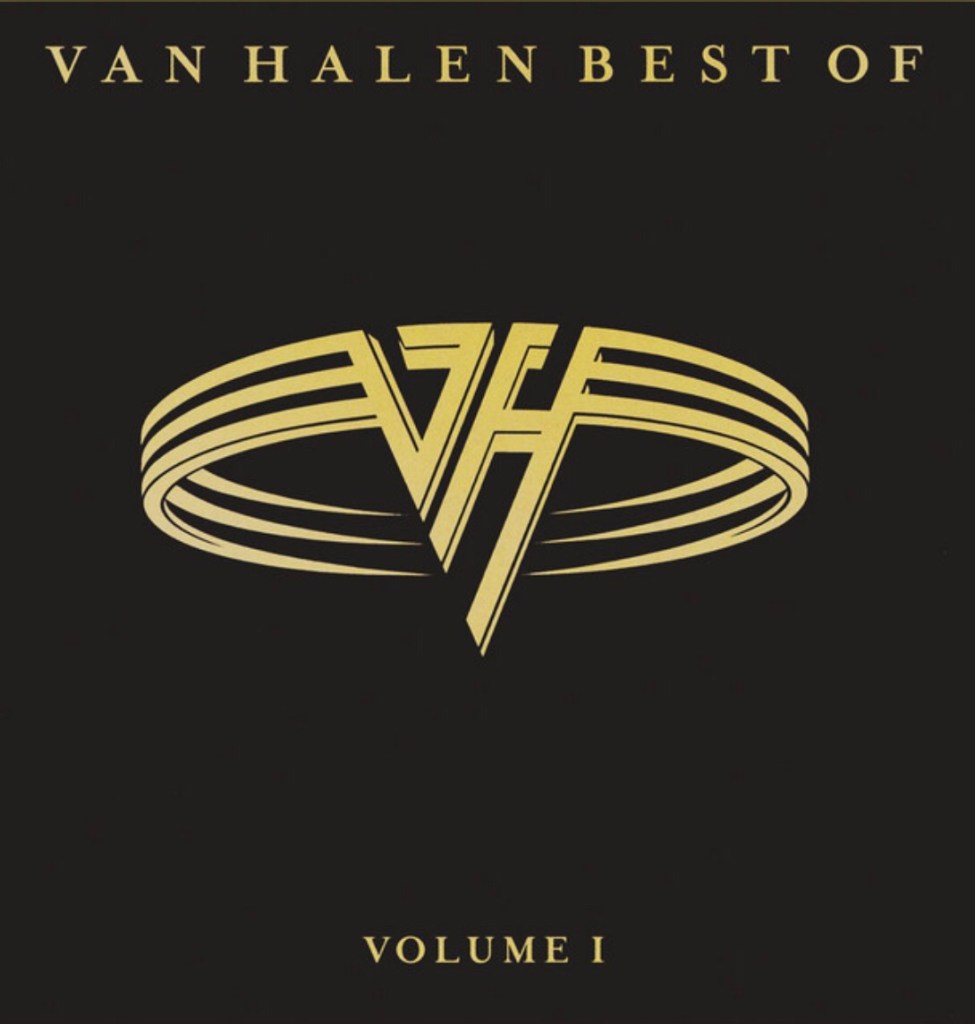
1996 – Part 5.1: Van Halen – Best Of – Volume 1

Roth’s Return Was Welcomed But I Was Cynical.

In 1996, Sammy Hagar left Van Halen. Both camps tried to set the record straight as to why things happened like they did. It made for great reading, the press had a field day and the fans just wanted new music.

Enter an old flame.

David Lee Roth re-joined briefly and recorded two songs with the band for the 1996 compilation “Best Of – Volume I”. There is a story about this saga as well, but other sites on the web cover it better. As is the norm, Roth and Eddie clashed again and Roth was out, eventually replaced by Gary Cherone from Extreme.

However we got a “Best Of” album. And it sold well. I guess the public’s appetite to hear Roth with Van Halen again was sky high. I know in Australia it got a Platinum certification and in the U.S it was 3x Platinum.

The album was released on October 22, 1996. I basically purchased it for the two newly recorded Roth songs, “Can’t Get This Stuff No More” and “Me Wise Magic” plus “Humans Being” which did appear on the Twister soundtrack, however my first hearing of the song was on this compilation.

And this review would focus on those three songs.

Can’t Get This Stuff No More

I got so used to Sammy Hagar and his melodies.

So I wasn’t totally enthused to hear Roth deliver his vocals about a “date with a super model and how he doesn’t need so much to remember”. But Roth is Roth, and it’s why I am a fan. He never conformed nor did he change his style. And the Chorus is as good as any Van Roth chorus.

Eddie was also getting a lot more progressive with his song writing and bro Alex, did a great job to put a beat and feel to it all.

Check out the lead break rhythms and EVH talk boxing his way before he breaks open the gates of shred. For progressiveness check out the outro that just came from left field as it’s a unique piece of music on its own.

Wikipedia also tells me that the music for this song was based on a track called “Backdoor Shuffle” which was originally part of the sessions for the “Balance” album.

Me Wise Magic

As soon as I heard the intro I was picking up the guitar to learn it. Not sure what came first. “Test For Echo” or this. I can Google it, but who cares, as the intro does remind me of Rush. Roth moves between spoken verse to a frantic pre chorus and a killer Chorus with Michael Anthony nailing the backing vocals.

Both of the Roth tracks were produced by Glen Ballard who had a renaissance of some sort in the mid 90’s thanks to Alanis Morissette and “Jagged Little Pill”.

The way the song started is how it ends.

An example of what I meant with EVH being progressive in his writing. You don’t hear the Intro riff again in the song, until it appears in the Outro.

EVH’s working title was “The Three Faces of Shamus,” for its three sections with “completely different vibes going on”.

Roth was also asked to work with Desmond Child on the lyrics after he discarded (or rewrote) the words that Ballard wrote. But Roth is Roth, and no one tells him what to do.

Humans Being

Produced by Bruce Fairbairn.

The intro Em riff (E to G to A) hooks me instantly. It’s almost Metallica like, but also like Alice Cooper (think “I’m Eighteen”).

My favourite part of the song is when Sammy sings “Shine On”, and of course EVH chimes in with a quick melodic lead, which quietens down and then builds up again, full of octaves, whammy bar manipulations, superhuman bends over a droning E note and legato slides. And none of it would work if it wasn’t for the time keeping of AVH.

And there is a story around this song’s creation, but Wikipedia covers it pretty good.

The only thing left to say, is to crank it.

Standard
Copyright, Influenced, Music, My Stories, Piracy

The Week In Destroyer Of Harmony History – June 20 to July 17

Time just ran away from me.

In Australia, the End Of The Financial Year is 30 June 2022. And man there is a lot of work to be done a few weeks before that date and a few weeks after that date.

And some things just get priority over others.

2018 (4 Years Ago)

This time 4 years ago was very light on posts. I had a second part review of the year that was 1984.

Coming into 1984, hard rock and metal bands started popping up everywhere in the mainstream. Magazines moved their reporting from different styles of music to cover only hard rock. The labels even started promoting rock music as different genres. Eventually, the heavy metal section of the record store would be divided to include hard rock, speed metal and extreme metal. In a few more years after that, glam metal and melodic rock would also be listed as categories. But in 1984, regardless of what “genre” a band got labelled with after, we still found the albums in the heavy metal section of the record shop.

Judas Priest still had the world in the palm of their hands with “You’ve Got Another Thing Comin” and then they dropped “Defenders Of The Faith”. “The Sentinel” is my favourite track on the album. I could listen to it over and over again.

The debut album from the “guys from Jersey” is tiny compared to the albums that came after, but it still has some worthy riffs to talk about. So press play on Bon Jovi’s debut.

The fury known as Yngwie Malmsteen dropped his debut album “Rising Force” and neo-classical got an adrenaline shot.

The Fish led era of Marillion dropped “Fugazi”. It was an acquired taste and I enjoyed the music more than the vocals.

When I first heard “Ride The Lightning”, I didn’t even know what kind of music it was. I felt like a chainsaw assaulted my earbuds. It didn’t sound like the hard rock mixes I was used to, as my ears were conditioned to enjoy the Tom Werman, Keith Olsen, Bruce Fairbairn produced albums.

It was original, progressive and it set the track list running template for the future albums which followed.

I didn’t know it then, but Y&T would became one of my favourite bands ever. Their big money Geffen move didn’t happen until the late 80’s and A&M was the wrong label for their classic era. Regardless, Y&T’s is part of my DNA. “In Rock We Trust” I say.

From a copyright point of view, how the hell would David Coverdale do the accounting for the “Slide It In” album. There are the songwriters who would deserve their royalty and then there are the two versions of the album, with different members who would get a performance royalty.

The final Cold Chisel album “Twentieth Century” came out months after they played their final show in December of 83.

And it had three classics in “Saturday Night”, “No Sense” and “Flame Trees”. It’s also hard to believe that “No Second Prize” from Jimmy Barnes solo album that followed this, was submitted and rejected from this album.

2014 (8 Years Ago)

Stronger Copyrights

I absolutely support that musicians should be paid for their work.

What I don’t get is how the record labels and misguided artists feel entitled to push for stronger copyright enforcement as a way to guarantee an income which is contrary to the foundations of what copyright was designed to do.

The song “Happy Birthday” goes all the way back to 1893 and it was under Copyright protection until 2030 because someone decided to retroactively place it back under copyright. Then there was outrage and then it was part of the public domain.

Copyright protectionism is about protecting old business models. Stronger Copyright has nothing to do about supporting thriving new industries. Stronger Copyright has nothing to do about finding new ways of doing things.

And people do pay for music.

Metallica’s self-titled Black album is still moving on average 2000 units a week. And it is doing this even though millions of copies of the album are available to be downloaded for free. It is doing this even though it is available for streaming on Spotify and YouTube.

Volbeat has been selling records on a weekly basis in the U.S since 2011. They are doing these numbers even though their album/s are available to be downloaded on peer-to-peer networks. They are doing these numbers even though their albums are available for streaming. Same deal with Five Finger Death Punch, Avenged Sevenfold and Skillet. Still selling, regardless of the state of piracy.

So what is it. Do artists need stronger copyright laws or better business models and terms that pay them a fair days pay for a fair days work?

Asphalt Ballet

What a great band name, using a police slang term for a motorcyclist crashing and skidding along the road at high speed. Their so called overnight success was 14 plus years in the making that began in different states and different cities, far removed from the Sunset Strip of LA.

Vocalist Gary Jeffries has a huge story to tell. He put in a lot of time playing the bar circuit and his origin story dates back to the Seventies. Eventually he came to L.A in the mid Eighties to audition for QUIET RIOT after original vocalist Kevin DuBrow left. He didn’t get that gig, losing out to Paul Shortino from Rough Cutt.

Start with the debut album. They wanted to call the album “Mood Swing” and once you sink your teeth into it, that is exactly what you will get.

It was produced by Greg Edward who paid his dues as an engineer on big albums like “Scarecrow” from John Cougar Mellencamp and “Like a Rock” from Bob Seger and the Silver Bullet Band. Virgin Records released the album and it looks like they had no idea how to promote the band or the album in a changing musical landscape.

DR FEELGOOD

Dr Feelgood had to be number 1.

It was a million dollar blockbuster and the mythology around Motley Crue by 1989 supported and underpinned this blockbuster movie. The drug overdoses, the return from death, the crashed cars, the women, the drugs, the partying, the clashes with the law and the eventual “sobriety”.

It is their first album with Bob Rock, who Nikki found via Ian Astbury from “The Cult”. Remember that music is a relationship business. That is how we are meant to roll. It was recorded in Canada at Little Mountain Studios at the same time that Aerosmith was recording “Pump”. Both of the biggest party bands had committed to a healthy lifestyle, going on jogs together.

The piece de resistance is “Dr Feelgood”. Musically, it is a Mick Mars composition, that he had completely mapped out on his own. He had to take the song to the band a few times before they started to pay attention to it and it was the song that started the ball rolling with Bob Rock, after the band sent him a demo.

Can you imagine Vince Neil singing for a whole day and only having one line of a lyric that was deemed usable?

Yep, that was the standard set by Bob Rock. Of course a million dollar budget didn’t hurt. And didn’t they come a long way from the seven days recording session for “Too Fast For Love”. Album number five left no loose ends.

“Dr Feelgood” set a new standard for hard rock and a lot of the bands like Dokken, Great White, Firehouse, Poison, Ratt and so many others just didn’t take that next step. And of course, shortly after the album was released, Metallica went to Bob Rock and said that they want their own “Dr Feelgood”.

We all know how that turned out.

THE KINDRED

“Today I Caught the Plague” was first. I thought the band name was crap but the debut album “Lore” was a real stand out for 2011. I came across the band by sheer luck when I saw a tour poster from “Protest The Hero” and it had “Today I Caught The Plague” as one of the supports.

While “Lore” was an independent release, “Life In Lucidity” is on Sumerian Records. A label that is perfect for them. Because labels are still the answer to get your name out to the masses. As much as the internet was meant to level the playing field, the labels have more power than ever. So if you want to be on a label, you need to be on a label that specialises and deals with bands that are of similar styles.

The first song I listened to was “Heritage” and I bought the album on iTunes not long after, ordered the CD from Amazon and put it as a favourite on my Spotify playlist.

The band name is also changed to The Kindred.

IF GAME OF THRONES WAS A ROCK BAND

If Game Of Thrones was a rock band and the band had the levels of piracy that the TV show had, expect their shows to sell out in minutes.

If Game Of Thrones was a rock band and the band is doing a free show like the GOT exhibition then expect pandemonium to ensure.

ZAKK WYLDE COMPENDIUM

A very long post covering Zakk’s long career with Ozzy, Pride And Glory, Ozzy again and Black Label Society up to 2014. Check out what I think are essential songs that people should listen to from Mr Berserker Wylde.

And I just kept talking about “Angel Of Mercy”, spreading the gospel on the song from Black Label Society.

Great music must contain emotion. That is why “Angel Of Mercy” connected with me. It hits me emotionally and it makes me feel something. All the great songs do? And because I care for the song, I can’t stop sharing it and talking about it with people who want to listen. And when music is done right, it sells itself.

And that’s a wrap for a month’s worth of DoHistory. Let’s get back to reading blog posts and posting some more content.

Standard
A to Z of Making It, Copyright, Music, My Stories

The Week In Destroyer Of Harmony History – June 6 to June 19

4 Years Ago (2018)

As much as I try to have a buffer of posts, sometimes life and other events get in the way so my days become a matter of priorities.

And 4 years ago, my blogging suffered. Sort of like how it is suffering around this time again.

WHAT’S NEXT

You paid your dues from hotel to motel, got ripped off on the pay from the promoter, had some fights and some good times and maybe, just maybe, you might have gotten a recording contract.

Which didn’t guarantee success, but it gave you a chance to play in the field of dreams.

Suddenly, MTV made people believe that if they got a recording contract, success was guaranteed. And the live show became a clone of the recordings, because artists took their time to get the recordings perfect.

Music is cultures greatest invention and the record labels signed artists based on the music more than the commercial potential. With some A&R development, smart marketing, an audience would come and a career is built. But streaming put the public in control. It took away the power of scorched earth marketing tactics from the labels.

Songs that go nuts on streaming happen months before the rest of the mainstream picks up on them. And every so few years something new comes along that becomes mainstream. Classic rock gave birth to prog rock to punk to metal to hair rock to grunge to industrial to nu metal and so forth.

What’s next.

8 Years Ago (2014)

HEY STOOPID

Alice Copper had a string of hit albums in the Seventies. Towards the end of the decade and in the early Eighties his output was of a lesser standard while he dabbled in new wave rock. Then he started to gain some momentum with two underrated hard rock/metal releases in “Constrictor” and “Raise Your Fist and Yell”. But the massive mainstream comeback happened with “Trash”, his Eighteenth studio album. Yep, Alice’s career was eighteen albums deep.

So when it came time to record the follow-up to “Trash”, another star-studded cast was assembled.

A lot of cash was thrown at every body. It was a who’s who of hard rock royalty.

Listen to it and re-evaluate.

COMPLICATED COPYRIGHTS

I don’t understand why people go to a rock show or a metal show to film the whole thing on a smart phone.

I have also been known to break out my iPhone and capture some footage or a few photos for posterity. But I’ve never gone back and referred to my amateur filming or photography.

The reasons are simple, those captures can never accurately reflect the concert as I witnessed it.

Once upon a time it was a big thing to go to a concert and talk about it, but these days it’s no big deal.

So is videoing a concert with a phone a violation of an artist’s copyright. Don Henley says it is, however he also said that he doesn’t want the shows posted on YouTube because it spoils it for people who are going to come to a show in the future and that he doesn’t want to see Eagles content out there that sounds horrible.

Some use it as a form of a diary record, to remember or relive that moment when their favourite song came on. Some do it to share the moment and their love for the artist. Some do it because they simple can. A smart phone or an iPad or Tablet, allows us the convenience to do so.

BANDS

The years of practicing and writing do not prepare you for the realities of the music business.

To me the big one is the sense that bands just can’t get along. The odds of success are so rare no one wants to give an inch just in case that inch was their chance at making it.

It got to the point where fans of other bands were told to wait outside while the other bands played, just in case some record label rep was in the audience and saw people having a good time.

INVASION OF THE SWEDES

Sweden is a massive exporter of cultural content. Most of the bands I like are from Sweden and one of the biggest Pop songwriters over the last 25 years is also from Sweden.

Isn’t it funny how the home country of Spotify also has one of the most vibrant rock and metal scenes in the world. But wait a second. I am sure I have heard the RIAA and their proponents scream that because music has been devalued, no one will create anymore.

Well it looks like someone forgot to tell the Swedes, a country that has embraced streaming and guess what, their musical scene is flourishing.

KAMELOT

I don’t mind my fix of Power Metal. Here is my own 10 second wrap up of a whole genre beginning from the Seventies.

It started with Deep Purple, Rainbow and Iron Maiden. Then Yngwie Malmsteen and Helloween came along. They both increased the tempos and Yngwie Malmsteen exaggerated the classical elements which led to the current Power Metal movement which is just a higher tempo version of the beast that Yngwie Malmsteen and Helloween inspired.

The thing with power metal at the moment is that there are so many acts out on the market that are just not good enough to be there. They think by playing at break neck speeds it makes them good enough.

Kamelot is not one of them. Because Kamelot is not all about higher tempos. There is more variation in their music. Credit Thomas Youngblood, one of the bands original founders.

I’m listening to “Silverthorn”, Kamelot’s tenth studio album and their third concept story.

It’s the song “Veritas” that connected with me. And the connection comes in the form of a band called Savatage, who I am a big fan off, especially the era of Criss Oliva. Because it sounds like something that could have been recorded for a Savatage album.

I can’t say that I like everything that Kamelot has put out, however they have done enough on each album to keep me interested to come back and invest my time to hear each new album. And that is what matters today.

DAYBREAK EMBRACE

I really enjoyed Daybreak Embrace’s 2010 EP “Tomorrow Awaits”. From that EP “Thirty–Six” is a dead set classic and “Sanctuary” is not that far behind. This is where people should start.

So I was curious as to what new music they had released since then.

I go to Spotify, type in their name and I see that they have new music. The “Mercury” EP was released in 2013. Damn, how did I miss that. The Modern Rock scene in the U.S is a very crowded marketplace. With all the beautiful things that the Internet has brought us, one thing hasn’t changed. It is still difficult for a band to get attention and the odds of success are still very low.

GEORGE LYNCH – SACRED GROOVE

By 1993, everything changed. The Record Labels threw their lots in with the Grunge movement, abandoning the majority of the hard rock and heavy metal bands they had on their roster. But, hard rock and metal releases still kept on coming. The only issue was that they became harder to get in Australia.

And “Sacred Groove” from George Lynch would probably never get booted out of the Top 10 list for that year. It’s an album that has guitar instrumentals with hard rock songs featuring some of the best singers. Slash did something similar with his Solo album a decade later.

The best instrumental track by far on the album is “Tierra Del Fuego”. A six-minute tour de force in Flamenco Hard Rock music.

The best vocal track on the album is “We Don’t Own The World”, that has vocals by Matthew and Gunnar Nelson. But the song is actually written by George Lynch and Don Dokken. Dokken was supposed to sing on the track, however he failed to show up at the studio. So Lynch got the Nelson twins who were in the studio next door recording their ill-fated “Imaginator” album, which got rejected by Geffen and John Kalodner.

“Flesh And Blood” is written by George Lynch and Jeff Pilson and Ray Gillen is on vocals. This is a rare gem as Ray was to pass away that same year. That awesome groove sets it up and Lynch owns that solo.

Glenn Hughes involvement with George Lynch goes back to the Lynch Mob days, when he recorded scratch vocals on the second album, so that new singer Robert Mason could follow. On Lynch’s first proper solo outing, he sings on two songs, “Not Necessary Evil” and “Cry Of The Brave”. Both of the songs have music written by Lynch and lyrics by Hughes. This period of Hughes’s career is the one I like the most. He was everywhere with his own solo project, with George Lynch, with John Norum, with a Blues project and many more.

THAT 1994 MOTLEY CRUE ALBUM

I had mixed feelings when I heard that John Corabi was the new Motley vocalist. Twenty Eight years on the album has survived the test of time. Darker, bluesier, ballsier, kick-ass rock and roll.

It has some of the best playing the band had and has ever done. And it was so ahead of its time that the record label just didn’t know what to do with it and how to market it.

People said they ripped off Alice In Chains because it packed serious groove. Umm, listen to the Girls and Feelgood albums. They also grooved.

People said they jumped on the grunge bandwagon because they down tuned. For most of their career Motley Crue down tuned.

What about all the scattered Zeppelin and Beatles influence all over the record? Nikki Sixx said that he was trying to write his own Physical Graffiti. And he succeeded.

It’s a great record with the unfortunate truth that it was released by Motley Crue and the album remains hidden from any new fans connecting with it.

And that’s a wrap for the fortnight that just passed.

Standard
Classic Songs to Be Discovered, Derivative Works, Influenced, Music, Unsung Heroes

Australian Method Series: Andrew Stockdale – Keep Moving

Released on 7 June 2013 and recorded in various studios in Byron Bay, New South Wales. Coming from the Steel City of Wollongong, Byron Bay is a 9 hour drive up the coast.

The Producer is Andrew Stockdale.

It was written with the idea that it would be the third Wolfmother album, however the group was already in disarray after Stockdale fired the original band before the 2nd album, and any musicians that joined the fold afterwards were on Stockdale’s payroll, not the labels.

The album process started in 2010 with updates on social media and then it went silent. By February 2012, we knew that rhythm guitarist Aidan Nemeth and drummer Will Rockwell-Scott had left the band. Universal was also not really interested in what was been delivered at that point in time.

Remaining members Stockdale and bassist Ian Peres called in Vin Steele (rhythm guitar), Elliott Hammond (keyboards, percussion) and Hamish Rosser (drums) to complete the band line-up. Universal still wasn’t interested but Stockdale planned to re-record and self-release the album as a Wolfmother album.

By March 2013, front man Andrew Stockdale announced that he would be releasing the album under his own name.

The Personnel for the album is Andrew Stockdale on vocals and guitar, Ian Peres on all things bass related plus other instruments, with drums shared by Elliot Hammond, Hamish Rosser, Will Rockwell-Scott and Dave Atkins. Additional guitar tracks were recorded by Vin Steele and Alex “Rudy” Markwell.

All tracks are written by Andrew Stockdale, except where noted.

Long Way to Go

It could be a Bachman Turner Overdrive tune. It could a Rolling Stones tune as there is a riff in the song heavily inspired by “Can’t You Hear Me Knocking”.

And there is a solo here, brief but bluesy.

Keep Moving

Lenny Kravitz is going to come your way. You know what I mean. And I like it, with other influences from Hawkwind and a riff from the fingertips of Paul Kossoff (RIP).

Within the first two songs, Stockdale is making a statement. He is moving on from the past, but he has a long way to go to make the break.

Vicarious

The fuzzed out bass sets the groove. The drums thunder along with it. Its subdued and Stockdale croons over the verses, before lifting in the Chorus.

“You’re living vicariously / Tell me what’s it’s like to be me?”

Three out of three so far.

Year of the Dragon

It’s classic Wolfmother in riff, with a Bill Ward style swinging beat and a feel that gets the foot tapping and the head banging.

Somebody’s Calling

Stockdale co-wrote this with multi-instrumentalist Elliott Hammond who plays drums, electric piano and harmonica on this album.

Hand clapping Rock and Roll that reminds me of The Doors, Sweet, The Easybeats, Free and all of those great bands. And at 1.50, it goes into a half time feel, which I like and it picks up again at 2.16.

Meridian

Stockdale co-wrote this with bassist Ian Peres. My favourite song on the album and by far the heaviest song Stockdale has committed to release.

The Intro reminds me of Black Sabbath at their heaviest and the verse riff reminds me of Led Zeppelin at their heaviest. A pure classic old school heavy metal cut and although released on a Stockdale solo album, it is a worthy Wolfmother cut.

Ghetto

Another foot stomping groove. And it gets repetitive but hey, the reason why I listen to Andrew Stockdale is because he can jam on a familiar repetitive riff for ages.

Let It Go

“Symptom Of The Universe” has a love child with “Achilles Last Stand”. And I like it.

And if the album ended here, it would have been 8 from 8.

But it continued.

Let Somebody Love You

It’s got this rhythm and blues feel, maybe a little bit of Aerosmith.

Standing on the Corner

The “hit the road jack” vibe is prominent but more countryish than blues.

Country

The title says it all, a ballad.

Black Swan

Yeah, it’s a skip for me.

Everyday Drone

Hey Mr’s Robinson. Can Andrew Stockdale be influenced by you?

Yes, he can.

It Occurred To Me

The fuzzed out psychedelic riffs are back to close out the album. It’s got groove and sleaze, but coming off the acoustic like tracks, it doesn’t flow.

The Foo Fighters released a double album that had rockers and acoustic stuff on each disc. Stockdale suffers here because he released two distinct albums as one.

But for the first 8 tracks, press play on em.

Standard
A to Z of Making It, Classic Songs to Be Discovered, Copyright, Music, My Stories, Piracy, Unsung Heroes

Destroyer Of Harmony History – May 31 to June 5

4 Years Ago (2018)

War Of Attrition

Back then I asked the question “If we stop using Spotify or Netflix, would we miss them?”

Since then a lot of other players have taken market share in the steaming world.

I am a heavy user of Spotify. For Netflix its hit and miss. Sometimes I could go weeks without using it and on other occasions it’s every day.

At the moment, in 2022, I also have subscriptions to Stan, Amazon, Paramount+ and Disney.

Being missed when you’re gone is a worthy objective for any organisation. It also should be an objective for any artist. If I stopped listening to music in general, I would miss it. If I stopped listening to music from certain artists I would really miss it.

And the ones who will survive are not those looking for short term profits, but those that realize it’s a war of attrition.

Who Should Be Listed As A Songwriter For A Song?

Metallica wanted to re-issue their 1982 demo “No Life To Leather”. Dave Mustaine on Twitter, said the talks broke down because Lars wanted song writing credits on two songs that Mustaine wrote every note and word to. So instead of agreeing to share the song writing, Mustaine passed.

Song writing is always an issue with bands.

Van Halen had all the band members listed as songwriters on all of their albums. Suddenly, when the band re-negotiated their publishing deals for their earlier David Lee Roth albums, Michael Anthony was removed as a song writer.

Skid Row’s Dave Sabo and Rachel Bolan said that Sebastian Bach didn’t contribute to the Skid Row debut album as most of the songs were written before Bach joined. Bach countered to say, that the way he sung the songs, and the way he decided to hold certain notes was enough of a contribution to the debut album and he should be listed as a songwriter. Manager Doc McGhee said Bach has no idea how copyright works.

Nikki Sixx said one of the reasons for Vince Neil’s departure from Motley was due to his lack of song writing contributions, which Vince countered to say he had enough co-writes on Motley’s classic 80’s era to counter that.

100% of the time, when an individual writes a song, there will be music, words and melodies written at the same time.

8 Years Ago (2014)

Arrows To Athens

I went in cold to listen to “Arrows To Athens”.

I had no idea what style of music they played, who was in the band, who produced em and which label if any released it.

After listening to the album I was a fan. It’s simple and effective modern rock. Catchy.

So I Googled the band and I came across the name of David Hodges. He walked away from Evanescence before “Fallen” exploded and become a songwriter for other artists in the world of modern/pop rock.

David’s problem is that he is too talented. He can easily write hit singles and all the songs here are infectious.

Do yourself a favour and check it out. It’s on Spotify and on YouTube.

Ashes Divide

I went in cold on this as well. The first thing that came to mind was “A Perfect Circle”. So I Googled it and of course it is Billy Howerdel’s project. And he sings on it. The album came out in 2008 and the first time I heard it was May, 2014.

“Keep Telling Myself It’s Alright” is the album name and there is no filler here. Check it out.

Angel Of Mercy

“Angel Of Mercy” from Black Label Society always gets me to pay attention.

The song appears on the album “Catacombs Of the Black Vatican” from Black Label Society.

And the lead break is pure magic. Just listen.

It builds and builds to the point where you cannot help but be in awe at the feel, the melodic phrasing and the disciplined technique on display.

The song was never a hit on the Billboard Charts and due to its mellow nature it might never get a live appearance, but god damn it, the song is a classic.

Ozzy probably didn’t know it, but in Zakk, he had a guitarist who could do Black Sabbath better than Black Sabbath, do the works of Randy Rhoads justice. (Of course, as a diehard RR fan, no one could do RR better than RR himself) and Zakk could play Jake E Lee better than Jake E Lee. Zakk once called his Ozzy gig the most glorified covers gig ever, where he gets to play some cool shit written by others and he also gets to play his own shit.

Lynch Mob

The follow-up self-titled Lynch Mob album had Keith Olsen producing. I suppose anything to do with George Lynch, includes a saga with a lead singer.

It’s 1992.

Dokken was four years dead. In between that time George Lynch and Mick Brown shacked up together with Lynch Mob and remained with Elektra Records. Jeff Pilson went to War and Peace and lead singer Don Dokken got wined and dined by Geffen Records and jumped ship.

The first post Dokken battle between had Lynch scoring some points with the excellent “Wicked Sensation” coming first. However, Don Dokken and John Kalodner were still building their all-star cast for “Up From The Ashes” and even though the album was an exemplary piece of melodic hard rock, it failed commercially. I suppose Don’s $1 million advance sign on fee didn’t help the budget. But it is still a favourite to me.

And the great momentum built up by the Mark 1 version of Lynch Mob was taken back a few steps with the ousting of vocalist Oni Logan. The story goes that Lynch had a problem with the way Logan sounded live. So after letting Logan go, the band had Glenn Hughes come in. He would sing the songs on the demos and then new singer Robert Mason would record em.

Fun fact for the day is that Glen Hughes did co-write a few tunes with Don Dokken for the “Up From The Ashes” album, with “When Love Finds A Fool” making it to the final cut.

But the album failed to match the sales of “Wicked Sensation” even though “Tangled In The Web” was a Top 10 hit.

Lynch Mob went on tour and Lynch was “not feeling it” with Mason and he wanted to get another singer. That singer was Ray Gillen, who at the time wasn’t interested because he had just completed “Voodoo Highway” with Badlands and was keen to push and promote that album.

If only Gillen knew the fall out that would happen between him and Jake a few months later. Glenn Hughes was considered, however he was discriminated against because of his age.

And then George Lynch returned to Dokken for the already written “Dysfunctional” album and even though as a hard core fan, I thoroughly enjoyed it, the truth of the matter is the band was spent. And we can speculate or argue why or just revel in the greatness of what came before.

The New Nursery Rhymes

The recording industry tells us that we need more Copyright for music to thrive and survive. But nursery rhymes survived all this time without the recording industry and copyright.

Say bye-bye to the old and say hello to the new. Here is a list of the new nursery rhymes that my two-year old loves.

“We’re Not Gonna Take It”

Back in the Eighties, the PMRC listed “We’re Not Gonna Take It” as number 7 on their filthy fifteen list. And the reason why it was on the list. Violence. Yep, Tipper Gore and her housewives found the song to be violent while millions upon millions of adolescent teens found it empowering.

“Cum On Feel The Noize”, “Rock and Roll”, “Rock N Roll All Nite”

Songs about letting your hair down.

“Livin On A Prayer” and “Don’t Stop Believin”

Two songs are about never giving up and believing in yourself. And those people are still believing with billion plus streams for these songs.

“Eye Of The Tiger”

The “Rocky III” producers wanted to use “Another One Bites The Dust” however they could not get permission to use the song, so Sylvester Stallone hired Survivor to write an original song instead.

“We Will Rock You”

The boom boom cha. It’s undeniable.

And these songs get passed on via word of mouth. It’s how culture rolls.

What I Am Over Reading ….?

Metallica’s New Album

Six years had passed since Death Magnetic was released.

Led Zeppelin Reissue’s

Seriously. How many times can someone own the original three albums or the songs contained within those albums.

Piracy

Seriously. Is this still an issue in 2014?

Streaming Doesn’t Pay

It does pay. If you are not getting any of the pie speak to the label or the organisation that holds your rights.

Sales

They are irrelevant. All they do is give the old guard a way to measure something that is irrelevant because the new way to measure an artist’s reach is just too hard to fathom for them.

Are people listening to the album?

Press Releases for new albums

People can see through the hype. We don’t care when bands say “how great this new album is” or “how it is a definitive statement of the band right now”. All we care about is if we like it. If we do like it, we will talk about and we will push it. If it is crap, expect it to disappear.

Because if publicity does increase sales, then bands should be selling by the millions and selling out their shows. But they don’t.

And that’s another wrap of DoH history for a week.

Standard
Classic Songs to Be Discovered, Derivative Works, Influenced, Music, My Stories, Unsung Heroes

The Record Vault: Dream Theater – A Change Of Seasons (EP)

Mike Portnoy was not happy when the song “A Change of Seasons” was pulled from being recorded in the studio for the “Images And Words” album.

So Portnoy kept asking Derek Oliver to provide funding so the band could record it. Portnoy tried to include it with the “Awake” album and again, Oliver said “no”.

And that’s when the fans stepped in. Dream Theater fans started to connect online via the Ytsejam Mailing List and suddenly, a petition was created to convince the label to give the go ahead for the band to record the song.

Yep, Dream Theater was one of those bands to have a direct to fan connection via their fan club and message boards in the early days of the Internet. Mike Portnoy was key here, as a fan of Marillion, who was also another band which kept engaging with their fans via their fan clubs and much later, Marillion were one of the earlier bands to get fans to fund an album before it became a thing.

At 23 minutes, it was their longest song at that point in time, but the way it is written and constructed, the seven parts of the song, can be listened to individually as separate tracks, if you wanted to splice the track. Lyrics are written by Mike Portnoy.

But.

If the band wanted to record this track in the studio, Derek Oliver said the track must be produced by Dave Prater. As described in the book “Lifting Shadows” by Rich Wilson, Oliver believed that Prater really understood what Dream Theater was about and when Prater zeroed in to the bands weakness, the band couldn’t hack it, hence the animosity. Prater was the producer for the “I&W” album and he was having serious run ins with Mike Portnoy over triggered drum sounds and with Kevin Moore over his reluctance to do anything that the Producer asked.

While the band disagreed with the Prater suggestion, they relented. as the only way to get funding was to do it the label way. Since Prater was told to not use triggers on the drums, it meant Portnoy wouldn’t be an adversary anymore and his main adversary during “I&W”, Kevin Moore was not in the band anymore. But Prater and James LaBrie didn’t connect this time around and they started to argue. But, in the end, LaBrie’s vocal performance on the track is excellent, so all the pushing and yelling, ended up in a fantastic vocal take.

The EP was released on September 19, 1995, through East West Records.

Apart from the title track, it has a collection of live cover songs performed at a fan club concert on January 31, 1995 at Ronnie Scott’s Jazz Club in London, England. It’s also their first recording with Derek Sherinian on keyboards.

I know what most people are thinking,

23 minutes of a million notes a minute over complex time signatures. If you are thinking that, you are mistaken. The sections are all songs within a song and one thing that producer Dave Prater has going for him was his questioning of why they want to overplay certain parts.

Like when he said to John Petrucci (as mentioned in the book “Lifting Shadows”), “why are you trying to impress Steve Vai” with those fast technical licks as your first improvised take of the lead was way better than the stuff you worked out days later.

I. The Crimson Sunrise (instrumental)

The song begins and ends with an acoustic guitar. A seven string acoustic guitar with the low B and while I am critical of the 7-strings on fast picked stuff, I really like em on groove orientated stuff, and this is what this song is. A Groove Heavy Rock beast with progressive elements.

As soon as I heard the first notes of the intro acoustic riff I was hooked.

Did they try and recreate “Pull Me Under” with this whole intro piece?

Maybe.

Because there is melody, power and aggression here in the acoustics and when the distortion kicks in, you definitely feel it in your bones.

The first 3 minutes is essential listening. All instrumental but never boring.

II. Innocence

It begins at the 3.50 mark.

And how good is that arena rock chorus, that begins with “Innocence caressing me / I never felt so young before / There was much life in me / Still I longed to search for more” and when it repeats the second time, it’s worded a bit different. “Ignorance surrounding me / I’ve never been so filled with fear / All my life’s been drained from me / The end is drawing near.

III. Carpe Diem

It begins at the 6.54 mark with the start of the acoustic guitar arpeggios, almost classical. Portnoy is now referencing the last moments he had with his mother before she left to catch a plane which crashed.

The last few lyrical lines, “preparing for her flight / I held with all my might / fearing my deepest fright / she walked into the night / she turned for one last look / she looked me in the eye / I said “I love you, / goodbye”.

IV. The Darkest of Winters (instrumental)

I’m pretty sure this section kicks in at the 9.47 mark. It’s got metal and a jazz fusion like lead from Petrucci. There are a lot of elements from “I&W” here especially from the songs “Metropolis” and “Take The Time”. The riff at 11.50 would have been a foundation for a song for any other band. But from Dream Theater, it’s just a riff in a 23 minute song.

At 12.54, Petrucci starts the melodic lead that leads into “Another World”.

V. Another World

It kicks in at 13.03. It’s the big power ballad part of the song with LaBrie delivering one of his best vocals and Petrucci on the lead at 15.39 is perfect with his phrasing, delivering big bends and vibrato lines with short bursts of alternate picking.

VI. The Inevitable Summer (instrumental)

It starts at the 16.58 mark. Myung plays this bass groove which allows Petrucci to bring out the Lydian and Mixolydian scales. This section reminds me of the solo section in “Under A Glass Moon” from “I&W”. Even Sherinian gets a solo moment.

VII. The Crimson Sunset

The final section. It starts at the 20.12 section with a melodic lead that should have been harmonised, Maiden style.

“I’m much wiser now a lifetime of memories run through my head”.

Then there is a complete tempo and feel change for the final verse and the intro acoustic guitar riff appears to bookend a masterpiece.

And while everyone purchased this EP for the original song, the live recordings also deserve a mention.

“Funeral for a Friend/Love Lies Bleeding” (Elton John cover)

I didn’t know about this songs until I heard them here. Written by Bernie Taupin and Elton John. At 10:46, the song was originally recorded by Elton John as the opener on the “Goodbye Yellow Brick Road” album from 1973, which I then purchased after hearing this version.

And it’s even longer on the Elton John version at 11.09, which came as a surprise to me, as Elton John’s 80’s hits are all within the 4 minute range of commercial radio. I can definitely hear how this song influenced Jim Steinman and “Bat Out Of Hell”.

Who said that cover songs take away from the original?

“Perfect Strangers” (Deep Purple cover)

Written by Ian Gillan, Ritchie Blackmore and Roger Glover. It’s the title track from their 80’s comeback album in 1984. This version is very faithful to the original version, and guess what, I went out and purchased this Deep Purple album based on this cover.

“The Rover” / “Achilles Last Stand” / “The Song Remains the Same” (Led Zeppelin cover)

The songs used here for the medley are written by Robert Plan and Jimmy Page. Dream Theater took the best bits of these songs and made a 7.30 minute track that is worthy.

“The Rover” is a song from the “Physical Graffiti” album, with a good bluesy groove which is played to lead into “Achilles Last Stand” which is from the “Presence” album. Here we get most of the singing section of the song, the interludes and that progressive like riff which is played during the solo. Finally, the song is rounded out with some sections from “The Song Remains The Same” from the “Houses Of The Holy” album.

LaBrie proves that you can still pay homage to Robert Plant without sounding like him (remember Lenny Wolf) and Petrucci must have made a deal with Aliester Crowley as he is basically Jimmy Page.

“The Big Medley”

The last song. A mash up of songs from a diverse list of artists that clocks in at around 10 minutes.

It starts off with “In the Flesh?” a Pink Floyd cover.

At the 2.30 minute mark, the awesome riffage of “Carry On Wayward Son” from Kansas kicks in.

“Bohemian Rhapsody” from Queen kicks in 4.35 that whole hard rock section after the operatic vocals. Petrucci then goes into the lead break.

“Lovin’, Touchin’, Squeezin'” from Journey kicks in at 6.00. It shouldn’t work here, but it does. Its 12/8 bar room boogie riff works perfectly after “Bohemian Rhapsody”. LaBrie croons as good as Steve Perry and what else can be said about Petrucci who can move between Jimmy Page, Richie Blackmore, Dave Gilmour, Brian May, Kerry Livgren and Neal Schon so effortlessly. And then he covers Steve Morse and Steve Hackett easily.

“Cruise Control” from Dixie Dregs kicks in at 8.11. This music was new to me back then.

“Turn It On Again” (Genesis cover)”

This part kicks in at 9.14. The riff is immediately memorable, yet familiar as I feel that it influenced some sections on “Innocence Faded” from the “Awake” album.

By the end of the medley, I was out and about seeking albums from Genesis, Dixie Dregs, Journey. I already had the Queen and Kansas albums that had those songs.

If you haven’t heard this EP (which by the way is an hour long), press play on it.

Standard
A to Z of Making It, Copyright, Influenced, Music, My Stories, Piracy

The Week In Destroyer Of Harmony History – May 16 to May 29

Life always throws curveballs. I have reached the stage in my life where I don’t have the time to do my full time IT job. I wouldn’t have it any other way with all of the family distractions, however my blogging has suffered a fair bit in 2022, from the usual daily posts to a post or two in a week and then back to daily posts and then to one or two a week again. Even reading and commenting on posts has gone a bit slack, but I will get around to reviewing it all.

So here is a two week review of Destroyer Of Harmony History.

4 Years Ago (2018)

Copyright was designed to protect the artist and to enhance culture. It did this, by giving the artist a monopoly on their works, so they could make money from their works and have an incentive to create further works. This monopoly was for a short period with the option to renew. Once the expiry date passed, the works became part of the public domain for future generations to build on and use. Like how the 60’s musicians took all the Blues classics from the 30’s that had terms which expire in the 50s and the “British Invasion” was born.

But.

Corporations started to rise because of these monopolies and what we have now is a copyright standard so far removed from what copyright was meant to be. For over a century the record label has built up a history of owning songs it shouldn’t be owning.

“Why would a label be insisting on keeping a property that has stopped selling, that they don’t have any plans to re-promote except when the artist dies?”
Todd Rundgren

“Of all the creative work produced by humans anywhere, a tiny fraction has continuing commercial value. For that tiny fraction, the copyright is a crucially important legal device”
Lawrence Lessig

The songwriters and the actual artists will never be properly compensated because of poor record keeping from the record labels and the publishing organisations, but these same organisations blame the technology companies for not doing enough to seek out the songwriters.

But the labels licensed their catalogues to the techies, so wouldn’t they have the information as to who wrote what. Especially for the lesser artists.

There is a scene in the “Uncensored” video with Vince Neil cruising down the Sunset Strip in a limo with a spa pool and he’s talking about the name of the next album, called “Girls, Girls, Girls”.

On May 15, 1987, “Girls Girls Girls” comes out and the world was treated to two video clips. The “Censored” clip and the “Uncensored” one. MTV had a ball with it.

And the clip is misleading. While it looks like the guys are having fun, attending strip clubs and dropping bills into knickers, Nikki Sixx was in the spiralling grip of a heroin addiction, Mick Mars was blacking out from alcoholism, Tommy Lee was coking it up, screwing anything that moved and somehow managed to get married and still screw anything that moved, while Vince Neil was still on probation from his car crash homicide and pretending to be sober. In other words, life in the Crue was chaos with a capital MC.

The best track on the album is the opener, Nikki’s religious sermon to the street life of L.A. “Wild Side” is perfect, from the riffs, the drum groove, the vocal melodies and of course, the lyrics.

Kneel down ya sinners to streetwise religion
Greed has been crowned the new king

From a commercial perspective, “Girls” was competing against “Slippery When Wet” from Bon Jovi, “The Final Countdown” from Europe and Whitesnake’s 1987 self-titled album for listeners attention. “Look What the Cat Dragged In” from Poison was also rising. But it not only competed, it went toe to toe with all of those releases and Motley came out on top in the live box office. Hell, even Whitesnake was opening up for them.

And who can forget the words from management, that if the band went to Europe to tour, they will come home in body bags. “Girls” would be the end of the Motley band as we knew it. A snapshot of how a band can take alcohol and drugs to the limits.

Artists always had a lot of songs in the bank. Sometimes they didn’t even release their best song. They always withheld some for the next album and the album after. And they kept on writing.

Majority of artists are intrinsically motivated. The joy of creating a new song is what motivates them. If the song gets public acceptance, and it brings in money, great. As long as they are still motivated by the joy of creating a new song, they will be fine. As soon as they are motivated by the need to match or better the popularity of the “hit” song, then they are in trouble.

Social media is there to give you instant feedback. After the show is over, people are commenting. After a song is released, people are commenting. It gives you the ability to connect and know your fans, to interact with them and to get a feel for what they like and want from you.

Remember music is forever, and it needs people to like it. Be creative and never stop.

It takes artists a while, but they eventually realise how much their copyrights are worth. Nikki Sixx on Twitter said that the best industry lesson he learned was that Motley Crue didn’t really need a record label after the first two albums. And this antipathy towards labels ended up with Motley Crue getting their rights to the Masters back in 1998 from Elektra.

And then you have instances where artists need to sell their songwriting credits because of bad business decisions. K.K. Downing, founded Judas Priest. He left the band in 2011 due to issues with the other members and he purchased a golf course, which went into administration. As part of bankruptcy, Downing sold the rights to 136 songs he co-wrote. According to the article, these songs generate $340K to $400K in royalty payments annually back in 2018. Those numbers are only growing and the Copyright holders, (the Labels and The Publishers) are making their money back tenfold.

On the other side, is the graphic artists who normally get paid a flat fee for their services to create/design an album cover. At the time of designing the cover, no one really knows the impact the album might have on culture. So is the graphic artist to get paid extra when the album they designed the cover for broke through and sold millions. Case in point, Jethro Tull and the iconic “Aqualung” cover.

In the 70’s a young artist was hired by Chrysalis for $1,500 via a handshake deal to create three paintings to his style and content for Jethro Tull’s new album. The album went on to become Jethro Tull’s best-selling album, with over 7 million copies sold and so many anniversary editions issued. And apart from the great music, the album cover has become iconic, being re-issued on cassettes, CD’s, T-shirts and what not. And the artist who painted it, well, the label contends it was a “work for hire” agreement. And with no written contract, the label can say anything, so Chrysalis (now Warner Brothers) said the copyright for the paintings belonged to them. Fancy that. A label claiming to own the artistic rights to art.

When it comes to artists and copyright law, it’s very messy, especially for famous works as the companies don’t want to lose the rights to valuable works. So the corporations always try to extend Copyright terms.

As much as I like using Spotify, once they reach critical mass, the prices will go up. But it’s easier said than done, as there is a lot of competition in streaming these days. And one of the key role of our governments is to make sure monopolies don’t exist, but every time they pass a piece of legislation, they more or less give rise to monopolies. Copyright monopoly anyone.

And back in 2018, my Netflix subscription went up and it went up again last year, while the shows I watched they keep cancelling like “Altered Carbon” or “Sense8”. But like all technology companies, once you reach critical mass, the price goes up. Maybe it’s time to reassess my financial commitments to these organizations.

Cinderella’s “Long Cold Winter” had its 30th Anniversary on May 21, 1988. It’s was good then and it’s still good today, a timeless album.

And on May 23, 1979, Kiss released “Dynasty”. It was my first Kiss album on LP and of course, due to having so little product to listen to, it became a favourite. However, my brothers friends who had the earlier Kiss albums hated this album.

On May 24, 1988, Van Halen released “OU812”. The piece d’resistance is “Mine All Mine”. It wasn’t just competing with the singles from this album for attention, it was competing with “Jump”, “Panama”, “Dreams”, “Summer Nights” and “Why Can’t This be Love” for attention. Because in the MTV era, songs had some legs.

And everything these bands represent is opposite to what is popular on the charts today. Today it’s all about the beat and it doesn’t feel personal which is opposite of what music should be.

Playing in a band is tough. Everyone wants to do it, but the long road to make some money and no safety net scared a lot of people off. And the ones who stuck it out, are still sticking it out.

Some broke through, some got signed and released music on a label and some still play the bar/club scene. These days, artists can record and release their music themselves, while holding down a full time job that pays.

Music is a lifers game. Because it’s alienating. When you write music, you are normally alone, surrounded by feelings. When you are on the road, you end up alone in a hotel room and for some artists they never come home alive. It’s hard to even speak about depression today, especially when you are surrounded by social media and it’s “everybody’s a winner” message.

So while society might base itself around the winners on social media, the truth is we all lose, each and every one of us at some point in time.

Did anyone hear about the copyright infringement suit between The Script and James Arthur.

Back in 2018, James Arthur’s “Say You Won’t Let Go” released in 2016 had 846 million streams on Spotify and on YouTube it had over 600 million views.

Meanwhile “The Man Who Can’t Be Moved” from The Script, released in 2008, doesn’t even rate a mention in the Top 10 streamed songs for The Script and even their biggest song, “Hall of Fame” released in 2012 is sitting at 419 million streams on Spotify. On YouTube, “The Man Who Can’t Be Moved” has 172 million views.

G, D, Em and C is the chord progression under question. The Script are adamant that the way they use the Chord progression with the vocal melody is unique and original and they are the first ones EVER to do it. Go to a Christian church and a lot of the songs they sing there use this chord progression. Pick up any album from any era and this chord progression will be there.

The songs do sound similar, but any song which uses this chord progression will sound similar. Of course it’s no surprise that the attorney’s representing “The Script” are the same ones Marvin Gaye’s heirs used for “Blurred Lines”. According to The Script’s legal team, at stake is $20 million dollars.

The reason why music became such a large commercial force is because songs sounded similar. In the book “Hitmakers” by Derek Thompson, it mentions how our tastes in music are based on something we’ve heard before with some slight variation.

How many times have we stumbled upon a new song that we like, listen to it constantly on repeat while we try to figure out what other song it sounds like?

But we live in a world that if someone is winning, someone must be losing. So in this case, James Arthur is winning and The Script are losing, because he is winning with a song that sounds similar to their song and their song sounds similar to another song and that other song sounds similar to another song and so on.

8 Years Ago (2014)

Remember the days of purchasing an album based on a heavily marketed opening track and to find out that the album had 1 great song and 2 to 3 maybe 4 decent songs. And the rest were there as pure filler.

After being burnt so many times on purchases like these, did the labels or artist need any more evidence as to why people took to cherry picking when the mp3 became available. And with streaming, we have taken it up a notch.

The big songs just keep getting bigger and the album cuts are forgotten. A lot of music listeners wouldn’t even be able to name the album that had “Don’t Stop Believin’”.

Yep the labels are at it again. Using money that should be paid to their artists to buy shares in another technology company.

This time around Warner Music Group, Universal Music Group and Sony Music Entertainment have each bought $3 million in shares in Shazam Entertainment on top of the stake they own in Spotify.

The record labels still scream that there is no money in the recording business because of piracy. Yet, Universal Music has also purchased shares in Beats Music and when the Apple billion dollar purchase is complete of Beats, it will be even richer.

Yet, a recent IFPI report shows that the labels invested $4.5 billion in artist and repertoire. If there is no money in the recording business,then why would the record labels spend so much money on artist and repertoire.

Because artists are the lifeblood of the music industry. And it is artists that make the labels money. No one buys an album because Elektra released it.

The labels have purchasing power because of the artists.

The labels have status because of the artists.

The artists have made the label executives more wealthy than the best-selling artists.

So if the record labels own shares in Spotify and Shazam, does that mean by default, the artists also own those shares. The answer should be YES.

Every corporation in power, when faced with the inevitabilities of competition, have a nasty habit of pushing backwards. They assume that by killing off any competition before it gets some momentum, they have done enough to protect their business models. They assume that if they lobby or bribe hard enough and get even more draconian laws passed, it will give them more power to prevent any further problems down the line.

But change is eternal. It is progress and it cannot be stopped. Try as the corporations will, change always happen.

The recording industry built an empire decades ago based on the control of the media and the distribution chains. Teenage kids from 1999 built a better system.

And the system allows for the transitioning of power and control back to the audience and the actual creators. But the artists want to apply the old charging system to the new system.

It should be the norm that in 2014, if a person still buys a physical CD or LP of the artists, that same person should be able to download that whole album via a download site that the artist controls. Coheed and Cambria did this with “The Afterman” releases. Amazon offers it via the AutoRip option however not all artists opt in.

It should be the norm that in 2014, if a person wants to download an MP3 rip of an album for free, they should be able to do it. If Pirate sites make so much money from advertisements, then why don’t the record labels provide the same service that they pirate sites provide and even reward those uploaders for continuing to spread culture instead of locking it up. These people would never have purchased physical anyway.

Music is cultural. It was always possible to identify people’s musical tastes by the clothes they wore and the style of their hair. Our musical identity was a source of pride.

The definition of a casual music fan twenty to thirty years ago meant having a high music IQ and typically purchasing a seven inch single on a weekly basis. The definition of a casual music fan today means having a lower music IQ about who was involved in the song’s creation and focusing all on the song.

Nobody owes a musician a living and what is valuable is subjective.

From the beginning of time, musicians always made money from public performances.

Copyright at its basic level ensures that people receive compensation for a valuable good that they spend time and energy to create. This creates an incentive to put more time and energy into producing new work. Longer Copyright terms do not benefit the original creator in any way whatsoever.

People start to create for the sake of creation rather than money.

Whether people want to admit it or not, every song that is written relies on some sort of connection to past works.

Piracy has never been the problem. The RIAA just found it convenient to blame Piracy. It was all a smokescreen to fool the politicians into action so that they can get control back over the distribution/gatekeeper monopoly they had.

Recording revenues never recovered because it turns out that most people just want the best songs and not all of the songs.

There is a big difference between getting paid a “living wage” and earning one. Just because a musician creates a song or records an album, it doesn’t mean that you need to get paid a living wage. You need an audience that believes that you have provided a service to them by releasing your music.

Music is something people choose to do free and money is a by-product of doing music. A wage is something your employer pays you for doing your part in bringing him profit. If you want a wage for playing music and you are not a superstar act, then you need to put in your 40 hours a week. Be a music teacher, gig every day.

Being paid is good, but being known is better.

You could say wrong time, wrong place.

I am always into bands that can take the AC/DC style of rock n roll and spruce it up with their own twists without sounding too much of a copycat. Junkyard was such a band that did it really well with their debut album released in 1989.

A lot of people believe that the Guns N Roses comparison is the reason why Geffen Records became interested. To put it into context, Guns N Roses didn’t really take over the world until 1988 and by then, Junkyard already had a record deal in place with Geffen records.

The excellent Tom Werman was on hand to produce the debut album that came out in 1989. The engineer was Duane Baron who was also no slouch in the producer chair either.

While others complain about Werman’s work ethic or input, the Junkyard team had nothing but praise. However, another candidate that was considered was Matt Wallace, who did the initial demos that Geffen financed before they gave the go ahead for the full album to be recorded. Matt Wallace was a more eclectic producer, being involved with artists like “The Replacements”, “John Hiatt” and “Faith No More”.

They wrote and recorded material for a third album with the working title “103,000 People Can’t Be Wrong” (which was a reference to the first week sales of album number 2) but the record never got made for various reasons.

The band wanted to produce it themselves so Geffen gave them an ultimatum.

Record it with a real producer, however they will give no marketing support or touring support.

Or they would release the band from their deal and allow the band to shop the record to other labels.

But no other label would come forth to support them as all of the labels had moved on to find the next Nirvana, Pearl Jam, Soundgarden or Alice In Chains.

It’s there Eighth album.

How many bands out there had their biggest album on their 8th release?

Just to put it into context. Metallica’s 8th album was “St Anger”. Motley Crue’s 8th album was “New Tattoo”. Aerosmith’s 8th album was “Done With Mirrors”. Black Sabbath’s 8th album was “Never Say Die”. Ozzy’s 8th album was “Down To Earth”. Bon Jovi’s 8th album was “Bounce”.

When I heard the “Fireworks” album from Bonfire I got the impression that they were superstars already. The album to me is a definitive piece of hard rock, melodic rock, heavy metal and euro metal all merged into one cohesive package.

I had a friend who had a friend who had a friend that made me a copy of the album on cassette. I had no idea who was in the band, who wrote the songs, who produced it and on what label it was on.

What I did know was the music. And the music was great.

In the end, Bonfire was one of the thousands of bands that signed contracts stacked against them and of course they got ripped off.

The “Breaking the Chains” clip was all over MTV but no one was buying the album of the same name.

The band was doing an arena tour with Blue Oyster Cult and the label still wanted to drop them.

“Tooth and Nail” was Dokken’s last shot. The band recorded it and then they went back to their day jobs. Mick Brown and George Lynch went back to driving trucks while Don Dokken went back to buying, fixing and selling cars.

Then the album blew up.

Put aside the band politics and the legendary Lynch/Dokken wars. Just pay attention to the songs, especially the backs to the wall attitude that you can hear emanating from the speakers.

And that’s a wrap.

Standard
Classic Songs to Be Discovered, Copyright, Influenced, Music, My Stories

2001 – Part 5.3: Bon Jovi – One Wild Night Live 1985–2001

“One Wild Night Live 1985–2001” was released in May 2001.

It’s compiled from different shows. In Australia, we also got a Bonus disc of songs recorded live in Australia. The release I have is known as the “Australian Exclusive Collector’s Edition” and the bonus disc has five songs from a March 24, 2001 show in Melbourne.

Tico Torres behind the kit needs more respect. He is a beast, happy to keep the beat when he needs to and when they jam the songs out, he’s brilliant at improvising. Richie Sambora likes to solo and on this album there are some songs which have decent outro solos like “Keep The Faith”. It’s things like this that makes the live show unique.

Jon Bon Jovi vocally is on form and having a blast. The 1985 recordings of “Runaway” and “In And Out Of Love” from Tokyo, Japan are gold, showing a band hungry for success and using that fire to light up the stage.

And I forgot how good songs like “Just Older” and “Something To Believe In” are. There are seen as deep cuts now behind all the Top 10 hits.

It’s My Life

Written by Jon Bon Jovi, Richie Sambora and Max Martin, the Desmond Child like persona from 1998 to current. The song was recorded in Toronto, Ontario, Canada on November27, 2000.

Derivative or not, this song saved Jovi by renewing its audience. The 80’s fans remained and suddenly a whole new generation of kids joined them on the backs of this song.

Livin’ on a Prayer / You Give Love a Bad Name

It’s time in the set list to play some songs written by Jon Bon Jovi, Richie Sambora and Desmond Child. These two songs are from the Zurich, Switzerland show on August 30, 2000.

In 1998, Child sold his rights to these songs and other Jovi songs plus songs he wrote for other artists like Kiss and Alice Cooper to name a few. It was basically his whole catalogue up to 1997. He know wishes he hadn’t sold his rights as he has seen how much these songs make these days.

Keep the Faith

Another Jovi, Sambora and Child cut from New York City, United States on September 20, 2000.

Sambora is shredding his way through it and Tico Torres is thundering behind the kit, keeping up with the faster tempo.

Someday I’ll Be Saturday Night

The Jovi, Sambora, Child cuts keep coming. This recording is from Melbourne, Australia on November 10, 1995. The band is even more on fire here, with Jovi brilliant vocally. The increase in tempo makes the song a lot better as I wasn’t a huge fan of the studio cut.

Rockin’ in the Free World

A Neil Young cover from Johannesburg, South Africa on December 1, 1995. The tempo is increased and it sounds a lot better.

Something to Believe In

Written by Jovi and recorded from a show in Yokohama, Japan on May 19, 1996.

This one is a hidden deep cut in the Bon Jovi live set lists. I don’t think it gets played anymore but it’s a crowd favorite.

The beat from Tico sets the groove, while Sambora, Bryan and McDonald set the sombre tone.

Stick around until the Chorus kicks in to hear Jovi sing the melodies with Sambora doing the hey, hey, hey backing chants.

Wanted Dead or Alive

A Jovi and Sambora cut from a show in New York City, New York on September 20, 2000. As you would expect from this song, it has a little acoustic improvisation at the start before it kicks in.

Sambora on the lead is always perfect. His pinch harmonics, bends, palm muted notes and legato licks have a life of their own.

Runaway / In and Out of Love

From Tokyo, Japan on April 28, 1985.

“Runaway” is written by Jovi and George Karak, while “In And Out Of Love” is listed as written by Jovi. Alec John Such is on bass and backing vocals on these tracks. Remember him. The forgotten bass player, written out of Bon Jovi history.

The band is hungry and on fire on these songs. JBJ even brings out the falsetto for the “Runaway” outro.

The things a younger voice could do?

Before “In And Out Of Love” starts there is some guitar doodling and then the song starts, which is a bit different to how it normally starts and after a minute or so, the song we know begins. And I like the tempo increase. It’s only slight but man doesn’t it change the song from pop rock fare to hard rock fare.

I Don’t Like Mondays (featuring Bob Geldof)

A Bob Geldof cover recorded in Wembley, London, United Kingdom on June 25, 1995. I didn’t like the original version, so this did nothing for me.

Just Older

How good does this sound?

Written by Bon Jovi and Billy Falcon. It was recorded from the Toronto, Ontario, Canada on November 27, 2000. It’s another cut now known as a deep cut.

Something for the Pain

A Jovi, Sambora, Child cut recorded in Melbourne, Australia on November 10, 1995.

It sounded better on the CD then it did live. Some songs work live and some don’t. The “These Days” Australian tour took Bon Jovi out of the arenas and into the stadiums. The Sydney gig was at the Eastern Creek Raceway. It’s a crap venue for live music and terrible to get to via public transport. It was a horrible experience a few years before for Guns N Roses and Skid Row, so I skipped any band that played that venue after Gunners.

And thank god that no act plays at that venue anymore.

Bad Medicine

The band should have changed their name to Jovi, Sambora and Child. As most of the big cuts are written by the these three dudes. This is from the Zurich, Switzerland on August 30, 2000. It’s basically an undercover 12 bar blues rocker.

One Wild Night (2001)

And the CD finishes with a new studio cut of “One Wild Night”. The cut is also written by Jovi, Sambora and Child . It’s faster and more party like. You can tell that by playing it live, they enjoyed the increased tempo, so why not capture that power and passion in the studio.

Standard
A to Z of Making It, Copyright, Music, My Stories

The Week In Destroyer Of Harmony History – May 9 to May 15

2018 (4 Years Ago)

This week in 2018, the Tygers Of Pan Tang were getting a listen. And the cut “Mirror” written by John Sykes got a post.

It’s a forgotten Sykes cut, released in 1981 on the “Spellbound” album.

2014 (8 Years Ago)

This week in 2014 was all about advice.

So the first piece of advice is; “Each style of music regardless of the genre will reach its pinnacle within 3 to 8 years and then a freeze would come across it.”

The 80’s hard rock scene began in 1981 and the freeze happened in 1992. Some bands found success again many years later and some acts never recovered.

Crossfade is a band I like but singer/guitarist Ed Sloan is a slow worker when it comes to new music. The review of their album “We All Bleed” is here.

It came out in 2011, five years from the last album. Five years is a long time to be gone from the music industry these days. A lot of living takes place. Fans grow older. Tastes change. At the moment they are 11 years gone with no new product. But Ed Sloan did release a few solo singles around 2017.

Glen Hughes is a survivor, a lifer who has survived a lot.

I’m a big fan of the melodic AOR rock style of Glenn Hughes so I wrote a “Primer” post on his melodic rock career with the disclaimer, “by no means is the list complete”.

Check it out. It covers a lot of ground and different artists like Deep Purple, John Norum, Don Dokken, Hughes Thrall, and Glenn Hughes.

Music used to be about finding some Avant garde musical and lyrical edge and pushing yourself and that edge to the limits.

Want to be as big as Metallica. Forget about the Napster court case and remember that Metallica was a band that had an edge. They were an outlier versus the LA Glam Rock movement.

And credibility is everything.

That is why Rock/Metal bands didn’t really last forever. Most acts had a shelf life of less than 10 years.

Credibility equals musical differences.

How long were The Beatles together? Eight or nine years.

What about the original line up of Kiss? Eight or nine years.

Twisted Sister (the version of Dee Snider, Jay Jay French, Eddie Ojeda, Mark Mendoza and AJ Pero) had a run of 7 years before AJ Pero was booted and another year after that the band itself was goneski for a long period of time.

Motley Crue had a run of 11 years before Vince Neil was outed.

Dokken had a run of 7 years before they went down in flames because George Lynch couldn’t get over the fact that the band he was in was called after the lead singer.

Niches. There are lots of them.

There’s always an audience that sees their scene as a sense of belonging and a badge of honor. In some cases, that sense of belonging is more important than the quality of the music.

If you really want to have success, you need to know as much information on music publishing. Because the longer you control your own publishing, the more power you will hold in negotiations if you have a hit song.

If you really want to have success, don’t hand over your copyright unless you are aware of the consequences of doing so.

Because there is so much music available we gravitate to what is great. And that could happen the instant you put out a new song or it could happen years after. Sometimes decades.

Which means there will be fewer acts that will reach critical mass. And for the ones that miss the old days guess what, they are never coming back. A career in the music business was always about that one song.

It was a lifestyle of round ’em up from whatever place or establishment they were in, go on the road, and see what happens.

In between trips they will write songs, try em out live, and then go and record the tracks that worked the best in a live setting. Some people got rich in the process and others got rich from the lifestyle.

Towards the end of the seventies, artists ceased doing it this way.

Because of the “Blockbuster” record label business model.

In the music business, the Blockbuster Business Model refers to a method of spending large amounts of money on recording and marketing, with the hope that the music will become a blockbuster, generating high returns. If a band had some traction, then they were perfect candidates for the “Blockbuster Record”. Plus it also helped that before the Soundscan era, the record labels found a loophole in the certification process that was based on distribution numbers instead of sales numbers.

Artists started to spend 12 months in a studio and albums started to cost millions.

The record labels knew what they were doing. Spend millions recording it, then print up a million copies of it and you have a platinum record to give to the band.

So do you want to know what being in a band is really like now?

It is a lifestyle of writing and releasing songs, connecting with fans and being as human as possible. Some people will make money in the process, some people will walk away and complain that piracy is killing everything and then others will still get rich from the lifestyle. When the song turns into a great song, the band will hit the road.

Standard