I caught em live on the “Ballbreaker” tour and little did I know that would be the last time I would watch em live.
“Ballbreaker” is a favourite, the same way “Flick Of The Switch” is a favourite. It feels rawer and bluesier. Both albums came after massive periods of success in “Highway To Hell/Back In Black/For Those About To Rock” and “The Razors Edge”.
“The Razors Edge” was that popular that it gave the band a 16 year victory lap. In other words it was still selling when this album and others came out, along with the monster known as “Back In Black”.
Released in 1995, it’s album number thirteen based on the Australian releases. Otherwise its number 12 based on the international releases.
The only change to the band line up was the return of Phil Rudd on drums, replacing Chris Slade.
But the producer this time is Rick Rubin although most of the work is credited to Mike Fraser as Co-Producer, engineer and mixer. And many years later, Malcolm Young said it was a mistake to work with Rubin who was absent for a lot of the sessions.
Hard As A Rock
It’s a favourite. I like the clean tone, droning open string riff to start the song and then it explodes into distortion with the Young brothers jamming on a B5 chord.
Cover You In Oil
The walking guitar riff reminds me of “Ice Cream Man” from Van Halen. And while Brian Johnson was hard as a rock in the first song, now he’s asking if he’s allowed to cover someone in oil.
The Furor
I like the single note riff that Malcom plays in the Verse while Angus strums away in the higher register.
And when the Chorus kicks in, I like what Angus plays on the higher register. And the lyrics are simple, “I’m your furor baby”.
Boogie Man
The riff is derivative and the title is derivative of “Night Stalker”. But hey, AC/DC built a career on being derivative.
The Honey Roll
The riffs in this song are virtually unknown but they are as good as anything that came from the “Back In Black” album.
Burnin’ Alive
A simple riff on a lightly distorted electric kicks off the song. And I like how Rudd builds the intro.
Check out the groove on the verse riff.
Hail Caeser
How good does this start off?
It reminds me of all the things I like about AC/DC like “Dirty Deeds”, “Whole Lotta Rosie” and “TNT”.
I said “Hail”.
Love Bomb
I don’t know what kind of a bomb a love bomb is, but its Wikipedia definition has love bombing as an attempt to influence a person by demonstrations of attention and affection.
The Chorus is catchy, but the lead break is my favourite.
Caught With Your Pants Down
I like the Intro. Sleazy.
In the verses, “Whole Lotta Rosie” went around in the 90’s.
And how good are the chromatics in the Chorus.
Whiskey On The Rocks
This song subliminally makes me drinks whiskey.
Ballbreaker
The riff is excellent, iconic, but when the bass of Williams and Rudd kick in, that’s when you know it’s gonna be a great AC/DC song. A perfect song.
In the end, there are no bad songs here or a skippable track. And seeing em play most of this album on the tour, it’s definitely a favorite.
In Australia it went straight to number 1 (as most albums of AC/DC do here), along with Sweden and Finland.
It was a Top 10 album in Austria, Belgium, Canada, Germany, Norway, New Zealand, Switzerland, UK and US.
Certified 3x Platinum in Australia. 2x Platinum in the U.S. Platinum in France and New Zealand. Gold in Austria, Finland, Germany, Switzerland and the U.K.
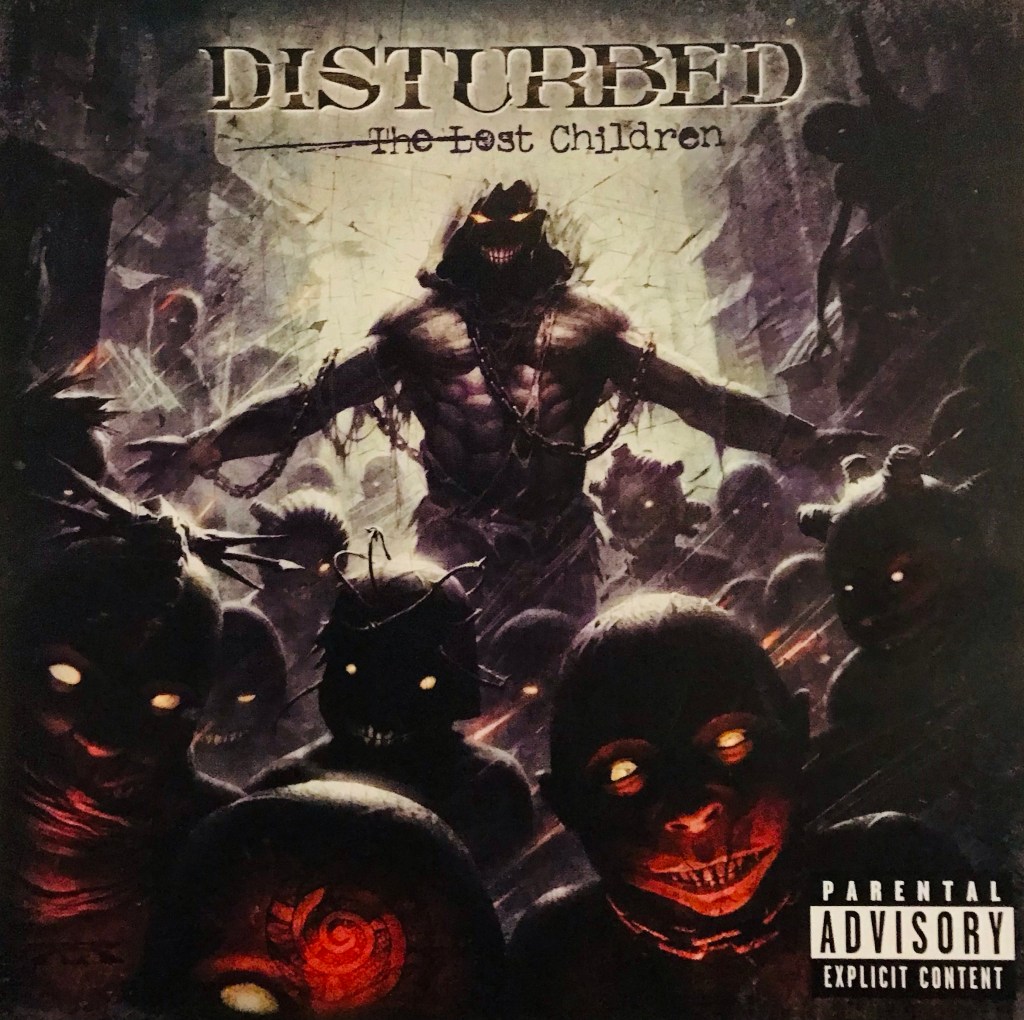
“The Lost Children” was released on November 8, 2011.
By the time this album hit the streets, Disturbed was on hiatus for an indefinite period of time. The band had been on a five album cycle of release and tour. 12 years in total without really having a proper break.
The music industry was also going through another transition. The U.S labels weren’t approving Spotify to operate until they got a percentage stake in the company, so P2P piracy was at an all time high and while the labels procrastinated, YouTube became a dominate streaming service which paid even less.
In the break, Draiman would produce a few bands, with Trivium being the biggest, form a new project called Device, which released an album that sounded like “The Sickness” while Donegan and Wengren hooked up with the “Evans Blue” singer Dan Chandler to form “Fight Or Flight” and release the excellent hard modern rock album “A Life By Design”.
Meanwhile bassist John Moyer would hook up with Adrenaline Mob for the “Coverta” and “Men Of Honour” releases, Art of Anarchy for their 2015 and 2017 releases, Geoff Tate’s Operation Mindcrime project and its 2015 release.
Because of these projects, Moyer wasn’t available to play on “Immortalized”, released in 2015, but returned to the band to tour and then played on “Evolution” released in 2018.
“The Children” in the album title is another term for “The Songs”. And “The Lost Children” is all of Disturbed’s non-album tracks up to 2011.
“Hell”
It’s from the “Ten Thousand Fists” album.
I feel like the riff got tweaked and used to better effect for “Indestructible”. But it doesn’t mean that this song is inferior.
Lyrically it’s about s person in a relationship who keeps coming in and out of the persons life, and every time they come back in, they mess up their world a little bit more.
“A Welcome Burden”
From “The Sickness” album cycle and the song appeared on the “Dracula 2000” soundtrack.
Its flow is like the debut album and it’s groovy Nu-Metal riffs.
“This Moment”
It was written for the “Transformers” album, but never used.
And man, what a riff to start it off.
“Old Friend”
From the “Asylum” album cycle and a song which appeared in Dexter.
The Intro riff hooks me in. It’s head banging and almost progressive by it’s notes phrasing.
The Chorus as usual is huge.
“Monster”
From the “Ten Thousand Fists” album cycle and a riff similar to “Stricken” starts the song off.
I like the single note runs in the Verse riff.
And an excellent guitar lead is also present.
“Run”
From the “Indestructible” album cycle.
A fast double time Intro gives way to a groove verse. Actually the drumming from Mike Wengren is a stand out on this.
“Leave It Alone”
From the “Asylum” album batch of songs. The song has excellent riffs throughout.
In the Verses, there is a natural harmonic lick that comes in on certain bars.
The Chorus riff gets the head banging with its military like groove.
For the solo, it goes to half time and how good is that bluesy solo lick to come out of the lead section.
“Two Worlds”
A song from the “Ten Thousand Fists” album cycle.
Can melodic rock, Sabbath and Nu-Metal be a thing?
On this song they exist in harmony.
And I always enjoy a Donegan solo, but this time it’s the riff after the solo which gets me to pick up the guitar.
“God of the Mind”
A B-side from “The Sickness” and it also appeared in the “Valentine” movie. It’s a derivative version of the songs that appeared on the debut.
The verses do remind me of Tool but I feel like the song has more NIN and early Filter influences.
“Sickened”
A B-side from “Ten Thousand Fists” and a massive head banging Intro kicks it off.
For the verses, a tom-tom drum pattern provides the focus while the guitar belts out chords.
And as usual, the Chorus is melodic and big.
“Mine”
A B-side from “Asylum” and the song is about religion as a catalyst for war.
The first part with the spoken samples of leaders and newscasters with Draiman chanting “hey“ is excellent.
After that I feel like the song becomes a thrash groove song. Wengren on the drums is the star here.
“Parasite”
A B-side from “Indestructible” but with a riff that brings back memories of “Fighting For The Earth” from Warrior.
“Dehumanized”
A B-side from “Believe” that they played live regularly with a big Chorus.
“3”
A B-side from “Asylum”, originally released as a digital single to benefit the “West Memphis Three”.
The lead break is shred-a-licious.
In case you weren’t aware, the West Memphis Three are three Metal heads convicted as teenagers in 1994 of the 1993 murders of three boys. During the trial, the prosecution asserted that the juveniles killed the children as part of a Satanic ritual.
Due to the dubious nature of the evidence, the case generated widespread controversy and was the subject of several documentaries. Celebrities and musicians held fundraisers to support efforts to free the men. Metallica, Pearl Jam and Disturbed come to mind.
And after serving 18 years they were freed and the real killers still walk the streets.
“Midlife Crisis”
A Faith No More cover and a B-side from “Indestructible”. And each Disturbed cover is a great rendition. This song could pass as a Disturbed original.
“Living After Midnight”
A Judas Priest cover which starts off with the “Painkiller” drum Intro and a B-side from “Asylum”.
By the end of it, the album didn’t feel like a put together cash in. It actually felt like a new Disturbed album as the sequencing of the songs didn’t follow the chronological release of the songs.
Somewhere back in time, an Iron Maiden album would be purchased, listened to and the cover/lyrics digested, day after day after day, until the next album.
And I kept doing it like this up to their Bruce II era albums “Brave New World” released in 2000 and its follow up “Dance Of Death” released in 2003, along with the “Rock In Rio” and “Death On The Road” live releases.
And then things started to change. “A Matter Of Life and Death” released in 2006 and “The Final Frontier” released in 2010 are like unknown albums even though I own em and have heard them more than a few times.
“The Book Of Souls” album released in 2015 is one that I listened to a lot more and I also watched em playing half the album on tour, so it’s more familiar.
Now in 2021, we have “Senjutsu”.
A lot of the reviews I have read mention how there are no Dave Murray contributions to this album, in the same way reviews mentioned how Kirk Hammett didn’t have a co-write on “Death Magnetic”. But James Hetfield summed it up when he said, “Hammett’s riffs just weren’t there at that point in time”. And if Murray was struggling to be creative or stuck in a rut, lucky for Maiden, they have other songwriters who can step up in Adrian Smith, Bruce Dickinson, Janick Gers and of course, Steve Harris.
Kevin “Caveman” Shirley is producing and mixing again.
And once upon a time, Iron Maiden artwork was just Derek Riggs. Now it’s a team of artists. There is a person leading the Art Designs, there are illustrators, calligraphists and translators.
But Eddie still remains. The constant throughout it all.
“Senjutsu”
It’s an Adrian Smith and Steve Harris composition, and you can immediately hear the Smith riffage, its almost Tool like.
How good is the melodic lead in the Chorus?
The section from 3.30 to 5.20 is pure Tool in the way Nicko McBrain sets the groove with Steve Harris. But the way the guitars decorate the section is more metal and hard rock and Bruce Dickinson’s melodies also stay within the hard rock and metal domain.
The minute outro returns to the Tool groove while the guitars lay down riffs which could come from the “Gates of Babylon”. After eight minutes and twenty seconds, the title track is down.
“Stratego”
A Janick Gers and Harris composition with a riff that reminds me of the “Fear Of The Dark” album and songs like “Judas Be My Guide” with a bit of the Iron Maiden gallop chucked in.
Listen to the section from 1.28, which I think is the Chorus and how the vocal melody and the guitar melody are the same.
“The Writing on the Wall”
A Smith and Dickinson composition.
I like the Steve Earle – “Copperhead Road”/Aerosmith – “Hangman Jury” like influence in the intro and main riff, Then again “Scars” from Smith/Kotzen also comes to mind.
But my favourite part of the song is the lead break from Adrian Smith between 4.26 and 5.08. Its emotive and it gets me playing air guitar.
It brings back the same feeling of the solo in “2 Minutes To Midnight”, the section between 3.26 and 4.06. You know the section I’m talking about, as they build back up into the main riff.
“Lost in a Lost World”
Steve Harris equals nine minutes and thirty one seconds on this one.
The acoustic intro with the vocal reminds me of Emerson, Lake and Palmer and their song “From The Beginning”, which Dokken also covered on their “Dysfunctional” album.
At the 2 minute mark it blasts out into the typical Maiden metal sound.
Listen to the section between 3.38 and 4.14 and tell me if it reminds you of “The Evil Than Men Do” musically.
And I like it, especially the “Revelations” section straight afterwards.
As the song flows, the “Revelations” riff becomes the backing riff for a bunch of harmony solo’s that remind me of “The X Factor” and “Dance Of Death” albums.
The last minute, Harris showcases how tasty bass arpeggios can be when done right, with Synths, a Celtic inspired guitar line and a haunting vocal.
“Days of Future Past”
A Smith and Dickinson composition and the shortest song on the album at 4 minutes. It’s also my least favourite.
“The Time Machine”
The disc 1 closer.
It’s a 7 minute Gers and Harris composition. The fingerpicked clean tone intro gives way to another Southern Rock inspired riff at the 1.10 mark. If anything, Jethro Tull comes to mind.
At 3.11, the galloping feel is back and a Celtic like harmony lead kicks in, something which Maiden have done before, but still enjoyable to hear over and over again.
But the piece d resistance is that change at the 4.30 mark, it’s still in 4/4 but it sounds progressive. Then it goes into an ascending riff for a guitar solo.
At 5.24, the Celtic like harmonies are back and Dickinson kicks in with his melodies.
At 6.20, the Celtic harmony is played in clean tone and I’m thinking of “The Clansman”.
“Darkest Hour”
A Smith and Dickinson composition which clocks in at 7.20 and it’s the disc 2 opener.
The intro has echoes of “Paschendale” and I like it. At the minute mark, the verses kick in.
As soon as the Chorus kicks in, I’m reminded of “Tears Of A Dragon” from Dickinson’s solo career and I’m ready to break my desk.
At 4 minutes, the intro is back in and the lead break starts.
Wow. Brilliant.
I don’t have my CD delivered yet, but I am presuming it’s Smith on the lead break as he is the most technical of the three guitarists and the flow of the solo sounds like a nice worked out Smith solo, a song within a song.
And as the Chorus kicks back in, different melodic guitar leads lay underneath the vocal melody, bringing the song to a close.
“Death of the Celts”
Harris equals ten minutes and twenty seconds.
Again, Harris showcases how musical the bass guitar can be as the whole intro is driven by the bass.
But the song is way too long, lacking a distinctive vocal section and it does get boring.
However I do like the solo section from 7.20 to 7.50. I think it’s Smith and then Gers kicks in.
“The Parchment”
Harris bookends the album with songs over 10 minutes. On this one, Harris equals 12:39.
The start of this song reminds me of “Sign Of The Cross”.
Guitar wise, there is a Ritchie Blackmore “Rainbow” influence.
And how good is that head banging verse riff?
The lead section that starts from 6.40 is familiar and I like it. It comes back in at the 9.28 mark.
The song speeds up for the last three minutes, as different shred lead breaks kick in. But by the end of it, it also could have used some editing.
“Hell on Earth”
The closer, in which Harris equals 11:19.
I think they should have done away with “Death Of The Celts” and “The Parchment” and gone straight into this for after “Darkest Hour”.
The intro is haunting, yet familiar, reminding me of “Alexander The Great” and “Seventh Son”.
At 2.16, the Maiden brand of rock and metal kicks in. The galloping riffs are there and a Celtic like harmony lead is also there.
At 2.49 to 3.08, there is a melodic lead which is a favourite.
The vocals kick in at 3.31.
The chorus (I think it’s a Chorus) comes in at 5 minutes.
Man, check out that section from 9.10 to 9.40. Those harmony guitars are perfect and sing-a-long like.
Then the song quietens down and returns to the haunting intro, reminding me again of “Alexander The Great” and “Seventh Son”.
And the album ends. Iron Maiden is like an old friend that returns for a visit now and then.
So welcome back old friend, let’s have a drink and catch up.
Bjorn Strid did an interview on Robb Flynn’s “No Fucking Regrets” Podcast and Flynn explained em as “80’s Miami Vice Pop”. You can check it out here on Spotify.
Guitarist David Andersson is the main songwriter in TNFO (and he’s also the main songwriter in Soilwork), bringing in his influences of Swedish Pop, Brit Pop, Funk, Disco and Strid’s love of late 70’s, early 80’s radio rock into the mix.
Two of my favourite Kiss albums are “Dynasty” and “Unmasked” because they brought in other styles of music into the Kiss rock sound and they still made it sound hard rock. So I wasn’t surprised to hear that “Dynasty” and “Unmasked” are also favourite albums for Strid and how Strid sees the song “Easy As It Seems” from Kiss as the foundation of Disco Rock and the blueprint for a TNFO song.
Kiss cops a lot of flak for those albums from their U.S fan base, but those two albums basically set up a new sound in different parts of the world. It’s no surprise that Sweden, Denmark, Finland and Norway liked em along with Australia.
The late 70’s and early 80’s had a certain way of writing and performing songs, which has been lost as the years have gone on.
Strid now feels balanced creatively. He can’t do Soilwork if he can’t do TNFO and vice versa. And by doing TFNO which is out of his comfort zone, has made him a better singer overall.
They missed out on touring the “Aeromantic” album because of COVID-19. Actually they were one week into the tour before they had to go home. And the promoters wouldn’t cancel the shows because they would be up for costs, so they waited until the last minute until the government shut everything down, putting the band into a difficult predicament.
The whole band also got COVID-19. No one went to hospital but David Andersson coped it bad.
And because the band wasn’t done with “Aeromantic”, they remained within the “Aeromantic” vibe and zone.
Recorded at Nordic Sound Lab, 90 minutes from Gothenburg, they do their albums by booking studio sessions and they just write for those sessions. By the end of the writing, they have about 40 songs down. Quantity equals quality.
Originally the core audience back in 2012 was Soilwork fans and general metal fans curious to check the band out, but 9 years into it, the audience is made up of different people who are not generally metal fans, but fans of good crossover rock music.
For Strid, his Mum listened to hard rock music and popular acts like Eurythmics and Bruce Springsteen.
Iron Maiden and WASP was an early experience for him. But Twisted Sister “Stay Hungry” album was very big for him.
A guy in his class had a few compilation tapes from his Tennis coach who was into extreme music and Strid borrowed those tapes and copied em. When he was asked which artists he liked, it was always the fast songs and that’s how he got his nickname “Speed”.
So on to the review.
TNFO are Bjorn Strid on Lead and Backing vocals, David Andersson on Guitars, Sharlee D’Angelo on bass, Sebastian Forslund on Guitars and Percussion, Jonas Kallsback on Drums, John Manhattan Lönnmyr on Keyboards and Anna Brygard / Anna Mia Bonde on Backing Vocals and known as the “Backing Anna’s”.
Violent Indigo
If you like Whitesnake, just think of those big chord synth chords at the start of “Slip Of The Tongue”. Well the chords at the start here are even bigger.
Midnight Marvellous
Each album has a track like this. “West Ruth Ave” on the first album. “Living For The Nighttime” on the second album. “Star Of Rio” on the third album. “Turn To Miami” on the fourth album and “This Boys Last Summer” on the fifth album.
And “Midnight Marvellous” is just as impressive.
Check out the interlude breakdown just before the solo when bassist Sharlee D’Angelo grooves and new keyboardist solos.
How Long
Strid described this song as “90s Deep Purple on cocaine”. And he’s not wrong.
The Chorus is excellent, but it’s the guitar playing and leads that make me a fan.
The ending is smashing.
Burn For Me
As soon as this song starts you will either think of “Modern Love” by David Bowie or “Straight For The Heart” by Toto or “I’m Still Standing” by Elton John or “I’m So Excited” from The Pointer Sisters.
And it’s a favourite to me because of those familiarity.
Chardonnay Nights
It’s going to be a good night of drinking and kicking back. Instead of chardonnay, my poison is Shiraz or Cabernet Merlot.
Change
How good is the intro?
Genesis (their song “That’s All”) comes to mind, but the Chorus is perfect AOR Melodic Rock.
Amber Through A Window
This feels like a New Wave rock cut, for driving in the night, with the window down in summer.
I Will Try
“Everybody Wants To Rule The World” from Tears For Fears comes to mind in the verses.
The Chorus is like 80’s Journey and Cher circa 1987. The guitar work feels like its Neal Schon. Brilliant.
You Belong To The Night
The TNFO sound has a Rolling Stones influence and Mick Jagger solo influence. This song is evidence of that.
Listen to “Tattoo You” and “Just Another Night” which TNFO covered for “Amber Galactic”.
Zodiac
Songs from Michael Jackson come to mind listening to this and it’s a great piece of pop rock song writing.
And just listen to it for the joy of Sharlee D’Angelo’s sultry bass lines.
White Jeans
The first single released as part of the album pre-release. I think it hit Spotify about 12 weeks before the album drop.
Can Judas Priest and ELO be combined?
In the world of TNFO, it can. Everything goes.
And that Chorus. Brilliant.
Also check out the clip for it as it’s hilarious.
Moonlit Skies
What a closer.
As soon as you press play, the intro just takes you away. It reminds me of “Edge Of Seventeen” by Stevie Nicks and those guitar lines of something else and I like it.
BONUS TRACK – Reach Out (Cheap Trick cover)
It’s worthy of inclusion on the proper album. Musically is like new wave hard rock and vocally Strid merges Robin Zander with Rick Springfield. Brilliant.
As Strid said in his interview with Robb Flynn, the album is a continuation of “Aeromantic”. And I became a fan of TNFO first and then went back and became a fan of Soilwork.
Maybe one day in the future we’ll get a gatefold issue of both “Aeromantic” albums together.
And if you grew up in the 80’s listening to hard rock and melodic rock, then you need to listen to this.
By album Number 4, the Disturbed brand was bigger than ever. Johnny K was gone from the Producers chair. The deals that artists have with producers means that the producers increase their cut and royalty points with each subsequent album. It’s simple business. Instead of paying someone else, they decided to do it themselves.
Disturbed for this album and all albums after is David Draiman on lead vocals, Dan Donegan on lead and rhythm guitars, John Moyer on bass and Mike Wengren on drums.
Released in 2008, it quickly went on its way of matching its predecessors.
In Australia, Canada, New Zealand and the U.S, its certified Platinum. In Finland and the U.K, its certified Gold. It charted well in a lot of countries.
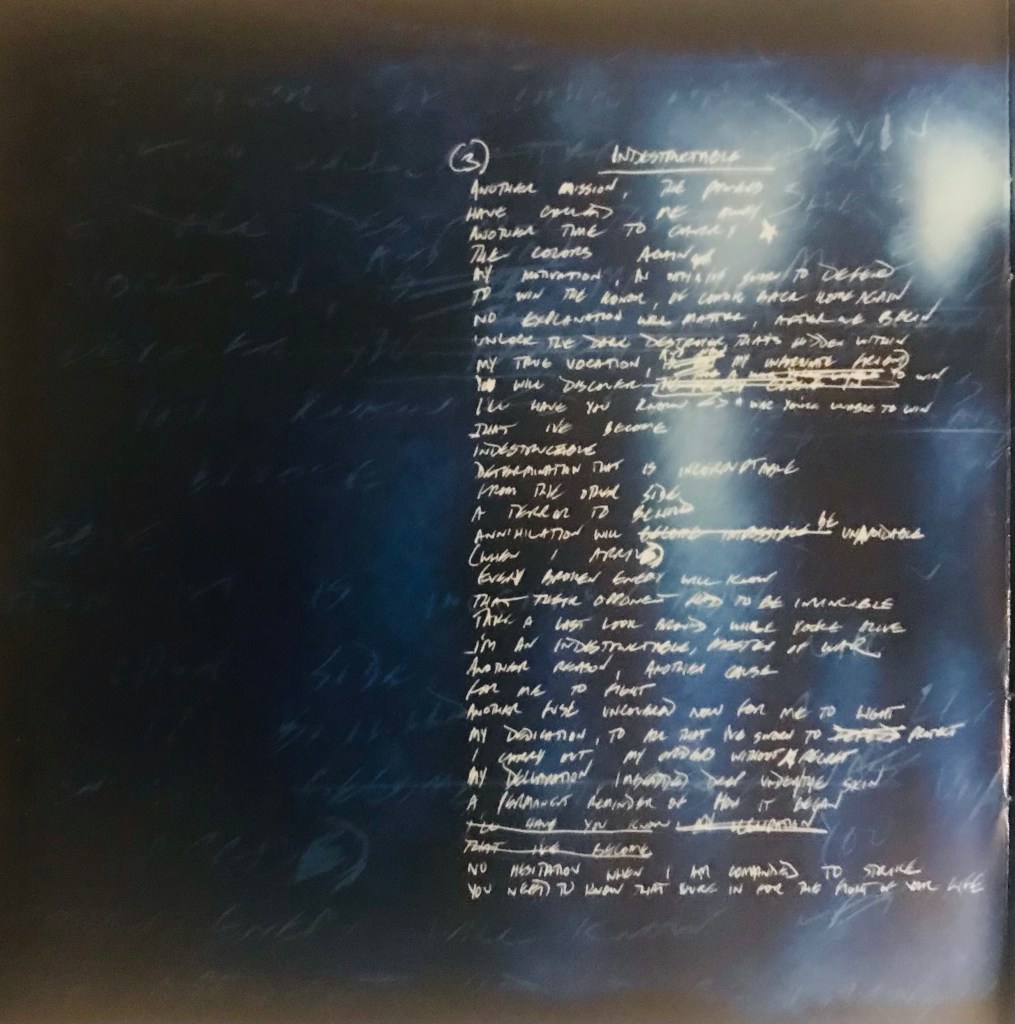
“Indestructible”
It was called “Defend” before it was re-titled to “Indestructible”.
While it is a hopeful song to the armed forces, it also serves as a reminder to everyone that Disturbed is still here after all these years.
Killer metal groove riff to start the song off.
Check.
Anthemic Chorus.
Check.
Guitar Lead.
Check.
Actually, the guitar lead breaks on the album shows the Guitar Community that Donegan is a lot more accomplished than previously thought.
“Inside The Fire”
It was nominated for a 2009 Grammy Award in the “Best Hard Rock Performance” category.
It’s a disturbing song, which Draiman has explained as “standing over the body of my girlfriend, who just killed herself, and the Devil is standing over me, whispering in my ear to kill myself.”
The guitar starts off before the drums and bass kick in.
The chorus shares some similarities to “Primal Concrete Sledge” by Pantera however Disturbed sing it in a melodic and anthemic way and of course the guitar solo is “Guitar Hero” worthy.
“Deceiver”
Another song about a bad relationship or that person in your life that lies, deceives and takes from you.
“The Night”
The original title of the album and the first song written for it. The “Night” in this song is a living entity that surrounds you and hides you.
How good is the intro to this?
And another anthemic Chorus.
Check out the guitar lead. Donegan moves to a new level here with some serious sweeps and string skipping.
“Perfect Insanity”
It’s pre “The Sickness” as the band thought it would be pretty cool, especially for the fans, if they brought back maybe a song or two, that were actually written during the same period that “The Sickness” songs were written.
Another killer lead break from Donegan.
“Haunted”
A bass and drum groove start the song with the sound of rain and a tolling bell, before the guitar riff comes in, all staccato like and in sync with the bass drum.
“Enough”
The way Draiman sings the Chorus showcases his vocal abilities.
“The Curse”
It’s Disturbed from the first album. There’s a bit of everything here.
“Torn”
Another great lead from Donegan.
“Criminal”
The bird calls are back as Draiman sings “huh, huh”.
“Divide”
Another old song from pre “The Sickness”, it’s like a punk thrash song in the intro, before it moves into a groove metal riff that reminds me of Judas Priest’s “Better By You, Better Than Me” for the verses.
Draiman is telling you to be an individual, make your mark and stand out. Don’t be a conformist within the pack.
“Façade”
The drums are frantic for the closer.
And in the same way that AC/DC plays its standard blues rawk and roll, Disturbed doesn’t really stray too much from a style which has brought them public acceptance.
Metal elitists will always look down on em, but Disturbed have flown the flag of metal for many years in the face of hip hop, dance and other crap styles.
Riding the wave of “old is new” to a whole new audience who was too young to know the old or to have heard it.
Listening to this album got me to call up a 60’s Rock Anthems playlist on Spotify and it’s surprising how many songs released in the 80s moving forward have riffs from 60’s songs. There are the artists that we all know like Hendrix, Cream, The Who, Steppenwolf, The Doors and Zeppelin but artists like The Kinks, The Kingsmen, CCR, The Animals and even Marvin Gaye have been influential in developing the hard rock and heavy metal riffs.
Jet are from Melbourne.
Nic Cester is on vocals and guitar, Chris Cester is on drums and vocals, Cameron Muncey is on guitars and vocals and Mark Wilson is on bass, piano and harmonica.
Last Chance
“Can you give me one more try at that?”
And LOUD RAWK AND ROLL kicks in.
Are You Gonna Be My Girl
It’s sitting at 347.811 million streams on Spotify.
On the Jet YouTube account the video is at 122 million views.
Yeah, it sounds like other songs (Iggy Pop’s “Lust For Life” is mentioned a fair bit), but who cares. Imitation is a form of flattery. And all hit songs are derivative versions of songs which came before.
Rollover D.J.
It’s a Rolling Stones track in the verses and a 12 bar blues track in the Chorus.
Look What You’ve Done
58.066 million streams on Spotify.
A piano riff starts the song, with a Beatle-esque “Sexy Sadie” like vocal. Even the lyrics have a similarity.
The Beatles have “Sexy Sadie, what have you done! / You’ve made a fool of everyone”.
Jet has “Oh, look what you’ve done / You’ve made a fool of everyone”.
Progress is derivative. Take something that came before and tweak it.
Get What You Need
The drum groove gets me, but it’s the reminders of other songs that makes me a fan.
If you’ve heard “All Day And All Of The Night” from The Kinks, you’ll hear some similarities.
If you’ve heard “If It Feels Good, Do It” from Sloan you’ll hear similarities.
And if you played NHL 2004, you would have heard the song and become a fan.
Move On
It feels like a Free/Bad Company/Rolling Stones acoustic cut which Guns N Roses also used as an influence for “Patience”.
Radio Song
Say hello to “Hey Jude” or a slower version of “Baby Blue” from Badfinger.
Get Me Outta Here
I went down to the bank just to get me my pay / I’m gonna get me, outta here / I got me some cash, I’m headed back to LA / I’m gonna get me, outta here
Keeping with the theme of “old is new” again, even the lyrics were based on pre 2000 pay days.
Cold Hard Bitch
It’s at 52.995 million streams on Spotify.
They bring so many vibes to this track.
Listen to it and you’ll spot “Woman From Tokyo” by Deep Purple, “Best I Can” by Rush, “Shoot To Thrill“ by AC/DC, “Won’t Get Fooled Again” by The Who and a little bit of Stones mixed in.
Come Around Again
A country rock ballad with a Bad Company feel.
“I don’t know when I’m right that I only know when I’m wrong”
Sometimes our minds become our worst enemies.
Take It Or Leave It
The Kinks “unhinged”.
Lazy Gun
The “High Voltage” riff to a funky bass riff. Brilliant.
A Beatles influenced Chorus which also reminds me of “Purple Rain” from Prince and “Faithfully” from Journey. Brilliant.
Timothy
All death is tragic.
Sgt Major
The bonus track.
Check out the main riff. It reminds me of “Kings And Queens” from Aerosmith.
They had some serious momentum in promoting this album in Australia with national station Triple J having em in constant rotation that all the other stations followed pretty quickly.
Sometime in 2000, founding members Andrew Stockdale on guitar and vocals, Chris Ross on bass/keyboards and Myles Heskett on drums got together to jam.
But it was in 2004, when Wolfmother was born.
And suddenly things started to happen. After playing a gig in April 2004 in Sydney, they got a record deal with Aussie independent label Modular Recordings with whom they released their (EP) “Wolfmother” in September.
While touring on the EP, Universal Music came in and signed em to an international recording deal.
The self-titled debut produced by Dave Sardy was originally released in Australia via their independent deal on 31 October 2005.
The album was later released internationally by Universal in early 2006.
Like other Aussie artists who got a later international release, the album had an additional track and a rearranged track listing. Spotify carries the international release listing and release date.
As an owner of a book of Frank Frazetta paintings, seeing “The Sea Witch” on the album cover grabbed my attention immediately.
Prior to the release, the band had some serious momentum in Australia. They had the EP out on the charts, they toured and nationwide radio station Triple J, had the band in constant rotation.
Dimension
The bass and drum groove reminds me of an amalgamation of Sweet and Cream in the verses before a Chorus kicks in that sounds like a Sabbath cut.
And a new game is created here in which the listener has to guess which band or song influenced the next song.
And I like games like these.
White Unicorn
You know that section half way through in “Stairway To Heaven” when Jimmy Page starts to play major sounding triads over a droning D note.
Well that’s how “The White Unicorn” starts off. And I like it. Take something that came before and create something new from it.
Woman
Its basically a Sabbath cut with that driving galloping groove from “Children Of The Grave”.
Then again “Roadhouse Blues” comes to mind as well.
The addition of the keyboards makes it sound like a demented Doors cut.
And like other Aussie bands, (Airbourne comes to mind) they capitalized on the video game phenomenon that was happening. “Woman” was licensed to appear in over 12 video games which came out between 2006 and 2008.
Where Eagles Have Been
The beginning reminds of “Goin To California” from Led Zep or “Mother Nature’s Son” from The Beatles or “Brain Damage” from Pink Floyd.
This is the beauty of music. Familiarity is in every song which is created.
Check out the sound effect which increases in intensity at 3.42 and then the guitar solo. This is the best part of the song.
At 4.24 to 4.46 reminds of me of “Dazed and Confused” from Led Zep.
Apple Tree
It has a punk style “My Generation” feel from The Who in the Intro and first verse.
Joker & the Thief
This song has crossed over onto a higher astral plane. It’s everywhere. If you sit down to watch a movie or a TV show, there is a chance you’ll hear it. If you buy a video game, there is a chance you’ll hear it.
When I hear “Detroit Rock City” by Kiss, it reminds me of this song.
“The Hangover” and “Shrek” movies have scenes in the movie, which has this song playing.
Colossal
It feels like a Sabbath cut that hadn’t seen the light of day.
How good is the riff that comes in at the 3.30 mark?
It reminds me of “Ace Of Spades” from Motörhead.
Mind’s Eye
My favorite track.
The arpeggios to start it off are hypnotic. Metallica used a similar progression for “The Day That Never Comes”.
When the verses come in, simplicity at its best. It’s just a single strummed chord and a haunting vocal melody.
I like the simple ascending chord progression just before the Chorus. And it comes back again after the Chorus.
How good is the organ riff?
And they jam on it till the end.
Pyramid
Another song that became a favorite amongst people that didn’t even like this kind of music because it appeared in the “FlatOut 2” car racing game.
Witchcraft
A flute solo. Jethro Tull anyone.
Tales
It’s not a favorite.
Love Train
Listen to “Moby Dick” from Led Zep. Imitation is a form of flattery.
Vagabond
A simple drum metronome style click and an acoustic guitar playing a sort of Country Blues Delta riff start off the song.
Swampy it is and the album is done.
I’ve read reviews that they are copyists and unoriginal. But music is judged on the fun and enjoyment you get out of it. And this album is a whole lotta fun.
Going back to the originality question, the bands that influenced em where also copyists. Led Zeppelin’s first album is a great cover album rebranded as a Zep album.
After all was said and done, the album was certified 5× Platinum in Australia, Gold in Canada, Gold in Germany, Gold in the U.K and Gold in the U.S.
By the time the band started to record album number 2, it was just Andrew Stockdale who remained. But the sound and the songs still remained.
The sound was a bit different but it still did well.
The Grunge movement brought Black Sabbath back into the mainstream. Alice In Chains spoke of their love of Sabbath, so did Soundgarden and even Nirvana.
Kyuss/Queens Of The Stone Age also spoke of their Sabbath love.
So it was no surprise that Sabbath started selling records in the 90s.
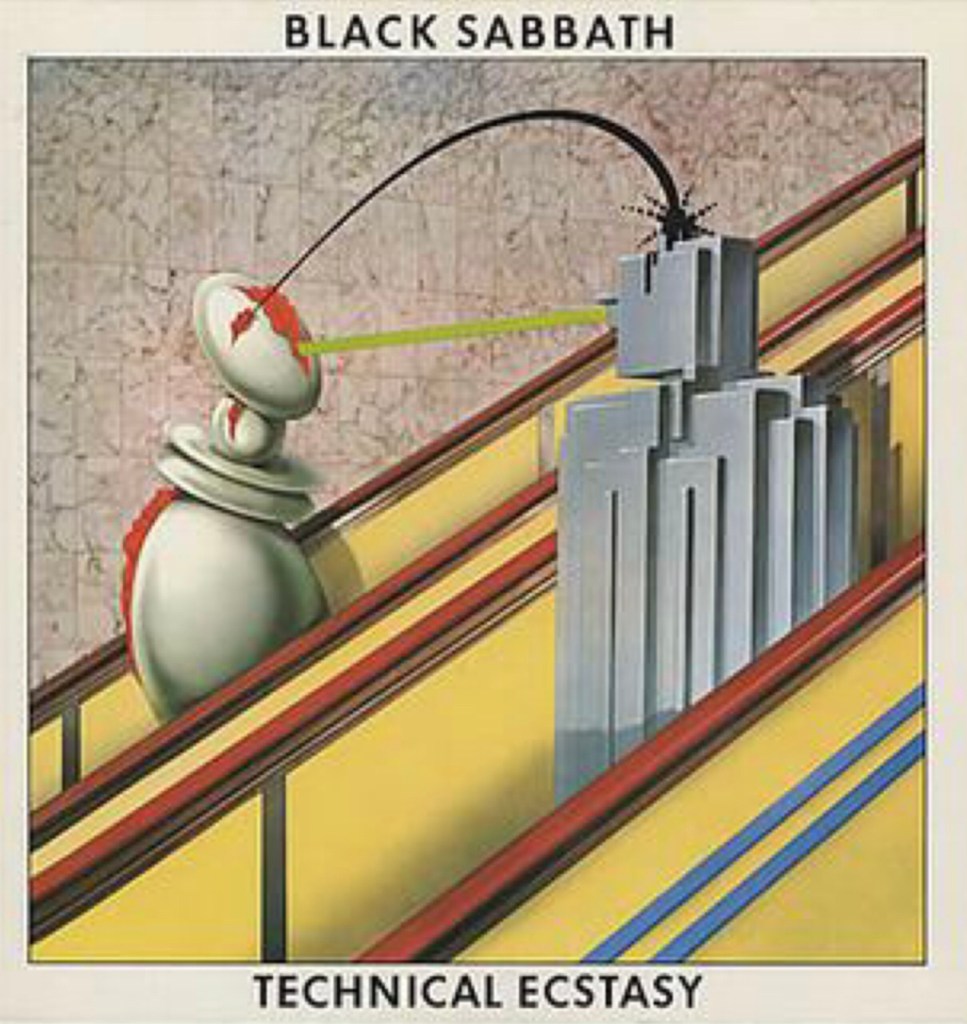
Eventually in 1997, “Technical Ecstasy” received a Gold certification in the U.S.
It’s the seventh studio album.
Released in 1976 and produced by Tony Iommi. But he struggled with it to the point of anger against his band members who spent most of the time on the beach and on booze and drugs.
Ozzy mentioned in his book “I Am Ozzy” that recording the album in Miami was very expensive and he was confused as to why they had to sound like current popular bands. Maybe that was due to their label head Don Arden throwing his interest behind ELO during this time.
The writing was on the wall, as punk had broken through in the U.K and the Sabbath brand of doom was on its way out.
They are also in the midst of releasing a box set of this album, with all the extras that come with box sets.
Back Street Kids
The Intro/main verse riff has a similar feel to “Immigrant Song” and their own “Children Of The Grave” and I like it.
At 1.50 it goes into an excellent major key riff which reminds me of Styx/Free/ELO and acts like that.
The solo from Iommi utilizes the Major Pentatonic. It’s weird to hear happy leads.
You Won’t Change Me
The most doomiest riff starts the song off and their most melodic progression becomes the verse.
Check out the melancholic swirling organ riff from 4.11 and Iommi decorates nicely.
It’s Alright
It’s a Beatles cut and it came out of left field but then again this album is all about expanding the sound.
Bill Ward wrote it and sings it.
Gypsy
Such an overused title in the 70s and 80s. I don’t recall the word being used much in the 90s and beyond.
Bill Ward opens up the song with a drum groove that reminds me of “Sympathy Of The Devil” from The Rolling Stones.
Iommi busts in with chords which further reinforces the Stones influence.
The Pre-Chrous riff is excellent and Ozzy brings out a vocal line that he used in “SATO”.
Then there is a section which I call the ELO section, with piano and distorted guitars.
The last minute is essential listening as Iommi wails away with his pentatonic leads. A perfect closer for Side 1.
All Moving Parts (Stand Still)
The Side 2 opener and what a great blues rock riff to kick it off. And Butler on the bass is massive.
At 1.40 it changes into something different and this is why I like Sabbath. The songwriting can be progressive with the arrangement and at other times the arrangements can be more mainstream like. You get the best of both worlds.
The vocal melody from Ozzy in the verses was used again within his solo career.
Rock ‘n’ Roll Doctor
The Intro reminds of Uli John Roth and his Scorpions work.
But after that a “No Bones Movie” cut blasts out of the speaker.
She’s Gone
I don’t know how much Randy Rhoads listened to this album, but goddamn the acoustic arpeggios on this song sound eerily familiar like the songs “You Can’t Kill Rock N Roll”, “Diary Of A Madman” and “Revelation Mother Earth”.
Dirty Women
This is classic Sabbath. So many good riffs and Iommi’s solo is excellent.
The riff at 2.30. Check it out.
Straight after that it goes into this “2112” style riff and progression.
Overall, the album is really under appreciated. Most of the 70s music had variety on the albums because artists weren’t afraid to experiment. This one is no different.
A few stray observations if I may.
Ozzy mentioned in his book that he doesn’t like the album but this is the sound that made his solo career. Plus having Randy Rhoads, Bob Daisley and Lee Kerslake helped with the songs and Sharon Osbourne ran the party with an iron fist.
Bill Ward can carry a tune vocally which was a surprise. It was almost Queen like.
The synth work complements the songs. So I don’t know why so many reviews focused on the synths.
And what’s the go with two robots making out on the cover.
It’s album number two for the “Motor City Madman” released in October 1976. Wikipedia mentions that it’s his first album to go Platinum, but it doesn’t mention that the year was 1992, 16 years after its release.
A “free for all” is a chaotic situation, lacking rules or structure. Like an uncontrolled fight that involves many people or a concert circle pit, or a press conference that deteriorates into a smash and bash or a barrage of questions without any control as to who is asking.
But this album is cohesive and structured, nothing like a free for all.
It’s well known that Ted Nugent liked his solo career to be all about him. But he did need others to make that happen, like Derek St. Holmes, who was hired as a vocalist and rhythm guitarist for the debut album. But as the lead singer, you could say that some attention was directed towards him.
Fast forward a year later, St. Holmes left the band, due to growing personal and creative conflicts with Nugent however he did play and sing on a few tracks before his departure. Left without a vocalist, Nugent turned to himself and to an unknown singer called Meatloaf, who was a year away from his “Bat Out Of Hell” international success.
And like all things in business, money talks and St. Holmes was back in the band at the request of Epic Records for the tour and “Cat Scratch Fever”.
The musical side of the recording has Ted Nugent on guitars plus vocals on the title track, along with Rob Grange on bass and Cliff Davies on drums. Derek St Holmes played rhythm guitar on the tracks he provided vocals on and Meatloaf did the rest.
Tom Werman is also producing.
St. Holmes hated the Werman production as he believed it was too watered down, but Werman knew exactly what was needed to get as many songs onto the radio.
The view from Werman was simple. If the songs were played on radio, it meant that the band would have a chance to tour. By touring and having songs on radio, the album would then sell.
This type of thinking would come to fruition for Werman by the late 70’s and most of the 80’s. His streak of Gold and Platinum albums is an envious one, and most of the artists who succeeded with Werman or had their biggest selling album with Werman, would go on to blast Werman many years after.
“Free-for-All”
I was reading that the intro riff is based upon the track “Sufficiently Breathless” from Captain Beyond, but when I first heard it, it reminded me of “Stormbringer” from Deep Purple and “Stranglehold”.
Vocals are provided by Nugent.
Lyrical, the Nuge is in top form with lyrics like “the stakes are high and so am I” and “When in doubt I whip it out”.
It’s a free-for-all alright.
“Dog Eat Dog”
It feels like Accept took this song and used it as the basis for the “Balls To The Wall” album and song.
Vocals are provided by Derek St. Holmes. The pentatonic leads from Nugent are excellent and towards the end, he does an open string lick, which reminds me of the things that Angus Young would do on “Dirty Deeds Done Dirt Cheap”.
Lyrically, it’s pretty descriptive. We are told of a riot, “Sabotage on a downtown street / Police cars overturned” and a suicide, “Kamikaze from the hundredth floor / Swan dive to the street”. “Wild Side” from Motley Crue comes to mind here.
“Writing on the Wall”
7 minutes long.
My kind of cut, that just jams along and takes you on a journey. The main riff reminds me of “Stranglehold” and “Free For All” but it’s the vocal delivery and melodies from Meatloaf which makes this song sound epic.
The Chorus section sounded like “Gates Of Babylon” exotic before “Gates” was even recorded.
I like the lead break section in this. The bass grooves on the main riff, the drums lay down the foundation and Madman Nugent decorates it with pentatonic lines, bends, slides and a ringing chord.
At some stages it moves into the melodic minor domain before moving back into the bluesy pentatonic lines.
“Blazing’ down the highway / I’d rather have it my way”
I don’t think the kids these days have the same view of the highway as we had back then. It was a rite of passage to get your licence, get a car and drive. It opened up new places.
What’s a rite of passage these days?
Get the latest tech, have the most followers, play the crypto game or the stock market.
“Turn It Up”
It feels like a Led Zeppelin cut in the “Rock N Roll” vein. But at 1.22, it changes into these sleazy groove for a Nugent solo before it picks back up into the 12 bar blues.
Vocals are provided by St. Holmes.
And in the last 30 seconds, Nugent becomes Jimmy Page with fast Pentatonic lines.
“Street Rats”
It kicks off Side 2.
The intro riff would sound familiar to Van Halen fans, as I’m pretty sure a young EVH was listening to this. Hell, the Sunset Strip sound is this riff.
Vocals are provided by Meatloaf.
“Post war anti-social” is a lyric that resonates for some reason. Maybe it’s due to the in-depth study I did on the Vietnam War back in High School and how the soldiers returned as villains and not to any Victory Parade, with PTSD and drug issues and problems with the government.
“Together”
The song is written by Rob Grange and Cliff Davies. Vocals are provided by Meatloaf. It’s like a power rock ballad, and one of the best tracks on the album.
Grange and Davies create a great foundation, for Nugent to solo over and Meatloaf to create a great vocal on.
“Light My Way”
It’s written by Derek St. Holmes and Rob Grange and vocals are provided by St. Holmes. Its more in the vein of the blues rock tracks that St. Holmes is involved in.
“Hammerdown”
It’s a heavy metal cut that would rival most NWOBHM bands and make sure you check out the vocals by Meatloaf.
I’m not sure if Steve Harris was listening, but the riff in the Verses and Chorus is very similar to “Running Free”.
Even the vocal melodies from Meatloaf could be said inspired some of the NWOBHM vocalists.
White line Double time Come around with a hammerdown
Was the Nuge a user/taker or just using artistic licence. It’s pretty clear what he’s writing about here.
“I Love You So I Told You a Lie”
Written by Cliff Davies, and what a great title.
Vocals are provided by Meatloaf for a 12 bar blues in the verses.
A family life and a loving’ wife Just ain’t my kinda scene
But when you’re all alone, you would long for this scene as a we are creatures of the tribe.
Underrated stars on the album are Rob Grange on bass and Cliff Davies on drums. While Grange was Entwistle like, Davies was very technical.
Ted Nugent is also more of a melodic player than a technical shredder and I like it.
And although he has views on things are different to mine, those views rarely distract me from good music.
Thinking short term hurts us. Every leader thinks about the now and never about what’s around the bend. The majority of people in charge of corporations only care about the now.
What is our bottom line looking like?
There is no care about their environmental footprint or employee well-being.
Record labels are the same. They focus so much on first week sales and charts as they believe it brings in an instant payday, without understanding that the payday they are really earning is from music created 30 plus years ago and it just percolated, slowly rising to the top.
Have you heard of the record labels starting to employ artists as employees and offer them retirement plans?
Of course not. That’s long term thinking.
And while everyone kept complaining that Spotify doesn’t pay, they couldn’t explain how Warner accumulated $360 million dollars in streaming fees from em.
All of those artists who sold their rights to the labels and publishers are losing out in the long run but maybe winning in the short term.
And I didn’t see much dumbing down of lyrics in the way the writers of the time claimed. And that’s why grunge took over. Instead I saw better lyrics, more mature lyrics, lyrics that showcased highs and lows.
So why would artists and film makers spend so much time on making one project every two to three years.
George Lucas once said that the $200 million movie is dead. But in 2013, a lot of blockbusters cost over $200 million and man didn’t they flop big time.
Movies like “R.I.P.D “ (a derivative version of Ghostbusters and Men In Black) and “The Lone Ranger” (a derivative version of The Lone Ranger TV show, National Treasure and Pirates of The Caribbean) came to mind.
For some reason, Hollywood still believes that they need a $200 million movie, meanwhile, the movies that did well in 2013 had lower budgets.
“The Conjuring” cost $20 million and when I wrote the article in 2013 it had made made $140 million and when I checked it today, it was at $319.5 million.
“The Heat” cost $43 million to make and in 2013 it had made $190 million and in 2021 it was at $229.9 million.
“Now You See Me” cost $75 million to make and in 2013 it had made $233 million and in 2021, the figures was at $351.7 million.
So is a $200 million budget movie really worth it or should those big budgets be used to make 5 lower budget movies.
So is social media a way to broadcast to people or connect with people?
And while I was critical of Dream Theater having a listening party with no fans, a few weeks later, they invited a select group of fans to experience the new album.
From its inception”TPB” is like a number one act, albeit a controversial act, always on top of the charts.
And it all happened via word of mouth in the same way we used to talk about artists and movies back in the day.
Or you can do like Lady Gaga, who would manipulate the mainstream media to write about her and get her loyal “monsters” to spread the word.
Are deluxe editions just overpriced boxes, offering the same thing over and over again for a higher price or offering something of value to a super fan that no one can get anywhere else?
The “Dream Theater” self-titled deluxe edition box set had the same album on a CD, a VINYL LP version and a FLAC version in a box and they charged over a $100 just to format shift the same music.
Meanwhile for half the price (at $55) Coheed and Cambria’s “The Afterman Limited Edition Deluxe Box Set Amory Award Edition” gives you the albums, the demos, a DVD making of, a VIP pass, a book of the story, and notes about the songs, plus a link to download the album and demos on mp3.
Back in the Eighties, the goal was to work in the music business for a record label while you dreamed of being a rock star. Fast forward thirty years and the goal is to work in technology as the new rock stars are the tech heads.
Artists don’t need a middle man to distribute their music, but artists are in love with the story of fame and wealth however they don’t understand that the aim of the game is to outlast the competition.
The “rock star myth” was a deliberate creation of the major labels. Wannabe musicians bought it hook, line and sinker, signing everything away to be the next star. And the Labels licked their lips at all the talent waiting to be exploited.
It’s got a “Kashmir” like groove I like. The head nods, the foot starts to tap and the fingers start to lay down the beat. There is a sense of classic rock familiarity that intrigues me and it is modern at the same time.
One last thing, when the future generations write the history of metal guitarists, talented players like Greg Tribbet will be forgotten. But he shouldn’t be.
Tribbet is a sum of his influences.
He can be progressive (Mudvayne’s 2nd album is the piece d resistance in progressive riffage), he can be heavy, he can be a guitar hero and he can be soulful, bluesy and even countrish. He is a great talent.
And since we are in the single music era, go and stream the crap out of this song. It will be worth your time.