Classic Songs to Be Discovered, Influenced, Music, My Stories, Unsung Heroes

The Record Vault: Coheed and Cambria – The Last Supper: Live at Hammerstein Ballroom (2006) DVD

This my second copy.

The first copy I gave to the drummer from a band I was in, along with “The Dirt” hardcover book and the “Rush In Rio” DVD. But when we had an argument, he wouldn’t return the items. So I repurchased “The Dirt” but this time in paperback, and this DVD. The Rush DVD price was extravagant when I was looking for it and I haven’t relooked since.

Now, live albums have been known to have a lot of studio overdubs or in some cases, total re-recording of some of the tracks in the studio. From what I can hear, nothing feels fixed or redone in a studio on this. So what you get, is a band that can deliver live, the chaos they create in the studio. If anything, I believe the guitars are tuned down ½ a step as Claudio’s voice was strained during this period. But man, he still delivers.

Coming into this release, Coheed and Cambria had released three studio albums, in “The Second Stage Turbine Blade”, “In Keeping Secrets Of Silent Earth” and “Good Apollo”. For the hardcore Coheed fans, yes, I’ve abbreviated the names of the album titles.

It’s the only live release with the original line up of Claudio Sanchez on vocals/guitars, Travis Stever on guitar and backing vocals, Michael Todd on bass and backing vocals and Josh Eppard on drums and backing vocals. Michael Petrak does additional percussion and Dave “Wavis” Parker is performing keyboards, backing vocals, some extra guitar and samples.

In a perfect world, the audio of this concert would be available on Spotify, but it isn’t. YouTube has the live concert footage and some of the YouTube users have created just the audio.

“In Keeping Secrets of Silent Earth: 3”

A perfect opener. It’s just a bit faster than the studio recording, but hey, that’s why I love the live show. And the crowd gets involved with the who-oh-oh chant towards the end.

“Ten Speed (Of God’s Blood and Burial)”

This version is electrifying. Again, a bit sped up than the studio, but I feel the energy smack me in the face.

“Blood Red Summer”

It follows the poppy rock vibes of “Ten Speed” perfectly.

“The Crowing”

This version is a metal beast and this live version is my go to track for it. As mentioned previously, its downtuned a little bit more from the studio cut and it sounds menacing.

After the two pop rock songs in “Ten Speed” and “Blood Red Summer” the placement of this is perfect to get the live concert back into progressive and metal like territory.

“Wake Up”

One of the best ballads from Coheed and Cambria, and live, you just hear the clean tone electric guitar, Claudio’s voice and the crowd singling along with him. It’s chilling, emotive and perfect.

“Delirium Trigger”

From the debut album, the intensity of the song grabs my attention quickly. Hearing it played alongside songs from two of my favourite albums, works perfectly. The middle subdued section offers a calm before the song picks up again. With so much musical movements, nothing is lost and missed.

“A Favor House Atlantic”

It’s faster. When I watched the band live, this song is sing-a-long. You can’t make out the audiences here and you sort of lose the power of when Claudio drops out and the crowd sings. But the energy is still there. “Bye, bye, beautiful” alright.

“The Suffering”

The pop punk energy comes through. I wanted a bigger impact for the “wishing well, will you marry me” part but not all songs can be winners.

“Everything Evil”

I don’t think this song worked well live.

“Welcome Home”

The best cut and I like the sped up vibe of the song. And even though its quicker, the intensity of the vocals is still there. I would have loved to be able to hear the crowd cheering the who-oh-oh at the end.

“The Willing Well IV: The Final Cut”

At 14 minutes long, its eight minutes longer than the CD version and the jam aspect vibe they bring to this track is brilliant.

When there jamming the middle section lead break, they play this lead break that I swear comes from “Seventh Son Of A Seventh Son” lead break.

And when they come out of the jam back into the normal song, its powerful and beautiful. The crash cymbals are smashing, the guitars are screaming and all hell is breaking loose as they finish off the concert.

In the end, “The Last Supper” leaves you wanting more of the Coheed and Cambria supper.

Rock out.

\::/

Standard
Classic Songs to Be Discovered, Influenced, Music

1986 – Part 1.5: Ozzy Osbourne – The Ultimate Sin

Boris Vallejo is on hand to create the cover art.

I did a recent post on this album in February 2021.

This album gets no love. The people who run the Ozzy Osbourne machine are trying their best to kill “The Ultimate Sin” because of the complicated relationships they have with the people involved in creating it and the various disputes over royalty payments.

Jake E. Lee circa, 1989 when he was promoting Badlands, blasted the sound of the album and the fixed mindset of producer Ron Nevison to not allow him to try any different sounds. Bob Daisley in his book blasted the album as the worst Ozzy Osbourne album he’s been involved in. And recently Ozzy, in a Rolling Stone interview, said the songs were just put down weird and that everything felt and sounded the same. Ozzy further mentioned that “The Ultimate Sin” is his least favourite solo release.

By 1986, Ozzy was in rehab and the people that held it all together were Bob Daisley and Jake E Lee. Lee got burned on the song writing credits for the “Bark At The Moon” album, so he demanded a contract up front before he even started writing. By the time Ozzy came out of rehab, Jake had already compiled 12 songs and the contract issues from the past made for a tense recording session.

Apart from “Shot In The Dark” (which is credited to Phil Soussan and Ozzy Osbourne) all of the lyrics on “The Ultimate Sin” are written by Bob Daisley to vocal melodies and titles put to him by Ozzy. But as usual, Daisley had a falling out with the Osbourne’s and was fired again and in spite, the first 500,000 copies of the album don’t have Daisley credited. This was corrected after the Osbourne’s were served with court papers.

But for all of the backroom band and business politics, this is one of my favourite albums from Ozzy.

“The Ultimate Sin”

The drum intro from Castillo sounds like it’s recorded on paper skins, but as soon as the riff kicks in from Lee, it’s head banging time. The song is credited to Daisley, Osbourne and Lee.

Overkill, enough is enough
There’s nothing left of me to devour
You’ve had your fill, I’m all I have left
What can stop your hunger for power?

Intoxicated Ozzy gave the media and the religious zealots a lot of material to work with. Daisley had been around Ozzy long enough to see how the headlines played out.

Check out the solo and the outro section with the double kick drumming.

“Secret Loser”

I’ve written about this track before, but who remembers the Charlie Sheen movie “The Wraith”?

In the movie, Charlie Sheen plays a person who comes back to life to avenge his death at the hands of a gang (who got away with the murder). He kills his murderers one by one, by car racing each gang member and then setting them up to crash and die. “Secret Loser” appears during one such car race and it connected right away with me.

How good is the intro riff?

Could it be that I’m obsessed with feeding my disease / I couldn’t make it known the hidden things no one sees

Daisley was pretty good at writing autobiographical stories of Ozzy. I think this one is no different, especially the line about how Ozzy is obsessed with feeding the disease and in this case, the disease is the persona of Ozzy being constantly intoxicated, drugged out and doing something publicly embarrassing.

Check out the guitar solo from Lee.

“Never Know Why”

If we’re offensive and pose a threat
You fear what we represent is a mess
You’ve missed the message that says it all
And you’ll never know why

I guess too many people judged heavy metal and hard rock music without really getting to know it and the people involved with it. I guess they will never know why we rock.

Make sure you check out the outro solo.

“Thank God For The Bomb”

The intro riff from Lee, is sleazy and sinister at the same time.

The title is almost Alice Cooper like, and musically, it feels like a Van Halen track from back in the David Lee Roth days.

“Never”

An underrated track.

The “I Don’t Know” meets “Suicide Solution” verse riff is the link to the past which gets me interested.

“It is the chain that you’re dragging that was once your relief”

That house you wanted, is now the thing that gives you worry. The family you wanted, is now the thing that gives you happiness but also stress and fear.

How good is the Chorus!

Did I mention the solo is killer.

“Lightning Strikes”

It’s so creative what Lee did here.

Take the riff from “Crazy Train” and play the higher notes in a different order over the F#m pedal point. It’s the essence of creativity. Take something that came before and tweak it.

I’m not apologizing
I am what I am
There is no compromising
I don’t give a damn

Ozzy was rocking all night, alright and he didn’t give a damn.

“Killer Of Giants”

The acoustic/clean tone electric intro grabs my attention straight away.

But how good is the fingerpicked verse when Ozzy sings “if none of us believe in war, then what are the weapons for?”

The vocal melody and guitar riff for the Chorus gets me out of chair, singing, “mountain of protests for not stopping the war”.

And that guitar solo. So emotive and really bluesy.

“Fool Like You”

Another underrated deep album cut.

How good is that intro?

If it doesn’t get you up and banging that head, then you have no heartbeat.

You’re hearing what you want to hear
Misunderstanding all you see
An attitude in all of us
Is it really you and me

As much as we tell ourselves we don’t have a bias, we do. All of us.

Did I mention that the lead break is a killer?

It is.

Lee goes all exotic and harmonic minor.

And how good is the section, when they come out of the solo, with Lee allowing the power chords to ring out, while Castillo goes to town with drum fills.

And there is an outro solo, which is too brief as someone made the dumb decision to fade it out.

“Shot In The Dark”

The big hit.

The way Lee decorates the song with the riffs, melodic fills and leads is excellent and of course Soussan keeps the bass line driving along.

The album is 35 years old and no re-release has happened.

But the fans don’t forget.

And for me, it was my entry point to Ozzy.

Play it loud.

\::/

Part 1.1 on Iron Maiden – Somewhere In Time is here.

Part 1.2 on David Lee Roth – Eat Em And Smile is here.

Part 1.3 on Metallica – Master Of Puppets is here.

Part 1.4 on Europe – The Final Countdown is here.

Standard
Classic Songs to Be Discovered, Derivative Works, Influenced, Music

1986 – Part 1.4: Europe – The Final Countdown

The media loved to play off Bon Jovi and Europe against each other, but they operated in different spheres. Europe always had the Euro/classical vibe to their music. Even at their commercial zenith, this Euro/classical vibe was still prevalent.

In Australia, the album was double platinum. In other parts of the world, it was the same, if not more.

Apart from the mainstays in vocalist Joey Tempest and bassist Jon Leven, “The Final Countdown” is the first album to feature keyboardist Mic Michaeli and drummer Ian Haugland, and the last to feature original guitarist John Norum until Europe’s 2000’s reboot.

“The Final Countdown”

At 294.7 million streams on Spotify, it’s a monster track. It’s on every Spotify playlists when it comes to hard rock and the 80’s and number ones and what not.

That intro. Iconic and memorable.

Wikipedia tells me it was a riff composed by Joey Tempest in 1981/82. It sat on the backburner until 1985, when bassist Jon Leven, asked Tempest to bring it back in the mix and write a song around it.

An interview that Tempest did with the BBC he mentions the following;

“I was in college and keyboards had started to make their way into rock music. I thought that could be a good idea and so I borrowed this keyboard from the only guy in school that had a keyboard. I went home and tried a few sounds on it and I came up with that riff. I thought it was very special and I kept it in the drawer until we did the third album many years later.

By then, there were some other bands experimenting with keyboards, like Van Halen with “Jump”. So on the third album, I gave this demo to the guys and said maybe we can do something nice with the demo and then we had an opening for the show.

I can trace bands like UFO in it, sort of a galloping theme like Iron Maiden had on “The Number of the Beast” album on quite a few songs.”

I like how Tempest mentions the influences of the song. It’s how we create. Take something that came before and make it better. And it also shows how ballsy the move was from EVH to create a song based around a synth riff. It inspired other bands to do the same.

How good is that lead break from John Norum?

He left the band as the album was being released. The original album cover has him on it, however subsequent versions afterwards had Kee Marcello, his replacement.

“Rock The Night”

50.46 million streams on Spotify.

A great “Rock You Like A Hurricane” inspired intro kicks off this song.

It was already a fan favourite, as it was played live on the “Wings Of Tomorrow” tour, and in Sweden, it was on the soundtrack of a Swedish film called “On The Loose”, along with the songs “On The Loose” and “Broken Dreams”.

Just don’t watch the video clip.

“Carrie”

123.96 million streams on Spotify. It’s also on a lot of playlists from Spotify, with the main one being the “Power Ballads” playlist.

Listen to the lead break from Norum. It’s the style of lead breaks that Vito Bratta would become known for.

“Danger On The Track”

The lyrics are silly but the vocal melodies are infectious.

But the interlude. It’s got everything. Norum plays a bluesy riff while the keyboard solos, and when he gets his chance, he delivers.

“Ninja”

The intro melodic lead hooks me in straight away. Or maybe it was the “Lights Out” groove from UFO.

This song, along with “Rock The Night” were the first songs written for the album and played live during the “Wings Of Tomorrow” tour.

Make sure you check out the lead break. Norum brings his Michael Schenker and Uli John Roth influences to the table on this one.

It’s a perfect closer for Side A.

“Cherokee”

Artists that weren’t American, were writing about American issues and the treatment of the Native Indian tribes. The idea for this song came from a book that the wife of producer Kevin Elson had and it was the last song written for the album.

The intro riff, which is also the Chorus riff is excellent.

And how good are the small leads in the Outro chorus. Tempest sings “Cher-o-kee” and Norum plays three notes after it, to mimic it.

“Time Has Come”

It’s like a soundtrack song. “Drive” from The Cars comes to mind.

But the bomb in this song is the whole solo movement. It is orchestrated brilliantly. It starts off with a Def Leppard like inspired riff before it goes into the lead.

“Heart Of Stone”

This track is one of those “deep album cuts” which is a fan favourite. The riffs are heavy metal like and that Chorus vocal melody is infectious.

And the solo.

Man, check it out as Norum pours his creativity in it.

“On The Loose”

It’s the “Blackout” feel from Scorpions that gets me to pay attention.

“Love Chaser”

It’s a combination of “The Final Countdown” riff and “Danger On The Track”.

And what a shred-a-licious lead break to close the album with.

Europe would go on and release the excellent “Out Of This World” in 1988 which had more of a classic rock and metal vibe to it, and after a lot of delays and demanded re-writes by the label, “Prisoners In Paradise” in 1991, before calling it quits for the rest of the 90’s. But when they returned in the 2000’s, they returned with power, fully in control of their masters and their careers.

Part 1.1 on Iron Maiden – Somewhere In Time is here.

Part 1.2 on David Lee Roth – Eat Em And Smile is here.

Part 1.3 on Metallica- Master Of Puppets is here.

Standard
Classic Songs to Be Discovered, Influenced, Music, My Stories, Unsung Heroes

Australian Method Series: Dragon – Body And The Beat

Dragon is a New Zealand rock band which was formed in January 1972 and relocated later to Sydney, in May 1975.

“Body and the Beat” is album number seven. The album was released in June 1984, peaking at number 5 on the Australian charts and gained a platinum certification.

But it’s their first album since 1979.

At the time, Dragon was on the verge of breaking through worldwide but vocalist Marc Hunter was out of control with his heroin addiction and on stage antics, offending everyone, including audiences, other acts and label heads.

They had a US tour opening up for Johnny Winter that went pear shaped when Hunter called Winter’s blues rock audience rednecks and faggots. Then again it was another stupid decision to place Dragon on this bill, it’s like Imagine Dragons opening up for Iron Maiden.

Actually when I watched Maiden on the “Somewhere Back In Time”, the opening act “Behind Crimson Eyes” was the support. Now they are an Australian metalcore band with screaming vocals and they got booed after each song, until they played a cover of “Ace Of Spades” and the crowd cheered. Again, another misplaced opening act.

Anyway, back to Dragon, the band which included his brother Todd, fired him. This brought to an end the first period of Dragon which also involved the heroin overdose of drummer Neil Storey in 1976.

Hunter went solo and had some success and then the band got together again.

“Rain” was the output in 1983. Written by Johanna Pigott, Marc Hunter and Todd Hunter, it’s 3 minutes and 40 seconds of hard rock glory. Make sure you stick around for the “if you go out in the rain” melody.

Due to its success, the band went into the studio to record an album worth of songs.

It’s worth noting that the songwriting team of Johanna Pigott and her partner, Todd Hunter (Dragon bass player) also wrote the smash hit title track “Age Of Reason” for John Farnham.

The album kicks off with “Rain”. “Promises” and “Wilderworld” are melodic rock songs perfect for a summers day.

If it wasn’t for “Rain”, then “Cry” would be a favorite.

“Body And The Beat” has a bass groove and a feel that bands like INXS were making popular.

“Magic” feels like a driving song, with the window down and the warm winds blowing through.

But.

Apart from “Rain”, this album is forgotten.

Everyone told the band the album would break the band overseas. But it didn’t. Within a year they were back in the studio recording another album..

A year after this album came out, keyboardist Paul Hewson and the writer of their classic songs “April Sun In Cuba” and “Are You Old Enough” was found dead in a friends car, hours after he told the band he wanted to leave.

Dragon continued and released the super successful (in the Australia market), “Dreams Of Ordinary Men” in 1986 and my favourite “Bondi Road” in 1989. A few greatest hits and acoustic re-recordings hit the shelves. And then tragedy struck again.

Marc Hunter was diagnosed with throat cancer in November 1997 and he died on 17 July 1998. Dragon have continued on with Todd Hunter still the driving force.

Standard
Classic Songs to Be Discovered, Derivative Works, Influenced, Music, My Stories

1986 – Part 1.3: Metallica – Master Of Puppets

It’s the album that defined the Hetfield, Ulrich, Hammett and Burton line up. By 1986, they had been together for three years and the musical creativity between the guys was at an all-time high.

I can’t believe I haven’t posted any Metallica reviews at all. When I started this blog I tried to focus on artists who didn’t get a lot of love and stayed away from acts like Metallica because the internet is littered with stories and reviews. But each story and review is personal to the person who wrote it.

For me, Hetfield and his commitment to down picking and writing killer riffs is a huge influence when it comes to guitar playing. The lyrics he wrote, living in corporate Reagenomics showed a maturity far surpassed for his young years. There is and never was, no tease and please in his lyrical lines.

The cover foreshadows that other unseen masters control our lives from the cradle to the grave. Designed by Metallica and Peter Mensch and painted by Don Brautigam, it depicts a cemetery field of white crosses tethered to strings, manipulated by a pair of hands in a blood-red sky.

With “Master Of Puppets”, Metallica took the diverse musical elements of “Ride The Lightning” and raised the bar even higher. Live, they performed even faster and looked like your friend standing next to you watching the show, so far removed from the image put out by Ratt and Motley Crue, to name a few.

“Battery”

The ominous Ennio Morricone themed intro kicks off this monster track. It’s even classical sounding in nature as James Hetfield creates a melody that moves from F to E to D while the low notes move up chromatically from E to F to F# and to G. And while those chords ring out, a subtle harmony guitar outlines a different melodic idea.

Eventually, the power chords start crashing in and those subtle harmony guitar licks come to the fore.

Then all hell breaks loose at the 1.05 mark, when a chainsaw galloping riff smashes through the boundaries and James starts singing with his four day alcohol infested throat. The song isn’t pretty, but its message is about a light that burns within despite the violence and darkness around.

It could be seen as a bastard, a collision between punk and metal.

“Smashing through the boundaries / lunacy has found me / cannot stop the battery”

And a sea of bodies run, circle and smash each other into bits, creating scars to prove that the battery cannot be stopped.

How good is that hard rock like groove and lead from 2.58 to 3.18 before the breakneck solo section.

And make sure you bang your head on the military foot stomping chromatic riff from 3.49 to 4.00.

Which also closes the song. I guess battery is found in me.

“Master Of Puppets”

They wanted to write another “Creeping Death”.

Hetfield grew up in a Christian Science house. The person here is controlled by the religion first, then the family, the social circles of the family and the cultural values of the family and their circle of friends. Hetfield explored these themes of control and subjugation in “Dyers Eve” and “The Unforgiven”.

In its essence, it’s asking for sanity to prevail in a control-freak society/world. Then again, it could be seen as a band saying to their audience, “taste our music and you will see, more is all you need”, because once everyone got a taste of em, they more or less stayed hooked and agreed with Hetfield.

After a few descending and chromatic power chords, the intro riff kicks in at the 3 second mark. Hetfield’s combination of syncopated chromatic lines with a driving low E pedal at 220 beats per minute creates an urgent feeling.

The verse riff has so much power because of the vocal line. They complement each other.

The song could have ended at the 3.32 mark. A 3 minute thrash-a-thon. But this was Metallica, and suddenly we get a haunting Em arpeggio riff, with harmony guitars and James Hetfield breaking out into an individual solo before joining back up with the harmony lead.

Then the clean tone arpeggio riff is played menacingly with distortion while power chords crash down around your senses, while Lar’s just keeps building into the “master, master” chant section.

“The Thing That Should Not Be”

An ominous D to E clean tone chord rings out. On this they drop the E down to D and all the other strings remain the same. It was my first exposure to the DADGBE tuning.

Lyrically, I read a track by track analysis book from Mick Wall and Malcolm Dome, who said the song is about the madness that lives at the bottom of the well of all human souls. And it stuck with me, because even though it could be about the mythical creature Cthulhu, I always saw lyrics from a personal and social point of view.

“Welcome Home (Sanitarium)”

This song is the definition of taking the best things of what has come before and merging those things all together to come up with something unique, original and innovative.

INTRO (0.00 to 0.20)
Back in 1971, Yes released “Roundabout”. The intro is more or less a droning note, with some harmonics and a hammer on/pull off lick on the E string.

Take something from the past and make it better.

INTRO 2 and VERSE (0.21 to 1.48) and (2.10 to 3.10)
Anyone heard of a New Wave of British Heavy Metal (NWOBHM) band called Bleak House?

If the answer is NO, then you are in the majority. However, a certain person called Lars Ulrich has heard of this band. James Hetfield has even said in an interview that the band shall remain anonymous.

So Bleak House release a song called “Rainbow Warrior” as a seven-inch single in 1980 via Buzzard Records. By 1982, the band called it a day. The intro riff of “Rainbow Warrior” is catchy. It was so good that James Hetfield and Lars Ulrich are influenced by it. They start to jam on it and they start to tweak it into “Welcome Home (Sanitarium)”.

Hetfield and Ulrich made this riff the centrepiece, as Hetfield arpeggiates a serious of 5th power chords on the A and D strings, surrounding them with the Open G and E strings, which forms like a double pedal point. The lead break from Hammett is phrased perfectly.

Metaphorically, I saw the world as a lunatic asylum and you know how truth is meant to set you free, but in this song, truth actually imprisons you. In a cruel twist of fate, knowledge is maddening, instead of being powerful. I’ve definitely overanalyzed the lyrics, but god damn, what else was I meant to do during this time except listen to music, analyse the music, read the interviews in the mags I purchased and since I played an instrument, learn the music and write my own music.

In the “Guitar Legends” #108 issue, Hetfield said that the idea for the song came from the move “One Flew Over The Cuckoo’s Nest” and that “the riff was lifted from some other band, who shall remain anonymous.”

OUTRO (4.05 to 4.26) and (04.48 to end)
Metallica have taken the intro from “Tom Sawyer” and used it as their outro. The feel and the phrasing of the two songs are almost identical.

Again, take what has come before and make something new.

“Disposable Heroes”

One of the most underrated cuts on the album. This song is a blast to play on guitar with so many different movements and bone crunching riffs, like the open string palm muted chugging riff after the power chords intro.

And that open string palm muted riff comes back in the verses.

At 8 plus minutes, it’s a tour de force, another metal classic, the way metal should sound.

“Back to the front / you will die / when I say / you must die” as even in war, the soldiers are controlled by masters. These kind of concepts Hetfield explores a little bit more in “One”.

Make sure you stick around for the various lead breaks between the 4.50 and 5.25 mark.

And the lyric, “I was born for dying” scared the hell out of me, because it’s true. Everything that is born will die eventually.

“Leper Messiah”

The song is written by James Hetfield and Lars Ulrich. The title comes from a David Bowie lyric in “Ziggy Stardust”.

It’s worth noting that Dave Mustaine claimed he wrote the song’s main riff and was not given credit by Metallica. Hammett denies this, saying that just before the guitar solo there is a less than 10 seconds of music that could be his and that it was actually Lars Ulrich that came up with the main motif.

For all of those haters that said Metallica had sold out with the “Black” album obviously didn’t know that Metallica had similar style songs on their earlier albums. “Leper Messiah” is one of those songs.

The best part comes in around the 30 second mark. Cliff’s trademark bass lines just rumble along while James lays down palm muted staccato power chords.

“Send me money, send me green / Heaven you will meet / Make a contribution / And you’ll get a better seat / Bow to leper messiah”

Turn on the TV and you see some evil right there. These TV evangelists made some serious bank, using heavy metal and hard rock music as topics of discussion, while spending a lot of their time in seedy motels doing drugs and hookers.

Make sure you check out the section between the 3.20 to 3.35 mark.

“Orion”

The drums are stock standard while the bass plays phased out chords, but when the distorted guitars kick in, that riff is head banging, back breaking and desk breaking worthy.

At the 4 minute mark, the song slows down into a Sabbath like blues rock riff courtesy of Burton and the guitars really shine here, with their harmonies. From the 5.13 mark, a lone lead starts but its quickly harmonised. This whole section was written by Burton.

At the 5.41 mark, there is another melodic lead which keeps on repeating and it builds into a single lead break. Then you get a bass solo. At the 7 minute mark its back to the thrashing mad lead sections, but here Hammett is all Michael Schenker like.

“Damage Inc.”

I will leave this review with the following lines from “Damage Inc.”;

“Following our instinct / not a trend / go against the grain / until the end”

Amen.

Standard
Derivative Works, Influenced, Music, My Stories, Unsung Heroes

The Record Vault: Coheed and Cambria – Second Stage Turbine Blade

I was waiting for my CD to come in before I did this post.

The debut album was released in 2002, but the story goes back to 1995 when Claudio Sanchez and Travis Stever had a band called “Toxic Parents” which then became “Beautiful Loser”.

Three months later, Stever left and the remaining members renamed the band, “Shabutie”.

Michael Todd was recruited in 1996 and would remain the bassist until his arrest for break and enter circa 2010/11.

As Shabütie, the band released their first studio demo “Plan to Take Over the World” in 1999 and “The Penelope EP” in 1999, shortly after which Stever rejoined the band.

The original drummer left in 1999 and Josh Eppard was the replacement. He would be the drummer on the first three Coheed albums and while he was out of the band between 2006 and 2011 he returned for “The Afterman” albums and is still the drummer at this point in time.

The band went on to release another EP called “Delirium Trigger” in 2000 and several songs that appeared on it, were based on a series of science fiction comics written by Claudio Sanchez called “The Bag.On.Line Adventures”, which were later renamed “The Amory Wars”.

This science fiction story was Sanchez’s side project. Eventually, the band would rename themselves as Coheed and Cambria, after two of the story’s protagonists.

From a story point of view, there is a great summary over at the Coheed and Cambria fan wiki.

In a nutshell, and spoiler alert, Coheed and Cambria are dead by the end of it. Coheed by now had already killed off his children except Claudio and Cambria had to kill Coheed as he unleashed a virus and then unable to live without Coheed, she killed herself. In the process her energy/sacrifice then saved the dying star that Coheed was trying to destroy. Their son Claudio, is left to pick up the pieces.

A lot of pieces of the puzzle are put into place, and backstory’s are told. The fan wiki page does a great job detailing it.

“Second Stage Turbine Blade”

It’s a minute of ambient noise and an ominous sombre piano riff.

“Time Consumer”

The feel of this song in the first minute feels like a Pink Floyd/U2 jam mash up. It is raw and gritty as it grooves its way to the exploding of distorted guitars at the 1.14 mark.

“Devil In Jersey City”

It’s got that pop punk feel, almost happy like but the subject matter is disturbing involving a bashing and a rape by the gang called “Jersey City Devils” on the daughter of Coheed and Cambria and her partner.

“Everything Evil”

This moves into “Everything Evil,” which is arguably the most proggy track on the album. The ending of the song has that piano riff which becomes the first song on subsequent albums

Delirium Trigger”

The heaviest song on the album.

“Hearshot Kid Disaster”

It has a funky riff.

“33”

A pop song which is 3.30 long. Coincidence.

“Junesong Provision”

“Junesong Provision” Heavy guitar and impressive vocals and lyrics make up this noteworthy song.

“Neverender”

The bass is excellent and the riffs are rooted in hard rock. Claudio’s vocals are the most confident on this one and it shows.

“God Send Conspirator”
A clean guitar riff starts the song off, which sounds like an indie song. The bass grooves and funks it’s way throughout.

Standard
Classic Songs to Be Discovered, Derivative Works, Influenced, Music, My Stories

1986 – Part 1.1: Iron Maiden – Somewhere In Time

The first thing that grabs you is the Bladerunner style cover. Bruce Dickinson mentions the same in his book, “What Does This Button Do?”

Apart from buying the album, the fan is also buying a great piece of art by Derek Riggs, who took 3 months to come up with the painting.

During this 80s era, the UK government decided to tax the entertainment industry over 80% of what they earn so this meant that the band and other UK artists had to go into exile and were caught somewhere, far away from home for nine months of the year. So the album ended up being written and recorded in different places and in different studios.

When the sessions started, Bruce Dickinson wanted to do something different, which made everyone laugh. He wanted Maiden to lead instead of delivering just another Iron Maiden album.

But, the fans got “just another Maiden album”. And we loved it.

Steve Harris contributed “Caught Somewhere In Time”, “Heaven Can Wait”, “The Loneliness Of The Long Distance Runner” and “Alexander The Great”. Adrian Smith contributed “Wasted Years”, “Sea Of Madness” and “Stranger In A Strange Land” while Dave Murray brought in “Déjà Vu”.

A chord is strummed, a synth chord rings out and a harmony lead is heard. This repeats for a few times and then a drum groove comes in. Subdued it percolates, changes key and at the fifty two second mark, it explodes.

“Caught Somewhere In Time” had really started. And that exploding intro comes back in the solo section at the 4.50 mark. As Harris once said, it’s about a nightmare trip through time due to a malfunction in the time machine.

The iconic open E pedal point riff starts off “Wasted Years”, Maiden’s contribution to the tales of touring and being on the road for a long time. It’s no surprise that this song was written straight after their biggest and longest tour for the “Powerslave” album which resulted in the “Live After Death” album.

The intro lead riff was rejected by Smith but Harris heard it and told him to work on it.

And the whole solo section is head banging, fists in the air, desk breaking material. Check out the way they build up the intro E pedal point riff into the solo section.

The solo section of “Sea Of Madness” is one of my favourite pieces of music on this album.

“Heaven Can Wait” is the story of a person who is struggling to transition to Heaven. The song just moves along, but when the whole “Take my hand, I’ll lead you to the promised land” section starts off, its pay attention time. Then those “woh oh oh” chants kick in and its desk breaking time. And how good is the clean tone guitar riff under the “woh-oh-oh”.

The guitar intro to “The Loneliness Of The Long Distance Runner” is inspiring, There is a film with the same title and Harris once said in an interview something like, “you always have to run in life, move forward, and you do it alone.”

The way Bruce Dickinson carries the vocal melody for the Chorus is excellent, and then the harmony leads kick in while Nicko McBrain is doing double time on the drums.

Then at the 3.30 mark, a blues rock like lead kicks in with pentatonic bends before it morphs into a metal like solo. And the song ends the way it started, with a tonne of memorable harmony leads.

The open E bass shuffle of “Stranger In A Strange Land” gets me interested, but it’s the Adrian Smith riff that seals the deal.

And how good is the lead break.

While the title shares the same name as the Robert Heinlein book, Adrian Smith based it on a story he read about an old sailor John Torrington, a member of the mysterious 1845 Sir John Franklin expedition that attempted to find the Northwest Passage from America to Asia. More than a century later in 1984, he’s perfectly preserved body was found in the ice of the North Pole.

Check out “Déjà Vu” from the 30 second mark, when that harmony lead kicks in. It’s like “The Loneliness Of The Long Distance Runner” part 2 and it morphs into a riff that reminds me of “Die With Your Boots On”.

How good is the pre chorus vocal melody when Dickinson starts to sing, “cause you know this happened before”?

And that harmony lead from the 2.50 mark. Brilliant.

There is blowing wind, a slow military march tempo and a clean guitar solo. That is how the album closer, “Alexander The Great” starts, and it percolates musically, until it explodes into the verses.

The lyrics are somewhat like a children’s encyclopaedia article however there is enough detail there line by line.

And that groove and feel change at the 4.50 mark is excellent, with more leads and more harmonies.

Not bad for just another album.

But.

For all its excellence, the tracks on “Somewhere In Time” (apart from “Wasted Years” and “Heaven Can Wait”) are really underplayed when it comes to the set lists.

P.S. This issue of Guitar Legends is one of my favorites with a heap of information. But that will be for another day.

Standard
Classic Songs to Be Discovered, Derivative Works, Influenced, Music, My Stories, Unsung Heroes

Australian Method Series – BB Steal

BB Steal was Australia’s entry for world domination in the hard rock movement. But did the world need a new Def Leppard.

Their association with the band wasn’t just inspiration. They opened up for Def Leppard during the “Adrenalize” Tour and Def Leppard guitarist Phil Collen produced the title song on their “Heartbeat Away” EP and co-produced their first full-length album “On The Edge”, which also features a version of the song “Heartbeat Away”. Collen also played some guitar and sang backing vocals on the album, but is not credited.

BB Steal (otherwise known as Beg Borrow Steal) was spawned from the NWOBHM sounding “Boss” band. In typical Australian hard rock fashion, they lived in development EP hell for at least 4 years before the album came out. 4 years is a long time in the music and recording industry.

And the album definitely racked up the bills as recording took place in Los Angeles and Montreal with various engineers and studio players.

Formed in 1987, they released the 4 song EP “Heartbeat Away” in 1988. The title track of this EP set the tone for the sound and feel the band would pursue. The Def Leppard “Hysteria” album sound.

So, “On The Edge” was released in 1991. It’s one of those should have and would have and could have stories. It should have done better commercially, and it would have if Grunge didn’t come, and it could have done great numbers if it came out a few years earlier.

If you love Def Leppard then you will love BB Steal. Critics praised em and also drilled em, calling em a poor version of Def Leppard. But the band was a lot more than the Def Leppard comparisons.

“On The Edge (Lizzy Town)” has this “Led Zeppelin III” acoustic vibe before it moves into a Def Leppard like groove and vocal.

“Big On Love” is probably the best song not written by Def Leppard that sounds like it belonged on “Hysteria”. At one stage I thought it was “Animal”.

Then “Hysteria” starts. Wait, it’s called “Ride On”. They are similar but derivative enough to stand on its own.

“Suffer In Silence” is another track which is very Def Leppard like.

“Live It Up” has a guitar intro that could have come from a Van Halen album, before it goes into an AC/DC like groove. The vocals of Craig Csongrady on this album are just too much like Joe Elliot, in the same way that Marc Storace from Krokus was too much like Bon Scott.

“Shot Full Of Love” feels like a cut from Babylon AD. “Precious Love” has that “Stand Up” vibe.

“Don’t You Love Me and Leave Me” is an AC/DC song musically, with a bit of The Cult added in vocally and musically.

“Heartbeat Away” is from the Phil Collen produced EP, released in 1988 and “Troubled Child” closes the album, with a Journey like feel musically and a Joe Elliot like vocal.

In the 2019, re-issue, it comes with three songs from the original 1988 EP in “I Believe” (very Journey like), “Hold On” (has a guitar hero solo moment) and “Heartbeat Away” (the Phil Collen produced and the song which set the stone for the album to come a few years after).

And when the album did nothing commercially, the band disappeared along with thousands of other hard rock bands.

But in 2012, they returned with a new album called “Resurrection”. But that’s for another day and another “Australian Method Series” post.

Standard
Classic Songs to Be Discovered, Influenced, Music, My Stories, Unsung Heroes

1996 – Part 1.4: Bush, Deep Purple and Bruce Dickinson

Without even realizing, it’s a special U.K edition.

Bush – Razorblade Suitcase

I got this album a few years after it came out on cassette tape, via a 3 for $10 bin, so it was a no brainer.

Gavin Rossdale got a lot of crap from journalists and critics.

Like he was too handsome to be considered grunge but then he’s labelled a Nirvana clone. And when the debut album sold in the multi-millions, the band was labelled as slick rock.

He got worse treatment in his homeland. As the U.K ignored them initially, Bush landed a U.S deal and became successful in the North American market first before their album was released in their home country.

He mentioned that Pixies are an influence, and the press called him a Kurt Cobain poseur as Cobain also said that the Pixies are a massive influence. So he said “fuck it”.

“Swallowed” is the lead single. My favorite on the album.

“Greedy Fly” is basically an artist writing a song, without a thought of it being a hit. And somehow it gets released as a single and it’s seen as a hit.

“Cold Contagious” has a cool drum groove, with the guitars decorating the song in a nice way, as Rossdale is singing, “you will get yours” with the volume and intensity increasing. And at six minutes long, it’s the anti-single, but it still got released as a single.

And the band toured for 14 months to promote the album. In the process they moved 6 million copies of the album in the U.S alone.

But with every peak, there is a valley waiting below.

A fight with the label delayed “The Science Of Things” and when the album came out, their sound was suddenly seen as “old” by the press, in the same way that hard rock became old circa 1991/92.

Deep Purple – Purpendicular

It’s not on Spotify but YouTube has it. It’s ridiculous why some albums are missing from digital services.

“Purpendicular” is the fifteenth studio album. It is their first album with guitarist Steve Morse. His injection was seen a breath of fresh air.

“Vavoom: Ted the Mechanic”

The blues boogie is excellent and the Mixolydian lead break from Steve Morse is guitar hero worthy.

What a way to introduce yourself to the Purple fans.

“Loosen My Strings”

Arpeggios kick off the song, but its Roger Glover’s bass line that takes this song to a new level and then Morse starts to play a distorted chord riff which complements the bass riff.

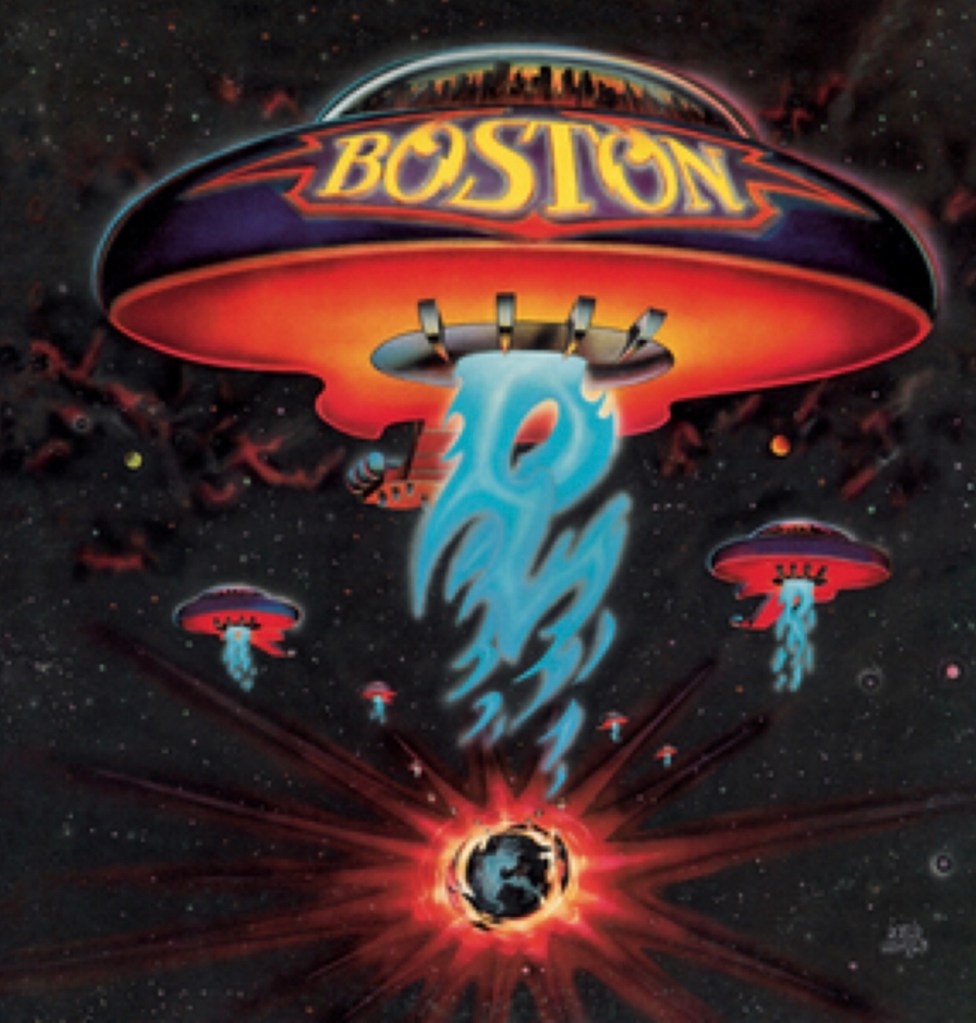
The riff before the lead break is excellent, but make sure you check out the lead break and the outro lead break, which sounds like a Boston outro, ala “Don’t Look Back”.

“Soon Forgotten”

It’s a strange song, with a riff that sounds a little bit exotic and a bizarre staccato like vocal melody on top of it. The organ work on this track is stunning and you are reminded why Jon Lord is regarded as one of the greatest players of all time.

“Sometimes I Feel Like Screaming”

The intro guitar from Morse is haunting and sad. He then plays this melodic lead in between the verses which is memorable.

The guitar solo is amazing.

It’s one of their best and should be known with their classic songs.

Did I mention that the guitar solo is amazing?

It is.

Do yourself a favour, check it out and start playing air guitar to it.

And did I mention there is an outro guitar solo as well?

There is. So check that one out as well. In other words, Steve Morse rules on this track.

“Cascades: I’m Not Your Lover”

The churchy organs of Jon Lord kick it off, while Steve Morse plays a bendy melodic lead, before it takes a left turn and a U-turn and becomes a hard rock song with a “Highway Star” like vibe.

The guitar/organ harmony solo from 2.15 to 3.15 is one of the great moments on this album as Lord/Morse go to town playing arpeggios, in a similar way that Lord and Blackmore did for “Burn”, just a lot faster.

“The Aviator”

Morse brings out the country and folk influences to create a major key “good vibes” medieval arrangement. Make sure you check out “Highland Wedding” from Steve Morse’s “High Tension Wires” from 1989 as Morse has been dabbling with these kind of melodies previously.

“A Castle Full of Rascals”

The beginning sounds like a cross between ELP and Led Zeppelin in the blues rock vein.

And the song changes at 1.58 mark with a bass groove, lush keys and a progressive like vocal melody. Morse at first is playing single note lines before crashing in with power chords and distorted single notes, paving the way for Jon Lord and his Hammond Organ solo.

“A Touch Away”

It’s got that feel good 70’s progressive vibe.

“Hey Cisco”

It sounds like “Hit The Road Jack” on steroids. Hell, it could have come from a Van Halen album. Make sure you stick around for the guitar and organ harmonies from about 4.08 and then Morse breaks loose with his fast alternate picked Mixolydian lines.

“Somebody Stole My Guitar”

What a riff to introduce the song. It grooves, its heavy and bluesy. I haven’t mentioned the swing and soul feel of Ian Paice yet, but man, this dude can play.

At the 2 minute mark, Morse starts this palm muted arpeggio riff, while Lord plays these Organ chords before Morse launches into the solo, while Lord plays the palm muted arpeggio riff on the Organ.

Brilliant.

“The Purpendicular Waltz”

It’s a blues shuffle built around a cool groove and a great closer to the album.

For all the debate about Blackmore and Morse, forget it.

Listen without prejudice.

Bruce Dickinson – Skunkworks

I didn’t like this album when I first heard it. And it stayed on the shelf for a long time before I pulled it out and re-listened. I still didn’t like it and back on the shelf it went. But over the last 8 years, the album has taken a life on its own.

I didn’t get it back then, but goddamn this album sounds progressive. The cover design from Storm Thorgerson (RIP) should have been an indication of its progressive intentions, but it escaped me.

It was meant to be a band album but the label wouldn’t release it under anything except Bruce Dickinson. Jack Endino a Seattle producer who worked on Nirvana’s “Bleach” is producing. The sound is like an amalgamation of 80’s Rush with alternative rock and metal.

And I’ve never heard of Alex Dickson again after this album but he does a stellar job on the guitar and as a co-writer on all the songs. But as Rod Smallwood said, “Bruce Dickinson is a heavy metal singer and that will never change”. His attempt to shake off the image of his Maiden past was futile.

“Back From The Edge” has double time drumming over a jangly chord progression, but it’s the bridge and solo section which gets me interested.

“Inertia” could have come from any Maiden album, past or future.

How good is the riff to kick off “Faith”?

At times I feel like I am listening to a Dream Theater cut from the “Falling Into Infinity” album with this song.

Make sure you check out the solo section.

“Dreamstate” in the verses sounds like a Nirvana cut. Yes, that’s right folks, Bruce is channeling Cobain.

How good is “I Will Not Accept The Truth”. Listen to the repeating arpeggios in the verses. Sinister and melodic in the same breadth.

The whole mood and groove in the interlude/solo section of “Strange Death In Paradise” while Dickinson sings the title is a must listen for any Dickinson fan.

In the end, unless you were interested in what Dickinson was up to, there was nothing really here to get you to commit. Then again, the 90’s was an interesting time for 80’s artists and the fans of those artists.

Standard
A to Z of Making It, Classic Songs to Be Discovered, Derivative Works, Influenced, Music, My Stories

1996 – Part 1.1: Def Leppard – Slang

There was no way Def Leppard could continue in the same vein of “Pyromania”, “Hysteria” and “Adrenalize” without a reset. It became a heavy burden to carry on the style of those albums. They had to change or die.

I was surprised when the opening musical notes of “Truth” started off, and the distorted “why don’t you tell me” vocal line. It was more in the vein of Brit Alternative Rock/Pop than Blues Heavy Rock.

Check out the exotic sounding lead break. And the demo version of the song sounds more natural and it’s my go to version as the mix is in the heavy rock category that I like.

I like the exotic middle eastern sounds on “Turn To Dust” before a groovy Rick Savage bass riff kicks in and the Chorus is classic Def Lep, with the layered vocals.

“Slang” always felt like an INXS song to me as it’s got that fun pop vibe.

How good is the repeating lick intro to “All I Want Is Everything”?

Then when the drums and bass come in, it’s got a perfect groove and Joe Elliot’s haunting vocal melody takes it to another level.

This track could have come from a Tom Petty album.

“Work It Out” is Vivian Campbell’s first songwriting contribution and it’s a high point on the album. The song reminds me of the sounds of British bands like Gun who had a brief moment in the spotlight between 1989 and 1995.

The chugging guitar sound was made by running Campbell’s guitar through a drum machine gate.

In the June, 1996, Guitar issue, Campbell said that when he was in Dio, he wrote some of the music, but writing a song for Dio was basically writing a guitar riff and 32 bars of a guitar solo. That was his world, as Dio would then arrange the pieces as he saw fit.

Campbell mentioned that Def Leppard is not about that. It’s about getting the song right for the record. Campbell further said that;

“In the 80’s there was more than just doing what was appropriate for the song. There was the plus, you know, that I had to do a solo for a record but also had to advance my career as a guitarist in the eyes of all guitarists.”

Make sure you stick around for the interlude section. It starts off funky, there’s a repeating palm muted guitar lick with ambient noise and then a bone crunching riff.

That’s right people, no guitar solo, but still plenty of guitar melodic licks and riffs played throughout.

That small fingerpicked intro for “Breathe A Sigh” is excellent. This is Def Leppard going more rhythm and blues with their unmistakable layered harmony vocals in the Chorus.

In a June 1996, Guitar issue, interviewer Rich Maloof mentioned how the hip hop groove is reminiscent of TLC’s “Diggin’ On You”.

How good is the arpeggio picked guitar riff and the vocal melody from the start in “Deliver Me”?

And that Chorus is heavy rock with the melodic layered vocals that I expect from Def Lep.

“Gift Of Flesh” has a slamming wah solo by Phil Collen done in one take.

“Blood Runs Cold” is another classic Def Lep track. The actual version and the “Rough Mix” version are both excellent.

How cool is the New Wave style of guitar on “Pearl Of Euphoria”?

And yes there had to be a song title with a word that ends in “ia”.

The June 1996 Guitar piece from Rich Maloof ends with these words;

As guitarists in a band that found success in a doomed era of rock, Collen and Campbell have adopted the Darwinian notion that survival is dependent on change. The new era is just as doomed, of course, but it speaks well for this pair that they knew to change and had the reserve of talent needed to grow.

As Collen concludes, “We’ve picked up a lot of experience on the way and we found a way to get it out of our system with an album we think is right. To us, that is the biggest thing. We weren’t even slightly worried, and we think anyone who likes us will like it. And hopefully we’ll get some new fans as well.”

Crank “Slang” and enjoy an excellent Def Leppard record.

Standard