Music, My Stories

Black Sabbath – Are They Still Relevant?

I watched Black Sabbath at the Allphones Arena, in Sydney last night and i was wondering, if they are still relevant.

Black Sabbath owned the beginning of the 70’s.  Towards the end of that era the band was bleeding and Ozzy was fired.  The beginning of the 80’s, saw Black Sabbath have the Heaven and Hell period, with Ronnie James Dio on vocals.  After that, you can say the band didn’t really set the world of fire, however i must admit that i have a soft spot for the Eternal Idol and Headless Cross albums with Tony Martin on vocals.  The Dehumanizer album in 1992 with Dio was an attempt to make both Dio and Sabbath relevant in the 90’s, however it didn’t really hit the mark.  

In the crowd around me, there was an audience of young and old.  Fan T-Shirts of the younger generation showed a lot of Ozzy colours (especially the Diary/Blizzard era), so it is safe to say, that Ozzy’s solo career has played a big part in Sabbath finding a new audience.   That is how i got into Sabbath, from Ozzy’s solo career.

Then I saw Machine Head, Iron Maiden, Slayer, Rob Zombie and Metallica t-shirts on fans.  These concertgoers are fans of those bands, checking out Black Sabbath, as all of those bands have mentioned Sabbath as an influence.  Rob Zombie is one person who speaks very highly of Sabbath.

One thing that really irks me, is Rick Rubin.  He was an extraordinary producer once upon a time.  Not anymore.  Black Sabbath did wrong taking him on board for the new album.  From what I have heard so far, it is a dead set joke.  It is basically Black Sabbath 2013, covering Black Sabbath 1969 – 1972.

Black Sabbath of the 70’s questioned authority, challenged institutions and preyed on people’s fears of heaven and hell.  They don’t do that anymore.  Why is why the current music they are releasing sucks.

What happened to the two new tracks Psycho Man and Selling My Soul from the Reunion CD?   They are better than the two songs they have released so far from 13.  I was re-listening to God Is Dead! again.  I have given this song a few go’s now, trying to find something to like about it, as all the celebrity metal / rock musicians have spoken what a great song it is.  

It is still mediocre.  Then I came across a song called In Due Time from Killswitch Engage.  It got me interested.  It hit a nerve inside of me, and I needed to know more.  The melody in the music is captivating and heavy, the chorus is unbelievable melodic and catchy, the screaming in the verses borders on insanity… SHADOWS GIVE WAY TO LIGHT…  

Listening to In Due Time brought back memories of Live In Love from Times of Grace, which is more or less Adam and Jesse from Killswitch.  After listening to Live in Love, I went back to the 2009 Killswitch album and cranked The Forgotten, hearing Howard Jones singing it and if he is reading this, he will never be forgotten.

When i listen to Sabbath, i think of Randy Rhoads and the unbelievable version he did of Children of the Grave on the Tribute album.  When i listen to Sabbath, i think of Ronnie James Dio.  When i listen to Sabbath, i think of Ozzy.   To me Ozzy is more relevant than what Sabbath is.  Ozzy really didn’t have to go back to Sabbath for a new album, he didn’t need it.

So is Black Sabbath still relevant.  For their influence and legacy, YES.  As a band writing new music, NO.  It is great that they are attempting to release a new album, however as i have mentioned previously, if it is not great, people will move on.  Our time is short these days.

Life has its highs and it’s lows.  Careers are the same.  I don’t want to waste time listening to lame music anymore, I’m ready for great.  Black Sabbath have been away for a while now.  The Ozzfest shows gave them some leverage again.  People saw them, appreciated it, but no one was eagerly waiting for them to reform and do a new album.

The new Black Sabbath album will be a hit.  It will sell at least a million in my view.  These days, it’s not about the hit record anymore, it’s about sustaining the buzz.  In my mind, 13 is already in the rearview mirror and it hasn’t been released yet.     


Standard
A to Z of Making It, Music, My Stories

Rudolf Schenker – Guitar World – March 1986

RUDOLF SCHENKER ON THE AESTHETICS OF HEAVY METAL GUITAR
By Bruce Nixon

The below article in italics appeared in the Guitar World March 1986 issue.  I have re-typed here and added my bits and pieces to it.

The aesthetics of heavy metal guitar?  Well, think about it.  Rudolf Schenker was intrigued.  He was sitting in a backstage dressing room, a litter of soda cans, ashtrays and half filled beer bottles on the low table in front of him, quietly noodling on his trusty black-and-gold Flying V.  He balanced the guitar on his knees and spread his arms out wide, smiling broadly, his eyes sparkling.  Already, conversation had drifted over Vs and V players, and the Scorpions’ well-known axeman had displayed a deep and interested passion for the guitar life.

That is the iconic look, Rudolf Schenker with a trusted flying V.  This issue is from March 1986.  Rudolf had been in the game for over 26 years by now.  Rock You Like A Hurricane from 1984’s Love At First Sting album was a monster hit for the Scorpions.  Winners never quit.  They persist.  They persevere.  Sure, the Scorpions had an audience in Europe and Asia, but it wasn’t until 1984 that they broke through in the US.

“The aesthetics of heavy metal guitar…” His accent was middling thick with a slightly skewered command of idiom, but it didn’t set in the way of his enthusiasm. The idea had captured his attention, in any case.  

“I know of several different kinds of players,” he said. “There is Van Halen, very technical and very creative.  Him I like very much, because he has put new things into guitar playing.  He is very good rhythm-wise. And the other I like very much is my brother Michael.”  

This, of course, referring to Michael Schenker, the Scorpions’ original lead guitarist, now fronting his own band.

“He can play melodically—but he puts the three parts of the guitar together, the melodic, the technique and the feel. Some have more technical skill, but in my brother, all three parts are equal.  He has feel, but he keeps the melody inside and the exact rhythm inside.”

The impact of Edward Van Halen to rock music is immense.  Back in 1986, it was still at a level of what he brought to the guitar playing circles and how an expectation was made that any band with desires to make it, had to have a guitar hero.  Of course afterwards, EVH would branch out into guitars, amps and gear.

I am the youngest of three boys, so to hear Rudolf talk about his younger brother in such high regard, is cool.  His words ring true.  Michael Schenker was a monster player.  UFO couldn’t contain him.  Their best works happened when Michael Schenker was in the band.  (We will forget about the crappy 90’s reunion album and the bad Vinnie Moore reincarnation, even though i am a fan of Vinnie Moore as well).  His solo work in the eighties as part of MSG and McAuley Schenker Group was a stand out as well.

Going back to March 1986, Rudolf’s summation of his brothers ability made me curious to find out more about Michael Schenker.  This is artists promoting other artists.  I don’t believe that form of promotion happens these days anymore?  Growing up in Australia, the nineties brought a certain elitism ideal to certain local scenes, where each band only looked out for themselves as they where worried that another band might take their fans.  What artists failed to realise is that fans of music always like more than one band.  That is how fan bases are made, a common love of music across different bands.

“You see, metal is a new style.  Heavy rock is based on guitar and drums together.  If you want aesthetics, when you go looking for a good guitar player, you will find them in heavy rock.  This is a place where the guitar player has the most openings.  Look at Rick Springfield—his guitar player is good, but the music is based on the singer.  In heavy rock, the guitar player has more parts than the singer has.  In heavy metal, the players are young and fresh, too, open to new styles and new sounds, new everything!  Whole roads are open to them.  We all used to copy Led Zeppelin and Deep Purple, but bands don’t do that anymore.”

Bands started to copy their peers.

Motley Crue hit the LA scene in 1980 with a mix of Seventies Punk, Americana Rock / Pop and British Classic Rock.  Bands like Poison, Warrant, Bullet Boys and Tuff came out influenced by bands like Motley Crue and Ratt.

Bon Jovi came out influenced by Seventies Classic Rock, Bruce Springsteen and the New Jersey keyboard driven pop scene.  Then you had every band writing songs in a pop metal vein.

Van Halen came out influenced by the English Blues Rock and Americana Rock/Pop.  Name me one band in the eighties that didn’t try to sound like them.

Def Leppard wanted to record an album that mixed Queen style pop harmonies with the NWOBM sound they were involved in.  They achieved that with Pyromania and perfected it on Hysteria, spawning thousands of imitators.  

Guitar players became the ones that got the attention as well.  The band dynamic had evolved.  It started in the Seventies and continued with the Hard Rock / Glam Rock movement in the Eighties.

“I like to listen to heavy rock very much,” he added. “Jimmy Page, in his good days, was so good.  Now, Jeff Beck has always been good, and I like his solo album very much.  I hear Malmsteen—he s very fast, very technical, much into classical.  Take Ritchie Blackmore—of course, he is from the older generation of players, but he doesn’t get older  in his sound.  Beck is more for older people these days.  Ritchie is one of those guys who has old and young kids in his audience.  He has that fresh energy.”

Ritchie Blackmore from Deep Purple and Rainbow is one guitarist that appealed to both old and young guitarist.  The older crowd that is into the blues rock style loved what Blackmore did with it, the middle-aged got the best of both worlds and the younger crowds maybe didn’t appreciate the blues rock vibe of Blackmore however they related to his classical technicality that fit perfectly with the rise of the Eighties shred.  That is where Michael Schenker also comes into the picture.  He also accommodated both audiences.

He suggested that the greatest heavy rock players were European-except for Jimi Hendrix and Leslie West.  America has not been highly nourishing soil for metal guitarists.  In metal, at least.  Europeans maintain more of a purists approach to the genre.  

“I think European guitarists have been more original.” he remarked matter-of-factly.  Page—Beck—Clapton- Ritchie—my brother. In heavy rock. English players, especially, have had a more original feel. In coming from Germany, when I watch television over here, I see everything is made for posing—the advertisements and stuff.  In Europe, people are more natural, they are relaxed.  They don’t pay as  much attention to those things. Maybe the guitar players are like that, too.”

There is that name again Jimi Hendrix and who the hell is Leslie West.  It was years later that i heard Mississippi Queen, if you know what I mean.

By 1986, America had a decent amount of heavy rock players.  Going back to the Seventies, you had players like Ted Nugent, Ace Frehley, Steve Lukather, Neal Schon and Eddie Van Halen.  By the Eighties you had players like Randy Rhoads, Warren DeMartini and George Lynch join the ranks.

It was hard to come up with any more American guitarists who fit the bill.  At the mention of Randy Rhoads, Schenker nodded enthusiastically, and then shook his head sadly.

If it wasn’t for Randy Rhoads, I wouldn’t have been able to play the way I play.  His dedication and precision on the two Ozzy albums will be forever remembered.

“Blues is the basis of all good guitar playing in this style of music,” Schenker concluded.  The Americans are not as bluesy as the English are.  Clapton, Beck, Page—they’re all influenced by the blues.  English players found the right combination for bringing blues and modern rock together.”

Artists speaking their minds.  If you agree with Rudolf’s point of view or not, one thing is clear, he is not afraid to get it out there.  Maybe it is that famed German arrogance, or maybe it is truth.

I honestly believe that music captured in its purest form is magical.  The  purest form is when music is written without the thoughts of profits in minds.  In the late sixties and early seventies, this is what music was.  It was pure.  It wasn’t tainted by Wall Street, by profit margins and balance sheets.

According to his guitar technician, Vince Flaxington, Rudolf Schenker keeps it simple. The Scorpions’ veteran rhythm player carries six Flying Vs on the road, his favorite of the bunch being a black and white 1964 model that his brother gave him about a year or so ago; he also likes the black and gold model, an ’82 reissue, while the remaining four are strictly backups.  

Schenker is a Flying V fanatic, having forty-odd variations of the instrument at home, about a third of which are original issue models.  Indeed, he doesn’t own anything else. He saw his first V in the hands of Johnny Winter and became an instant convert to its sleek good looks.  The best one he ever had, he said, went with his brother when Michael Schenker left the Scorps.  His guitar tech says every one is stock, Rudolf uses only Gibson pickups and refuses to let anyone alter his beloved Vs.  Not even with Strap-Loks.

Onstage, the guitarist uses three 50-watt Marshall heads that drive six 4 x 12 cabinets.  The Marshalls are “quite old”—a ’67, a 1970, and a 1980, all stock.  The volume is set at 9; the EQ knobs are all full-tilt.  His sole effect is a Vox wah-wah, one of the first made, although Schenker only uses it for about five numbers in the current set.  The cabinets also are stock.  He uses a Nady wireless system. 

“His tone is like broken glass,” Flaxington grinned. “That’s the way he wants it—sharp, clear and raunchy.”

Simply and effective set up.  He is a purest.  He didn’t go searching for that sound the way others did.  He just plugged in and let it rip.

Standard
Music, My Stories

Storm Thorgerson – Off to the Bright Side of The Afterlife

The album cover was an important part of each album release.  A lot of the times we purchased albums based on how the cover looked.  Iron Maiden immediately comes to mind.  Most of the times people are unaware who the artists are that create these iconic images.  In this case, Storm Thorgerson is a name that people either know or don’t know.

I guarantee if you mention to anyone the name Storm Thorgerson they would look at you like you are speaking a different language.

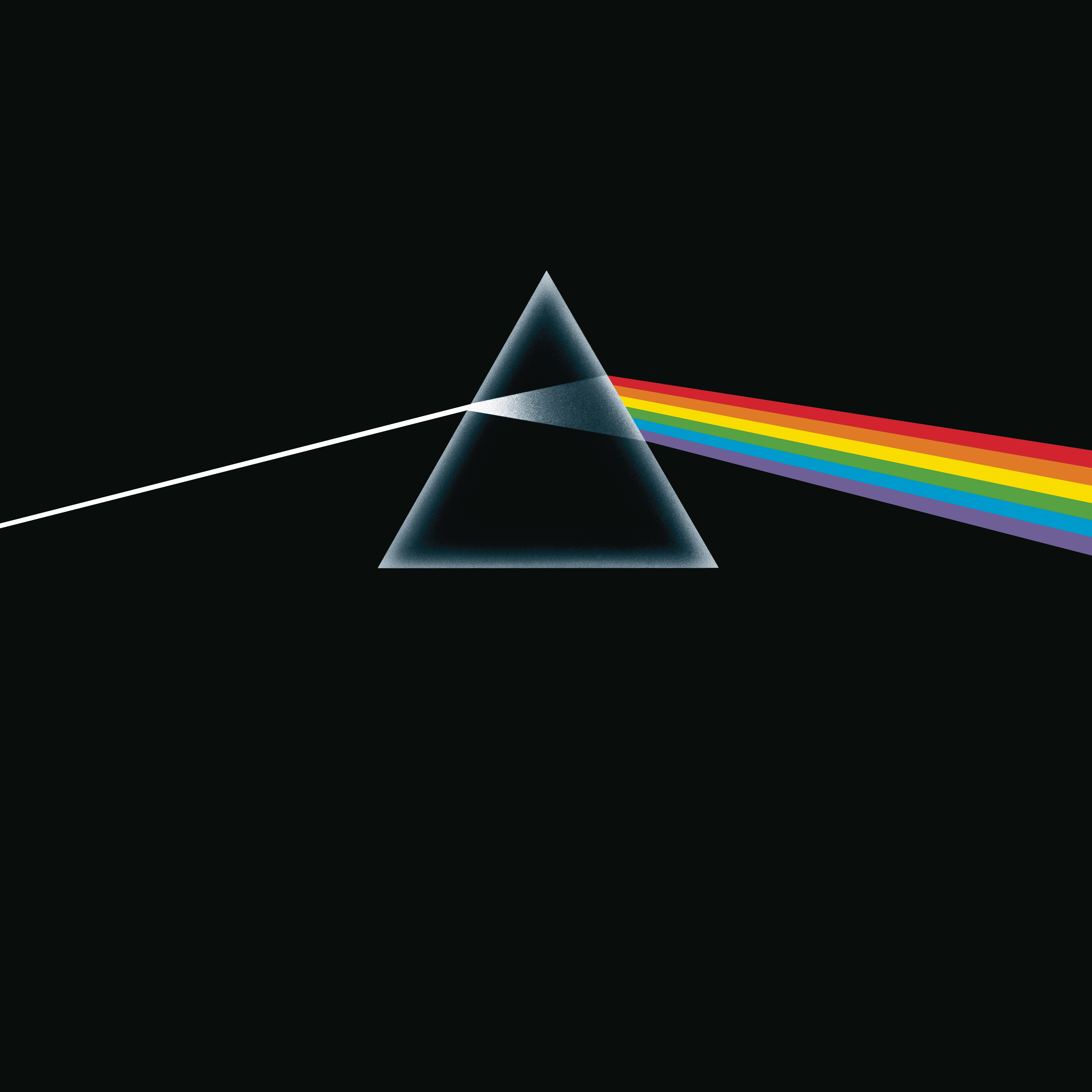
However if you mentioned Pink Floyd – The Dark Side Of The Moon, then you get a reaction.  You can say that he is best known for creating the prism-spreading color spectrum on the front of Pink Floyd‘s ‘The Dark Side of the Moon’ album.  (All images are sourced from Wikipedia, so that I can showcase my favourite album covers by Storm).

File:Dark Side of the Moon.png

Pink Floyd – A Momentary Lapse Of Reason was the first Pink Floyd album I purchased in the late eighties.  From this album I started to go back and explore the others.

File:MLoRLP01.jpg

Storm passed away, on Thursday 18th April after a long illness with cancer and the after effects of a stroke in 2003. He was in his 69 years old.

If you have Dream Theater’s – A Change of Season EP, Falling Into Infinity album or Once In A Livetime album, then the cover art was all designed by Storm.  Dream Theater is one of my favourite bands at the moment.

File:Dtheater-change-seasons.jpg

File:Dream Theater - Falling into Infinity Album Cover.jpg

File:Dream theater oialt.jpg

Megadeth’s – Rude Awakening DVD cover, was designed by Storm.  This cover is a dead set classic.

File:Rude Awakening by Megadeth 2002.jpg

Europe – Secret Society – again very creative, the secret society is faceless people pulling you in all directions.

File:Europe-secret-society.jpg

Thornley – Come Again – this is one of his best covers, the trap door exit into another world or an alternate reality.

Peter Gabriel – I love the ghostly face in the car with the raindrops. The light and dark shades capture the moment.

File:PeterGabriel1977.jpg

Black Sabbath – Technical Ecstasy – this one was a rare one from Storm, as most of his album covers involved photographs and manipulation of photographs.  This one is more or less a drawing.

File:Black-Sabbath-Technical-Ecstasy.jpg

Muse – Absolution – the shadows of the people falling down from the sky, while the person looks up.  Brilliant. Or are the people finding absolution and are being taken up the sky.  Again it makes you think.

File:Muse - Absolution Cover UK.jpg

Led Zeppelin – Presence – I always took this photo as showing a side of the wealthy/powerful and the black presence in the middle of the table.  I am sure others have a different take on it.  It has been known the Jimmy Page dabbled in black magic, and could this be the presence that the album cover refers too. It makes you think.

File:Led Zeppelin - Presence.jpg

The Mars Volta – Frances The Mute – we are all faceless people bypassing each other, just to get ahead.

File:Frances the Mute.png

Biffy Clyro – Only Revolutions – i love the contrast of the Red and the Blue.  Very war like.

File:OnlyRevolutions.jpg

There are a lot of other covers out there, so delve deep and remember the man who is iconic to pop culture.  He worked with the best and he is the best.  Rest in Peace and thanks for the memories.  

Standard
Music, My Stories

God Is Dead? – Black Sabbath – not a classic song waiting to be discovered

Loudwire

YouTube

Click on the above link if you want to hear it?

WARNING: every minute or so, you hear a woman’s voice over it saying iHeart Radio on demand.  What a stupid idea?  The people that want to hear this song are the fans?  For the people that want to pirate it, they already   would have their hands on the album or have a source that would deliver it to them.

Black Sabbath, 'God is Dead?'

Artwork by Heather Cassils.

Ozzy’s take on the meaning of the song, from Loudwire.  The below excerpt is from that Loudwire post.

“How I got that title was I was in somebody’s office and there was a magazine on a table and it just said, ‘God Is Dead,’ and I suddenly thought about 9/11 and all these terrorist things and religion and how many people have died in the name of religion,” explained Osbourne. “When you think about the tragedy that’s happened throughout time, it just came in my head. You’d think by now that their God would have stopped people dying in the name of, so I just starting thinking that people must be thinking, ‘Where is God? God is dead’ and it just hit me.”

While a simple look at the song title may inflame a few, it’s important to note that there’s a question mark at the end. Osbourne points out that the statement is more of a discussion with a ray of hope. He tells Lowe, “At the end of the thing, there’s still a bit of hope because there I sing that I don’t believe that God is dead. It’s just a question of when you see so many dreadful people killing each other with bombs, and blowing the tube trains up and the World Trade Center.”

To be honest, its nothing original or innovative.  So any people out there looking for anything groundbreaking, this is not the song.

‘God is Dead?’ is everything Black Sabbath fans want from the metal innovators, and if the rest of ’13′ maintains the quality of Sabbath’s latest single, we could be looking at a contender for best metal album of 2013.

Is this guy serious?  Graham Gruhamed Hartmann wrote the above in the Loudwire article  referenced.  It’s very rare that Loudwire commentators review works on a critical basis.  To be honest this song is pretty boring.  It doesn’t have enough ideas in it to sustain the 9 minutes.  It’s not a bad song, nor is it a great song.  I think 5 minutes would have been enough.  To label it as everything Black Sabbath fans want, is not true either.  I am a Black Sabbath fan, and if the rest of the album is like this song, i wont be impressed.

And contender of the year for best metal album?  It sure has a lot of ground to make up on the following releases;

Coheed and Cambria – The Afterman – Descension
Black Veil Brides – Wretched and Divine: The Story Of The Wild Ones
Bullet For My Valentine – Temper Temper
Stone Sour – House Of Gold And Bones Part 2
Volbeat – Outlaw Gentlemen and Shady Ladies
Pretty Maids – Motherland
Killswitch Engage – Disarm The Descent
Mutiny Within – Synchronicity
Love and Death – Between Here and The Lost
Defy Tolerance – Stop The Bleeding
Audrey Horne – Youngblood

This is the difference to 1978.  There is so much content being released these days, that if you want your music to be around for a year or more, the music needs to be great.  Ozzy’s album sales since Down To Earth have not been stellar and Black Sabbath’s sales (even Heaven and Hell sales) have not been stellar either.

And from what i heard just now, the music isn’t great.  The slow gloomy riffs worked early on in Sabbath’s career because the music was referencing their gloomy life, growing up in Birmingham.  The gloomy riffs don’t have the same effect now.  Maybe the gloom is referencing Iommi’s fight with cancer.  Regardless, the shock effect is gone.  This is Sabbath playing it safe.

I know it’s only one song, however I can see the album doing the same spiral that Bon Jovi and Aerosmith had with What About Now and Music From Another Dimension.

I have my $180 tickets to see Black Sabbath next Saturday in Sydney at the Allphones Arena.  I am expecting a show of all the classics and maybe this new song thrown in.  I hope not.

Standard
Classic Songs to Be Discovered, Music, My Stories

Motley Crue – 1994 – Poison Apples, Hammered, Till Death Do Us Part – John Corabi Era – Part 2

Continuing on from Gerri Miller’s Metal Edge interview with Nikki Sixx.  The below excerpts in italics are taken from Metal Edge circa 1994.  The lyrics and comments are added by me.

“POISON APPLES”
A rocker with a punky vibe, this song was originally called “Hangin’ by a Thread.” Nikki wrote it last year in “Hawaii on vacation, when Bob [Rock’s band Rockhead] was out with Bon Jovi. I recorded the riff on a ghetto blaster and played it for the band, and they said this is really cool.  It got thrown into the Motley stew and turned into a bastardized version of the original. But nothing about it kicked ass.” Meanwhile Nikki was working on a possibility for his solo song with the title of ‘Poison Apples.  

Subject wise “The first part is my story what that time of my life was about. The second part is more about the band, and takes aim at the “tabloid sleaze” press preoccupation with Tommy Lee and Heather Locklear’s now-defunct marriage.  Lines like “Sex smack rock roll mainline overdose/Man we lived it night and day” refer to past excesses, and homage is paid to one of Nikki’s favorite bands, Mott the Hoople.  “Ian Hunter’s one of my favorite lyricists and Overend Watts is the reason I play,” he says. “Tommy Lee played honky-tonk piano on it.”

Don’t you love that knowledge.  How the song starts of as one thing and it ends up going through a metamorphosis into something else.    

Tabloid sleaze just maggots on their knees
Diggin’ in the dirt for slag
Moonshine, strychnine, speedball, shootin’ lines
Anything to push their rags

Nothing has changed these days.  If you want to be misquoted or if you want to have words taken out of context, do an interview for the mainstream.  If you want your fans to know what you mean, connect with them.  Let them be the interviewers.

Pretty little poison apples, see the scars tattooed on our face.
It’s your disgrace.
Pretty pretty poison apples, mama said,
“Now don’t you walk this way, just find some faith.”

The lyrics on Motley Crue are world-class.  I like how Nikki refers to the band as pretty little poison apples.  He is merging the Garden of Eden with LA and the dreams of a young kid trying to make it.

“HAMMERED”
Cool, heavy, with grooves galore, this song is “about a sleazy piece of shit person in anyone’s life.”  Some might infer that it’s about Vince Neil but when asked about it, Nikki insists that it isn’t.  I don’t know where I was coming from when I wrote it.  It’s a song about a dirt bag.  We all know plenty of them.  Written very quickly at rehearsal, its characterized by Nikki as having a Deep Purple vibe.

To be honest, when i first heard this song, I took it as a dig to Vince Neil.  According to Nikki, Vince quit because he wasn’t into music anymore and he wanted to devote his time to car racing.  According to Vince, he got fired, because he didn’t like the direction the new music was heading/  Apparently it was all keyboard driven.

Regardless of what story you believe, one thing is clear, Vince Neil delivered a superior hard rock album with Exposed, which came out 1993, a whole year before Motley Crue.  In my mind, this made Nikki’s words mean shit.

Act like Jesus crucified again
These four walls are closing in
Who and what do you think you are
A rich mother fucker in a fancy car?
Concrete jackal suckin’ on the past
Goldcard junkie kissing money’s ass

You can tell that Nikki is directing the words to a person who is suing him.  Vince Neil sued Motley Crue in 1992 after his firing, for 25% of the Crue’s future profits and $5 million in damages for being fired.  In addition, Exposed was selling close to the million mark.  As we know once, Motley Crue came out with their 1994 album, they only moved 500,000 units.

Hey, Mr. big time Hollywood,
Tell your story walkin’ if you think you could
Your money’s runnin’ low from your cocaine whores
Nothin’ but a rat scratchin’ at my door
Hey, now I’ve said all I’m gonna say
Time will judge, see who fades away

There was an incident where Vince and port star Savannah went to Hawaii.  After 4 days of partying on pills and cocaine, Savannah overdosed.  As much as Nikki denies it, this song is having a dig at Vince.  Time did judge, and it was Nikki that needed to get Vince back into the fold.

TILL DEATH DO US PART
This soulful heavy rocker is “about pride and standing up for what you believe in, standing up for yourself till you die.  It reminds me of ‘Danger’ off the second album,” says Nikki.  “It’s mid tempo but not really a ballad. It’s very emotional.”

Autobiographical lines include “I’ve walked my walk, talked my talk, lived and died in my songs. Temptation cuts so deep/Its fires still burn so strong/You know I’ve lived a few mistakes and I stand by them … Sometimes my words may cut too deep and I step on a toe or two/Half dead and barely half alive but I live by the truth.”

Nikki notes, “A lot of people tend to look at us from the outside in,” drawing wrong conclusions because of what they read.  But “I don’t really care, to be honest with you. The only thing that’s important is family and friends.”

Till Death Do Us Part is the best song written by Motley Crue.  They should have re-recorded this as a B side or a bonus track with Vince.  Of course Vince wouldn’t sing it, he has made that clear in previous interviews.  The album was meant to be called Till Death Do Us Part.  The guys even tattoed the name on their bodies.

Poison Apples – YouTube

Hammered – YouTube

Till Death Do Us Part – YouTube


Standard
Classic Songs to Be Discovered, Music, My Stories

Next 100 Years, I Could Make A Living Out of Lovin’ You and Ain’t No Cure For Love – Classic Songs Waiting To Be Discovered

Crush.  Does anyone know that It’s My Life came from this album.  You can say this was Bon Jovi’s renaissance.  After delivering a terrible album in These Days and a worse solo album in Destination Anywhere, Jon Bon Jovi needed to go back to Rock N Roll.  Luke Ebbin was on board to produce the album.  It was to be his first major production credit and what a good job he did with it.  It’s My Life was a monster.  So whatever came after it, wasn’t going to matter.  Call it the curse of the Number 1 effect.  Crush was a great album.  However, it was the B-sides that came with the CD-singles that were the standouts.

Next 100 Years was written by Jon Bon Jovi and Richie Sambora.  It has that Beatles Hey Jude ending and then from about 4.25 it just goes into overdrive.  It’s got that Seventies vibe, that abandonment.  Hell the song even goes up to 6.19 which strays very far from the pop formula that Bon Jovi is renowned for.  Sambora wails on the guitar.  This is the year 2000, Nu Metal is ruling the scene and guitar solos are non-existent.  Trying telling that to Richie.  He must have missed the memo.  If there is one thing I can say about Richie, he stayed true to himself as an artist.  He didn’t follow the grunge trend or the industrial electronic trend Jon followed on Destination Anywhere.   He just remained the same.  His second solo album, Undiscovered Soul was a real standout in 1998.  I even watched him perform, 5 minutes from my house, at the Shellharbour Workers Club.  Now that was an unexpected surprise.

I’ll believe 
When you don’t believe in anything

That is life.  When I don’t believe someone else i know believes in something better and vice versa.  The Yin and the Yang.

I Could Make A Living Out Of Lovin’ You was written by Jon Bon Jovi, Richie Sambora and Billy Falcon.   If you like AC/DC, if you like rock n roll, this is the song for you.    It’s the a quality AC/DC song not written by the Young Brothers.  This song was on the Australian deluxe version as a bonus track.  To me, it is one of the best rock songs Bon Jovi has written.  It’s got that Bon Scott tongue in cheek attitude in the lyrics.  It is the guys having fun.  Yes FUN.  That is what it is supposed to be about.  Having FUN.  

If there’s something that needs fixing 
I’m the man to see 
Look me up, I’m listed 
Just check under “B” 
If you’re ever on the spot 
Well, I’m good with my hands 
24-7 I’m your handyman 

Until the work is finished 
Well, I don’t get paid 
I don’t mind getting dirty 
That’s my middle name 
I’m in the service business 
So I understand 
Call me 24-7, I’m your handyman

Aint No Cure For Love is the best ZZ Top song not written by ZZ Top.  How this song has not ended up as a Bon Jovi classic is a tragedy.  It’s the guys having fun again.  It’s written by Richie Supa, Jon Bon Jovi and Richie Sambora.  Supa is known for his contributions to Aerosmith, plus Sambora used him for a lot of the Undiscovered Soul songs.   This is Classic Rock revisited in the YEAR 2000.  It deserves more attention.  It show a different side of Bon Jovi.

Cupid was a blind man
He must have missed his mark
Shot an arrow in the air and hit me in the heart

I went to see Saint Valentine
Said whats come over me?
Daddy must have missed the chapter about the birds and bees

You can be the King of diamonds
You can cash in all your gold
You could hire Johnnie Cochran
It’s too late to save your soul

NEXT 100 YEARS – YouTube

I COULD MAKE A LIVING OUT OF LOVIN’ YOU – YouTube

AIN’T NO CURE FOR LOVE – YouTube

Standard
Copyright, Music, My Stories

Danny Stag – Guitar World – September 1989

The interview below (in italics) appeared in the September 1989 issue of Guitar World.  It was written by Brad Tolinski.

Kingdom Come lead guitarist Danny Stag speaks with the humility of a man who knows he’s been blessed. ‘”It was a mind blower” he says, describing last summers’ Monsters Of Rock tour.   “Our U.S. debut was in front of 40,000 people.  Some bands only get to do that a couple of times in their whole careers, and many never get that chance at all.  We did a whole tour to those numbers.” 

We got short changed in Australia.  We never got these mega bills of super star bands.  I remember buying Circus, Metal Edge and Hit Parader and reading about the Monsters of Rock tour.  It had Kingdom Come opening, followed by Metallica, then Dokken, then Scorpions and the mighty Van Halen headlining.  Kingdom Come formed in 1987, taking musicians from various other rock groups that were paying their dues on the club circuit.  By 1988 they had gone multi-platinum with their debut and are playing to 40,000 people. It was this kind of ride to the top, that a lot of kids expected to happen to them once they formed bands.   When it didn’t happen within one to two years, they would call it quits.  

On the tour with Stag were some of rock s most lauded guitarists, including the legendary Edward Van Halen. When asked whether he found such fast company intimidating, Stag launches into an illuminating examination of his roots.  “I realized that I was the only a blues based player,” he says. “Rather than competing, I was playing in my own ball game. My tastes run more towards Howlin’ Wolf, Muddy Waters, Willie Dixon and Jimi Hendrix.  People don’t usually think of Hendrix as a blues traditionalist, but I feel he was one of the masters, maybe the ultimate.” 

As an aspiring guitarist, this is what I wanted to read.  Who influenced the people that are influencing me?  Muddy Waters, Howlin Wolf, Willie Dixon.  Back in 1989, I had never heard of those players.  There is that name again Jimi Hendrix.  His name just kept on popping up in interviews from the Eighties.   

Although one wouldn’t immediately detect the Mississippi Delta in the arena rock anthems of Kingdom Come, interludes like the funky acoustic intro to “Highway 6,” off their latest, In Your Face, suggest a refreshing depth and sense of history.  Stag is pleasantly forthright and even passionate about his music and his influences. However, he makes only brief mention of the band Kingdom Come is most often compared to Led Zeppelin.  How valid does Stag see those comparisons to be?

“I must admit, I used to scratch my head in disbelief when people compared me to Page.  He was an influence, but not a big one.  I really liked Zeppelin’s first two albums, but I didn’t care that much for what followed.  I think younger people are missing the Hendrix part of my playing because they aren’t as familiar with him as they are with Page.” 

“This Led Zeppelin/Kingdom Come comparison has been blown way out of proportion. Some of it comes from the way Lenny (Wolf, Kingdom Come’s vocalist) sings, but if you listen to Lenny and Robert Plant back-to-back you’ll find they don’t sound anything a like.  Plant’s voice has completely different tonal qualities.  Maybe we come out sounding like Zeppelin when everything is mixed with our drummer, who plays a monster back beat.  It’s hard to escape the fact that Zeppelin created certain hard-rock conventions that every band uses.” 

“But you could accuse Hendrix of ripping off Muddy Waters,” says Stag with increasing irritation. “Voodoo Chile is a lot like Water’s (I’m Your) Hoochie Coochie Man.  The Beatles were influenced by Buddy Holly and the Everly Brothers.  The difference is, the Beatles and Hendrix did variations on the music they loved and their influences were more like tributes. Paying respect to your musical forefathers is part of a long tradition.   Ex-Zepsters Page, Plant and John Paul Jones, who’ve been openly hostile to bands like Kingdom Come and Whitesnake, should perhaps re-examine the condition of their glass houses.  It’s fairly common knowledge that Led Zeppelin brazenly borrowed, almost note-for-note, several Chess-label classics.”

“Whole Lotta Love, one of their biggest hits, was proven in a court of law to have been taken directly—without permission or subsequent knowledge—from a Willie Dixon tune.  After I read an interview with Page where he accused me of stealing from him, I wanted to do a solo album and call it Houses of The Bitter.  I’d record Whole Lotta Love, I Can’t Quit You and You Shook Me and write in huge letters who really wrote those tunes.  To be influenced like we’ve been is one thing, but to steal songs without acknowledgement is another.”

“I don’t know.  Maybe some of the bad blood started when a journalist misquoted me.  This guy told Page that I claimed to never having heard Led Zeppelin.  That’s obviously absurd and Jimmy would have a right to feel ticked off.”

Back in September 1989, this was a shock to read.  Led Zeppelin borrowing songs from other artists and passing it off as their own.  These days, I am older and wiser, but back then I was green.  They even stole the intro riff to Stairway To Heaven and failed to acknowledge it.  I have said it many times, musicians are the sum of their influences.  No music is created in a vacuum.  Kingdom Come is very similar to the hard rock version of Led Zeppelin and they hit pay dirt with that similarity.  The audience wanted Led Zeppelin to be around.  Since Led Zep was not around, other bands stepped up like Whitesnake and Kingdom Come to fill the void.  The audience lapped it up, sending these bands to the top of the charts.   

Stag sounds defensive but he doesn’t need to be.  His manic, hormonally charged soloing, aggressive pick attack and tightly would vibrato remain distinctive whether filtered through a single coil Strat pick up, a fat sounding Les Paul or a plain old acoustic Martin. 

“I never work out solos,” says Stag.  “I just wait til I’m inspired.  Then I have the engineers crank the music real loud in the control room and I go for it.  I just shut my eyes and improvise.  It’s like a short burst of emotion.  When you want to comment on something, you use the words available to you in your vocabulary.  Soloing is like that with me.  I’m commenting on what’s happening musically by reaching into my built up musical vocabulary of licks and scales and use whatever is relevant.  I don’t worry about how it’s going to work, it’s just a feel thing.”  

I used to read the comments from guitarists who said they never worked their solos out with a grain of salt.  My idol Randy Rhoads worked his solo’s out and he created masterpieces, Vito Bratta the same.  Solos are meant to add to the song.  This is what guitarists forgot towards the late eighties.  In saying that, Stag’s leads where good on the ear.  By having a musical vocabulary, he had that knowledge to work out the solos on the fly. 

To translate that feeling in the studio, Stag uses a 1962 Stratocaster with a bridge-position humbucker, in tandem with a 50-watt Marshall head. All of Stag’s Stage effects are by T.C. Electronics.  “My system is pretty simple. The 2290 has five effects loops, and they’re completely programmable.  Most of the time I just use a little delay panned so that two of my cabinets are dry and two are wet. I keep the dry cabinets so I never lose punch.  I have some parametric eq’s, but I only use them on one song and a couple of solos.  They help emphasize my single-coil sound.”

How minimal the set up?  That is what Rock N Roll is all about.  Plug the guitar into the amp, turn it up and bash away.  These days, the guitar rigs are a plethora of schematics. 

Now that Kingdom Come has comfortably settled into star status, what does the future hold for Stag?  
“I’d like to experiment more with sound, like the weird stuff Hendrix was doing on Axis: Bold As Love. I don’t really think you lose your identity when you change tone or pickups; it’s what ‘s under the fingers. You could tell it was Hendrix whether he was playing clean or whether his sound was balls-to-the wall.  Having sound is everything, but having a sound is not.  Kingdom Come is close to taking its place alongside the great bands.  We’re like a Deep Purple, a Rainbow or a Led Zeppelin. We might not be as original as those guys were in their time, but we have that kind of musicianship. We’ve got the depth.”

The interview appeared in the September 1989 Guitar World issue.  It was obviously done around April / May 1989 when the In Your Face album was released.  Kingdom Come called it quits in August 1989.  So by the time the magazine hit the newsstands, Kingdom Come was no more.  They left us with two magical albums.  In Your Face is a very under rated album and it deserves more attention than what it got.  However that is for another day.     

Standard
A to Z of Making It, Music, My Stories

C.C. DeVille Guitar World – September 1989 and Persistence (Quitters Never Win and Winners Never Quit)

GW – What was the best piece of advice ever given to you as a guitar player?
“Be your own man,” which carries into every aspect of life. Listen to other people, but realize your opinion counts as well. There’s always someone to tell you how bad you are, but not always someone to tell you how good you are. So you have to depend on yourself not to quit. In the words of Body By Jake Steinfeld, “Quitters never win and winners never quit.” Remember, rock n roll was invented for people who can’t play regular music.

Learn from others, but never forget who you are.  Don’t let the haters win.  As pointed out by C.C. there will always be someone there to tell you how bad you are.  C.C. is a perfect example.  The Shrapnel Guitarist Elite dished him.  Why? It’s because he made to multi platinum status and they didn’t.  Rock N Roll was always meant for the outcasts, the ones that where not professional and did not practice 15 hours a day.

GW – What would you like your epitaph to read?
My epitaph would read: “Here lies the music worlds best kept secret.” When I go to bed at night I’m very hurt that people consider us a joke band. We concentrate on writing good pop songs, so I have to be careful not to overplay. I guess one of these days I’ll have to sink to the level of playing a “jack off” solo featuring hammer on pyrotechnics and flying whammy bars. Ain’t Nothing But A Good Time is a brilliant summer song with a good solo. It fits the song very well. That’s what I’m preoccupied with, rather than showing off.

It’s okay to show emotion, to feel hurt when people dish on you.  That is expected behaviour.  Pretending to be fine is fake behaviour.  The gospel is above, CONCENTRATE on writing good songs, play for the song, not for the hype.

GW – Pick the C.C. DeVille “Dead or Alive Dream Band” excluding members of Poison?
John Bonham on drums, obviously. Paul McCartney on bass, because he’d help me write some great songs. I’d live to hear Paul Rogers on vocals and Max Middleton from the old Jeff Beck Group on keys. Jeez, what a weird combination of people. You probably couldn’t even get a jam going, but somehow mentally it works for me.  T
o tell you the truth, I quit thinking about ultimate bands because synergy in rock is a strange thing. Superhero bands like Blind Faith and Asia never seem to work out. On the other hand you can put together several average musicians and create something special.  Hell we did our first album in 12 days!  It was raw, but there was a chemistry that people seemed to like, and that’s all that matters.

David Coverdale has played with a lot of musicians, but when John Sykes came into the picture, they created hard rock, blues rock / metal history with the Whitesnake 1987 album.  Coverdale then wrote Slip of The Tongue with Adrian Vanderberg and got Steve Vai to play it, however he never got the same magic, and within 18 months Whitesnake was no more.   That synergy is like lightning in a bottle.  The Beatles where four average musicians that created something special, Sabbath was the same, Deep Purple and the list goes on.  Ritchie Blackmore found that synergy again with Rainbow, however once Dio left it was all downhill from there.  You never know with whom you will have chemistry with.

Standard
Music, My Stories

C.C. DeVille – Guitar World September 1989 – Part 1

The below article (which I have re-typed in italics) was written by Brad Tolinski and it appeared in the Guitar World issue of September 1989.  

When Poison colleague Bret Michaels was asked to suggest an appropriate alternative career for the flamboyant C.C. DeVille, he immediately replied: “C.C. is obnoxious, so he’d be a great game show host.”

C.C. DeVille, I remember was the winner of the Worst Guitarist Polls in the Guitar mags back in the late eighties and early nineties.  When guitar playing got exposure via Shrapnell Records,  a new audience niche was born.  I called that niche, the Guitarist Elite.  This new niche hated guitarists like Mick Mars, C.C. DeVille, Scotti Hill, and many others from successful hard rock bands, as they where too sloppy and too safe (always referring to the Pentatonic scale).  The funny thing here is that this same elite revered Ace Frehley, Eric Clapton, Jeff Beck and other players that also had strong roots with the Pentatonic scale.

GW – Who are your favorite guitar players?
Jimmy Page.  Not because he’s trendy at the moment, but because when I was eighteen I thought he sucked.  I had to mature as a player to really appreciate him.  Youth never understands nuance or phrasing.  I initially hated all the great guitarists. The local players would say, “Dude, listen to this.”  They’d play some Page or Hendrix, but I wasn’t able to comprehend it.  I wanted to hear speed.  When you’re young you approach things from a different perspective.  There’s peer pressure to always burn and your emotional thing isn’t very developed.

I will admit that when i was starting off, I couldn’t get into Hendrix and Page.  Growing up in the Eighties, I loved the hard rock / glam scene.  At that time it was all about Warren DeMartini, Randy Rhoads, George Lynch, Eddie Van Halen, Mick Mars, Yngwie Malmsteen, John Sykes and David Mustaine (I actually like Megadeth first before i liked Metallica, and that was courtesy of Mega).   I didn’t get into Page and Hendrix until 1993.  That was when the Labels abandoned the eighties scene in favour of grunge.  I took that as a cue to delve deeper into the Seventies.

My next major influence would have to be Jeff Beck.  “Because We Ended As Lovers” off Blow By Blow is the pinnacle of confidence on a guitar.  It’s a brilliant example of the guitar as an emotional medium.

To be honest, C.C. is spot on here.  Jeff Beck’s Blow By Blow album was another album that I explored in the nineties.  I remember reading a lot of interviews from Slash, where he talks the world of Jeff Beck.  Then he appears on Blaze Of Glory from Jon Bon Jovi.  Then he was set to appear with Guns N Roses on the song Locomotive, but didn’t because of a cymbal crash sending him partially deaf for a while.   I was interested and i wasn’t disappointed.  Try telling a current Metalcore guitarist that can sweep over eight strings and play a million tapped notes a minute to go and give Jeff Beck a listen.

Jimi Hendrix was amazing because he destroyed all conventional knowledge of what it meant to play guitar.  We all tend to play it safe.  If someone says a song is in A, we immediately jump to a familiar scale in that key.  Hendrix didn’t think that way, he just followed his own vision.  My favorite cut by him is Little Wing.

Again, my nineties “Seventies Boot Camp” began with Jimmy Page.  Hendrix was next.  Clapton was third.  Beck was fourth.  Tommy Bolin was fifth.  Paul Kossoff was sixth.  I was already aware of Richie Blackmore, Tony Iommi and Ace Frehley.  They where the big three for me originally.  Now it involves so many other great guitarists/songwriters like Steve Lukather from Toto, Ted Nugent, Neal Schon, Carlos Santana, Larry Carlton, Al DiMeola, John McLaughlin and so many other’s.

I first heard Little Wing when Skid Row covered it.  Then I heard Stevie Ray Vaughan’s version.  I liked the little differences between each.  Nothing can compare to Hendrix’s version.  Even the vocal line is sorrowful.  You can feel the sadness and the hope all rolled into one.

If guitar playing has turned into an athletic event, then Eddie Van Halen is the Olympic champion – he lit the flame.  Speed is a great thing to have when you need it and something I’m always trying hard to develop, but Edward is the master at using it properly.  You’d have to be a fool to deny his influence  on every rock player in this decade.  Eddie saved Rock N Roll.  In 1979 music was starting to head towards synthesizers and skinny ties, and Van Halen came out and made it very chic to play guitar.  He’s still the greatest.  You hear kids saying he’s not good anymore, but they can’t appreciate what a good songwriter he’s turned into.

This is true.  Rock N Roll was always in the scene, buried with the coming of disco and ignored with the movement into new wave.  Van Halen made it cool again to be a rock band.  They had the stiff middle finger raised and we all wanted to be part of that attitude.  They paved the way for the eighties destruction that was too come.

Another major influence was a guy named Lee Pickens who played with a band called Bloodrock in the early Seventies.  He was way ahead of his time.  It was lucky for me that my brother bought their record or I would  have never known about him.  My favorite track was something called Cheater.  One of the greatest solos of all time.

This is what we want as fans.  Musicians telling us their influences.  Cheater was on the second Bloodrock album.  From the 5.10 mark, Lee lets it burn.  Its melodic and its brilliant.  The cowboy style yeahs, just add to the climax.  Its the like the end of the world.  Apocalypse will happen when the song is over.  Check it out.  Just click on Cheater.

As I get older I understand that the guitar is not about showing off, it’s a conduit for emotion.  I’m a stylist, not a size of your penis type player.  Playing guitar is about music, it’s not a contest.

The Nineties made me re-evaluate what it is to be a guitar player.  When i started playing in the mid 80’s my main focus was rhythm.  Then when i picked up the Randy Rhoads Tribute album, my focus initially was on the wonderful RR riffs.  Then i started to delve into the leads.  The Nineties was a time with no bass player.  Due to that I had to adapt the way i write riffs so that i always had a bass note running, so that when we jammed a song, it sounded complete.  So the solo breaks ended up turning into riff driven breakdowns.


Standard
Classic Songs to Be Discovered, Music, My Stories

Thin Lizzy – Cold Sweat – Classic Song to be discovered

I am a big fan of John Sykes.  It was the Whitesnake 1987 album that had me converted.   It was very guitar heavy and I loved it.  I was dismayed when I found out he got fired from the band before the album was released.  I couldn’t even stand to watch Adrian Vandenberg and Vivian Campbell pose around like they where the creators of the music.

So I started to ask people about John Sykes and no one could answer me.  This is in 1988.  There was no Google.  There was no internet.  You had to find out this information by yourself.  I then picked up a magazine of Metal Edge and I saw the information I needed.  Metal Edge was sold in Australia for $10, so it was an expensive purchase.

The article spoke about John Sykes and his new band, Blue Murder.  It also mentioned his beginnings.  Tygers of Pan Tang and Thin Lizzy.

The record shop was next door to the newsagent.  I went in and of course in the hard rock / heavy metal section there was no Thin Lizzy album that had John Sykes playing on it.  Nor did it have any Tygers of Pan Tang.  Regardless I was on a mission to find out more.  That is how super fans are made.  We needed to know more about the artists we liked, so we went searching, we asked people, we spread their name.  I asked the lady at the counter if she can tell me what albums John Sykes played on with Thin Lizzy and Tygers of Pan Tang.  She gave me this look.  Was I speaking a different language apart from English.  I mentioned the album, Whitesnake.  I pulled it from the hard rock section to show her the guitarist.  She answered back, “who cares, he is only the guitarist.  He doesn’t even matter.”  Doesn’t matter.  I go to her, “what instrument makes music”.  She answers back “the guitar”.  Enough said.  I knew I was going to get anywhere with her.

Imagine my surprise when my cousin Mega called me to tell me he picked up Tygers Of Pan Tang – Spellbound and Thin Lizzy – Thunder and Lightning for me for $5 each from a second-hand record shop and that John Sykes plays on those albums.  I was on the train to Sydney (a 90 minute journey) in a heartbeat.

Cold Sweat.  It’s written by John Sykes and Phil Lynott.  It’s the only one on the album that has a John Sykes co-write.  The riff is heavy and sleazy.   Phil Lynott’s vocals reek of desperation.  It was like he really owed some money to a mafia style bookie.  The lead section from John Sykes, confirmed my suspicions.  He wasn’t plucked from out of nowhere by David Coverdale, he was paying his dues.    He nails so many different styles, and also makes it sound human.

Stone cold sober and stone cold sweat running down the back of my neck.  

The Thin Lizzy influence on John Sykes would re-surface in later years, especially the Phil Lynott style of lyric writing and vocal line delivery.  We All Fall Down from Blue Murder’s – Nothing But Trouble comes to mind immediately.

Here it now.  Revisit a classic song.

Standard