Classic Songs to Be Discovered, Derivative Works, Influenced, Music, My Stories, Unsung Heroes

2001 – Part 5.1: The Calling – Camino Palmero

The Calling, was formed by Alex Band (lead vocals) and Aaron Kamin (lead guitar, backing vocals).

They weren’t a modern alternative rock band to start off, with David Matthews Band style influences. But, next door to Alex Band, was Ron Fair, a music business executive.

Imagine that, your neighbour was a Chairman at Geffen Records, then Virgin Records and prior to Geffen, he was President of A&M Records and held Senior Positions at RCA Records, Chrysalis Records and EMI Records.

On top of that he was also known as a “mentor” to unsigned artists. Apart from The Calling, other artists he mentored that made it to major label releases are Christina Aguilera, Vanessa Carlton, Keyshia Cole, The Black Eyed Peas and Fergie, and the Pussycat Dolls.

Between 1996 and 1999, the guys kept writing and demoing, and by 1999, Ron Fair was impressed enough to sign them to a deal with RCA.

The name of the band was originally, “Generation Gap”, then “Next Door” and after getting signed, they became “The Calling”.

Their sound through the years morphed to be more influenced by Matchbox Twenty, Third Eye Blind, early Maroon 5, Train and Fastball.

The RCA deal was huge for a band that hadn’t played any shows whatsoever, nor did they have a fan base. I suppose it pays dividends to live in the same suburb as a record label exec.

And Ron Fair, just kept working with em over that two year period until they had the songs ready to record an album.

The players on the album, joining Band and Kamin are Sean Woolstenhulme on rhythm guitar, Billy Mohler on bass and Nate Wood on drums.

The debut album “Camino Palmero” was released in July 2001 and was a commercial success. The cover art of the album represents platforms 5 and 6 of the Santa Maria Novella railway station in Florence, Italy but the name of the album comes from a LA street where the Band and Kamin first met.

All tracks are written by Alex Band and Aaron Kamin, except “Stigmatized” which was co-written with Eric Bazilian.

Unstoppable

As soon as the song starts its recognizable and when I heard the strummed acoustic guitar in the verses, “Alone” from Heart came to mind straight away.

A great opener but it is lost in the world of streaming right now as it doesn’t even rate a mention in their Top 5 streamed songs on Spotify.

Nothing’s Changed

It reminds me of Bush.

Wherever You Will Go

The big hit at 429.6 million streams on Spotify. And the acoustic version of the song has 33.8 million streams.

The vocal melody is catchy and I like the way it moves between acoustic arpeggios, strummed acoustic guitars and then a light distortion in the Chorus.

Could It Be Any Harder

I like the country rock ballad feel on this and the vocal reminds me of Lifehouse. Four songs in, its a 4 punch knockout.

Final Answer

The acoustic alt rock style is evident here, more Tonic and Lifehouse and man, I dig it.

Adrienne

More Matchbox 20 like.

We’re Forgiven

If you are a country then this song would resonate, however it’s a skip for me.

Things Don’t Always Turn Out That Way

It’s got a cool start, with a progression reminiscent to “Glycerine” from Bush and a Fastball “The Way” chorus.

Just That Good

It’s a skip for me.

Thank You

Press play for the Chorus.

Stigmatized

A great closer with a nice vocal. It sounds like a lot of alt rock/soft rock bands, but I don’t care.

In a post Napster world, the album did rack up a few certifications along the way. Brazil is one of the biggest markets when it comes to piracy and the country made the album a Platinum success. So did the UK and Italy. Canada and the US, gave it a Gold certification.

In November 2003, former members Wood and Mohler sued Band, Kamin, and the group’s management, accusing them of mismanagement, fraud, and asking for an audit of the money that was spent during their tenures in The Calling.

They claimed that they were promised a share of the royalties and profits from touring and merchandise. Band and Kamin claimed that the two were not entitled to any records of the royalties.

Their second album “Two”, was released in June 2004.

But the album didn’t perform well commercially compared to the debut. Ron Fair was no longer Executive Producer, replaced by Clive Davis. Davis was all about the hit, right now while Fair was more about career longevity. The record features the original members Alex Band and guitarist Aaron Kamin along with a variety of session musicians.

The band or duo broke up in 2005, but in 2013, The Calling reformed with a new line-up and they still operate today with a new album on the horizon.

But even that was bizarre as Alex Band in that same year, sued Aaron Kamin for “disappearing from the public eye” and Band wanted full rights to “The Calling” name and songs. But the case was dismissed only to resurface later when Band was promoting a “reunion” show which didn’t involve Kamin.

On top of that Band was almost beaten to death after a show that required a jaw bone reconstruction and three implants.

The music business is vicious. But check out the debut. It’s excellent.

Standard
A to Z of Making It, Music, My Stories, Unsung Heroes

Al Pitrelli – The 80’s

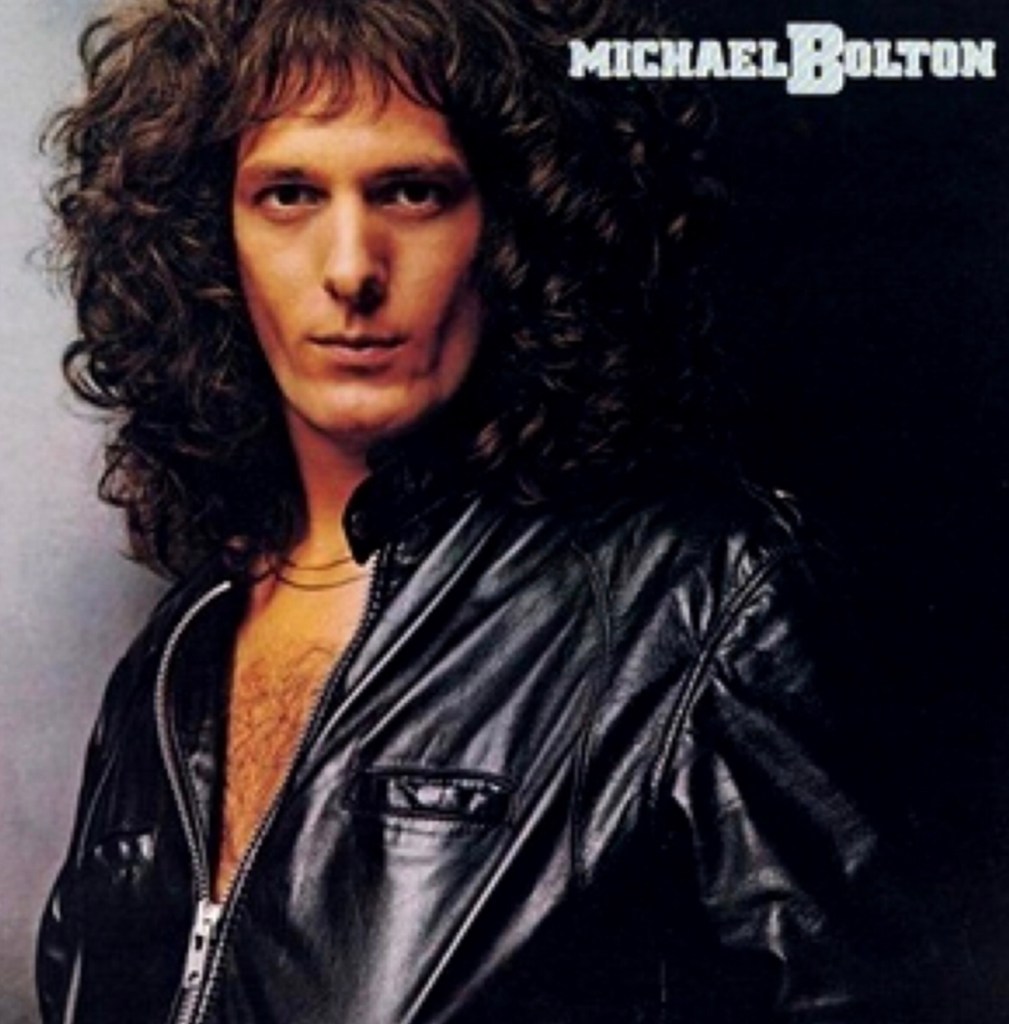
It starts with the “Fools Game” album by Michael Bolton released in 1983, back when Bolton was trying to be Sammy Hagar instead of the soul Bolton we came to know.

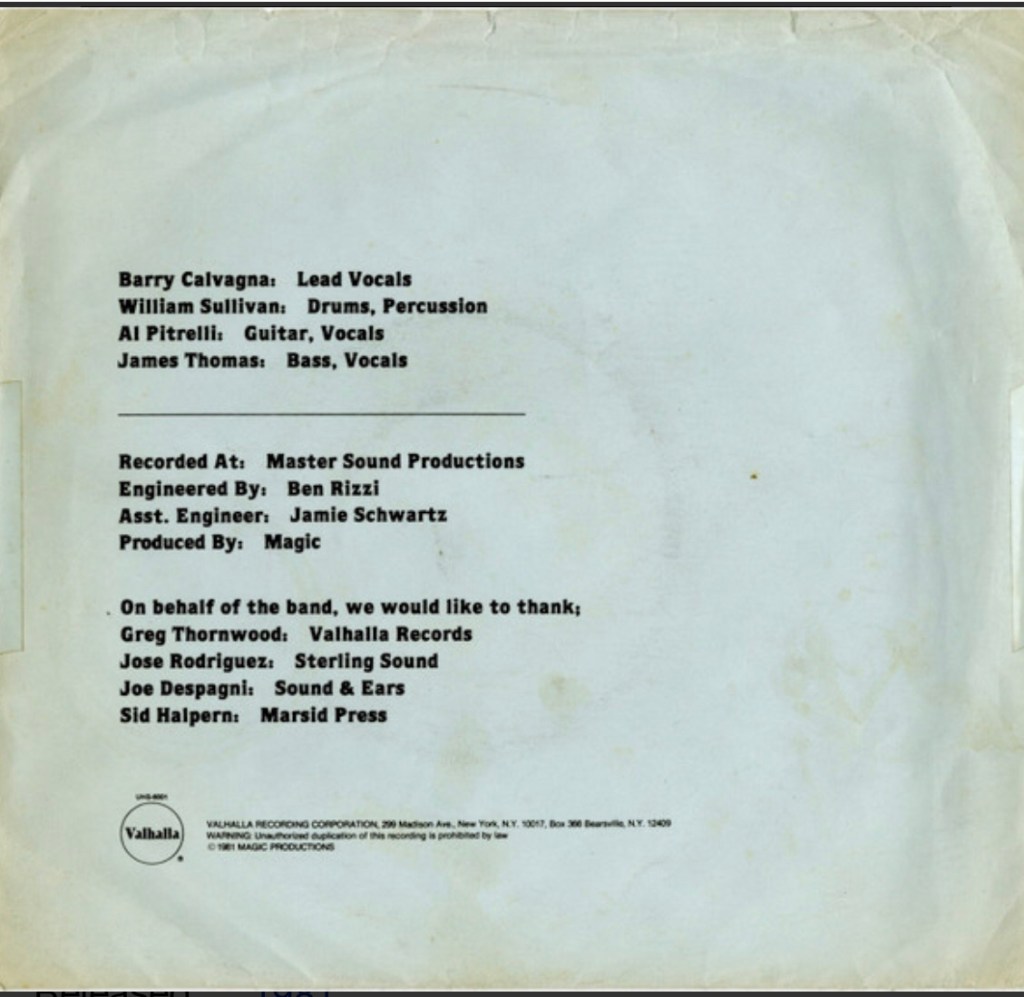
Actually it goes back a few years to 1981 and a band called Magic and a 7 inch single called “Too Much Too Quickly” that had Al Pitrelli playing guitar.

So before Bolton and Berklee there was MAGIC.

They used to rehearse in the basement of a video arcade in East Meadow.

Back to Bolton.

Bruce Kulick and his brother Bob, play guitar on the studio album. Aldo Nova goes a guest solo. Even Bolton shreds a little bit, who started off as a guitarist first, singer second. While the album is a great slab of melodic rock, it didn’t really do anything commercially.

But it gave Bolton enough momentum for the label to fund a follow up in “Everybody’s Crazy” (released in 1985) with Bruce Kulick doing all the lead guitars this time around in the studio. However Bolton was still trying to imitate David Lee Roth, which was a stupid move, as there is only one DLR and Bolton wasn’t it. The album was a financial loss and it did not chart.

However, the label didn’t want to lose too much money on the album, so they put Bolton on the road. However this meant a new backing band was needed as Bruce Kulick accepted the Kiss gig, something which he held until 1996. As a side note, Kulick did got his mate Bolton to co-write a song with the band called “Forever” which was released in 1989 on “Hot In The Shade”.

The new backing band for Bolton would have keyboardist Mark Mangold, who was also the co-writer on the “Fools Game” and “Everybody’s Crazy” albums with Bolton. He also co-wrote “I Found Someone” with Bolton for Cher.

The rest came like this.

Al Pitrelli read the credits on the “Everybody’s Crazy” album and noticed that the people who played on the album had other gigs. He called up his friends, Tony Rey, Chuck Bonafante and another bassist. They learnt a bunch of Bolton tunes, tracked down Bolton’s manager and then offered themselves as his touring band. However the bassist spot went to Bruno Ravel who was called in by Bonafante as Bolton took a disliking to the original bassist brought in by Pitrelli.

For Ravel, it was a dream gig for the 21 year old that lasted six months. On a side note, he had a failed bass gig for an act called “White Lion” because he didn’t like how Bratta and Tramp wouldn’t allow anyone else to write with them.

And if all the names in Bolton’s touring band sound familiar they should, as bands like Danger Danger and Saraya come to mind. Tony Rey would go on to write and produce songs for a lot of mainstream artists.

Pitrelli and Bonfante would also get together regularly in different projects like “Place Called Rage” with Tommy Farese on vocals, “Morning Wood” with Tony Harnell on vocals and “Flesh And Blood” which also included Mark Mangold.

Al Pitrelli by this time had dropped out of Berklee College Of Music. During his time there he became friends with keyboardist Derek Sherinian and drummer Will Calhoun who would go on and join Living Colour.

After he left, he was studying jazz with John Scofield. This is a by-product of growing up in a household that liked Sinatra. Pitrelli’s first Kiss album was thrown out by his dad.

But you can’t keep a rock head down. One thing about rock music is that it is a lifestyle. From Kiss, Pitrelli started to digest Rush, Yes, Led Zeppelin, Aerosmith, Allman Brothers, Mahogany Rush and Hendrix. Then came Eddie Van Halen, an accomplished riff meister and revolutionary shredder.

But Pitrelli’s two biggest influences are Gary Moore and Jeff Beck. Both of these players can move a room full of people with just one note. And that one note is more powerful than a hundred notes. But if they wanted to shred, press the pedal to the metal, they could do that as well. The key word here is balance. Balance between chops and feel.

Suddenly, Pitrelli was seen as a rising star. The Bolton tour (although regional) was his first big break which gave him contacts within the industry. But as the tour progressed, ticket sales stalled and after six months the tour was wrapped up and the touring band sent home.

Ravel was less than impressed with Bolton’s antics and treatment of them, and Pitrelli saw him as mean. In Bolton’s defence, he was pushing 30 and felt that this was his last chance of making it as a solo artist, so he took it out on the people trying to help him make it.

On a sidenote, Bolton also recorded a tape full of demos with just his voice and an acoustic guitar. These demos started to do the rounds with the label execs who wondered why Bolton was singing rock music when his voice was better suited for soul and R&B.

For all of the members, the Bolton tour was a learning experiencing about survival in the music business. Pitrelli knew that survival and making a living in music, depended on playing with anybody and everybody.

Ravel wanted to have his own band but he knew that in order to get to that stage he needed to play with others to make a living.

Enter Talas.

This band was founded by bassist Billy Sheehan in 1971. They went through drummers like Spinal Tap did.

By 1986, Talas lost their founder to David Lee Roth but Talas still had a deal with A&M Records to do one more record. Sheehan gave the band his blessing to go on and meet this commitment.

Vocalist Phil Naro enlisted Jimmy Degrasso on drums, Al Pitrelli on guitar, Bruno Ravel on bass and Gary Bivona on keyboards.

But that final album never got out of the demo stages and Talas was dead when Sheehan did an about face on allowing the band to use the name after word got around that Ravel wore a “Billy Who?” t-shirt that a fan had gave him.

And since the band couldn’t use the name, A&M pulled their deal as well.

While the guys couldn’t use the Talas name, the embryo of what would become Danger Danger was there.

Pitrelli meanwhile jammed and played on the “Funk Me Tender” album from Randy Coven released in 1986. He also did a small club regional tour with Coven.

And then Jimmy DeGrasso left to join Y&T replacing Leonard Haze.

In 1987, a song originally penned by Pitrelli and Ravel called “Temptation” made its way to Phil Kennemore (via Jimmy DeGrasso) and it became track three on the Y&T album “Contagious” which was the bands Geffen debut. If you haven’t heard it, press play on it. It’s a great melodic rock cut.

The first proper incarnation of Danger Danger would have Al Pitrelli on guitars, Steve West on drums, Bruno Ravel on bass and Kaesy Smith on keyboards. Phil Naro was the first vocalist and he was quickly replaced by Mike Pont and then Pont was replaced that same year by Ted Poley. The demo this version of the band recorded got the band its recording contract with Epic Records.

But by 1988, Pitrelli left Danger Danger or he got the boot, depending on who you believe due to having disagreements with the labels A&R rep.

As Pitrelli described it, he was in the band for about 18 months, played a lot of nickel and dime gigs and when the band made a left turn in musical direction, he went the other way. And by the end of it, Danger Danger taught him lessons on what to never do again.

Pitrelli was replaced by Tony Rey who would also leave to join “Saraya” with Andy Timmons taking the guitar slot from 1989 to 1993. You can hear Pitrelli’s playing in Danger Danger on the album “Rare Cuts” released in 2003.

After this Pitrelli re-formed an earlier band he had called “Hotshot” with Pont on vocals and after a very promising six song demo called “The Bomb” failed to get them a label deal he disbanded “Hotshot”.

Pitrelli then got call from an old friend, another Long Island kid called Steve Vai.

Yep that Steve Vai.

He told Pitrelli to audition for David Lee Roth’s band as Vai had just left to join Whitesnake. Vai actually said that he “wanted Pitrelli to take his place in Roth’s band”. Vai even took time out to teach Pitrelli all the guitar parts. Pitrelli nailed the gig and Roth was thrilled.

But whatever went down afterwards was never spoken of again. Roth to this day has never mentioned the Pitrelli audition of the Roth band at all.

In between, Pitrelli was jamming and writing songs with Joe Lynn Turner. Turner had a deal with Elektra who he would rename as Neglektra.

The label kept Turner in development hell between 1988 and 1991, only to drop him and keep the songs he wrote during this period. Because in label land, it’s embarrassing if an artist you dropped makes it with another label on the backs of the songs they had with the previous label. The same thing happened to Dee Snider during this period who was also with Elektra.

In order to get by, Pitrelli did some session work and one of those sessions got a full release. It was a funk soul album by “Philip Michael Thomas” called “Somebody” which did nothing commercially. Thomas is known more as an actor who dabbled in music.

Pitrelli was at the crossroads. He didn’t know what to do anymore. He was in and out of bands, filling in spots perfectly but really struggling to get his own project off the ground. The lack of a reliable income weighed heavily on him. Trying to make it in the music industry was proving tougher than he thought. He had all the chops and players of lesser abilities graced the covers of the magazines. To make some extra cash he was teaching guitarists. He was also married and a conversation with his father-in-law was about him going into carpentry.

But that jam session with Roth impressed drummer Gregg Bissonette a lot and a few months down the track Bissonette recommended Pitrelli to Alice Cooper.

In 1989, Pitrelli got an offer he couldn’t refuse; to become Alice Cooper’s musical director and guitarist in the touring band supporting the album “Trash”.

Musical director meant to rethink the older songs to sound more contemporary so they wouldn’t sound out of place next to the current songs from the “Trash” album. He also got his Berklee roommate Derek Sherinian his first major gig.

On another side note, the students that Pitrelli had would move on to another guitarist called John Petrucci. Yep that same Petrucci from Dream Theater.

As the 80s drew to a close, Al Pitrelli survived in the music business without actually being involved in a full length release. Because one of the lessons he learnt touring was that the real money was made on the road.

Standard
A to Z of Making It, Copyright, Influenced, Music, My Stories, Piracy, Unsung Heroes

The Week In Destroyer Of Harmony History – March 21 to April 3

It’s a two week DOH history this time around as lack of time stopped last weeks edition.

2018 (4 Years Ago)

1984 – Part 1

I was doing a review of the year 1984, Read here for my thoughts on Dokken – “Tooth And Nail”, Van Halen – “1984”, Twisted Sister – “Stay Hungry”, RATT – “Out of the Cellar”, Iron Maiden – “Powerslave”, Bruce Springsteen – “Born In The USA” and Stryper – “The Yellow and Black Attack”.

Ritchie Blackmore

“Being original doesn’t require being the first to do something. It just means being different and better.”
Adam Grant, Originals

History is always written by the winners. If you read any story about Metallica today, it more or less states that “Kill Em All” came out in 1983 and took over the world on release day.

Ritchie Blackmore has been instrumental in influencing guitarists.

But between Deep Purple and Rainbow and three different vocalists, Ritchie Blackmore, blew the paradigm open of what a heavy rock vocalist should sound like. And it’s something he doesn’t credit for.

He pushed Ian Gillian to the limits to record the ohhs and ahhs on “Child In Time” influencing a young Bruce Dickinson to start practicing hard, and getting another unknown singer called Rob Halford to change his vocal style.

Both of these singers would come out with styles that would also influence a generation.

With David Coverdale and Ronnie James Dio he pushed the boundaries even more who influenced another generation of Metal singers.

From a guitarist perspective, it’s hard not to be influenced by Blackmore. Blackmore’s fusion of blues, rock and roll, classical and medieval Influences was so commercially successful, he more or less spawned a new style of guitar playing called Euro Rock/Metal.

And from a band perspective, every single Metal guitarist at that point in time was inspired by Blackmore to find a vocalist who had similar/better talents to the vocalists Blackmore used.

lf the band was started by a drummer and a bassist, they would be looking for a guitarist like Blackmore and a vocalist like Gillian, Coverdale or Dio.

Twitter

“Here’s a challenge for you (and no using the internet for the answer): Can you name all 7 (unsuccessful) albums I’ve done solo or been a part of with a band since I left Twisted Sister in 1987?

A Twitter post from Dee Snider.

For a very long time, the record labels convinced everyone that the only way to define success was by sales. But people might have purchased an album, heard it once and never heard it again.

Dee said further on;

“While I’m proud of all the work I’ve done, YES success is defined by sales. I’m long past “making music for my own head”. Once you’ve had public acceptance of your art, you yearn for it.

The truth is, there is no secret formula for hits.

Artists always had a short life span at the top. Most of the 70’s acts would have been dead and forgotten if there was no MTV television in the 80s.

Which someone else replied that Dee’s album, “We Are The Ones” was excellent with the following questions;

“Do you consider it unsuccessful? Is success only defined by album sales or rather by the quality of the product?”

Another person commented that just because it isn’t popular it doesn’t mean it’s not valid and that music touches people in different ways.

And here we are again wondering what success is.

“Blood and Bullets” from Widowmaker is still Dees best album post Twisted Sister. For me, it’s highly influential.

Dee delivered a stellar vocal performance and Al Pitrelli also produced the goods in the guitar department, while Joey Franco and Marc Russell underpinned it all.

Of course, Desperado (the post TS band that got stiffed by Elektra on release day) guitarist Bernie Torme co-wrote 7 of the 12 songs on the album, so he deserves a huge 10 out of 10 for his stellar riffage and songwriting.

If you’ve read Dee’s book, “Shut Up and Give Me The Mic” Dee had to buy back the Desperado songs from Elektra who claimed ownership of them due to the label financing the demo song writing sessions.

The thing is, a lot of the albums which are really influential to people are rarely commercially successful.

2014 (8 Years Ago)

RANDY RHOADS

I remember the day that I got the “Tribute” tab book.

Studying the style of Randy Rhoads, I learned all about modes and the different scales that are made from each note of the mode, like Ionian, Phyrgian, Dorian, Lydian, Mixolydian, Aeolian and Locrian. I even named my son Dorian after one of the modes. It’s so easy to dismiss musical theory, however when you have an actual song that you can refer to, it makes it so much sense.

Wolf Marshall did an unbelievable job with the book transcription and on the commentary on each song. Actually Wolf Marshall was the transcription god back then. Another was Dave Whitehill. Experienced, super-talented and knowledgeable guitar players that broke down so many doors with their transcriptions and made it easier for young guitar players to pick up the guitar and practice.

“Crazy Train” was the first song I mastered. At the time, Alex Sklonick also had a column in the magazine “Guitar For The Practicing Musician”. In one of those columns, Skolnick also talked about modes and how “Crazy Train” is in the key of A Major and how it switches between the minor and major modes throughout the song. At the time it was a lot to take in however once you get it, you get it. Plus having a song like “Crazy Train” to refer too, who wouldn’t get it.

That one song has all the tools that every guitarist should possess.

And then when you start to go through all of the other songs, you see/hear all of the above tools re-used, which re-enforces all the techniques. Some songs had finger picking and arpeggios. Randy Rhoads was the definition of completeness.

By creating great music, he also taught us how to be better guitar players. Everything made sense. You can take a teacher and make them a rock star, however you can never stop the rock star from being a teacher and that is exactly what Randy Rhoads was. A teacher.

His reach on one song is huge. Add to that all the others and it’s a crazy train alright. Rest in peace brother.

POPCORN TIME

Remember “Popcorn Time”. It had no registrations to use it and there was no restrictions on content. It looked like Netflix and it was free. The user just presses play. It’s easy to use and its design was elegant.

And the entertainment industries killed it instead of employing the people behind it.

“Popcorn Time” was designed by programmers in Argentina, where the movie “There’s Something About Mary” was still classed as a new release by the movie studios in that country.

The development team created an innovative piece of software to meet a service problem for their country because the content industries failed to make content available.

We all know that piracy is wrong, however it opens up the conversation to the larger issue.

For example;

THE BAD – It made the RIAA spend millions suing music customers.

THE GOOD – But, Apple saw a market here and began to turn those Napster digital natives into iTunes buyers by making it easy to grab the latest music, anywhere, at any time. Same deal with Spotify, who put money into a market that didn’t exist before.

ARTIST

Asking Alexandria

They are a hard rock band. When are they going to realise that and drop the stupid screamo vocals.

RECORD LABEL CONTRACTS and ROYALTIES

Fear Factory’s Burton C. Bell had this to say about Roadrunner Records and its founder Cees Wessels;

“I still get royalties. It comes in, but it depends how much we work, how much we tour. If we tour a lot I see better royalties, if we don’t then I don’t.

I have no idea when we’ll get the rights back [to our catalog], because that Roadrunner contract is bullshit.

I literally signed a deal with a Dutch devil. But when you’re young, you don’t care. You’re 23 years-old and ‘we’re going to give you an advance to make your first record, we’re gonna put you on tour, sell your shirts in all the stores. You are gonna to be famous!’’Alright, make it happen!’

Every single label failed their artists by not innovating. The analog dollars vs digital cents mess they got themselves in, is purely of their own doing.

The Macklemore Lessons

Be in it for the long haul. The career of Macklemore has been a long one (21 years and counting). There’s no such thing as an overnight success.

Michael Poulsen from Volbeat started his first death metal band Dominus in 1991. During that time, Dominus released an album called Vol.Beat. When the band broke up in 2001, Volbeat was born. It wasn’t until 2005 that the first Volbeat album dropped. It wasn’t until Metallica picked em up as openers in 2009, that their US career kicked into overdrive. 30 years in the business. That is a lifer.

WORK ETHICS

Work ethics of the current music business.

Check out the list of releases from George Lynch between 2008 and 2014.

2008 – George Lynch – Scorpion Tales
2008 – Souls Of We – Let The Truth Be Known
2009 – Lynch Mob – Smoke And Mirrors
2010 – Raven Quinn – self-titled debut
2010 – George Lynch – Orchestral Mayhem
2011 – George Lynch – Kill All Control
2012 – T & N – Slave To The Empire
2012 – George Lynch – Legacy (EP)
2012 – Lynch Mob – Sound Mountain Sessions (EP)
2013 – Lynch Mob – Unplugged – Live From Sugar Hill Studios
2014 – KXM – KXM

Apart from the high volume output, Lynch is also immersing himself with different band set ups. Different dynamics. Sort of like the seventies musicians who just got together over a weekend and made an album.

The modern internet rule is here today, gone tomorrow. In order to survive, you need to show up and create. The music business is not in trouble. Only dumb labels and artists are.

But all things evolve, and if you are not open to change, you will be forgetten.

Remember John Sykes.

RANTS ON COPYRIGHT, RRHOF and THE WALKING DEAD

BUSINESS MODEL PROTECTIONISM

It’s pretty pathetic how the entertainment industries need to get governments to pass laws every time there is a shift in technology. Back in the Eighties, the boss of the MPAA Jack Valenti proclaimed at a Senate Congressional Hearing that the VCR’s are to the American film producer like the Boston strangler is to the woman home alone.

Fast forward a decade later and VHS sales of movies proved to be a very large income source for the movie industry.

So when it comes to negotiating new laws for copyright, it is these large and cashed up business entities that are lobbying politicians.

Copyright is too distorted and removed from what it was intended to do. It needs a rethink and a massive re-write. The kids of today, the ones that pirate, will one day step up into government and then, change will happen.

THE WALKING DEAD

It’s passed its prime.

The last half of Season 4 was by far the worst. It is a yawn fest of massive proportions.

The main show runners in Frank Darabont and Glen Mazzara got booted for various reasons, with TWD comic creator Robert Kirkman being behind the Mazzara booting.

One thing I can say is that comic book writers should stick to comic books. They are not TV show runners.

ROCK’N’ROLL HALL OF FAME

They call themselves “leaders in the music industry” that joined together to establish the Rock and Roll Hall of Fame Foundation.

Joe Elliott from Def Leppard called it as it is. Elliot called them a “board room of faceless tuxedo-wearing morons” who decide such things based on their own determination of what’s cool.

M SHADOWS

One of the big comparisons that people make is the status of sales right now vs sales more than 30 years ago. And everyone today, especially artists or media personalities, always say that the Eighties was so much better. It is a bold claim to make, especially when the Eighties is known as the era that ripped off artists.

Let’s look at Metallica and Megadeth compared to Avenged Sevenfold.

FIRST ALBUM

Metallica released “Kill Em All” in 1983. It wasn’t until 1989 (yep six years later) that the album was certified GOLD for sales in the U.S. After six months, Metallica was back in the studio recording the follow up.

But, on the back of the Black album juggernaut, by 1999, “Kill Em All” was certified 3 x Platinum, Still it happened, 16 years after it’s release.

Megadeth released “Killing Is My Business (And Business Is Good) in 1985 and to this day it hasn’t been certified at all.

Avenged Sevenfold released “Sounding The Seventh Trumpet” in 2001 and like Megadeth’s debut, it still hasn’t passed the 500,000 Gold barrier.

Compare the first album release of each band and all of them failed to achieve GOLD status within the first five years of release.

But…. Bands had way more sales in the Eighties than today…. The answer is NO, they didn’t.

THIRTY SECONDS TO MARS

Jared Leto was born to be in the arts.

I watched “Thirty Seconds To Mars” live at the Sydney Entertainment Centre on 29 March 2014. Leto had the crowd in his hands from the word go and he manipulated the audience to jump, chant and sing with him throughout the whole performance.

They are a success story.

Sales on the board. Streams. YouTube plays. Box office score. Merchandise.

THE UGLY TRUTH

Record Labels want to sell a lot right now, while an artist is looking to have a career and live forever in the hearts and minds of music lovers.

Hit songs/albums are not made by marketing or an artist telling the world it is their best work. They are made by cultures of people who connect with the song and then share their love of that music with others.

Cheap mediocre goods might sell millions in retail businesses however mediocre doesn’t cut it in music. Hence the death of the album format.

Record Labels are all about the wealth, the Forbes Rich List and flying private. Artists are about the essence and then when they see the talentless executives living it up on the backs of their creations, artists change and become obsessed with the same trappings that consume the Record Label hierarchy.

Record Labels think of how they can monetise the album/song. That is why they strike corporate deals with other entities for crappy pre-release streams and so forth. Artists just want their fans to hear the new music and hit the road to promote it.

Record Labels cease to be when they run out of money, however an artist never stops creating.

Record Labels judge success by how much money the artist made for them. The artist judges their success by how many people their music touched and what impact it had on society and culture.

If a record label exec screws up they could lose their job, however there is a good chance that they will find another high-powered well-paying job. If an artist messes up, there is a good chance they could lose their career.

GUN

Way underrated and way under-appreciated, it’s almost criminal.

In the beginning GUN got lumped in with the hard rock/glam rock style of bands, however GUN had way more substance. Way more character.

Coming from Scotland, they didn’t conform to the LA Sunset Strip scene. The songs didn’t focus on “Cherry Pies” or “Slipped Her The Big One”. They didn’t focus on spelling Rock, ROK. They didn’t have to compete with any band in the scene for the fastest licks and biggest hair.

Instead they focused on their own brand of rock’n’roll. And their lyrical themes didn’t deal with the usual rubbish that the hard rock bands started to serve towards the end of the decade.

Check out my review on “Taking On The World”.

GENE THE WEREWOLF

Check out my review of the “Rock N Roll Animal” album.

I knew nothing about them. Back in the Eighties, we got the press releases, the interviews, the promo spots and the musicians appeared larger than life. Today, we get the music first and then we go back to investigate who the hell created it.

If you are into hard rock, then this is the album for you.

The whole album is an example of progress being derivative.

Taking your influences, blending them and the output is your style and your sound. That is what music is all about. The whole album reminds me of “The Night Flight Orchestra” project. It is a fun album to listen to.

Of course they are on Frontiers Records, who seem to be on a roll surrounding themselves with talent. At first hearing, I thought the band came from Sweden as most of the hard rock bands I have been getting into are from there. However, that is not the case. They are from Pittsburgh, USA.

It is the usual lifer story.

All of the members had done time in previous semi-successful bands from the Pittsburgh area. Some of those bands toured nationally and internationally. There is a lot of history there. A super group from Pittsburgh area bands. In a way like “Night Ranger”. A super group of Californian bands.

Standard
A to Z of Making It, Copyright, Music, My Stories, Piracy

The Week In Destroyer Of Harmony History – March 7 to March 13

4 Years Ago (2018)

FORTNITE

While everyone was complaining about freemium and the monies streaming services pay to the rights holders of music, Fortnite “Battle Royale” came out for free and conquered all. It’s already at everyone’s price point. It can’t get any lower so it costs nothing to try it.

But Fortnite was originally a game for purchase. Within six months of its release in 2017, it had over a million users. But then in September 2017, Epic (the game developer behind it) did something different. They released a free-to-play “Battle Royale” mode. Within 2 weeks of its release, it had over 10 million players.

For Epic, the “Battle Royale” mode is a major hit. It’s like Bruce Springsteen, “Born In The USA” style of a hit. And it’s still going strong because the best marketing tool is word of mouth.

Fortnite spread because the people who played it, enjoyed it and then they asked their friends to create an account and play with them online.

And their friends said “why not”, it’s free, let’s give it a try. The game kept growing in popularity because Epic constantly upgraded it on a regular basis.

In other words, the fans of the game are not waiting 2 years for a new upgrade. Like how fans of artists wait years for new products.

I come from the era of the album, but all I want is frequent content. It’s the reason why the bootleg industry was huge in the 80’s and 90’s. Hell, my record collection has hundreds of bootlegs, from live recordings, to demo recordings, to sound check jams and what not. It was the need to fill the gap between albums.

And like all hit’s there is a writ.

8 Years Ago (2014)

MICK MARS and GENERATION SWINE

Mick Mars said that he almost left Motley Crue during the “Generation Swine” sessions and that still to this day, he hates the album.

It was meant to be called “Personality #9” with John Corabi on vocals. But the label was still reeling from the $3 million loss on their accounts from the 1994 self-titled album so they demanded that Vince Neil come back in.

The Crue started working on the follow-up in 1995. Nikki Sixx wanted to road test the songs before they recorded them, in small venues and using different band names, like the Four Skins. It was a back to the seventies approach, when bands used to debut new songs on the road before committing them to tape in a studio. That is why so many songs from the seventies worked well in a live setting. Deep Purple played “Highway Star” for at least 12 months before recording it. Same as Ted Nugent and “Stranglehold”. The list goes on, however today’s rock star doesn’t need to pay their dues on the live circuit.

But they road tested nothing.

The biggest Achilles heel to “Generation Swine” is the lack of the hit song. Like “Kick Start My Heart”.

It wasn’t a hit on the Billboard Charts, however in rock circles it was a song that all the rock heads and the metal heads could latch onto. Even the self-titled album, didn’t have that kind of song that people could latch on to.

MUSIC BUSINESS RULES FOUND IN SONGS

Here is a summary, however each rule is expanded in the blogpost.

On Motley Crue’s 2008 song ‘Welcome To The Machine’ they provided a few general rules about the recording business and the machine that is the music business.

Rule Number 1: “Sign on the x to sell your soul”.

Rule Number 2: “It’s so automatic, Hocking broken plastic, Royalties you’ll never know”.

Rule Number 3: “Give your ass like a whore, Once you take a hit, You need more more more”.

Rule Number 4: “Welcome to the machine, Once it sucks you in you’ll never leave, Grind you up spit you out, After all you’re just a piece of meat”.

Rule Number 5: “Sell out to the rats, Make em rich make em fat”.

On Motley Crue’s 1999 song ‘Fake’ they seem to provide a few more general rules about the recording business.

Rule Number 6 (supporting Rule Number 1 and 2): “Sold my soul while you sold records, I have been your slave forever.”

Rule Number 7 (supporting Rule Number 5): “What are you fat cats doing anyway?, Take our money and flush it down the drain.”

Ugly Kid Joe asked “Mr Recordman” if he knew who they were or if he gave a damn about them or if he was purely there for the dough. Based on their career trajectory, the answer was obvious. Mr Recordman didn’t give a damn about them once they stopped being “commercially viable”

Rule Number 8 – Mr Recordman doesn’t know who you are. Look at the band “Winger”. When Reb Beach called the label after the Beavis and Butthead episode hit TV screens, the label claimed they never knew a band called Winger.

Rule Number 9 comes from Disturbed and their song “Sons Of Plunder”.

Rule Number 9: “You say you’ve found yourself a new sound, one hundred more all have the same sound”

The song Chainsaw Charlie from WASP is littered with music business rules. The first three lines, “Will you gamble your life?, Sign right here on the dotted line, It’s the one you’ve waited for all of your life” fall into Rule Number 1. Then the lyrics of “And tomorrow when I’m gone, Will they whore my image on?” brings us to Rule Number 10.

Rule Number 10: The record label will forever whore your image on after they have dropped you or after you have departed this Earth. There is a lot of money to be made in death.

Rule Number 11: “We’ll sell your flesh by the pound you’ll go, A whore of wrath just like me, We’ll sell ya wholesale, we’ll sell your soul, Strap on your six string and feed our machine.”

Rule Number 12: “Welcome to the morgue boy, Where the music comes to die” is about songs written by a committee. It’s soulless, however it sells.

Rule Number 13: “Ah, trust me boy, I won’t steer you wrong, If you trust me son, You won’t last very long”

Rule Number 14: “The new morgue’s our factory, to grease our lies, Our machine is hungry, it needs your life” is the definition of the recording business.

Rule Number 15: “I’m the tin man, I’ve never had a heart, I’m the tin man, But I’ll make you a star” is the Record Label CEO. All promises and that tin heart doesn’t care if those promises are broken.

Savatage is another band that covers the music business in a bit of detail. Rules 16 to 18 are from the song “Jesus Saves”.

Rule Number 16: “You know Jesus he started changing, Things got really strange, He saw his tee shirts everywhere, He started missing shows, The band came down to blows, But Jesus he just didn’t care.”

Yep, it’s a tough gig keeping a band together, especially when a band member becomes the idol that the fans latch onto.

Rule Number 17: “Things got out of hand, And so he quit the band, Still the critics they would rave”

Rule Number 18: “hear Him cut through the night, On those late night radio waves”

Eventually, we get old and we become “classic rock”. There is no way around out. Embrace it and play to your core audiences.

The final two rules are from the song “When The Crowds Are Gone” from Savatage.

Rule Number 19: “I don’t know where the years have gone, Memories can only last so long, Like faded photographs, forgotten songs”

Rule Number 20: “The story’s over, When the crowds are gone.”

Pretty self-explanatory.

ADRENALINE MOB

Adrenaline Mob are seasoned professionals collaborating on a hard rock project. For some reason they remind me of Night Ranger.

The debut album “Omerta” was number 4 on my list for releases in 2012. I hold the vocal talents of Russell Allen and the guitar talents of Mike Orlando in high regard. Add to those talents the powerhouse drumming from Mike Portnoy on the first album (and the two EPs) and of course the mighty AJ Pero appears on the second album. As a Twisted Sister fan, this is a great thing to see happen. And finally John Moyer from Disturbed is providing the bottom end.

Listening to “Men Of Honour”, it comes across as a band having fun. Check it out and while you’re at it, listen to Mike Orlando.

I don’t know what to call Orlando’s guitar style. One term I have for it is “Technical Chaos”. He has the chops, but he plays with an improvised abandonment that sounds so precise and I like that.

PONO MUSIC

If you remember back to 1998, the recording business became famous for saying that no one will be interested in downloading a crappy mp3. Guess they didn’t know how many billions those no ones came too.

Pono came out at a time when fans of music had decided that YouTube and Spotify are better alternatives.

And that is what Pono Music fails to understand. The fans of music are in control. If they want to pay, they will. If they want to go to a show, they will. If they want to download for free, they will.

But Neil Young’s PR said that mp3s are crap.

So in 2017 it was discontinued.

And that’s another wrap.

Standard
A to Z of Making It, Copyright, Influenced, Music, My Stories, Piracy, Stupidity, Unsung Heroes

The Week In Destroyer Of Harmony History – February 28 to March 6

2018 (4 Years Ago)

IDEAS

All ideas or If you use the words “intellectual property” for the Copyright maximalists, have an influence from something that came before. We learn to write music by learning the music from others. We learn to write stories by reading the stories of others.

It’s probably why people shouldn’t get all emotional over ideas/intellectual property.

People like familiarity.

Derek Thompson in his book “Hit Makers” mentioned how people are drawn to music that might be new, yet familiar enough to be recognizable.

In other words, that new song we all like has enough variation in it to make it not a carbon copy of its source influence.

And people still like to claim that their song is so original and free from influence and when people have that fixed mindset, well, the courts are busy and the lawyers are making money.

Check out my recent Google alerts on the word Copyright.

A lot of delusional people who believe that their works are so original and free from influence.

Guess what.

All of our ideas have already been stolen. Because there is no such thing as the genius loner. It’s a myth. We are all social people and our creativity is fuelled by our social environments. Every single day, we take in our surroundings, we set meaningful and important goals and we are always thinking of solutions to problems.

A neuroscientist and a psychologist broke down creativity into three main buckets;

  • Bending means you take a previous work and re-model it in some way. “The Walking Dead” and “Night Of The Living Dead”.
  • Blending means merging previous works together so you have multiple melodies and re-cutting it to suit what you want to write. Jimmy Page was great at doing this with Led Zeppelin’s music. Metallica did that with “Sanitarium”.
  • Breaking is taking a short and important musical idea otherwise known as a musical fragment and building on it. Think of my post on “One Riff To Rule Them All”, which covers the A pedal point riff used in songs like “Two Minutes To Midnight”.

The differences between humans and computers is how we store information and how we retrieve information. For the computer, the riff stored on the hard drive will sound exactly the same three years later, however that same riff stored in our head would be different.

Why.

Our brain breaks it down, blends it and bends it with other information. This massive mash up of ideas in our brains is our creativity. And when we play that riff three years later, it has a different feel, different phrasing or something else. Some of them stink and sometimes we create something that breaks through into society.

LIVE ALBUMS

A funny thing started to happen when streaming became the main source of income for the labels.

Live albums started to come out.

You see, streaming services like new content. And since bands like to take their time or need to make time to record new original music, they filled the void for new content by releasing live albums.

Suddenly getting new product out yearly instead of every two to three years became the norm. But it still didn’t solve the problem of people not buying albums.

Whitesnake is a band which keeps firing out live recordings year after year. “Made In Japan”, “Made In England”, “Bad To The Bone 84”, “Castle Donnington 90”, “Live In The Heart Of The City” and “The Purple Tour” have been released as stand-alone albums over the last 10 years.

And David Coverdale knows the value of his super fans.

2014 (8 Years Ago)

AVENGED SEVENFOLD and FIVE FINGER DEATH PUNCH Live

I attended the Five Finger Death Punch and Avenged Sevenfold gig on Tuesday, 25 February 2014 at the Big Top in Luna Park. It was my first time seeing them both live so I didn’t know what to expect.

Read the review here.

And if you get a chance to watch em live, do it.

INNOVATION FROM LABELS (Cough, Cough)

Each week, the sites that enable copyrights to be infringed innovate at a rapid rate to stay ahead of the curve. They are competing against each other for people to use them to illegally access entertainment.

Read the post to see how these sites innovate. Instead of shutting em down, the labels and movie studios should be employing these people.

TRENDS IN ROCK AND METAL

I played Nostradamus and looked into my crystal glass full of whiskey in the jar-o to make some predictions.

ON A DOWN SLOPE

DAUGHTRY

The band leader, Chris Daughtry messed up big time chasing the crowds of “Train” and “Imagine Dragons”.

He is a hard rocker from day dot and rock gave him his legion of fans. For the ill-fated and recent “Baptized” album, he committed career suicide, throwing his lot with the hit songwriters.

The songs are good, however they are not Daughtry songs. It would have been better for him as an artist to have given those songs to other artists that are more electronic pop rock minded. That way he would have been the songwriter, the way Bryan Adams gave songs away to other artists that wouldn’t suit the Adams sound back in the 80’s.

HYPE

We can see through the hype and we hate it.

So much hype was around Dream Theater’s self titled release and it disappeared from the conversation within six weeks.

Megadeth’s brand new album “Super Collider” was being outsold by the Black album.

THE ALBUM FORMAT

Making money is hard. Just because a band releases an album, it doesn’t mean that people would pay for it or would want it.

And when we are inundated with product we tune out, however, it turns out we have time for Metallica’s “Black” album. At this point in time it was still moving two to three thousand units a week and it was expected to pass 16 million by May 2014.

GOING GOING – ALMOST GONE

CLASSIC ROCK

Classic Rock bands have another 10 years left.

ON THE UPSTORYTELLING

That is why TV shows are the most downloaded torrents of all time. Tell a good story and the world will be at your door step.

THE LABELS WANT TO BE THE GOOD GUYS

Read the financial reports on Universal Music Group.

Spotify has propped up their bottom line and that bottom line will get better each year for Universal. And they keep spreading the bull shit that they are out there fighting for the artists. The good guys.

Frontiers has become a major player in the classic rock, melodic rock and hard rock scene. They kept the flag of melodic rock flying high since 1996, when all of the other major labels abandoned the style and put their monies into grunge first and then industrial rock/metal and then nu-metal.

And their business model is all about locking up copyrights for a long time.

They have realised it’s not about sales anymore, and while steaming numbers and revenue are still tiny, in the long term the labels will be able to reap the benefits.

Why?

Because streaming is a regular recurring revenue business. And these Copyrights are valuable?

Let’s put it this way, if Metallica is on Spotify, then the rates paid back to the COPYRIGHT HOLDERS (which in this case is Metallica as they do own their Copyright) must be good, because Lars Ulrich and their manager Cliff Burnstein would not allow Metallica to enter a business arrangement that is not in their favour.

And back in 2014, Tool or AC/DC or Def Leppard were not on Spotify. They all are now.

The real truth is that there is much more music out there than there has ever been, so the issues that are present to artist and labels is how do they get people’s attention directed towards that new music.

Personally, I don’t even know anybody who pirates music anymore. There is no reason to pirate and legitimate customers/fans would always turn to legal alternatives.

Add “Recording Sales Revenue” plus “Streaming Revenue” plus “YouTube Ad Revenue” plus “Ticket Revenue” plus “Merchandise Revenue” plus “Corporate Deals Revenue” plus “Sponsorship Revenue” plus “Publishing Revenue” plus “Licensing Revenue” and then decide if you are winning or not.

Again, if you are not seeing a lot of revenue, then you need to be speaking to your label, because if you have numbers in all of the above Revenue streams then something is a-miss contractually.

SPOTIFY

You know the drill. A new technology comes out and eventually it will start to get some traction. Then the word will spread about and more people would flock to it. It’s new, it’s cool, it’s hip and its innovative. Then when it is at its peak, the people who testified for the new tech, will abandon it, looking for something new and better.

MySpace, Facebook, Twitter are three such platforms that came, peaked and right now are suffering an identity crisis.

MySpace is finished.

Facebook got traction because it connected people in a way that MySpace couldn’t. Now, all of these connected people need to deal with the marketing of products, advertisers, like requests, fake friend requests and spam.

Twitter is well, Twitter. With so many people tweeting or having their tweets connected to their Facebook Posts or their blog posts, everything is getting lost in the mix. When a big news item hits, Twitter is the platform to go to, because people who are directly involved in these big events are the ones that are tweeting.

Spotify has been around for a while now and in the last 3 years it set up base in a number of large music markets like Australia, Canada and of course the US.

The people tried it. Some have stuck to it. Some have abandoned it. The ones that speak out against it have never used it.

Spotify however needs a game changer. Sort of like how the move to APPS changed the iTunes store. And it’s all about the FREE. Fans of music showed the world that they want FREE music to listen to. And don’t say that FREE doesn’t work. How the hell did Free To Air TV exist and grow over the last 60 years.

I am all over the shop when it comes to music. I still purchase product from the bands I like and I stream as well.

And the funny thing is that I don’t use iTunes anymore.

Who would have thought that day would have come?

And that is what Spotify needs to think about it. Once the newness has rubbed off, what’s next. Consolidation. How can you consolidate when the modern paradigm is DISRUPTION?

P.S.

I wrote this in 2014 and since then Spotify has innovated a lot to keep people interested. Putting their lot in with PODCASTS and it looks like they will be moving to Audio Books as well based on a recent survey I undertook with them.

But their algorithms have turned to shite.

COPYRIGHT

It’s all about stopping copyright infringement. It’s all about shaking down internet users. It’s all about a ridiculous and “out of touch with reality” penalty system. For example, if a user downloads one song, the RIAA have argued that the copyright holders are out of pocket between $20 to $10,000. Seriously.

When discussions are had on Copyright, it’s all about the enforcement. It’s all about creating a monopoly. The ones that sit on the innovation fence are shouted down to from the ones that control/hold the Copyrights.

The thing is, people have been “copyright infringers” since day dot. Anyone that remembers cassette tapes, will tell you how they used to copy songs from recordings onto a cassette tape. James Hetfield used to copy Lars Ulrich’s record collection onto cassettes.

We used to copy songs from the radio onto cassettes. We used to copy movies from TV onto VHS cassettes. Then we got even more creative and hooked up two videos at once to make copies of the latest releases. With the advent of the CD and blank discs, we started making mixed CD’s. When Napster exploded, people flocked to it. Because we had been copyright infringing forever.

It is easy to lay the blame on others. However it is the record labels that need to take responsibility. They still don’t get it. People want FREE music. Spotify provides a service that is free, however it is still seen as restrictive and people still go to other torrent sites to download content. YouTube also provides a service that is free.

And then the recording industry claims that these sites make so much money from running ads on their site. If that is the case, then why isn’t the recording industry offering the same service and making that same money.

They don’t want to, because that would mean they would have spent dollars in Information Technology. And they don’t want to do that.

And most artists have never made a living from royalties. The record labels always have.

Well I hope you enjoyed another wrap up of Destroyerofharmony history?

Standard
Copyright, Influenced, Music, My Stories, Piracy

The Week In Destroyer Of Harmony History – February 14 to February 20

2018 (8 Years Ago)

SPEAKING UP

When artists write lyrics that reflect society and our politics back at us, people get upset. When I think about the past, people who made real change persisted even when others tried their best to silence them.

Artists once formed the chorus of dissent to social ills and corruption. It’s probably a reason why we got so many songs that still stand the test of time today.

Artists told the record label heads what to do, not the other way around.

Machine Head’s new album at the time “Catharsis” was causing division amongst their American fan base. Europe, Asia and Australia didn’t really care about its Anti-Trump stance. Fans of any artist come from different sides of the political debate. It’s expected. No one can agree on everything. If people did, everyone would wear the same outfit. The world would be pretty bland if people all agreed. Wouldn’t it.

It never would occur to me to stop listening to an artist because of a stance they have on an topic.

Artists are not the enemy. They are mirrors, reflecting the world back to us. What we choose to do with the reflection is a different story.

CASSETTE COPYING INCORPORATED

Copying of music has always been there. We used to listen to the radio and record songs from it. We used to record video clips from TV music stations. We would make a copy of an LP from a friend or a family member. We would even re-copy a copied album. The music industry grew because of copying.

So if we used the buzzword of the modern era, piracy was rampant back in the 80’s. Most of my music collection during that period was made up of music copied onto blank cassettes.

You know that peak year of sales for the recording business in 1998. Well there is research out there which suggests it was due to two reasons. One reason was people replacing their vinyl collections with CD’s and the other reason is the people who had music copied on blank cassettes in the 80’s had enough disposable income to buy those albums on CD.

If I didn’t borrow and copy (which the labels call stealing and piracy), I probably never would have become the fan of music I am. As my Dad would always say, “I probably would have had four houses paid off, instead I have a tonne of grey concert T-Shirts, ticket stubs and a wall to wall record collection.” I wouldn’t have it any other way, because the memories are the stories I tell.

1979

Here is the kick off from 1979.

AC/DC – Highway to Hell

Six months after the album release date, Bon Scott would be dead. Mutt Lange is on board to produce at the strong insistence of their U.S record label and it was the start of the holy trinity of albums. Malcolm was less than pleased because it meant older brother George, was no longer involved.

“Highway To Hell” is a rite of passage. It might have been about touring, however timeless songs have lyrics that can be interpreted in many different ways. Plus the riff to kick it off is iconic. Credit Malcolm.

Livin’ easy, Livin’ free

Pink Floyd – The Wall

“The Wall” is Roger Waters lasting legacy. But the best song on the album to me is “Comfortably Numb” written by Gilmour and Waters. Credit producer Bob Ezrin for persisting to get Gilmour’s music on the record. However, it was “Another Brick In The Wall Part 2” that was all over the radio.

Check out “Goodbye Blue Sky” as well, which served as the inspiration for “Fade To Black” from Metallica.

And that outro solo in “Comfortably Numb”. Perfection.

Judas Priest – Hell Bent for Leather/Killing Machine

The first time I heard “Delivering The Goods” was via Skid Row’s “B-Side Ourselves” EP. I enjoyed the Skid’s live take on it, so I went seeking for the album in the second hand record stores. I actually own both copies, the “Killing Machine” version and the “Hell Bent For Leather” version.

Or the iconic riff in “Hell Bent For Leather” which is so derivative that many other bands had a similar riff before and after this song, like the opening riff in “2 Minutes To Midnight”. They even used it again for “Running Wild”.

In relation to guitar playing, Glenn Tipton always kept an eye and ear out for what was hot in guitar circles and he would go away, master these new styles and incorporate those influences and styles into his guitar playing. In this case, he breaks out a tapping lick which was obviously influenced by EVH. On albums from the mid 80’s, Tipton would start to incorporate sweep picking courtesy of Yngwie Malmsteen’s influence.

“The Green Manalishi (With The Two Pronged Crown)” is a great cover of a Fleetwood Mac song, which is written by their original and largely forgotten guitarist Peter Green (RIP), and it works pretty cool in the hands of Judas Priest.

Journey – Evolution

It has “Lovin, Touchin’ Squeezin’” but it’s not my favourite. The three listed songs are for various reasons.

“Lovin’ You Is Easy” has upbeat music and it’s always good to hear Schon rocking out.

“Do You Recall” has melodies which appear in Jovi songs.

“Lady Luck” grooves, taking its cues from Led Zeppelin.

The Police – Reggatta de Blanc

The Police didn’t really write a perfect album from start to finish, but they could write classic tracks.

The intro to “Message In A Bottle” hooks me. And it’s guitarist Andy Summers who saves the day with his add9 chord voicings over a simple bass groove.

Whitesnake – Lovehunter

I didn’t hear this album until very late in the 90’s. During this time I was buying so many second hand LP’s from record fairs and second hand book shops, I can’t even place a memory as to when I purchased it. But I do know I was always a sucker for the 3 for $5 bins.

Press play to hear “Walking In The Shadow Of The Blues” which is written by David Coverdale and the underrated Bernie Marsden.

It all started with the blues. Rock was built on the bones of the 30/40’s blues artists. Metal was also built on the bones of those same artists, along with the defiance and rebellion of rock music. Without the blues, the music I listen to, would not be possible.

KISS – Dynasty

One of the first albums I owned from Kiss and I played it to death, so it’s no surprise I have a few songs from it on my list.

“I Was Made for Loving You” was the obvious single, but it was still an unexpected hit, written by Paul Stanley, Vini Poncia and Desmond Child. Stanley also performs bass duties on this one.

“Sure Know Something” is a mixture between melodic rock, disco and new wave. In the end, it’s still Kiss. The bass groove is unique and the lead guitar break from Stanley is worth the listen.

“Dirty Livin’” is an excellent track. It could have been on a Steely Dan album or a Doobie Brothers record. Instead it’s on a Kiss record and it rocks. Peter Criss sings, it and he co-wrote it with Stan Penridge and Vini Poncia. It’s actually the only track that Peter Criss drums on. Anton Fig played drums on all of the other songs.

“Magic Touch” is solely written by Paul Stanley, which comes loaded with a melodic riff and a pop melody. Still to this day it’s a favourite, purely for its sense of melody.

“Hard Times” is from Ace Frehley and its another Kiss rocker.

2014 (8 Years Ago)

MORE RECORD LABEL INNOVATION

The record labels just kept getting my attention like trying to get the Courts to set a precedent in which the Internet Service Providers act as the Police to monitor music pirates based on the labels say so.

And my favourite was Principle Management (U2’s Management Company) losing money for the fourth year in a row, so its Chairman Paul McGuiness was quick to blame Google for his losses. Talk about sense of entitlement.

BADLANDS

With Jake E Lee excommunicated from the Osbourne camp no one was sure what he would do next. But in 1988, Badlands formed.

The original Badlands line up was Ray Gillen on vocals, Eric Singer on drums, Greg Chaisson on bass and of course Jake E Lee on guitar. And we will never be able to see the band that cut the self-titled debut album reunite. Ray Gillen has passed and Eric Singer said in an interview on the “Daves on Tour” website that his memories of Badlands aren’t good ones.

Eric Singer auditioned for Ozzy back in 1985 and he didn’t get the gig. Greg Chaisson also auditioned for Ozzy around the same period and he also didn’t get the gig. Both of them lost out to Randy Castillo and Phil Soussan. The outcome for both Singer and Chaisson was that they got to meet Jake E Lee and have a jam with him.

Eric Singer also did a stint in Black Sabbath during the Glenn Hughes/Ray Gillen era. Music is a relationship business and it was these relationships, albeit small ones once upon a time, that ended up getting together to create one hell of a debut album.

In an interview with Kerrang from May 1989, this is what Ray Gillen had to say on the bands beginnings;

“I was particularly keen on the project because I had to pick myself up off the floor after my involvement with the Blue Murder project had gone sour. I was basically asked to leave the band due to outside record company pressure. John Kalodner, one of the top people at Geffen Records, simply said that I couldn’t sing!”

Wearing their Seventies classic rock influences on their sleeves and very cleverly merging the minor key riff remnants of the mid-Eighties heavy metal sound, Badlands hit the target. Each song was unique.

The standout song on the debut is “High Wire”. It cemented Jake’s reputation. You can’t keep a super star down and what a great way to open the album.

Seriously, how good is that opening riff?

The beauty of the song is the simplicity. It is a simple A to C, A to D riff, the cornerstone to all classic blues/classic rock songs.

“Winter’s Call” is the most Zeppelinesque song on the album, especially in the verses, combining Middle Eastern drones with Celtic modes. It is also one of the oldest songs on the album, as the song’s roots go back to 1983.

“Streets Cry Freedom” is the next gem and a great way to close off side one. When vinyl was king, albums got sequenced by having a great opening track and a great closing track. The comparisons to Led Zeppelin, Humble Pie and Bad Company are prevalent in this song. The song’s verses are a typical 12 bars blues. Instead of playing it in the standard way, Jake E Lee shows his guitar smarts by arpeggiating the verses.

“Seasons” is the gem on the second side. It reminds me a lot of Led Zeppelin’s “Kashmir”.

This was 1989 and MTV ruled. Bands needed a hit to get recognition. So while “Dreams In The Dark” did the video rounds, as the record label decided it had the most “hit” potential, songs like “Winters Call”, “Seasons” and “Streets Cry Freedom” slipped under the radar.

The self titled album is brilliant. While other artists went with the one hit single per album and the rest as filler, Badlands delivered an album strong from start to finish.

THE WALKING DEAD

So how did a TV show, based on a niche Zombie comic, explode into the mainstream and into people’s consciousness.

In order to understand the answer you need to go back to the beginning. And the beginning for “The Walking Dead” goes back to 1968 and a movie called “Night Of The Living Dead”.

“The Walking Dead” is a classic case of building on works already in the public domain as well as building on existing copyrighted works by creating derivative works.

First the whole Zombie genre owes a large debt to George A. Romero’s classic “Night Of The Living Dead”. Many of the accepted Zombie formulas started here. Something that is quite common to us in 2014, was all brand new to audiences in 1968.

Due to a late name change from “Night Of The Flesh Eaters” to “Night Of The Living Dead”, the distributor forgot to include a copyright symbol on the release and due to this omission, the movie entered the Public Domain on its actual release date. That meant that anyone could do derivative works and also build on the existing story.

The whole opening scene from “The Walking Dead” of Rick Grimes waking up in the hospital alone, is a combination of what has come before.

In “The Day of The Triffids, the main character awakes to a silent hospital to find that his town has been overrun with blinded people.

In “28 Days Later”, a bicycle courier awakens from a coma to find the hospital and the city, completely deserted and overrun by people infected by the rage virus.

In “The Walking Dead”, Rick Grimes wakes from a coma in the hospital to find his town overrun with walking corpses, referred to as ‘walkers’.

Romero did miss out on a hefty payday due to the copyright bungle with “Night of The Living Dead”, but Romero’s story ends well. The film’s popularity OPENED UP MORE OPPORTUNITIES. Romero continued to create movies and the fame that his Public Domain movie gave him, opened up other offers around comics and novels.

In the end, the lack of copyright around one movie, grew and helped define the zombie genre in the same way that the lack of copyright around earlier blues and folk standards helped define the classic rock genre. So next time someone tells you they need stronger copyrights or longer copyrights, point them to the “Night Of The Living Dead” example.

SHARING MUSIC

I got a 8GB USB stick of music given to me recently by a musician friend who told me that I need to check out the bands on the stick. When I was growing up we used to these kinds of trades on cassettes. Back then we had an hours or hour and a half worth of music. Today 8 gigs worth of music is about 270 songs at 320kbps. Yep, that is how it is done today.

Some of the bands on that key are still favourites today like Degreed and Riverside.

RECLAIMING YOUR RECORDINGS

In between solo albums, Henley was busy with the Eagles, Geffen contract issues, Copyright issues against Record Labels, termination rights on songs and the Eagles again.

Henley knows his rights.

While people criticise musicians who turn into business people, it was inevitable that musicians would end up taking the business path.

The great record label rip off/exploitation made them seek this path. It is just unfortunate that a lot of the musicians that didn’t achieve world-wide domination still don’t realise their rights on their songs. Not a lot of hard rock and heavy metal artists are serving notice to their record label to reclaim songs they had written 35 years ago.

While I don’t agree on everything Henley does, like sending a cease and desist letter to an independent band or trying to get a remix law taken off the radar, the bottom line is this, he is a musician that looks out for his own interests. And that is why we loved our heroes.

And that’s a wrap for another week.

Standard
A to Z of Making It, Classic Songs to Be Discovered, Derivative Works, Influenced, Music, My Stories, Unsung Heroes

1986 – Part 4.5: Krokus – Change Of Address

“Change of Address” came out in 1986 and its listed as album number 9 for Krokus.

The band for the album is Marc Storace on Vocals, Fernando von Arb on Lead Guitar, Mark Kohler on Rhythm Guitar, Tommy Keiser on Bass and Jeff Klaven on drums. Paul Fox and Jan Winding contribute keyboards.

Production is handled by Tom Werman as Producer and Mixer, with Duane Baron as the engineer and von Arb as Co-Producer.

A special mention to the outfits on the back cover. The 80’s are well known for the wardrobe choices of artists. And Krokus play into this as well.

Check em out in jump suits that mechanics would wear at a Formula 1 race. But they are in a bunker, to highlight the demolition of a building that looks like the White House.

Now (All Through the Night)

Written by Fernando von Arb, Jeff Klaven and Marc Storace.

How good is the Chorus?

It’s like Journey vocally and melodic hard rock musically.

One of my favourite tracks on the album but the midi drum sounds bother me.

You can blame ZZ Top for this, but at least when ZZ did it, it was still sounding like it belonged in the rock domain, whereas, the drum sound here feels like it belongs on a Gloria Estefan and Miami Sound Machine album.

Hot Shot City

Written by Tommy Keiser, Mark Kohler, Jeff Klaven and Marc Storace.

I’m not sure what’s happening with this song.

It’s like they wanted to bring in influences from Robert Palmer and Huey Lewis into their sound. It could have worked.

School’s Out

This is like old school Krokus and after hearing AOR Krokus on the first two tracks, this is a welcome relief of rock and roll.

For those that don’t know, this is a cover of the classic Alice Cooper cut.

But it’s also not necessary to have this on the album. Then again, most 80’s album had a cover of a 60’s or 70’s track on it. For some bands it was pure filler and for others, it was their biggest song.

Let This Love Begin

Written by von Arb and Klaven.

An acoustic guitar arpeggio riff starts it all off, very Malmsteen like with a bit of Vinnie Vincent and “I Still Love You” from Kiss. Once the distorted riffs kick in, its more Foreigner than Malmsteen.

Check out the lead break, bluesy and emotive, which reminds me of Jimmy Page and “Stairway To Heaven”.

Burning Up the Night

The side 1 closer is written by von Arb and Storace.

Its AC/DC “Long Way To The Top” like in the verses and the Chorus could have come from a REO Speedwagon album.

Say Goodbye

Side 2 opens up with this track, written by Fernando von Arb, Jeff Klaven and Marc Storace.

At 5.18, its length shows that it wasn’t written for radio. It has this reggae feel in the verses which I like and the backing vocals remind me of “Black Diamond” from Kiss.

The major key Chorus is like those major key Power Metal choruses.

This is the side to listen to first if you are a Krokus fan. There isn’t a bad song on this side.

And if the intro riff sounds familiar, it should as it was used by Krokus on “Tokyo Nights” from the “Metal Rendezvous” album.

World on Fire

My favourite track of the album at 6 plus minutes long, written by Fernando von Arb, Jeff Klaven and Marc Storace.

While the riffs are metal and hard rock like, the vocal delivery in the verses is very Robert Plant like and I like it.

If you want to press play on a track from this album, start with this track.

Hard Luck Hero

Written by Fernando von Arb, Jeff Klaven and Marc Storace it feels like it’s a cross between Bryan Adams, Night Ranger, early Foreigner and Autograph.

And I like it.

There is this section just before the solo, when Def Leppard also comes to mind.

Long Way from Home

5 plus minutes long and written by Fernando von Arb, Jeff Klaven and Marc Storace.

It’s another Krokus classic song, rooted in their past and perfect to move with into the future.

The Chorus has this Kiss feel which I like and Allan Holdsworth also does the guitar solo a fusion of string skipping and whammy bar madness.

The album did decent business in Switzerland and Sweden, but in the U.S it was up against some decent competition and it failed.

The band would later admit the change in style and sound was due to the label Arista not approving the recording until they heard more radio friendly songs.

But this wasn’t a problem tied to Krokus alone.

All of the bands during this period had albums that sounded radio friendly.

Judas Priest and “Turbo”.

Quiet Riot and “QRIII”.

To name a few.

Overall, the album still sounds like a hard rock album once you get past the first two tracks.

Werman has copped some flak from artists he’s worked with, but one thing is certain. The bands he produces, sound good. Even though I don’t like the midi drum triggers, the album still sounds good.

And if you purchased a Krokus album expecting to hear Shakespearean lyrics, well, it ain’t going to happen.

Enjoy Krokus for what they are, a hard rock band trying to survive in an ever changing market place.

And Krokus does change well.

When all the rage in the scene was about the NWOBHM and AC/DC they gave us “Headhunter” and “The Blitz”.

And when the rage shifted to AOR and midi triggers and synths, well they gave us “Change Of Address”.

Standard
A to Z of Making It, Alternate Reality, Copyright, Music, My Stories

The Week In Destroyer Of Harmony History – January 31 to February 6

4 Years Ago (2018)

CATHARSIS

I have no issues with lyrics of any kind. I also have no issue with artists taking a stance and commenting on what they see is the state of the world. Opinions are important whether I agree or disagree with them.

So it’s no surprise that on “Catharsis”, Robb Flynn is giving his take on the world. It’s not pretty, but no one said the six o’clock news is pretty.

Check out my review of the album.

APPETITE FOR COPYRIGHT

Seriously you can’t make up the madness that Copyright comes up.

The labels get richer as they keep making licensing deals with techies. Facebook was another techie who made a deal back then.

None of the licensing fee goes back to the musicians, even though it’s the musicians works the labels used in the negotiations. So far Universal and Sony have made the deal and Warner Music Group is in conversation.

And music creators believe a government bill increasing the royalty rate services that play music need to pay, will increase the payments get back. Umm, it won’t. The record labels and publishers will have more money in their bank account and the creators will still get the payments they always get based on their publishing and label contract.

You see, this is what happens when you create a law that creates a monopoly, which in turn gives rise to corporations who become powerful entities. They are all about their own pockets. People who have created no value and no art are living high, from the hard work of artists.

8 Years Ago (2014)

ROADWAY

I was listening to their self-titled EP from 2011.

They had a song on it called “This Is Why” which is a derivative version of “Soldier of Fortune” from the David Coverdale era of Deep Purple.

“This Is Why” is a great song and no one has even heard it. By the way, it features Doogie White and it actually made me call up “Soldier Of Fortune” on Spotify. Yep, “This Is Why” made me want to revisit the Coverdale era of Purple. I even set up a playlist with both of the songs. It is also their most played song on Spotify, however at 60,000 streams it’s virtually unknown.

Roadway does Seventies hard rock vibe. They have it down and it is so refreshing to hear a current band be influenced by that era, especially when the main songwriter Ross McEwen was born in 1988.

And in 2013, they released another EP called “Set In Stone”.

Check em out on Spotify. You will not be disappointed.

THE METAL MANIFESTO

So without further delay, here is The Metal Manifesto;

  • Metal music is a way to belong. We wear the patches/colours of our favourite bands on t-shirts.
  • Metal heads question everything, as we strive to find our own place in society and our own road to walk on.
  • Metal music is a lifestyle. We live it and we breathe it.
  • Metal music is empowerment. It is freedom. It is release.
  • Metal music has its own heavy metal salute, a call to arms, in which the pinkie and forefinger are raised over a clenched fist. Credit Ronnie James Dio for the salute.
  • Metal music is confrontational. Deal with it.
  • Metal music is diversity. It doesn’t matter what colour, religion or country you are from. We are all one.
  • Metal will never fade into obscurity. It is always there, a survivor of the times.

ALTERNATE HISTORY

What kind of musical history would we have if Randy Rhoads didn’t get on that plane?

The “Bark At The Moon” album would still have been written as Ozzy Osbourne had the song titles already and lyricist Bob Daisley was on board to write lyrics again. The big difference would be the music. Instead of hearing the Jake E Lee riff we would be hearing a Randy Rhoads riff instead.

It is pretty clear from all interviews that Randy Rhoads was growing tired with the touring and the Osbourne camp. And that he would leave Ozzy.

So if Randy Rhoads walks away from Ozzy after the “Bark At The Moon” album, Jake E Lee could still be a candidate for the Ozzy job, as Rough Cutt was nowhere near the level of a platinum selling act.

But Dio might have picked him up after Vivian Campbell left. So how different would the “Dream Evil” album be if Jake E Lee brought the riffs that made up the Ozzy BATM album.

But would the Badlands project have existed if Jake E Lee didn’t get a guitarist gig with a high profile act?

And that’s another wrap for another week.

Standard
A to Z of Making It, movies, Music, My Stories, Stupidity

The Week In Destroyer Of Harmony History – January 24 to January 30

4 Years Ago (2018)

ZAKK WYLDE

I overdosed on “A Love Unreal” from Black Label Society.

Since 2014, I have been playing “Angel Of Mercy” non-stop. It’s made my 2014, 2015, 2016 and 2017 end of year lists. It’s always in my Top 100 Spotify songs I play each year. The guitar solo on it is “guitar hero” level. With “A Love Unreal” Zakk has orchestrated another candidate. The guitar solo on this song is a 10 out of 10 for me.

It’s a song within a song. God damn, the whole solo section is 1 minute and 20 seconds long. There are pop songs on the charts which are 2 minutes long.

8 Years Ago (2014)

METALLICA

The Grammy’s is not about the awards, it is about the performances. The Grammy organisation exists solely to sell a TV show and advertising.

The music websites back then wrote about the performances, and how Metallica mashed up “One” with classical pianist Lang Lang. And they got a 125% boost in Spotify streams for the song “One”. Overall, across their whole catalogue, their Grammy performance gave them a 63% increase.

No one wrote about the actual winners in the Best Metal category.

Who was it again?

That’s right, it was “God Is Dead?” from Black Sabbath, And it didn’t get any traction after the awards.

METAL HEADS

We overpay for music in Australia.

The ACCC, our competition watchdog launched an inquiry into the pricing. The techies went in front of the commission and stated that they didn’t set the price for music in Australia and that the price was set by the Record Labels.

It was found by the Commission that there should be no reason why Australians should pay more for software and music.

However, nothing has changed in relation to the prices. If anything, with the labels pushing vinyl, the prices have quadrupled, with a brand new double vinyl set going for $80.

And music sites would talk about the return of vinyl, but its miniscule compared to what digital brings in. Music is about data. It’s not about how many albums or songs are sold.

Are people listening, sharing and talking about your music?

And if they are, where are these people located, so you can organise ways to tour there and monetise.

DEPRESSING SONGS

I don’t see myself as depressive, but I do have a lot of songs in playlists that are classed as depressive or sad. So I wrote about some of the songs. The link is more in depth however I will summarise.

“Give Me A Sign” is from the album “Dear Agony” by Breaking Benjamin released in 2009. “Break Away” is from the album “The Illusion Of Progress” by Staind released in 2008.

“What A Shame” is from the album “The Sound Of Madness” by Shinedown released in 2008. “Broken Bones” is from the album “Light Me Up” by “The Rev Theory” released in 2008.

“Let Me Be Myself” is from the self-tilted Three Doors Down album released in 2008. “Alias” is from the album, “A Sense Of Purpose”, released in 2009.

“Wake Up” is from Story Of The Year, who are a very underrated band in the metal community. From the outset they got labelled as Emo. However, to me I always saw them as a metal band. This song is from the “The Black Swan”, released in 2008.

“That Was Just Your Life” has so many familiar bits, like the “Enter Sandman” riff backwards, the harmony guitars at about the 5.50 minute mark ripping Thin Lizzy rip offs and a section in which they plagiarise “Jump In The Fire”. Call it a great song, to open up the “Death Magnetic”.

“The Forgotten” is from the last album of the Howard Jones/Killswitch Engage era released in 2009 and what an album it is.

“The Unforgiven III” is another Metallica classic.

Set sail to sea, but pulled off course

LIFE MESSAGES FROM MOVIES

American Hustle and The Wolf Of Wall Street

These two movies are for all the people who believe that if you work hard, get a good education and put in the 12 hour days, that somehow, success will work itself out and befall on them.

But it doesn’t really happen that way at all. Everybody is putting a scam in motion.

What these movies have shown is that it doesn’t matter what level of education a person has. It doesn’t mean that they will win. Quitters never win and it is the winners that write history. The winners write history because they bend the laws and they twist social morals to suit them. People may not like it, but it’s the truth.

Oblivion

I love it’s eeriness.

This movie is for the people who only believe what they are told and even when they come across something that questions that belief, they re-frame it and twist it, so that it conforms with what they believe in, because that is all the know. Whatever Mission Control said was the truth and the whole truth.

We life in an information society right now with everything at our fingertips.

Don’t be a fool. Do your own research and question everything. Don’t just follow. Whereas “The Wolf Of Wall Street” and “American Hustle” reflect the hustling mentality of life, “Oblivion” reflects our servitude to institutions.

Now You See Me

This movie is a sleeper hit. For a movie that cost $75 million to make and promote, it has returned over $350 million.

World War Z

I wrote back then how we have had a pretty clean run in relation to pandemics compared to previous centuries. I guess it was a bit premature.

In “World War Z” the virus needs a viable host to spread and therefore it is found that people inflicted with various diseases are immune from the zombie swarms as they cannot spread the disease.

Respect our world is the message that I get from WWZ. The more we disrespect it and pollute it, the more we and our future generations will suffer.

And the rich pharmaceutical companies care about treatments. There is no money in cures for them.

RICHIE SAMBORA

I found an Hot Metal article from November 1991 on Richie Sambora, so I did the painstaking task of typing it all up and adding my own comments. The interviewer is Stefan Chirazi and it was part of Sambora’s press campaign for his first solo album “Stranger In This Town”.

1991 was three years after “New Jersey” came out and five years after “Slippery When Wet.” The band Bon Jovi was on hiatus meanwhile Jon Bon Jovi had another hit with “Blaze Of Glory.” This was a crucial time for the artist known as Richie Sambora.

Here are some quotes from the article;

“I don’t consider myself a rock or pop star, I consider myself a musician and I would like people to consider me as an artist.”

“At the time Blaze Of Glory hit, Jon said he didn’t really know if he wanted to go on with the band again. That kind of left me in a difficult position because I didn’t have a record contract and I didn’t have a contract with Bon Jovi.”

“Then, at the end of our last tour, we had some disagreements about different things. I owned the record company which is now Jamco and used to be The Underground – Jon and I and Doc McGhee owned it all together. And I didn’t wanna be part of that anymore because I was so tired and beat up from being out there so long.”

“Bon Jovi’s sold 30 million records and I can’t even evaluate that or relate it to real terms. All I know is that I work as hard as I can, and at this stage of my career I’m still working this hard.”

1992 – The Year That Hard Rock Forgot

1992 was the year of transition.

Once the year was over; hard rock, melodic rock, glam rock and so forth would never be the same. In relation to hard rock releases, what a year it was. So many great albums got released, however according to the record labels barometer of success, those albums failed miserably.

One of the best releases from 1992 was “Blood and Bullets” by Widowmaker. Not only is it a great album, it was also the first “official” album to feature Dee Snider from Twisted Sister after Twisted Sister.

Along with the self-titled Lynch Mob album, “The Crimson Idol” from W.A.S.P., “Dog Eat Dog” from Warrant, “III Sides to Every Story” from Extreme, “Sin-Decade” from Pretty Maids and “Revenge” from Kiss, it formed my decadent seven wonders of heavy rock.

My metal tastes got serviced by “Countdown to Extinction” from Megadeth, “Fear of the Dark” from Iron Maiden, “The Ritual” from Testament, “Dehumanizer” from Black Sabbath, “A Vulgar Display of Power” from Pantera and a new band from Seattle called Alice In Chains” and their excellent “Dirt”.

Dream Theater blew me away with “Images and Words” while Yngwie Malmsteen delivered the excellent “Fire and Ice” and no one outside of his hardcore fan base heard it. Another neo-classical shredder Tony MacAlpine released “Freedom To Fly” and boy didn’t he fly with it.

“Hold Your Fire” from Firehouse, “Five Wicked Ways” from Candy Harlots, “Don’t Tread” from Damn Yankees, “The Southern Harmony and Musical Companion” from The Black Crowes, “The Wild Life” from Slaughter, “Nothing Sacred” by Babylon A.D., “Hear” from Trixter, “Tangled In Reins” from Steelheart, “Double Eclipse” from Hardline and “Adrenalize” from Def Leppard satisfied by hard rock cravings.

And the record labels just abandoned this music.

PEARL JAM – BLACK

Smith and Myers cover this song.

I didn’t like “Even Flow” or “Alive” when they hit the air waves back in 1991. They just didn’t connect with me at that point in time. In addition, I was really anti-grunge because all of the rock bands that I was into started to disappear.

So I was staying loyal to my team. The hard rock team.

Then in 1993, I saw a live performance of the band on MTV doing “Jeremy” and then they went into “Rockin In The Free World” with Neil Young and suddenly, I was interested. Loyalty to hard/glam rock was still strong, however in the end I am a fan of music and if there is great music to hear from other genre’s I will dig deep and hear it. So I asked a previous hard rock friend of mine who switched to the grunge side to copy the album onto a cassette for me.

Oh, the shame of admitting defeat.

And that’s another wrap for another week.

Standard
A to Z of Making It, Classic Songs to Be Discovered, Derivative Works, Influenced, Music, My Stories

The Record Vault: Def Leppard – Pyromania

In 1983 and 84, it felt like there was “Pyromania” and then there was everything else.

Quiet Riot didn’t have the same success in Australia that they had in the U.S and Motley Crue was a few years away from their “Home Sweet Home” fame in Australia.

The Lep’s wanted to be on top of the pop charts. That was their mission. The rise was slow but gradual.

If you like rock and metal music, you would like this album. If you like pop and other forms of music, you would still like this album.

The “Pyromania” story begins with “High ’N’ Dry”.

The album didn’t sell what the band and the label expected it to sell. And their UK headlining tour had them selling 25% of the tickets. In other words, they were pulling in between 400-500 people in 2000-seat theatres.

Def Leppard was then given a supporting slot on the European Leg of the “Point Of Entry” tour by Judas Priest. But they never had a chance to make an impact, coming on second after Accept, who had massive momentum with “Balls To The Wall”.

The tour finished in December, 1981.

But the band was busy writing riffs on the road and man, they sure had a lot for new songs. They also revisited some older songs and rewrote em lyrically or rearranged em musically.

“Medicine Man” wasnt good enough to make the “High ‘N’ Dry” album but it was beefed up and retitled “Rock Rock (Till You Drop)”. With new lyrics, it became the album opener.

There was another unfinished track which was described as “a dual-guitar pop song” by Joe Elliot in an interview at TeamRock.com. Well that song was also finally completed, and it became known as “Photograph”.

Producer Mutt Lange, was also on board, being listed as a co-writer on all of the album’s 10 tracks which bothered Willis as he believed that wasn’t the case.

When the band was given the green light to record, the budget was tight. Two albums in, the band was in debt to their label to the tune of £700,000, and each band member was on wages of £40 a week.

A cold hard truth on the realities of the recording business and the creative accounting of the labels is that the bands incur debts that could last forever.

The album finally hit the streets in January 1983.

But.

The album was selling slow in the U.K. A showcase gig at the Marquee Club in London on February 9 had a very small attendance.

But in North America, it was a different story.

MTV put the songs “Photograph,” “Foolin’” and “Rock of Ages” on constant rotation.

Suddenly rock and metal bands changed the way they recorded. NWOBHM bands started to sing more melodically and with multi-layered backing vocals.

Joe Elliot once said that he wanted the power of AC/DC mixed with the variety of Queen for Def Leppard. That equals “Pyromania”.

I had the vinyl but it was also in the same box that went missing during a house move however I picked this up on CD.

Rock Rock (Till You Drop)

It’s a sound and groove that Cinderella and Kix and many other U.S acts would put to good use to build careers’ on.

But it was guitarist Pete Willis who wrote the riff to “Rock Rock (Till You Drop)” however he’s not credited.

Willis and Lange didn’t get along at all, constantly clashing with each other in the studio which then also led to tension with the other members.

As a founding member, Willis didn’t believe he could be removed or fired. But removed he was.

Anything goes

Photograph

There is no denying the riff. It’s as good as any of the classic riffs that guitarists play in guitar shops and so forth. Structurally, the song goes all AC/DC style riffing in the verses and pop rock like in the Chorus.

Stagefright

Rick Savage came up “Stagefright”.

It’s got this Sweet “Action” vibe merged with metal riffage in the verses and a pop chorus.

Too Late For Love

As soon as this song starts off, I swear I’ve heard it somewhere else.

Die Hard The Hunter

You feel the sadness as soon as the Emadd9 clean tone arpeggios kick in and it gets even sadder when Joe starts singing “Let’s toast”. Then it goes into a riff that Queensryche used when they wrote “Revolution Calling”.

That section from 4.05 to 5.05 always gets me to stop what I’m doing and start paying attention.

Foolin

The opener to Side 2, with that majestic guitar part.

The magic is in the arpeggiated intro and the eventual build up with the layered backing vocals singing “Is anybody out there?”.

This song stands the test of time.

The lead break begins with a call and response. It reminds me of “Over The Mountain” from Randy Rhoads and Ozzy.

Rock Of Ages

The first time I heard em.

Yeah, it’s better to burn out / Yeah, than fade away

A rock and rollers creed.

Rise up, gather ’round / Rock this place to the ground

Burn it up, let’s go for broke / Watch the night go up in smoke

Rock on (rock on) / Drive me crazier / No serenade, no fire brigade / Just the pyromania, come on

This is the embryo of “Pour Some Sugar On Me” and they take inspiration from Queen, by using songs like “We Will Rock You” and “Another One Bites The Dust” as influences for the verse delivery/structure.

When the Chorus comes in after two verses, it’s well worth the wait. “Don’t Stop Believin’” from Journey also used this kind of song structure.

Rock of ages, rock of ages / Still rollin’, keep a-rollin’

Rock of ages, rock of ages / Still rollin’, rock ‘n’ rollin’

You won’t be able to stop yourself from singing along with the chorus.

Comin Under Fire

This song is a must for any guitarist. It merges 70’s classic rock, with the NWOBHM sound with Scorpions Euro Metal.

The intro alone has it all.

Arpeggiated guitar lines hook you in and then the pedal point riff blasts through the speakers.

When the verses come in, we are greeted with volume swells that outline the different chords.

Like the pre-chorus of “Foolin”, the chorus of “Comin Under Fire” has excellent layered backing vocals. Lyrically, it’s not the best, but musically, it rules.

Billy’s Got A Gun

Steve Clark was a Jimmy Page fan, so it was no surprise that he was the one who created this Zeppelin-influenced epic.

Never underestimate the ability of a song to paint a picture.

This is my favourite Def Leppard cut and it has so many good bits.

The verse bass riff reminds me of “Heaven and Hell”. The backing vocals are so layered, melodic and operatic. The overall drum groove reminds of “Kashmir”. And I guarantee you that Chris DeGarmo, Geoff Tate and Michael Wilton all had this album and paid particular attention to this song as the “Operation Mindcrime” album is musically influenced by “Billy’s Got A Gun”.

And you get an unbelievable solo and an ending that makes you press play again, so you hear the album over and over and over again.

As time marches forward, the greatness and power of this song is being forgotten.

And it’s like the band made a crossroads deal to achieve fame. The success of this album put the band members on different paths than the previous ones they were on and that would lead to different outcomes for them.

On New Years Eve, 1984, Rick Allen went to overtake a car and failed to negotiate the bend. He lost part of his left hand in the accident and surgery to reattach it, led to an infection and then eventual surgical amputation.

And no one knew it at the time, but it was going to be long wait for the next album.

On a side note, Trevor Rabin and Mike Slamer are both thanked in the credits.

Those two dudes are very well known session guitarists, so I’m asking the question; did they actually play on this?

Slamer was used by producer Beau Hill on most of the records he produced in the 80s. If you have an Alice Cooper, Kix, Winger, Streets, Warrant, Fiona, Europe, Twisted Sister and Ratt album, then there is a high chance that Slamer played on it.

Standard