A to Z of Making It, Influenced, Music, Unsung Heroes

Audrey Horne – Achilles: The War Inside Us

Audrey Horne have always been something of a contradiction.

Formed in Bergen, Norway, in 2002 by musicians better known for extreme and progressive metal, they deliberately chose another path: classic hard rock built on riffs, melody, swagger and songs that demand to be played loud.

The pedigree was serious from the beginning. Thomas Tofthagen, Tom Cato Visnes, Kjetil Greve, Torkjell “Toschie” Rød, Arve Isdal and Herbrand Larsen brought connections to bands including Sahg, Gorgoroth and Enslaved, but Audrey Horne became their escape route from extremity.

Their 2005 debut, “No Hay Banda”, earned strong reviews and a Norwegian Spellemann Award, while “Le Fol” (2007) pushed them further into the European rock circuit.

Then came the breakthrough. Their self-titled 2010 album was my introduction to the band. I spent three months in Europe back then and overdosed on it.

“Youngblood” (2013), “Pure Heavy” (2014), “Blackout” (2018) and “Devil’s Bells” (2022) progressively sharpened the formula: big guitars, bigger melodies and an increasingly confident identity. They survived lineup changes, relentless touring and a pandemic interruption, emerging as one of Norway’s most dependable modern hard-rock bands.

Now comes “Achilles”, released on September 4, 2026, via Napalm Records. My vinyl and CD just arrived, however streaming filled the gap. I also took liberty to fill a few gaps in my collection, so when ordered “Achilles”, I also purchased “Pure Heavy” and “Youngblood” on vinyl.

Clocking in at 44:15, “Achilles” lands in the sweet spot anyone raised on physical media will remember. Back when the TDK 90-minute cassette was essential equipment, this was the kind of album you could record in full on one side, no flipping the tape halfway through, no songs left behind. Just 44 minutes of Audrey Horne: load it up, press play and let it run.

Audrey Horne’s DNA is unmistakable: Iron Maiden’s twin-guitar attack and grandeur; the swagger of Kiss and Mötley Crüe; the melodic instincts of Thin Lizzy and Europe; and the riff power of Black Sabbath, Judas Priest and Led Zeppelin. Ozzy Osbourne and Dio appear in the darker edges, Van Halen in the flash, Scorpions in the melodic weight and Deep Purple in the classic-rock muscle. Every so often, the sharper guitar work of the NWOBHM, particularly Diamond Head, creeps through.

Achilles

As soon as the intro riff kicks in, which is the same riff that becomes the chorus, “Can I Play With Madness” comes to mind. The DNA.

“Achilles” is the ultimate symbol of the warrior: almost invincible, terrifyingly capable, driven by honour, rage, pride and revenge.

But his story is also about the price of becoming the weapon everyone needs you to be. He wins glory and loses everything that makes glory worthwhile.

The song turns that mythology inside out. The warrior doesn’t want another battle. He wants a ceasefire. The repeated word starts to sound like someone trying to convince himself there must be another way.

“The blood that we spill to feed the mouth of greed.”

We dress war up as honour, freedom, territory, security, history, the flag, the cause and the enemy.

We build elaborate stories around violence because “somebody benefits from this” doesn’t make for an inspiring recruitment poster.

But blood is still blood, and greed is still greed. The people doing the bleeding are rarely the people deciding how much bleeding is necessary.

Maybe “Achilles” is every person who has spent a lifetime fighting somebody else’s war and finally gets tired. That isn’t weakness. That’s the beginning of the ceasefire.

In the Eye of the Hurricane

The intro and verses bring “Creatures of the Night” by Kiss to mind. The chorus, meanwhile, is pure Scorpions, and a certain song with “Hurricane” in its title.

“Carry on, into the eye of the hurricane.”

Sound familiar? That’s adulthood.

We’re sold the bullshit idea that eventually we arrive at permanent stability. Get the job. Pay off the mortgage. Find the person. Get your shit together. Then you can relax.
Except the hurricane doesn’t give a shit about your five-year plan.

The strange thing about a hurricane is that the most violent thing imaginable has a calm centre: the eye. You don’t defeat the storm by pretending it isn’t happening. You move through it until your feet hit the ground again.

The world throws enough shit at you and eventually you choose: let the storm destroy you, or become something it can’t blow away.
Carry on, not because everything is going to be okay, but because it isn’t.

Vampires

The intro and verse riffs recall “Rime of the Ancient Mariner” by Iron Maiden, merged with the pulse of “Heaven and Hell” by Black Sabbath and “Holy Diver” by Dio. There’s nothing else to do except bang your head.

“Achilles” was about conflict and “In the Eye of the Hurricane” about surviving chaos. “Vampires” is about the people who feed on you while pretending they aren’t the problem.

“You drank it all.”

Four words. The whole crime.

Some people don’t enter your life to share it. They enter to consume your time, attention, money, ideas, optimism, patience and belief in yourself.

They rarely announce themselves as vampires. They arrive looking like everybody else: friend, lover, boss, colleague, business partner, sometimes even family. They tell you they’re taking care of you while quietly taking everything from you.

That’s why the repeated “liar, liar” matters. The spell has broken. Once you see the vampire, you can’t unsee the teeth.

Make sure you stick around for the solo section with the “woah-oh” vocals. Brilliant.

God Damn Beautiful

This is high-energy AOR melodic rock with a steroid-strength foundation recalling “Just Another Night” by Mick Jagger, plus twin harmonies that bring Thin Lizzy to mind. Bassist Espen Lien also takes the lead vocal.

“Every turn you take is gonna lead you back to where you’ve been.”

That’s the trap. We convince ourselves we’re moving forward because we’re moving: new relationship, new job, new city, new haircut, new version of ourselves.

Look at me! I’m different!

No. You’re just taking the same baggage to a different postcode.
The road isn’t necessarily the problem. The driver is. You can change direction a hundred times and still arrive at the same destination if you haven’t changed what’s steering you.

Relationships expose this particularly well. We leave someone because they’re “the problem,” find somebody else and, six months later, have the same argument with a different face across the table.

Maybe the hardest part of heartbreak isn’t losing the person. It’s recognising the pattern.

Sometimes the person you’re trying to escape isn’t standing beside you. It’s the person in the mirror.

That’s why the chorus feels bittersweet rather than triumphant. She’s still beautiful. He still misses her. He still loves her. But love doesn’t automatically mean you belong together.

Goddamn beautiful. Goddamn painful.

Pretty Little Lies

It starts as a slow rock song, recalling “Sail Away” from Audrey Horne’s 2010 self-titled album.

“God Damn Beautiful” was about losing someone you still love. “Pretty Little Lies” is about knowing you’re causing the damage and continuing anyway.

“Don’t believe a word I say to you, ’cause telling little lies is what I do.”

Now there’s some fucking honesty.

The destructive lies aren’t always enormous. They’re the little ones: “I’m fine.” “It’s nothing.” “Of course I love you.” “Things will change.” “Just give me some time.”

Stack enough of them together and you build an alternate reality.

Sometimes we lie to ourselves. We say we’re staying because we love someone, when perhaps we’re afraid of being alone. We promise things will change when we already know what tomorrow will bring: nothing.

The pièce de résistance is the lead break, a song within a song. If it doesn’t make you play air guitar, check for a pulse.

When the “on and on” chants arrive, the energy rises, followed by violins in the final thirty seconds that push the riffs into “Kashmir” territory.

The only thing I can do is press play again.

Prodrome

A brief instrumental built around a warlike drum pattern and harmony guitars drawn from Audrey Horne’s Thin Lizzy and Maiden influences.

I had to look up what “Prodrome” meant, An early sign or symptom that signals the impending onset of a disease before major or specific symptoms appear.

Like fever, body aches, and tiredness often act as early warnings before a specific infectious illness takes full hold.

Insanity

Now we’re cranking. It feels as though they’ve taken their best track, “This Is War,” and reimagined it for the verses.

“Did I kill a man?”

That isn’t a confession. It’s worse. A confession means you know what you did. This character doesn’t.

Suddenly we’re inside the head of somebody who can’t trust the most basic fact about himself.

Did I do it? Was I there? Was it a dream? Am I the same person I was yesterday?

We construct stories about ourselves and spend our lives defending them: I’m a good person. I’m the victim. I always do the right thing. Then something happens that doesn’t fit the story.

“If there’s a God, tell him to leave me be.”

There’s no grand revelation or comforting answer. Just a man alone in the dark, surrounded by rain, rats and his own thoughts.

That’s where the Iron Maiden influence matters. The song is a prequel to “Hallowed Be Thy Name”.

Maiden’s condemned man is in prison, waiting to be executed. He faces death, questions God and considers what comes next.

“Insanity” belongs earlier in that story, before the cell, before the execution and before certainty.

And then comes the “Back in the Village”, inspired outro. Excellent.

Hell Is Eternity

Bass and drums start the song before an open-string melodic riff kicks in. It’s fast, high-energy and immediately engaging.

“It leaves a mark on me. The kind that you can’t see.”

The invisible stuff is harder to explain. You can walk into a room carrying ten years of pain and nobody knows. You smile, work, make dinner, crack a joke, and something is still eating you alive.

The monster doesn’t need claws or horns. It doesn’t even need to exist outside your head. It just needs access.

“Hell is eternity.”

That’s the real hell. Permanence. Pain is survivable when you believe it ends. Tell someone their suffering has no end and watch what happens to their world.

Six Feet in the Ground

The foundational DNA here comes from “Unmasked” and “Dynasty” era Kiss. “Naked City,” “Sure Know Something” and “Easy as It Seems” all come to mind.

“Monday early morning, I wake up and open up my eyes.”

The alarm goes off and, before your feet hit the floor, you already know how the day will feel. Same shit. Same routine. Same problems. Same person in the mirror.

“Days drag but nothing changes.”

Repetition is the real prison. Pain gives you something to fight. Repetition wears you down. One day becomes a week, a month, a year, and eventually you realise you’ve spent years waiting for change.

“Happiness is a long gone friend by now.”

Happiness used to live here. Now it’s gone. You can function and still feel fucking dead inside. You can show up while feeling six feet underground and everybody else is living on the surface.

“All I need is some time to think it over.”

Except time doesn’t solve everything. Sometimes it simply gives you more time to avoid what you need to confront.

“All I need is a drink to wait it out.”

It doesn’t solve the problem, just makes it quieter for a few hours.

“Most people learn faster when on fire.”

Pain is an excellent teacher. Unfortunately, most of us are terrible students until the exam is already burning.

Running Through the Night

This is fast and furious Iron Maiden. The verses recall “Aces High,” while the introduction feels influenced by the vibe from the “Powerslave” album.

Tony Soprano. That’s where we start. Tony fucking Soprano.
He’s a captain of industry, family man, criminal, violent, terrified, powerful and miserable.

Underneath it all, he’s “just a kid from New Jersey.”

“I’m going crazy and I don’t know what I’m gonna do.”

There’s a guy losing his shit and moving forward.

“Right is wrong.”

There’s the problem. Once the rules become negotiable, everybody writes their own version of reality. The criminal is protecting his family. The businessman is playing the game. The politician is doing what has to be done. Everyone has a reason, a story and a version in which they’re the hero.

Nobody wakes up intending to become the villain. They wake up feeling justified.

Running toward something requires a destination. Running away only requires fear.

The repeated “Running through the night” gives us no arrival. Just movement. Again. Again. Again.
Then come the fragments: “Gloria,” “Suicide,” “Chinatown,” “Bring me down.”

Images, places, death, crime, despair, fame and violence mashed together.

And that section from the 2:30 mark?

I was ready to break my desk in half. The tempo change, groove and classic-rock blues are brilliant.

New Star Falling

After the chaos and self-destruction of “Running Through the Night,” this becomes intimate. The character isn’t running anymore. He’s hiding.

“From this place where I hide, stripped from pleasure and pride.”

Whatever version existed before has been reduced to whatever remains when the bullshit disappears.

There’s loneliness throughout the song, the ugly kind, the kind where you can be surrounded by people and still feel completely disconnected.

“As I’m sitting here beside you, I can’t feel you here.”

You can know somebody’s voice, face, habits and coffee order, yet still lose access to them, or they to you.

“If you’re looking for me, look closer and you will see a new star falling.

A supernova isn’t just beautiful light. It’s destruction. A star reaches the end of itself and explodes; its death becomes its final spectacle.

It sounds like a warning: watch me disappear.

“Tell me how to undo what can’t be undone.”

The heart of the song: regret. You can’t rewind a conversation, unsay a sentence or return to who you were before you knew what you know now.

“Falling from grace, my supernova, lights out I’m falling down.”

The brightest person in the room can still be falling.

The sequencing gives “Achilles” a cinematic psychological arc.

“Achilles” asks why we’re fighting. “In the Eye of the Hurricane” asks how we survive chaos. “Vampires” asks who’s draining us. “God Damn Beautiful” asks what happens when we lose someone. “Pretty Little Lies” asks what damage we cause each other.

“Insanity” asks whether we can trust our own minds. “Hell Is Eternity” asks what happens when we can’t escape them. “Six Feet in the Ground” asks what happens when we have to get out of bed and live with it. “Running Through the Night” asks whether escape is possible, or merely another form of self-destruction. “New Star Falling” asks what remains when the running finally stops.

The album keeps moving inward: from the world outside, to the people around us, to relationships, lies, the mind, despair and identity.

By “New Star Falling,” that identity is burning out like a dying star.

Which brings us back to “Achilles”. He wasn’t invulnerable. His famous weakness was the one place where he could be wounded. Maybe “Achilles” isn’t about finding the strongest part of ourselves. Maybe it’s about discovering where we’re vulnerable, and what happens when that vulnerability becomes the battlefield.

“Achilles” is a great album, and I’m glad I’m a fan of Audrey Horne. I didn’t actually drop dollars on the band until “Blackout” came out. The self-titled album, my introduction to them, was downloaded free through cyber lockers.

Who said piracy doesn’t pay?

That free download turned into a fan, then a buyer, then somebody waiting for the vinyl to arrive. That’s how music gets you. One album slips through the cracks, and years later you’re still pressing play, still hearing the influences, still finding new things to say.

Audrey Horne take Iron Maiden, Kiss, Scorpions, Thin Lizzy, Black Sabbath, Dio, Europe, Led Zeppelin, Deep Purple, Van Halen, Judas Priest, Diamond Head and all the rest, then turn those ingredients into something that belongs to them. “Achilles” sounds familiar without being second-hand, classic without being trapped in the past and modern without sanding off the danger.

That’s the real achievement. The album doesn’t simply remind me why I love hard rock. It reminds me why I became a fan of Audrey Horne in the first place.

Standard
A to Z of Making It, Classic Songs to Be Discovered, Derivative Works, Influenced, Music, Unsung Heroes

Bangalore Choir — On Target: They Had Everything Except Time

There are records that arrive at exactly the wrong fucking moment. Bangalore Choir’s “On Target” is another record to add to those lists.

Released by Giant Records in 1992, “On Target” had the voice of a former Accept frontman, two guitarists carrying the DNA of an obscure but excellent 1980s hard-rock band, a rhythm section that had already come through another major-label act, production from Max Norman, and songs connected to people such as Jon Bon Jovi, Aldo Nova and Steve Plunkett.

This was a band assembled from musicians who had already spent years trying to make it.

Because the story of “On Target” isn’t really “here’s another forgotten hair-metal album.”

It’s the story of what happens when talented, experienced musicians get another shot and the world changes just as they’re taking it.

The lineage is the story. Start with David Reece.

Before Bangalore Choir, Reece had already won the musical lottery and discovered that winning the lottery doesn’t necessarily mean you’ve won.

He became the American singer chosen to replace Udo Dirkschneider in Accept and recorded “Eat the Heat” in 1989.

But “Eat the Heat” became controversial, the Accept experiment ended, and Reece returned to Los Angeles.

Instead of giving up, he started again. And Reece didn’t simply recruit random musicians.

He found John Kirk through the Guitar Institute of Technology in Hollywood. Kirk had previously played with Curt Mitchell in Reno band Razormaid. Mitchell joined.

That’s already a hell of a musical family tree. Then came Ian Mayo and Jackie Ramos.

Both had been members of Hericane Alice, the Atlantic Records band that released “Tear the House Down” in 1990.

Bangalore Choir’s management had also managed Hericane Alice, and the opportunity came almost immediately after Hericane Alice had been dropped.

So look at what you’re actually hearing:

David Reece — Accept
Curt Mitchell — Razormaid
John Kirk — Razormaid
Ian Mayo — Hericane Alice
Jackie Ramos — Hericane Alice

It’s absolutely a supergroup of experience.

And, more importantly, these weren’t musicians getting their first taste of the business.

They had already been through it.

The really strange thing about “On Target” is how much machinery was behind it.

Bangalore Choir played only a handful of Los Angeles shows before major-label interest arrived. Reece later recalled via the metalforcesmagazine.com that after around nine shows, the band had offers from labels around the city. Giant Records, distributed through Warner Bros., won the race.

Then Giant brought in Max Norman to produce. His résumé already included Ozzy Osbourne, Megadeth, Lynch Mob, Savatage and others.

The album also had Jon Bon Jovi and Aldo Nova connections on “Doin’ the Dance,” while “Loaded Gun” had Ricky Phillips among its co-writers.

And yet the album didn’t explode.

That’s the great paradox. The band had the musicians. The singer. The songs. The producer. The label. The industry connections. The look.

The timing should have worked. Except the timing didn’t.

And we are back to the seismic moment of 1991–92, when the musical ground underneath hard rock was moving.

Nirvana had detonated. Pearl Jam were exploding. Soundgarden were breaking through.

And then the record industry did what the record industry always does when it discovers something that sells.

It copied it.

The same machine that had saturated the Sunset Strip with interchangeable hair-metal bands now turned toward Seattle. Suddenly everyone wanted flannel, distortion, alienation and authenticity.

MTV changed.

Radio changed.

Labels changed.

The irony is that the industry eventually did to Seattle what it had done to the Sunset Strip: saturate the market with bands trying to reproduce the sound of the bands that broke through, until the movement itself became exhausted.

Bangalore Choir weren’t suddenly bad.

The market had stopped asking for what they were selling.

And that’s the brutal part of making it in music.

Music is a supply and demand economy. Talent isn’t enough. Hard work isn’t enough. Experience isn’t enough. You can spend ten years building something only to discover that the market has moved somewhere else.

Bangalore Choir got their opportunity. They just got it at the end of an era.

“Angel in Black”

And what a way to open the record.

“Angel in Black” immediately tells you what Bangalore Choir are.

Big guitars. Big vocal. Big chorus. Big fucking attitude. It’s melodic hard rock without apologising for the “rock” part.

Reece sounds enormous. There’s swagger and melodic freedom here.

There’s something familiar buried in the main riff too. It reminds me of the riff that comes after the chorus in Alice Cooper’s “Snakebite.”

The song had an interesting history too: it was originally associated with Autograph, with Steve Plunkett credited as its writer along with Jack Conrad. Their demo version was released on an Autograph anthology release.

“Loaded Gun”

An overused song title in the 70s and 80s. However this is the commercial punch.

It’s got some serious songwriting lineage around it. Written by Curtis Cuomo, Harry Paress and Rick Phillips.

Phillips is coming from a pedigree that involves “The Baby’s” and “Bad English”. He’s hardened and been around. Paress already had success writing for Vixen, including “Love Is a Killer.” He would go on to write songs for Fiona, Quiet Riot, Bobby Kimball and Steelhouse Lane. And then there is Curtis Cuomo. His name would later become much more recognisable when he appeared as a co-writer on “Psycho Circus” with Paul Stanley, plus on all the Paul Stanley sung tracks on the “Carnival of Souls” album.

So if “Angel in Black” introduces the band, “Loaded Gun” is the song designed to make the radio understand them.

It’s hooky, muscular and built around the kind of chorus that could have lived comfortably alongside late-80s Bon Jovi, Whitesnake or Def Leppard.

The song was pushed as a single and received trade promotion from Giant Records. The music video has since become a piece of pop-culture trivia because a very young Jared Leto appeared in it.

“If the Good Die Young (We’ll Live Forever)”

It’s one of those songs where the title sounds like something you’ve heard a hundred times, but the band sells it because the melody is stronger than the cliché.

“Doin’ the Dance”

This is one of the album’s most interesting tracks because of the songwriting pedigree.

Jon Bon Jovi and Aldo Nova are involved in the writing.

There’s groove. There’s melody. There’s attitude.

But it’s not their best track. It’s competent, commercial and perfectly engineered for the moment, but compared with “Angel in Black” and “Loaded Gun,” it doesn’t hit with the same force.

“Hold On to You”

The inevitable ballad. Co written by the band with Russell Miller.

The guitars become atmosphere rather than artillery, and the song provides the album with some breathing room.

“All or Nothin’”

This is one of the songs that reveals the band’s confidence.

It was one of the earliest songs written by the developing Bangalore Choir lineup, along with “Slippin’ Away.”

And you can hear that it isn’t trying to impress anybody.

It’s simply a band discovering its identity.

The riff is direct. The chorus is huge. The rhythm section drives rather than decorates.

And Reece attacks the vocal like a man who knows he has something to prove.

Which, frankly, he did.

“Slippin’ Away”

It’s a great piece of melodic rock. And the title is prophetic. Because things just slip away.

Eras. Youth. Relationships. Opportunities. And the musical culture that had created the conditions for Bangalore Choir to exist.

Reece has said via SleazeRoxx that decades later, “Slippin’ Away” remains one of the Bangalore Choir songs audiences know and sing along to.

That’s the ultimate vindication.

The industry may have forgotten the album. The audience didn’t.

It just took them longer to find it.

“She Can’t Stop”

An AOR gem about a lonely girl dancing under neon lights who can’t stop running away.

“Freight Train Rollin’”

This is one of the album’s hardest hitters. A great riff to kick it off.

The title tells you everything.

It’s movement. Momentum. Power. And the song doesn’t mess around.

I love the groove around the verse riffs. The simplicity is deceptive. Getting stuff to sound effortless is difficult.

“Just One Night”

And then the album closes.

“Just One Night” isn’t the biggest song here, and that’s probably why it works as the closer.

After all the swagger, sex, guitars and huge choruses, the record finishes without trying to manufacture some grand finale.

It’s simply another strong melodic hard-rock song.

And then it’s over.

Thirty-eight minutes.

Ten songs.

No filler marathon.

No desperate attempt to prove they’re the next Metallica.

Just a fucking good hard-rock album.

And then reality arrived.

Bangalore Choir had done everything right.

They had paid their dues. They had experienced musicians. They had a respected producer. They had a major-label deal. They had songs. They had management.

And still…

Nothing.

There’s a tendency to look back at bands like Bangalore Choir and think: “These guys just appeared, made an album and disappeared.”

No. That’s completely wrong. The musicians had been grinding for years.

Razormaid had been around since the early 1980s before “First Cutt” arrived in 1987.

Hericane Alice had spent years developing before Atlantic released “Tear the House Down.”

Reece had already gone through the extraordinary experience of joining Accept and recording a major-label album.

Mayo and Ramos had already experienced the major-label dream, and the pain of being dropped.

By the time these musicians stood together as Bangalore Choir, they weren’t beginners.

They were survivors.

You’re listening to musicians who had already learned how fucking hard it was.

And looking at where these five musicians went afterwards only strengthens the argument.

Mayo and Ramos moved into Bad Moon Rising, connecting them to Kal Swan and Doug Aldrich of Lion.

Jerry Best’s parallel Lion/Freak of Nature/Dio story eventually connects the same ecosystem to Mike Tramp, Dio and even Courtney Love.

Reece would go on to Sircle of Silence, Bonfire, Gypsy Rose and his solo work, eventually returning to Bangalore Choir decades later.

Mitchell and Reece would eventually revive Bangalore Choir.

The family tree keeps growing.

Here’s the beautiful part. The album didn’t disappear. It went underground. Collectors found it.

Hard-rock fans rediscovered it. CDs changed hands. People bought it on eBay years after its release.

And eventually a younger generation started hearing it without any of the baggage attached to 1992.

That’s the funny thing about music.

Sometimes the audience you were chasing isn’t the audience that eventually saves you.

“On Target” isn’t a lost masterpiece because it reinvented hard rock.

It’s a lost classic because it executed the genre extraordinarily well at exactly the wrong moment.

The guitars sound enormous. The vocals are killer. The songs are melodic without becoming soft. The production has the pedigree. The musicians had the experience.

And the album has something a lot of technically impressive records don’t: personality.

Could On Target have been a major commercial hard-rock record in 1987, 1988 or even 1989?

Absolutely.

But in 1992?

That’s the tragedy. The machine changed what it wanted.

That’s timing. And sometimes timing is the difference between a band everybody knows and a band people spend 30 years telling other people they should know.

Because Bangalore Choir didn’t miss because they weren’t good enough.

They missed because the target moved.

Standard
Classic Songs to Be Discovered, Derivative Works, Influenced, Music

The Lost Art of Melody: Paul Stanley’s Underrated KISS Gems From 1987–1992

Somewhere between 1987 and 1992, Paul Stanley quietly became one of the best melodic hard rock songwriters in the business. Maybe he already was the best.

While thrash bands were chasing aggression and hair bands were drowning in excess, Paul Stanley was still obsessed with choruses. Diehards accused him of selling out, but to the Star Child, how can you sell out when you are doing the same thing you’ve always been doing.

Writing great Choruses.

If you don’t believe me, go back and listen again.

“My Way.”
“King Of Hearts.”
“Heart Of Chrome.”

They’re hidden gems from a period people spent decades dismissing because KISS dared to sound polished during the peak of pop metal.

And that’s always been the crime in rock history… accessibility.

But writing massive melodic hooks is harder than writing heaviness. Everybody can down-tune guitars and write about darkness or about the things that should not be.

Paul Stanley walked a tightrope constantly, trying to write something memorable, without it collapsing into cheese.

“King of Hearts” wasn’t just Paul Stanley writing another song, it was Paul teaming up with Vini Poncia, the architect behind some of KISS’s most polished late-70s and early-80s material. Full disclosure, the 1978 to 1980 era from KISS is huge in Australia. In other words, I’m a fan of this songwriting team.

“She was just 19, but in her eyes she was old enough to know.”

Everyone remembers being young and thinking they had to grow up too fast.

Nineteen is an age of contradiction. You’re legally an adult, emotionally still assembling yourself, and already discovering that life doesn’t care how prepared you are. The lyric is telling us about experience. Some people accumulate years. Others accumulate scars.

“In her eyes” suggests wisdom earned through disappointment, responsibility, and surviving things a person shouldn’t have had to survive.

That’s one of life’s uncomfortable truths: innocence doesn’t disappear because time passes. It disappears because reality arrives early.

“We were caught between two city streets, like a bad dream.”

Cities promise opportunity, but they can also make you anonymous.

This line is describing limbo. Existing in the space between where you are and where you wish you were. You have movement all around you but no direction of your own.

We’ve all lived there at some point, psychologically. Between careers. Between relationships. Between the life we imagined and the one we’re actually living.

The bad dream is the feeling there’s no obvious way out.

“I’m the King of Hearts, livin’ in a fantasy.”

On the surface, it’s a classic arena-rock chorus. But underneath, there’s something more fragile.

The kingdom isn’t power, money, or status. It’s a relationship. His entire identity exists inside an emotional space created by two people.

And then comes the twist:

“Livin’ in a fantasy.”

He knows it isn’t permanent.

Love often feels like borrowing time from reality. For a few hours, or a few years, the chaos outside fades into the background, and the ordinary rules stop applying.

The fantasy is believing you’ve found somewhere the rest of the world can’t reach you.

It’s saying that sometimes love gives you just enough shelter to walk back into the world and face it again.

Give it a spin.

“My Way” paired Paul with Desmond Child and keyboardist Bruce Turgon, and that tells you everything about the song before you even hear it. Child was the master of arena-sized hooks, while Turgon was steeped in the melodic AOR rock world through his work with Lou Gramm, then Shadow King, and eventually Foreigner.

It is a song about defiance, self-determination, and refusing to surrender your identity to outside forces.

It is the anthem of someone who has reached the point where approval is no longer the currency they live by.

“Oh the heat is on / And my back’s against the wall”

Everyone understands this feeling.

Life eventually puts everyone in the same position: the deadline is impossible, the relationship is breaking, the dream feels too far away, the world doesn’t care about your excuses.

“I’m never gonna stop / I’m never gonna give up in the fight”

Every great transformation story has this moment:

The hero gets knocked down.

The world says: “Stay down. Accept your limitations.”

And the hero answers: “No.”

But persistence is misunderstood.

The successful person is rarely the person who feels inspired every day.

They are the person who decided: The fight is against the part of yourself that wants the easy exit.

“I’m gonna talk like I talk, walk like I walk my way”

The real battle is authenticity.

Every day people edit themselves: They soften their opinions. They hide their passions. They become smaller to fit into rooms. They trade truth for acceptance.

And eventually they wake up surrounded by relationships, careers, and identities built around a fake version of themselves.

The problem with trying to make everyone like you is that eventually you become someone you don’t even like.

The cost of authenticity is rejection.

But the cost of pretending is losing yourself.

“I’m never gonna run / I’m never gonna tell myself a lie”

Running away is obvious. But lying to yourself is the more dangerous enemy.

People don’t usually destroy their lives through one massive mistake. They do it through thousands of tiny compromises:

“It’s only temporary.”

“I’ll fix it later.”

“This isn’t really who I am.”

“Everyone else does it.”

Self-deception is the invisible cage.

The hardest person to be honest with is yourself because you already know all your own excuses.

“I’ve got the right to decide”

You cannot control, what people think, whether people approve, whether life is fair, whether you succeed immediately

But you can control your response.

Doing it “my way” is not freedom from consequences. It is accepting ownership of consequences.

That is why these kinds of songs endure. They are not really about winning. They are about refusing to disappear.

And people mocked albums like “Crazy Nights” and “Hot In The Shade” for years because KISS were “trying to sound contemporary.”

Of course they were. That’s what great bands do.

The irony is the same people who trashed those records now worship melodic Scandinavian hard rock bands who built entire careers recycling the exact songwriting formula from these albums.

The DNA is obvious.

And then came “Heart Of Chrome” on “Revenge”, the “serious” KISS album. The heavier record. The darker reinvention. Bob Ezrin back in the fold. Grunge looming over the horizon. Less lipstick. More muscle. More Demon. And Vinnie Vincent.

“Heart of Chrome” brought together Paul Stanley, Vinnie Vincent and Bob Ezrin. It’s a reminder that KISS at their best was never just one personality, it was controlled chaos with a chorus attached.

Yet it still carries Paul Stanley’s melodic fingerprints all over it.

The Chrome shines. It reflects. It looks beautiful. But it’s cold, hard, and incapable of feeling. That’s the accusation running through the entire song.

“Yeah, ‘til the day we met, I was cruisin’, I was doin’ fine.”

Every serious heartbreak costs you something beyond the relationship itself. It changes the way you evaluate people. It teaches you to hesitate where you once trusted. That’s why people don’t simply “get over it.” They become a slightly different version of themselves.

The hardest part isn’t losing someone. It’s losing the person you were before they arrived.

“Everybody knew you used me, but I was just too blind to see.”

Nothing hurts quite like discovering everyone else saw the truth before you did.

More often, betrayal is self-deception. We ignore warning signs because they conflict with the future we’ve already imagined. We defend someone long after the evidence says we shouldn’t.

Embarrassment lingers because it’s public. Heartbreak is private until you realise everyone else watched it unfold in real time.

“You told me lies about all that you feel. I realize now that nothing was real.”

When trust collapses, you don’t just question one conversation. You question every conversation.

Every compliment.

Every promise.

Every memory.

The mind becomes an archaeologist, digging through the ruins looking for evidence of what was genuine and what was performance.

That’s why betrayal has such a long half-life. You’re auditing your own reality.

The relationship ends once. The replay lasts until you’ve built a version of the story that finally makes sense.

“You took everything you could beg, borrow, steal.”

Most people think betrayal is about what someone takes from you.

Money.

Time.

Love.

The deeper theft is confidence.

You begin to question your own judgment. You wonder whether you’ll recognise the next warning sign. You become cautious, not because you’re weak, but because your internal compass has been shaken.

The irony is that the people who betray us rarely carry the consequences as long as the people they betrayed.

“Heart of Chrome” sounds like a revenge song, but beneath it is something far more familiar: the struggle to make sense of betrayal without letting it define you.

The real victory is reaching the point where they no longer occupy your thoughts.

Because that’s the final irony of a “heart of chrome.” Metal can’t feel. But the person carrying the anger still can.

Melody survives generations.

That’s why these deeper cuts still resonate decades later. And honestly, this era deserves reevaluation.

They weren’t just party anthems.
They were songs about ambition, loneliness, survival, aging, heartbreak and identity disguised inside arena-rock choruses.

And maybe that’s the real story of late-80s KISS. Paul Stanley kept writing gigantic melodic songs during a period where rock music slowly forgot how important melody actually was.

Standard
A to Z of Making It, Classic Songs to Be Discovered, Derivative Works, Influenced, Music, My Stories, Unsung Heroes

1986 – Part 4.5: Krokus – Change Of Address

“Change of Address” came out in 1986 and its listed as album number 9 for Krokus.

The band for the album is Marc Storace on Vocals, Fernando von Arb on Lead Guitar, Mark Kohler on Rhythm Guitar, Tommy Keiser on Bass and Jeff Klaven on drums. Paul Fox and Jan Winding contribute keyboards.

Production is handled by Tom Werman as Producer and Mixer, with Duane Baron as the engineer and von Arb as Co-Producer.

A special mention to the outfits on the back cover. The 80’s are well known for the wardrobe choices of artists. And Krokus play into this as well.

Check em out in jump suits that mechanics would wear at a Formula 1 race. But they are in a bunker, to highlight the demolition of a building that looks like the White House.

Now (All Through the Night)

Written by Fernando von Arb, Jeff Klaven and Marc Storace.

How good is the Chorus?

It’s like Journey vocally and melodic hard rock musically.

One of my favourite tracks on the album but the midi drum sounds bother me.

You can blame ZZ Top for this, but at least when ZZ did it, it was still sounding like it belonged in the rock domain, whereas, the drum sound here feels like it belongs on a Gloria Estefan and Miami Sound Machine album.

Hot Shot City

Written by Tommy Keiser, Mark Kohler, Jeff Klaven and Marc Storace.

I’m not sure what’s happening with this song.

It’s like they wanted to bring in influences from Robert Palmer and Huey Lewis into their sound. It could have worked.

School’s Out

This is like old school Krokus and after hearing AOR Krokus on the first two tracks, this is a welcome relief of rock and roll.

For those that don’t know, this is a cover of the classic Alice Cooper cut.

But it’s also not necessary to have this on the album. Then again, most 80’s album had a cover of a 60’s or 70’s track on it. For some bands it was pure filler and for others, it was their biggest song.

Let This Love Begin

Written by von Arb and Klaven.

An acoustic guitar arpeggio riff starts it all off, very Malmsteen like with a bit of Vinnie Vincent and “I Still Love You” from Kiss. Once the distorted riffs kick in, its more Foreigner than Malmsteen.

Check out the lead break, bluesy and emotive, which reminds me of Jimmy Page and “Stairway To Heaven”.

Burning Up the Night

The side 1 closer is written by von Arb and Storace.

Its AC/DC “Long Way To The Top” like in the verses and the Chorus could have come from a REO Speedwagon album.

Say Goodbye

Side 2 opens up with this track, written by Fernando von Arb, Jeff Klaven and Marc Storace.

At 5.18, its length shows that it wasn’t written for radio. It has this reggae feel in the verses which I like and the backing vocals remind me of “Black Diamond” from Kiss.

The major key Chorus is like those major key Power Metal choruses.

This is the side to listen to first if you are a Krokus fan. There isn’t a bad song on this side.

And if the intro riff sounds familiar, it should as it was used by Krokus on “Tokyo Nights” from the “Metal Rendezvous” album.

World on Fire

My favourite track of the album at 6 plus minutes long, written by Fernando von Arb, Jeff Klaven and Marc Storace.

While the riffs are metal and hard rock like, the vocal delivery in the verses is very Robert Plant like and I like it.

If you want to press play on a track from this album, start with this track.

Hard Luck Hero

Written by Fernando von Arb, Jeff Klaven and Marc Storace it feels like it’s a cross between Bryan Adams, Night Ranger, early Foreigner and Autograph.

And I like it.

There is this section just before the solo, when Def Leppard also comes to mind.

Long Way from Home

5 plus minutes long and written by Fernando von Arb, Jeff Klaven and Marc Storace.

It’s another Krokus classic song, rooted in their past and perfect to move with into the future.

The Chorus has this Kiss feel which I like and Allan Holdsworth also does the guitar solo a fusion of string skipping and whammy bar madness.

The album did decent business in Switzerland and Sweden, but in the U.S it was up against some decent competition and it failed.

The band would later admit the change in style and sound was due to the label Arista not approving the recording until they heard more radio friendly songs.

But this wasn’t a problem tied to Krokus alone.

All of the bands during this period had albums that sounded radio friendly.

Judas Priest and “Turbo”.

Quiet Riot and “QRIII”.

To name a few.

Overall, the album still sounds like a hard rock album once you get past the first two tracks.

Werman has copped some flak from artists he’s worked with, but one thing is certain. The bands he produces, sound good. Even though I don’t like the midi drum triggers, the album still sounds good.

And if you purchased a Krokus album expecting to hear Shakespearean lyrics, well, it ain’t going to happen.

Enjoy Krokus for what they are, a hard rock band trying to survive in an ever changing market place.

And Krokus does change well.

When all the rage in the scene was about the NWOBHM and AC/DC they gave us “Headhunter” and “The Blitz”.

And when the rage shifted to AOR and midi triggers and synths, well they gave us “Change Of Address”.

Standard
Classic Songs to Be Discovered, Music, My Stories, Unsung Heroes

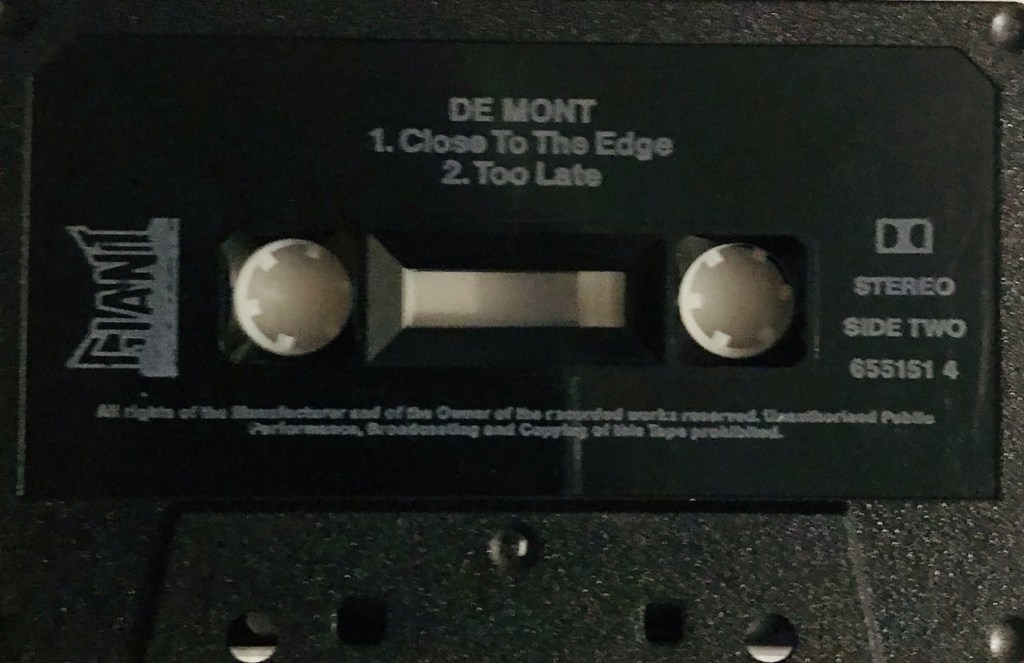
Australian Method Series and The Record Vault: De Mont

De Mont is from Sydney, Australia and is made up of Craig Morrison on vocals, Peter James on keyboards, Terry Mandryk on guitar, Grant Byrne on bass and Rodney Willnet on drums.

Signed to Alberts, who were AC/DC’s Australian label in the early days and George Young was one of the producers and songwriters at the label.

Man, they had some serious promotion behind them.

When Skid Row came to town, De Mont was opening. When Motley Crue hit Australia on the “Dr Feelgood” tour, De Mont was again the lucky band tasked with opening the show.

“Body Language” is the debut studio album released in 1989 on Giant Records.

The album’s style is simply AOR Rock.

Move On You

A fast keyboard synth riff starts the song which reminds me.

Musically, once the guitars kick in, it feels like a Bryan Adams rock cut.

Terry Mandryk is virtually unknown, but he lets loose some excellent guitar work on this, especially in the solo. I read on one of the YouTube videos that he used to be in a metal band based on the Central Coast called “Stark Raven.

I Want Your Body

It was released as a single.

The drum beat to kick it off, reminds of Robert Palmer and his “Addicted To Love” song.

Wild Boy

There is a cool synth lick to start the song off, before all hell breaks loose.

And the lead break from Mandryk is guitar hero worthy.

So Easy

It’s a ballad.

And wait for the lead break by Mandryk. And with each emotive bend, it will have you pulling all the orgasmic faces lead guitar players do.

In My Dreams

Big guitars and synths kick off this song.

And what a Chorus. Excellent.

My favorite song on the album.

Close To The Edge

One of the singles. For some reason I have it on 7 inch single and cassette.

Synth chords kick it off, before the band comes crashing in.

The verses are different, unique and when the Chorus kicks in, it rocks but it felt lacking.

Strange World

A guitar riff dominates the song.

Shake It Up

A skip.

Too Late

A ballad. More pop rock than soft rock.

Sex Attention

The horns make it sound sleazy. It reminds me of a few tracks from the “A Little Aint Enough” album by David Lee Roth.

They released one more album “R.I.P.PED” in 1991 (I just found that out) and then like so many other bands, they disappeared.

According to the bio of Craig Morrison who is an artist in Nashville, a management label dispute led to De Mont disbanding.

But they did leave us with “In My Dreams”.

Crank it.

Standard
Classic Songs to Be Discovered, Influenced, Music, My Stories, Unsung Heroes

Australian Method Series: Jimmy Barnes – Two Fires

“I’d been caught between two fires for a long time. One was the inferno that I had built with my success and addictions. The other was the fire that burned for my family”

It’s how Chapter 33 called “out of control like a bushfire” started from the “Working Class Man” book.

“Two Fires” is his fourth studio album released in 1990 and his first United States release for Atlantic Records.

This was the last proper attempt to break Barnes to the U.S market, as previous label partnerships with Elektra and Geffen for the earlier records fell apart due to various reasons.

It was also the first step away from the AOR sounding “Freight Train Heart”. Most of the song writing credits this time are shared by the band and unknown writers instead of Desmond Child, Jonathan Cain and Diane Warren.

“Lay Down Your Guns”

The album gave Barnesy a chance to work with some great players like Brian Setzer from The Stray Cats who plays guitar on this.

A sinister crime noir “Peter Gunn” style riff kicks it off. The song is written by Jimmy Barnes and Rick Nowels.

Nowels was still in his early days of becoming a huge songwriter. His credits now include Adele, Lana Del Rey and many more. Just go to his Wikipedia page.

Lay down your guns and surrender

“Let’s Make It Last All Night”

Very Foreigner sounding, the Chorus is massive as you would expect from a song written by Barnes, Diane Warren and Desmond Child.

It was also a hit in Australia and it’s a staple of his live show.

Let’s make it last all night
This could be the last time I make love to you

“Little Darling”

A Barnes composition with Setzer on guitar again bringing some rockabilly to a soul rock tune.

Well I get to your house
Like the rest of the band
But somehow these things don’t always turn out as planned
You called me a cab and yeah I walked out that door

Barnesy talks about this event in his book. he thought he messed up his chance with his future wife.

“Love Is Enough”

It’s got a feel like “Every Breath You Take” in the verses, just more rockier.

“Hardline”

It’s a hard rock track and one of the best on the album.

Well it’s late at night something just ain’t right
I can tell by the look in your eye
You don’t say two words
You got a stare that burns
It’s gonna be a long long night

“One of a Kind”

Another rocker with hard rock lyrics.

Tight skirts, like a flirt
She don’t stop till it starts to hurt
She’s sweet, what a treat
Got to get her into my back seat

Mmmm. Flirt with skirt with hurt and sweet with treat and backseat. Overused terms but I would not have it any other way.

“Sister Mercy”

Cause a woman’s got the power
To take control of me
Well she can wrap me round her finger
And make a damn fool of me

The blues songs from the 1930s had lyrics like this. That’s how much staying power the blues medium had.

“When Your Love is Gone”

A great ballad. The sound is dated as it uses a lot of 80s sounding midis.

Well, I missed all the signs, never read between lines

And the Barnesy kids make an appearance in the outro.

“Between Two Fires”

A track written by Barnes and Holly Knight.

As you would expect, it’s anthemic and melodic rock.

The Intro and verses riff remind me of “Rocking In The Free World”. And the Chorus soars.

Caught between two fires
Losing control since I first met you

“Fade to Black”

This is a great rock song. Forgotten behind the hits.

When day fades to black
I won’t look back, of that I’m certain

When you just want to escape the rat race for the night.

I wanna get of this one way street
Don’t want to be among the faceless

“Hold On”

It sounds like a track from “Out Of This World” by Europe. With a bit of Led Zeppelin thrown in.

Like most albums of the time, the labels held the power, so they made artists write and write and write.

Barnes wrote over 30 tracks for the album with a lot of em still unreleased and some as B-sides to the singles.

And the fans rallied behind him once again, sending the album to number 1 on two separate occasions and making it 6x Platinum.

And that elusive break through into the US market still remained elusive.

Standard
Classic Songs to Be Discovered, Derivative Works, Influenced, Music, My Stories, Unsung Heroes

November 2020 – Part 5

Stan Bush

If you’ve watched any 80’s movie with a hard rock soundtrack, there is a very high chance that you would have heard a song from Stan Bush.

My first encounter was “The Touch” from “The Transformers” cartoon movie, when Hot Rod grabbed the matrix of leadership, opened it and became “Rodimus Prime”.

And Jean Claude Van Damme was a big name once upon a time in the action genre, and Stan Bush songs appeared in his movies. But apart from soundtracks, there was nothing else I could get my hands on and information on him was scarce.

So here we are in 2020 and “Dare To Dream” is released.

“Born To Fight” is more melodic metal than AOR rock, with a guitar solo section that reminds of “The Final Countdown” from Europe. And the song is being used to promote a few anime shows on Netflix.

“Dare To Dream” is more in vein with his AOR rock with a bit of Rick Springfield chucked in.

“The Times Of Your Life” is basically the guitar verse riff from “Run To You” from Bryan Adams, played on a piano. And I like it.

“A Dream Of Love” is a cross between Whitesnake and Def Leppard. Think of “The Deeper The Love” and “Hysteria” with a guitar solo that is John Norum level quality, very Euro influenced.

So I had to Google who is playing guitar. And that person is Holger Fath, a German guitarist. He basically does all the guitars and bass, as well as the production.

“The 80’s” sounds like it came from the 80’s. A cross between “Summer Of 69”, “Hysteria”, “Animal” and various Night Ranger songs. It’s a fun clichéd track to listen to.

“Live And Breathe” sounds like those Heart piano ballads with a bit of Michael Bolton thrown in.

“Heat Of Attack” has a bass groove like “Heaven And Hell” which is a perfect canvas for Stan Bush to take over with his melodic rock vocals, about fighting to stay alive and keeping the flame burning inside.

“Dream Big” has a lot of keyboard hooks and an outro guitar solo which I like and “True Believer” has a groovy bass riff with a staccato keyboard riff in the Chorus.

“Never Give Up” has a keyboard riff that reminds me of Bush’s biggest song, “The Touch”, which is very similar to “Jump” from Van Halen.

“Home” closes the album. A ballad straight from the Mutt Lange written cuts, like “All I Wanna Do Is Make Love To You”.

In the end, it’s all these old sounds from the 80’s done in a modern way and I like it.

Wytch Hazel

“III: Pentecost” is the album. The feel is a throwback to those 70’s acts that current bands like Audrey Horne do.

So I did some digging and took in some interviews and reviews about how the band sounds like a cross between Angelwitch and Thin Lizzy. I haven’t heard Angelwitch, so I can’t comment there, but I can hear Thin Lizzy. In the interviews, it was mentioned that Fleetwood Mac and the “Rumours” album was being spun while the writing was happening.

“He is the Fight” kicks off the album with harmony leads and its followed by “Spirit And Fire”. It’s a one two knockout punch musically, so I did some more digging to see who these guitar heroes are. Alex Haslam and Colin Hendra. I’m sure like me, no one has heard of em, but the point of writing blogs is to spread the word. Let the “spirit and fire” lead the way. And listening to the lyrics, it’s a very Christian album. The real Pentecostal kind, so when you hear the lyrics, you know that every word is meant with heart.

“I Am Redeemed” starts off with a bass riff similar to “Wrathchild” from Iron Maiden but once the harmony guitars kick in, its living in Thin Lizzy territory with nods to Maiden in the verses.

“Archangel” has an excellent clean tone intro before it moves into a riff that reminds me of “Ghost BC”. Then the chorus kicks in and it’s memorable straight from the outset. “Dry Bones” has this interlude/solo riff which is just head banging material.

“Sonata” has church organs and a cello/violin before the clean tone arpeggios kick in. And it’s a moody 2 minute instrumental which bleeds into “I Will Not” and that riff. It’s time to pick up the guitar and learn it.

The album closes the way it started with “Ancient Of Days” a high energy hard rock song with harmony guitars and the drumming from “The Ides Of March”.

Within Temptation

I’ve been a fan of this band since the early 2000’s. Their blend of Euro metal and symphonies into cohesive 4 minute hard rock songs is just to my liking.

“The Purge” is a pre-release single drop of a new album. And as soon as it started, I was hooked. It has the riffs, the synths, the almost metronomic drums and the powerhouse vocals of Sharon den Adel.

Avandra

I saw the cover on a blog, liked the way it looked and added the album to my November playlist. Going in blind, the music is progressive rock, with touches of metal and other styles.

“Life Is Not A Circle, But A Sphere” got me to pay attention. It’s track three.

And then “Eternal Return” starts, with its Pink Floyd style of digital delay riffing.

And while I was listening, I did some more digging.

From Puerto Rico.

The beauty of the internet and allowing everyone to create. As a fan of music, I am exposed to artists from all over the world.

“Procgen” has these various moods which I like and then there is this vocal melody that goes with the harmony guitars towards the end of the song, which makes me press repeat.

“Afferent Realms” starts off with some serious shred, which makes me want to break my guitar. It’s all over a polyrhythm riff and drum beat.

Here’s a review for ya from the blog manofmuchmetal, that I agree with (plus it’s the blog that I saw the cover on).

Volbeat

“Die To Live” was a favourite from the album, and the same energy captured there is captured live. It’s just a powerhouse rock-a-billy metal cut.

Crank and let it intoxicate you.

Black Veil Brides

“Scarlett Cross” is the new pre-release single of a forthcoming album. If you read this blog, you will know that I am a fan of the band, especially guitarists Jinxx and Jake Pitts.

These two dudes can play and are modern day guitar heroes.

So I wait..

Trixter

Trixter got labelled pretty quick when they came out with the glam/hair metal tag. Unfortunately labels stick, which in reality wasn’t a right label for them, as they had more of a blues rock sound with AOR rock choruses now and then. After a few albums in the early 90’s they disappeared for a long time only to be resurrected on Frontiers around 2010.

“New Audio Machine” was released in 2012 on Frontiers Records and it features the original line up of the band which is Pete Loran on lead vocals, Steve Brown on lead guitar, P. J. Farley on bass guitar and Mark “Gus” Scott on drums and percussion.

I liked the album then and in 2020 it got a remaster, plus a bonus track thrown in, hence the reason why it appears in my 2020 list.

“Drag Me Down” is a blues southern rock ditty while “Get On It” has this foot stomping blues rock groove. The riffs in “Dirty Love” are influenced from Pasadena and a certain EVH. Steve Brown on guitars is another excellent guitarist who remains ignored by the wider public. Listen to his lead break on “Dirty Love” to get a feel for his abilities.

When Trixter did AC/DC, they did it an way that is more melodic. Listen to the excellent guitar riffs in “Machine” from Brown with arpeggios, palm muted chromatic lines and double stops with an AC/DC feel.

“Live for the Day” is an acoustic/electric ballad, which bands like Matchbox 20, Live and Tonic would be proud to call their own.

“Ride” is a rocker with a heavy riff. “Physical Attraction” and the lead break. Give it a listen.

“Tattoos & Misery” could have come from a Lifehouse album and one of my favourite tracks on the album.

“Walk With a Stranger” is an unused Skid Row song written by Bolan and Sabo, before Sebastian Bach even joined the band. There is a demo of Matt Fallon singing it, released in 1987 on YouTube. It’s a great melodic rock song which has been on the Skid Row backburner for a long time, until Trixter brought it officially back. Coming from the same area as the Skid Row guys, guitarist Steve Brown remembered it from back in the day and this cover is brilliant. One of my favourite tracks.

“Find a Memory” is the European Bonus track and it sounds like “Love Me Back To Life” from Bon Jovi’s “Bounce” album in the intro. Another favourite track for me. “Heart of Steel” is an acoustic cover from a song on their debut album released in 1990. It’s listed as a U.S Bonus track.

If you haven’t heard Trixter before, start with this album. If you like it, then dig deeper.

Stay tuned for part 6 as November was a huge month for releases.

Standard
A to Z of Making It, Music, My Stories, Unsung Heroes

The Music Careers of the “Young Guns” from Guitar World September 1991

So I am flicking through an old issue of Guitar World that goes back to September 1991 and there is a D’Addario ad with the title “Young Guns II”. Pictured on the ad are the following guitar players;

Gary Hoey
John Axtel and Atom Ellis from Psychefunkapus
Tommy Bolan from Freight Train Jane
Gerard Zappa and Adam Holland from Valentine
Black Eyed Susan guitarists
Tristan
Matt Prudoehl

So what happened to these “Young Guns.”

Gary Hoey auditioned for Ozzy Osbourne in 1988, during the search for Jake E.Lee’s replacement. We all know that Zakk Wylde got that gig. He also auditioned for Def Leppard, which ended up going to Vivian Campbell. Then he teamed up with a few LA vets in “Heavy Bones” who released one album in 1992 and when it did nothing, they broke up shortly.

Good musicians never quit. He went solo and had a hit with “Hocus Pocus” a cover of the Focus hit. This led to some chart success, some soundtrack work and a monthly column in Guitar World called “Hocus Pocus” which I found informative and helpful to my guitar playing.

Although Extreme became famous for the funk rock in the early nineties, Hoey broke it down to a teachable lesson called “Get The Funk Out” from Guitar World June 1994 issue. But the best lesson for me was “Arpeggio Acrobats” that appeared in the November 1994 which involved playing string skipping arpeggios. Since then he has more or less released an album each year.

A true warrior of the music industry and a diversified artist. He doesn’t have the world-wide recognition but he has what a lot of musicians that had world recognition wish they had. A career in the music industry.

John Axtel (guitarist) and Atom Ellis (bass) from Psychefunkapus got together in 1986 and by 1992 it was all over. Two albums came out on Atlantic. 1990’s self titled debut and “Skin” in 1991. Then it was all over.

John Axtel has been around the scene with various projects and the same for Atom Ellis.  They also have shown their diversity and that is why they have been around in various bands and different genre’s.

Tommy Bolan was part of “Warlock” and then joined the solo band of “Black N Blue” vocalist Jamie St. James, which in the end became “Freight Train Jane”. “Mitch Perry” was the first choice however he was unavailable. Then Tommy Bolan auditioned and St.James had his “guitar guy”.

The band got together around 1991 as the ad for the “D’Addario” strings shows. The album “Hallucination” didn’t come out until 1994 and it did nothing.

Everyone is quick to blame “Grunge” however the decline of glam rock and hard rock bands has a lot to do with the songs and their messages just didn’t connect with the new generation of kids. For example, “You” from the album is great song musically but lame vocally. And when you compare it to another song called “You” from Candlebox, you would understand why connected and one didn’t. Tommy Bolan for all of his talent has been hit and miss. His most recent execursion was an instructional video/book out called “Metal Primer”.

This is one person that should have achieved more however for some reason didn’t.

Valentine started with Adam Holland (guitarist), Craig Pullman (keyboardist) and Gerard Zappa (bassist) in 1986. Once all the other band members joined they moved to LA and did some demos. Columbia Records came knocking only to see a record label re-shuffle put the band in a tough position which then turned out okay as their original A&R rep took the band with him to Giant Records who then released Valentine’s debut CD in 1990.

They they became Open Skyz, a new label deal with RCA eventuated and another self-titled album came out in 1993. Another label re-organisation meant no label and compounded with fatigue after almost a decade of music industry ups and downs, they called it a day.

However they have all remained in the music business and to this day continue to have a career in the music business. A new album called “Soul Salvation” came out in 2008 after a positive response to their Firefest appearance. Adam Holland is also the guitarist in the Steve Augeri Band (former Journey lead vocalist).

Blackeyed Susan had Dizzy Dean Davidson on vocals/guitar, Rick Criniti on guitar and Tony Santoro (RIP) also on guitar. Critini and Santoro both did time together in the band “Rage” while Dizzy Dean Davidson was fresh from his “Britny Fox” stint. Criniti also worked as a live keyboardist for Cinderella.   This band was talented and they had pedigree, however it wasn’t to be. The band split after their label Mercury pulled the plug and stopped the touring support dollars from filtering down in late 1991. However all three have had a career in the music business that lasted decades, even Santoro until his untimely death at 40 due to a heart attack.

Tristan and Matt Prudoehl I haven’t even heard off. Not back then and not now. Probably a reason why they failed to have a music career.


Standard