A to Z of Making It, Music

Megadeth

Dave Mustaine.  He has a mouth on him, an influential legacy, a chip on his shoulder called Metallica and an excellent outlet of creativity called Megadeth.  He is super creative on other fronts as well.  He is a book author. He runs his own label. He organises the Gigantour tours. In my view, he is the creator of technical metal riffing.

The shit he did in the early days of Metallica and Megadeth, set the standard for many bands to come.  He raised the bar.  As much as everyone credits James Hetfield for being this awesome riff machine, I believe that James knows deep inside, that angry young Dave Mustaine, was an influence on him.

I am just listening to a new song called Kingmaker from the upcoming album Super Collider.  The first thing that grabs my attention is the Children of The Grave influence in the verses.  At one stage the vocal melodies are identical.

I like it when artists give a nod to their influences.  Of course some “artists” create music in a vacuum and that is why they are so original and never influenced by anyone.  Yeah right, whoever tells you that is spinning bull shit on a grand scale.

It is way better than the major key happy feeling Super Collider.  Actually i wouldn’t be surprised if this song is a left over song from the Cryptic Writings or Risk album sessions.  It fits those musical styles.

Standard
A to Z of Making It, Music

Far From Being Normal – That Is Why We Love Them

I remember a band member once asking me, what do I believe needs to be done to make it.   I always had the viewpoint that successful people are far from being normal.  The ones that make it had something to prove to someone.  There could be abandonment issues, broken homes, mental issues, drug dependencies or some other X factor.  Of course, there are the 1 percents of the small 1 percents of people who make it, that just keep on persisting their way to the top.

Let’s look at Motley Crue.  Nikki Sixx was the driver of that vehicle and look at his childhood. 

Machine Head’s driver is Robb Flynn.  He was adopted.  He had something to prove. 

Metallica at the beginning was all Dave Mustaine.  He was the one that had something to prove as he had the abandonment issues from Mustaine Senior.  Once he was ousted, it was all James Hetfield.  His Christian Science upbringing was the catalyst.  Lars was the connections guy in the band, while James was the driver.

Van Halen had David Lee Roth, the troubled son from a renowned eye surgeon.  Yes, I know that Eddie Van Halen wrote the music and the riffs, however DLR was the show, the ideas man, the troubled teen that had something to prove.

Megadeth had Dave Mustaine.  Mustaine had something to prove when he was in Metallica and after his ousting he really had something to prove. 

Dream Theater had Mike Portnoy.  Portnoy’s mum died in a plane crash and his step dad was a prick.  Talented as John Petrucci is, if Mike Portnoy wasn’t there, Dream Theater would never have made it.  Portnoy delivered the X Factor.

Slipknot had Corey Taylor. Corey had even overdosed twice in his teens.

Something to think about when our heroes mess things up.

Standard
Music, My Stories

Storm Thorgerson – Off to the Bright Side of The Afterlife

The album cover was an important part of each album release.  A lot of the times we purchased albums based on how the cover looked.  Iron Maiden immediately comes to mind.  Most of the times people are unaware who the artists are that create these iconic images.  In this case, Storm Thorgerson is a name that people either know or don’t know.

I guarantee if you mention to anyone the name Storm Thorgerson they would look at you like you are speaking a different language.

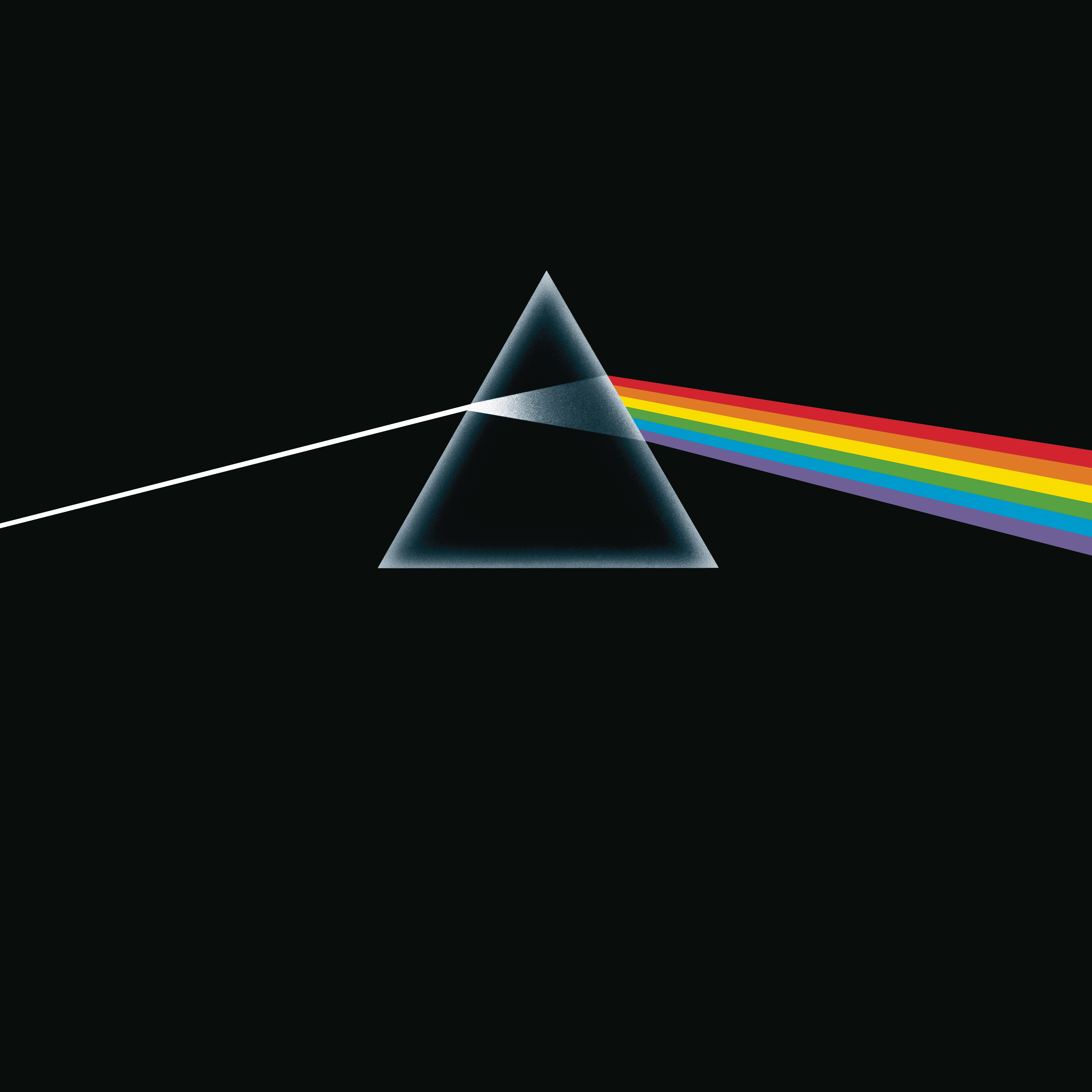
However if you mentioned Pink Floyd – The Dark Side Of The Moon, then you get a reaction.  You can say that he is best known for creating the prism-spreading color spectrum on the front of Pink Floyd‘s ‘The Dark Side of the Moon’ album.  (All images are sourced from Wikipedia, so that I can showcase my favourite album covers by Storm).

File:Dark Side of the Moon.png

Pink Floyd – A Momentary Lapse Of Reason was the first Pink Floyd album I purchased in the late eighties.  From this album I started to go back and explore the others.

File:MLoRLP01.jpg

Storm passed away, on Thursday 18th April after a long illness with cancer and the after effects of a stroke in 2003. He was in his 69 years old.

If you have Dream Theater’s – A Change of Season EP, Falling Into Infinity album or Once In A Livetime album, then the cover art was all designed by Storm.  Dream Theater is one of my favourite bands at the moment.

File:Dtheater-change-seasons.jpg

File:Dream Theater - Falling into Infinity Album Cover.jpg

File:Dream theater oialt.jpg

Megadeth’s – Rude Awakening DVD cover, was designed by Storm.  This cover is a dead set classic.

File:Rude Awakening by Megadeth 2002.jpg

Europe – Secret Society – again very creative, the secret society is faceless people pulling you in all directions.

File:Europe-secret-society.jpg

Thornley – Come Again – this is one of his best covers, the trap door exit into another world or an alternate reality.

Peter Gabriel – I love the ghostly face in the car with the raindrops. The light and dark shades capture the moment.

File:PeterGabriel1977.jpg

Black Sabbath – Technical Ecstasy – this one was a rare one from Storm, as most of his album covers involved photographs and manipulation of photographs.  This one is more or less a drawing.

File:Black-Sabbath-Technical-Ecstasy.jpg

Muse – Absolution – the shadows of the people falling down from the sky, while the person looks up.  Brilliant. Or are the people finding absolution and are being taken up the sky.  Again it makes you think.

File:Muse - Absolution Cover UK.jpg

Led Zeppelin – Presence – I always took this photo as showing a side of the wealthy/powerful and the black presence in the middle of the table.  I am sure others have a different take on it.  It has been known the Jimmy Page dabbled in black magic, and could this be the presence that the album cover refers too. It makes you think.

File:Led Zeppelin - Presence.jpg

The Mars Volta – Frances The Mute – we are all faceless people bypassing each other, just to get ahead.

File:Frances the Mute.png

Biffy Clyro – Only Revolutions – i love the contrast of the Red and the Blue.  Very war like.

File:OnlyRevolutions.jpg

There are a lot of other covers out there, so delve deep and remember the man who is iconic to pop culture.  He worked with the best and he is the best.  Rest in Peace and thanks for the memories.  

Standard
Music

VITO BRATTA – Guitar World September 1989 – Part 1

VITO BRATTA – Guitar World September 1989 – Part 1

It’s a different experience when you open a Guitar World issue from September 1989 and re-read it in 2013.

It’s a who’s who of where are they now.  Marty Friedman and Jason Becker are hot off the press with their Cacophony releases and are endorsing ADA Amps, Jeff LeBar from Cinderella is endorsing Ernie Ball Strings, Richie Kotzen is endorsing Ibanez, Kip Winger is endorsing Peavey and Brian Forsythe is promoting Kix’s fourth album Blow My Fuse, before it exploded with the song Don’t Close Your Eyes.  Johnny Diesel  is well known in Australian circles and he is in there promoting Johnny Diesel and the Injectors that went on to make a big splash on the Australian scene during this period.  To a kid starting out playing guitar it just looked like one big hard rock, metal party was going on in the U.S.  I wanted to be part of it.

Marty Friedman went on to join Megadeth and found success.  Then he left to follow his muse writing Japanese pop music.

Jason Becker’s story is a sad one.  He went on to replace Steve Vai in David Lee Roth’s band only to be struck down with a rare disease at the age of 20 called Lou Gehrig’s Disease.  From recording the A Little Ain’t Enough album in 1989 to being given three to five years to live.  He is still alive now and communicates via eye movements.

Richie Kotzen has had a varied career.  Apart from being a solo artist, he went on to replace CC Deville in Poison.  The album Native Tongue was a brilliant album funk, blues rock album and it is a shame it didn’t get the recognition it did.  He also replaced Paul Gilbert in Mr Big between 1998 and 2004.

However, the reason for this story is Vito Bratta.  He is on the cover.  The hot shot guitarist and songwriter from White Lion, promoting their latest release.   Big Game was the follow up album to the mega successful breakthrough album Pride that spawned the hits Wait and When the Children Cry.

Since then White Lion went on to release Mane Attraction in May 1991 and by September that same year they called it a day.  Vito Bratta hasn’t released anything musical since Mane Attraction in 1991.  Brad Tolinski interviewed Vito.

“Guitarist Vito Bratta’s work is immediately distinctive for its strong sense of melody, thoughtful use of dynamics and pick attack, as well as a graceful near-metronomic sense of time that sounds neither forced nor rigid.  Although he’s definitely not from the Malmsteen School of high baroque, Bratta’s liquid phrasing is in spirit reminiscent of certain passages from Bach’s Sonatas and Partitas for Solo Violin.  The elegant trills over the A chord in the ninth measure of the solo in “Wait” and the call and response of the alternating legato/dettache phrasing in “Don’t Give Up” suggest a player who understands music in a classic, rather than classical sense.”

To add to that, Vito’s grasp of melody and modes to me was at a very high level.  Songs written by Vito cover a lot of different musical styles.  His choice of notes, different chord voices and harmonies was a pleasure on the ear palette.

“I’ve been developing a more personalized approach to chord voicings and inversions.  The problem is these voicings don’t always sound good through a distorted amp.  So instead of using more conventional inversions, I’ll arpeggiate the chord.  This allows me to mute certain notes within the chord, eliminating some of the ugly overtones you get when you play close harmonies with distortion.  Al DiMeola once said his muting technique was a result of not wanting to wake anyone when he was practicing late at night!  Sometimes good things come out of compromise and determination.”

Apart from being a guitarist in a successful rock band, he was also an artist.  To Vito it was all about the music.

The mention of Al DiMeola and how he came to have an unbelievable muting technique shows that he knows his stuff, he has listened widely, he has studied what others have offered before him and incorporated it all into what he does.

Vito also talks about the limitations of playing through a distorted amp and how he circumvented those limitations, by changing the way he plays.  Instead of standard power chords, he is arpeggiating inversions of that chord and muting the strings at the same time.

GW Brad Tolinski:  Another unusual aspect of your rhythm technique is the extensive use of fingerpicking, particularly on the new record.   How did that evolve?

Bratta: That was another outgrowth of my song writing.  I usually write songs by myself, then play then for Mike so that he can write lyrics.  Because I want to give Mike the most accurate picture, I’m forced into creating a fairly complete sketch with my guitar alone.  I know an easier way would be to use multi-track tape machines, but I’m not into that.  So when I start thinking of the basic feel, I’ll come up with a bass part and play it on the low strings with my thumb.  Next, I’ll try and create a chord progression and try to coordinate the chordal movement so that I can play the bass line simultaneously.  Finally I’ll add a suggested melody line on the top.  The only way to have all three things happening at once is through some form of fingerpicking. 

Since this approach really excites me, I didn’t want to drop it when we went into the studio.  That’s why my rhythm guitar parts have a lot of movement.  If I was going to use the typical heavy metal approach on something like Little Fighter, I would just chunk away on the low E and A strings.

These days, artists would multi track everything in the demo stages.  Hell, I do, it’s easy.  Vito developed a fingerpicking style that combined what classical, blues, country and bluegrass players do however he applied it in a pop sense.   Imagine being the singer and you get given a demo that has the bass parts, the chords and the melody lines all on one track as an acoustic guitar piece.  To me this is what made Vito different to the other players.  He was a guitar nerd and I mean that in a good way.  He knew his shit, but he wasn’t textbook.  I know that the 90’s served up the argument against players with technical ability not playing with feel.  Bullshit I say.  Just because a technical player can step on the gas when they want to and drive at 200km per hour, it doesn’t mean they have no feel.  I was doing something similar like Vito, however as soon as I got my multi track recorder, I stopped doing it and took up the technological alternative.  Looking back, I do regret it, as it is a skill now that has been relegated to beginner’s level again, instead of remaining at an advanced level.  Technology has made us lazy, and it has made us cover up how bad we really are.  If we can’t sing, we auto tune, if we make mistakes, we fix up the note/s.

GW Brad Tolinski:  Many of these concepts were evident on Pride, but the execution was more rigid.

Bratta: The reason for that is kind of complicated.  I wrote the whole Pride record on acoustic guitar.  Then I went into the studio and started playing all these wonderful chord inversions through a Marshall, and it came out sounding like shit.  So instead of rewriting the whole album I kept the voicings, but did a whole lot of muting.  Big Game on the other hand was written on my Steinberger in dressing rooms across the U.S., so I had a chance to audition all my ideas on an amp way ahead of time.  As a result, I was able to create sympathetic voicings so I didn’t have to mute the strings as much.  The overall sound is more legato and less staccato, and the pre-production made me more at ease in general.

I can totally relate to that.  I write every song on acoustic guitar and when it comes time to electrify it, I end up changing it a lot of it and it loses its soul.  Just by replacing an arpeggiated part with a power chord, it is enough to lose the feel you are trying to convey.  I then try and fix this problem by adding multi guitar lines which could either muddle the song even more or bring clarity.  It’s a hit and miss game, and previously when I have been in studios where time is money, it’s being more miss than hit.

One thing that Vito shows is that he is a persistent artist.  He is prepared to persevere for his art.  Not many artists these days, have those attributes.  To use an analogy, a lot of artists will dig away in the mines for years on end, only to stop a few centimetres dirt short from the gold or diamonds waiting on the other side.  And then you have one artist that just keeps on digging and they reach it.  Never give up on your dreams and walk away.  If there is a lesson to be learned here, persevere and keep on getting better.

GW Brad Tolinski: Your latest work doesn’t sound as heavy as it did in the past, yet it does sound more aggressive.

Bratta: After touring with AC/DC and Aerosmith for a year, I felt a little more aggressive.  Some nights I would come up with something pretty, but after seeing Angus bash it out, I would say “Fuck pretty”.

Again the fan in Vito comes to the fore.  He is letting the bands that White Lion is playing shows with influence him.  He is watching what they do, he is seeing what songs and riffs work in a concert atmosphere, because in the end, bands sink or swim based on the live show they deliver.   He is letting their sound, their aggression influence him.  Song writing isn’t just about musical notes and words.  It is about attitude and feeling.  What sound is needed to convey love or hate?  Minor key songs are sadder, major key songs are happier.   Crazy Train from Randy Rhoads is a perfect example, where major and minor combine in a glorious display.  The intro is F#m, the verses are A major and trippy, the chorus is back to F#m as the root.  The song is both pretty and aggressive.   Vito was a master of both.  Like Randy Rhoad’s he was bigger than the band he was in.

Part 2 will be a review of Big Game, plus more from the interview where Vito also talks about Big Game.


Standard
Music, My Stories

Remembering Mega

Remembering Mega

Mega isn’t his real name, but a nickname given to him for his love of the band Megadeth.

This all begins in the Australian summer of 1985, when I first heard Stay Hungry from Twisted Sister.  It was on a cassette tape and it was my cousin Mega that introduced me to it.  He also had a video tape of rock and metal music clips that he taped from the music programs that used to play on Friday night and Saturday night.

That is how we did it back then.  There was no Spotify or an iTunes store to sample songs.  We religiously used to stay up late, so that we could tape the new video clip from our favourite bands or bands of similar style.  Hell by staying up late, that is how I was introduced to Motley Crue(the Smokin In The Boys Room clip and then Home Sweet Home clip), Ratt (the Round and Round clip), Quiet Riot (Cum on Feel The Noize clip), Vah Halen (the Jump and Panama clips) and many others.  But one band stood tall over all the others for me back then.  And that was Twisted Sister.   We’re Not Gonna Take It and I Wanna Rock where doing the rounds back to back.

We’re Not Gonna Take It, No
We Ain’t Gonna Take It
We’re Not Gonna Take It Anymore

Three opening lines that summed up the youth of 1985.  The ones that didn’t want to follow what their fathers did and leave school early to work the factory floor.  This was our war cry.  Mega and I listened to this song over and over again, by watching the video clip over and over again.  We even rented Animal Farm because we saw the psychotic parent from the video clip on the cover. 

We’ve got the right to choose it and there ain’t no way we’ll lose it, this is our life, this is our song
We’ll fight the powers that be, just don’t pick our destiny cause you don’t know us, you don’t belong

Mega’s dad was one of those people that never should have been a father.  He was all about money, money and more money.  Mega came a very distant last.  He always kept on comparing Mega to other kids.  Poor Mega could never measure up to his father’s expectations.  That is why this song was special to him and he made it special to me.  Mega’s life was exactly that of the kids in the video clip; however his life didn’t end up getting back at his father, with the power of music.  He just used the music to get away from it all.

You’re so condescending, your gall is never ending, we don’t want nothin’, not a thing from you
Your life is trite and jaded, boring And confiscated, if that’s your best, your best won’t do

Those words could have come from any adolescent child in the eighties.  Mega’s room was a cultural haven.  The walls where covered in posters from Hard Rock, Glam Rock and Metal bands at that time.  He had a record collection that left me envious.  He cherished his records.  He wouldn’t lend them out to anyone and only he could touch them for fear that they will get scratched.  I remember one day, when Mega and I went to the Utopia Record Store, which at that time was in a little shop at Martin Place train station in Sydney.  Mega had the money so he picked up a few more albums and I just stared at the covers of albums that I wanted to buy.  We return back to Mega’s place and it was chaos.  His parents trashed his room, the records where all over the floor, pulled out of the covers.  The reason, his mum smelled cigarette smoke on his clothes when she was throwing them into the wash and wanted to find where the cigarettes where hidden, so they trashed his record collection.  Seriously, who hides a packet of Winnie Blues inside a record cover? 

I remember him saying to his parents, IF THAT IS YOUR BEST, YOUR BEST WONT DO.   That is how important music was to him, he even quoted the song.    Hell, he even tattooed the TS logo onto his shoulder.

We’re right/yeah, we’re Free/yeah, we’ll Fight/yeah, you’ll See/yeah

We’re Not Gonna Take It summed up how we felt at the establishments, our parents and all the rules of what we should be.  Songs like I Wanna Rock, Smokin In The Boys Room, We Rock, Cum On Feel The Noize and Shake Your Foundations summed up what we wanted to do.  

I WANNA ROCK! (ROCK)

The war cry. 

Turn it down you say
Well all I got to say to you is time and time again I say No
NO! NO, NO, NO, NO, NO!

I can’t even mention how many times Mega’s parents would walk in and turn down his stereo and then walk out.  As soon as the door shut, Mega would crank it again. 

Turn the power up
I’ve waited for so long so I could hear my favourite song so let’s go
GO! GO, GO, GO, GO, GO!

When it’s like this I feel the music shootin through me
There’s nothing else that I would rather do

Music when done right is like that.  You lay back with the album, the lyric sheet in front of you and listen to each song and read the lyrics.  It was a therapeutic feeling, without going to therapy.  This is something kids these days will never feel as their lives are always on the go and they are connected to each other 24/7.  Back then, no one was texting you or phoning you, there was no Facebook to kill time on and there was no Computer in the house that you could use.  Music, Books, Magazines and TV was all we had, with the occasional Cinema outing for a new release. 

Cum on feel the noize
Girls rock your boys
We’ll get wild, wild, wild
Wild, wild, wild

That’s all we wanted to do.  Get to the Rock N Roll show, to hear the music, to feel the noise so that we could get wild.   Mega just wanted to be a drummer.  He saved up his social security money to purchase a drum kit and then saved up again to purchase another bass drum so that he could do double kick.  His father frowned at him and they both kept on yelling at him every time he played.   His father wouldn’t let Mega borrow the car, so we used to catch the train with his drum kit and my guitar and amp to the rehearsal room.  That is full blown commitment.

We always talked about our band and the songs we would write.  We never got there.  He more or less gave up drumming due to all the stress pushed on him from his parents.  He failed at school so his father wasn’t pleased, especially since Mega’s sister was all A’s.  He went to Art School as his other talent was drawing, and that led nowhere as Australia post-recession in the early 90’s wasn’t employing young up starts.  And this was the pre Internet era.

By 1997 Mega was diagnosed with schizophrenia due to a chemical imbalance in his brain.  His parent’s won.  His parents finally had control of him.  From all the medication that was prescribed, Mega ballooned into a 140kg slob.  I abandoned Mega after 2006.  It was too painful to see him.  He hadn’t showered for weeks and he looked like Crusty the Clown from The Simpsons.  He never could remember the last time we spoke due to the medication even though it was 24 hours ago over the phone.  It got to a stage when I called and his parents wouldn’t even give him the phone.  I used to send him CD’s of the EP’s I was doing with my band, and his parents wouldn’t give the CD’s to him.

I heard he broke the fridge door because aliens where inside it.  Prior to his diagnosis, I remember I was at his place and he goes to me ‘She is there.”

“Who is there”, I answer back.  Mega’s face got all spooky and weird.

“Her.  She is there next to you, laughing”, he answers back.  I am at this stage thinking WTF.  The hairs on the back of my neck are hard as a rock.  I turn to where he is pointing and as I expected, no one is there.

“WTF, Mega.  What’s this shit?’ I fire back, both worried and angry with him.  What came next freaked me out.  He started laughing hysterically, like those weird horror movies where kids have these evil imaginary friends.  Typing this and recounting the events is just freaking me out.

Mega was such a mega influence on my life and the music I listen too.  He was my first cousin.  Mega’s mum and my mum are sisters, but they are so different.  Maybe because my dad was a muso it was easier for me, but Mega he didn’t get that.  That is why he loved coming down to our place and staying for a week or a month.  He was liberated at my place.  We would go down to the Pub, drink beers, shoot Pool and just crank the Jukebox until the morning hours.  On the other hand his home life was hell.

It wasn’t healthy anymore for me to be around him.  I didn’t want to be dragged in to all of that shit that was going on.  By 2006 I had my second child.  I didn’t want my kids growing up around an uncle that was mentally ill.  Selfish and cruel maybe, but these are the choices we make in life.  You can say I took the easy way out by abandoning him, and a lot of people condemn me for it, but those people haven’t dealt with a person that has a mental illness.  Then others, who have experienced mental illness with loved ones, tell me that they only wish they had the courage to walk away.  Instead they got sucked down with their loved one and are now suffering depression as to why they couldn’t help them.

Mega is still alive.  He will probably even outlive me.  But to me Mega died in 1997.  After that it wasn’t Mega anymore.  The jokes and the laughs went out the window, his fascination with Horror movies became greater and his paranoia was getting the better of him.  I still think he will knock on my door and say, what’s up, have you heard the new ….

Standard