Every label head said Schenker was finished, washed up.
It’s 1991 and a supergroup called Contraband drop their debut album. And it keeps on dropping because it is so bad. The nice advance payment that Schenker got to be involved in the project didn’t do much to enhance or move forward his career. In fact his manager and ex-partner took most of it.
But he stays alive, because he’s a lifer. When you have been in the game for this long, the only thing you know how to do is play. And play he did. He jumped on board the unplugged bandwagon and released an album. He called up Robin McAuley and released another McAuley Schenker studio album.
Then he re-unites with Phil Mogg and they start writing. The songs got the labels interested and the “Walk On Water” album from UFO, released in 1995 surprised everyone. Suddenly Schenker was back on the agenda and he’s getting money thrown at him again. He had a lot of bad people in his life at this point in time, from managers and partners, so it was always going to happen that MSG would return.
I didn’t think it would be that quick. Because a year after “Walk On Water”, “Written In The Sand” is released, the eighth full-length studio album that falls under the MSG brand.
The only thing consistent with all of these MSG albums is the name and Michael Schenker himself. The other members are in a constant flux. For this album, Schenker is joined by Leif Sundin on vocals, Shane Gaalaas on drums, and Barry Sparks on bass. All the music is by Michael Schenker and all lyrics by Leif Sundin.
Ron Nevison is doing all the Producing, Engineering and Mixing.
It’s not on Spotify which irks me, but YouTube has it.
Brave New World
It’s got groove, swing and lot of rock and roll. And the first thing that grabs my attention are the vocals from Leif Sundin. His voice is very melodic, fluid and unique. I would say he’s up there as one of the best singers in MSG.
The lead breaks are impressive, with Schenker even soloing over a harmony solo which acts as a rhythm guitar.
Cry No More
Press play to hear the intro. Its heavy and a lot of acts who went alternative to survive weren’t doing riffs like this during this period. The song could have been on a Deep Purple album and it wouldn’t be out pf place.
I Believe
It’s a ballad that turns into a rocker. It’s not original, yet it is an easy listen.
Back to Life
No one was writing riffs like this in 1996. Its old school and I like it. Barry Sparks is massive on the bass here as well.
Written in the Sand
This track is essential MSG. It has a sleazy bluesy riff and a lot of melody. And Schenker delivers a tasty guitar-solo in the middle and for the outro.
Essenz
It wouldn’t be an MSG album without an instrumental. This one has an “Eruption” vibe before moving into a fast blues. Think of “Hot For Teacher” when it picks up.
Love Never Dies
Imagine “Finish What Ya Started” merging with the melodic rock genre. Well this is the outcome. Another close favourite with a killer Schenker lead break.
I Will Be There
Press play to hear the verse riff. Schenker makes it sound technical, yet it rocks so fluidly.
Take Me Through the Night
Its classic heavy metal while the singing is happening and the solo section is barroom blues brawling.
It wouldn’t be out of place on any metal album from the early 80’s.
Down the Drain
The album closer showcases how Schenker decorates in a creative way. You cannot ignore how good it is.
While Schenker’s North American career had stalled, he was still a big draw in Japan and certain European markets. And just like that, the whole “Contraband” affair was forgotten. That is if you heard the album. Which wasn’t easy to do.
A band called Dungeon is opening for Megadeth in Sydney. I knew of the name, but never heard any of their music. The band name just didn’t do it for me. It was my mistake. I listened with my eyes instead of my ears. Well that was to change.
After the gig, Dungeon was definitely on my radar and I did purchase a few of their albums. And as soon as I got into them, they called it quits.
Sort of.
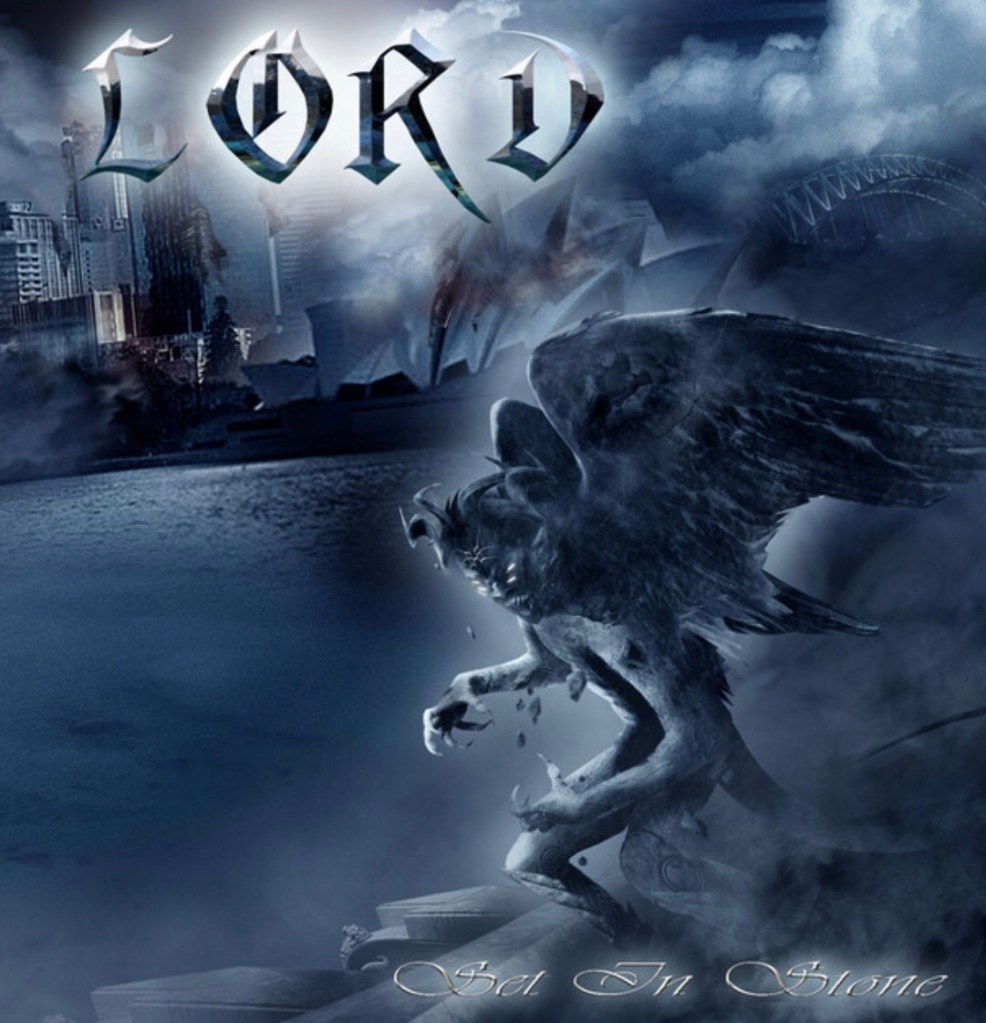
You see, Lord was originally started as a side project for Dungeon guitarist/vocalist Tim Grose, which was meant as something different from his main band sound. Lord’s first album was released in 2003 and it wasn’t so different from Dungeon. After Dungeon disbanded in 2005, Lord just became a continuation of Dungeon’s sound with new members. You could even purchase Dungeon albums at shows Lord did.
“Set in Stone” is the third album released in September 2009 by the band’s own label Dominus in conjunction with Riot! Entertainment. The album was recorded in my home town of Wollongong, Australia. A small foot note in history, is that a band I was in at the time opened up for Lord when they played Wollongong touring on this album.
The band is Tim Grose (also known as Lord Tim) on vocals and guitars, Tim Yatras on drums, Mark Furtner on guitars and Andrew Dowling on bass.
Spectres of the Ascendant
48 seconds of sound effects to introduce “Redemption”.
Redemption
Written by Tim Grose and drummer Tim Yatras, who would depart the band after the album was completed.
Its face melting speed metal.
100 Reasons
Another Grose and Yatras track.
It’s hard rock, with a major key Arena melodic rock Chorus.
Eternal Storm
Co-guitarist Mark Furtner gets a co-write with Grose and Yatras.
Fast, Malmsteen like from the “Marching Out” album. The solo is very Vinnie Moore like, running through different scalar patterns.
Set in Stone
Another track written by Grose and Yatras.
My favourite song on the album. The intro riff is a brilliant mix of Classic NWOBHM and American metal. Judas Priest and Maiden come to mind, with vocals bordering between a cross between Dickinson and Tate at their classic metal best.
There is this “wo-oh-oh” chant after the solo. I can imagine thousands of people chanting it at a gig.
Someone Else’s Dream
Written by the band.
An 80’s sounding synth and a syncopated guitar line set the foundations. At stages it feels like it’s a song from the Gothenburg metal scene, but the Chorus is huge and melodic.
Forever
It’s almost Maiden like with a lot of musical influences from the “Fear of The Dark” album.
I play air guitar to the harmony guitars.
Written by Tim Grose, Tim Yatras and Andrew Dowling.
The lyrical theme is pretty clear. Boy falls in love, gets rejected and goes all Michael Douglas “Falling Down” on the girl and the world.
The guitar playing in the lead break is brilliant.
Beyond the Light
Written by the band.
Judas Priest and UFO “Lights Out” era comes to mind, vocally and musically. It’s a great song to sing along to.
The End of Days
Written by Grose and Yatras.
It’s like a thrash metal song, with the vocals being a cross between Rob Halford and Tom Araya (in the verses).
Staying true to its title it ends with a nuclear bomb going off.
Be My Guest
Written by Tim Grose, Tim Yatras and ex Dungeon bassist Brendan McDonald.
This is like “Stars” on guitar with a lot of guest solos.
It’s an instrumental track featuring guest solos from Craig Goldy of Dio, Glen Drover from Eidolon, Olof Mörck of Dragonland, Yoshiyasu Maruyama of the Japanese thrash band Argument Soul, Angra’s Felipe Andreoli, the former Enter Twilight member Richie Hausberger, Chris Porcianko from Vanishing Point, Chris Brooks and former Dungeon members Stu Marshall and Justin Sayers.
New Horizons
Written by Grose and Yatras. It’s your typical power ballads.
Pete Lesperance from Harem Scarem plays a solo on this.
On a Night Like This
A Kylie Minogue cover as the bonus track.
The fact that the band would attempt such a cover shows the versatility of the members.
Reviews for Australian artists are difficult to do as I want to highlight influences of their sound without making them sound like copyists, and if people from other continents want to check them out, my aim is to give them a reference point as well.
If you haven’t dabbled in the power metal genre, then let Lord be your entry point.
It’s easy really.
Just press play on the melodic rock tracks first like “100 Reasons” and “Beyond The Light”.
If you like em, then press play on the classic metal track, “Set In Stone”.
If you like that, press play on the more ambitious tracks like “The End Of Days” and “Forever”.
Then you are at the fast speed metal with “Redemption” and “Eternal Storm”.
In 1996, Sammy Hagar left Van Halen. Both camps tried to set the record straight as to why things happened like they did. It made for great reading, the press had a field day and the fans just wanted new music.
Enter an old flame.
David Lee Roth re-joined briefly and recorded two songs with the band for the 1996 compilation “Best Of – Volume I”. There is a story about this saga as well, but other sites on the web cover it better. As is the norm, Roth and Eddie clashed again and Roth was out, eventually replaced by Gary Cherone from Extreme.
However we got a “Best Of” album. And it sold well. I guess the public’s appetite to hear Roth with Van Halen again was sky high. I know in Australia it got a Platinum certification and in the U.S it was 3x Platinum.
The album was released on October 22, 1996. I basically purchased it for the two newly recorded Roth songs, “Can’t Get This Stuff No More” and “Me Wise Magic” plus “Humans Being” which did appear on the Twister soundtrack, however my first hearing of the song was on this compilation.
And this review would focus on those three songs.
Can’t Get This Stuff No More
I got so used to Sammy Hagar and his melodies.
So I wasn’t totally enthused to hear Roth deliver his vocals about a “date with a super model and how he doesn’t need so much to remember”. But Roth is Roth, and it’s why I am a fan. He never conformed nor did he change his style. And the Chorus is as good as any Van Roth chorus.
Eddie was also getting a lot more progressive with his song writing and bro Alex, did a great job to put a beat and feel to it all.
Check out the lead break rhythms and EVH talk boxing his way before he breaks open the gates of shred. For progressiveness check out the outro that just came from left field as it’s a unique piece of music on its own.
Wikipedia also tells me that the music for this song was based on a track called “Backdoor Shuffle” which was originally part of the sessions for the “Balance” album.
Me Wise Magic
As soon as I heard the intro I was picking up the guitar to learn it. Not sure what came first. “Test For Echo” or this. I can Google it, but who cares, as the intro does remind me of Rush. Roth moves between spoken verse to a frantic pre chorus and a killer Chorus with Michael Anthony nailing the backing vocals.
Both of the Roth tracks were produced by Glen Ballard who had a renaissance of some sort in the mid 90’s thanks to Alanis Morissette and “Jagged Little Pill”.
The way the song started is how it ends.
An example of what I meant with EVH being progressive in his writing. You don’t hear the Intro riff again in the song, until it appears in the Outro.
EVH’s working title was “The Three Faces of Shamus,” for its three sections with “completely different vibes going on”.
Roth was also asked to work with Desmond Child on the lyrics after he discarded (or rewrote) the words that Ballard wrote. But Roth is Roth, and no one tells him what to do.
Humans Being
Produced by Bruce Fairbairn.
The intro Em riff (E to G to A) hooks me instantly. It’s almost Metallica like, but also like Alice Cooper (think “I’m Eighteen”).
My favourite part of the song is when Sammy sings “Shine On”, and of course EVH chimes in with a quick melodic lead, which quietens down and then builds up again, full of octaves, whammy bar manipulations, superhuman bends over a droning E note and legato slides. And none of it would work if it wasn’t for the time keeping of AVH.
And there is a story around this song’s creation, but Wikipedia covers it pretty good.
The “A Change of Seasons” EP from 1995, closed a chapter for Dream Theater that went back to those dark days without a deal.
After a short tour to promote the EP, they started writing songs in early 1996 for the follow up album to “Awake”. Derek Sherinian was a full-fledged member and was an extra addition to the song writing team.
Their label East West Records had folded into Elektra. Sylvia Rhone was now the President. Her interest in hard rock music was minimal. Nikki Sixx was also very anti-Sylvia, calling her from the stage on her mobile during Motley Crue concerts and getting the fans to scream “F U Sylvia Rhone.”
As written in the book, “Lifting Shadows” by Rich Wilson, Rhone wanted to drop Dream Theater or to transfer the contract to Warner International, however their success in Europe and Japan was bringing enough dollars to the label, so Elektra decided to keep them. However, they had to come up with more shorter tracks that radio could get behind.
Little did they know, that they would be in development hell for almost a year. Most of the songs they submitted to the label for approval, were met with the request to write more songs. Progressive songs like “Lines In The Sand” and “Trial Of Tears” got a muted response from the label, while songs like “Hollow Years” and “You Not Me” got the label excited.
On top of this was the dissolution of their management team, which had the band divided. Petrucci picked one manager and Portnoy picked the other. Eventually, Petrucci’s choice Rob Shore was selected as the manager and Portnoy’s choice Jim Pitulski went to court to recoup some of his losses.
Further to this, their friend in label hell, A&R Rep Derek Oliver left and his replacement, Josh Deutsch was already fed up with the band. As far as he was concerned, the band was selling enough to not be a liability to the label, so as long as he could get the new record out, they would make numbers.
12 plus months passed before Deutsch gave the go-ahead to record the new album, in March 1997. The list of producers the band submitted was ignored and Kevin Shirley who just did Aerosmith’s “Nine Lives” was hired. Shirley also recommended that the band work with Desmond Child to re-write “You or Me”, resulting in Petrucci being flown down to Florida to work on the song with Child. Following the sessions, the song became “You Not Me”. This infuriated Mike Portnoy as he didn’t like how Desmond Child would re-write one of the songs with just one band member.
Originally, Petrucci and Portnoy wanted to call it “Stream of Consciousness”, but the rest of the band rejected the name although the phrase “Stream of Consciousness” is found in the song “Lines in the Sand” and would later become the title of an instrumental song on “Train of Thought”. Its eventual title was proposed by Petrucci, and its cover art was designed by Storm Thorgerson.
When you write for that long, there is enough material for a double album, but Elektra said the approved budget is for a single album.
As a side note, Portnoy released the double album, when he did the Ytse Jam Records Demo series for the “Falling Into Infinity” demos release. It also got a re-release with Dream Theater’s “Lost Not Forgotten” Archives releases.
If you are a fan of the band, the demo releases are must haves, as you get to hear songs like “Raise the Knife”, “Where are You Now”, “Cover My Eyes”, “Speak to Me”, “The Way It Used to Be”, and “Metropolis Pt. 2”, which was later expanded into its own album and the rest being included on the 1999 fan club CD “Cleaning Out the Closet”.
New Millennium
As soon as the King Crimson inspired intro kicks in with the keys and guitars in harmony, I was hooked. John Myung comes in with a bass riff which is very Tool like and I like the way John Petrucci decorates, very Adam Jones/Tool like.
Mike Portnoy is the lyrical writer here, as he looks at the music industry.
Press play for the Verse Riff. Its heavy, its melodic and its influenced by the times, but it doesn’t sound dated as there is funk and there is groove.
James Labrie cops a lot of flak from fans and I am one of them, but he shows his versatility moving between Peter Gabriel like vocals, to Maynard James Keenan vocals, to Bluesy Paul Rodgers style vocals and yet he makes it all sound hard rock in his own LaBrie way.
Derek Sherinian on the keys is more like Kevin Moore in style.
For an opening track it got my attention.
You Not Me
Musically it’s written by Dream Theater and lyrically it’s done by John Petrucci with small additions from Desmond Child. After hearing the demo of this song, I think Child’s additions are more like Holly Knight’s addition to change the title of “Rag Time” to “Rag Doll” by Aerosmith. The original demo is called “You Or Me”. After Child was involved, it changed to “You Not Me”. The vocal melodies are there on the demo.
The riff is nu-metal before nu-metal was even a thing.
And I like its big Chorus and simple Verse/Chorus structure. I am a hard rock fan first who likes progressive music, so this song is right up my alley.
Peruvian Skies
When they play this song live they go into “Enter Sandman” from Metallica as there a bits in the song that sound like they came from “Sandman”. If you get a chance to check out one of their live performances of this song, do it
Lyrics are written by John Petrucci. He is trying to tell an abuse story of person called Vanessa.
Musically, it’s got the dreamy arpeggios of Pink Floyd, with the metal crunch of Metallica. It’s a potent mix. And I like it.
Hollow Years
The “Live At Budokan” version is “the” version to listen to. This is where the solo is extended to include some shredding from Petrucci and the outro is also extended. One thing that is guaranteed when you watch DT live, is you don’t just get the studio version of the song. Which is a good thing. It irks me when bands play the studio version of a song live. There are no musical conversations happening on stage. For some bands it works, like Metallica and Iron Maiden, as their song structures are very rigid.
It was released as a single and you can tell why. It moves between flamenco-classical style acoustic guitars to a melodic soft rock Chorus. Petrucci wrote the lyrics to the song.
Burning My Soul
Mike Portnoy’s lyrics were inspired by his frustration at their A&R man, Derek Oliver. Once seen as a supporter who got them signed was now seen as a roadblock, a gear in the label machine pushing the label “sign em and drop em” agenda.
Overall, it’s a great song. It’s metallic, with a lot of groove. Metallica wasn’t this heavy during this time.
It also marks the beginning of an excellent middle section of the album, that involves “Burning My Soul”, “Hell’s Kitchen”, and “Lines in the Sand”.
Hell’s Kitchen
Producer Kevin Shirley made the decision to take out the middle section from “Burning My Soul” and turn it into a separate instrumental track.
Which I thank him for as “Hell’s Kitchen” is a 3 minute rollercoaster of emotions. Press play to hear John Petrucci at his melodic best.
Lines in the Sand
Lyrics are written by John Petrucci and press play to hear his guitar lead along with the verse/bridge section after the solo break.
King’s X’s Doug Pinnick also appears but James LaBrie stars here, twisting and morphing his voice across many different musical styles and genres.
At 12 minutes long, it didn’t feel boring at all.
Take Away My Pain
This is Dream Theater doing U2 while U2 was doing electro-techno rock.
Lyrically, John Petrucci writes about the death of his father and he decorates the song like “The Edge”.
And for people who said they sold out by writing a song like this, well they seem to forget that “Another Day”, “To Live Forever” and “Lifting Shadows Of A Dream” are very similar to this. So it was nothing new for Dream Theater to have songs like this on the album.
Just Let Me Breathe
Portnoy is throwing missiles at the music industry with his lyrics here. It deals with the media and how they purely exist to over report and sensationalise tragedy, like the deaths of Shannon Hoon and Kurt Cobain.
The drum and bass intro segues into the guitar riff kicking in. It’s heavy and groovy. Very “Liquid Tension Experiment” like which would come after this album.
Derek Sherinian solos here with Petrucci kicking in some harmonies. Then they trade off each other. Overall, I like the song musically but the vocal melodies didn’t resonate with me, although I do like how Portnoy wanted to try something different with the melodies.
Anna Lee
James LaBrie has a lyrical contribution to a Dream Theater album. The song is a ballad, with a nice piano riff as its centrepiece but it wasn’t a favourite back then nor is it a favourite write now.
Petrucci does deliver a nice solo.
Trial of Tears
I wrote a whole blog post on this song. You can read it here. It’s in three sections but played as one complete 13 minute song. Bassist John Myung is the lyrical writer.
Section I is called “It’s Raining”, Section II is called “Deep in Heaven” and Section III is called “The Wasteland”.
James LaBrie again steals the show with the various vocal styles he exhibits here. And Petrucci is on hand to deliver some nice emotive lead breaks.
As mentioned in the book, “Lifting Shadows” by Rich Wilson, the album was considered a commercial failure, failing to break any new ground for Dream Theater or increase their sales despite its more commercial direction. As a result of the creative and personal tensions experienced during the album’s production phase, it has been described as the band’s “most difficult album”, and eventually led to their demanding to be free from record label interference for all future albums.
Regardless of commercial expectations, I go back to this album on a regular basis. Crank it.
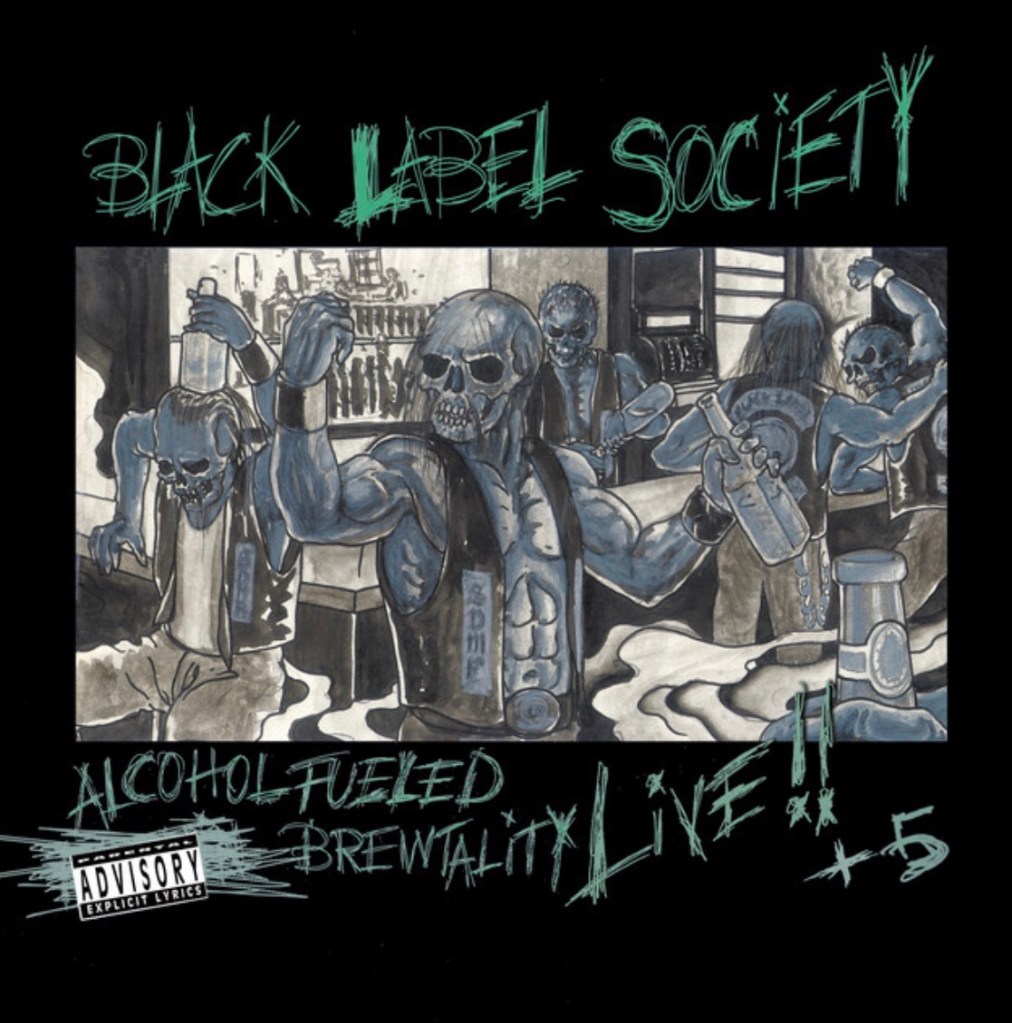
Did Zakk Wylde have enough material for a live Black Label Society album so early in its career. Well, yes if you include his Ozzy and Pride and Glory output with Black Label Society and no, if you just include his Black Label Society output.
“Alcohol Fueled Brewtality Live!! +5” was recorded on October 28, 2000, at The Troubadour in West Hollywood and released in January, 2001.
Low Down
You get some rowdy yells of “Zakk”, “Zakk” and an air raid siren starts ringing.
Then the band crashes in with a trademark Zakk riff, downtuned, syncopated and loaded with pinch harmonics and single note melodic motifs. And Zakk sounds great live, his voice made up of an Ozzy influence and his brewtal lifestyle.
13 Years of Grief
I didn’t even know they went into this song as there was no stop/start in the performance. It was all fluid.
Stronger Than Death
Zakk was doing Pantera better than what Pantera was doing at this point in time.
These kind of titles make me laugh. “Killed By Death” from Motorhead is another title that falls in this category.
There is this break down riff towards the end (which is changed up a bit from the main intro riff), which is head banging material.
All for You
Great riffs in this song.
Super Terrorizer
After the heavy intro, there is a brief pause and Zakk screams “Limp Bizkit sucks dick”, the crowd cheers and into the verse they go, which reminds me of “Bleed For Me” from “1919: Eternal” which came out a few years later.
And there is some fine shredding here in the solo. So press play to hear it.
Phoney Smiles & Fake Hellos
Yep I’ve come across some people in my life that sum up the song title.
Some more great riffage. It’s like Zakk took the best of “No More Tears” and just amalgamated it with Iommi/Dimebag and what you have is Black Label Society.
Lost My Better Half
Zakk is going down low here with a Drop A tuning: low to high – A,A,D,G,B,e.
Just think about it. The low E is not D or C# or B but A. God damn.
Bored to Tears
More Zakk riffs to play along to that won’t leave you bored but it’s sounding same same.
A.N.D.R.O.T.A.Z.
It’s the guitar solo moment of the gig.
Born to Booze
The intro riff on this is excellent. It deserves more attention.
World of Trouble
And without a breath or break, it moves straight into “World Of Trouble”.
No More Tears
He made it sound like a Pantera track.
The Beginning… at Last
And it’s more of the same, with another fast heavy rocker to finish the gig.
The next songs are all studio cuts. Zakk Wyle plays everything on these except the drums, which are handled by drummer Craig Nunenmacher.
Heart of Gold
A Neil Young cover done right.
Snowblind
The mighty Black Sabbath gets a Zakk cover. And I like it.
Like a Bird
Zakk can pen a great acoustic song. This one is classic Zakk. Almost”Blue On Black” and “Days Of The New” and “Changes” from Sabbath.
Blood In The Well
More of the same infectious acoustic rock.
The Beginning… at Last
An acoustic version of this heavy rocker. Think “Fade Away” from Pride And Glory but acoustics.
Overall, the the last five studio cuts are must saves for any Zakk fan and the live recording is a snapshot of a time when Zakk was doing Pantera and Corrosion Of Conformity better than those bands.
In Australia, the End Of The Financial Year is 30 June 2022. And man there is a lot of work to be done a few weeks before that date and a few weeks after that date.
Coming into 1984, hard rock and metal bands started popping up everywhere in the mainstream. Magazines moved their reporting from different styles of music to cover only hard rock. The labels even started promoting rock music as different genres. Eventually, the heavy metal section of the record store would be divided to include hard rock, speed metal and extreme metal. In a few more years after that, glam metal and melodic rock would also be listed as categories. But in 1984, regardless of what “genre” a band got labelled with after, we still found the albums in the heavy metal section of the record shop.
Judas Priest still had the world in the palm of their hands with “You’ve Got Another Thing Comin” and then they dropped “Defenders Of The Faith”. “The Sentinel” is my favourite track on the album. I could listen to it over and over again.
The debut album from the “guys from Jersey” is tiny compared to the albums that came after, but it still has some worthy riffs to talk about. So press play on Bon Jovi’s debut.
The fury known as Yngwie Malmsteen dropped his debut album “Rising Force” and neo-classical got an adrenaline shot.
The Fish led era of Marillion dropped “Fugazi”. It was an acquired taste and I enjoyed the music more than the vocals.
When I first heard “Ride The Lightning”, I didn’t even know what kind of music it was. I felt like a chainsaw assaulted my earbuds. It didn’t sound like the hard rock mixes I was used to, as my ears were conditioned to enjoy the Tom Werman, Keith Olsen, Bruce Fairbairn produced albums.
It was original, progressive and it set the track list running template for the future albums which followed.
I didn’t know it then, but Y&T would became one of my favourite bands ever. Their big money Geffen move didn’t happen until the late 80’s and A&M was the wrong label for their classic era. Regardless, Y&T’s is part of my DNA. “In Rock We Trust” I say.
From a copyright point of view, how the hell would David Coverdale do the accounting for the “Slide It In” album. There are the songwriters who would deserve their royalty and then there are the two versions of the album, with different members who would get a performance royalty.
The final Cold Chisel album “Twentieth Century” came out months after they played their final show in December of 83.
And it had three classics in “Saturday Night”, “No Sense” and “Flame Trees”. It’s also hard to believe that “No Second Prize” from Jimmy Barnes solo album that followed this, was submitted and rejected from this album.
I absolutely support that musicians should be paid for their work.
What I don’t get is how the record labels and misguided artists feel entitled to push for stronger copyright enforcement as a way to guarantee an income which is contrary to the foundations of what copyright was designed to do.
The song “Happy Birthday” goes all the way back to 1893 and it was under Copyright protection until 2030 because someone decided to retroactively place it back under copyright. Then there was outrage and then it was part of the public domain.
Copyright protectionism is about protecting old business models. Stronger Copyright has nothing to do about supporting thriving new industries. Stronger Copyright has nothing to do about finding new ways of doing things.
And people do pay for music.
Metallica’s self-titled Black album is still moving on average 2000 units a week. And it is doing this even though millions of copies of the album are available to be downloaded for free. It is doing this even though it is available for streaming on Spotify and YouTube.
Volbeat has been selling records on a weekly basis in the U.S since 2011. They are doing these numbers even though their album/s are available to be downloaded on peer-to-peer networks. They are doing these numbers even though their albums are available for streaming. Same deal with Five Finger Death Punch, Avenged Sevenfold and Skillet. Still selling, regardless of the state of piracy.
So what is it. Do artists need stronger copyright laws or better business models and terms that pay them a fair days pay for a fair days work?
What a great band name, using a police slang term for a motorcyclist crashing and skidding along the road at high speed. Their so called overnight success was 14 plus years in the making that began in different states and different cities, far removed from the Sunset Strip of LA.
Vocalist Gary Jeffries has a huge story to tell. He put in a lot of time playing the bar circuit and his origin story dates back to the Seventies. Eventually he came to L.A in the mid Eighties to audition for QUIET RIOT after original vocalist Kevin DuBrow left. He didn’t get that gig, losing out to Paul Shortino from Rough Cutt.
Start with the debut album. They wanted to call the album “Mood Swing” and once you sink your teeth into it, that is exactly what you will get.
It was produced by Greg Edward who paid his dues as an engineer on big albums like “Scarecrow” from John Cougar Mellencamp and “Like a Rock” from Bob Seger and the Silver Bullet Band. Virgin Records released the album and it looks like they had no idea how to promote the band or the album in a changing musical landscape.
It was a million dollar blockbuster and the mythology around Motley Crue by 1989 supported and underpinned this blockbuster movie. The drug overdoses, the return from death, the crashed cars, the women, the drugs, the partying, the clashes with the law and the eventual “sobriety”.
It is their first album with Bob Rock, who Nikki found via Ian Astbury from “The Cult”. Remember that music is a relationship business. That is how we are meant to roll. It was recorded in Canada at Little Mountain Studios at the same time that Aerosmith was recording “Pump”. Both of the biggest party bands had committed to a healthy lifestyle, going on jogs together.
The piece de resistance is “Dr Feelgood”. Musically, it is a Mick Mars composition, that he had completely mapped out on his own. He had to take the song to the band a few times before they started to pay attention to it and it was the song that started the ball rolling with Bob Rock, after the band sent him a demo.
Can you imagine Vince Neil singing for a whole day and only having one line of a lyric that was deemed usable?
Yep, that was the standard set by Bob Rock. Of course a million dollar budget didn’t hurt. And didn’t they come a long way from the seven days recording session for “Too Fast For Love”. Album number five left no loose ends.
“Dr Feelgood” set a new standard for hard rock and a lot of the bands like Dokken, Great White, Firehouse, Poison, Ratt and so many others just didn’t take that next step. And of course, shortly after the album was released, Metallica went to Bob Rock and said that they want their own “Dr Feelgood”.
“Today I Caught the Plague” was first. I thought the band name was crap but the debut album “Lore” was a real stand out for 2011. I came across the band by sheer luck when I saw a tour poster from “Protest The Hero” and it had “Today I Caught The Plague” as one of the supports.
While “Lore” was an independent release, “Life In Lucidity” is on Sumerian Records. A label that is perfect for them. Because labels are still the answer to get your name out to the masses. As much as the internet was meant to level the playing field, the labels have more power than ever. So if you want to be on a label, you need to be on a label that specialises and deals with bands that are of similar styles.
The first song I listened to was “Heritage” and I bought the album on iTunes not long after, ordered the CD from Amazon and put it as a favourite on my Spotify playlist.
A very long post covering Zakk’s long career with Ozzy, Pride And Glory, Ozzy again and Black Label Society up to 2014. Check out what I think are essential songs that people should listen to from Mr Berserker Wylde.
And I just kept talking about “Angel Of Mercy”, spreading the gospel on the song from Black Label Society.
Great music must contain emotion. That is why “Angel Of Mercy” connected with me. It hits me emotionally and it makes me feel something. All the great songs do? And because I care for the song, I can’t stop sharing it and talking about it with people who want to listen. And when music is done right, it sells itself.
And that’s a wrap for a month’s worth of DoHistory. Let’s get back to reading blog posts and posting some more content.
Released on 7 June 2013 and recorded in various studios in Byron Bay, New South Wales. Coming from the Steel City of Wollongong, Byron Bay is a 9 hour drive up the coast.
The Producer is Andrew Stockdale.
It was written with the idea that it would be the third Wolfmother album, however the group was already in disarray after Stockdale fired the original band before the 2nd album, and any musicians that joined the fold afterwards were on Stockdale’s payroll, not the labels.
The album process started in 2010 with updates on social media and then it went silent. By February 2012, we knew that rhythm guitarist Aidan Nemeth and drummer Will Rockwell-Scott had left the band. Universal was also not really interested in what was been delivered at that point in time.
Remaining members Stockdale and bassist Ian Peres called in Vin Steele (rhythm guitar), Elliott Hammond (keyboards, percussion) and Hamish Rosser (drums) to complete the band line-up. Universal still wasn’t interested but Stockdale planned to re-record and self-release the album as a Wolfmother album.
By March 2013, front man Andrew Stockdale announced that he would be releasing the album under his own name.
The Personnel for the album is Andrew Stockdale on vocals and guitar, Ian Peres on all things bass related plus other instruments, with drums shared by Elliot Hammond, Hamish Rosser, Will Rockwell-Scott and Dave Atkins. Additional guitar tracks were recorded by Vin Steele and Alex “Rudy” Markwell.
All tracks are written by Andrew Stockdale, except where noted.
Long Way to Go
It could be a Bachman Turner Overdrive tune. It could a Rolling Stones tune as there is a riff in the song heavily inspired by “Can’t You Hear Me Knocking”.
And there is a solo here, brief but bluesy.
Keep Moving
Lenny Kravitz is going to come your way. You know what I mean. And I like it, with other influences from Hawkwind and a riff from the fingertips of Paul Kossoff (RIP).
Within the first two songs, Stockdale is making a statement. He is moving on from the past, but he has a long way to go to make the break.
Vicarious
The fuzzed out bass sets the groove. The drums thunder along with it. Its subdued and Stockdale croons over the verses, before lifting in the Chorus.
“You’re living vicariously / Tell me what’s it’s like to be me?”
Three out of three so far.
Year of the Dragon
It’s classic Wolfmother in riff, with a Bill Ward style swinging beat and a feel that gets the foot tapping and the head banging.
Somebody’s Calling
Stockdale co-wrote this with multi-instrumentalist Elliott Hammond who plays drums, electric piano and harmonica on this album.
Hand clapping Rock and Roll that reminds me of The Doors, Sweet, The Easybeats, Free and all of those great bands. And at 1.50, it goes into a half time feel, which I like and it picks up again at 2.16.
Meridian
Stockdale co-wrote this with bassist Ian Peres. My favourite song on the album and by far the heaviest song Stockdale has committed to release.
The Intro reminds me of Black Sabbath at their heaviest and the verse riff reminds me of Led Zeppelin at their heaviest. A pure classic old school heavy metal cut and although released on a Stockdale solo album, it is a worthy Wolfmother cut.
Ghetto
Another foot stomping groove. And it gets repetitive but hey, the reason why I listen to Andrew Stockdale is because he can jam on a familiar repetitive riff for ages.
Let It Go
“Symptom Of The Universe” has a love child with “Achilles Last Stand”. And I like it.
And if the album ended here, it would have been 8 from 8.
But it continued.
Let Somebody Love You
It’s got this rhythm and blues feel, maybe a little bit of Aerosmith.
Standing on the Corner
The “hit the road jack” vibe is prominent but more countryish than blues.
Country
The title says it all, a ballad.
Black Swan
Yeah, it’s a skip for me.
Everyday Drone
Hey Mr’s Robinson. Can Andrew Stockdale be influenced by you?
Yes, he can.
It Occurred To Me
The fuzzed out psychedelic riffs are back to close out the album. It’s got groove and sleaze, but coming off the acoustic like tracks, it doesn’t flow.
The Foo Fighters released a double album that had rockers and acoustic stuff on each disc. Stockdale suffers here because he released two distinct albums as one.
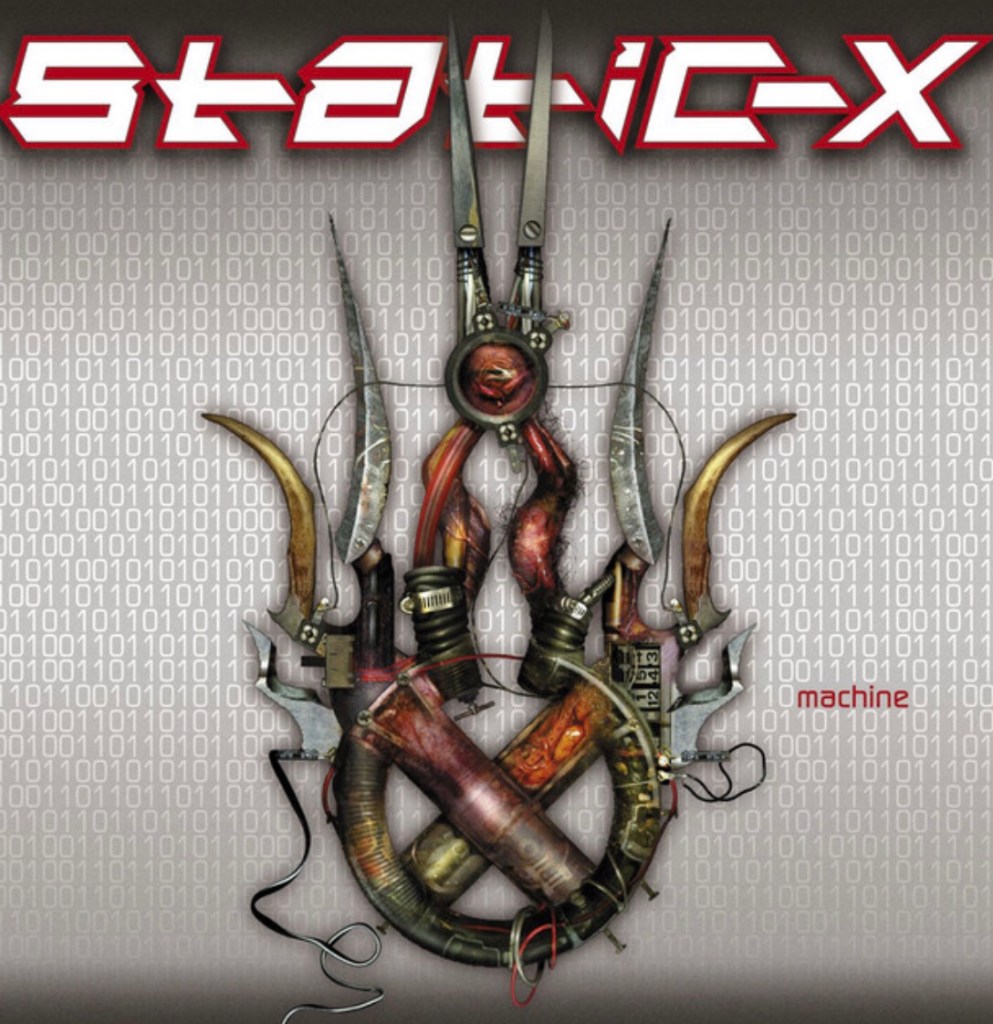
“Machine” is the second studio album by Static-X, released on May 22, 2001.
The Personnel for the album is Wayne Static (RIP) on Vocals, Guitars, Keyboards and Programming. Tony Campos is on bass, Ken Jay is on drums, Tripp Eisen is on guitar, with ex-lead guitarist Koichi Fukuda credited as a keyboard player and Ulrich Wild contributing keyboards to different songs.
The writing for the songs happened while on tour for the “Wisconsin Death Trip” with Wayne Static writing all the songs by himself on the tour bus while the other band members lived it up and partied hard. When the band went in to record the album, Wayne Static told the guys that the royalties for the song writing would not be split four ways this time around.
How do you think that went down with the other members?
It lead to lead guitarist Koichi Fukuda’s departure before recording began, and drummer Ken Jay’s eventual departure a few years later.
While Static played all the guitars on the album, Tripp Eisen (Fukuda’s replacement) was involved with the album’s photoshoot and promotional materials, the music videos, the world tour for support of the album, and he helped arrange the Static-X comic book deal.
The album was certified Gold by the RIAA on November 10, 2003. It was a pretty big deal to achieve this certification, in a market dominated with peer to peer downloading.
As was the norm with bands during this Nu-Metal period, the album was free of guitar solos.
Bien Venidos
A short 30 second intro of people having a party.
Get To The Gone
The vocals are deep, almost Rob Zombie like.
Musically, its heavy rock with a lot of Dimebag Pantera style influences and Rammstein/Ministry/NIN industrial metal overtones.
Permanence
The electronics are prominent here, with the Digitech Whammy providing new sounds for the riffs.
This one is more NIN than anything.
Black And White
I like the intro riff on this. Its dissonant and it reminds me of Megadeth for some reason.
This Is Not
Yeah, this is not a song that has made its way to my playlists of liked songs. But they seemed to like it.
Otsego Undead
It’s got this Black Betty drum beat with a lot of electronica and some other weird stuff. The riff kicks in and it’s the same as the other riffs before that.
Cold
What a song.
The best track, hidden deep into the album at track 7.
The riff and the keys melody over it work brilliant. The whispering vocal reminds me of Type O Negative.
And if the song sounds familiar it’s because it appeared in the film “Queen of the Damned”. It was also featured on the film’s soundtrack album, performed by Wayne Static for the soundtrack who replaced Jonathan Davis who sings it in the movie.
Structural Defect
An open string riff that reminds me of Metallica who weren’t playing riffs like these anymore at this time.
…In A Bag
More of the same, fast open string riffs, some electronica and Rob Zombie style vocals.
Burn To Burn
It’s got a cool chromatic riff.
Machine
The title track. I was expecting big things and it was a let down
A Dios Alma Perdida
The riffs are demented, heavy, very Sabbath tritone like. It almost experimental, horror soundtrack like. I had to Google what it meant.
Alma Perdida means lost soul. Adios means bye.
Bye Lost Soul.
By the end of it, my view point of this album is one heavily marketed good song that sold the album. When the singer in my band asked me about it, I said that I went “Cold” on it. I know, it’s a bad joke.
Press play on it for the song “Cold”. If you like that, listen to “Get To The Gone” and “A Dios Alma Perdida”.
“Blackwater Park” is the fifth studio album Opeth released on March 12, 2001 in Europe and a day later in North America through Music for Nations and Koch Records.
I never got too involved with the death metal elitists who seemed to label the band, not “death metal enough”. Their view points sound like an episode in “Dethklok” when the fictional cartoon death metal band was writing a song and it wasn’t brutal enough for the singer.
The album marks the first collaboration between Porcupine Tree front man Steven Wilson and the band, as Wilson had been brought in to produce the album. The influences of Porcupine Tree can be heard here and this contributed to a shift in Opeth’s musical style with more mellow passages, while Porcupine Tree would also get some heaviness out of it as well.
“Blackwater Park” did not chart in the United States or United Kingdom but it is seen as the commercial breakthrough for the band.
Opeth at this point in time was Mikael Åkerfeldt on vocals, guitar and acoustic guitar, Peter Lindgren on guitar, Martín Méndez on bass and Martin Lopez on drums.
Steven Wilson from Porcupine Tree does clean and backing vocals on “Bleak”, “Harvest”, “The Funeral Portrait”, and “The Drapery Falls”, piano, additional guitar, record producer, engineering and mixing.
The Leper Affinity
Music and lyrics written by Mikael Åkerfeldt.
First, I am not a huge fan of death metal vocals. I tolerate them because I want to hear good riffs. And there are a lot of good riffs and leads here. On occasions it feels like I am listening to a Megadeth album or a Dream Theater/Fates Warning album.
At 4.50, there is an acoustic section that comes in with clean tone vocals. It sounds ominous. And when they build it up, the ominous sound is still there.
Then at 6.10, this Tool like riff kicks in. Press play to hear it.
The last minute is a sombre piano lounge piece.
At 10.26 it’s a massive opening song for an album.
Bleak
Music and lyrics written by Mikael Åkerfeldt.
I like the way this starts. Its progressive but groove orientated.
At 3.28, it’s got this alternative metal vibe with clean tone vocals from Wilson and I like it. And it moves in between acoustic rock and heavy metal. But. By the end of it, its chaotic dissonance.
At 9.15, the first two songs clock in over 20 minutes.
Harvest
Music and lyrics written by Mikael Åkerfeldt.
The second shortest song at 6 minutes with strummed acoustic riffs.
The Drapery Falls
Another 10 plus minute track with music and lyrics written by Mikael Åkerfeldt.
It’s got acoustic guitars, psychedelic fuzzed out leads and clean tone singing.
It’s got progressive riffs and death metal singing.
And more grooves than a vinyl record.
Dirge for November
Written by Mikael Akerfeldt and Peter Lindgren. The dirge comes out to 8 minutes.
The acoustic guitar is there again and it feels like a Led Zeppelin cut in the first two minutes, think “Babe, I’m Gonna Leave You”.
That section at 4.30 to 4.40 is brief but I like its classical feel. The last two minutes is similar to the intro, but more jazzy.
The Funeral Portrait
Music and lyrics written by Mikael Åkerfeldt.
At almost 9 minutes long, its full of riffs and acoustic guitars.
The dissonance of the tritone is all over this track.
The whole acoustic intro reminds me of Slayer and “Seasons In The Abyss” while the riff that crashes in afterwards is very Dream Theater like from the “Images And Words” album.
And I like it.
Patterns in the Ivy
A 2 minute instrumental written by Mikael Akerfeldt.
Think of the intro of “Diary Of A Madman” with some piano melodic leads.
Blackwater Park
The title track at 12 minutes long. Written by Mikael Akerfeldt and Peter Lindgren.
The intro that starts it of is hard rock.
There is this clean tone instrumental section which is a fusion of jazz and classical. The riff that crashes in after it is perfect and head banging.
If there is a complaint, there are too many long songs with not a lot of variation. But from a guitar players point of view, there are a lot of cool riffs to unpack and learn.
There is always a track or two or three on each album from Evergrey that becomes an instant favourite.
On this album at the moment, it is “Call Out The Dark”, “Midwinter Calls” and “Blindfolded”. On the previous album and depending on mood, it was either “In The Absence Of Sun” and “Eternal Nocturnal”.
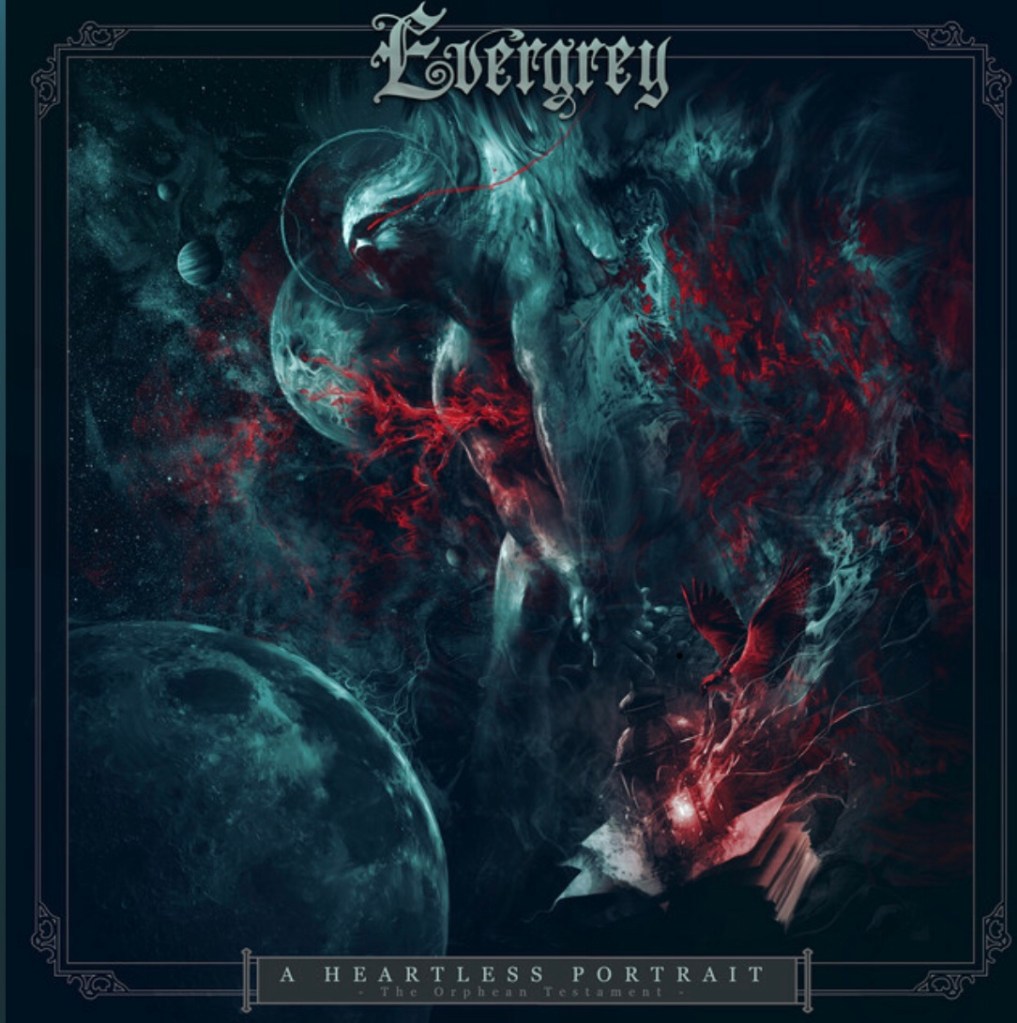
The whole COVID era of 2020 and 2021 got a lot of artists off the road, back into society, connecting with family and friends and then into the studios. After the brutality of “The Atlantic” in 2019, “Escape Of The Phoenix” came out in February 2021, a live recording “Before The Aftermath” on 28 January 2022 and in May 2022, “A Heartless Portrait (The Orphean Testament)”.
I have the Vinyl Die Hard edition and a separate Limited Edition box set on its way from Napalm Records in Germany, which I will unbox when they get here.
Their five album run (made up of 4 studio albums and one Live Album) on AFM Records came to an end. And what a run it was, with some of their best work like, “Hymns For The Broken” and “The Storm Within” included in that run.
The sound of the band is made up of the low tuned guitars of Henrik Danhage who uses Charvel Guitars and Tom Englund who is loyal to Caparison Guitars. But not all riffs come from the fingertips of these two. Drummer Jonas Ekdahl is a riff-meister himself and so is bassist Johan Niemann. Rounding out the band is keyboardist Rikard Zander.
The writing of “A Heartless Portrait (The Orphean Testament)” continued after the release of “Escape of the Phoenix”. Englund has even referred to the new album as “Part II”. In the producers chair is, Englund and Ekdahl again. These two have been producing the last few albums, so why change it. Keep it all within the band.
Save Us
A chugging downtuned metal like riff opens the album. It’s heavy and the octaves give it a sense of melody.
The fans participated in the gang like vocals.
The idea came to Englund while he was on a walk. He uses his iPhone to sing his ideas and the voice memos capture sounds pretty good as the phones have decent compression algorithm.
So they put a call out for their fans to sing the words based on a video guide the band provided into their iPhones and submit it. They got 700 plus submissions and those voices became the gang choir you hear when they say “Hey, save us”.
Lyrically, its Englund’s observation of watching people around him who feel they are not good enough to exist in this world, because they are hostages to the social media sites and feel like they need to portray perfection.
Midwinter Calls
“Midwinter calls…”
There is a slight pause.
“Home..”
And then the Chorus riff kicks in.
It’s my favourite part of the song.
The double kick is in unison with the riff from the fingertips of drummer Jonas Ekdahl.
This song also has a gang like vocal chant, utilising more voices from the fans. While in “Save Us” it was actual words, here it is wo-ohs.
Ominous
There is this four note progression played by another four note progression that underpins the main riff. It’s almost djent math like and progressive but very accessible.
Keyboardist Rikard Zander decorates nicely here over the thunderous groove set up by drummer Ekdahl and bassist Johan Niemann.
The guitar solos howl like wolves in the night.
Actually the whole guitar solo sections are guitar hero moments. I’m pretty sure both Englund and Danhage take turns here.
Call Out the Dark
As soon as the musical box piano sound riff started I was hooked. Once the guitars thunder in and the keys turn symphonic, I was ready to break desks. My favourite song on the album. By far.
The solo came is fantastic.
It’s got this classic “Rainbow In The Dark”, Vivian Campbell style from his Dio days. Initially there was a lot of tapping and shredding from Danhage and after receiving feedback from a friend about what he was trying to say with his lead coming after Englund’s lead, he rewrote the first half and kept the crazy shred ending. Press play to hear two virtuosos having conversations musically.
And it ends the way it started, with the musical box piano riff.
The Orphean Testament
Englund’s take on Greek Mythology where Orpheus had a chance to save his loved one from hell, by just walking away and never looking back, but he turns back to look.
Englund takes this view and applies it to modern life, where our ego’s get in the way of making good decisions and how it’s hard to fit in to a world which has different ideals to your own.
The song starts with fast double kick drumming and fast 16th note picking before it moves into a Dimebag style groove riff. Englund has a unique way of singing his melodies and this is no different.
Reawakening
I read on other reviews that the writers saw this track as filler. And I was like WTF. Its melodic heavy rock influences still remain with me after its finished.
The intro is melodic rock, with the keyboards in the lead. The song then quietens down, Queensryche like for the verses, while it builds up in the pre-chorus for the big Chorus.
I’m broken but breathing I’m still alive but did a lot of bleeding I’m open to reasons to feel alive
The Great Unwashed
The intro is made up single notes playing in an ominous way. Then a groove like riff kicks in, made from the fingertips of drummer Jonas Ekdahl. While they are chugging along on that riff, Zander plays the ominous intro on the keys and Englund does his vocal melodies.
There is a section after the Chorus that reminds me of “A Change Of Season” from Dream Theater.
And the lead breaks are killer, over a section that reminds me of “The Aftermath” from “Hymns Of The Broken”.
We’ll always unite in the end We’re stronger than most just pretend We never mind the dark
We’re the great unwashed
Heartless
Instant connection with the keyboard lick over the thundering distorting chords. The verse riffs are major key, hopeful, but the lyrics are dark, with words like “I can’t find reasons to keep feeding this soul”.
So tired of feeling I’m tired of feeling you And all this time that I’ve lost I’ve lost to you
Relationships take up a lot of time and when they are over, there is regret at the time lost.
There is a section just before the 3 minute mark, with piano chords and Englund’s haunting vocal melody. Then the lead break crashes in, and I am playing air guitar.
Blindfolded
It’s classic Evergrey.
Powerful and technical.
And there is another arena rock chorus. Press play to listen to the phrasing of “Dark nights / coming / we are lost in fragile moments / falsehood / soulless / we run through this blindfolded”.
And if all of that isn’t enough, queue in some killer lead breaks in which the guitars and the keys trade off each other.
Wildfires
Evergrey have always had songs like these, and Tom Englund explores these kind of sparse arrangements even further with the “Silent Skies” side project. The only difference here is that the acoustic guitars replace the keys.
If the sun fell down And burnt us down to the ground Would the wildfires remind me of
The album is excellent.
And there is also a trilogy of video clips, released in reverse chronological order, so you would need to watch the last video first to experience the cinematic journey.








 destroyerofharmony