The New York Times wrote an article back in August 2020, with the headline “How Much Is An Album Worth in 2020: $3.49? $77? $1,000? Maybe $0.”
Tool announced a price of $810 USD for the “Fear Inoculum” Ultra-Deluxe vinyl version. The version, includes five discs of 180-gram vinyl, with music on one side and etched art on the other. The sets are also autographed, but are only available to fans who bought the Toolarmy VIP tickets to the forthcoming dates on their tour. In other words, they are seriously exclusive.
Go to Discogs and you will see physical albums (vinyl especially) selling for a lot higher than what they are worth or purchased for.
Wu-Tang Clan made just one copy of “Once Upon A Time In Shaolin” and auctioned it off for $2 million dollars in 2015 to Martin Shkreli who lost it when the Feds seized his assets in 2018. While this was more gimmick and marketing and not for every artist, it definitely opened up the minds of artists.
While it was always known by the fans, it also became a common viewpoint amongst the artists that purchasing “physical” music is not always about the listening experience to the fan, but a valuable artefact to own. In other words, if the artists stopped chasing the mass and focused on the core to provide them with Super Deluxe releases, we’ll they could make some serious money.
Ask David Coverdale. He has commemorated major album releases with fantastic box sets for the super fans who all paid higher than expected.
Metallica have been doing the same.
Def Leppard have been doing large box sets of time periods. Slaughter are now doing deluxe Vinyl editions of albums. Gene Simmons unleashed “The Vault”. Sell a 1000 of them at $1000 dollars and that’s a cool million.
Each artist has a fan base who will either pay nothing for music or will pay for the normal album release or would stream or would pay a lot more for a Limited Edition Deluxe version.
Like how I paid $129USD ($259AUD with postage included) for the new Coheed and Cambria Super Deluxe album. The band has no problems moving 20,000 units at that price and that’s a cool $2.58 million.
If it wasn’t for Zakk Wylde, I wouldn’t have gone and purchased any Lynyrd Skynyrd. His love for Southern Rock, was on show for the “No More Tears” album. Check out his leads in “I Don’t Wanna Change The World”, “Road To Nowhere” and “Mama I’m Coming Home”.
In the interviews Zakk conducted with the Guitar Mag’s, he spoke about a technique called chicken’ picking that he picked up from learning Southern Rock songs and he demonstrated great knowledge on Southern Rock and the 70’s bands associated with the movement.
Then he dropped the debut “Pride and Glory” album a few years later, which is basically an amalgamation of Black Sabbath and Southern Rock. And it made me a fan, so I went searching for Southern Rock bands.
Enter “Lynyrd Skynyrd”. The story of the band should be a Netflix TV series. Working for MCA, the worst label in the business, the band was never going to make a profit regardless of how successful they became and how many records they sold.
The band for this album is Ronnie Van Zant (RIP) on Vocals, Gary Rossington and Allen Collins (RIP) on Guitars, Leon Wilkeson (RIP) on Bass, Artimus Pyle on Drums and Billy Powell (RIP) on Keyboards.
Guitarist Ed King, quit the band before this album, making them a two guitar band instead of three. King would pass away in 2018 due to various health issues.
There was a saying that the Wilkeson and Pyle (and before Pyle it was Bobby Burns) set a groove, which Collins, King and Rossington danced over. And Pyle has been ostracised from the organisation due to being a sex offender while original drummer Bobby Burns died in a single car crash after hitting a mailbox and tree on a sharp bend, Things don’t end well for these guys.
But the biggest tragedy was the plane crash on the “Street Survivors” tour.
Van Zant, new guitarist/vocalist Steve Gaines, backing vocalist Cassie Gaines, assistant road manager Dean Kilpatrick, pilot Walter McCreary, and co-pilot William Gray all died in the crash. The survivors had been seated toward the back of the plane and all of them were seriously injured with broken bones, crushed arms, sever facial disfigurements and severe burns.
And the plane was earlier inspected by Aerosmith’s tour crew for the band to use on their 1977 tour but it didn’t pass the Aero’s safety inspection.
But before the tragedy, the Skynyrds debauched their way through the U.S on the backs of whiskey, brawling and great music.
“Gimme Back My Bullets” is studio album Number 4, released on February 2, 1976. It reached number 20 on the U.S. albums chart and was certified gold on January 20, 1981 by the RIAA.
Gimme Back My Bullets
Written by Gary Rossington and Ronnie Van Zant.
The staccato like count in reminds me of the “Back In Black” intro. After that, a funky blues rock riff kicks in, before the Southern Rock chord progression kicks in
Every Mothers Son
Written by Allen Collins and Ronnie Van Zant.
The acoustic riff grabs your attention straight away, an amalgamation of “Sweet Home Alabama” and blues rock songs like “Shooting Star”.
Trust
Written by Allen Collins, Gary Rossington and Ronnie Van Zant.
It reminds me of The Rolling Stones and I like it.
(I Got The) Same Old Blues
Written by J.J. Cale. Every artist was covering his songs.
The 12 bars groove is heavy, yet funky. The slide guitar is simple yet effective.
Double Trouble
Written by Allen Collins and Ronnie Van Zant.
It follows the trend set with “(I Got The) Same Old Blues”. And the name used by Steve Ray Vaughan, could have come from this song. The blues on offer here is similar to what SRV would play, just more amped up and more technical.
Roll Gypsy Roll
Written by Allen Collins, Gary Rossington and Ronnie Van Zant.
The acoustic riff to start it is campfire like, and riding on the greyhound to leave town was a rite of passage for the youth once upon a time. These days, the kids are over 30 and still at home.
Searching
Written by Allen Collins and Ronnie Van Zant.
My favourite song on the album. Musically and lyrically. Rossington and Collins steal the show here.
Cry For The Bad Man
Written by Allen Collins, Gary Rossington and Ronnie Van Zant.
It starts off like a Kinks song crossed with “Mississippi Queen”. And I like it.
All I Can Do Is Write About It
Written by Allen Collins and Ronnie Van Zant. Zakk Wylde basically took this song and wrote “Road To Nowhere”.
Press play and enjoy it.
It’s listed as “not their best” album, but if you like southern rock, you shouldn’t skip it and I see it as an underrated album.
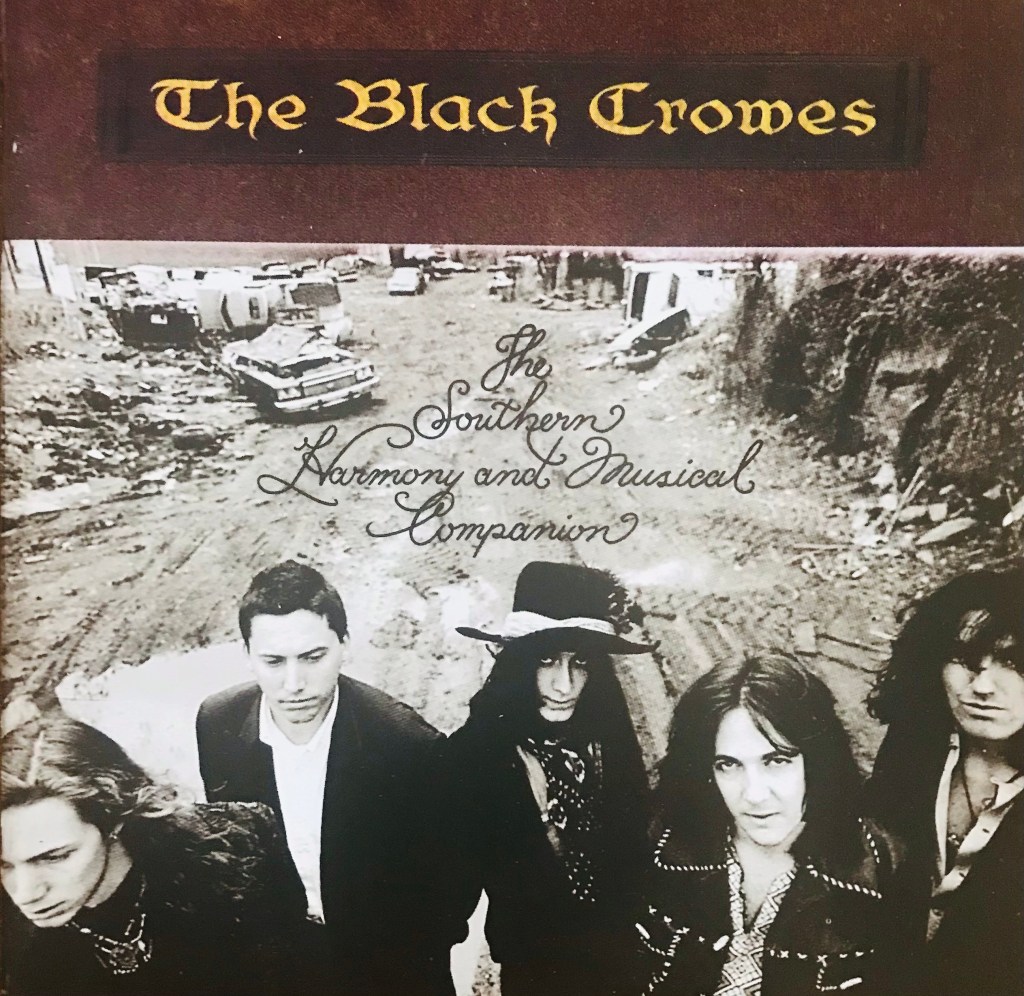
Eight hazy days is all it took for the band to record album number 2, released on May 12, 1992. Having done the pre-work, the band was ready to capture their live sound onto tape.
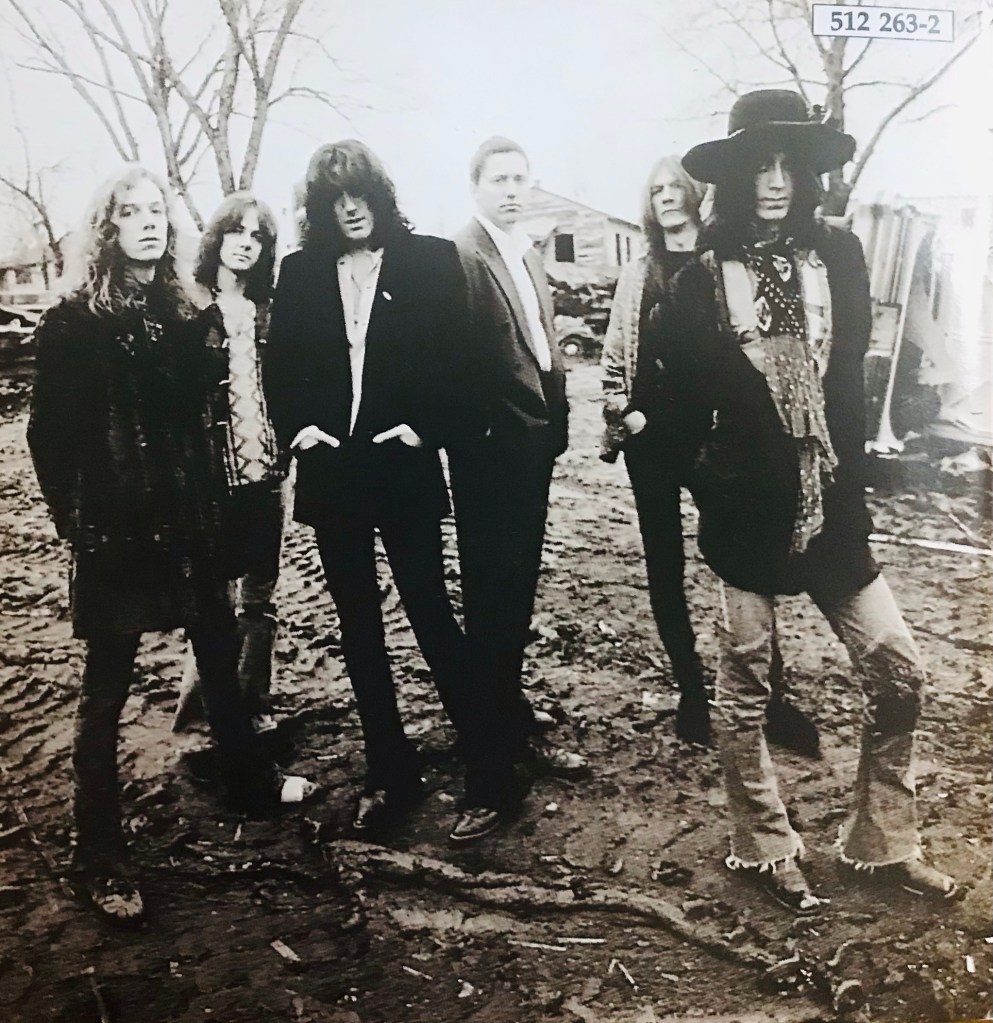
The band of Chris Robinson on vocals, Rich Robinson and Marc Ford on guitar, Johnny Colt on bass, Steve Gorman on drums and Eddie Harsch on keyboards are on fire. And the jam live spirit drips from the speakers.
Wikipedia tells me that it was the first time an album featured four album rock number-one hits. The previous record was set by the great Tom Petty in 1989, with three number-one rock hits. The album itself reached the top spot of the Billboard 200 album chart, propelled by the success of these singles.
The album’s name comes from an influential 1835 hymn and tune book compiled by William Walker. While I never knew that at the time, I did think the title was unique.
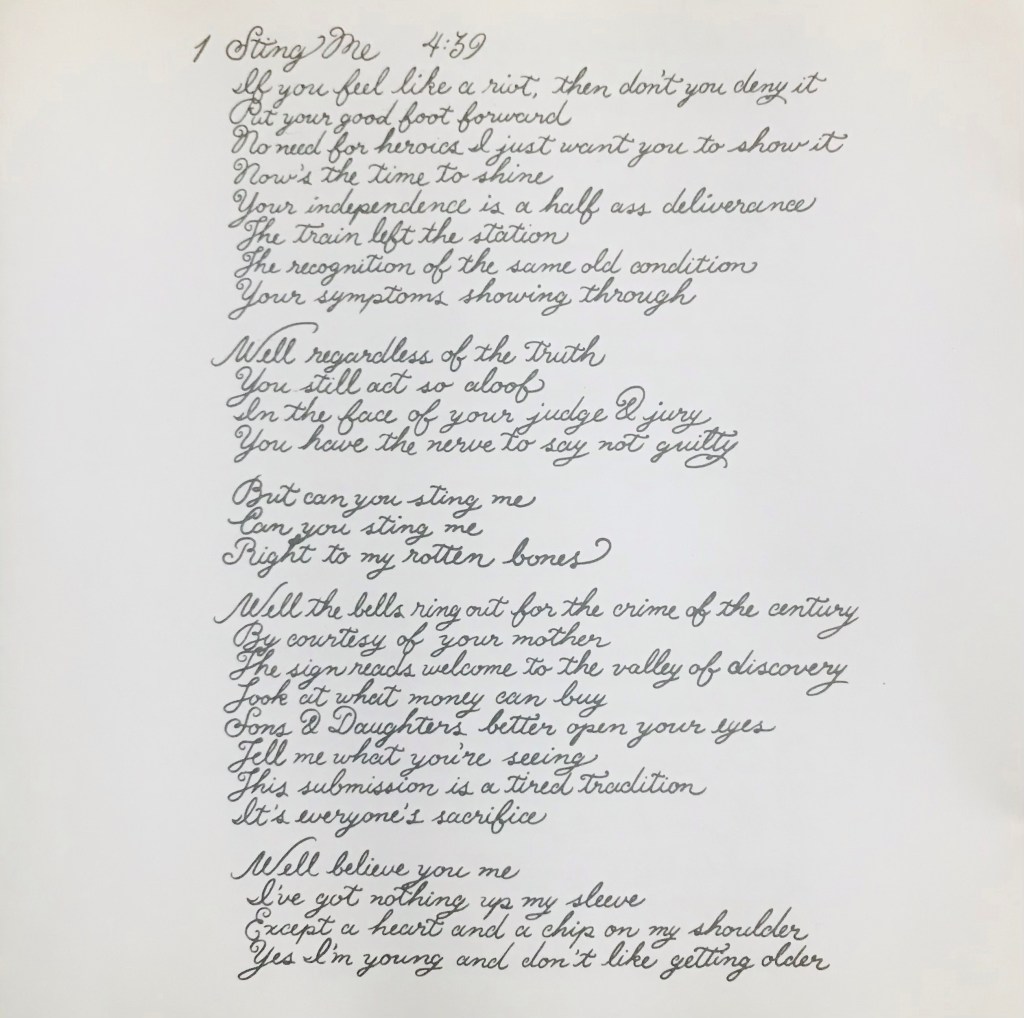
Sting Me
We needed rock and roll to reset from the glamorized rock and metal that did the rounds in MTV.
That’s what “Sting Me” is about. It shows the bands intention and confirms that the first album, “Shake Your Moneymaker” was not a fluke.
“If you feel like a riot, don’t you deny it” are the opening lines and man, with all that was happening in LA, it could have been the protest song of the rioters, when the shitty verdict was handed down to the four white policemen in their beating of African-American Rodney King.
And the Chorus is so Rolling Stones like, I love it.
Remedy
This song deserved to be a smash hit everywhere. It was the perfect amalgamation of blues rock and pop rock.
And I love the lead break on this from Marc Ford. It reminds me of the leads that Slash does with GNR and it’s something which Slash doesn’t get enough credit for, being a great blues rock player in the vein of Jeff Beck. And Marc Ford is up there as well, so underrated.
And how good arethe female backing vocals.
But the song is forgotten on streaming services, compared to the debut album songs like “Hard To Handle” at 132 million streams on Spotify and “She Talks To Angels” at 78.6 million streams, “Remedy” pales at 27.3 million streams.
I guess all the fans already have the album, and we’ve overdosed on it, so the last thing we want to do is to play it again on a streaming service.
Kind of like playing “Wanted Dead Or Alive”, “Enter Sandman” or “The Final Countdown” or “Kick Start My Heart”. Then again, people are playing those songs in the millions each week.
Thorn in My Pride
The acoustic guitar playing is so Led Zep like and the lyrics of “my angels and my devils being the thorn in my pride” are favorites of mine. And Marc Ford brings it again in the lead department, with a very accomplished SRV like shred.
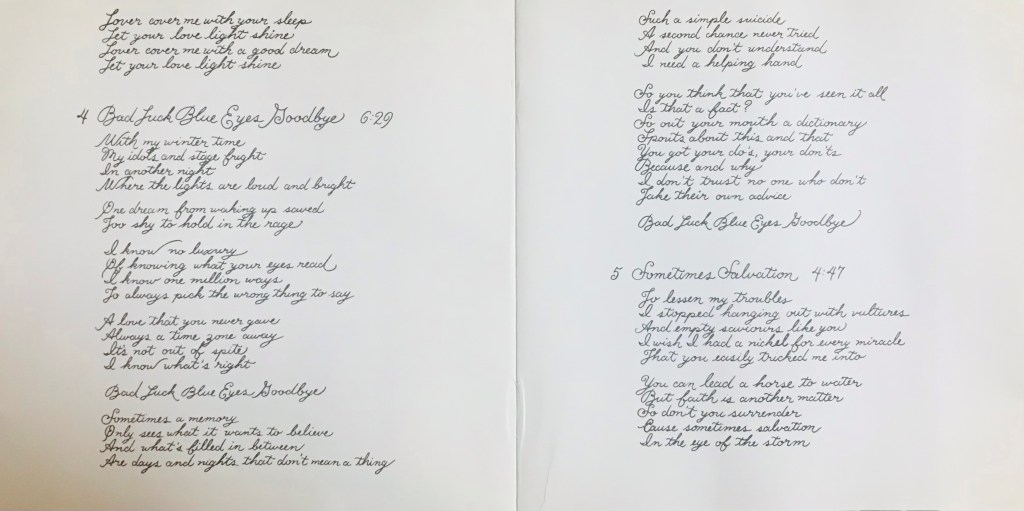
Bad Luck Blue Eyes Goodbye
I like these kind of slow blues songs, like “Little Wing”, “Since I’ve Been Lovin You” and “Black Magic Woman”.
Actually Poison with Richie Kotzen wrote a killer track like this called “Until You Suffer (Fire and Ice) from the “Native Tongue” album, but no one purchased that album. So did Richie Sambora, with “Stranger In This Town”.
Sometimes Salvation
It’s a slow maybe mid temp blues rock song, about lessening your troubles, by hanging with less vultures, and wishing you had a nickel for every time you were tricked by some miracle.
Hotel Illness
It’s got this Beatles and Rolling Stones blues rock vibe and I like it.
Black Moon Creeping
I like the groove on this.
No Speak No Slave
The opening riff reminds me of “When The Levee Breaks”. It could easily be interchanged with a Corrosion of Conformity song.
My Morning Song
This should have been another hit off the album, but “Remedy” was so big that nothing else could measure up.
Time Will Tell
A Bob Marley cover, with acoustic guitars and gospel like backing vocals, as the band takes the reggae feel to the muddy waters of the Mississippi Delta and turns it into an acoustic blues rock track.
We loved the album in Australia. It charted as high as Number 6 on our ARIA charts and it earned a Gold Certification.
In the U.S market, it went to Number 1 on the Billboard charts and earned a 2x Platinum certification.
For a long time I called it “The Great Southern Harmony Musical Corruption”. So put it on and let it corrupt you.
While everyone was complaining about freemium and the monies streaming services pay to the rights holders of music, Fortnite “Battle Royale” came out for free and conquered all. It’s already at everyone’s price point. It can’t get any lower so it costs nothing to try it.
But Fortnite was originally a game for purchase. Within six months of its release in 2017, it had over a million users. But then in September 2017, Epic (the game developer behind it) did something different. They released a free-to-play “Battle Royale” mode. Within 2 weeks of its release, it had over 10 million players.
For Epic, the “Battle Royale” mode is a major hit. It’s like Bruce Springsteen, “Born In The USA” style of a hit. And it’s still going strong because the best marketing tool is word of mouth.
Fortnite spread because the people who played it, enjoyed it and then they asked their friends to create an account and play with them online.
And their friends said “why not”, it’s free, let’s give it a try. The game kept growing in popularity because Epic constantly upgraded it on a regular basis.
In other words, the fans of the game are not waiting 2 years for a new upgrade. Like how fans of artists wait years for new products.
I come from the era of the album, but all I want is frequent content. It’s the reason why the bootleg industry was huge in the 80’s and 90’s. Hell, my record collection has hundreds of bootlegs, from live recordings, to demo recordings, to sound check jams and what not. It was the need to fill the gap between albums.
Mick Mars said that he almost left Motley Crue during the “Generation Swine” sessions and that still to this day, he hates the album.
It was meant to be called “Personality #9” with John Corabi on vocals. But the label was still reeling from the $3 million loss on their accounts from the 1994 self-titled album so they demanded that Vince Neil come back in.
The Crue started working on the follow-up in 1995. Nikki Sixx wanted to road test the songs before they recorded them, in small venues and using different band names, like the Four Skins. It was a back to the seventies approach, when bands used to debut new songs on the road before committing them to tape in a studio. That is why so many songs from the seventies worked well in a live setting. Deep Purple played “Highway Star” for at least 12 months before recording it. Same as Ted Nugent and “Stranglehold”. The list goes on, however today’s rock star doesn’t need to pay their dues on the live circuit.
But they road tested nothing.
The biggest Achilles heel to “Generation Swine” is the lack of the hit song. Like “Kick Start My Heart”.
It wasn’t a hit on the Billboard Charts, however in rock circles it was a song that all the rock heads and the metal heads could latch onto. Even the self-titled album, didn’t have that kind of song that people could latch on to.
Here is a summary, however each rule is expanded in the blogpost.
On Motley Crue’s 2008 song ‘Welcome To The Machine’ they provided a few general rules about the recording business and the machine that is the music business.
Rule Number 1: “Sign on the x to sell your soul”.
Rule Number 2: “It’s so automatic, Hocking broken plastic, Royalties you’ll never know”.
Rule Number 3: “Give your ass like a whore, Once you take a hit, You need more more more”.
Rule Number 4: “Welcome to the machine, Once it sucks you in you’ll never leave, Grind you up spit you out, After all you’re just a piece of meat”.
Rule Number 5: “Sell out to the rats, Make em rich make em fat”.
On Motley Crue’s 1999 song ‘Fake’ they seem to provide a few more general rules about the recording business.
Rule Number 6 (supporting Rule Number 1 and 2): “Sold my soul while you sold records, I have been your slave forever.”
Rule Number 7 (supporting Rule Number 5): “What are you fat cats doing anyway?, Take our money and flush it down the drain.”
Ugly Kid Joe asked “Mr Recordman” if he knew who they were or if he gave a damn about them or if he was purely there for the dough. Based on their career trajectory, the answer was obvious. Mr Recordman didn’t give a damn about them once they stopped being “commercially viable”
Rule Number 8 – Mr Recordman doesn’t know who you are. Look at the band “Winger”. When Reb Beach called the label after the Beavis and Butthead episode hit TV screens, the label claimed they never knew a band called Winger.
Rule Number 9 comes from Disturbed and their song “Sons Of Plunder”.
Rule Number 9: “You say you’ve found yourself a new sound, one hundred more all have the same sound”
The song Chainsaw Charlie from WASP is littered with music business rules. The first three lines, “Will you gamble your life?, Sign right here on the dotted line, It’s the one you’ve waited for all of your life” fall into Rule Number 1. Then the lyrics of “And tomorrow when I’m gone, Will they whore my image on?” brings us to Rule Number 10.
Rule Number 10: The record label will forever whore your image on after they have dropped you or after you have departed this Earth. There is a lot of money to be made in death.
Rule Number 11: “We’ll sell your flesh by the pound you’ll go, A whore of wrath just like me, We’ll sell ya wholesale, we’ll sell your soul, Strap on your six string and feed our machine.”
Rule Number 12: “Welcome to the morgue boy, Where the music comes to die” is about songs written by a committee. It’s soulless, however it sells.
Rule Number 13: “Ah, trust me boy, I won’t steer you wrong, If you trust me son, You won’t last very long”
Rule Number 14: “The new morgue’s our factory, to grease our lies, Our machine is hungry, it needs your life” is the definition of the recording business.
Rule Number 15: “I’m the tin man, I’ve never had a heart, I’m the tin man, But I’ll make you a star” is the Record Label CEO. All promises and that tin heart doesn’t care if those promises are broken.
Savatage is another band that covers the music business in a bit of detail. Rules 16 to 18 are from the song “Jesus Saves”.
Rule Number 16: “You know Jesus he started changing, Things got really strange, He saw his tee shirts everywhere, He started missing shows, The band came down to blows, But Jesus he just didn’t care.”
Yep, it’s a tough gig keeping a band together, especially when a band member becomes the idol that the fans latch onto.
Rule Number 17: “Things got out of hand, And so he quit the band, Still the critics they would rave”
Rule Number 18: “hear Him cut through the night, On those late night radio waves”
Eventually, we get old and we become “classic rock”. There is no way around out. Embrace it and play to your core audiences.
The final two rules are from the song “When The Crowds Are Gone” from Savatage.
Rule Number 19: “I don’t know where the years have gone, Memories can only last so long, Like faded photographs, forgotten songs”
Rule Number 20: “The story’s over, When the crowds are gone.”
Adrenaline Mob are seasoned professionals collaborating on a hard rock project. For some reason they remind me of Night Ranger.
The debut album “Omerta” was number 4 on my list for releases in 2012. I hold the vocal talents of Russell Allen and the guitar talents of Mike Orlando in high regard. Add to those talents the powerhouse drumming from Mike Portnoy on the first album (and the two EPs) and of course the mighty AJ Pero appears on the second album. As a Twisted Sister fan, this is a great thing to see happen. And finally John Moyer from Disturbed is providing the bottom end.
Listening to “Men Of Honour”, it comes across as a band having fun. Check it out and while you’re at it, listen to Mike Orlando.
I don’t know what to call Orlando’s guitar style. One term I have for it is “Technical Chaos”. He has the chops, but he plays with an improvised abandonment that sounds so precise and I like that.
If you remember back to 1998, the recording business became famous for saying that no one will be interested in downloading a crappy mp3. Guess they didn’t know how many billions those no ones came too.
Pono came out at a time when fans of music had decided that YouTube and Spotify are better alternatives.
And that is what Pono Music fails to understand. The fans of music are in control. If they want to pay, they will. If they want to go to a show, they will. If they want to download for free, they will.
By now people knew what to expect with an Airbourne album. Fast blues rock, sleazy blues rock and hard rock, inspired by AC/DC, Rolling Stones and ZZ Top.
And no power ballads.
Bob Marlette is producing.
Breakin’ Outta Hell
It’s fast and maniacal like they are really breaking out of somewhere. It’s tempo reminds me of songs like “Let There Be Rock” and “Whole Lotta Rosie”.
Rivalry
If you enjoyed the debut Audioslave album, you will like this, as it has a riff similar to “Cochise” in the Intro.
Otherwise the Verses and Chorus are straight from the playbook of AC/DC and Slade.
In the PR for the song, Joel O’Keefe said:
“As with other songs we’ve done, there’s an aspect here of rock‘n’roll taking a stand against those corporate forces that seek to restrict our freedoms, that try to shut down the little live venues, leaving bands with nowhere to really hone their craft.”
Challenge accepted.
Get Back Up
This can be interchanged with any AC/DC song of the Brian Johnson era and not be out of place. In some stages, the throaty vocals remind me of Tom Keifer.
It’s Never Too Loud For Me
With its “RNR Ain’t Noise Pollution” influences merged with “Sin City”, you know exactly what you get with this.
Thin The Blood
It’s super fast.
An image of Tommy Lee in the Crue movie comes to mind as they recount his daily routine on the “Dr Feelgood” tour, like waking up chained to a bed, trying to work out what happened the night before, callin his wife, taking a lot of drugs and alcohol and the cycle repeats.
I’m Going To Hell For This
“Hail Ceaser” comes to mind and I like it.
Down On You
That whole Chuck Berry influence which AC/DC used to great success on “Long Way To The Top” and “High Voltage” is back here.
And the guys really broke out the big guns in the lyric department, about a boy playing with his toy and kissing a woman between her knees.
Never Been Rocked Like This
It’s not groundbreaking but the passion for loud blues based rock and roll is evident here.
When I Drink I Go Crazy
It’s fast and the title sums it up.
It also has one of the funniest lyrics ever, “I’m standing in the middle of the road, directing traffic like a ninja”.
Only Joel O’Keefe can get away with using Ninja in a rock song. Maybe the Steel Panther guys could as well and lyrically this is who the album is competing with. Steel Panther.
Do Me Like You Do Yourself
The Intro gets the foot tapping.
And the lyrics just keep getting Shakespearean.
Like “you’re hands are moving with a mind of their own, having the best sex and you’re all alone.”
Pure poetry.
It’s All For Rock ‘N’ Roll
A perfect closer with a tribute to Lemmy.
Listen to it, raise a glass and enjoy.
Appreciate Airbourne for what they are, a hard working rock and roll band who write music that needs to be listened to loud while beer is being consumed.
All ideas or If you use the words “intellectual property” for the Copyright maximalists, have an influence from something that came before. We learn to write music by learning the music from others. We learn to write stories by reading the stories of others.
It’s probably why people shouldn’t get all emotional over ideas/intellectual property.
People like familiarity.
Derek Thompson in his book “Hit Makers” mentioned how people are drawn to music that might be new, yet familiar enough to be recognizable.
In other words, that new song we all like has enough variation in it to make it not a carbon copy of its source influence.
And people still like to claim that their song is so original and free from influence and when people have that fixed mindset, well, the courts are busy and the lawyers are making money.
Check out my recent Google alerts on the word Copyright.
A lot of delusional people who believe that their works are so original and free from influence.
Guess what.
All of our ideas have already been stolen. Because there is no such thing as the genius loner. It’s a myth. We are all social people and our creativity is fuelled by our social environments. Every single day, we take in our surroundings, we set meaningful and important goals and we are always thinking of solutions to problems.
A neuroscientist and a psychologist broke down creativity into three main buckets;
Bending means you take a previous work and re-model it in some way. “The Walking Dead” and “Night Of The Living Dead”.
Blending means merging previous works together so you have multiple melodies and re-cutting it to suit what you want to write. Jimmy Page was great at doing this with Led Zeppelin’s music. Metallica did that with “Sanitarium”.
Breaking is taking a short and important musical idea otherwise known as a musical fragment and building on it. Think of my post on “One Riff To Rule Them All”, which covers the A pedal point riff used in songs like “Two Minutes To Midnight”.
The differences between humans and computers is how we store information and how we retrieve information. For the computer, the riff stored on the hard drive will sound exactly the same three years later, however that same riff stored in our head would be different.
Why.
Our brain breaks it down, blends it and bends it with other information. This massive mash up of ideas in our brains is our creativity. And when we play that riff three years later, it has a different feel, different phrasing or something else. Some of them stink and sometimes we create something that breaks through into society.
A funny thing started to happen when streaming became the main source of income for the labels.
Live albums started to come out.
You see, streaming services like new content. And since bands like to take their time or need to make time to record new original music, they filled the void for new content by releasing live albums.
Suddenly getting new product out yearly instead of every two to three years became the norm. But it still didn’t solve the problem of people not buying albums.
Whitesnake is a band which keeps firing out live recordings year after year. “Made In Japan”, “Made In England”, “Bad To The Bone 84”, “Castle Donnington 90”, “Live In The Heart Of The City” and “The Purple Tour” have been released as stand-alone albums over the last 10 years.
And David Coverdale knows the value of his super fans.
I attended the Five Finger Death Punch and Avenged Sevenfold gig on Tuesday, 25 February 2014 at the Big Top in Luna Park. It was my first time seeing them both live so I didn’t know what to expect.
Each week, the sites that enable copyrights to be infringed innovate at a rapid rate to stay ahead of the curve. They are competing against each other for people to use them to illegally access entertainment.
Read the post to see how these sites innovate. Instead of shutting em down, the labels and movie studios should be employing these people.
I played Nostradamus and looked into my crystal glass full of whiskey in the jar-o to make some predictions.
ON A DOWN SLOPE
DAUGHTRY
The band leader, Chris Daughtry messed up big time chasing the crowds of “Train” and “Imagine Dragons”.
He is a hard rocker from day dot and rock gave him his legion of fans. For the ill-fated and recent “Baptized” album, he committed career suicide, throwing his lot with the hit songwriters.
The songs are good, however they are not Daughtry songs. It would have been better for him as an artist to have given those songs to other artists that are more electronic pop rock minded. That way he would have been the songwriter, the way Bryan Adams gave songs away to other artists that wouldn’t suit the Adams sound back in the 80’s.
HYPE
We can see through the hype and we hate it.
So much hype was around Dream Theater’s self titled release and it disappeared from the conversation within six weeks.
Megadeth’s brand new album “Super Collider” was being outsold by the Black album.
THE ALBUM FORMAT
Making money is hard. Just because a band releases an album, it doesn’t mean that people would pay for it or would want it.
And when we are inundated with product we tune out, however, it turns out we have time for Metallica’s “Black” album. At this point in time it was still moving two to three thousand units a week and it was expected to pass 16 million by May 2014.
GOING GOING – ALMOST GONE
CLASSIC ROCK
Classic Rock bands have another 10 years left.
ON THE UP – STORYTELLING
That is why TV shows are the most downloaded torrents of all time. Tell a good story and the world will be at your door step.
Read the financial reports on Universal Music Group.
Spotify has propped up their bottom line and that bottom line will get better each year for Universal. And they keep spreading the bull shit that they are out there fighting for the artists. The good guys.
Frontiers has become a major player in the classic rock, melodic rock and hard rock scene. They kept the flag of melodic rock flying high since 1996, when all of the other major labels abandoned the style and put their monies into grunge first and then industrial rock/metal and then nu-metal.
And their business model is all about locking up copyrights for a long time.
They have realised it’s not about sales anymore, and while steaming numbers and revenue are still tiny, in the long term the labels will be able to reap the benefits.
Why?
Because streaming is a regular recurring revenue business. And these Copyrights are valuable?
Let’s put it this way, if Metallica is on Spotify, then the rates paid back to the COPYRIGHT HOLDERS (which in this case is Metallica as they do own their Copyright) must be good, because Lars Ulrich and their manager Cliff Burnstein would not allow Metallica to enter a business arrangement that is not in their favour.
And back in 2014, Tool or AC/DC or Def Leppard were not on Spotify. They all are now.
The real truth is that there is much more music out there than there has ever been, so the issues that are present to artist and labels is how do they get people’s attention directed towards that new music.
Personally, I don’t even know anybody who pirates music anymore. There is no reason to pirate and legitimate customers/fans would always turn to legal alternatives.
Add “Recording Sales Revenue” plus “Streaming Revenue” plus “YouTube Ad Revenue” plus “Ticket Revenue” plus “Merchandise Revenue” plus “Corporate Deals Revenue” plus “Sponsorship Revenue” plus “Publishing Revenue” plus “Licensing Revenue” and then decide if you are winning or not.
Again, if you are not seeing a lot of revenue, then you need to be speaking to your label, because if you have numbers in all of the above Revenue streams then something is a-miss contractually.
You know the drill. A new technology comes out and eventually it will start to get some traction. Then the word will spread about and more people would flock to it. It’s new, it’s cool, it’s hip and its innovative. Then when it is at its peak, the people who testified for the new tech, will abandon it, looking for something new and better.
MySpace, Facebook, Twitter are three such platforms that came, peaked and right now are suffering an identity crisis.
MySpace is finished.
Facebook got traction because it connected people in a way that MySpace couldn’t. Now, all of these connected people need to deal with the marketing of products, advertisers, like requests, fake friend requests and spam.
Twitter is well, Twitter. With so many people tweeting or having their tweets connected to their Facebook Posts or their blog posts, everything is getting lost in the mix. When a big news item hits, Twitter is the platform to go to, because people who are directly involved in these big events are the ones that are tweeting.
Spotify has been around for a while now and in the last 3 years it set up base in a number of large music markets like Australia, Canada and of course the US.
The people tried it. Some have stuck to it. Some have abandoned it. The ones that speak out against it have never used it.
Spotify however needs a game changer. Sort of like how the move to APPS changed the iTunes store. And it’s all about the FREE. Fans of music showed the world that they want FREE music to listen to. And don’t say that FREE doesn’t work. How the hell did Free To Air TV exist and grow over the last 60 years.
I am all over the shop when it comes to music. I still purchase product from the bands I like and I stream as well.
And the funny thing is that I don’t use iTunes anymore.
Who would have thought that day would have come?
And that is what Spotify needs to think about it. Once the newness has rubbed off, what’s next. Consolidation. How can you consolidate when the modern paradigm is DISRUPTION?
P.S.
I wrote this in 2014 and since then Spotify has innovated a lot to keep people interested. Putting their lot in with PODCASTS and it looks like they will be moving to Audio Books as well based on a recent survey I undertook with them.
It’s all about stopping copyright infringement. It’s all about shaking down internet users. It’s all about a ridiculous and “out of touch with reality” penalty system. For example, if a user downloads one song, the RIAA have argued that the copyright holders are out of pocket between $20 to $10,000. Seriously.
When discussions are had on Copyright, it’s all about the enforcement. It’s all about creating a monopoly. The ones that sit on the innovation fence are shouted down to from the ones that control/hold the Copyrights.
The thing is, people have been “copyright infringers” since day dot. Anyone that remembers cassette tapes, will tell you how they used to copy songs from recordings onto a cassette tape. James Hetfield used to copy Lars Ulrich’s record collection onto cassettes.
We used to copy songs from the radio onto cassettes. We used to copy movies from TV onto VHS cassettes. Then we got even more creative and hooked up two videos at once to make copies of the latest releases. With the advent of the CD and blank discs, we started making mixed CD’s. When Napster exploded, people flocked to it. Because we had been copyright infringing forever.
It is easy to lay the blame on others. However it is the record labels that need to take responsibility. They still don’t get it. People want FREE music. Spotify provides a service that is free, however it is still seen as restrictive and people still go to other torrent sites to download content. YouTube also provides a service that is free.
And then the recording industry claims that these sites make so much money from running ads on their site. If that is the case, then why isn’t the recording industry offering the same service and making that same money.
They don’t want to, because that would mean they would have spent dollars in Information Technology. And they don’t want to do that.
And most artists have never made a living from royalties. The record labels always have.
Well I hope you enjoyed another wrap up of Destroyerofharmony history?
I didn’t know who T-Rex or Marc Bolan was until Nikki Sixx kept mentioning him as an influence between 1987 and 1990. And I had heard “Get It On” and “Children Of The Revolution” on radio before but the radio announcer never announced who the artist was and with so much hard rock coming my way, T-Rex just kept slipping from my mind.
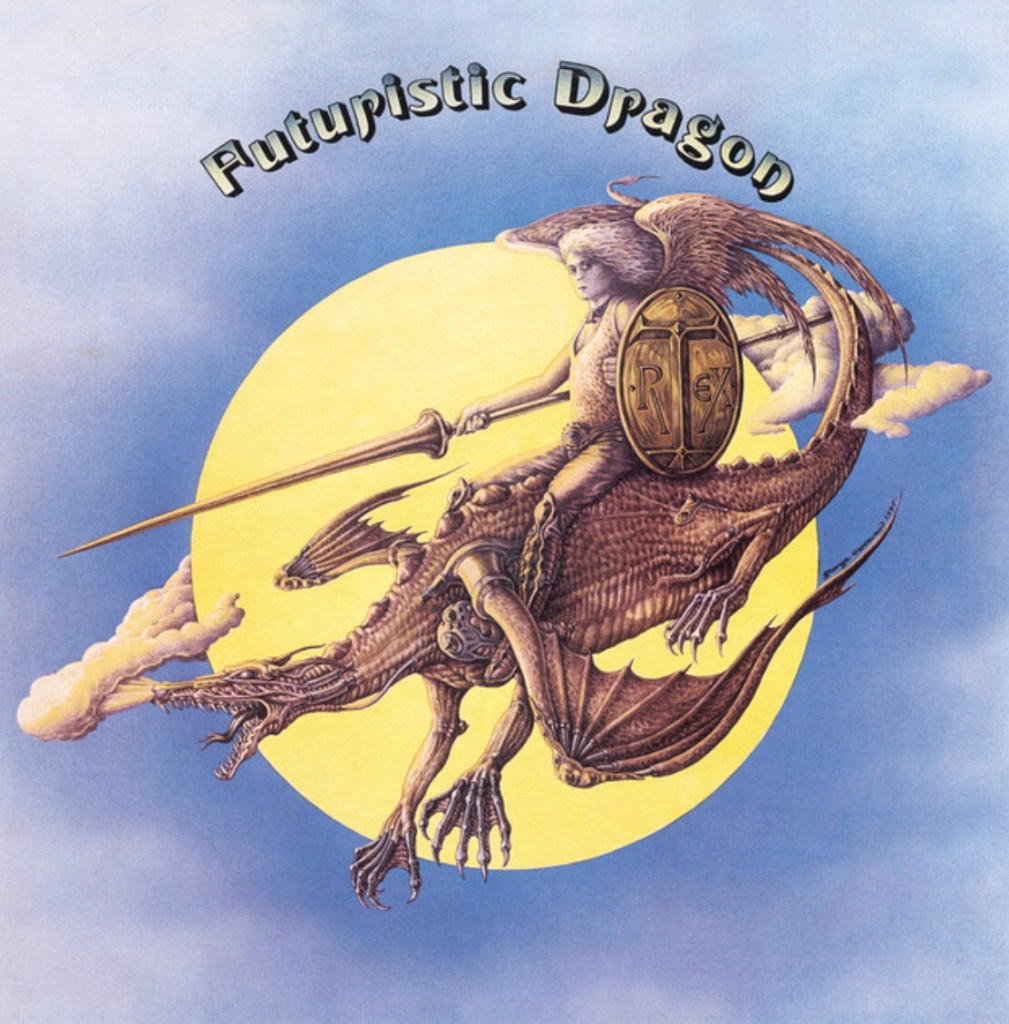
“Futuristic Dragon” is studio album number 11 released in January 1976 everywhere else in the world except the U.S. The U.S release didn’t happen until 1987.
It’s listed as a T-Rex album, however when Mickey Finn left the band the previous year, Bolan said that “T-Rex no longer exists”. But the labels are always wise and they wouldn’t release it unless it was T-Rex.
The band is Marc Bolan on Vocals, Guitars and Moog, his partner Gloria Jones on Backing Vocals and Clavinet, Steve Currie on Bass, Davy Lutton on Drums, Dino Dines on Keyboards and Jimmie Haskell on Strings.
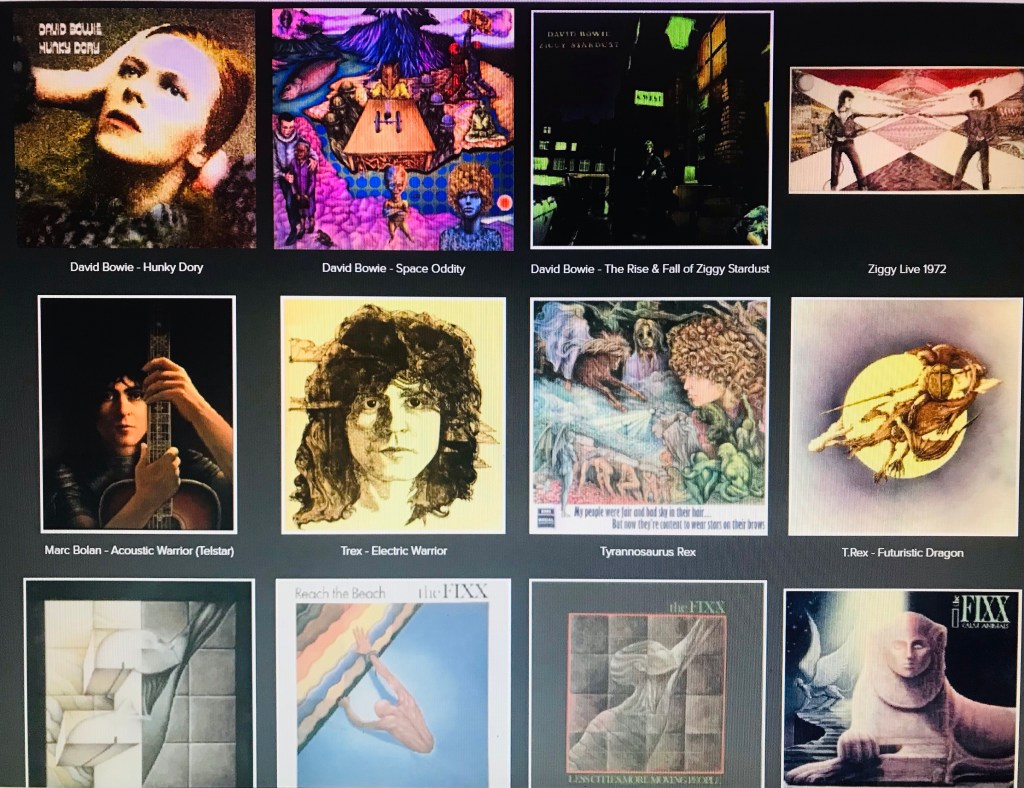
George Underwood did the cover artwork who also covers for other T-Rex albums, along with Bowie, Mott The Hoople and alot of book covers.
Here is a snapshot of some from his website.
All tracks are written by Marc Bolan.
Futuristic Dragon
It’s almost two minutes of a bass groove like the one in “Crazy Train”, guitars on cocaine and a voice over from Marc Bolan. But part from the bass groove, I was like “what the…”
Jupiter Liar
The “Get It On” style riff is back as Bolan is vamping on a F5 power chord.
But this time there are gospel/soul like backing vocalists. And Marc Bolan has a talent for creating a catchy song without a proper Chorus.
Chrome Sitar
The groove on this song is addictive. It’s almost metal like in the riff, however the horns give it a blues/soul rock vibe.
All Alone
It’s a Blues Rock Soul cut, very Rolling Stones like in the blues rock department.
If the verse vocal melody and progression sounds familiar, it should as Nikki Sixx took for when Frankie died. “On With The Show” I say.
New York City
It was a single, a blues rockabilly tune with catchy gospel like backing vocals.
And there is a vocal melody here (the “I did, don’t you know” lyric) which reminds me of another song from another artist, which I can’t remember right now. I like it when that happens, but also hate it when I can’t remember the other artist.
My Little Baby
Another catchy tune, mixing blues rock with soul and a bit of ELO like strings. The vocal melody was definitely used by other artists in the 80’s and beyond.
Calling All Destroyers
The verse vocal melody inspired Phil Lynott for the verse vocal melody on “Cold Sweat”.
Theme for a Dragon
It’s soundtrack like with the strings carrying the melody.
Sensation Boulevard
This could have been on any 80’s pop album it’s that catchy. Press play to hear to bass groove that rumbles throughout the song.
Ride My Wheels
This one has too much soul and less rock. The first slip up on the album, but I still appreciate it for the experimentation of soul based rhythms.
Dreamy Lady
Another experimenting song, however the sugary 60’s pop works here. It’s even disco-esque. Was disco even a thing in 76.
Dawn Storm
It’s a perfect blend of soul and rock.
Casual Agent
A small misstep with too much soul and not enough rock and blues.
Overall, the album is enjoyable to listen to. Marc Bolan is very underrated as an artist and on this album, you will hear a lot of melodies and riffs that other artists have used afterwards.
The blend of rock and blues was always there in T-Rex’s music, and the strings also appeared, however with the addition of soul and a bit of disco, the album was definitely ahead of its time.
Futuristic. Yes.
But it was no match against “A Night At The Opera” from Queen. While T-Rex toured on this album, the overall turnout at the gigs was poor and the album didn’t do that great on the charts either. The glory days of just a few years ago seemed like decades ago.
Against my better judgement (and pressure from my older brothers), I gave it to a local DJ (a family friend as well) to play at a party he was MC at, but he had a chequered history of not returning peoples music.
And as per the script, when I asked him for the CD back after the party, he told me that his DJ gear and the music he had was stolen after the party. But it appeared “somehow” magically the following fortnight for another party.
I also dubbed it on cassette before I lent it, so I might have had an inkling that it would never come back.
So what is “Retro Active”?
Released in 1993 to the slogan of “We’ve pretty much cleared out the shelves with this album”, “Retro Active” is a compilation album featuring re-worked versions of B-sides and previously unreleased recordings from the band’s recording sessions between 1984 to 1993. The creativity of the band members during this period was an all time high.
The press release for the album wanted to make clear, that;
“This is not a new Def Leppard album – nor is it an old Def Leppard record. It is “Retro-Active”, a collection of songs that have appeared in hard to find places or, in certain cases, never made it out of the studio until now.”
The band wanted to do this kind of album after “Hysteria”, with a release in 1989, however those plans didn’t eventuate.
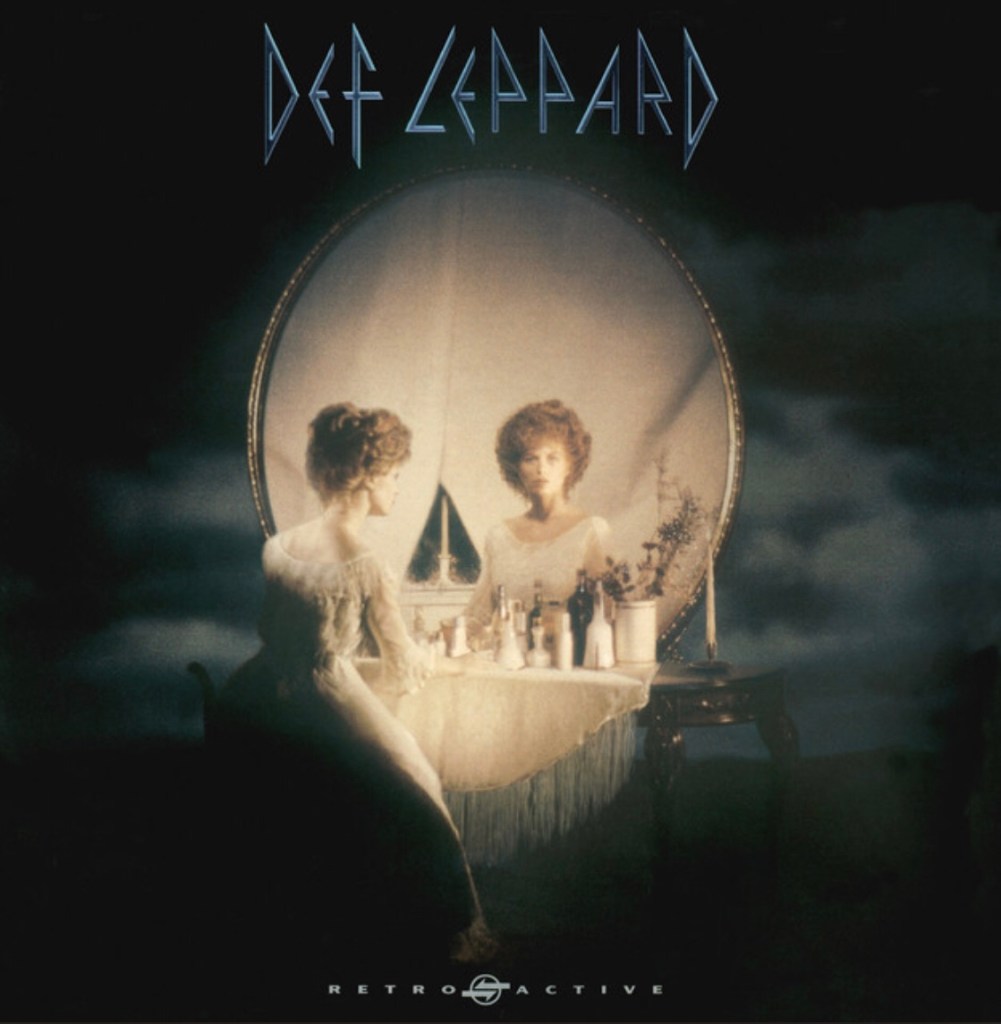
Pretty cool album cover as well by Nels Israelson and Hugh Syme and how two different images can be seen when viewed from a distance.
Vivian Campbell gets a chance to adding his own textures of electric guitars, acoustic guitars and backing vocals, on top of everything else that was already there by Rick Allen, Steve Clark, Phil Collen, Joe Elliot and Rick Savage.
Desert Song
Michael Schenker came to mind when I saw this title.
And this is a great opening track, written by Clark, Elliott and Savage. Listed as an unreleased outtake from the “Hysteria” sessions.
The Arabic/Dio/Blackmore feel of the main riff reminds me of early Def Leppard. And when the Pre-Chorus (or is it the Chorus) kicks in, you get smacked in the face by the “Hysteria” multi-layered vocals.
There is this quietened down section in the middle of the song, which reminds me of the 70’s and the arrangements that bands used to do back then. The middle section gives way to a lead break and to an outro with has minimal singing, however Elliot is using his voice like another instrument.
Fractured Love
My favourite song on this album and another unreleased outtake from the “Hysteria” sessions.
Written by Clark, Elliott and Savage. It was part of the original “Hysteria” track listing in the Spring of 1985, but once Mutt Lange returned, the song was shelved.
The drum like intro was actually recorded by Elliot, by tapping his fingers on the studio vocal booth “baffles”. The sound was then enhanced and looped to form the atmospheric intro.
The E-bow effects by Collen are haunting. The open string build up in the verses reminds me of Queensryche and songs from “Operation Mindcrime”.
And when the whole band crashes in for the multi-layered Chorus, its head banging time.
Action
A Sweet cover written by Andy Scott, Brian Connolly, Steve Priest and Mick Tucker. It was originally released on the “Make Love Like a Man” single; this version has re-recorded snare drums.
While the band Sweet had some traction in Australia, it was artists covering their songs in the 80’s and 90’s that got me interested to check them out.
And I like how Def Leppard just made it their own, rocking out, shredding out and in sections bringing in the multi-layered vocals.
Two Steps Behind
Written by Elliot. The unexpected hit.
This is the acoustic version and an electric version is further down the track list. It’s very Bryan Adams sounding.
It got some traction from the film “Last Action Hero” and it was originally released on the “Make Love Like a Man” single.
She’s Too Tough
Another cut written by Elliott and I dig it when his voice gets all Bon Scott throaty. Press play to hear him rock and roll in the verses like this.
This was a B-side included as a bonus track on the Japanese pressings of “Adrenalize”. Written in 1985, the song first appeared on the Helix album “Wild in the Streets” in 1987.
It was redone by the Lep and also released on the singles for “Heaven Is”, “Tonight”, and “Stand Up (Kick Love into Motion)”.
Miss You in a Heartbeat
This acoustic version has this gospel feel which I like.
The song was released on the “Make Love Like a Man” single as well as the Japanese versions of “Adrenalize”.
Phil Collen wrote it and it first appeared on an album by “The Law” featuring Paul Rodgers, released in 1991.
Only After Dark
A Mick Ronson cover, written by Ronson and Scott Richardson.
The song previously appeared on the “Let’s Get Rocked” single, and extra guitars were added for this release.
And the groove is still funky.
Ride Into The Sun (1987 re-recording)
This cut is listed as coming from the “Hysteria” sessions, however it goes back to “The Def Leppard E.P” from 1979.
It’s also listed as being written by Clark, Collen (I’m not sure what he added musically to get a credit as he wasn’t in the band when this song was originally written), Elliot and Savage.
And it’s pretty close to the original version in the verses and chorus.
Slight differences are from the “Hysteria” era cut is that it featured a Rick Allen drum solo intro, whereas the version here has a honky tonk piano intro provided by Ian Hunter.
From the Inside (with the Hothouse Flowers)
Another cut written by Joe Elliott for the “Adrenalize” album. I actually like the R.E.M vibe they have happening here.
It appeared as a B side to the “Have You Ever Needed Someone So Bad” single and some single releases of “Stand Up (Kick Love into Motion)”.
Ring of Fire
How this song never made the cut for “Hysteria” is a tragedy. It’s a pure hard rocker that borders on the early NWOBHM sound of the first two albums.
It will forever be known as a B side from the “Hysteria” sessions.
The song writing gang is also back with Clark, Collen, Elliot, Lange and Savage listed as writers.
It was originally released on the 1988 singles “Pour Some Sugar on Me” in the U.S and “Armageddon It” in the UK.
Press play and let the hard rock sounds wash over you.
I Wanna Be Your Hero
Another cut forever known as a B side from the “Hysteria” sessions and also written by the gang of Clark, Collen, Elliot, Lange and Savage.
It was originally released on the 1987 singles “Animal” in the U.S and “Pour Some Sugar on Me” in the UK.
Miss You in a Heartbeat (Electric Version)
How many versions of the same song could you want?
Well for this song, we get three versions.
Two Steps Behind (Electric Version)
Squeezing more mileage out of this one. And while I said the acoustic version sounds like Bryan Adams, this version seals the deal. It could be interchanged with another ballad from a Bryan Adams album.
Miss You in a Heartbeat (Piano Version)
It’s listed as a hidden track.
In relation to “Miss You In A Heartbeat” and “Two Steps Behind”, it goes to show how Def Leppard tried many different ways to bring the song to life. It’s not easy re-doing and re-creating a song.
And with this album, an era was done and the band was ready to start fresh.
Single #2 from ADRENALIZE – “MAKE LOVE LIKE A MAN” is our tongue in cheek look at a significant facet of human existence.
Take note!
Meanwhile we’ve got a couple more unreleased tracks for you. “MISS YOU IN A HEARTBEAT” is a Collen song of somewhat recent vintage, first recorded by Paul Rodgers’ group, The Law.
“TWO STEPS BEHIND” is an Elliot composition performed totally acoustically bass, 2 guitars and voice. Our first recorded acoustic performance.
And finally a version of a song by a group Joe really wishes he could’ve been in “ACTION” by Sweet. For those too young to remember, go listen to Sweet’s “Greatest Hits”.
A revelation and for those who remember the original, let me say that our efforts to duplicate every part recorded by Messrs Connolly, Priest, Scott and Tucker, we discovered some very interesting bits.
Don’t worry guys, we won’t let on.
It felt like they were giving us insights into their thinking with these little extra blurbs on the back. I always felt starved of information from my favourite artists.
I’m not a huge fan of “Make Love Like A Man” but I do get it that others like it as “Adrenalize” was their entry point into the band, while “Pyromania” was for me.
Miss You In A Heartbeat
I had to call up the track on Spotify to re-acquaint myself. Def Leppard has an electric version, an acoustic version and a revised version doing the rounds.
The electric version is classic Def Leppard. It could be a leftover from “Hysteria”.
The revised version has the piano as the dominant instrument and I like the gospel feel the piano gives it.
The acoustic version also has the piano as the dominant instrument and the Chorus doesn’t have those ohh, oh oh.. And the acoustic solo is a press play moment for me.
I also pressed play on the version done by The Law. And this one is close to the electric version that Def Leppard did, but Paul Rodgers is a bit more soulful with his vocal delivery.
Action
Def Leppard are on fire with this track. I always liked this track from Sweet, and the Lep’s do it justice.
Two Steps Behind (Acoustic Version)
Written by Joe Elliot, it feels like a camp fire track, very Bryan Adams like.
By the end of it, I pressed play again, because I liked the variation.
It’s a shame that the art of the single is lost within the current world as Def Leppard, Metallica and Bon Jovi really knew how to deliver a killer single release.
“Change of Address” came out in 1986 and its listed as album number 9 for Krokus.
The band for the album is Marc Storace on Vocals, Fernando von Arb on Lead Guitar, Mark Kohler on Rhythm Guitar, Tommy Keiser on Bass and Jeff Klaven on drums. Paul Fox and Jan Winding contribute keyboards.
Production is handled by Tom Werman as Producer and Mixer, with Duane Baron as the engineer and von Arb as Co-Producer.
A special mention to the outfits on the back cover. The 80’s are well known for the wardrobe choices of artists. And Krokus play into this as well.
Check em out in jump suits that mechanics would wear at a Formula 1 race. But they are in a bunker, to highlight the demolition of a building that looks like the White House.
Now (All Through the Night)
Written by Fernando von Arb, Jeff Klaven and Marc Storace.
How good is the Chorus?
It’s like Journey vocally and melodic hard rock musically.
One of my favourite tracks on the album but the midi drum sounds bother me.
You can blame ZZ Top for this, but at least when ZZ did it, it was still sounding like it belonged in the rock domain, whereas, the drum sound here feels like it belongs on a Gloria Estefan and Miami Sound Machine album.
Hot Shot City
Written by Tommy Keiser, Mark Kohler, Jeff Klaven and Marc Storace.
I’m not sure what’s happening with this song.
It’s like they wanted to bring in influences from Robert Palmer and Huey Lewis into their sound. It could have worked.
School’s Out
This is like old school Krokus and after hearing AOR Krokus on the first two tracks, this is a welcome relief of rock and roll.
For those that don’t know, this is a cover of the classic Alice Cooper cut.
But it’s also not necessary to have this on the album. Then again, most 80’s album had a cover of a 60’s or 70’s track on it. For some bands it was pure filler and for others, it was their biggest song.
Let This Love Begin
Written by von Arb and Klaven.
An acoustic guitar arpeggio riff starts it all off, very Malmsteen like with a bit of Vinnie Vincent and “I Still Love You” from Kiss. Once the distorted riffs kick in, its more Foreigner than Malmsteen.
Check out the lead break, bluesy and emotive, which reminds me of Jimmy Page and “Stairway To Heaven”.
Burning Up the Night
The side 1 closer is written by von Arb and Storace.
Its AC/DC “Long Way To The Top” like in the verses and the Chorus could have come from a REO Speedwagon album.
Say Goodbye
Side 2 opens up with this track, written by Fernando von Arb, Jeff Klaven and Marc Storace.
At 5.18, its length shows that it wasn’t written for radio. It has this reggae feel in the verses which I like and the backing vocals remind me of “Black Diamond” from Kiss.
The major key Chorus is like those major key Power Metal choruses.
This is the side to listen to first if you are a Krokus fan. There isn’t a bad song on this side.
And if the intro riff sounds familiar, it should as it was used by Krokus on “Tokyo Nights” from the “Metal Rendezvous” album.
World on Fire
My favourite track of the album at 6 plus minutes long, written by Fernando von Arb, Jeff Klaven and Marc Storace.
While the riffs are metal and hard rock like, the vocal delivery in the verses is very Robert Plant like and I like it.
If you want to press play on a track from this album, start with this track.
Hard Luck Hero
Written by Fernando von Arb, Jeff Klaven and Marc Storace it feels like it’s a cross between Bryan Adams, Night Ranger, early Foreigner and Autograph.
And I like it.
There is this section just before the solo, when Def Leppard also comes to mind.
Long Way from Home
5 plus minutes long and written by Fernando von Arb, Jeff Klaven and Marc Storace.
It’s another Krokus classic song, rooted in their past and perfect to move with into the future.
The Chorus has this Kiss feel which I like and Allan Holdsworth also does the guitar solo a fusion of string skipping and whammy bar madness.
The album did decent business in Switzerland and Sweden, but in the U.S it was up against some decent competition and it failed.
The band would later admit the change in style and sound was due to the label Arista not approving the recording until they heard more radio friendly songs.
But this wasn’t a problem tied to Krokus alone.
All of the bands during this period had albums that sounded radio friendly.
Judas Priest and “Turbo”.
Quiet Riot and “QRIII”.
To name a few.
Overall, the album still sounds like a hard rock album once you get past the first two tracks.
Werman has copped some flak from artists he’s worked with, but one thing is certain. The bands he produces, sound good. Even though I don’t like the midi drum triggers, the album still sounds good.
And if you purchased a Krokus album expecting to hear Shakespearean lyrics, well, it ain’t going to happen.
Enjoy Krokus for what they are, a hard rock band trying to survive in an ever changing market place.
And Krokus does change well.
When all the rage in the scene was about the NWOBHM and AC/DC they gave us “Headhunter” and “The Blitz”.
And when the rage shifted to AOR and midi triggers and synths, well they gave us “Change Of Address”.











 destroyerofharmony