Classic Songs to Be Discovered, Influenced, Music, My Stories

Top 10 of 2025: The Albums That Broke Through the Static

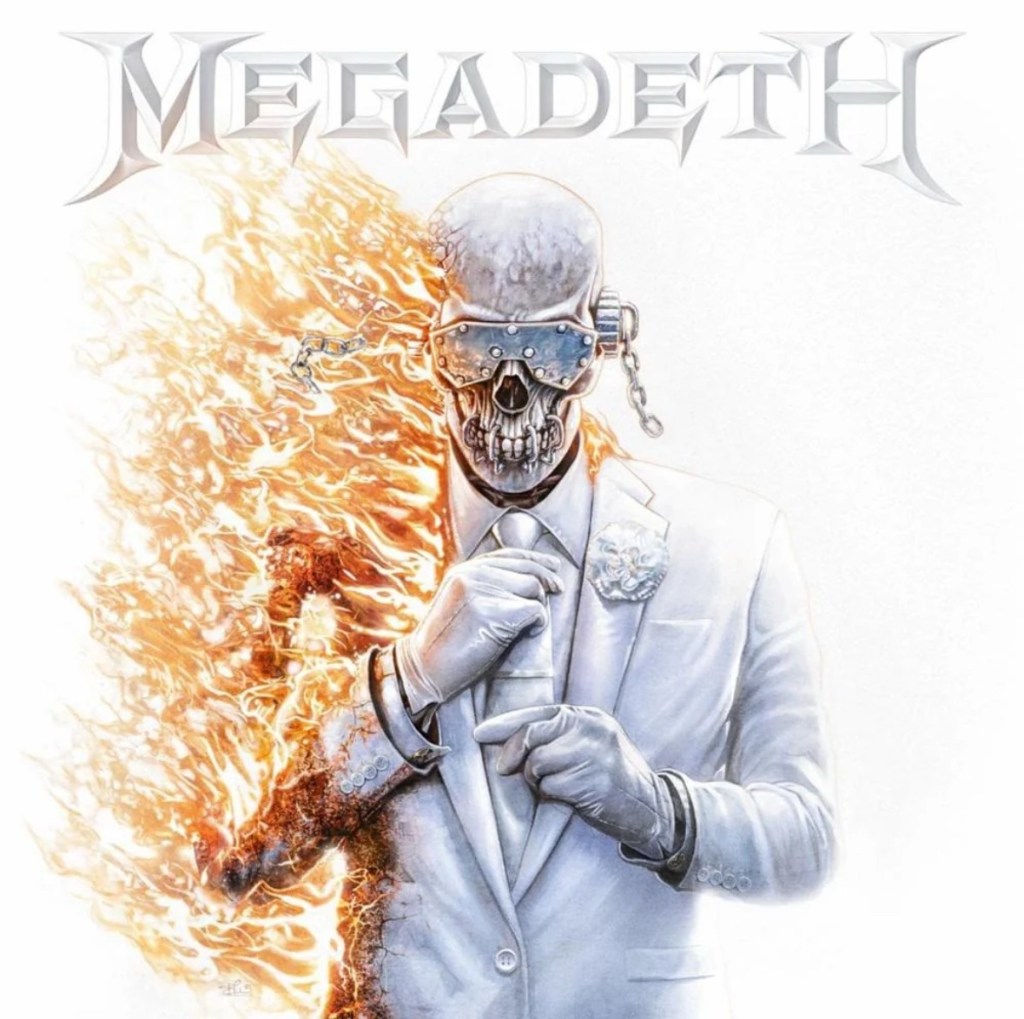
1. Machine Head – UNATØNED (USA)

I’ll admit it up front: there’s bias here. I’m a Machine Head lifer. I’ve sweated through their Sydney shows, screamed the choruses with a room full of strangers who felt like brothers, and I’ve bought the albums twice, CD for the shelf, vinyl for the ritual. This band has scored entire eras of my life, so yeah, I walked into “UNATØNED” expecting to feel something.

Machine Head has always lived on the knife’s edge between reinvention and self-sabotage, and “UNATØNED” is the sound of a band embracing that duality with both hands, refusing to sand down the jagged edges. This is metal that screams at the mirror. Metal that questions its own reflection.

And I like it.

What hits hardest here isn’t the brutality, it’s the volatility. The feeling that the wheels might come off at any second, but somehow the chaos is the direction. Robb Flynn’s voice has never sounded more torn between rage and clarity, between tearing things down and trying one last time to build something that matters.

It’s the band wrestling with genre expectations, with the legacy they built and the scene that keeps trying to define them. Every riff feels like an argument with their past. Every breakdown is a refusal to accept complacency. And in that tension, in that refusal, Machine Head taps into something feral and real.

Metal isn’t supposed to be safe. This album remembers that.

Stand Out Tracks: “Outsider”, “Not Long For This World”, “Bonescraper”, “Bleeding Me Dry”, “Shards Of Shattered Dreams”, “Scorn”

2. The Night Flight Orchestra – Give Us The Moon (Sweden)

I was there on this tour, same as I was a few years back when they rolled through. And yeah, I did the VIP thing. Met them. Shook the hands that wrote the soundtrack to so many late-night drives and long-haul headspaces. I’ve been locked in since the debut dropped in 2012, and I haven’t looked back once.

Maybe that’s why Give Us The Moon hits the way it does. It’s not just another record, it’s another chapter in a story I’ve been following for over a decade. TNFO have always existed in their own cinematic universe, part AOR nostalgia, part neon-lit fantasy, part heart-on-sleeve sincerity. But this one feels like a culmination: tight, melodic, polished without losing the humanity. It’s the sound of a band who know exactly who they are and exactly what they’re doing

But “Give Us The Moon” carries a different weight. It’s the first album without Dave Andersson, founding member, core songwriter, a pillar of the band’s DNA. You can feel the absence, not as a void, but as a presence. The songs shimmer with that bittersweet afterglow you get when a band pushes forward because stopping isn’t an option.

And yet the record still soars.

There’s joy in these songs, but also yearning. The sense that we once believed in things bigger than us, and maybe still could.

Every chorus feels like the high point of the night. Every verse feels like the road leading there. And whether you lived through the era or discovered it through YouTube artifacts, “Give Us The Moon” hits with the same truth:

We’re all searching for the magic we lost… and sometimes, the only way forward is back through the stars.

Standout Tracks: “Like The Beating Of The Heart”, “Melbourne May I”, “Runaways”, “Give Us The Moon”

3. Landfall – Wide Open Sky (Brazil)

Landfall were one of those Frontiers discoveries that didn’t just slip onto my radar, they punched through it. Their 2020 debut, “The Turning Point”, arrived in the middle of lockdown chaos and felt like a flare in the dark: bright, melodic, unapologetically AOR, the kind of record that made you remember why hooks and heart still matter.

I was in from that moment.

Then “Elevate” hit in 2022 and confirmed it, they weren’t a one-off spark, they were a band worth following, worth investing in, worth waiting for.

And now we’re here.

There’s nothing more rebellious in today’s overproduced, hyper-calculated landscape than sincerity. “Wide Open Sky” understands that perfectly. Landfall isn’t trying to shock you. They’re trying to reach you.

This album lives in that sweet emotional bandwidth between familiarity and freshness, a place most bands try to fake and fail. Landfall hits it because they’re honest about who they are: a melodic hard rock band that refuses to apologize for loving melody, heart, and clean, powerful hooks.

There’s courage in restraint. There’s confidence in not overreaching.

And there’s beauty in doing the simple things extremely well.

Three albums in, they sound like a band refining their craft with each step, stripping away the fat, sharpening the hooks, tightening the storytelling. These aren’t songs that reinvent the wheel. They’re songs that remind you why wheels matter: movement, momentum, connection.

Standout Tracks: “Tree Of Life”, “SOS”, “Running In Circles”, “No Tomorrow”, “Higher Than The Moon”

4. Teramaze – The Harmony Machine (Australia)

Teramaze hit my life out of nowhere in 2020 with “I Wonder”, and it stopped me cold. One of those rare albums where every track is a keeper, no skips, no filler, just a band firing on every cylinder with clarity and intent. That was the moment they locked in for me.

Teramaze has always been one of those bands operating just outside the prog mainstream, too thoughtful for the “riff Olympics,” too heavy for the art-rock crowd. “The Harmony Machine” is the record that embraces that outsider identity fully.

This album is intricate without bragging about it. Heavy without shouting it. Emotional without melodrama.

Where most prog bands treat songwriting as a riddle to be solved, Teramaze uses complexity as a storytelling device. The twists serve the journey, not the guitarist’s ego. And you feel it: tension, doubt, revelation, collapse, rebuilding… all woven into the architecture of the songs.

There’s darkness here, but it’s purposeful.

There’s light, but it’s earned.

Call it progressive metal for people who care more about narrative than notation. It’s heavy music with a novelist’s sense of pacing, a rare and necessary mutation in a genre that often confuses density with depth.

Standout Tracks: “Like A Cyborg”, “Sinister”, “Perfect World”, “Desire Colours N Lust”, “Black Sound”, “The Harmony Machine”

5. Sisters Doll – Scars (Australia)

I found them this year through “Scars”, and that was it. One listen and you realise this band isn’t operating in the same frequency as the rest of Australia’s rock scene.

Because here’s the thing: Sisters Doll isn’t just a band; it’s four brothers raised on a steady drip-feed of KISS, Budgie, Firehouse, Mötley, Van Halen, Magnum, Aerosmith, Alice Cooper, the whole electricity-soaked DNA of 70s and 80s hard rock. When your dad has KISS posters on the walls and riffs pumping through the house before you even know your times tables, it rewires you. You grow up thinking this is what music is supposed to feel like: oversized, unapologetic, melodically dangerous.

And their name?

Pure lightning-in-a-moment creativity. The brothers at a computer, flicking through classic logos. Twisted Sister… New York Dolls… and then someone blurted out “Sisters Doll.” No corporate brainstorming session. No branding consultant. Just instinct, exactly how rock bands should be named.

That’s what hit me when “Scars”landed. The immediacy. The honesty. The sense that these four brothers aren’t trying to revive something, they genuinely are the continuation of that lineage. They carry the attitude in their blood. The hooks are polished, but the energy is raw.

Sisters Doll might be Australia’s best-kept secret right now, but secrets like this don’t stay hidden for long.

“Scars” takes every element, big choruses, shiny melodies, theatrical moments, and turns them into something raw and exposed. This isn’t glam for glam’s sake. This is glam dragged through lived experience, glam hardened and cracked in the right places.

The biggest surprise?

The vulnerability hits harder than the riffs.

The hooks are undeniable, but it’s the honesty that sticks. They’re not resurrecting the past. They’re weaponizing it. And the result is an album that earns every one of its emotional punches.

Standout Tracks: “Climbing Out Of Hell”, “Prisoner”, “Change”, “Kiss Me”

Plus they do a cool cover of “God Gave Rock N Roll To You”, released as a single in 2023.

6. Days of Jupiter – The World Was Never Enough (Sweden)

Days of Jupiter came into my world at exactly the moment I needed them.

Disturbed went on hiatus, and suddenly that gap, the groove-heavy, anthemic, modern-metal fix, was wide open.

That’s when “Secrets Brought to Life” hit me in 2012. It wasn’t an imitation; it was a different branch of the same evolutionary tree. Same muscular riff language, same emotional voltage, but with a Scandinavian coldness woven through the melody. It scratched the itch and created a new one at the same time.

Then came the run of albums that cemented it:

“Only Ashes Remain” (2015), the band at their most sharpened and dramatic, leaning into the fire.

“New Awakening” (2017), a title that felt prophetic, because this is where they stretched the edges.

“Panoptical” (2018), their tightest, most conceptually aware work, a panoramic scan of everything they’d become.

And then… silence.

The kind of disappearance that feels permanent in this genre, where momentum is everything.

But somehow, they’ve resurrected themselves.

“The World Was Never Enough” isn’t just a comeback record, it’s the shockwave after an unexpected return.

I didn’t expect them to return. That’s what makes this era exciting.
This feels less like “another album” and more like unfinished business finding its way back to daylight.

Massive soundscapes often swallow the message. Not here.

The vocals soar, the guitars punch, the rhythm section feels like tectonic plates grinding. But instead of collapsing under all that weight, the songs expand, breathe, and build.

This band understands contrast.

That power means nothing without space.

That melody means nothing without pressure.

What emerges is a record that feels like a fight and a release… a catharsis wrapped in polished production. It’s metal engineered for scale, but powered by emotion.

Standout Tracks: “The World Was Never Enough”, “The Fix”, “Parazite”, “Invincible”

7. Jimmy Barnes – Defiant (Australia)

What can I even say about Jimmy Barnes?

I’m a full-blown fanboy and have been for as long as I can remember. The Cold Chisel era lit the fuse, those songs were stitched into the fabric of this country long before I ever understood why they mattered.

Then the solo records hit, and each one felt like a chapter in a life lived louder, harder, and more honestly than most of us dare to imagine. Even his foray into soul, the books, the memoirs, the cookbooks, if Barnes put his name on it, I absorbed it.

He’s one of Australia’s most iconic voices, a force of nature wrapped in grit and heart, and no matter how wide the legacy stretches, he’ll always be our working-class man.

That’s the framework I carry into “Defiant”, not objectivity, not distance, but decades of connection, admiration, and a deep sense that his roar has been part of the soundtrack of my own life.

Barnes has been singing for decades like the world is trying to take something from him and he refuses to let it go. “Defiant” is the sound of that refusal reaching its final, volcanic form.

There are albums that preserve legacy. This one burns it into steel.

Every track feels earned, the rasp, the roar, the cracks that most singers would try to fix. Barnes doesn’t fix them. He weaponizes them. The grit tells the story long before the lyrics do. You can hear the years, the miles, the survival.

Working-class rock isn’t a genre. It’s a biography.

And this album is another chapter in a life built on refusing to die quietly.

Standout Tracks: “That’s What You Do For Love”, “Never Stop Loving You”, “Beyond The River Bend”, “New Day”, “Defiant”, “The Long Road”

8. WET – Apex (Sweden/USA)

W.E.T. is one of those rare Frontiers projects that didn’t just work, it over-delivered. On paper it looked like another label-engineered collaboration, the kind that burns bright for one album and quietly disappears. But when you put Robert Säll from Work of Art, Erik Mårtensson from Eclipse, and Jeff Scott Soto from Talisman in the same creative orbit, something different happened. The chemistry wasn’t theoretical, it was audible.

Their blend of melodic hard rock, arena-sized hooks, and polished contemporary rock hit me immediately when the debut landed in 2009. What was supposed to be a one-off turned into a proper band with multiple studio albums and even a live release, something almost unheard of for these “assembled” projects.

And that’s why they stuck with me.

There’s a moment every few years when a melodic rock record lands that feels like a line in the sand. “Apex” is exactly that.

WET didn’t chase trends. The production is meticulous, but the emotion bleeds through untouched. The choruses feel designed for stadiums, but the lyrics read like private confessions. It’s the rare fusion of precision and humanity, a record that rewards both technical analysis and emotional surrender.

Put simply: this is melodic rock done at the highest possible level.

A reminder of what the genre can be when ambition and heart align.

Standout Tracks: “Believer”, “Love Conquers All”, “Where Are The Heroes Now”, “Stay Alive”, “Day By Day”

9. Babylon AD – When the World Stops (USA)

When Babylon A.D.’s debut dropped at the end of the ’80s, I genuinely thought they were going to explode. They had the swagger, the hooks, the imagery, you could slot them right beside Crüe, Jovi, or Skid Row and it made perfect sense. I was ready for them to be one of those bands, the ones who went from the clubs to the arenas in a single breath. But it never quite happened.

The second album arrived, made a ripple, and vanished quicker than it deserved to. Then Seattle hit, and like a lot of bands from that era, Babylon A.D. slipped into the fog. For years it was radio silence. If you weren’t on MTV, the world forgot you existed.

Then Napster came along and, legalities aside, it resurrected whole corners of my musical DNA. Suddenly people were trading deep cuts, forgotten albums, and long-lost bands.

Babylon A.D. reappeared in the wild, passed around like a secret handshake. It didn’t make them chart-toppers, but it made them relevant again. It reminded me why I’d believed in them in the first place: there was real fire in those early songs, a spark worth rediscovering.

It’s a band that survived the cracks of an era and found its way back into the conversation.

“When the World Stops” is not a nostalgia trip. It’s a reckoning.

The riffs feel lived-in, the grooves carry weight, the lyrics sound like they’re written by people who’ve survived things rather than imagined them. There’s hunger here, but also honesty, the kind you can’t fake. It’s a rough-edged record, intentionally so, and that’s exactly why it works.

In an era obsessed with polish, Babylon AD rediscover the power of imperfection.

Standout Tracks: “When The World Stops”, “Torn”, “The Damage Is Done”

10. H.E.A.T – Welcome To The Future (Sweden)

What can I say about H.E.A.T?

They’re one of those Swedish bands that arrived exactly when I needed them, filling a void I didn’t even realise had gotten so wide. Melodic heavy rock had gone missing from my life, at least in the way I wanted it: big choruses, sharp hooks, bright production, and that sense of forward momentum only the best Scandinavian acts seem to bottle.

I first heard “Address the Nation” in 2012, and it hit with the force of a reminder. Oh right, this is what this music is supposed to feel like.

From there I immediately went backwards, digging into the first two albums, discovering the foundation they’d already laid. And once you’re in, you’re in. I’ve been following them ever since, album to album, lineup to lineup, watching them refine that hybrid of AOR sheen and hard-rock muscle into something unmistakably theirs.

H.E.A.T. made melodic heavy rock feel alive again. And every new release since has been another reason to stay plugged in.

But “Welcome To The Future” is the first time it feels like they’ve truly broken the gravitational pull of their own past.

This album is wired with urgency. You can feel the momentum in every chorus, the forward push in every riff. They’re not reinventing themselves, they’re evolving.

The guitars burn neon. The whole record feels like a mission statement:

Rock isn’t dead. It just needs believers.

And H.E.A.T sound like the last true evangelists.

Standout Tracks: “Running To You”, “Disaster”, “In Disguise”, “The End”

My Final Thoughts

I went into 2025 not knowing what the hell I even wanted to hear anymore. Burnout crept in from every angle, too many albums, too much algorithmic sameness, too much noise masquerading as discovery. My ears felt tired. My brain felt full. But I’m a lifer, and lifers don’t quit, we recalibrate. So I went back to the beginning. The stuff that built me. The records that knew my moods before I could name them. And once those old foundations were steady again, I opened the door to the new. Some records blindsided me. Some left me cold. Some whispered, “stick around… we’re not done yet.”

And that’s the point. These ten albums aren’t trophies, they’re the map of a year spent listening with intention. A reminder that perfection is a fairy tale, but impact is real. Music still has the ability to shock us, disappoint us, challenge us, and rewire our circuitry for an hour at a time. Even the albums that didn’t quite land took a swing, and that swing matters. Because the real story isn’t the ranking—it’s the pursuit. The restlessness. The search for something that hits deeper than expectation. That’s why we listen. That’s why we never stop.

Standard
Classic Songs to Be Discovered, Influenced, Music, My Stories

The What-If List: 2025’s Albums That Could’ve Been Top 10 on a Different Day

Harem Scarem – Chasing Euphoria (Canada)

If “The Pirate Bay” didn’t exist, I’m not sure I ever would’ve stumbled into Harem Scarem. The band name alone wasn’t exactly screaming “essential listening”, if anything, it sounded like something I’d skip past without a second thought. And I cannot recall seeing any of their albums for sale in the record stores I would visit.

And that’s the lesson I should’ve known by then: never judge a record by the packaging, especially in rock.

Because the second those opening chords and that razor-sharp guitar lick kicked in on “Hard to Love,” everything changed.

I was in.

Completely.

I couldn’t believe it had taken me nearly sixteen years from the debut’s release to finally hear what everyone else apparently already knew.

Pete Lesperance isn’t just good, he’s one of those players who should’ve been plastered all over every guitar magazine I grew up devouring. Fluid, melodic, precise, emotional. A guitar god hiding in plain sight.

Finding Harem Scarem that late felt like discovering a lost chapter of a book I thought I already knew. And I’ve been making up for lost time ever since.

They have always lived in that strange creative space where consistency becomes both blessing and curse. Too good to ignore, too reliable to shock. “Chasing Euphoria” leans into that identity and refuses to apologize for it.

This is a band that knows exactly what they’re chasing: melody delivered with precision, hooks built to last, musicianship that whispers instead of screams. And in a world where everyone’s trying to reinvent the wheel to get fifteen seconds of algorithmic relevance, there’s something refreshingly rebellious about a band choosing refinement over reinvention.

This is the kind of record critics never scream about…
…but fans play for years.

Standout Tracks (plus great guitar moments): “Chasing Euphoria”, “Better The Devil You Know”, “Slow Burn”, “Gotta Keep Your Head Up”, “Reliving History”, “A Falling Knife”

Wildness – Avenger (Sweden)

Wildness pulled me in before I even heard a note. It was the cover art of their 2020 album “Ultimate Demise”, that neon-drenched, retro-revenant aesthetic straight out of “The Wraith”.

And if you know “The Wraith”, you know why that matters: a cult ’80s fever dream with Charlie Sheen coming back from the dead to settle the score, backed by one of the most criminally underrated hard rock soundtracks of the era. That visual language alone told me exactly what world Wildness were operating in.

And once I pressed play, that was it. I was locked in. I started tracing backwards to their 2017 debut and forwards to everything they released after, watching the evolution, catching the nuance, waiting to see where they’d go next.

It’s safe to say they’ve got me now, committed, invested, watching every move.

Another Frontiers act, yes, but one that doesn’t get lost in the label’s vast catalogue. Wildness stand out because they know exactly how to blend nostalgia with muscle, image with substance. They hooked me with a cover, but they kept me with the music.

“Avenger” is melodic hard rock turned up to its maximum expression: massive hooks, skyscraper choruses, guitars that sparkle and snarl in equal measure.

But the crucial thing is intent. Anyone can imitate the 80s. Wildness believes in the 80s. They channel it like a power source, not a costume. There’s zero irony, zero distance. They’re not leaning on nostalgia, they’re fueling it, igniting it, weaponizing it.

This album demands that you let yourself feel something again in a world that keeps telling you to stay numb.

If you want rock that apologizes for its size, go elsewhere.

If you want rock that reminds you why you fell in love with it in the first place, start here.

Standout Tracks: “Wings Of Fire”, “Crucified”, “Broken Heart”, “Avenger”, “Stand Your Ground”, “Eye Of The Storm”, “Walk Through The Fire”

Tokyo Blade – Time Is The Fire (UK)

I’ll admit it, I came into Tokyo Blade completely cold. The name floated around my periphery for years, one of those bands you keep meaning to check out but never quite get around to.

This time, I finally pressed play, and I’m glad I did. Because “Time Is The Fire” hit me with a feeling I hadn’t tapped into for ages, that pure, unfiltered heavy metal nostalgia.

The kind that takes you straight back to dropping the needle on a Maiden or Saxon album, leaning back while the opening riffs roar to life, staring at the cover art like it’s a doorway into another world, and reading the lyrics line by line as if you’re decoding a map. Tokyo Blade gave me that feeling again. That spark. That reminder of why this genre grabbed me in the first place.

Sometimes coming in cold is the best way to rediscover the heat.

There’s a kind of honesty you only get from bands that outlast fashion. They are still swinging, still bleeding for the cause, still carrying the NWOBHM banner long after the world stopped looking in their direction.

“Time Is The Fire” isn’t perfect, and that’s exactly its charm.

The twin guitars? Still lethal.

The grit? Still real.

The need to prove something? Somehow still burning.

Standout Tracks: Every single track

Nighthawk – Six Three O (Denmark)

Nighthawk entered my world through Björn Strid, because when that man lends his voice to a project, I pay attention. Simple as that.

One listen and it was clear this wasn’t just another side-gig or nostalgia exercise. This was a band tapping straight into the veins of ’70s blues-rock grit and ’80s hard-rock swagger, the exact blend that’s basically engineered to short-circuit my resistance.

It’s the kind of sound that feels lived-in, road-tested, shaped by the ghosts of all the music that raised us. And with Strid at the helm, delivering vocals that cut through the mix with precision and soul, it became impossible not to lean in deeper.

Nighthawk didn’t sneak in, they walked through the front door carrying everything I already love. How could I not be on board?

Nighthawk understands something too many bands forget: intensity isn’t about speed or volume—it’s about intention. Six Three O is the most deliberate punch you’ll take all year.

There’s no fat. No filler. No “maybe we should try this experimental middle-eight.” The band writes like they’re chiseling granite: clean lines, sharp edges, no compromise. And in that discipline, the whole record breathes.

The songs hit with muscle, but they stick because of the craftsmanship. Every chorus lands. Every riff feels earned. There’s a sense of purpose here, a seriousness of execution that elevates what could’ve been mere nostalgia into something alive, something forward-moving.

Call it a love letter to melodic hard rock’s golden age.

But it’s written in fresh ink.

Laguna – The Ghost Of Katrina (Mexico)

Every once in a while, a debut shows up that’s less a calling card and more a manifesto. Laguna’s “The Ghost Of Katrina” is exactly that, an atmospheric, shadowed, deeply melodic vision of what the next era of melodic rock could be.

This album doesn’t scream. It haunts. It lingers at the edge of the room. It waits for you to lean in.

There’s nostalgia here, yes, but it’s tempered by melancholy, by restraint, by a sense of unspoken stories beneath the surface. The melodies sweep, the guitars shimmer, but the emotion is cloudy, unsettled, the perfect kind of tension.

It’s a debut that respects the past without being chained to it.

Ronnie Romero – Backbone (Chile/Spain)

Romero has spent years being the voice for other people’s visions. Finally, here he is, unfiltered, unmasked, unrestrained. Backbone is a title that borders on understatement.

This is his musical identity without the safety net. Big riffs, towering vocals, moments where he leans back into classic metal tradition and others where he barrels forward into something sharper, more modern, more feral.

There’s no hedging here. No trying to please everyone.

Just a singer with something to say, saying it at full volume.

You get the sense that this isn’t just an album, it’s a declaration.

A reminder that he’s not here to be hired. He’s here to lead.

The Southern River Band – Easier Said Than Done (Australia)

There’s reckless joy and then there’s lived-in swagger. Southern River Band choose the latter, and “Easier Said Than Done” is the sound of a band embracing their scars with a grin and a shot of whiskey.

Nothing here feels polished.

Nothing feels safe. And thank god.

This is rock that sweats. Rock that stumbles. Rock that gets back up because the riff demands it. You can hear the late-night gigs in the guitar tone, the worn boots in the bassline, the grit under the singer’s nails. There’s authenticity here that you can’t buy and most bands can’t fake.

It’s messy in the places that matter.
Perfect in the places that count.

Catalano – Nightfighter (Australia)

Catalano walks in wearing glam’s old leather jacket, but the energy is entirely modern: sharp, urgent, unapologetically loud. Nightfighter is a love letter to excess delivered with a fighter’s instinct.

The riffs shred. The vocals swagger. The production gleams like neon bouncing off chrome. But underneath all that bravado is a tightness, a discipline, a sense of knowing exactly when to strike.

This isn’t retro worship, it’s resurrection. Not imitation, acceleration.

If glam metal ever needed a new champion for the modern era, this album throws down the gauntlet.

Creeper – Sanguivore II: Mistress Of Death (UK)

Creeper have always walked the line between drama and danger. “Sanguivore II” doesn’t walk, it sprints, capes flying, teeth bared. But what saves it from camp is conviction.

This band treats theatricality like a weapon. Not parody. Not cosplay. A delivery system for emotion, venom, and narrative. The hooks glisten like stolen jewels. The lyrics bite. The atmosphere feels like a haunted opera house lit by broken neon.

Most bands attempt this kind of thing and collapse under the weight of their own ambition. Creeper thrives in it.

They don’t tip into absurdity because they never wink.

They mean every second. And that sincerity makes the darkness glow.

These albums sit in that fascinating space between “great” and “essential.” On any other day, hell, on any other mood swing, half of them could’ve muscled their way straight into the Top 10.

They’re the records that shape-shift with you: heavier when you need weight, brighter when you need escape, sharper when you need clarity. Some pushed boundaries. Some perfected familiar formulas. Some simply refused to fade into the background.

Together, they form the shadow-constellation around the main list—a reminder that music isn’t a fixed hierarchy but a living, shifting thing. These aren’t leftovers; they’re contenders, circling the throne, waiting for the right moment, the right listener, the right late-night spark to take the crown.

Standard
Classic Songs to Be Discovered, Derivative Works, Influenced, Music, My Stories

Albums That Tried to Fly Higher in 2025 and Still Might

Let’s kick off the end-of-year rundown with the albums we all circled on the calendar, the ones we expected to split the sky wide open. They landed, they’re solid, but they didn’t quite sling me into that astral orbit Ozzy hit the moment he launched into “Over the Mountain.” Not yet, anyway.

And that’s the thing: not yet is the keyword here. Decades of listening have taught me that records I initially filed under pretty good often grow teeth, soul, and permanence with time. Music is a long game. Context matters.

Where you are in life matters.

Your mood matters.

The hours you carve out for real, undistracted listening matter.

Even the simple ritual of buying the record, holding it, cracking it open, letting the artwork seep into you, creates a connection that streaming never will.

So these albums might not have lifted me off the ground this year, but that doesn’t mean they won’t catch a thermal down the line and carry me somewhere I didn’t expect. That’s the beauty of listening: the records stay the same, but we don’t.

And sometimes“expected more” is just another way of saying, “we still believe you’ve got greatness in you.”

Dream Theater — Parasomnia (USA)

I’ve got the “Parasomnia” graphic novel landing in January or February, tickets locked for the Sydney show, mid-summer, the sweet spot, and the entire “Quarantième: Live à Paris” arsenal on its way: vinyl, CD, Blu-ray, the full ritual package.

Because when a band hits you at the exact right moment, it brands itself into your timeline.

For me, it was the Australian summer of ’92 going into ’93. “Pull Me Under” came through the speakers and that was it, no hesitation, no slow burn. I went all in. Built a cathedral out of riffs and odd time signatures. My name ended up in the fan-funded first edition of “Lifting Shadows”, Rich Wilson’s biography. A tiny line in a thick book, but it felt like a stamp in a passport to another world.

And decades later, nothing’s changed. I’m still a first-day buyer. Still hitting preorder like it’s muscle memory.

So when I talk about end-of-year lists and expectations and albums that didn’t quite hit escape velocity?

Dream Theater sits outside that framework entirely.

They don’t compete.

They just arrive.

But this time around, they are here. In this list.

Portnoy’s comeback was supposed to be a seismic event. And in flashes, it is.

The drumming feels unshackled again, elastic, mischievous, a little dangerous. Not as robotic. It drags the band into thrilling asymmetry, reminding you how paranoid and alive they used to sound.

But “Parasomnia” is also the sound of five musicians renegotiating gravity.

The interplay is extraordinary in isolated passages, keyboard spirals that feel like lucid-dream glitches, Petrucci lines that cut like tungsten wire, Myung’s bass grumbling in the basement like the subconscious trying to surface. The problem? It never fully resolves into a thesis.

The album aims for the labyrinthine but often settles for the technically inevitable.

There’s brilliance in the corners, moments where the band feels like they’re discovering oxygen again, but the overarching architecture wavers. As if the band knows what they’re capable of but is too aware of the weight of its own past.

“Night Terrors” is Dream Theater doing what only they can do, classic, confident, instantly recognisable.

It’s their version of “The Force Awakens”: the familiar returned, polished, tightened, welcomed with open arms because it remembers what made you fall in love in the first place.

“A Broken Man” does exactly what the title hints at. It’s chaos in song form, fractured, jagged, unsettled, but that’s the point. It feels like watching a mind splinter and reassemble in real time.

But the real revelation is “Bend The Clock.” This is where they swerve into pop-rock territory without surrendering a single strand of their progressive DNA. It’s melodic without being soft, intricate without being indulgent. It sits in that magical space between “Images and Words” and “Metropolis Pt. 2”, the era when they were discovering how far they could stretch melody without losing muscle.

It’s the song that shouldn’t work, yet somehow works better than everything around it.

Finally, “The Shadow Man” feels like an intentional glance over the shoulder, threads of their past woven straight into the present. Little callbacks, little winks, especially to “Metropolis Pt. 2”.

Not imitation, not nostalgia for its own sake, but echoes. Fragments. Signals for the listeners who’ve walked the whole journey with them.

Ghost — Skeletá (Sweden)

Ghost’s strength has always been mythmaking: cathedral pop coated in metallic lacquer.

“Skeletá” tries to dismantle that mythology. It replaces spectacle with confession, shadow-play with bare lighting. And the shift is courageous, Tobias Forge leans into vulnerability with melodies that float instead of march.

The production is the most skeletal (pun intended) the band has ever embraced, airier arrangements, fewer layers, more emotional oxygen.

But the truth is… Ghost’s emotional palette is still evolving. The introspective songs tremble with intention, but some of them lack the gravitational force of their grander works. It’s as though Tobias exposed his emotions and then wasn’t sure how far to go.

There’s a moment in “Peacefield” where everything clicks, and you don’t even know why. You’re humming along, lost in that syrupy Ghost atmosphere, when the chorus rises up and suddenly you’re twelve again, staring at the ceiling, waiting for the world to make sense.

And it never does, but music sometimes gets close.

That lift, that melodic climb, isn’t random. It’s a shadow of one of the most immortal hooks in rock history: the chorus architecture of Journey’s “Separate Ways.”

Not the notes. Not the phrasing. The geometry.

The emotional staircase.

Ghost didn’t steal the melody; they stole the feeling of inevitability. That upward lunge that says here it comes, that quiet promise that something bigger is right around the corner. Journey nailed it for the MTV generation. Ghost resurrected it for a world that spends more time doomscrolling than dreaming.

This is Tobias Forge at his sly, cathedral-rock best. The man understands nostalgia the way a chess grandmaster understands sacrifice: you don’t go for the queen, you take the pawn that exposes the whole board. He threads the spirit of an arena classic into a modern occult rock hymn and makes it feel like it always belonged there.

The past isn’t something you repeat. It’s something you compost.

Break it down, pull out the nutrients, grow something new from the rot of yesterday’s brilliance.

That’s Ghost. They don’t do retro; they do recombinant DNA. They turn AOR’s heroic optimism inside-out and build a darker, more cinematic version that still fills the lungs. “Peacefield” is what happens when you choose to honor the architecture instead of the wallpaper.

And the crazy part? Most people never notice.

They just feel it.

And, this is how music is supposed to feel.

Crazy Lixx — Thrill of the Bite (Sweden)

Crazy Lixx have never pretended to be philosophers, they’re the neon under the streetlights, the lipstick smear on the mirror, the chorus that hits like cheap perfume and bad decisions.

And “Thrill of the Bite” nails that… in theory.

The opening tracks roar with swagger, chrome-plated riffs, big-room snares, gang vocals like a bar fight in harmony. It’s indulgent, infectious, hedonistic.

Start with “Who Said Rock And Roll Is Dead.”

On the surface, it’s all swagger and sunlight, the kind of melodic strut that makes you want to roll the windows down even if you’re parked in your driveway.

But underneath?

There’s a harder lesson stitched into the chords: you find your real strength when the world doubts you the most.

Then the needle hits “Call Of The Wild,” and I am transported, suddenly I am back in that era when guitar intros were battle standards, not polite invitations.

The pulse echoes the frantic edge of a certain classic from the old guard, the kind that gallops more than it walks. “Back In The Village” comes to mind.

It’s not imitation. It’s continuity.

And then there’s “Recipe For Revolution.”

It’s the rare breed that marries muscle and melody without compromising either.

Here’s the inconvenient truth:

Rock didn’t vanish. The spotlight did.

And that’s what this band represents.

The idea that you don’t need to reinvent the wheel; you just need to keep it spinning long enough for people to remember why it mattered.

But halfway through the album, the sugar-rush becomes predictable.

You start hearing the formula:

anthem → pre-chorus lift → high-gloss chorus → two-step solo.

Regardless, Rock and Roll never died.

It simply waited for musicians stubborn enough, hungry enough, to prove that some fires burn brighter when everything around them goes dark.

Volbeat — God Of Angels Trust (Denmark)

Volbeat hit a strange point in their career, successful enough to have a signature, but boxed in by that same signature.

“God Of Angels Trust” is that tension laid bare.

The album is muscular and melodic in classic Volbeat fashion: sharp staccato riffs, rockabilly undertones, Michael Poulsen’s unmistakable baritone. But rather than reinvent, the band refines, and not always to their advantage.

There are moments where the old hunger tears through:

Tracks where the riffs feel serrated, the chorus detonates on impact, and Poulsen sounds like he’s exorcising demons rather than fronting them. But the album also cycles through familiar rhythmic patterns and predictable melodic arcs.

You can feel two creative instincts wrestling:

The desire to evolve, and the fear of losing the audience.

That tension produces a solid album, professional, powerful, but not the evolutionary leap the band hinted at.

It’s a strong record that hits hard, but too often in familiar ways.

Coheed and Cambria — The Father Of Make Believe (USA)

Coheed’s strength is in constructing universes, cathedral-sized concept arcs, operatic vocal lines, and prog structures folded like origami.

“The Father Of Make Believe” embraces that identity wholeheartedly.

The albumscape is full of layered guitars, ascending melodic leaps, and time signatures that fold back onto themselves like double-helix storytelling. The problem isn’t execution, it’s predictability.

You’ve heard this version of Coheed before. Maybe not these exact songs, but this exact shape.

It feels like the band is protecting their mythos rather than challenging it.

The choruses soar, but you anticipated the exact height.

The narrative threads tie together, but you can trace the stitching from miles away.

There’s joy in hearing masters at work, but the thrill of discovery, so central to Coheed’s best moments, is muted here. Fans will feast, but the album doesn’t expand the canon in the way its title promises.

A solid, expertly crafted chapter, but not the universe-shaking installment it hints at.

Stand out tracks are “The Father Of Make Believe”, “One Last Miracle” and “The Continuum”.

And then Coheed and Cambria reissued the album and they expanded the universe.

The “New Entities Edition” feels less like a deluxe package and more like a door cracking open to reveal the machinery of The Keywork still humming behind the walls.

What this edition does so well is deepen the idea that the Keywork isn’t a symbol, it’s an ecosystem. A cosmic lattice powered by the entities living inside it, each one acting like a living conduit proving that its energy isn’t mystical so much as engineered.

It’s not just another version of the album.

It’s another chapter.

Bonfire — Higher Ground (Germany)

The Bonfire that lit the fuse for me isn’t the Bonfire onstage today. Lineups shift, decades move, and the chemistry that once defined a band becomes something more like a memory than a current. Hans Ziller stands as the last original flame, the lone architect holding the blueprint while the rest of the crew has turned to history.

And yet.

I still look forward to every new release.

What keeps me coming back isn’t nostalgia. It’s the fascination of watching a legacy evolve in real time. The name stays the same, the spirit mutates, and every album becomes another chapter in a story that refuses to end just because the cast has changed. In a way, that’s its own kind of resilience, proof that sometimes the fire keeps burning simply because someone refuses to let it go out.

Bonfire are lifers, blue-collar craftsmen of European hard rock.

Their instincts are impeccable: guitar tones dialled with precision, vocal harmonies that arc cleanly, choruses designed to land on the first listen.

“Higher Ground” is exactly that: competent, energetic, polished.

But the album rarely veers from the expected pathways. There’s a comforting reliability to it, but also a ceiling.

The production is clean but safe. The performances are strong but rarely transcendent. You keep waiting for the moment the band takes a risk, swings wide, or throws you a melodic curveball, but the album opts for stability.

And there’s nothing wrong with that.

Standard
A to Z of Making It, Influenced, Music, Unsung Heroes

We Sacrificed Our Lives for Rock and Roll (Jake E. Lee Edition)

Jake E. Lee should’ve been a household name.

He wrote the riffs that kept Ozzy Osbourne relevant in the mid-’80s, carved lightning out of mahogany, and made the guitar sing like a wounded animal trying to escape the zoo. Then he was gone.

Fired.

Forgotten.

No explanation. No headlines. Just silence.

And yet, he never stopped playing.
Because the lifers never do.

We came from that generation that thought music could save us. We weren’t trying to become content creators, we were trying to become gods. The Beatles had turned black-and-white lives into Technicolor, and by the time Sabbath, Zeppelin and Van Halen hit, we wanted to plug in and join the revolution.

Our parents told us to get degrees. We bought Marshalls instead.
They told us to settle down. We chose distortion.

Back then, the sound wasn’t an accessory, it was oxygen. Every riff was a rebellion, every rehearsal a prayer. We learned how to solder cables before we learned how to pay bills. We thought tone could change the world.

Jake understood that.

He was too good for compromise, too strange for the machine. When he left the limelight, everyone thought he’d vanished, but he’d just retreated to the desert, still playing, still writing, still chasing the ghost of the perfect note.

After Ozzy, Jake E. Lee should have ruled the world. He formed Badlands, and for a moment, it felt like redemption.

It wasn’t corporate. It wasn’t polished. It was alive, beautiful, human.

Ray Gillen could sing like the gods were tearing open the sky. Jake’s tone was molten iron, all feel, no filter. They had the songs, the chemistry, the hunger.

And then it imploded. Not because of drugs, or label politics, or creative differences, although they did have disagreements which carried over into the live show, but because real life crashed the party.

Those albums will never be reissued on CD. The reasons are complicated, contested, and not mine to litigate, but the silence around them is deliberate.

Atlantic Records buried the catalog. The albums vanished from stores, from streaming, from history. A digital scar where greatness once lived.

And that’s the ruinous truth about rock and roll: it’s not built to last. It’s built to burn.

For every band that becomes immortal, a hundred vanish not because they weren’t good enough, but because they flew too close to something human, desire, tragedy, ego, love, disease.

We talk about “legacy” like it’s something we can engineer. But the universe doesn’t care how good your solo is. There are no guarantees. No justice. No moral equilibrium that balances out the riffs.

Sometimes the guy who gave his life to the craft ends up selling insurance. Sometimes the band that could’ve changed everything gets wiped from the archives because life doesn’t want to play fair.

But maybe that’s the point.

Maybe rock and roll was never about permanence, maybe it was about risk. The willingness to live without a safety net. The courage to make something beautiful in a world that erases beauty every day.

Jake E. Lee is still out there, still playing, still alive, still searching for a sound no one can algorithmically predict. Badlands may be gone, but that’s what makes them holy. You can’t stream them, you can only remember them, or, if you were lucky enough, you can feel the ghost of their frequencies vibrating somewhere under your ribs. Like YouTube. Which has basically the history of music on its side.

So yeah, the world forgot. The label buried the tapes. But the lifers remember. Because some of us didn’t just listen to the music. We were the music.

We didn’t lose the dream.
We lived it, scars, silence, and all.

Meanwhile, the world changed.
MTV collapsed. Algorithms replaced A&R men. Guitar solos went out of fashion. The kids traded fretboards for touchscreens. And the rest of us, the ones who built our lives around the volume knob, we watched the dream shrink until it fit in a playlist.

But here’s the thing: the fire never dies.

A few solo albums here and there and Jake came back decades later with Red Dragon Cartel, not to reclaim a throne, but to prove the riff still mattered. It wasn’t nostalgia; it was a declaration of faith. Every note said, I’m still here. I never stopped believing in the noise.

And that’s us too, the forgotten believers. We rent apartments instead of owning homes. We have tinnitus instead of retirement plans. We can’t remember passwords, but we can tell you the exact pickup configuration Randy Rhoads used on “Crazy Train.”

We’re not failures. We’re pilgrims who never found the promised land but kept walking anyway.

When Jake bends a note, it’s not just music, it’s defiance. It’s the sound of every dreamer who refused to clock in, every musician who still hauls a 4×12 cab into a bar for gas money and applause from thirty people who actually listen.

We sacrificed our lives for rock and roll. And if you have to ask why, you’ll never understand.

Because the show, that fleeting, electric communion between the amp and the crowd, that was the home we were looking for all along.
And when the lights go down and the first chord hits, everything that never worked out suddenly makes sense.

We didn’t miss out on life. We lived it louder.

The tragedy of Badlands isn’t ancient history, it’s prophecy. Every artist today lives on the same knife’s edge. One bad headline, one algorithmic shadow-ban, one rumor whispered into the right inbox, and you’re erased. Your catalog disappears, your legacy gets rewritten by people who never even heard your work. We don’t burn on stage anymore; we burn in silence, beneath the scroll.

But here’s what separates the lifers from the tourists: the lifers keep playing.

They know the system’s rigged. They know the world rewards the shallow and forgets the sincere. And they do it anyway.

Because somewhere inside the noise, the heartbreak, the lost royalties, there’s still that kid who picked up a guitar and thought sound could save the world.

That’s who Jake E. Lee still is. That’s who we are. We keep writing riffs in an era that doesn’t believe in permanence, because the truth was never meant to be preserved, only felt.

In a digital wasteland of content and convenience, the act of creation itself is rebellion.

And rebellion, like rock and roll, doesn’t die, it just goes underground and waits for the faithful to find it again.

Standard
Music, My Stories, Treating Fans Like Shit

When the Party Turns into a Legacy: Bon Jovi, “We Got It Going On,” and the Forever Dilemma

Bon Jovi are back in the headlines again.

The “Forever” Tour.

The big announcement.

And, as always, the internet did what it does best, split down the middle.

Half the fans were ecstatic: “They’re back! Jon’s finally bringing the band around again.”

The other half were grimacing at the live clips, whispering the kind of thing you never want to say about your heroes: maybe the forever part should’ve ended a while ago.

That’s the heartbreak of watching icons age in public. We want the fire without the fallibility, the 1986 Bon Jovi frozen in amber, talkbox wailing, hair on fire, fists in the air, not the version that’s grown reflective, too polished, and painfully human.

But for me, this whole “Forever”discussion takes me back to 2007.

To “Lost Highway”.

I was a diehard then. Still am, I guess. The kind of fan who buys the record before hearing a note, because “Slippery When Wet”, “New Jersey”, and “Keep the Faith” were practically scripture. So when the band leaned into country-rock, I wanted to believe in it. But you could feel the calculation. You could feel the intention.

“Who Says You Can’t Go Home” worked because it wasn’t supposed to. It was an accident, a crossover that caught fire because it felt genuine. Then Jon, the businessman, doubled down. And when you chase authenticity, you lose it.

But buried under the Nashville polish was one song that didn’t care about charts or categories.

“We Got It Going On.”

“Is there anybody out there looking for a party? Yeah!!
Shake your money maker, baby, smoke it if you got it.”

That opening riff hits like swamp water and motor oil, sleazy, sexual, bluesy. Sambora’s talkbox returns like a ghost, resurrected not for nostalgia but for sheer noise. You can almost see the lights dim, the crowd swell, the camera pan across faces that just want to feel something again.

This song wasn’t written for critics. It was written for the night, for bodies pressed together, beer in the air, the scream that shakes the workweek loose.

“We Got It Goin’ On
We’ll be banging and singing just like the Rolling Stones.”

That line nails it. The nod to the Stones, the eternal road dogs, still out there rattling bones decades later.

And the truth is, I’ve left concerts sore, half-deaf, heart syncing with the subwoofers. That’s what great live music does: it inhabits you. You don’t walk out the same.

It’s all there, the “Ah ha ha” chant, the “ticket to kick it” call to arms, the invitation to ditch your suburban restraint.

“Everybody’s getting down, we’re getting down to business
Insane, freak train, you don’t wanna miss this.”

That’s Primal Scream energy. Nikki Sixx said it best:

“Primal scream and shout, let that mother out.”

That’s what “We Got It Going On” captures, not country, not crossover, but catharsis.

And it kills me that it never became a setlist regular. It tore through “Live at Madison Square Garden” and proved it belonged beside their classics.

But now, watching the new “Forever” performances, I can’t help but think about that title.

Because say what you want about the voice, the image, the years, when that talkbox hits and the crowd still roars, for a few minutes at least, they really do got it going on.

Bon Jovi’s strength was that mix of optimism and blue-collar defiance that said, we’re gonna shake up your soul, we’re gonna rattle your bones.

The challenge now isn’t pitch or range, it’s rediscovering the part of themselves that still wants to party like it’s dangerous again.

With presales kicking off October 27–28 and general sales slated for October 31, fans were ready.

Hungry. Hopeful.

But within hours, that excitement curdled into outrage.

Across X (Twitter) and fan forums, the stories were brutal: hours-long virtual queues, endless errors, “these tickets are no longer available” messages that mocked you after two hours of waiting.

One fan said they spent their entire last day of vacation fighting Ticketmaster’s glitch-riddled system.

Another logged in early for presale, only to find seats instantly gone, calling it “a joke” where real fans lose to bots every time.

Queues hit 160,000 people for UK shows like Wembley.

Some fans swore the platform was holding tickets back to manufacture demand. Others pointed to instant resales, the same seats appearing online minutes later, inflated beyond belief.

And they weren’t exaggerating. Prices hit $900 for single seats.
VIP “Legendary” packages, front row, tote bag, lanyard, mocked for charging hundreds extra for souvenirs no one asked for.

One fan summed it up perfectly:

“It’s not the Forever Tour because of Bon Jovi’s career — it’s because we’ll be paying it off forever.”

That’s the reality of fandom in 2025. We want connection, not corporate friction.

We crave the “Livin’ on a Prayer” moment, but we get login errors and resale markups instead.

Some fans did score tickets, celebrating in disbelief, hoping maybe, just maybe, Richie Sambora will reappear and make it all feel whole again.

But the dominant emotion across social media isn’t excitement. It’s exhaustion.

This is the paradox of legacy. When the dream outlives the danger, the machine takes over.

Bon Jovi were always about inclusion. Blue jeans, big choruses, stadium-wide singalongs. They weren’t supposed to be exclusive.

But the modern ticketing system turned “forever” into a commodity, a limited edition for those who can afford it.

And maybe that’s the real tragedy of this era: we can still sing along, but we can’t always get in the door.

Bon Jovi built a career on songs that made ordinary people feel invincible.

Now, the fight is to make those people feel included again.

Because the legacy doesn’t live in the hits, or the sales, or the streaming stats.

It lives in the noise, the sweat, the singalong, the place where “We Got It Going On” still means something.

Standard
Classic Songs to Be Discovered, Music

Marcie Free’s Hidden Fire: The Soul Behind Ready to Strike

It’s 1985.

The Sunset Strip is still a religion, and every kid with a can of Aqua Net thinks they’re destined for MTV.

Out of the chaos comes King Kobra’s debut “Ready to Strike”.

Led by guitarists David Michael-Philips & Mick Sweda.

David Michael‑Philips briefly joined Keel before being recruited by drummer Carmine Appice for King Kobra in 1984. Mick Sweda had been doing East Coast cover/punk stuff, moved to L.A., and was also tapped by Appice for Kobra.

After Kobra he co-founded Bulletboys with Marq Torien.

Johnny Rod held the low end here and after King Kobra he joined W.A.S.P., appearing on “Inside the Electric Circus”, “Live…in the Raw”, “The Headless Children”.

The season veteran here was drummer Carmine Appice, coming from Vanilla Fudge, Rod Stewart, Ozzy Osborne and the architect behind King Kobra. Post-Kobra he went on to other projects (including Blue Murder with John Sykes).

And a singer named Mark Free, the kind of vocalist who could level you with a single held note.

And now, that voice is gone. Marcie Free (Mark transitioned in the 90s), passed away. No reasons given. Maybe there doesn’t need to be one. Sometimes the world just loses a frequency.

Listen to “Ready to Strike” today and tell me you don’t feel it. That impossible range. That clean, surgical tone cutting through Spencer Proffer’s slightly overcompressed mix.

“Ready To Strike”

Co-written by the band, Proffer, and the mysterious H. Banger, a name that appears on six tracks and nowhere else. Ever. Believed to be a collective pseudonym representing members of Kick Axe, whose fingerprints are all over the Pasha Records era.

“Up here on this tightrope / Tryin’ not to fall / The spotlight is on me tonight / I want to have it all.”

It’s a metaphor for the rock life, hunger, exposure, the weight of wanting everything. The guitars duel, the drums explode, and Free prowls through the mix like a panther who’s just discovered the cage door’s open.

“Hunger”

Written by Kick Axe and Proffer.

“When I see what I want, I’m gonna take it / If it’s against some law, you can bet I’m gonna break it.”

The tempo drops, the groove thickens. Free’s voice walks the line between desire and desperation, the sound of ambition burning too hot to contain.

“Shadow Rider”

“Midnight is my time / I’m the Shadow Rider / I come from the other side.”

It’s the nocturnal anthem, the loner archetype on a chrome horse, riding between light and dark.

“I’ll stand beside you and take the blows” isn’t just a lyric; it’s a code of honor. The song rumbles like an engine idling in a back alley.

“Shake Up”

“You grew up on rock ’n’ roll / So why deny it now?”

This is the youth call, the defiant reminder that rock isn’t fashion, it’s DNA. It’s a fist-in-the-air track, bright and rallying. The message is simple: don’t outgrow what saved you.

“Attention”

“You just want attention, baby, that’s all.”

A riff built for smoke machines and strip lights. But listen closer, there’s bite in Free’s delivery. Sarcasm, empathy, truth. It’s a mirror held up to a scene that fed on validation. Every artist in L.A. wanted the same thing: to be seen, to be loved, to matter.

“Breakin’ Out”

“I’m breakin’ out, gonna make my stand…”

The liberation song, before anyone knew how literal it would become. Appice’s drums hit like battering rams. Free’s vocal swings from defiance to freedom, warrior to wounded bird.

“Tough Guys”

“Tough guys never cry…”

The façade song. What sounds like macho posturing becomes, in Free’s phrasing, heartbreak. The mask slips. The world tells men not to feel; what does it cost to fake it.

“Dancing With Desire”

“I’m losing control tonight…”

The silk thread between danger and devotion. The groove is sleek, the vocal magnetic. Desire becomes identity, the moment you stop pretending and start existing.

“Second Thoughts”

“I had it all planned, then I changed my mind…”

It’s the sound of someone questioning the script.

Behind the arena sheen, it’s a confession: the fear of choosing the wrong version of yourself. Free sings like someone tearing up a contract with fate.

“Piece of the Rock”

“We all want a piece of the rock…”

The closer. It’s ambition reimagined as reckoning. You can hear the disillusionment under the triumph, the realization that success and happiness rarely share the same stage. It ends not in celebration, but transcendence.

King Kobra never quite made it to the top. The songs were there, the image marketable, the talent undeniable. But the breaks never came. One more album, and the curtain fell.

Yet “Ready to Strike” remains, a document of promise, power, and prophecy. The record of a voice that burned too bright to be ordinary.

Mark Free sang like someone fighting for air. Marcie Free lived like someone who finally found it.

RIP.

Standard
Music, My Stories

Live Review: Monolith Festival – Hordern Pavilion, Sydney

Featuring: Leprous, Periphery, Coheed and Cambria

Date: 10 November 2024

I’ve had this post for a while in various drafts and thought it was time to finish it.

The “Monolith Festival” returned to Sydney with a stacked progressive lineup and a reputation for delivering complexity, emotion, and sheer sonic weight.

Held at the iconic Hordern Pavilion, the festival promised more than just performances, it offered artist workshops, communal spaces, and a cultural showcase for fans of progressive rock and metal. But as these things go, time got away from me.

Unfortunately, I missed the first two acts and all of the artist workshops, an all-too-common casualty of Sydney traffic and the general logistics of festival life.

That said, there was still plenty to take in outside the main stage. Within the fenced-off, ticket-holder-only zone, a decent selection of food trucks (Woodfire Pizza and Turkish Gozleme) offered solid sustenance, while the Byron Bay Brewery bar kept spirits high.

Traditional venue options inside were also available, but the atmosphere outside had that kind of low-key camaraderie that festivals like this are great at cultivating.

Leprous

My first time seeing Leprous live.

They landed on my radar thanks to a Spotify algorithm about eight years ago, and since then, they’ve remained a steady presence in my playlists. “The Congregation” (2015) is still my go-to from their discography; cold, mathematical, yet deeply emotive.

Onstage, Leprous radiated a quiet confidence. The Norwegian five-piece walked the tightrope between technical precision and atmospheric build, and for a band that thrives on restraint, they commanded the stage without excess.

Frontman Einar Solberg’s falsetto soared through the room with eerie control, making converts out of any first-timers.

Songs like “The Price” and “Slave” unfolded like emotional equations, each section calculated but still cutting deep. Their set was perhaps the most introspective of the night, and it worked.

Periphery

Cue chaos.

Pop music blares over the speakers until it’s suddenly cut off by the outro to “Crush.”

That abrupt tonal shift was the perfect entry into Periphery’s calculated aggression.

The band launched into “Wildfire,” a spiraling, multi-sectioned assault from their latest album “Periphery V: Djent Is Not A Genre” (2023).

Phones lit the air like tiny lighthouses, struggling to anchor anyone in the seas of down-tuned guitars, polyrhythms, and seizure-inducing strobes.

Aussie drummer David Parkes filled in admirably for Matt Halpern, who stayed home for the birth of his second child. Parkes handled the intricate time signatures and unpredictable shifts with mechanical precision.

The setlist leaned heavily on “P:V”, with highlights like “Atropos”, a personal favorite, offering moments of clarity amidst the chaos. That track’s clean sections created a stark contrast that only made the heavy parts hit harder.

“Reptile,” a 16-minute behemoth from “Periphery IV: Hail Stan”(2019), raised some eyebrows. In a short set window, it was a bold move, equal parts indulgent and impressive. But if you were there for the musicianship, it was a masterclass.

They closed with crowd-pleasers “Marigold” and “Blood Eagle,” with the latter turning the pit into a blur of limbs and hair.

From the last time I saw them at The Annandale Hotel in 2013, the band has evolved. The absence of bassist Nolly Getgood (who stepped away in 2017) hasn’t dulled their low end, but it has reshaped the balance. They’re leaner now—five members, three guitars, all in.

Coheed and Cambria

A concept band doing a concept album at a concept festival. Perfect match.

Coheed delivered “Good Apollo, I’m Burning Star IV, Volume One: From Fear Through the Eyes of Madness” (2005) in full. No cut corners, no medleys. Just front-to-back storytelling, as dense and labyrinthine as their discography demands.

There’s something almost theatrical about Claudio Sanchez’s vocals, part prog-opera, part comic book epic. Whether it was the haunting “Ten Speed (Of God’s Blood and Burial)” or the melancholic “Wake Up,” the band navigated the album’s twists with unwavering energy.

“The Willing Well” suite; four interlinked songs running over 20 minutes total; was ambitious and, frankly, kind of mesmerizing.

But let’s be honest: “Welcome Home” was the showstopper.

That intro riff?

Unstoppable.

The crowd knew it, and the band leaned into the moment like it was their final form.

After the main set, Coheed returned with a two-song encore: the pop-punk tinted “A Favor House Atlantic” and the anthemic “In Keeping Secrets of Silent Earth: 3.”

Everyone screamed the final chorus like they were shouting back at their teenage selves.

Final Thoughts

I didn’t catch everything, but what I did see was worth the trip. Each band brought a different flavour of “monolithic”; Leprous with their glacial precision, Periphery with their controlled chaos, and Coheed with their galactic storytelling.

Monolith Festival isn’t just about music, it’s about endurance, narrative, and the sublime power of sound pushed to its technical limits.

Would I go again? In a heartbeat.

But next time… I’m arriving early. And I’m not missing those damn workshops.

\::/

Standard
Influenced, Music, My Stories

Is Metal in Crisis?

The idea that metal is in crisis, whether due to oversaturation, a lack of originality, or changing audience engagement, seems to be a recurring sentiment among older generations of fans.

But is metal truly in decline, or is this perspective more a symptom of aging, nostalgia, and shifts in how we consume music?

The Age Factor: Fatigue vs. Fresh Ears

A young listener coming into metal today wouldn’t think the genre is in crisis. If anything, they’re encountering a landscape full of new music, endless subgenres, and countless bands to discover. They don’t have the same point of reference as someone who grew up when there were fewer metal bands, more gatekeeping, and a greater emphasis on full-album experiences.

For older fans, like me, there’s often a sense of fatigue. Over decades of listening, many metalheads feel me like we’ve “heard it all before.”

Riffs, song structures, and production styles that once felt groundbreaking might now seem derivative. This isn’t necessarily because metal has gotten worse, rather, it’s a byproduct of familiarity. The more you consume, the harder it is to be surprised.

But each new wave of fans is excited about something that may seem repetitive or uninspired to those who have already lived through multiple cycles of innovation.

I had to actively seek out metal, often through record stores, tape trading, and word of mouth. This process required time, effort, and sometimes even risk, buying an album based on cover art alone, waiting weeks for an import to arrive, or discovering new bands through underground zines.

That level of commitment created a deep connection between listener and music. There was an emotional investment in the experience. When you spent your hard-earned money on a single album, you had to give it multiple listens, even if you weren’t hooked right away. That patience often led to a greater appreciation for the depth of the music.

Compare that to today’s streaming era, where music is instantly accessible. While this allows anyone to explore niche genres with minimal effort, it’s also led to an endless sea of content.

Listeners can skip tracks within seconds, constantly moving on to something new without letting an album sink in. This convenience fosters a different kind of relationship with music, one that can feel less “earned” to those who grew up under the old system.

For an older fan, it can seem like metal has lost its soul, not necessarily because the music is worse, but because the ritual of discovery has changed.

Oversaturation vs. Opportunity

There’s no denying that metal, like all genres, is more saturated than ever. Advances in technology mean that anyone with a laptop can record and distribute music, leading to an overwhelming volume of releases.

But is that really a bad thing?

For young listeners, this means more diversity, more experimentation, and more ways to find exactly what speaks to them.

While an older fan might lament that there are “too many bands that sound the same,” a younger fan may see an ecosystem where they can explore an endless array of niche styles.

It’s also worth noting that every generation has had complaints about oversaturation.

In the late ‘80s, thrash metal had so many similar bands that many critics claimed the genre was becoming stagnant. The same was said about hard rock towards the end on the 80s/start of 90s, death metal in the early ‘90s, metalcore in the 2000s, and djent in the 2010s. Yet metal has always found ways to reinvent itself.

The Role of Nostalgia in Perceived Decline

It’s human nature to view the past as a golden era. This is particularly true in music, where people tend to romanticize the bands they grew up with. Metal fans who came of age in the ‘80s often see that as the peak, just as those who started in the ‘90s might champion that era, and so on.

However, if you ask a 16-year-old today, they might argue that metal has never been stronger. They’re discovering bands without any baggage, without comparisons to the past, and without the weight of decades of listening experience making them jaded.

What might seem “unoriginal” to an older listener could feel fresh and exciting to them.

Similarly, the tendency to view the past as superior is amplified by the way we remember things. The weak or generic bands of the ‘80s and ‘90s have largely been forgotten, while the legends remain in cultural memory. If you judge the current scene by its mediocre bands while remembering the past only through its icons, of course it will seem like metal has declined.

The perception that metal is struggling isn’t new, it’s been a conversation since at least the late ‘80s. But in reality, metal isn’t in crisis; it’s simply evolving in ways that can be harder for long-time fans to appreciate.

Young listeners today don’t think metal is dead because they aren’t burdened by nostalgia or fatigue. To them, the sheer abundance of music is an opportunity, not a problem. The old model of discovery, where commitment was required, has been replaced by one of limitless accessibility, and while that changes the experience, it doesn’t necessarily make it worse.

Ultimately, metal will continue to thrive as long as there are new generations of fans who are excited by it. The real crisis isn’t in the music itself, it’s in whether long-time fans can adapt their perspective and find new ways to engage with the genre.

Standard
Classic Songs to Be Discovered, Influenced, Music

Scorn – Machine Head

Dom Lawson, in Metal Hammer, called it “ostensibly a dark, crestfallen ballad” that builds through synth-drenched haze and emotional swells before erupting in a syncopated, spine-tingling finale.

He’s not wrong.

In fact, “Scorn” might be the most hauntingly beautiful track Robb Flynn has ever penned.

Machine Head is no stranger to monumental album closers, think “The Burning Red,” “Descend the Shades of Night,” “A Farewell to Arms,” “Who We Are,” or “Arrows in Words from the Sky.”

Now, add “Scorn” to that list, lifted from their new record “Unatoned” a fitting name for what feels like both an indictment and a lament.

The opening verse says it all:

“I’m putting you under my spell / ‘Cause I’ve got a Bible to sell
Let go your convictions, restrictions will cost you / Your fiction and all that is well
Distrust all the fable they sell…”

This isn’t subtle. It’s manipulation disguised as salvation. The “Bible to sell” is a loaded metaphor, suggesting the commodification of belief, the weaponization of faith. Convictions and moral boundaries are liabilities here, illusions sold to the weak, while the puppeteers profit.

“I look to the sky / As it won’t be the first / And it won’t be the worst
‘Cause there’s still yet to come / With a nation undone by their Scorn”

Hope?

Maybe.

But not without cynicism. The sky becomes a metaphorical void, once a symbol of transcendence, now indifferent or complicit. The “nation undone” is a clear nod to societal collapse, a warning about the corrosion eating away at public trust, autonomy, and truth.

The chorus drives the point home with venom:

“Scorn / Paranoia seeps through every pore
Scorn / Envenomated eyes emit their scorn”

Yes, “envenomated.”

A rare, brutal word choice. It means poisoned. But more than that, it implies a kind of psychological venom, gazes that don’t just judge but infect. Surveillance becomes psychotropic. The “eyes” don’t just watch; they erode.

“The eye in the sky never rests
Watching to form our arrest
They’re chasing us out of our nests
Keeping tabs as they play us like masters of chess…”

There’s Orwell here, but also something more, this is modern paranoia woven through algorithmic control, deep-state tactics, and manufactured chaos. The image of being driven from nests evokes exile from comfort, from truth, from home.

“I look to the sky / As they give us new rifles / To stifle our words
With a Bible and bulletproof vests / As we suffer their Scorn…”

Weaponized religion. Militarized faith. Truth gets smothered in the name of protection. Resistance becomes treason. Free thought becomes a target.

Thematically, “Scorn” stands shoulder-to-shoulder with:

– Rage Against the Machine’s political fire
– Pink Floyd’s “The Wall” and its suffocating institutional critique
– Dylan’s “Highway 61 Revisited”, where biblical imagery twists through cultural critique
– Metallica’s “…And Justice for All”, where justice is just another rigged game

But “Scorn” isn’t derivative, it’s a culmination. It distills our present-day fears: media manipulation, mass surveillance, the erosion of belief systems, and a creeping spiritual void. It’s a bitter elegy dressed as an anthem.

You don’t just listen to “Scorn”. You endure it, absorb it, and then see the world a little more clearly and perhaps a little more grimly.

Standard
A to Z of Making It, Influenced, Music

Joel Hoekstra on The Jay Jay French Connection Podcast (Sept 19, 2023)

Steve Lukather has nothing but the highest praise for Hoekstra, and it’s easy to see why.

Born in Iowa City, Joel moved to Chicago as a kid, then later spent time in L.A., working at Cherokee Studios in 1991 and 1992. By that time, legendary producers Tom Werman and Geoff Workman had already moved on, but their legacy lingered.

Hoekstra studied at the Musicians Institute (GIT) in L.A., though he had a head start, his local teacher had already introduced him to the curriculum before he even arrived. On day one, he found himself among 500 other guitarists in the main hall, an intimidating experience.

Growing up with classically trained parents, he learned to read music early on, though he admits it’s only occasionally useful in his current work. It did, however, come in handy when he landed “Rock of Ages” and other theater gigs.

Unlike many of his peers, the ’80s shred scene didn’t have a huge impact on him, he was too young for it to be a major influence.

He did, however, run in circles with some serious musicians, including drummer Scott Coogan, guitarist Pete Thorn (well-known for gear demos), and Joy Basou (who found success in pop music, working with artists like Jessica Simpson and Nick Lachey).

When asked about his guitar heroes, Hoekstra named Steve Morse (High Tension Wires), Steve Vai (Passion and Warfare), and Joe Satriani (Flying in a Blue Dream, Surfing With the Alien).

While Eric Clapton wasn’t a big influence, he admired Jimmy Page for his rhythmic licks, Jeff Beck for, well, everything, and Jimi Hendrix for his showmanship. He also loved everything “Rush” did, as well as Trevor Rabin’s “Yes” era, he still follows Rabin’s work, including his latest album “Rio”.

Jay Jay French mentioned for his generation, Johnny Winter and Alvin Lee were the Yngwie Malmsteens of their time.

Over the years, Hoekstra transitioned from playing Floyd Rose-equipped Jacksons and Kramers to a Fender Telecaster, then a Gibson SG, before settling on a Gibson Les Paul in 2004. He admitted that while playing a Les Paul means sacrificing about 10% of your technique, each note is worth it. Initially, he avoided Les Pauls because he’d heard they had tuning issues.

As a solo artist, Hoekstra has released three instrumental albums covering various styles. However, when he shifted into hard rock and heavy metal, fans wanted more of that sound.

Instead of branding it as a solo project, he launched “Joel Hoekstra’s 13”, where he writes all the music and lyrics while bringing in powerhouse rock musicians to jam with him. At the time of the interview he was onto his third release with “JH13”, along with “Eagle Flight” from Revolution Saints.

Speaking of collaborations, Hoekstra has another project called “Iconic”, featuring Michael Sweet (guitar), Marco Mendoza (bass), Tommy Aldridge (drums), and Nathan James (vocals). At the time of the interview, new releases from Iconic and Revolution Saints are on the way.

Since then, Revolution Saints dropped “Against The Winds” in 2024 however Iconic hasn’t been released yet.

As for Whitesnake, the future remains uncertain. Everything depends on David Coverdale, with the band currently in a holding pattern. Their European tour had a few canceled dates, and the U.S. tour was ultimately called off due to Coverdale’s sinus infection.

If you like to hear a good story, check out Joel Hoekstra.

Standard