The original cover gets more attention than the actual album. Even Wikipedia was embroiled in the controversy for showing it. I’ll go with the alternative cover.
For me, this album showcases the power of Uli Jon Roth. Four of the compositions “Virgin Killer”, “Hell-Cat”, “Polar Nights” and “Yellow Raven” are written solely by Roth (he even sings on two of em), while opener “Pictured Life” is written with Klaus Meine and Rudolf Schenker. “In Your Park”, “Backstage Queen” and “Crying Days” are Meine and Schenker compositions.
Rounding out the band is Francis Buchholz on bass and Rudy Lenners on drums, the underrated rhythm section of the band. Dieter Dierks is credited as assisting with the arrangements and production.
“Pictured Life”
It’s like a party is happening. There are leads all over this song courtesy of Roth.
In the intro, in the verses, in the Chorus and after the Chorus.
And one of their biggest songs, “Rock You Like A Hurricane” is very similar to this.
I also think that “Games People Play” from The Alan Parson’s Project sounds like this.
Make sure to check out the Chorus riff.
“Catch Your Train”
Rudolf Schenker delivers killer riffs on this, while Roth creates the Shrapnel label with his shred’a’licious leads.
Check out the lead break here and you will hear a lot of the 80’s players style. Kirk Hammet, Marty Friedman, George Lynch, Randy Rhoads and John Sykes.
“In Your Park”
It’s like a ballad before the word was overused by MTV and for some reason, I can’t stop thinking of “I’m Eighteen” when I hear this song.
“Backstage Queen”
They are doing the British Blues better than the Brits were doing it at this time.
Lenners and Bucholz are super locked in during the solo section and deliver an excellent groove for Roth to solo over.
“Virgin Killer”
How good is the intro riff to this?
When I heard it, I thought of “Too Fast For Love” which came 5 years later.
And the way Klaus Meine sings this, it sounds like an Aerosmith song.
Roth has mentioned that the meaning of “Virgin Killer” is “none other than the demon of our time, the less compassionate side of the societies we live in today, brutally trampling upon the heart and soul of innocence.”
And the record label thought that putting a naked 10 year old on the cover was a good idea and the guys in the band agreed.
“Hell-Cat”
Vocals are provided by Mr Roth for this bluesy number. Musically it sounds like Hendrix and vocally it should have been performed by Meine.
“Crying Days”
It has this arpeggio line in the intro, that appears on “Lords Of Karma” by Joe Satriani and “Hell Child” from Lynch Mob.
“Polar Nights”
This one also has vocals by Roth. Musically, it’s got a sleazy groove and some smooth legato playing from Mr Roth.
“Yellow Raven”
A ballad with some heavy classical overtones.
From the vocal point of view, I would have preferred Meine to sing on all the tracks, because as a fan of the 80’s Scorpions, it’s his voice I am used to.
It’s not on Spotify as their original label Gull owns the rights and the split between artist and label was hostile.
Judas Priest recorded this album on a very small budget, whilst working part-time jobs and living off of one meal a day. As they say, hard times and adversity breeds genius.
This album is the transition point between blues rock and a new style about to be born, which is basically the metal that I got to know.
“Victim Of Changes”
It kicks off the album, a combination of two separate songs. “Whiskey Woman” from the band co-founder and original singer, Al Atkins (who also gave the band its name) and “Red Light Lady” from the person who replaced him, Rob Halford.
The riff reminds me of “Stormbringer” from Deep Purple and both songs came out at a similar time. There is a little lick towards the end of the riff that Metallica swiped for “Seek And Destroy” which they use to “get out” of the intro riff pattern and into the verse riff. Wikipedia quotes a source that the riff was inspired by “Black Dog” from Led Zeppelin.
Regardless of the source inspiration, it’s a beautiful example of how you take little bits and pieces of what came before and make it your own.
“The Ripper”
A lot of bands at this time were doing similar riffs, borrowing from each other and allowing themselves to be influenced. The main riff here is reminiscent of “Stranglehold” from Ted Nugent, however both songs came out at the same time. It could be pure coincidence, but it also means that the artists in question had the same influences.
The Chorus riff feels like a Pink Panther soundtrack and the solo section is the way Muse do their solo sections.
“Dreamer Deceiver”
If you want to know the inspiration behind “The Warning” album from Queensryche, just listen to this.
It’s one of those moody slow tempo songs I really like from acts in the Seventies. From a Judas Priest viewpoint, this song is an underrated cut. I would even call it a masterpiece.
Halford covers so much ground with his voice, singing across four octaves at different times of the song.
And the guitar solo from Glenn Tipton. One of the best guitar solos of all time. So overlooked. It’s on par with “Comfortably Numb” by Pink Floyd for pure emotion.
As the solo went on, Halford came in with his super falsetto ohhhs and ahhhs.
“Deceiver”
It has the triplet galloping style of riffing that Sabbath used in “Children Of The Grave” which came out in 1971. And Halford is going to town with his falsetto voice, clearly showing a certain Scandinavian singer called King Diamond, how to develop his style.
“Prelude”
It’s soundtrack music. A friend of mine said, its influenced by “The March Of The Black Queen” from the Queen “II” album. Listen to em both and you decide.
“Tyrant”
I reckon a young EVH was clearly influenced by the riffs in this song. Listen to the intro riff and you will hear it sounds like a certain Van Halen song.
“Genocide”
There is a lot of Deep Purple in this track. “Smoke On The Water” and “Woman from Tokyo” come to mind, from a groove and feel point of view.
“Epitaph”
It’s a progressive song, with layered vocals while musically, it’s just a piano riff. Black Sabbath’s “Changes” and Queen and ELP comes to mind.
“Island of Domination”
And they close off the album with a track that reminds me of “IV” from Sabbath.
The main riff sounds an awful lot like Nazareth’s “Railroad Boy” released a year earlier.
And you all know my view on this, all music is a derivative of some other music. If you listen closely, the section from 2.20 reminds me of “Wake Up Dead” from Megadeth.
For just their second album, there is a lot of ground covered.
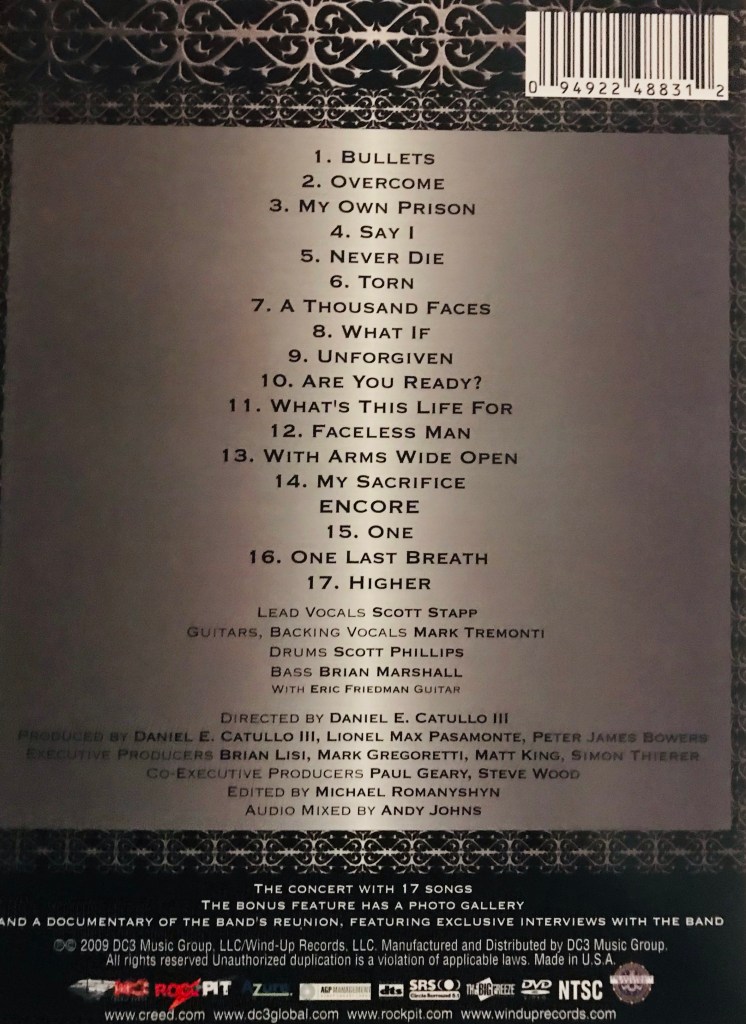
This concert was filmed on their “Full Circle” tour in 2009. Joining the usual 4 members, Scott Stapp, Mark Tremonti, Scott Phillips and Brian Marshall, is Eric Friedman on guitar.
Friedman has an interesting story.
Tremonti really got behind him around 2002/3 but his journey starts in 1996, when Kenny Wayne Shepherd pulled him onstage for a jam session. He got a Fender deal at 13 and a developmental record deal with Steve Vai’s label Favored Nations at 15. He appeared on the excellent Submersed album “In Due Time” (released in 2004) and as the rhythm guitarist with Creed on their reformation tour. He’s also in the Tremonti band.
Creed gets blasted for various reasons by critics and haters, but if you look at their output and the years those albums came out, you will notice that their releases acted like a bridge between eras.
“Human Clay” is that album that bridged the 80’s and early 90’s with the newer sounds from the late 90’s. After “Human Clay” we would get hundreds of derivative bands, in the same way we got hundreds of hard rock bands in the early 90’s.
I think of “Human Clay” in the same way I think of “Sad Wings Of Destiny” from Judas Priest which bridged the derivative blues rock from the early 70’s and space prog rock into a sound that I know as metal.
“Bullets”
It’s a great opener, very metal like. Check out the intro riff for aggression.
It’s also the second single from Creed’s third album, “Weathered”.
When I watched em in Sydney on the “Weathered” tour, they also opened with this one.
“Overcome”
“Please allow us to re-introduce ourselves. We have overcome”, Stapp said as he introduced the song.
From the new album, and it was like Creed never broke up. But it was a different Creed as well, as Tremonti delivers a killer lead break.
“My Own Prison”
“When we got back into the room after six years of not playing together, I asked Mark, “what do you want to play” and he said, “let’s go back to the beginning”” was how Stapp introduced this song.
And “My Own Prison” begins. Its slower tempo groove fits perfectly in the set list after two heavy openers.
“Say I”
One of my favourite tracks from Creed as it incorporates a few different feels and styles. If you like Tool, then the verses would remind you of Tool. If you like hard rock, then the pre-chorus will remind you of hard rock. If you like metal, then the intro and chorus riff will remind you of metal.
For me, this is a deep album cut and to see it in the set list, I wish I was in Houston watching the show.
And they jam the interlude groove, which I didn’t think they would do. But they did, making the concert experience different from just playing the song as per the recording.
“Never Die”
“This song is about innocence”, Stapp said in his introduction. I still reckon this is an awesome Pearl Jam song. Maybe more so for the vocal than the music, as the riffs from Tremonti incorporate so many different styles. And if you read his interviews, you will feel like you had the same upbringing as him and his discovery of music.
“Torn”
One of my favourite songs to jam to. Tremonti is a master at creating a great riff.
“A Thousand Faces”
This is another album cut, which defines the Creed sound and make sure you check out the Tremonti solo towards the end of the song.
“What If”
How good is the Chorus and that chromatic Metallica/Megadeth like interlude?
Then they jam. The solo section has Tremonti and Friedman trading licks and none of it is from the studio recording. It’s all part of the live show.
“Unforgiven”
If you are a fan of Creed because of “Higher” and “What’s This Life For” then you will be bored by this song. It’s basically speed metal and aggressive.
And Creed brought back the big Rock N Roll show. Check out the photo below.
They had a similar stage design with pyro and flames in 2003, which at the time was “anti trends” as most bands from 1994 and onwards operated in shadows.
“Are You Ready?”
The groove of the riff is head banging stuff.
“What’s This Life For”
One of my favourite songs from the debut. It’s a ballad, but those last two minutes of the song, are excellent.
“Faceless Man”
“This next song is very personal to me”, Stapp said as he introduced this.
Its cinematic and this part of their music always get overlooked. This track was hidden behind the hits, “Higher” and “With Arms Wide Open” but this track is the piece d’resistance on the album as it moves between rock and ballad and rock and ballad.
And I hated learning it, because I had to change my tuning to an open D5 tuning. But, I believe the open D5 tuning just makes you play with an eastern feel, so make sure you check out the main eastern sounding riff.
This song is Creed folks.
Put it on and crank it.
“With Arms Wide Open”
The anthem, with its “Dust In The Wind” inspired progression. And while it was written for the birth of a child, the song has taken on many different meanings. Tremonti’s finger picking gets a highlight moment, but that defining moment would come with “One Last Breath” a bit later on.
“My Sacrifice”
This song doesn’t get the respect it should. The riffs are stellar and the vocal melody is iconic.
“One”
From the debut album, another song with a killer riff that is fun to jam.
“One Last Breath”
On Songfacts, Tremonti mentioned that “One Last Breath” is one of his favourite riffs. On YouTube it’s got a massive amount of views. On Spotify, it’s at 135.3 million streams, even more than “Higher” which is sitting at 110.1 million streams or “My Sacrifice” at 127.3 million streams.
This song really highlights Tremonti’s clean fingerstyle.
In a Guitar World issue, Tremonti mentioned how he would have devoured all the Classical/Baroque stuff, but subliminally his style developed by devouring the acoustic pieces from metal and rock artists, like “Mechanical Resonance” and the style of Frank Hannon or the fingerstyle stuff from Metallica on their slower tempo songs and instrumentals like “Call Of Ktulu”.
“Higher”
The closer. If you don’t know it, then you haven’t been part of the mainstream.
By the end of it, the band is drenched in sweat, Stapp went shirtless and the thousands of fans in attendance would have gone away happy. It’s not always perfect, but hey, that’s why it’s called the live show. And no live show is the same as the last show. If we wanted perfect, we would listen to the studio albums.
I started this series with the Part 1 posts of 2001, then 1996 and most recently 1986. Now we go back in time another 10 years to 1976. And after this we go back to 2001 for Part 2 and the process repeats.
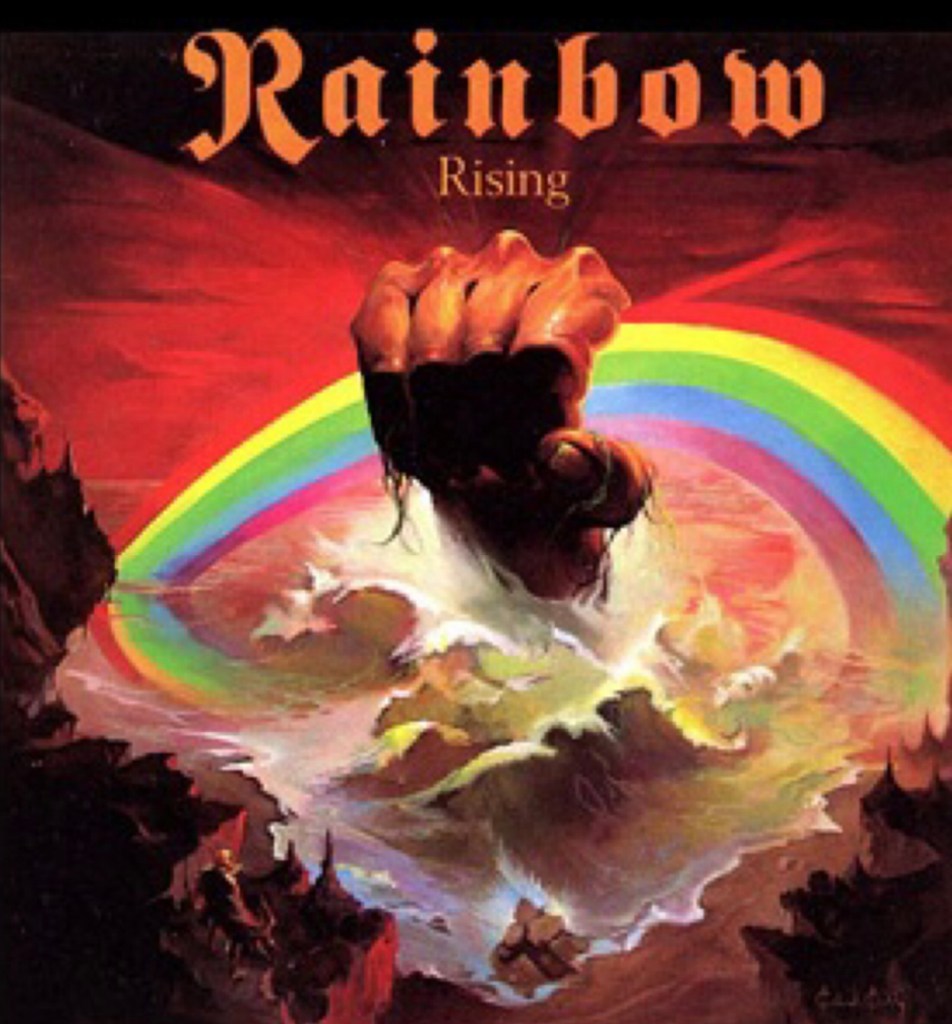
Rainbow – Rising
Album number two for Richie Blackmore’s Rainbow. Actually that was the title of the debut album, so the buying public would have some idea of who was leading the group. For this album, it’s just called Rainbow.
Coming into to this album, only Blackmore and vocalist Ronnie James Dio remain from the debut. Basically, Blackmore booted out, the Elf members. Cozy Powell is on drums, replacing Gary Driscoll. Jimmy Bain is on bass, replacing Craig Gruber and Tony Carey is on keys, replacing Micky Lee Soule.
“Tarot Woman”
It starts off with an Hammond or Moog organ.
But it’s that fast alternate picked riff of four note lengths and a small pause which gets the foot tapping. And once the drums and walking bass groove kick in, its blues rock heaven. But metal as well. The way I know metal.
Blackmore’s lead break moves between pentatonic licks and harmonic minor licks.
And I remember trying to learn the organ lead break in the outro on the guitar. Its worthy, check it out.
“Run With The Wolf”
This is basically a blues song however Dio’s choice of lyrics take it into a fantasy place about a hole in the sky and something evil passing bye.
How good is that foot stomping verse riff?
And it feels like Blackmore is playing slide guitar in the lead break.
Dio is a master at ad-libbing the outro’s with his vocals.
“Starstruck”
A great blues rock song.
It’s got everything a song should have. A harmony guitar intro. A memorable Chorus riff and a foot stomping 12 bar blues verse on steroids.
And while my first exposure to Dio was “Rainbow In The Dark”, I really dig his blues strut vocal style.
“Do You Close Your Eyes”
The Pre-Chorus is excellent, musically and melodically. But the lyrics are blah around asking the question “if your partner closes their eyes while they make love to you”.
“Stargazer”
After the drum solo like intro, the guitar riff kicks in. It’s got groove and it’s fun to play.
How good are the exotic sounding keys and the Munich Philharmonic Orchestra in the Pre Chorus and Chorus?
Dio is in his element here, singing about whips and chains, towers of stone, flesh and bone and rhyming fly, with die and why.
Blackmore’s lead is excellent. His use of vibrato and effects to kick off the solo, sounds like a sitar, and when he goes into the fast alternate picked lines around the harmonic minor scale, it sounds like a guitar solo spotlight at a concert. But the whole could have sounded flat, if it wasn’t for the powerful drumming of Powell.
“A Light In The Black”
A brilliant song, featuring another classic riff from Blackmore in the verses and Dio’s powerful vocals.
How good are the vocals when Dio sings “coming home”?
I like the nod to the past with its “Burn” like lead break with the organ and guitar in harmony. And the drumming from Powell is relentless. Ian Paige worthy.
For the next album, “Long Live Rock’N’Roll”, Bain was out, replaced by Blackmore on most tracks with Bob Daisley doing a few. Tony Carey also did keys on a few tracks with David Stone doing the other half.
And if you want to know what happened between Dio and Blackmore, well here is Blackmore’s point of view over at Louder Sound.
“I was always very close to Ronnie until, to be quite honest, he met up with Wendy [Dio’s future wife and manager], then it got very strained. She was a nice enough woman, but we didn’t really click. I remember trying to sort out a song.”
“I was playing an effect, trying to get the song down, and both of them walked by and one of them said: “We want to talk to you.”
Ronnie said. “I’ve just heard from Wendy that you’re on the front page of Circus and we’re not.”
“Really? I had no idea.”
The three of us had done the photo session, but the photographer did a couple of me on my own, and one of these got on the cover.
And Cozy [Powell, drummer] or Ronnie said: “If we’re gonna be your sidekicks then we’ll act accordingly.”
That really pissed me off, cos that was nothing to do with me. After that it went downhill, cos I had no respect for either of them after that. I didn’t like that.
“We’re not on the front cover with you!” Is that my fault?”
I did a recent post on this album in February 2021.
This album gets no love. The people who run the Ozzy Osbourne machine are trying their best to kill “The Ultimate Sin” because of the complicated relationships they have with the people involved in creating it and the various disputes over royalty payments.
Jake E. Lee circa, 1989 when he was promoting Badlands, blasted the sound of the album and the fixed mindset of producer Ron Nevison to not allow him to try any different sounds. Bob Daisley in his book blasted the album as the worst Ozzy Osbourne album he’s been involved in. And recently Ozzy, in a Rolling Stone interview, said the songs were just put down weird and that everything felt and sounded the same. Ozzy further mentioned that “The Ultimate Sin” is his least favourite solo release.
By 1986, Ozzy was in rehab and the people that held it all together were Bob Daisley and Jake E Lee. Lee got burned on the song writing credits for the “Bark At The Moon” album, so he demanded a contract up front before he even started writing. By the time Ozzy came out of rehab, Jake had already compiled 12 songs and the contract issues from the past made for a tense recording session.
Apart from “Shot In The Dark” (which is credited to Phil Soussan and Ozzy Osbourne) all of the lyrics on “The Ultimate Sin” are written by Bob Daisley to vocal melodies and titles put to him by Ozzy. But as usual, Daisley had a falling out with the Osbourne’s and was fired again and in spite, the first 500,000 copies of the album don’t have Daisley credited. This was corrected after the Osbourne’s were served with court papers.
But for all of the backroom band and business politics, this is one of my favourite albums from Ozzy.
“The Ultimate Sin”
The drum intro from Castillo sounds like it’s recorded on paper skins, but as soon as the riff kicks in from Lee, it’s head banging time. The song is credited to Daisley, Osbourne and Lee.
Overkill, enough is enough There’s nothing left of me to devour You’ve had your fill, I’m all I have left What can stop your hunger for power?
Intoxicated Ozzy gave the media and the religious zealots a lot of material to work with. Daisley had been around Ozzy long enough to see how the headlines played out.
Check out the solo and the outro section with the double kick drumming.
“Secret Loser”
I’ve written about this track before, but who remembers the Charlie Sheen movie “The Wraith”?
In the movie, Charlie Sheen plays a person who comes back to life to avenge his death at the hands of a gang (who got away with the murder). He kills his murderers one by one, by car racing each gang member and then setting them up to crash and die. “Secret Loser” appears during one such car race and it connected right away with me.
How good is the intro riff?
Could it be that I’m obsessed with feeding my disease / I couldn’t make it known the hidden things no one sees
Daisley was pretty good at writing autobiographical stories of Ozzy. I think this one is no different, especially the line about how Ozzy is obsessed with feeding the disease and in this case, the disease is the persona of Ozzy being constantly intoxicated, drugged out and doing something publicly embarrassing.
Check out the guitar solo from Lee.
“Never Know Why”
If we’re offensive and pose a threat You fear what we represent is a mess You’ve missed the message that says it all And you’ll never know why
I guess too many people judged heavy metal and hard rock music without really getting to know it and the people involved with it. I guess they will never know why we rock.
Make sure you check out the outro solo.
“Thank God For The Bomb”
The intro riff from Lee, is sleazy and sinister at the same time.
The title is almost Alice Cooper like, and musically, it feels like a Van Halen track from back in the David Lee Roth days.
“Never”
An underrated track.
The “I Don’t Know” meets “Suicide Solution” verse riff is the link to the past which gets me interested.
“It is the chain that you’re dragging that was once your relief”
That house you wanted, is now the thing that gives you worry. The family you wanted, is now the thing that gives you happiness but also stress and fear.
How good is the Chorus!
Did I mention the solo is killer.
“Lightning Strikes”
It’s so creative what Lee did here.
Take the riff from “Crazy Train” and play the higher notes in a different order over the F#m pedal point. It’s the essence of creativity. Take something that came before and tweak it.
I’m not apologizing I am what I am There is no compromising I don’t give a damn
Ozzy was rocking all night, alright and he didn’t give a damn.
“Killer Of Giants”
The acoustic/clean tone electric intro grabs my attention straight away.
But how good is the fingerpicked verse when Ozzy sings “if none of us believe in war, then what are the weapons for?”
The vocal melody and guitar riff for the Chorus gets me out of chair, singing, “mountain of protests for not stopping the war”.
And that guitar solo. So emotive and really bluesy.
“Fool Like You”
Another underrated deep album cut.
How good is that intro?
If it doesn’t get you up and banging that head, then you have no heartbeat.
You’re hearing what you want to hear Misunderstanding all you see An attitude in all of us Is it really you and me
As much as we tell ourselves we don’t have a bias, we do. All of us.
Did I mention that the lead break is a killer?
It is.
Lee goes all exotic and harmonic minor.
And how good is the section, when they come out of the solo, with Lee allowing the power chords to ring out, while Castillo goes to town with drum fills.
And there is an outro solo, which is too brief as someone made the dumb decision to fade it out.
“Shot In The Dark”
The big hit.
The way Lee decorates the song with the riffs, melodic fills and leads is excellent and of course Soussan keeps the bass line driving along.
The album is 35 years old and no re-release has happened.
But the fans don’t forget.
And for me, it was my entry point to Ozzy.
Play it loud.
\::/
Part 1.1 on Iron Maiden – Somewhere In Time is here.
Part 1.2 on David Lee Roth – Eat Em And Smile is here.
Part 1.3 on Metallica – Master Of Puppets is here.
The media loved to play off Bon Jovi and Europe against each other, but they operated in different spheres. Europe always had the Euro/classical vibe to their music. Even at their commercial zenith, this Euro/classical vibe was still prevalent.
In Australia, the album was double platinum. In other parts of the world, it was the same, if not more.
Apart from the mainstays in vocalist Joey Tempest and bassist Jon Leven, “The Final Countdown” is the first album to feature keyboardist Mic Michaeli and drummer Ian Haugland, and the last to feature original guitarist John Norum until Europe’s 2000’s reboot.
“The Final Countdown”
At 294.7 million streams on Spotify, it’s a monster track. It’s on every Spotify playlists when it comes to hard rock and the 80’s and number ones and what not.
That intro. Iconic and memorable.
Wikipedia tells me it was a riff composed by Joey Tempest in 1981/82. It sat on the backburner until 1985, when bassist Jon Leven, asked Tempest to bring it back in the mix and write a song around it.
An interview that Tempest did with the BBC he mentions the following;
“I was in college and keyboards had started to make their way into rock music. I thought that could be a good idea and so I borrowed this keyboard from the only guy in school that had a keyboard. I went home and tried a few sounds on it and I came up with that riff. I thought it was very special and I kept it in the drawer until we did the third album many years later.
By then, there were some other bands experimenting with keyboards, like Van Halen with “Jump”. So on the third album, I gave this demo to the guys and said maybe we can do something nice with the demo and then we had an opening for the show.
I can trace bands like UFO in it, sort of a galloping theme like Iron Maiden had on “The Number of the Beast” album on quite a few songs.”
I like how Tempest mentions the influences of the song. It’s how we create. Take something that came before and make it better. And it also shows how ballsy the move was from EVH to create a song based around a synth riff. It inspired other bands to do the same.
How good is that lead break from John Norum?
He left the band as the album was being released. The original album cover has him on it, however subsequent versions afterwards had Kee Marcello, his replacement.
“Rock The Night”
50.46 million streams on Spotify.
A great “Rock You Like A Hurricane” inspired intro kicks off this song.
It was already a fan favourite, as it was played live on the “Wings Of Tomorrow” tour, and in Sweden, it was on the soundtrack of a Swedish film called “On The Loose”, along with the songs “On The Loose” and “Broken Dreams”.
Just don’t watch the video clip.
“Carrie”
123.96 million streams on Spotify. It’s also on a lot of playlists from Spotify, with the main one being the “Power Ballads” playlist.
Listen to the lead break from Norum. It’s the style of lead breaks that Vito Bratta would become known for.
“Danger On The Track”
The lyrics are silly but the vocal melodies are infectious.
But the interlude. It’s got everything. Norum plays a bluesy riff while the keyboard solos, and when he gets his chance, he delivers.
“Ninja”
The intro melodic lead hooks me in straight away. Or maybe it was the “Lights Out” groove from UFO.
This song, along with “Rock The Night” were the first songs written for the album and played live during the “Wings Of Tomorrow” tour.
Make sure you check out the lead break. Norum brings his Michael Schenker and Uli John Roth influences to the table on this one.
It’s a perfect closer for Side A.
“Cherokee”
Artists that weren’t American, were writing about American issues and the treatment of the Native Indian tribes. The idea for this song came from a book that the wife of producer Kevin Elson had and it was the last song written for the album.
The intro riff, which is also the Chorus riff is excellent.
And how good are the small leads in the Outro chorus. Tempest sings “Cher-o-kee” and Norum plays three notes after it, to mimic it.
“Time Has Come”
It’s like a soundtrack song. “Drive” from The Cars comes to mind.
But the bomb in this song is the whole solo movement. It is orchestrated brilliantly. It starts off with a Def Leppard like inspired riff before it goes into the lead.
“Heart Of Stone”
This track is one of those “deep album cuts” which is a fan favourite. The riffs are heavy metal like and that Chorus vocal melody is infectious.
And the solo.
Man, check it out as Norum pours his creativity in it.
“On The Loose”
It’s the “Blackout” feel from Scorpions that gets me to pay attention.
“Love Chaser”
It’s a combination of “The Final Countdown” riff and “Danger On The Track”.
And what a shred-a-licious lead break to close the album with.
Europe would go on and release the excellent “Out Of This World” in 1988 which had more of a classic rock and metal vibe to it, and after a lot of delays and demanded re-writes by the label, “Prisoners In Paradise” in 1991, before calling it quits for the rest of the 90’s. But when they returned in the 2000’s, they returned with power, fully in control of their masters and their careers.
Part 1.1 on Iron Maiden – Somewhere In Time is here.
Part 1.2 on David Lee Roth – Eat Em And Smile is here.
I had no idea who Steve Vai was until I saw him in the “Yankee Rose” clip, making his guitar answer questions that Dave Lee Roth put forward. And if you think it was a fluke, make sure you check out the cat/kitten noises Vai did for the intro on “Kittens Got Claws” on the Whitesnake “Slip Of The Tongue” album a few years later. The way Vai could manipulate the guitar with the whammy bar, bends and slides and effects to create animal and human like voices is unique.
“Eat ‘Em and Smile” is the debut full-length solo album by original Van Halen vocalist David Lee Roth, released on July 7, 1986. The band on the album is Steve Vai on guitars, Billy Sheehan on bass and Gregg Bissonette on drums.
Produced by Ted Templeman, it’s got all the bells and whistles of a party about to go out of control.
“Yankee Rose”
Penned by David Lee Roth and Steve Vai. The intro is iconic with the walking bass line and of course the “talking guitar” which seems to have a conversation with David Lee Roth.
From a musical viewpoint, Vai is in cruise control here, making a very simple guitar riff sound interesting with his additions of arpeggios, legato lines, bends and whammy bar manipulations towards the end of the fourth bar of the riff.
The video clip was also designed with MTV in mind, with moves orchestrated to show the technical abilities of the individual band members.
“Shyboy”
The Talas track penned by Billy Sheehan got some added muscle on this album with Vai’s virtuosic playing complimenting Sheehan. And of course, Gregg Bissonette on drums is in his element here.
“I’m Easy”
From Aussie artist, Billy Field who he co-write the song with Tom Price. The whole big band sho-be-bop is not my thing however I don’t mind when rock artists take a song from that style and rock-ify it.
But this isn’t really rock-i-fied.
“Ladies’ Nite In Buffalo?”
Another Roth and Vai cut, this one sounds like it came from the fingertips of Joe Walsh.
The blues rock boogie from Sheehan and Bissonette is excellent and the funky guitar riff by Vai compliments it perfectly. It’s tracks like this that made Dave Lee Roth’s solo career interesting and exciting.
And that lead break from Vai is outta this world.
“Goin’ Crazy!”
It’s another Roth/Vai penned song.
Vai brings the goods with an iconic guitar riff to kick it off. If you think the riff sounds like something you’ve heard before, I always said that the riff in “Finish What Ya Started” which came a few years after, is very similar to this.
The synths compliment instead of detracting.
Check out Vai’s solo and then go to YouTube to watch the video clip put together from the movie that never came to see the light of day.
“Tobacco Road”
A cover song written by John D. Loudermilk, it’s got that big blues rock feel and the way the DLR and the guys in the band do it, is excellent.
“Elephant Gun”
Another track penned by Roth/Vai and this one is full of great Van Halen inspired riffs. Vocally, Roth sings in a deep baritone, something which Axl Rose would do a lot within the Guns catalogue.
The solo section starts off with an impressive bass solo, which keeps happening, when Vai starts shredding the guitar lead.
“Big Trouble”
The “Big Trouble In Little China” film always come to mind when I see this song title.
Does anyone remember the Kurt Russel and Kim Cattral film?
The song has nothing to do with the film except that it’s a sleazy little rumble, written by Roth/Vai with a rap like vocal melody in the verses and a progressive like Chorus.
Check out the blistering Vai solo full of his trademarks fast legato lines with finger taps.
“Bump And Grind”
Another Roth/Vai composition.
Great title with a riff which bumps and grinds its way through the song and Roth is being Roth, having fun and talking his way through the song.
“That’s Life”
A big band cover song written by Dean Kay and Kelly Gordon. What can I say, is Roth being Roth.
And this line up wouldn’t do another album again or perform together once the tour ended. However a reunion show was planned recently, and it was killed seconds before the band took the stage by a fire marshal who was worried at the size of the venue and the amount of people in the venue.
The free spirited nature of “Eat ’Em and Smile” is attractive and exciting as it feels like the whole album could just go off the rails and crash at any time.
At 31 minutes, man, its short for a release, which was strange for a highly anticipated and expected album. But the impact it left behind is huge, introducing Steve Vai and Billy Sheehan to large rock audiences, along with drummer Gregg Bissonette.
After this, Vai and Roth would do one more album in “Skyscraper” while Sheehan formed Mr Big with another ace guitarist in Paul Gilbert. Both acts had huge success with their releases.
Vai would finally release his second solo album “Passion and Warfare” and he also got a chance to decorate the songs that Adrian Vandenberg wrote for the “Slip Of The Tongue” album after a cool million dollar advance.
Meanwhile Roth hooked up with various guitarist to write the follow up, eventually settling on 19-year-old guitar virtuoso Jason Becker to replace Vai.
“A Little Ain’t Enough” was released in 1991, produced by Bob Rock. It did okay business in sales but before the tour started, Becker was diagnosed with Lou Gehrig’s disease, rendering him unable to perform onstage. Guitarist Joe Holmes stood in for Becker during the tour.
But the audience just wasn’t there for DLR to fill arenas in 1991, After 15 years in the spotlight, Roth’s brand of hard rock became unfashionable.
And the original era of Roth’s solo career fractured shortly after.
P.S. this is the second part of a post that was meant to be just one post. Here is the link to the Maiden post covering “Somewhere In Time”.
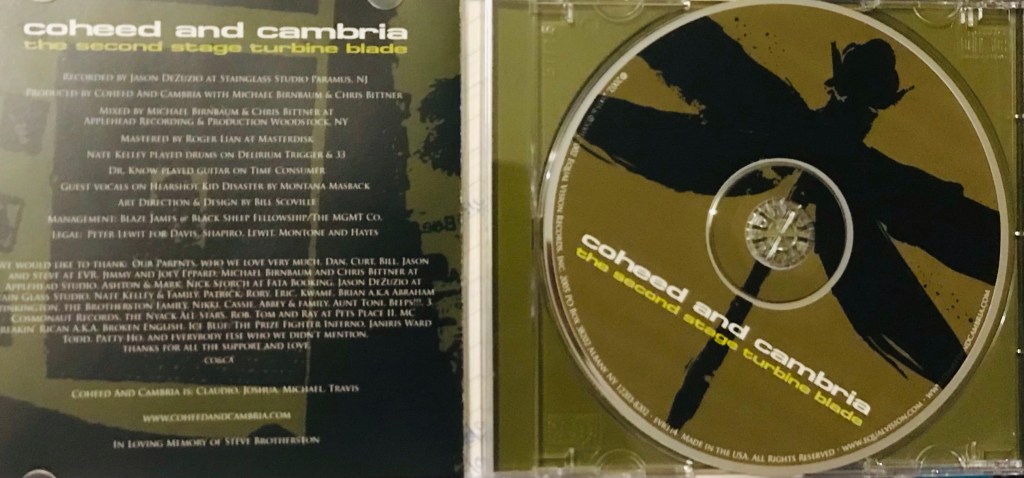
I was waiting for my CD to come in before I did this post.
The debut album was released in 2002, but the story goes back to 1995 when Claudio Sanchez and Travis Stever had a band called “Toxic Parents” which then became “Beautiful Loser”.
Three months later, Stever left and the remaining members renamed the band, “Shabutie”.
Michael Todd was recruited in 1996 and would remain the bassist until his arrest for break and enter circa 2010/11.
As Shabütie, the band released their first studio demo “Plan to Take Over the World” in 1999 and “The Penelope EP” in 1999, shortly after which Stever rejoined the band.
The original drummer left in 1999 and Josh Eppard was the replacement. He would be the drummer on the first three Coheed albums and while he was out of the band between 2006 and 2011 he returned for “The Afterman” albums and is still the drummer at this point in time.
The band went on to release another EP called “Delirium Trigger” in 2000 and several songs that appeared on it, were based on a series of science fiction comics written by Claudio Sanchez called “The Bag.On.Line Adventures”, which were later renamed “The Amory Wars”.
This science fiction story was Sanchez’s side project. Eventually, the band would rename themselves as Coheed and Cambria, after two of the story’s protagonists.
In a nutshell, and spoiler alert, Coheed and Cambria are dead by the end of it. Coheed by now had already killed off his children except Claudio and Cambria had to kill Coheed as he unleashed a virus and then unable to live without Coheed, she killed herself. In the process her energy/sacrifice then saved the dying star that Coheed was trying to destroy. Their son Claudio, is left to pick up the pieces.
A lot of pieces of the puzzle are put into place, and backstory’s are told. The fan wiki page does a great job detailing it.
“Second Stage Turbine Blade”
It’s a minute of ambient noise and an ominous sombre piano riff.
“Time Consumer”
The feel of this song in the first minute feels like a Pink Floyd/U2 jam mash up. It is raw and gritty as it grooves its way to the exploding of distorted guitars at the 1.14 mark.
“Devil In Jersey City”
It’s got that pop punk feel, almost happy like but the subject matter is disturbing involving a bashing and a rape by the gang called “Jersey City Devils” on the daughter of Coheed and Cambria and her partner.
“Everything Evil”
This moves into “Everything Evil,” which is arguably the most proggy track on the album. The ending of the song has that piano riff which becomes the first song on subsequent albums
“Delirium Trigger”
The heaviest song on the album.
“Hearshot Kid Disaster”
It has a funky riff.
“33”
A pop song which is 3.30 long. Coincidence.
“Junesong Provision”
“Junesong Provision” Heavy guitar and impressive vocals and lyrics make up this noteworthy song.
“Neverender”
The bass is excellent and the riffs are rooted in hard rock. Claudio’s vocals are the most confident on this one and it shows.
“God Send Conspirator” A clean guitar riff starts the song off, which sounds like an indie song. The bass grooves and funks it’s way throughout.
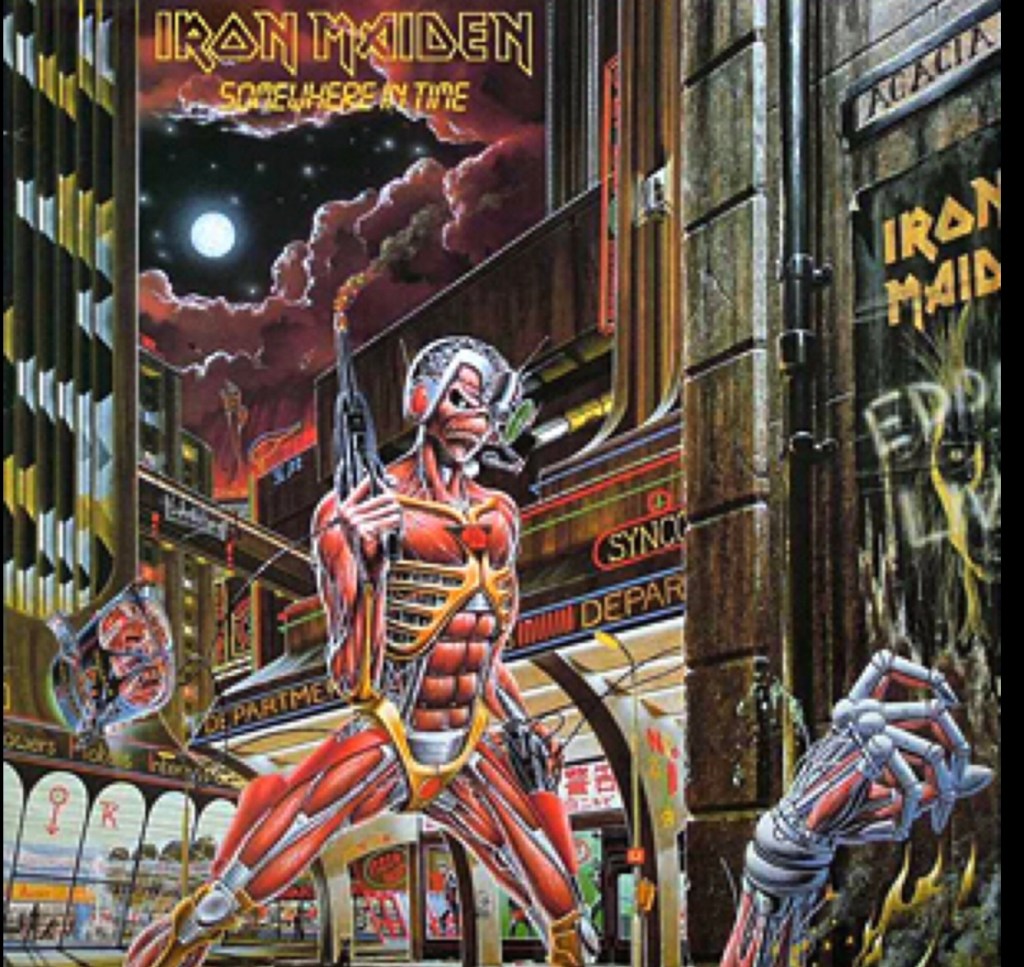
The first thing that grabs you is the Bladerunner style cover. Bruce Dickinson mentions the same in his book, “What Does This Button Do?”
Apart from buying the album, the fan is also buying a great piece of art by Derek Riggs, who took 3 months to come up with the painting.
During this 80s era, the UK government decided to tax the entertainment industry over 80% of what they earn so this meant that the band and other UK artists had to go into exile and were caught somewhere, far away from home for nine months of the year. So the album ended up being written and recorded in different places and in different studios.
When the sessions started, Bruce Dickinson wanted to do something different, which made everyone laugh. He wanted Maiden to lead instead of delivering just another Iron Maiden album.
But, the fans got “just another Maiden album”. And we loved it.
Steve Harris contributed “Caught Somewhere In Time”, “Heaven Can Wait”, “The Loneliness Of The Long Distance Runner” and “Alexander The Great”. Adrian Smith contributed “Wasted Years”, “Sea Of Madness” and “Stranger In A Strange Land” while Dave Murray brought in “Déjà Vu”.
A chord is strummed, a synth chord rings out and a harmony lead is heard. This repeats for a few times and then a drum groove comes in. Subdued it percolates, changes key and at the fifty two second mark, it explodes.
“Caught Somewhere In Time” had really started. And that exploding intro comes back in the solo section at the 4.50 mark. As Harris once said, it’s about a nightmare trip through time due to a malfunction in the time machine.
The iconic open E pedal point riff starts off “Wasted Years”, Maiden’s contribution to the tales of touring and being on the road for a long time. It’s no surprise that this song was written straight after their biggest and longest tour for the “Powerslave” album which resulted in the “Live After Death” album.
The intro lead riff was rejected by Smith but Harris heard it and told him to work on it.
And the whole solo section is head banging, fists in the air, desk breaking material. Check out the way they build up the intro E pedal point riff into the solo section.
The solo section of “Sea Of Madness” is one of my favourite pieces of music on this album.
“Heaven Can Wait” is the story of a person who is struggling to transition to Heaven. The song just moves along, but when the whole “Take my hand, I’ll lead you to the promised land” section starts off, its pay attention time. Then those “woh oh oh” chants kick in and its desk breaking time. And how good is the clean tone guitar riff under the “woh-oh-oh”.
The guitar intro to “The Loneliness Of The Long Distance Runner” is inspiring, There is a film with the same title and Harris once said in an interview something like, “you always have to run in life, move forward, and you do it alone.”
The way Bruce Dickinson carries the vocal melody for the Chorus is excellent, and then the harmony leads kick in while Nicko McBrain is doing double time on the drums.
Then at the 3.30 mark, a blues rock like lead kicks in with pentatonic bends before it morphs into a metal like solo. And the song ends the way it started, with a tonne of memorable harmony leads.
The open E bass shuffle of “Stranger In A Strange Land” gets me interested, but it’s the Adrian Smith riff that seals the deal.
And how good is the lead break.
While the title shares the same name as the Robert Heinlein book, Adrian Smith based it on a story he read about an old sailor John Torrington, a member of the mysterious 1845 Sir John Franklin expedition that attempted to find the Northwest Passage from America to Asia. More than a century later in 1984, he’s perfectly preserved body was found in the ice of the North Pole.
Check out “Déjà Vu” from the 30 second mark, when that harmony lead kicks in. It’s like “The Loneliness Of The Long Distance Runner” part 2 and it morphs into a riff that reminds me of “Die With Your Boots On”.
How good is the pre chorus vocal melody when Dickinson starts to sing, “cause you know this happened before”?
And that harmony lead from the 2.50 mark. Brilliant.
There is blowing wind, a slow military march tempo and a clean guitar solo. That is how the album closer, “Alexander The Great” starts, and it percolates musically, until it explodes into the verses.
The lyrics are somewhat like a children’s encyclopaedia article however there is enough detail there line by line.
And that groove and feel change at the 4.50 mark is excellent, with more leads and more harmonies.
Not bad for just another album.
But.
For all its excellence, the tracks on “Somewhere In Time” (apart from “Wasted Years” and “Heaven Can Wait”) are really underplayed when it comes to the set lists.
P.S. This issue of Guitar Legends is one of my favorites with a heap of information. But that will be for another day.
And I normally have about six to ten records on a post but in this case it had to be one album as it’s one of my favorite Evergrey albums.
So Part 1 is broken up into 1.1 and 1.2.
“In Search of Truth” is the third studio album and first concept album by Evergrey. It is the first album to feature guitarist Henrik Danhage and bassist Michael Håkansson, as well as the only one to feature keyboardist Sven Karlsson. Founder and mainstay, Tom Englund is on vocals and guitars with the very underrated Patrick Carlsson on drums.
Produced by Andy LaRocque, who had produced all the band’s previous albums up to now.
The album deals with alien abductions, based on the allegedly factual account of alien abduction victim Whitley Strieber’s book “Communion”.
The album cover was created by Swedish graphic designer Mattias Norén, who I once contacted for a possible album cover for an album I was involved in, before I decided to go with Brazilian artist, Gustavo Sazes.
An alien abduction story can be sort of blah, but Englund is the master at showcasing his personal side in the lyrics. So what we hear lyrically is how the main character struggles to understand what is happening and how scared and confused they are.
“The Masterplan”
Less than 5 minutes and what an opener. One of my favourite songs from Everygrey. Make sure you check out the live version on “A Night To Remember”. They do a Maiden “Running Free” singalong after the lead section which is perfect.
And the music video clip, with people painted to blend in the walls is unsettling as their eyes open, as the main character is being watched at all times.
“I have decided to keep this tape recorder with me at all times. Just so that I maybe one day can explain all the strange things happening to me. The lack of sleep…the loss of time. But most of all, the sensation of never being lonely…always being watched…”
And then the 7/8 syncopated intro blasts off.
Then that Chorus. The constant double kick, the power chords and the vocal melody which sings;
We are all a part off, forced to live within, a conspiracy for ages, the masterplan
The next time the second chorus rolls around, there is a little melodic lead before it. It’s a “why not” moment, to break up the verse and chorus structure.
The instrumental section in the interlude, the lead break and how they come out of this interlude and back into the Chorus. A masterpiece.
Make sure you check out Henrik Danhage’s outro lead break.
“Rulers Of The Mind”
It has another memorable intro.
The stomping drumming in the verses reminds me of “Kashmir”.
There is this orchestral choir happening over one of the lead breaks, which is unsettling.
And how good is the Chorus vocal melody and we had to live through an intro, two verses and a solo before we got to it. And then there is silence and a piano line. And slowly, it rebuilds up.
Make sure to check out the lead break at the 3.50 mark. Then at 4.21 those orchestral choirs come back in. They are cinematic and desperate. And the last 50 seconds, the Chorus reappears.
At 6 minutes long it didn’t get boring and I press repeat.
“Watching The Skies”
It feels like a Malmsteen or Dream Theater cut with the keyboard solo. And the double kick drumming from Patrick Carlsson is relentless, fast when it needs to be and syncopated when it needs to be.
Check out the section from 4.05 and the excellent lead break kicks in at 4.45.
“State Of Paralysis”
It has a haunting piano riff to kick it off and Englund is in theatre mode as he plays a fearful and confused abductee.
“They’re coming, they’re coming”
Englund keeps repeating those words.
“The Encounter”
“State of Paralysis” and “The Encounter” are basically the same song split into two different tracks. This one is progressive. Like Dream Theater “Awake” style of album.
Make sure you check out the guitar solo at the 3 minute mark and there is this ten second guitar melody that plays between 3.50 and 4.00.
And those same words, “they’re coming” keep reappearing.
“Mark Of The Triangle”
This is probably Evergrey at its progressive best, with tempo changes and technical playing. But still accessible.
The start alone has the bass locking in with the kick drum while the synth plays chords and the guitars play a lead.
This morphs into the guitars syncopating, with double kick drumming and the keyboard playing a melodic lead.
And it quietens down to the verse, which is just bass, piano and drums with a vocal melody.
At 1.30 the trademark Evergrey syncopated riff kicks in. It’s their style.
The whole guitar solo section from 3.55. Listen to the piano riff that kicks it off. All the pop songs from Max Martin use it. It’s a Sweden thing.
At the 5 minute mark the synths become dominant and its cinematic.
“Dark Waters”
The symphonic choir is haunting.
At 2.44 there is a different symphonic choir for a few seconds that reminds me of “Suite Sister Mary” from Queensryche. Which isn’t surprising as Queensryche is listed as an influence.
And the last three minutes of the song is epic, reminding me of songs like “The Aftermath” and “The Storm Within” from their recent albums.
“Different World’s”
How good is the piano intro?
And then Englund sings, with all his emotion.
The piano takes centre stage again at the 50 second mark with another iconic riff.
Then it goes back to the piano intro and an acoustic guitar with more vocals.
At 3.26, it’s the tape narrative again about, “oh god, it’s happening again”. The piano is haunting and at the 4 minute the guitar solo begins with big bends.
“Misled”
The album closer. It starts off with a piano riff and then the band cranks in.
Listen to the ahh choir before the Chorus and then there is a blast beat section of furious double kick before the Chorus kicks in.
Each verse has a different riff but within the same chord structure. Its creative and a progressive way of thinking.
At 2.59, it’s the style of Evergrey that they have carried to this day, syncopated staccato guitar riffs with a keyboard melody over the top.
The whole guitar solo section and coming out of it needs to be heard.
And then its silence, with a taped piano riff playing and Englund singing, “I’m crawling back to sleep” before the whole band kicks in.
I have to mention again that Tom Englund is a very underrated vocalist. Each song bears his emotion and soul. You hear anger, sadness, hope, fear and happiness. His voice is strong, ballsy, unique to him and it avoids sounding like a Geoff Tate or Ray Adler or Bruce Dickinson or David Coverdale copycat which a lot of artists started doing to get a break in the market. And throughout this album, his voice moves between strong and bold to panic, crying and whimpering in “Different Worlds” as he narrates, “Oh, god, it’s happening again / I don’t wanna be here / I wanna go home”.
This was also Evergrey’s first release on German label, “Inside Out”, a move up to a bigger label from their previous independent label. For the label, Inside Out, 2001 was a big year as they released “Burn the Sun” from Ark, “Terria” from Devin Townsend and “In Search Of Truth” from Evergrey, all seen as defining albums in the progressive metal genre.







 destroyerofharmony