If it wasn’t for Zakk Wylde, I wouldn’t have gone and purchased any Lynyrd Skynyrd. His love for Southern Rock, was on show for the “No More Tears” album. Check out his leads in “I Don’t Wanna Change The World”, “Road To Nowhere” and “Mama I’m Coming Home”.
In the interviews Zakk conducted with the Guitar Mag’s, he spoke about a technique called chicken’ picking that he picked up from learning Southern Rock songs and he demonstrated great knowledge on Southern Rock and the 70’s bands associated with the movement.
Then he dropped the debut “Pride and Glory” album a few years later, which is basically an amalgamation of Black Sabbath and Southern Rock. And it made me a fan, so I went searching for Southern Rock bands.
Enter “Lynyrd Skynyrd”. The story of the band should be a Netflix TV series. Working for MCA, the worst label in the business, the band was never going to make a profit regardless of how successful they became and how many records they sold.
The band for this album is Ronnie Van Zant (RIP) on Vocals, Gary Rossington and Allen Collins (RIP) on Guitars, Leon Wilkeson (RIP) on Bass, Artimus Pyle on Drums and Billy Powell (RIP) on Keyboards.
Guitarist Ed King, quit the band before this album, making them a two guitar band instead of three. King would pass away in 2018 due to various health issues.
There was a saying that the Wilkeson and Pyle (and before Pyle it was Bobby Burns) set a groove, which Collins, King and Rossington danced over. And Pyle has been ostracised from the organisation due to being a sex offender while original drummer Bobby Burns died in a single car crash after hitting a mailbox and tree on a sharp bend, Things don’t end well for these guys.
But the biggest tragedy was the plane crash on the “Street Survivors” tour.
Van Zant, new guitarist/vocalist Steve Gaines, backing vocalist Cassie Gaines, assistant road manager Dean Kilpatrick, pilot Walter McCreary, and co-pilot William Gray all died in the crash. The survivors had been seated toward the back of the plane and all of them were seriously injured with broken bones, crushed arms, sever facial disfigurements and severe burns.
And the plane was earlier inspected by Aerosmith’s tour crew for the band to use on their 1977 tour but it didn’t pass the Aero’s safety inspection.
But before the tragedy, the Skynyrds debauched their way through the U.S on the backs of whiskey, brawling and great music.
“Gimme Back My Bullets” is studio album Number 4, released on February 2, 1976. It reached number 20 on the U.S. albums chart and was certified gold on January 20, 1981 by the RIAA.
Gimme Back My Bullets
Written by Gary Rossington and Ronnie Van Zant.
The staccato like count in reminds me of the “Back In Black” intro. After that, a funky blues rock riff kicks in, before the Southern Rock chord progression kicks in
Every Mothers Son
Written by Allen Collins and Ronnie Van Zant.
The acoustic riff grabs your attention straight away, an amalgamation of “Sweet Home Alabama” and blues rock songs like “Shooting Star”.
Trust
Written by Allen Collins, Gary Rossington and Ronnie Van Zant.
It reminds me of The Rolling Stones and I like it.
(I Got The) Same Old Blues
Written by J.J. Cale. Every artist was covering his songs.
The 12 bars groove is heavy, yet funky. The slide guitar is simple yet effective.
Double Trouble
Written by Allen Collins and Ronnie Van Zant.
It follows the trend set with “(I Got The) Same Old Blues”. And the name used by Steve Ray Vaughan, could have come from this song. The blues on offer here is similar to what SRV would play, just more amped up and more technical.
Roll Gypsy Roll
Written by Allen Collins, Gary Rossington and Ronnie Van Zant.
The acoustic riff to start it is campfire like, and riding on the greyhound to leave town was a rite of passage for the youth once upon a time. These days, the kids are over 30 and still at home.
Searching
Written by Allen Collins and Ronnie Van Zant.
My favourite song on the album. Musically and lyrically. Rossington and Collins steal the show here.
Cry For The Bad Man
Written by Allen Collins, Gary Rossington and Ronnie Van Zant.
It starts off like a Kinks song crossed with “Mississippi Queen”. And I like it.
All I Can Do Is Write About It
Written by Allen Collins and Ronnie Van Zant. Zakk Wylde basically took this song and wrote “Road To Nowhere”.
Press play and enjoy it.
It’s listed as “not their best” album, but if you like southern rock, you shouldn’t skip it and I see it as an underrated album.
Machine Head had been leading up to a demo release for the song “Killers and Kings” since February. In the lead up, Robb Flynn talked about his youth, the San Francisco thrash scene and how bands used to release demo’s of songs before the album and how the fans would go away and debate it.
Then the marketing started. Machine Head (along with Nuclear Blast) started releasing the different single covers on a weekly basis (which look great by the way) and they got into partnership with the Record Store Day event.
To put it in simply pseudocode;
Where an audience exists and if an artist has new material, release it.
They are no more and according to the internet, they barely existed.
Faktion’s self-titled release hit the streets in 2006. I came across it in 2014. It was up against some stiff competition for listener’s attention. The audience that could have gravitated towards Faktion had already devoted their ears to other bands.
Like Breaking Benjamin released “Phobia”, Skillet released “Comatose”, Stone Sour released “Come What(ever) May”, Daughtry released his self-titled debut, 10 Years released “Autumn’s Dream”, Crossfade released “Falling Away”, Pillar released “The Reckoning”, Red released “End Of Silence” and Papa Roach released “The Paramour Sessions”. Already it is a pretty crowded marketplace.
BUT it gets worse.
They had a deal with Roadrunner Records who didn’t know how to promote them in a crowded modern rock scene.
Should Dave Mustaine been inducted with Metallica into the RNR Hall of Fame?
Jason Newsted and Rob Trujilio got inducted however there contribution pales to what Mustaine brought to the band. If you make an assessment of early Metallica, the evidence is there for Dave Mustaine to be inducted. The style of technical thrash that Mustaine brought to Metallica would end up influencing their first four albums. Otherwise they were just another NWOBHM copycat.
The induction criteria does state that the committee looks “at the influence and significance of the artists’ contributions to the development and perpetuation of rock and roll” on an official recording, but as you know, the first album was written while Mustaine was in the band. He just didn’t play on it.
Niches
Metal and hard rock are niches. Accept it and focus on it. It can be a lucrative business for you if you do. It will not bring back the glory days of the Seventies and Eighties, however it will give you a career.
Virality
A song takes off because fans start to spread the word. They share links to it, they talk about it, they blog about it. A marketing campaign can never achieve this. Only great music can.
Queensryche
Back in 2014 I wrote, “when are the people involved going to realise that Queensryhce is no more. Move on, forge a new career and a new identity.”
And I still stand by that.
Vinyl, CD’s, Digital Downloads
Streaming has won. The rest of us that actually purchase any music in physical form do it because we are collectors.
I listen to most of my music on Spotify however I still purchase physical product of bands that I like. BUT I haven’t even opened the shrink wrapping as yet. I have no need to.
MONEY IN MUSIC
Back in 2014, I wrote that “there is still a lot of money in the business. Streaming pays the labels well. It’s just doesn’t filter down to the artists. Revenues from streaming services such as Spotify, Pandora and YouTube surpassed the $1bn mark.”
Streaming Revenue is at $22bn in 2022.
ENTERTAINMENT LOBBY GROUPS ASKING GOOGLE TO DO MORE TO PROTECT THEIR BUSINESS MODELS
23 years post Napster we are still hearing about this. It is the usual b.s. about how Google “could do so much more” or that Google has “not been effective” in preventing illegal music downloading.
If you never experienced the Seventies, then this album from a super group of melodic death metal bands recaptures it all.
From the “Immigrant Song/Achilles Last Stand” references in “Siberian Queen” to the “I Was Made For Loving You” references in “West Ruth Avenue” or the “Play That Funky Music/ Stevie Wonder’s Superstitious in “Internal Affairs”.
Play it loud.
Adrenaline Mob – Omerta
It is a balls to the wall metal classic in the style of Accept, Scorpions, Dio merged with the metal stylings of Disturbed and Godsmack. “Undaunted”, “All On The Line”, “Angel Sky”, “Indifferent” and “Hit The Wall” are worthy additions to any metal bands setlist.
The cover of Duran Duran’s “Come Undone” is also a fitting metal tribute to a pop number one hit.
So put aside all of your views on the members that make up the band and from what bands they come from and embrace a great balls to the wall metal project.
Digital Summer – Breaking Point
DIY band from Phonenix, Arizona, getting stronger with each release. “Breaking Point” was a Kickstarter funded project and it didn’t disappoint. The lead single “Forget You” has racked up 1,027,533 views on YouTube. They are great numbers for an independent band, that also manage themselves, record and release their own music and hold down day jobs.
If you like modern rock, then you will like this band.
Richie Sambora – Aftermath Of The Lowdown
The good old Richie Sambora released a great modern rock album that didn’t get the recognition it deserved because at that point in time he was still in Bon Jovi and Bon Jovi (the band) needed him to start the promotional interviews for the “What About Now” album.
Check out “Seven Years Gone”, “Nowadays”, “Every Road Leads Home To You”. Hell, the whole album is good. Give it your time.
Lizzard – Out Of Reach
This band is definitely under the radar for what they do. Think of Earshot meets Tool meets 10 Years meets modern rock. Vocalist, Mathieu Ricou has a voice that crosses between Chad Kroeger, Aaron Lewis and Maynard James Keenan.
There is a feel of Progressive Metal, TOOL, Hard Rock, Trance & hypnotic music, DEFTONES, YES and PINK FLOYD. It’s a potent mix.
Vaudeville – Vendetta
Vaudeville is one band that deserves more recognition for what they do. They merge the styles of Muse and Radiohead with Hard Rock. It sounds beautiful and original.
Check out the song “Restless Souls”.
Hell Or Highwater – Begin Again
The new band from Atreyu drummer Brandon Saller. Hell or Highwater finds Saller stepping away from his drum kit and taking the mic to be the band’s lead vocalist. It’s hard rock people and it rocks real good and it doesn’t sound generic.
One Less Reason – A Blueprint For Writhing
This EP was my first introduction to One Less Reason. I knew nothing about them and when I heard “All Beauty Fades”, I was left speechless. And they are another DIY band. It’s six songs and there is no filler. A very smart decision to release the best.
Corroded – State Of Disgrace
Corroded have a decent following in their own country of Sweden. They are a skilful band that create groove based hard rock. Stand out songs are “Let them Hate As Long As They Fear”, “I Will Not”, and “Believe In Me”.
You know Copyright is all wrong, when you have a composer of several Motown hits combining copyright law with divorce law. Seriously, how much more distorted can copyright get.
Smokey Robinson is seeking a declaratory judgement against his ex-wife. You see, Robinson is reclaiming the rights to his pre-1978 songs from Jobete Music Co. Robinson’s main problem is that his ex-wife (since 1985) believes she should be entitled to 50% of whatever income these songs generate and she has filed suit to ensure that happens.
The labels claim that all pre-1978 songs are “works of hire”.
Smokey Robinson claims that his ex-wife isn’t entitled to his profits but his heirs are.
Remember Copyright’s meaning. To give the creator a monopoly on their works for a limited period of time, so they could create more works. Something looks a miss here.
The smarter acts started building their Ark’s. They saw the warnings while the rest all drowned in the flood. Castle Donnington in August had AC/DC, Metallica, Queensryche, Motley Crue and Black Crowes. All of those bands survived the flood, however Queensryche managed to commit hara-kiri many years after.
But from a hard rock point of view, 1991 had a lot of guitar heroes looking for work.
Jimmy Page announced that he was working with David Coverdale. The media reported it as White Zeppelin and Led Snake. The band was filled out with Denny Carmassi (Heart) on drums, Ricky Phillips (Bad English) on bass with Johnny and Joe Gioeli from the band Brunette rounding out the band. Fast forward to March 1993, “Coverdale/Page” finally came out. The wheels of motion in the recording business travel slowly.
Neal Schon along with Deen Castronovo signed an unnamed band to MCA which also featured Johnny and Joe Gioeli (who apart from being in the band Brunette, had a gig with Coverdale/Page) whom Schon discovered when he started dating their sister. The bands line up was completed by Todd Jensen (DLR) on bass. And that project would become “Hardline”.
Vinnie Vincent was writing songs with Gene and Paul. Most of those songs would end up 1992’s “Revenge” including the excellent “Unholy”.
John Sykes was rumored that he joined Def Leppard to replace Steve Clark and those rumours started to earn some credibility when Carmine Appice and Tony Franklin quit Blue Murder.
Adrian Vandenberg was out of a gig after David Coverdale disbanded Whitesnake. Rumours started circulating that he was forming a project with John Waite as Bad English was done.
Then he had a solo deal with Victory Records. Then rumours persisted that he was tapped to join House Of Lords who also had a deal with Victory.
Adrian Vandenberg went on to be involved in the supergroup “Manic Eden” that had Rudy Sarzo, Tommy Aldridge as well as Little Caesar vocalist Ron Young. The House Of Lords connection was there in the early incarnation of the band, as James Christian was the original vocalist.
Steve Stevens was also between employers. He was also on the radar to fill the guitarist slot with House Of Lords and then he was working on a solo record and then he was announcing plans to work with Michael Monroe which became Jerusalem Slim. And a few years later he would be the guitarist on Vince Neil’s rocking debut album.
Randy Jackson spent 5 years working on the “China Rain” project, assembling a brilliant band that included Brian Tichy on Drums, Ronnie Snow supporting Randy on guitar and Teddy Cook on Bass. Then the label decided to not release it.
Vivian Campbell was in a new hard rock band called Shadow King, with Lou Gramm of Foreigner, Bruce Turgon on bass and Kevin Valentine on drums.
Vito Bratta at that point in time had a solo deal with Atlantic. And then nothing.
Jeff Watson was rumoured to be in a project with Carmine Appice, Bob Daisley and Derek St Holmes. That project ended up becoming “Mother’s Army” and the final line up consisted of vocalist Joe Lynn Turner, guitarist Jeff Watson, bassist Bob Daisley and drummer Carmine Appice.
Richie Sambora didn’t know if Bon Jovi would continue and released a solo album based on the blues infused with a little bit of pop and rock. He never achieved the platinum sales that he got with Bon Jovi, however he got to show a side of himself that could never have been shown in Bon Jovi.
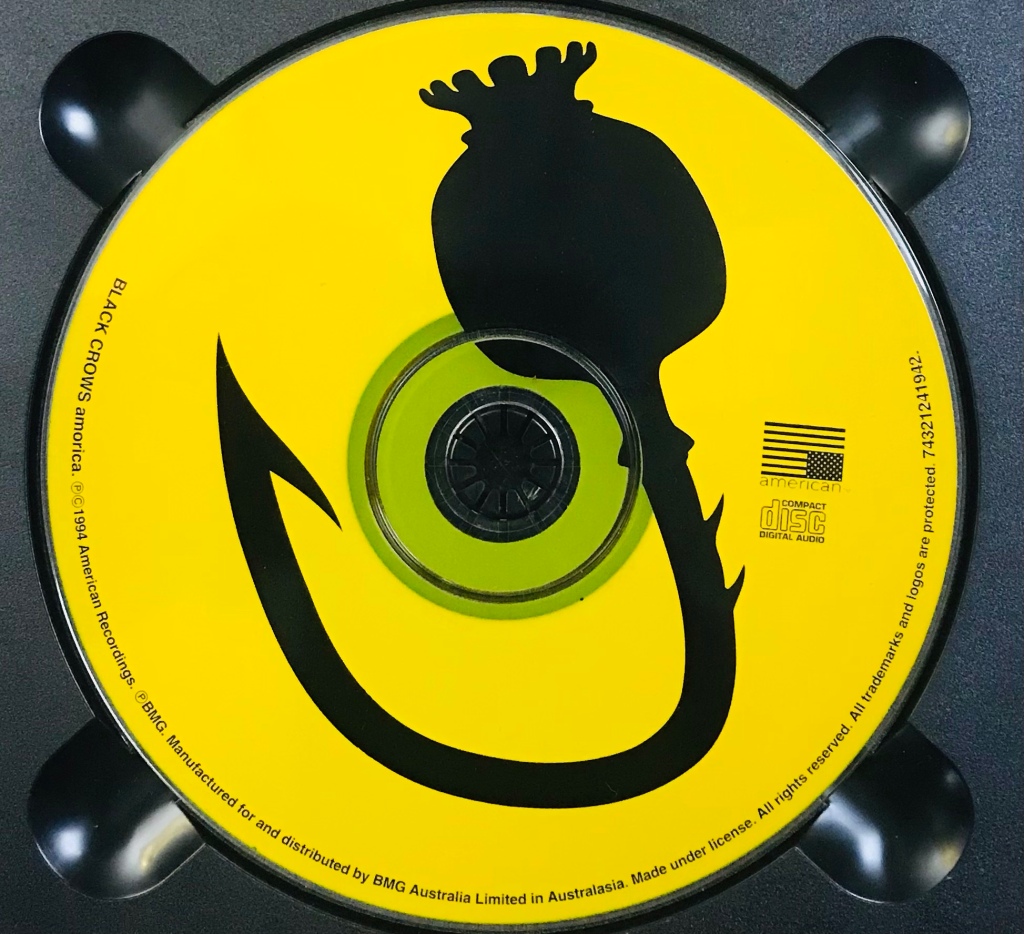
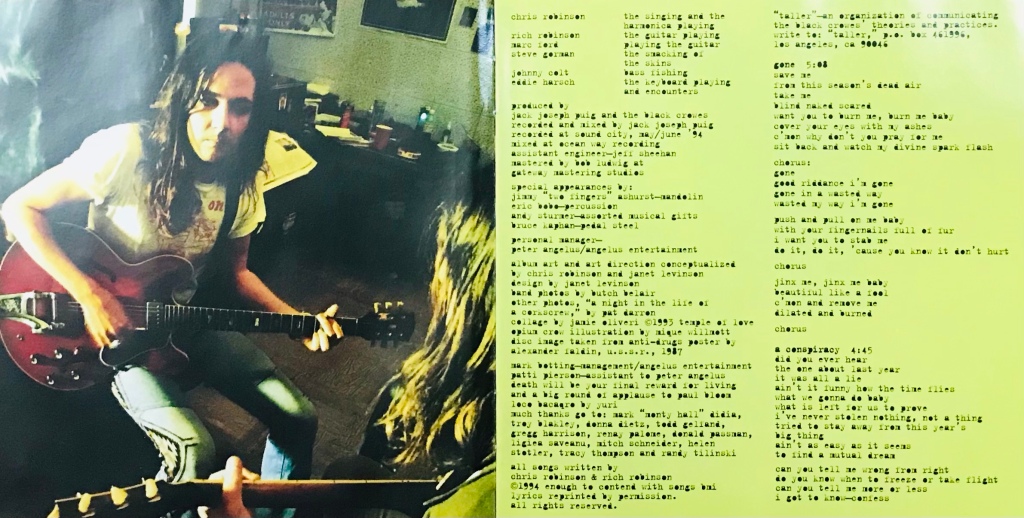
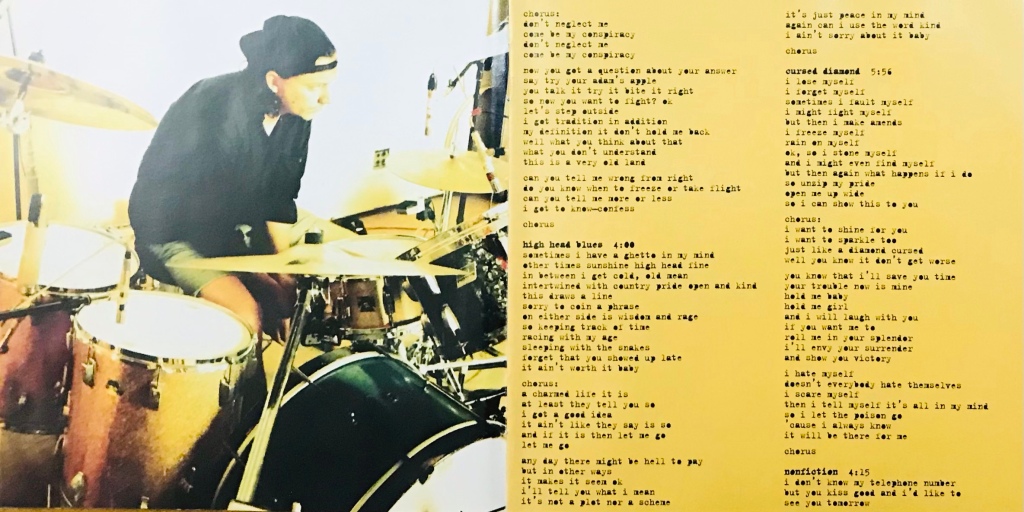
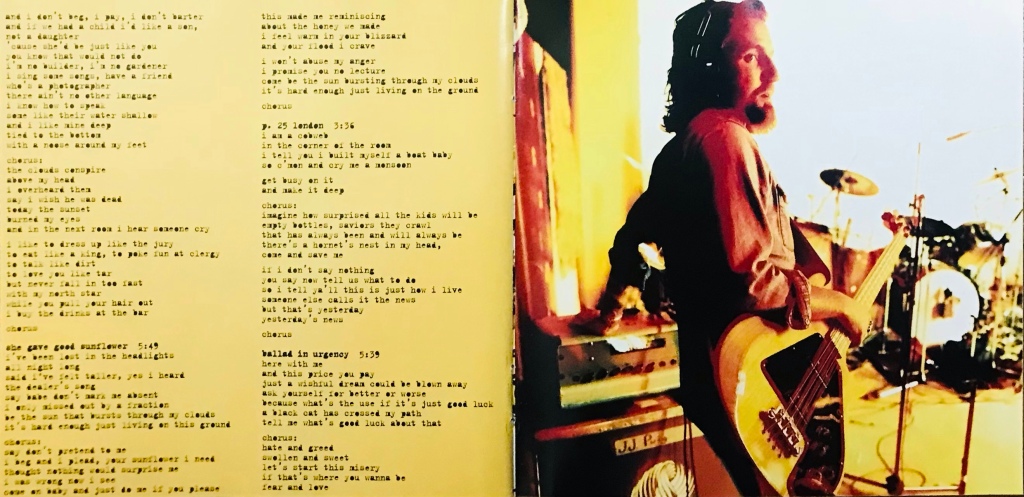
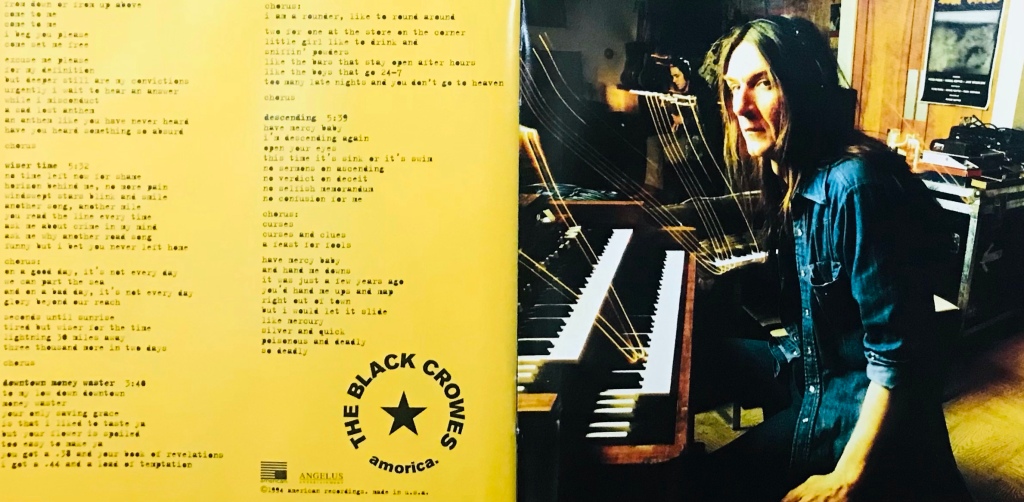
The band is unchanged. Chris Robinson is on vocals and harmonica, Rich Robinson and Marc Ford are on guitar, Johnny Colt is on bass guitar, Steve Gorman is on drums and Eddie Harsch is on keyboards.
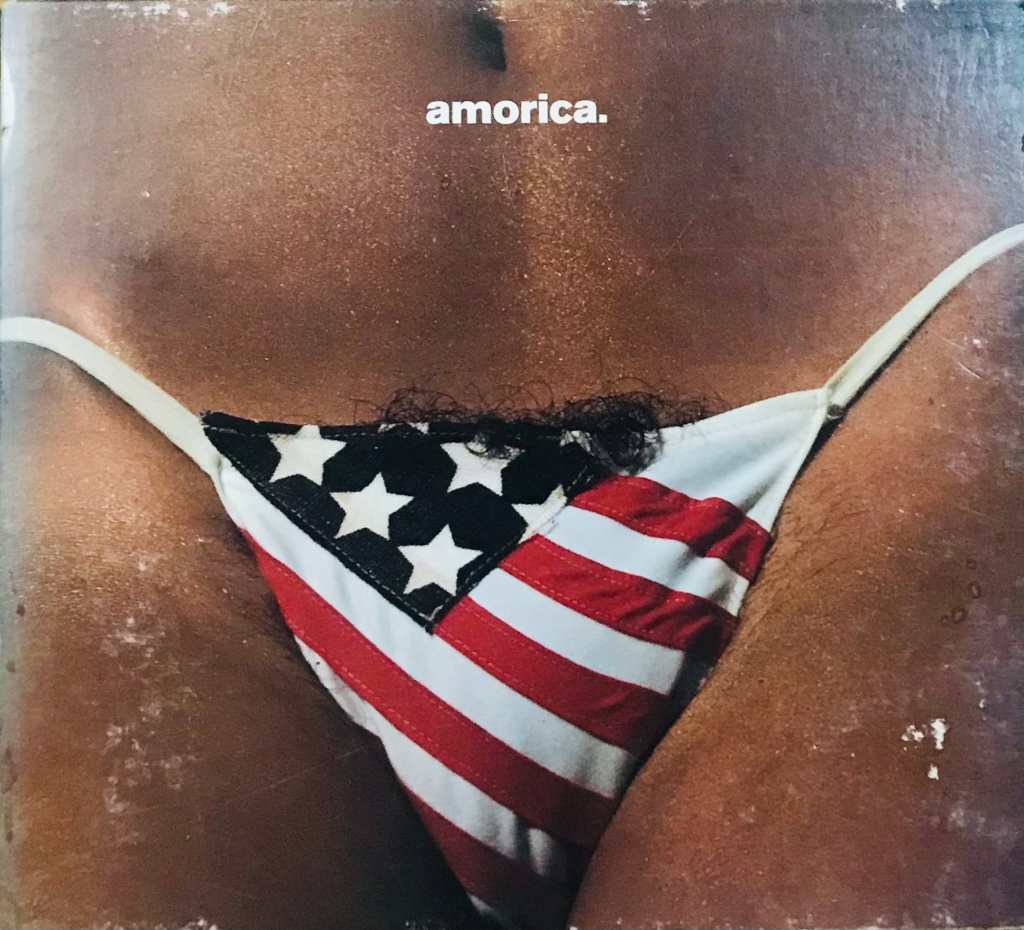
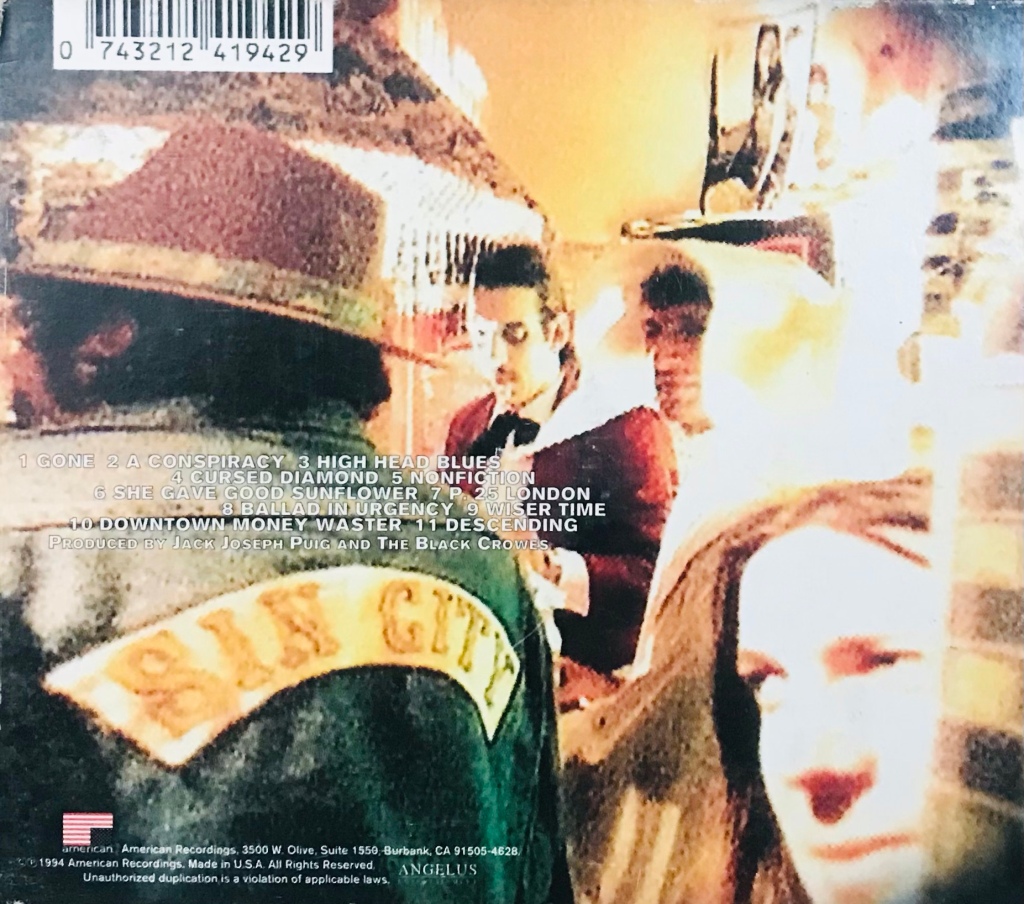
Released in 1994, “Amorica” took a while to come to fruition. It wasn’t a hazy 8 day recording session like “The Southern Harmony And Musical Companion”.
You see, in 1993, the band worked on an album called “Tall”. But the recordings got scrapped because Chris and Rich Robinson didn’t see eye to eye during the sessions. Rich felt that Chris alienated him from the rest of the band. Chris reckons that Rich was upset because he was leading the sessions and was rejecting his riffs and ideas.
Well, Rich ended up winning the argument and the “Amorica” album is the result of moving forward with the ideas of Rich and not Chris.
And man, the cover caused a stir in even in the more progressive 90’s.
Who would have thought that a picture which was deemed offensive in 1976 when it appeared on a cover of Hustler was still seen as offensive almost 20 years later?
Well in Australia, we didn’t really see anything wrong with it so we got the cover as intended, while the U.S got two covers.
Gone
It sounds like they had a few drinks, wrote some riffs and then jammed em. It’s complicated blues, as there is so much going on but it didn’t set my world on fire.
A Conspiracy
They tried to recreate the groove and infectious melody of “Remedy” with this. While they didn’t get close, they still got a very rocking song out of it.
High Head Blues
A sleazy soul blues rock riff starts it off. It’s almost funky and I like it. One of the best songs on the album.
Cursed Diamond
A piano like slow rhythm and blues tune, very Rolling Stones like and the solo section gets all aggressive and swampy.
Nonfiction
An acoustic track with a vocal that sounds like 70’s Rod Stewart. But it’s a skip for me.
She Gave Good Sunflower
Chris is asking a babe to do him and the track could be interchanged with any song from the previous albums.
Press play to hear some nice wah wah soloing from Marc Ford over a thundering Johnny Colt bass riff. And stick around to hear the outro soloing as well.
P. 25 London
A throwaway track.
Ballad in Urgency
Another ballad, with some unique blues/jazz like chords, nicely phrased guitar fills and Johnny Colt’s bass thundering in the background.
The song then fades into a piano section along with Mr Colt’s bass.
Wiser Time
Steve Gorman brings it here, showcasing that even though the Robinson brothers write the songs, the performances of the band members are just as important. This one is also a favourite.
Rich Robinson plays some tasty slide and he also duets on lead vocals.
And each section has so much variation. The verses are based on a three chord “Sweet Home Alabama” like chord progression. The Chorus is classic blues rock.
But.
It’s the later sections which takes the track and makes it a signature song.
It’s not for the crossover fans who just liked “Remedy” and nothing else.
This is for the hard core fans. It starts off with a swampy Delta bluesy acoustic slide solo, which is followed by an electric piano solo, very Doors like.
This then gives way to an electric guitar solo, very B.B. King like with a bit more grit and it all crashes in to a Lynyrd Skynyrd soaring lead, full of harmonized guitars.
After five minutes and thirty seconds, the only thing you can do is press repeat.
Downtown Money Waster
Old time blues with a ragtime piano and acoustic slide guitar.
Descending
Another favourite and another five plus minute ballad-esque song, which starts off with a piano riff. And when the band kicks in, it gets the head moving and the foot tapping. If it doesn’t, feel for a pulse.
Chris Robinson is on fire vocally and Mr Colt’s bass is thumping throughout, synced up to the bass drum of Gorman’s.
The track closes with a ramped up piano solo over another thundering bass riff from Mr Colt.
The album did good business in Australia again, charting at 11 which they also replicated in the U.S and a Gold Certification.
But it took the record buying public by surprise because it didn’t really have that “accessible” song that people could latch on to. The debut album had “Hard To Handle” and the follow up had “Remedy”. But this one had some deep cuts and some fan favourites.
While everyone was complaining about freemium and the monies streaming services pay to the rights holders of music, Fortnite “Battle Royale” came out for free and conquered all. It’s already at everyone’s price point. It can’t get any lower so it costs nothing to try it.
But Fortnite was originally a game for purchase. Within six months of its release in 2017, it had over a million users. But then in September 2017, Epic (the game developer behind it) did something different. They released a free-to-play “Battle Royale” mode. Within 2 weeks of its release, it had over 10 million players.
For Epic, the “Battle Royale” mode is a major hit. It’s like Bruce Springsteen, “Born In The USA” style of a hit. And it’s still going strong because the best marketing tool is word of mouth.
Fortnite spread because the people who played it, enjoyed it and then they asked their friends to create an account and play with them online.
And their friends said “why not”, it’s free, let’s give it a try. The game kept growing in popularity because Epic constantly upgraded it on a regular basis.
In other words, the fans of the game are not waiting 2 years for a new upgrade. Like how fans of artists wait years for new products.
I come from the era of the album, but all I want is frequent content. It’s the reason why the bootleg industry was huge in the 80’s and 90’s. Hell, my record collection has hundreds of bootlegs, from live recordings, to demo recordings, to sound check jams and what not. It was the need to fill the gap between albums.
Mick Mars said that he almost left Motley Crue during the “Generation Swine” sessions and that still to this day, he hates the album.
It was meant to be called “Personality #9” with John Corabi on vocals. But the label was still reeling from the $3 million loss on their accounts from the 1994 self-titled album so they demanded that Vince Neil come back in.
The Crue started working on the follow-up in 1995. Nikki Sixx wanted to road test the songs before they recorded them, in small venues and using different band names, like the Four Skins. It was a back to the seventies approach, when bands used to debut new songs on the road before committing them to tape in a studio. That is why so many songs from the seventies worked well in a live setting. Deep Purple played “Highway Star” for at least 12 months before recording it. Same as Ted Nugent and “Stranglehold”. The list goes on, however today’s rock star doesn’t need to pay their dues on the live circuit.
But they road tested nothing.
The biggest Achilles heel to “Generation Swine” is the lack of the hit song. Like “Kick Start My Heart”.
It wasn’t a hit on the Billboard Charts, however in rock circles it was a song that all the rock heads and the metal heads could latch onto. Even the self-titled album, didn’t have that kind of song that people could latch on to.
Here is a summary, however each rule is expanded in the blogpost.
On Motley Crue’s 2008 song ‘Welcome To The Machine’ they provided a few general rules about the recording business and the machine that is the music business.
Rule Number 1: “Sign on the x to sell your soul”.
Rule Number 2: “It’s so automatic, Hocking broken plastic, Royalties you’ll never know”.
Rule Number 3: “Give your ass like a whore, Once you take a hit, You need more more more”.
Rule Number 4: “Welcome to the machine, Once it sucks you in you’ll never leave, Grind you up spit you out, After all you’re just a piece of meat”.
Rule Number 5: “Sell out to the rats, Make em rich make em fat”.
On Motley Crue’s 1999 song ‘Fake’ they seem to provide a few more general rules about the recording business.
Rule Number 6 (supporting Rule Number 1 and 2): “Sold my soul while you sold records, I have been your slave forever.”
Rule Number 7 (supporting Rule Number 5): “What are you fat cats doing anyway?, Take our money and flush it down the drain.”
Ugly Kid Joe asked “Mr Recordman” if he knew who they were or if he gave a damn about them or if he was purely there for the dough. Based on their career trajectory, the answer was obvious. Mr Recordman didn’t give a damn about them once they stopped being “commercially viable”
Rule Number 8 – Mr Recordman doesn’t know who you are. Look at the band “Winger”. When Reb Beach called the label after the Beavis and Butthead episode hit TV screens, the label claimed they never knew a band called Winger.
Rule Number 9 comes from Disturbed and their song “Sons Of Plunder”.
Rule Number 9: “You say you’ve found yourself a new sound, one hundred more all have the same sound”
The song Chainsaw Charlie from WASP is littered with music business rules. The first three lines, “Will you gamble your life?, Sign right here on the dotted line, It’s the one you’ve waited for all of your life” fall into Rule Number 1. Then the lyrics of “And tomorrow when I’m gone, Will they whore my image on?” brings us to Rule Number 10.
Rule Number 10: The record label will forever whore your image on after they have dropped you or after you have departed this Earth. There is a lot of money to be made in death.
Rule Number 11: “We’ll sell your flesh by the pound you’ll go, A whore of wrath just like me, We’ll sell ya wholesale, we’ll sell your soul, Strap on your six string and feed our machine.”
Rule Number 12: “Welcome to the morgue boy, Where the music comes to die” is about songs written by a committee. It’s soulless, however it sells.
Rule Number 13: “Ah, trust me boy, I won’t steer you wrong, If you trust me son, You won’t last very long”
Rule Number 14: “The new morgue’s our factory, to grease our lies, Our machine is hungry, it needs your life” is the definition of the recording business.
Rule Number 15: “I’m the tin man, I’ve never had a heart, I’m the tin man, But I’ll make you a star” is the Record Label CEO. All promises and that tin heart doesn’t care if those promises are broken.
Savatage is another band that covers the music business in a bit of detail. Rules 16 to 18 are from the song “Jesus Saves”.
Rule Number 16: “You know Jesus he started changing, Things got really strange, He saw his tee shirts everywhere, He started missing shows, The band came down to blows, But Jesus he just didn’t care.”
Yep, it’s a tough gig keeping a band together, especially when a band member becomes the idol that the fans latch onto.
Rule Number 17: “Things got out of hand, And so he quit the band, Still the critics they would rave”
Rule Number 18: “hear Him cut through the night, On those late night radio waves”
Eventually, we get old and we become “classic rock”. There is no way around out. Embrace it and play to your core audiences.
The final two rules are from the song “When The Crowds Are Gone” from Savatage.
Rule Number 19: “I don’t know where the years have gone, Memories can only last so long, Like faded photographs, forgotten songs”
Rule Number 20: “The story’s over, When the crowds are gone.”
Adrenaline Mob are seasoned professionals collaborating on a hard rock project. For some reason they remind me of Night Ranger.
The debut album “Omerta” was number 4 on my list for releases in 2012. I hold the vocal talents of Russell Allen and the guitar talents of Mike Orlando in high regard. Add to those talents the powerhouse drumming from Mike Portnoy on the first album (and the two EPs) and of course the mighty AJ Pero appears on the second album. As a Twisted Sister fan, this is a great thing to see happen. And finally John Moyer from Disturbed is providing the bottom end.
Listening to “Men Of Honour”, it comes across as a band having fun. Check it out and while you’re at it, listen to Mike Orlando.
I don’t know what to call Orlando’s guitar style. One term I have for it is “Technical Chaos”. He has the chops, but he plays with an improvised abandonment that sounds so precise and I like that.
If you remember back to 1998, the recording business became famous for saying that no one will be interested in downloading a crappy mp3. Guess they didn’t know how many billions those no ones came too.
Pono came out at a time when fans of music had decided that YouTube and Spotify are better alternatives.
And that is what Pono Music fails to understand. The fans of music are in control. If they want to pay, they will. If they want to go to a show, they will. If they want to download for free, they will.
By now people knew what to expect with an Airbourne album. Fast blues rock, sleazy blues rock and hard rock, inspired by AC/DC, Rolling Stones and ZZ Top.
And no power ballads.
Bob Marlette is producing.
Breakin’ Outta Hell
It’s fast and maniacal like they are really breaking out of somewhere. It’s tempo reminds me of songs like “Let There Be Rock” and “Whole Lotta Rosie”.
Rivalry
If you enjoyed the debut Audioslave album, you will like this, as it has a riff similar to “Cochise” in the Intro.
Otherwise the Verses and Chorus are straight from the playbook of AC/DC and Slade.
In the PR for the song, Joel O’Keefe said:
“As with other songs we’ve done, there’s an aspect here of rock‘n’roll taking a stand against those corporate forces that seek to restrict our freedoms, that try to shut down the little live venues, leaving bands with nowhere to really hone their craft.”
Challenge accepted.
Get Back Up
This can be interchanged with any AC/DC song of the Brian Johnson era and not be out of place. In some stages, the throaty vocals remind me of Tom Keifer.
It’s Never Too Loud For Me
With its “RNR Ain’t Noise Pollution” influences merged with “Sin City”, you know exactly what you get with this.
Thin The Blood
It’s super fast.
An image of Tommy Lee in the Crue movie comes to mind as they recount his daily routine on the “Dr Feelgood” tour, like waking up chained to a bed, trying to work out what happened the night before, callin his wife, taking a lot of drugs and alcohol and the cycle repeats.
I’m Going To Hell For This
“Hail Ceaser” comes to mind and I like it.
Down On You
That whole Chuck Berry influence which AC/DC used to great success on “Long Way To The Top” and “High Voltage” is back here.
And the guys really broke out the big guns in the lyric department, about a boy playing with his toy and kissing a woman between her knees.
Never Been Rocked Like This
It’s not groundbreaking but the passion for loud blues based rock and roll is evident here.
When I Drink I Go Crazy
It’s fast and the title sums it up.
It also has one of the funniest lyrics ever, “I’m standing in the middle of the road, directing traffic like a ninja”.
Only Joel O’Keefe can get away with using Ninja in a rock song. Maybe the Steel Panther guys could as well and lyrically this is who the album is competing with. Steel Panther.
Do Me Like You Do Yourself
The Intro gets the foot tapping.
And the lyrics just keep getting Shakespearean.
Like “you’re hands are moving with a mind of their own, having the best sex and you’re all alone.”
Pure poetry.
It’s All For Rock ‘N’ Roll
A perfect closer with a tribute to Lemmy.
Listen to it, raise a glass and enjoy.
Appreciate Airbourne for what they are, a hard working rock and roll band who write music that needs to be listened to loud while beer is being consumed.
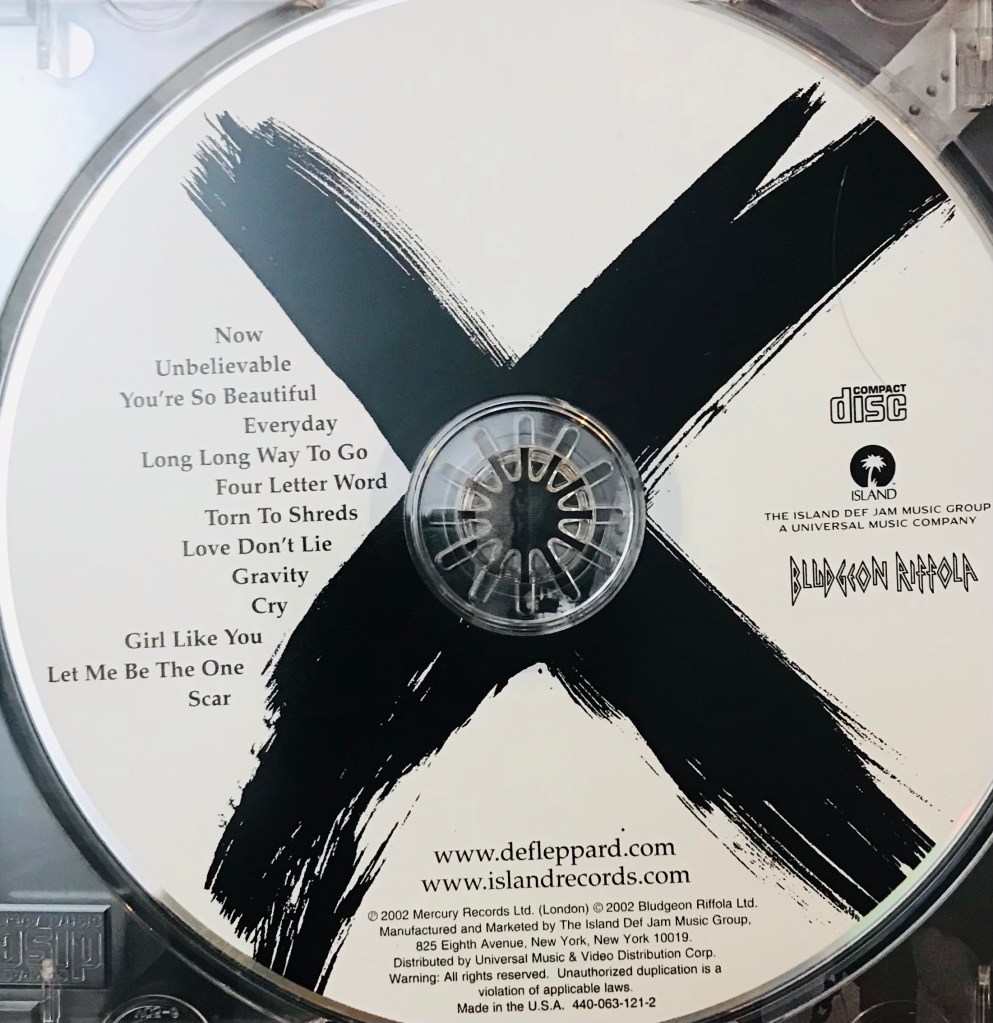
With “Slang” and “Euphoria”, Def Leppard re-invented themselves and the Two Thousands was there for the taking. The answer to their world domination is “X”, released in 2002.
And yes, it’s studio album number 8, but when you add “Retro Active” and “Vault” it is number 10 or X.
So “X”.
It stands for many things, like the Roman number for Ten or an MPAA rating for extreme explicitness, but it also stands for a maniacal mid-life crisis Def Leppard album.
Now
Written by Def Leppard with the help of songsmith, Marti Frederiksen.
The music of Def Leppard has evolved, incorporating the “Slang” influences with the traditional Def Leppard sound. This song captures some of it along with the whole Alanis Morrisette/Matchbox 20 pop rock vibe.
Unbelievable
It feels like a Backstreet Boys track. And I wasn’t surprised when I saw the writers. Per Aldeheim, Andreas Carlsson and Max Martin, who together had written a lot of hits for artists like Backstreet Boys, Nsync and Britney Spears.
But it was a skip for me.
And very disappointing as well, especially when Carlsson can rock hard. When he worked with Europe many years later, we got “Last Look At Eden”. When he worked with Paul Stanley, we got “Live To Win”. When he worked with Bon Jovi we got “Everyday”, “Misunderstood” and “Hook Me Up”. And Max Martin was a rocker to being with. When Martin worked with Jovi, we got “It’s My Life”. And guitarist Per Aldeheim can also rock hard, however none of the writers rocked hard at all on this.
“Unbelievable”, I say.
You’re So Beautiful
Another song written by Def Leppard with Marti Frederiksen.
The pop rock is back with this, which has the feel of “Animal” with new melodic elements.
Everyday
A cut written by Def Leppard with Marti Frederiksen, its lightweight “Photograph” even down to the syllables for the Chorus.
Long, Long Way to Go
Written by Wayne Hector and Steve Robson who I had to Google to see what their history is.
Wayne Hector is renowned for working with artists like Westlife, Nicki Minaj, The Wanted and The Pussycat Dolls. Steve Robson back in 2002 had worked with Westlife, Atomic Kitten, Honeyz and Faith Hill. All pop song writers.
And Def Leppard took a pop ballad and gave it the Def Leppard treatment, however it still sounds like a Backstreet Boys song. But it’s the most catchiest song on the album.
Four Letter Word
Written by Def Leppard, this is best track on the album. The bluesy AC/DC or ZZ Top style riff definitely gets me interested. It could have easily fit on the Adrenalize album.
At times you would be able to hear some “Back In Black” and “Armageddon It”.
Torn to Shreds
Written by Def Leppard and Joe Elliot in the lower registers singing a ballad is pretty cool to listen to. The way it starts off, it reminds me of the “Slang” album.
Love Don’t Lie
Written by Def Leppard. It sounds like “The Real Thing” from Russell Morris.
Gravity
Written by Def Leppard and Pete Woodroffe, this is by far the worst track on the album. While I give the band 5/5 for having the balls to experiment, the dance beat programmed bass and drums don’t do it for me and the vocal delivery did nothing to captivate the NWOBHM child within and I don’t think the teenybopper crowd took to it either.
Maybe if One Direction covered this many years later it would have been a hit.
Cry
Written by Def Leppard.
Stone Temple Pilots comes to mind here.
And I like it when hard rock artists take something which is contemporary and add their own hard rock touch.
Girl Like You
Written by Def Leppard.
It’s a skip from me when you middle aged men singing lyrics like “I’m on fire, and you’re the flame”.
Let Me Be the One
Written by Def Leppard. Next.
Scar
Written by Def Leppard and Pete Woodroffe
The best track on the album. It has this “Paper Sun” vibe in the Intro, a “Desert Song” vibe in the Chorus and an “Animal” style Chorus.
While it’s not an excellent Def Leppard record it’s also not that bad, and it kept the band on the road which was the key back then.
But for me, I haven’t purchased any Def Leppard product post this album.
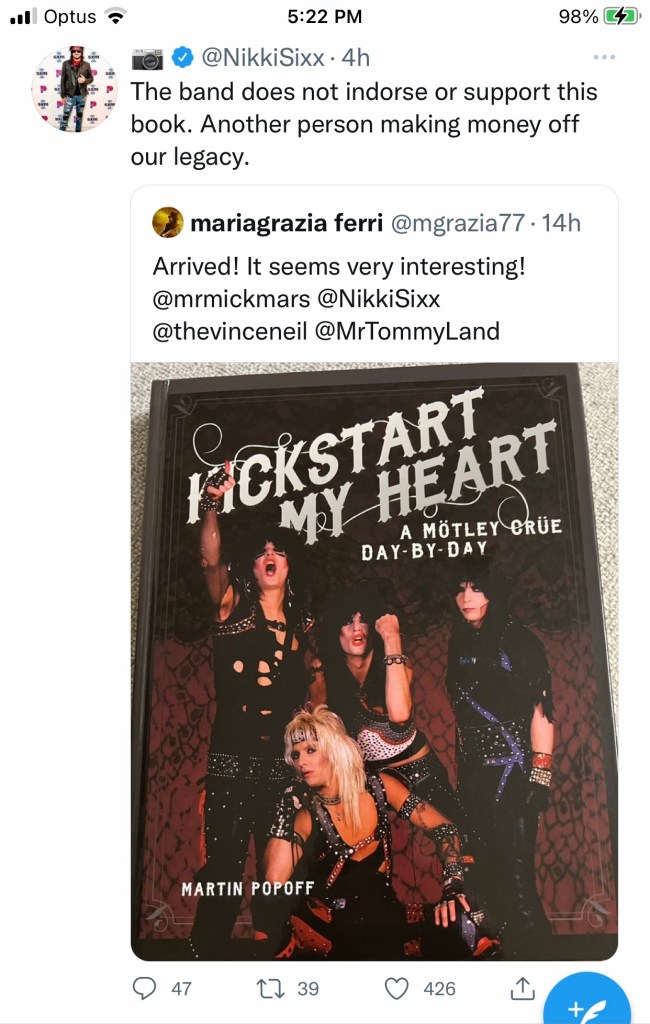
Back in November, 2021, a Crue fan posted their excitement to Nikki Sixx, when a book on Motley Crue called “Kick Start My Heart” by Martin Popoff arrived at their home.
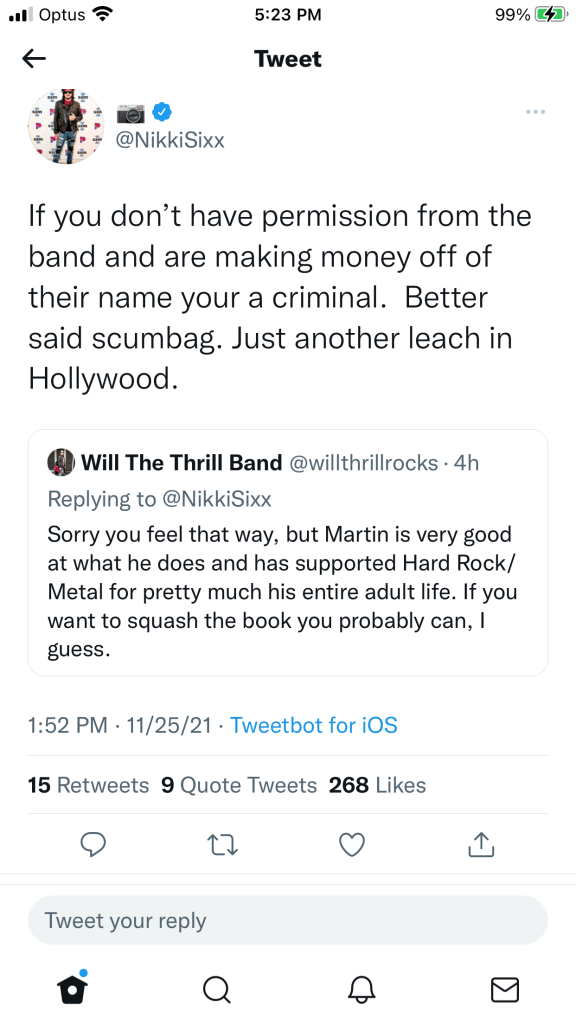
Well, Nikki Sixx responded in a way that took a lot of people by surprise, when he said that Popoff was just “another person making money” off Motley Crue’s legacy, And if you have read books from Martin Popoff, most of us were like ‘WTF’.
It’s pretty obvious that emotional stability is something that the Crue guys struggle with.
And when other people mentioned the good work that Popoff has done for the hard rock and heavy metal industry with his books and reviews, Nikki Sixx replied by calling him a scumbag, a criminal, a leach.
I suppose every artist wants to control their own narrative (and then they hand over the narrative when they seek out interviews with publications to someone else).
But they cannot stop people from publishing works on them.
Is Nikki serious?
People are writing books on dead rock stars and making money in the process. People are writing unauthorized biographies on current rockstars and making money from it. I have seven books on Led Zeppelin from different writers. All of them unauthorized but written brilliantly.
If you want to be in the public eye, these kind of books are part of the territory. And writers like Popoff fill a void because the artists fail to satisfy it. There is demand and no supply.
From my understanding of this book, Popoff even makes mentions of the references he uses to produce this work. It’s just his take on various authorized books.
And while I don’t agree with Nikki Sixx on this, it doesn’t mean I’ll stop listening to his music, but he should step down from his ivory tower once in a while and actually see the body of work that Martin Popoff has produced.
The name “Grand Funk” and “Grand Funk Railroad” started to appear in interviews with guitarists via the Guitar mags circa 1988 to 1992, as bands started to incorporate more blues rock into their music. Then I purchased an encyclopaedia called “The Rolling Stones Encyclopaedia of Rock and Roll” and they are listed.
But I had never heard their music and it was only a few years ago that I started to listen via Spotify.
“Born to Die” is the 10th studio album, released in January 1976.
Released on Capitol Records and produced by Jimmy Ienner.
Ienner was briefly considered for the role of producer on the “Destroyer” album because he was the producer of one of Paul Stanley’s favourite bands, the Raspberries who had broken big on the backs of an Ienner produced album. While Ienner lost out to Bob Ezrin for the “Destroyer” gig, he did a job with Kiss, as Executive Producer on “Double Platinum”.
The band for the album was Mark Farner on Guitar/Vocals, Craig Frost on Keyboards, Mel Schacher on Bass, Don Brewer on Drums/Vocals, Jimmy Hall on Saxophone/Harmonica and Donna Hall on Background Vocals.
Born To Die
What a track with the feel of the song “Bad Company”, written by Mark Farner in memory of his cousin who died in a motorcycle accident.
The Hammond Organ has this tremolo style effect which makes it sound menacing. The bass playing grooves and the vocals are multi-layered in the Chorus.
Lived his life of freedom, exactly the way that he wanted to. But there’s always that one thing, we never do count on. You was born for it to happen to you …
Dues
Written by Don Brewer and Mark Farner. As soon as the syncopated bass and bass drum start off the song, I was interested.
I tried religion and some holy roller steals my tenth
Press play to hear the music played under the melody of “can we ever stop paying dues?”
And then the lead break kicks in and I’m playing air guitar to it. And they keep soloing until it fades out.
Sally
It’s the sugar gum commercial pop song for the album written by Mark Farner for his then love interest, the actress/singer Sally Kellerman.
But it’s a skip for me.
I Fell For Your Love
Written by Don Brewer and Craig Frost and there is too much soul and not enough rock.
Talk To The People
Written by Mark Farner and Craig Frost.
I’m not a fan of the music or the melodies.
But there is a great solo to end.
Take Me
Written by Don Brewer and Craig Frost.
Take me and make me feel your music..
And there is some great soloing .
Genevieve
I expected this to be a ballad, but I got an instrumental of fusion of jazz, funk and rock. And I like it.
Love Is Dyin’
Written by Don Brewer.
It’s got this “All Along The Watchtower” vibe, the Hendrix version vibe, not Dylan.
Politician
Written by Mark Farner.
Mr. Politician please don’t deceive us. Mr. Politician you’re there to relieve us. Just how can we tell, mister, When to believe in you.
I guess some things never change.
Press Play to hear the solo break and the bass playing under it.
Good Things
It’s a slow Blues Rocker that starts off like a Bad Company cut, but once the intro lead melody kicks in, it feels like a Jeff Beck cut.
Written by Mark Farner there is plenty of guitar soloing happening.
The album just broke the Top 50 on the Billboard charts and was seen as a disappointment.
It’s not held in high regard by the hard core fans.
It was the last Capitol Records album they did so maybe the title was prophetic in a way.
In August 1990, Blues Rock Guitar Hero, Stevie Ray Vaughan was killed in a helicopter crash. His Double Trouble rhythm section of Tommy Shannon (bass) and Chris Layton (drums) were devastated and with SRV’s death, out of a gig.
They dealt with the pain by jamming. They called in guitar prodigy Charlie Sexton and another guitarist in Doyle Bramhall ll. Bramhall’s father, Doyle Bramhall, Sr. is also steeped in the blues, playing drums for Lightnin’ Hopkins and Freddie King. And Bramhall, Sr. also collaborated on songs with Stevie Ray Vaughan and Jimmie Vaughan, who he knew since childhood.
The jam sessions took place at the Austin Rehearsal Complex. This is how the “Arc” in the band name is derived.
I heard “Living In A Dream” on Letterman and I thought it was Badlands via the sound, but the look definitely wasn’t Jake E Lee and Ray Gillen (RIP). But I couldn’t get their album, even though it was on Geffen Records. I suppose the year of 1992 didn’t help either.
“Arc Angels” is the self-titled debut album released in 1992.
Production is handled by Little Steven & The Disciples Of Soul.
Living In A Dream
What an opening cut, with a feel of “When The Levee Breaks” and just think of “Stormbringer” played in a blues based way.
It’s written by Doyle Bramhall II and Charlie Sexton. They both share vocal duties and they put their guitar skills on display, riff wise and lead wise.
‘Cause there’s nothing wrong here I’m just living, living in a dream
And sometimes we don’t want to escape that dream.
Paradise Café
Written by Charlie Sexton and Tonio K, this song reminds me of the Roadhouse movie. You can imagine the band playing the song behind a Perspex cage to protect them from glass bottles.
Well now everything is rosy And the money’s so well spent This kind of education Is worth every cent When your momma pays the tuition And your daddy pays the rent You could learn a lot in college Although you never went
Sometimes the silver spoon is not enough to satisfy.
Sent by Angels
Written by Doyle Bramhall II.
I like the Bad Company vibe on this. Black Crowes also comes to mind.
Sweet Nadine
Written by Charlie Sexton and Tonio K.
The acoustic guitar riff reminds me of “Little Suzi” from Tesla. Even the titles are similar. The drum beat is more surf rock and Iggy Pop like than Blues Rock.
Sweet Nadine That ain’t her real name But you know what I mean
I suppose every artist has a “Sweet Nadine” somewhere.
Good Time
Written Doyle Bramhall II and Sammy Piazza, it’s got this Stevie Wonder “Superstition” funk rock happening, with a bit of “Play That Funky Music White Boy”.
I was hangin’ out with some friends of mine Down in Hollywood just a-wastin’ time I knew right then nobody could get me down ‘Cause I’m takin’ myself out on the town We’re gonna have a good time
See What Tomorrow Brings
Written by Doyle Bramhall II and as soon as the opening arpeggio chords started I was interested.
At 6 minutes long, it’s hard to explain the song, a mixture of “Little Wing”, “Free Bird” and “With A Little Help From My Friends”, the Joe Cocker version. And when slow blues ballads are done right, they leave their presence with you. This song does just that.
Wait just long enough See what tomorrow brings
What a great line. Patience is hard to attain, because its original meaning is “to suffer”. So to ask someone to “wait” is to ask them to be “patient”.
Always Believed in You
Written by Charlie Sexton and Tonio K. the cut could be interchanged with songs on a John Mellencamp, Bruce Springsteen, Bryan Adams or Don Henley album.
I was born back in the sixties I was born and raised to win We had beaten, beaten back the darkness But somehow the darkness slipped back in
Truth right there. People thought that we had broken through the injustice and prejudice however people just doubled down into their echo chambers, percolating until they exploded again.
The Famous Jane
Written by Charlie Sexton and Tonio K.
It’s a mid-tempo rocker about heroin.
She was probably born in Hollywood in the era of the King She hitchhiked Highway 61 and got elected Queen She ended up on Bleeker Street down in the underground And then somebody there called her sweet, and the story got around
The lyrics more or less sum up its possible introduction into Hollywood.
Spanish Moon
Written by Doyle Bramhall II, Charlie Sexton and Chris Layton. This is a great song with a similar riff and groove to “Living In A Dream”.
Everybody’s looking for a little bit of love Not a lot of love being given
No one wants to be alone, but people associate companionship with love. But if love doesn’t happen, having a circle of friends to talk with, laugh with and go out with, is every bit good enough.
Carry Me On
Written by Doyle Bramhall II who brings out the Southern Classic Rock.
Shape I’m In
They bring out the Chuck Berry “Johnny Be Goode” feel on this cut, written by Doyle Bramhall II, Charlie Sexton and Marc Benno.
I tried so hard to get back in the race I’d just be satisfied if I could place There’s so much competition but the best don’t always win I’m doing pretty good for the shape I’m in
Be you and don’t let the rat race dictate to you who you should be.
Too Many Ways to Fall
Written by Chris Layton, Tommy Shannon, Charlie Sexton and Tonio K.
This is another of those percolating blues rock tunes.
‘Cause there’s just one way that we can stand Too many ways to fall
Truth right there.
The outro reminds me of what Pearl Jam would do.
The band didn’t last long. Geffen jumped into bed with Seattle, Bramhall’s heroin addiction was out of control and by 1993, the band broke up.
I was interested to hear what Def Leppard would do next after “Slang”.
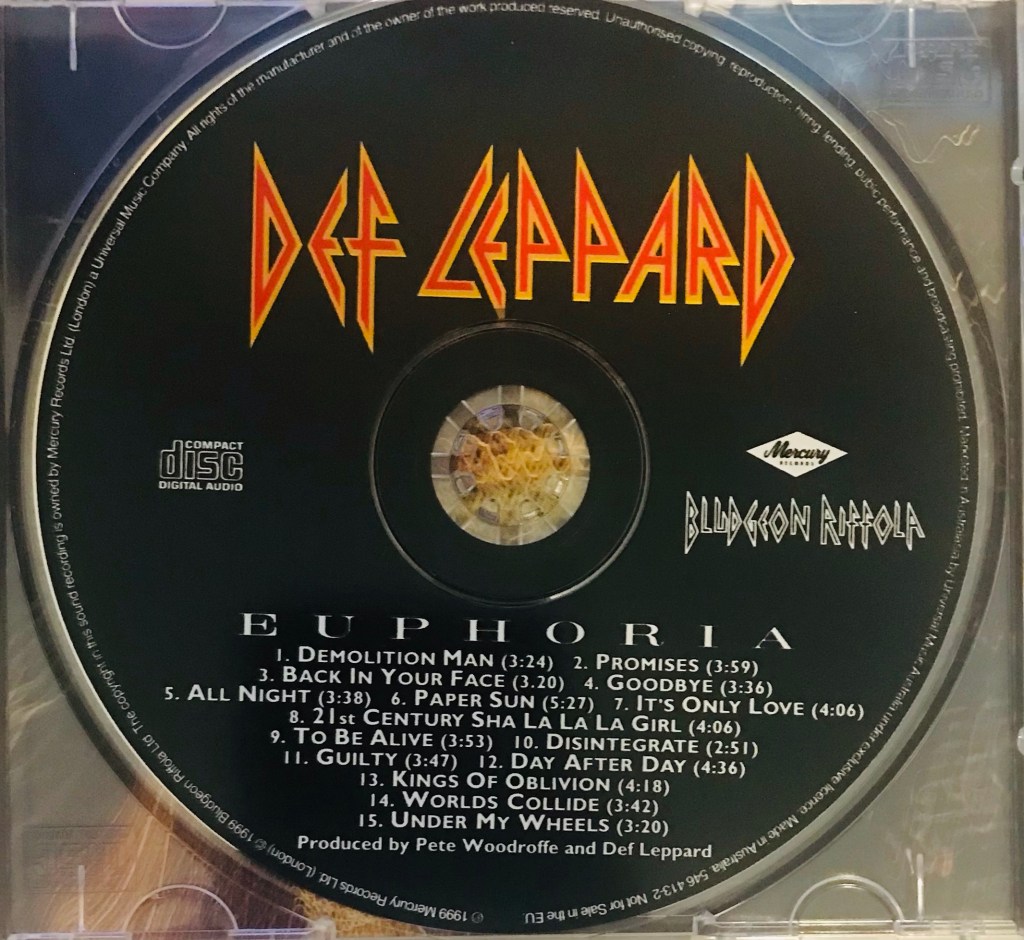
And the answer was “Euphoria”. Released in 1999, the title alone was an indication to me that they were back to the “Pyromania” and “Hysteria” vibe.
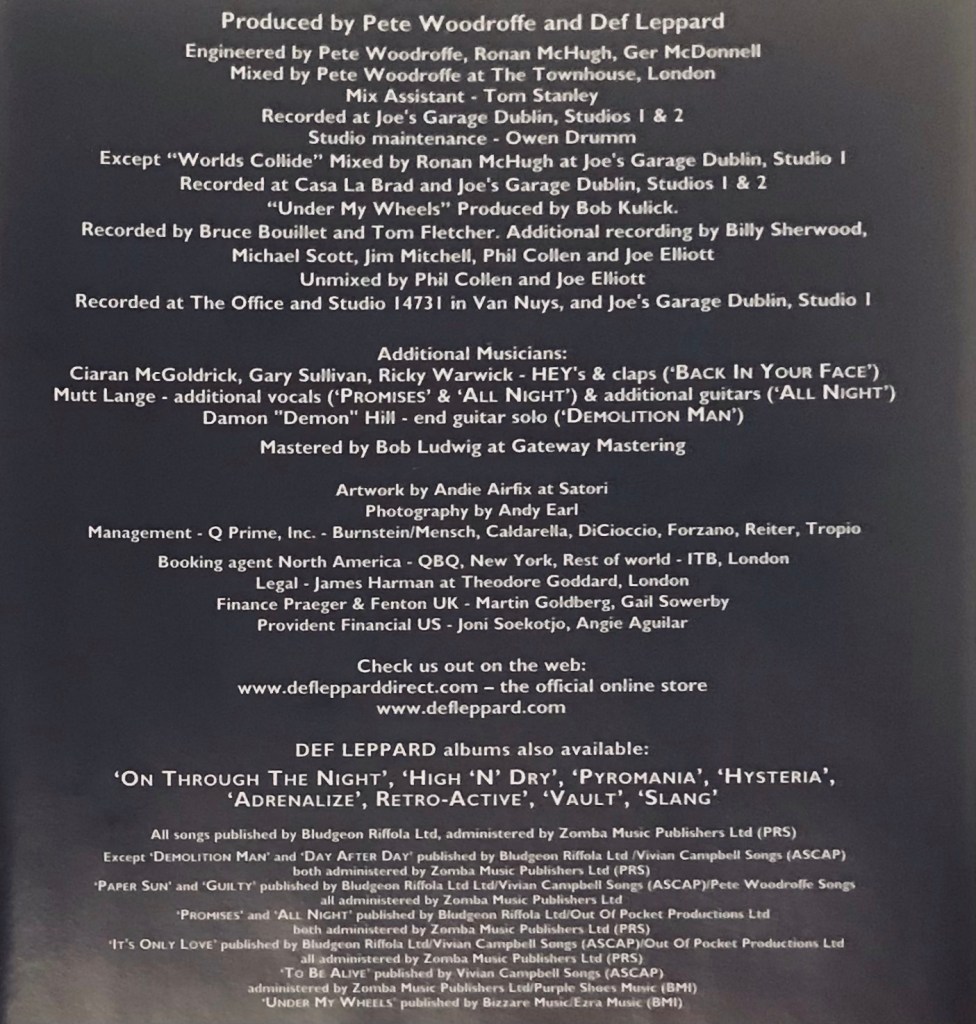
The album is produced by Pete Woodroofe.
Demolition Man
Written by Phil Collen, Vivian Campbell and Joe Elliot, it’s an energetic rocker to kick off the album, reminding me of their supercharged cover of “Action” from Sweet in the early 90’s.
Promises
Written by Phil Collen and Mutt Lange, this is a great track in the vein of songs like “Photograph” and “Animal”.
And press play to hear the guitar solo.
Back In Your Face
Written by Joe Elliot and Phil Collen, it has a 70’s style vibe, processed drums, a bass guitar riff that has the vibe of “Under Pressure” from Queen and a rap like vocal line reminiscent to “Pour Some Sugar On Me”.
With the title, it definitely announces the bands intention.
The band was back in my face like jumping jack flash and the Union Jack.
Goodbye
Written by Rick Savage, the song is interchangeable with “Have You Ever Needed Someone So Bad?” and “When Love And Hate Collide”.
All Night
A funky Prince like tune done the Def Leppard way and written by Phil Collen and Mutt Lange.
It wouldn’t take up a place in a set list, but it’s cool to hear the band experiment and have fun with tunes like this.
Paper Sun
Written by Phil Collen, Rick Savage, Joe Elliot, Vivian Campbell and Pete Woodroffe.
My favourite song on the album and one of the best songs to appear on a Def Lep album in the 90’s.
The intro riff, with it’s Middle Eastern feel already hooks me in, bringing back memories of songs like “Desert Song” and “Fractured Love”. The song could have easily appeared on the first two albums as well.
This is the Def Leppard I like.
It’s Only Love
Yeah, it’s a slow rocker written by Joe Elliot, Mutt Lange, Rick Savage and Vivian Campbell, which didn’t captivate me.
So it’s a skip.
21st Century Sha La La La Girl
Written by Phil Collen, Joe Elliot and Rick Savage.
This is Def Leppard with a vocal line which borders on rap-rock.
What can go wrong?
Nothing when it comes to Def Leppard.
They do these things cool but sometimes they overuse this method.
To Be Alive
This is a great ballad written by Vivian Campbell and a P.J Smith.
The song was first recorded by Vivian Campbell’s side band “Clock”, which was active between 1996 and 1998 and released one album in 1998.
Disintegrate
An instrumental written by Phil Collen, which feels like it’s part 2 of “Switch 462”. And I like it.
Guilty
Written by Phil Collen, Rick Savage, Joe Elliot, Vivian Campbell and Pete Woodroffe.
It starts off like “Hysteria” and that familiarity immediately gets me interested.
Day After Day
Written by Phil Collen, Joe Elliot and Vivian Campbell. It’s “Deliver Me” from “Slang”, updated to rock hard.
A favourite just behind “Paper Sun”.
Kings Of Oblivion
Written by Phil Collen, Joe Elliot and Rick Savage. They bring their love of 70’s Rock and Metal into this. It could easily appear on the first three albums.
We laugh at the wardrobe choices of the 80s but goddamn the 90s didn’t really endear itself to people either.
The CD that I have is known as the “Australia Bonus Tracks Edition”. So I have two bonus tracks in “Worlds Collide” and another fun energetic cover in “Under My Wheels” from Alice Cooper.
Worlds Collide
It made an appearance on the “Slang” reissue from 2014 so it was written for that album.
It’s heavy and I like it. Press play to hear the main riff. It’s head banging Metal the way I like it.
Sales of the album didn’t match the earlier stuff, but that doesn’t mean it’s a dud. Check it out.
P.S
While it was refreshing to hear “Slang” and it grew on me to be a good album, I was more than happy to have Def Leppard return to their sound.