Classic Songs to Be Discovered, Derivative Works, Influenced, Music, My Stories

1986 – Part 1.1: Iron Maiden – Somewhere In Time

The first thing that grabs you is the Bladerunner style cover. Bruce Dickinson mentions the same in his book, “What Does This Button Do?”
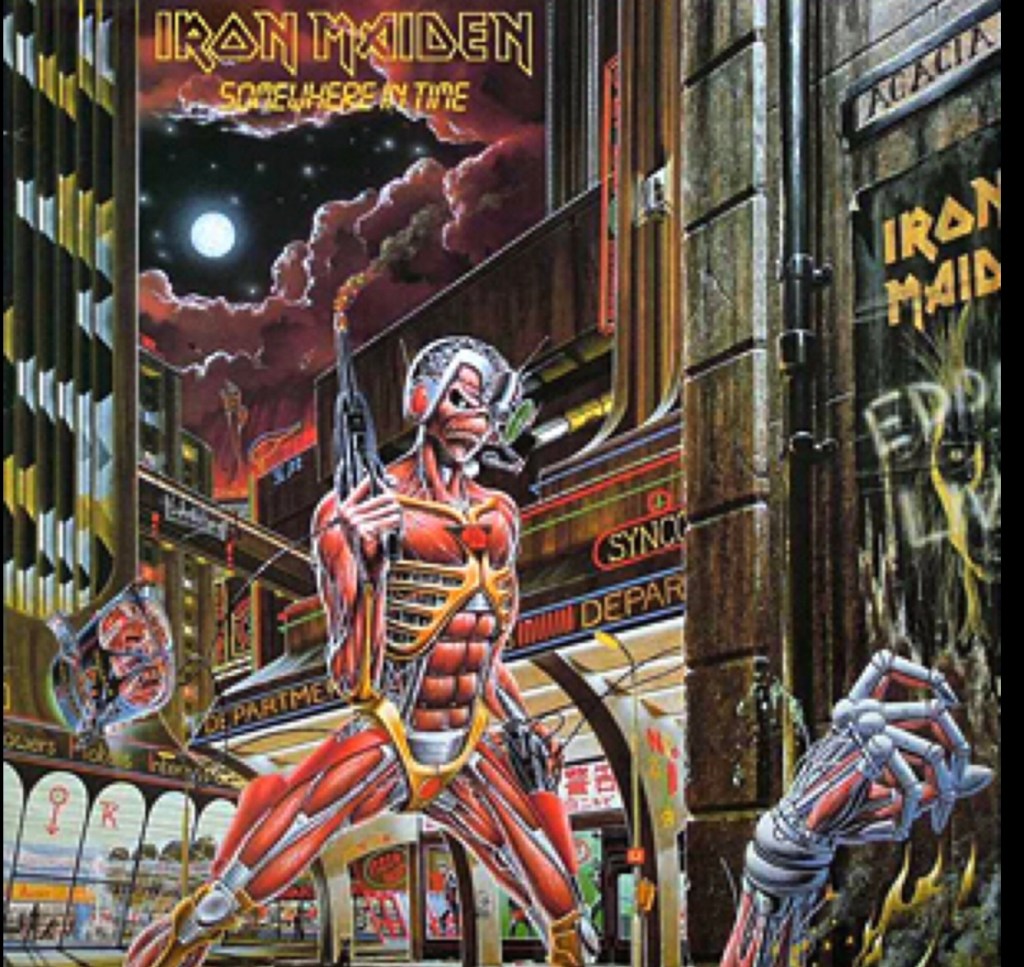
Apart from buying the album, the fan is also buying a great piece of art by Derek Riggs, who took 3 months to come up with the painting.

During this 80s era, the UK government decided to tax the entertainment industry over 80% of what they earn so this meant that the band and other UK artists had to go into exile and were caught somewhere, far away from home for nine months of the year. So the album ended up being written and recorded in different places and in different studios.

When the sessions started, Bruce Dickinson wanted to do something different, which made everyone laugh. He wanted Maiden to lead instead of delivering just another Iron Maiden album.

But, the fans got “just another Maiden album”. And we loved it.

Steve Harris contributed “Caught Somewhere In Time”, “Heaven Can Wait”, “The Loneliness Of The Long Distance Runner” and “Alexander The Great”. Adrian Smith contributed “Wasted Years”, “Sea Of Madness” and “Stranger In A Strange Land” while Dave Murray brought in “Déjà Vu”.

A chord is strummed, a synth chord rings out and a harmony lead is heard. This repeats for a few times and then a drum groove comes in. Subdued it percolates, changes key and at the fifty two second mark, it explodes.

“Caught Somewhere In Time” had really started. And that exploding intro comes back in the solo section at the 4.50 mark. As Harris once said, it’s about a nightmare trip through time due to a malfunction in the time machine.

The iconic open E pedal point riff starts off “Wasted Years”, Maiden’s contribution to the tales of touring and being on the road for a long time. It’s no surprise that this song was written straight after their biggest and longest tour for the “Powerslave” album which resulted in the “Live After Death” album.

The intro lead riff was rejected by Smith but Harris heard it and told him to work on it.

And the whole solo section is head banging, fists in the air, desk breaking material. Check out the way they build up the intro E pedal point riff into the solo section.

The solo section of “Sea Of Madness” is one of my favourite pieces of music on this album.

“Heaven Can Wait” is the story of a person who is struggling to transition to Heaven. The song just moves along, but when the whole “Take my hand, I’ll lead you to the promised land” section starts off, its pay attention time. Then those “woh oh oh” chants kick in and its desk breaking time. And how good is the clean tone guitar riff under the “woh-oh-oh”.

The guitar intro to “The Loneliness Of The Long Distance Runner” is inspiring, There is a film with the same title and Harris once said in an interview something like, “you always have to run in life, move forward, and you do it alone.”

The way Bruce Dickinson carries the vocal melody for the Chorus is excellent, and then the harmony leads kick in while Nicko McBrain is doing double time on the drums.

Then at the 3.30 mark, a blues rock like lead kicks in with pentatonic bends before it morphs into a metal like solo. And the song ends the way it started, with a tonne of memorable harmony leads.

The open E bass shuffle of “Stranger In A Strange Land” gets me interested, but it’s the Adrian Smith riff that seals the deal.

And how good is the lead break.

While the title shares the same name as the Robert Heinlein book, Adrian Smith based it on a story he read about an old sailor John Torrington, a member of the mysterious 1845 Sir John Franklin expedition that attempted to find the Northwest Passage from America to Asia. More than a century later in 1984, he’s perfectly preserved body was found in the ice of the North Pole.

Check out “Déjà Vu” from the 30 second mark, when that harmony lead kicks in. It’s like “The Loneliness Of The Long Distance Runner” part 2 and it morphs into a riff that reminds me of “Die With Your Boots On”.

How good is the pre chorus vocal melody when Dickinson starts to sing, “cause you know this happened before”?

And that harmony lead from the 2.50 mark. Brilliant.

There is blowing wind, a slow military march tempo and a clean guitar solo. That is how the album closer, “Alexander The Great” starts, and it percolates musically, until it explodes into the verses.

The lyrics are somewhat like a children’s encyclopaedia article however there is enough detail there line by line.

And that groove and feel change at the 4.50 mark is excellent, with more leads and more harmonies.

Not bad for just another album.

But.

For all its excellence, the tracks on “Somewhere In Time” (apart from “Wasted Years” and “Heaven Can Wait”) are really underplayed when it comes to the set lists.

P.S. This issue of Guitar Legends is one of my favorites with a heap of information. But that will be for another day.

Standard
Copyright, Music, My Stories, Stupidity

Universal Music Gets $1.5 Million for “We’re Not Gonna Take It”

The case between Clive Palmer and Universal Music (UM) is over, with the judge awarding damages of $1.5 million to UM.

For those that don’t know or don’t remember, Clive Palmer is an Australian businessman who decided to start up a political party called United Australia. He asked to use the song, heard that the licence fee was $150K for eight months use and decided to write a parody version of it called “Australia ain’t gonna cop it”.

Well, when Dee Snider and Jay Jay French heard about it, they got the lawyers involved. Dee has said on other occasions, that if someone agreed to pay the licence fee, it was still up to the writer to approve the use of the song and if the person/organization did not represent the message of the song to include all and give people a right to speak up and choose, he would have vetoed the use.

Palmer is not liked by the majority of Australian’s. He’s been found guilty of not paying workers properly, for creative accounting and when he doesn’t get things his way, he sues. Just recently he took the state of Western Australia to court because of their hard border closure. But he met his match with Dee Snider and Twisted Sister.

Standard
Music, My Stories

The Week In Destroyer Of Harmony History – April 26 to May 2

4 Years Ago (2017)

I was reading a paper that Steve Albini wrote back in the early nineties called “The Problem With Music” and was inspired to write.

While change is a constant in life, the recording business and the contracts they use haven’t changed much.

8 Years Ago (2013)

The debacle that was the Stone Music Festival was still getting some news.

Basically you had amateurs involved in organizing a festival and the blowback was huge.

I shared my enthusiasm for “BULLY” – Shinedown, “BLACK” – Trivium, “BECOME” – Mutiny Within, “BE STILL and KNOW” – Machine Head and “BELIEVE IN ME” – Corroded.

If these five songs appeared on one side of a LP, the album for me would be called a classic. 

I watched Black Sabbath live and posted my review here.

Then I was questioning if Sabbath was still relevant.

Black Sabbath was the early 70’s.

Towards the end of that era, the band was bleeding and Ozzy was fired. The beginning of the 80’s, saw Black Sabbath in the “Heaven and Hell” period, with Ronnie James Dio on vocals. After that, you can say the band didn’t really set the world of fire, however I do have a soft spot for the “Eternal Idol” and “Headless Cross” albums with Tony Martin on vocals.

The “Dehumanizer” album in 1992 with Dio was an attempt to make both Dio and Sabbath relevant in the 90’s, however it didn’t really hit the mark.

Black Sabbath of the 70’s questioned authority, challenged institutions and preyed on people’s fears of heaven and hell. The 2013 Sabbath didn’t do that lyrically, it was just the same old run of the mill cliches.

It looked like my playlist shuffle was stuck in the song titles that begin with B.

So I posted my appreciation of “Breakin Free” – Tesla, “Be Somebody” – Thousand Foot Krutch, “Beautiful” – Since October, “Back Again” – Daughtry, “Believer” – Three Doors Down, “Black Rose” – Trapt and “Beautiful Mourning” – Machine Head.

I thought I would do a follow-up to how One Less Reason treat their fans. Which was still shit.

Comments taken from their Facebook page at the time had a lot of things like “Ordered your CD from your website a while ago and still have yet to receive it, what does it take to get your cd? several attempts to contact you and no response yet.

And I still hadn’t received my CDs as well.

“What About Now” from Bon Jovi went from number 1 to 76 in six weeks, so I thought I’ll write about it.

Finally Jovi also released dates for a December 2014 tour of Australia.

And they did so many pre sales deals with different organizations, with tickets ranging in prices from $200 to $2000 and of course if you paid the premium membership for their own backstage fan club you had access to the first presale.

Regardless of the deals and the band scalping their own tickets, the tour was still a massive event with Sambora or not.

Standard
Classic Songs to Be Discovered, Derivative Works, Influenced, Music, My Stories, Unsung Heroes

Australian Method Series – BB Steal

BB Steal was Australia’s entry for world domination in the hard rock movement. But did the world need a new Def Leppard.

Their association with the band wasn’t just inspiration. They opened up for Def Leppard during the “Adrenalize” Tour and Def Leppard guitarist Phil Collen produced the title song on their “Heartbeat Away” EP and co-produced their first full-length album “On The Edge”, which also features a version of the song “Heartbeat Away”. Collen also played some guitar and sang backing vocals on the album, but is not credited.

BB Steal (otherwise known as Beg Borrow Steal) was spawned from the NWOBHM sounding “Boss” band. In typical Australian hard rock fashion, they lived in development EP hell for at least 4 years before the album came out. 4 years is a long time in the music and recording industry.

And the album definitely racked up the bills as recording took place in Los Angeles and Montreal with various engineers and studio players.

Formed in 1987, they released the 4 song EP “Heartbeat Away” in 1988. The title track of this EP set the tone for the sound and feel the band would pursue. The Def Leppard “Hysteria” album sound.

So, “On The Edge” was released in 1991. It’s one of those should have and would have and could have stories. It should have done better commercially, and it would have if Grunge didn’t come, and it could have done great numbers if it came out a few years earlier.

If you love Def Leppard then you will love BB Steal. Critics praised em and also drilled em, calling em a poor version of Def Leppard. But the band was a lot more than the Def Leppard comparisons.

“On The Edge (Lizzy Town)” has this “Led Zeppelin III” acoustic vibe before it moves into a Def Leppard like groove and vocal.

“Big On Love” is probably the best song not written by Def Leppard that sounds like it belonged on “Hysteria”. At one stage I thought it was “Animal”.

Then “Hysteria” starts. Wait, it’s called “Ride On”. They are similar but derivative enough to stand on its own.

“Suffer In Silence” is another track which is very Def Leppard like.

“Live It Up” has a guitar intro that could have come from a Van Halen album, before it goes into an AC/DC like groove. The vocals of Craig Csongrady on this album are just too much like Joe Elliot, in the same way that Marc Storace from Krokus was too much like Bon Scott.

“Shot Full Of Love” feels like a cut from Babylon AD. “Precious Love” has that “Stand Up” vibe.

“Don’t You Love Me and Leave Me” is an AC/DC song musically, with a bit of The Cult added in vocally and musically.

“Heartbeat Away” is from the Phil Collen produced EP, released in 1988 and “Troubled Child” closes the album, with a Journey like feel musically and a Joe Elliot like vocal.

In the 2019, re-issue, it comes with three songs from the original 1988 EP in “I Believe” (very Journey like), “Hold On” (has a guitar hero solo moment) and “Heartbeat Away” (the Phil Collen produced and the song which set the stone for the album to come a few years after).

And when the album did nothing commercially, the band disappeared along with thousands of other hard rock bands.

But in 2012, they returned with a new album called “Resurrection”. But that’s for another day and another “Australian Method Series” post.

Standard
Classic Songs to Be Discovered, Influenced, Music, My Stories, Unsung Heroes

The Record Vault – Addendum: Coheed and Cambria – No World For Tomorrow

When I did the previous record vault post for “No World For Tomorrow” I did mention that I didn’t have the CD anymore. So I went searching at the usual local sellers but found one on eBay.

How good is the artwork by Ken Kelly, who also created the artwork for “Love Gun” and “Destroyer” by Kiss.

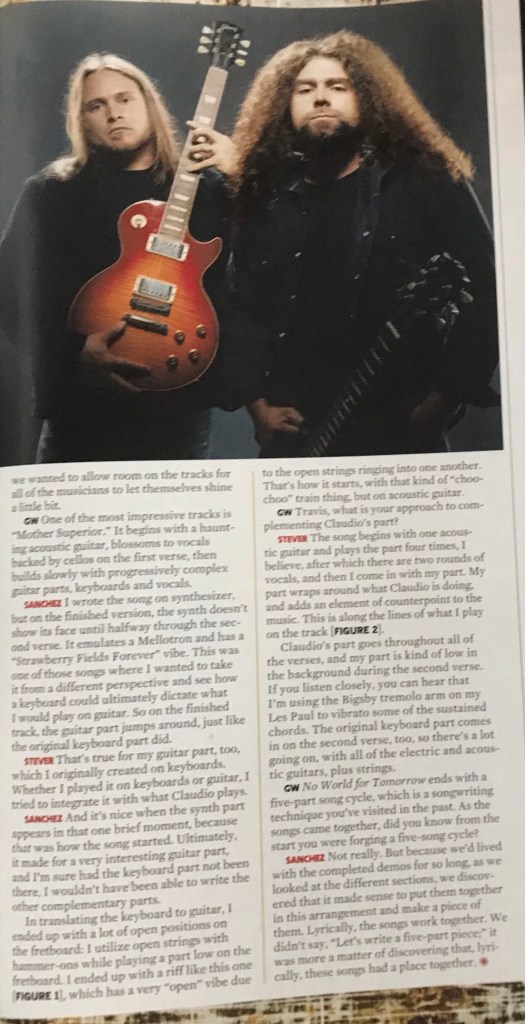
Here is the Holiday 2007, Guitar World issue and article that got me to commit and check out the music of Coheed and Cambria.

Coming into the “No World For Tomorrow” recording cycle, the band was down to two with drummer Josh Eppard and bassist Michael Todd exiting due to the familiar story of drugs and dysfunctionality within rock and roll bands. Claudio Sanchez and Travis Steer remained. And for the first time, they really collaborated together.

With an uncertain future, the manager of Sanchez put him into contact with two songwriters in Sam Hollander and Dave Katz, and together they came up with a pair of songs for Hollywood. The songs “Running Free” and “The Road And The Damned” were written for the soundtracks of “Transformers” and “Ghost Rider”. But they didn’t get picked. Instead they provided the spark for the album.

“The Running Free” is described as “uplifting with its U2-esque chorus” and it even became the albums leadoff single. Sanchez further mentions that “even though this is a dark album and all hell is about to break loose, there is still hope. At the other side of the tunnel there is a light. And I feel “Running Free” expresses that.”

So Sanchez and Steer decided to keep the band alive. Rick Rubin had just joined Sony/Columbia and he became the album’s A&R supervisor, like how John Kalodner was listed as the same on so many albums in the 80’s and early 90’s.

The band had their previous albums produced by Chris Bittner and Michael Birnbaum, however that relationship turned sour, so Rubin hooked em up with Nick Raskulinecz. Since Raskulinecz worked with Foo Fighters, he brought in Taylor Hawkins to drum. Meanwhile bassist Michael Todd came back into the fold, clean and sober, however he would depart again a few years later after he was arrested for break and enter. The song “Domino The Destitute” from “The Afterman” releases is about Michael Todd.

After the album was done, Chris Pennie from “Dillinger Escape Plan” joined as the permanent drummer. He kept this role for the next album, “Year Of The Black Rainbow” and then was replaced by Eppard, who returned for “The Afterman” releases and he’s been there since.

The guitar riff in “Mother Superior” is now known as the guitar riff, but it was written on a synth/piano first. The whole song was synth heavy until Raskulinecz advised them to make the rhythm guitar progression the main focus. This is what Sanchez said about it, “I wrote the song on synthesizer, but on the finished version, the synth doesn’t show its face until halfway through the second verse. It emulates a Mellotron and has a “Strawberry Fields Forever” vibe. This was one of those songs where I wanted to take it from a different perspective and see how a keyboard could ultimately dictate what I would play on the guitar. So on the finished track, the guitar jumps around, just like the original keyboard part did.

Crank it loud.

Standard
Copyright, Music, My Stories, Treating Fans Like Shit

Copyright City

Eminem is going after everyone.

Eight Mile Style is Eminem’s publisher and it is going after Spotify first.

The case alleges that Spotify has no license to have the songs on its service, and while the songs have been streamed billions of times, “Spotify has not accounted to Eight Mile or paid Eight Mile for these streams but instead remitted random payments of some sort, which only purport to account for a fraction of those streams.”

A judge now has also cleared the way for Eight Mile to go after the Harry Fox Agency who acts as an intermediary between organizations who secures licenses.

And while Eminem is going legal to be paid monies which only the lawyers will gobble up, other Copyright organizations are buying out other Copyright organizations.

Concord last year spent over $200 million acquiring the Copyrights for songs. Now in April 2021, it’s estimated that Concord has acquired another 145,000 copyrights from Downtown in a deal worth $400 million.

The deal will take Concord’s catalogue of works over 600,000 songs. Included in the deal are works performed by Adele, Beyoncé, Bruno Mars, Carrie Underwood, David Bowie, Jay-Z, Lady Gaga, Sam Smith, Stevie Wonder, and The 1975.

How much of the sale would go back to the original artists and creators remains to be seen, as the artists would have probably gotten a payment from Downtown for their works in the first place.

So imagine the fear these organizations must get when they read about Google’s court case vs Oracle.

You see Google, ‘copied’ 11,000 lines of Oracles software code, and Oracle didn’t like it, so they sued. Google argued it was fair use and after going back and forth in the Courts, it was ruled in Google’s favour because the end use of what the code was used for, was very different for both organizations.

And now the Andy Warhol Foundation is trying to get the Courts to use the Google case verdict in their case against a photographer who took pictures of Prince, which Andy Warhol used to color differently like the Marilyn Monroe and Campbell Soup cans pictures.

This in turn has brought in other heavyweights like the movie, book and music industries as they want the Google verdict to remain within software only and not be brought over into music, movies and publishing.

Because Hollywood lobbyist and music lobbyist oppose everything that could benefit people.

Recently, the WHO got a waiver written into Copyright law which said that all drug manufacturers should share their research and formulas, so that COVID-19 could be defeated and that vaccines could be manufactured by others.

The MPAA and RIAA didn’t like it, but they never clarified what language bothered em.

Then again, when an organization like these have spent their whole life exploiting loopholes in Copyright Law to benefit them and turning black and white areas into grey, they are now afraid of others doing the same, like the thief who has Fort Knox like security on their house.

I guess Copyright City just keeps getting interesting. And nothing mentioned about how the actual creators benefit. And what about the fans.

Standard
A to Z of Making It, Classic Songs to Be Discovered, Derivative Works, Influenced, Music, My Stories, Unsung Heroes

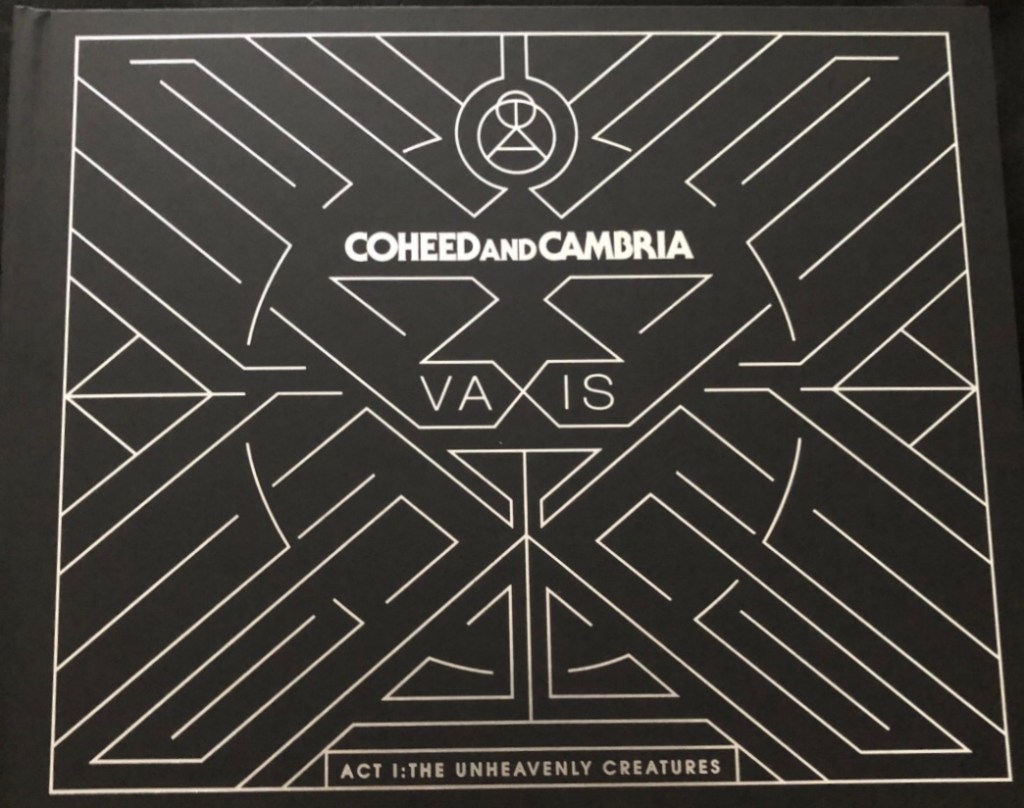
The Record Vault: Coheed And Cambria – Vaxis – Act I: The Unheavenly Creatures

Coheed and Cambria were back in the Amory Wars universe when they announced the 5 part Vaxis series.

This is Act 1.

Otherwise known as “Vaxis – Act I: The Unheavenly Creatures”, the ninth album, released on October 5, 2018.

As soon as it was announced, I was interested and Pre-Ordered the limited edition deluxe box set which includes an 80+ page hardcover, full color book with custom illustrations and complete ACT I story.

The Book also houses the CD of “The Unheavenly Creatures” as well as the exclusive BONUS CD, “The Crown Heights Demos”.

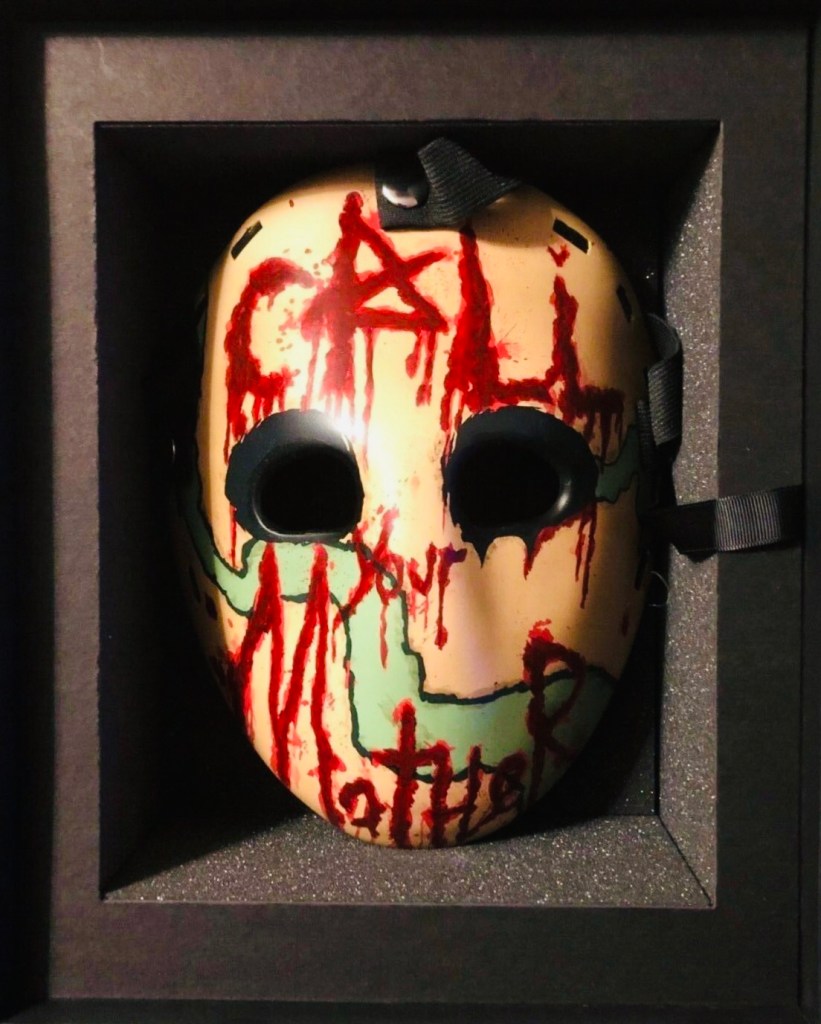
The box set also includes a replica Creature mask, a fold out poster of the cover art, the usual VIP/Black Card which allows card holders early access to tickets and early entry to Coheed and Cambria headline shows.

And the pre order also came with access to a digital site to download the album and the demos on release day.

So, the story.

Set sometime after the events of “No World for Tomorrow”, (their 2007 album, as the three subsequent albums were all prequels), the planets that formally made up Heaven’s Fence are scarred and cracked after an event known as “The Great Crash.”

A group of elites known as the Five Houses of the Star Supremacy have converted these worlds into prison planets, with one planet being called The Dark Sentencer.

The album tells the tale of two new characters, Sister Spider and Creature as they struggle with being imprisoned on The Dark Sentencer and fight to secure the safety of their unborn son, Vaxis.

At 78 minutes, it’s a monster of an album.

The album opens as usual, with a short music and spoken intro called “Prologue”. The voice over talks about “the five houses”, “the planet prisons”, and “a love story”. And the voice ends the narrative with, “It begins with them, but ends with me, their son, Vaxis.”

Then the “Domino The Destitute” inspired riff kicks off “The Dark Sentencer”. You get the big chants like a prison riot is taking place, the big rock riffs and the progressive feel of the arrangement. Like all Coheed albums, song number 2 is the epic.

The title track “Unheavenly Creatures” has a riff that sounds like it was written on the TonePad app. When the guitars come crashing in, it’s major key pop rock.

I like how Coheed always makes riffs in a major key sound heavy, like in “Toys”. If anything it could have come from the fingertips of Mark Tremonti.

The spirit of “Mother Superior” is evident on “Black Sunday”.

“Queen Of The Dark” starts off with a sad piano riff and then a digital delay strummed riff comes in before the window shattering drum groove sets the mood and tone.

“True Ugly” feels like a power pop punk song, full of melody and aggression.

“Love Protocol” has an arena rock Chorus that needs to be heard.

“The Pavilion (A Long Way Back)” has a simple palm muted arpeggio guitar riff and a drum groove that demands attention. It’s one of the best songs on the album and it was the first song written for the album.

“Night-Time Walkers” feels like a “Halloween” or “Escape From New York” soundtrack in the intro. Or a scene from “Stranger Things”. Then the crunching guitars kick in and the drumming becomes more dominant before it moves into a massive Chorus.

“The Gutter” could have come from “A Night at the Opera”. And how good are the violins in this song.

“All On Fire” feels like “No World For Tomorrow”.

“It Walks Amongst Us” has this Middle Eastern exotic soundscape to start off, before it moves into a metal like riff that is played with an 80s keyboard synth sound.

“Old Flames”, is the second last track, and it’s a massive song. You can see it in the same way that the second last episode of each season of “Game Of Thrones” was the biggie.

This feels like classic rock as a piano starts it, before the Cheap Trick like riff kicks in and a massive Arena rock Chorus.

The whole “Naa / Na na na na na-ah” feels like a Cheap Trick song. Even My Chemical Romance have sections like this. As the guitars and drums end, the piano riff starts and it’s the “Prologue” riff.

“Lucky Stars” is an acoustic number that closes the record. It’s like the aftermath. Make sure you stick around for the Clapton like lead break.

And the guys toured hard on this album and now we wait for “Act 2”, in between Claudio’s side project The Prize Fighter Inferno, named after a character in the Amory Wars story.

Standard
Classic Songs to Be Discovered, Influenced, Music, My Stories, Unsung Heroes

1996 – Part 1.4: Bush, Deep Purple and Bruce Dickinson

Without even realizing, it’s a special U.K edition.

Bush – Razorblade Suitcase

I got this album a few years after it came out on cassette tape, via a 3 for $10 bin, so it was a no brainer.

Gavin Rossdale got a lot of crap from journalists and critics.

Like he was too handsome to be considered grunge but then he’s labelled a Nirvana clone. And when the debut album sold in the multi-millions, the band was labelled as slick rock.

He got worse treatment in his homeland. As the U.K ignored them initially, Bush landed a U.S deal and became successful in the North American market first before their album was released in their home country.

He mentioned that Pixies are an influence, and the press called him a Kurt Cobain poseur as Cobain also said that the Pixies are a massive influence. So he said “fuck it”.

“Swallowed” is the lead single. My favorite on the album.

“Greedy Fly” is basically an artist writing a song, without a thought of it being a hit. And somehow it gets released as a single and it’s seen as a hit.

“Cold Contagious” has a cool drum groove, with the guitars decorating the song in a nice way, as Rossdale is singing, “you will get yours” with the volume and intensity increasing. And at six minutes long, it’s the anti-single, but it still got released as a single.

And the band toured for 14 months to promote the album. In the process they moved 6 million copies of the album in the U.S alone.

But with every peak, there is a valley waiting below.

A fight with the label delayed “The Science Of Things” and when the album came out, their sound was suddenly seen as “old” by the press, in the same way that hard rock became old circa 1991/92.

Deep Purple – Purpendicular

It’s not on Spotify but YouTube has it. It’s ridiculous why some albums are missing from digital services.

“Purpendicular” is the fifteenth studio album. It is their first album with guitarist Steve Morse. His injection was seen a breath of fresh air.

“Vavoom: Ted the Mechanic”

The blues boogie is excellent and the Mixolydian lead break from Steve Morse is guitar hero worthy.

What a way to introduce yourself to the Purple fans.

“Loosen My Strings”

Arpeggios kick off the song, but its Roger Glover’s bass line that takes this song to a new level and then Morse starts to play a distorted chord riff which complements the bass riff.

The riff before the lead break is excellent, but make sure you check out the lead break and the outro lead break, which sounds like a Boston outro, ala “Don’t Look Back”.

“Soon Forgotten”

It’s a strange song, with a riff that sounds a little bit exotic and a bizarre staccato like vocal melody on top of it. The organ work on this track is stunning and you are reminded why Jon Lord is regarded as one of the greatest players of all time.

“Sometimes I Feel Like Screaming”

The intro guitar from Morse is haunting and sad. He then plays this melodic lead in between the verses which is memorable.

The guitar solo is amazing.

It’s one of their best and should be known with their classic songs.

Did I mention that the guitar solo is amazing?

It is.

Do yourself a favour, check it out and start playing air guitar to it.

And did I mention there is an outro guitar solo as well?

There is. So check that one out as well. In other words, Steve Morse rules on this track.

“Cascades: I’m Not Your Lover”

The churchy organs of Jon Lord kick it off, while Steve Morse plays a bendy melodic lead, before it takes a left turn and a U-turn and becomes a hard rock song with a “Highway Star” like vibe.

The guitar/organ harmony solo from 2.15 to 3.15 is one of the great moments on this album as Lord/Morse go to town playing arpeggios, in a similar way that Lord and Blackmore did for “Burn”, just a lot faster.

“The Aviator”

Morse brings out the country and folk influences to create a major key “good vibes” medieval arrangement. Make sure you check out “Highland Wedding” from Steve Morse’s “High Tension Wires” from 1989 as Morse has been dabbling with these kind of melodies previously.

“A Castle Full of Rascals”

The beginning sounds like a cross between ELP and Led Zeppelin in the blues rock vein.

And the song changes at 1.58 mark with a bass groove, lush keys and a progressive like vocal melody. Morse at first is playing single note lines before crashing in with power chords and distorted single notes, paving the way for Jon Lord and his Hammond Organ solo.

“A Touch Away”

It’s got that feel good 70’s progressive vibe.

“Hey Cisco”

It sounds like “Hit The Road Jack” on steroids. Hell, it could have come from a Van Halen album. Make sure you stick around for the guitar and organ harmonies from about 4.08 and then Morse breaks loose with his fast alternate picked Mixolydian lines.

“Somebody Stole My Guitar”

What a riff to introduce the song. It grooves, its heavy and bluesy. I haven’t mentioned the swing and soul feel of Ian Paice yet, but man, this dude can play.

At the 2 minute mark, Morse starts this palm muted arpeggio riff, while Lord plays these Organ chords before Morse launches into the solo, while Lord plays the palm muted arpeggio riff on the Organ.

Brilliant.

“The Purpendicular Waltz”

It’s a blues shuffle built around a cool groove and a great closer to the album.

For all the debate about Blackmore and Morse, forget it.

Listen without prejudice.

Bruce Dickinson – Skunkworks

I didn’t like this album when I first heard it. And it stayed on the shelf for a long time before I pulled it out and re-listened. I still didn’t like it and back on the shelf it went. But over the last 8 years, the album has taken a life on its own.

I didn’t get it back then, but goddamn this album sounds progressive. The cover design from Storm Thorgerson (RIP) should have been an indication of its progressive intentions, but it escaped me.

It was meant to be a band album but the label wouldn’t release it under anything except Bruce Dickinson. Jack Endino a Seattle producer who worked on Nirvana’s “Bleach” is producing. The sound is like an amalgamation of 80’s Rush with alternative rock and metal.

And I’ve never heard of Alex Dickson again after this album but he does a stellar job on the guitar and as a co-writer on all the songs. But as Rod Smallwood said, “Bruce Dickinson is a heavy metal singer and that will never change”. His attempt to shake off the image of his Maiden past was futile.

“Back From The Edge” has double time drumming over a jangly chord progression, but it’s the bridge and solo section which gets me interested.

“Inertia” could have come from any Maiden album, past or future.

How good is the riff to kick off “Faith”?

At times I feel like I am listening to a Dream Theater cut from the “Falling Into Infinity” album with this song.

Make sure you check out the solo section.

“Dreamstate” in the verses sounds like a Nirvana cut. Yes, that’s right folks, Bruce is channeling Cobain.

How good is “I Will Not Accept The Truth”. Listen to the repeating arpeggios in the verses. Sinister and melodic in the same breadth.

The whole mood and groove in the interlude/solo section of “Strange Death In Paradise” while Dickinson sings the title is a must listen for any Dickinson fan.

In the end, unless you were interested in what Dickinson was up to, there was nothing really here to get you to commit. Then again, the 90’s was an interesting time for 80’s artists and the fans of those artists.

Standard
Classic Songs to Be Discovered, Derivative Works, Influenced, Music, My Stories

1996 – Part 1.3: Journey – Trial By Fire

Steve Perry was back with Jonathan Cain, Neal Schon, Ross Valory and Steve Smith and Journey was rocking again after a 10 year gap, thanks to no small part to John Kalodner. Kevin Shirley is producing and this album is a return to form.

“Message Of Love” has a Chorus inspired by “Separate Ways”. As far as opening tracks go, it’s excellent, a great way to re-introduce the band in the 90’s and while other bands were removing guitar solos, no one told Neal Schon about it as he goes to town on this one and re-introduces the world to guitar solos.

“One More” has a groove that could have come from a Faith No More album. And what made Journey famous originally is how they could change styles within an album, as “When You Love A Woman” shows a their R&B Ballad roots.

“Forever In Blue” has this “Best Of Both Worlds” style riff to kick it off before a familiar Journey like Chorus kicks in.

“Castles Burning” has the guitar front and centre. A sleazy bluesy rock song with an arena rock like Chorus. It’s by far the heaviest track on the album.

“Still She Cries” has some wonderful guitar playing on it for a ballad and Perry as usual delivers a stellar vocal.

The second half of the album didn’t rock as hard as the first half, but each song has some cool Schon moments.

“When I Think Of You” is a ballad, and not a favourite, but Schon is playing some memorable melodic licks.

“Can’t Tame the Lion” is a great rock song with excellent guitar passages that remind me of Vito Bratta.

“Trial By Fire” feels like a jam over a Smith/Valory groove with Schon playing jazz like leads and chords.

A back/hip injury to Perry derailed the subsequent tour and by 1998, Perry was out of the group and Journey went into different versions before settling in with Arnel Pineda.

Then there was a fight over the Journey brand, as Ross Valory and Steve Smith tried to take control of the band name. While that was happening, Neal Schon and Jonathan Cain also fell out as Cain found religion and didn’t want to play the Journey songs anymore as it went against his faith, which infuriated Schon.

But hey, money talks and they made up and Journey is rocking again.

Standard
Music, My Stories

The Week In Destroyer Of Harmony History – April 19 to April 25

4 Years Ago (2017)

You can have riffs in songs that sound similar and the song can still be original. Case in point; “Woman From Tokyo,” from Deep Purple which curiously has the same riff as Joe Walsh’s “Meadows,” from “The Smoker You Drink…” album.

Both songs were released the very same year, and no plagiarism lawsuits occurred. And guess what. Both artists had very successful careers.

So it’s a sad state of affairs when it comes to music and copyright these days. The metal and hard rock community has been sensible about it, but I am pretty sure that if another metal or rock artists broke through to the mainstream, there would be a long list of plagiarism cases filed.

The fact that “plagiarism” is used in music is pretty sad.

8 Years Ago (2013)

I found an old issue or Metal Edge in which Gerri Miller (RIP) did a track by track breakdown of the Motley Corabi album.

I did three separate posts on it. You can read Part 1, Part 2 and Part 3.

People focus on sales a lot. If something sold a lot of times, it’s seen as successful.

However, sale numbers mean nothing these days. What is important here, is the length of time the music has been out and are people still listening to it.

A Guitar World, March 1986 article of Angus Young got posted with some commentary by me.

For any guitarist starting off, AC/DC wrote the book on beginners Rock guitar. In the process, they also created songs that are timeless and a soundtrack to a whole generation of people in the seventies, eighties and nineties.  

And Angus always spoke his mind.

On EVH:

Malcolm’s still a better guitarist than Eddie Van Halen. Van Halen certainly knows his scales, but I don’t enjoy listening to very technical guitarists who cram all the notes they know into one song. I mean, Van Halen can do what he does very well, but he’s really just doing finger exercises. If a guitarist wants to practice all the notes he can play, he should do it at home. There’s definitely a place for that type of playing, but it’s not in front of me.

On Clapton:

“Clapton just sticks licks together that he has taken from other people – like B B King and the other old blues players—and puts them together in some mish-mashed fashion. The only great album he ever made was the “Blues Breaker” album he did with John Mayal and maybe a couple of good songs he did with Cream. The guy more or less built his reputation on that. I never saw what the big fuss was about Clapton to begin with.”

On Jeff Beck:

“There are guys out there who can play real good without boring people. Jeff Beck is one of them. He’s more of a technical guy, but when he wants to rock and roll he sure knows how to do it with guts. I really like the early albums he did with Rod Stewart.”

I did a douche Blabbermouth like post on Mike Portnoy as an experiment to see if traffic increased on the site. It did, but it’s not the kind of site I want to run or be involved in.

The post is all over the place in writing, and not very good from my point of view. And man, I got a lot of hate direct messages to me. Especially around my comments on Richie Kotzen. I basically said he can’t sing. And yes, Kotzen was also part of the douchebag experiment on this post.

For the record, I do like Mike Portnoy. His work ethic is unbelievable and as a musician all he wants to do is play, so he does that and he keeps getting involved in multiple projects, which for some reason, piss people off.

And people who do read the blog, know I have a lot of love for Kotzen. Plus his work on the Poison album, “Native Tongue” is outstanding.

In Sydney, a music festival was happening called “Stone Music Festival” which was getting news for the wrong reasons. Here are some other stories.

And while the organizers said it would be back in 2014, it never was. Because the 2013 one was a mess.

And a cover band called “Kings Of Chaos” stole the show at the festival. The band featured Matt Sorum on drums, Duff McKagan on bass, Gilby Clarke on rhythm guitar, Steve Stevens on lead guitar and vocals provided by Glenn Hughes, Joe Elliot and Sebastian Bach.

And UMG took down an official version of “God Is Dead”.

Take down requests are meant to take down content that is infringing. So how did the Official Black Sabbath YouTube page fall into that category is beyond me.  

And here is my view on the song. It’s not a bad song, nor is it a great song.

Kingdom Come was still getting a lot of listens from me. Here is a post on “Stargazer”.

It’s the keyboard synth intro that grabs ya from the outset.

Within three months from when “In Your Face” came out, the band that we had come to know had called it a day.

Rudolf Schenker had an interview in Guitar World, March 1986, which I posted here.

By March 1986, Rudolf had been in the game for over 26 years by now. Winners never quit. They persist. They persevere.  

Finally Storm Thorgerson passed away and I did a post on some of his iconic album covers for rock bands.

Dream Theater used him, Pink Floyd used him, Megadeth used him, Europe used him, Muse used him, Led Zeppelin used him and so many more.

Standard