When “Six” came out from Extreme in 2023, I did what we all do. I pressed play, skimmed the album, hit “like” on the tracks that grabbed me. Instant dopamine. Songs that felt like me, right now.
“X Out” didn’t make the cut.
Didn’t hate it, just didn’t hit.
Fast forward almost two years. The video drops. I click. And suddenly I’m sitting there, head nodding, totally into it. The same song I shrugged off is now on repeat.
So what happened?
This is the funny thing about music: sometimes it doesn’t connect the first time. Or the tenth. And then one day, in some random moment, it hits you like a freight train.
Maybe it’s mood. Maybe it’s life. Maybe it’s just time.
Or maybe, in this case, it’s the video.
Because visuals change everything. You see the band sweating it out, the editing, the vibe, the narrative. The song suddenly has a face, a story. And once that meaning slides into place, the music feels different. What was just sound is now an experience.
There’s probably a fancy psychological term for this. I googled my description and got a few terms which mean nothing to me like; “Mere exposure effect.” “Priming.” “Contextual reappraisal.” Whatever. To me, it’s just proof that taste is alive. It shifts. It evolves.
The truth is: I wasn’t ready for the song before. And now I am.
And that’s why I love when this happens. Because it keeps music from being disposable. Because it means an album isn’t done after the first spin.
Sometimes the tracks I skip become the ones that I like later.
So yeah, two years later, I’m in on “X Out.” All because of a video.
Check it out.
Makes me wonder: how many other songs did I dismiss too early?
How many are just sitting there, waiting for me to finally catch up?
I don’t think there’s a bigger gap in all of metal between what your eyes see and what your ears hear than Iron Maiden’s “Dance of Death”
That cover?
The kind of thing you’d expect from a high schooler messing around with a pirated copy of 3D Studio Max in 1998. Or AI before AI was a thing.
Even Bruce admitted it was embarrassing. The artist literally pulled his name from the credits. Ouch.
But the music?
It rips. Maiden have always straddled old-school NWOBHM swagger and proggy sprawl, and here it actually clicks.
“Wildest Dreams”
“I’m gonna organize some changes in my life / I’m gonna exorcise the demons of my past”
This is the fantasy we all cling to, reinvention. The Monday morning promise that this week will be different. Except most people don’t make it past Tuesday.
Maiden’s framing it like a road trip, car, open road, freedom. But the truth is, it’s not about cars or roads, it’s about finally deciding you’re sick of your own excuses.
“Rainmaker”
How good is that intro?
“And the cracks in our lives like the cracks upon the ground / They are sealed and are now washed away”
Life is drought and flood. You hold on through the dry years, praying for rain that never comes. Then suddenly it pours, and for a second you think you’re redeemed.
But the cracks never really go away. They just fill up long enough for you to forget they’re there.
“No More Lies”
The bass intro. Typical Steve Harris. It builds momentum and the guitars decorate nicely.
“A hurried time no disgrace / Instead of racing to conclusion / And wishing all my life away”
This is the punch in the face. How much of your life have you already burned, fast-forwarding to some imagined future?
Graduation. Job. Promotion. Retirement.
Always waiting for the next thing instead of living the one thing. Harris is telling you flat out: stop trading your minutes for illusions.
“Montségur”
The song is forgotten at 3.92 million streams on Spotify. But it’s one of the best songs on the album.
“As we kill them all so God will know his own / The innocents died for the Pope on his throne”
This isn’t just history. This is the template. Power always finds a holy excuse. Wrap the violence in God, justice, freedom, it doesn’t matter. People still burn.
The castle becomes a metaphor for every system that crushes dissent under the flag of righteousness.
“Dance of Death”
Compared to other Maiden classics, 42.92 million streams is low.
With this, Maiden tried to recreate the vibe of “Fear Of The Dark”.
And when the solo sections kick in, a person would think they did.
“As I danced with the dead / My free spirit was laughing and howling down at me”
The most terrifying truth: sometimes we want the very thing that destroys us. There’s a seduction in surrender, in letting go of control and joining the dance.
The “dead” aren’t zombies, they’re every crowd you’ve ever followed against your better judgment. The fire looks dangerous, but it feels warm.
“Gates of Tomorrow”
The major key vibe shows their “Who” influences.
“There isn’t a god to save you if you don’t save yourself”
That’s it. The rawest line on the record. Forget prayers, forget systems, forget waiting. If you’re drowning, you don’t need an angel, you need to swim.
“New Frontier”
“Out beyond the new frontier / Playing god without mercy, without fear”
Science, AI, genetic engineering, Maiden saw the abyss before it had a name.
The question isn’t can we do it, it’s what happens when we do?
And the scariest part isn’t Frankenstein’s monster. It’s us realizing we’re no different than the monster.
“Paschendale”
Adrian Smith strikes again, crafting the music to one of my favourite songs on the album. And at 12.68 million streams on Spotify, it’s also forgotten.
“Blood is falling like the rain / Its crimson cloak unveils again”
This isn’t poetry. It’s eyewitness testimony. Every generation pretends their war is noble, unique. But the rain always turns red, the ground always swallows the boys, and the politicians always stay dry.
The most human line on the whole record: “Surely a war no-one can win.”
And yet we keep signing up.
“Face in the Sand”
“So I watch and I wait / And I pray for an answer / An end to the strife and the world’s misery / But the end never came”
This is apocalypse fatigue.
Everyone waiting for the end, everyone secretly hoping it will finally level the scales. But the world doesn’t collapse in fire. It just drags on.
More headlines, more waiting, more lies. The sand keeps shifting, and we’re still staring into it for signs.
“Age of Innocence”
“The working man pays everything for their mistakes / And with his life too if there was to be a war”
That’s the deal and always has been: the people in suits gamble, the people in uniforms pay.
The “age of innocence” isn’t about childhood. It’s about the brief moments in history when you forget the world is rigged against you.
And those moments don’t last.
“Journeyman”
“I know what I want / And I say what I want / And no one can take it away”
The whole album builds to this declaration. After death dances, wars, false prophets, and systemic lies, what’s left?
You.
Your voice.
Your will.
Maiden strip it all back at the end: acoustic guitars, no armor. The journeyman isn’t a hero. He’s just a man who refuses to shut up and disappear.
And Bruce?
The man sounds like he found a time machine back to 1982. He sings like he’s got something to prove, like he’s still fighting to be the frontman of the biggest metal band in the world.
The album’s sound takes a hit from the era’s ‘loudness wars’ mix.
So yeah, the cover’s a dumpster fire.
But the album?
It’s Iron Maiden still swinging for the fences in 2003, and connecting more often than not.
It’s their last album with an ’80s-style vibe before shifting into their pseudo-prog NWOBHM/rock phase.
Overall, “Dance of Death” maintains Iron Maiden’s signature sound while experimenting with different themes and musical styles.
The album’s mix of shorter, more straightforward tracks and longer, more intricate compositions contributes to its diverse appeal.
In honor of Ozzy, this is a rewrite/re-review of a post written a few years ago.
October 16, 2001. The towers are down. The country is shook. And Ozzy Osbourne drops “Down to Earth”, an album caught in the crossfire between his myth and his mortality.
This isn’t Ozzy the bat-biting madman. This is Ozzy the tired father, the aging icon, the guy who’s slowly realizing that the monster people made him into is more cartoon than chaos now. It’s a rock album, sure, but under all the distortion is something we didn’t expect: a man falling apart, loudly.
Zakk Wylde’s back, but barely. He’s a hired gun here, not the warlord we saw on “No More Tears”. He plays, but doesn’t write a damn note. And that’s a first.
Instead, you’ve got a Frankenstein writing crew: Joe Holmes, Rob Trujillo, Mike Bordin, Mick Jones (yep, from Foreigner), Geoff Nichols, Marti Frederiksen, Tim Palmer, even Danny Saber. At one point, Offspring,Weezer and Dave Grohl tried to contribute songs. Dave Fucking Grohl. Zakk’s response in a Guitar World interview from November 2001? Legendary:
“Foo Fighters is a fucking candy-ass girl band… Let him get up there and play Mr. Crowley.”
Not exactly a warm collab.
The chaos behind the scenes? You can hear it. This album wasn’t created, it was stitched together like a body in a morgue. And somehow, it lives.
Tim Palmer, best known for producing U2 and Tears for Fears, was a bizarre choice for Ozzy. But he co-wrote most of the songs, played a bunch of instruments, and literally took the guitar out of Zakk’s hands to show him how to play it “better.”
Zakk was not amused. He wanted Les Pauls and Marshalls. Palmer wanted Telecasters and tone. They clashed like metal and pop always do.
And you feel that in the sound: polished, but bruised. Heavy, but with an identity crisis. It’s an album at war with itself, because its creators were at war with each other.
Gets Me Through
Ozzy rips the mask off: “I’m not the Antichrist or the Iron Man.” He thanks his fans while telling them they don’t really know him. The riff is heavy, the message heavier: Don’t believe the myth. Believe the mess.
Facing Hell
Religious hypocrisy served with a chugging riff and eerie ambience. If this was released today, it’d be written off as edgy. In 2001, it was relevant as hell.
Dreamer
This is Ozzy’s “Imagine.” A plea for peace from a man who once snorted ants. And it works. Earnest, beautiful, a little cheesy, but it lands.
No Easy Way Out
Ozzy admits he’s cracked. “Superman is dead.” Depression isn’t a lyric trend here, it’s a lived-in reality.
That I Never Had
Chasing fulfillment and coming up empty. He’s rich, famous, adored, and utterly hollow.
You Know… (Part 1)
A short Beatles-esque lament about broken relationships and time lost. This isn’t the monster’s voice anymore, it’s the man behind the curtain saying, “I fucked up.”
Junkie
The glamorization of addiction gets burned to the ground here. “That beautiful flower is eating your mind.” This isn’t heroin-chic. This is heroin as soul-eater. The prettiest things destroy you slowest.
Running Out of Time
Faith, hope, reason, all gone. “I haven’t even got a soul to sell.” This isn’t a cry for help, it’s a resignation letter written in blood and barbiturates.
Black Illusion
The manipulators wear makeup and smiles, and so does Ozzy. That’s the twist. The song starts as a warning. It ends as a confession. We’re all part of the illusion.
Alive
Maybe the most underrated cut here. It’s broken, desperate, hopeful, like someone who’s still breathing not because they want to, but because they’re too scared to stop.
“What keeps me alive is dreams.”
That line alone is enough to earn this song its place.
Can You Hear Them?
Ozzy’s final moment on the album is pure existential fatigue. “So sick and tired of living, and so afraid to die.” It’s not melodrama. It’s just truth. Raw, cold, unfiltered truth.
It’s not a classic. It’s not “Blizzard” or “Diary” or even “No More Tears”. But it’s important.
This is the album where the mask slips. Where the 70s horror movie Ozzy becomes the 2000s reality TV Ozzy. Where fame stops being a fantasy and starts being a funeral.
Post-9/11, the world was suddenly a darker, more cynical place. And “Down to Earth”, accidentally or not, caught that shift in tone perfectly.
“Down to Earth” is a crash landing. A confession booth in the middle of a circus. It’s Ozzy finally admitting: “I’m not who you think I am. I never was.”
And that? That’s the most rock & roll thing he’s done in decades.
The self-titled debut from Kingdom Come took the charts by storm in 1988. “In Your Face” broke up the band a year later. A new all German version of Kingdom Come put out the underrated “Hands Of Time” in 1991, the last album on their Polydor contract. It did nothing and they lost their U.S deal, but with a proviso that no other U.S label could sign them unless Polydor allowed them to.
And Lenny Wolf refused to stop.
“Bad Image” came in 1993, and then “Twilight Cruiser” dropped in 1995.
Both albums are forgotten. But they shouldn’t be. While grunge and industrial metal took over the airwaves, melodic blues based rock was still alive and well.
Lyrically, “Twilight Cruiser” deals with isolation and loneliness. A metaphor for someone who wanders through life aimlessly, searching for meaning and purpose.
“I can hear the silence in the dark”
This isn’t just synesthesia. It’s not poetry for its own sake. This is sensing the void. Not hearing nothingness, but hearing silence as presence, not absence. Like when you’re up at 2AM, and the world’s asleep, but your mind’s loud. This line doesn’t describe loneliness. It names it, in that way only people who have lived through it understand.
The kind of quiet you only recognize after the show’s over, after the crowd is gone, and you’re left with yourself and your ringing ears. That moment where you realize nobody is coming to save you, and that’s liberating as hell.
“Closing in the distance to my heart”
What was once out there, distant, abstract, is getting personal. The silence, the unknown, the ‘thing’ we fear or yearn for… it’s now at your chest, tapping your sternum. The detachment is gone. It’s getting intimate.
This could be grief. It could be love. It could be the epiphany that comes only after you’ve burned all the other options to the ground.
“Now and then a quick glance at the stars / Coming of a deep trance, peace at large”
Here’s the shift. A quick look up, a glance at something eternal, pulls you from your hypnotic state. You’re no longer in autopilot. You wake. You feel. It’s the spiritual equivalent of ripping your VR headset off and realizing you’re in a galaxy.
This is what rock and roll used to do before algorithms turned it into background noise. It used to wake you up.
The peace doesn’t come from control, it comes from surrender. You stop needing answers and start loving the questions.
“Like a soothing shelter over me / I have come to love her mystery”
Now she arrives. But she’s not a person. Not quite. She’s the Night, the Muse, the Unknown.
You used to fear the dark. Now it’s your cloak.
What once confused you now holds you, not because it explains itself, but because it lets you dissolve into it.
You’re no longer demanding clarity. You’re falling in love with chaos.
“Making me surrender, letting go / Guiding me so tender, very slow”
You’re not driving anymore. The wheel’s gone. Control is a myth, and thank God.
You’re being guided, not pushed. Led, not dragged.
There’s a tenderness to this surrender. It’s not violent. It’s almost erotic.
Like the way a great solo builds slowly, not to impress, but to invite.
It’s permission to be human.
The problem is thinking you have to fix everything. The answer is learning how to bleed without flinching.
“When the night is falling / I hear voices calling”
This is your moment of becoming. The night doesn’t just fall like a curtain, it opens a portal.
The voices? They’re not ghosts. They’re not demons. They’re memories, regrets, desires.
They’re everything you silenced in daylight.
At night, the suppressed becomes symphony. Lying in bed with nothing but a song and a past you can’t outrun.
“Like an aimless shooter / I’m a twilight cruiser”
The aimless shooter isn’t violent. He’s drifting. Firing into the void not to hit something, but to make noise, to feel real.
The twilight cruiser is someone who lives in the in-between. Not day. Not night. Not good. Not evil. Just existing in the grey zone, free from roles, from right answers.
This is the archetype of the modern antihero, the midnight philosopher, the vagabond spirit searching not for destinations, but for feeling.
It’s the cowboy without a saddle.
The punk without a cause.
The part of you that wasn’t made for daylight.
This song is a meditation disguised as melody. It’s about drifting into mystery, letting go of the need to dominate your inner world, and falling in love with uncertainty. It’s not a love song, it’s a survival song, whispered from the edge of isolation, written for people who are done pretending everything makes sense.
I was late to the Ozzy party but once I joined, I could never leave.
Secret Loser
It started with this.
I was watching “The Wraith”, that glorious mess of a film where Charlie Sheen gets murdered by a car gang and comes back from the dead to destroy them in high-speed races. Total 80s nonsense. Beautiful.
And then this song kicks in, “Secret Loser”.
I’m floored. Jake E. Lee’s riff grabs you by the throat. Randy Castillo’s drumming? Thunderous. Bob Daisley holds the bottom end like a goddamn surgeon while writing the lyrics and acting as the unofficial musical director. Criminally underrated, all of them.
Shot In The Dark
Suddenly I started to notice Ozzy everywhere. “Hit Parader”. “Faces”. “Kerrang”. Any ragged, smudgy magazine I could get my hands on.
Then the “Shot In The Dark” music video drops on TV. I’m hooked. Again. Shoutout to Phil Soussan, he wrote a total earworm that became a copyright mess later. Classic rock n’ roll story.
I was a fan and yet, I hadn’t spent a cent on an Ozzy album.
That was about to change.
Crazy Train
I catch a music video of “Crazy Train” off the “Tribute” album. Blew my adolescent brain apart.
I didn’t know what modes were, or how going from F# minor to A major could tap-dance on your dopamine receptors, but it did. And Randy’s solo? Like someone threw lightning into a blender and made it melodic.
So I did what every kid did in the ’80s did. I went out searching for the music. The “Tribute” album at the time was sold out in my local store so I bought “Bark At The Moon” on cassette… and played it to death.
From the first riff to the last breath of “Waiting For Darkness”, I was in.
Funny part?
I didn’t even know who Randy Rhoads was until 1987, when “Tribute” came out.
That album changed everything. My favorite live album. Knocked “Live After Death” off its throne.
I didn’t just listen to “Tribute”. I studied it. The tab book became my gospel. The holy book of guitar nerds everywhere.
“Children of the Grave” on that album? Absolute fire. Randy’s solo turns the whole Sabbath vibe into a soaring, melodic battle cry.
Miracle Man
The pigs. The bullseye guitar. The demented brilliance of it all.
“Miracle Man” was bizarre and perfect. A middle finger to the televangelist freakshow of the time and also to our sense of reality.
This was a perfect theme for Ozzy. He appeared in the movie “Trick or Treat”. He’s on TV telling kids heavy metal is the work of the devil. It’s meta. It’s ridiculous. It’s perfect. And then the devil of the movie reaches into the TV screen, grabs Ozzy by the throat and chokes him to death.
Mr. Tinkertrain
Yeah, the lyrics are creepy. Like, really creepy.
But let’s not ignore the groove. It slaps.
Castillo on drums, Geezer Butler on bass, Zakk Wylde doing his loud-quiet-loud Jekyll-and-Hyde thing on guitar, it’s sinister and intoxicating.
Over the Mountain / Diary of a Madman
If these were on “Tribute”, that album would’ve broken the damn rating scale.
“Over the Mountain” is Sabbath DNA through and through. But “Diary”?
That’s the masterpiece.
It’s what this band could’ve become a blend of metal, classical, and time-signature wizardry. Prog meets doom. Beauty meets chaos.
Also, fun fact: Machine Head has used “Diary of a Madman” as their intro tape for 20+ years. Respect.
Old L.A. Tonight
Melancholy done right. It’s nostalgia in a bottle, like yearning for a time you never really had but somehow still miss.
And Zakk’s solo? It sings.
Gets Me Through
Zakk didn’t write it. Doesn’t matter.
He owned it.
The riff is heavy. The vibe is real. And Ozzy’s message is clear: you, the fans, are the reason he’s still standing.
Black Rain & Scream
Yeah, I bought ’em. Didn’t click. Felt like the magic dimmed.
Ordinary Man & Patient Number 9
Then the Andrew Watt records dropped. Different but familiar. A reboot that didn’t suck.
“Straight To Hell” = vintage Sabbath.
“Goodbye” = Ozzy solo meets Beatles vibes.
But Patient Number 9?
That’s the one. Loaded with guitar gods. Packed with emotion. If this album doesn’t hit you in the soul, go check if you’ve still got one.
You can’t talk about Ozzy without talking about Sharon.
They’re a weird, dysfunctional symbiotic storm. But it works. Without Sharon, Ozzy’s solo career doesn’t exist. And without Ozzy, Sharon’s not a media empire.
They’re chaos and control. Yin and “holy-shit-get-the-fire-extinguisher” yang.
The Authorship Drama
It’s the elephant in the room that no one will remember once we’re all dead.
Jake E. Lee and Bob Daisley?
Did the work, got none of the credit.
Phil Soussan’s “Shot in the Dark” co-writers?
Silenced in the shuffle.
Lemmy wrote lyrics for a lot of songs on “No More Tears” and “Ozzmosis” and only got credits for a few. Paid well, sure, but still.
That’s rock history: full of brilliance, bullshit, and blown-up contracts.
Ozzy is more than a musician, he’s an institution.
Broken, brilliant, bizarre. And totally f*cking unforgettable.
And somehow, whether he was singing about war pigs, barking at moons, or being patient number nine, he always gave us something real underneath the madness.
There is a feature with the headline “Ozzy Osbourne’s Cyber Diary – Life In The Studio”. It goes something like this;
February 28, 1995 – Recording in Paris, France with Zakk Wylde on guitar, Geezer Butler on bass, Deen Castronovo on drums and Michael Beinhorn producing.
March 2, 1995 – “Tomorrow”, “See You On The Other Side” and “Old LA Tonight” have all the rhythms and drums done.
March 3, 1995 – “The Whole Worlds Falling Down” and “Can’t Get Up” are added to the list.
March 6, 1995 – “Fallin’ Up”, “I Just Want You”, “Denial”, “Rasputin” and “Mothers Crying” are added to the list.
March 13, 1995 – “My Little Man” and “Back On Earth” have been tracked. After a Saturday night bender, Zakk was locked out of his room and he punched a hole through the door. The hotel has refused to fix it until Zakk leaves. 4 days later, the hotel declares bankruptcy.
March 20, 1995 – All tracking is complete with the songs “Perry Mason”, “Ghost Behind My Eyes”, “Thunder Underground” and “My Jekyll Doesn’t Hide” being the last and the project moves to New York.
March 31, 1995 – Zakk lays down solos for “Back On Earth”.
April 3, 1995 – Beinhorn makes Ozzy sing “See You On The Other Side” 85 times, before he was happy with one take.
April 6, 1995 – Zakk had finished all guitar parts for the songs and solos for 7 songs. New lyrics are written for “Back On Earth”.
April 10, 1995 – The album title of “Ozzmosis” is finally decided.
April 14, 1995 – Lead vocals are finished for “Tomorrow”, “See You On The Other Side”, “I Just Want You”, “Back On Earth” and “Ghost Behind My Eyes”.
April 17, 1995 – They are working on a new song called “Thunder Underground”, written by Geezer and Zakk before they started the backing tracks in Paris.
April 18, 1995 – Ozzy lays down more vocals for “Ghost Behind My Eyes”.
April 19, 1995 – Ozzy lays down vocals for “Denial”. It takes 7 hours to get the take that Beinhorn is happy with.
April 20, 1995 – Ozzy’s throat is inflamed and is asked by the Doctor to get some rest and not sing for a few weeks.
April 28,1995 – Beinhorn gets the band to come back in and redo “Old LA Tonight” and “Back On Earth” as he wasn’t happy with how they turned out earlier. They also redo “The Whole Worlds Falling Down”.
May 2, 1995 – Zakk is laying down more guitar solos and Rick Wakeman is hired to come out in a few weeks to play keyboards.
May 5, 1995 – Zakk finishes up all of his guitar parts.
May 15, 1995 – Rick Wakeman goes from the airport to the studio and he has two days to do all of his parts.
May 17, 1995 – Ozzy is singing “Thunder Underground”.
May 18, 1995 – Ozzy finishes the vocals for “My Jekyll Can’t Hyde”.
May 19, 1995 – Beinhorn made Ozzy sing another vocal for “See You On The Other Side”.
The album recording process is done. The mixing process is next. The final track listing is also decided and “Back On Earth” at this point in time was part of the album’s 11 tracks.
But.
The story of the album and how it came to be goes back even further.
Let’s rewind.
It’s late 1992. Ozzy Osbourne just wrapped his so-called “No More Tours” farewell run. Diagnosed, wrongly, with multiple sclerosis, he tells the world he’s retiring. Done. Finished. Hanging up the mic.
Yeah, right.
Turns out, retirement sucks. Especially when madness is your brand.
Between 1992 and 1995, Ozzy quietly laid the groundwork for what would become “Ozzmosis”. It wasn’t a straight line. It was messy. Chaotic. Weirdly brilliant. He demoed dozens of tracks with a rotating cast of rock royalty. Most of it never officially saw daylight.
Early sessions in a London studio produced what fans now call the “Ozzmosis Demos”, a bootleg CD loaded with unreleased cuts:
1. Feels So Good to Be Bad 2. Denial 3. Too Far Gone 4. Ghost Behind My Eyes 5. Frustrated Yes I’m Hated 6. Dream for Tomorrow 7. Say Yeah Yeah 8. Oh No the Bitch Won’t Go 9. My New Rock and Roll 10. Perry Mason 11. Old L.A. Tonight 12. See You on the Other Side
Five of these tracks, “Perry Mason,” “Old L.A. Tonight,” “Denial,” “Ghost Behind My Eyes,” and “See You on the Other Side”, made it to the official album. The rest? Still lurking in the shadows.
Ozzy collaborated at first with Zakk Wylde. The songs “Perry Mason”, “See You On The Other Side, “Tomorrow”, “Aimee”, “Living With The Enemy” and “Old LA Tonight” are products of these sessions.
Then came Steve Dudas, Mark Hudson, and even Lemmy Kilmister, who probably wrote more than he ever got credit for.
“Denial” and “Ghost Behind My Eyes” = Ozzy, Hudson, Dudas.
“Feels So Good to Be Bad” = Bluesy glam rock, think T-Rex. Writer unknown.
“Frustrated Yes I’m Hated” = Sabbath-ish, standard E tuning.
“Dream for Tomorrow” = Beatles vibes.
“Oh No the Bitch Won’t Go” = Beach Boys meets Ozzy in a bar fight.
“My New Rock and Roll” = Pure psych trip.
“Say Yeah Yeah” = Tries to be dark, ends up karaoke catchy.
Who wrote what? Hard to say. Fans point fingers at Hudson and Dudas. Dudas likely played guitar, too.
Among the many ghosts of the “Ozzmosis” era, a handful of tracks remain shrouded in mystery: “Fallin’ Up,” “Can’t Get Up,” “Rasputin,” and “Mother’s Crying”.
Whispers in fan circles credit Steve Dudas and Mark Hudson as the writers. But here’s where it gets weird, rumor has it these songs were part of a bigger vision: a full-blown theatrical rock opera called “Rasputin”.
Yep. Ozzy. On stage. In a play.
But the curtains never rose. The project was quietly killed, and instead, “Ozzfest” was born, a louder, messier, more Ozzy version of theater.
The songs?
Shelved. Forgotten. Still sitting in a vault somewhere, waiting for their moment… or maybe waiting to be lost forever.
Producers came and went, Duane Baron and John Purdell started it off, then got replaced by Michael Wagener, who got bumped by Michael Beinhorn. It was a revolving door of creative chaos.
Then came “The Lost Vai” Album, cue mythological music.
Steve Vai came onboard for a full-blown project called “X-Ray”. Only one track, “My Little Man,” survived (Lemmy wrote the lyrics, uncredited).
According to Bob Daisley in his book:
“It wasn’t working. Instead of just being honest with Vai, Sharon told him Sony pulled the plug. Total BS. It was just a move to ditch him quietly. We all saw through it.”
Vai was out. Zakk was back. Daisley got ghosted. Geezer Butler showed up. Business as usual.
Then came the outside hires:
Jack Blades & Tommy Shaw wrote “Voodoo Dancer” and “The Whole World’s Falling Down”.
Taylor Rhodes and Richard Supa wrote “Back On Earth”.
Jim Vallance wrote “Walk on Water,” and “I Just Want You.
Geezer & Zakk wrote “Thunder Underground” and “My Jekyll Doesn’t Hide”.
By early ’95, Ozzy’s misdiagnosis was corrected. He was sober. Still dark, but sharp. Creative. Driven. He wasn’t chasing success, he was clawing back himself.
So when you hear Ozzmosis, remember this:
It’s not just an album.
It’s a resurrection.
Built from fragments.
Forged in chaos.
Sung by a man who couldn’t stop, even when he tried.
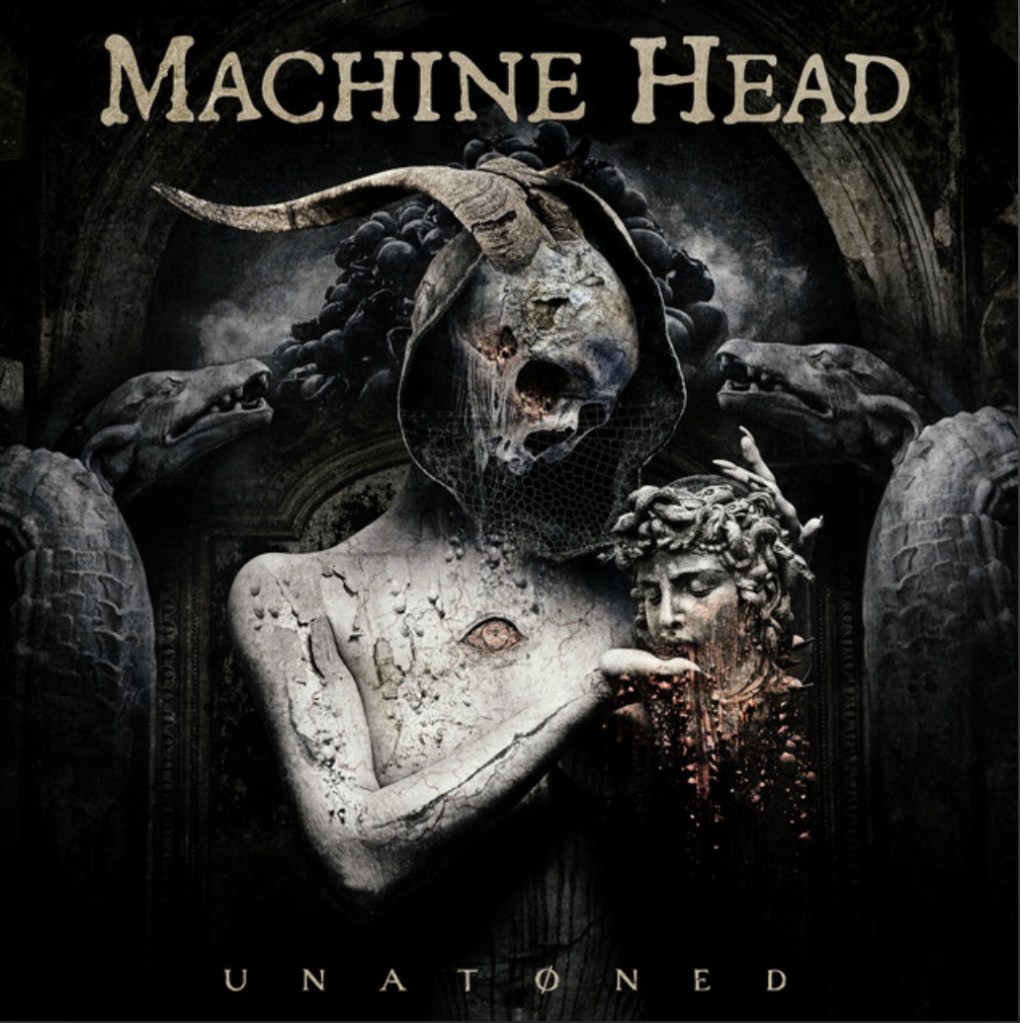
Machine Head’s eleventh studio album, “Unatoned”, released on April 25, 2025, through Nuclear Blast and Imperium Recordings, marks a significant evolution in the band’s discography.
Clocking in at 41 minutes, it’s their shortest album to date.
Landscape of Thorns
A 31-second instrumental opener that is like walking into a post-apocalyptic cathedral made of rust and bad decisions. No lyrics, just vibe.
The vibe?
You’re screwed.
Atomic Revelations
You know that moment when you realize humanity might’ve peaked with sliced bread and everything since is just radioactive garbage?
Yeah, that’s this song.
“Atomic revelations / These cryptic devastations…”
In other words, the future’s here, and it’s wearing a hazmat suit. Think less “technological utopia” and more “Oops, all fallout.”
It’s a poetic bitch slap to our blind optimism. A warning, framing the future not as a bright evolution but as a terrifying construct built from our short-sighted and immoral decisions.
Unbound
This is the sonic equivalent of breaking out of a mental straitjacket while screaming into a hurricane.
Lead single for a reason, it’s the sound of someone clawing their way to freedom, with bloody nails and existential panic.
It’s not about being free. It’s about realizing you’ve been your own prison warden the whole damn time.
Outsider
A love letter to being done. Betrayal, bitterness, burn-it-to-the-ground energy.
All the lying, all the cheating All you left me was defeated There could never be forgiveness in the end
No redemption arc. Just someone standing over the wreckage of trust and lighting a cigarette off the flames.
It’s beautiful.
In the way that watching your ex trip over karma is beautiful.
Not Long for This World
Here’s your death anxiety, set to music. Haunting, lyrical, and bleakly gorgeous. The kind of track that makes you text your therapist and also maybe your mom.
Through the struggles life hurls Behold the heavens unfurl Not long for this world
You’re gonna die. Everyone you love will die. And this track whispers: “Yup. And?” It’s oddly comforting, like being hugged by a ghost.
These Scars Won’t Define Us
A motivational anthem for people who’ve seen some serious crap and didn’t get a cheesy Instagram quote tattoo about it.
Head to the grindstone, power forward through the endless dark Focus, determination, on this world I’ll leave a mark It took so long for any confidence to get in here And now the question that I need to know, I cannot hear
It’s not saying “you’re special.” It’s saying “you survived, now do something with it.” Less “self-love,” more “self-discipline.”
Dustmaker
“Dustmaker” is a little musical intermission.
A breather.
Kind of. It’s the metal equivalent of a weird dream sequence in a war movie. You’re not dying yet, but your brain’s doing weird crap.
Sip some water. You’ll need it.
Bonescraper
It’s a head banger with themes of self-destruction and a side of guilt.
We scrape our bones to numb the pain
If you’ve ever tried to drink your problems away, punch your trauma into silence, or sleep with someone just to feel something, this one’s your anthem. Congrats, you’re the problem and the solution.
Addicted to Pain
This one goes out to everyone who keeps dancing with the same demons and calling it “growth.” Spoiler: it’s not.
We’ll never know what could’ve been Cravings pulled you deep within Thrown into the hit machine Feed the beast, start the routine You gave it all just to chase this flame The dotted line, a puppet in the game now Twisted and cheating The fame we chase is bleating Turned against brother for acclaim that is fleeting
The fame-chasing, dopamine-looping, clout-sucking treadmill of modern life, and how it turns people into hollowed-out achievement junkies.
No wonder you’re tired.
Bleeding Me Dry
This one’s a gut-punch, a slow-motion collapse of a relationship that started with dreams and ended with pill bottles and silence.
There’s no pain without living life This liquor helps cope with the strife We talked of you being my wife Picket fences, some kids, and two bikes But all that was a fantasy lost in our haze Through all of the weed smoke and piles of cocaine A pharmacy of Vicodin, Percs, refillers You and I were worst friend’s best painkillers
Jesus.
That line alone deserves a Pulitzer in “Emotional Damage”.
It’s not a love song, it’s a eulogy for what could’ve been. And it hurts because it’s true.
They’re not lovers, not saviors, just each other’s favorite painkillers in a life too painful to face sober.
Shards of Shattered Dreams
More heartbreak. More poetic destruction. Think of it like picking glitter out of a crime scene.
It’s raining Shards of shattered dreams This love divine Ruins everything Left to pick up the pieces Of my dejected heart I’m breaking and I’m ripping at the seams These shards of shattered dreams
When hope becomes a weapon. When dreams cut deeper than knives. This one will haunt you at 3 a.m., probably while scrolling through old texts you should’ve deleted.
Closing the album, “Scorn” is a haunting ballad that delves into themes of manipulation and societal decay, featuring piano-driven melodies that contrast its dark lyrical content.
The music says “reflection,” but the lyrics say “everything’s broken.”
The Wrap Up
It’s short, sharp, and swinging a sledgehammer. Less an album, more a therapy session set to blast beats. It’s a bleak, beautiful middle finger to false hope and a mosh pit for your emotional baggage. If you’re looking for easy answers, you’re in the wrong pit, buddy.
Joining Robb Flynn and Jared MacEachern is drummer Matt Alston and guitarist Reece Scruggs, injecting fresh energy into their sound, making “Unatoned” a noteworthy entry in their discography.
Final Score: 5 existential crises out of 5.
Now go scream into the void or your pillow, whichever’s closer.
Dom Lawson, in Metal Hammer, called it “ostensibly a dark, crestfallen ballad” that builds through synth-drenched haze and emotional swells before erupting in a syncopated, spine-tingling finale.
He’s not wrong.
In fact, “Scorn” might be the most hauntingly beautiful track Robb Flynn has ever penned.
Machine Head is no stranger to monumental album closers, think “The Burning Red,” “Descend the Shades of Night,” “A Farewell to Arms,” “Who We Are,” or “Arrows in Words from the Sky.”
Now, add “Scorn” to that list, lifted from their new record “Unatoned” a fitting name for what feels like both an indictment and a lament.
The opening verse says it all:
“I’m putting you under my spell / ‘Cause I’ve got a Bible to sell Let go your convictions, restrictions will cost you / Your fiction and all that is well Distrust all the fable they sell…”
This isn’t subtle. It’s manipulation disguised as salvation. The “Bible to sell” is a loaded metaphor, suggesting the commodification of belief, the weaponization of faith. Convictions and moral boundaries are liabilities here, illusions sold to the weak, while the puppeteers profit.
“I look to the sky / As it won’t be the first / And it won’t be the worst ‘Cause there’s still yet to come / With a nation undone by their Scorn”
Hope?
Maybe.
But not without cynicism. The sky becomes a metaphorical void, once a symbol of transcendence, now indifferent or complicit. The “nation undone” is a clear nod to societal collapse, a warning about the corrosion eating away at public trust, autonomy, and truth.
The chorus drives the point home with venom:
“Scorn / Paranoia seeps through every pore Scorn / Envenomated eyes emit their scorn”
Yes, “envenomated.”
A rare, brutal word choice. It means poisoned. But more than that, it implies a kind of psychological venom, gazes that don’t just judge but infect. Surveillance becomes psychotropic. The “eyes” don’t just watch; they erode.
“The eye in the sky never rests Watching to form our arrest They’re chasing us out of our nests Keeping tabs as they play us like masters of chess…”
There’s Orwell here, but also something more, this is modern paranoia woven through algorithmic control, deep-state tactics, and manufactured chaos. The image of being driven from nests evokes exile from comfort, from truth, from home.
“I look to the sky / As they give us new rifles / To stifle our words With a Bible and bulletproof vests / As we suffer their Scorn…”
Weaponized religion. Militarized faith. Truth gets smothered in the name of protection. Resistance becomes treason. Free thought becomes a target.
– Rage Against the Machine’s political fire – Pink Floyd’s “The Wall” and its suffocating institutional critique – Dylan’s “Highway 61 Revisited”, where biblical imagery twists through cultural critique – Metallica’s “…And Justice for All”, where justice is just another rigged game
But “Scorn” isn’t derivative, it’s a culmination. It distills our present-day fears: media manipulation, mass surveillance, the erosion of belief systems, and a creeping spiritual void. It’s a bitter elegy dressed as an anthem.
You don’t just listen to “Scorn”. You endure it, absorb it, and then see the world a little more clearly and perhaps a little more grimly.
It’s 1996 and you are writing riffs for your next album. Your first four albums pushed the boundaries of technical thrash metal. Your last two albums went for more accessible song structures, which gave you radio airtime.
Seattle came and went but its cultural changes remained. Industrial Metal was becoming a thing, Alternative Rock, EMO and Goth Metal/Rock were slowly becoming a thing.
Your label wants to sell albums and the only way you can sell albums in their eyes is by having your songs on the radio.
You also fired your previous manager, as you believed that he was also taking a paycheck from the label. He reckons he wasn’t but hey that’s a story for another day.
So what do you do?
These were the questions that Dave Mustaine had to answer in 1996.
This wasn’t the Dave from ten years ago, addicted to drugs and with nothing to lose. This Dave had something to lose now, a family and a corporate machine called Megadeth.
Freedom to do what you want doesn’t come when you have something to lose. In addition, this Dave had been in and out of rehab since 1988, and he just finished another rehab stint just before the “Cryptic Writings” sessions started.
Oh, and by the way, his band was also splintering.
Actually his band was always splintering, but the longest running version of Megadeth was splintering. For those who don’t know, this version involves Marty Friedman, David Ellefson and Nick Menza (RIP).
Dan Huff is producing and the new management company ESP Management was led by Bud Prager, who had guided Foreigner from a small time rock band to an 80 million seller.
Mustaine still had a chip on his shoulder from a certain band he was in and he “wanted what Metallica had even if it meant selling a piece of his soul to the devil” (his exact words on page 276 of his bio).
Trust
The drum intro. Its familiar.
Avenged Sevenfold were very heavily influenced by it for their opening track “Shepherd Of Fire” on the “Hail To The King” album. Metallica had “Enter Sandman” before this and the great AC/DC had “Dirty Deeds (Done Dirt Cheap) before all of em.
Once a great drum hook, it’s always a great drum hook.
If I look into my crystal ball, I can see the heirs of the artists or the Corporations that would end up owning the Copyrights litigating against others for this drum groove in the future.
When that riff kicks in, its head banging time. Yes the tempo is slower, the song is more accessible but it wasn’t a sell out. This was still very much Megadeth.
The Chorus; anthemic.
Apart from becoming a set list staple, it’s also their biggest hit single.
Almost Honest
That intro riff.
It’s bone crunching with a feel and vibe from AC/DC and a Major key Chorus which is a massive no-no to the Minor key Thrash community.
In the end, Mustaine was trying to rewrite “Symphony Of Destruction” and he got a song that sounded similar but different enough to stand on its own.
Very accessible but still very much like Megadeth.
Use The Man
Alternative rock or Grunge. Take your pick as it’s still rock and metal to me.
Plus I always like it when artists take what is popular at the time and still make it sound like their sound.
Mastermind
An intro riff influenced by “Walk This Way”.
The verses are demented, perfect for Mustaines snarling.
The Disintegrators
It’s fast and thrashing like the old Megadeth, but with more melody in the vocals.
If the main riff sounds familiar, Mr Hetfield was obviously influenced as “Lux Aterna” has a similar riff.
Then again, both Mustaine and Hetfield are influenced by the NWOBHM and this riff is from that movements playbook.
And the solo. Brilliant.
At 3:04, it’s over and the only thing left to do is to press play again.
I’ll Get Even
It’s got the same playbook as “Almost Human” but with clean tone in the verses and a psychedelic alternative rock Chorus.
And how good is the bass groove, locked in with the drums.
SIN
It’s accessible but it’s still Megadeth. The riffs are angry and head banging.
A Secret Place
From writing an accessible album, they came up with a classic, a song that still does the rounds in the live show.
As soon as the Intro kicks in, I was hooked.
Have Cool, Will Travel
The harmonica, and a groove reminiscent of “American Woman”, yet it still feels like a Megadeth track.
She-Wolf
A masterpiece.
Make sure you stick around for the Outro harmony section.
Vortex
Another classic but this one gets no love.
It’s a fast cut influenced by the NWOBHM especially Judas Priest, with a demented Mustaine snarl in the verses and an anthemic melodic chorus.
FFF
The fast punk that Megadeth is known for is evidenced here. Definitely a forgotten track.
The Wrap Up
The album achieved a Platinum certification but it didn’t bring in a new audience as Mustaine and his new management team had anticipated.
I read that hard core fans were confused. They liked it but didn’t like it completely. That viewpoint never made sense to me as I see myself as a hard core fan and I like it alot.
Mustaine mentioned in his book that by “trying to become more melodic and still remaining true to their metal roots”, he alienated his core fans with this album as he didn’t get the mixture right.
A terrible Howard Stern interview didn’t help matters either. And during the tour, Nick Menza was booted with Jimmy DeGrasso replacing him. However Menza would still return for the next album.
Overall, “Cryptic Writings” is a great album. The concise songwriting and simple arrangements suited Mustaine and for me, having this album in 1996 was a godsend, compared to some of the other confused albums my favorite artists started delivering during this period.
If you haven’t heard it, hear it. If you have heard it, hear it again.
Ace Frehley didn’t get the memo that the album was meant to be a pop rock album.
Peter Criss, well he just didn’t participate.
And I was confused why Paul Stanley didn’t use Desmond Child again, since their hit from “Dynasty” was co-written with him.
Instead Vini Poncia, who produced the album, co-wrote most of the tracks.
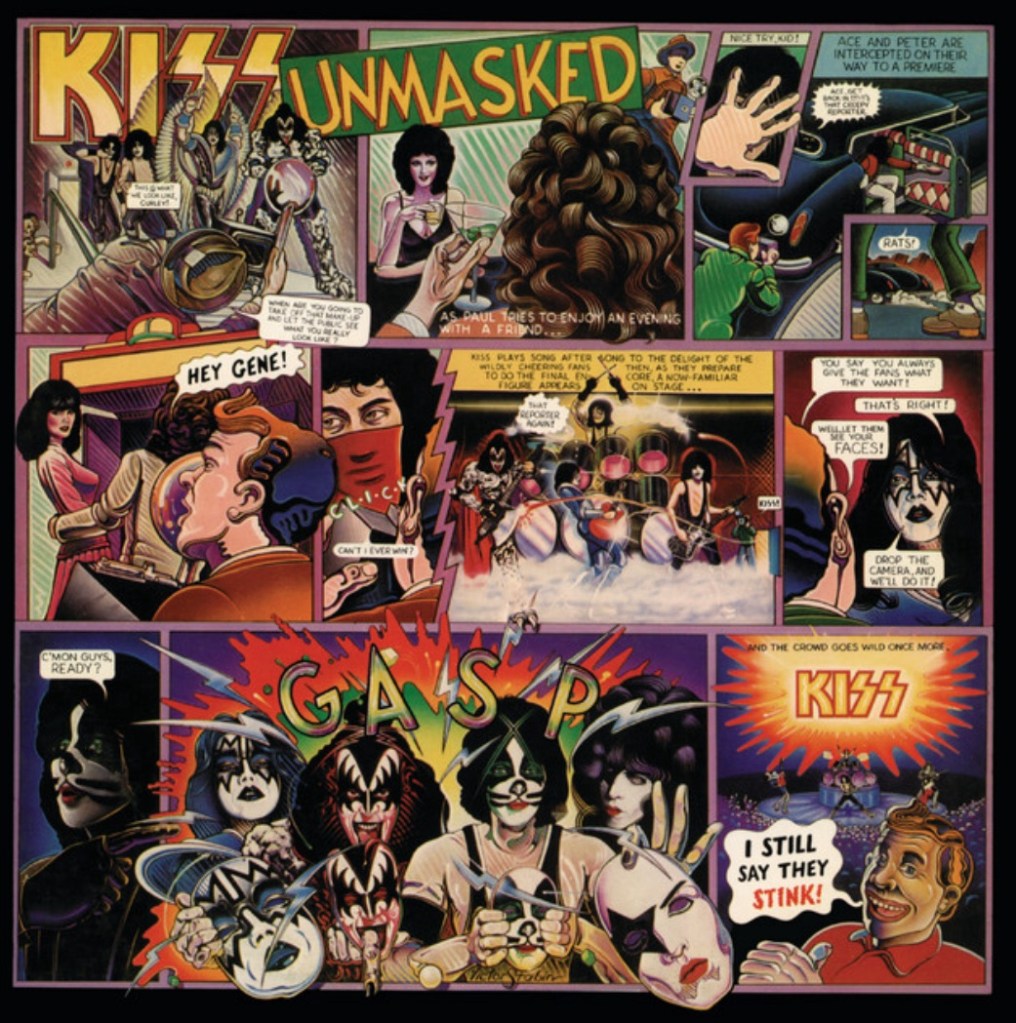
In case you are confused, I’m writing about “Unmasked” released in 1980.
It didn’t meet commercial expectations in the North American market however it did very good business in Northern Europe.
And in Australia, it sold more than 110,000 copies on the first day of its release and 3,000 more were stolen from a truck on the way to stores. Well, this is according to the Sydney Morning Herald.
You see “Kissmania” or “Kissteria” in Australia was about 4 years behind their U.S. peak.
It didn’t sound like past Kiss, but this record definitely gave the power pop / melodic rock scene a good kick in the ass. You had bands like The Raspberries and Small Faces, but suddenly you could mention Kiss in the same sentence.
Its influence on the Scandinavian market is large and it’s no surprise that a lot of melodic pop and rock artists and songwriters have come from these markets.
Is That You?
The opening track and it’s not even written by a Kiss member.
But it is the parent to “Lick It Up”.
Listen to the verse riffs in both. The feel and groove is the same. The layered backing vocals are also great, something which Def Leppard mastered with Mutt Lange.
And Stanley always challenged himself vocally, the falsettos on the pre-chorus are braver than the ball tearers on “I Was Made Lovin You”.
On a side note, as a solo artist, McMahon’s 15 minutes of fame came with “Cry Little Sister” from “The Lost Boys” movie, 7 years later.
Shandi
Australia was also going through a “disco ABBA mania craze”, so it’s no surprise that a crossover disco/rock pop ballad went huge here.
And if ABBA wasnt doing music like this anymore, fans would always look to others to fill the void.
If you want to hear what inspired it, press play on the song “Tomorrow” from Joe Walsh. Paul basically lifted the first 60 seconds from it. And Joe Walsh is far from wimpy.
Talk To Me
Ace steps up with a rocker, which did good business as a single in Switzerland, Germany, Netherlands and Australia.
It has an intro riff that sounds like it was influenced by Rick Springfield’s “Jessie’s Girl”.
The major key riffage in the Chorus reminds me of “Do Ya” from ELO.
Naked City
My favorite song on the album and one of Gene Simmons best, giving melodic rock music some grit.
It’s written by a committee involving Simmons, Poncia, Bob Kulick and Peppy Castro.
Ace even contributed a solo, while Anton Fig and Bob Kulick did the drums and guitars.
But it all started with Bob Kulick who had the guitar riff and he demoed the song with Peppy Castro.
But the final recorded version didn’t make Bob happy and he has said that “Kiss ruined “Naked City”.
Ruined or not, it’s my favorite. And if the demo is available anywhere, please share it.
What Makes The World Go Round
I always like it when artists take influences from different styles of music.
In this case, Paul is taking inspiration from soul act, The Spinners and fusing hard rock, pop, soul and R&B into a unique style that still sounds like a rock song.
How good is the Chorus?
Tomorrow
My second favorite.
The power pop of 2000’s acts like Wheatus, Good Charlotte and the like is right here.
It might sound light on the rock, but inside the song you’ll hear a feel and vibe from “Coming Home”.
It’s also influenced by “Tonight” from The Raspberries along with Rick Springfield.
And even the most hardened rocker cannot resist singing along to the Chorus.
Two Sides Of The Coin
More ELO meets Free from the Spaceman.
I forgot to mention on “Talk To Me” that Ace employs an Open G tuning, a tuning popular with slide players because with one finger they can play a chord instead of fretting the chord. He also employs this Open G tuning here.
Keith Richards was a well known user of this tuning, however many believed that Keith used this tuning because of how wasted he was. It’s easier to play with one finger than four. And that same view point was held for Ace, however if you look at interviews during this period you cannot see or hear Ace sounding wasted.
The lyrics are dumb but then again Kiss weren’t scholars when it came to lyrics, so that’s what makes their music fun.
She’s So European
Press play for the intro. That’s all you need to listen to here.
Then again Gene Simmons does a good job on the lyrics and melodies as well, about a girl with a glass of pink champagne and well you can read the rest.
Easy As It Seems
Another favorite.
Paul is the star of the song. His bass riff is sinister, yet groovy and his sense of melody elevates the track.
I’m also a fan of The Pretenders and it looks like Paul was influenced by them as their song “Mystery Achievement” came out in January, 1980 and Kiss released their album in May 1980.
Check em out, they are both great songs.
Torpedo Girl
Press play for that rhythm and blues swing drum groove and stick around to hear Ace summon Joe Walsh for the verse riff and The Beach Boys for the Chorus.
You’re All That I Want
It has that feel of early Kiss musically. And somehow it gets no love.
The Wrap Up
They didn’t tour the North American market, but they did hit Europe, Australia and New Zealand. It kept em in business.
On Australian TV they also got a lot of press and interviews.
They appeared on the Australian “60 Minutes”. The segment is on YouTube if you want to see it. Bill Aucion was also interviewed, telling the interviewer how Kiss was turning over $120 million a year, and how he was looking to get the band into movies and comic books.
We sort of know how that turned out with “The Elder”.
A few things to note for 1980.
AC/DC dropped “Back In Black”, a slab of hard and bluesy rock that proved you can be commercially successful during this period playing that style of music.
The NWOBHM was also gaining momentum. This was even harder sounding and more abrasive than AC/DC and it also had an audience that was growing.
Most of the acts who had success in the 70s were either broken up, or on their last legs with the original members and looking to bring in new members.
So I understand the “wimpy” and “not sound like Kiss” comments, but this album has aged well because so many of the songs are so well written.
For a band that was just not functioning anymore they still found a way to deliver a great album.



 destroyerofharmony