Classic Songs to Be Discovered, Derivative Works, Influenced, Music, My Stories, Unsung Heroes

1978 – Part 2 – “Never Say Die To Infinity” said the Hemispheres

It’s hard to believe that in 2019, I still listen to albums released in 1978, 41 years ago, but in the 80’s like 1986, I couldn’t fathom listening to music from 1945. And I still cant.

My eldest one, who is is 14, listens to 70’s music. Last night, “Free Bird” from Lynyrd Skynyrd was cranked. The middle child, who is 13, has been cranking “Sultans Of Swing”, “Aint Talkin Bout Love” and “Eruption” as they both fumble around the fretboard learning the songs on guitar. So the 70s are back baby.

Here is part one and now for Part two.

And here is the Spotify playlist.

Journey – Infinity

The wheel in the sky keeps on turning alright. Robert Fleischman was hired as the new vocalist before being un-hired and Steve Perry was in. Fleischman would resurface many years later as part of Vinnie Vincent’s Invasion.

This is Journey before the mainstream hits, but the start of what would become the commercial beast. And the bluesy Hendrix like “Lights” kicks it off.

How good is the guitar solo from about the 2 minute mark from Neal Schon?

“Anytime” sounds like an ELO/Eagles song merged with “Who Are You” from The Who. And I like it, especially when Schon comes to town with his bends and legato during the solo.

“La Do Da” comes from out of nowhere, a speed rock track, the anti-hero to the laid back Southern Rock vibe of the first three tracks.

“Patiently” is one of my favourite tracks from Journey, especially from about 2.10 and to the end. Listen to Schon wail with a bunch of sing along licks. And it’s progressive in its song writing.

And the piece d resistance is “Wheel In The Sky”. It hypnotised me to pick up the guitar and start learning it, from the opening notes. And Perry’s vocals are perfect, sorrowful and emotive.

How good is the intro to “Winds Of March”?

It’s like “Battery” from Metallica to me. And I am sure Dave Meniketti was listening and being influenced here, for “Winds Of Change”. Then it changes into a rocker from about 2.50 minute mark and I am tapping my fingers, and Schon begins to wail about the 3.50 minute mark and its beautiful and inspirational.

Whitesnake – Trouble

David Coverdale is rolling along with his post Deep Purple career. “Trouble” is known as the first Whitesnake album, however after the success of the 1987 album, the David Coverdale solo albums “White Snake” and “Northwinds” got re-released and some still see those as the beginning.

The album is a product of its era.

“Take Me With You” kicks off the album and it’s a blast. You just need to listen to it for the lyrics. And I wouldn’t be surprised if Slash was listening to this track, as it sounds like certain riffs made their way into “Appetite For Destruction”.

“Love To Keep You Warm” ended up as a lyric on the road to “Judgement Day”.

“Nighthawk (Vampire Blues) will never sound dated. It’s one of those tracks that sounded good in 1978 and it will still sound good in 2019. Greta Van Fleet should cover it.

“The Time Is Right For Love” is a good track that is relevant in any era and I thought it would have been re-recorded for a Whitesnake album in the 80’s, going into the 90’s, but after “Slip Of The Tongue”, Coverdale, dissolved Whitesnake to team up with Jimmy Page, and then when Page went back to Robert Plant for a side project, Whitesnake came back with Adrian Vandenberg and Warren DeMartini on guitars. (Takes a breath).

“Trouble” is very Bad Company like, and I like it, especially the lyrics, “on the road again, looking for a place to hide, everywhere I look, there is trouble, trouble always coming my way.”

“Free Flight” is a jazz fusion blues rocker that could have come from “Come Taste The Band”. And while it doesn’t contain the hits, the album does contain some serious riffage and jamming, which I dig.

Judas Priest – Stained Class

This album was really ignored by the media and the fans, until the 80’s satanic panic and subsequent lawsuits brought it back into the public conversation.

For those who don’t know the story, and according to Wikipedia, Judas Priest got taken to trial in a civil suit, by the family of a teenager, James Vance, who entered into a suicide pact with his friend Ray Belknap after allegedly listening to “Better by You, Better than Me” on 23 December 1985.

Belknap succeeded in killing himself, and Vance was left critically injured after surviving a self-inflicted gunshot to the facial area, eventually dying of a methadone overdose three years later.

In this case, the events and outcomes are tragic, but there is always someone looking to blame someone else for their predicament. And there are always people (like lawyers and prosecutors) looking to prey on people’s weakness and sense of loss.

A lawyer tried to convince a judge that the “Stained Class” album and the song “Better by You, Better than Me” (which isn’t even a Judas Priest song, it’s a cover) had subliminal messages on it, that said “do it” and that would make kids take their lives. In the name of free speech and the ludicrous nature of the suit (seriously, why would a band want to kill the very people who would buy their product), it was dismissed.

But the album is important in a few ways;

  • The iconic Judas Priest logo made its debut.
  • It’s seen as an early thrash metal album, with wannabe artists all over Europe lapping up the fast picking and surgical precision of the riffs.
  • Its darkness and aggression is fuelled by the anti-metal movement that started happening in the UK, as Punk and New Wave was getting all the attention and metal had a few comical mentions.

“Exciter” kicks off the album with double kick and speed pedal point riffs. “Stained Class” has a cool “Barracuda” pedal point riff. “Saints In Hell” is not in the live repertoire of Judas Priest, but the song has a lot of movements, which keeps it interesting.

“Beyond The Realms Of Death” is a favourite, especially with its nod to “While My Guitar Gently Weeps” but also for its song writing and various movements. Chris De Garmo would have been listening very intently to this, as it sounds like “The Warning” album came from influences like this.

“Fire Burns Below” is the embryo of what Judas Priest would become in the 80’s.

The Metalian was starting to form.

Rush – Hemispheres

One of their best albums and their most progressive. They knew they had reached a pinnacle here and what would come next would be much shorter and concise songs, sort of like how Metallica reached a pinnacle with the “Justice” album and needed to strip it back, which they did with the self-titled and mega gazillion selling “Black” album.

And the reason why I call this one of their best albums is because of “La Villa Strangiato”, a song that took them longer to record than the whole “Fly By Night” album.

I didn’t give Rush a good shake until I really got into Dream Theater on the “Images And Words” album.

Cygnus X-1 Book II: Hemispheres

18 minutes and all the different musical movements are enough to get me interested for a few reasons. And it’s all because of Alex Lifeson.

Alex Lifeson’s use of open strings (the high E and B strings) with moving power chords was inspirational. It just made sections sound bigger than what they should. It was a style I incorporated straight away.

His combination of using palm muted arpeggios and single note riffs also proved to be very inspirational. At that point in time, I was very heavily into playing open string pedal point riffs with power chords underneath.

His use of acoustic guitars was unique, bordering on his Eastern European Serbian folk roots, Spanish flamenco, pop music and classical music.

Finally, his unique guitar solos made him sound very different to the blues rock and classical shred like soloists I was used to hearing.

“Circumstances” sounds like the hard rock I listened too, with pedal point riffs in the intro. But from about 50 seconds, the song morphs and I was entranced to pick up the guitar and learn the section. By a 1.15 seconds, 25 seconds later it was all over.

And that’s how my Rush relationship is. Sections of certain songs hook me in.

Like the intro to “The Trees”. It’s acoustic intro sounds like it came from medieval England. And after 40 seconds, the song changes into a rocker. The lyrics made me laugh when I was younger, and they still make me laugh now, especially when Geddy Lee sings, “why can’t the maples be happy?” or “the maples scream oppression” or “the maples formed a union”. 

Goddamn Maples, they can never be happy.

And that section from about 2.20 when Lifeson starts to play this repeating arpeggio lick/riff. Again, I was picking up the guitar to learn it and jam it, but then I started learning Geddy’s bass riff, as it sounded so good on distorted guitar and very different to Lifeson’s guitar riff.

“La Villa Strangiato” sums up everything about Rush which I love and I am so glad they didn’t try to repeat it or try to rewrite it for another album.

It stands out as the RUSH song for me, and if anyone asks what’s the big deal about Rush, I play them this song and I comment about each section and movement for a few seconds and allow them to bask in the sounds filling the room.

It’s an instrumental but there is no way you could ever be bored by it. It doesn’t have any guitar wankery. It just grooves and rolls until it comes up to the 3.18 minute mark where the song slows down.

This is when Alex Lifeson becomes a god.

He starts off the solo with volume swells.

It’s eerie, before he brings in a few blues licks to make it sorrowful.

At 4.27, it gets louder, and his bending those strings, bleeding pain out of those frets. In the background Neal Peart, is building the beast.

At 5.15, Lifeson starts this palm muted Am to F arpeggio. Peart is double-time on the drums, and Lee is playing the bass synth until they all join in and start the Swinging 30’s section. This is when Bugs Bunny is running away from Elmer Fudd. That is the memory I got from it.

Then there’s a bass solo.

Then a drum solo.

Then an unconventional guitar solo at the 6.50 minute mark.

At 7.29, it changes again.

At 7.53, the Swinging 30’s is back. First at half time, then at full speed.

And the song transitions back to the main intro riff to close out a 9 plus minute song in perfection.

And the album is over.

Until I dropped the needle again onto the last track.

Scorpions – Tokyo Tapes

I got this dubbed on a cassette from a mate, who had dubbed it onto a cassette from a cousin, who dubbed it onto a cassette from his girlfriend’s brother. Quick, call the cops, piracy is on the loose and killing the recording industry.

The end of the Uli Jon Roth era on guitar and a band in top form.

Stand out live performances along with fake crowd noises and claps are “Pictured Life”, “In Trance”, “Well Burn The Sky”, “Fly To The Rainbow”, “He’s A Woman – She’s A Man”, “Top Of The Bill” and “Steamrock Fever”.

Scorpions – Taken By Force

The last studio album with Uli Jon Roth, kicks off with “Steamrock Fever” and I like the music a lot more than the lyrics. “We’ll Burn The Sky” is better lyrically and musically.

Two of my favourite Scorpion tracks are up next in “I’ve Got To Be Free” and “The Riot Of Your Time”.

“I’ve got to be free to live my life alone” is the catch cry, a very Hendrix inspired song musically and it doesn’t sound dated at all.  And the acoustic guitars in “The Riot Of Your Time” are perfect, but the chorus, musically and lyrically is brilliant. Listen to it if you don’t believe me.

The piece d’resistance from a guitar point of view, is “The Sails Of Charon”. But I listen to “Your Light” more, because of its sexy groove, which makes me want to pick up the guitar, especially in the verses. And the way it rolls, it’s a rock song, but I feel like I’m sipping Pina Colada’s on an island in the Caribbean’s.

“He’s A Woman – She’s A Man” has got some Metallica like breakdowns in it, which is cool.

Black Sabbath – Never Say Die

It’s not like it’s such a bad album, it’s just that they lost their darkness. “Never Says Die” sounds like it could have come from Thin Lizzy or ELO or Styx. “Johnny Blade” musically sounds like a Rush song, hell, the riff in the verses sounds like it came from “La Villa Strangiato”.

“Junior’s Eyes” is classic Sabbath in everything except the title. “A Hard Road” sounds more like a Status Quo track but it’s roots are from the placenta of “Children of The Grave”. “Shock Wave” is a Sabbath song through and through.

The best track on the album is “Air Dance”. It has this harmony intro which is too good to not like. Then it morphs into an acoustic/piano piece for the verses. It’s progressive in its song writing and as fans of artists, you want them to grow a little bit and add some different textures.

Especially at the 3.56 mark, it goes into a prog rock style piece, which is some of the best stuff Sabbath has written. Because that is what Sabbath was/is. A band that pushed boundaries and defied categorisation. Hell, there is a synth lead in it, as I start to cough out the sweet leaf.

“Over To You” was re-written and called “Little Dolls”. If it works for Ozzy’s solo career, it works for Sabbath for me. “Breakout” has the brass instruments, but there is no denying the power of that riff as it sludge’s sleazily along.

Styx – Pieces of Eight

I like Styx as a progressive rock band which has a few “simply” rock songs here and there. This album is a favourite, because it hits both those points for me. It’s progressive in its song writing and it has “accessible” songs.

“Great White Hope” gallops along in the intro and it’s a product of its time.

“I’m O.K” is interesting with its major key uplifting riffs, and “Walk This Way” style drums in the intro, and then the verses sound like a church sermon.“Sing For The Day” has a progressive synth intro which I dig. And the multi-layered Chorus melody is cool, but I’m more of a fan of the music.

“Blue Collar Man (Long Nights) has a riff which is tasty to play on guitar. And how good is the Chorus, musically, lyrically and melodically. Makes me press repeat instantly. “Queen Of Spades” is a combination of progressive song writing and accessible melodies. And the breakdown section from about the 3.20 minute mark is perfect.

But the piece d resistance here is “Renegade”.

First the acapella vocals and it sounds like it’s coming from the Mississippi Delta.

Then the funk rock fusion riff kicks in and it’s time to rock and funk.

And the solo. The music stops, and a dirty sounding guitar unleashes a flurry of pentatonic lines which wash over me. Then the band comes in and it’s all systems go. And when you think it’s over, it keeps going for a little but more.

Then the drums and vocals section. Jon Bon Jovi would have been listening intently as “You Give Love A Bad Name” has a similar set up after the solo.

Play that funky rock and roll, I say.

“Pieces Of Eight” is a brilliant piece of song writing. It has so many movements in the song, especially from the 2.20 minute mark. It’s pure bliss.

The Alan Parsons Project – Pyramid

Alan Parsons got no love in Australia or non that I could remember. I started to hear his work in the early 2000’s. And I became a fan. I got what he was trying to do, I really enjoyed the song structures, the jams and atmospherics.

The way “Voyager” starts off in the first 20 seconds, it’s how thrash metal acts build their clean tone intros. And the song segues into “What Goes Up”, a laid back tune which segues into “The Eagle Will Rise Again” and one of my favourite acoustic arpeggio riffs because it sounds so powerful.

Play four notes, stop and let them ring. But the rest of the song is not as strong as that verse riff. At one stage, I swear I thought “Listen To My Heart” from Roxette came from this song. “One More River” has a clean tone single note riff, which sounds wicked when played with distortion.  

“In The Lap Of Gods” is a cinematic instrumental. Well, that’s what I call it. It feels like it’s written to moving pictures and I like it. Especially from the 4.10 minute mark when those Latin style “Excalibur” voices come in, along with the violins.

I press repeat, to hear it one more time, and to close off Part 2 of 1978.

Standard
A to Z of Making It, Influenced, Music, My Stories

Quantity and Quality

When I used to play and write in bands, there was always a discussion about quantity vs quality when it came to writing songs.

One band I was in between the years of 2001 and 2005, wrote all up 14 songs. The focus here was more on what we assessed as quality.

We had a white board in our rehearsal space and we would write down ideas we just jammed.

The idea was to bring in our top 3 riffs each week and we just jammed them and we recorded them as well. Whatever we didn’t use would go into the backlog and then get cleared after six months if we never returned to that idea.

We would listen to the tapes, from the session and start writing on the board the things we liked.

And we would give the bits we liked names, like Tool Riff, Maiden 2 minutes solo rip off, Dream Theater Learning To Live outro, thrash section, Groove section, Machine Head All In My Head drum intro and so forth.

Then we would structure these bits into a song, as certain sections stood out as verses and so forth.

And the working titles always sounded silly, like “That Dick Head”, “Missing One Shoe”, “Filth” and many different ones. The titles also came about based on abstract words the singer would use to demonstrate what kind of syllable words he wanted for that section.

“Filth” became known as “Faith” once it was all done and dusted. “That Dick Head” became D.N.A.

It was fun to do, but also frustrating and a very long process.

Because once we got the music down, the lyrics and vocal melodies would take just as long. We even took to the stage with lyrics unfinished, and the singer just mumbled his way as he had the melody down, just not the words.

And yes, sometimes, “Faith” and “Filth” got transposed, because the singer spent so long singing “you are nothing but Filth” and I changed the words to “you gotta have faith”, at a few of the earlier shows when we debuted “Faith”, he sang, “you gotta have filllllllth”.

Brilliant, hey. And a good laugh even to this day.

Personally during that period, I was writing a song a week, in so many different styles or a blend of styles as it was the only way I could remain happy in the band.

My view always has been that quantity will create quality.

In other words, the more bad songs you write, sooner or later, the good ones will come. There is a reason why “Slippery When Wet” moved a lot of product, and that’s not including all the hairspray boxes which got shipped.

Jon, Richie and in some cases Desmond Child, wrote over 50 songs for the album.

Working on songs, that others might think or see as a bad idea is actually a good thing. It’s the simple secret to good songs. Flesh out the bad songs and suddenly good songs will come to the fore.

The other is to get to a co-writer or for you to become a co-writer for someone else and share your ideas with others. Maybe those bad songs are not so bad to other people.

Music is such a subjective and personal experience, meaning each person will experience it differently.

Songs that David Coverdale had intended for other musicians ended up being Whitesnake songs. “Fool For Your Loving” was written for BB King and “Is This Love” was written for Tina Turner.

When Jon Bon Jovi and Richie Sambora started writing with Desmond Child, the songs were meant to be shopped around for other artists, instead they kept them. And then after they didn’t make the “Slippery When Wet” or “New Jersey” album, the songs got shipped out to Alice Cooper, Cher and others.

And Bryan Adams let go of songs he wrote with Jim Vallance, which didn’t seem to fit his style, like “War Machine” which became a Gene Simmons sung, Kiss song.

Van Halen (when David Lee Roth re-joined) used musical ideas from their 70’s demo recordings to craft a new album in the 2000’s.

So keep those ideas flowing and never throw em away.

Standard
Classic Songs to Be Discovered, Derivative Works, Influenced, Music, My Stories

The Record Vault – Sebastian Bach

Once Skid Row went on hiatus, I never really heard from the band or Sebastian Bach. It’s like they dropped off the face of the Earth.

Then the Pirate Bay gave me the Skid Row albums without Bach on vocals, and it also gave me, the solo Bach albums, “Bring Em Bach Alive” and “Back 2 Basics”.

One day my wife brought home a box set of a TV show called “Gilmore Girls”. And I suppose Bach’s biggest gig between 1997 and 2004 was being the guitarist in the fictional “Gilmore Girls” band and doing Broadway musicals.

But by the mid 2000’s Guns N Roses was touring and Sebastian Bach was the opening act. And all of these separate events suddenly brought Sebastian Bach back into my life.

 Time does go by fast.

Released in 2007, “Angel Down” is 12 years old. And it’s got a lot of songs about a relationship breakdown, so it’s no surprise that in 2010, his long term marriage was over.

“You Don’t Understand” is a brilliant track, starting off with harmony guitars like Judas Priest, before morphing into a rocker like “Forever” from Skid Row. The lyrics, “I’ll take a bullet for you in the night, Is what we’re fighting for wrong or right?, I lie awake in my tomb, so confused, Who wins the battle when we all lose?” speak truth.

No one wins an argument, when one person wants to be seen as being correct.

And since Sebastian Bach was opening for Guns N Roses, Axl Rose does guest vocals on three tracks, “Back In The Saddle”, “(Love Is) A Bitchslap” and “Stuck Inside”.

Let’s start with the modern rock remake of an Aerosmith classic “Back In The Saddle”. One thing is clear, when Axl Rose does hard rock, he is one of the best hard rock singers. You can feel the attitude in his tone, slap you silly.

“(Love Is) A Bitchslap” is the best Guns N Roses song released in the 2000’s that Guns N Roses didn’t write, with one of the coolest opening verses, “Rollin’ down the avenue, I got my fist in the air, Checking out of the rat race and I really don’t care.”

It captures the metal spirit and lifestyle. We like to look at the show but we don’t really care what is going on. We have our own shit that we need to deal with.

And “Stuck Inside” is one of the best Skid Row songs in the 2000’s, which Skid Row didn’t write.

Check out the lyrics. You can hear the pain in those words. “I feel you taking on, everything that I said that I want and then you said it’s over.”

Relationships are cruel. The other half, will ask you to be truthful and then suddenly, those words get used against you.

But the piece d resistance is “American Metalhead” written by guitarist Mike Chlasciak. It is a metal track for the ages, with its catchcry of togetherness and hive mind control like, “One soul, one mind, one heart, one life.”

Call it up, crank it, lay back and close your eyes.

Imagine the time, walking the streets, dressed in denim jeans and black t shirt with your favourite band’s artwork.

“Negative Light” is a speed metal track, with Bach throwing his voice into the wall during the verses. From a guitar point of view, this song is a blast to play, very Metallica like.

And that opening verse sets the tone for the aggression, “Nothing’ lasts forever, Nobody rides for free, For twenty years I took a stand, You’re not takin’ no chance on me.”

“Live And Die” sounds massive with its “Mississippi Queen” style riff.

“Like stars sky high, we live and die, free your body, your soul, your mind”

We all will die, its truth. So what matters is how we spend our days under heaven’s skies. Do we give in to hate, and allow stress and depression to rule our minds, or do we give in to love, and allow hope and love to rule our thoughts?

“By Your Side” is a ballad, but Bach knows how to deliver on ballads, with “Quicksand Jesus”, “Wasted Time”, “Breakin Down” and “In A Darkened Room” still up there as some of favourite ballads.

“Our Love Is A Lie” sounds wicked, angry and its pure hard rock while “Take You Down With Me” could have come from the “Black” album.

“Stabbing Daggers” combines all of the modern rock influences like Nu Metal, Alt Rock and Groove Metal into a concise metal song with a shred-a-licious solo. “You Bring Me Down” is a cross between Pantera and Stone Temple Pilots. Yes, I know, it’s pretty contrasting styles, but goddamn, it works.

“Falling Into You” is a co-write with Desmond Child and as you would expect, it follows the Desmond Child formula. But I didn’t expect the intro harmony lead, which reminded of “Tears Of A Dragon” from Bruce Dickinson’s solo album.

And Sebastian Bach has tried to re-unite Skid Row with the classic line up to capitalise on the anniversaries of their first two albums, but Rachel Bolan is not having it. So whatever went down between them, was pretty heavy.

But in typical middle finger Bach fashion, he’s gone out on tour as a solo artist to celebrate the 30 year anniversary of the debut Skid Row album, playing it in its entirety and he’s selling out the clubs and theatres.

Standard
Influenced, Music, My Stories, Unsung Heroes

Is Heavy Metal music an extension of Freud’s philosophy?

Heavy Metal music was always described as primal and anarchistic and immoral and perverted and satanic and whatever else people could think off. The PMRC came out in protest against it, who saw it as the enemy to social order and social control. Like Freud’s observations, heavy metal lyrics are loaded with feelings of impulse and an “anything goes” attitude.

The “Satanic Panic” was then created by religious organisations to fill the bank accounts of the same religious organisations with millions of dollars in donations, because the deluded people thought that these various organisations would take up arms and fight against heavy metal. These institutions saw heavy metal poisoning their God endorsed truths with a differing viewpoint.

Sigmund Freud was probably the first ever metal head in attitude and lifestyle. And he was a master story teller, which is what Heavy Metal lyrics are all about. I learned about life from heavy metal lyrics and history.

Freud’s psychoanalysis theory explored the drives, wishes and fantasies that lurked in our subconscious, the same way, heavy metal lyrics in the early 80’s explored these topics.

Freud is seen as one of the main people to make a strong distinction between how things at first appear, and what might actually be going on under the surface. And people don’t like to hear or see their truths and morals questioned like religious authorities.

Love em or hate em, some of our favourite artists exhibited some interesting thoughts and ideas in their song lyrics.

  • Blackie Lawless saw himself as a beast that liked to fuck.
  • Dee Snider cornered people in an alley way and then became Captain Howdy, who he told everyone to stay away from.
  • Steve Harris became a prowler, walking the streets, looking for girls so pretty, which ended up taking him to Charlotte The Harlot on 22 Acacia Avenue.
  • Bon Scott became a night prowler.
  • Lemmy wrote a few songs about underage girls.
  • David Coverdale, well, he was into sliding it in, slow and easy to the female species.
  • Nikki Sixx kept his rebellion going until he was found in a trash can in London, and then kept on going until his heart was kick started.
  • Don Dokken was into young uns.
  • Jeff Hanneman and Kerry King wanted to dismember and maim.
  • Dave Mustaine questioned society and politics and at times sang songs about assassinating world leaders.
  • Geoff Tate and Chris DeGarmo also put religion, society and the relationship between politicians, corporations and the media into the spotlight.
  • Jon Bon Jovi just wanted to write feel good hits about small town people, trying to make it big in a lonely world. Wait, wasn’t that Steve Perry. Wait, wasn’t that Bruce Springsteen.
  • John Sykes became Billy, shooting his way out of town.
  • Ice T went to town on police brutality against people of colour in “Cop Killer”.
  • Freddie Mercury put a gun to a man’s head and pulled the trigger.
  • David Bowie was known to be into underage girls.
  • Even Elvis Presley, according to today’s norms had an improper relationship with an underage girl which would go on to become his wife.
  • So many artists had the hots for their best friends partners, like Eric Clapton and Rick Springfield.

And I haven’t even gone into the death metal and black metal styles and their lyrics.

Freud would have loved this era.

Standard
Classic Songs to Be Discovered, Derivative Works, Influenced, Music, My Stories, Unsung Heroes

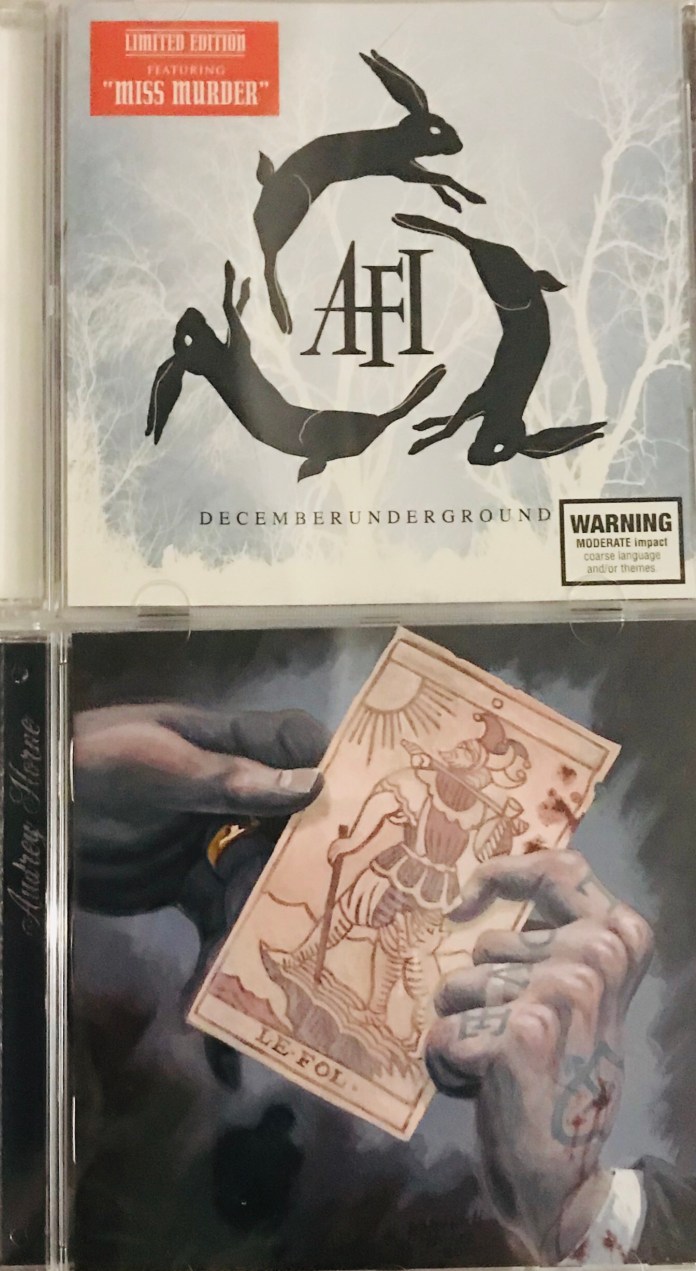
The Record Vault – AFI and Audrey Horne

When I unboxed some of the CD’s, I saw a few bands that start with A that I have missed in my Record Vault stories.

So here is a double post on AFI and Audrey Horne. And if you are interested in the previous Audrey Horne post, click here.

AFI

“December Underground” was released in 2006 and the album is a masterpiece in progressive pop song writing structures.

But if you don’t like the screamo style vocals, then you need to train your ears to ignore them in some songs, so you can appreciate the music and the song writing.

The eerie “Prelude 12/21” is a cool introduction, with “kiss my eyes and put me to sleep” being the catchcry as it morphs into the punk screamo rock of “Kill Caustic”. And when the hit single, “Miss Murder” comes up, it jars me, with its pop like vocal and addictive bass riff.

“Summer Shudder” is real cool to play on guitar, and that vocal melody for the lyric, “under the summer rain” remains with me long after the song is finished. “The Interview” is driven by a bass riff as it rolls through so many different emotions, until a brief pause and then the Chorus crashes in. And let’s chuck in a church organ for the last minute, that doesn’t make pop sense but makes musical sense.

“Love Like Winter” sounds like it came from “The Rasmus”. 

“The Missing Frame” and “Kiss and Control” have little riffs here and there which are cool to jam and they are enjoyable listens. And the haunting vocal melodies.

“The Killing Lights” sounds like it came from The Cure and New Order.

Audrey Horne

I purchased “Lo Fel” after overdosing on the self-titled album, “Youngblood” and “Pure Heavy”. So I went back looking for some of Audrey Horne’s earlier stuff. The album was released in 2007, but with all things related to music, access happens much later.

The opening track “Last Chanse For A Serenade” sounds like a Brides of Destruction track, full of attitude and industrialism. But from the outset, I was enjoying the progressive tone in the song writing. The songs don’t follow a particular formula like verse and chorus.

“Jaws” is a favourite. The vocal melody is like Tool especially in the Chorus, the riffs are progressive metal/rock, the production is top notch and the performances get me playing air guitar.

“Threshold” is a perfect blend of all the modern rock tones and song writing, with a touch to their 70’s and 80’s roots. “Monster” has a Chorus about the world closing in and everyone who was around is not around anymore.

“Afterglow” has this riff which feels progressive. “In The End” is full of different movements. “Pretty Girls Make Graves” sounds like it came from Soundgarden. “So Long, Euphoria” closes the album and after hearing the 6 minute song, I press repeat. The groove and how it builds is satisfying.

Standard
Classic Songs to Be Discovered, Derivative Works, Influenced, Music, My Stories, Unsung Heroes

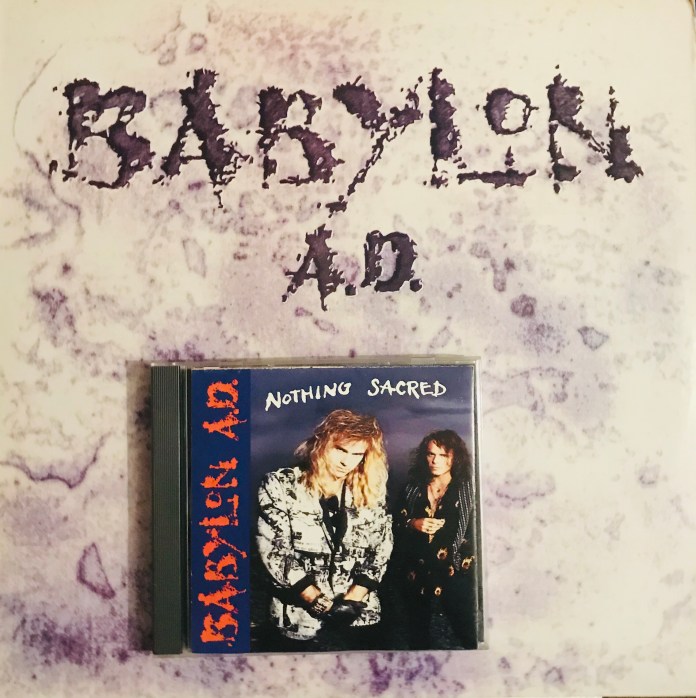
The Record Vault – Babylon AD

The self-titled album released in 1989 on Arista Records is a favourite of mine. The songs, the performances, the production and the sounds all hit the mark.

I had friends who hated it because it sounded so much like Skid Row’s debut, but for me, I was cool with it.

“Bang Go The Bells” and all is well, alright especially that E minor riff. “Hammer Swings Down” keeps the tempo going, while you can hear Jack Ponti’s style of song writing in “Caught Up In The Crossfire” and “Desperate”. From memory, I think “Desperate” was a song written for/with Baton Rouge.

It’s a four punch knock out to kick off the album.

Then “Billy went driving on a Saturday night, heading for trouble with a bottle of wine” and “The Kid Goes Wild” kicks off, bringing the story of Billy The Kid into suburbia, as an angry, young teen, who is under the gun, and eventually goes wild. And “Sam Kinison” makes an appearance, telling the cops, he aint going down, because this is his life.

“Shot O’Love” has this little acoustic piece to kick it off like how “Love Song” has an acoustic piece. After about a minute and 20, the song kicks in. And its six from six.

“Maryanne” makes it 7 from 7 with its “Piece of Me” style riff in the verses. “Back In Babylon” sets the groove for a tale about getting back to the city of sin and living on the edge on the east side.

I normally skipped “Sweet Temptation” because my favourite track is “Sally Danced”. The swampy acoustic blues with the slide guitar and the vocal melodies, hook me every single time.

And that Chorus section from about 2.18 is brilliant.

Throughout it all, the guitar work of Dan De La Rosa and Ron Freschi is top level. Derek Davis on vocals delivers the goods on every track. While bassist Robb Reid and Jamey Pacheco are the unsung heroes, holding down the fort and grooving all the way.

“Nothing Sacred” came out in 1992.

But the opening track “Take The Dog Off The Chain” didn’t grab me in the same way, “Bang Go The Bells” did and neither did “Bad Blood”.

However, “So Savage The Heart” although generic, did hook me and without looking at the credits, you can hear Jack Ponti’s song writing style over it.

“Sacrifice For Love” asks to share the bed of fire, and the album is rocking now to my liking. “Redemption” is a cool song, and lyrically, it deals about abuse, as it was a common theme back then, with Skid Row dropping “In A Darkened Room” which covered a similar topic.

“Down The River Of No Return” works with the swampy acoustic guitars merged with some slide guitar and a vocal performance worthy of top spot on the Billboard charts.

“Psychedelic Sex Reaction” sounds like it was written for Alice Cooper’s “Hey Stoopid” album. “Dream Train” sounds like it came from Aerosmith’s “Permanent Vacation” album. “Blind Ambition” sounds like “All Right Now” from Free merged with Poison’s “Nothin But A Good Time”. The pre chorus sounds like it came from the “River Of Love” Chorus by Lynch Mob.

“Of The Rose” starts of as an acoustic instrumental and should have stayed that way, as the electric guitar solo didn’t work for me. “Pray For The Wicked” is a throwback to the debut, with its sleazy and loose attitude.

And while the debut is a blast from start to finish of sleazy attitude driven rock and roll, the follow up tries to deliver but misses.

I didn’t get “American Blitzkrieg” but I really enjoyed their comeback album “Revelation Highway” released in 2017.

Standard
Classic Songs to Be Discovered, Derivative Works, Influenced, Music, My Stories, Unsung Heroes

The Pirate Vault #1

Remember when the Recording Industry spent money on advertising stating that “home taping would kill the industry” and they wanted cassettes removed from sale, only to realize that once they started producing music onto cassettes, another revenue stream became available.

Sound familiar. Streaming is bad. Let’s ban it. Wait a minute, let’s work with it and wow, look at our profit lines.

Cinderella – “Night Songs” and Pearl Jam – “Vs

There was another band on Side 2 which I overdubbed for Pearl Jam’s second album. I can’t even remember the name of the band.

And I couldn’t have overdubbed Cinderella because I didn’t buy the “Night Songs” LP until the 90s, via the second hand shops.

“Night Songs” came from my cousin Mega around 1987 and “Vs” came from a drummer in a band I was in.

WASP – “The Headless Children” and Twisted Sister – “Ruff Cutts”

My cousin Mega was again my point of reference here. “The Headless Children” is a massive album from WASP, one of their best.

And Mega has the TS logo on his arm.

At this point in time he also found the very rare and hard to find “Ruff Cutts” from Twisted Sister so it was a no brainer to tape that, purely for the rawness of the sound.

And the beauty of a 90 cassette meant that I had 45 minutes available on each side.

Which I filled up by other artists at separate points in time.

In this case I added “Out In The Fields” by Gary Moore, then at some point I added “Anybody Listening” the band version by Queensryche and “Seasons” from Badlands.

Tesla – Mechanical Resonance And Kansas – Point Of No Return

I taped these ones myself from the LPs so I could play the cassette on the Walkman. Remember those.
And I added a couple of Kansas tracks from the 80s at the end.

Standard
Derivative Works, Influenced, Music, My Stories

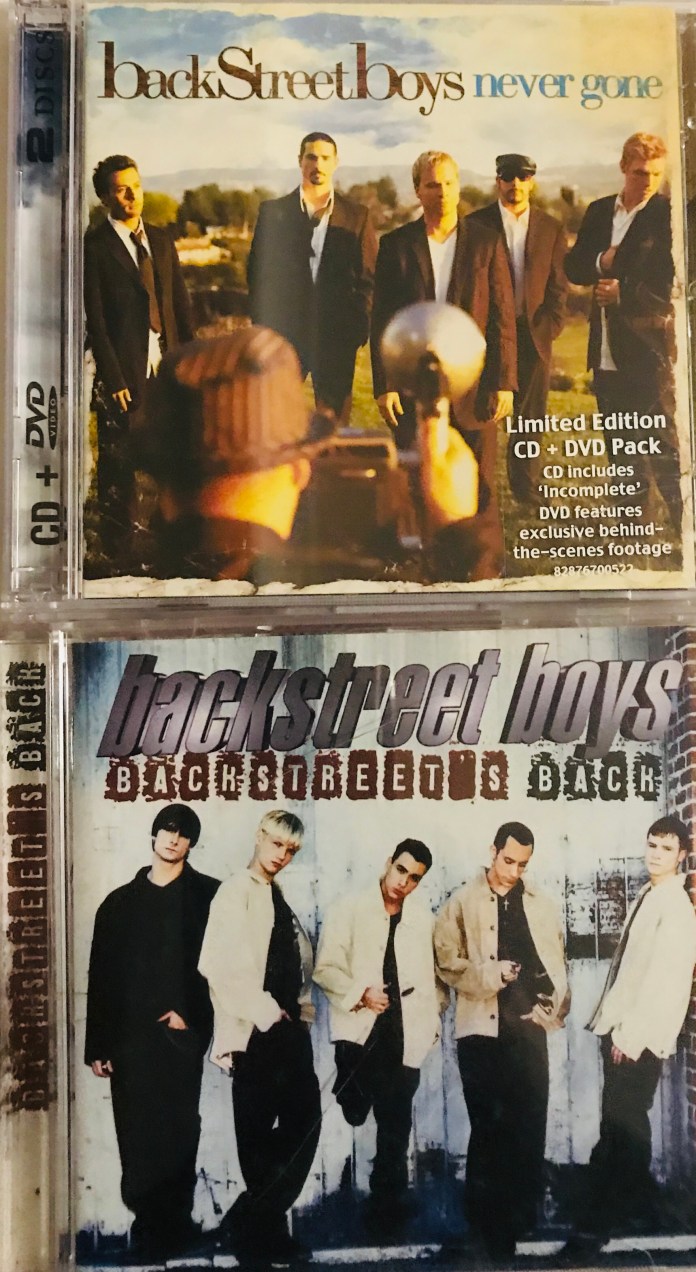
The Record Vault – Backstreet Boys

Yeah, I know, it’s not hard rock or metal, but hear me out on this okay.I picked up these albums because my wife liked the band. I heard the albums and when you take away all the pop sounds, the different singers, the songs are basically hard rock songs that would have appeared on hard rock albums if hard rock was still in the mainstream. Also, some of the writers used on the songs have worked with hard rock bands.

Max Martin is all over “Backstreets Back” and Mutt Lange also has a song writing and production credit for his song on the album.

On “Never Gone”, Max Martin is there again, John Shanks (who did the Van Halen comeback album, plus Bon Jovi albums) produces a track, plus artists from other bands like Five For Fighting are writing songs for the band.

Max Martin wrote songs with Bon Jovi (“It’s My Life” and “Complicated”), with Def Leppard (“Unbelievable”), with Apocalyptica (“Worlds Collide”, with Daughtry (“Feels Like Tonight” and with Bryan Adams (“Before The Night Is Over” and “Cloud Number Nine”). Plus he wrote songs for Taylor Swift, Britney Spears, Pink, Maroon 5, etc. He’s like the Desmond Child from 1998.

And of course, Max Martin’s real name is Karl Martin Sandberg, from Sweden and before he took over the charts writing songs for other artists, he was a singer in a hard rock metal funk band called “It’s Alive”.

Standard
Classic Songs to Be Discovered, Derivative Works, Influenced, Music, My Stories

The Record Vault – Boston

Boston was one of those bands who are loved by many and you can’t say anything bad about them. However to me, I really enjoyed a few songs on each album and others not so much.

Boston – Boston

If you want to know the power the artist had, you need to know the story of Boston’s self-titled debut.

Produced by Tom Scholz, the band had received numerous rejection letters from major record labels in the early 1970s, and by 1975, a demo tape had fallen into the hands of CBS-owned Epic Records, who signed them.

Epic wanted the band to record in Los Angeles with a record producer, but Scholz was unwilling and wanted to record the album in his basement studio, so he hired another person to run interference with the label. Scholz tricked the label into thinking the band was recording on the West Coast, when in reality, the bulk of the album was being tracked solely by Scholz at his home.

Basically there was no compromise from Scholz on his vision.

And that vision came out in 1976 to platinum sales. Then again platinum is very misleading for back in those days, a platinum album was given on the backs of how many records got shipped not sold. Regardless it’s stood the test of time.

“More Than A Feeling” is a great song to play on the guitar. Even Kurt Cobain took the main riff and called it “Smells Like Teen Spirit”. But my favourite song is “Piece of Mind” because of the harmony lead breaks in the intro, during the solo and the outro.

Boston – Don’t Look Back

The follow up, released in 1978 on Epic Records and the beginning of the band’s legal fight with Epic.

As mentioned previously, Tom Scholz didn’t compromise on his vision. But this time around he claimed that Epic executives pushed him and the band into releasing the album before they felt it was ready.

How good is that melodic lead break during the Chorus of “Don’t Look Back”?

“A Man I’ll Never Be” has a similar lead break like “Don’t Look Back” just before the Chorus and “Party” sounds like they just turned up, plugged in, had a party and jammed.

Their next album, “Third Stage”, was not released for another eight years, by which time the band and record label had parted ways and were fighting a courtroom battle that Boston ultimately won.

Third Stage

It finally came out in 1986.

Like all of their previous albums, there are always a few songs which just grab me and make me press repeat.

“Amanda” has a vocal melody which hooks me and that harmony solo which mimics the vocal melody seals the deal.

“Were Ready” has got so many bits and pieces of 80’s song writing in a concise 4 plus minute song. There is no way you cant like.

Clean tone arpeggios. Check.

Harmony Solo check.

Pedal point riff. Check.

Big backing vocals. Check.

And yeah, I know that Boston did these things before, but in “We’re Ready” they got it all MTV ready. Even Vito Bratta must have been impressed because I swear he took some of the riff and called it “Little Fighter” for the intro.

“The Launch” makes me feel like I have won Gold at the Olympics.  And then it morphs into “Cool The Engines” which is a throwback to their 70’s albums. 

“Cantcha Say You Believe In Me/ Still in Love” has a pretty big arena rock chorus as it moves between a ballad and a rocker. But then it moves into the “Still In Love” section, with clean tone arpeggios and little lead licks. For a pop rock album, its pretty progressive in the songwriting department. And then “Still In Love” builds into a lead section which copies the “Cantcha Say You Believe In Me” chorus melody.

 Brilliant.

“Hollyann” is full of harmony leads and what not.

And after that, I’m not sure what happened with Boston. The only thing I do know is that it was years before the next release.

Standard
Classic Songs to Be Discovered, Derivative Works, Influenced, Music, My Stories, Unsung Heroes

1978 – Part 1

Quiet Riot – II

I couldn’t believe my luck when I found this in a second hand record shop in the early 90’s for $10.

It’s part of Randy Rhoads origin story.

And what a strange cover, with the guys in the band, dressed up in glam outfits in a locker room with American Football jocks.

What the !!

“Slick Black Cadillac” kicks it off, a song which QR would redo with Carlos Cavazo and release it on “Metal Health”. But you need to hear the RR version.

The piece d’resistance is the solo sections of “Trouble” and “Face To Face” which reminds me of bits and pieces from “Mr Crowley”, “Over The Mountain” and “Flying High Again”.

And my other favourite is “We’ve Got The Magic”.

Listen to the little melodic leads RR plays in the Chorus.

And who said that RR couldn’t be bluesy. Check out the lead break in this song.

Boston – Don’t Look Back

How good is that melodic lead break during the Chorus of “Don’t Look Back”?

“A Man I’ll Never Be” has a similar lead break like “Don’t Look Back” just before the Chorus.

“Party” sounds like they just turned up, plugged in, had a party and jammed.

And that’s it for me. Boston has always been a two to three song band per album.

Van Halen – Van Halen

So many good songs for a debut.

It’s the same old saying, you have a lifetime to write your first album and a few months for the second.

But Van Halen in their early days were very prolific writers, so even though the first album is full of good moments, a lot of other songs from these days appeared on albums afterwards, all the way up to the reunion with Roth in the two thousands.

“Running With The Devil” kicks it all off with the iconic riff and in the Chorus, Michael Anthony’s backing vocals take centre stage. “Eruption” is now set in stone as one of “the instrumentals” on the Ten Commandments and The Kinks introduced “You Really Got Me” as a Van Halen cover after Van Halen rockified it.

Then the Am to F to G palm muted arpeggiated intro begins for “Aint Talking Bout Love” and another iconic riff is born.

“I’m The One” is the embryo of songs like “House Of Pain” and “Get Up”. “Jamie’s Cryin” was a hit twice, once with Van Halen and once with Tone Loc who sampled the riff and beat for “Wild Thing”.

“Atomic Punk” has that slashing like intro that inspired Slash for the “Mr Brownstone” intro. “Feel Your Love Tonight” could have come from an ELO record and Michael Anthony’s backing vocals are so precise and powerful. “Little Dreamer” has got this rumbling like riff that is cool to play. “Ice Cream Man” didn’t satisfy, but “On Fire” is full of good riffs to enjoy.

Bruce Springsteen – Darkness On The Edge Of Town

I always have time for Bruce Springsteen and this album rates as one of his best.

I love the way “Badlands” starts off. The riff is so rock and roll and pop rock all in one. Bands like “ELO” and “Styx” built careers on riffs like these. Then that bluesy sleazy rhythm kicks off “Adam Raised A Cain”.  “Something In The Night” was written in 78, but the intro riff would become a number 1 chart topper in 84, when it became “I’m On Fire”.

The intro piano riff of “Racing In The Street” must have influenced Jonathan Cain as he would write many songs that went to platinum levels of success with a similar vibe and feel. “Promised Land” is about Springsteen’s beliefs in the life he is living, in the country he is born in.

And “Streets Of Fire” is still relevant today as it was back in the Seventies. “Prove It All Night” or “Because The Night”, as there is no difference between them really, especially in the music around the Chorus.

Rainbow – Long Live Rock N Roll

The drum roll snare, the words “All Right” and off we go, into the mystic lands of Rock and Roll, screaming deep into the night, “Long Live Rock And Roll”.

And Richie Blackmore is all over this album, with guitar riffs gifted to him from the “Lady Of The Lake”. If you don’t believe me, check out the verse riff and then that vocal melody in the Pre-Chorus/Chorus from Ronnie James Dio.

And we caught the “L.A Connection” to the “Gates Of Babylon” just to “Kill The King”, hiding out in “The Shed” because our “Rainbow Eyes” are “Sensitive To Light”.

Queen – Jazz

Some of the best riffs from Brian May are on this album.

The guitar riff in “Fat Bottomed Girls” makes the world go around. “If You Can’t Beat Them” has this pop like riff which reminds me of other acts, but Brian May makes it his own.

Listen to “Dead On Time”, it’s basically got a speed rock riff. “Dreamer’s Ball” kicks off with a harmony solo, before it morphs into an acoustic 12 bar blues. Listen to “Leaving Home Ain’t Easy”, with its acoustic riffs which sound full of power.

The drum beat in “More Of That Jazz” is perfect and once Brian May starts with the syncopated riff, it was time to pick up the guitar and learn it. And the Chorus at first sounds metal before it morphs into something like cabaret.

Dire Straits – Dire Straits

Mark Knofler’s guitar tone is brilliant. “Down To The Waterline” is a perfect example of it as he decorates the track with licks and riffs.

By the time I had heard this album, I had already overdosed on “Sultans Of Swings”. It’s one of those tracks like “The Final Countdown”, “Were Not Gonna Take It” and “Livin On A Prayer”. They have been played so many times, so while they are great tracks, you tend to ignore them. Still the finger picked lead break from Knofler is brilliant.

The Cars – The Cars

As I was writing The Car’s section, news hit Twitter that Ric Ocask was found dead in Manhattan at 75 years of age. I was very late getting into “The Cars” but I am glad I did. And what a debut album.

“Good Times Roll” kicks it off with its iconic riff, lyrics and synth lines. Let the good times roll in deed. And they continue with “My Best Friend’s Girl” and “Just What I Needed”.

So many songs in the 70’s about their best friends partners. Eric Clapton wrote Layla because he was in love with George Harrison’s wife, which he eventually married. Rick Springfield topped the charts with “Jessie’s Girl” and so did The Cars. And neither song took away from the other. These days, everyone will be suing each other for copying their feels.

“Moving In Stereo” has a metal like riff in the vein of Judas Priest. No one will believe me, but they need to check it out. And the synth lead is perfect.

Well that’s it for the first post. More to come in Part 2.

Standard