A to Z of Making It, Classic Songs to Be Discovered, Copyright, Derivative Works, Influenced, Music, My Stories, Piracy, Unsung Heroes

The Week In Destroyer Of Harmony History – December 26 to January 8

Well it’s been two weeks since the last DoHh post.

Here we go.

4 Years Ago (2017 going into 2018)

2018 STARTED WITH SOME RANDOM LISTENING

Yngwie Malmsteen’s “Trilogy” album is full of great riffs and leads.

When the U.S record labels went anti shred in the 90’s, the Japanese and South American markets kept his career going.

There is no denying his 80’s output and it’s a shame that a rumoured collaboration with Ronnie James Dio never happened.

Then I moved to “Trash” from Alice Cooper. It’s commercial sounding, but it’s still Alice Cooper singing.

How can it not be good?

The real gems are “Spark In The Dark”, “This Maniac Is In Love With You”, “I’m Your Gun”, “Why Trust You” and “Trash”.

Afterwards, “Operation Mindcrime” from Queensryche got a listen.

It’s loaded with excellent guitar playing and the album gave me a tonne of great riff ideas to use as influences in my own song writing.

“Flesh and Blood” from Poison was next.

“Valley Of Lost Souls” is one hell of a good song and the best on the album.

“Let It Play” could have been on a John Cougar Mellencamp or Bryan Adams album while “Life Goes On” is a good power ballad and CC plays a tasty intro lead. “Come Hell or High Water” is another underrated tune in the vein of the Classic Rock of the 70’s that doesn’t get its dues.

“Ride The Wind” is another sleeper, while “Something To Believe In” copies the “Every Rose Has It’s Thorn” country bluesy vibe, however this time, the piano is the main driver instead of the acoustic guitar.

“Blow My Fuse” from Kix was up next. Now this album is a perfect example of the “progress is derivative model”.

It starts off with “Red Lite, Green Lite, TNT” which sounds very familiar like something from “The Rocky Horror Picture Show”. “Get It While It’s Hot” is heavily influenced by “You Shook Me All Night Long” from AC/DC. Actually it’s very heavily, heavily influenced by that song.

“No Ring Around Rosie” is a beefed up “La Grange” from ZZ Top in the verses. “Don’t Close Your Eyes” is taking its cues from “Home Sweet Home” and “Dream On”. “She Dropped Me The Bomb” is again heavily influenced by AC/DC with a touch of The Who.  “Cold Blood” is a very similar to “Long Way To The Top” from AC/DC in the verses.

“Piece Of The Pie” is very heavily influenced by Aerosmith. “Boomerang” is influenced by Led Zeppelin. “Blow My Fuse” is such a good track where the influences are not as obvious as the other tracks. “Dirty Boys” is influenced by “Let There Be Rock” by AC/DC.

Finally, Winger is up.

The groovy “Can’t Get Enough” kicks off the album.

When “Miles Away” came on, I wasn’t sure if it was Bad English or Def Leppard. It’s one of those slow tempo melodic rock songs. “Easy Come Easy Go” has a cool groove and I dig the horn section in the verses.

The next two songs are two of my favourite songs. “Rainbow In The Rose” and “In The Day We’ll Never See”.

RANDY RHOADS AND THE BLIZZARDS

The project could have been called that.

It all started when Ozzy auditioned Randy in LA. Afterwards they jammed for a few days with Dana Strum and Frankie Banali.

Then Ozzy went back to England and he met with Bob Daisley. Ozzy and Daisley jammed with another guitarist and drummer however Daisley mentioned that they needed better players.

Ozzy mentioned Randy Rhoads, however the label wanted a well-known British guitarist, but no one was interested to join because of Ozzy’s reputation. Gary Moore was Ozzy’s first choice and he rejected the offer to audition. Eventually the label relented and Randy was flown over to London. Rhoads and Daisley started writing music and it worked well. Lee Kerslake came towards the end of the writing process.

Here are some summaries of what I wrote about the songs.

Crazy Train

You can call this song Ozzy’s biggest hit but it never registered on the charts back in the day. But on Spotify and YouTube it’s huge. The new paradigm shows us what is being listened too.

Bob Daisley provided the title while Randy Rhoads had the riff and the chord structure. For the lyrics, Bob Daisley used Ozzy’s vocal melodies and referenced what was happening in 1979/80. The Berlin Wall was still up and the Cold War between the USSR and USA was still going on.

Goodbye To Romance

It was Ozzy’s title and it came from an Everly Brothers song called “Bye Bye Love.”

The lyrics were written by Bob Daisley and the subject matter was Ozzy’s “divorce” from Black Sabbath.

On the “Don’t Blame Me” video, Ozzy mentions he was humming the vocal melody, and Randy heard it and developed the chords around the melody. Ozzy’s revisionist take makes it sound that Bob Daisley was not involved at all in the song writing process, which is obviously not true at all.

CRITICAL MASS

There are always different kinds of audiences.

You have the early adopters, the first to hear about an artist. These early adopters are looking and wanting a different experience than the people who identify as the critical mass market.

Early adopters want something fresh, exciting, new and interesting.

The critical mass market don’t. They want something that is familiar.

Metallica when they started had an audience that adopted them early. Some of those fans stood by them all the way, even when they broke through to the critical mass market in the 90’s and some of those early day fans just moved on to something new and different.

And who should the artist please, the early adopters of their music or the mass market?

Profits are fine as they allow the artist to invest back into their art. But if profit becomes the main aim, well, nothing and no one benefits if profits are the only thing the artist seeks.

And yes, there are routes to popularity which are random or accidental or luck or being in the right place at the right time.

BOB ROCK AND METALLICA

Bob Rock knew exactly what every song needed.

The demo of “Sad But True” (I had a drummer in a band who thought it was called “Sad Patrol”) was heaps quicker. Bob heard a “Kashmir” feel and asked James to slow it down and make it crunchy.

Rock kept telling James to re-write lyrics to songs. He told him to use fewer words in the choruses and to use stronger words. He questioned James on what the song was about. He asked him how the verse lyrics referenced the song message. James didn’t like this line of questioning. If James couldn’t explain it back to Rock, it meant he hadn’t nailed the lyric.

Rock told Lars to take drum lessons and he told James to take singing lessons. He told Kirk to rewrite solos.

And as a side note, in “Get Him To The Greek”, Lars gets told by Russel Brand to “Go sue Napster and your fans”, and unfortunately that is the stigma that will forever stick with Metallica. They got so out of touch with reality that they sued their own fans for sharing their music.

Nicko McBrain sums up piracy in “Flight 666”when he said “We sold out in Costa Rica but haven’t sold an album in this country…”

8 Years Ago (2013 going into 2014)

GRAMMY’S

From when Jethro Tull won the first metal award at the Grammy’s, the whole awards has been a joke for metal and hard rock music.

Having Metallica then win the “Best Metal Performance” in 1990 for “One” and then in 1991 for “Stone Cold Crazy” just added to the Grammy metal jokes.

“One’s” fate was tied with the “…And Justice For All” album and that was meant for the 1989 Grammy ceremony.

And seriously, for the 1991 awards, a cover song was the best that was on offer in the metal world for releases released from October 1989 to September 1990. I don’t think so.

Even in 1999, Metallica won again for “Better Than You”.

For which song, I hear you say.

“Better Than You.”

Does anyone know from which album it was on or how the riff goes or the vocal melody?

I bet that most people will answer NO.

HEADED FOR A HEARTBREAK

Billy Squire made one ridiculous video with a pink top. And just like that an amazing voice, with a catalog of songs was gone.

Winger had Kip Winger. A Playgirl pictorial was too outlandish and as glam music was committing suicide by cloning itself over and over again, Beavis and Butthead came along and trashed the band.

Metallica even threw darts at Kip Winger while they recorded the “Black” album.

But.

“Headed For A Heartbreak” is a hell of a good song.

Winger’s debut didn’t come from out of nowhere. Kip Winger did his time as a songwriter and studio session musician working very closely with Beau Hill who would of course go on to produce the first two Winger albums that went platinum.

Guitarist Reb Beach is a graduate from the esteemed Berklee College of Music. He also did his time in backing bands and studio work, until he met up with Kip Winger and started writing demos.

Drummer Rod Morgenstein was the most experienced. Active since joining jazz fusion legends “The Dixie Dregs” in 1974, he was a very accomplished drummer to bring into the fold.

Keyboard player and back up guitarist Paul Taylor was the x factor. He was the touring keyboardist for Aldo Nova during his “Fantasy” success. He did his time with Alice Cooper’s backing band at the same time with Kip Winger and played on the “Constrictor” and “Raise Your Fist and Yell” albums.

Go on Spotify and check them out. Go on YouTube and check them out. Focus on the music and not on the pretty boy images put out there in the video clips.

DONT KNOW WHAT YOU GOT UNTIL ITS GONE

Andy Johns (RIP) was on deck again to deliver another big sounding album.

Drummer, Fred Coury didn’t even play on the album as Johns just kept on finding timing issues.

The end result is an album which is seen as a blues rock classic that can rival all the best output from seventies bands like Bad Company.

Hearing them again today, it sure brought back a lot of memories. Guess you don’t know what you got until it’s gone.

SEMI – OBSCURE BON JOVI SONGS PART 1

Everyone knows the singles and even some of those songs have now slipped into obscurity but if you dig deep enough you’ll hear some cult classics.

Tracks like;

THE HARDEST PART IS THE NIGHT

From the “7800 Degrees Fahrenheit” album released in 1985.

“Stay alive, the hardest part is the night”

SHOT THROUGH THE HEART

From the debut album released in 1984. “Runaway” took most of the glory as it became a radio staple however “Shot Through The Heart” was the reason I got into Bon Jovi.

It was good to see the song get some concert time during “The Circle” tour.

HOMEBOUND TRAIN

It’s written by Jon Bon Jovi and Richie Sambora and it’s got this heavy blues rock swagger that just connects.

The magic is at the three minute mark when it goes into this Elvis Presley meets James Brown meets Rolling Stones vibe.

The guitar drops out and it is the bass and drums that keep the groove going and Jon does a few voice impersonations, while Sambora keeps it funky and they build up the song again while Jon keeps singing “Here I Come”. The interlude is filled with church organ and harmonica lead breaks.

On “The Circle” tour, “Homebound Train” came back into the mix with Richie Sambora on vocals.

STARTING ALL OVER AGAIN

It’s got this “Rock N Roll Aint Noise Pollution” style intro written by the Jon Bon Jovi, Richie Sambora and Desmond Child song writing team.

THE RADIO SAVED MY LIFE TONIGHT

Another tune written for the “Keep The Faith” album that never made it.

To buy all the music that I liked was expensive, so I always purchased blank cassettes and kept my finger ready on the record button to record the latest song from the radio.

SEMI – OBSCURE BON JOVI SONGS PART 2

RIVER OF LOVE

It never made the “New Jersey” album and it is a tragedy that it didn’t get fleshed out and recorded properly. It’s got a basic foot tapping riff that sticks with you from the outset. For those keen fans, you will hear the riff groove re-used in “Save A Prayer”.

“Pretend we’re in some movie instead of faded jeans”

Listen to the “Raise Your Hands” reference in the interlude. You could write a whole song based on that riff. Wait, they already did.

Progress is derivative.

JUDGEMENT DAY and GROWING UP THE HARD WAY

Both songs begin with that whole “Na Na NaNaNa” in the same vein as “Born To Be My Baby”, “Rosie” and “Hide Your Heart” from Kiss. Both songs also share the same riff. Both songs are written by Jon Bon Jovi and Richie Sambora.

As with “River Of Love” these songs were recorded for the “New Jersey” album and they failed to make the cut. When a band is at their peak, they are able to churn out some great songs. The motivation is there to keep the machine rolling to see if the first round of success can be repeated.

In relation to the three demos mentioned above, I really thought that they would have seen the light of day “officially” when Bon Jovi released “100,000,000 Fans Cant Be Wrong” Box Set.

IF I WAS YOUR MOTHER

Man, this song is heavy and it has got some serious groove.

What a great vocal melody.

I saw them play it live on the “Keep The Faith Tour” and it rocked hard. The subject matter is weak and it hampers the song from being a powerhouse.

LETS MAKE IT BABY

It didn’t make the “New Jersey” album, however the bass line was used again in “Diamond Ring” (which was also originally written for the “New Jersey” album however it was officially released on the “These Days” album.

WEDDING DAY

“Wedding Day” was written for the “These Days” album, however it didn’t make the final cut.

The song is like a sleeper demo hit on YouTube.

Some of the lyrics made it into another Jon Bon Jovi song called “Janie Don’t Take Your Love To Town”.

SEMI – OBSCURE BON JOVI SONGS PART 3

DAMNED

It has a soul like funky blues groove very similar to what Lenny Kravitz was putting out.

“These Days” from 1995 is a very misunderstood album, released in a very confusing time.

Hard/Glam rock as we knew it was dead, Grunge was fading and alternative rock was rising, along with a form of industrial rock/metal.

LOVE IS WAR

Of course it sounds like “You Give Love A Bad Name” because Jon tried really hard to recreate the same vibe and the same kind of hit.

Is that a bad thing?

I’D DIE FOR YOU

“Slippery When Wet” was a monster of an album. And it was easy for other songs to get missed.

It’s got that Judas Priest “Breaking The Law” guitar line.

Did anyone pick up on that?

On YouTube, “I’d Die For You” is a cult hit. The fan’s have taken the song and made their own film clips, lyric videos and so on.

MY GUITAR LIES BLEEDING IN MY ARMS

The title is a take on the George Harrison classic, “While My Guitar Gently Weeps”.

ONLY LONELY

The bottom line is this; it is a fan favourite.

THE PRICE OF LOVE

“We live, we learn, we lieFor the price of love”

Aint that the truth.

WITHOUT LOVE

Written by the Jon Bon Jovi, Richie Sambora and Desmond Child song writing team for the Slippery When Wet album.

BURNING FOR LOVE

Sambora goes to town during the lead breaks, showcasing his abilities as a melodic shredder. He never went too over the top, always focusing on enhancing the song, instead of enhancing his ego.

RIVER RUNS DRY

It is a Jon Bon Jovi and Desmond Child composition that begins as a derivative version of Led Zeppelin’s “Stairway To Heaven”.

Remember, progress is derivative.

SAVE A PRAYER

No one knows this song even exist, but they should.

THE BALLAD OF BOB DAISLEY

The music business is tough.

However, what happens when an artist in a position of power and mainstream success, does their best to undermine the work of previous people in their career.

This is what the Osbourne’s are doing to Bob Daisley.

They are trying to re-write history to show that Ozzy Osbourne himself was the main reason why his solo career progressed.

They are omitting important facts that when Randy Rhoads and Bob Daisley signed on, it was always spoken of as a band. They are omitting important facts that the band was actually called Blizzard Of Ozz. They are omitting important facts of Ozzy punching Randy, because Randy didn’t want to do a live covers album of Black Sabbath songs.

Most importantly, they are omitting the main fact, that Bob Daisley served as the lyricist for for six albums.

The sad thing is that if anyone reads the credits to the “Bark At The Moon” album, you will see it listed as “All music and lyrics by Ozzy Osbourne.”

Like, yeah right, Ozzy really churned out all of those riffs.

It is sad at to what level the Osbourne’s stooped at that stage. One more thing, read the book from Ozzy and tell me how many times he mentions Jake E. Lee in the book.

But that is a story for another day.

VITO BRATTA

I did a Top 10 of Bratta killer riffs or moments.

All The Fallen Men

Wait

Love Dont Come Easy

Fight To Survive

Hungry

When The Children Cry

Cry For Freedom

Lady Of The Valley

Little Fighter

Warsong

In the end I had a hard time picking 10 songs for this post as each song that Vito has played on all have unbelievable sections.

BATM SONGWRITING CONTROVERSY

Coming into the “Bark At The Moon” sessions, the Blizzard of Ozz band was finished.

Bob Daisley and Lee Kerslake were fired before “Diary of A Madman” came out and the other driving force, Randy Rhoads died tragically when the plane he was on crashed into a mansion and burst into flames on March 19th, 1982.

Ozzy Osbourne as usual was at his drunken best but he still delivered the “Speak/Talk Of The Devil” album, and by doing so he was free from his Jet Records contract, ready to sign a major label deal with CBS.

Jake E Lee joined during the “Speak of the Devil” tour. Once that tour ended, the song writing process began for the next album.

Most of the writing was done by Lee and Bob Daisley.

“Bark At the Moon” was a title that Ozzy came up with. Jake E. Lee came up with the riffs and Bob Daisley wrote the lyrics.

While Bob Daisley got a buy out for “Bark At The Moon”, it looks like Jake E.Lee got screwed over. There are no royalty checks for the songwriting and no publishing monies either.

COPYRIGHT INC

I just finished watching the Rush documentary, “Beyond The Lighted Stage” and in the documentary, Neal Peart is talking about their “Vapor Trail” tour of South America and how they didn’t know what to expect because they never had big sales there and in the end they played to their biggest ever concert attendance at Sao Paulo.

The Brazil tour took place in November 2002. File sharing started in June 1999. Maybe copyright breaches by fans is not a bad thing.

And that’s another wrap for these last two weeks.

Standard
A to Z of Making It, Classic Songs to Be Discovered, Derivative Works, Influenced, Music, My Stories, Unsung Heroes

Australian Method Series: Jet – Shine On

My first post on Jet was “Shaka Rock”, their third album. Then it was the debut “Get Born”.

And I wrap up their output with their much anticipated second album, “Shine On” released on 30 September 2006, in Australia and on 2–3 October 2006, internationally.

When you Google the album name and review, the Pitchfork review is the first one that Google brings back.

Pitchfork gave the album an 0.0 review and the page had an embedded YouTube video of a monkey peeing in its own mouth. I’m presuming to state it’s a “piss poor” album.

But Aussie’s don’t care about expectations and artists development. We care about fun and Jet just made another fun album rooted in good old fashioned Blues Rock.

Holiday

There’s no way that people can’t like this song.

It has all the trademarks of what Jet is. A hooky riff, dumb lyrics and a fun attitude. There is this small riff between the main riff that reminds me of QOTSA.

Makes no difference what they say
We’re goin’ on holiday

It sounds too good to be true these days. Going on a holiday.

Put Your Money Where Your Mouth Is

If there’s one thing us Aussies like, is a good punt. We’ll bet on anything. But this song isn’t about betting.

It continues the catchy riffs and themes from “Are You Gonna Be My Girl”.

She goes down
Like a setting sun

It leaves little to the imagination.

You can be the sinner and I’ll be the sin

Best lyric in the song.

Bring It On Back

The Beatles (as a byproduct Oasis as well) and Bad Company come to mind here.

For all that you said
Would you take it all back?

Even if it’s taken back, it’s been said and words sting deeper than actions.

That’s All Lies

It’s more Punk Rolling Stones like, in a 12 bar blues sense.

Kings Horses

It’s a country folk rock cut.

In the morning i swear i will tell you the truth
How you receive it, well, that’s up to you

Everyone has their own version of the truth.

Shine On

A tribute to the Cesters’ father, who passed away from cancer while they toured on the “Get Born” album.

Oasis and “Stop Crying Your Heart Out” comes to mind here.

Everything will be okay
We will meet again one day

It’s impossible but people believe it’s possible.

Come On, Come On

It’s very ELO meets Rolling Stones.

If they ask you to stand, well they just want you to kneel

So if you stand based on someone else’s command, then you will kneel when they tell you to kneel.

Stand Up

It’s a basic blues rock song in a Rolling Stones “Sympathy For The Devil” and “Revolution” from The Beatles vibe with the message from the 80s, like “Stand Up And Shout” and “We’re Not Gonna Take It”.

Stand up, you got to live while you can
Stand up, burn up before you fade out
Stand up, don’t you follow the crowd
Stand up, you got to live in the now

Rip It Up

Might as well call it “Wipeout” as it has that 60s Beach feel.

Rip it up, rip it up if your ever gonna make it!

Skin And Bones

It starts off with that “Shooting Star” and “Werewolf In London” riff.

Shiny Magazine

It’s that whole Beatles/Oasis feel.

Eleanor

Strummed acoustics and a campfire “Rubber Soul” feel.

All You Have To Do

And the album ends.

They recorded a shit load of songs for this album and there are so many versions of the album with a lot of bonus tracks and demos.

It didn’t sell anywhere near the debut but that doesn’t mean it’s a crap album.

Check it out.

Standard
Classic Songs to Be Discovered, Derivative Works, Influenced, Music, My Stories

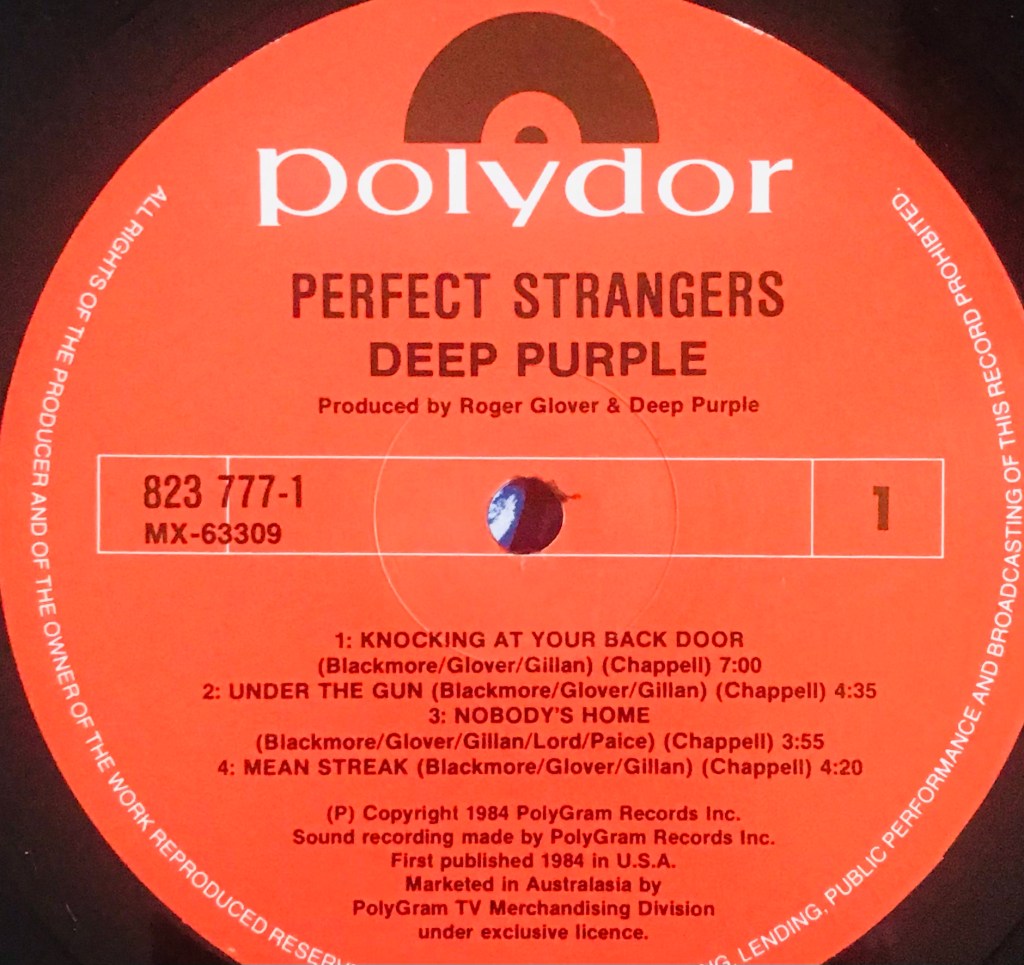
The Record Vault: Deep Purple – Perfect Strangers

Mark 2 was back.

It made perfect business sense to have one of the premier bands of the early 70’s come back in the 80s MTV era.

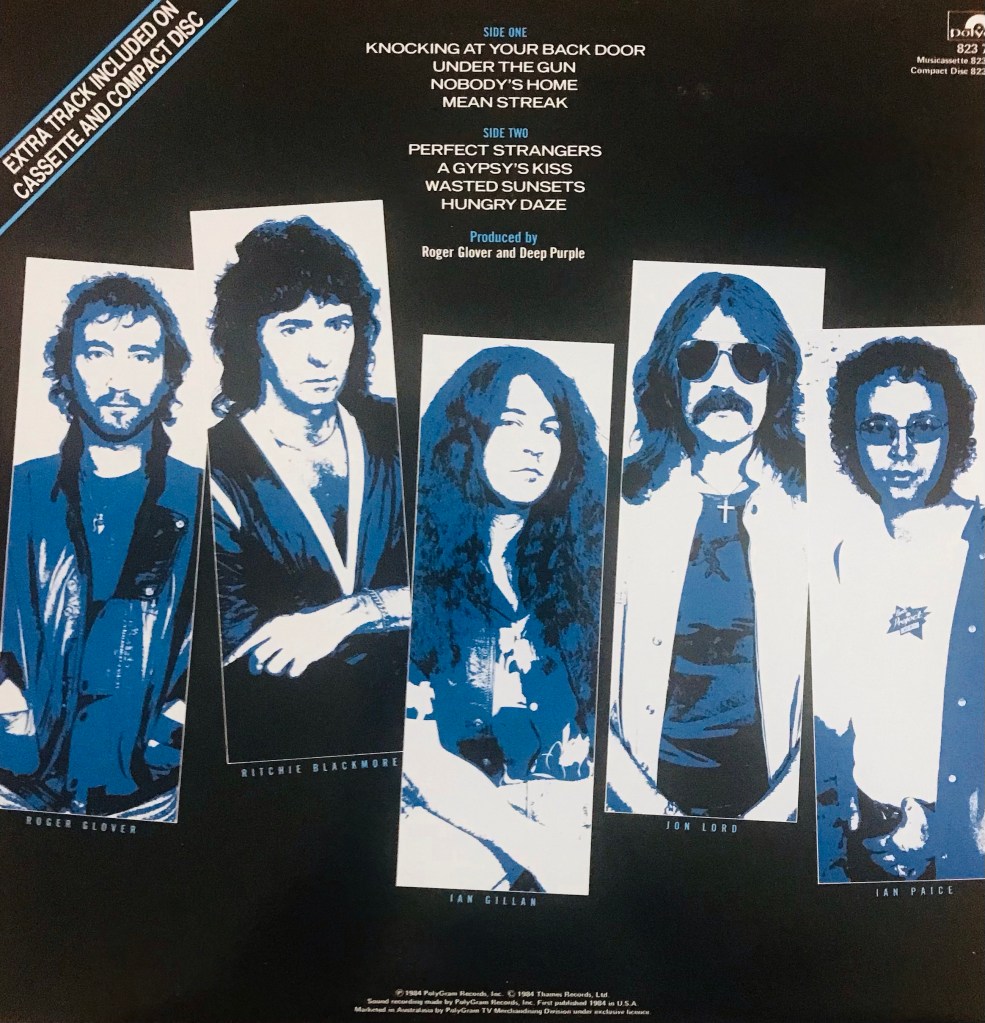
“Perfect Strangers” is album number 11, released in 29 October 1984 and it became the most successful album from the ‘Mark II’ line-up.

Like nomads, they all arrived from different directions. Ritchie Blackmore and Roger Glover arrived from Rainbow, Ian Gillan from Black Sabbath and his solo band, Jon Lord from Whitesnake and Ian Paice from Whitesnake and Gary Moore’s backing band.

But problems existed from the outset. Business problems.

Gillan and Glover wanted the credits to be of the collective. Blackmore didn’t. As the main writer, he didn’t want to share any song writing credits with people who didn’t write anything. After years in the business, Blackmore knew how valuable the publishing is.

It wasn’t until Blackmore left the group in 1993 that the issue was finally resolved within Deep Purple.

I missed this in 1984 because I was into the whole Motley Crue, Twisted Sister, Iron Maiden, Quiet Riot and Judas Priest phenomenon. These guys were just old dudes. Just look at the “mo” on Jon Lord. It’s classic 70’s.

All songs are written by Ritchie Blackmore, Ian Gillan and Roger Glover except where noted.

Knocking at Your Back Door

By now Blackmore had the experience of Rainbow and the commercial success that came with that, so when this song exploded out of the gate you get the best of Blackmore’s influences from Deep Purple and Rainbow.

If you don’t believe me, listen to the Verses, which is very similar to other Deep Purple verses like the one on “Smoke On The Water” and then the Chorus riff which has that Rainbow melodic rock feel, circa Graham Bonnet and Joe Lynn Turner.

And Ian Gillan has a smile on his face as he feels it coming while he’s knocking at someone’s back door, while probably cool for Motley Crue or Ratt, this is Deep Purple we are talking about.

But stick around for the outro solo.

Under the Gun

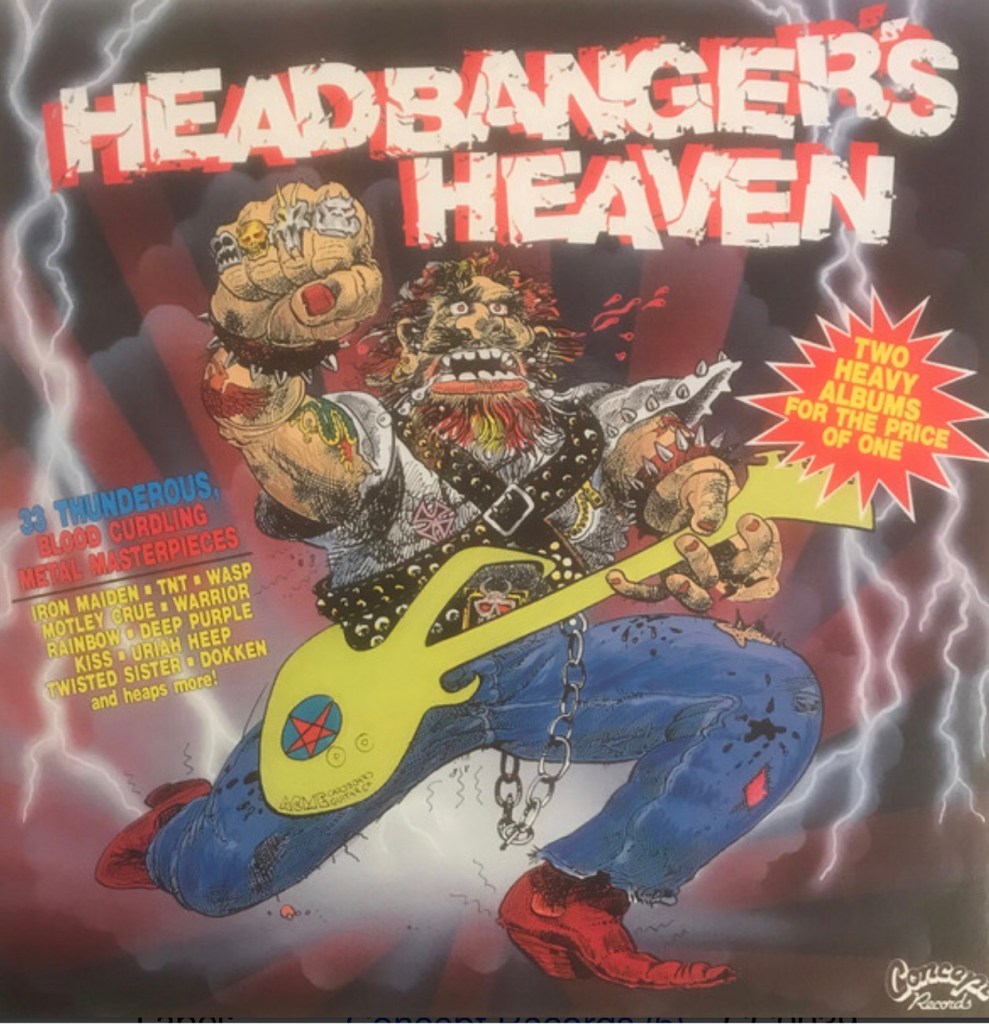
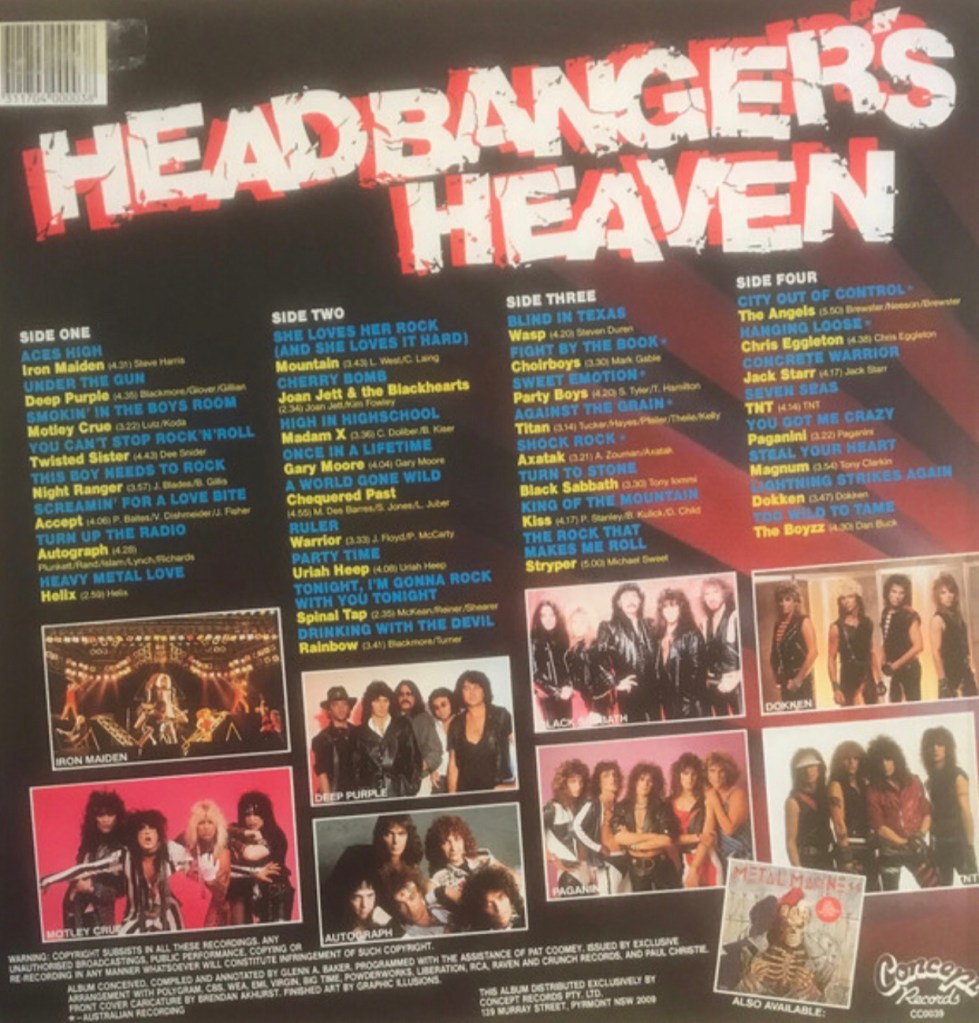
It was the first track I heard via a double compilation LP called “Headbangers Heaven”.

The intro riff grabs my attention right away, making me think of Rainbow and I like the way it all works with the Jon Lord’s keys.

But Ian Gillan is in form here, as it’s not an easy riff to sing over which then gets me thinking of his Gillan project.

Nobody’s Home

It’s a blues rock number and the only song listed as written by all Deep Purple members.

It’s like the band never left and continued to make albums after “Who Do We Think We Are?”

And if it sounds familiar, it should. “Lay Down, Stay Down” comes to mind.

Mean Streak

But press play to hear the Chorus Riff as Blackmore shows he can compete with the LA bands and do it better by taking “Schools Out” from Alice Cooper and making it sound a bit modern.

In the verses I am reminded of “Black Night” and in the solo break, the riff behind it like “Roadhouse Blues” from The Doors.

And I like it.

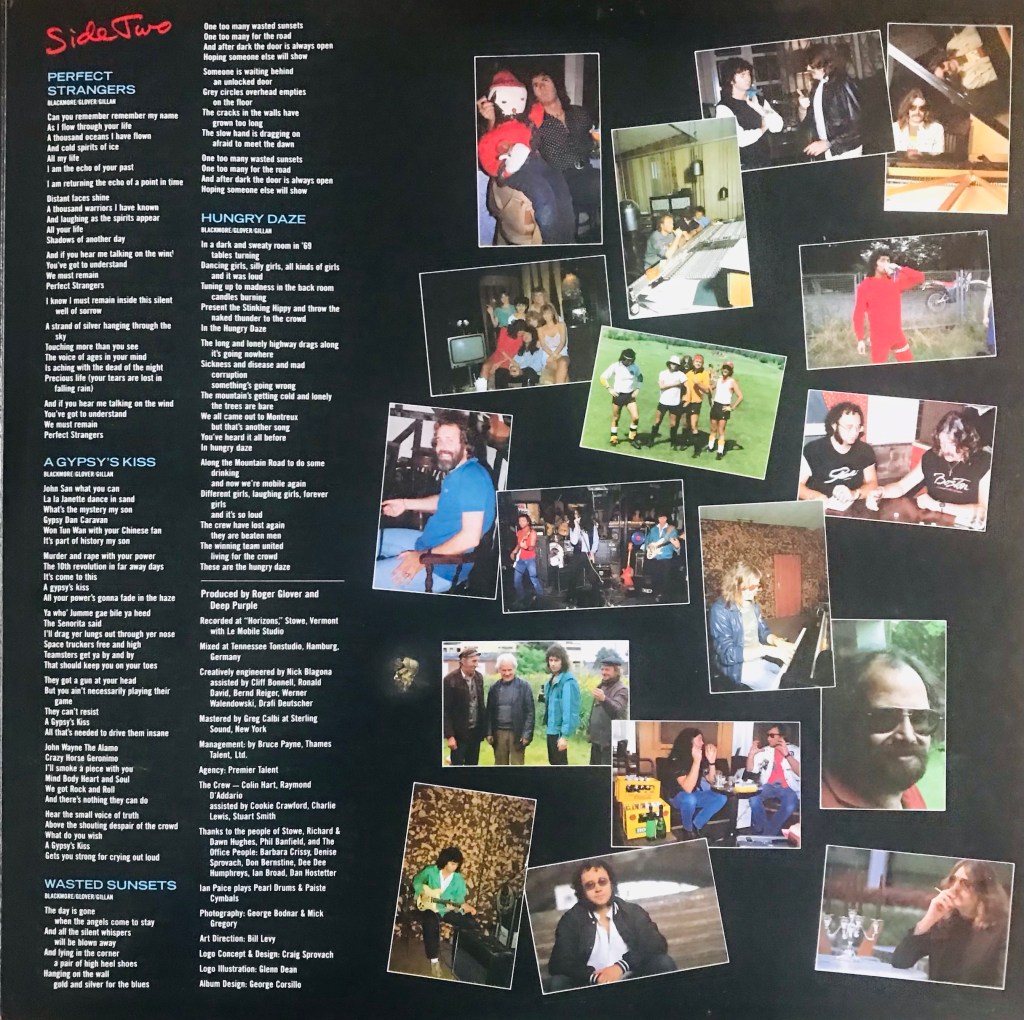
Perfect Strangers

The side 2 opener.

It’s a classic and one of their best songs.

How good is the “Kashmir” style groove when it kicks in at the 2.30 minute mark?

Whatever Jimmy Page could do, Blackmore could do as well, at a time when Page was not as prolific as he used to be.

A Gypsy’s Kiss

It could have come from “Rising” but “Highway Star” also comes to mind. Gillan’s bluesy delivery suits.

Check out the unison keyboard and guitar riff/melodies. It brings back memories of the work that Lord and Blackmore did on “Burn”.

And Ian Paice behind the kit. He is relentless.

Wasted Sunsets

Remember in the 70’s when these kind of slow blues rock ballads sounded progressive and epic and then in the 80’s they morphed into clichéd power ballads.

While this song isn’t a 70s classic, Blackmore is in his element here with his emotive soloing.

Hungry Daze

That exotic Eastern European melody hooks me. It could have come from the Balkans, maybe Hungary or even Russia.

Not Responsible

I don’t have this on the album, but how good is that intro. It reminds of “A Light In The Black”. It’s an extra track on the cassette and CD release. And Spotify has it.

Son of Alerik

At 10 minutes, this Blackmore penned instrumental is for the diehards.

The song appeared on the 1999 CD issue as a bonus track and it also appeared in an edited form on the 7″ B-side of the “Perfect Strangers” single, or in full on the 12″ “Perfect Strangers” single and the European version of the compilation “Knocking at Your Back Door: The Best of Deep Purple in the 80’s”.

The thing is, if a band reforms these days, or in the last 30 years, it would have been quite a media show, but their comeback in 1984, didn’t cause a ripple in the news outlets who had jumped on board the LA Sunset Strip Train or the San Francisco NWOBHM Thrash Scene.

But their comeback was met with success in the European markets which loved em back in the 70’s. The U.K, Switzerland, West Germany, Norway, Sweden, France, Austria, Finland and Holland jumped back on board the Deep Purple train.

Japan never left em. Australia and New Zealand also provided em with a certification.

And The Boss was the only artist on the touring circuit that out grossed out em.

Crank it.

Standard
A to Z of Making It, Classic Songs to Be Discovered, Derivative Works, Influenced, Music, My Stories, Unsung Heroes

The Record Vault: Deep Purple – Come Taste The Band

It took Deep Purple seven years to make it to the top and two years to break up. The air is thin at the mountain top.

Deep Purple had lost their lead singer Ian Gillan and bassist Roger Glover in 1973 and replaced them with David Coverdale and Glen Hughes. This MK3 version recorded two albums and then guitarist Richie Blackmore left at the start of 1975. This was weird as Deep Purple was seen as “his” band. And from looking at it, it’s like the owner of the house vacating their premises for the guests to take over running the house.

But Deep Purple would soldier on, replacing Blackmore with a young guitar hero from the U.S. known as Tommy Bolin. Rounding out the band is the rest of MK3, David Coverdale, Glenn Hughes, Jon Lord and Ian Paice.

And MK4 was created.

“Come Taste The Band” came out in 1975. It’s the usual production team of the band and Martin Birch.

The name Tommy Bolin came into my life because of Motley Crue. The Crue covered the song “Teaser” for a Compilation album and they also released it on a Raw Tracks CD made for the Japanese market, which I got my hands on. The song is so good and sleazy it sounded like a Crue original and I was curious to hear more from Bolin.

So as I was going back into the career of David Coverdale because of Whitesnake’s attention grabbing 87 LP, I was doing the same for Tommy Bolin.

So I got my hands on the “Teaser” and “Private Eyes” album first and imagine my surprise when I came across an album that had both Coverdale and Bolin on it.

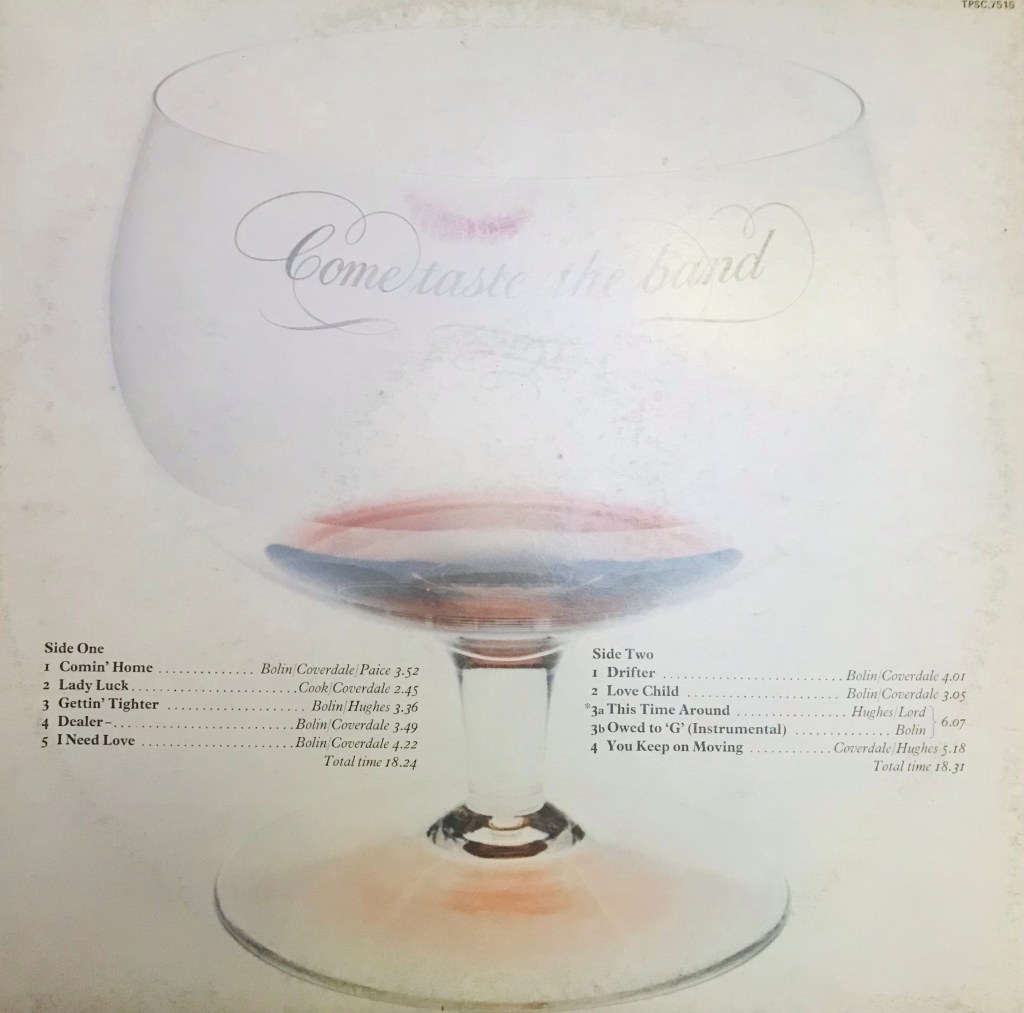
Comin’ Home

Written by Tommy Bolin, David Coverdale and Ian Paice with vocals provided by Coverdale.

This song rocks out of the gate paying homage to the fast rock sounds of Deep Purple MK1, MK2 and MK3. But it was more Grand Funk, like “We’re An American Band”.

Lady Luck

Written by Jeffrey Cook who co-wrote songs with Bolin for the “Teaser” record with lyrical contributions from Coverdale.

Vocals are provided by Coverdale. In didn’t really do much for me.

Gettin’ Tighter

Written by Bolin and Hughes with vocals provided by Hughes.

This song is funky out of the gate, and sleazy once the whole band comes in.

Dealer

Written by Bolin and Coverdale with vocals provided by Coverdale and Bolin.

It’s very Hendrix “Purple Haze” like in the riff departments with a Beatles like Folk Rock interlude which Bolin sung.

I Need Love

Written by Bolin and Coverdale with vocals provided by Coverdale.

I like the groove on this, and the way the verse riffs are played out with the heavy synth from Lord.

Drifter

Side 2 begins with this song written by Bolin and Coverdale with vocals provided by Coverdale.

It’s got a great Intro which reminds of “You Really Got Me” or “American Woman” and check out the groove that comes in once the drums and bass kick in.

Coverdale’s bluesy voice is a highlight.

At 2.36 there is just a bass and keys section over a drum groove. It reminds me of things that Rush would do.

Then Bolin comes in, with volume swells and a solo begins. The drums and bass become busy as they build it up, and the vocals come back in. Its brilliant, it gives me goose bumps all the time, so press play just to hear that.

Love Child

“Heartbreaker” anyone. Press play and listen to the intro.

Written by Bolin and Coverdale with vocals provided by Coverdale.

The verse groove and riff are my favourites even though the whole “love child driving me wild” lyric didn’t set the world on fire.

At 1.50, they go into a progressive rock style groove and Lord solos over it.

This Time Around / Owed to ‘G’

Written by Hughes, Lord and Bolin with vocals provided by Hughes.

It’s very progressive sounding, like ELO and it moves into a great instrumental jam over a 12/8 groove with excellent lead guitar from Mr Bolin himself.

You Keep On Moving

Written by Coverdale and Hughes with vocals provided by Coverdale and Hughes.

This is the standout track. Its haunting and melancholic and it was written during the “Burn” sessions but not used.

Norway, Sweden, Denmark, Holland, Czechoslovakia and West Germany all got behind this version of the band. The Japanese still loved em and New Zealand loved em even more.

But.

The classical progressions and jams had been replaced with groove, soul and funk. It could be seen as an early Whitesnake album, as a few tracks have “Love” in the title, which is similar to every Whitesnake album.

Also in 1975, Tommy Bolin had two records competing against each other, which probably wasn’t the best scenario for Deep Purple however I have seen “Teaser” album pictures with a sticker on em that said “Guitarist Of Deep Purple”. Since most of the songs were written by Coverdale and Bolin, the project could have been billed as Coverdale/Bolin.

After the tour for this album finished in March, 1976, Deep Purple MK4 was no more. Glen Hughes was already having issues and was in and out of rehab. David Coverdale would form Whitesnake and get Jon Lord and Ian Paice into the project. And Tommy Bolin by December 1976, was dead from drug intoxication as morphine, cocaine, lidocaine and alcohol were all found in his system.

But the music lives on.

Standard
Classic Songs to Be Discovered, Derivative Works, Influenced, Music, My Stories, Unsung Heroes

1996 – Part 4.3: In Flames – The Jester Race

In Flames was founded in 1990 by Jesper Stromblad as a side project from his then-current death metal band, Ceremonial Oath as he wanted to write more melodic songs.

Three years later, he quit Ceremonial Oath due to the overused “musical differences” reason and began focusing on In Flames.

By 1995, Stromblad grew tired of using session musicians to record an album or to do live shows, and the first version of the band was assembled.

“The Jester Race” released in February 1996, is the second studio album. The album is considered a classic album of the melodic death metal genre, along with At the Gates “Slaughter of the Soul” and Dark Tranquillity’s “The Gallery”, exhibiting the dual guitar leads, growled vocals and acoustic sections typical of the genre.

The band for the album is Anders Friden on vocals, Jesper Stromblad on Lead Guitar, Acoustic Guitar and Keyboards, Glenn Ljungstrom on Lead Guitar, Johan Larsson on bass and Bjorn Gelotte on Drums and Additional guitars. Yep, a drummer who also plays guitar, and this is a common thing in Sweden to have musicians who can play multiple instruments in a component manner as they promote the Arts sector in schools.

It’s produced by Fredrik Nordstrom (who also plays additional keyboards) along with the band members.

Moonshield

The Medieval sounding acoustic guitars to start the song sets the tone of a journey to come. After about a minute the distorted guitars crash in.

Musically speaking, it is similar in melody and structure to bands such as Iron Maiden or Judas Priest. However, the death metal influence lies within the vocals.

The Jester’s Dance

It’s an instrumental.

Full of different moods like “The Call Of Ktulu” and a bass groove that could have come from the fingers of Eddie Jackson from Queensryche.

There is even a section that reminds me of “Wasting Love”.

So if you want to press play on a song without vocals, press play on this or on the other instrumental “Wayfaerer”.

Artifacts of the Black Rain

I like the twin harmony melodic riffs on this.

Graveland

It’s fast very “Ride The Lightning” like.

Lord Hypnos

How good is the intro on this?

It’s some of the best metal music written in the 90’s, reminding me of 80’s Judas Priest and Queensryche.

And the subject matter this time around are Greek Gods.

Listen to the musical section between 1.33 and 2.43.

Dead Eternity

It’s very Iron Maiden like when it starts off, before it moves into a power metal like riff with blast beats. Something which Parkway Drive uses a lot of.

Its spoken word intro is haunting; about death, and how once you die you never have to worry about dying again, as you are stuck in a purgatory known as dead eternity.

The Jester Race

The intro is like a “Top 10 Hard Rock riff with a bullet” like. And throughout the song, its littered with melodic riffs and harmonies.

December Flower

Fast, angry with a lot of tremolo riffing and blast beats.

Check out the guitar leads between Verses and the guitar lead itself is “guitar hero” worthy.

Wayfaerer

An instrumental.

Very Judas Priest and Helloween like.

And then at the 1.50 mark, there is this Van Halen “Dance The Night Away” vibe with a bit of Joe Satriani “Crushing Day” and “Lords Of Karma” chucked in.

Dead God in Me

The closer.

It’s almost thrash metal like, with disturbing lyrics about a recollection of a molestation that took place.

The album took some criticisms from being too melodic in its riffs and harmonies from Melodeath purists, but that’s why I listened to it.

For me, that melodic element was the selling point.

Standard
A to Z of Making It, Classic Songs to Be Discovered, Derivative Works, Influenced, Music, My Stories, Unsung Heroes

The Record Vault: Deep Purple – Stormbringer

“Stormbringer” came out about 9 months after “Burn”. In the space of a year, Deep Purple were busy writing and recording frequently.

What a novel idea.

Try and tell that to a lot of acts, who want to record an album every three to five years. And the usual argument of ‘no money from recordings’ doesn’t work, because even back in the 70’s, the acts were getting ripped off on the sales part. So they had to tour to make coin. Then again it was normal in the 70’s to release an album a year. It was expected.

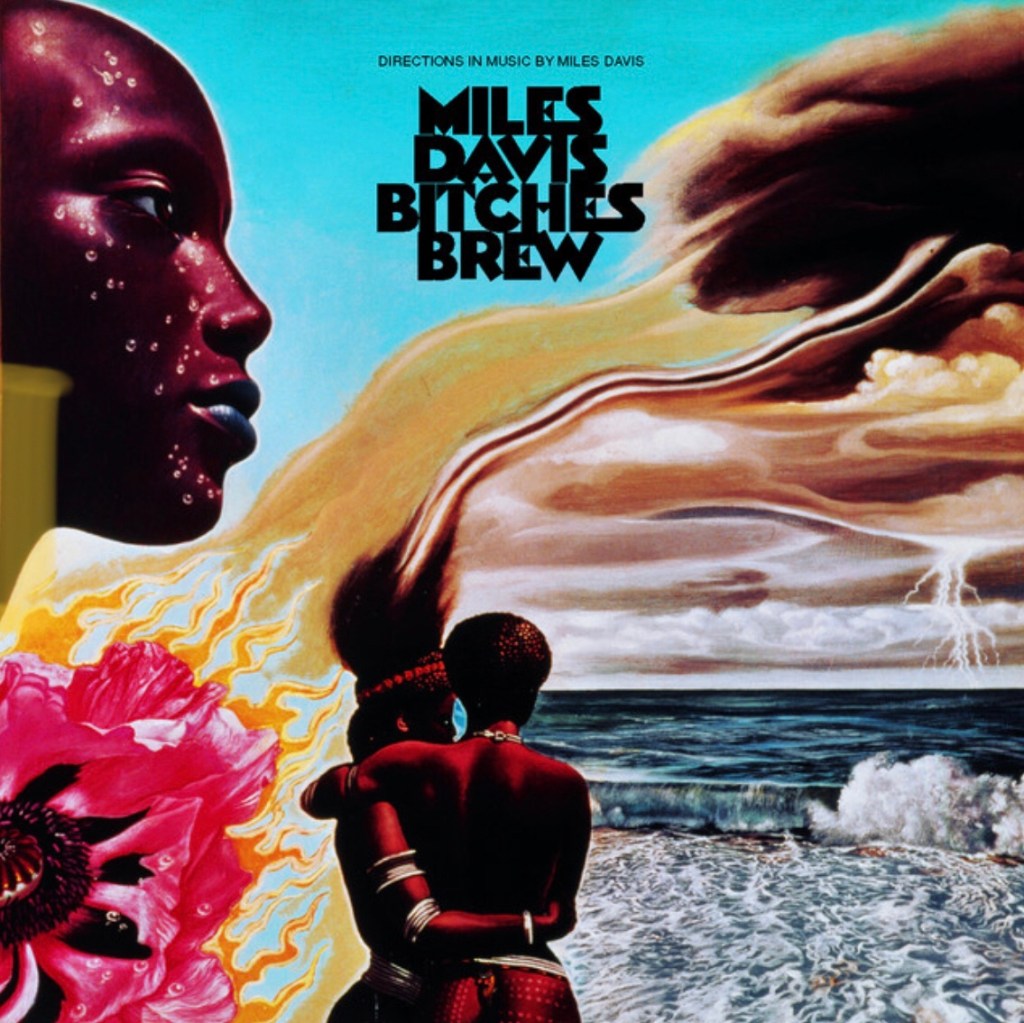
The album cover also has a story, about a tornado in a U.S town during the 1920s which was photographed and added to the Copyright free archives, which allowed the image to be used.

And the same photograph was used for Miles Davis’ album “Bitches Brew” in 1970.

And Siouxsie and the Banshees’ album “Tinderbox” in 1986.

MK3 Deep Purple is Ritchie Blackmore on Guitars, David Coverdale on Vocals (except “Holy Man”), Glenn Hughes on Bass and Vocals (except “Soldier of Fortune”), Jon Lord on Organ and Keys and Ian Paice on Drums.

Its Produced by Deep Purple and Martin Birch again.

Stormbringer

Another thunderous opener written by Blackmore and Coverdale.

If there wasn’t a Heavy Metal movement before, well there was one now. By 1974, each major rock act like Led Zeppelin, Free, Bad Company and Black Sabbath had a heavy song or two on each album that young blue collared youths would take and run with to create even heavier tracks.
I like the exotic flavouring in the solo. It’s not fast, but goddamn, it sounds progressive.

Love Don’t Mean A Thing

Written by Blackmore, Coverdale, Glenn Hughes, Jon Lord and Ian Paice.

This is the whole funk blues soul jam that Glenn Hughes brings. In saying that, the riffs here work so well within the Deep Purple sound.

Holy Man

The Bad Company/Free brand of hard rock had caught on and suddenly Deep Purple was doing a cut that wouldn’t be out of place on the first two Bad Company albums or Free albums.

If the intro sounds familiar, it should, as it’s a common progression used throughtout the 70s, but it went missing a bit in the 80s and came back in the 90s.

I recall Motley Crue using it for “Misunderstood”.

And Blackmore was not the main writer anymore as this song was written by Coverdale, Hughes and Lord.

Hold On

The funk blues rock in the verses grooves and the Chorus is like Soul Rock Music. Blackmore again is missing from the song writing credits, with Coverdale, Hughes, Lord and Paice listed as the writers.

Coverdale and Hughes share vocal duties here and Blackmore brings out his rockabilly Chuck Berry licks which gives way to a Jon Lord solo.

Lady Double Dealer

It’s that fast blues rock that Deep Purple was known for and something that David Coverdale would do a fair bit with the early versions of Whitesnake.

There is a cool Blackmore solo as well.

You Can’t Do It Right

Play that funky blues music white boys.

High Ball Shooter

I like the Intro as it always reminds me of another song which I can’t thing off right now.

The Gypsy

The riffs on this are metal like, but the way Blackmore delivers em, it’s almost progressive like, with a fusion of blues, southern rock and metal like grooves.

Soldier Of Fortune

A great acoustic ballad to end the album, something which David Coverdale would recreate with “Sailing Ships”.

The long jam sessions from the past had disappeared. Replaced with a more structured song arrangement. It’s a bridge between this album and their next album.

Blackmore obviously didn’t like this new direction and left after the tour. And he wasn’t one to keep his thoughts to himself, so he publicly declared his dislike for the funky direction the band was taking and made it clear that was the reason why he left.

But Scandinavian Melodic Rock and Metal was being born with the MK3 albums as they did big business in Sweden, Norway, Denmark and Finland. Austria and Germany also liked this era, along with the UK, France and the U.S.

Check it out.

Standard
A to Z of Making It, Classic Songs to Be Discovered, Derivative Works, Influenced, Music, My Stories, Unsung Heroes

Australian Method Series; Airbourne – Black Dog Barking

“Black Dog Barking” is album number three, released in May 2013 via Roadrunner Records.

By now, everyone knew that Airbourne sounds like AC/DC.

But on this album, they amped up the AC/DC sounds with a bit of 80s rock like Cinderella and the first two albums from Def Leppard along with some Euro Metal like Scorpions.

And those backing vocals.

The Personnel for the album is Joel O’Keeffe on Vocals and Lead Guitar, David Roads on Rhythm Guitar, Justin Street on ass and Ryan O’Keeffe on Drums.

Producer Brian Howes has worked on the slick productions with Nickelback and Puddle Of Mudd, but on this album he captures the energy of the band performing live.

Ready to Rock

The blast out of the gate with it. It’s loud, aggressive and it feels like a circle pit punch up in a pub.

Animalize

I think of Kiss and Paul Stanley singing this tune.

No One Fits Me (Better Than You)

A take on “Let Me Put My Love Into You”.

Back in the Game

This one is the best song, bringing that Acca Rock and Euro/80s Rock vibe. There are Whitesnake, Cinderella, AC/DC and Scorpions influences.

Firepower

This one reminds me of “Let It Go” from Def Leppard in the verses and I like it.

Live It Up

The whole Intro is Acca Dacca with that open string acting as a pedal point while a melodic riff is played on the other notes. Think of the Intro to “For Those About To Rock”.

Woman Like That

This could be on a Bon Jovi album or a Cinderella album and not be out of place.

Hungry

Another favorite, which borders on speed rock.

More WASP like and it has a cool Spanish like guitar lead,

Cradle to the Grave

Crank it and enjoy. While the verses are stock standard hard rock, the Chorus has some of that Euro arpeggios.

Black Dog Barking

It closes with the barking and aggressive title track.

Airbourne does what they’re good at, the same way that AC/DC does what they’re good at.

Its better produced and the songwriting is concise, as the album is done in under 38 minutes.

This is rock’n’roll, the way it should be. Loud, aggressive, dumb and no ballads.

And Joel O’Keeffe gets a lot of credit for his vocal chops, i also believe that his Lead Guitar playing should also get some notice.

Because the dude can play.

Crank it.

Standard
A to Z of Making It, Classic Songs to Be Discovered, Derivative Works, Influenced, Music, My Stories, Unsung Heroes

The Record Vault: Deep Purple – Burn

When a band loses members, no one really knows what would come next. Will the band break up or will they continue with new members?

When bands lose their lead singers, the uncertainty is even higher.

But when Deep Purple lost Ian Gillan and Roger Glover, Richie Blackmore stepped up even more to push the band forward. As far as Blackmore was concerned, he was the driving force behind the band and this grit and determination would lead him to find not one but two vocalists who would assist him in moving forward with the massive riffs he was coming up with.

“Burn” is the eighth studio album, released in February 1974, and the first to feature an unknown David Coverdale on vocals and Glenn Hughes, from Trapeze, on bass and vocals.

The album was recorded in Montreux, Switzerland, in November 1973, with the Rolling Stones Mobile Studio.

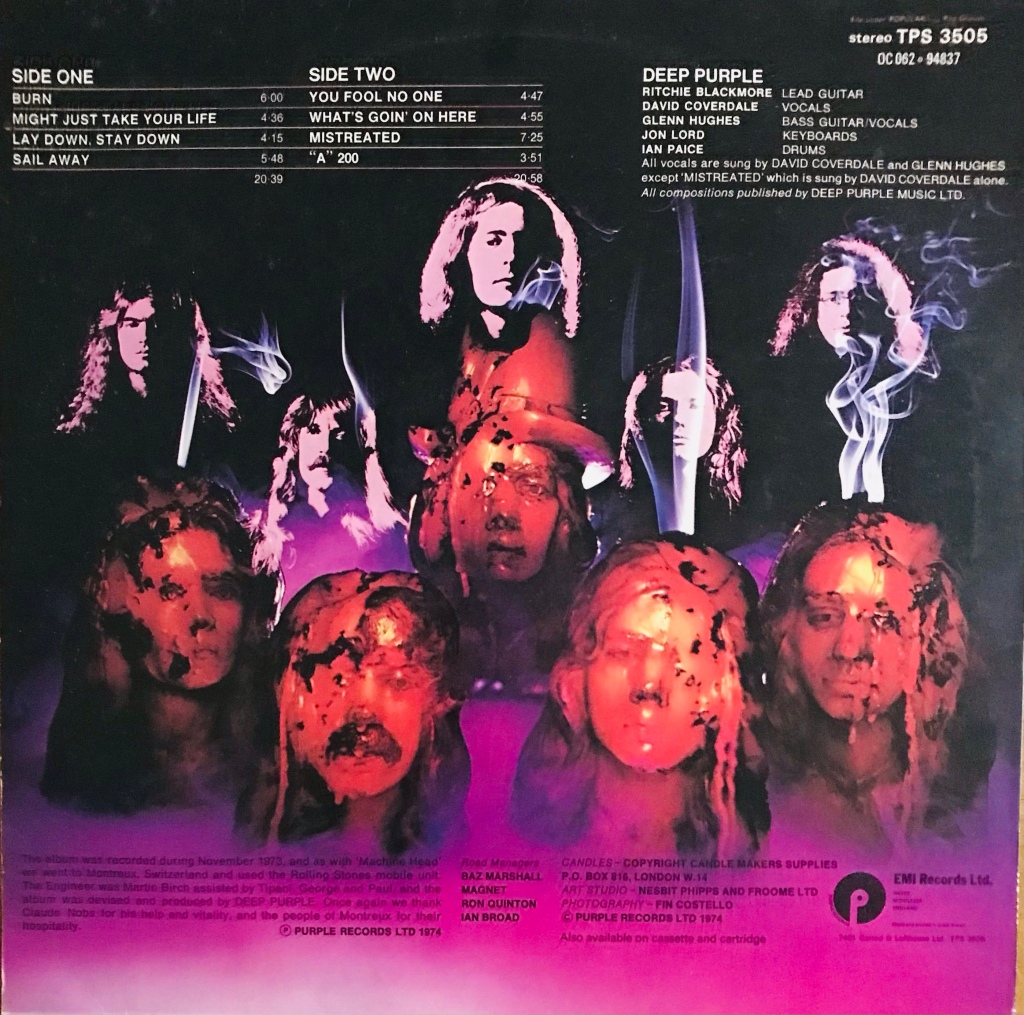
Deep Purple MK3 is Ritchie Blackmore on Guitars, David Coverdale on Vocals, Glenn Hughes on Bass and Vocals, Jon Lord on Keyboards and Ian Paice on Drums.

Production was still listed with the band as Producers and Mixers (but all they had to do was just say yes or no to the takes and mixes), with Martin Birch doing the bulk of the work capturing the sounds and actually mixing the album.

Burn

It owes some of its thought and structure to “Highway Star” as the DP guys wanted to have another high energy song to open the show and new album with.

It also has structured organ and guitar solos like “Highway Star”, around Bach like sequences which Lord and Blackmore worked out.

Coverdale mentioned in the “The Purple Album Track By Track”, that “Burn” was the first song that he started working on with Richie Blackmore, which he called sounded like “Symphonic Rock”. He also wrote four different lyrical versions for the song, with the Sci Fi version being selected by the guys in the band as the one to use.

David Coverdale loved the riff so much, that “Children Of The Night” from the 1987 self-titled album was the result. I would add that part of “You’re Gonna Break My Heart Again” also has some of the “Burn” feel.

And as good as all of the riffs and solos are, Ian Paice behind the kit, just brings the power and the pace. As soon as his drums come in, the foot is tapping and the head is moving.

It’s my favourite Deep Purple song which gets performed at Whitesnake or Glenn Hughes or Yngwie Malmsteen concerts instead of Deep Purple concerts because of the singers.

Might Just Take Your Life

The Jon Lord organ riff to start it off is from “Woman From Tokyo”.

Jon Lord was the primary writer for Deep Purple on the first couple of albums until Richie Blackmore had enough and started to become the primary songwriter from “In Rock”.

The melodies came from a relaxed jam session that Coverdale and Lord were having.

Overall it’s got that British blues rock feel.

But press play to hear Coverdale and Hughes harmonize in the Chorus.

Lay Down, Stay Down

It’s got that blues rock feel from the “Who Do We Think We Are” album and that sound and riff is something that Blackmore would come back to with his Rainbow project.

Ian Paice again showcases his drumming abilities.

Sail Away

Its got that “Superstition” and “Play That Funky Music” funk rock groove that Blackmore came up with.

Its sung by both Coverdale and Hughes however both could have done the song justice if only one of em just sang it.

This song and “Mistreated” sums up what Coverdale brought to the Purple sound on this album.

Press play to listen to the funky bass playing from Glen Hughes. Hughes was also a co-writer, but he wasn’t credited due to being tied to another recording contract at the time.

The 30th Anniversary release fixed that.

You Fool No One

Coverdale and Hughes doing dual harmonies.

Ian Paice also showing his love of John Bonham and coming up with a definitive drum groove which formed the basis of the track for Blackmore to build on.

The middle solo section is almost Jazz Rock fusion, progressive like.

Press play and just enjoy.

What’s Goin’ On Here

A fun blues song based around a Jimi Hendrix song called “Highway Chile”.

Mistreated

It’s listed as being written by Blackmore and Coverdale.

Coverdale (who calls himself a “Domestic Guitar Hero) wrote a riff on Blackmore’s White Strat, in the Crypts of a Castle they were rehearsing at and when Blackmore heard it, instead of playing the riff with the Coverdale chords, Blackmore played the single notes.

And “Mistreated” was born.

And that opening vocal “I’ve been mistreated” is iconic.

This version is my go to version but on the Purple album from Whitesnake, Reb Beach takes the solo spotlight and creates a fresh and emotive blues shred lead.

A’ 200

An instrumental.

Coronarias Redig

It’s a B-side and if no one had heard it in the 70s, it appeared on the “30th Anniversary Edition” as a bonus track.

It’s a blues Rock song but those Hammond Organ chords give it a soul gospel feel.

And press play to hear Blackmore’s leads.

In Australia, the M3 version of DP went to number 5 on the charts. In Austria, Denmark, Germany and Norway it went to number 1. In Canada, Holland, Finland, France, UK and US it was a Top 10 album.

In other words people liked it.

Standard
Classic Songs to Be Discovered, Derivative Works, Influenced, Music, My Stories, Unsung Heroes

1996 – Part 4.1: Black Crowes – Three Snakes And One Charm

The problems began with a project tentatively titled “Tall”. This project was being produced by Chris Robinson, which his brother Rich objected to. And as brothers do, they got into a huge fight.

The reason for the fight was that Chris wanted to strip back the sound of the Black Crowes. More horns and percussion and less guitars. But his bro, Rich is the guitarist.

In the end, Rich won the argument and the result of this project are the re-recorded songs that Rich Robinson predominantly wrote, which made up the “Amorica” album. This pissed Chris off as his songs were ignored.

So it’s no surprise that during the “Amorica or Bust” Tour of 1995, the relationships within The Black Crowes soured even further, and the Robinson brothers basically hated each other.

But they made it through somehow.

And the band began planning their fourth album in 1995. “Three Snakes and One Charm” was eventually released in July 1996. Recorded in a house that they shared together, the album captures a relaxed band, ready to plug in and jam with friends.

The Black Crowes for this album are Chris Robinson on Vocals, Rich Robinson on Guitar, Marc Ford on Guitar, Johnny Colt on Bass, Steve Gorman on Drums and Eddie Harsch on Keyboards.

The Dirty Dozen horn group appears, along with banjo players, pedal steel players and various backing vocalists. Basically some of the stuff that Chris Robinson wanted to implement earlier was being brought in.

Under A Mountain

I like the exotic Zep vibe on this.

Good Friday

I disliked this song when I first heard it and when I covered The Black Crowes in The Record Vault post a while ago, I ignored it, but goddamn, time passes, moods change and suddenly the Country Soul Rock vibe of the song is hooking me in.

Nebekanezer

If the title doesn’t capture me, I’ve already formed a bias against the song. And while the song has a sludgy Blues groove with a little bit of a Beatles influence in the vocals, there isn’t enough meat to satisfy.

One Mirror Too Many

The Yardbirds, The Rolling Stones and the psychedelic 60’s and 70’s are re-incarnated into this song.

Blackberry

Soul Rock was big around this time in Australia because of the movie “The Commitments” which came out in 1991.

Girl From A Pawnshop

It was my favourite track when I first heard the album and it still is today.

The whole country ballad rock vibe just connected with me and the vocal delivery from Chris Robinson is excellent.

Only Halfway To Everywhere

With the horns, guest vocalists and Chris Robinson bordering between BB King and Steven Tyler vocally, this song feels like a group of musos getting together and having a jam session, with a lot of booze flowing.

Bring On, Bring On

Like other songs on this album, it’s the Led Zep acoustic influence which shines through on this track that hooks me in.

How Much For Your Wings?

The reddest of lights shine on you, young man, let God be with you..

And the acoustic guitars start and there is something about the vocals when Chris Robinson sings, “how much for your wings?” that captures me.

Let Me Share The Ride

A blues groove, but the horns give it that soul rhythm and blues feel.

Better When You’re Not Alone

More acoustic guitars and then the band kicks in. And I feel like I’m driving on the open road out of my town, hopeful and excited.

Evil Eye

It’s too psychedelic for me.

And they went on tour for this album, which took em towards the end of 1997. After this, the band got together and recorded another album with the working title of “Band”.

Which was also scrapped.

Guitarist Marc Ford was fired and bassist Johnny Colt subsequently left the group, dissolving the Crowes’ line-up of the previous three albums.

The unreleased tracks from the “Tall” and “Band” sessions surfaced among tape trading circles and were later officially released on the 2006 compilation “The Lost Crowes”.

Standard
Classic Songs to Be Discovered, Derivative Works, Influenced, Music, My Stories

The Record Vault: Deep Purple – Who Do We Think We Are

The success of “Hush” in 1968 was more luck than anything. After that they struggled while Richie Blackmore kept evolving the band and the sound. Once the MKII version was in place, things started to change.

“In Rock” was released in 1970 and it definitely got people really interested. “Fireball” came quickly in 1971 and is often overlooked, but it kept the momentum going. “Machine Head” broke the band to a bigger audience in 1972 and in order to capture that success, the label released a live album called “Made In Japan” in December 1972.

Four albums in three years.

And then at the height of their fame, they dropped “Who Do We Think We Are” in 1973, their seventh studio album overall and fifth album in four years.

It would also be Deep Purple’s last album with singer Ian Gillan and bassist Roger Glover until 1984’s “Perfect Strangers”.

Fame is definitely a funny thing. You bust your ass to get there and then break up once you there.

Because of the touring, the album was recorded in two stages.

In July, 1972, they had some time in Rome to write and record new songs via the Rolling Stones Mobile Studio. The songs from these sessions that are known are “Woman From Tokyo” and an outtake known as “Painted Horse”.

In October, 1972, they had some time to do the same in Frankfurt, West Germany. This is where the remainder of the songs were completed.

Woman From Tokyo

It was the first track recorded in July, written about their life on the road and touring Japan for the first time. It’s also their best track from this album.

As soon as the drum groove started I was thinking of “Run To The Hills” from Maiden.

Mary Long

Ian Gillan combined the names of two people who represented things he hated in the prudish older generation of the time, which made him question how they even had sex.

How did you lose your virginity Mary Long?

It feels like a Lynyrd Skynyrd cut. But this is Deep Purple, the masters of speed, heavy and melodic rock, with a flourish of blues.

Super Trouper

It’s almost like early AOR blues rock, something that bands like Foreigner and Survivor would use on their earlier albums.

It’s short but it gets me interested.

Smooth Dancer

The comparison to “Speed King” was always going to happen.

And Jon Lord owns this track with his honky tonk piano and neo-classical Hammond organ solos.

Rat Bat Blue

I like the blues rock riff that starts this song off. A young Jake E Lee, would have been woodshedding this riff, ready to unleash it with Badlands.

Then the keyboard solo kicks in, over another groovy riff by Blackmore and suddenly power metal is born in Finland.

Place in Line

ZZ Top comes to mind here. It’s got that Texan strut, which is a bit different to the way the Brits did the blues.

Our Lady

It reminds me of The Beatles and I like it.

Actually it reminds me of the song “The Real Thing” from Russel Morris who was an Australian artist from the mid 60’s. The song was a hit in Australia and the U.S and it’s got that Beatles influence.

Painted Horse

This track was released on the Anniversary edition.

Blackmore would also use the riff from this for “Man On The Silver Mountain” with some minor tweaks.

Musically, it was a move to a more blues-based sound, and the album was criticized for its American sounding songs in the U.K, for “Super Trouper” and “Smooth Dancer”.

And when Gillan and Glover left, everyone thought the band was done. But not Richie Blackmore. He had other ideas and MK3 was about to be born.

This version would release two of my favorite albums would be released.

Standard