A to Z of Making It, Copyright, Music, My Stories, Stupidity

Four For Friday

Copyright and Spotify again.

SHARE PRICE

It’s cool how copyright makes money for valuable Intellectual Property. And you can’t get a bigger and more valuable IP than “The Beatles”.

The thing is, not one of the members from The Beatles held or even hold their rights. At one stage, Michael Jackson was the sole holder of the rights.

And with all the transfers and sell offs, The Beatles catalog settled at Round Hill Music Royalty Fund. But like all companies on the stock exchange, the share price just didn’t reflect the true value of the Company.

In this case, shares in the company were trading around $0.70. And share prices this low don’t make share holders and board members happy.

So in comes Alchemy Copyrights with a $496 million buyout offer which means shareholders in Round Hill Music will get $1.15 in cash per share. Suddenly, you have happy shareholders and board members, who get a nice payday for holding shares in culture.

They created nothing culturally and yet still benefit. But I keep hearing how stronger copyright is needed to protect the creators.

Mmmm.

SHARE PRICE 2

Hipgnosis Songs Fund is also selling some of its catalogues for $465 million. This is to pay down debt and increase its share price

And as expected, the share price increased,

Again, you have an organization that created nothing culturally and yet it still benefits. And I keep hearing how stronger copyright is needed to protect the creators.

COPYRIGHT FAMILY DISPUTE

Motown songwriter and producer Ron Miller died in 2007. If Copyright expired on the death of the creator like it once did, then this would be a non issue.

But, Copyright doesn’t expire at this point. It’s still valid for another 70 to 90 years, depending on the country.

Fast forward to 2022, Sony Music Publishing signs a deal with Lisa Miller, for rights to 130 of her fathers songs.

But Ron’s other children Julie Moss and Mark Miller from Ron’s first wife didn’t like this and are now going to court.

They allege that Lisa Miller tricked her mother, Aurora Miller (Ron’s second wife) to sign away her claim to the songs.

The claim further states;

“As Aurora’s health continued to decline, Lisa began forging Aurora’s signature on notices of copyright termination.”

And I keep hearing how stronger copyright is needed to protect the creators. In this case a dead creator.

SHOWCASE

Spotify’s new marketing tool.

Artists can buy dedicated space on listeners home pages to promote new releases, deep cuts, etc.

Each click from a fan on the showcase button will cost the artist 40 cents per click until their campaign budget is maxed.

Spotify believes that people who see these ads are six times more likely to stream the release.

It shits me how artists always have to cough up cash.

Back in the label days, if the label marketed you, they billed you to recoup their costs.

If an independent act marketed themselves, they paid for a marketing campaign themselves.

Standard
Copyright, Music, My Stories

Four For Friday

It’s all about Spotify today.

MONEY LAUNDERING

This time around Swedish criminal gangs are using Spotify launder money.

The scheme is interesting.

The drug money they have is converted to bitcoin.

Bitcoin is then used to pay “fake stream” entities to do exactly that, create fake streams on Spotify for an artist.

The artist in question is linked or involved with the gang.

By creating the fake streams, the artists would end up on top of the charts and as a byproduct, those fake streams would lead to real streams.

As the Guardian article explains:

Higher streams lead to higher payouts from Spotify. The newspaper said that in Sweden, amassing a million streams pays about 40,000 to 60,000 kronor (£2,800 to £4,300).

WHITE NOISE

Have you ever come across a Podcast that’s just white noise.

It’s definitely annoying and I don’t care what people say about it, it’s basically streaming spam.

The rule was if the podcast got over a 100 listens (it can be from the same user) they would qualify for ad supported payments.

Well now it’s 1000 unique listeners before they qualify. Hopefully they just filter out.

SONGS AND SPAM

In 2018, 20,000 songs would get uploaded to Spotify. In 2023, it’s at 120,000. A large majority of those uploads are via bots and they are basically the same as email spam

AI COVERS

AI-generated “covers” of popular songs using artists’ voices are still being released on Spotify.

Universal’s trying to partner with Google on a tool that lets fans create these songs without infringing copyright.

Universal has also partnered with Deezer to ensure that music created by breathing people gets a higher preference on the service than AI created music.

It’s a start, however AI is really making streaming economics even trickier.

Standard
Copyright, Music, My Stories, Treating Fans Like Shit

Four For Friday

A bit about this and a bit about that.

MOVIES/TV SHOWS

I watched “Oppenheimer”. I don’t recommend it.

Which is tough to say as I’m a fan of Christopher Nolan.

I’m surprised that Nolan thought it should be made into a movie, then again, creative people are inspired by things that others don’t see as inspiring. In this case it was a the 2005 biography “American Prometheus” by Kai Bird and Martin J. Sherwinx

The story focuses on Oppenheimer’s studies, his direction of the Manhattan Project during World War II, and his eventual fall from grace due to his 1954 security hearing.

Since the last hour was like a “Law and Order” episode, maybe a limited TV series would have been better. But a TV series doesn’t have the gross takings that a cinematic release has.

It’s approaching the $800 million mark from a $100 million budget. It will be seen as a success, but its not re-watchable.

I also finally got around to watching “Avatar: The Way Of Water” on Disney+.

I didn’t think a sequel was necessary however James Cameron has a habit of surprising people and he sure did it with this movie. It’s long run time didn’t feel that long and the story flowed.

By the end of it, I made a commitment to watch the third one in the Cinemas. And it hooked my kids as well.

“Painkiller” on Netflix is a must watch. OxyContin destroyed many families and the series does a good job of telling the story.

SHOWS MADE AND THEN CANCELLED OR REMOVED TO SAVE ON TAX

In May, Disney+ said it would cut US$1.5bn of content from its streaming platform, so the company’s value is reduced which means they pay a lot less tax.

This involves axing current programs which are or were popular like “Willow” and not releasing other big budget series’s like “Nautilus”.

Paramount+ also did the same removing “The Pink Ladies” and Jordan Peele’s “Twilight Zone”. Warner Bros also removed “Westworld” along with others.

Time will tell how subscribers will respond to the streamers removing shows when they need to save a bit of cash.

CEASE AND DESIST

There is a high chance that a fan of the artist will have a different political view to that of the artist.

And the artists are okay with this when they are taking the money from these fans because at that point in time they don’t know the political view of the fan.

Suddenly, a politician plays the music of an artist at a rally, there are fans of the artist in that rally and the artist then sends a cease and desist letter to the politician to stop.

How much say or veto rights can an artist really have in how their music is used?

NOTHING ELSE MATTERS

James Hetfield wasn’t sure he wanted to go there and explore themes of vulnerability. Bob Rock insisted that he explore this path of being vulnerable and urged Hetfield to take vocal lessons.

Well that song just surpassed a billion streams on Spotify.

Standard
Copyright, Music, My Stories, Stupidity

Four For Friday

Censorship, false strikes and political correctness makes up the post today.

FAT BOTTOMED GIRLS

The lyrics “fat bottomed” and “big fat fatty” and “Oh, won’t you take me home tonight” are deemed to be inappropriate for a Queen’s Greatest Hits package and songbook aimed at children.

What’s next.

A Motley Crue or AC/DC Children’s song book.

If people want to dumb down lyrics and make them politically correct they should let shows like “The Voice” do it.

DRAGONFORCE

It’s the Wild West when it comes to Content ID on YouTube. An unknown internet user claimed the song “Valley Of The Damned” from Dragonforce as their own and YouTube allowed em.

Because there are no human checks.

Since Dragonforce disagreed with the decision by Content ID, they filled in a form disputing the decision.

But this is where it gets stupid.

You would think that the dispute would go to someone (preferably a human) at YouTube.

However, the counter claim from Dragonforce is sent directly to the person who sent the false strike and who YouTube now believes owns the supposed copyright.

And it’s this person who has the final decision in the matter unless legal action is pursued.

If the person who sent the false strike denies Dragonforce’s claim, the Dragonforce channel receives a strike. If the channel receives three strikes, it is removed from the platform.

So Dragonforce went back and forth for a week over the false strike and finally some common sense prevailed.

CONTENT ID

Content ID was created by Google to appease the labels and various movie studios to take videos offline. It was then enhanced to give the labels and movie studios an option to monetize the uploads from other users.

The labels and studios keep complaining about Content ID but have done nothing to innovate an alternative.

Google now posts a transparency report on the Content ID system.

Rightsholders claimed more than 826 million videos on YouTube from July to December 2022. This is the highest figure since YouTube started reporting these figures and it led to $1.5B in revenue paid to the rights-holders.

All up, $9 billion in ‘claimed’ revenue was paid out to copyright holders since Content ID launched.

SCAMMERS

The downside is scammers. As this article from Torrentfreak states;

Two men set up a company to find and claim unmonetized music. Through a third-party partner with access to the Content ID system, the pair generated over $24 million in revenue from YouTube by falsely claiming ownership.

The abuse didn’t go unnoticed and the repercussions were severe.

In 2020, the U.S. Department of Justice indicted the duo and last week the first defendant was sentenced to more than five years in prison.

It’s unregulated and there will always be criminals. It’s a perfect match.

Standard
A to Z of Making It, Copyright, Music, My Stories, Stupidity, Treating Fans Like Shit

Four For Friday

It’s all about the money in music and the lawsuits which come about because of it.

THE GREAT 78 PROJECT

The “Great 78 Project” from the Internet Archive is digitizing 78-rpm records from the early 1900s until the 1950s.

78rpm records are some of the earliest musical recordings, and were produced from 1898 through the 1950s when they were replaced by 33 1/3rpm and 45rpm vinyl records.

The Archives asked people to donate their albums so that the cultural past survives for future generations to study and enjoy.

At the moment the collection is at 400,000 plus recordings. The majority of these 78s are forgotten and the 78rpm versions are not on streaming services.

Sounds great right. Preserve some cultural history from donated records and provide access to people to enjoy.

But the labels don’t get paid when this happens and suddenly don’t like it.

Universal, Sony and other labels (as part of the RIAA) are suing for copyright infringement.

The labels’ have used colorful phrases to describe the “78 Project”, as an “illegal record store”.

From the 400K plus songs, the labels named close to 3K sound-recording copyrights that the Archive allegedly infringed.

And they want $412 million for it because as far as the labels are concerned the music is available on streaming services.

The Great78 project, is not a substitute for music streaming services like Spotify or Apple Music.

When you listen to it, you hear that the music was digitized from the 78rpm record.

You get the crackle and the hiss of the record. It is a totally different version from the clean remastered versions you hear on music streaming services.

It’s ridiculous that it’s even an issue.

SIRIUS XM

SoundExchange, is responsible for collecting and distributing digital music royalties.

Sirius XM is responsible for playing music and paying digital royalties.

SoundExchange claims that Sirius XM is performing some creative accounting by inflating the revenue from its webcasts so it pays less in music royalties to the tune of $150 million.

Isn’t it funny how the labels and publishers go straight to litigation when someone else like Sirius XM does the exact same thing that they did to artists for 80 plus years.

Twitter/X

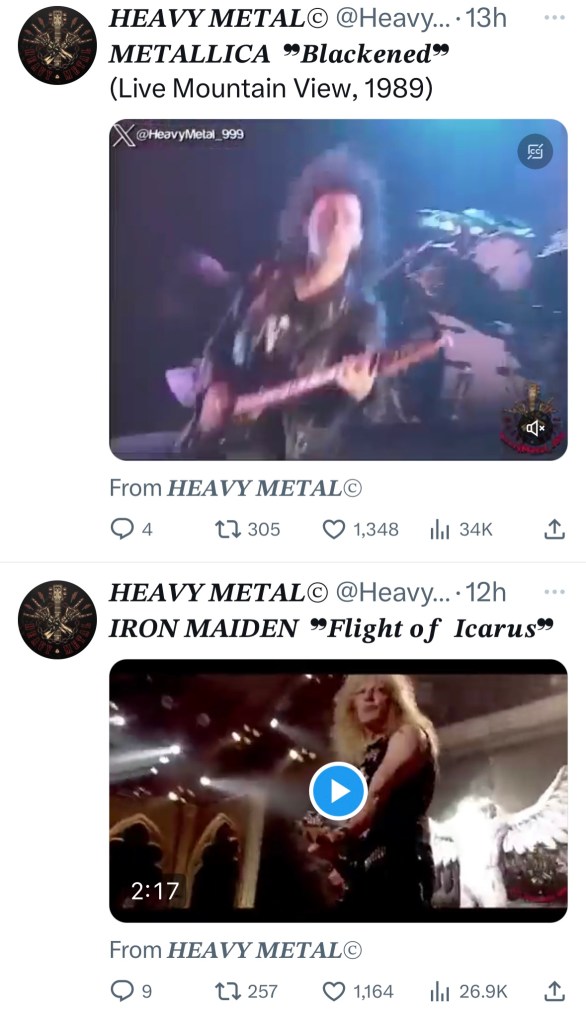
Twitter/X users put up snippets of live concerts, music videos, interviews and basically themselves jamming to their favorite music or playing the vinyl or CD of their favorite music.

Posts like these.

Two minute snippets of live performances that someone recorded which isn’t the user.

Or something like this.

Footage from a concert that the user attended and shared on the platform.

The users on other social media sites do the same thing.

But the RIAA, the labels lobbyist and litigation arm don’t like it.

They have accused X Corp of breeding mass copyright infringement because the company fails to respond to takedown notices and lacks a proper termination policy.

For this crime, the labels want $250 million from X Corp.

Elon Musk wants the case dismissed and his legal team have asked the courts to consider it as the labels have no hard proof of any wrong doing.

$3 MILLION PER HOUR

It’s the combined amount of how much the labels made in the first six months of 2023.

And they made that money because they have schemed, paid or legislated their way into owning the rights of a lot of music.

The music created by artists in bedrooms, parents basements, hotels, tour buses and at soundchecks, the labels now own.

And they will own these rights for the life of the artist plus 70 years after their death. In some jurisdictions, it’s 90 years after their death.

Final Note

The artists who create culture and value are never in the conversation. Even if the labels (and the RIAA) get all the monies paid to them, they will not share any of it with the artists.

And it is the artists who gave them this power to litigate, by signing away their rights in shitty contracts so they could have a recording career. And maybe a chance to make it big.

Standard
A to Z of Making It, Copyright, Music, My Stories, Treating Fans Like Shit

Four For Friday

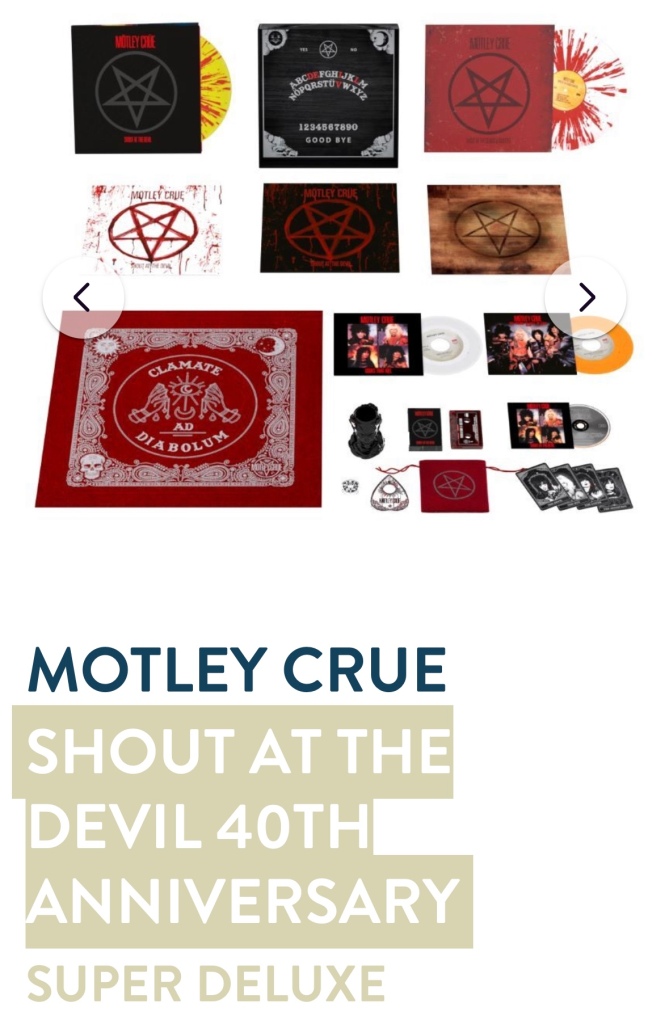
MOTLEY CRUE

How many times can they release the same album?

All the music here has been released before circa 2003 when the band remastered their albums on their own Motley Records label.

But let me highlight how many issues of the album they have done recently.

In 2022, they released a Limited Edition, Reissue, Black/Clear Split Vinyl edition. The music on this edition was just the normal album.

In 2018, they released a Limited Edition, Reissue, Remastered, Clear With Red Swirl Vinyl Edition. The music on this edition was just the normal album.

In 2016, they released a Limited Edition, Reissue, Remastered, Red With Black Swirl, 180g Vinyl edition. The music on this edition was just the normal album.

In 2011, they released a Limited Edition, Reissue, Remastered, Mini Vinyl Replica edition. The music on this edition was just the normal album.

Again in 2011, they also released a Reissue, 180g, Gatefold edition. And again, the music on this edition was just the normal album.

Between 2003 and 2023, they also released various CD versions of the album with wording like, HDCD, Club Edition, Limited Edition, Enhanced, Reissue, Remastered and SHM-CD (for Japanese Releases). Apart from the 2003 edition, it’s been the same album re-released.

But, it’s selling for $370AUD. It looks like a nice collectors piece and if you don’t have this album, you’ll be thinking “why not”, but at that price I would have expected something to be included that hasn’t been released as yet.

Take a cue from Mr Coverdale, who puts the effort in with his evolution compositions, different jams/rehearsals of the songs and live recordings.

STEVE JOBS

At 12 years old Jobs called Bill Hewlett (the co-founder of Hewlett-Packard) to ask for spare computer parts.

Jobs got the parts and a summer job working the assembly line at Hewlett-Packard.

Steve Jobs, believes asking is the single thing that “separates the people that do things from the people that just dream about them.”

METALLICA

Brian Slagel is putting together the Metal Massacre compilation album.

Slagel met Lars Ulrich a year ago at a Michael Schenker concert. Lars calls him up and asks him, “if he puts together a band can he be on the record?”

BON JOVI

It’s 1982 and Jon Bon Jovi has just finished writing and recording “Runaway”.

He shopped it around and couldn’t get a record deal. He couldn’t get a band together to play live because original bands didn’t make enough money.

Luck would have it that a brand-new radio station would open in New York. It was so new it didn’t have a receptionist so nobody was there to stop Jon from walking straight to the DJ and asking him to play “Runaway”.

The song quickly gained traction and Hobart entered Bon Jovi into a contest the radio station was running for the best unsigned band.

Jon won, he got his Mercury deal and by the summer of 1983, the song had become a huge hit.

It’s amazing what could happen from asking.

SONG ON REPEAT

“Crime Of The Century” by Revolution Saints.

That Chorus hook is undeniable. It’s from the new album “Eagle Flight” which has Joel Hoekstra and Jeff Pilson joining Deen Castronovo.

Check it out.

BONUS SONG I’M LISTENING TO

“Burn For Me” by The Night Flight Orchestra. It’s the Bowie “Modern Love” feel which hooks me in and then that feel gets put in the TNFO blender and what comes out is an infectious AOR Rock song.

And that Chorus hook. Wow.

Standard
A to Z of Making It, Copyright, Music, My Stories, Piracy, Stupidity

Four For Friday

RIAA POWERS

How much power is too much power?

Two years ago, the RIAA won a piracy lawsuit against two sites that offered YouTube-rippers. For those that don’t know, these sites allow the user to turn a YouTube video into an mp3.

After the verdict, the RIAA demanded $83 million in damages from the site owners.

And suddenly, there was an appeal.

As the TorrentFreak article explains;

“If the record companies can really get multi-million dollar judgments without having to prove a single instance of infringement within the United States, then no one who operates a website is safe,” Gurvits (Defense Lawyer) said at the time.

There has to be some onus on the RIAA to prove infringement.

And they can’t because they don’t know who infringed.

It’s easy to get a techie to run a report and say that the YouTube ripping sites were accessed by U.S IP addresses. But. It’s not easy to prove who is responsible when their evidence is made up of IP addresses.

But accessing the sites doesn’t constitute Copyright infringement. And the RIAA cannot prove what infringement took place or what videos from YouTube were turned into mp3s.

So why is the law allowing them to bring cases to trial without this proof.

JASON ALDEAN

The song “Try That In A Small Town” came out in May 2023 and it was out of the public conversation. It was a dud and no one cared enough to listen to it. His true fans did but no one else.

Then someone (Critic Zero) started the backlash against the song in the middle of July, 2023 and by doing so, they amplified the song by providing much needed free marketing.

The criticism then spread to other blogs and news outlets faster than Covid and as a by product the streams and downloads of the song kept going up. In the space of two weeks the songs Spotify numbers went from 1.5 million to 12.3 million.

To top off the controversy, Aldean and his team had to edit the music video because it contained footage which was copyrighted.

SPOTIFY INCREASE

The price of Premium Family is changing from A$18.99/month to A$20.99/month.

My favorite part is the reason Spotify gives for the increase, which is word for word to what Netflix gave a year ago;

We’re increasing the price of Premium Family so that we can continue to invest in and innovate on our product offerings and features, and bring you the best experience.

Really.

It’s nice to know that Spotify is using subscription money to pay people for podcasts that a lot of their customers don’t like.

BAND I’M SEEING

I’ve got tickets to watch “The Night Flight Orchestra” in Sydney next Friday. Readers of the blog will know that I am a fan. Each album has been reviewed glowingly.

In case you are interested.

You can read the debut album “Internal Affairs” (2012) review here.

“Skyline Whispers” (2015) is here.

“Amber Galactic” (2017) is here.

“Sometimes The World Ain’t Enough” (2018) is here.

“Aeromantic” (2020) is here.

“Aeromantic II” (2021) is here.

SONG IM LISTENING TO

“Crime Of The Century” by Revolution Saints. It’s a great piece of melodic rock and that Chorus just sticks around forever.

My review of the recent album is here.

Standard
A to Z of Making It, Classic Songs to Be Discovered, Copyright, Influenced, Music, My Stories

Four For Friday

It’s all about Copyright, that little piece of legislation meant to give creators a monopoly on their works, so they could create new works, however the creators now sell or license their rights to a corporation, who then seem to hold onto the rights forever and by doing so, the Corporations keep lobbying hard to change laws so copyright lasts forever.

THE VALUE IN COPYRIGHTS KEEPS GETTING BIGGER

It’s 2008 and the Global Finacial Crisis decimated assets across the world. In these wastelands, the Investment Houses turned to Copyrights to balance portfolios.

The arrival of streaming services took off the cloak and funny math on royalties by the labels. While artists complained about the pay per stream rate, one thing they couldn’t complain about was the amount of money paid to the organizations that held the rights.

15 years later, these portfolios keep making money for the Investment Houses as the majority of music consumers transitioned to streaming.

In 2022, Germany generated 1.656 Billion in streaming revenue. The total income for the country was 2.07 Billion so streaming equated to 80 percent of it.

Globally in 2022, streaming revenues reached 17.5 billion U.S. dollars. 70 percent of total recorded music revenue.

If you are not getting a cut of it, someone else definitely is.

COPYRIGHT AFTER DEATH

It’s been five years since Aretha Franklin died and her heirs are still fighting over who handles her Estate, which has her Royalties paid to.

The unusual trial will determine which of the two handwritten wills, including one found in couch cushions, will come in force.

The interesting part is how Aretha valued her earnings from Copyright, which she listed as $1. Meanwhile, the Estate earned $4 million in one year after her death.

SPOTIFY PAYMENTS TO SWEDISH ARTISTS

Since 2008, Sabaton has amassed 2.5 billion streams on Spotify. Check out the research.

It is estimated that Spotify has paid the rights holder of Sabaton’s catalogue between $9.6 million and $15.9 million during this time.

If Sabaton owned their Masters 100%, then they would have received between $7.6 and $12.6 million dollars from Spotify. It equates to $507K and $840K per year. There are five members in the band, so taking the lower amount, each member would get $100K each. This takes into account that they have no manager percentage, accountant percentage and so forth.

If they had a 50% Royalty agreement with their label, they would have received between $3.7 and $6.3 million dollars. It equates to $247K and $420K.

If they had a 20% Royalty agreement with their label, they would have received between $1.5 and $2.5 million dollars as the label would get the other 80%. It equates to $100K and $167K. Taking the lower value, each member would receive $20K for the year, which comes to $1,666 per month. This takes into account that they have no manager percentage, accountant percentage and so forth.

RE-RECORDINGS

The Law states that artists can get back their rights after so many years. But the labels are fighting each case tooth and nail.

So if the artists have the means, they are creating new masters and are making those new masters as canon. This in turn gives them control over their music and they can then license these recordings to TV Shows and Movies and Games on their own terms.

SONG I AM LISTENING TO

Chokehold from Sleep Token.

It came up on a Release Radar many months ago and I’ve been hooked ever since. Hooked enough to buy the Vinyl album when it came out a few weeks ago.

From the U.K, they combine Pop, R&B, World, New Age, Church, Classical, Folk and Djent like tech metal. And I’m a fan.

To show how much cross over appeal they have, you can watch Daughtry do a live acoustic cover of the song.

Metal music is always resilient to changes in genres however it’s also easily adaptable to other genres or it can be used as a fusion element.

And fusion is happening everywhere.

Taylor Sheridan is good at mashing unrelated and different story ideas into one cohesive story.
Yellowstone is a mash up of Classic Westerns, Medieval dramas with a lot of back story and political thrillers. Tulsa King is “The Godfather” in a Western setting.

And then I did some research on em, and they have a gimmick, wearing face covering like ninjas from an anime.

Check em out.

Standard
A to Z of Making It, Copyright, Music, My Stories, Stupidity

Fair Recognition

Work For Hire agreements are crap.

The term was never mentioned when it came to signing an artist to create content. It became a thing, when the corporations had to find a legal loophole to use against the creators trying to get their rights back, even though Copyright law states they can get their rights back after a certain period.

A work made for hire, is a piece of copyrightable work created by employees as part of their job or as part of a limited type of commissioned work for a flat fee. In the United States and certain other copyright jurisdictions, if a work is “made for hire,” the employer, not the employee, is considered the legal author. In other words, the creator of the work gives up all ownership and administration rights for a flat fee.

The earliest use of “Work For Hire” was in the arts industry like comic books and artists who designed album covers. Marvel is no stranger to these kind of cases. Stan Lee (creator of most things Marvel), Gary Friedrich (creator of Ghost Rider), Joe Simon (Captain America creator) and Jack Kirby (illustrator/artist on the Stan Lee projects) are a few names that had litigation cases brought against Marvel.

The Superman creators wrote an article hoping that the original Christopher Reeve movies bomb at the box office because they weren’t fairly compensated. The movies did the exact opposite.

Read this Billboard interview with Don Henley, who is very interested in artists rights. While I agree and also disagree with Henley’s views on a wide range of topics, one thing is certain; Henley cares. As a member of The Eagles, and after being a Copyright rookie, he schooled himself on what his entitlements are as a creator. Don Henley owns his post 1978 work as a member of The Eagles and as a solo artist. He knows that his pre-1978 works can be reclaimed from 2028 due to another sneaky Copyright addition for pre-78 works.

If you don’t want to click on the Billboard link, here is the question from Billboard and Henley’s answer.

QUESTION:

The first issue you were known for being active on was the effort by the labels to have recordings considered “works for hire” — which I think was the origin of the Recording Artists Coalition. How important was the coalition in stopping that? And you learn anything from it?

In 1999, the lobbying group for the major labels, the RIAA, buried a fundamental change to the Copyright Act in a completely unrelated bill, the Satellite Home Viewer Improvement Act of 1999.

Without input from the artists, they amended the definition of ‘work for hire’ in the Copyright Act to include ‘sound recordings.’

The consequence of this amendment would have been devastating for recording artists. It would have effectively eliminated artists’ ability to regain ownership of their sound recordings in the United States.

The ability of the RIAA to pass a bill which amended the Copyright Act without opposition from the creative community was a direct result of the labels being organized and the artists not having a coalition to represent their voices.

So, a group of artists and artist representatives mobilized and formed the Recording Artists Coalition (RAC). Thanks to the many artists who spoke up, and the support of Congressman Howard Berman, sound recordings were stricken from the definition of ‘work for hire’ in the Work Made for Hire and Copyright Corrections Act of 2000. The only reason that recording artists can now regain control of their copyrights from the labels in the U.S. as Congress intended is because the RAC organized and artists spoke up.

I am all for the creators getting proper compensation for their works. There is no way that a corporation told a creator what to create.

Can you imagine the absurdity of it all?

A Publishing House is going to tell Steven King or George Martin or Paulo Coelho what to write. Yeah, right.

Or a Music company is going to tell an artists what kind of song to create.

Those same music companies including Capital Records, Warner Bros. and Sony Music have been falsely registering songs as “made for hire” in order to send takedown notices to the various ISP’s and YouTube.

I’m sure that’s gonna work out well in the long run especially when the artists don’t know that the label is doing that.

Then again, it doesn’t always work out well. This is just one of many.

The cover to Aqualung from Jethro Tull was created by Burton Silverman. The artwork was commissioned and purchased by Chrysalis Records head Terry Ellis in 1971.

Silverman was paid a flat fee of $1,500 for the painting and there was no written contract.

The artist says the art was only licensed for use as an album cover, and not for merchandising; he approached the band seeking remuneration for the additional uses, such as printing it on T-shirts and coffee mugs.

And he got told to piss off.

Standard
A to Z of Making It, Classic Songs to Be Discovered, Copyright, Influenced, Music, My Stories, Unsung Heroes

The Week (Last Few Months Actually) In Destroyer Of Harmony History –November 1 to November 30

I am trying to catch up on these posts, so I can do them weekly. So here is another review of November posts from 2018 and 2014.

2018 (4 Years Ago)

I have a Google Alert set up for Copyright and everyday there are ten or more stories on Copyright issues, ranging from Ed Sheeran settling with artists over a copyright suit, artists trying to reclaim their rights back from the labels, to artists selling their rights in songs to corporations for a fee, to Led Zep asking a judge to throw away the Stairway appeal, to local restaurants playing music and asked to pay for a Copyright licence, to parents breaking the Copyright law when they film their kids dance to music and uploading without paying someone, to ISPs being asked to block or censor websites, to Google being told to remove search links to certain sites, to people being charged with piracy and to whatever else the Copyright Industry wants.

If the above doesn’t tell you who copyright benefits, then reread it again.

And The Copyright Ballad Of John Fogerty highlights all of the above and more. He had to buy back a majority stake of the songs he wrote. Think about that for a second. A CEO in an office just made multi-millions for doing sweet f.a. while the person who made him rich had to make him even richer so he could get a majority stake.

I was doing a simultaneously review of 1979 (two posts for that year) and 1984 (one post for that year in the month)

Man, 1979 had a lot of good releases. For the record, most of these albums I heard in the 80s and some in the 90’s.

Kansas released “Monolith”. It’s a fantastic album, but largely forgotten in the streaming era, as the hits from other albums do the rounds on streaming playlists. Styx released “Cornerstone” and my favourite tracks were not the hits. Instead I gravitated to “Love In The Midnight”, “Eddie”, “Borrowed Time” and “Lights”.

Van Halen followed up the debut album pretty quickly with “II” and they danced the night away to multi-platinum. But my favourite track was always “Somebody Get Me A Doctor”.

Graham Bonnet fronted Rainbow founded a whole new melodic metal movement with “Down To Earth”. Which would continue with Joe Lynn Turner on vocals.

Cheap Trick showed how a studio recorded live album can do better than an actual studio album with “At Budokan”. So did UFO with “Strangers In The Night”.

Foreigner started to play “Head Games” with us. Are they a blues rock band, a hard rock band or a pop band or somewhere in between. Meanwhile Supertramp released their best album in “Breakfast In America” and it was their sixth album.

ELO released “Discovery” but the only track worth paying attention to was “Don’t Bring Me Down”. Same deal with The Knack. While the album had a cool pop rock vibe, “My Sharona” stole the show.

The Angels released “No Exit” an album that fused punk with pub rock and blues. And Australian audiences loved it. Little River Band released “First Under The Wire” and how good is “Lonesome Loser” on it.

For 1984, the post I did was titled 1984 – III – Are We Evil Or Divine?

“The Last In Line” is my favourite Dio album period. Plus it was my first purchase of Dio’s solo career. The guitar work of Vivian Campbell was and still is very influential to me.

Kiss was continuing their evolution without the pain with “Animalize”. The opener “I’ve Had Enough (Into The Fire) doesn’t get enough love and attention. But it should.

U2 released “The Unforgettable Fire” and sent the charts, music television and radio scrambling to add “Pride (In The Name Of Love) to their rotations.

Queen released “The Works” and Tina Turner gave the melodic rock movement a kick in the butt with “Private Dancer” as songs like “What’s Love Got To Do With It”, “We Don’t Need Another Hero” and “Its Only Love” could cross genres.

And the might Deep Purple reformed and made a massive statement with “Perfect Strangers”.

In some alternate universe I went and watched Mike Portnoy’s Shattered Fortress on Friday 24 November 2017 in Sydney. But in reality I didn’t. What kind of magic was used to make me forget that the concert was on I will now. It wasn’t until a year later when I was cleaning out my laptop bag that I saw the ticket. Not one but two tickets.

Does anyone remember Compressorhead?

It is a Robot band made from recycled parts. They do a pretty mean cover of “Ace Of Spades” cover.

It’s been said that this robot “band” plays real electric and acoustic instruments but in the end, this project was just some great code writing and midi sequencing.

I was spinning George Lynch a fair bit during this period. The songs “Wicked Sensation” and “All I Want” got separate posts.

Since Ronnie James Dio’s death, a few bands popped up from ex-members that pay homage to his style of song writing.

There was “Dream Child” with Craig Goldy on guitars, Rudy Sarzo on bass, Simon Wright on drums, Wayne Findlay on keys and singer Diego Valdez. You also have other Goldy projects in “Dio Disciples” and “Resurrection Kings”.

And then there was “Last In Line” with Vinny Appice on drums, Vivian Campbell on guitar, Andrew Freeman on vocals and Phil Soussan taking over on bass after the passing of Jimmy Bain.

Of course, any retro sounding metal/rock band has Frontiers Music president, Serafino Perugino as the protagonist to get the ball rolling. Only “Dio Disciples”, who have a deal with BMG for an album of original material are not on Frontiers Music.

But the real secret sauce behind all of these Frontiers Music projects is songwriter and producer Alessandro Delvecchio. A very underrated songwriter. If you listened to “Revolution Saints”, well Delvecchio is all over those albums. If you listen to “Resurrection Kings”, he’s also involved with that. The same for “Dream Child”.

And although I liked the album, I wasn’t a fan yet, but I was interested to hear what could come next. And 5 years later, no new product has arrived.

A System That Rewards Attention

If you create a system that rewards attention, the easiest way to get attention is to be a bad actor. That underlies our media ecosystem, that underlies our political system and it’s degrading society in so many ways.

EV WILLIAMS – Creator Of Blogger, Twitter and Medium

Did anyone read the story about “Threatin”.

They are an LA band, created by Jered Threatin. He then created a record company web page that was bullshit, he created a booking agency web page that was also bullshit, he doctored live footage to make it look like he was popular on YouTube which was bullshit and he created a management company website which was of course bullshit as well. He also paid for Facebook likes and comments and YouTube views and many more wonderful things to do with scorched earth marketing.

And through it all, he convinced stupid greedy venue owners in Europe to book him. And he didn’t even have a fanbase. He even convinced these club owners the shows were sold out. If they just did some due diligence and checked out Threatin’s Spotify account, they would have seen the stream numbers don’t match the spin coming from his “management” and they could have asked some hard questions. But they didn’t, they got had and they got pissed.

If Threatin did pull it off and sell out the gigs based on the made up hype, maybe there would be a different discussion, but hey, people fail more than they succeed.

The Purchase Dilemma

Remember the time when you would go through the LP racks (afterwards it would be CD’s) and pull out the LPs you wanted to buy.

Each week I wanted to buy a lot of music but had enough money to buy two.

You can read the rest here, about how album covers, song titles, record labels and producers played a part in deciding what to buy.

And here is a bit of history on when I used to take guitar lessons.

I bugged my Dad to buy me a guitar so he got me a classical guitar with the hope I could learn to play classical songs. He paid $15 for a 30 minute lesson with a man called Niccolini, who instead taught me how to play metal and rock songs because I asked him to.

I used to tell Niccolini which songs I would want to learn, he would then go away and learn those songs and then at the next lesson he would show me. While learning songs from other artists was cool, I also took the lessons, to get the techniques right. I’m big on foundations. If the foundations are not right, everything else that comes after is not right either.

And I would fool my Dad by playing metal and hard rock songs in a classical way. Like anything from Randy Rhoads or Yngwie Malmsteen.

And my record collection was a source of pride. I played them through and through. They are part of my DNA. I used to have the collection under lock and key, in an alarmed room because once upon a time, if someone broke in, they would steal part of the collection. I couldn’t have that happen.

Today, they’ll walk straight past it and go for the tech.

Music is part of my life. It will always be.

2014 (8 Years Ago)

Back in 2014, my posts really focussed on the music business as a whole, using metal and rock artists to illustrate the points I was trying to make.

It seemed like everyone was complaining about being paid. Except the labels.

And if the money was not filtering down to the artist, whose fault is that?

Then again, no one is guaranteed to be paid. People don’t want to accumulate shiny plastic discs or vinyl records while others do. So the price point for music fans of music is very different and this translates to how artists get paid.

Just because the user streams the music for free, it doesn’t mean that Spotify is not paying the rights holder. Accounting is the bedrock of the techies, however for the labels it is a different story.

And if you wanted to know how “breakage” is pure profit for the label, then read this post.

But artists seemed to be missing the point. They still focused on the old models and were failing to see new ways. IN THE END, regardless of what the artist does, it is the LISTENERS/FANS that decide if the artist makes it or doesn’t. The power is in the listener hands. And those relationships start like all relationships with a simple hello. So connect.

That connection could be with B-sides and rare tracks. In 2014 this was a rare thing, but I can say that by 2020, a lot or artists started to raid their vaults as they realised there was value there.

Then again, Minecraft was free to download and play. With the free version, you couldn’t save your progress but for a one of fee of $6.99, you could download the full version and have all the features. There are lessons here for the music business and artists.

Look at any band that is successful and you will see a band member with an entrepreneurial spirit. Some do it out of necessity.

Jay Jay French went and formed his own independent label to release the early singles from Twisted Sister when they couldn’t get a record deal.

Joan Jett had 23 labels pass on releasing her first solo album. Out of a need to get her music out, she founded Blackheart Records with producer Kenny Laguna. This was 34 years ago. By 2014, her label is now a force to be reckoned with, via its music, clothing and film divisions.

Then again, getting a record deal could be a blessing or a curse.

Because everyone is trying to twist the narrative to their own advantage. The labels for themselves. The techies for themselves. The artists for themselves. The publishers for themselves.

I’m a fan of Black Veil Brides and their Bob Rock produced self-titled album was getting a lot of spins. If you haven’t heard it, press play on it right now. Sonically it is one of the best hard rock and old school metal releases in 2014.

Anyone read “Stephen Pearcy: Ratt and Roll”. If you haven’t, don’t. I don’t recommend it. The disintegration of Ratt and the tough times of the Nineties are glossed over. The way the songs came together, and the influences behind them is not even mentioned.

Anyway it got me thinking about the Eighties so I wrote a post that sort of makes sense about learning a lot from history.

And somewhere along the way, everyone forgot how music thrives. By sharing it with others. Go any social media site and people are sharing their lives. Go to any blog site and you will see people sharing photos, writings, music, opinions, stories, etc. And all the things that we share are all free.

How we communicate has changed significantly and how to succeed as an artist has also changed significantly. Artists need to be agile and be ready to try different ways of promoting and connecting.

If you remember, in the October 2014 review, I reviewed the careers of Adrian Vandenberg and John Sykes up until 2014. This month, Digital Summer, Evergrey and Vivian Campbell got the same treatment.

And I was cranking “Bloodstone And Diamonds” from Machine Head a lot. You can read my review here.

Then again, every act has an arc. Like the Bell Curve. Sometimes they have multiple Bell Curves.

Because the new world is hard. Attention spans are lower and what is hot today is gone tomorrow. That album you spent making for 12 months is dead after 4 weeks.

We are living in a world that is besieged by economic problems. We are living in a world that has democratic governments undertaking surveillance on their citizens like the totalitarian regimes that our grandfathers died fighting against. We are living in a world where the majority of politicians are on the payroll of the corporations. We are living in a world that has a digital divide to go along with a class divide. We are living in a world where privacy is eroded a little bit at a time.

Some of my favourite artists had songs that just spoke to me.

“What do you mean I don’t support your system, why do you think I’m broke”.

Dave Mustaine wrote that back in the mid-Eighties. Fast forward almost thirty years, and we are still broke supporting the system. The rich and the powerful caused a global recession and guess what, they got bailed out by the governments while we lost our jobs and homes. Inequality exists in music as it does in economics. You’re either a winner or a loser and if you cross over, you become a global phenomenon. Think Metallica. There crossover was the “Black” album. That is their victory lap album.

“But now the holy dollar rules everybody’s lives, gotta make a million, doesn’t matter who dies.”

The above line is from “Revolution Calling” from Queensryche. Spotify cares about Spotify and they want to make millions. Taylor Swift cares about Taylor Swift and she wants to make millions.

“Words are the bullets to this revolution”

Robb Flynn spits out the line in “Clenching the Fists of Dissent”.

We live in an information age. Everything is at our fingertips so we should put those tools to use to do our own investigations because our media reporting outlets are all owned by large corporations. They report news items that will push their agenda. They report news items that have been paid for by a marketing PR firm. Impartiality is over. Never have we been so divided but connected we are.

The problems of today existed before. However, it is the people of today that had to bail out the rich. If the POOR or the WORKING CLASS did something fraudulent and corrupt, they would be doing time in a cell. When the RICH do something fraudulent and corrupt they end up screaming to the Government for a bail out and escape without punishment.

“We’re Not Gonna Take It” was the catch cry once upon a time. It is time it becomes a catch cry of a new generation.

Standard