Classic Songs to Be Discovered, Influenced, Music

Scorn – Machine Head

Dom Lawson, in Metal Hammer, called it “ostensibly a dark, crestfallen ballad” that builds through synth-drenched haze and emotional swells before erupting in a syncopated, spine-tingling finale.

He’s not wrong.

In fact, “Scorn” might be the most hauntingly beautiful track Robb Flynn has ever penned.

Machine Head is no stranger to monumental album closers, think “The Burning Red,” “Descend the Shades of Night,” “A Farewell to Arms,” “Who We Are,” or “Arrows in Words from the Sky.”

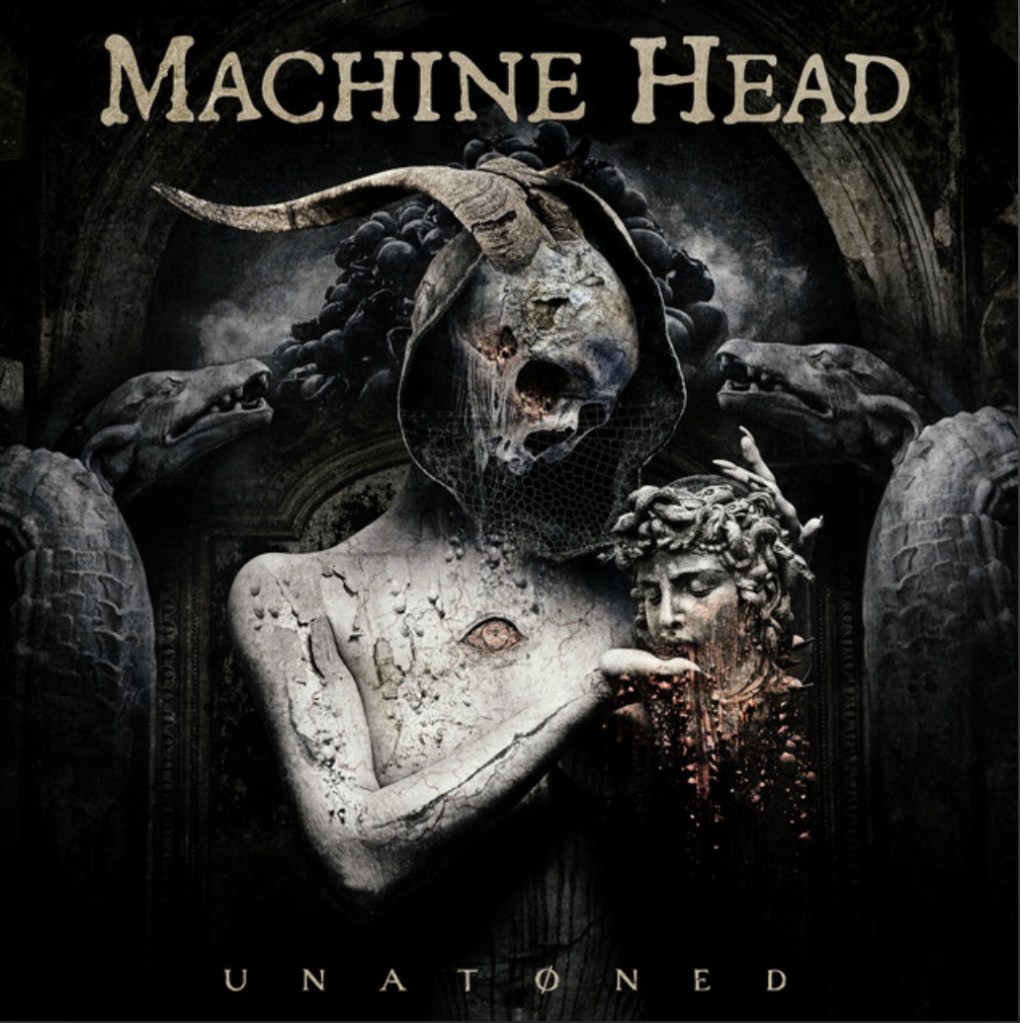
Now, add “Scorn” to that list, lifted from their new record “Unatoned” a fitting name for what feels like both an indictment and a lament.

The opening verse says it all:

“I’m putting you under my spell / ‘Cause I’ve got a Bible to sell
Let go your convictions, restrictions will cost you / Your fiction and all that is well
Distrust all the fable they sell…”

This isn’t subtle. It’s manipulation disguised as salvation. The “Bible to sell” is a loaded metaphor, suggesting the commodification of belief, the weaponization of faith. Convictions and moral boundaries are liabilities here, illusions sold to the weak, while the puppeteers profit.

“I look to the sky / As it won’t be the first / And it won’t be the worst
‘Cause there’s still yet to come / With a nation undone by their Scorn”

Hope?

Maybe.

But not without cynicism. The sky becomes a metaphorical void, once a symbol of transcendence, now indifferent or complicit. The “nation undone” is a clear nod to societal collapse, a warning about the corrosion eating away at public trust, autonomy, and truth.

The chorus drives the point home with venom:

“Scorn / Paranoia seeps through every pore
Scorn / Envenomated eyes emit their scorn”

Yes, “envenomated.”

A rare, brutal word choice. It means poisoned. But more than that, it implies a kind of psychological venom, gazes that don’t just judge but infect. Surveillance becomes psychotropic. The “eyes” don’t just watch; they erode.

“The eye in the sky never rests
Watching to form our arrest
They’re chasing us out of our nests
Keeping tabs as they play us like masters of chess…”

There’s Orwell here, but also something more, this is modern paranoia woven through algorithmic control, deep-state tactics, and manufactured chaos. The image of being driven from nests evokes exile from comfort, from truth, from home.

“I look to the sky / As they give us new rifles / To stifle our words
With a Bible and bulletproof vests / As we suffer their Scorn…”

Weaponized religion. Militarized faith. Truth gets smothered in the name of protection. Resistance becomes treason. Free thought becomes a target.

Thematically, “Scorn” stands shoulder-to-shoulder with:

– Rage Against the Machine’s political fire
– Pink Floyd’s “The Wall” and its suffocating institutional critique
– Dylan’s “Highway 61 Revisited”, where biblical imagery twists through cultural critique
– Metallica’s “…And Justice for All”, where justice is just another rigged game

But “Scorn” isn’t derivative, it’s a culmination. It distills our present-day fears: media manipulation, mass surveillance, the erosion of belief systems, and a creeping spiritual void. It’s a bitter elegy dressed as an anthem.

You don’t just listen to “Scorn”. You endure it, absorb it, and then see the world a little more clearly and perhaps a little more grimly.

Standard
A to Z of Making It, Influenced, Music

Joel Hoekstra on The Jay Jay French Connection Podcast (Sept 19, 2023)

Steve Lukather has nothing but the highest praise for Hoekstra, and it’s easy to see why.

Born in Iowa City, Joel moved to Chicago as a kid, then later spent time in L.A., working at Cherokee Studios in 1991 and 1992. By that time, legendary producers Tom Werman and Geoff Workman had already moved on, but their legacy lingered.

Hoekstra studied at the Musicians Institute (GIT) in L.A., though he had a head start, his local teacher had already introduced him to the curriculum before he even arrived. On day one, he found himself among 500 other guitarists in the main hall, an intimidating experience.

Growing up with classically trained parents, he learned to read music early on, though he admits it’s only occasionally useful in his current work. It did, however, come in handy when he landed “Rock of Ages” and other theater gigs.

Unlike many of his peers, the ’80s shred scene didn’t have a huge impact on him, he was too young for it to be a major influence.

He did, however, run in circles with some serious musicians, including drummer Scott Coogan, guitarist Pete Thorn (well-known for gear demos), and Joy Basou (who found success in pop music, working with artists like Jessica Simpson and Nick Lachey).

When asked about his guitar heroes, Hoekstra named Steve Morse (High Tension Wires), Steve Vai (Passion and Warfare), and Joe Satriani (Flying in a Blue Dream, Surfing With the Alien).

While Eric Clapton wasn’t a big influence, he admired Jimmy Page for his rhythmic licks, Jeff Beck for, well, everything, and Jimi Hendrix for his showmanship. He also loved everything “Rush” did, as well as Trevor Rabin’s “Yes” era, he still follows Rabin’s work, including his latest album “Rio”.

Jay Jay French mentioned for his generation, Johnny Winter and Alvin Lee were the Yngwie Malmsteens of their time.

Over the years, Hoekstra transitioned from playing Floyd Rose-equipped Jacksons and Kramers to a Fender Telecaster, then a Gibson SG, before settling on a Gibson Les Paul in 2004. He admitted that while playing a Les Paul means sacrificing about 10% of your technique, each note is worth it. Initially, he avoided Les Pauls because he’d heard they had tuning issues.

As a solo artist, Hoekstra has released three instrumental albums covering various styles. However, when he shifted into hard rock and heavy metal, fans wanted more of that sound.

Instead of branding it as a solo project, he launched “Joel Hoekstra’s 13”, where he writes all the music and lyrics while bringing in powerhouse rock musicians to jam with him. At the time of the interview he was onto his third release with “JH13”, along with “Eagle Flight” from Revolution Saints.

Speaking of collaborations, Hoekstra has another project called “Iconic”, featuring Michael Sweet (guitar), Marco Mendoza (bass), Tommy Aldridge (drums), and Nathan James (vocals). At the time of the interview, new releases from Iconic and Revolution Saints are on the way.

Since then, Revolution Saints dropped “Against The Winds” in 2024 however Iconic hasn’t been released yet.

As for Whitesnake, the future remains uncertain. Everything depends on David Coverdale, with the band currently in a holding pattern. Their European tour had a few canceled dates, and the U.S. tour was ultimately called off due to Coverdale’s sinus infection.

If you like to hear a good story, check out Joel Hoekstra.

Standard