Classic Songs to Be Discovered, Derivative Works, Influenced, Music, My Stories, Unsung Heroes

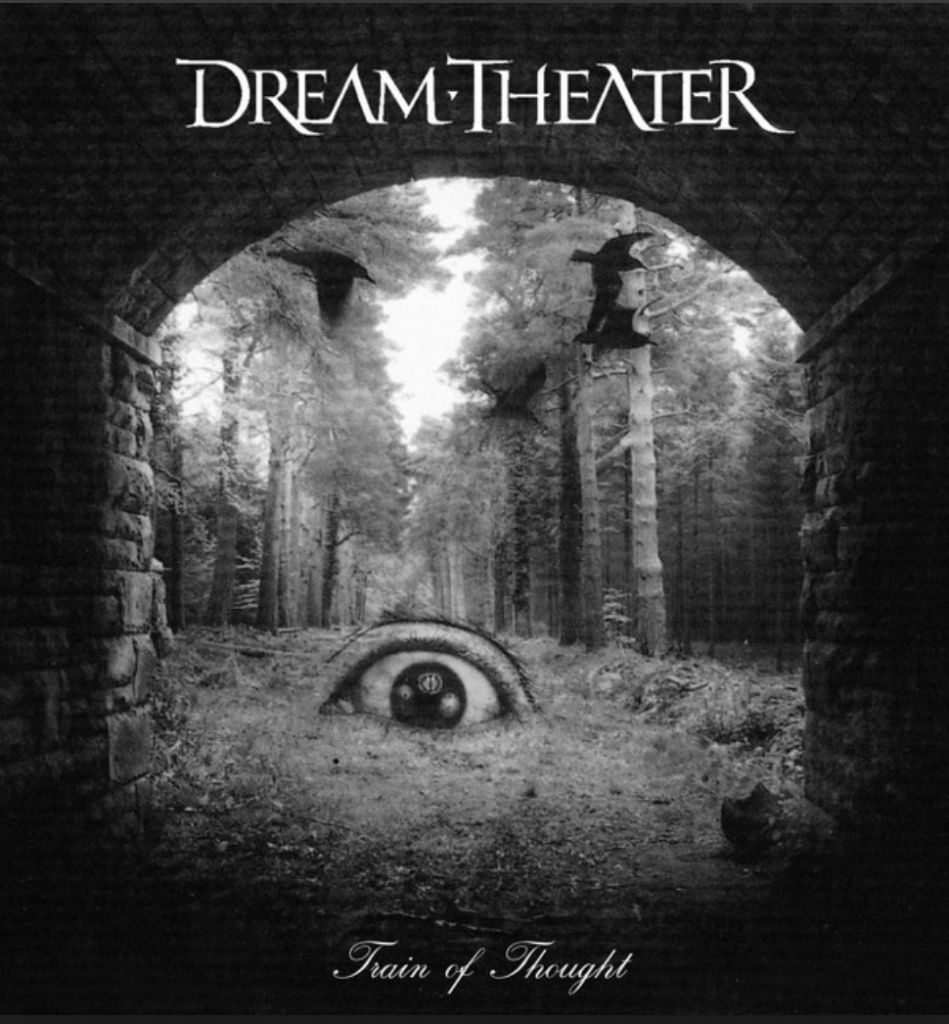
The Record Vault: Dream Theater – Train Of Thought

Each Dream Theater album had touched on the sounds that I would class as Thrash Metal and Heavy Metal. But on “Train Of Thought” they decided to live in this metal/thrash world. And I liked it.

It begins with an album cover that has Black as its main colour screaming Metal. Then again, Pink Floyd did have a black cover for an album that sold multi millions and it had nothing to do with metal, more like dreamy acid rock.

“Train of Thought” was released on November 11, 2003 through Elektra Records before its parent company Warner Music Group decided to merge Elektra Records with Atlantic Records to become Atlantic Records Group in 2004, only to give the Elektra name a new lease of life in 2009 as an independent entity up until 2018, when WMG relaunched Elektra Music as a stand-alone, staffed music company, with labels like Roadrunner Records, Low Country Sound, Fuelled By Ramen and Black Cement under it.

As I Am

This song is a balls to the wall metal classic.

It starts off with the Black Sabbath riff to kick it off. Yes, it is that Black Sabbath riff.

Then it goes into an “Enter Sandman” like groove for the verses. It gets the foot tapping, and the head banging.

Dream Theater toured with Queensryche in 2003. At this point in time, Queensryche’s commercial zenith was in the past and Dream Theater’s star was still rising. Mike Stone was the guitarist in Queensryche, carrying out the Chris DeGarmo role. And Stone decided he should give John Petrucci tips on playing guitar.

Every time you hear the lyric line “Don’t tell me what’s in, tell me how to write”, just think of Mike Stone giving Petrucci tips.

I like the lead break. It is old school and it burns. There is no rhythm guitar track, just bass, keys and drums. Exactly what EVH did when he soloed on a lot of VH tracks.

Vocally, LaBrie is at his metal best. His voice might strain in the live arena, but in the studio, LaBrie is a master.

This Dying Soul

The feedback from “As I Am” segues into the fast groove metal of “This Dying Soul”.

Here, Mike Portnoy continues his “Twelve-Step Suite”, which started with “The Glass Prison” on “Six Degrees of Inner Turbulence”.

For those who don’t know, “The Glass Prison” has the following sections; “I. Reflection”, “II. Restoration” and “III. Revelation”. “This Dying Soul” has the following sections; “IV. Reflections of Reality (Revisited)” and “V: Release”. All of the sections are steps in the Alcohol Anonymous Recovery program.

After the thrash-a-thon in the intro, the song gives way to a Tool like groove and vocal melody in the verses. And I like it.

There is this “Blackened is the end” vocal melody in “V:Release”. Once you hear it, you will recognise it. I can’t say I am a huge fan of the loud speaker rap like verses, but I do give full marks for incorporating new elements into their music.

And since these songs are part of the same universe they do share some of the lyrics and melodies.

Endless Sacrifice

The acoustic intro.

It can remind you of Pink Floyd or Pantera depending on your listening history. They touched on these kind of melancholic riffs in “Peruvian Skies” from “Falling Into Infinity”.

But, it is the Chorus that brings the energy.

Then at 4.56, all hell breaks loose as they make their way into the solo section of the song. It’s got this “Creeping Death” meets “Disposable Heroes” palm-muted patterns.

For 8 seconds between 6.28 to 6.36 it sounds like it came from a “Tom and Jerry” cartoon.

Check out the harmony section from 8.58 which gets em out of the solo section and into the final part of the song.

Honor Thy Father

My favourite song for the riffs and melodies. It’s a metal tour-de-force.

The subject matter about Mike Portnoy’s stepfather didn’t resonate with me, but man, the riffs and melodies are fantastic.

After the heavy intro, press play to hear the first verse. And how good is the arena rock Chorus.

When the second verse rolls again, the original riff is played with distortion and man, it works so well. But at 3.51. instead of going into the Chorus again, they go into a verse with the riff tweaked a little bit more to make it sound different and unique.

And like all the songs on the album, from the 5 minute mark they go into a lengthy solo section.

Vacant

It’s the shortest song on the album, at 3 minutes long. It’s a haunting piano riff (which sounds like the bass riff to start of “Stream Of Consciousness”), with a little bit of an orchestra and LaBrie’s vocals.

The lyrics to “Vacant” were inspired by James LaBrie’s daughter, who fell into a short coma after suffering a sudden, unexplained seizure three days before her seventh birthday.

Stream of Consciousness

The DT instrumentals always have memorable sections via a lead or a riff. This song is no different especially the first two minutes. Essential listening.

The title had been around for a while in the DT world. 

Of course, the solo from Petrucci is Guitar Hero stuff. Yes, there is flash and some fast picking, but it’s so melodic as well. If you like the playing of people like Steve Morse, Al DiMeola, Steve Vai, Paul Gilbert and Joe Satriani, then you will like what Petrucci does here. 

And at 7.30 that fantastic intro music comes back in, more ferocious with a few little tweaks.

The whole  is the longest instrumental on a Dream Theater studio album to date and was the intended title for Falling Into Infinity.

And one of the YouTube comments on the song still cracks me, “LaBrie never sounded better”.

In the Name of God

The closer at 14.15 about religion and how it indoctrinates people to kill in its name.

The acoustic intro sets the tone, before the distortion crashes in. It’s a slow groove by Portnoy before they pick it up and play it double time.

The verse riff is head banging and it reminds me of “As I Am”. Petrucci drops out and lets Myung roll with it on the bass, while Petrucci switches to decorating.

LaBrie is a monster on the vocals here. Listen to him between 4.46 and 5.30. Throat ripping stuff.

As is the theme of the album, they then go into a long solo section in the middle of the song.  

Press play to hear Petrucci wail between from the 8.40 mark.

The album did exactly what it needed to do. It put them on tour again, it got them into large metal festivals, something which they couldn’t do before and it renewed their fan base with metal heads. 

Standard
Classic Songs to Be Discovered, Music, My Stories

2022 – The 9 to 12

Okay let’s get going with the 2022 review.

Audrey Horne

From Norway.

Another side project from extreme metallers to pay homage to their classic rock and metal influences which has become their main project. Think of bands like Kiss, Deep Purple, Ozzy Osbourne, Thin Lizzy, Iron Maiden, Scorpions, Helloween, Judas Priest, Van Halen, Tool, Metallica, Cheap Trick.

“Devils Bell” follows the excellent “Blackout” album from 2018, which featured “This Is War” and “Audrevolution”, two of my favourites from the.

As soon as you press play to “Ashes to Ashes”, the harmony guitars assault your ear buds. It’s almost doom like and after 46 seconds, the song morphs into something different, but it’s at the 1.40 mark when the guitar hero riff kicks in.

“Animal” has a riff straight from the rule book of the NWOBHM. “Breakout” has a killer riff that is from the 80’s, very Jake E. Lee (Ozzy period) and George Lynch (Dokken period) like and it morphs into a Jimmy Page riff, something like he played on “Whisper A Prayer For The Dying” on Coverdale/Page.

“Return To Grave Valley” (an instrumental) has a Thin Lizzy and Iron Maiden influence, which they also used on the excellent “This Is War” from the previous album.

“Danse Macabre” (translates to Dance With Death) has nothing to do with Ghost except that both songs have great riffs and catchy vocal melodies.

“Devils Bell” continues the Iron Maiden/Helloween influences. Make sure you stick around for the interlude/harmony solo section. “All Is Lost” has another killer guitar intro and stick around for the killer middle section which features vocal ohhs and harmony guitars.

“Toxic Twins” has some excellent guitar work. The names Arve “Ice Dale” Isdal and Thomas Tofthagen don’t have the same recognition as other guitarist, but these dudes can play and wail with the best of em. Underneath it all are the mammoth sized bass lines from Espen Lien and the thunderous Bonham meets McBrian drums of Kjetil Grev.

Another key ingredient to Audrey Horne are the early Ozzy like vocals from Torkjell “Toschie” Rod. Its unique enough to be his own and it has enough elements to pay homage to Ozzy.

“From Darkness” channels Uli Jon Roth from his Scorpions days. Think “He’s A Woman, She’s A Man”. And that solo section again, brings back memories of their love for Iron Maiden.

Compared to the streaming numbers of other bands, Audrey Horne is way below those numbers with most of the songs under 100K in streams.

Alter Bridge

From the U.S.

I wasn’t sure I was going to spend time to listen to “Pawns And Kings”. I feel like Myles’s voice is everywhere these days with so many projects happening that I enjoy, like his work with Slash, his Alter Bridge work plus his solo career. But as a guitarist, I am always super keen to hear what Mark Tremonti is up to.

I try to not listen to the pre-release singles but on this case I did spend time with a few. How can you deny a track with the title “This Is War” or “Pawns And Kings”. In the words of Yoda, “impressed, I was”.

After a long three month lead in, the album finally dropped in October, 2022. Compared to the streaming numbers of say, Three Days Grace new album, this one feels like it’s forgotten, however Three Days Grace does have a four month heads start.

The very metal like “This Is War” gives way to the heavy rock riffage of “Dead Among The Living”, which could have come from the recent Tremonti album. “Metalilngus” from their debut album is one of their most streamed songs at 101 million streams on Spotify, so it’s no surprise they try and keep the metal going with “Silver Tongue” which is also their most streamed song from the new album at 3.1 million streams on Spotify.

The intro riff on “Sin After Sin”. Wow. Press play and enjoy the almost 7 minute long song that moves between heavy metal, groove metal and heavy rock. At 1.4 million Spotify streams, it’s one of the Top 5 songs from the album when it comes to streams.

The sequencing on the album is excellent, as it transitions to a major key pop rock song in “Stay”. It’s much welcomed after the groove metal behemoth “Sin After Sin” before it. And at 756,559 streams its more or less forgotten, but it shouldn’t be.

“Fable Of The Silent Son” is an 8 minute epic that kept me interested throughout. Because while it starts off all dreamy like at 2.50 an almost djent like riff kicks in and they make it sound accessible. At the 5 minute mark this Tool like section kicks in before it goes into a Randy Rhoads style like solo section. This is the Alter Bridge I like, when they go back to the 70’s Rock albums and experiment.

And the sequencing again is spot on, as they hit us with a major key song in “Season Of Promise”. Stick around for the section between 2.30 and 3.30, because when Myles is singing like that, how can you not like it.

“Last Man Standing” is the least streamed track on the album at 490K Spotify streams. But I am hooked from the digital delay riff in the intro and that riff that kicks in at the 57 second mark.

The title track. Wow. Especially the “One” like section from about the 2.50 mark. 6 minutes and 18 seconds later I needed to hear it again. When the solo kicks in, the riff under it is very Middle Eastern sounding, so Tremonti is operating in the Phrygian Dominant scale. If you are a Muse fan, then you will enjoy the outro.

Bush

From the U.K.

How good was “The Kingdom” (2020)? 

Well Gavin Rossdale must have thought the same, because he is continuing to live in the music and style of said album with a few little tweaks here and there. As a side note, the song “Undone” from “The Kingdom” only has about 500K Spotify Streams, but wow, what a song that is. 

I feel like I am drowning with “Heavy Is The Ocean”, its downtuned and depressive riffage sinking me.

“Slow Me” immediately hooks me, as it starts off with the vocal melody. “More Than Machines” is the most streamed song at 2.29 Spotify Streams. How good is the vocal melody during the Chorus?

“May Your Love Be Pure” and “Shark Bite” bring the groove rock, while “Human Sand” brings back the retro 70’s feel of Classic Fuzz Rock in the intro. “Kiss Me I’m Dead” also has an intro riff which reminds of 80’s metal. “Identity” has a head banging industrial metal riff ala Rammstein.

“Creatures Of The Fire” is as good as anything on the charts and at 127,815 Spotify streams, the song is forgotten. It reminds me of the excellent “Undone” from “The Kingdom” album.

The closer “1000 Years” is also a favourite, with its synth like guitar riff and Rossdale’s sad vocal delivery.

Shinedown

From the U.S.

It’s not their best work but probably their most angriest. A lot of living has happened between “Attention Attention” (2018) and “Planet Zero”. It’s no surprise that George Floyd, the Insurrection and Covid lockdowns get some attention on this album.

After a brief 22 second intro from “2184”, a punk metal burner called “No Sleep Tonight” kicks in. “Planet Zero” was one of the lead singles and its sitting at 16.2 million Spotify streams, but it’s not the best song by a long shot.

“Dysfunctional You” could have come from “The Sound Of Madness” while “Dead Don’t Die” would keep the fans from “Threat To Survival” happy. 

“America Burning” is patchy. 

But “A Symptom Of Being Human” is by far the best track on the album. An acoustic song, which could have been written during the Smith And Myers sessions, it arrives on this album, exactly when you need it.

“Hope” is a four letter word, is the hook for the song. It’s classic Shinedown doing rock ballads with balls.

“Clueless and Dramatic” is “The Sound Of Madness” part 2 and I like it. “Sure Is Fun” is anything but, while “Daylight” is showing to be a sleeper hit with 7.3 million Spotify streams and counting. It lives in the Shinedown meets The Script meets Imagine Dragons world. 

“The Saints Of Violence And Innuendo” is a cross between Brit Pop and Aerosmith while “Army Of The Underappreciated” is a miss. “What You Wanted” could have come from Smith and Myers.

As a fan, the last two albums have been hit and miss. Three to five killer tracks and the rest loaded with filler.

Just missed out

Reckless Love

From Finland.

The album “Turborider” was moved out of 12th place because somewhere in my subconscious I couldn’t have an EOY list and not have Shinedown on it, especially when they have a new album out.

But check out songs like “Turborider”, “Outrun”, their cover of “Bark At The Moon”, “Like A Cobra”, “For The Love Of Good Times” and “89 Sparkle” sounds like a modern disco dance cut with a dash of hard rock. “Future Lover Boy” is another dance rock tune, with synths and a metronomic drum beat.

“Prodigal Sons” is the heaviest track, reminding me of early The Rasmus. And my favourite.

It’s nothing earth shattering, not really original, the lyrics are dumb, but Reckless Love do their homage to the 80’s really well. And I like it. On some occasions it almost comes across as parody. But never boring and a 35 minute blast from start to finish. And there is still plenty of shred on hand for the guitar purists.

So why didn’t it make my Top 12. 

It’s the electronic dance beats and synths. These add ons on each track made the songs sound too computerized and in some stages the auto-tuned vocals robotic. But I think that was the style they were going for.

Let your ears do the decision making for you. 

Standard
Classic Songs to Be Discovered, Influenced, Music, My Stories, Unsung Heroes

The Record Vault – Dream Theater – Six Degrees Of Inner Turbulence

Dream Theater was redeemed. Their previous album “Scenes From A Memory” renewed their fan base while also satisfying the existing fan base.

I was interested at what was next.

A double album. This is something the band tried to do with “Images And Words” and “Falling Into Infinity” however the label both times said “no”. But this time around, they said yes.

With the same personnel of James LaBrie, John Petrucci, Jordan Rudess, John Myung and Mike Portnoy locked in, the band released “Six Degrees of Inner Turbulence” on January 29. 2002. The first disc is made up of 5 songs that total 54 minutes and 18 seconds. The second disc is one song, which clocks in at 42 minutes, however that one song has 8 sections in it, which are sequenced as individual songs.

On the Wikipedia page for the album, it tells me that the influences for the album’s writing and recording, according to the authors, include Metallica’s “Master of Puppets”, Radiohead’s “OK Computer” (and also a Radiohead bootleg Portnoy brought in), Pantera’s “Far Beyond Driven” and the song “Mouth for War”, Megadeth’s “Rust in Peace”, U2’s “Achtung Baby”, Tool’s “Ænima”, Nine Inch Nails’ “The Downward Spiral”, Soundgarden’s “Superunknown”, Alice in Chains’ “Dirt”, Kevin Gilbert’s “Thud”, King’s X’s “Faith Hope Love” and Galactic Cowboys’ “Space in Your Face”, Béla Bartók, Rage Against the Machine’s “The Battle of Los Angeles”, and Maria Tipo’s “Chopin Nocturnes”.

As a fan of the influences mentioned, I can definitely hear their sounds and textures.

The Glass Prison

The opening track.

It’s 14 minutes long, consisting of three parts called “I. Reflection”, “II. Restoration” and “III. Revelation”. The lyrics are written by Mike Portnoy and it’s the beginning of his “Twelve-Step Suite”. This song covers the first three steps of the AA program. The other steps would appear on subsequent albums.

The static phonograph noise that ends “Finally Free” on “Metropolis Pt. 2: Scenes from a Memory” (1999) begins this song. Then the arpeggiated bass riff starts the song. Press play to hear it. It’s essential listening, especially when the band starts to crash in and build it up.

At 5.487 million Spotify streams, the track is forgotten. But there are so many good bits in the song, like the thrash metal riff in the Verses which reminds me of “Disposable Heroes” by Metallica, or the Groove Metal riff at 5.55 which reminds me of Pantera or the riff at 11.10 which reminds me of King Crimson.

Blind Faith

Lyrics are written by James LaBrie. For a vocalist, he doesn’t get a chance to write the words he sings for the band. John Petrucci does most of em these days. Previously he shared this duty with Kevin Moore and then Mike Portnoy.

1.802 million streams on Spotify. Another forgotten track, however its dreamy Pink Floydish meets Marillion vibe gets me interested. The verses are a cross between Pink Floyd, U2 and Marillion.

Pink Floyd is a band that people either get or don’t get, hence why they come up in a lot of overrated lists.

For a song that’s almost 11 minutes long, the riff at 5.45 is to be heard.

Misunderstood

Lyrics are written by John Petrucci.

It percolates slowly until it explodes. Just over 9 minutes long, check out the acoustic guitar intro, which again reminds me of Pink Floyd and you need to stick around for the Chorus distorted riff at 4.08.

As part of the solo, Petrucci played the guitar solo, and then reversed it with the DAW software. He then learned how to play this reversed version, and recorded it that way. The listener gets a very unsettling effect.

The Great Debate

Tool immediately comes to mind. Lyrics are by Petrucci and at almost 14 minutes long, the song has a lot of great movements.

A bass guitar riff starts the song off, with Portnoy building it up to a crescendo while voices from various news reports talk about stem cell research while the keys/guitars decorate.

Then it cranks into the Tool riff and for about 5 minutes it follows a Verse/Pre/Chorus structure. Make sure you stick around for the riffs when Labrie is singing “Are you justified” and “Life to save life”. It’s basically Tool without Maynard, then again, Fates Warning released a Tool meets Porcupine Tree sounding album in 2000 with “Disconnect”. Jim Matheos showcased then that he can groove and decorate with the best of em.

Disappear

It’s rare that LaBrie gets two song writing credits. But here it is. The original title was “Move On”. The piano riff in the Intro hooks me, but man, that section from 4.37, it’s so heavy with depression and sadness, which I suppose goes with the “death” theme lyrics.

Disc two is the entire song “Six Degrees of Inner Turbulence”. Thank god Portnoy decided to sequence the CD so you can skip to the desired part.

The song explores the stories of six individuals suffering from various mental illnesses. Particularly represented are bipolar disorder, post-traumatic stress disorder, schizophrenia, post-partum depression, autism, and dissociative identity disorder. The “Unbreakable” trilogy from M. Night Shyamalan comes to mind here.

Overture

It all starts here, the Jorden Rudess composed instrumental, clocking in at 6.50.

While listening to these orchestral piece I find it boring, however when the band heard it, they took various melodies and ideas contained within this version and expanded them into segments of the complete piece. So what you hear here end up in the songs to come. But I still don’t like it.

For “Overtures”, I will take “The Titanic Overture” any day.

About to Crash

Lyrics written by Petrucci. This section clocks in at 5:50 and it’s very Genesis like.

“War Inside My Head” and “The Test That Stumped Them All “

They go together as the heavy/thrash metal pieces of the song with lyrics written by Portnoy.

Together the songs clock in at 7:11 in length. It has to be a special Portnoy nugget to have these two songs come in at 7/11. Press play to hear the Main Riff of “The Test That Stumped Them All”.

Goodnight Kiss

It’s a skip for me.

Solitary Shell

How good is the major key strummed intro from Petrucci who also wrote the lyrics.

About to Crash (Reprise)

The intro riff is a favourite. The first words I said were “fuck yeah”.

Lyrics are written by Petrucci and the song also has this Celtic section at 2.20 that I like along with the piano riff after it.

Losing Time/Grand Finale

A forgettable ending.

It’s never forgotten to me how Dream Theater carved out a career in a musical hostile label and promoters environment between 1992 and 2003.

When they broke big with “Images And Words”, Seattle was the scene. 10 years later, “Nu-Metal” and its various offspring’s like “Post Grunge” and “Alternative Rock” were a thing and acts like Creed, Limp Bizkit, Slipknot, Offspring, Disturbed and Nickelback were getting platinum albums thrown at em from every corner of the world. And yet they never abandoned their style. While they would incorporate some of the mainstream sounds into their music, they still kept their Dream Theater identity.

And this album was the springboard for bigger and more metallic things to come.

Standard
Music, My Stories

The Record Vault: Dream Theater – Live Scenes From New York

Released in 2001.

They play the whole concept album in its entirety (with some improvisation) and cast extras join the band to do the voiceovers of the characters.

They are very precise in their playing, but they also leave room for jamming and improvisation, which is something a lot of acts don’t do. Go watch a Metallica or Iron Maiden concert and you don’t get a lot of improvisation during the songs. The songs are more or less played the same way they are recorded. But if you watch Dream Theater, you will get a lot of jamming.

Some of Petrucci’s best solo moments are from live recordings. Like the solo on “Hollow Years” from the “Live In Budokan” release. He takes the normal solo with a bit of improvisation and then they extend it, to go into a hard rock “guitar hero” solo for about two minutes as part of the song. If you like guitar playing at its finest, then you will need to check this moment out.

On this album, his improvised solo on “Through Her Eyes” is exceptional.

James LaBrie cops a lot of hate for his vocals.

One thing about live performances and when I say live, I mean live, (not a live album sold as a live album with the instruments and vocals recut in a studio) is that it is really difficult to be consistent vocally.

A vocalist will always be pitchy live due to the volumes and how the noise of the other instruments and the crowd bleed into the ear pieces, making it hard to hear if they are hitting the right pitch all the time.

There are a few “what the” moments here.

One that comes it mind is when Mike Portnoy screams out “who wants to cum” at the climax of some love making samples which segues into the solo section of “Home”.

“The Dance Of Eternity” is seen as the definitive Dream Theater instrumental. It has all the trademarks of what makes Dream Theater unique and that whole “swinging 20’s show tunes” section from 2.30 minutes shows growth and diversity. Hearing it back today, it amazes me how effortlessly they just fused different eras and genres.

A highlight for me is the ballad “The Spirit Carries On”. The solo on the recording was a “Guitar Hero” moment and Petrucci delivers a masterclass here.

“Finally Free” is more or less a forgotten track when it comes to Dream Theater lore, but musically it is one of their best. Most of it is in 4/4 timing and very easy to digest. Plus it has an ending where Portnoy unleashes some unique and technical fills in the studio recording. Hearing him do that live and also improvising a little bit, without missing the beat is what live music is all about. And at 9.30, they go into a familiar section that wasn’t part of the studio recording, but is part of the live show at this point in time. Again, this is what live music is all about.

After the “Metropolis Part 2: Scenes From A Memory” album is played, they begin the other songs.

And is starts with “Metropolis – Part 1: The Miracle And The Sleeper”. The audience knows it and they cheer it. The guitars from Petrucci sound so much more heavier than the studio recording of a decade before. Rudess was not even part of the band then, but the keyboard parts sound like they are his. The Led Zeppelin, “Kashmir” first verse is still my favourite part of the song.

They go into “The Mirror” and I am a fan of how Petrucci employs the 7 string here, more Tool like in its rhythms. “Just Let Me Breathe” is my least favourite from the “Falling Into Infinity” album so I don’t really care for it here. “Acid Rain” from The Liquid Tension Experiment appears. This is from the side project that Portnoy put together after the “Falling Into Infinity” album, which involved, Petrucci, Rudess and Tony Levin on bass. From this side project, Rudess ended up joining Dream Theater.

While Petrucci and Portnoy did “LTE”, bassist John Myung did Platypus with ex Dream Theater keyboardist Derek Sherinian and guitarist Ty Tabor of King’s X (who also sang lead vocals) and drummer Rod Morgenstein of Dixie Dregs/Winger fame.

Singer James Labrie also did Mullmuzzler. The record company would not allow LaBrie to use his own name, so he created the name of MullMuzzler and defined it as: “to gag or silence an individual’s thought before it can be expressed in any manner”. Joining Labrie in this project was future Dream Theater drummer Mike Mangini, guitarist Mike Keneally who did time with Frank Zappa, Dweezil Zappa and Steve Vai. Bryan Beller was on bass and his background includes Dweezil Zappa. Matt Guillory played the keys and wrote a lot of the songs with Labrie.

“Caught In A New Millennium”, “Another Day” and a 6 minute Jordan Rudess keyboard solo (which the show didn’t really need) closes out disc 2. “Another Day” is such a good song and it should have been a massive hit. They probably should have shopped the song around to other artists to redo. For the live version, they even bring out a saxophone player.

Disc 3 is like the encore of the show.

It begins with “Erotomania”, “Voices” and “The Silent Man”. This trilogy of songs is known as the “A Mind Beside Itself” a three-part song cycle first released on their 1994 album “Awake”. When the separate songs are combined, the Trilogy clocks in at 22 minutes.

“Erotomania” is an instrumental. There is a section in the song which was originally written for “Pull Me Under” but removed before recording took place. So it got added to this instrumental. It’s a guitar hero moment with a lot of string skipping and fast alternate picking. Petrucci has no issue doing this live. Another masterclass.

The lead break in “Voices” is so bluesy in origin and of course Petrucci spices it up with some fast alternate picked runs between soulful bends.

“The Silent Man” starts off a bit different and I like it. If you want to hear Dream Theater Unplugged then press play on this. The solo section is extended and the whole band is in. It moves between ragtime and country leads.

I’ve said it before and I’ll say it again. This is why I go to the live show.

“Learning To Live” which clocks in at 14 minutes is next. It’s my favourite track from the “Images And Words” album. The song originally is about 11 minutes long, so they improvise for an additional 3 minutes. There is a reggae like section in the solo section that is added. And the outro is extended. You should actually press play on this outro. Myung lays down the groove on the bass and the rest of the band builds on that, decorating it to a crescendo.

Their encore so far, is at 36 minutes.

They close the show with “A Change Of Seasons”, which at that point in time was their longest song at 24 minutes. Bringing the total encore to 60 minutes. A lot of metal and rock bands just do a 90 minute show (80 minutes and a 10 minute encore), or a 120 minute show (100 minutes and a 20 minute encore). Dream Theater delivered a 180 minute show.

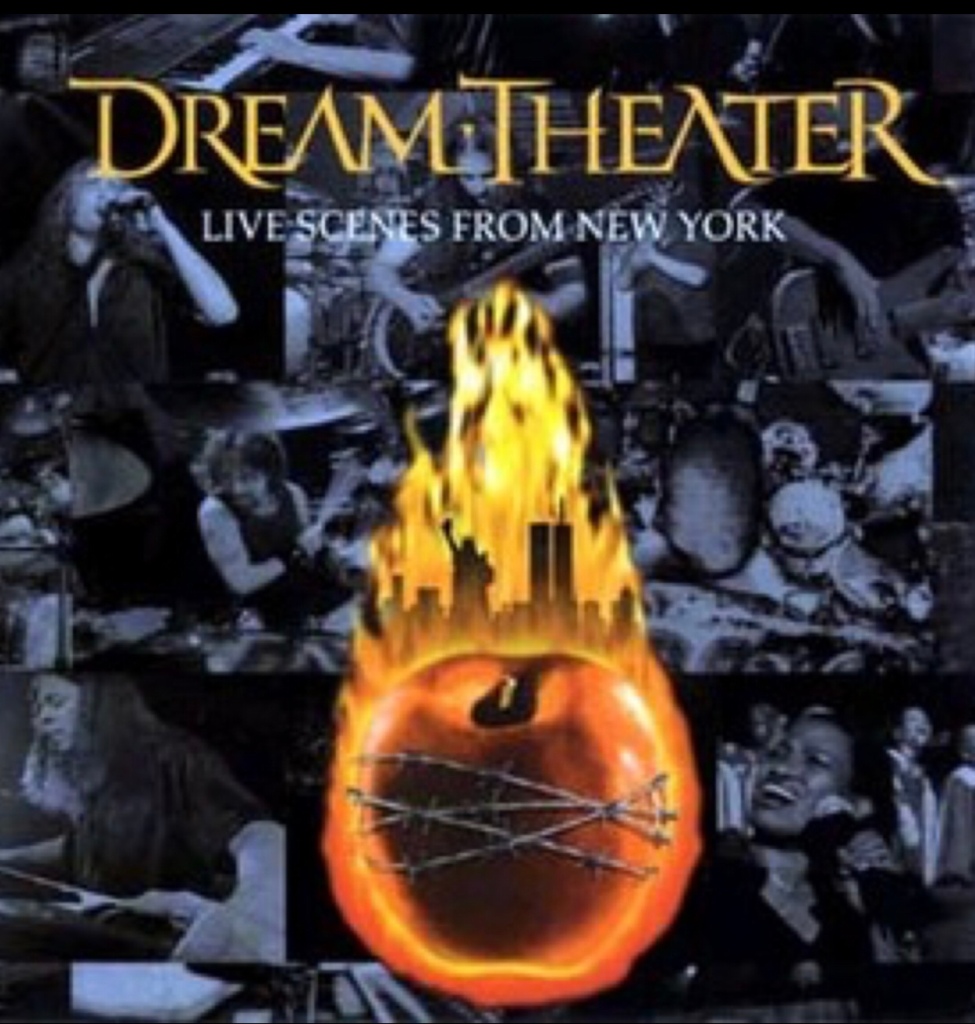
In a case of Nostradamus clairvoyance, the original album cover had the Dream Theater logo over a burning New York skyline with the World Trade Towers on fire. It was all printed and packaged for its release date of September 11, 2001.

You can guess how that went down.

Standard
Classic Songs to Be Discovered, Influenced, Music, My Stories, Unsung Heroes

The Record Vault: Dream Theater – Metropolis Pt 2: Scenes From A Memory

From disillusionment with the “Falling Into Infinity” saga, Mike Portnoy got an opportunity via Mike Varney’s “Magna Carta Records” to assemble a supergroup of progressive rock musicians in 1997. The Liquid Tension Experiment was born, consisting of Portnoy on drums, John Petrucci on guitar, Tony Levin on bass, and keyboardist Jordan Rudess, who had finished his commitments with the Dixie Dregs.

Portnoy and Petrucci used this little get together to keep on convincing Rudess to join Dream Theater. If you remember, Rudess was asked to replace Kevin Moore, however he declined that offer and Derek Sherinian was brought in. But in 1999, he accepted the offer to become the third full-time Dream Theater keyboardist, replacing Sherinian.

With Dream Theater assembled, the band would enter the studios with complete creative control for the first time.

They assembled an inspiration corner in the studio, made up of concept albums from The Who (“Tommy”), Genesis (“The Lamb Lies Down on Broadway”), Roger Waters (“Amused to Death”), Radiohead (“OK Computer”) , Queensryche (“Operation: Mindcrime”), The Beatles (“Sgt. Pepper’s Lonely Hearts Club Band”), Marillion (“Misplaced Childhood”) and Pink Floyd (“The Wall” and “The Final Cut”).

The band began by revisiting a song called “Metropolis – Part II”, which had been partially written during the “Falling into Infinity” sessions but not completed or used on that album.

At 21 minutes in length as a demo, they decided to expand the song into a complete concept album.

The album was originally mixed by David Bottrill, but only a few of his mixes made it on the final album. After playing the mixed album to Kevin Shirley, Petrucci kept asking Shirley for his opinion. Shirley kept telling Petrucci that the mixes are fine, however Petrucci did not believe him. Eventually Shirley said that the mixes could be better and suddenly Shirley had a job to remix the album. This of course was of a concern to Elektra who felt that the band was just throwing money away.

The album is seen as a sequel to the song”Metropolis—Part I: ‘The Miracle and the Sleeper'”, but the “Part I” was added by Petrucci as a joke and there was no intention to make a “Part II”.

But in 1999, “Metropolis Pt. 2: Scenes from a Memory” was released on Elektra Records. While it didn’t set the Billboard Charts on fire, it is seen as the bands masterpiece and it did exceed the sales target that Elektra had for it.

The story follows a character called Nicholas, who has recurring dreams, so he visits a hypnotherapist. During the sessions, he discovers that he is the reincarnation of Victoria Page, who was murdered in the 1920’s. The story takes place in the 1920’s and the 1990’s as all the characters are still in each other lives. For example, the person who killed Victoria is called Edward and in his reincarnation, he is the Hypnotherapist treating Nicholas.

Scene One: Regression

A ticking metronomic clock.

“Close your eyes and begin to relax” are the first words you hear. The voice of the Hypnotherapist is Terry Brown (yes that Rush producer Terry Brown) although he is uncredited.

“Take a deep breath, and let it out slowly. Concentrate on your breathing. With each breath you become more relaxed.”

There is a story here as well. Terry recorded his voice as a rough guide. Instead the band put it on the album, didn’t give him credit and then used it in the live setting. This didn’t impress Terry, so he lawyered up and set em a bill for using his voice. The band paid the bill and then had to get a new Hypnotherapist voice for the tour.

As the Hypnotherapist counts down, the acoustic guitar of John Petrucci starts up and gets louder as the countdown gets lower.

Then James LaBrie comes in with the vocal melody.

Safe in the light that surrounds me / Free of the fear and the pain / My subconscious mind / Starts spinning through time / To rejoin the past once again

Scene Two: I. Overture 1928

An instrumental, with a lot of cool riffs and some nuggets from the first Metropolis song.

I like the way it starts off but the best part is the George Lynch influenced tritone riff that cames straight after.

Check out the small lead section at 2.32.

Scene Two: II. Strange Deja Vu

“Overture” segues into “Strange Déjà Vu”.

“In her eyes – I sense a story never told / Behind the disguise – There`s something tearing at her soul”.

Nicholas learns that Victoria was murdered, and that he was actually Victoria in a past life. He believes that he needs to solve her murder.

Check out the “Carry On My Wayward Son” influences at 2.40.

Scene Three: I. Through My Words

The piano riff is haunting and I like it.

“We’re sharing one eternity / Living in two minds”

Scene Three: II. Fatal Tragedy

“This fatal tragedy was talked about for years” / Victoria`s gone forever / Only memories remain / She passed away / She was so young”

The last 40 seconds of the song has this cool open string harmony solo section which I like.

And it ends with the voice of the Hypnotherapist;

“Now it’s time to see how you died. Remember that death is not the end but only a transition.”

Scene Four: Beyond This Life

The opening riff is wicked. Heavy almost grungy in sound yet progressive. And the fast downstroke picking gives way to a single note variation.

“Murder, young girl killed. Desperate shooting at Echoes Hill. Dreadful ending, killer died. Evidently suicide”

The lyrics are written like a newspaper article.

Vocally it feels like a Tool/Maynard vocal melody in the verses. Really focused on the correct syllables.

Scene Five: Through Her Eyes

I’m learning all about my life
By looking through her eyes

Petrucci knows how to construct an emotive song and to nail an emotive lead.

Almost countryish in its acoustic strum and Portnoy’s restraint drumming, its Petrucci and LaBrie that shine here.

This is the part of the story where Nicholas realises that he is unable to get on with his life until he solves the murder of his past life.

Scene Six: Home

My favourite song on the album because its Dream Theater taking something contemporary like Tool and making it their own. If you want to press play on a track, this is the one.

The city – it calls to me
Decadent scenes from my memory
Sorrow – eternity
My demons are coming to drown me

From a story point of view, Julian is giving in to his cocaine and gambling addictions, which drives Victoria away from him. Edward feels guilty about deceiving his brother, but decides that his love for Victoria is greater than his guilt, and he seduces her when she is vulnerable following her breakup.

Scene Seven: I. The Dance of Eternity

It’s an instrumental, seen as their best.

Scene Seven: II. One Last Time

Are these her memories
Awakened through my eyes

A ballad with lyrics by James LaBrie.

Scene Eight: The Spirit Carries On

I used to be frightened of dying
I used to think death was the end
But that was before
I`m not scared anymore
I know that my soul will transcend

The guitar solo on here is excellent and the gospel choir afterwards (orchestrated by Rudess) gives me goose bumps.

Scene Nine: Finally Free

It begins with the voice of the Hypnotherapist.

“You are once again surrounded by a brilliant white light. Allow the light to lead you away from your past and into this lifetime.”

The narrative moves between different perspectives, revealing that Edward wished his romance with Victoria was more than a simple affair. As Victoria begins to reconcile with Julian, Edward confronts the two of them, murders them, then stages the scene and assumes the role of the witness for the newspaper column. The flashback includes Edward telling Victoria to “open [her] eyes” before killing her, echoing the same choice of words the hypnotherapist used to wake Nicholas from his hypnotic trance.

In the present, Nicholas arrives home, followed by the Hypnotherapist. Nicholas is startled by another request to “open [his] eyes”, before the album cuts to (and concludes on) phonographic static. You don’t hear the killing, but the hypnotherapist is Edward’s reincarnation, and he has killed Nicholas to complete the cycle yet again.

The drumming of Mike Portnoy on the last three minutes of this song is essential listening for any drummer on how to add texture and technicality and still sound accessible.

The World Tour to promote the album was their biggest. The whole album was played in its entirety along with actual footage on the big screen.

A show was filmed and released as a DVD in 2002. Even Kevin Moore was invited to participate in this show, to perform “Space Dye Vest” and “Learning To Live”. But he declined the offer and every other Dream Theater offer since his departure.

Crank it.

Standard
Classic Songs to Be Discovered, Music, My Stories, Unsung Heroes

The Record Vault: Dream Theater – Once In A Livetime

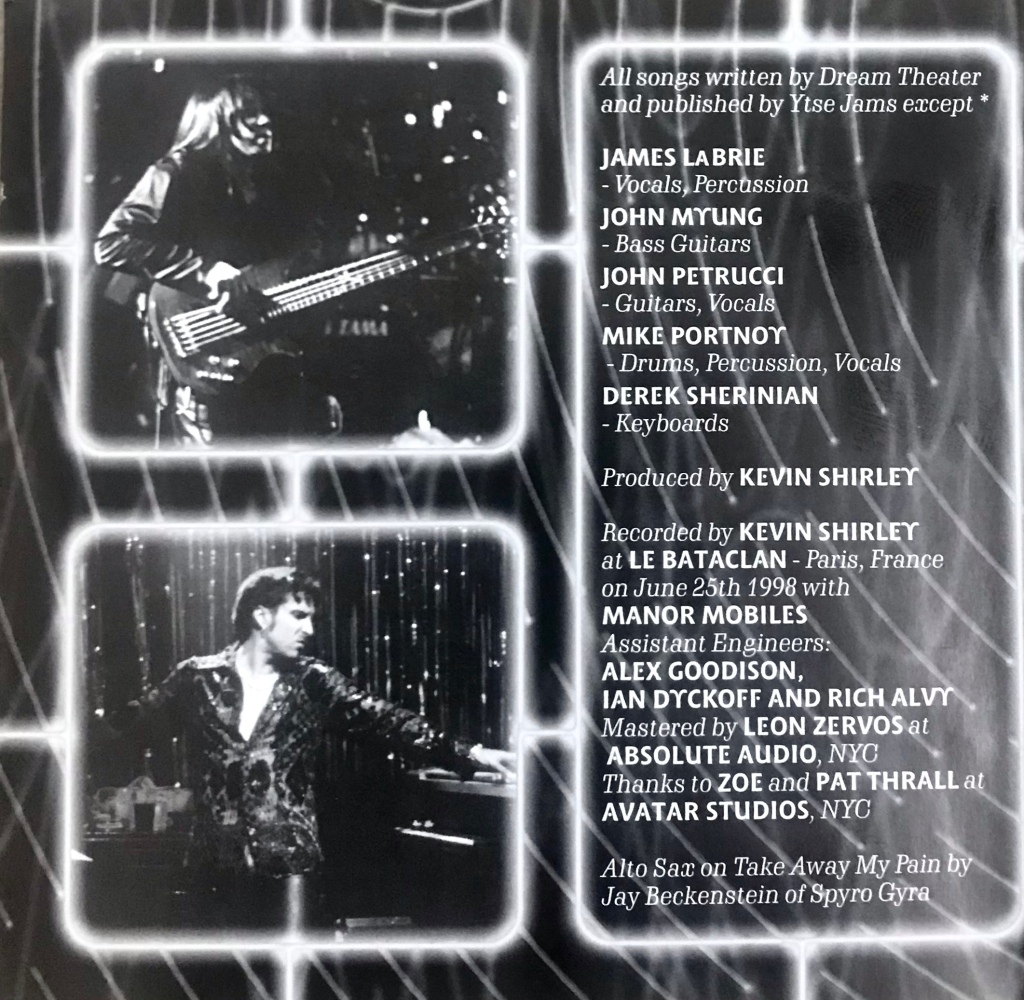
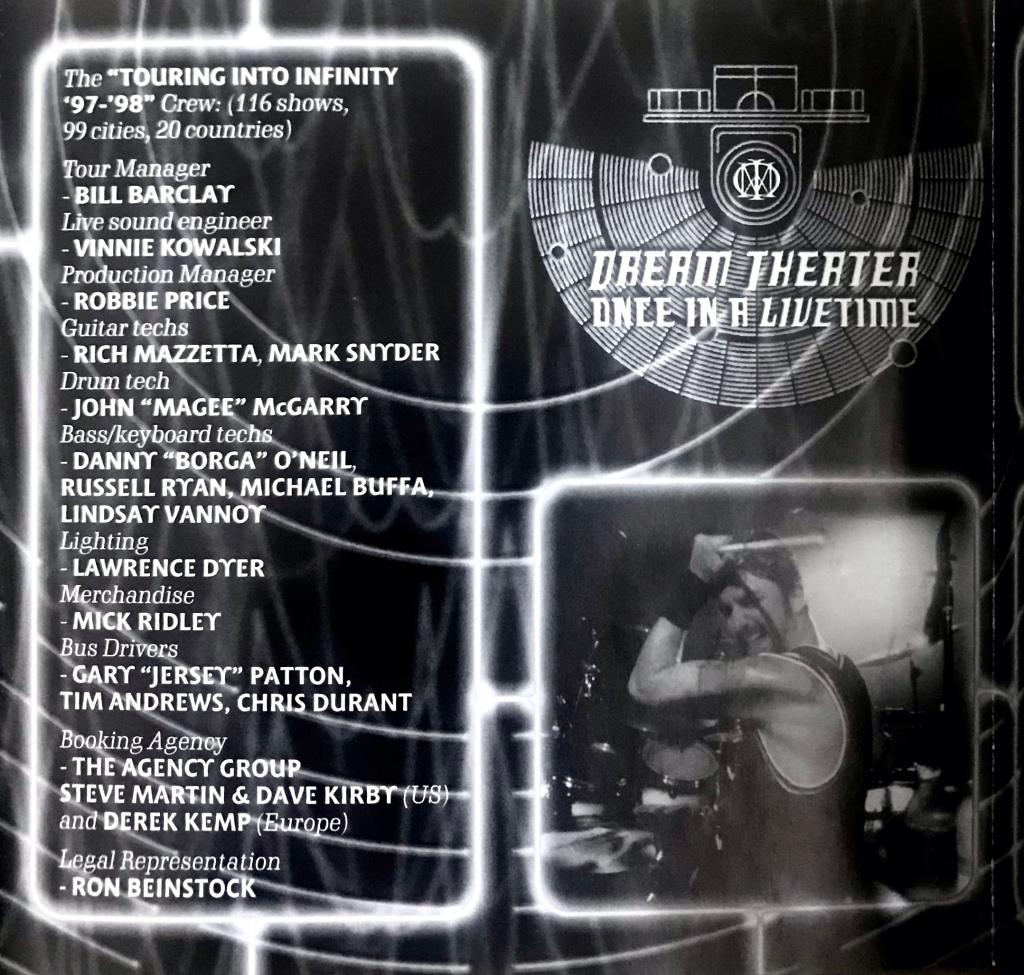
“Once in a LIVEtime” was released in 1998.

This would start a trend with Dream Theater that after each studio album, a live album would follow from the tour. Kevin Shirley was on hand to produce and record it. But Shirley was stressed as he only had two days to mix and fix it. In the book “Lifting Shadows” by Rich Wilson, Shirley mentioned that on this live album there were a lot of fixes.

The show was recorded at the Bataclan Theater in Paris however the tour began September 1997 in Brazil. And before it even started, they had to get new management. Remember the manager who won the battle to remain manager, well he left. He wasn’t feeling it anymore. The management team that came in proved so much worse. The band was lost and needed direction. These new guys didn’t provide it, but they had no problem spending money. And when the band fired them the managers sued em.

Furthermore, Petrucci and Portnoy were at loggerheads. Portnoy still had a chip on his shoulder over Petrucci choosing to go with Shirley’s ideas and the disagreements they had over which manager would get the gig. During the tour, Portnoy even fired Petrucci’s guitar tech, which didn’t go down well with Petrucci.
Portnoy also announced to the band that he is quitting once the tour is finished. So in retrospect this live album could have been the last official release.

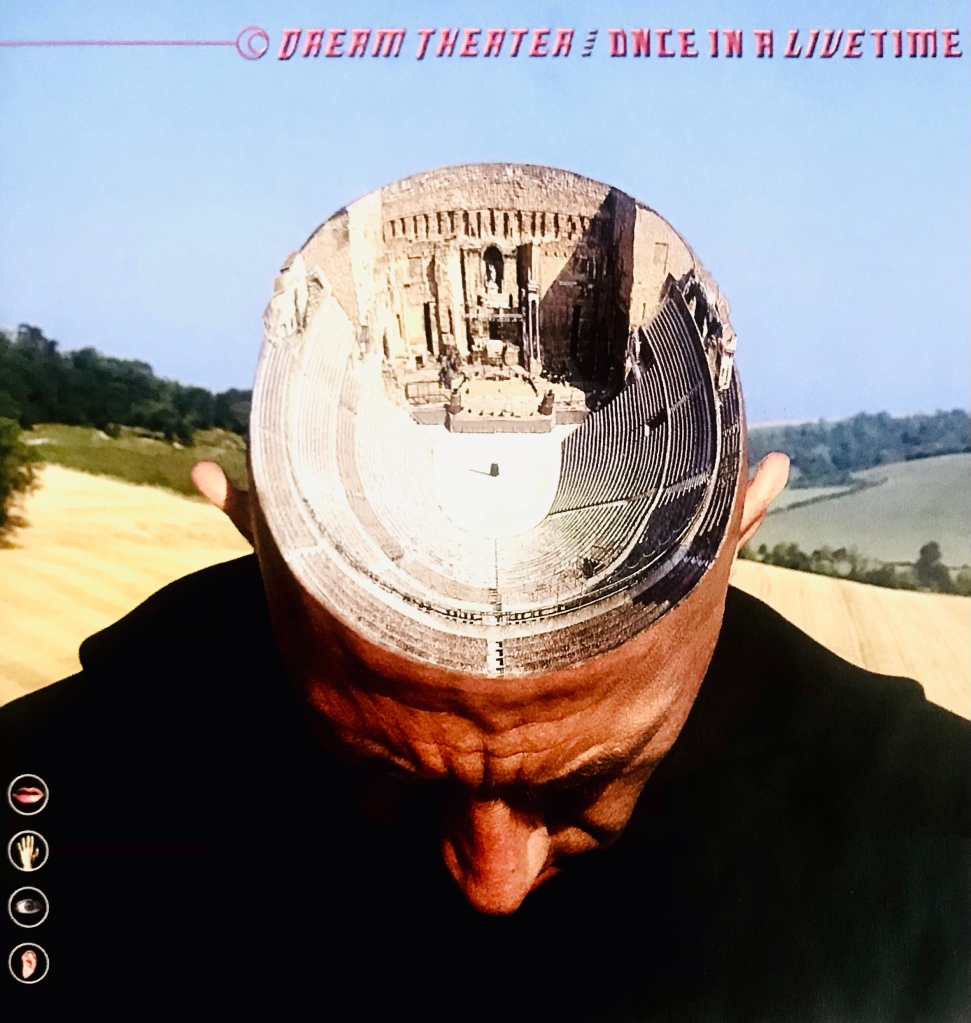
The album cover, one of two designed by Storm Thorgerson for the band, shows an overhead view of the ancient Roman theatre in Orange, France set into a head of a monk. Like “Falling into Infinity” it does not feature the band’s word mark due to Storm’s demand who sees logos as ugly.

This would also be the last album to feature Derek Sherinian on keyboards as his short tenure in the band would come to an end.

A Change of Seasons I: The Crimson Sunrise

So from a concert perspective, they split “A Change Of Seasons” into its separate parts and scattered them throughout the concert.

The acoustic intro gets the crowd singing along, ala Maiden like. Trust the Europeans (and the South Americans) to give a concert a football (soccer) like atmosphere. As soon as the band kicks in, its heavy and precise.

A Change of Seasons II: Innocence

They move into part 2 effortlessly. LaBrie is strained but does a great job. He’s a professional. Sometimes singers have 10 from 10 performances and some days they have 7 from 10. It’s still a good performance.

Puppies on Acid

Is basically “The Mirror” and a bit of “Lie” from the “Awake” album combined to serve as a segue into “Just Let Me Breathe”. Strange choice.

Just Let Me Breathe

From the “Falling To Infinity” album.

The song is great musically. I’m not a super fan of the vocal melodies, but I do like how they had the balls to try melodies like that.

Voices

One of my favourite tracks from the “Awake” album.

Press play to hear the intro, the way the Chorus crashes in musically and the excellent Petrucci solo. If anything, Petrucci’s playing live is even better than the studio recordings. He’s so precise, yet he still creates room for some improvisation. And that my friends is the meaning of a great musician.

LaBrie unfortunately is difficult to listen to, especially the high notes.

Take The Time

The first track from their biggest album so far, “Images and Words”.

Check out the funky first verses. You will feel like you are in the 70’s. It’s the beauty of the band, to be so diverse musically.

The ending contains the solo from Lynyrd Skynyrd’s “Freebird” and the main riff from Led Zeppelin’s “Moby Dick”. This is the kind of improvisation I like.

Derek Sherinian Piano Solo

I hate individual solo spotlights without any backing music to it.

For the purists, the brief solo does contain portions of “Platt Opus” which would be released on the debut Platypus album, (a progressive rock supergroup to which Sherinian and John Myung were members of, and they released their first album a year after this album).

However Sherinian tries to make his solo spotlight tie in with “Lines In The Sand”.

Lines In The Sand

From the “Falling into Infinity” album.

This song works live and LaBrie doesn’t need to strain his voice here as this song is more in the lower registers.

Petrucci again delivers a killer a guitar solo. All the emotion he committed to tape is here, live. The bends, the vibrato and the fast legato lines. Even Labrie at the end, mentioned, “John Petrucci on guitar people”.

The solo segues into my favourite part of the song. A groove is established and LaBrie is in his Pete Gabriel element here. Petrucci decorates like Alex Lifeson on the guitar. Then at 9.36, Petrucci starts to build it up, taking parts of the intro, and adding a lot of grease and blues. Then his Lifeson decorating with power chords and ringing open strings is back. Portnoy gets busier and the band cranks into the main riff of the song.

Scarred

From the “Awake” album.

Ballsy move to play another epic track straight after an epic track, but then again, Dream Theater didn’t get to this stage, playing by the rules.

A Change of Seasons IV: The Darkest of Winters

And this is a perfect example of not playing by the rules. When they go into the instrumental section of “A Change Of Seasons”

Ytse Jam

And after 3 minutes of “The Darkest Of Winters”, they go into their instrumental masterpiece from “When Dream and Day Unite”, the “Majesty” spelt backwards “Ytse Jam”. And as soon as the intro riff kicks in, the crowd is chanting along with them.

This kind of set list is preaching to the converted.

Mike Portnoy Drum Solo

A 5 minute drum solo and the last 2 minutes is the ending of “Ytse Jam”.

But it’s a next for me.

Trial of Tears

From the “Falling into Infinity” album. The first two minutes has Petrucci playing “Close Encounters Of The Third Kind”, with Portnoy channelling Neal Peart from Rush.

Hollow Years

From the “Falling Into Infinity” album.

The “Live At Budokan” version is the definitive version for me. The flamenco Al DiMeola like noodling at the start which is present on the “Budokan” version is here as well, just a bit more embryonic. And the solo sticks to script here, it doesn’t have the long shred solo from “Budokan”.

LaBrie doesn’t need to strain much here, and vocally he’s bringing it.

Take Away My Pain

From the “Falling into Infinity” album. I didn’t think it would end up in a set list as it’s not one of the stronger songs from the album.

Caught in a Web

From the “Awake” album. The tempo is sped up just a little bit and it works perfectly. You can feel the energy hit you from the speakers.

Lie

From the “Awake” album. Like “Caught In A Web” before it, the tempo is sped up a little bit and its perfect for the song. It sounds more energetic and powerful.

Peruvian Skies

From the “Falling into Infinity” album and the band definitely shows which songs influenced the song as they go into portions of “Have a Cigar” from Pink Floyd and “Enter Sandman” from Metallica. Press play to hear it.

John Petrucci Guitar Solo

An 8 minute guitar solo which contains a portion of a song that would become “Paradigm Shift” from a side project called “Liquid Tension Experiment”, which Portnoy and Petrucci would form after this period with future Dream Theater keyboardist Jordan Rudess and bassist Tony Levin.

The ending of the album begins with “Pull Me Under”, “Metropolis” and “Learning To Live”. My three favourite songs from “Images And Words”. And they finish it off how they started, with the final chapter of “A Change Of Seasons”.

For a live album, it is the least favourite live album in the “Dream Theater” catalogue. I don’t go back to it much, however as the title states, it’s a capture of a time, a period. So enjoy it for what it is, a band on the verge of breaking up but keeping it all together for their love of music.

And a DVD release came out as well. But that review is for another day.

Standard
A to Z of Making It, Classic Songs to Be Discovered, Influenced, Music, Unsung Heroes

The Record Vault: Dream Theater – Falling Into Infinity

The “A Change of Seasons” EP from 1995, closed a chapter for Dream Theater that went back to those dark days without a deal.

After a short tour to promote the EP, they started writing songs in early 1996 for the follow up album to “Awake”. Derek Sherinian was a full-fledged member and was an extra addition to the song writing team.

Their label East West Records had folded into Elektra. Sylvia Rhone was now the President. Her interest in hard rock music was minimal. Nikki Sixx was also very anti-Sylvia, calling her from the stage on her mobile during Motley Crue concerts and getting the fans to scream “F U Sylvia Rhone.”

As written in the book, “Lifting Shadows” by Rich Wilson, Rhone wanted to drop Dream Theater or to transfer the contract to Warner International, however their success in Europe and Japan was bringing enough dollars to the label, so Elektra decided to keep them. However, they had to come up with more shorter tracks that radio could get behind.

Little did they know, that they would be in development hell for almost a year. Most of the songs they submitted to the label for approval, were met with the request to write more songs. Progressive songs like “Lines In The Sand” and “Trial Of Tears” got a muted response from the label, while songs like “Hollow Years” and “You Not Me” got the label excited.

On top of this was the dissolution of their management team, which had the band divided. Petrucci picked one manager and Portnoy picked the other. Eventually, Petrucci’s choice Rob Shore was selected as the manager and Portnoy’s choice Jim Pitulski went to court to recoup some of his losses.

Further to this, their friend in label hell, A&R Rep Derek Oliver left and his replacement, Josh Deutsch was already fed up with the band. As far as he was concerned, the band was selling enough to not be a liability to the label, so as long as he could get the new record out, they would make numbers.

12 plus months passed before Deutsch gave the go-ahead to record the new album, in March 1997. The list of producers the band submitted was ignored and Kevin Shirley who just did Aerosmith’s “Nine Lives” was hired. Shirley also recommended that the band work with Desmond Child to re-write “You or Me”, resulting in Petrucci being flown down to Florida to work on the song with Child. Following the sessions, the song became “You Not Me”. This infuriated Mike Portnoy as he didn’t like how Desmond Child would re-write one of the songs with just one band member.

Originally, Petrucci and Portnoy wanted to call it “Stream of Consciousness”, but the rest of the band rejected the name although the phrase “Stream of Consciousness” is found in the song “Lines in the Sand” and would later become the title of an instrumental song on “Train of Thought”. Its eventual title was proposed by Petrucci, and its cover art was designed by Storm Thorgerson.

When you write for that long, there is enough material for a double album, but Elektra said the approved budget is for a single album.

As a side note, Portnoy released the double album, when he did the Ytse Jam Records Demo series for the “Falling Into Infinity” demos release. It also got a re-release with Dream Theater’s “Lost Not Forgotten” Archives releases.

If you are a fan of the band, the demo releases are must haves, as you get to hear songs like “Raise the Knife”, “Where are You Now”, “Cover My Eyes”, “Speak to Me”, “The Way It Used to Be”, and “Metropolis Pt. 2”, which was later expanded into its own album and the rest being included on the 1999 fan club CD “Cleaning Out the Closet”.

New Millennium

As soon as the King Crimson inspired intro kicks in with the keys and guitars in harmony, I was hooked. John Myung comes in with a bass riff which is very Tool like and I like the way John Petrucci decorates, very Adam Jones/Tool like.

Mike Portnoy is the lyrical writer here, as he looks at the music industry.

Press play for the Verse Riff. Its heavy, its melodic and its influenced by the times, but it doesn’t sound dated as there is funk and there is groove.

James Labrie cops a lot of flak from fans and I am one of them, but he shows his versatility moving between Peter Gabriel like vocals, to Maynard James Keenan vocals, to Bluesy Paul Rodgers style vocals and yet he makes it all sound hard rock in his own LaBrie way.

Derek Sherinian on the keys is more like Kevin Moore in style.

For an opening track it got my attention.

You Not Me

Musically it’s written by Dream Theater and lyrically it’s done by John Petrucci with small additions from Desmond Child. After hearing the demo of this song, I think Child’s additions are more like Holly Knight’s addition to change the title of “Rag Time” to “Rag Doll” by Aerosmith. The original demo is called “You Or Me”. After Child was involved, it changed to “You Not Me”. The vocal melodies are there on the demo.

The riff is nu-metal before nu-metal was even a thing.

And I like its big Chorus and simple Verse/Chorus structure. I am a hard rock fan first who likes progressive music, so this song is right up my alley.

Peruvian Skies

When they play this song live they go into “Enter Sandman” from Metallica as there a bits in the song that sound like they came from “Sandman”. If you get a chance to check out one of their live performances of this song, do it

Lyrics are written by John Petrucci. He is trying to tell an abuse story of person called Vanessa.

Musically, it’s got the dreamy arpeggios of Pink Floyd, with the metal crunch of Metallica. It’s a potent mix. And I like it.

Hollow Years

The “Live At Budokan” version is “the” version to listen to. This is where the solo is extended to include some shredding from Petrucci and the outro is also extended. One thing that is guaranteed when you watch DT live, is you don’t just get the studio version of the song. Which is a good thing. It irks me when bands play the studio version of a song live. There are no musical conversations happening on stage. For some bands it works, like Metallica and Iron Maiden, as their song structures are very rigid.

It was released as a single and you can tell why. It moves between flamenco-classical style acoustic guitars to a melodic soft rock Chorus. Petrucci wrote the lyrics to the song.

Burning My Soul

Mike Portnoy’s lyrics were inspired by his frustration at their A&R man, Derek Oliver. Once seen as a supporter who got them signed was now seen as a roadblock, a gear in the label machine pushing the label “sign em and drop em” agenda.

Overall, it’s a great song. It’s metallic, with a lot of groove. Metallica wasn’t this heavy during this time.

It also marks the beginning of an excellent middle section of the album, that involves “Burning My Soul”, “Hell’s Kitchen”, and “Lines in the Sand”.

Hell’s Kitchen

Producer Kevin Shirley made the decision to take out the middle section from “Burning My Soul” and turn it into a separate instrumental track.

Which I thank him for as “Hell’s Kitchen” is a 3 minute rollercoaster of emotions. Press play to hear John Petrucci at his melodic best.

Lines in the Sand

Lyrics are written by John Petrucci and press play to hear his guitar lead along with the verse/bridge section after the solo break.

King’s X’s Doug Pinnick also appears but James LaBrie stars here, twisting and morphing his voice across many different musical styles and genres.

At 12 minutes long, it didn’t feel boring at all.

Take Away My Pain

This is Dream Theater doing U2 while U2 was doing electro-techno rock.

Lyrically, John Petrucci writes about the death of his father and he decorates the song like “The Edge”.

And for people who said they sold out by writing a song like this, well they seem to forget that “Another Day”, “To Live Forever” and “Lifting Shadows Of A Dream” are very similar to this. So it was nothing new for Dream Theater to have songs like this on the album.

Just Let Me Breathe

Portnoy is throwing missiles at the music industry with his lyrics here. It deals with the media and how they purely exist to over report and sensationalise tragedy, like the deaths of Shannon Hoon and Kurt Cobain.

The drum and bass intro segues into the guitar riff kicking in. It’s heavy and groovy. Very “Liquid Tension Experiment” like which would come after this album.

Derek Sherinian solos here with Petrucci kicking in some harmonies. Then they trade off each other. Overall, I like the song musically but the vocal melodies didn’t resonate with me, although I do like how Portnoy wanted to try something different with the melodies.

Anna Lee

James LaBrie has a lyrical contribution to a Dream Theater album. The song is a ballad, with a nice piano riff as its centrepiece but it wasn’t a favourite back then nor is it a favourite write now.

Petrucci does deliver a nice solo.

Trial of Tears

I wrote a whole blog post on this song. You can read it here. It’s in three sections but played as one complete 13 minute song. Bassist John Myung is the lyrical writer.

Section I is called “It’s Raining”, Section II is called “Deep in Heaven” and Section III is called “The Wasteland”.

James LaBrie again steals the show with the various vocal styles he exhibits here. And Petrucci is on hand to deliver some nice emotive lead breaks.

As mentioned in the book, “Lifting Shadows” by Rich Wilson, the album was considered a commercial failure, failing to break any new ground for Dream Theater or increase their sales despite its more commercial direction. As a result of the creative and personal tensions experienced during the album’s production phase, it has been described as the band’s “most difficult album”, and eventually led to their demanding to be free from record label interference for all future albums.

Regardless of commercial expectations, I go back to this album on a regular basis. Crank it.

Standard
Influenced, Music, Unsung Heroes

2001 – Part 5.5: Opeth – Blackwater Park

“Blackwater Park” is the fifth studio album Opeth released on March 12, 2001 in Europe and a day later in North America through Music for Nations and Koch Records.

I never got too involved with the death metal elitists who seemed to label the band, not “death metal enough”. Their view points sound like an episode in “Dethklok” when the fictional cartoon death metal band was writing a song and it wasn’t brutal enough for the singer.

The album marks the first collaboration between Porcupine Tree front man Steven Wilson and the band, as Wilson had been brought in to produce the album. The influences of Porcupine Tree can be heard here and this contributed to a shift in Opeth’s musical style with more mellow passages, while Porcupine Tree would also get some heaviness out of it as well.

“Blackwater Park” did not chart in the United States or United Kingdom but it is seen as the commercial breakthrough for the band.

Opeth at this point in time was Mikael Åkerfeldt on vocals, guitar and acoustic guitar, Peter Lindgren on guitar, Martín Méndez on bass and Martin Lopez on drums.

Steven Wilson from Porcupine Tree does clean and backing vocals on “Bleak”, “Harvest”, “The Funeral Portrait”, and “The Drapery Falls”, piano, additional guitar, record producer, engineering and mixing.

The Leper Affinity

Music and lyrics written by Mikael Åkerfeldt.

First, I am not a huge fan of death metal vocals. I tolerate them because I want to hear good riffs. And there are a lot of good riffs and leads here. On occasions it feels like I am listening to a Megadeth album or a Dream Theater/Fates Warning album.

At 4.50, there is an acoustic section that comes in with clean tone vocals. It sounds ominous. And when they build it up, the ominous sound is still there.

Then at 6.10, this Tool like riff kicks in. Press play to hear it.

The last minute is a sombre piano lounge piece.

At 10.26 it’s a massive opening song for an album.

Bleak

Music and lyrics written by Mikael Åkerfeldt.

I like the way this starts. Its progressive but groove orientated.

At 3.28, it’s got this alternative metal vibe with clean tone vocals from Wilson and I like it. And it moves in between acoustic rock and heavy metal. But. By the end of it, its chaotic dissonance.

At 9.15, the first two songs clock in over 20 minutes.

Harvest

Music and lyrics written by Mikael Åkerfeldt.

The second shortest song at 6 minutes with strummed acoustic riffs.

The Drapery Falls

Another 10 plus minute track with music and lyrics written by Mikael Åkerfeldt.

It’s got acoustic guitars, psychedelic fuzzed out leads and clean tone singing.

It’s got progressive riffs and death metal singing.

And more grooves than a vinyl record.

Dirge for November

Written by Mikael Akerfeldt and Peter Lindgren. The dirge comes out to 8 minutes.

The acoustic guitar is there again and it feels like a Led Zeppelin cut in the first two minutes, think “Babe, I’m Gonna Leave You”.

That section at 4.30 to 4.40 is brief but I like its classical feel. The last two minutes is similar to the intro, but more jazzy.

The Funeral Portrait

Music and lyrics written by Mikael Åkerfeldt.

At almost 9 minutes long, its full of riffs and acoustic guitars.

The dissonance of the tritone is all over this track.

The whole acoustic intro reminds me of Slayer and “Seasons In The Abyss” while the riff that crashes in afterwards is very Dream Theater like from the “Images And Words” album.

And I like it.

Patterns in the Ivy

A 2 minute instrumental written by Mikael Akerfeldt.

Think of the intro of “Diary Of A Madman” with some piano melodic leads.
Blackwater Park

The title track at 12 minutes long. Written by Mikael Akerfeldt and Peter Lindgren.

The intro that starts it of is hard rock.

There is this clean tone instrumental section which is a fusion of jazz and classical. The riff that crashes in after it is perfect and head banging.

If there is a complaint, there are too many long songs with not a lot of variation. But from a guitar players point of view, there are a lot of cool riffs to unpack and learn.

Standard
Classic Songs to Be Discovered, Influenced, Music, Unsung Heroes

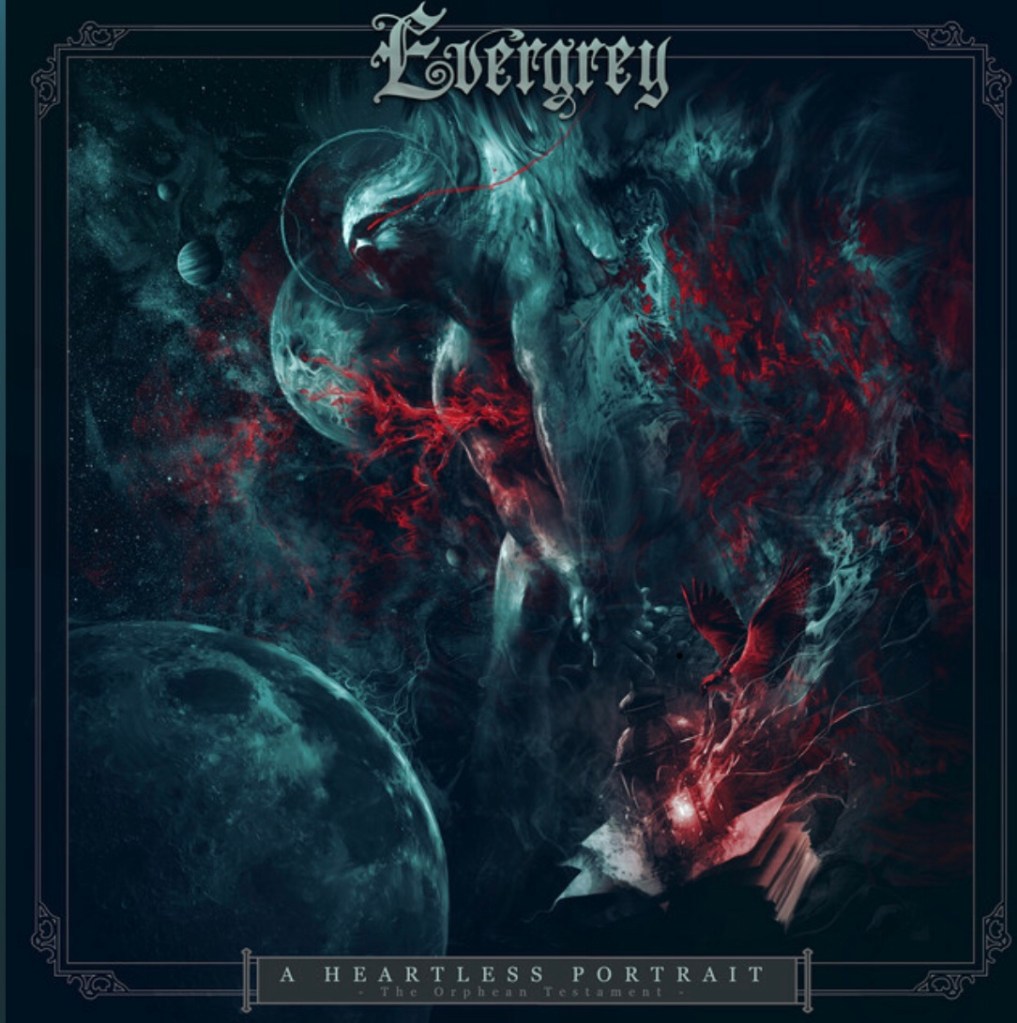
Evergrey – A Heartless Portrait (The Orphean Testament)

There is always a track or two or three on each album from Evergrey that becomes an instant favourite.

On this album at the moment, it is “Call Out The Dark”, “Midwinter Calls” and “Blindfolded”. On the previous album and depending on mood, it was either “In The Absence Of Sun” and “Eternal Nocturnal”.

The whole COVID era of 2020 and 2021 got a lot of artists off the road, back into society, connecting with family and friends and then into the studios. After the brutality of “The Atlantic” in 2019, “Escape Of The Phoenix” came out in February 2021, a live recording “Before The Aftermath” on 28 January 2022 and in May 2022, “A Heartless Portrait (The Orphean Testament)”.

I have the Vinyl Die Hard edition and a separate Limited Edition box set on its way from Napalm Records in Germany, which I will unbox when they get here.

Their five album run (made up of 4 studio albums and one Live Album) on AFM Records came to an end. And what a run it was, with some of their best work like, “Hymns For The Broken” and “The Storm Within” included in that run.

The sound of the band is made up of the low tuned guitars of Henrik Danhage who uses Charvel Guitars and Tom Englund who is loyal to Caparison Guitars. But not all riffs come from the fingertips of these two. Drummer Jonas Ekdahl is a riff-meister himself and so is bassist Johan Niemann. Rounding out the band is keyboardist Rikard Zander.

The writing of “A Heartless Portrait (The Orphean Testament)” continued after the release of “Escape of the Phoenix”. Englund has even referred to the new album as “Part II”. In the producers chair is, Englund and Ekdahl again. These two have been producing the last few albums, so why change it. Keep it all within the band.

Save Us

A chugging downtuned metal like riff opens the album. It’s heavy and the octaves give it a sense of melody.

The fans participated in the gang like vocals.

The idea came to Englund while he was on a walk. He uses his iPhone to sing his ideas and the voice memos capture sounds pretty good as the phones have decent compression algorithm.

So they put a call out for their fans to sing the words based on a video guide the band provided into their iPhones and submit it. They got 700 plus submissions and those voices became the gang choir you hear when they say “Hey, save us”.

Lyrically, its Englund’s observation of watching people around him who feel they are not good enough to exist in this world, because they are hostages to the social media sites and feel like they need to portray perfection.

Midwinter Calls

“Midwinter calls…”

There is a slight pause.

“Home..”

And then the Chorus riff kicks in.

It’s my favourite part of the song.

The double kick is in unison with the riff from the fingertips of drummer Jonas Ekdahl.

This song also has a gang like vocal chant, utilising more voices from the fans. While in “Save Us” it was actual words, here it is wo-ohs.

Ominous

There is this four note progression played by another four note progression that underpins the main riff. It’s almost djent math like and progressive but very accessible.

Keyboardist Rikard Zander decorates nicely here over the thunderous groove set up by drummer Ekdahl and bassist Johan Niemann.

The guitar solos howl like wolves in the night.

Actually the whole guitar solo sections are guitar hero moments. I’m pretty sure both Englund and Danhage take turns here.

Call Out the Dark

As soon as the musical box piano sound riff started I was hooked. Once the guitars thunder in and the keys turn symphonic, I was ready to break desks. My favourite song on the album. By far.

The solo came is fantastic.

It’s got this classic “Rainbow In The Dark”, Vivian Campbell style from his Dio days. Initially there was a lot of tapping and shredding from Danhage and after receiving feedback from a friend about what he was trying to say with his lead coming after Englund’s lead, he rewrote the first half and kept the crazy shred ending. Press play to hear two virtuosos having conversations musically.

And it ends the way it started, with the musical box piano riff.

The Orphean Testament

Englund’s take on Greek Mythology where Orpheus had a chance to save his loved one from hell, by just walking away and never looking back, but he turns back to look.

Englund takes this view and applies it to modern life, where our ego’s get in the way of making good decisions and how it’s hard to fit in to a world which has different ideals to your own.

The song starts with fast double kick drumming and fast 16th note picking before it moves into a Dimebag style groove riff. Englund has a unique way of singing his melodies and this is no different.

Reawakening

I read on other reviews that the writers saw this track as filler. And I was like WTF. Its melodic heavy rock influences still remain with me after its finished.

The intro is melodic rock, with the keyboards in the lead. The song then quietens down, Queensryche like for the verses, while it builds up in the pre-chorus for the big Chorus.

I’m broken but breathing
I’m still alive but did a lot of bleeding
I’m open to reasons to feel alive

The Great Unwashed

The intro is made up single notes playing in an ominous way. Then a groove like riff kicks in, made from the fingertips of drummer Jonas Ekdahl. While they are chugging along on that riff, Zander plays the ominous intro on the keys and Englund does his vocal melodies.

There is a section after the Chorus that reminds me of “A Change Of Season” from Dream Theater.

And the lead breaks are killer, over a section that reminds me of “The Aftermath” from “Hymns Of The Broken”.

We’ll always unite in the end
We’re stronger than most just pretend
We never mind the dark

We’re the great unwashed

Heartless

Instant connection with the keyboard lick over the thundering distorting chords. The verse riffs are major key, hopeful, but the lyrics are dark, with words like “I can’t find reasons to keep feeding this soul”.

So tired of feeling
I’m tired of feeling you
And all this time that I’ve lost
I’ve lost to you

Relationships take up a lot of time and when they are over, there is regret at the time lost.

There is a section just before the 3 minute mark, with piano chords and Englund’s haunting vocal melody. Then the lead break crashes in, and I am playing air guitar.

Blindfolded

It’s classic Evergrey.

Powerful and technical.

And there is another arena rock chorus. Press play to listen to the phrasing of “Dark nights / coming / we are lost in fragile moments / falsehood / soulless / we run through this blindfolded”.

And if all of that isn’t enough, queue in some killer lead breaks in which the guitars and the keys trade off each other.

Wildfires

Evergrey have always had songs like these, and Tom Englund explores these kind of sparse arrangements even further with the “Silent Skies” side project. The only difference here is that the acoustic guitars replace the keys.

If the sun fell down
And burnt us down to the ground
Would the wildfires remind me of

The album is excellent.

And there is also a trilogy of video clips, released in reverse chronological order, so you would need to watch the last video first to experience the cinematic journey.

Press play on it.

Standard
Classic Songs to Be Discovered, Derivative Works, Influenced, Music, My Stories, Unsung Heroes

The Record Vault: Dream Theater – A Change Of Seasons (EP)

Mike Portnoy was not happy when the song “A Change of Seasons” was pulled from being recorded in the studio for the “Images And Words” album.

So Portnoy kept asking Derek Oliver to provide funding so the band could record it. Portnoy tried to include it with the “Awake” album and again, Oliver said “no”.

And that’s when the fans stepped in. Dream Theater fans started to connect online via the Ytsejam Mailing List and suddenly, a petition was created to convince the label to give the go ahead for the band to record the song.

Yep, Dream Theater was one of those bands to have a direct to fan connection via their fan club and message boards in the early days of the Internet. Mike Portnoy was key here, as a fan of Marillion, who was also another band which kept engaging with their fans via their fan clubs and much later, Marillion were one of the earlier bands to get fans to fund an album before it became a thing.

At 23 minutes, it was their longest song at that point in time, but the way it is written and constructed, the seven parts of the song, can be listened to individually as separate tracks, if you wanted to splice the track. Lyrics are written by Mike Portnoy.

But.

If the band wanted to record this track in the studio, Derek Oliver said the track must be produced by Dave Prater. As described in the book “Lifting Shadows” by Rich Wilson, Oliver believed that Prater really understood what Dream Theater was about and when Prater zeroed in to the bands weakness, the band couldn’t hack it, hence the animosity. Prater was the producer for the “I&W” album and he was having serious run ins with Mike Portnoy over triggered drum sounds and with Kevin Moore over his reluctance to do anything that the Producer asked.

While the band disagreed with the Prater suggestion, they relented. as the only way to get funding was to do it the label way. Since Prater was told to not use triggers on the drums, it meant Portnoy wouldn’t be an adversary anymore and his main adversary during “I&W”, Kevin Moore was not in the band anymore. But Prater and James LaBrie didn’t connect this time around and they started to argue. But, in the end, LaBrie’s vocal performance on the track is excellent, so all the pushing and yelling, ended up in a fantastic vocal take.

The EP was released on September 19, 1995, through East West Records.

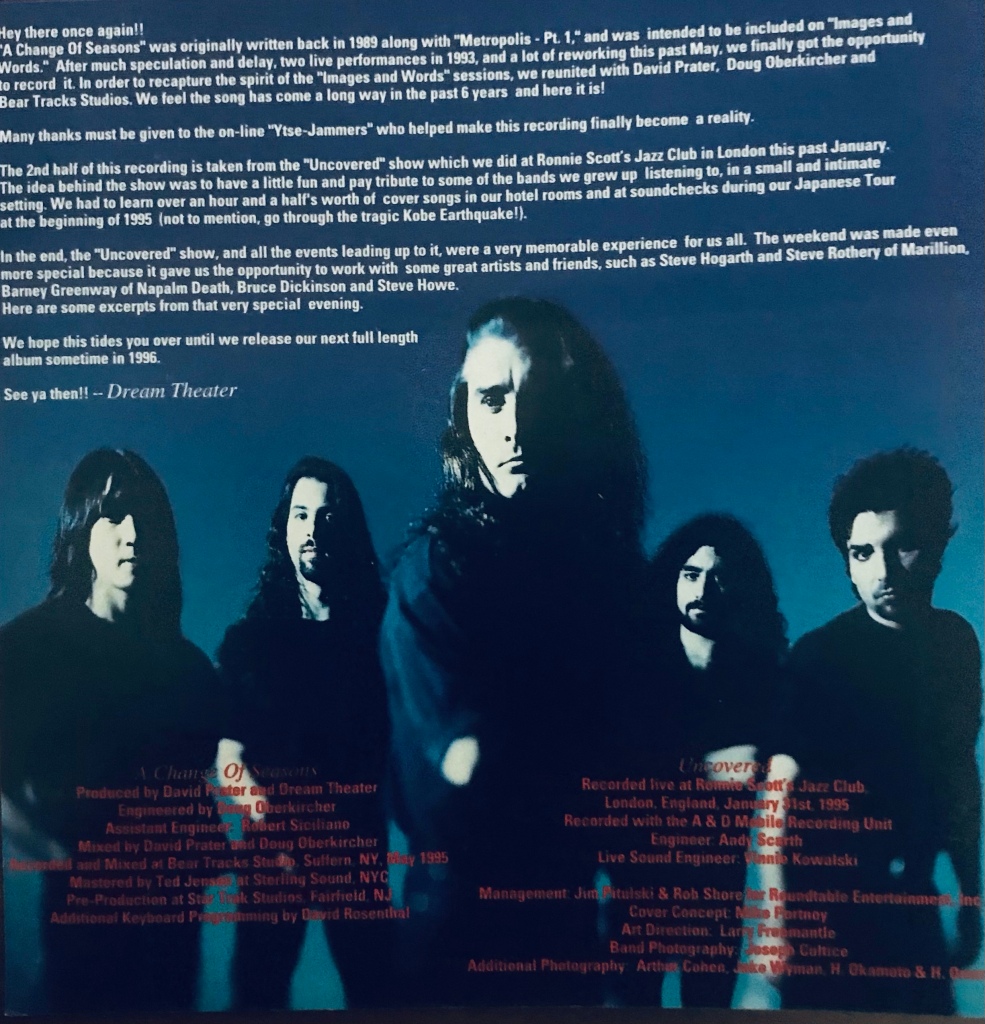
Apart from the title track, it has a collection of live cover songs performed at a fan club concert on January 31, 1995 at Ronnie Scott’s Jazz Club in London, England. It’s also their first recording with Derek Sherinian on keyboards.

I know what most people are thinking,

23 minutes of a million notes a minute over complex time signatures. If you are thinking that, you are mistaken. The sections are all songs within a song and one thing that producer Dave Prater has going for him was his questioning of why they want to overplay certain parts.

Like when he said to John Petrucci (as mentioned in the book “Lifting Shadows”), “why are you trying to impress Steve Vai” with those fast technical licks as your first improvised take of the lead was way better than the stuff you worked out days later.

I. The Crimson Sunrise (instrumental)

The song begins and ends with an acoustic guitar. A seven string acoustic guitar with the low B and while I am critical of the 7-strings on fast picked stuff, I really like em on groove orientated stuff, and this is what this song is. A Groove Heavy Rock beast with progressive elements.

As soon as I heard the first notes of the intro acoustic riff I was hooked.

Did they try and recreate “Pull Me Under” with this whole intro piece?

Maybe.

Because there is melody, power and aggression here in the acoustics and when the distortion kicks in, you definitely feel it in your bones.

The first 3 minutes is essential listening. All instrumental but never boring.

II. Innocence

It begins at the 3.50 mark.

And how good is that arena rock chorus, that begins with “Innocence caressing me / I never felt so young before / There was much life in me / Still I longed to search for more” and when it repeats the second time, it’s worded a bit different. “Ignorance surrounding me / I’ve never been so filled with fear / All my life’s been drained from me / The end is drawing near.

III. Carpe Diem

It begins at the 6.54 mark with the start of the acoustic guitar arpeggios, almost classical. Portnoy is now referencing the last moments he had with his mother before she left to catch a plane which crashed.

The last few lyrical lines, “preparing for her flight / I held with all my might / fearing my deepest fright / she walked into the night / she turned for one last look / she looked me in the eye / I said “I love you, / goodbye”.

IV. The Darkest of Winters (instrumental)

I’m pretty sure this section kicks in at the 9.47 mark. It’s got metal and a jazz fusion like lead from Petrucci. There are a lot of elements from “I&W” here especially from the songs “Metropolis” and “Take The Time”. The riff at 11.50 would have been a foundation for a song for any other band. But from Dream Theater, it’s just a riff in a 23 minute song.

At 12.54, Petrucci starts the melodic lead that leads into “Another World”.

V. Another World

It kicks in at 13.03. It’s the big power ballad part of the song with LaBrie delivering one of his best vocals and Petrucci on the lead at 15.39 is perfect with his phrasing, delivering big bends and vibrato lines with short bursts of alternate picking.

VI. The Inevitable Summer (instrumental)

It starts at the 16.58 mark. Myung plays this bass groove which allows Petrucci to bring out the Lydian and Mixolydian scales. This section reminds me of the solo section in “Under A Glass Moon” from “I&W”. Even Sherinian gets a solo moment.

VII. The Crimson Sunset

The final section. It starts at the 20.12 section with a melodic lead that should have been harmonised, Maiden style.

“I’m much wiser now a lifetime of memories run through my head”.

Then there is a complete tempo and feel change for the final verse and the intro acoustic guitar riff appears to bookend a masterpiece.

And while everyone purchased this EP for the original song, the live recordings also deserve a mention.

“Funeral for a Friend/Love Lies Bleeding” (Elton John cover)

I didn’t know about this songs until I heard them here. Written by Bernie Taupin and Elton John. At 10:46, the song was originally recorded by Elton John as the opener on the “Goodbye Yellow Brick Road” album from 1973, which I then purchased after hearing this version.

And it’s even longer on the Elton John version at 11.09, which came as a surprise to me, as Elton John’s 80’s hits are all within the 4 minute range of commercial radio. I can definitely hear how this song influenced Jim Steinman and “Bat Out Of Hell”.

Who said that cover songs take away from the original?

“Perfect Strangers” (Deep Purple cover)

Written by Ian Gillan, Ritchie Blackmore and Roger Glover. It’s the title track from their 80’s comeback album in 1984. This version is very faithful to the original version, and guess what, I went out and purchased this Deep Purple album based on this cover.

“The Rover” / “Achilles Last Stand” / “The Song Remains the Same” (Led Zeppelin cover)

The songs used here for the medley are written by Robert Plan and Jimmy Page. Dream Theater took the best bits of these songs and made a 7.30 minute track that is worthy.

“The Rover” is a song from the “Physical Graffiti” album, with a good bluesy groove which is played to lead into “Achilles Last Stand” which is from the “Presence” album. Here we get most of the singing section of the song, the interludes and that progressive like riff which is played during the solo. Finally, the song is rounded out with some sections from “The Song Remains The Same” from the “Houses Of The Holy” album.

LaBrie proves that you can still pay homage to Robert Plant without sounding like him (remember Lenny Wolf) and Petrucci must have made a deal with Aliester Crowley as he is basically Jimmy Page.

“The Big Medley”

The last song. A mash up of songs from a diverse list of artists that clocks in at around 10 minutes.

It starts off with “In the Flesh?” a Pink Floyd cover.

At the 2.30 minute mark, the awesome riffage of “Carry On Wayward Son” from Kansas kicks in.

“Bohemian Rhapsody” from Queen kicks in 4.35 that whole hard rock section after the operatic vocals. Petrucci then goes into the lead break.

“Lovin’, Touchin’, Squeezin'” from Journey kicks in at 6.00. It shouldn’t work here, but it does. Its 12/8 bar room boogie riff works perfectly after “Bohemian Rhapsody”. LaBrie croons as good as Steve Perry and what else can be said about Petrucci who can move between Jimmy Page, Richie Blackmore, Dave Gilmour, Brian May, Kerry Livgren and Neal Schon so effortlessly. And then he covers Steve Morse and Steve Hackett easily.

“Cruise Control” from Dixie Dregs kicks in at 8.11. This music was new to me back then.

“Turn It On Again” (Genesis cover)”

This part kicks in at 9.14. The riff is immediately memorable, yet familiar as I feel that it influenced some sections on “Innocence Faded” from the “Awake” album.

By the end of the medley, I was out and about seeking albums from Genesis, Dixie Dregs, Journey. I already had the Queen and Kansas albums that had those songs.

If you haven’t heard this EP (which by the way is an hour long), press play on it.

Standard