A to Z of Making It, Copyright, Influenced, Music, My Stories, Piracy, Stupidity, Unsung Heroes

The Week In Destroyer Of Harmony History – February 28 to March 6

2018 (4 Years Ago)

IDEAS

All ideas or If you use the words “intellectual property” for the Copyright maximalists, have an influence from something that came before. We learn to write music by learning the music from others. We learn to write stories by reading the stories of others.

It’s probably why people shouldn’t get all emotional over ideas/intellectual property.

People like familiarity.

Derek Thompson in his book “Hit Makers” mentioned how people are drawn to music that might be new, yet familiar enough to be recognizable.

In other words, that new song we all like has enough variation in it to make it not a carbon copy of its source influence.

And people still like to claim that their song is so original and free from influence and when people have that fixed mindset, well, the courts are busy and the lawyers are making money.

Check out my recent Google alerts on the word Copyright.

A lot of delusional people who believe that their works are so original and free from influence.

Guess what.

All of our ideas have already been stolen. Because there is no such thing as the genius loner. It’s a myth. We are all social people and our creativity is fuelled by our social environments. Every single day, we take in our surroundings, we set meaningful and important goals and we are always thinking of solutions to problems.

A neuroscientist and a psychologist broke down creativity into three main buckets;

  • Bending means you take a previous work and re-model it in some way. “The Walking Dead” and “Night Of The Living Dead”.
  • Blending means merging previous works together so you have multiple melodies and re-cutting it to suit what you want to write. Jimmy Page was great at doing this with Led Zeppelin’s music. Metallica did that with “Sanitarium”.
  • Breaking is taking a short and important musical idea otherwise known as a musical fragment and building on it. Think of my post on “One Riff To Rule Them All”, which covers the A pedal point riff used in songs like “Two Minutes To Midnight”.

The differences between humans and computers is how we store information and how we retrieve information. For the computer, the riff stored on the hard drive will sound exactly the same three years later, however that same riff stored in our head would be different.

Why.

Our brain breaks it down, blends it and bends it with other information. This massive mash up of ideas in our brains is our creativity. And when we play that riff three years later, it has a different feel, different phrasing or something else. Some of them stink and sometimes we create something that breaks through into society.

LIVE ALBUMS

A funny thing started to happen when streaming became the main source of income for the labels.

Live albums started to come out.

You see, streaming services like new content. And since bands like to take their time or need to make time to record new original music, they filled the void for new content by releasing live albums.

Suddenly getting new product out yearly instead of every two to three years became the norm. But it still didn’t solve the problem of people not buying albums.

Whitesnake is a band which keeps firing out live recordings year after year. “Made In Japan”, “Made In England”, “Bad To The Bone 84”, “Castle Donnington 90”, “Live In The Heart Of The City” and “The Purple Tour” have been released as stand-alone albums over the last 10 years.

And David Coverdale knows the value of his super fans.

2014 (8 Years Ago)

AVENGED SEVENFOLD and FIVE FINGER DEATH PUNCH Live

I attended the Five Finger Death Punch and Avenged Sevenfold gig on Tuesday, 25 February 2014 at the Big Top in Luna Park. It was my first time seeing them both live so I didn’t know what to expect.

Read the review here.

And if you get a chance to watch em live, do it.

INNOVATION FROM LABELS (Cough, Cough)

Each week, the sites that enable copyrights to be infringed innovate at a rapid rate to stay ahead of the curve. They are competing against each other for people to use them to illegally access entertainment.

Read the post to see how these sites innovate. Instead of shutting em down, the labels and movie studios should be employing these people.

TRENDS IN ROCK AND METAL

I played Nostradamus and looked into my crystal glass full of whiskey in the jar-o to make some predictions.

ON A DOWN SLOPE

DAUGHTRY

The band leader, Chris Daughtry messed up big time chasing the crowds of “Train” and “Imagine Dragons”.

He is a hard rocker from day dot and rock gave him his legion of fans. For the ill-fated and recent “Baptized” album, he committed career suicide, throwing his lot with the hit songwriters.

The songs are good, however they are not Daughtry songs. It would have been better for him as an artist to have given those songs to other artists that are more electronic pop rock minded. That way he would have been the songwriter, the way Bryan Adams gave songs away to other artists that wouldn’t suit the Adams sound back in the 80’s.

HYPE

We can see through the hype and we hate it.

So much hype was around Dream Theater’s self titled release and it disappeared from the conversation within six weeks.

Megadeth’s brand new album “Super Collider” was being outsold by the Black album.

THE ALBUM FORMAT

Making money is hard. Just because a band releases an album, it doesn’t mean that people would pay for it or would want it.

And when we are inundated with product we tune out, however, it turns out we have time for Metallica’s “Black” album. At this point in time it was still moving two to three thousand units a week and it was expected to pass 16 million by May 2014.

GOING GOING – ALMOST GONE

CLASSIC ROCK

Classic Rock bands have another 10 years left.

ON THE UPSTORYTELLING

That is why TV shows are the most downloaded torrents of all time. Tell a good story and the world will be at your door step.

THE LABELS WANT TO BE THE GOOD GUYS

Read the financial reports on Universal Music Group.

Spotify has propped up their bottom line and that bottom line will get better each year for Universal. And they keep spreading the bull shit that they are out there fighting for the artists. The good guys.

Frontiers has become a major player in the classic rock, melodic rock and hard rock scene. They kept the flag of melodic rock flying high since 1996, when all of the other major labels abandoned the style and put their monies into grunge first and then industrial rock/metal and then nu-metal.

And their business model is all about locking up copyrights for a long time.

They have realised it’s not about sales anymore, and while steaming numbers and revenue are still tiny, in the long term the labels will be able to reap the benefits.

Why?

Because streaming is a regular recurring revenue business. And these Copyrights are valuable?

Let’s put it this way, if Metallica is on Spotify, then the rates paid back to the COPYRIGHT HOLDERS (which in this case is Metallica as they do own their Copyright) must be good, because Lars Ulrich and their manager Cliff Burnstein would not allow Metallica to enter a business arrangement that is not in their favour.

And back in 2014, Tool or AC/DC or Def Leppard were not on Spotify. They all are now.

The real truth is that there is much more music out there than there has ever been, so the issues that are present to artist and labels is how do they get people’s attention directed towards that new music.

Personally, I don’t even know anybody who pirates music anymore. There is no reason to pirate and legitimate customers/fans would always turn to legal alternatives.

Add “Recording Sales Revenue” plus “Streaming Revenue” plus “YouTube Ad Revenue” plus “Ticket Revenue” plus “Merchandise Revenue” plus “Corporate Deals Revenue” plus “Sponsorship Revenue” plus “Publishing Revenue” plus “Licensing Revenue” and then decide if you are winning or not.

Again, if you are not seeing a lot of revenue, then you need to be speaking to your label, because if you have numbers in all of the above Revenue streams then something is a-miss contractually.

SPOTIFY

You know the drill. A new technology comes out and eventually it will start to get some traction. Then the word will spread about and more people would flock to it. It’s new, it’s cool, it’s hip and its innovative. Then when it is at its peak, the people who testified for the new tech, will abandon it, looking for something new and better.

MySpace, Facebook, Twitter are three such platforms that came, peaked and right now are suffering an identity crisis.

MySpace is finished.

Facebook got traction because it connected people in a way that MySpace couldn’t. Now, all of these connected people need to deal with the marketing of products, advertisers, like requests, fake friend requests and spam.

Twitter is well, Twitter. With so many people tweeting or having their tweets connected to their Facebook Posts or their blog posts, everything is getting lost in the mix. When a big news item hits, Twitter is the platform to go to, because people who are directly involved in these big events are the ones that are tweeting.

Spotify has been around for a while now and in the last 3 years it set up base in a number of large music markets like Australia, Canada and of course the US.

The people tried it. Some have stuck to it. Some have abandoned it. The ones that speak out against it have never used it.

Spotify however needs a game changer. Sort of like how the move to APPS changed the iTunes store. And it’s all about the FREE. Fans of music showed the world that they want FREE music to listen to. And don’t say that FREE doesn’t work. How the hell did Free To Air TV exist and grow over the last 60 years.

I am all over the shop when it comes to music. I still purchase product from the bands I like and I stream as well.

And the funny thing is that I don’t use iTunes anymore.

Who would have thought that day would have come?

And that is what Spotify needs to think about it. Once the newness has rubbed off, what’s next. Consolidation. How can you consolidate when the modern paradigm is DISRUPTION?

P.S.

I wrote this in 2014 and since then Spotify has innovated a lot to keep people interested. Putting their lot in with PODCASTS and it looks like they will be moving to Audio Books as well based on a recent survey I undertook with them.

But their algorithms have turned to shite.

COPYRIGHT

It’s all about stopping copyright infringement. It’s all about shaking down internet users. It’s all about a ridiculous and “out of touch with reality” penalty system. For example, if a user downloads one song, the RIAA have argued that the copyright holders are out of pocket between $20 to $10,000. Seriously.

When discussions are had on Copyright, it’s all about the enforcement. It’s all about creating a monopoly. The ones that sit on the innovation fence are shouted down to from the ones that control/hold the Copyrights.

The thing is, people have been “copyright infringers” since day dot. Anyone that remembers cassette tapes, will tell you how they used to copy songs from recordings onto a cassette tape. James Hetfield used to copy Lars Ulrich’s record collection onto cassettes.

We used to copy songs from the radio onto cassettes. We used to copy movies from TV onto VHS cassettes. Then we got even more creative and hooked up two videos at once to make copies of the latest releases. With the advent of the CD and blank discs, we started making mixed CD’s. When Napster exploded, people flocked to it. Because we had been copyright infringing forever.

It is easy to lay the blame on others. However it is the record labels that need to take responsibility. They still don’t get it. People want FREE music. Spotify provides a service that is free, however it is still seen as restrictive and people still go to other torrent sites to download content. YouTube also provides a service that is free.

And then the recording industry claims that these sites make so much money from running ads on their site. If that is the case, then why isn’t the recording industry offering the same service and making that same money.

They don’t want to, because that would mean they would have spent dollars in Information Technology. And they don’t want to do that.

And most artists have never made a living from royalties. The record labels always have.

Well I hope you enjoyed another wrap up of Destroyerofharmony history?

Standard
Classic Songs to Be Discovered, Derivative Works, Influenced, Music, My Stories, Unsung Heroes

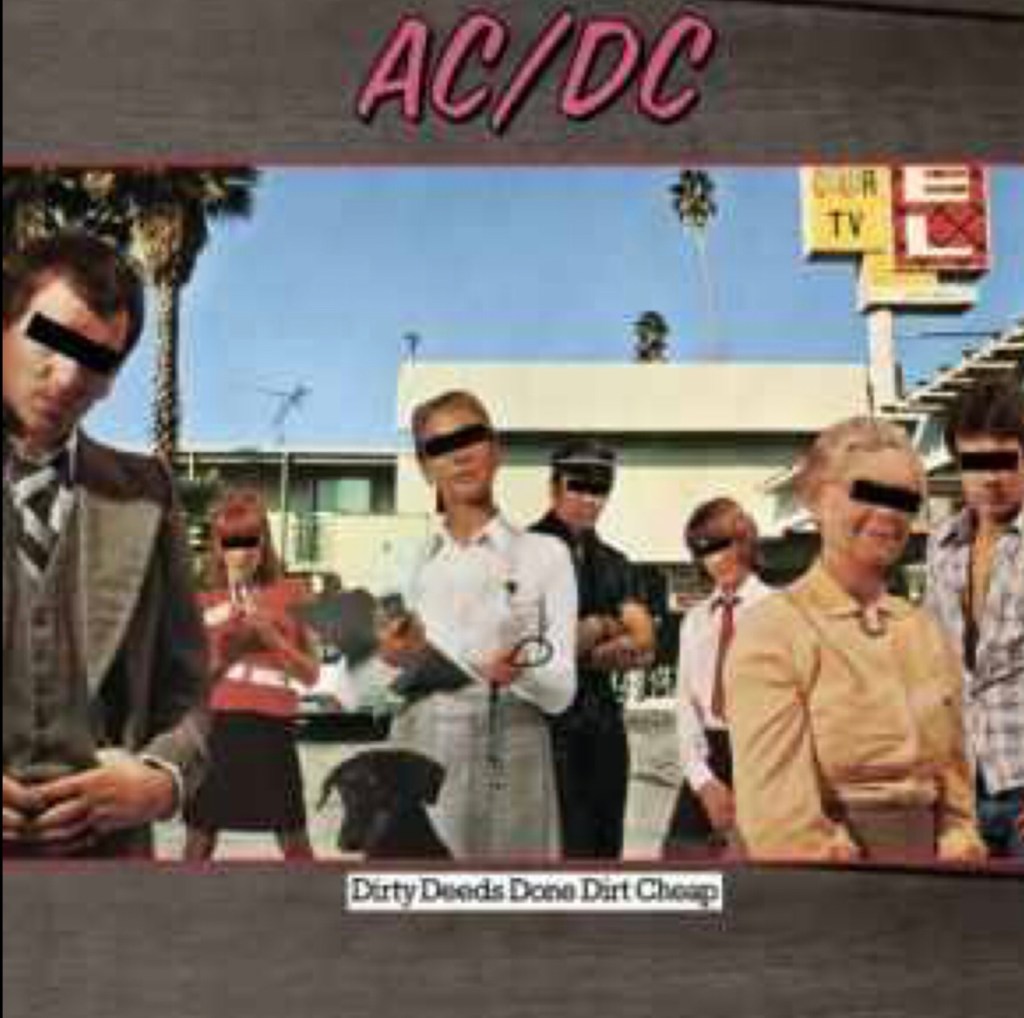
Australian Method Series: AC/DC – Dirty Deeds Done Dirt Cheap

Released in 1976. This is the cover we know for the album and not the Hipgnosis one which came out on the International release.

This version of AC/DC rocked hard. Bon Scott is on Vocals, The Young Brothers are on all things guitar related, Mark Evans is on bass and Phil Rudd is on the Drums.

Production is handled by The Easybeats main songwriters in George Young (big brother of Angus and Malcolm) and Harry Vanda.

“Dirty Deeds Done Dirt Cheap” is the third studio album by AC/DC. While it hit the streets in Australia in 1976, it didn’t get a U.S release until 1981.

And that decisions by Atlantic A&R man Doug Morris to release the album proved to be unpopular with the band.

AC/DC had successfully reinvented itself with a new singer, Brian Johnson. The band was working on a new album, which would become “For Those About to Rock We Salute You”, released later that same year.

But Morris saw a financial opportunity to capitalize on the success of “Back in Black” which had already sold over five million copies. And due to those numbers, Morris estimated that “Dirty Deeds” would move at least 2 million.

But it also took away an opportunity for the new album.

“For Those About to Rock” would have sold a lot more if Morris had waited.

So the US release of “Dirty Deeds” was widely seen as damaging the momentum for that album, which it outsold. The band was also forced to add songs from the “Dirty Deeds” album to its set list on its subsequent tour, further taking the focus away from their new album.

But going back to 1976, Atlantic was unhappy with the vocals and the production. This infuriated Malcolm Young because the label was putting shit on his older brother.

Bassist Mark Evans assumed Bon Scott would be fired as a result. The band was on the verge of being dropped.

But “High Voltage” which was also released in the United States in 1976 was still selling and the sales of that album versus what the label paid for it, gave AC/DC a lifeline.

The Young brothers along with Bon Scott were very creative during this period. As was the norm, each year had a new AC/DC album. And they always overwrote for each album.

As a side note a song called “I’m a Rebel” was recorded for this album, with music and lyrics written by Alex Young, another brother of the Young’s. While the song was never released by AC/DC, Accept somehow got their hands on it and released it as a single, and also named their second album after it.

Dirty Deeds

The riff’s simplicity is its magic.

The drum groove was used by Lars Ulrich for the “Enter Sandman” intro.

The lead break is the embryo of the “Thunderstruck”.

And Bon Scott is menacing as he gave us a new phone number to call.

36-24-36.

Love At First Feel

It’s got that Chuck Berry 12 bar blues rock feel, which AC/DC used a lot of. The most notable song being, “Long Way To The Top”.

Press play to hear a very good and underrated Angus Young lead.

And I like how it quietens down after the solo, with the vocal melody of “Love At First Feel” repeated as they build the song back up.

Big Balls

There was a band in Australia called Skyhooks who had this kind of cabaret/stage show delivery in their songs.

Rocker

Well the songs a rocker alright.

It brings back memories of Val Kilmer performing a rockabilly song in the movie “Top Secret”.

Problem Child

A favourite because of the riffs and the vocal delivery. If there is a track to press play on, then this is definitely one of em.

And Angus delivers another underrated lead break.

In concert, Scott would often introduce “Problem Child” as being about Angus.

There’s Gonna Be Some Rockin’

The 12 bar blues is back. Bands like Status Quo would build a career on tracks like this.

The rhythm is also very similar to that of “The Seventh Son” by Willie Dixon.

Ain’t No Fun (Waiting Round To Be A Millionaire)

It follows more of the same “Long Way To The Top” feel. But press play to hear the Chorus riff, as there’s a chord ringing out and then some arpeggios and single notes.

Ride On

It can be supercharged with other slow blues songs they have done, like “The Jack” and “Night Prowler”

Squealer

How good is the intro on this?

The bass plays a groove that is not typical of AC/DC. It’s almost funky like.

And when Bon Scott moves from his lower register to his higher register, the guitars become more aggressive and the drums get louder.

Angus again wails away on the guitar, delivering a very mature lead. It’s one of my favourite AC/DC cuts and it has been largely forgotten.

This is another track you shouldn’t ignore on this album.

In relation to sales it was a hit in Australia when it came out.

In the US, it was a different story.

Following the American success of “Highway to Hell” in late 1979, copies of the album began to appear as imports in the US.

Some of these were the original Australian edition on Albert Productions; however, Atlantic also pressed the international version in Australia, and many of these were also exported to the US.

Strong demand for both versions (in the wake of the even greater success of Back in Black) led the US division of Atlantic to finally authorize an official US release in March 1981. It went straight to No. 3 on the Billboard album charts.

In relation to sales, 6× Platinum in Australia and the US.

Crank it.

Standard
Classic Songs to Be Discovered, Copyright, Influenced, Music, My Stories

The Week In Destroyer Of Harmony History – February 21 to February 27

4 Years Ago (2018)

THE CRIMSON IDOL

It’s a favourite.

Back in 1992, “The Crimson Idol” ended up being a perfect album for me, in a time when the labels started to put all of their marketing monies into Seattle. I played it a lot, learned riff after riff and lick after lick and it didn’t matter how much time passed between listens, I still knew every lick, every drum roll and every word.

Fast forward many years later (circa 2008) and “The Crimson Idol” was released as a Double special edition CD, with two new tracks. “Phantoms In The Mirror” (which I would place after “The Invisible Boy” in the story arc) and “The Eulogy” (which I would place at the end).

Fast forward another decade (2018) and “The Crimson Idol” has been “Re-Idolized” with additional songs added to the storyline however, “Phantoms In The Mirror” and “The Eulogy” have been left off.

Confused. Me too.

But the review might clarify some things for ya.

8 Years Ago (2014)

RICHIE SAMBORA – Live At The Enmore Theatre, Sydney; 26 February 2014

It renewed my faith in live music.

The previous night to this, I watched Five Finger Death Punch and Avenged Sevenfold. While that was a great concert, the songs got played more or less “note for note” as per the album recordings.

But, Richie Sambora was “communicating musically”. The sheriff was back in town. With three different hand motions he led the band into jams, out of jams and into sing a longs.

Sambora engraved himself into our hearts. He stopped and he talked. Sometimes it felt like for ages. I haven’t seen a lot of people do that kind of a rock show for a while as they are scared in case they lose the audience. Sambora was a true pro. He was endearing himself, creating a bond. And what a show he delivered.

Read the review here.

JAKE E LEE

A lot of people don’t know who Jake E Lee is. Do a survey and you will see?

US sales for week ending February 5, 2014 had Red Dragon Cartel listed with 5,300 sold. The hard-core fans. The niche. And then it didn’t show up on any of the sales charts the following week.

Then again sales of recorded music is not a true measure of success these days. Streaming is.

Are people still listening to the music?

Red Dragon Cartel has a small audience of approx. 2600 who are listening on Spotify.

But there isn’t a song on the Red Dragon Cartel album that can market/sell/push the album.

“Bark At The Moon” marketed the album that carried its title, while “Shot In The Dark” marketed “The Ultimate Sin” album. When Badlands released their self-titled debut, “High Wire” was the song that marketed the album, while “The Last Time” marketed “Voodoo Highway”.

Opening track “Deceived” has a riff, very similar in style and structure. So it is fitting that the vocal melodies are styled from the Ozzy Osbourne vocal phrasing book. I have no issue with artists referencing the past.

“Shout It Out” sounds like it belongs on a Saliva album. Not that it’s a bad thing, it just wasn’t what I was expecting from Jake E Lee.

“War Machine” sounded like a joke as the “War Pigs” intro moves over into “N.I.B”. I guess progress is derivative.

“Fall From The Sky” has a solo that is very reminiscent to the “You’re No Different” outro solo from Jake’s Ozzy’s days and “Redeem Me” captures the Badlands vibe.

Unfortunately, the Robin Zander (Feeder), Maria Brink (Big Mouth) and Paul DiAnno (Wasted) vocal songs just don’t resonate.

If there is a song to comes close to being “the song” to push the debut, that honour goes to “Slave”.

It has the best of Jake E Lee. Metallic riffing, fast single note picking, tritone melodic infusions and it encompasses what Jake E Lee is all about.

WHEN WOULD “SMOKE ON THE WATER” ENTER THE PUBLIC DOMAIN?

The majority of the music that I like will still be under copyright by the time I die. And it’s a tragedy.

Let’s use “Smoke On The Water” as an example.

It was released in 1972.

Copyright on the work is meant to last the lifetime of the songwriters plus 70 years. The male life expectancy is 80 years. The songwriters listed for “Smoke On The Water” are Richie Blackmore, Ian Gillan, Ian Paice, Roger Glover and Jon Lord (RIP).

Let’s start with Jon Lord. Due to his death in 2012, his copyright in the song will expire in 2082. However the song will still remain under copyright due to the later deaths of the other members.

Let’s assume that all of the members live to the life expectancy age of 80 years old. That would mean Richie Blackmore, Ian Gillan and Roger Glover would have an end date of 2025. Add another 70 years to that and the copyright that they hold in the song would expire in 2095.

In other words the copyright monopoly held by the corporations on “Smoke On The Water” will finally expire in 120 plus years after the song was released. It is at this time, the public (provided that no more retroactive extensions are added) are allowed to use the song to build other works on or to create derivative versions or to cover it without any penalty.

But when the artists created this work, the copyright term was 56 years. And the short copyright didn’t stop them from creating.

THE ROCK DREAM

The days of rocking all night and partying every day are gone, replaced by social media/gaming/surfing all night and going to work every day. Rockers are not drinking heavily anymore, nor are they doing copious amounts of drugs.

The sound of a stereo is now captured in expensive headphones.

The days of becoming the legends of the local scene first and then the world are gone. If a band/act is doing great in a city, the whole world will know about it. But you can have a career within a niche.

And it’s not a rockers world anymore. The new rockers are the technologists. The podcasters. They are the ones that everyone is listening too. Check out the applause they get when they hit the stage.

Once upon a time, guitar heroes mattered. They broke ground in song writing, technique, sound and guitar making, inspiring us by demonstrating simplicity in complexity.

I remember when a record could bring about change. When “Shout At The Devil” broke, every band dressed up in leather and studs. When “Slippery When Wet” broke out, all the bands went to pop metal. When “Appetite For Destruction” broke out, bands moved to a more blues based sound. When Metallica broke out twice, bands moved to a faster dirtier sound and then moved to a big heavy groove orientated sound.

The rock dream was never about the money. It was about a lifestyle.

And that’s a wrap for another week.

Standard
Copyright, Influenced, Music, My Stories, Piracy

The Week In Destroyer Of Harmony History – February 14 to February 20

2018 (8 Years Ago)

SPEAKING UP

When artists write lyrics that reflect society and our politics back at us, people get upset. When I think about the past, people who made real change persisted even when others tried their best to silence them.

Artists once formed the chorus of dissent to social ills and corruption. It’s probably a reason why we got so many songs that still stand the test of time today.

Artists told the record label heads what to do, not the other way around.

Machine Head’s new album at the time “Catharsis” was causing division amongst their American fan base. Europe, Asia and Australia didn’t really care about its Anti-Trump stance. Fans of any artist come from different sides of the political debate. It’s expected. No one can agree on everything. If people did, everyone would wear the same outfit. The world would be pretty bland if people all agreed. Wouldn’t it.

It never would occur to me to stop listening to an artist because of a stance they have on an topic.

Artists are not the enemy. They are mirrors, reflecting the world back to us. What we choose to do with the reflection is a different story.

CASSETTE COPYING INCORPORATED

Copying of music has always been there. We used to listen to the radio and record songs from it. We used to record video clips from TV music stations. We would make a copy of an LP from a friend or a family member. We would even re-copy a copied album. The music industry grew because of copying.

So if we used the buzzword of the modern era, piracy was rampant back in the 80’s. Most of my music collection during that period was made up of music copied onto blank cassettes.

You know that peak year of sales for the recording business in 1998. Well there is research out there which suggests it was due to two reasons. One reason was people replacing their vinyl collections with CD’s and the other reason is the people who had music copied on blank cassettes in the 80’s had enough disposable income to buy those albums on CD.

If I didn’t borrow and copy (which the labels call stealing and piracy), I probably never would have become the fan of music I am. As my Dad would always say, “I probably would have had four houses paid off, instead I have a tonne of grey concert T-Shirts, ticket stubs and a wall to wall record collection.” I wouldn’t have it any other way, because the memories are the stories I tell.

1979

Here is the kick off from 1979.

AC/DC – Highway to Hell

Six months after the album release date, Bon Scott would be dead. Mutt Lange is on board to produce at the strong insistence of their U.S record label and it was the start of the holy trinity of albums. Malcolm was less than pleased because it meant older brother George, was no longer involved.

“Highway To Hell” is a rite of passage. It might have been about touring, however timeless songs have lyrics that can be interpreted in many different ways. Plus the riff to kick it off is iconic. Credit Malcolm.

Livin’ easy, Livin’ free

Pink Floyd – The Wall

“The Wall” is Roger Waters lasting legacy. But the best song on the album to me is “Comfortably Numb” written by Gilmour and Waters. Credit producer Bob Ezrin for persisting to get Gilmour’s music on the record. However, it was “Another Brick In The Wall Part 2” that was all over the radio.

Check out “Goodbye Blue Sky” as well, which served as the inspiration for “Fade To Black” from Metallica.

And that outro solo in “Comfortably Numb”. Perfection.

Judas Priest – Hell Bent for Leather/Killing Machine

The first time I heard “Delivering The Goods” was via Skid Row’s “B-Side Ourselves” EP. I enjoyed the Skid’s live take on it, so I went seeking for the album in the second hand record stores. I actually own both copies, the “Killing Machine” version and the “Hell Bent For Leather” version.

Or the iconic riff in “Hell Bent For Leather” which is so derivative that many other bands had a similar riff before and after this song, like the opening riff in “2 Minutes To Midnight”. They even used it again for “Running Wild”.

In relation to guitar playing, Glenn Tipton always kept an eye and ear out for what was hot in guitar circles and he would go away, master these new styles and incorporate those influences and styles into his guitar playing. In this case, he breaks out a tapping lick which was obviously influenced by EVH. On albums from the mid 80’s, Tipton would start to incorporate sweep picking courtesy of Yngwie Malmsteen’s influence.

“The Green Manalishi (With The Two Pronged Crown)” is a great cover of a Fleetwood Mac song, which is written by their original and largely forgotten guitarist Peter Green (RIP), and it works pretty cool in the hands of Judas Priest.

Journey – Evolution

It has “Lovin, Touchin’ Squeezin’” but it’s not my favourite. The three listed songs are for various reasons.

“Lovin’ You Is Easy” has upbeat music and it’s always good to hear Schon rocking out.

“Do You Recall” has melodies which appear in Jovi songs.

“Lady Luck” grooves, taking its cues from Led Zeppelin.

The Police – Reggatta de Blanc

The Police didn’t really write a perfect album from start to finish, but they could write classic tracks.

The intro to “Message In A Bottle” hooks me. And it’s guitarist Andy Summers who saves the day with his add9 chord voicings over a simple bass groove.

Whitesnake – Lovehunter

I didn’t hear this album until very late in the 90’s. During this time I was buying so many second hand LP’s from record fairs and second hand book shops, I can’t even place a memory as to when I purchased it. But I do know I was always a sucker for the 3 for $5 bins.

Press play to hear “Walking In The Shadow Of The Blues” which is written by David Coverdale and the underrated Bernie Marsden.

It all started with the blues. Rock was built on the bones of the 30/40’s blues artists. Metal was also built on the bones of those same artists, along with the defiance and rebellion of rock music. Without the blues, the music I listen to, would not be possible.

KISS – Dynasty

One of the first albums I owned from Kiss and I played it to death, so it’s no surprise I have a few songs from it on my list.

“I Was Made for Loving You” was the obvious single, but it was still an unexpected hit, written by Paul Stanley, Vini Poncia and Desmond Child. Stanley also performs bass duties on this one.

“Sure Know Something” is a mixture between melodic rock, disco and new wave. In the end, it’s still Kiss. The bass groove is unique and the lead guitar break from Stanley is worth the listen.

“Dirty Livin’” is an excellent track. It could have been on a Steely Dan album or a Doobie Brothers record. Instead it’s on a Kiss record and it rocks. Peter Criss sings, it and he co-wrote it with Stan Penridge and Vini Poncia. It’s actually the only track that Peter Criss drums on. Anton Fig played drums on all of the other songs.

“Magic Touch” is solely written by Paul Stanley, which comes loaded with a melodic riff and a pop melody. Still to this day it’s a favourite, purely for its sense of melody.

“Hard Times” is from Ace Frehley and its another Kiss rocker.

2014 (8 Years Ago)

MORE RECORD LABEL INNOVATION

The record labels just kept getting my attention like trying to get the Courts to set a precedent in which the Internet Service Providers act as the Police to monitor music pirates based on the labels say so.

And my favourite was Principle Management (U2’s Management Company) losing money for the fourth year in a row, so its Chairman Paul McGuiness was quick to blame Google for his losses. Talk about sense of entitlement.

BADLANDS

With Jake E Lee excommunicated from the Osbourne camp no one was sure what he would do next. But in 1988, Badlands formed.

The original Badlands line up was Ray Gillen on vocals, Eric Singer on drums, Greg Chaisson on bass and of course Jake E Lee on guitar. And we will never be able to see the band that cut the self-titled debut album reunite. Ray Gillen has passed and Eric Singer said in an interview on the “Daves on Tour” website that his memories of Badlands aren’t good ones.

Eric Singer auditioned for Ozzy back in 1985 and he didn’t get the gig. Greg Chaisson also auditioned for Ozzy around the same period and he also didn’t get the gig. Both of them lost out to Randy Castillo and Phil Soussan. The outcome for both Singer and Chaisson was that they got to meet Jake E Lee and have a jam with him.

Eric Singer also did a stint in Black Sabbath during the Glenn Hughes/Ray Gillen era. Music is a relationship business and it was these relationships, albeit small ones once upon a time, that ended up getting together to create one hell of a debut album.

In an interview with Kerrang from May 1989, this is what Ray Gillen had to say on the bands beginnings;

“I was particularly keen on the project because I had to pick myself up off the floor after my involvement with the Blue Murder project had gone sour. I was basically asked to leave the band due to outside record company pressure. John Kalodner, one of the top people at Geffen Records, simply said that I couldn’t sing!”

Wearing their Seventies classic rock influences on their sleeves and very cleverly merging the minor key riff remnants of the mid-Eighties heavy metal sound, Badlands hit the target. Each song was unique.

The standout song on the debut is “High Wire”. It cemented Jake’s reputation. You can’t keep a super star down and what a great way to open the album.

Seriously, how good is that opening riff?

The beauty of the song is the simplicity. It is a simple A to C, A to D riff, the cornerstone to all classic blues/classic rock songs.

“Winter’s Call” is the most Zeppelinesque song on the album, especially in the verses, combining Middle Eastern drones with Celtic modes. It is also one of the oldest songs on the album, as the song’s roots go back to 1983.

“Streets Cry Freedom” is the next gem and a great way to close off side one. When vinyl was king, albums got sequenced by having a great opening track and a great closing track. The comparisons to Led Zeppelin, Humble Pie and Bad Company are prevalent in this song. The song’s verses are a typical 12 bars blues. Instead of playing it in the standard way, Jake E Lee shows his guitar smarts by arpeggiating the verses.

“Seasons” is the gem on the second side. It reminds me a lot of Led Zeppelin’s “Kashmir”.

This was 1989 and MTV ruled. Bands needed a hit to get recognition. So while “Dreams In The Dark” did the video rounds, as the record label decided it had the most “hit” potential, songs like “Winters Call”, “Seasons” and “Streets Cry Freedom” slipped under the radar.

The self titled album is brilliant. While other artists went with the one hit single per album and the rest as filler, Badlands delivered an album strong from start to finish.

THE WALKING DEAD

So how did a TV show, based on a niche Zombie comic, explode into the mainstream and into people’s consciousness.

In order to understand the answer you need to go back to the beginning. And the beginning for “The Walking Dead” goes back to 1968 and a movie called “Night Of The Living Dead”.

“The Walking Dead” is a classic case of building on works already in the public domain as well as building on existing copyrighted works by creating derivative works.

First the whole Zombie genre owes a large debt to George A. Romero’s classic “Night Of The Living Dead”. Many of the accepted Zombie formulas started here. Something that is quite common to us in 2014, was all brand new to audiences in 1968.

Due to a late name change from “Night Of The Flesh Eaters” to “Night Of The Living Dead”, the distributor forgot to include a copyright symbol on the release and due to this omission, the movie entered the Public Domain on its actual release date. That meant that anyone could do derivative works and also build on the existing story.

The whole opening scene from “The Walking Dead” of Rick Grimes waking up in the hospital alone, is a combination of what has come before.

In “The Day of The Triffids, the main character awakes to a silent hospital to find that his town has been overrun with blinded people.

In “28 Days Later”, a bicycle courier awakens from a coma to find the hospital and the city, completely deserted and overrun by people infected by the rage virus.

In “The Walking Dead”, Rick Grimes wakes from a coma in the hospital to find his town overrun with walking corpses, referred to as ‘walkers’.

Romero did miss out on a hefty payday due to the copyright bungle with “Night of The Living Dead”, but Romero’s story ends well. The film’s popularity OPENED UP MORE OPPORTUNITIES. Romero continued to create movies and the fame that his Public Domain movie gave him, opened up other offers around comics and novels.

In the end, the lack of copyright around one movie, grew and helped define the zombie genre in the same way that the lack of copyright around earlier blues and folk standards helped define the classic rock genre. So next time someone tells you they need stronger copyrights or longer copyrights, point them to the “Night Of The Living Dead” example.

SHARING MUSIC

I got a 8GB USB stick of music given to me recently by a musician friend who told me that I need to check out the bands on the stick. When I was growing up we used to these kinds of trades on cassettes. Back then we had an hours or hour and a half worth of music. Today 8 gigs worth of music is about 270 songs at 320kbps. Yep, that is how it is done today.

Some of the bands on that key are still favourites today like Degreed and Riverside.

RECLAIMING YOUR RECORDINGS

In between solo albums, Henley was busy with the Eagles, Geffen contract issues, Copyright issues against Record Labels, termination rights on songs and the Eagles again.

Henley knows his rights.

While people criticise musicians who turn into business people, it was inevitable that musicians would end up taking the business path.

The great record label rip off/exploitation made them seek this path. It is just unfortunate that a lot of the musicians that didn’t achieve world-wide domination still don’t realise their rights on their songs. Not a lot of hard rock and heavy metal artists are serving notice to their record label to reclaim songs they had written 35 years ago.

While I don’t agree on everything Henley does, like sending a cease and desist letter to an independent band or trying to get a remix law taken off the radar, the bottom line is this, he is a musician that looks out for his own interests. And that is why we loved our heroes.

And that’s a wrap for another week.

Standard
Classic Songs to Be Discovered, Derivative Works, Influenced, Music, My Stories

The Record Vault: Def Leppard – Adrenalize

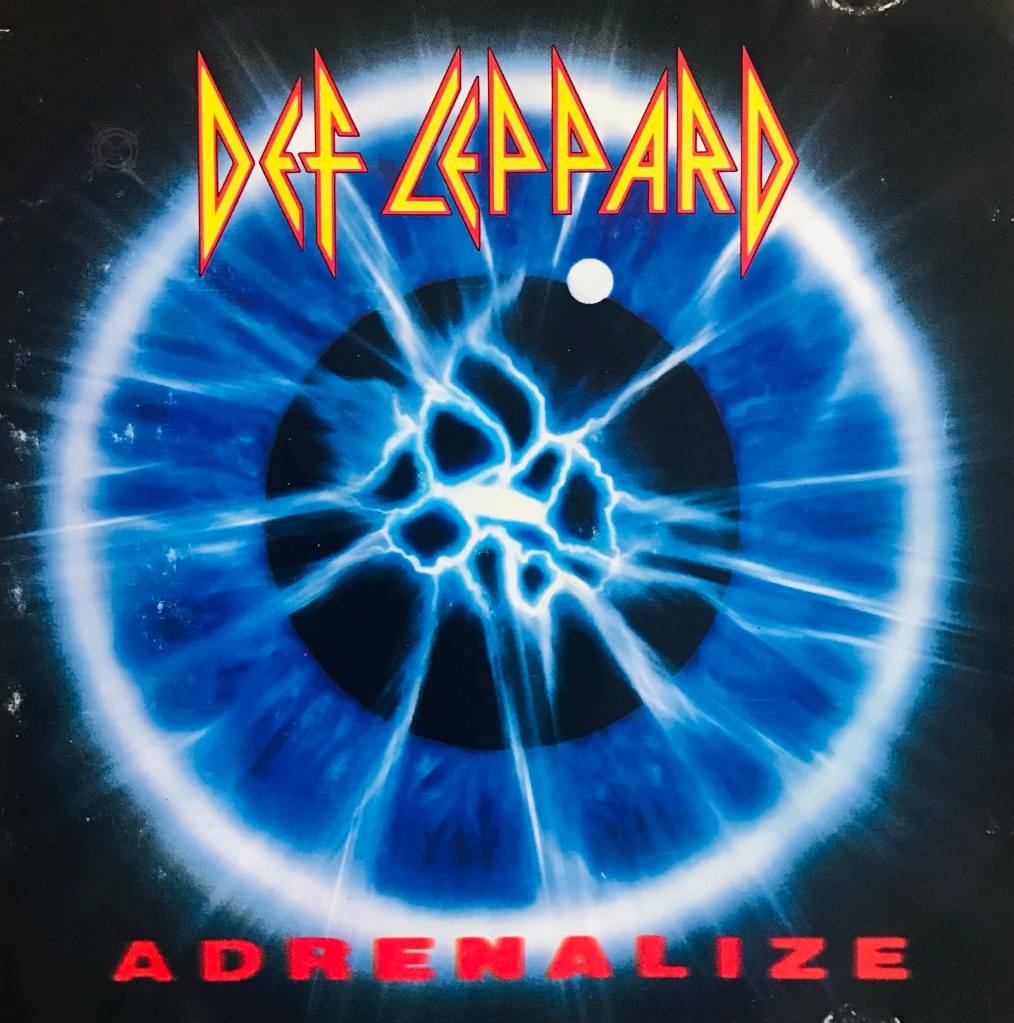
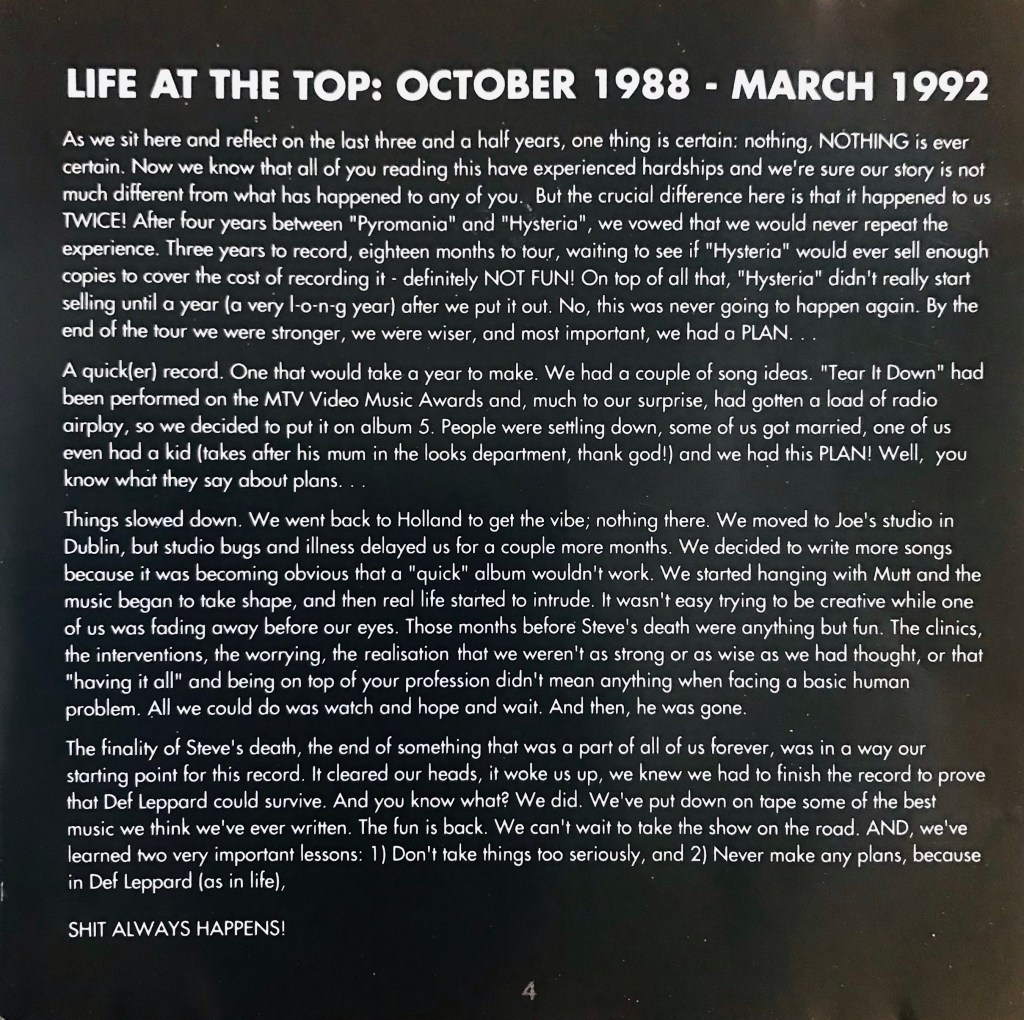
“Adrenalize” came out on 31 March 1992 through Mercury Records.

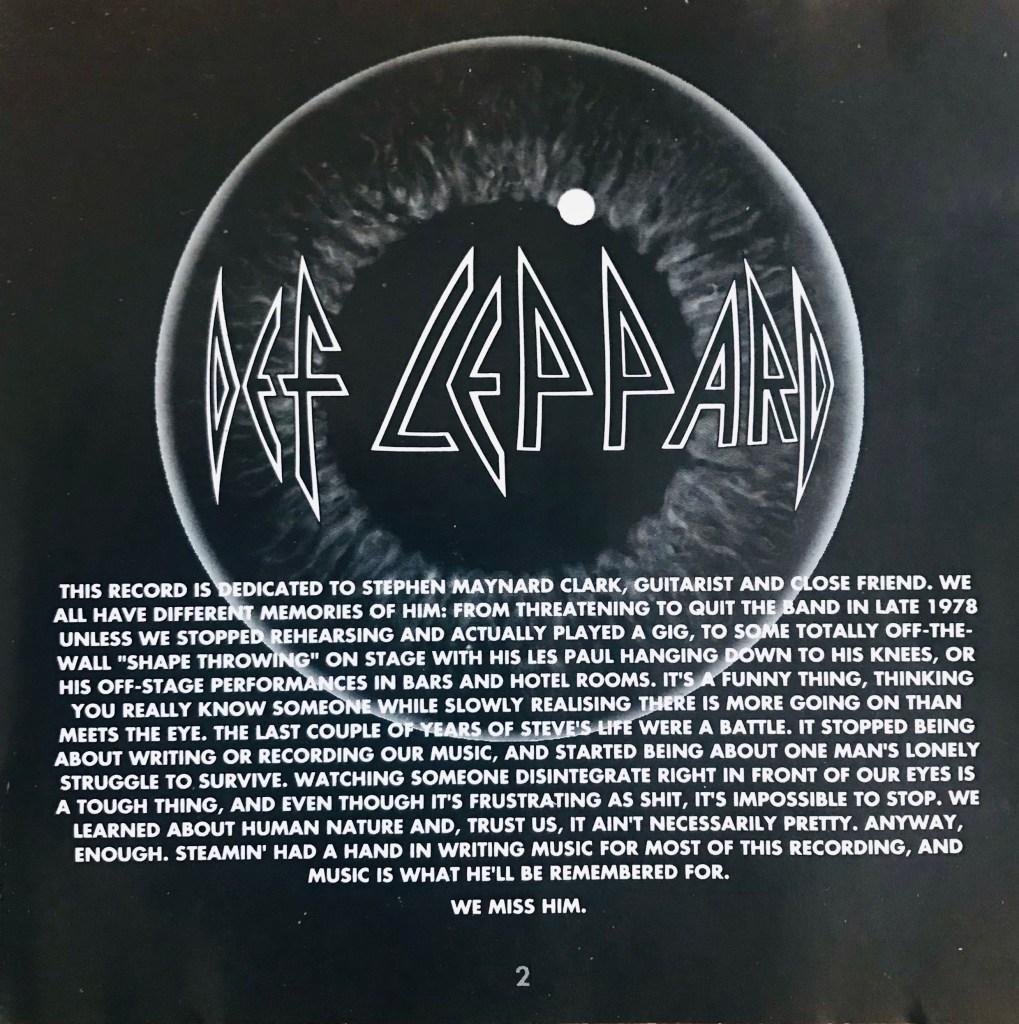
I was a first day buyer because of Steve Clark (RIP). I heard it a couple of times and put it on the shelf. It stayed there for a long time. I wanted to like it but my bias and loyalty to Steve Clark was making me not like it. And I kept telling anyone who listened to me that it was missing the special melodic decorations that Clark was well known for.

Many years later, I did come across various interviews in which Phil Collen stated that he recreated Clark’s parts from the demos because Collen was there with Clark when he played his original ideas for the songs.

And “sort of gone” from the ship was Mutt Lange as he decided it was time to drive Bryan Adams crazy. After three albums, AC/DC didn’t want to work with Lange again. Malcolm Young hated him because he felt his methodical studio takes sucked the life out of the music. Foreigner stopped working with him but Def Leppard still wanted to work with him, and they did the pre-production with him as Lange is there in the song writing department as the fifth member.

I’m not sure what the point of the above is. Is it an eulogy or a “hey, we tried to save him but couldn’t”?

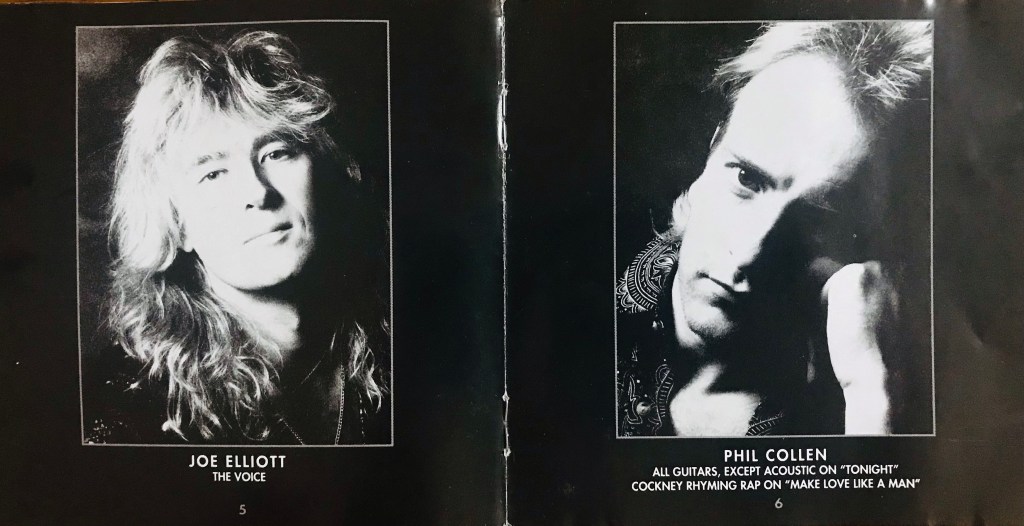
The recording band was Joe Elliott, Phil Collen, Rick Savage and Rick Allen. Interesting to note that backing vocals includes a certain John Sykes who was heavily rumoured by the magazines to be the new guitarist.

Let’s Get Rocked

I couldn’t shake the “Pour Some Sugar On Me” vibe in the verses. And I liked the cleverness in the lyrics, like “I suppose a rock’s out of the question”.

Heaven Is

The music is derivative of Def Lep songs that came before, like “Photograph”, “Armageddon It” and “Let It Go” and I like it.

Make Love Like a Man

It was only a matter of time before a song title would come about to challenge “Dude Looks Like A Lady”. And this one is it. While the song lyrically does nothing for me, the song is great to jam along with.

Tonight

One of my favourite tracks as it has a feel from “High N Dry” and “Pyromania”.

White Lightning

The tribute to Steve Clark.

It’s long droning guitar intro gives way to a “Billy’s Got A Gun” style groove.

Stand Up (Kick Love into Motion)

How good is the start?

It reminds me so much of “Hysteria” and I like it.

And press play to hear the lead break.

Personal Property

It’s back to the AC/DC style riffage on this but the track could have been interchange with any Bryan Adams cut during this time.

Press play to hear that section from 2.17 to 2.38. its classic early Def Leppard.

Have You Ever Needed Someone So Bad

Lange is rewriting, “Everything I Do” here. And it’s a big reason why I was off this album. Like how much Mutt Lange can we really have in our lives. According to the charts and sales of Adams and Twain in the 90’s, a lot of Lange.

I Wanna Touch U

Typical Lange style of song, with a clichéd un-inspired riff that mimics AC/DC.

Tear It Down

My favourite song on the album and it’s an oldie, a B-side from “Hysteria”. It rocks hard and I like the simplicity of the Chorus, which reminds me of “Let It Go”.

In Australia it went to number 1 and to a Platinum award. In the U.S, it went to number 1 and its 3x Platinum. In Canada, it also went to Number 1 and a 4x Platinum award. In the U.K, it also went to number 1 and a Platinum certification. And the trend continued in other countries like Finland, Sweden, Norway, Switzerland, Germany, New Zealand and France.

The tour for “Adrenalize” went for 18 months, beginning in April 1992 and finishing in October 1993. After it, we got the excellent “RetroActive” in 1993 (a collection of unreleased tracks to close off the Steve Clark era) and a Greatest Hits package in 1995 called “Vault”. And the music scene kept changing but we didn’t think that Def Leppard would change that much. Then they dropped “Slang” in 1996 and man, they changed. But that’s another story.

Standard
A to Z of Making It, Alternate Reality, Copyright, Music, My Stories

The Week In Destroyer Of Harmony History – January 31 to February 6

4 Years Ago (2018)

CATHARSIS

I have no issues with lyrics of any kind. I also have no issue with artists taking a stance and commenting on what they see is the state of the world. Opinions are important whether I agree or disagree with them.

So it’s no surprise that on “Catharsis”, Robb Flynn is giving his take on the world. It’s not pretty, but no one said the six o’clock news is pretty.

Check out my review of the album.

APPETITE FOR COPYRIGHT

Seriously you can’t make up the madness that Copyright comes up.

The labels get richer as they keep making licensing deals with techies. Facebook was another techie who made a deal back then.

None of the licensing fee goes back to the musicians, even though it’s the musicians works the labels used in the negotiations. So far Universal and Sony have made the deal and Warner Music Group is in conversation.

And music creators believe a government bill increasing the royalty rate services that play music need to pay, will increase the payments get back. Umm, it won’t. The record labels and publishers will have more money in their bank account and the creators will still get the payments they always get based on their publishing and label contract.

You see, this is what happens when you create a law that creates a monopoly, which in turn gives rise to corporations who become powerful entities. They are all about their own pockets. People who have created no value and no art are living high, from the hard work of artists.

8 Years Ago (2014)

ROADWAY

I was listening to their self-titled EP from 2011.

They had a song on it called “This Is Why” which is a derivative version of “Soldier of Fortune” from the David Coverdale era of Deep Purple.

“This Is Why” is a great song and no one has even heard it. By the way, it features Doogie White and it actually made me call up “Soldier Of Fortune” on Spotify. Yep, “This Is Why” made me want to revisit the Coverdale era of Purple. I even set up a playlist with both of the songs. It is also their most played song on Spotify, however at 60,000 streams it’s virtually unknown.

Roadway does Seventies hard rock vibe. They have it down and it is so refreshing to hear a current band be influenced by that era, especially when the main songwriter Ross McEwen was born in 1988.

And in 2013, they released another EP called “Set In Stone”.

Check em out on Spotify. You will not be disappointed.

THE METAL MANIFESTO

So without further delay, here is The Metal Manifesto;

  • Metal music is a way to belong. We wear the patches/colours of our favourite bands on t-shirts.
  • Metal heads question everything, as we strive to find our own place in society and our own road to walk on.
  • Metal music is a lifestyle. We live it and we breathe it.
  • Metal music is empowerment. It is freedom. It is release.
  • Metal music has its own heavy metal salute, a call to arms, in which the pinkie and forefinger are raised over a clenched fist. Credit Ronnie James Dio for the salute.
  • Metal music is confrontational. Deal with it.
  • Metal music is diversity. It doesn’t matter what colour, religion or country you are from. We are all one.
  • Metal will never fade into obscurity. It is always there, a survivor of the times.

ALTERNATE HISTORY

What kind of musical history would we have if Randy Rhoads didn’t get on that plane?

The “Bark At The Moon” album would still have been written as Ozzy Osbourne had the song titles already and lyricist Bob Daisley was on board to write lyrics again. The big difference would be the music. Instead of hearing the Jake E Lee riff we would be hearing a Randy Rhoads riff instead.

It is pretty clear from all interviews that Randy Rhoads was growing tired with the touring and the Osbourne camp. And that he would leave Ozzy.

So if Randy Rhoads walks away from Ozzy after the “Bark At The Moon” album, Jake E Lee could still be a candidate for the Ozzy job, as Rough Cutt was nowhere near the level of a platinum selling act.

But Dio might have picked him up after Vivian Campbell left. So how different would the “Dream Evil” album be if Jake E Lee brought the riffs that made up the Ozzy BATM album.

But would the Badlands project have existed if Jake E Lee didn’t get a guitarist gig with a high profile act?

And that’s another wrap for another week.

Standard
A to Z of Making It, Classic Songs to Be Discovered, Derivative Works, Influenced, Music, My Stories

The Record Vault: Def Leppard – Hysteria

I didn’t get into this album when it first came out. I’m okay with that.

But then something strange happened. It started to become part of the conversation. After a few false starts with the singles in Australia, they finally got our attention with “Pour Some Sugar On Me”. So we wanted to hear the album.

Metal and rock fans like to buy what is happening. And happening at the same time was Def Leppard and Guns N Roses. If a person went into the record store to pick up a copy of “Appetite”, they would add “Hysteria” to the purchase and vice versa. That’s how I remember it happening. Both albums were slow burners, percolating, until they exploded onto the scenes behind a few songs, like “Sweet Child O Mine”, “Pour Some Sugar On Me” and “Love Bites”.

“Hysteria” cost over $5 million to write and record. It’s Def Leppard’s fourth album, released in August 1987 on Mercury Records, four years after “Pyromania”.

The album was “eventually” produced “Mutt” Lange who at first, came in and did some work with the band, then left to work on other stuff and then came back. While Lange was gone, Jim Steinman came in, but he spent his time trying to change the carpet in the studio (as the colour didn’t suit his taste) and writing “Bat Out Of Hell 2” Meatloaf’s (RIP) comeback album in the early 90’s.

The band for the album is Joe Elliott, Steve Clark, Phil Collen, Rick Savage and Rick Allen. Rick Allen also came up with the album title, in reference to his 1984 car accident and the loss of his left arm from it.

It is also the last album to feature guitarist Steve Clark (RIP) before his death during the writing of “Adrenalize”. As a guitarist, this one hit me hard when it happened. He wasn’t as popular as EVH or George Lynch or Yngwie Malmsteen or Richie Blackmore or John Sykes, but goddamn, he was one of my favorites. Because he played for the song and he decorated each song with his sense of melody.

Because the album took so long to see the light of day, a book was also published called “Animal Instinct: The Def Leppard Story”, written by Rolling Stone magazine senior editor David Fricke.

“Animal Instinct” was also the original album title, hence the “humanimal” in the “laser bulls eye” on the album cover. Metallica used a similar humanimal cover idea for “Hardwired To Self-Destruct”. And I’m not happy that I stupidly traded it for some vinyl records in the mid 90’s. Those vinyl records mean nothing to me right now, but the book did.

It needs to be mentioned, the loyalty shown by the band to allow Allen to return to the drum kit, using a combination electronic/acoustic kit with a set of electronic pedals that triggered (via MIDI) the sounds that he would have played with his left arm.

Even their management team wasn’t sure if it was possible, but they all gave him the chance. And for all those self development books about positive growth mindsets and grit, well, look no further than Rick Allen. He is the definition of positive growth mindsets and grit.

“Hit Makers” by Derek Thompson mentions how most artists’ best work comes AFTER they’ve had a hit.

Def Leppard had the hit with “Pyromania” and then said to the world, “now that I have your attention, sink your teeth into “Hysteria””.

Following the “Blockbuster” method set out by Hollywood (check out the excellent book by Anita Elberse), the artists wanted to create albums in which every song could be a potential single. It happened with “Thriller”. It happened with “Born In The U.S.A”. It happened with “Hysteria”.

And I know that the traditional metal sound found on “Pyromania” was gone, but I was okay with that as well, as it was taken up by Tesla for their debut album “Mechanical Resonance”. If you don’t believe me, check out tracks like “Modern Day Cowboy”, “Before My Eyes” and “Rock Me To The Top”. Even Cinderella’s debut album has sounds and riffs from Def Leppard’s first three albums.

“Pour Some Sugar On Me” gave the album some legs.

But by June 1988, the band was getting ready to go back into the studio to record the follow up. The tour was coming at an end as well in October.

Then in July, 1988, “Love Bites” dropped as a single and the album started selling like a brand new album. The song gave the album another 15 months of life on the charts and it led to “Rocket” being released as a single in January 1989. And the album just kept on selling.

Women

I didn’t appreciate this song when it was first released as a single, but along with “Gods Of War” it’s one of the most heaviest on the album. Check out the intro lead and that Chorus riff.

Rocket

Musically it’s pretty simple with a F# major arpeggio being the main riff, a Joe Elliot vocal melody in which he raps his favourite acts and a Led Zep inspired “Rock N Roll” break down.

Animal

This song gave the melodic rock movement a heart. And I like how one guitar plays a rhythm track and the other guitar just decorates with melodic fills and leads.

Love Bites

I don’t normally like ballads, but this song is unbelievable. Steve Clark is on Rhythm here and Phil Collen is the decorator, with his melodic fills and leads.

That layered Chorus hook alone, is heavy and with Collen playing those metal like leads, well it’s perfect.

Pour Some Sugar on Me

Step inside I did.

The intro riff is reminiscent of the hard rock songs from their first two albums with a Chorus similar to “I Love Rock N Roll”. And whatever “Sugar” they wanted to have poured over em, they definitely got it.

Armageddon It

The riffs on this song are Classic Rock and from their earlier albums.

The intro riff is “Photograph”. The verse riff is a blues boogie, reminiscent of AC/DC. And the song goes through so many key changes, it’s hard to keep up.

But my favourite part is the E major solo section. Press play and enjoy.

Gods of War

Side 2 begins with my favourite track on the album.

How good is that Beatles “She’s So Heavy” inspired outro?

Even the band realised this song is one of their best, bringing it back into their set lists.

Don’t Shoot Shotgun

It’s AC/DC on pop rock steroids. If you don’t believe check out the verse riff and tell me it’s not AC/DC like.

Run Riot

How good is this song?

Joe Elliot throws his voice out on this one, as he delivers a 60s/70s sugar gum pop vocal in the verses. If anything its very Sweet like with a bit of rockabilly.

Hysteria

Perfection.

And I like how that major key guitar riff for the intro and verses sounds haunting, because of the open G string.

Excitable

I didn’t know what to think of this song.

The start of it with the voices didn’t really get me excitable, but when the vocals kick in, it’s got that soul rock funk vibe, and I love it.

Love and Affection

It’s basically “Animal” part 2. Not that it’s a bad track, but with so many other awesome tracks ending up as B sides, it makes me think the album would have been better served with one of those tracks.

If you look at the albums popularity, it’s 4× Platinum in Australia, Diamond in Canada, Platinum in New Zealand, Gold in Norway, Gold in Sweden, Platinum in Switzerland, 2x Platinum in United Kingdom and 12x Platinum in 12,000,000.

There’s nothing else to be said, except, press play and enjoy a blockbuster release.

Standard
A to Z of Making It, movies, Music, My Stories, Stupidity

The Week In Destroyer Of Harmony History – January 24 to January 30

4 Years Ago (2018)

ZAKK WYLDE

I overdosed on “A Love Unreal” from Black Label Society.

Since 2014, I have been playing “Angel Of Mercy” non-stop. It’s made my 2014, 2015, 2016 and 2017 end of year lists. It’s always in my Top 100 Spotify songs I play each year. The guitar solo on it is “guitar hero” level. With “A Love Unreal” Zakk has orchestrated another candidate. The guitar solo on this song is a 10 out of 10 for me.

It’s a song within a song. God damn, the whole solo section is 1 minute and 20 seconds long. There are pop songs on the charts which are 2 minutes long.

8 Years Ago (2014)

METALLICA

The Grammy’s is not about the awards, it is about the performances. The Grammy organisation exists solely to sell a TV show and advertising.

The music websites back then wrote about the performances, and how Metallica mashed up “One” with classical pianist Lang Lang. And they got a 125% boost in Spotify streams for the song “One”. Overall, across their whole catalogue, their Grammy performance gave them a 63% increase.

No one wrote about the actual winners in the Best Metal category.

Who was it again?

That’s right, it was “God Is Dead?” from Black Sabbath, And it didn’t get any traction after the awards.

METAL HEADS

We overpay for music in Australia.

The ACCC, our competition watchdog launched an inquiry into the pricing. The techies went in front of the commission and stated that they didn’t set the price for music in Australia and that the price was set by the Record Labels.

It was found by the Commission that there should be no reason why Australians should pay more for software and music.

However, nothing has changed in relation to the prices. If anything, with the labels pushing vinyl, the prices have quadrupled, with a brand new double vinyl set going for $80.

And music sites would talk about the return of vinyl, but its miniscule compared to what digital brings in. Music is about data. It’s not about how many albums or songs are sold.

Are people listening, sharing and talking about your music?

And if they are, where are these people located, so you can organise ways to tour there and monetise.

DEPRESSING SONGS

I don’t see myself as depressive, but I do have a lot of songs in playlists that are classed as depressive or sad. So I wrote about some of the songs. The link is more in depth however I will summarise.

“Give Me A Sign” is from the album “Dear Agony” by Breaking Benjamin released in 2009. “Break Away” is from the album “The Illusion Of Progress” by Staind released in 2008.

“What A Shame” is from the album “The Sound Of Madness” by Shinedown released in 2008. “Broken Bones” is from the album “Light Me Up” by “The Rev Theory” released in 2008.

“Let Me Be Myself” is from the self-tilted Three Doors Down album released in 2008. “Alias” is from the album, “A Sense Of Purpose”, released in 2009.

“Wake Up” is from Story Of The Year, who are a very underrated band in the metal community. From the outset they got labelled as Emo. However, to me I always saw them as a metal band. This song is from the “The Black Swan”, released in 2008.

“That Was Just Your Life” has so many familiar bits, like the “Enter Sandman” riff backwards, the harmony guitars at about the 5.50 minute mark ripping Thin Lizzy rip offs and a section in which they plagiarise “Jump In The Fire”. Call it a great song, to open up the “Death Magnetic”.

“The Forgotten” is from the last album of the Howard Jones/Killswitch Engage era released in 2009 and what an album it is.

“The Unforgiven III” is another Metallica classic.

Set sail to sea, but pulled off course

LIFE MESSAGES FROM MOVIES

American Hustle and The Wolf Of Wall Street

These two movies are for all the people who believe that if you work hard, get a good education and put in the 12 hour days, that somehow, success will work itself out and befall on them.

But it doesn’t really happen that way at all. Everybody is putting a scam in motion.

What these movies have shown is that it doesn’t matter what level of education a person has. It doesn’t mean that they will win. Quitters never win and it is the winners that write history. The winners write history because they bend the laws and they twist social morals to suit them. People may not like it, but it’s the truth.

Oblivion

I love it’s eeriness.

This movie is for the people who only believe what they are told and even when they come across something that questions that belief, they re-frame it and twist it, so that it conforms with what they believe in, because that is all the know. Whatever Mission Control said was the truth and the whole truth.

We life in an information society right now with everything at our fingertips.

Don’t be a fool. Do your own research and question everything. Don’t just follow. Whereas “The Wolf Of Wall Street” and “American Hustle” reflect the hustling mentality of life, “Oblivion” reflects our servitude to institutions.

Now You See Me

This movie is a sleeper hit. For a movie that cost $75 million to make and promote, it has returned over $350 million.

World War Z

I wrote back then how we have had a pretty clean run in relation to pandemics compared to previous centuries. I guess it was a bit premature.

In “World War Z” the virus needs a viable host to spread and therefore it is found that people inflicted with various diseases are immune from the zombie swarms as they cannot spread the disease.

Respect our world is the message that I get from WWZ. The more we disrespect it and pollute it, the more we and our future generations will suffer.

And the rich pharmaceutical companies care about treatments. There is no money in cures for them.

RICHIE SAMBORA

I found an Hot Metal article from November 1991 on Richie Sambora, so I did the painstaking task of typing it all up and adding my own comments. The interviewer is Stefan Chirazi and it was part of Sambora’s press campaign for his first solo album “Stranger In This Town”.

1991 was three years after “New Jersey” came out and five years after “Slippery When Wet.” The band Bon Jovi was on hiatus meanwhile Jon Bon Jovi had another hit with “Blaze Of Glory.” This was a crucial time for the artist known as Richie Sambora.

Here are some quotes from the article;

“I don’t consider myself a rock or pop star, I consider myself a musician and I would like people to consider me as an artist.”

“At the time Blaze Of Glory hit, Jon said he didn’t really know if he wanted to go on with the band again. That kind of left me in a difficult position because I didn’t have a record contract and I didn’t have a contract with Bon Jovi.”

“Then, at the end of our last tour, we had some disagreements about different things. I owned the record company which is now Jamco and used to be The Underground – Jon and I and Doc McGhee owned it all together. And I didn’t wanna be part of that anymore because I was so tired and beat up from being out there so long.”

“Bon Jovi’s sold 30 million records and I can’t even evaluate that or relate it to real terms. All I know is that I work as hard as I can, and at this stage of my career I’m still working this hard.”

1992 – The Year That Hard Rock Forgot

1992 was the year of transition.

Once the year was over; hard rock, melodic rock, glam rock and so forth would never be the same. In relation to hard rock releases, what a year it was. So many great albums got released, however according to the record labels barometer of success, those albums failed miserably.

One of the best releases from 1992 was “Blood and Bullets” by Widowmaker. Not only is it a great album, it was also the first “official” album to feature Dee Snider from Twisted Sister after Twisted Sister.

Along with the self-titled Lynch Mob album, “The Crimson Idol” from W.A.S.P., “Dog Eat Dog” from Warrant, “III Sides to Every Story” from Extreme, “Sin-Decade” from Pretty Maids and “Revenge” from Kiss, it formed my decadent seven wonders of heavy rock.

My metal tastes got serviced by “Countdown to Extinction” from Megadeth, “Fear of the Dark” from Iron Maiden, “The Ritual” from Testament, “Dehumanizer” from Black Sabbath, “A Vulgar Display of Power” from Pantera and a new band from Seattle called Alice In Chains” and their excellent “Dirt”.

Dream Theater blew me away with “Images and Words” while Yngwie Malmsteen delivered the excellent “Fire and Ice” and no one outside of his hardcore fan base heard it. Another neo-classical shredder Tony MacAlpine released “Freedom To Fly” and boy didn’t he fly with it.

“Hold Your Fire” from Firehouse, “Five Wicked Ways” from Candy Harlots, “Don’t Tread” from Damn Yankees, “The Southern Harmony and Musical Companion” from The Black Crowes, “The Wild Life” from Slaughter, “Nothing Sacred” by Babylon A.D., “Hear” from Trixter, “Tangled In Reins” from Steelheart, “Double Eclipse” from Hardline and “Adrenalize” from Def Leppard satisfied by hard rock cravings.

And the record labels just abandoned this music.

PEARL JAM – BLACK

Smith and Myers cover this song.

I didn’t like “Even Flow” or “Alive” when they hit the air waves back in 1991. They just didn’t connect with me at that point in time. In addition, I was really anti-grunge because all of the rock bands that I was into started to disappear.

So I was staying loyal to my team. The hard rock team.

Then in 1993, I saw a live performance of the band on MTV doing “Jeremy” and then they went into “Rockin In The Free World” with Neil Young and suddenly, I was interested. Loyalty to hard/glam rock was still strong, however in the end I am a fan of music and if there is great music to hear from other genre’s I will dig deep and hear it. So I asked a previous hard rock friend of mine who switched to the grunge side to copy the album onto a cassette for me.

Oh, the shame of admitting defeat.

And that’s another wrap for another week.

Standard
A to Z of Making It, Classic Songs to Be Discovered, Derivative Works, Influenced, Music, My Stories

The Record Vault: Def Leppard – Pyromania

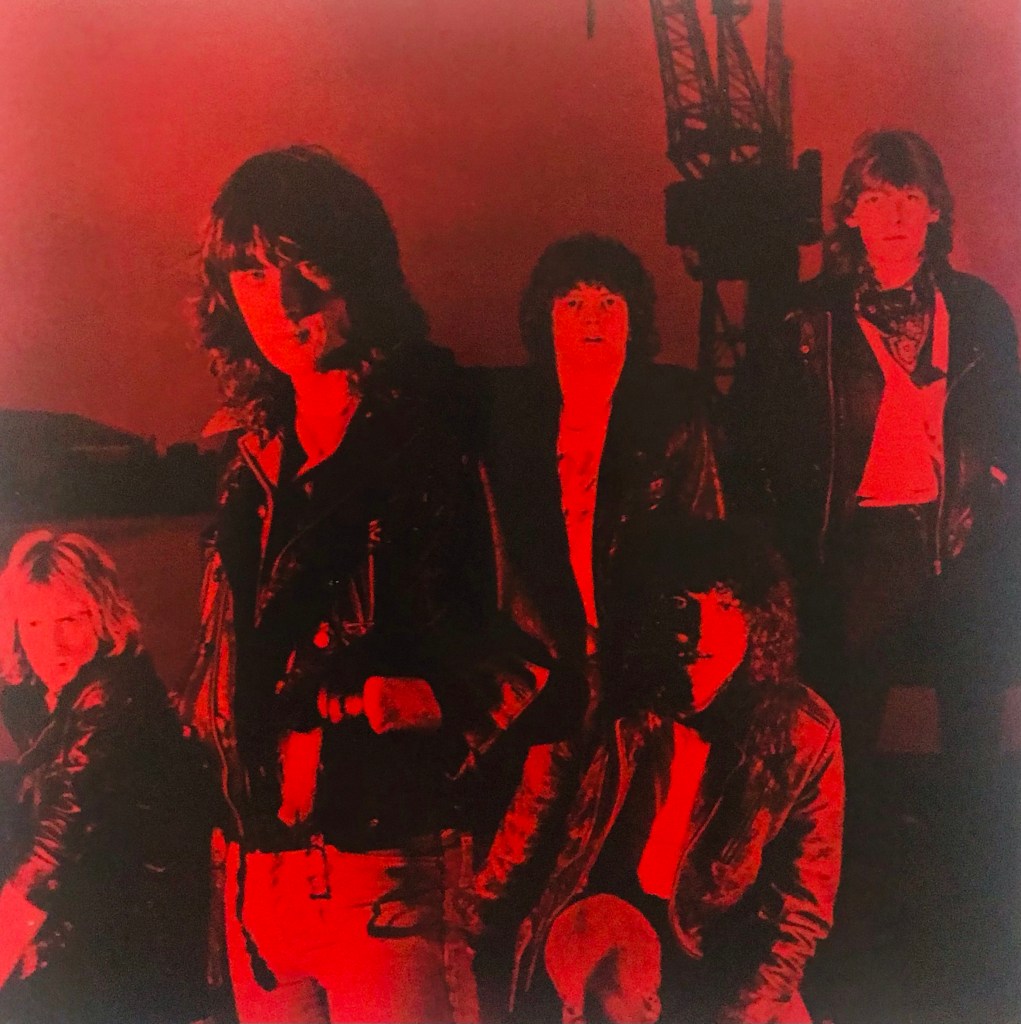
In 1983 and 84, it felt like there was “Pyromania” and then there was everything else.

Quiet Riot didn’t have the same success in Australia that they had in the U.S and Motley Crue was a few years away from their “Home Sweet Home” fame in Australia.

The Lep’s wanted to be on top of the pop charts. That was their mission. The rise was slow but gradual.

If you like rock and metal music, you would like this album. If you like pop and other forms of music, you would still like this album.

The “Pyromania” story begins with “High ’N’ Dry”.

The album didn’t sell what the band and the label expected it to sell. And their UK headlining tour had them selling 25% of the tickets. In other words, they were pulling in between 400-500 people in 2000-seat theatres.

Def Leppard was then given a supporting slot on the European Leg of the “Point Of Entry” tour by Judas Priest. But they never had a chance to make an impact, coming on second after Accept, who had massive momentum with “Balls To The Wall”.

The tour finished in December, 1981.

But the band was busy writing riffs on the road and man, they sure had a lot for new songs. They also revisited some older songs and rewrote em lyrically or rearranged em musically.

“Medicine Man” wasnt good enough to make the “High ‘N’ Dry” album but it was beefed up and retitled “Rock Rock (Till You Drop)”. With new lyrics, it became the album opener.

There was another unfinished track which was described as “a dual-guitar pop song” by Joe Elliot in an interview at TeamRock.com. Well that song was also finally completed, and it became known as “Photograph”.

Producer Mutt Lange, was also on board, being listed as a co-writer on all of the album’s 10 tracks which bothered Willis as he believed that wasn’t the case.

When the band was given the green light to record, the budget was tight. Two albums in, the band was in debt to their label to the tune of £700,000, and each band member was on wages of £40 a week.

A cold hard truth on the realities of the recording business and the creative accounting of the labels is that the bands incur debts that could last forever.

The album finally hit the streets in January 1983.

But.

The album was selling slow in the U.K. A showcase gig at the Marquee Club in London on February 9 had a very small attendance.

But in North America, it was a different story.

MTV put the songs “Photograph,” “Foolin’” and “Rock of Ages” on constant rotation.

Suddenly rock and metal bands changed the way they recorded. NWOBHM bands started to sing more melodically and with multi-layered backing vocals.

Joe Elliot once said that he wanted the power of AC/DC mixed with the variety of Queen for Def Leppard. That equals “Pyromania”.

I had the vinyl but it was also in the same box that went missing during a house move however I picked this up on CD.

Rock Rock (Till You Drop)

It’s a sound and groove that Cinderella and Kix and many other U.S acts would put to good use to build careers’ on.

But it was guitarist Pete Willis who wrote the riff to “Rock Rock (Till You Drop)” however he’s not credited.

Willis and Lange didn’t get along at all, constantly clashing with each other in the studio which then also led to tension with the other members.

As a founding member, Willis didn’t believe he could be removed or fired. But removed he was.

Anything goes

Photograph

There is no denying the riff. It’s as good as any of the classic riffs that guitarists play in guitar shops and so forth. Structurally, the song goes all AC/DC style riffing in the verses and pop rock like in the Chorus.

Stagefright

Rick Savage came up “Stagefright”.

It’s got this Sweet “Action” vibe merged with metal riffage in the verses and a pop chorus.

Too Late For Love

As soon as this song starts off, I swear I’ve heard it somewhere else.

Die Hard The Hunter

You feel the sadness as soon as the Emadd9 clean tone arpeggios kick in and it gets even sadder when Joe starts singing “Let’s toast”. Then it goes into a riff that Queensryche used when they wrote “Revolution Calling”.

That section from 4.05 to 5.05 always gets me to stop what I’m doing and start paying attention.

Foolin

The opener to Side 2, with that majestic guitar part.

The magic is in the arpeggiated intro and the eventual build up with the layered backing vocals singing “Is anybody out there?”.

This song stands the test of time.

The lead break begins with a call and response. It reminds me of “Over The Mountain” from Randy Rhoads and Ozzy.

Rock Of Ages

The first time I heard em.

Yeah, it’s better to burn out / Yeah, than fade away

A rock and rollers creed.

Rise up, gather ’round / Rock this place to the ground

Burn it up, let’s go for broke / Watch the night go up in smoke

Rock on (rock on) / Drive me crazier / No serenade, no fire brigade / Just the pyromania, come on

This is the embryo of “Pour Some Sugar On Me” and they take inspiration from Queen, by using songs like “We Will Rock You” and “Another One Bites The Dust” as influences for the verse delivery/structure.

When the Chorus comes in after two verses, it’s well worth the wait. “Don’t Stop Believin’” from Journey also used this kind of song structure.

Rock of ages, rock of ages / Still rollin’, keep a-rollin’

Rock of ages, rock of ages / Still rollin’, rock ‘n’ rollin’

You won’t be able to stop yourself from singing along with the chorus.

Comin Under Fire

This song is a must for any guitarist. It merges 70’s classic rock, with the NWOBHM sound with Scorpions Euro Metal.

The intro alone has it all.

Arpeggiated guitar lines hook you in and then the pedal point riff blasts through the speakers.

When the verses come in, we are greeted with volume swells that outline the different chords.

Like the pre-chorus of “Foolin”, the chorus of “Comin Under Fire” has excellent layered backing vocals. Lyrically, it’s not the best, but musically, it rules.

Billy’s Got A Gun

Steve Clark was a Jimmy Page fan, so it was no surprise that he was the one who created this Zeppelin-influenced epic.

Never underestimate the ability of a song to paint a picture.

This is my favourite Def Leppard cut and it has so many good bits.

The verse bass riff reminds me of “Heaven and Hell”. The backing vocals are so layered, melodic and operatic. The overall drum groove reminds of “Kashmir”. And I guarantee you that Chris DeGarmo, Geoff Tate and Michael Wilton all had this album and paid particular attention to this song as the “Operation Mindcrime” album is musically influenced by “Billy’s Got A Gun”.

And you get an unbelievable solo and an ending that makes you press play again, so you hear the album over and over and over again.

As time marches forward, the greatness and power of this song is being forgotten.

And it’s like the band made a crossroads deal to achieve fame. The success of this album put the band members on different paths than the previous ones they were on and that would lead to different outcomes for them.

On New Years Eve, 1984, Rick Allen went to overtake a car and failed to negotiate the bend. He lost part of his left hand in the accident and surgery to reattach it, led to an infection and then eventual surgical amputation.

And no one knew it at the time, but it was going to be long wait for the next album.

On a side note, Trevor Rabin and Mike Slamer are both thanked in the credits.

Those two dudes are very well known session guitarists, so I’m asking the question; did they actually play on this?

Slamer was used by producer Beau Hill on most of the records he produced in the 80s. If you have an Alice Cooper, Kix, Winger, Streets, Warrant, Fiona, Europe, Twisted Sister and Ratt album, then there is a high chance that Slamer played on it.

Standard
Influenced, Music, My Stories

The Week In Destroyer Of Harmony History – January 16 to January 23

I’ve been all over the place with posts this month.

It all started when I got Covid around the 7 January (from my brother in law who had it and decided to keep it secret and infect us all) and although I’m triple vaxed, there are still some minor symptoms like a constant cough, a small temperature increase and just tiredness or laziness.

So these posts are normally released on Sunday’s but I’ve been late.

4 Years Ago (2018)

FORGOTTEN 80’S

“Better Days”, “Taking On The World” and “The Feeling Within”. From Gun, a very underrated and under-appreciated band.

With their debut album, GUN got lumped in with the hard rock/glam rock style of bands because that’s the only way the record labels knew how to promote the music. They would basically compare it to something else which is popular and hopefully they would get 10% of that audience to buy blind. 30 years later, it’s still the only way record labels know how to promote music.

“Now Forever After” and “Stargazer”. From Kingdom Come.

The most well-known version of the band only lasted two albums and one touring cycle. By the late 80’s the record labels didn’t care about artist development. It was all about platinum certifications. If the artist got one, they had another shot. If the artist didn’t get one, they got dropped.

Kingdom Come went platinum with their debut and their follow up didn’t set any sales record alight, even though it was better musically than the debut.

Musically, Kingdom Come had three sides. One side was the 70’s inspired classic rock of Led Zeppelin. The other side was the blues rock of AC/DC, while the third side was the Euro melodic rock inspired by Deep Purple, Scorpions and Rainbow combined with a little bit of Toto and Styx.

Check em out.

“I Believe In You”, “Knock You Out” and “Hands Of Time”. From Y&T.

For many, “Earthshaker” is a landmark album. If you took all of the different rock stylings happening at the time, and put them into the Y&T blender, “Earthshaker” is the result.

For Y&T, they were just happy to have a deal with A&M, after two albums on a different label who had had no clue what to do with the band.

Coming into the album, Y&T had already played the songs live quite a bit, hence the reason why everyone who heard the album said, “wow, these songs would really work live”.

“Abandon” and “Heartbreaker”. From Dare.

Both songs are from the “Out Of The Silence” album released in 1988 on A&M records. Dare was formed in 1985 by former Thin Lizzy keyboard player Darren Wharton after Phil Lynott had dissolved the band.

They had some success and when their second album “Blood From Stone” released in 1991 tanked in the sales department, the band was dropped.

“Lovers”. From Fate.

One of those acts who are classed as B or C level. This is from the “Cruisin’ For A Bruisin’ album released in 1988. A friend of mine had this album and he dubbed it on a blank cassette for me around 1992. I knew nothing of the band back then and I still don’t know anything about the band today, but what can I say, I’m a sucker for a derivative and clichéd melodic rock song and as soon as the Aldo Nova “Fantasy” influence kicked the song off, I was hooked.

“Future World”, “We Came To Rock”, “Yellow Rain”, “Loud’N’Proud” and “Rodeo”. From Pretty Maids.

They should have had more mainstream success. Not sure if the band name helped their chances or hindered them. Check out the “Future World” album.

“Under The Gun” and “Turn It On”. From Danger Danger.

For a band formed in 1987, they had Al Pitrelli on guitar for a brief time, and after they got a recording contract, Pitrelli left and was replaced by Saraya guitarist Tony “Bruno” Rey (who actually played on the debut album) before he returned to Saraya and Andy Timmons replaced him and played on the rest of their debut album, which was released in the same year.

“Long Way From Home” and “Angel In My Heart”. From Britny Fox.

Carbon copy of Cinderella, Britny Fox formed in 1986 in Philadelphia. In fact, the band had former members of Cinderella in its roster and their connections to Cinderella allowed the band to secure a major recording contract. And while they sounded like other bands, I’m still a sucker for derivative rock.

“Misery Loves Company”, “Nobody Knows”, “Hard Luck” and “Letters In The Rain”. From Lillian Axe.

Formed in 1987, they caught the attention of Ratt’s management which led to a record deal with MCA and Ratt’s Robbin Crosby producing the band’s first album, “Lillian Axe”.

As Wikipedia tells me, neither the debut nor the 1989 follow-up, “Love + War”, met commercial expectations and the group was quickly dropped. But check em out.

“The Right To Rock”, “United Nations”, “King Of The Rock” and “Don’t Say You Love Me”. From Keel.

The rock is strong with Keel.

And Ron Keel was always a full throttle with his voice.

Don’t let anyone tell you
How to live your life
But they do tell us how to live our lives. If you have a credit card, you are being told how to live your life with each monthly repayment. If you have a mortgage, you are being told how to live your life with each monthly repayment. God forbid if you are late. If you have are employed, you are told how to live your live every single day, just so you get that fortnight or monthly pay gets deposited into your account.

I’ll make my stand
If you’re with me, raise your hands

We had splintered by 1987.

Metallica went on tour with James Hetfield having a sticker on his guitar that said something like “Kill Bon Jovi”.

Mustaine called Queensryche “Yuppie metal”.

Any artist that introduced keyboards or had keyboard players got labelled as sell-outs. Any artist that brought in outside writers also got labelled sell-outs.

The label marketing machine was in overdrive creating new genres. We had Glam Rock, Pop Metal, and Glam Metal. We had hard rock, progressive rock, psychedelic rock and pop rock. We had thrash metal and speed metal. We had heavy metal and technical metal and progressive metal. Death metal was becoming a thing. Europe was having their own thing happening with power metal, progressive classical metal, folk metal and the embers of a black metal scene were beginning.


In the states, hard core was a thing and when it became heavy, grindcore became a genre. Punk was just punk, once upon a time. Then it became post punk, punk rock, punk metal and punk pop.

It’s like that scene in “The Warriors” with Cyrus trying to unite the gangs. It didn’t end well for Cyrus.

8 Years Ago (2014)

ADAM DUCE

When original founding members are removed from the band they founded, the only winners are the lawyers.

Adam Duce claimed that Machine Head kicked him out of the band just before they signed a new record deal however the Machine Head camp said, Duce left on his own because he was “sick of it”.

So Duce sued the band, its three current members and manager in Federal Court, alleging trademark infringement, breach of partnership agreement and defamation, among other things.

When a member leaves or is fired from a band (depending on what story you believe), this rubbish normally happens.

It will all come down to the band agreement in place. Being in bands previously, the band agreement is a document that is meant to be fair amongst the band members. So if the other members feel like they are putting in more effort, then why should they split things evenly.

Robb Flynn is a lifer when it comes to music. He lives and breathes Machine Head. He is the main songwriter, the one that goes home and thinks about Machine Head. The one that dreams about Machine Head. The one that stays to the late hours recording the albums, mixing them and all of that.

There are no winners in court cases like these except the lawyers/attorneys.

And a few months later, the case was settled with the terms of the deal remaining confidential as both sides were able to reach a satisfactory agreement.

Fast forward to 2019, Adam Duce, Phil Demmel and Dave McClain had a jam session at the opening night of Demmel’s Pub. Which is bizarre as McClain was going to quit Machine Head if Duce remained.

I guess hell had frozen over.

CHAOS

It’s a chaotic and disruptive time in the music business and with chaos comes opportunity.

On one side you have COPYRIGHT. And that can be broken down into a lot of other little chaotic categories like infringement, the length of copyright terms, copyright monopolies, the lack of works entering the public domain and so on.
The public domain is culture. Keith Richards once said, ‘you can’t copyright the blues.’

Culture is built and expanded by sharing stories and building on the works of others. Led Zeppelin, The Beatles, The Rolling Stones and all of the sixties greats like Hendrix, Clapton and Beck used this concept. They built off the blues.

However copyright law and its real purpose got hijacked by corporations and everything changed. Instead of culture being built up in the works that the public creates and shares, the public is now faced with copyright corporations locking away works that should be in the public domain by now.

It is important to respect the public domain.

THE PEOPLE BEHIND THE SCENES

Video games are one of those peculiar cultural items where the games are well-known, however the actual designers are not really known.

Does anyone know the names of Tomohiro Nishikado (“Space Invaders”) or Toru Iwatani (“Pac-Man”) or Yu Suzuki (“Outrun”)?

I didn’t, however I knew the games and I even spoke about the games to my kids.

And it got me thinking about some names behind some of the great music that I love.

Tom Werman is one person that comes to mind immediately. Regardless of the different versions of history out there from some of the artists that he worked with, one thing is clear; Tom Werman was a pop producer who got selected by the A&R people of the labels as the man to get hard rock acts on the radio. And he did that job with a lot of Gold and Platinum certifications along the way

Michael Wagener is another that comes to mind. He was a producer, an engineer and a mixer.

What about Randy Staub?

He engineered “Dr Feelgood” from Motley Crue, the black album from Metallica, “Keep The Faith” from Bon Jovi, Motley Crue’s self titled album, “Subhuman Race” from Skid Row, “Load” and “Reload” from Metallica, “Satellite” from POD and many others like Five Finger Death Punch’s “War Is The Answer.” He never was the Producer but was an in demand engineer. Those sounds are from Staub.

Mike Fraser is another whose name is in the majority of albums that I like as mixer.

Of course there are others like Max Norman, Roy Thomas Baker, Jack Douglas, Bruce Fairbairn, Bob Rock, Duane Baron/John Purdell, Dave Prater and many more that shaped the albums that we have come to known to love. The music has achieved worldwide acclaim, the bands and the song writers have achieved worldwide acclaim however a lot of the people behind the scenes that captured the sounds, mixed them, edited them, spoke out about arrangements and so forth, have not.

ZEBRA

Randy Jackson from the band Zebra does Robert Plant better than Robert Plant!

It was Dream Theater’s cover of their song “Take Your Fingers From My Hair” in 2009 that re-awakened my interest in Zebra.

Isn’t it funny how a cover song brings back the original song and the band into the psyche.

Jackson founded Zebra in 1975.

They had a very large following before their first record ever came out in 1983 on Atlantic Records.

Like most bands in the later part of the Seventies and the early part of their Eighties, most of their fan base had been developed from their live shows.

In addition, the majority of the bands had been slugging it out for a decent time in the clubs before getting their recording contract.

The follow-up album “No Tellin Lies” in 1984 stalled in the U.S and by 1986, their 3.V album wasn’t even noticed and Atlantic dropped them.

Then it was over.

Randy Jackson formed China Rain and they lived in development hell and never got a fair shake.

Randy Jackson finished the China Rain record in 1990 and Atlantic Records decided not to release it. Sound familiar. Gatekeepers controlling the fate of musicians. Dee Snider suffered the same fate with his “Desperado” project.

From 1992 to 1996, Randy was involved in the development of an interactive musical instrument called “The Key”.

“Zebra IV” started recording in 1996. The drums were done in a week in 1996 and the rest of the album was done sporadically after that. The album didn’t see the light of day until 2003.

Throughout the Nineties, Randy also built up his acoustic shows. Nobody wanted to book him in the beginning, even his trusted agents in New Orleans who had booked Zebra for 20 years rejected him. Now he is playing places like Japan and criss crossing the US and he hasn’t even put out a record of the acoustic project. Yep, while labels and artist still believe it is about the album, here is Randy Jackson delivering a show that is spreading via word of mouth.

In between Randy did “The Sign”, a melodic rock supergroup. He also handles the vocals for the wildly successful Symphonic Music shows of Led Zeppelin, Pink Floyd and Eagles performing to packed houses across the country (from 1996).

He is a lifer in the music business. Prepared to do what he needs to do to get. He didn’t get the fame that other bands did, however it didn’t mean he didn’t have success.

LIFERS

If you want to have a career in the music business, “Lifer” is a term that you need to get used to. I’m other words, you need to be in it for life.

CREDITS

Sebastian Bach believes he’s been ripped on the songwriting credits of the songs that Bolan and Sabo wrote. Doc McGhee said that Bach doesn’t understand how Copyright works and that their is a difference between writing a song and performing a song.

Some musicians believe that their performance on the song should give them a songwriter credit, which is a false belief.

There is always a main songwriter in each band. That is why in Motley Crue you see a lot of songs written by Nikki Sixx. Iron Maiden have Steve Harris. Skid Row has Rachel Bolan. Zebra has Randy Jackson. The Police had Sting.

In the majority of the cases, the original song writer will be listed as the song writer. There could be a band agreement in place here that distributes monies earned from the songwriter to the other band members in relation to licensing royalties.

Dee Snider had one with Jay Jay French.

Van Halen had one but in the 90s they started to give the songwriting credits to the people involved in the songwriting and that didn’t include Michael Anthony.

WICKED SENSATION

Dokken didn’t get much traction in Australia so you rarely saw them on the music television shows in Australia.

And just when Dokken had the world in their hands, unresolved internal conflicts made the members part ways. The internal conflicts stem back from the beginning of Dokken.

This is how drummer Mick Brown summed up the conflicts;

“A few years after running into Don Dokken, he took some material that George and I had wrote and took it to Germany and pretty much put his name on it, you know what I am saying (laughing) and he got a recording contract.

So he called me up to play.

I looked over at George and I said George, this guy’s got our music and he’s got a record deal and we were pretty upset about that because he’s got our songs.

But then we also thought, it’s kind of an open door so we went along with it. I think probably when people talk about the turmoil in Dokken, that was pretty much the moment where it all started.

I remember Don asking us to, if he could take some of our songs over there to try and get something going in Europe and we said “No” (laughing) but he did anyway.”

And if there was any doubt to Lynch’s guitar god status, “Wicked Sensation” cemented it.

In 1990, I was in a rut in relation to my guitar playing. “Wicked Sensation” re-awakened my desire and showed me new ways to play chords, create rhythms and structures.

Much in the same way that the “Randy Rhoads Tribute” album and Tesla’s “The Great Radio Controversy” became my bibles, “Wicked Sensation” was next in my list.

And that’s another wrap for another week.

Standard