Steve Earle didn’t exist until “Copperhead Road” came out in 1988. But that album was number 3 and he had two albums before.
So say hello to the country rock of “Guitar Town”, released in 1986.
Guitar Town
It’s a country rocker.
The acoustic guitar gives it this Tom Petty and Steve Ray Vaughan feel and the vocal line reminds me of Springsteen.
Goodbyes All We Got Left
Great title, a slow country rocker.
Hillbilly Highway
It’s a skip for me.
Good Ol’ Boy (Gettin’ Tough)
It’s a good easy listening, a combination of The Rolling Stones, Bruce Springsteen and “Desperado” Eagles.
My Old Friend The Blues
Great title but it has no blues and it’s way to country-ish for my liking.
Someday
I like this one, a combination between Bryan Adams and Bruce Springsteen. And there wasn’t a teen alive who didn’t want to get out of their hometown someday.
Think It Over
It’s got this 60s rock feel like Elvis Presley and Roy Orbison. But it’s a skip from me.
Fearless Heart
A 60s country and rock vibe on this. More Tom Petty like.
Little Rock ‘N’ Roller
Not a lot of rock and rolling on this, as it’s a country ballad. The lyrics are descriptive about a truck driver who won’t be home for a while. It’s like a lullaby.
It’s a skip for me.
Down The Road
The embryo of his biggest hit is right here.
Earle was 31 years old when his debut album was released. The dude paid his dues on the live circuit.
And the album had some legs, crawling to a Gold certification in 1999 for sales in the US. Yep, 13 years later.
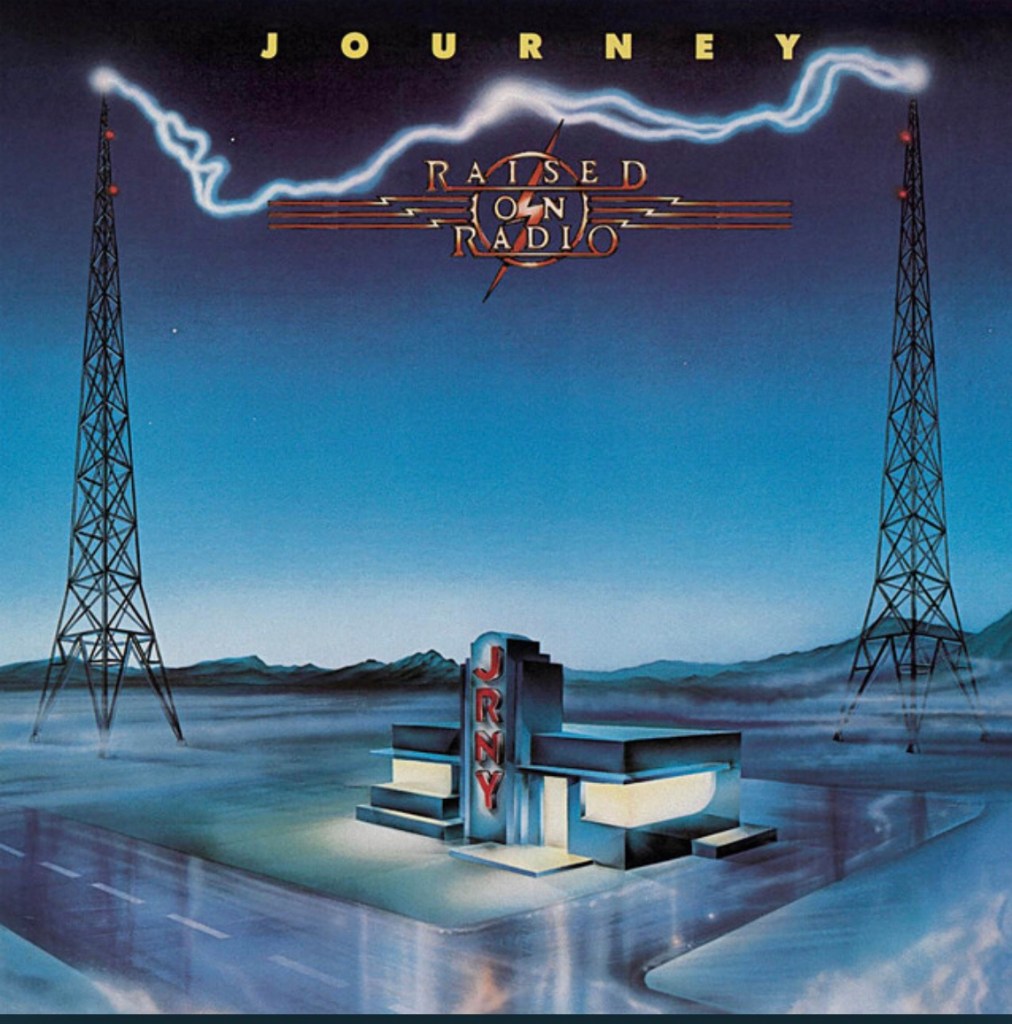
Its album number 9 for Journey, released in 1986. But no one was sure if it would get made.
After “Frontiers” (1983), Steve Perry got a massive offer to do a solo album, “Street Talk” and Neal Schon got a similar offer to do “HSAS” with Sammy Hagar. Both albums did well however
Perry’s album would probably still not be listed as recouped based on the dollars spent on session musicians (there was a lot), the dollars spent writing with other writers, the dollars spent in the various studios and the massive advance given to him to even do it. Schon meanwhile got a chance to really show what an awesome hard rock guitarist he is.
But Jonathan Cain wasn’t finished for Journey. He just kept on writing and writing. A lot of his songs ended up on Jimmy Barnes albums, which led to massive success in Australia. And it was Cain who called up Perry to sing on a few demoes he was working on.
That get together led to this album and it also led to Journey falling under Perry’s control.
He fired bassist Ross Valory and drummer Steve Smith, even though Journey’s manager Herbie Herbet told em not to do it.
Perry then replaced them with studio musicians, in Randy Jackson (from American Idol fame) and Bob Glaub on bass with Mike Baird and Larrie Londin on drums (with Smith still performing on a few cuts).
Perry expressed his regret at this many years later and for Valory and Smith, they still received income from the album and the subsequent tour even though they didn’t need to leave their house.
It was probably why their manager Herbet was against their firing. It meant the pie would need to be distributed to even more people.
And Perry broke with tradition of the single word album titles. The album was meant to be called “Freedom” until Perry said it would be called “Raised On Radio”.
How good is the cover by Priarie Prince who built his career as a drummer in The Tubes and Jefferson Starship, along with his work as a graphic artist and set designer for various music videos. Simply and effective.
Girl Can’t Help Out
How can you not like Perry’s silky and smooth voice?
And Neal Schon gets some slack for going missing in Journey during this period, but he became a master decorator, doing enough to give the songs the MTV and Radio edge.
Positive Touch
It’s got that David Bowie “Modern Love” vibe from his 1983 album, “Let’s Dance” merged with “I’m So Excited” from The Pointer Sisters album of the same name which came out in 1982.
And I like it.
This is how music works. Take what has come before, tweak it, merge it with something else, tweak it again and what comes out is something new.
Suzanne
A monster melodic rock cut, with an arena rock Chorus.
Be Good To Yourself
It’s that feel-good summer vibe typical of the 80’s. Press play and let the sounds wash over you.
The solo from Schon, so simple and singalong.
Once You Love Somebody
This song would not be out of place on a Sting solo album or an album from The Police. Even Van Halen would have a cut like this many years later on “Balance”.
Press play for the Chorus. It sounds like it came from a soundtrack.
Happy To Give
I like the keyboard riff which starts it off but overall the song is a skip for me.
Raised On Radio
Schon is centre on this after the harmonica intro. It’s a rocker with the keys decorating.
I’ll Be Alright Without You
I’m not sure if John Sykes or David Coverdale were listening to this because it’s got that “Is This Love” feeling, which Coverdale would reuse for “The Deeper The Love”.
It Could Have Been You
While Cain plays chords, Schon plays this pentatonic riff which is memorable and full of groove.
The Eyes Of A Woman
Killer bass line on this and Steve Perry just nailing a vocal.
But press play to hear Schon wail away.
Why Can’t This Night Go On Forever
“Faithfully” part 2 comes to mind. Next.
In the end, six singles got released and by 1989, it was certified double platinum in the U.S.
I also wasn’t surprised to read that this album did good business in Sweden as a lot of the melodic rock acts coming out from Sweden many years later had this albums vibe and sound.
It was also the last Journey album for over a decade. While Perry lived off the royalties, Schon and Cain went to work with Bad English, with John Waite on vocals and to further platinum glory.
“QR III” or “Quiet Riot III” is actually the fifth studio album from Quiet Riot if you can the “QRI” and “QRII” albums with Randy Rhoads.
It was released in 1986 on Pasha/CBS and it is the last album to feature lead singer Kevin DuBrow until the 1993 album “Terrified” which got a zero skull review in an Australian mag and the word “Terrible” as part of the review.
It’s produced by Spencer Proffer again with John Purdell.
A funny thing was happening in 1986. For some strange reason, artists who had massive sales in 1983 and 1984, struggled to match those sales a few years later.
Twisted Sister had big sales in 1983 and 1984 and they played to half empty venues on the “Come Out And Play” tour in 1985 and by 86, no one really cared about em and by 87 they had broken up.
Judas Priest had declining album sales by 1986, but still proved to be a big drawcard on the live circuit.
Ratt couldn’t match the success of their 1984 debut and by 1986, “Dancing Undercover” was just a blimp on the charts.
And then we have Quiet Riot.
Following the massive success of “Metal Health” and the more modest reception of “Condition Critical”, sales of “QR III” were even lower and it did not achieve any certification.
This Quiet Riot album is also the first album to feature Chuck Wright, formerly of Giuffria, on bass as an official member replacing Rudy Sarzo.
Wright joins Kevin DuBrow, Frankie Banali and Carlos Cavazo.
Before I get into the album, it’s worth mentioning that I never understood the argument put forward about bands rocking less when keyboards are involved. This album has a lot of keys but it still rocks.
Main Attraction
It’s a songwriting committee of Carlos Cavazo, Frankie Banali, Kevin DuBrow, Spencer Proffer, John Purdell and Chuck Wright.
They keys are prominent and the track could be mistaken for a Styx or Toto track.
The Wild and the Young
The song is written by Proffer, Banali, Cavazo, DuBrow and Wright.
Behind “Bang Your Head”, “The Wild and the Young” is the next best original.
The drum groove from Banali starts things off. Then the guitars and the keys play in unison until Cavazo overdubs a memorable little lead.
And the vocals start. While DuBrow is more miss with his lyrics, on this song he’s perfect with his message and delivery.
The music video for the song wasn’t cheap as it shows a dystopian future under control by a totalitarian militarist government and they are trying to round up anyone who is listening to rock music.
Twilight Hotel
Written by Wright, Banali, Cavazo, DuBrow and Proffer. I was drawn to this song immediately because it was different musically.
Down and Dirty
Written by Dubrow, Banali, Cavazo and Wright. It’s written as “Dow And Dirty” on Spotify. It’s typical hard rock and of the times.
Rise or Fall
Written by Dubrow, Banali, Cavazo and Wright.
I dig the opening riff on this. And Cavazo goes to town on the lead break.
Put Up or Shut Up
Written by Dubrow, Banali, Cavazo and Wright.
CC DeVille would have been listening to this as the main riff sounds like something that DeVille tweaked for “Nothin But A Good Time”.
Still of the Night
It’s written by the same songwriting team that wrote “Main Attraction”.
The cut is excellent, a soft rocker but so far removed from the “power ballad” formula.
Bobby Kimball from Toto performs backing vocals on the track, however the “backing” vocals are really cranked up in the Chorus, so it’s safe to say that Kimball was brought in to be the lead vocal there.
Bass Case
It’s an Instrumental written by Wright and all bass. For a minute length, I’m not sure why this is here.
The Pump
Written by Banali, Cavazo, DuBrow and Wright. It’s an attempt to capture “The Stroke” from Billy Squier.
I’m surprised that this song hasn’t been sampled by the rappers as it’s got a lot of good bits in it.
Slave to Love
The mighty Stan Bush is here as a songwriter, along with the committee of Banali, Cavazo, DuBrow, Proffer and Wright.
Musically it’s excellent. It’s almost melodic Metal The melodies are also excellent. Lyrically it’s crap.
Helping Hands
Written by Dubrow, Banali, Cavazo and Wright. It’s an underrated cut with a heavy 70s influence with a killer lead by Cavazo.
While a lot of people were off the QR train by the time this album hit the streets I wasn’t one of em. I was hooked by the music video for “The Wild And The Young” and when I saw the High Syme cover I was happy to part with my money.
Musically it’s a very mature album and an album that’s aged well.
If you watched “Rocky IV” in the 80’s, you would have heard it’s melodic rock soundtrack.
At its essence, the “Rocky IV” movie is a combination of music videos segments.
The “Apollo vs Drago” pre fight has 4 minutes devoted to “Living In America”. There are two training scenes, with “Hearts On Fire” and “Training Montage” taking up 8 minutes in total. Then there is the final fight scene, which takes up another 4 minutes.
There is also a scene in the movie, which involves Rocky driving his sports car, with the song “No Easy Way Out” playing and various scenes of Rocky’s time with Apollo flashing before his eyes. It happened at a pivotal time in the time, with Apollo dying in the ring, Rocky then organising a fight against Drago (Apollo’s killer) and Adrian telling him, “you can’t win”.
Close to 30 minutes of a 90 minute movie is devoted to musical scenes.
So it was only a matter of time before an album came out from Robert Tepper.
But before that, another Stallone movie came out in 1986 called “Cobra” which had the song “Angel In The City”, another Tepper cut.
So Tepper had momentum with the soundtrack songs, released the album and nothing. Back when sales was the metric of success, the album stiffed and charted low.
But it doesn’t mean the album is crap. It’s actually very good melodic rock album.
First check out the studio band, as it has some experience.
While Tepper does the vocals, Dan Huff and Guy Marshall play the guitars.
Myron Grombacher is on drums.
Tim Landers on bass and a range of keyboardists in Kim Bullard, Alan Pasqua and Richard Gibbs.
You can Google their names and see their body of work as band members and session musos.
Let’s get to the album.
“No Easy Way Out” was released in 1986 by Scotti Brothers Records.
And it’s no surprise, that the album starts off with the two soundtrack songs.
No Easy Way Out
The bass riff to start it off is iconic. The feel of it reminds me of the bass riff in “Living On A Prayer”.
The vocal melody from Tepper is emotive and how good is the outro solo.
There’s no easy way out There’s no short cut home
Truth right there.
Angel Of The City
The bass groove is simple, yet memorable as it drives the song with the synth chords.
The song will always bring back memories of the”Cobra” movie. Brigitte Nielsen is doing a photo shoot while “The Night Slasher” and his entourage get ready to kill another victim.
Whip it cracks just like thunder Some survive her, most go under
The lyrics deal with the survival of the 9 to 5 grind by looking for some mythical Angel to save us.
Don’t Walk Away
Another classic. Latin like but with a bit of New Wave and a whole slab of melodic rock. It basically could be on a melodic rock, a Duran Duran album or a Ricky Martin album.
Once we had a purpose Once, once we had a song Once the feeling disappears It’s all gone
Can love ever come back if disappears?
Your Love Hurts
It has this “Purple Rain” vibe which I like.
Press play to hear the synth melody.
Restless World
It’s got this Bruce Springsteen spirit which I like.
A restless spirit Looking for a chance In this restless world
Aren’t we all.
Hopeless Romantic
It’s like mid 80s Rush and I like it.
Soul Survivor
It’s a favorite. Very pop rock like.
Check out the arpeggios in the Intro which also reappear in the Chorus.
My soul survivor Without you, what do I have left My soul survivor Cannot make it by myself
Press play to hear the vocal melody in the Chorus. It reminds me of the band Gun.
If That’s What You Call Lovin’
The balladeer career of Michael Bolton would be proud of this one.
The song fits on the album however I’m not a huge fan of songs like these.
Domination
Almost soul funk rock. Mid 80s Rush definitely comes to mind.
After the second album “Modern Madness” (1988), Tepper got put on ice by his label. They weren’t interested to release any new music from him, nor did they want to release him from his contract.
He finally got out of this deal in the mid 90s and his third album came out in 1996.
“Trick or Treat” is album number 4 but for me it will always be known as the soundtrack for the “Trick or Treat” movie and my first exposure to Fastway.
It was released in November 1986, a month after the movie and it would be the final album to feature Dave King on vocals. While the previous album “Waiting On The Roar” did not have a guitar riff written by Fast Eddie Clarke, this album is credited as all songs written by Fastway and there are riffs to be heard.
Fastway is Dave King on lead vocals, “Fast” Eddie Clarke on rhythm guitar/lead guitar, Shane Carroll on second guitar, Paul Reid on bass guitar and Alan Connor on drums.
These guys appear on tracks 1 to 7. The song “Heft”(track 8) is from the debut album and bass is played by Mick Feat and drums by Jerry Shirley. “If You Could See” (track 9) is from the “All Fired Up” album, with bass being played by Charlie McCraken and drums by Jerry Shirley.
The flick had WC wry controversial story in it that was related to blues, rock and metal and it fed on the Satanic Panic sweep wing across the Bible Belt of the U.S.
Spoilers alert.
There is a rock star by the name of Sammi Curr, who sold his soul to the devil to rock and roll ala Robert Johnson.
Curr dies in a hotel fire, but is resurrected by a fan of his playing the last vinyl recording of Curr’s music backwards. The vinyl record was given to him by a DJ called Nuke, played by Gene Simmons.
The fan has been bullied at school and suddenly he is no longer bullied as the reincarnated Curr has some “Final Destination” punishment in mind for the bullies. But like all things, when it comes to your heroes and power, power corrupts and by the end of the movie, the Curr has turned against his fans and it allowed the script writers to come up with these kind of sentences.
Hysterical Survivor: [crying] Oh, God, it was–it was awful! I mean, this guy was shooting stuff out of his guitar and it was–and people were running and I don’t–and my very best friend she was…
Cop #1: All right, all right. What did the suspect look like?
Hysterical Survivor: I told you. It was Sammi.
Cop #1: Who is Sammi?
Cop #2: Sammi Curr? The rock singer?
Hysterical Survivor: [still crying] Yes. Yes.
Cop #2: Sammi Curr died last week.
Cop #1: [both cops turn away from the still-sobbing girl] Looks like we better check out the party punch.
And of course the punching bag for all of the evangelists at the time, Ozzy Osbourne makes a guest appearance as Reverend Aaron Gilstom. This would have infuriated all of those people taking him to court, for supposably having backward messages of “shoot” in “Suicide Solution” and the script was written for Ozzy to smacks down those evangelists.
Reverend Aaron Gilstom: (in response to Heavy Metal music)
Demonic beasts.
Whatever happened to the good old simple love song?
“I love you.”
There good words to use. Nowadays they have to write some sickness. It’s just absolutely sick and bizarre, and I’m going to do my upmost best to try and stop it now.
Go get em Reverend. And now to the album.
“Trick or Treat”
Three chords and tom hits like a metronome. I was immediately invested. It’s a perfect amalgamation of NWOBHM and Hard Rock.
I really like the section, in the verse, as it moves between Em and D for a few bars, and then moves to a C chord and a D chord which acts as a Pre Chorus.
Those intro chords come back in, just before “Fast” Eddie breaks out some licks.
“After Midnight”
It’s like Angus and Malcolm Young joined the band and wrote a derivative version of “You Shook Me All Night Long”.
And I like it.
“Don’t Stop the Fight”
This was my favourite cut when it came out.
The palm muted intro and build up always got me pumped. It still does today.
It reminds me of “Wild Child” from WASP, which is bizarre as Blackie Lawless did get offered the part to play Sammi Curr, but rejected it when he was told he couldn’t write the soundtrack music as Fastway was already contracted to do so.
“Stand Up”
Another head banging intro with a killer vocal melody.
How can you not like it?
Press play to hear the bass groove and lead break. The sound of the toms before it comes out of the solo, always makes me laugh. Corny, but a product of the times and I wouldn’t have it any other way.
Lyrically, it’s an anthem, with the message to stand up and be counted.
“Tear Down the Walls”
After sound effects, it goes into a brief song, with the gang chants to “tear down the walls”. It fitted the movie scene nicely.
“Get Tough”
It kicks off side 2.
After some heavily flanged and distorted guitars, that sounded spooky, for lack of a better word, the song kicks in and the message is all about standing up for yourself, because you’ve had enough of the crap that’s been thrown at you.
“Hold on to the Night”
A “Radar Love” like drum groove starts it off and it continues throughout the whole song, while the riffs and melodies change.
“Heft”
Originally released on the album “Fastway”.
I like the heaviness of the intro/verse riff.
From a modern sound, its something that Tool would do, however it also reminds me of tracks like “Mississippi Queen” and “Evie” and it fits the theme of the album perfectly.
“If You Could See”
Originally released on the album “All Fired Up” and how catchy is that acoustic guitar in the Intro?
The album did okay business in Australian and the movie was popular as well. It was hard to get a rental copy of it from the local video shops. As soon as I rented it, I had my neighbours video over and the dubbing began.
For me, there is no filler on this. It’s all killer. Classic NWOBHM with hard rock polish added to it.
“Waiting for the Roar” is the third album from Fastway and an album in which “Fast” Eddie Clarke didn’t write a song on this album. For a band which carries part of his name, it’s confusing how that can be.
However he did allow the other members to flex their song writing chops or the label flexed their chops at getting the other members to deliver a radio friendly melodic rock album.
The band is Dave King on lead vocals, ‘Fast’ Eddie Clarke on lead/rhythm guitars, Shane Carroll on rhythm guitar, Paul Reid on bass guitar and Alan Connor on drums.
Production is handled by Terry Manning.
The majority of the songs are written by the other band members with producer Terry Manning who also plays the synth.
I read some reviews of this recently, which called it a misstep and pop metal and a commercial failure.
I like melodic rock music regardless of who does it.
If you are a fan of Fast Eddie and his Motorhead output and that’s all you want to hear from him, then this will disappoint you greatly.
For starters, vocalist Dave King has a decent range in his voice, so he will always come across melodically. It’s strange how critics were not kind to him however those same critics did embrace Mark Slaughter which is confusing as they sound very similar.
But if you want to listen to a melodic rock album, slickly produced with production sounds borrowed from Mr Mister, Tears For Fears and Cutting Crew albums, then this album is a good listen.
Waiting For The Roar
Arpeggios and a lot of midi sample triggers.
Check out the main guitar riff, it’s like Bad Company, with elements of the blues and a whole lotta hard rock.
The World Waits For You
It has a Chorus that reminds me of “Everybody Wants To Rule The World” from Tears For Fears.
At 7 minutes long, it has an orchestra added to the last 2 minutes which sounds very much like symphonic Metal.
Little By Little
The verse riff is sleazy and bluesy and Dave King delivers another melodic rock gem with his vocal melodies. At times I thought that Mark Slaughter made an appearance on this as the sound of the vocals can be interchanged.
Change
It’s a ballad. 6 minutes in length. If they were going for radio songs, the length of the songs would require heavy edits.
Synth chords and bluesy melodic lines start the song. The bass sounds like many of the Brit Pop bands at the time. The drums are heavily processed with midi triggers so the sounds could be manipulated.
And I like it. The mood it sets gets me and the idea to include the orchestra in the final minutes of the songs is excellent.
Rock On
It wouldn’t be an 80’s album without a song title that didn’t include the word “Rock”.
That’s probably why the movement known as “Thrash” metal really took off during this period.
Tired Of Your Love
It’s catchy and it sounds like the melodic rock tracks that Slaughter would write in a few years’ time.
Move Over
A Janis Joplin cover. A synth with a flanger like effect just hums along while the vocal melody is delivered. When the Jethro Tull inspired riff kicks in, the foot is tapping and I like it.
Kill Me With Your Heart
It’s Chorus is Jim Steinman worthy like the work he did with Bonnie Tyler and an orchestra again enters for the last minute of the song.
Girl
Very synth heavy, which is no surprise as the song is written just by vocalist Dave King and producer Terry Manning.
At the 50 second mark, the guitars make an appearance but they are buried behind the synths and the Tears For Fears bass sound.
The guitar is basically used the way keyboards are used in some other bands, as an instrument that is heard from time to time and hidden more in the background, instead of being the instrument that carries the song.
The chorus is catchy, with its “Girl” chant, however corny the lyrics sound.
And the lead break is full of blues playing, however it is buried
Back Door Man
Janet Jackson would have a hit called “Black Cat” in 1989, with a guitar riff very similar to this.
Everything is judged on sales, especially in 1986 and this didn’t sell as expected. Then again, Fastway albums were never seen as big sellers and from memory I don’t recall any certifications on em either.
While a section of fans of heavy metal and blues rock embraced Melodic Rock, there were also fans who didn’t, choosing to remain within their blues rock and metal worlds. A lot of bands suffered from this splintering in styles.
But all was not lost as one of my favourite Fastway albums is coming up next, with the soundtrack to the “Trick Or Treat” movie, also released in the same year.
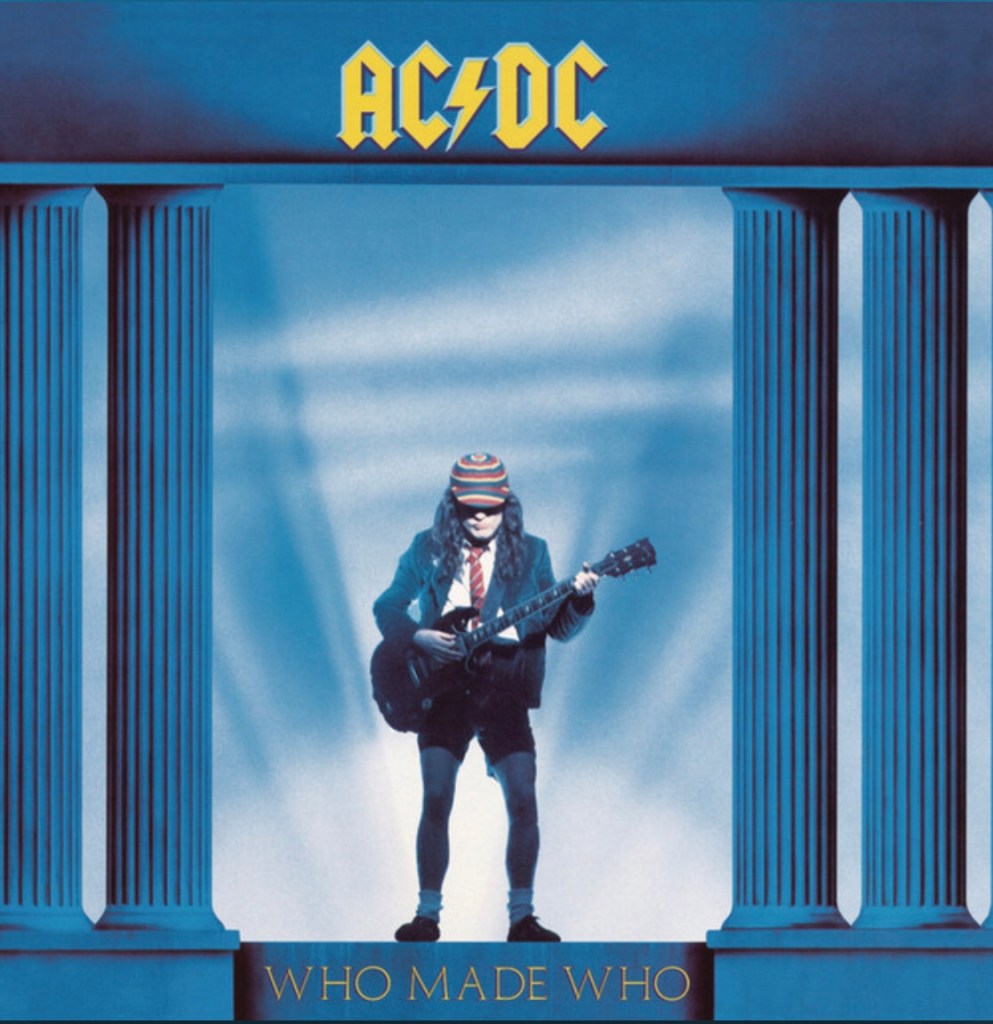
“Who Made Who” is like a Greatest Hits album released as a soundtrack album in 1986, for the Stephen King film “Maximum Overdrive”. A forgettable movie.
The funny thing is that the next Greatest Hits slab would come out with another movie, this one a lot better and having a larger social and cultural impact.
Yep, the multi- billion franchise known as “Iron Man” sent AC/DC into the stratosphere. Not that they needed it.
Both album packages are excellent entry points for people who didn’t own or know about AC/DC.
If this was your first exposure, there would be a high chance that you would go out and buy/access some of the back catalogue.
And the song “Who Made Who” introduced Angus Young the shredder. His guitar work here is at a Shrapnel level.
Who Made Who
Drums and bass from Simon Phillips and Cliff Williams in a stock 4/4 time. I’m already invested.
Malcolm kicks in with some power chords outlining a blues chord progression as Brian Johnson fires in with his throaty vocal melody.
Angus then fired in with some fast palm muted licks which sounds like open string licks, something he’ll use to even greater success with “Thunderstruck”. But it’s all picked.
Check out the lead break. Angus breaks out some EVH like tapping.
Lyrically, it’s based around the themes from the “Maximum Overdrive” movie, where the machines come alive and begin killing people.
Like the “Terminator” movie, the tools that humans create, rise up to obliterate the humans.
You Shook Me All Night Long
From “Back In Black”.
It was re-released as a single after the massive success of “Who Made Who” which gave this song a second coming, not that it needed one.
D.T
It’s an instrumental jam which became soundtrack music.
It moves between distortion and clean tone so it could be used in multiple scenes.
Sink The Pink
From the “Fly On The Wall” album.
This song doesn’t get the love it should but goddamn it’s a great song.
The Intro reminds me of “Rock N Roll Ain’t Noise Pollution” and it has a Chorus chord progression which could be interchanged with almost every AC/DC chorus, and I like it.
At 2.50, the Intro kicks back in, with drums and bass before Angus kicks in with his bluesy lead.
Ride On
From the “Dirty Deeds Done Dirt Cheap” album and Bon Scott gets a spot with this slow blues dirge.
Hells Bells
From the “Back In Black” album.
As soon as the bells chime and the dirty arpeggio riff in Am kicks in, everything starts tingling. It doesn’t matter that I’ve heard it a lot of times. It still gets me.
Shake Your Foundations
Also from “Fly On The Wall”.
Another underrated song from an album that is seen as a disappointment.
You can’t tell me that the Intro/Verse riff isn’t classic AC/DC and a Chorus that almost mimics “You Shook Me All Night Long”.
Chase the Ace
Another instrumental jam session but a bit more aggressive than “D.T”.
Check out the drum groove in the Intro. Something that Lars Ulrich would use to great effect in “Enter Sandman”, which is also based on the “Dirty Deeds” Intro/Verse drum pattern.
For Those About to Rock (We Salute You)
From the album with the same title which came after the “Back In Black” monster.
I was hooked from the opening riff and the way Malcolm and Phil Rudd build it.
Once the slow groove kicks in, it feels that heavy that it’ll destroy everything in its path. And it did.
In Australia and the U.S, it’s 5× Platinum.
And it kept AC/DC relevant in a friendly MTV world which was starting to promote artists who looked great over the music they created.
I didn’t get into Black Sabbath until the mid-90’s. I knew of their existence because Ozzy and Dio did a great job promoting his Sabbath legacy.
Then Dio re-joined for “Dehumanizer” in the early 90s and I was interested to hear more Black Sabbath. So the process started.
The fact that everyone was selling their vinyl to second hand record shops definitely helped because it meant I could pick up their older stiff cheaply.
And after Grunge came out, they kept talking about the Sabbath influences in the Seatlle sounds and Sabbath’s renaissance into Mainstream superstars came when they re-joined Ozzy for a few encores on his “No More Tours” shows.
From 1983 up to when Dio rejoined, no one really cared about Tony Iommi in the same way they cared about Ozzy and Dio who had become Multi-Platinum sellers in the U.S. with their solo careers and the Sabbath/Iommi career was nowhere near those commercial highs.
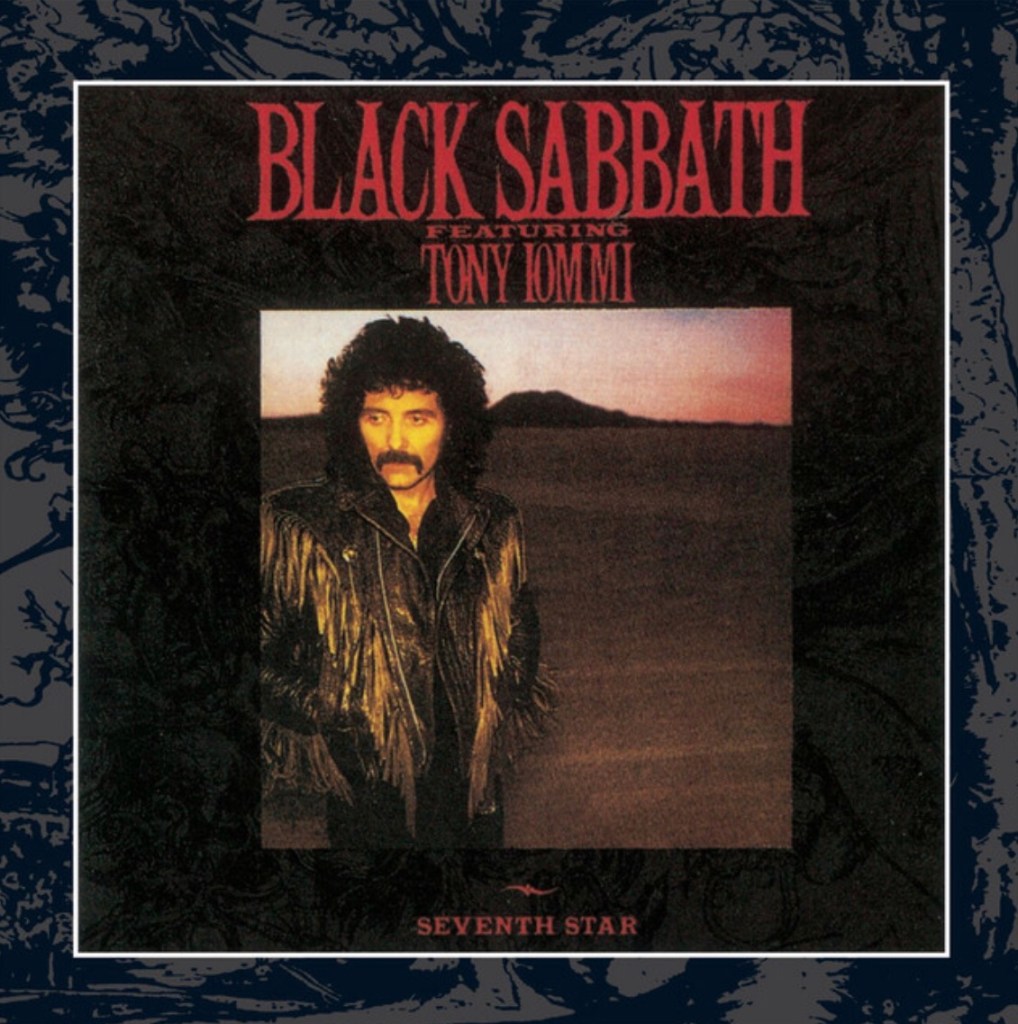
So “Seventh Star” is listed as studio album number 12 for Black Sabbath and released in 1986. This version of Sabbath has Tony Iommi as the only founding member along with keyboardist Geoff Nicholls, drummer Eric Singer, bassist Dave Spitz and vocalist Glenn Hughes.
Once the album came out, Hughes didn’t last long as his addictions made him unreliable. Ray Gillen was hired to fill the vocalist spot for the tour. But even the tour didn’t last long, with a lot of shows cancelled and another restart for Iommi.
In For The Kill
A riff that reminds me of Scorpions “He’s A Woman, She’s A Man” starts off this song and I like it.
No Stranger To Love
This could have come from the Dio version of Sabbath, with its slow groove. But Glen Hughes has a very melodic, bluesy soul voice, so it was always going to come across as a commercial rock song.
Check out the solo from Iommi on this.
Turn To Stone
It’s like Richie Blackmore joined on guitars. It feels like a Deep Purple Coverdale/Hughes era cut, with a riff that reminds me of “Burn” and “Kill The King”.
Iommi delivers another killer solo on this.
Seventh Star
“Egypt (The Chains Are On)” comes to mind and I like it.
Musically, this is one of Iommi’s best.
The main riff is heavy, it sounds exotic, so metal like but it swings the way he plays it. There is a certain fluidity to it.
Danger Zone
If you want to hear one song on the album, its this. I was hooked from the harmony guitars in the Intro riff which also reminds me of Van Halen’s “Atomic Punk”.
And if that main riff doesn’t get you, the interlude/mid section would get you interested which then moves into a Bridge section.
And if the music doesn’t get ya, then the voice of Hughes will.
Heart Like A Wheel
When I hear a blues groove like the one that starts of this song, I think of “The Jack” from AC/DC.
But that blues groove is generic and overused. Remember Alannha Myles and her song “Black Velvet”. Well, it’s the same groove and it went to number 1.
These kind of songs are perfect vehicles for Hughes and his voice.
Angry Heart
This is a great riff, which reminds me of “Wishing Well” from Free and Hughes has so much fun with the vocals.
In Memory
An acoustic riff, with lightly distorted guitars start off this power ballad. It’s short and a strange end to the album.
As a classic Heavy Metal album like “Love At First Sting”, “Balls To The Wall” and “Screaming For Vengeance” it works. Hell it’s probably the best Rainbow album that Richie Blackmore didn’t write.
Compared to Sabbath’s downtuned 70s output, it’s very different. But this was the 80s and this album is a true product of its time.
My journey began with “Gutter Ballet” and moved forward with “Streets: A Rock Opera” before going back to the earlier albums.
So even though “Fight For The Rock” was released in 1986, it wasn’t until the early 90’s that I heard it.
I studied WW2 in History a fair bit and the cover is instantly recognisable recreating the “Raising the Flag on Iwo Jima” photo and cancel culture today has found this recreation to be offensive or insensitive.
Who would have thought?
The band for the album is “the classic line-up” in Jon Oliva on vocals and piano, Criss Oliva (RIP) on guitars, Johnny Lee Middleton on bass and Steve Doc Wacholz on drums.
The Paul O’Neill co-writes and production credits was still an album away, so this album is produced by Stephan Galfas, who had had worked with Stryper on “To Hell With The Devil”, Meatloaf’s ignored “Dead Ringer” album and a few John Waite albums before he worked with Savatage. Post Savatage he worked on Saxon’s much maligned but a favourite to me, “Destiny” album.
The band members have voiced their displeasure with the album.
You will read the usual “record label wanted us to make it” or “pressured us to make it” phrases mentioned but if the album did well commercially, then the narrative from the band members might be very different.
For the record, I hate the power the labels had back then. They could make or break a career.
But in the end, they are in the money making business and they would do whatever it takes to make money.
If Savatage said “NO” to the record label demands, it would be career suicide. So caught between a rock and a hard place, I suppose they really had to “fight for the rock” on this one, so they could get another chance at making an album.
Musically, its Savatage as I know em. Lyrically, they are a bit different.
The Fight For The Rock
A Criss Oliva riff starts the album, rooted in the sound of heavy metal that I like.
“Warriors of the fight, you are in force tonight”, says Jon Oliva, about rock being here to stay. By 1986, it was all overused cliches.
At 2.04, it goes into a synth lick before it builds up into the solo section, which is essential listening for any guitarist.
Out On The Streets
It feels like a 70’s cut, with its acoustic guitar arpeggios and weird synth sounds.
By the time the Chorus rolls around, the major chords make it sound happy, while the lyrics are about feeling sad due to a romance falling apart.
Press play for the brief acoustic guitar melodic lick after the Chorus.
And I like the solo from Criss Oliva, it’s got blues and fast melodic legato lines with inventive phrasing.
Crying For Love
The intro with violins and fingerpicked clean tone guitars is a great listen but misleading when it comes to the song because it’s a rocker, with a classic Savatage riff from Criss Oliva in the verses.
The Chorus is Hard AOR Rock. It’s an obvious attempt.
Criss Oliva knows how to create a lead. He starts off with some fast open string pull off licks before going into his usual fast legato lines.
Day After Day
A Badfinger cover and that 70’s “Leader Of The Pack” vibe comes through.
The Edge Of Midnight
An Andrew Lloyd Webber “Phantom Of The Opera” organ begins the song, which brings in some classical elements. Lyrically it’s not the best, but musically the riffs are an amalgamation of hard rock and heavy metal.
Check out the verse riff, Skid Row would use riffs like this on two multi-platinum albums.
Hyde
There’s some good progressive metal like riffs here.
How good is it the way Jon Oliva sings “Hy-I-ide” and then Criss Oliva mimics the vocal melody the next repeat?
Lady In Disguise
A riff similar to “Wishing Well” is the centrepiece of this song. It’s almost Queen like in its musical composition.
She’s Only Rock N Roll
The main riff (which is also the verse riff) is classic Savatage, which also reminds me of Richie Blackmore’s Rainbow.
Check out the lead break.
Wishing Well
A Free cover and I think this was my first exposure to this song. The slight increase in tempo makes the track sound more metal than rock.
Musically, it’s a great song and the vocal melodies from Paul Rodgers, delivered by Jon Oliva are excellent
Red Light Paradise
It sounds like soundtrack music and for some reason, the “Cobra” movie with Stallone comes to mind.
To repeat, musically its good, lyrically it could be better but the sound is still Savatage.
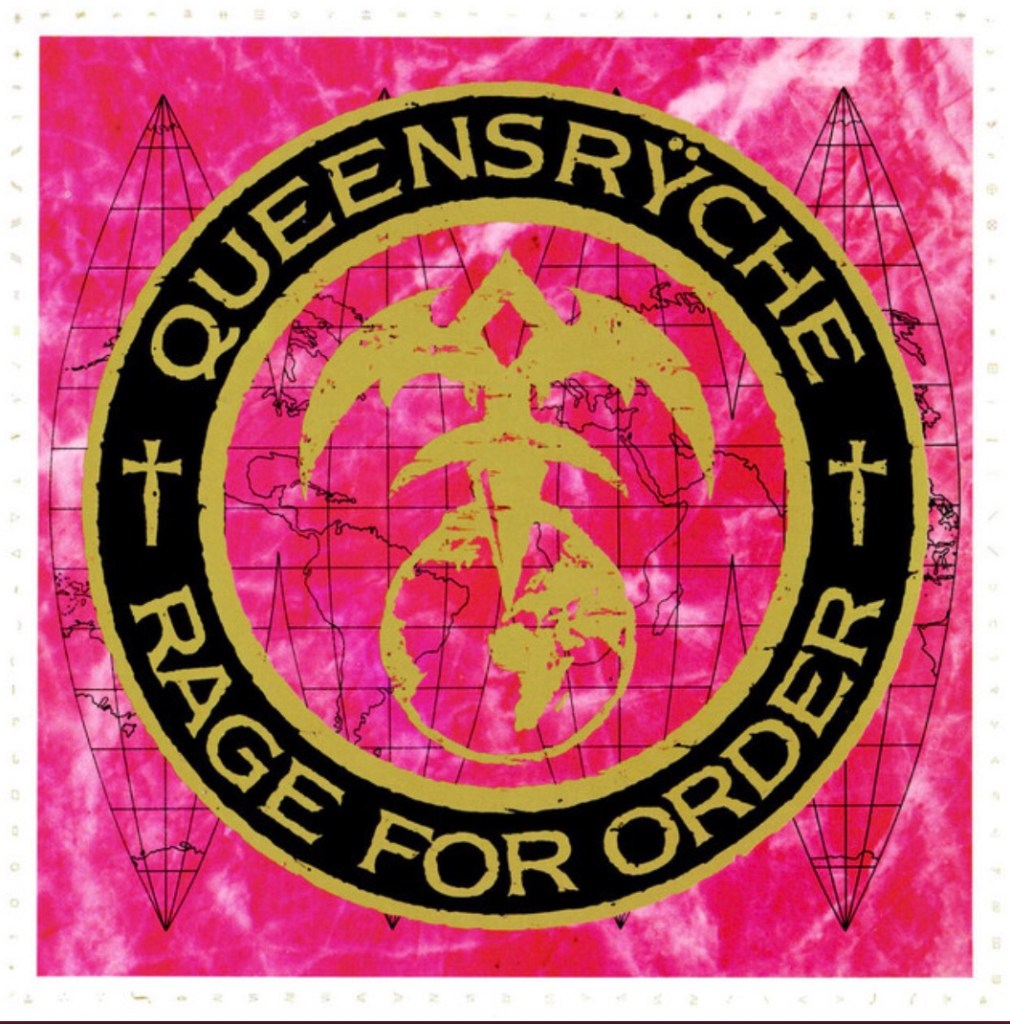
“Rage for Order” is the second album by Queensrÿche, released on June 27, 1986.
The Queensryche Cyber Army are really good at keeping the bands Wikipedia pages up to date and super detailed. Everything that can be found on the a internet is included along with print media and newspaper articles.
Go to the Wikipedia page on this album and you’ll get heaps of information.
MTV was becoming a huge promotions vehicle for artists and 1986 was clearly becoming the last year that bands would experiment with the songwriting. After 1986, albums would become very MTV Friendly because all the artists wanted a piece of that pie.
Musically it’s an excellent album. Each song has a riff or a vocal melody that I like. From a song point of view, “Walk In The Shadows” is close to perfect.
Lyrically the album touches on subject matters I’m interested in, like government intrusion and corruption, technology and social issues.
Management and the Label must have felt threatened at the experimental progressive album delivered by the band, so it’s no surprise that there is a cover song, which then became the lead single.
And no one knew how to handle Queensryche.
They had opening spots with Ratt and Bon Jovi (seriously, what the….), AC/DC (good gig to have if you play similar styles but they are very different styles) and maybe the most compatible one in relation to “Metal”, Ozzy Osbourne.
The Tri-Ryche logo makes it’s first appearance as well.
I never understood how this album was ever labeled as a “glam metal” album, but the label had to make them fit somewhere along with some questionable clothing and hairspray.
Queensrÿche is the classic line up of Geoff Tate on vocals, Chris DeGarmo and Michael Wilton on guitars, Eddie Jackson on bass and Scott Rockenfield on drums.
Neil Kernon is Producing, Engineering and Mixing. Man of many hats.
Walk In The Shadows
Written by Chris DeGarmo, Geoff Tate and Michael Wilton.
It’s as good as anything that came from “Operation Mindcrime” and “Empire”.
I’m a big fan of the Intro riff (it’s great to play) and that Chorus is massive.
I Dream in Infrared
Written by Tate and Wilton.
It reminds me of Rush in the Intro and I feel like Crimson Glory took this song and used it as a foundation to build on.
But you need to press play on this for the acoustic guitar arpeggios and the haunting vocal melody from Tate in the verses.
Is it just me or does this track remind you of “Breaking the Silence” and “Waiting for 22” from the “Mindcrime” album?
The Whisper
Written solely by DeGarmo and the Celtic inspired Intro definitely gets me interested. Something that Maiden would use a lot in the Dickinson Part 2 era.
The whole song is what Metal should sound like.
Gonna Get Close to You
A Dalbello cover, although I didn’t know it at the time.
To cover a song from outside the genre you are classified in, is a sign of respect to the artist who wrote it.
Many years later, Lisa Dalbello would do guest vocals on Alex Lifeson’s “Victor” album.
Check out the way the verses are constructed, it feels ominous.
The Killing Words
Written by DeGarmo and Tate.
The keyboard Intro gives way to the guitar, before it goes into a soundtrack like verse. It’s very Marillion like and the vocals remind me of Fish and I like it.
But you’ll be pressing play to this song, for the section when Tate sings “Over”.
Surgical Strike
Written by DeGarmo and Wilton it feels more like a cut from “The Warning”.
And there are sections here which remind of “Speak” and “The Needle Lies”.
Press play for the Outro that begins from 2.40. You won’t be disappointed.
Neue Regel
Written by DeGarmo and Tate.
When I heard “A Perfect Circle” for the first time, I thought of this song. It has all of those atmospheric elements and outside the box sounds and composition elements.
This is how progressive music should sound like and it’s the embryo of what the “Promised Land” album would be.
But press play on this just to hear the power of Geoff Tate.
Chemical Youth (We Are Rebellion)
Written by Tate and Wilton, who brings the heavy metal riffs to the rebellion.
It’s put together in a progressive way as it doesn’t just follow the standard verse and chorus narrative.
London
Written by DeGarmo, Tate and Wilton and it reminds me of the “Mindcrime” album musically and the song “I Don’t Believe In Love”.
It’s got a great Chorus, so press play to hear “London” sound like “Young Boy”.
And then hang around for the harmonies and individual lead breaks.
Screaming in Digital
Written by DeGarmo, Tate and Wilton, musically it also reminds me of different songs from the “Mindcrime” album.
The electronic synths are dominant and Tate is very Peter Gabriel like in the verses.
But press play for the vocal melodies from 2.15 to 2.40 and stick around for the guitar hero lead breaks. And then those unbelievable vocal melodies come back.
I Will Remember
Written by DeGarmo, it has some nice acoustic playing from DeGarmo, a sign of things to come.
It was Certified Gold in the U.S.
To this Australian, it’s a criminally underrated jewel that was way ahead of its time and no one really knew what to do with it.
And I’m not sure if Marillion was an influence to the band at this point in time but goddamn this album reminds me so much of “Script for a Jester’s Tear”. Maybe it’s the similarities in vocal styles between Fish and Tate.
Anyway press play and let the sounds of love, politics and technology wash over you.





 destroyerofharmony