A to Z of Making It, Copyright, Influenced, Music, My Stories, Piracy, Unsung Heroes

The Week In Destroyer Of Harmony History – March 21 to April 3

It’s a two week DOH history this time around as lack of time stopped last weeks edition.

2018 (4 Years Ago)

1984 – Part 1

I was doing a review of the year 1984, Read here for my thoughts on Dokken – “Tooth And Nail”, Van Halen – “1984”, Twisted Sister – “Stay Hungry”, RATT – “Out of the Cellar”, Iron Maiden – “Powerslave”, Bruce Springsteen – “Born In The USA” and Stryper – “The Yellow and Black Attack”.

Ritchie Blackmore

“Being original doesn’t require being the first to do something. It just means being different and better.”
Adam Grant, Originals

History is always written by the winners. If you read any story about Metallica today, it more or less states that “Kill Em All” came out in 1983 and took over the world on release day.

Ritchie Blackmore has been instrumental in influencing guitarists.

But between Deep Purple and Rainbow and three different vocalists, Ritchie Blackmore, blew the paradigm open of what a heavy rock vocalist should sound like. And it’s something he doesn’t credit for.

He pushed Ian Gillian to the limits to record the ohhs and ahhs on “Child In Time” influencing a young Bruce Dickinson to start practicing hard, and getting another unknown singer called Rob Halford to change his vocal style.

Both of these singers would come out with styles that would also influence a generation.

With David Coverdale and Ronnie James Dio he pushed the boundaries even more who influenced another generation of Metal singers.

From a guitarist perspective, it’s hard not to be influenced by Blackmore. Blackmore’s fusion of blues, rock and roll, classical and medieval Influences was so commercially successful, he more or less spawned a new style of guitar playing called Euro Rock/Metal.

And from a band perspective, every single Metal guitarist at that point in time was inspired by Blackmore to find a vocalist who had similar/better talents to the vocalists Blackmore used.

lf the band was started by a drummer and a bassist, they would be looking for a guitarist like Blackmore and a vocalist like Gillian, Coverdale or Dio.

Twitter

“Here’s a challenge for you (and no using the internet for the answer): Can you name all 7 (unsuccessful) albums I’ve done solo or been a part of with a band since I left Twisted Sister in 1987?

A Twitter post from Dee Snider.

For a very long time, the record labels convinced everyone that the only way to define success was by sales. But people might have purchased an album, heard it once and never heard it again.

Dee said further on;

“While I’m proud of all the work I’ve done, YES success is defined by sales. I’m long past “making music for my own head”. Once you’ve had public acceptance of your art, you yearn for it.

The truth is, there is no secret formula for hits.

Artists always had a short life span at the top. Most of the 70’s acts would have been dead and forgotten if there was no MTV television in the 80s.

Which someone else replied that Dee’s album, “We Are The Ones” was excellent with the following questions;

“Do you consider it unsuccessful? Is success only defined by album sales or rather by the quality of the product?”

Another person commented that just because it isn’t popular it doesn’t mean it’s not valid and that music touches people in different ways.

And here we are again wondering what success is.

“Blood and Bullets” from Widowmaker is still Dees best album post Twisted Sister. For me, it’s highly influential.

Dee delivered a stellar vocal performance and Al Pitrelli also produced the goods in the guitar department, while Joey Franco and Marc Russell underpinned it all.

Of course, Desperado (the post TS band that got stiffed by Elektra on release day) guitarist Bernie Torme co-wrote 7 of the 12 songs on the album, so he deserves a huge 10 out of 10 for his stellar riffage and songwriting.

If you’ve read Dee’s book, “Shut Up and Give Me The Mic” Dee had to buy back the Desperado songs from Elektra who claimed ownership of them due to the label financing the demo song writing sessions.

The thing is, a lot of the albums which are really influential to people are rarely commercially successful.

2014 (8 Years Ago)

RANDY RHOADS

I remember the day that I got the “Tribute” tab book.

Studying the style of Randy Rhoads, I learned all about modes and the different scales that are made from each note of the mode, like Ionian, Phyrgian, Dorian, Lydian, Mixolydian, Aeolian and Locrian. I even named my son Dorian after one of the modes. It’s so easy to dismiss musical theory, however when you have an actual song that you can refer to, it makes it so much sense.

Wolf Marshall did an unbelievable job with the book transcription and on the commentary on each song. Actually Wolf Marshall was the transcription god back then. Another was Dave Whitehill. Experienced, super-talented and knowledgeable guitar players that broke down so many doors with their transcriptions and made it easier for young guitar players to pick up the guitar and practice.

“Crazy Train” was the first song I mastered. At the time, Alex Sklonick also had a column in the magazine “Guitar For The Practicing Musician”. In one of those columns, Skolnick also talked about modes and how “Crazy Train” is in the key of A Major and how it switches between the minor and major modes throughout the song. At the time it was a lot to take in however once you get it, you get it. Plus having a song like “Crazy Train” to refer too, who wouldn’t get it.

That one song has all the tools that every guitarist should possess.

And then when you start to go through all of the other songs, you see/hear all of the above tools re-used, which re-enforces all the techniques. Some songs had finger picking and arpeggios. Randy Rhoads was the definition of completeness.

By creating great music, he also taught us how to be better guitar players. Everything made sense. You can take a teacher and make them a rock star, however you can never stop the rock star from being a teacher and that is exactly what Randy Rhoads was. A teacher.

His reach on one song is huge. Add to that all the others and it’s a crazy train alright. Rest in peace brother.

POPCORN TIME

Remember “Popcorn Time”. It had no registrations to use it and there was no restrictions on content. It looked like Netflix and it was free. The user just presses play. It’s easy to use and its design was elegant.

And the entertainment industries killed it instead of employing the people behind it.

“Popcorn Time” was designed by programmers in Argentina, where the movie “There’s Something About Mary” was still classed as a new release by the movie studios in that country.

The development team created an innovative piece of software to meet a service problem for their country because the content industries failed to make content available.

We all know that piracy is wrong, however it opens up the conversation to the larger issue.

For example;

THE BAD – It made the RIAA spend millions suing music customers.

THE GOOD – But, Apple saw a market here and began to turn those Napster digital natives into iTunes buyers by making it easy to grab the latest music, anywhere, at any time. Same deal with Spotify, who put money into a market that didn’t exist before.

ARTIST

Asking Alexandria

They are a hard rock band. When are they going to realise that and drop the stupid screamo vocals.

RECORD LABEL CONTRACTS and ROYALTIES

Fear Factory’s Burton C. Bell had this to say about Roadrunner Records and its founder Cees Wessels;

“I still get royalties. It comes in, but it depends how much we work, how much we tour. If we tour a lot I see better royalties, if we don’t then I don’t.

I have no idea when we’ll get the rights back [to our catalog], because that Roadrunner contract is bullshit.

I literally signed a deal with a Dutch devil. But when you’re young, you don’t care. You’re 23 years-old and ‘we’re going to give you an advance to make your first record, we’re gonna put you on tour, sell your shirts in all the stores. You are gonna to be famous!’’Alright, make it happen!’

Every single label failed their artists by not innovating. The analog dollars vs digital cents mess they got themselves in, is purely of their own doing.

The Macklemore Lessons

Be in it for the long haul. The career of Macklemore has been a long one (21 years and counting). There’s no such thing as an overnight success.

Michael Poulsen from Volbeat started his first death metal band Dominus in 1991. During that time, Dominus released an album called Vol.Beat. When the band broke up in 2001, Volbeat was born. It wasn’t until 2005 that the first Volbeat album dropped. It wasn’t until Metallica picked em up as openers in 2009, that their US career kicked into overdrive. 30 years in the business. That is a lifer.

WORK ETHICS

Work ethics of the current music business.

Check out the list of releases from George Lynch between 2008 and 2014.

2008 – George Lynch – Scorpion Tales
2008 – Souls Of We – Let The Truth Be Known
2009 – Lynch Mob – Smoke And Mirrors
2010 – Raven Quinn – self-titled debut
2010 – George Lynch – Orchestral Mayhem
2011 – George Lynch – Kill All Control
2012 – T & N – Slave To The Empire
2012 – George Lynch – Legacy (EP)
2012 – Lynch Mob – Sound Mountain Sessions (EP)
2013 – Lynch Mob – Unplugged – Live From Sugar Hill Studios
2014 – KXM – KXM

Apart from the high volume output, Lynch is also immersing himself with different band set ups. Different dynamics. Sort of like the seventies musicians who just got together over a weekend and made an album.

The modern internet rule is here today, gone tomorrow. In order to survive, you need to show up and create. The music business is not in trouble. Only dumb labels and artists are.

But all things evolve, and if you are not open to change, you will be forgetten.

Remember John Sykes.

RANTS ON COPYRIGHT, RRHOF and THE WALKING DEAD

BUSINESS MODEL PROTECTIONISM

It’s pretty pathetic how the entertainment industries need to get governments to pass laws every time there is a shift in technology. Back in the Eighties, the boss of the MPAA Jack Valenti proclaimed at a Senate Congressional Hearing that the VCR’s are to the American film producer like the Boston strangler is to the woman home alone.

Fast forward a decade later and VHS sales of movies proved to be a very large income source for the movie industry.

So when it comes to negotiating new laws for copyright, it is these large and cashed up business entities that are lobbying politicians.

Copyright is too distorted and removed from what it was intended to do. It needs a rethink and a massive re-write. The kids of today, the ones that pirate, will one day step up into government and then, change will happen.

THE WALKING DEAD

It’s passed its prime.

The last half of Season 4 was by far the worst. It is a yawn fest of massive proportions.

The main show runners in Frank Darabont and Glen Mazzara got booted for various reasons, with TWD comic creator Robert Kirkman being behind the Mazzara booting.

One thing I can say is that comic book writers should stick to comic books. They are not TV show runners.

ROCK’N’ROLL HALL OF FAME

They call themselves “leaders in the music industry” that joined together to establish the Rock and Roll Hall of Fame Foundation.

Joe Elliott from Def Leppard called it as it is. Elliot called them a “board room of faceless tuxedo-wearing morons” who decide such things based on their own determination of what’s cool.

M SHADOWS

One of the big comparisons that people make is the status of sales right now vs sales more than 30 years ago. And everyone today, especially artists or media personalities, always say that the Eighties was so much better. It is a bold claim to make, especially when the Eighties is known as the era that ripped off artists.

Let’s look at Metallica and Megadeth compared to Avenged Sevenfold.

FIRST ALBUM

Metallica released “Kill Em All” in 1983. It wasn’t until 1989 (yep six years later) that the album was certified GOLD for sales in the U.S. After six months, Metallica was back in the studio recording the follow up.

But, on the back of the Black album juggernaut, by 1999, “Kill Em All” was certified 3 x Platinum, Still it happened, 16 years after it’s release.

Megadeth released “Killing Is My Business (And Business Is Good) in 1985 and to this day it hasn’t been certified at all.

Avenged Sevenfold released “Sounding The Seventh Trumpet” in 2001 and like Megadeth’s debut, it still hasn’t passed the 500,000 Gold barrier.

Compare the first album release of each band and all of them failed to achieve GOLD status within the first five years of release.

But…. Bands had way more sales in the Eighties than today…. The answer is NO, they didn’t.

THIRTY SECONDS TO MARS

Jared Leto was born to be in the arts.

I watched “Thirty Seconds To Mars” live at the Sydney Entertainment Centre on 29 March 2014. Leto had the crowd in his hands from the word go and he manipulated the audience to jump, chant and sing with him throughout the whole performance.

They are a success story.

Sales on the board. Streams. YouTube plays. Box office score. Merchandise.

THE UGLY TRUTH

Record Labels want to sell a lot right now, while an artist is looking to have a career and live forever in the hearts and minds of music lovers.

Hit songs/albums are not made by marketing or an artist telling the world it is their best work. They are made by cultures of people who connect with the song and then share their love of that music with others.

Cheap mediocre goods might sell millions in retail businesses however mediocre doesn’t cut it in music. Hence the death of the album format.

Record Labels are all about the wealth, the Forbes Rich List and flying private. Artists are about the essence and then when they see the talentless executives living it up on the backs of their creations, artists change and become obsessed with the same trappings that consume the Record Label hierarchy.

Record Labels think of how they can monetise the album/song. That is why they strike corporate deals with other entities for crappy pre-release streams and so forth. Artists just want their fans to hear the new music and hit the road to promote it.

Record Labels cease to be when they run out of money, however an artist never stops creating.

Record Labels judge success by how much money the artist made for them. The artist judges their success by how many people their music touched and what impact it had on society and culture.

If a record label exec screws up they could lose their job, however there is a good chance that they will find another high-powered well-paying job. If an artist messes up, there is a good chance they could lose their career.

GUN

Way underrated and way under-appreciated, it’s almost criminal.

In the beginning GUN got lumped in with the hard rock/glam rock style of bands, however GUN had way more substance. Way more character.

Coming from Scotland, they didn’t conform to the LA Sunset Strip scene. The songs didn’t focus on “Cherry Pies” or “Slipped Her The Big One”. They didn’t focus on spelling Rock, ROK. They didn’t have to compete with any band in the scene for the fastest licks and biggest hair.

Instead they focused on their own brand of rock’n’roll. And their lyrical themes didn’t deal with the usual rubbish that the hard rock bands started to serve towards the end of the decade.

Check out my review on “Taking On The World”.

GENE THE WEREWOLF

Check out my review of the “Rock N Roll Animal” album.

I knew nothing about them. Back in the Eighties, we got the press releases, the interviews, the promo spots and the musicians appeared larger than life. Today, we get the music first and then we go back to investigate who the hell created it.

If you are into hard rock, then this is the album for you.

The whole album is an example of progress being derivative.

Taking your influences, blending them and the output is your style and your sound. That is what music is all about. The whole album reminds me of “The Night Flight Orchestra” project. It is a fun album to listen to.

Of course they are on Frontiers Records, who seem to be on a roll surrounding themselves with talent. At first hearing, I thought the band came from Sweden as most of the hard rock bands I have been getting into are from there. However, that is not the case. They are from Pittsburgh, USA.

It is the usual lifer story.

All of the members had done time in previous semi-successful bands from the Pittsburgh area. Some of those bands toured nationally and internationally. There is a lot of history there. A super group from Pittsburgh area bands. In a way like “Night Ranger”. A super group of Californian bands.

Standard
A to Z of Making It, Classic Songs to Be Discovered, Influenced, Music, My Stories, Unsung Heroes

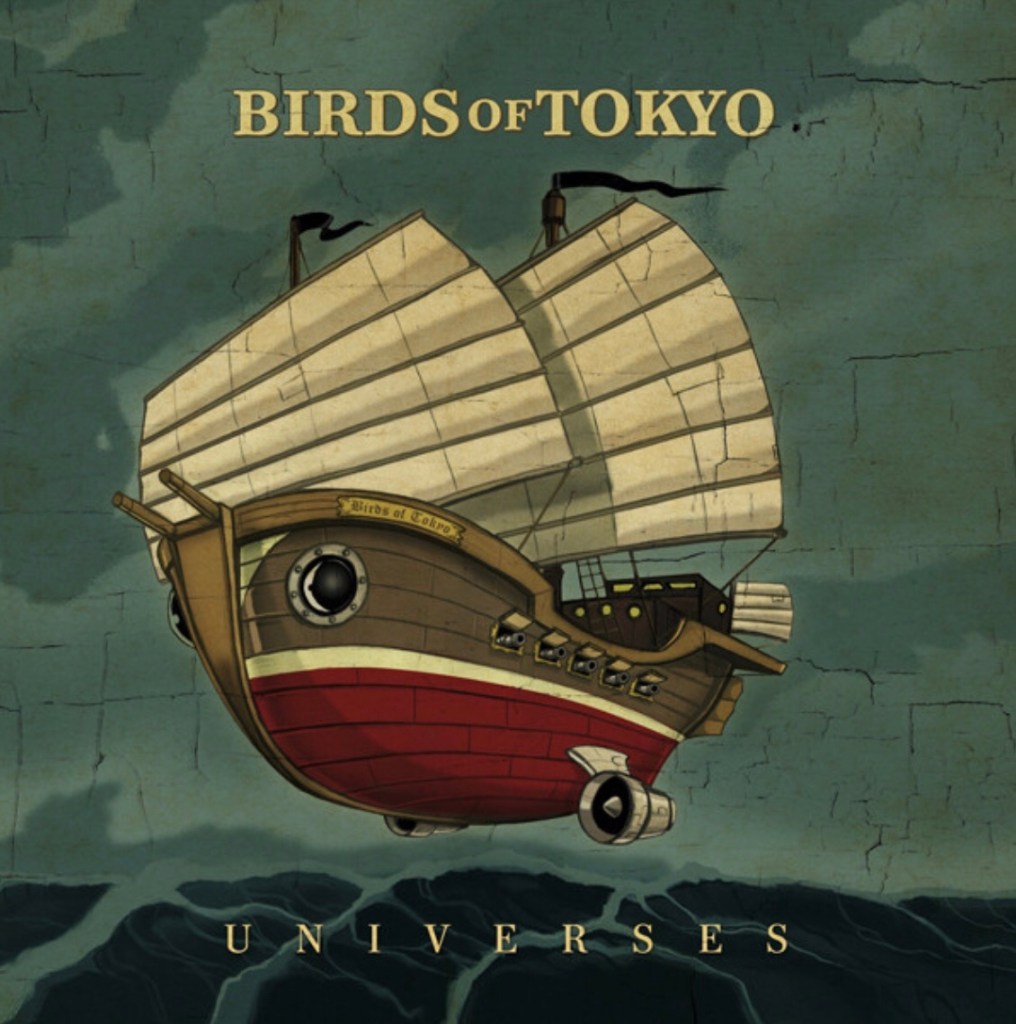
Australian Method Series and The Record Vault: Birds Of Tokyo – Universes

“Universes” is the second album from Birds of Tokyo, independently released on 5 July 2008.

The Personnel for the album is Ian Kenny on vocals, Adam Spark on guitars and keyboards, Adam Weston on drums and Anthony Jackson on bass.

If people are unaware, Birds of Tokyo formed in 2005 as another creative outlet for Karnivool vocalist Ian Kenny who wanted to do something softer and accessible.

There was a period between 2005 to 2012 that both bands operated, however Birds Of Tokyo then took over Ian Kenny’s life until late 2018 when Karnivool got together to play some shows and then COVID-19 hit and it looks like both bands started operating again at the same time.

I am a Karnivool fan first, and my interest to hear Birds Of Tokyo was because of that.

Karnivool plays a certain brand of heavy alternative rock/Metal which I like but even they have added more abstract movements into their songs..

Birds Of Tokyo at the start had this lighter alternative rock vibe happening but as they grew more popular, they more or less became a standard verse and chorus pop act. And a very good one at that.

Uno

Backward tape noises for about a minute leads into the “opening track”.

Broken Bones

Its aggressive in the verses and it could pass as a more pop version of Karnivool, purely because of Ian Kenny’s vocals.

The “I’m on a highway that leads to the end” section and how it builds up is why you should press play on this, because I guess no matter what we do, all of the roads we take lead us to our end.

For humans are born just to die.

Wild Eyed Boy

It’s got a start that reminds me of “The Cure” and “Inxs” but Ian Kenny’s voice and vocals keeps the song rooted in rock territory.

Silhouettic

The triple knock out combo continues with this.

It’s fast rock, hard to describe, but the vocal melodies are so catchy, they remain long after the song is finished, especially the lyric “there goes my baby”.

Head in My Hands

It feels almost like an Icehouse track, with Iva Davies singing. A bit slower, more early 80’s Brit Pop like Joy Division and I can’t get the lyric “I hate my melodies there all the same” out of my head.

But press play to hear the Thin Lizzy like harmonies which mimic the vocal melodies.

White Witch

It reminds me of Jet and “Are You Gonna Be My Girl” in spirit and feel. It also could have come from a Wolfmother album.

An Ode to Death

It’s heavy with a sinister groove and a chord progression that reminds me of “The Way” from Fastball.

Armour for Liars

Its aggressive and super melodic.

“Flowing blood for wealth and oil, the arms race and their toys, Power suits and power ties, corporate armour built for liars” more or less sums up what the song is about.

And I like the repeating line of “hey kid, run on home again, no world news to sell again”.

The Baker’s Son

More like Karnivool than the alternative pop rock on show here and at 6 plus minutes long, the song moves between moods and feels.

Train Wrecks

It feels like its influenced by INXS as it has that vibe with a bit of Radiohead and Muse mixed in.

Medicine

A strummed acoustic and metronomic piano chords with Kenny’s vocals makes up the closer.

If your time is short, then press play to hear the first three tracks in “Broken Bones”, “Wild Eyed Boy” and “Silhouettic” along with the 70’s rocker “White Witch”. While I think of it, stick around for “Armours For Liars” as the deep track.

And it was certified Gold in Australia but it’s not the album you see in their Top 5 Spotify list. Those bigger albums were just around the corner.

Standard
Classic Songs to Be Discovered, Influenced, Music, My Stories

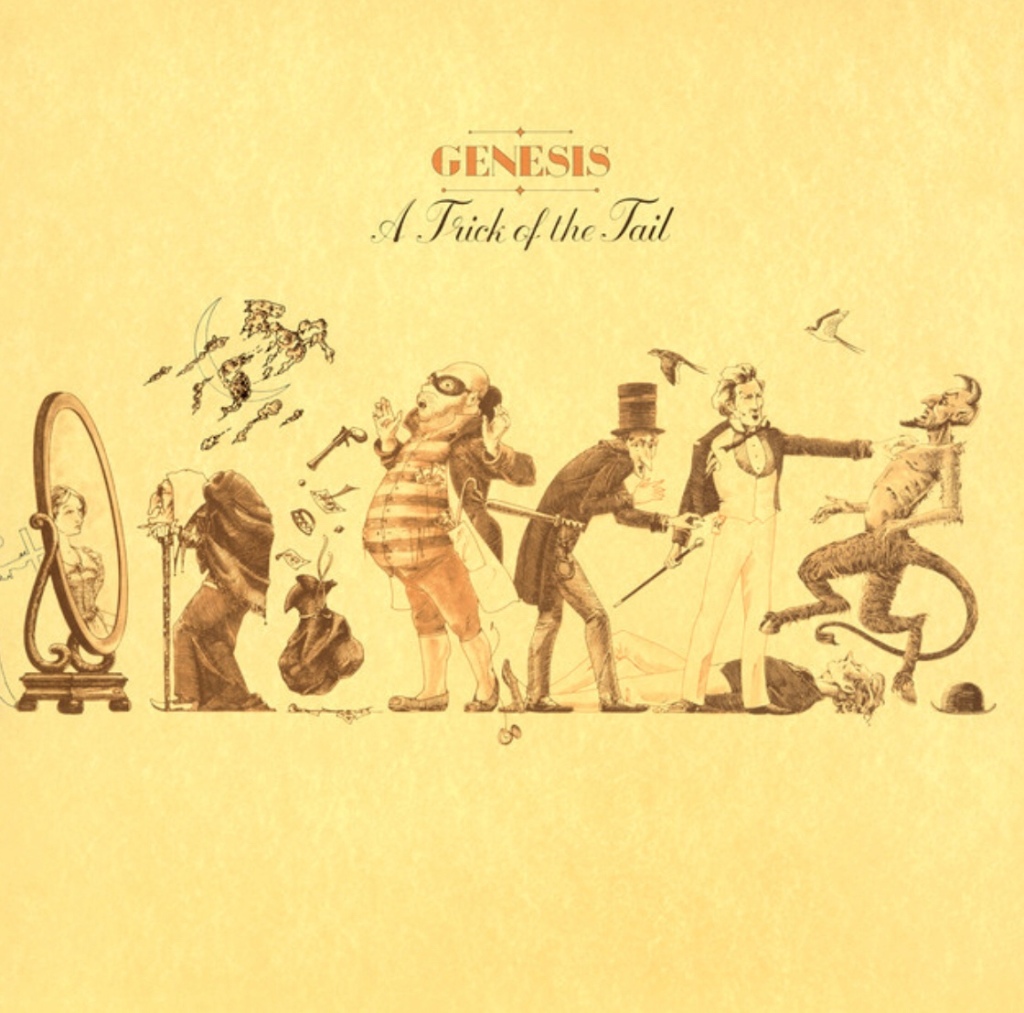
1976 – Part 4.8: Genesis – A Trick Of The Tail

It’s their seventh studio album, released in February 1976 on Charisma Records. But Genesis didn’t exist for me until the 80s version of the band had mainstream success at the same time that Phil Collins and Peter Gabriel had super successful solo careers.

Who hasn’t played air drums to “In The Air Tonight”?

This album was the first to feature then drummer Phil Collins as the lead vocalist following Peter Gabriel’s departure in late 1974, midway through the tour for the album “The Lamb Lies Down on Broadway”. Management and Gabriel’s bandmates wanted him to stay. It was more of a business decision as they were in debt to their label and his departure could jeopardise their chances at getting funding for future recordings.

Following the end of the tour, guitarist Steve Hackett recorded a solo album, “Voyage of the Acolyte”. And the other members weren’t sure if the band would continue. But they reconvened in July 1975.

While some members contemplated calling it quits, keyboardist Tony Banks had other ideas. He took the songs he had written for a possible solo project and decided they should be used on the new Genesis album. They started writing for a new album, however without a lead singer. An anonymous ad in the music paper Melody Maker for a “Genesis type singer” received 400 plus replies. But nothing came of it and they entered the studio without any idea as to who would sing the songs on the album.

Eventually, Collins was persuaded to sing “Squonk”. The performance was so strong, that the lead singer position in the band was put to bed, with Collins singing lead on the rest of the of the album.

Phil Collins is on drums, percussion, lead and backing vocals. Steve Hackett is on all things guitar related. Mike Rutherford is on bass guitar and Tony Banks is on all things keys related.

Dance On A Volcano

Written by the band.

I like the intro, a fusion of rock and blues and it’s a touch progressive as it moves between the verse and chorus. It was also the first song written for the album.

Entangled

Written by Hackett and Banks.

It’s got this chord in the song, in which they play the G# as the root note on the low E string, and an then an F# and A# on the 4th and 3rd strings with the open B and open E strings ringing out.

The first time I heard a chord like that was in the song “Another Day” from Dream Theater on their 1992 “Images and Words” album, but then when I started to go back and listen to the influences of Dream Theater, I started to hear that chord in the music of Rush and then Genesis, to name a few.

Squonk

Written by Rutherford and Banks.

I like the music feel on this. It was pretty obvious the band was trying hard to write their own “Kashmir”.

Lyrically it is based on the North American tale of the Squonk which, when captured, dissolves in a pool of tears.

Mad Man Moon

Written by Banks, it sounds like it could be interchanged with an ELP album. Its indulgent with the piano and if that is your thing, then this song is perfect for you.

Robbery, Assault and Battery

It’s like a theatre song, mostly written by Banks, while Collins, who also contributed to the writing, sang the song in character, inspired by his earlier role as the “Artful Dodger” in “Oliver!” before he became a professional musician.

If you like theatre music, then you will like this song.

Ripples…

It’s a combination of a 12-string guitar piece composed by Rutherford and a piano-led middle section written by Banks. “Tears” from Rush comes to mind, which is more superior.

A Trick of the Tail

Written by Banks it’s the best song on the record. It took form as a song many years before the band recorded it.

He was inspired from reading the novel “The Inheritors” by William Golding and “Getting Better” by the Beatles, and wrote about an alien visiting Earth. The pop rock of what Genesis would become in the 80’s is all here, albeit a bit more quirky than the 80’s polish.

Los Endos

The closer written by the band. It pays homage to the progressive past of Genesis while bringing in enough influences of where the band would go in the later years.

Collins came up with the basic rhythmic structure, inspired by his work in the side project Brand X and the song “Promise of a Fisherman” by Santana.

Banks and Hackett wrote the main themes, including reprises of “Dance on a Volcano” and “Squonk”, and Collins sang a few lines from “Supper’s Ready” (from the 1972 album “Foxtrot”) on the fade-out, as a tribute to Gabriel. The opening piece was actually recorded for a completely different song called “It’s Yourself”, which was later released as a B-side.

The track became a live favourite, and it continued to be played throughout.

Post album release, the group went out on tour with Collins as the front man and Bill Bruford as the additional drummer, and the resulting performances in the US raised Genesis’ profile there.

Chart wise, it charted high in both the U.S and U.K markets.

Standard
A to Z of Making It, Copyright, Derivative Works, Influenced, Music, My Stories, Piracy, Stupidity

Copyright Stupid 101

Copyright is a constant in the news cycle.

Investment funds are purchasing licenses to music catalogues that make money. Streaming services have shown how much money they pay to the copyright holders which in most cases are the labels, the publishers, the few artists who own their rights and now, Hedge Funds and Investment Funds.

The three major music labels jointly brought in over $25 billion in revenue last year, with $12.5 billion coming from streaming recorded revenue alone. Spotify payments represent around a third of that streaming total. Major label profits combined in 2021 exceeded $4 billion.

Furthermore, social media services like Facebook, Tik Tok, Snapchat and the like also pay a lot of license fees to the copyright holders. Even games like Roblox had to settle a $200 million suit around licensing fees to the publishers and labels. There is a lot of money going out to copyright holders which isn’t filtering to the actual people who make those copyrights valuable.

The artists.

Then again, a lot of those people are dead and their copyrights are unfortunately held by corporations (instead of being in the Public Domain) who might pay a few million or a few thousands to the artists heirs. Sort of like a lifetime pension that reverts to the spouse and then to the kids.

From a Metal point of view, investment fund, Tempo Music acquired a majority stake in some of Korn’s recordings and compositions. And another investment fund called, Round Hill Music did a deal with members of Supertramp.

David Bowie’s catalogue went for a lot and he’s not even alive to spend it. So did Bob Dylan to Universal Music Group, who is figuring out how to spend his $400 million at his age. And Neil Young sold 50% of his stake in his song to Hipgnosis for $150 million.

81 year old Tina Turner also sold her rights to BMG (a music publishing company) along with her image and likeness. “Chanisaw Charlie” from WASP comes to mind and how “Charlie” the label boss in the song, whores the image of the dead rock stars.

And the cases for plagiarism in music just keep coming.

You see, I find it hard to believe that an artist is so original and free from influence. And yes, some songs might sound the same or have similarities. Hell the whole Southern Rock genre sounded the same in the 70’s and so did the Blues Rock genre from the same period. They actually both sounded the same.

Listen to progressive music like Yes, ELP and Rush and you would start to hear a lot of similarities. It’s just how creativity works. Nothing is created in a vacuum, free from influences. Creativity is a sum of our influences and experiences.

Plagiarism cases don’t happen much in metal and hard rock circles these days, but if any of the artists have a hit song right now, well, where there is a hit, there is a writ.

Drake and Chris Brown are in court over copyright infringement. Kate Perry just won her suit. Bad Bunny is also sued for infringement. Ed Sheeran has a special team that constantly fights plagiarism court battles.

And Taylor Swift is almost done re-recording her old songs to get away from a restrictive contract in which her copyrights are owned by her original label and for some reason they had the right to sell those rights on to anyone, which they already did.

In other words, they used Taylor Swift as a bargaining chip, sold the copyrights they held in her music and took the money with no compensation to the artist.

Brilliant.

“Frontiers” from Italy is constantly putting money out there to get famous artists from the 80’s and 90’s to record new music for them and to re-record their old songs for the label.

From looking at the metal and rock genre, “Frontiers” have the highest releases from any label that I am aware off. I guess the Frontiers execs are aware that having assets like “copyright” under their control, makes good business sense.

Those copyright assets will never go down to zero. Because streaming pays those who hold the copyrights and the money is in holding the copyrights for the life of the artist plus 70 years after death. In some countries its 90 years after death.

In other words, music is a better investment than anything else. If you buy physical property, you would need to maintain it, renovate it and keep paying bills for utilities, however music just scales. And artists will keep on creating.

And get ready for the battle between AI created deepfake songs of dead pop stars and copyright.

AI can create new songs from Elvis Presley, Frank Sinatra or Michael Jackson. A company called OpenAI can generate new pop songs in the style of these artists. It’s not studio quality, more like garage demo’s as the AI creates derivative versions of music they’ve already released and new lyrics based on the songs the artist previously released.

But the biggest issue always facing artists is payments.

The streaming services have secret licensing agreements with the music publishers and the labels. These black box deals are worth a lot to the labels and publishers.

But the music publishers and labels are in these positions of negotiating power because of the works that the artists have created, however those licensing monies do not filter down to the artists.

Then again, these kinds of black box creative accounting from the labels is engrained in their system. It’s nothing new.

But I’ll sign my contract baby, and I won’t you people to know
Every penny that I make, I’ve got to see where my money goes

From “Working For MCA” by Lynyrd Skynyrd

But artists don’t see where their money goes and they haven’t seen for a very long time.

And when the labels had the power and control of the distribution chain before Napster, they could sign artists to the most crappiest deals ever. Which they still enforce today.

Standard
Classic Songs to Be Discovered, Derivative Works, Influenced, Music, My Stories, Unsung Heroes

1976 – Part 4.7: Lynyrd Skynyrd – One More For The Road

It was my first purchase.

Steve Gaines joined, making it a three guitar team again, with Allen Collins and Gary Rossington. Ronnie Van Zant is on Vocals, Leon Wilkeson on Bass, Artimus Pyle on Drums and Billy Powell on Keyboards. Sam McPherson is on harmonica. JoJo Billingsley, Cassie Gaines and Leslie Hawkins are the backing vocalists.

“One More from The Road” is a live album compiled from a few shows.

It’s also the only live album from the classic era of 1970 to 1977. And an essential album to own.

Workin’ for MCA

Written by Ed King and Ronnie Van Zant which more or less sum up the crap record deal they had with the label.

Slickers steal my money since I was seventeen
If it ain’t no pencil pusher, then there’s got to be a honky tonk queen
Well I signed my contract, baby, now I want you people to know
Every penny that I make, I wanna see where my money goes

The creative accounting from the labels. What they give you, they get back tenfold. Bon Scott comes to mind when he sang, “getting ripped off”.

I want you to sign the contract
Want you to sign the date
Gonna give you lots of money
Workin’ for MCA

I Ain’t the One

Written by Gary Rossington and Ronnie Van Zant about a love affair between a whiskey swilling brawler and Daddy’s rich girl.

Saturday Night Special

Written by Ed King and Ronnie Van Zant.

How can you not like the intro and verse riffs?

Press play and enjoy.

Searching

My favourite song from the “Gimme Back My Bullets” album and written by Allen Collins and Ronnie Van Zant. The tempo is slightly increased and this version is my definitive version.

Travelin’ Man

Written by Ronnie Van Zant and Leon Wilkeson.

The intro bass riff from Leon Wilkeson gets me interested straight away.

Simple Man

A classic written by Gary Rossington and Ronnie Van Zant. Also check out Shinedown’s cover in the 2000’s. Brent Smith delivers a stellar vocal.

Press play on this to hear the harmony lead breaks.

Whiskey Rock-a-Roller

Great song title, written by Ed King, Billy Powell and Ronnie Van Zant.

It was a rite of passage to consume whiskey and listening to rock and roll. The song is about hitting the road to the rock and roll show.

The Needle and the Spoon

Written by Allen Collins and Ronnie Van Zant.

I like the intro on this. And the verse riff that comes in is a cross between “Searching” and “Sweet Home Alabama”.

Gimme Back My Bullets

Written by Gary Rossington and Ronnie Van Zant.

How good is that intro riff?

Its heavy and full of groove.

Tuesday’s Gone

Written by Allen Collins and Ronnie Van Zant and man didn’t Zakk Wylde take a lot of licks from this. As soon as I heard it, I thought of “Road To Nowhere” and a few songs from the Pride and Glory album.

A classic. The leads alone hook me in.

Gimme Three Steps

Written by Allen Collins and Ronnie Van Zant, it’s a 12 bar blues with a bit of country rock thrown in.

Call Me the Breeze

Written by J.J. Cale. Everyone was covering Cale around this period. Simple 12 bar blues rock and roll and they blew another amp in the process.

T for Texas

Written by Jimmie Rodgers and the “new fella” Stevie Gaines was introduced. And it’s more soloing over 12 bar blues chord progressions.

Sweet Home Alabama

The hit, written by Ed King, Gary Rossington and Ronnie Van Zant. Inspired by Neil Young’s song “Southern Man” which was seen as a diss to the south. This didn’t impress Ronnie Van Zant and he meant every word when he sang, “well I hope Mr Young can remember, a Southern Man don’t need him around”.

And during the performance, Van Zant, interjects over the solo, “there are plenty of good people in the South, so make sure you tell Mr Young about it”.

Crossroads

A Robert Johnson cover that Eric Clapton has made his own, but Lynyrd Skynyrd also deliver a pretty mean version full of energy and power.

Free Bird

The big closer written by Allen Collins and Ronnie Van Zant. At almost 12 minutes long, it’s not for the faint hearted. The guitar interplay in the massive outro solo section is worth the price of admission.

For a first purchase I became an instant fan of the band.

And they reformed during this late 80s early 90s period so when I was getting into their old stuff, I had new content to listen to as well.

Standard
Classic Songs to Be Discovered, Influenced, Music, My Stories, Unsung Heroes

The Record Vault: Bush – Razorblade Suitcase

Released in 1996, I got this on cassette originally, which I found in a 3 for $10 bin.

But I didn’t get it when it came out. It was a few years later and I got the CD recently at a record fair. Again it was in a 3 for $10 box.

Personal Holloway

Press play to hear the bass guitar riff.

Greedy Fly

It’s basically an artist writing a song, without a thought of it being a hit. And somehow it gets released as a single and it’s seen as a hit. I like the feel of the verses, the way the bass rumbles and those open string droning notes on the guitars builds up into the Chorus.

Swallowed

The lead single, and it followed a “Live (band) vibe”.

At 30.5 million Spotify streams it’s definitely the hit song from the album. But it pales compared to “Glycerine” at 151 million streams or “Machinehead” at 91.6 million streams.

Insect Kin

Press play to hear how the song starts with the snare groove and how it just keeps building. You get to hear Rossdale throw his throat out in the singing.

Cold Contagious

It has a cool drum groove, with the guitars decorating the song in a nice way, as Rossdale is singing, “you will get yours” with the volume and intensity increasing. And at six minutes long, it’s the anti-single, but it still got released as a single.

A Tendency To Start Fires

The verses hook me, but the Chorus loses me.

Mouth

It’s almost like the song “Black Sabbath”. Listen to it in its doom like feel.

“Nothing hurts like your mouth”

Truth right there. We might forget the words but we never forget the feeling.

Straight, No Chaser

They tried to re-write “Glycerine” but they didn’t get close.

History

I like the intro guitar riff on this. It just didn’t go on long enough.

Synapse

The Chorus is a favourite, very Bowie like.

Communicator

It’s “Mouth” part 2.

Bonedriven

Another cool guitar riff to start if off but overall the song doesn’t connect with me as I felt they really tried hard to recreate “Glycerine”.

Distant Voices

They should have ended the album with “Synapse” as the last three songs drag it down.

Like “Sixteen Stone”, it was the accessible singles of the album that got me interested in the album and then it was a matter of discovering some cool sections here and there.

They did an electronic remix album after this and they lost me with that cash grab. And I didn’t check out “The Science Of Things” until recently.

Standard
A to Z of Making It, Copyright, Music, My Stories

Albums

The New York Times wrote an article back in August 2020, with the headline “How Much Is An Album Worth in 2020: $3.49? $77? $1,000? Maybe $0.”

Tool announced a price of $810 USD for the “Fear Inoculum” Ultra-Deluxe vinyl version. The version, includes five discs of 180-gram vinyl, with music on one side and etched art on the other. The sets are also autographed, but are only available to fans who bought the Toolarmy VIP tickets to the forthcoming dates on their tour. In other words, they are seriously exclusive.

Go to Discogs and you will see physical albums (vinyl especially) selling for a lot higher than what they are worth or purchased for.

Wu-Tang Clan made just one copy of “Once Upon A Time In Shaolin” and auctioned it off for $2 million dollars in 2015 to Martin Shkreli who lost it when the Feds seized his assets in 2018. While this was more gimmick and marketing and not for every artist, it definitely opened up the minds of artists.

While it was always known by the fans, it also became a common viewpoint amongst the artists that purchasing “physical” music is not always about the listening experience to the fan, but a valuable artefact to own. In other words, if the artists stopped chasing the mass and focused on the core to provide them with Super Deluxe releases, we’ll they could make some serious money.

Ask David Coverdale. He has commemorated major album releases with fantastic box sets for the super fans who all paid higher than expected.

Metallica have been doing the same.

Def Leppard have been doing large box sets of time periods. Slaughter are now doing deluxe Vinyl editions of albums. Gene Simmons unleashed “The Vault”. Sell a 1000 of them at $1000 dollars and that’s a cool million.

Each artist has a fan base who will either pay nothing for music or will pay for the normal album release or would stream or would pay a lot more for a Limited Edition Deluxe version.

Like how I paid $129USD ($259AUD with postage included) for the new Coheed and Cambria Super Deluxe album. The band has no problems moving 20,000 units at that price and that’s a cool $2.58 million.

Standard
A to Z of Making It, Classic Songs to Be Discovered, Derivative Works, Influenced, Music, My Stories, Unsung Heroes

1976 – Part 4.6: Lynyrd Skynyrd – Gimme Back My Bullets

If it wasn’t for Zakk Wylde, I wouldn’t have gone and purchased any Lynyrd Skynyrd. His love for Southern Rock, was on show for the “No More Tears” album. Check out his leads in “I Don’t Wanna Change The World”, “Road To Nowhere” and “Mama I’m Coming Home”.

In the interviews Zakk conducted with the Guitar Mag’s, he spoke about a technique called chicken’ picking that he picked up from learning Southern Rock songs and he demonstrated great knowledge on Southern Rock and the 70’s bands associated with the movement.

Then he dropped the debut “Pride and Glory” album a few years later, which is basically an amalgamation of Black Sabbath and Southern Rock. And it made me a fan, so I went searching for Southern Rock bands.

Enter “Lynyrd Skynyrd”. The story of the band should be a Netflix TV series. Working for MCA, the worst label in the business, the band was never going to make a profit regardless of how successful they became and how many records they sold.

The band for this album is Ronnie Van Zant (RIP) on Vocals, Gary Rossington and Allen Collins (RIP) on Guitars, Leon Wilkeson (RIP) on Bass, Artimus Pyle on Drums and Billy Powell (RIP) on Keyboards.

Guitarist Ed King, quit the band before this album, making them a two guitar band instead of three. King would pass away in 2018 due to various health issues.

There was a saying that the Wilkeson and Pyle (and before Pyle it was Bobby Burns) set a groove, which Collins, King and Rossington danced over. And Pyle has been ostracised from the organisation due to being a sex offender while original drummer Bobby Burns died in a single car crash after hitting a mailbox and tree on a sharp bend, Things don’t end well for these guys.

But the biggest tragedy was the plane crash on the “Street Survivors” tour.

Van Zant, new guitarist/vocalist Steve Gaines, backing vocalist Cassie Gaines, assistant road manager Dean Kilpatrick, pilot Walter McCreary, and co-pilot William Gray all died in the crash. The survivors had been seated toward the back of the plane and all of them were seriously injured with broken bones, crushed arms, sever facial disfigurements and severe burns.

And the plane was earlier inspected by Aerosmith’s tour crew for the band to use on their 1977 tour but it didn’t pass the Aero’s safety inspection.

But before the tragedy, the Skynyrds debauched their way through the U.S on the backs of whiskey, brawling and great music.

“Gimme Back My Bullets” is studio album Number 4, released on February 2, 1976. It reached number 20 on the U.S. albums chart and was certified gold on January 20, 1981 by the RIAA.

Gimme Back My Bullets

Written by Gary Rossington and Ronnie Van Zant.

The staccato like count in reminds me of the “Back In Black” intro. After that, a funky blues rock riff kicks in, before the Southern Rock chord progression kicks in

Every Mothers Son

Written by Allen Collins and Ronnie Van Zant.

The acoustic riff grabs your attention straight away, an amalgamation of “Sweet Home Alabama” and blues rock songs like “Shooting Star”.

Trust

Written by Allen Collins, Gary Rossington and Ronnie Van Zant.

It reminds me of The Rolling Stones and I like it.

(I Got The) Same Old Blues

Written by J.J. Cale. Every artist was covering his songs.

The 12 bars groove is heavy, yet funky. The slide guitar is simple yet effective.

Double Trouble

Written by Allen Collins and Ronnie Van Zant.

It follows the trend set with “(I Got The) Same Old Blues”. And the name used by Steve Ray Vaughan, could have come from this song. The blues on offer here is similar to what SRV would play, just more amped up and more technical.

Roll Gypsy Roll

Written by Allen Collins, Gary Rossington and Ronnie Van Zant.

The acoustic riff to start it is campfire like, and riding on the greyhound to leave town was a rite of passage for the youth once upon a time. These days, the kids are over 30 and still at home.

Searching

Written by Allen Collins and Ronnie Van Zant.

My favourite song on the album. Musically and lyrically. Rossington and Collins steal the show here.

Cry For The Bad Man

Written by Allen Collins, Gary Rossington and Ronnie Van Zant.

It starts off like a Kinks song crossed with “Mississippi Queen”. And I like it.

All I Can Do Is Write About It

Written by Allen Collins and Ronnie Van Zant.
Zakk Wylde basically took this song and wrote “Road To Nowhere”.

Press play and enjoy it.

It’s listed as “not their best” album, but if you like southern rock, you shouldn’t skip it and I see it as an underrated album.

Standard
Copyright, Influenced, Music, My Stories, Stupidity

The Week In Destroyer Of Harmony History – March 14 to March 20

4 Years Ago (2018)

Nothing was posted during this period back then.

8 Years Ago (2014)

DEMO DAYS

Machine Head had been leading up to a demo release for the song “Killers and Kings” since February. In the lead up, Robb Flynn talked about his youth, the San Francisco thrash scene and how bands used to release demo’s of songs before the album and how the fans would go away and debate it.

Then the marketing started. Machine Head (along with Nuclear Blast) started releasing the different single covers on a weekly basis (which look great by the way) and they got into partnership with the Record Store Day event.

To put it in simply pseudocode;

Where an audience exists and if an artist has new material, release it.

As a collector I got all 4 covers.

FAKTION

They are no more and according to the internet, they barely existed.

Faktion’s self-titled release hit the streets in 2006. I came across it in 2014. It was up against some stiff competition for listener’s attention. The audience that could have gravitated towards Faktion had already devoted their ears to other bands.

Like Breaking Benjamin released “Phobia”, Skillet released “Comatose”, Stone Sour released “Come What(ever) May”, Daughtry released his self-titled debut, 10 Years released “Autumn’s Dream”, Crossfade released “Falling Away”, Pillar released “The Reckoning”, Red released “End Of Silence” and Papa Roach released “The Paramour Sessions”. Already it is a pretty crowded marketplace.

BUT it gets worse.

They had a deal with Roadrunner Records who didn’t know how to promote them in a crowded modern rock scene.

Anyway check out my review.

THINGS THAT BUG ME WITH ROCK AND METAL

RNR Hall Of Fame

Should Dave Mustaine been inducted with Metallica into the RNR Hall of Fame?

Jason Newsted and Rob Trujilio got inducted however there contribution pales to what Mustaine brought to the band. If you make an assessment of early Metallica, the evidence is there for Dave Mustaine to be inducted. The style of technical thrash that Mustaine brought to Metallica would end up influencing their first four albums. Otherwise they were just another NWOBHM copycat.

The induction criteria does state that the committee looks “at the influence and significance of the artists’ contributions to the development and perpetuation of rock and roll” on an official recording, but as you know, the first album was written while Mustaine was in the band. He just didn’t play on it.

Niches

Metal and hard rock are niches. Accept it and focus on it. It can be a lucrative business for you if you do. It will not bring back the glory days of the Seventies and Eighties, however it will give you a career.

Virality

A song takes off because fans start to spread the word. They share links to it, they talk about it, they blog about it. A marketing campaign can never achieve this. Only great music can.

Queensryche

Back in 2014 I wrote, “when are the people involved going to realise that Queensryhce is no more. Move on, forge a new career and a new identity.”

And I still stand by that.

Vinyl, CD’s, Digital Downloads

Streaming has won. The rest of us that actually purchase any music in physical form do it because we are collectors.

I listen to most of my music on Spotify however I still purchase physical product of bands that I like. BUT I haven’t even opened the shrink wrapping as yet. I have no need to.

MONEY IN MUSIC

Back in 2014, I wrote that “there is still a lot of money in the business. Streaming pays the labels well. It’s just doesn’t filter down to the artists. Revenues from streaming services such as Spotify, Pandora and YouTube surpassed the $1bn mark.”

Streaming Revenue is at $22bn in 2022.

ENTERTAINMENT LOBBY GROUPS ASKING GOOGLE TO DO MORE TO PROTECT THEIR BUSINESS MODELS

23 years post Napster we are still hearing about this. It is the usual b.s. about how Google “could do so much more” or that Google has “not been effective” in preventing illegal music downloading.

HELLO, Google is a search engine.

It is not a protector of business models.

2012 ALBUMS THAT NEED TO BE HEARD

The Night Flight Orchestra – Internal Affairs

If you never experienced the Seventies, then this album from a super group of melodic death metal bands recaptures it all.

From the “Immigrant Song/Achilles Last Stand” references in “Siberian Queen” to the “I Was Made For Loving You” references in “West Ruth Avenue” or the “Play That Funky Music/ Stevie Wonder’s Superstitious in “Internal Affairs”.

Play it loud.

Adrenaline Mob – Omerta

It is a balls to the wall metal classic in the style of Accept, Scorpions, Dio merged with the metal stylings of Disturbed and Godsmack. “Undaunted”, “All On The Line”, “Angel Sky”, “Indifferent” and “Hit The Wall” are worthy additions to any metal bands setlist.

The cover of Duran Duran’s “Come Undone” is also a fitting metal tribute to a pop number one hit.

So put aside all of your views on the members that make up the band and from what bands they come from and embrace a great balls to the wall metal project.

Digital Summer – Breaking Point

DIY band from Phonenix, Arizona, getting stronger with each release. “Breaking Point” was a Kickstarter funded project and it didn’t disappoint. The lead single “Forget You” has racked up 1,027,533 views on YouTube. They are great numbers for an independent band, that also manage themselves, record and release their own music and hold down day jobs.

If you like modern rock, then you will like this band.

Richie Sambora – Aftermath Of The Lowdown

The good old Richie Sambora released a great modern rock album that didn’t get the recognition it deserved because at that point in time he was still in Bon Jovi and Bon Jovi (the band) needed him to start the promotional interviews for the “What About Now” album.

Check out “Seven Years Gone”, “Nowadays”, “Every Road Leads Home To You”. Hell, the whole album is good. Give it your time.

Lizzard – Out Of Reach

This band is definitely under the radar for what they do. Think of Earshot meets Tool meets 10 Years meets modern rock. Vocalist, Mathieu Ricou has a voice that crosses between Chad Kroeger, Aaron Lewis and Maynard James Keenan.

There is a feel of Progressive Metal, TOOL, Hard Rock, Trance & hypnotic music, DEFTONES, YES and PINK FLOYD. It’s a potent mix.

Vaudeville – Vendetta

Vaudeville is one band that deserves more recognition for what they do. They merge the styles of Muse and Radiohead with Hard Rock. It sounds beautiful and original.

Check out the song “Restless Souls”.

Hell Or Highwater – Begin Again

The new band from Atreyu drummer Brandon Saller. Hell or Highwater finds Saller stepping away from his drum kit and taking the mic to be the band’s lead vocalist. It’s hard rock people and it rocks real good and it doesn’t sound generic.

One Less Reason – A Blueprint For Writhing

This EP was my first introduction to One Less Reason. I knew nothing about them and when I heard “All Beauty Fades”, I was left speechless. And they are another DIY band. It’s six songs and there is no filler. A very smart decision to release the best.

Corroded – State Of Disgrace

Corroded have a decent following in their own country of Sweden. They are a skilful band that create groove based hard rock. Stand out songs are “Let them Hate As Long As They Fear”, “I Will Not”, and “Believe In Me”.

COPYRIGHT INNOVATION (YEAH RIGHT)

You know Copyright is all wrong, when you have a composer of several Motown hits combining copyright law with divorce law. Seriously, how much more distorted can copyright get.

Smokey Robinson is seeking a declaratory judgement against his ex-wife. You see, Robinson is reclaiming the rights to his pre-1978 songs from Jobete Music Co. Robinson’s main problem is that his ex-wife (since 1985) believes she should be entitled to 50% of whatever income these songs generate and she has filed suit to ensure that happens.

The labels claim that all pre-1978 songs are “works of hire”.

Smokey Robinson claims that his ex-wife isn’t entitled to his profits but his heirs are.

Remember Copyright’s meaning. To give the creator a monopoly on their works for a limited period of time, so they could create more works. Something looks a miss here.

1991 – YEAR OF DISRUPTION

1991.

The smarter acts started building their Ark’s. They saw the warnings while the rest all drowned in the flood. Castle Donnington in August had AC/DC, Metallica, Queensryche, Motley Crue and Black Crowes. All of those bands survived the flood, however Queensryche managed to commit hara-kiri many years after.

But from a hard rock point of view, 1991 had a lot of guitar heroes looking for work.

Jimmy Page announced that he was working with David Coverdale. The media reported it as White Zeppelin and Led Snake. The band was filled out with Denny Carmassi (Heart) on drums, Ricky Phillips (Bad English) on bass with Johnny and Joe Gioeli from the band Brunette rounding out the band. Fast forward to March 1993, “Coverdale/Page” finally came out. The wheels of motion in the recording business travel slowly.

Neal Schon along with Deen Castronovo signed an unnamed band to MCA which also featured Johnny and Joe Gioeli (who apart from being in the band Brunette, had a gig with Coverdale/Page) whom Schon discovered when he started dating their sister. The bands line up was completed by Todd Jensen (DLR) on bass. And that project would become “Hardline”.

Vinnie Vincent was writing songs with Gene and Paul. Most of those songs would end up 1992’s “Revenge” including the excellent “Unholy”.

John Sykes was rumored that he joined Def Leppard to replace Steve Clark and those rumours started to earn some credibility when Carmine Appice and Tony Franklin quit Blue Murder.

Adrian Vandenberg was out of a gig after David Coverdale disbanded Whitesnake. Rumours started circulating that he was forming a project with John Waite as Bad English was done.

Then he had a solo deal with Victory Records. Then rumours persisted that he was tapped to join House Of Lords who also had a deal with Victory.

Adrian Vandenberg went on to be involved in the supergroup “Manic Eden” that had Rudy Sarzo, Tommy Aldridge as well as Little Caesar vocalist Ron Young. The House Of Lords connection was there in the early incarnation of the band, as James Christian was the original vocalist.

Steve Stevens was also between employers. He was also on the radar to fill the guitarist slot with House Of Lords and then he was working on a solo record and then he was announcing plans to work with Michael Monroe which became Jerusalem Slim. And a few years later he would be the guitarist on Vince Neil’s rocking debut album.

Randy Jackson spent 5 years working on the “China Rain” project, assembling a brilliant band that included Brian Tichy on Drums, Ronnie Snow supporting Randy on guitar and Teddy Cook on Bass. Then the label decided to not release it.

Vivian Campbell was in a new hard rock band called Shadow King, with Lou Gramm of Foreigner, Bruce Turgon on bass and Kevin Valentine on drums.

Vito Bratta at that point in time had a solo deal with Atlantic. And then nothing.

Jeff Watson was rumoured to be in a project with Carmine Appice, Bob Daisley and Derek St Holmes. That project ended up becoming “Mother’s Army” and the final line up consisted of vocalist Joe Lynn Turner, guitarist Jeff Watson, bassist Bob Daisley and drummer Carmine Appice.

Richie Sambora didn’t know if Bon Jovi would continue and released a solo album based on the blues infused with a little bit of pop and rock. He never achieved the platinum sales that he got with Bon Jovi, however he got to show a side of himself that could never have been shown in Bon Jovi.

And that’s a wrap for another week.

Standard
Classic Songs to Be Discovered, Influenced, Music, My Stories, Unsung Heroes

1976 – Part 4.5: The Mahavishnu Orchestra – Inner Worlds

The Mahavishnu Orchestra were a jazz fusion band formed in New York City in 1971, led by English guitarist John McLaughlin.

The group underwent several line-up changes throughout its history across two stints from 1971 to 1976 and 1984 to 1987.

The first line-up which consisted of musicians Billy Cobham, Jan Hammer, Jerry Goodman, and Rick Laird, the band received its initial acclaim for its complex, intense music consisting of a blend of Indian classical music, jazz and psychedelic rock, and its dynamic live performances between 1971 and 1973.

After the original group dissolved, it reformed in 1974 with a new cast of musicians behind McLaughlin:

“Inner Worlds” came out in 1976. It’s the group’s sixth album release and it would be the last album by them for nearly ten years, when leader and guitarist John McLaughlin re-formed the group in 1984.

All in the Family

The song is written by John McLaughlin who also plays guitar and guitar synth. Stu Goldberg is on all things keys related.

Ralphe Armstrong is on bass and the star of the song is Narada Michael Walden on Drums, congas, bass marimba and shaker.

And the reason why Walden is the star is because the song opens with a drum solo before it moves into a fast jazz like beat. Its chaotic as all the instruments come in and somehow it all makes sense. Progressive rock is the best way to describe it.

There is this section between 3.25 and 3.45 in which McLaughlin and Goldberg play this fast unison lead line and I like it.

Miles Out

It’s written by John McLaughlin who plays all things guitar and a special instrument called the “360” systems frequency shifter. It’s actually not an instrument, but an effect. These days, it would be in a stomp box, but back then it was a pretty large unit.

You hear it in action in the Intro and throughout the song. Stu Goldberg is on the Mini-Moog and Steiner-Parker synthesizers, Ralphe Armstrong is on bass and Narada Michael Walden on drums.

I like the bass intro from Goldberg, it’s creepy like, and funky. McLaughlin plays a staccato like guitar riff, which is more funk and reggae like. When he activates the frequency shifter, it sounds chaotic but the drumming of Walden is super-fast, technical and on point. Somehow it makes sense.

In My Life

Written by John McLaughlin and Narada Michael Walden.

John McLaughlin is on 12-string acoustic guitar, Stu Goldberg is on backing vocals, Ralphe Armstrong is on bass and Narada Michael Walden is on the piano and drums, along with the lead vocals.

It’s a poor song and the lyrics are very childish, like seriously, they sing “thank you for the fish in the sea”. A skip for me.

Gita

Written by John McLaughlin and it’s another song with vocals that doesn’t connect with me.

Morning Calls

A short one minute piece, written by John McLaughlin who plays guitar synthesizer and Narada Michael Walden who plays organ.

It sounds Oriental and Celtic like but it’s another skip for me.

The Way of the Pilgrim

Written by Narada Michael Walden and it’s got some intricate instrument sections, but this far in, these kind of passages are starting to sound same same.

River of My Heart

Written by Kanchan Cynthia Anderson and Narada Michael Walden.

There is no guitar on this, with Ralphe Armstrong on double bass and Narada Michael Walden on Piano, Lead Vocals and Percussion.

But it’s a skip for me.

Planetary Citizen

Written by Ralphe Armstrong, this song could have been on a Stevie Wonder album. It’s got that blues, jazz funk fusion happening.

And are you ready to be a planetary citizen?

Lotus Feet

Written by John McLaughlin. I like this instrumental.

There is a guitar that plays arpeggios and a MiniMoog playing a lead break with percussion as the foundation.I

It sort of reminds me of “Albatross” from Fleetwood Mac, the Peter Green version of the band.

Inner Worlds

The title track. Part 1 is written by John McLaughlin and Part 2 by Stu Goldberg. But it’s a bit of mess and that Frequency shifter gadget is just noise to me, however it would have been cool to have that whooshing effect back in the day.

In the end, there are better Mahavishnu Orchestra albums, which we will get to as I work my way back through history.

Standard