A to Z of Making It, Classic Songs to Be Discovered, Influenced, Music, My Stories, Unsung Heroes

2001 – Part 2.1: Tool – Lateralus

This album is huge in my life.

Apart from the great listening experience it also changed the way I played and wrote songs. After this album, I was okay with jamming on a groove instead of soloing.

This album joined albums like “Tribute”, “Powerslave”, “Somewhere In Time”, “Appetite For Destruction”, “Slave To The Grind”, “The Great Radio Controversy”, “And Justice For All”, “Metallica Black Album”, “5150”, “Hysteria”, “Wicked Sensation”, “No More Tears” and “Images And Words” as my “Bible” albums. These “Bible” albums are albums that I devoured, learning the riffs and the licks.

Tool is Maynard James Keenan on vocals, Adam Jones on guitar, Justin Chancellor on bass and Danny Carey on drums. Production is handled by David Bottrill.

The album debuted at No. 1 on the Billboard 200 chart. It went to No. 1 in Australia. In the U.S its certified as 3x Platinum and in Australia it’s also certified as Platinum. People were listening and unable to turn it off. Even on streaming services, the song “Schism” has only been on Spotify just under two years and it’s at 49.3 million streams, And it’s a 8 minute song.

The album is a product of the members being at the peak of their creativity and a four year label dispute.

At the time the band was critical of file sharing, so as part of the marketing for the album, they announced a different album title and a bogus 12 song track list, with stupid titles like “Encephatalis” and “Coeliacus”. Of course, the unregulated Wild West of file sharing sites, were flooded with bogus files bearing the titles’ names. It wasn’t until a month later that the band revealed the real album name and that the name “Systema Encéphale” and the track list had been a bunch of bullshit.

CD’s can pack 79 minutes of music and Tool gave em a few seconds back. Because at 78 minutes and 51 seconds long, it’s got every groove and landscape packed in across the 13 tracks. And to think that they kept editing the album at the mastering stage to get it under 79 minutes.

The Grudge

The whine of a machine starting up and it all comes crashing in, the toms are syncopated with the guitar riff and the bass is unique, taking the lead here to outline a different melody.

Once the vocals kick in with “Wear the grudge like a crown of negativity / Calculate what we will or will not tolerate”, they syncopate with the guitar riff. Maynard is telling ya, don’t let your grudges hold you back.

At 1.22, the song changes. It takes you into uncharted territory. The previous landscape is gone, in the rear-view mirror. And we are into the verse.

Clutch it like a cornerstone
Otherwise, it all comes down
Terrified of being wrong
Ultimatum prison cell

You can’t imagine your life without the grudge you might have against the person who wronged you, the scarlet letterman. And what if your grudge isn’t justified and you have been wrong the whole time. You don’t want to be in that position, so you keep holding onto the grudge.

The song changes again after the bridge, with the vocal melody of “Choose to let this go”. The riff is heavy, Sabbath like heavy.

Give away the stone
Let the waters kiss and transmutate
These leaden grudges into gold

Let the burden go, it’s okay. Don’t let your hate and prejudices define you anymore.

The song then percolates and builds from 6.25 as the intro riff returns. Then there is silence and just the bass. And then an explosion of music from the 7 minute mark as Maynard belts out a scream that he carries for 24 seconds.

Studio trickery. Maybe.

The last 30 seconds is how you end a song. Listen to it. You will not be disappointed.

The Patient

A creeping guitar riff starts the song off. At the Sydney concert I watched, Maynard did say the song is about the vampires that you come across in your life, who try to get you down.

But I’m still right here
Giving blood, keeping faith
And I’m still right here

Wait it out
Gonna wait it out
Be patient (wait it out)

The vampires could be anything. The education system, society, the corporations, the government, a friend, a lover, a family member. Be patient. Everyone comes undone eventually.

Schism

8 power chords are played on the bass, then silence for a few seconds, before the iconic bass riff starts the song. Justin Chancellor announces himself as a bass hero.

I know the pieces fit cause I watched them tumble down
No fault, none to blame, it doesn’t mean I don’t desire
To point the finger, blame the other, watch the temple topple over
To bring the pieces back together, rediscover communication

This meaning from Songmeanings sums it all up.

Once upon a time, all religions were the right one, than, they fell apart. The pieces are now corrupt, moulded shadows of the once great temple. This song says if the pieces don’t communicate with each other than we are doomed.

Parabol/Parabola

They are two tracks on the album. But they exist as one as the last note of “Parabol” flows into “Parabola”

The three minutes of “Parabol” feels like I’m in the vast plains of the Middle East, looking at the night sky.

The Pre Chorus and Chorus of “Parabola” echo Maynard’s work with A Perfect Circle.

This body holding me, reminding me that I am not alone in
This body makes me feel eternal
All this pain is an illusion

Live in the now people. It’s easier said than done. I know people who can’t let go of the past. It consumes them to the stage of insanity. They feel wronged. But all this pain a person feels focusing on the past is an illusion. It’s not real, it manifests in the brain. The pain that you think you are experiencing will pass.

At 2.04 it changes from being a standard hard rock song into a typical Tool song.

At 3.58 the bass takes over for a brief moment before the band kicks in, setting up the finale, the last 2 minutes.

At 4.40, a Black Sabbath fuzzed out riff kicks in. it plays while the drums play like a ceremonial fill.

Ticks And Leeches

A drum pattern kicks off the song. The bass kicks in, with a riff that is played along with the bass drum. It’s weird and off putting. Then the guitars kick in with some repeating single notes, the bass gets busier and so do the drums. By the 50 second mark, the double kick is frantic.

And then it changes for the verses.

Maynard’s melody is bordering on the periphery like a chainsaw.

Hope this is what you wanted
Hope this is what you had in mind
Cause this is what you’re getting
I hope you’re choking
I hope you choke on this

How good is that that Pre Chorus and Chorus riff, when Maynard is singing the melody of “hope this is what you wanted” and “I hope your choking”.

At 3.24 it changes into a clean tone guitar riff that keeps repeating forever. It percolates up to the 5.58 minute mark, before it explodes for the final 2 minutes.

Got nothing left to give to you

Every person with a dream or a goal has ticks and leeches waiting to suck em dry. Even good old Mother Nature will have nothing left to give us except floods, droughts and fire, for the humans are parasites here, sucking the wealth of resources dry for profit.

Then the massive ending from 7.20. The double kick drums are relentless, that Pre Chorus/Chorus riff kicks in and Maynard starts with his “is this what you wanted” melody.

Lateralus

The epic title track at 9 minutes and 22 seconds long.

The clean guitar riff is basic and it keeps repeating. Then the bass comes in and the drums, an explosion of poly rhythms and exploration.

How good is the main riff from 1.15? It’s a metal tour de force.

At 4.50, it’s just the bass, playing a triplet of notes with a brief pause.

And the intro guitar kicks in again.

And it keeps building.

Then at 7.17, the best part of the song kicks in. The drums play a simple beat, while the guitar is staccato like and the bass is doing something different, highlighting the vocal melody with a choice selection of notes.

It needs to be heard to be understood.

Reaching out to embrace the random.
Reaching out to embrace whatever may come.

A song in which the “spirit” lives outside the norms but the person is still human and divine at the same time. They touch on these kind of themes with “Forty Six & 2” from the “Aenima” album.

Listen to it and read the lyrics. It’s like a complex novel coming to life.

Disposition/Reflection/Triad/Faaip De Oiad

The final tracks are part of a large suite but separate tracks on the album.

“Disposition” is like a tribal drum groove with a clean tone guitar riff. It only goes for about 3 minutes and 20 seconds.

It carries into “Reflection” which is the centrepiece at 11 minutes. It has a drum groove that evokes the Middle East, another iconic bass line, synths and an exotic guitar and vocal line.

So crucify the ego, before it’s far too late
To leave behind this place so negative and blind and cynical
And you will come to find that we are all one mind
Capable of all that’s imagined and all conceivable
Just let the light touch you
And let the words spill through
And let them pass right through
Bringing out our hope and reason

It’s an incredible Tool song.

How good is the line “capable of all that’s imagined and conceivable”?

It’s the same mantra put forward by the self-development industry. You know the one, the 10,000 hours, showing grit, emotional intelligence, a growth mindset, resilience and creating a culture in which people feel safe to express their thoughts and everything will turn out okay.

From 8.28 it really kicks into a groove. Watching it live, is a memorable experience.

“Triad”

A 6 minute conclusion as the vast plains of the Middle East are back.

“Faaip de Oiad” is Enochian for “The Voice of God”. Now if you’re wondering what Enochian is, I also had to look it up when I came across it years ago. It’s basically an occult language that two spiritualists from England came up with, who claim angels divined this language to them.

As for the song, it’s just abstract noise and nothing worth talking about.

I was introduced to Tool in 1998. My best man burnt me the “Aenima” CD. I immediately got it. It was exactly what I was looking for. I didn’t want the album to end.

This album has sustained 20 years. It’s not something you play a track from and then forget about, it’s something you go deeper into. It’s a journey.

They covered so much ground with this album and “Aenima”, that they next two albums that came after in “10,000 Days” and “Fear Inoculum” got stigmatised as sounding like “Aenima” and “Lateralus”.

And progressive rock/metal is meant to be dead. But Tool doesn’t fit into that category. It’s a little bit of metal, a little bit of rock, a little bit of progressive in its time changes and song structures and in its lyrics, they push different boundaries and messages. And Tool doesn’t care what the labels want or what the charts like. They push their own envelope, catering to their own needs first and taking their listeners with them.

Most of Tool’s songs since the “Aenima” album, are over seven minutes long. Their most recent album “Fear Inoculum” has every song over ten minutes. From a streaming point of view, this is a bad idea, as one Tool song from start to finish equates to three to four pop songs. And in an hour, you will hear a 15 minute Tool song 4 times whereas a 3 minute pop song will be heard 20 times.

So when you see a Tool song in the multi-millions, just think of the time invested listening to these songs.

If you hate Tool, then keep ignoring em. If you are into hip-hop only, ignore em. If you like your 3 to 4 minute pop fix, ignore em. But if you are a rocker and you liked how bands used to experiment with a song or two on an album, then you need to check out Tool.

And like Tool, I couldn’t edit this post any shorter. It is what it is, because it is.

Standard
A to Z of Making It, Classic Songs to Be Discovered, Derivative Works, Influenced, Music, Unsung Heroes

1976 – Part 1.6: Bob Seger – Night Moves

I always have time for a little bit of Bob Seger. “Old Time Rock N Roll” was the song that got his name into my consciousness. “Turn The Page” was another, but I heard the Metallica version first. Actually, that whole “Garage Inc.” album from Metallica, got me excited to check out bands that I wasn’t sure I should check out.

So “Night Moves” is album number 9. For a person who lived on the road, the cover is perfect, with his image and the spotlight in the background.

At the age of 30, Seger did good live business in middle America, but couldn’t break through nationally.

Then he dropped the “Night Moves” album, a road trip of nostalgia and a soundtrack for many growing up in the 70’s. I didn’t hear this album until the 90’s. Such a long time after its release but if I heard this in the 80’s I wouldn’t have liked it, as I was head over heels in love with hard rock and heavy metal.

“Rock and Roll Never Forgets”

It’s a 12 bar blues romp.

The catchcry of “come back baby, rock and roll never forgets” is truth. As fans of the music and its lifestyle, we can dabble our tastes in other styles but we always come back to our rock and roll roots like we never left.

“Oh the bands still playing it loud and lean / Listen to the guitar player making it scream”

“Night Moves”

When I was doing some reading on Bob Seger, a lot of reviews when the album came out, kept mentioning how his songs sound like other songs that came before. And I’m thinking, perfect, that’s just the way I like it.

“I used her, she used me / But neither one cared / We were gettin’ our share / Workin’ on our night moves”

The strummed acoustic guitar kicks it off, but it’s Seger’s phrasing and vocal delivery, almost “American Pie” like.

The narrative of the secret getaways of teenage lovers takes its cues from Van Morrison and his “Brown Eyed Girl” and the movie “American Graffiti”. Bruce Springsteen’s “Jungleland” from “Born To Run” can also be heard, a coincidence or a fact that both artists have the same influences.

“The Fire Down Below”

It feels like a song from The Eagles “Hotel California” album which came a few years after. Reading comments on the YouTube video of the song, led me to a 60’s R&B singer called Johnny Taylor, and his songs “Who’s Makin’ Love” and “Take Care of Your Homework”. And one comment even mentioned that the Silver Bullet Band is tight in the “Brown Sugar” style of the Rolling Stones.

All I can say is, take what has come before and make it better.

“Sunburst”

“Sunburst” has inspirations from the Beatles “Dear Prudence” and Rod Stewart’s “Handbags And Gladrags”.

Stick around for the change at the 2.10 minute mark when it gets a bit metal like.

“Gaze on the sunburst / His weapon at his side / He flashes it with pride / Before his legions”

What’s this. Lyrics about the wood finish on a guitar. Before the term “Guitar Hero” even existed.

“Sunspot Baby”

Another 12 bar blues romp, that he would really nail with “Old Time Rock’N’Roll”.

“She packed up her bags and she took off down the road / Left me here stranded with the bills she owed / She gave me a false address / Took off with my American Express”

Story telling at its best about a lover who did a number on him as she charged up a fortune on his credit card.

“Mainstreet”

It could be about any town in any part of the world, as we all have the same main streets and a story or two of someone who tried to make it out.

The guitar melodies and leads on this one are excellent.

“And sometimes even now, when I’m feeling lonely and beat / I drift back in time and I find my feet / Down on Mainstreet”

That’s right, you can never escape your hometown. You know every corner, every crack on the road, every curb and every smell. It’s in your DNA.

“Come to Poppa”

It smoulders along with its “Cocaine” groove.

“If you need a pacifier / Call me anytime”

This is more crude than any lyric that the PMRC found offensive in a decades time for their “Filthy 15” list.

“Suck on that”, I say.

“Ship of Fools”

The Eagles influence is present again with “Lyin’ Eyes” and “Take It Easy” combining to become “Ship Of Fools”.

“Mary Lou”

It’s a cover and it sounds like Seals and Crofts “Your Mama Don’t Dance” or “Jailhouse Rock” or “Smokin In The Boys Room”.

You know the riff I’m talking about.

In the U.S, six million copies were shipped, for a 6× Platinum certification. And “Night Moves” is the anchor to Seger’s most successful period which includes “Stranger In Town” in 1978 and “Against the Wind” in 1980.

How many artists can say that their ninth album broke em him to the masses?

Standard
Classic Songs to Be Discovered, Derivative Works, Influenced, Music, My Stories, Unsung Heroes

1976 – Part 1.5: Scorpions – Virgin Killer

The original cover gets more attention than the actual album. Even Wikipedia was embroiled in the controversy for showing it. I’ll go with the alternative cover.

For me, this album showcases the power of Uli Jon Roth. Four of the compositions “Virgin Killer”, “Hell-Cat”, “Polar Nights” and “Yellow Raven” are written solely by Roth (he even sings on two of em), while opener “Pictured Life” is written with Klaus Meine and Rudolf Schenker. “In Your Park”, “Backstage Queen” and “Crying Days” are Meine and Schenker compositions.

Rounding out the band is Francis Buchholz on bass and Rudy Lenners on drums, the underrated rhythm section of the band. Dieter Dierks is credited as assisting with the arrangements and production.

“Pictured Life”

It’s like a party is happening. There are leads all over this song courtesy of Roth.

In the intro, in the verses, in the Chorus and after the Chorus.

And one of their biggest songs, “Rock You Like A Hurricane” is very similar to this.

I also think that “Games People Play” from The Alan Parson’s Project sounds like this.

Make sure to check out the Chorus riff.

“Catch Your Train”

Rudolf Schenker delivers killer riffs on this, while Roth creates the Shrapnel label with his shred’a’licious leads.

Check out the lead break here and you will hear a lot of the 80’s players style. Kirk Hammet, Marty Friedman, George Lynch, Randy Rhoads and John Sykes.

“In Your Park”

It’s like a ballad before the word was overused by MTV and for some reason, I can’t stop thinking of “I’m Eighteen” when I hear this song.

“Backstage Queen”

They are doing the British Blues better than the Brits were doing it at this time.

Lenners and Bucholz are super locked in during the solo section and deliver an excellent groove for Roth to solo over.

“Virgin Killer”

How good is the intro riff to this?

When I heard it, I thought of “Too Fast For Love” which came 5 years later.

And the way Klaus Meine sings this, it sounds like an Aerosmith song.

Roth has mentioned that the meaning of “Virgin Killer” is “none other than the demon of our time, the less compassionate side of the societies we live in today, brutally trampling upon the heart and soul of innocence.”

And the record label thought that putting a naked 10 year old on the cover was a good idea and the guys in the band agreed.

“Hell-Cat”

Vocals are provided by Mr Roth for this bluesy number. Musically it sounds like Hendrix and vocally it should have been performed by Meine.

“Crying Days”

It has this arpeggio line in the intro, that appears on “Lords Of Karma” by Joe Satriani and “Hell Child” from Lynch Mob.

“Polar Nights”

This one also has vocals by Roth. Musically, it’s got a sleazy groove and some smooth legato playing from Mr Roth.

“Yellow Raven”

A ballad with some heavy classical overtones.

From the vocal point of view, I would have preferred Meine to sing on all the tracks, because as a fan of the 80’s Scorpions, it’s his voice I am used to.

Crank it for Uli Jon Roth.

Standard
Classic Songs to Be Discovered, Derivative Works, Influenced, Music, My Stories, Unsung Heroes

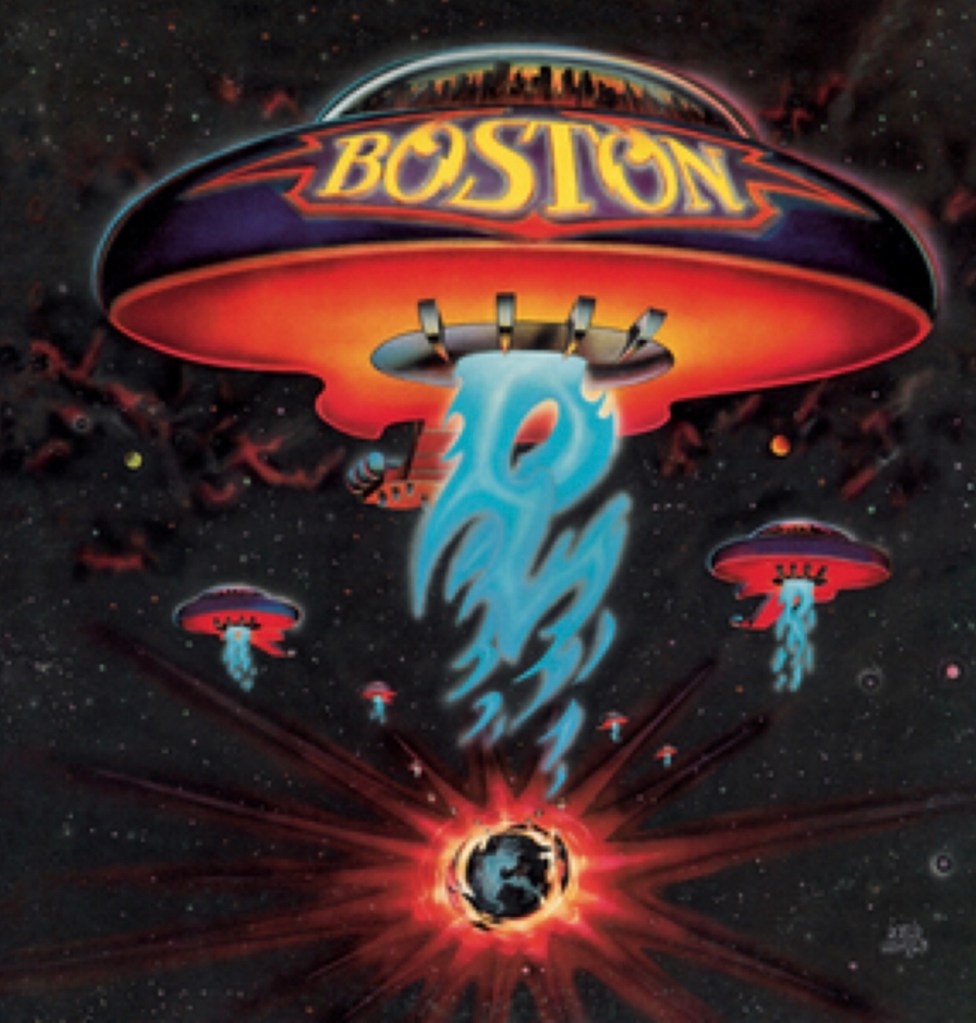
1976 – Part 1.3: Boston – Boston

It’s another band I really got into during the 90’s and I’ve posted my record collection of Boston here.

It was a Guitar World issue that got me interested to hear Boston as it spoke about the making of the album, Tom Scholz diligence to sound and it also had a transcription of the opening track, “More Than A Feeling”. At 445.7 million plus streams on Spotify, it’s a monster track.

At 29 years of age when the album was released, Tom Scholz wasn’t your typical rock star in waiting, working as a project manager for Polaroid with a Master’s degree in engineering and writing songs that he liked to hear in his basement when he wasn’t working. And as good as Scholz is, he needed a voice for his songs, and that voice came from Brad Delp.

Disco also ruled the airwaves when this album hit the record stores. Most labels passed on the band because they didn’t believe a guitar heavy rock record could even chart. But Scholz stumbled onto a sound that would be imitated by all bands since.

My favourite is “Peace Of Mind” purely for the guitar leads in the intro and the outro. On Spotify, its sitting at 117.8 million streams.

I then ignored the rest of the album for a long time, finding it generic. An Epic A&R rep even said to the band in one of the rejection letters that they have nothing new to offer and sounded generic, but then credited himself as discovering the band when they broke big.

Then in the 2000’s I revisited the album.

“Foreplay/Long Time” came into my life and I didn’t notice it before but it has a similar riff in it as “More Than A Feeling. On Spotify, its sitting at 74.4 million streams.

“Rock And Roll Band” and “Smokin” are your standard blues rock fares, with “Smokin” having a more ELP vibe in the middle section. It’s also sitting at 47.3 million streams on Spotify.

And the other tracks are “Hitch A Ride”, “Something About You” and “Let Me Take You Home Tonight” showcase a more of blues country rock feel, but compared to the massive first two songs, they are lost in the “deep album cut” landscape. And it’s those first two tracks which sold the album throughout the world.

17 million sales in the U.S alone. Not bad for an album recorded in a basement.

In 2013, Scholz filed a termination notice to claim back his copyrights to the debut album and “Dont Look Back” as per the clause in Copyright Law which allows him to do so after 35 years. And it ended up in the courts.

Who knows if he succeeded?

Standard
Classic Songs to Be Discovered, Derivative Works, Influenced, Music, My Stories, Unsung Heroes

1976 – Part 1.2: UFO – No Heavy Petting

My UFO experiences started in the 90’s. The band UFO, just in case anyone was wondering.

“Lights Out” (released in 1977) is the gold standard along with the live album “Strangers In The Night” (released in 1979).

But.

“No Heavy Petting” deserves more love.

The band for the album is Phil Mogg on vocals, Michael Schenker on guitar, Danny Peyronel on keyboards, Pete Way on bass and Andy Parker on drums.

Any idea about the monkey on the cover.

“Natural Thing”

The intro riff is great to play and one of the best committed to tape.

And I was pointed towards “Rock N Roll Queen” from Mott The Hoople as an influence. The guitar player on that is Mick Ralphs before Bad Company.

“I’m A Loser”

Written by Schenker and Mogg. The acoustic intro riff has influenced a lot of the 80’s bands.

How good is the piano melody in the section when “hard times, out on the streets” is sung?

And the lead break from Michael Schenker is guitar hero worthy and I’m pretty sure forgotten by all.

“Can You Roll Her”

The song is written by Peyronet, Mogg and Parker.

A stupid title which doesn’t do the fast paced and frantic music any justice. The guitar riffs in the intro/verses and little guitar melodies in the Chorus are excellent.

Schenker goes to town when it comes to the lead spotlight, combining his brilliant pentatonic playing with fast picked Aeolian Minor runs. The way it is constructed would influence countless of other guitarist to “work out” their leads.

“Belladonna”

Written by Schenker and Mogg.

When I hear this song, I think of “Soldier Of Fortune”. It more or less follows the same pattern. But I also think of “Try Me” which would come on the album after. And Scorpions would write songs like this in a few years’ time.

The Schenker solo is memorable, but on “Try Me” it’s outta this world.

Make sure you check out the classical like guitar melody that Schenker starts playing after the solo.

“Reasons Love”

What a great funky, sleazy and bluesy guitar riff to kick off the song.

“Highway Lady”

It’s your standard blues rock fare with Schenker wailing away in the solo.

“On With The Action”

Written by Schenker and Mogg.

The riff to kick this song off is like doom metal, if downtuned. Its heavy.

The groove in the song makes it a favorite of mine but the song is forgotten by the masses when it comes to discussions about UFO.

And if you are a fan of excellent guitar playing, make sure you check out the solo here as well. All of the 80’s guitar heroes copied it.

“A Fool In Love”

It’s written by Frankie Miller and Andy Fraser and it’s a “Honky Tonk Woman” meets “All Right Now” blues romp.

“Martian Landscape”

Written by Peyronel, Mogg and Parker. It’s one of those songs that the 70’s bands put on albums that was a bit progressive and experimental. And sometimes it worked and sometimes it didn’t. This song worked for UFO and it’s the precursor to “Love To Love”. And a riff in “Love To Love” gave birth to “Desert Song”

In other words, “No Heavy Petting” is an underrated hard rock record, a link between the derivative 12 bar blues and hard rock as I know it.

Standard
A to Z of Making It, Classic Songs to Be Discovered, Derivative Works, Influenced, Music, My Stories, Unsung Heroes

Australian Method Series: Choirboys – Midnight Sun

I’ve already written about Choirboys previously, especially their 80’s album in the self-titled debut released in 1983 and “Big Bad Noise” which had the monster hit, “Run To Paradise” released in 1987.

So how do you follow up a monster album released in 1987. Well after all the touring, opening up for large U.S acts and going back into the studio to write and record, the gap was 4 years.

That’s right, 4 years.

It’s a long time.

Instead of recording in Australia, they went to Cherokee Studios in L.A with producer Marc Tanner who used to be an Elektra recording artist.

“Midnight Sun” hit the streets in 1991. And compared to “Big Bad Noise” which was certified double platinum in Australia, “Midnight Sun” has no certification.

For a great album, it gets no love or attention. Even on Spotify, there are no songs from this album in the Top 5 of most listened songs from The Choirboys.

“Midnight Sun”

It’s got this AC/DC style groove (think of “Live Wire” with a bit of a Springsteen/Mellencamp vibe.

Lyrically they are the devils boy, is walking the streets of society as the keeper of the midnight sun.

“Our Empire Falls”

This song should have been a hit.

Standing with her back to the ocean
Is this the final curtain call?
Still trying to make a deal with the sunshine
It′s over, it’s over

Once bathed in glory
But now your image is fading

And check out the lyrics, which deal with faded glories and contemplating suicide. This from an act who was expected to write party anthems.

Tonight is the night our empire falls

“Rise Up”

Their blend of different rock styles is perfect. This song is a great example of how a song can still sound hard rock but be catchy and commercial. It’s a mixture of an AC/DC (that “Live Wire vibe again), Bryan Adams and “Jessie’s Girl” from Rick Springfield with a bit of Def Leppard.

The intro alone has the drums and bass playing a simple hard rock groove.

It’s no surprise that Mellencamp’s music is heard in Australian artists, as the “Scarecrow” album was massive.

Cos I see the best of things
Lies somewhere in the kiss of knowledge
Bullshit ends when faith begins
If you’re down at the bottom, at the end

Rise up

“Place With No Love”

A great ballad with a weird music video featuring a character in a leather fetish mask.

“Rendezvous”

It’s got this “Radar Love” style drum groove and a film clip with people hitting the road to meet up somewhere.

Now we’re on the road to our Rendezvous
With nothing, there’s nothing to lose

These lyrics connect straight away.

Australia is a massive place with vast distances between towns. The only way we used to be connected was via the motorways and suburban roads and railways. So hitting the road to meet up is part of the Australian psyche.

How can you fly with your feet on the ground
Take all of your dreams, let’s get out of this town

We all wanted to escape our hometowns to try and achieve our dreams. These days the kids are okay to live at home we’ll into their 30’s.

“Only In America”

This song melts. When I hear it, I think of The Cult, AC/DC crashing with Springsteen.

Only in America you read my rights to me
Only in America I watch my trial on TV
Only in America only in America
I won’t ever be alone
Then why do I feel so lonely

“Battle Boulevard”

Check out the intro.

It’s just bass and drums and then the guitars come crashing in with power chords and a nice little lead.

I hear the guitars playing My Generation
That used to be our song
And I can feel the beat down on the boulevard

“Going Home”

This feels like a hard rock “Need You Tonight” from INXS.

But I’ve lived a dreamer and I’ve lived in hope
But I don’t want to stay here on my own

I’m going home

“Romance Street”

A rocking ballad if that ever could be a thing. To me, it’s an awesome cut in the vein of “Born To Run” Springsteen.

“We Believed”

When “The Killers” came out, I thought of this song. Because it felt like “The Killers” sounded like this.

In the end, The Choirboys was just another Australian band trying to break into the larger U.S market, which didn’t pan out as expected. And while the first two albums sounded “Australian” (whatever that means, but the label reps kept saying shit like this), the “American” sound was here on this album, and the song writing is mature and the lyrics get you thinking.

Useless fact, fast forward a few years from this, I was in a band opening up for Choirboys in a small pub with about 200 hundred people in attendance.

And vocalist/guitarist Mark Gable along with bassist Ian Hulme were the only original members, but they still brought it live.

The band is still going today with the line up that did this album. Jamming with Gable and Hulme, is guitarist Brett Williams and drummer Lindsay Tebbutt.

Standard
Classic Songs to Be Discovered, Influenced, Music, My Stories, Unsung Heroes

The Record Vault: Coheed and Cambria – The Last Supper: Live at Hammerstein Ballroom (2006) DVD

This my second copy.

The first copy I gave to the drummer from a band I was in, along with “The Dirt” hardcover book and the “Rush In Rio” DVD. But when we had an argument, he wouldn’t return the items. So I repurchased “The Dirt” but this time in paperback, and this DVD. The Rush DVD price was extravagant when I was looking for it and I haven’t relooked since.

Now, live albums have been known to have a lot of studio overdubs or in some cases, total re-recording of some of the tracks in the studio. From what I can hear, nothing feels fixed or redone in a studio on this. So what you get, is a band that can deliver live, the chaos they create in the studio. If anything, I believe the guitars are tuned down ½ a step as Claudio’s voice was strained during this period. But man, he still delivers.

Coming into this release, Coheed and Cambria had released three studio albums, in “The Second Stage Turbine Blade”, “In Keeping Secrets Of Silent Earth” and “Good Apollo”. For the hardcore Coheed fans, yes, I’ve abbreviated the names of the album titles.

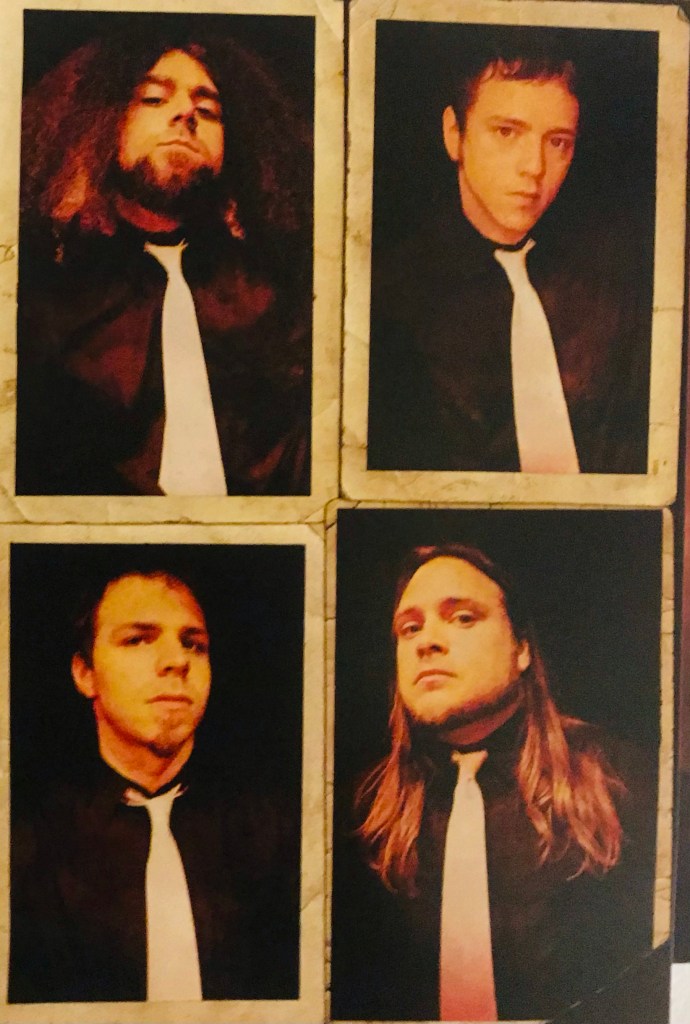
It’s the only live release with the original line up of Claudio Sanchez on vocals/guitars, Travis Stever on guitar and backing vocals, Michael Todd on bass and backing vocals and Josh Eppard on drums and backing vocals. Michael Petrak does additional percussion and Dave “Wavis” Parker is performing keyboards, backing vocals, some extra guitar and samples.

In a perfect world, the audio of this concert would be available on Spotify, but it isn’t. YouTube has the live concert footage and some of the YouTube users have created just the audio.

“In Keeping Secrets of Silent Earth: 3”

A perfect opener. It’s just a bit faster than the studio recording, but hey, that’s why I love the live show. And the crowd gets involved with the who-oh-oh chant towards the end.

“Ten Speed (Of God’s Blood and Burial)”

This version is electrifying. Again, a bit sped up than the studio, but I feel the energy smack me in the face.

“Blood Red Summer”

It follows the poppy rock vibes of “Ten Speed” perfectly.

“The Crowing”

This version is a metal beast and this live version is my go to track for it. As mentioned previously, its downtuned a little bit more from the studio cut and it sounds menacing.

After the two pop rock songs in “Ten Speed” and “Blood Red Summer” the placement of this is perfect to get the live concert back into progressive and metal like territory.

“Wake Up”

One of the best ballads from Coheed and Cambria, and live, you just hear the clean tone electric guitar, Claudio’s voice and the crowd singling along with him. It’s chilling, emotive and perfect.

“Delirium Trigger”

From the debut album, the intensity of the song grabs my attention quickly. Hearing it played alongside songs from two of my favourite albums, works perfectly. The middle subdued section offers a calm before the song picks up again. With so much musical movements, nothing is lost and missed.

“A Favor House Atlantic”

It’s faster. When I watched the band live, this song is sing-a-long. You can’t make out the audiences here and you sort of lose the power of when Claudio drops out and the crowd sings. But the energy is still there. “Bye, bye, beautiful” alright.

“The Suffering”

The pop punk energy comes through. I wanted a bigger impact for the “wishing well, will you marry me” part but not all songs can be winners.

“Everything Evil”

I don’t think this song worked well live.

“Welcome Home”

The best cut and I like the sped up vibe of the song. And even though its quicker, the intensity of the vocals is still there. I would have loved to be able to hear the crowd cheering the who-oh-oh at the end.

“The Willing Well IV: The Final Cut”

At 14 minutes long, its eight minutes longer than the CD version and the jam aspect vibe they bring to this track is brilliant.

When there jamming the middle section lead break, they play this lead break that I swear comes from “Seventh Son Of A Seventh Son” lead break.

And when they come out of the jam back into the normal song, its powerful and beautiful. The crash cymbals are smashing, the guitars are screaming and all hell is breaking loose as they finish off the concert.

In the end, “The Last Supper” leaves you wanting more of the Coheed and Cambria supper.

Rock out.

\::/

Standard
Classic Songs to Be Discovered, Influenced, Music, My Stories, Unsung Heroes

Australian Method Series: Dragon – Body And The Beat

Dragon is a New Zealand rock band which was formed in January 1972 and relocated later to Sydney, in May 1975.

“Body and the Beat” is album number seven. The album was released in June 1984, peaking at number 5 on the Australian charts and gained a platinum certification.

But it’s their first album since 1979.

At the time, Dragon was on the verge of breaking through worldwide but vocalist Marc Hunter was out of control with his heroin addiction and on stage antics, offending everyone, including audiences, other acts and label heads.

They had a US tour opening up for Johnny Winter that went pear shaped when Hunter called Winter’s blues rock audience rednecks and faggots. Then again it was another stupid decision to place Dragon on this bill, it’s like Imagine Dragons opening up for Iron Maiden.

Actually when I watched Maiden on the “Somewhere Back In Time”, the opening act “Behind Crimson Eyes” was the support. Now they are an Australian metalcore band with screaming vocals and they got booed after each song, until they played a cover of “Ace Of Spades” and the crowd cheered. Again, another misplaced opening act.

Anyway, back to Dragon, the band which included his brother Todd, fired him. This brought to an end the first period of Dragon which also involved the heroin overdose of drummer Neil Storey in 1976.

Hunter went solo and had some success and then the band got together again.

“Rain” was the output in 1983. Written by Johanna Pigott, Marc Hunter and Todd Hunter, it’s 3 minutes and 40 seconds of hard rock glory. Make sure you stick around for the “if you go out in the rain” melody.

Due to its success, the band went into the studio to record an album worth of songs.

It’s worth noting that the songwriting team of Johanna Pigott and her partner, Todd Hunter (Dragon bass player) also wrote the smash hit title track “Age Of Reason” for John Farnham.

The album kicks off with “Rain”. “Promises” and “Wilderworld” are melodic rock songs perfect for a summers day.

If it wasn’t for “Rain”, then “Cry” would be a favorite.

“Body And The Beat” has a bass groove and a feel that bands like INXS were making popular.

“Magic” feels like a driving song, with the window down and the warm winds blowing through.

But.

Apart from “Rain”, this album is forgotten.

Everyone told the band the album would break the band overseas. But it didn’t. Within a year they were back in the studio recording another album..

A year after this album came out, keyboardist Paul Hewson and the writer of their classic songs “April Sun In Cuba” and “Are You Old Enough” was found dead in a friends car, hours after he told the band he wanted to leave.

Dragon continued and released the super successful (in the Australia market), “Dreams Of Ordinary Men” in 1986 and my favourite “Bondi Road” in 1989. A few greatest hits and acoustic re-recordings hit the shelves. And then tragedy struck again.

Marc Hunter was diagnosed with throat cancer in November 1997 and he died on 17 July 1998. Dragon have continued on with Todd Hunter still the driving force.

Standard
Classic Songs to Be Discovered, Influenced, Music, My Stories, Unsung Heroes

1986 – Part 1.2: David Lee Roth – Eat Em And Smile

I had no idea who Steve Vai was until I saw him in the “Yankee Rose” clip, making his guitar answer questions that Dave Lee Roth put forward. And if you think it was a fluke, make sure you check out the cat/kitten noises Vai did for the intro on “Kittens Got Claws” on the Whitesnake “Slip Of The Tongue” album a few years later. The way Vai could manipulate the guitar with the whammy bar, bends and slides and effects to create animal and human like voices is unique.

“Eat ‘Em and Smile” is the debut full-length solo album by original Van Halen vocalist David Lee Roth, released on July 7, 1986. The band on the album is Steve Vai on guitars, Billy Sheehan on bass and Gregg Bissonette on drums.

Produced by Ted Templeman, it’s got all the bells and whistles of a party about to go out of control.

“Yankee Rose”

Penned by David Lee Roth and Steve Vai. The intro is iconic with the walking bass line and of course the “talking guitar” which seems to have a conversation with David Lee Roth.

From a musical viewpoint, Vai is in cruise control here, making a very simple guitar riff sound interesting with his additions of arpeggios, legato lines, bends and whammy bar manipulations towards the end of the fourth bar of the riff.

The video clip was also designed with MTV in mind, with moves orchestrated to show the technical abilities of the individual band members.

“Shyboy”

The Talas track penned by Billy Sheehan got some added muscle on this album with Vai’s virtuosic playing complimenting Sheehan. And of course, Gregg Bissonette on drums is in his element here.

“I’m Easy”

From Aussie artist, Billy Field who he co-write the song with Tom Price. The whole big band sho-be-bop is not my thing however I don’t mind when rock artists take a song from that style and rock-ify it.

But this isn’t really rock-i-fied.

“Ladies’ Nite In Buffalo?”

Another Roth and Vai cut, this one sounds like it came from the fingertips of Joe Walsh.

The blues rock boogie from Sheehan and Bissonette is excellent and the funky guitar riff by Vai compliments it perfectly. It’s tracks like this that made Dave Lee Roth’s solo career interesting and exciting.

And that lead break from Vai is outta this world.

“Goin’ Crazy!”

It’s another Roth/Vai penned song.

Vai brings the goods with an iconic guitar riff to kick it off. If you think the riff sounds like something you’ve heard before, I always said that the riff in “Finish What Ya Started” which came a few years after, is very similar to this.

The synths compliment instead of detracting.

Check out Vai’s solo and then go to YouTube to watch the video clip put together from the movie that never came to see the light of day.

“Tobacco Road”

A cover song written by John D. Loudermilk, it’s got that big blues rock feel and the way the DLR and the guys in the band do it, is excellent.

“Elephant Gun”

Another track penned by Roth/Vai and this one is full of great Van Halen inspired riffs. Vocally, Roth sings in a deep baritone, something which Axl Rose would do a lot within the Guns catalogue.

The solo section starts off with an impressive bass solo, which keeps happening, when Vai starts shredding the guitar lead.

“Big Trouble”

The “Big Trouble In Little China” film always come to mind when I see this song title.

Does anyone remember the Kurt Russel and Kim Cattral film?

The song has nothing to do with the film except that it’s a sleazy little rumble, written by Roth/Vai with a rap like vocal melody in the verses and a progressive like Chorus.

Check out the blistering Vai solo full of his trademarks fast legato lines with finger taps.

“Bump And Grind”

Another Roth/Vai composition.

Great title with a riff which bumps and grinds its way through the song and Roth is being Roth, having fun and talking his way through the song.

“That’s Life”

A big band cover song written by Dean Kay and Kelly Gordon. What can I say, is Roth being Roth.

And this line up wouldn’t do another album again or perform together once the tour ended. However a reunion show was planned recently, and it was killed seconds before the band took the stage by a fire marshal who was worried at the size of the venue and the amount of people in the venue.

The free spirited nature of “Eat ’Em and Smile” is attractive and exciting as it feels like the whole album could just go off the rails and crash at any time.

At 31 minutes, man, its short for a release, which was strange for a highly anticipated and expected album. But the impact it left behind is huge, introducing Steve Vai and Billy Sheehan to large rock audiences, along with drummer Gregg Bissonette.

After this, Vai and Roth would do one more album in “Skyscraper” while Sheehan formed Mr Big with another ace guitarist in Paul Gilbert. Both acts had huge success with their releases.

Vai would finally release his second solo album “Passion and Warfare” and he also got a chance to decorate the songs that Adrian Vandenberg wrote for the “Slip Of The Tongue” album after a cool million dollar advance.

Meanwhile Roth hooked up with various guitarist to write the follow up, eventually settling on 19-year-old guitar virtuoso Jason Becker to replace Vai.

“A Little Ain’t Enough” was released in 1991, produced by Bob Rock. It did okay business in sales but before the tour started, Becker was diagnosed with Lou Gehrig’s disease, rendering him unable to perform onstage. Guitarist Joe Holmes stood in for Becker during the tour.

But the audience just wasn’t there for DLR to fill arenas in 1991, After 15 years in the spotlight, Roth’s brand of hard rock became unfashionable.

And the original era of Roth’s solo career fractured shortly after.

P.S. this is the second part of a post that was meant to be just one post. Here is the link to the Maiden post covering “Somewhere In Time”.

Standard
Derivative Works, Influenced, Music, My Stories, Unsung Heroes

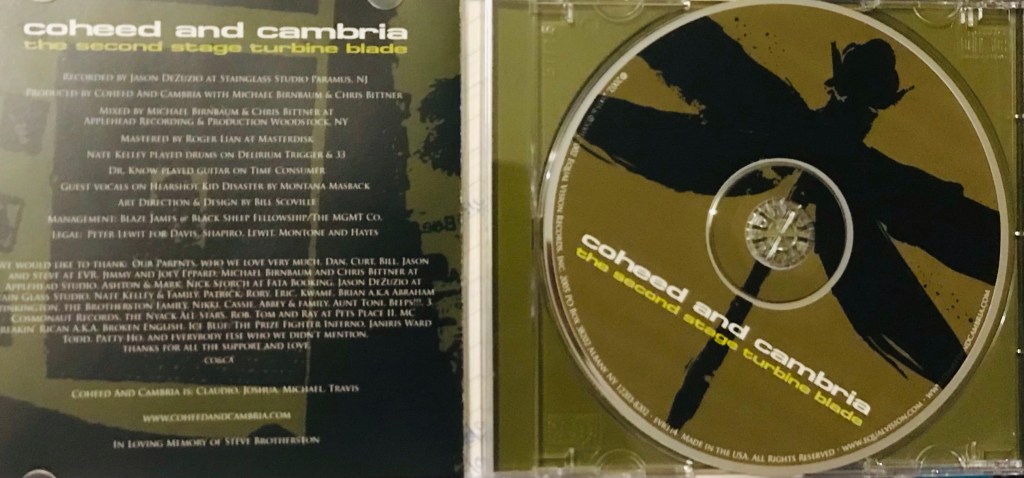
The Record Vault: Coheed and Cambria – Second Stage Turbine Blade

I was waiting for my CD to come in before I did this post.

The debut album was released in 2002, but the story goes back to 1995 when Claudio Sanchez and Travis Stever had a band called “Toxic Parents” which then became “Beautiful Loser”.

Three months later, Stever left and the remaining members renamed the band, “Shabutie”.

Michael Todd was recruited in 1996 and would remain the bassist until his arrest for break and enter circa 2010/11.

As Shabütie, the band released their first studio demo “Plan to Take Over the World” in 1999 and “The Penelope EP” in 1999, shortly after which Stever rejoined the band.

The original drummer left in 1999 and Josh Eppard was the replacement. He would be the drummer on the first three Coheed albums and while he was out of the band between 2006 and 2011 he returned for “The Afterman” albums and is still the drummer at this point in time.

The band went on to release another EP called “Delirium Trigger” in 2000 and several songs that appeared on it, were based on a series of science fiction comics written by Claudio Sanchez called “The Bag.On.Line Adventures”, which were later renamed “The Amory Wars”.

This science fiction story was Sanchez’s side project. Eventually, the band would rename themselves as Coheed and Cambria, after two of the story’s protagonists.

From a story point of view, there is a great summary over at the Coheed and Cambria fan wiki.

In a nutshell, and spoiler alert, Coheed and Cambria are dead by the end of it. Coheed by now had already killed off his children except Claudio and Cambria had to kill Coheed as he unleashed a virus and then unable to live without Coheed, she killed herself. In the process her energy/sacrifice then saved the dying star that Coheed was trying to destroy. Their son Claudio, is left to pick up the pieces.

A lot of pieces of the puzzle are put into place, and backstory’s are told. The fan wiki page does a great job detailing it.

“Second Stage Turbine Blade”

It’s a minute of ambient noise and an ominous sombre piano riff.

“Time Consumer”

The feel of this song in the first minute feels like a Pink Floyd/U2 jam mash up. It is raw and gritty as it grooves its way to the exploding of distorted guitars at the 1.14 mark.

“Devil In Jersey City”

It’s got that pop punk feel, almost happy like but the subject matter is disturbing involving a bashing and a rape by the gang called “Jersey City Devils” on the daughter of Coheed and Cambria and her partner.

“Everything Evil”

This moves into “Everything Evil,” which is arguably the most proggy track on the album. The ending of the song has that piano riff which becomes the first song on subsequent albums

Delirium Trigger”

The heaviest song on the album.

“Hearshot Kid Disaster”

It has a funky riff.

“33”

A pop song which is 3.30 long. Coincidence.

“Junesong Provision”

“Junesong Provision” Heavy guitar and impressive vocals and lyrics make up this noteworthy song.

“Neverender”

The bass is excellent and the riffs are rooted in hard rock. Claudio’s vocals are the most confident on this one and it shows.

“God Send Conspirator”
A clean guitar riff starts the song off, which sounds like an indie song. The bass grooves and funks it’s way throughout.

Standard